




Abstract
In England and Wales, police consider potential harm in missing person investigations using graded risk assessment. Using 4746 missing person reports made to one police force in 2015, we investigate the extent to which age, sex and police risk factors predict high-risk classifications and harmful case outcomes. We find age, sex and specific risk factors including out of character behaviour and suicide risk increased the likelihood of high-risk classifications, whilst other risk factors including physical/mental illness and drug/alcohol misuse increased the likelihood of harmful outcomes. We also find certain risk factors reduced the likelihood of high-risk classifications and harmful outcomes.
Introduction
Missing person investigations are one of the biggest non-crime police demands (Babuta and Sidebottom, 2018). In the financial year 2019/20, police forces in England and Wales received 359, 240 calls relating to missing persons (NCA, 2021), averaging 984 calls per day. Though not a crime to go missing, it may be an indicator of crime or harm, such as abduction (Missing People, 2014), criminal and sexual exploitation (APPG, 2012) or suicide (Yong and Tzani-Pepelasis, 2020). It is therefore the responsibility of the police to investigate these cases (ACPO, 2013).
Though most missing persons are located quickly and safely, a small but important proportion suffers serious and fatal outcomes (Newiss, 1999; Doyle and Barnes, 2020). The volume and complexity of cases means police cannot apply the same priority of response to all reports. The police must therefore estimate the likelihood of serious harm and allocate a proportionate response to reduce potential harm (ACPO, 2013). In England and Wales, police forces use graded risk classification to determine the level of resources allocated to a missing person investigation. Resources can include police time; vehicles; information systems; and specialist units such as police dogs, with each investigation costing a force between £1325.44 and £2415.80 (Shalev-Greene and Pakes, 2014).
In this paper, we consider the suitability of risk assessment tools to prioritise risk and predict harmful case outcomes in missing person investigations. Specifically, we seek to determine which police-defined risk factors are associated with a high-risk classification, and which risk factors are associated with the most harmful outcomes. We use data on missing person cases recorded by one police force in the North of England for the calendar year of 2015.
Background
We start with the background to the problem of police risk assessment in missing episodes. We firstly consider some of the potential harms that are associated with a person going missing and/or that the person may be at risk of whilst missing, and then outline the current methods of police risk assessment in missing person investigations.
The harms associated with missing episodes
The harms associated with missing episodes are multifaceted and could be the motive for the disappearance or occur whilst missing (Biehal et al., 2003; Hedges, 2017). One of the most common reasons for going missing is a relationship breakdown or family conflict (Biehal et al., 2003). For a proportion of these persons, mainly women or children, the drive to leave is to escape violence in the home (Biehal et al., 2003; Rees and Lee, 2005; Bowstead, 2015). For children, missing episodes often relate to desires for independence, outside family relationships and peer networks (Biehal et al., 2003), but some are pulled away by grooming for sexual and criminal exploitation (APPG, 2012). The All-Party Parliamentary Group (APPG) for Runaway and Missing Children and Care Leavers’ 2012 inquiry found that children in care placements were being specifically targeted for sexual exploitation due to their known vulnerability. In 2018/19, abuse or exploitation was in the top five reasons for children going missing (NCA, 2020). Children account for most missing person reports, and most reports are accounted for by a small number of frequently missing children (Sidebottom et al., 2020). Although often recorded as unharmed (NCA, 2021), when a child is missing, they are at risk of harm and repeat missing episodes may indicate that a child is being abused or exploited (APPG, 2012; DfE, 2014). Alexis Jay’s (2014) independent inquiry into the child sexual exploitation (CSE) that was uncovered in Rotherham in 2013 found that most children that were subject to CSE had multiple reported missing episodes, with 63% reported missing more than once.
A small number of persons are reported missing because they have been victim to significant crime, the most serious of which is murder (ACPO, 2010). Other significant crime types that have been linked to missing person investigations include kidnapping, abduction and trafficking in human beings (Missing People, 2014). Both adults and children are trafficked, though the literature on trafficking and missing persons has focused largely on children in care (Missing People, 2014; DfE, 2014). In the UK, trafficked children are often placed in local authority care (DfE, 2014). Trafficked children are highly likely to go missing soon after being placed in care, and whilst missing are at high-risk of exploitation or being re-trafficked (Missing People, 2014; DfE, 2014; APPG, 2016).
Some persons do not intend to leave nor are they forcibly removed but are reported missing due to misadventure and the risk of harm can vary by individual characteristics (James et al., 2008). For example, a small number of investigations relate to older adults with dementia that wander from their usual environment, who may be at greater risk of harm by crime or accident whilst missing (Rowe et al., 2015), and a small number of young persons, in particular young men, disappear due to fatal accidents on nights out (Biehal et al., 2003; Newiss and Greatbatch, 2017). In some cases, the risk of serious harm relates to the person’s intentional harm to themselves. Mental health issues are highly prevalent amongst missing adults and children (Holmes, 2017; Hayden and Shalev-Greene, 2016; APPG, 2018), and a small number result in suicide (Biehal et al., 2003). Though mental health issues may not always indicate suicidal intention, the presence of mental health issues may increase the vulnerability of the missing person to harm (Biehal et al., 2003).
Risk assessment in England and Wales
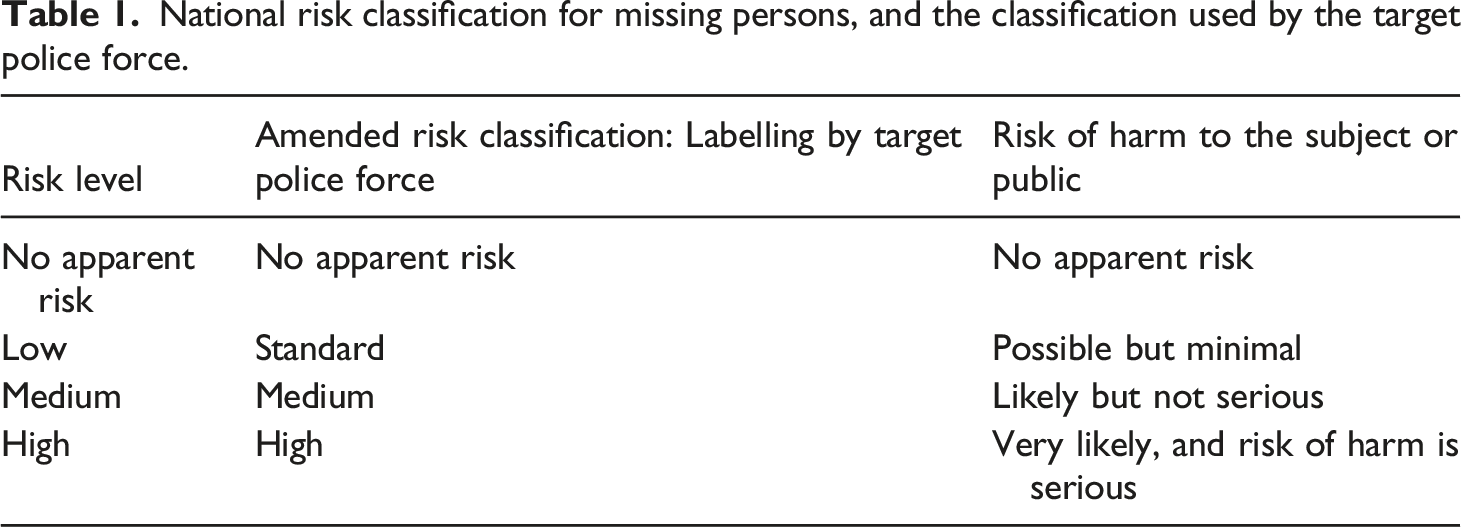
National risk classification for missing persons, and the classification used by the target police force.
List of decision-making items used in risk assessment
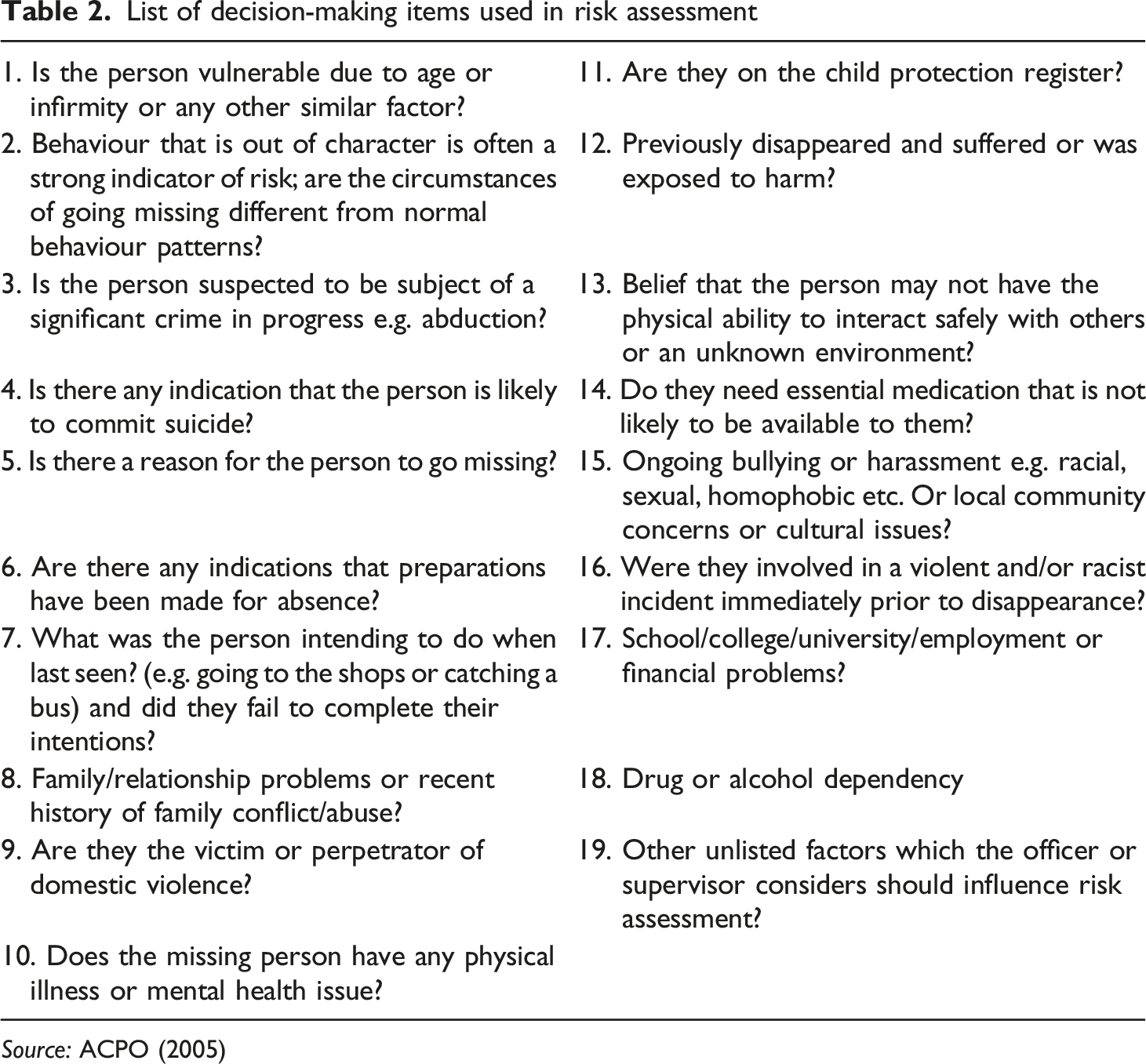
Source: ACPO (2005)
Police face several challenges in using this risk assessment tool to effectively assess risk and allocate a proportionate response. Eales (2017) highlights some of these challenges. The first is the volume and diversity of missing person reports, which challenge the ability of police forces to make informed decisions on which persons receive priority responses. Most reports are classified as medium-risk, with almost two thirds (64%) receiving this classification in 2019/20 (NCA, 2021). Eales states that amongst many diverse cases, there are likely to be considerable differences in the risk factors presenting across medium-risk classified cases, and thus questions the suitability of having a medium-risk category. Furthermore, whilst there is national guidance for police officers to aid decisions on risk assessment, the classification of risk remains largely influenced by police discretion. In a study of one police force, Smith and Shalev-Greene (2015) found that half of police officers had not read the national ACPO guidance nor their internal force procedure for risk assessing missing persons, and the final decision on risk classification was largely determined by police discretion.
In relation to demand, Eales (2017) highlights a problematic relationship between operational capacity and risk assessment. Risk grading should guide the level of resources that should be allocated to an investigation. However, Eales indicates that having low police resources carries the risk of a case being less likely to receive a higher risk classification if the force does not have the capacity to allocate the level of resources that would be required. In contrast, Heaton (2011) argues that one of the key drivers of reduced police capacity is the risk aversion of police forces, which has led to disproportionate responses to risk assessment. Heaton suggests that high-profile police failures and heightened public scrutiny has led to an over-use of higher risk classifications to demonstrate to the public that the police are doing all they can to protect the vulnerable. Though the direction of the relationship between risk assessment and resource use is unclear, both Eales and Heaton suggest that the allocation of risk classifications may be influenced by more than identified risk factors.
The initial risk assessment of a missing person determines the action taken in the investigation to locate the missing person. Following the return of the missing person, a second form of risk assessment may take place. When a person returns, the police should conduct a ‘Safe and Well check’. A Safe and Well check usually consists of a police officer visiting the person’s home to check that they have returned and to ask some questions on why they went missing and what happened whilst missing, to determine any risk of harm (Harris, 2019). In addition, children that return from a missing episode should be offered a Return Home Interview (RHI) as a statutory requirement (DfE, 2014). RHIs are conducted separately to the Safe and Well check and are the responsibility of the local authority rather than the police. The RHI is usually conducted by an independent child welfare service and should explore in-depth any harm that the child may be exposed to guide the actions of safeguarding agencies to prevent further harm (Pona et al., 2019). For most local authorities, the information elicited from the RHI is recorded on social care systems, with most then sharing specific RHI information (e.g. reasons for going missing, places/people visited whilst missing) with other agencies including the police (Pona et al., 2019). It is currently unclear if and how the information collected from RHIs, or Safe and Well checks, feeds into the graded risk assessment of subsequent missing reports. Although, one of the challenges of risk assessment identified by Eales (2017) was the accessibility of information for police practitioners, with information often dispersed across several information systems.
In this study, we focus on a series of police-defined risk factors that were made available to us by one police force, and the relationship of these risk factors with high-risk classifications and harmful outcomes. As stated in the literature, it is possible that the decisions around risk classification could have been influenced by factors other than the defined risk factors; we did not have this information.
Methods
Data
The police force provided data on all missing person cases recorded in 2015. The data were formatted in SPSS version 23. The data contained 4746 reports relating to 2516 individuals.
Dependent variables
Our analysis investigated which individual risk factors were associated with a high-risk classification, and with a harmful outcome. We defined two binary variables for our analysis.
High-risk
In the police data, one variable coded whether the case was classified as standard, medium, or high-risk. To focus on the association between risk factors and a high-risk classification, the standard and medium levels were merged into one risk level to provide binary high-risk and not high-risk variables.
Harmful outcome
Categories of harmful and non-harmful case outcomes.
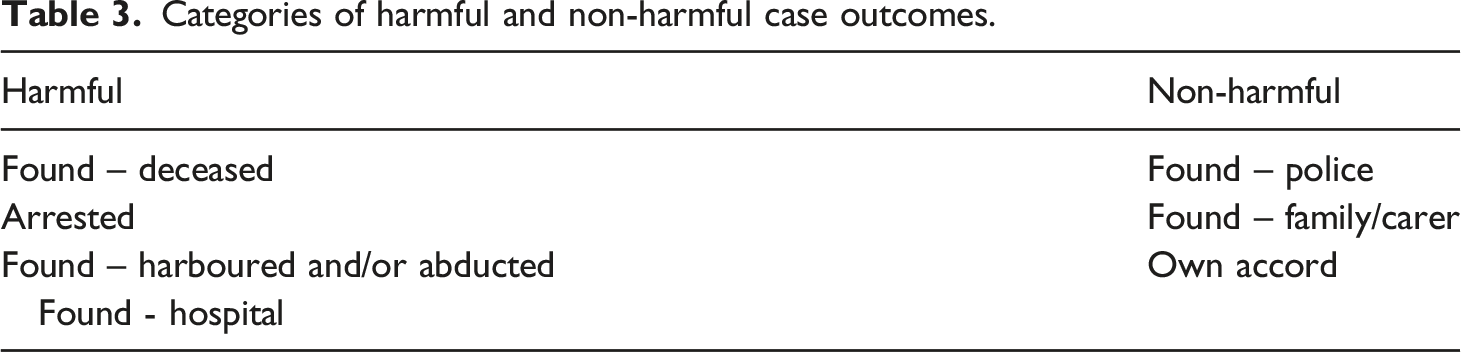
We used the return description codes to create a binary variable that distinguished between the outcomes we perceive to be the most and least indicative of harm. ‘Found – deceased’ and ‘Found – Harboured and/or abducted’ were harmful outcomes as the episode was fatal or involved significant crime. We also classified ‘Arrested’ and ‘Found – Hospital’ as harmful outcomes. Arrest indicates that the person may have been a risk of harm to others. Shalev-Greene (2011) for instance found that 82% of repeatedly missing persons had been arrested at least once, most commonly for assault. Arrest may also indicate that the missing person is experiencing harm, in particular children suffering criminal exploitation, who can be treated as offenders when their status as a victim of exploitation is not recognised (Villacampa and Torres, 2017). As arrest is often linked to harm, we here classify arrest as a harmful outcome. We recognise that arrest may be seen by police as a positive outcome, and in a small proportion of cases arrest may be used to protect the missing person (for example to circumnavigate mental health detention protocols). We did not have this information.
To be found in hospital may indicate that the person has come to harm, due to victimisation, accidental or intentional self-injury. Hospital attendance has elsewhere been indicative of harm. Hutchings et al. (2019) for instance identified that 74% of their sample of repeatedly missing children had frequent attendances to hospital emergency departments, indicating their high risk of harm. We therefore here classify to be found in hospital as a harmful outcome. We recognise that to be found in hospital may not always indicate harm and could result from a patient absconding hospital and subsequently being reported missing. We did not have this information, nor did we have information on how the return of absconding patients was coded by police (e.g. in hospital, by family/carer, own accord). The non-harmful case outcomes do not account for other forms of harm that may have come to the person during the missing episode, such as physical or sexual assault, self-harm or accidental injury, we did not have this information.
Independent variables
The 19 risk factors shown in Table 2 were treated as independent variables. Each risk factor was included as a binary variable indicating whether the police coded the factor as present. As earlier discussed, there are different risks associated with age and sex. We therefore included a categorical age and binary sex variable as independent variables.
Statistical approach to predicting a high-risk classification and harmful case outcome
We built two statistical models. The first predicted a high-risk classification, and the second predicted a harmful outcome. Both dependent variables were binary. Our modelling approach used mixed-effects models as the data were nested, with missing person reports (indexed by j) nested within people (indexed by i). In other words, there were numerous people with more than one report in the reference year and it is necessary to take this into account. We used a mixed-effects (multilevel) binary logistic regression modelling approach (e.g. Faraway, 2016) to model each of the binary outcomes, which we denote as
We present the model for the high-risk outcome. For this model, 
Where p
ji
is the probability of missing person i being classified as high-risk at the jth report, u
i
is the random effects term for each missing person, which are assumed to be normally distributed with mean 0 and variance σ
2
. β0 is the regression intercept, and
The models were fitted using the glmmPQL function in the MASS package (Venables and Ripley, 2002) within the statistical software R 3.6.1 (R Core Team, 2019). The significance of any effect of the individual covariates was assessed by Wald –t-tests as recommended by Bolker et al. (2009). For both regression models, the full model estimates are presented. The results are presented in terms of estimated odds ratios
Results
Descriptive statistics
Sex and age
Age and sex of missing person sample – reports and persons.
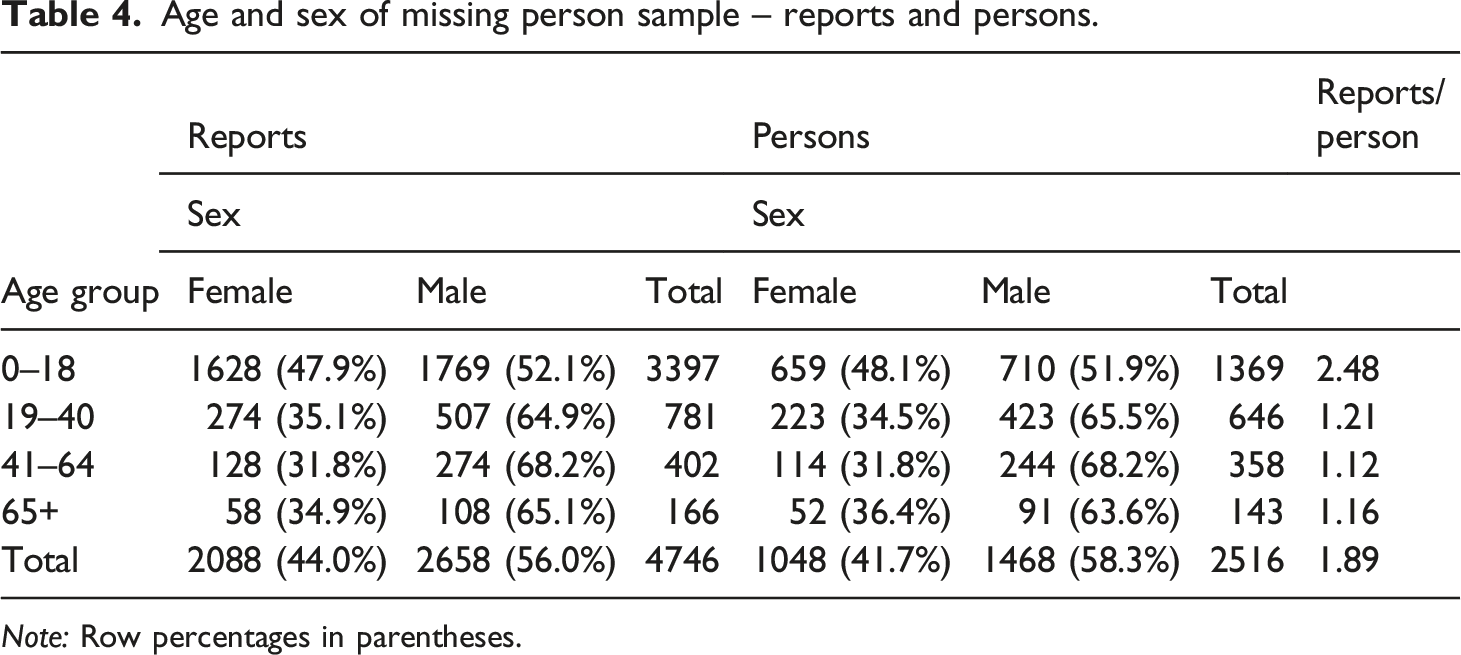
Note: Row percentages in parentheses.
Most reports related to children and young persons aged 0–18. Children accounted for over 71.5% of reports and 54.4% of all missing persons. Children were more likely to have a repeat missing episode in the year than adults. A missing person aged 0–18 averaged 2.48 reports per year in 2015, whereas adults aged 19+ had an average of 1.20 reports per person. Though the difference is small in the child population, males were more likely to be reported missing in each age bracket. The biggest sex difference is in those aged 41–64, with over twice as many males reported missing than females.
Repetition
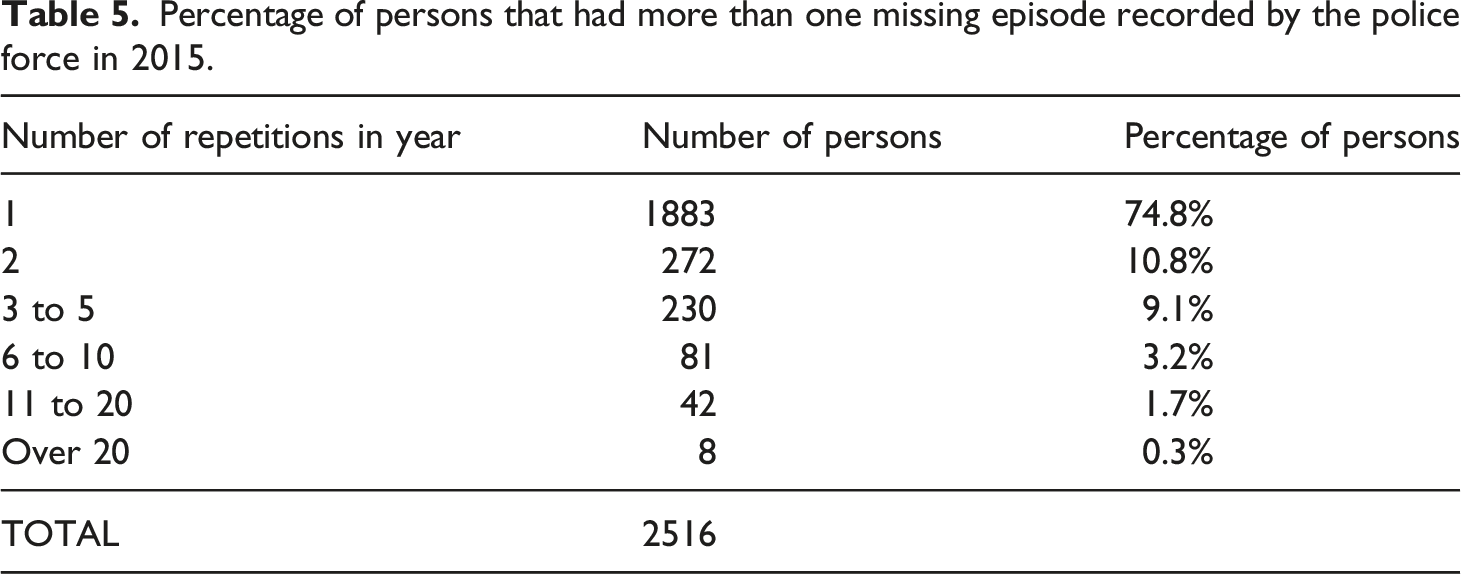
Percentage of persons that had more than one missing episode recorded by the police force in 2015.
Risk classification and harmful outcome
Outcomes of missing persons reports by the most recent risk classification attached to the report. Number of reports and column percentages.
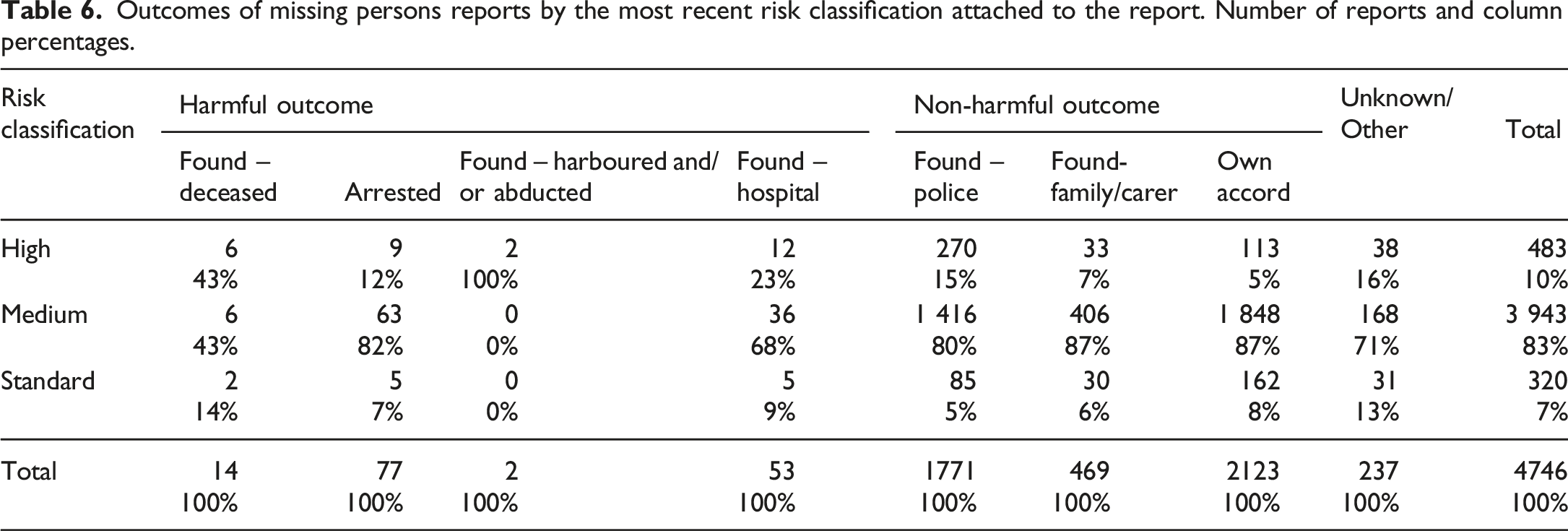
Most cases did not result in a harmful outcome, with ‘returning of own accord’ being the most common, followed by found by the police, and then by family/carer. Most cases were classified as medium-risk, one in 10 was assessed as high-risk. The total number of high-risk reports in our sample indicates that this police force was receiving on average 1.3 high-risk missing person reports per day in 2015.
Predicting a high-risk classification
Odds ratio estimates and 95% confidence intervals for high-risk.
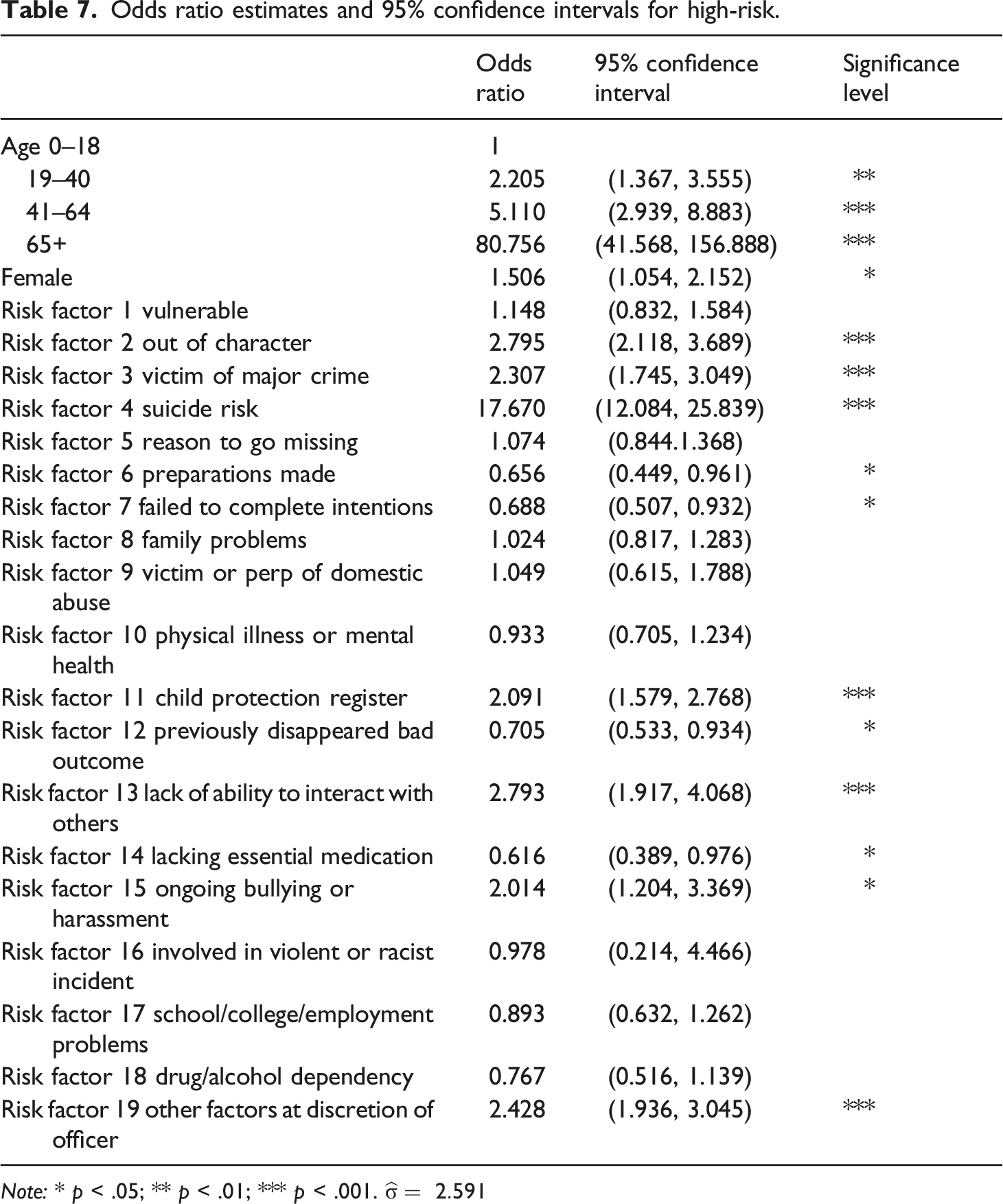
Note: * p < .05; ** p < .01; *** p < .001.
When controlling for all other variables, age was highly important in determining risk status. The odds of high-risk for a missing person aged 19–40 more than doubled (2.205) compared to those 0–18, and the odds increased further for those aged 40+, reaching more than five times for those aged 41–64 and over 80 times for those aged 65+. The sex of the person was also important, with the odds of a high-risk assessment for females more than 50% larger than that for males.
Regarding individual risk factors, suicide risk had the largest effect on a high-risk classification, multiplying the odds by 17.67. Out of character behaviour, belief that the person was subject to major crime, placement on the Child Protection Register, lack of ability to interact with others and ongoing bullying/harassment all significantly increased the odds of a high-risk classification by police. Other unlisted factors at the discretion of the officer also significantly increased the odds of a high-risk classification. This demonstrates the broadness of circumstances involved in missing person episodes and suggests there are important risk factors not covered by the existing risk assessment tool.
Vulnerable due to age or infirmity (risk factor 1) was not significant, but this may relate to the inclusion of age as a separate risk factor. Several risk factors significantly reduced the odds of a high-risk classification: preparations made for absence, failed to complete intentions, previously disappeared and experienced a bad outcome, and lacking essential medication.
Predicting a harmful outcome
Missing person reports: Relationship between risk level and harm outcome.
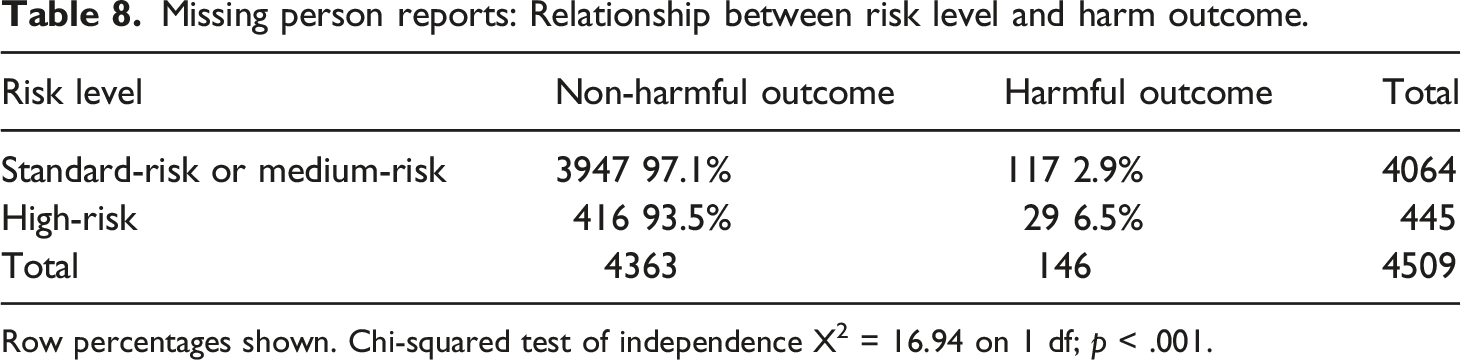
Row percentages shown. Chi-squared test of independence X2 = 16.94 on 1 df; p < .001.
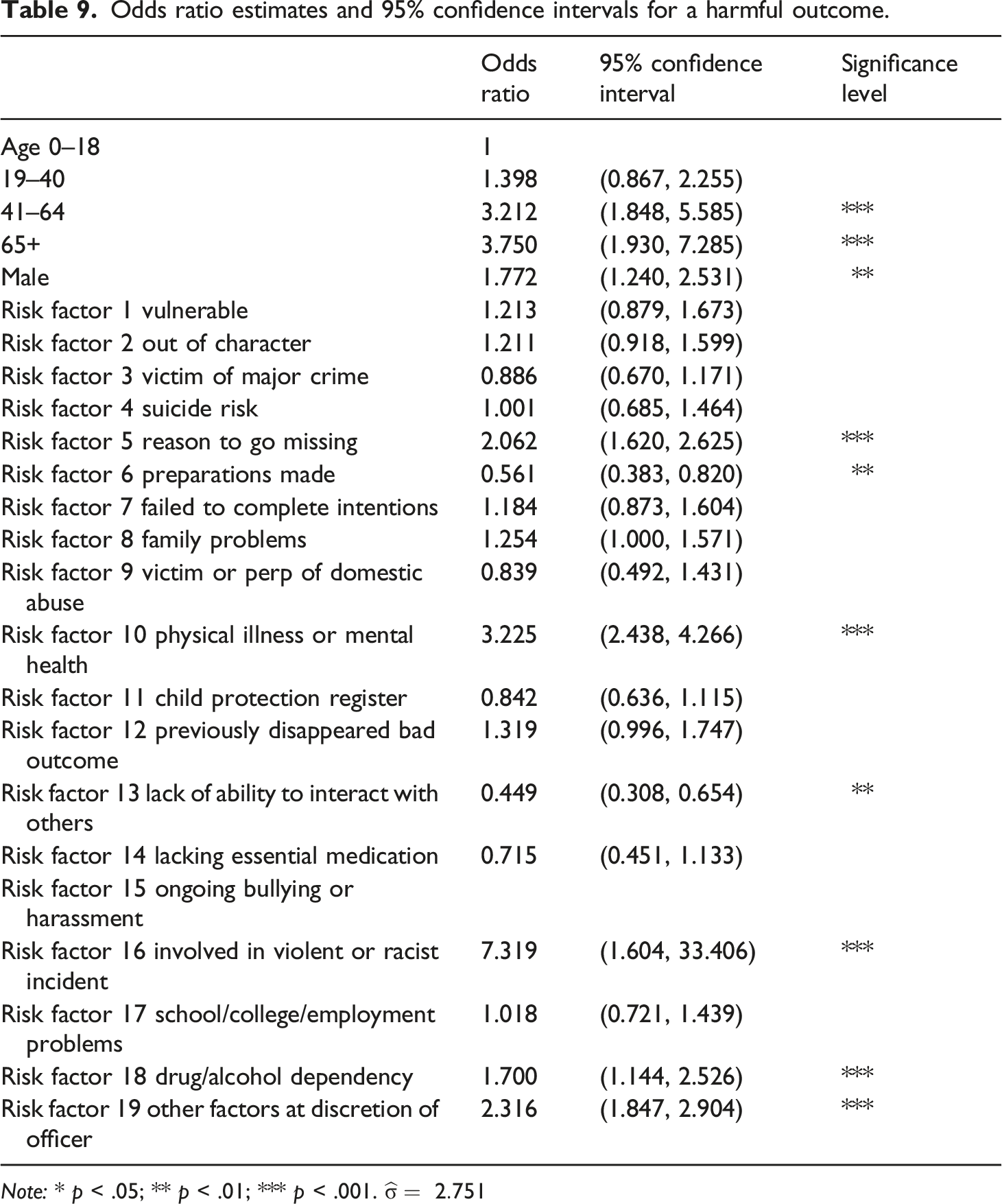
Odds ratio estimates and 95% confidence intervals for a harmful outcome.
Note: * p < .05; ** p < .01; *** p < .001.
This analysis omitted the risk factor of lacking essential medication, as there were no harmful outcomes when this risk factor was present. This caused very large negative estimates of the beta coefficient for this parameter.
Age was again an important risk factor. For those aged 19–40, the odds of a harmful outcome increased by 40% (1.398) compared to 0–18 s. The odds are over three times greater for those aged 40+ compared to 0–18 s. The sex of the person was also important. In contrast to the analysis of high-risk (Table 6) which identified females as having a higher probability of a high-risk classification, the analysis of harm shows that males were more at risk of a harmful outcome, with the odds increasing by 77% over females.
The risk factors identified as producing raised odds of harm differed from those identified in the ‘high-risk’ analysis. Involved in violent or racist incident was associated with a seven-fold increase in the odds of a harmful outcome (7.319), and the presence of physical illness/mental health was associated with a threefold increase. Other risk factors associated with a raised incidence of harm included reason to go missing and drug/alcohol dependency. Other unlisted factors at the discretion of the officer were also associated with a raised probability of a harmful outcome, more than doubling the odds. These unknown risk factors appeared to be important for both determining a high-risk classification and in being associated with a harmful outcome. Preparations made for absence and lack of ability to interact with others had a significant reduction on the odds of a harmful outcome.
Discussion and conclusions
In a high volume of missing person reports, the police must identify the cases at the highest risk of serious harm and allocate resources proportionately. Information on how this police risk assessment is conducted is sparse. This study therefore had two main aims: to investigate which demographics and risk factors were police indicators of high-risk, and to determine which demographics and risk factors were most likely to result in a harmful outcome. Here, the results are considered in greater depth.
High-risk classification
Age and sex were both significant predictors of high-risk classification. Female missing persons were significantly more likely to receive a high-risk classification than males. Adults were significantly more likely to receive a high-risk than children, and the likelihood of a high-risk classification increased with age. The significance of risk factors may be affected by their relationship to other demographics and risk factors. For instance, vulnerable due to age/infirmity was not significant in predicting a high-risk classification. This may relate to the age of missing persons marked with this risk factor. 93% of incidents involving children and 92% of incidents involving age 65+ were marked as vulnerable due to age/infirmity. Child incidents accounted for most cases and were the least likely to be classified as high-risk; cases involving age 65+ accounted for the smallest number of cases and were the most likely to be classified as high-risk. The large presence of child incidents in the vulnerable risk factor may partly explain why it was not significant in predicting a high-risk classification. These results could also reflect differences in reporting behaviour. Children may be more likely to be reported missing due to their vulnerability, or due to the requirements of authorities to report them missing (i.e. children’s care homes, schools), whilst the absence of an adult may not be reported missing until someone believes them to be missing and at risk of harm (Biehal et al., 2003).
Out of character behaviour was a significant predictor of a high-risk classification. Out of character is defined as behaviour that is unusual compared to how a person would typically behave, and is a serious indicator of risk (Hedges, 2017). For persons that are reported missing repeatedly, a missing episode may not be judged as out of character. The lack of perceived abnormality in the behaviour of children who are missing repeatedly may prevent their missing episode from being treated as high-risk (APPG, 2012). Whilst the risks posed to repeatedly missing persons may differ to those who go missing once in out of character circumstances, the repetition of missing episodes should not be treated as standard behaviour and should be treated as an indicator of increasing risk (APPG, 2012; DfE, 2014).
Interestingly, preparations made for absence, failed to complete intentions, previously disappeared and experienced a bad outcome, and lacking essential medication significantly lowered the odds of a high-risk classification. It is possible that confounding factors relating to the reason for missing that are not listed in the 19 risk factors influenced police perceptions of risk in these cases. For instance, in relation to a failure to complete intentions, Hayden and Shalev-Greene (2016) found that persons were often reported missing from mental health institutions after refusing to return from family visits, which may not be perceived as high-risk. Similarly, Hayden and Shalev-Greene recognised that children are often reported missing after not returning from family visits, which may not indicate high-risk circumstances to police, but often children will have been placed in care because of the risks posed by their family environment.
Harmful outcomes
In predicting a harmful outcome, age, sex and five risk factors significantly increased the likelihood of a harmful outcome. Missing persons aged 65+ were significantly the most likely to come to a harmful outcome. It is important to emphasise that this does not mean the children and young people in our dataset did not come to harm. Missing episodes for children may indicate that the child is subject to exploitation, trafficking and/or gang involvement (DfE, 2014). These harms were not accounted for in the predefined return descriptions used by the force, nor was this information available elsewhere in the provided dataset, therefore this harm could not be captured within the definition of harmful outcome. These measures must be considered in police risk assessment and police data recording methods should consider incorporating these harms into their predefined case outcomes.
Though less likely to be classified as high-risk, cases involving males were significantly more likely to result in a harmful outcome. One reason for the overrepresentation of males in harmful case outcomes is that they account for the majority (93%) of cases that are found deceased in the dataset. This majority is explained, in part, by the literature. Men are more likely to go missing to commit suicide (Biehal et al., 2003) and are more likely to be reported missing following serious and fatal accidents (Biehal et al., 2003; Newiss and Greatbatch , 2017). Another reason for male overrepresentation in the harmful outcomes is that males accounted for most (75%) cases that resulted in arrest. This finding is consistent with previous research. Previous research has found that men are more likely than women to go missing due to involvement in crime, mostly to avoid arrest or prosecution (Biehal et al., 2003). More generally, males account for 85% of arrests in England and Wales (MoJ, 2018) and so the sex distribution of those arrested whilst missing is consistent with that of those arrested in the general population. The reason for arrest indicates the harm risk. Shalev-Greene (2011) found over 80% of repeatedly missing persons had been arrested, mostly for assault, followed by theft and shoplifting. Arrest may signify that the person poses risk of harm to others, or arrest could indicate the missing person is victim to criminal exploitation and is experiencing harm. The type of harm and the person(s) at risk should be considered in each case. Though female missing persons were less likely to result in a harmful outcome in our analysis, women and girls may be more likely to suffer certain forms of harm whilst missing, such as sexual violence and exploitation (CEOP, 2011). Doyle and Barnes (2020) found in their data on missing person reports made to police that the group most likely to come to harm whilst missing were females aged between 18 and 64 when the definition of harm included death, suicide, self-harm, mental harm, sexual assault and injury. This information was not available in our dataset and these findings demonstrate the importance of collecting information on all harm experienced whilst missing.
Comparison
The risk factors predictive of a high-risk classification mostly differed to those predictive of a harmful outcome. Out of character, victim of major crime, suicide risk, Child Protection Register, were significant in predicting a high-risk classification, but not in predicting a harmful outcome. Preparations made and lack of ability to interact with others significantly increased the likelihood of a high-risk classification though significantly decreased the likelihood of a harmful outcome. These differences may not suggest that these risk factors are not indicative of high-risk or that police resources have been wasteful (Doyle and Barnes, 2020), but may suggest the police have effectively allocated resources and prevented harm in cases where these risks were present. On the other hand, reason to go missing; physical illness or mental health; involved in violent or racist incident; and drug/alcohol dependency were not significant in predicting a high-risk classification, though significantly increased the likelihood of a case reaching a harmful outcome. The findings of the analysis indicate that these risk factors may need to be treated with greater priority in police risk assessment. Further study should consider whether there are confounding factors not included in this analysis that interact with the relationship between these risk factors and high-risk classifications and harmful outcomes. With regards to physical/mental illness for example, Hayden and Shalev-Greene (2016) found that persons missing from mental health institutions were less likely to be graded as high-risk than persons missing from hospital, despite that often individuals were in such organisations for evaluation or under section 2 or 3 of the Mental Health Acts. Hayden and Shalev-Greene found that there was a lack of clarity as to whether absconding patients were the responsibility of the health organisation or the police, which could influence perceptions of risk.
The risk factor that was significant in both predicting a high-risk outcome and in predicting a harmful outcome was other factors at the discretion of the officer. This could suggest that (a) the nature of and risks involved in missing person cases are diverse and complex; (b) the risk factors currently stated in the risk assessment decision-making guide need revision and (c) police discretion and recognition of case specific circumstances are important in defining risk and allocating police response. With regards to the latter, these findings may support those of Smith and Shalev-Greene (2015), who found the final decision on risk assessment to be largely based on the discretion of the investigating officer(s), rather than prescribed only by risk assessment tools. Moreover, Fyfe et al. (2015) found that some police officers saw policy and guidance related to missing persons as limited in its ability to determine an appropriate police response, and that the experience and instinct of individual police officers was more important.
Limitations
The first limitation is that we cannot guarantee the accuracy of the presenting risk factors. The police record the risk factors using information provided by the informant (ACPO, 2010). The informant may not be able to answer all details on the missing person or could even be unwilling to give information on some risk factors if it implicates themselves in misconduct. For instance, a victim of domestic violence who flees the home may not be recorded as a victim of domestic violence in the missing person report if the informant is the perpetrator (ACPO, 2010).
The second limitation is the use of the known outcome measure. Our definition of harmful outcome does not include cases that remain outstanding. The demographics and risk factors predictive of outstanding cases may differ to those of other case outcomes. For previous research into risk and outstanding missing person cases see Newiss (2005).
The third limitation is the measure of harm. Harmful outcomes were defined by the police recorded outcomes we perceived to be most indicative of serious harm coming to the missing person or others. This measure does not account for harm that may have come to the person whilst missing, such as physical and sexual violence. Furthermore, our outcomes defined as harmful, such as arrest and found in hospital, may not always indicate harm. More contextual information on missing person cases is required to accurately determine harm, and this is an area for further research considered below.
Implications of our findings for police practice and further research
From the findings and limitations of the study, we derive two key implications for police practice and further research. 1. Police risk assessment may prevent harm; decision-making tools should be revised as knowledge on missing person cases develops.
The police response to cases they judge as high-risk may prevent such cases leading to serious harm; these cases should continue to be prioritised in missing person investigations. Risk factors that have been shown to predict harm but were not predictive of high-risk classifications should be reconsidered as priorities in police risk assessment. Risk factors that were coded as officer discretion and not covered by the decision-making guide should be investigated to contribute to the development of decision-making guides. The interaction of risk factors and individual demographics in predicting harm should also be considered. 2. The collection of data on what happens to a person whilst they are missing should be standardised in police data recording.
To estimate the likelihood of harm in missing person cases requires understanding of the relationship between identified risk factors and experienced harms. A person that returns of their own accord or has been located by friends/family or the police may still have experienced harm. The experience of harm whilst missing may contribute to the repetition of missing episodes (APPG, 2012). Collecting more information on the types of harms experienced could inform police risk assessment and resource allocation, to prevent harm and contribute to the reduction of repeat missing episodes. As earlier discussed, the collection of such information is already encouraged in police Safe and Well checks and in RHIs (see ACPO, 2010; DfE, 2014). The recording of information related to what happens to a person whilst missing, as is often shared by other agencies with the police (see Pona et al., 2019), should be standardised in police data recording. Increasing the accessibility of this information could assist police risk assessment and enable additional information on risk and harm to be included in statistical analysis. This implication is not a call for the complete standardisation of the information collected in Safe and Well checks or RHIs, but a call for the information shared with the police to be recorded in an accessible format on police information systems, to mobilise the information for both operational practice and future research.
Footnotes
Acknowledgements
We thank the police force for generously providing the data used in this analysis.
Declaration of Conflicting Interests
The author(s) declared no potential conflicts of interest with respect to the research, authorship, and/or publication of this article.
Funding
The author(s) received no financial support for the research, authorship, and/or publication of this article.
