




Abstract
Individual and organisational factors have been identified as influencing personal wellbeing, with an emphasis placed on the organisation and management to support their staff. Whilst various policies, interventions and campaigns are in place at national and local level, it is unclear how well individual and organisational perspectives of wellbeing are aligned. This study seeks to address this through the analysis of secondary data provided by Oscar Kilo in 2018: Blue Light Wellbeing Frameworks (organisational perspective) and Human Resources policy review survey data (individual perspective). Whilst findings indicate positive steps to enhancing police wellbeing, a disconnect between the organisation and employees was apparent.
Literature review
In the UK, research illustrates how poor employee health and wellbeing 1 results in stress 2 -related absence and a reduction in productivity (Boag-Munroe et al., 2017). Whilst this is an issue across many sectors, policing in England and Wales is particularly susceptible to officers and staff taking sick leave due to poor psychological wellbeing (BBC, 2016; Guingand, 2015); an issue that has ‘become an increasing area of concern’ (Cartwright and Roach, 2020: p. 1). Evidence illustrates how absenteeism, related to poor mental health, rose by 98% between 2010 and 2017 (Evening Standard, 2017), with recent reports of absences associated with stress, trauma and psychological illness almost doubling in the last decade (Cartwright and Roach, 2020); this brings with it huge practical and financial difficulties for forces. For example, Lincolnshire Police lost 10,324 duty days and spent approximately £1.7 million on sick leave between 2016 and 2017 (The Lincolnite, 2017).
More broadly, a Police Federation of England and Wales (PFEW) Welfare Survey (Elliott-Davies and Houdmont, 2017) found that a third of police staff had taken one of their sick days due to stress, anxiety or depression. Further, the Home Office (2020) reported that approximately 17,000 officers across England and Wales were: on recuperative duties; in adjusted posts; or on long-term sickness or absence (an increase from 10,000; Home Office, 2017). This escalation in psychological sick leave is argued to be a result of a rise in work-related demand, in conjunction with the organisational changes to the police workforce, including the rapid reduction and reinstatement in the number of police officers (BBC, 2016; Guingand, 2015). That being said, Cartwright and Roach (2020) highlight how an increase in stress-related absences could be indicative of more receptive and accepting attitudes towards mental health and wellbeing in policing. Either way, efforts must continue ‘to provide earlier, better and more consistent support’ to police officers and staff (PFEW, 2020).
To effectively address this trend in police wellbeing, policing organisations are taking strides to improve the health and wellbeing of their staff. This is evidenced by national developments, namely the launch of Oscar Kilo 3 in 2017 and the National Police Wellbeing Service 4 (NPWS) in 2019. Whilst this drive to support wellbeing often occurs from a top-down perspective, there are also initiatives within police forces that are driven by individuals, forming a bottom-up approach. Wellbeing is recognised as encompassing both ‘the environmental factors that affect us’ and ‘the aspects of our lives that we determine ourselves: through our own capabilities as individuals; …the quality of the relationships that we have with other people; and our sense of purpose’ (What Works Wellbeing, n.d.). As such, it is important to determine if individual and organisational efforts to enhance wellbeing are aligned.
Organisational wellbeing
To be a successful and productive criminal justice organisation, a critical understanding of the organisational stressors and their resulting impact upon the workforce is needed (Kuo, 2014). With regards to policing organisations, police wellbeing is proposed to be impacted by two cores of stress: operational and organisational (Duxbury and Halinski, 2018; Houdmont et al., 2012; Shane, 2010).
Operational stress is particularly important to policing due to the unique role of officers and staff, whereby individuals routinely face situations of conflict, trauma and abuse (McCormack and Riley, 2016; Regehr et al., 2019; Tehrani, 2010) that can subsequently result in adverse mental and physical health (Clements et al., 2020). What is more, the role of police officers and staff has a significant impact on wellbeing (Sheard et al., 2019), with further reports recognising how trauma is experienced beyond frontline officers, such as those investigating child homicides (see Roach et al., 2018). Such operational stressors are often compounded by the pressure placed upon officers and staff to make critical and high-stakes decisions in dangerous situations (McCraty and Atkinson, 2012), with evidence suggesting that consistent exposure to this pressure is linked to poorer psychological wellbeing (Setti and Argentero, 2013).
Organisational stress can be similarly damaging to the health and wellbeing of police staff; in fact, researchers argue negative psychological wellbeing is more likely a result of organisational, rather than operational, stressors (e.g. Brown et al., 1999; Tyagi and Dhar, 2014). These stressors relate to issues stemming from inadequate training, overtime demands, police culture and issues with managers and peers (Duran et al., 2018; McCreary and Thompson, 2006; Purba and Demou, 2019; Shane, 2010). Consequently, organisational stressors have been linked to a range of issues, such as reduced performance (LeBlanc et al., 2008), psychological burnout (Burke and Mikkelsen, 2005), occupational stress and emotional exhaustion (Purba and Demou, 2019), anxiety and depression (Nelson and Smith, 2016), and, in some extreme cases, suicide (Spence and Millot, 2016). Despite such negative consequences, the fear of stigmatisation and organisational culture can act as a deterrent to individuals seeking support (Bell and Eski, 2016).
In addition to top-down stressors, research highlights how the employment relationship between the police organisation and its staff forms a ‘psychological contract’ (Noblet et al., 2009). In instances where staff feel they can trust the organisation and believe their expectations are met by management, higher levels of satisfaction and lower levels of anxiety are reported (Conway and Briner, 2009; Guest et al., 2010). In contrast, when expectations are not fulfilled, a range of negative consequences and workplace stressors become apparent (Robbins et al., 2012). Furthermore, research into the stressors stemming from perceived breaches to the ‘psychological contract’ found that these factors were linked to an officer’s decision to resign from the police organisation (Duran et al., 2018; Gaston and Alexander, 2001).
Due to the issues highlighted above, organisations have a duty to ensure that those in human resources (HR) and management are equipped with the knowledge necessary to support police staff. As highlighted by Demou et al. (2020: 703), the working environment is fundamental for ‘mental health promotion and behaviour change’. The importance of management and their role in employee wellbeing is evident: Skakon et al. 2010 reported the association between line manager behaviour and staff stress, with further claims of competent management having a positive impact on resilience, work engagement and psychological distress (Houdmont et al., 2020). Researchers have illustrated how effort from leadership is central to forming an appropriate environment for staff engagement on wellbeing (Hesketh et al., 2014), as well as a deep understanding of their work situation (Macleod and Clarke, 2009). As part of these efforts, the Blue Light Wellbeing Framework (BLWF) (Hesketh and Williams, 2017) was developed to provide understanding, share good practice and ultimately develop a more consistent approach to wellbeing across police organisations. The framework acts in a similar fashion to a survey to police organisations, who subsequently provide metrics and text responses to provide evidence into how their organisation handles staff wellbeing. As such, it is a particularly useful tool in understanding police wellbeing from an organisational perspective.
Individual wellbeing
Research suggests that individuals respond to stress by using one or more of three core coping strategies: problem-focused, emotion-focused and avoidant (Carver et al., 1989; Litman, 2006). The most commonly used approach in policing appears to be problem-focused coping, whereby police staff aim to tackle the cause of stress; yet research has found that this approach is unsuccessful in reducing police stress levels, perhaps associated with the lack of perceived control over their role and responsibilities (i.e. ideas and suggestions not being considered, and no influence over their performance targets; Armstrong, 2018).
The consequences of any workplace stress can be disastrous to police wellbeing. When officers and staff are faced with persistently difficult or dangerous circumstances, their health and wellbeing can fall into a recurring decline. This can manifest physically through issues such as cardiovascular disease (Andersen et al., 2016) and other chronic ailments (Ho et al., 2010), as well as psychologically, such as panic attacks (Garbarino et al., 2013). Whilst physical ill health can impact upon psychological ill health, and vice versa, both can have a cyclical impact as they cause further stressors for an individual. For example, marital problems (Van Der Velden et al., 2013) could stem from workplace stress, which only seek to compound the difficulties faced by the employee.
There has also been a stark change in demand, resources and officer numbers, placing strain on police organisations and the staff working within them (Duran et al., 2018). The overall changes have the potential to foster stressful working environments which impact upon individual health and productivity (Wright and Cropanzano, 2000). As police staff attempt to manage stress, they may be hindered by barriers when employing ‘healthy’ coping strategies (Armstrong, 2018), but may also develop maladaptive or avoidant strategies, such as substance misuse (Acquadro Maran et al., 2018a). In response, programmes of support are promoted, which have reportedly been effective in improving mental health, coping abilities and positivity of police staff, whilst also reducing perceived levels of stress (Acquadro Maran et al., 2018b; Anshel et al., 2013; Kuhns et al., 2015). Furthermore, once embedded within the individual, these coping strategies can also be maintained (Gloria and Steinhardt, 2016; Yeung et al., 2016). However, evaluations of both generic and police-specific workplace interventions have also reported limitations (i.e. small samples) and mixed success (see Demou et al., 2020). Moreover, taking into account police culture, the successful embedding of such strategies within a policing workforce would require individual reflection and awareness (Freeman, 2016), as well as the development of skills to process, understand and accept wellbeing experiences with a positive outlook (Choma et al., 2009; Lambert et al., 2009).
Resilience programmes are proposed as an effective method to promote individual wellbeing through improving self-awareness to tackle sources of stress (Daus and Brown, 2012; Hesketh et al., 2015). Further, mindfulness programmes reportedly improve relationships, concentration and physical wellbeing, and reduce symptoms of poor mental health, such as burnout and anxiety (e.g. Halliwell, 2010). However, whilst such assistance is available, uptake is generally poor (British Safety Council, 2018; Kukucska, 2020).
Summary
Considering the increase in popularity and focus on wellbeing within policing, there is undoubtedly a range of good practice from organisations and individuals. However, both the organisational top-down approach and individual bottom-up approaches to improving wellbeing must be effectively joined up in their efforts if an effective and sustainable outcome is to be achieved. Whilst literature recognises the relationship between wellbeing and organisational performance, ‘practice disjoints them’, with organisations and the government tending ‘to prioritise organisational performance at the expense of mental health’ (Ipsen et al., 2020). Therefore, this paper aims to examine individual and organisational perspectives of police wellbeing: data collected via the BLWF will provide an insight into how well developed the organisation deems themselves to be, according to various elements of wellbeing (i.e. absence management), with data from a HR policy review survey reflecting individual police officer and staff views. This offers a critical awareness of how wellbeing is perceived by the organisation and its staff, determining if such perceptions align.
Method
A mixed method approach was adopted to examine two sets of anonymised, secondary data collected, and provided, by Oscar Kilo in 2018: (i) BLWF and (ii) HR policy review survey. The former presented an organisational perspective of employee wellbeing according to six sections, with the latter being an indication of individual attitudes towards various policies and the impact on wellbeing.
Blue Light Wellbeing Framework
A total of 18 frameworks were provided for analysis, with each framework 5 relating to an anonymised police organisation within England and Wales and completed by a nominated individual(s). The BLWF consists of six sections related to wellbeing within policing: Leadership, Absence Management, Creating the Environment, Mental Health, Personal Resilience and Protecting the Workforce. Each section within the framework contains several statements relating to subthemes of said section (e.g. within leadership there is a statement concerning ‘An effective policy is in place to manage disciplinary and grievance procedures’). Overall, the framework is made up of 94 statements across each of the six sections. For each of the statements, policing organisations responded by providing a self-assessment of whether they were fully developed, in development or underdeveloped. To explain and support their self-assessed rating, a free-text box accompanies each statement.
Quantitative analysis
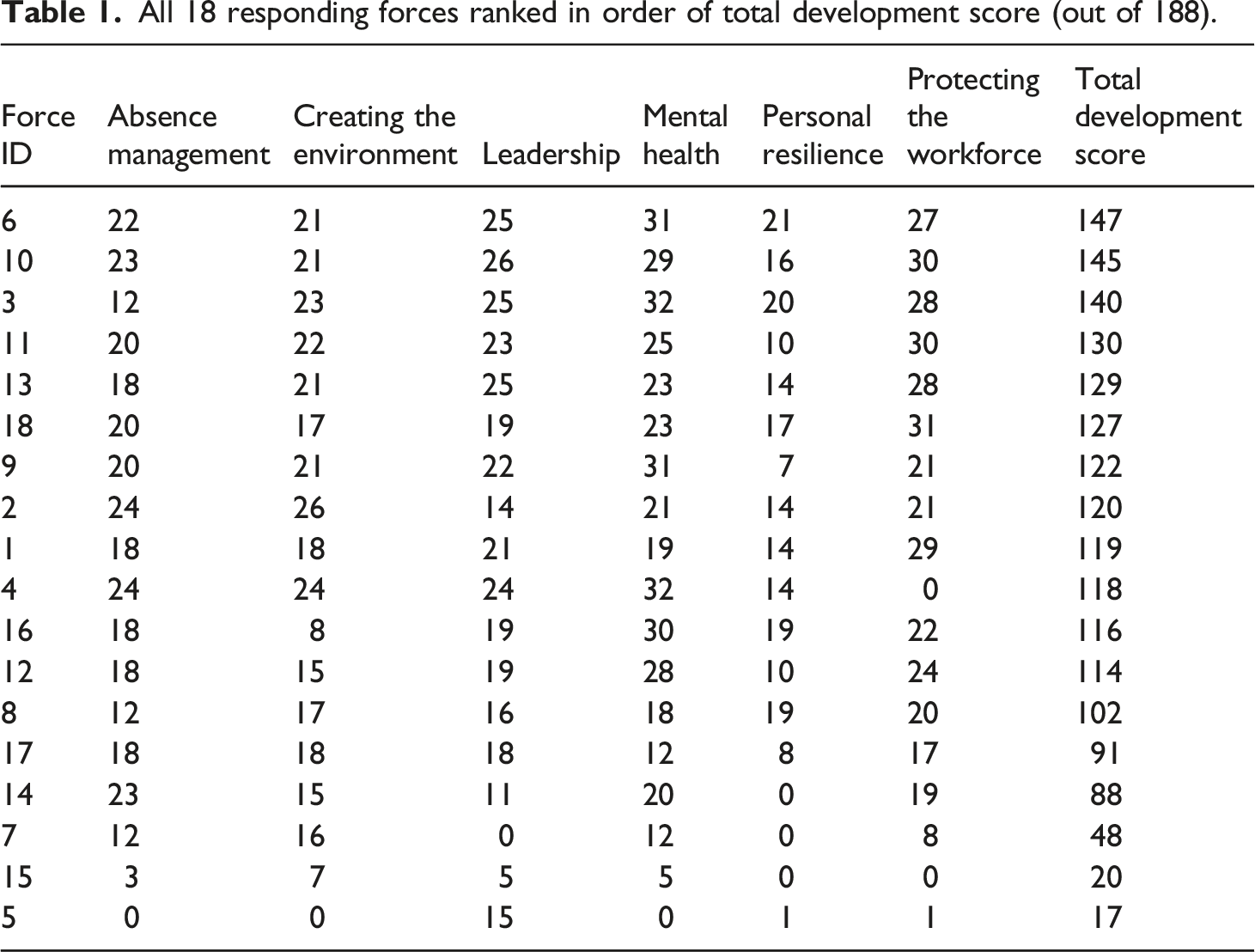
The self-assessment was coded for the purposes of statistical analysis within IBM SPSS v.25. Across the 94 statements, underdeveloped and missing data were coded as 0; in development was coded as 1 and fully developed was coded as 2. Firstly, the analysis considered the coding as categorical to examine the proportion of development across each of the six themes using chi-square analysis. Following this test, the coding was then considered a scale variable and computed into a total development score across all forces (ranging between 0–188): a score of 0 reflected a police organisation that was completely underdeveloped, whereas a score of 188 reflected a police organisation that was completely developed across all aspects of wellbeing. The scores were used to rank order the police organisations to descriptively determine the spread of development across the sample.
Qualitative analysis
The completed notes sections, accompanying each statement in the framework, were transferred into NVivo (QSR International) for thematic analysis. To determine the validity and consensus within the qualitative coding, inter-rater reliability was conducted. Due to the large volume of data presented within the BLWF, the secondary rater isolated a sample from which to compare coding. Within the current study, Cohen’s Kappa (κ) indicated a substantial level of agreement (κ = 0.076) between the primary and secondary rater. This was greater than the commonly accepted level of 0.06 and appeared closer to the ‘ideal’ agreement value of 0.08 (McHugh, 2012).
Human Resources policy review survey
A HR policy review survey was distributed to police officers and staff at four forces in 2018. The survey explored the HR policies that participants deemed to have had positive and negative impacts on individual wellbeing and the reasons why such policy led to the subsequent impact.
Qualitative analysis
A word frequency analysis was conducted, using NVivo, to identify the four policies that were mentioned most frequently as having an adverse, and a positive, impact on wellbeing. The responses relating to said policies were thematically explored to understand what it was about the policy that resulted in it being deemed to have a negative, or positive, impact. As UK police forces utilise their individual, force-specific HR departments, it is likely that there are differences in both the policies, and the names of the policies, resulting in similar policies being grouped together.
Results
Blue Light Wellbeing Framework
A chi-square analysis examined the association between the development self-assessment and the sections of the BLWF. The test found a statistically significant association, X2 (10, n = 1692) = 129.150, p <0.001, whereby absence management and creating the environment were significantly more likely to be fully developed in comparison to all others. Leadership was significantly more likely to be in development, and personal resilience and protecting the workforce were significantly underdeveloped. Mental health fell within the expected count based upon a comparison of all other themes.
All 18 responding forces ranked in order of total development score (out of 188).
Two core themes were identified throughout the frameworks: (i) staff support and the working environment and (ii) organisational learning.
Staff support and the working environment
Thematic analysis identified ‘staff support and the working environment’ across all six sections of the BLWF. Within absence management, staff support pertained to early and regular contact with individual staff, signposting staff to appropriate support, and organisational provision of rehabilitative services (e.g. physiotherapy, counselling and psychotherapy). Creating the environment, and protecting the workforce, recognised the value of, and need to foster, a positive working environment to an organisation’s success, with the importance of leaders and their role in supporting staff and creating a safe space also noted (leadership). Within mental health, forces reported their ongoing commitment to challenging mental health stigma and to promoting positive wellbeing, with personal resilience encouraging staff to engage in a healthy lifestyle.
Five subthemes were highlighted: (i) management responsibility and support, (ii) communication, (iii) individual support and encouraging a healthy lifestyle, (iv) creating a safe space, and (v) reactive and proactive strategies. 1. Management responsibility and support: Management responsibility and support was evident in each of the six sections of the BLWF. In relation to absence management, there was an expectation that line managers ‘take the initiative with ensuring [absence management policy and procedures] are implemented appropriately’, in addition to proactively seeking ways to facilitate early return to work (RTW). Further, managers should have an understanding of individual staff to enable the early identification of stress and to ensure appropriate support measures are in place. Creating the environment detailed the commitment of the Senior Leadership Team to create both a ‘learning environment’ and ‘an environment where all staff experience meaning and purpose in their working life’, with an expectation that managers ‘lead by example’ and are responsible for protecting their staff. Management are themselves supported to support their staff through programmes (i.e. the Core Leadership programme) and toolkits (e.g. management of student officer probation toolkit). The leadership section emphasised the need for wellbeing to be ‘recognised as a priority by leaders’, in addition to buy-in from management due to the ‘pivotal role [they play] in managing and enhancing wellbeing’. In relation to mental health, an awareness of the symptoms of stress and poor mental health, and knowledge of how to support staff on their RTW, was deemed a line manager’s responsibility. Personal resilience considered the ways in which to equip managers with the skills to assist their staff in managing mental health issues, as well as noting the significance of line managers in making their staff feel supported: ‘some line managers are very good at encouraging individuals and having those frank conversations - but we need to work on building a culture where individuals have a trust and confidence in what’s been said’. Within protecting the workforce, content surrounded the expectation of managers to signpost staff to appropriate information, policies and process, as well as reference to various toolkits and supervisor training in debriefing employees following significant incidents. 2. Communication: Communication was prominently noted throughout the framework (namely, creating the environment, leadership, mental health, personal resilience and protecting the workforce), in terms of methods and purpose. Internal communication strategies included ‘Learning and Wellbeing intranet pages’, champions (e.g. Blue Light champion, Change champion), ‘posters, email broadcasts, pop up stands, the wellbeing zone and EAP online services’, as well as the use of national campaigns to signpost staff to services. Such methods of communication were intended to promote wellbeing, including physical and social activity, and to inform employees of organisational change. In addition, training, workshops (e.g. healthy lifestyle sessions) and seminars (e.g. on financial awareness) were used as a means to communicate and share awareness and learning throughout the organisation. 3. Individual support and encouraging a healthy lifestyle: Consideration of individual circumstances and maintaining a positive work–life balance was evident in leadership, mental health, personal resilience and protecting the workforce. Flexible working arrangements supported staff ‘to continue their careers as well as ensuring operational resilience on a 24/7 basis’, with further recognition of the requirement for managers to ensure employees felt they had a ‘voice’ and to be cognisant of the individual’s abilities, needs and potential opportunities (leadership). Further, staff are encouraged to engage in voluntary activities out of work hours (e.g. acting as School Governors and running police cadet groups), with one force reporting that they ‘support time off for volunteering’ and others referring to the various campaigns (i.e. Desk to 5k), social clubs (i.e. meditation and football) and events (i.e. Family Days) to promote staff involvement in physical and mental wellbeing (mental health). Within personal resilience, references were made to a variety of lifestyle-related support, such as advice on maintaining a healthier lifestyle, accessible via Police Mutual’s ‘Well Zone’, and the promotion of healthy lifestyle sessions (e.g. advice on weight loss, physical activity, nutrition and hydration). Healthier eating choices were reportedly available at some forces, as well as access to occupational health-checks to assess general health and provide medical advice when necessary. Raising awareness of how sedentary lifestyles can have an impact on the body was observed and incentives were offered to encourage alternate modes of transport (i.e. ‘free cycle training and tickets to try travel by bus or tram’). Protecting the workforce outlined the expectation of line managers to have an understanding of staff experiencing personal problems and crisis, with further mention of the active involvement of forces in promoting mental and physical health awareness through training (e.g. menopause awareness training) and campaigns (e.g. Movember, time to talk lunchtime walks). Educating staff regarding their general health (e.g. blood pressure checks) and offering specific support, such as financial inputs (e.g. mortgage and debt advice, the Benevolent Fund), enabled staff ‘to be better informed and take some personal responsibility [for their wellbeing]’. 4. Creating a safe space: The theme of creating a safe space for staff was noted in the creating the environment, leadership and mental health sections of the BLWF. The physical environment and the impact this had on staff was noted, from ‘decluttering the environment’ and improving ‘the standards to the station’ to the placing of desks ‘to make it the best environment to work in’. Primarily, comments relating to this theme centred around creating ‘an inclusive and diverse environment, where individuals can be their authentic selves’, with various schemes, training and staff associations in place to support this (e.g. diversity ally scheme) (creating the environment). Within leadership, the role of management in encouraging a safe space for staff was acknowledged specifically in terms of setting ‘a climate of belonging through the wellbeing agenda’, including the provision of time and space for wellbeing conversations, empowering and motivating staff, and acting as a role model. In relation to mental health, forces detailed various ways to reduce stigma, provide support and raise awareness of mental health and wellbeing, including mental health awareness campaigns, support groups (e.g. mental wellbeing network, Blue Light champions) and hearing ‘lived experiences’ from past and present officers. 5. Reactive and proactive support: The implementation of reactive and proactive measures were discussed in the absence management, mental health and protecting the workforce sections as a means of not only supporting those in crisis, but to also help individuals before reaching that point. Risk assessments were referred to throughout, ‘as a preventative measure to stop absences happening’ (absence management) and as a means of identifying the early signs of stress and ensuring the necessary support is in place (mental health). Resilience workshops offer staff education and awareness of risk factors to wellbeing (protecting the workforce), with such sessions offered to those returning to work following psychological-related absence to prevent such absences in the future (absence management). Sleep and healthy eating initiatives were also reported, in addition to various strategies that are employed following an incident to identify early signs of Post Traumatic Stress Disorder (PTSD) and poor mental health (i.e. TRiM and Post Incident Management) (protecting the workforce). Specifically in relation to those in high vulnerability roles who are exposed to distressing situations, the availability of ‘proactive psychological support’ and ‘access to CiC employee line, MIND Blue Light information line, and other health and wellbeing support’, were noted (absence management). The provision of consultative support was also offered ‘where psychological and interpersonal challenges are present to offer advice in coping…and to monitor overall functioning’, with reference to a ‘defuse framework’ to assist managers in evaluating wellbeing following a traumatic event and a role risk register ‘to identify the level of risk within high risk roles’ (mental health).
Organisational learning
‘Organisational learning’ was identified across four sections of the BLWF: absence management, creating the environment, leadership and mental health. Examples of organisational learning included sharing best practice between forces and identifying ‘emerging trends… leading on initiatives and influencing change’ (absence management). The use of surveys were reported to regularly review the perceptions of the workforce (creating the environment), to identify required workforce changes and to inform future learning (leadership), in addition to setting action plans and informing local priorities (mental health). The ‘importance of leadership requirements in linking wellbeing to both the organisations corporate strategy and workforce needs’ was recognised, as was the positive impact individual wellbeing would have on the organisation in enabling ‘high performance’ (leadership).
Five subthemes were reported: (i) engaging in discussion, (ii) implementing change, (iii) monitoring, (iv) prevention and proactivity, and (v) maintaining good practice. 1. Engaging in discussion: In relation to absence management, forces reported engaging in consultation at boards, with discussions evident between leaders when considering new wellbeing initiatives (leadership). Platforms to engage in discussion were noted, in terms of regular wellbeing forums and strategy meetings. On an individual basis, the Performance and Development Review (PDR) scheme reportedly provides a framework to consider ‘what is working well and where further support is required’ to aid in discussion between employee and line manager. 2. Implementing change: Change to practice and policy reflected an organisational awareness of individual circumstances as forces ‘moved away from a ‘one-size fits all’ linear process’. For example, following staff consultation wellbeing coaches were introduced, with reviews of current policy and procedure underway to identify learning and the subsequent changes required, such as amending policies to ensure they are ‘user friendly’ and ‘relatable’, and replacing formal interviews with informal RTW discussions (absence management). Similarly, the leadership section detailed various actions that had been implemented, in response to feedback, to better support staff. For example, working groups and activities were introduced to help individuals during ‘times of domestic stress’ and those with ‘poor mental health’. Further, following a gender review of family friendly policies, a female recruitment, progression and retention group was developed. 3. Monitoring: In absence management, forces reported implementing various procedures to ensure compliance and maintain standards (e.g. monitoring timescales of RTW procedures and dip sampling documents). Rates and reasons for absence were recorded using the ‘Dorset 12’ categories by some forces to identify trends, concerns and risks, and implement appropriate interventions (e.g. determine that most time lost due to sickness was a result of psychological ill-health). 4. Prevention and proactivity: Within the creating the environment section of the BLWF, preventative and proactive approaches were noted, with an emphasis within the organisation to have ‘a proactive focus on what can be done to improve the work environment’. More specific to individual wellbeing, the need for the organisation to ‘become better at identifying those who need our help’ and to have a ‘proactive mindset’ was reported. Reference was made to using the GAIN model to develop targeted interventions ‘with the emphasis on early intervention’, in addition to focussing on ‘prevention by education’ through implementing various initiatives and programmes, and building ‘the health and resilience of individuals and the workforce as a whole’. 5. Maintaining good practice: Various methods were reportedly in place to ensure police officers and staff provide a high quality service (e.g. assessing a recorded call and feeding back to the individual, sharing guidance in different formats, promoting professional standards and ethical behaviour). Excellent service is encouraged and rewarded through various approaches, such as ‘commendations, employee perks, awards, employee incentives and benefits’, in addition to being measured and recorded via the PDR process (creating the environment).
Human Resources policy review
Positive impact
When asked to identify a policy that has had a positive impact, the most referred to answer was ‘none’ or ‘unaware of any’ (or synonyms of these), and so this theme will be discussed first below. Although not a specific policy, this reflected the generally negative attitude of participants towards HR policies, with particular issues identified: (i) a lack of awareness, (ii) poor personal experience, and (iii) a disconnect within the organisation. 1. Lack of awareness: Answers typically centred on having a lack of knowledge about HR policies more generally, as well as policies that are specifically geared towards improving wellbeing: ‘[I] cannot name and not aware of any HR policy that has or was intended to have a bearing on my wellbeing’. 2. Poor personal experience: Some participants indicated that previous poor experience with HR led to their inability to name policies that had a positive impact on wellbeing: ‘[I] can’t think of a single one… whenever I speak to HR I generally come away feeling worse’. Generally, there was the view that HR policies are ‘changed, breached and ignored regularly’, with specific policies argued to be utilised poorly by HR or management. For example, ‘the Whistleblowing Policy and the Misuse of Alcohol Policy’ were regarded as not being adhered to by HR or management, with ‘DDA/DDO/Equality Act’ and ‘reasonable adjustment’ policies creating especially ‘negative’ experiences over an extended period of time. Issues with the form that policies take and how their aims are communicated were also highlighted: ‘HR policy is often contradictory, confusing or in draft form’. 3. Disconnect within the organisation: Finally, there was a perception that ‘HR do not see you as a person, only a number’, with some explaining that they felt dehumanised: ‘when you phone their “helpline” the first question is “what is your service number?” they don't even take your name’. Others specified that HR were only contactable if they [HR] ‘had a problem’, suggesting a broader discomfort with the attitudes and accessibility of HR rather than specific policies.
1. Work–life balance: Flexible working policies were praised for supporting employees in balancing their work and home lives. Participants discussed the ability to adjust the timing of work hours around personal issues or domestic situations, enabling greater flexibility in the working day. Individual circumstances were also considered, with participants largely referring to the recognition of caring responsibilities (for young children, older parents and/or disabled or sick family members) by line management. Participants commended leave and RTW policies for the consideration of individual circumstances. For example, the benefits of taking annual leave for providing time and space ‘away from workplace pressures’ and having protected rest days were acknowledged. In addition to the benefits relating to personal lives or recovery from illness, some respondents also stated that the provision and allocation of various types of leave sent wider messages about the commitment of the force to recognise the impact of unexpected domestic situations on staff. Themes associated with positive human resources policies.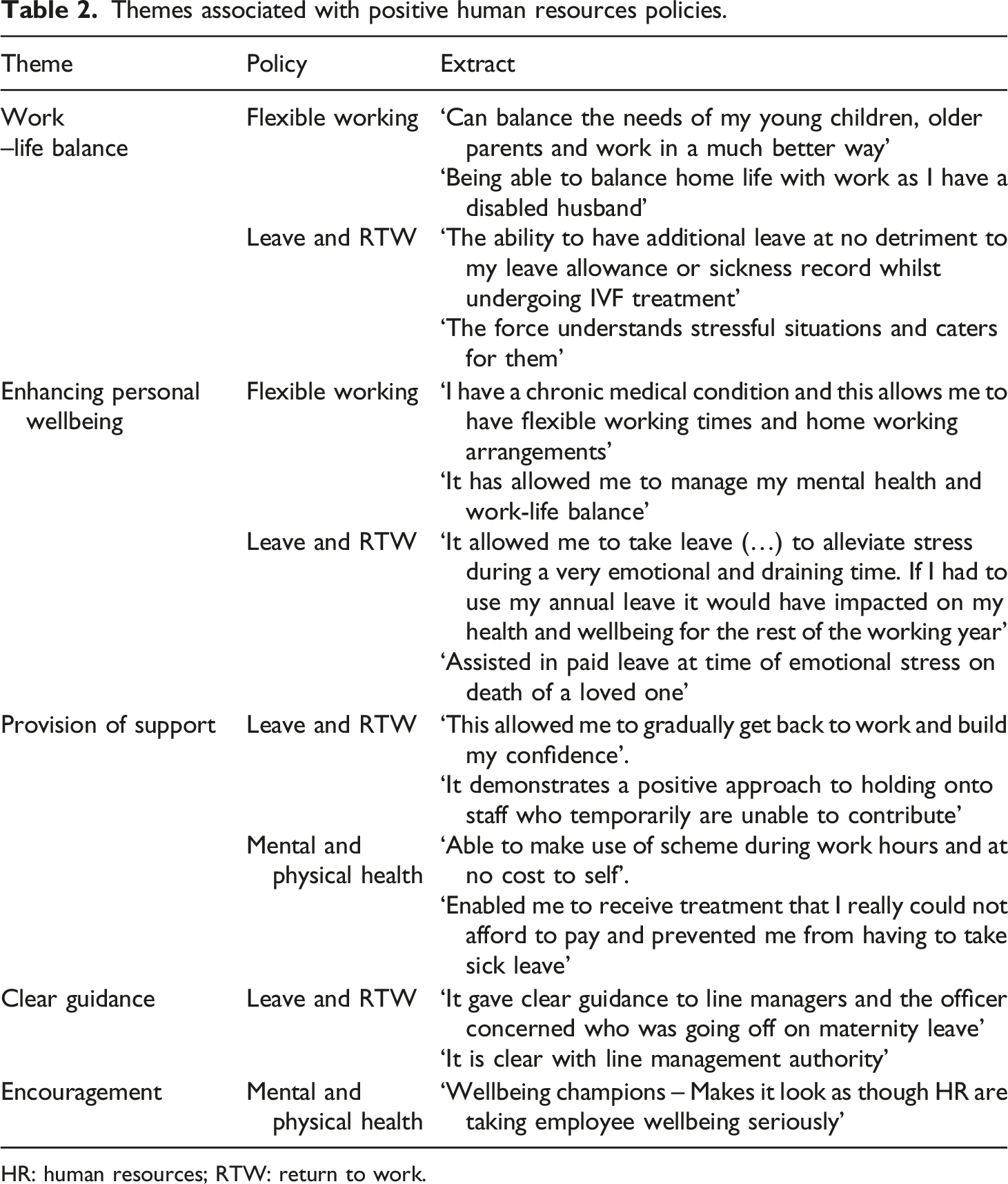
HR: human resources; RTW: return to work.
2. Enhancing personal wellbeing: Flexible working arrangements notably influenced employee wellbeing with several key benefits reported, such as ‘less stress’, reduced ‘fatigue’ and improved ‘morale’, as well as enhancing ‘motivation’, ‘productivity’ and progression. Leave and RTW policies reportedly reduced stress or worry in difficult situations.
3. Provision of support: Leave and RTW policies (e.g. sick leave and readjustment) were discussed as being useful for recovery from periods of illness when returning to work. Benefits related to financial support, alleviating symptoms of work-related or unexpected illness and keeping in touch with work. Mental and physical health policies and support, including counselling and Occupational Health (OH), were cited by some as having direct impacts on wellbeing. The independent nature of counselling and OH provision enabled some respondents to ‘speak freely’, to develop a ‘support network’ and to provide coping mechanisms for stress and depression. Physiotherapy was most often cited in this theme, with respondents outlining its usefulness for recovery from injury. The provision of free, accessible services reduced the need to take other forms of leave to recover, in addition to reducing symptoms of the injury itself.
4. Encouragement: Encouragement was a perceived strength of mental and physical health policies. Generally, improvements to wellbeing policy were noted, in addition to an emphasis on encouraging staff to ‘get active’, which was supported by the availability of onsite gyms and exercise classes (e.g. Pilates), and cycle to work schemes. With a renewed focus on wellbeing, participants highlighted the ‘psychological benefits’ to staff and the positive impact on “‘morale’.
Negative impact
1. Lack of transparency, consistency, fairness and communication: This theme was identified as having a negative impact on wellbeing for each of the four policies. Participants highlighted key issues with the content (e.g. ambiguous, vague or punitive wording) and appropriateness of absence management policy, in addition to the poor understanding and inconsistent implementation of the policy by management. Promotions processes were criticised for being ‘frustrating’, ‘inconsistent’ and ‘unfair’. Comments especially related to the lack of information provided about the different stages of the process, conflicting information from HR colleagues, and the ‘lack of clarity’ or ‘inconsistent’ application of criteria. Recruitment policies were deemed to be ‘confusing’ and not implemented in a timely fashion. For example, the time frame in which new starters are recruited and vetted resulted in a negative impact on the ‘people having to deal with the work’. Several participants also expressed that a lack of fairness and equity in the recruitment process was a prominent feature, such as the changeability of promotion and internal vacancies. Frustration with the lack of transparency and consistency in the recruitment process was also expressed. Such issues were reflected in comments about grievance policies, with additional concerns relating to the ‘biased’ nature of the process, failures to implement the policy and it being ‘unfair and unclear’. Themes associated with adverse human resources policies.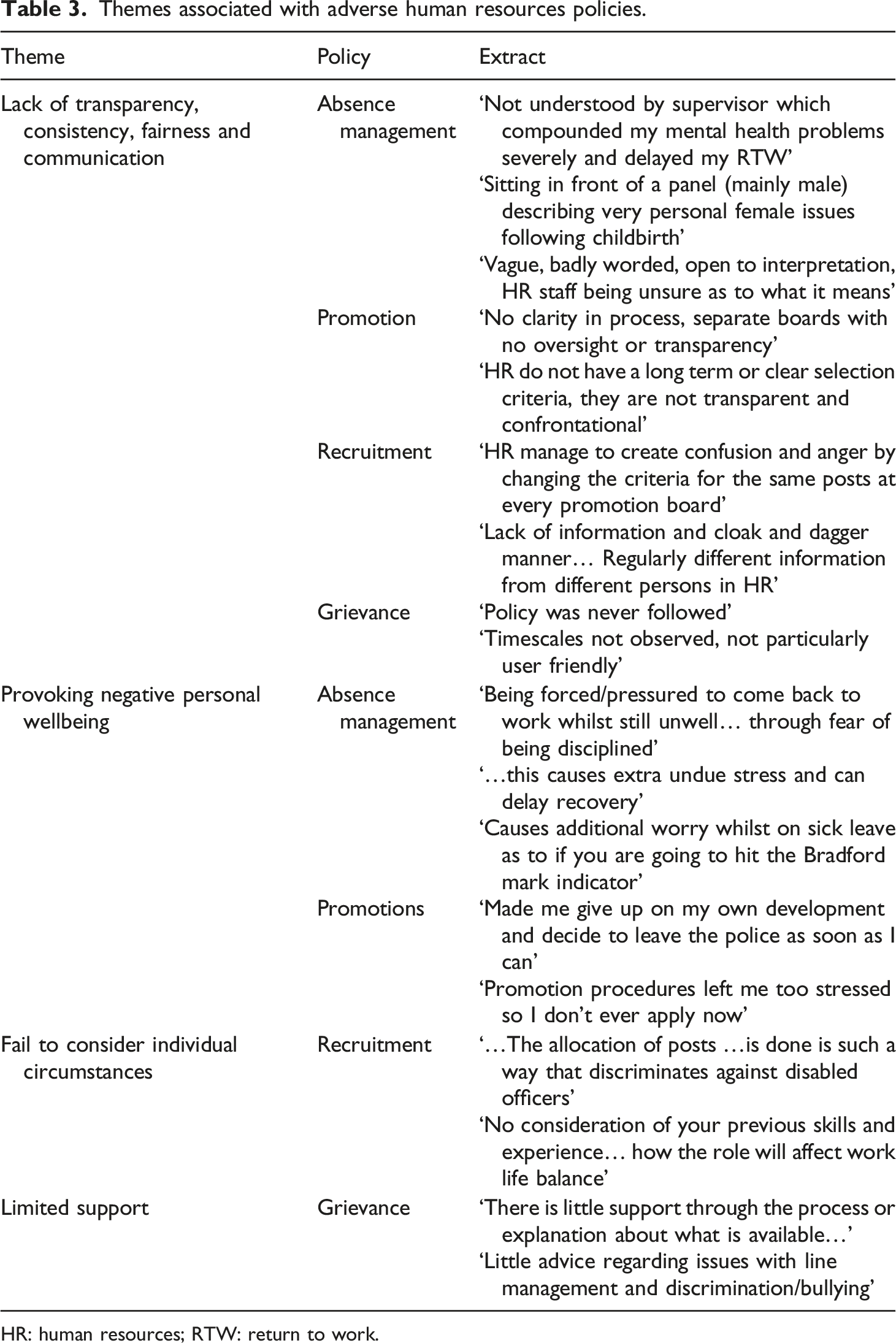
HR: human resources; RTW: return to work.
2. Provoking negative personal wellbeing: Problems with absence management policies were highlighted as having adverse impacts on staff health and on their relationships with management or HR. It was criticised for its perceived punitive focus, especially concerning mental health-related sickness, and its role in exacerbating stress and anxiety, such as the policy’s lack of ‘discretion for people who have genuine illnesses that cannot be seen to the eye’. In many instances, the policy was seen to cause more harm than good, having direct effects on physical or mental health, or morale. The Bradford factor was described as a tool utilised to deliver punitive consequences and an unfair method of assessing absence, with examples of staff opting to take annual leave instead of sick leave due to a ‘fear of breaching’ it. Promotion policy was also associated with triggering feelings of anxiety and stress, as well as causing employees to feel ‘undervalued’. Generally, participants shared a lack of desire for completing the process again, deeming it to be ‘demotivating’.
3. Failure to consider individual circumstances: Specifically in relation to recruitment policy, participants referred to a lack of consideration of individual situations, particularly regarding staff with physical or mental disability or illness.
4. Limited support: Grievance policy was criticised for the limited support and guidance from the organisation or management. Reference was made to individuals and teams feeling like they were left to deal with issues independently, and a general lack of communication as to what support was available from the policy. Generally, respondents felt the grievance policy was ‘unsupportive’.
Discussion
Literature indicates a recent academic and practitioner focus on police wellbeing, providing an evidence-base to inform future work. However, sharing best practice and building an evidence-base must be followed through with practical applications to UK police wellbeing, as statistics indicate there is still work to be done in addressing and improving this (e.g. Home Office, 2020). Research outlines the extent of and diversity in the demand on police officers and staff, and the subsequent impact this has both on individual wellbeing and organisational performance (e.g. McCraty and Atkinson, 2012; Purba and Demou, 2019). It is essential that this is acknowledged and understood to eliminate any remaining stigma or negative culture inhibiting wellbeing to be fully embedded within forces (Bell and Eski, 2016). It is evident that to change culture and attitudes towards wellbeing, there needs to be an organisational shift, which requires support and buy-in from leaders and must be routed within policy and practice. However, personal ownership, responsibility and accountability must also be recognised. To successfully embed wellbeing within the centre of UK policing, both top-down and bottom-up engagement and cooperation is vital. This research aimed to explore both organisational (BLWF) and individual (HR policy review) perspectives of police wellbeing within the UK.
Quantitative findings from the BLWF indicated that forces perceived themselves to be fully developed in relation to absence management and creating the environment, yet personal resilience and protecting the workforce were significantly underdeveloped. This was reflected in the qualitative content, as whilst the theme of ‘staff support and the working environment’ was present across all sections of the BLWF, ‘organisational learning’ was not identified within the personal resilience and protecting the workforce sections. There is clear organisational recognition of the role of management in employee wellbeing and the need to create a safe space, with the promotion of a multitude of interventions and campaigns. Yet, the BLWF highlights how individual-based wellbeing appears underdeveloped (e.g. personal resilience), with institutional processes seemingly better developed (e.g. absence management). It remains unclear how well the organisation understands its staff, with a possible disconnect between the organisations awareness of how the organisation can support and protect its employees. This is further emphasised by the HR policy review findings, whereby absence management-related policies and procedures were deemed to have an adverse impact on staff, despite being deemed to be fully developed by the BLWF. This questions whether areas within police wellbeing that are deemed to be developed are actually improving officer and staff welfare. Therefore, in this instance, whilst absence management may be developed in terms of the policy being well established, it does not necessarily imply that it is supportive to police wellbeing. Alternatively, it may be that the policy is appropriate, yet the individual’s expectations are misaligned. This requires further exploration. Nevertheless, this imbalance between organisational, or managerial, and employee perspectives illustrates the current gaps in police wellbeing. The national strategy must identify the organisational scope for meeting wellbeing needs and how this compares against the individual’s scope, and if boundaries and responsibilities to meet wellbeing have been established.
More generally, it was evident that forces were aware of the importance of developing resilience and positive coping strategies; this has been supported in earlier research in relation to the value and impact of targeted training, initiatives and interventions (e.g. Acquadro Maran et al., 2018b; Gloria and Steinhardt, 2016; Yeung et al., 2016). Adaptive strategies have been recommended to combat and manage stresses (Gutshall et al., 2017), as demonstrated by a number of forces who implemented peer support and quality sleep initiatives. Additionally, an understanding of the causes and signs of stressors was observed, which is essential for a criminal justice organisation to be effective and successful (Kuo, 2014). Further, good practice was noted in the proactive nature of many forces; it was acknowledged within the framework that it was imperative to identify signs and risk factors to ensure appropriate support was in place early on (Hesketh and Cooper, 2017). The importance of listening to employees and receiving feedback to inform and implement change was observed, in addition to the need to continually maintain and review good practice. Moreover, the use of better technology and data management provided detail of individual needs, thus allowing for more person-centred approaches and targeted wellbeing support.
Furthermore, it was apparent that a top-down approach to embedding wellbeing within policing was required, as demonstrated through comments relating to management buy-in, support and encouragement. The importance of management in police wellbeing was twofold. On the one hand, the significance of management buy-in to embed wellbeing and reduce stigma was noted. Yet, on the other hand, management were identified as an inhibitor to wellbeing. In particular, the level and quality of support provided was dependent upon the individual line manager. When discussing adverse policies, the approach and understanding of management was deemed to have a negative impact on employee wellbeing. Therefore, it is essential that management have the necessary awareness and emotional intelligence in response to wellbeing (e.g. Houdmont et al., 2020; MacLeod and Clarke, 2009). Not only must policies be appropriate and considerate to wellbeing, but so must the application of such. If management have a clear understanding, this should in turn encourage their buy-in.
Whilst not to distract from the positives of the ongoing work to enhance police wellbeing, practitioners and academics must ensure an evidence-base is used, efforts are not duplicated and unsupported and/or ineffective initiatives are not replicated. There are inconsistencies nationwide in relation to the names of policies and initiatives, and an awareness of what works and what resources are available; it was difficult to determine if policies or interventions implemented by one force were the same as, or differed to, policies or interventions in other forces. A range of interventions were reported, yet it is unclear which of those have undergone evaluation. Whilst the implementation of wellbeing procedures needs consistency, care should also be taken in the transfer of wellbeing concepts from one force area to another; what works in one force may not necessarily work in the same way for another, suggesting a tailored approach may be needed. Furthermore, a shared understanding of wellbeing is necessary to ensure organisational and employee expectations are met, and to establish organisational and employee responsibilities in meeting wellbeing needs. Similarly, there remains no agreement as to what an overall ‘win’ or ‘success’ is and how it can be measured. This must be established so that a consistent measure can be termed and worked towards for all forces. For example, success to the organisation may be the presence of an existing policy, whereas an employee’s perception of success relates to if the policy is effective. The continued work between practitioners and academics is therefore essential, as is the necessity for all to engage with the sharing of best practice (e.g. using Oscar Kilo as a sharing platform).
Limitations
There were variations in completeness of the data provided for analysis, in addition to differences in the levels of content or detail provided, resulting in some difficulties in drawing solid and consistent conclusions. Moreover, such data collection methods relied on the knowledge of the individual responsible (i.e. for completing the BLWF) and so if they were not aware of an initiative or policy, for example, this would be missed from the analysis and could potentially indicate a gap and/or prevent the sharing of good practice. Consideration should also be given to the interpretation of the individual perspective. Police officers and staff may not be fully aware of their physical and psychological needs within and outside of the workplace (Acquadro Maran et al., 2018b). It is also likely that the sample included police officers and staff with varied coping skills and abilities, and from different roles and ranks (although such factors were not measured); individual differences and how they influence wellbeing should be explored in future work. What is more, the Impact Achievement Group (2011) reported that survey respondents fall into two groups: ‘very displeased or very satisfied’ (p. 2). As such, those who have returned completed frameworks and responded to surveys may identify those who are highly committed to wellbeing in policing; subsequently, they may not be representative of other forces, organisations and/or individuals across the UK. On the other hand, individuals in the ‘very displeased’ category are ‘far more likely to respond’, thereby distorting the perceived views of the workforce (Impact Achievement Group, 2011: p. 2).
That being said, data were collated via two sources to triangulate the findings and to obtain a broad understanding of the current scope of police wellbeing from differing perspectives (i.e. organisational and individual), including police officers and staff from various forces. The data collected provide a unique opportunity to assess the current awareness and practice of UK police wellbeing.
Conclusion
The Policing Vision stated that ‘by 2025 policing will be a profession with a more representative workforce that will align the right skills, powers and experience to meet challenging requirements’ (National Police Chiefs Council, NPCC, 2016: p. 8). One of the ways in which the NPCC proposes to meet this challenge is through ‘building an evidence base on staff wellbeing… so that those who work in policing can be supported and valued through change' (p. 9). This paper identified encouraging progress and attitudes towards police wellbeing, yet inconsistencies in organisational and individual perspectives were highlighted. The traditional management structure and policies in policing do not align with the modern, complex and diverse demand experienced by police officers and staff. If wellbeing is to be fully embedded within the organisation, organisational and individual perspectives must be aligned, including the need for a shared understanding of wellbeing and success.
Footnotes
Acknowledgements
Special thanks to academics and practitioners who have supported and provided data for this study, particularly the National Police Wellbeing Service team and Oscar Kilo.
Declaration of conflicting interests
The author(s) declared no potential conflicts of interest with respect to the research, authorship, and/or publication of this article.
Funding
The research was commissioned by the National Police Wellbeing Service
