




Abstract
An app-based physical activity intervention (#SWPMoveMore Challenge) was completed by 239 workers from one UK police force using a quasi-experimental design. Impacts were assessed against minutes of movement, individual difference and work-related stress variables using quantitative and qualitative approaches. The concept was feasible and translatable to a UK police population and the intervention significantly benefited direct measures of physical activity and perceptions of vitality, job stress, job satisfaction, negative coping strategy use and engagement at work. The intervention was also motivational in helping individuals take-up and maintain physical activity and positively impacted morale and comradery within the work-force.
Introduction
Policing is recognized as a highly stressful occupation where officers and staff deal with a complex combination of multiple operational (i.e., duty related stressors such as shift work, risk of being injured on the job, traumatic events) and organizational stressors (i.e., factors related to the organization, such as dealing with co-workers, too much computer work; McCreary and Thompson, 2006). Stress can adversely impact a range of health outcomes, with research in a police context indicating stress has led police officers to suffer from increased physical disorders (e.g., cardiovascular disease; Hartley et al., 2011), mental ill-health (e.g., anxiety and depression, Nelson and Smith, 2016 and post-traumatic stress disorder, Foley and Massey, 2019), and impaired psychological well-being (e.g., Duran et al., 2018). Psychological well-being refers to the presence of positive functioning, and should be considered separately to mental ill-health, as the absence of mental ill-health does not indicate well-being (Dodge et al., 2012). Rather than adopting a mental ill-being perspective, it has been suggested that well-being support for police workers should target protective factors that build resilience against the negative effects of stress (Carlson-Johnson et al., 2020).
Research informed by models of work-related stress can help explain which factors contribute to the experience and predict how well-being might be impacted or protected (O’Driscoll and Brough, 2010). The most widely accepted conceptualization of stress is Lazarus and Folkman’s (1984) transactional theory, in which stress is described as a process between stressors/demands, coping and well-being. Appraisal is a central mechanism, whereby when faced with a stressor, individuals evaluate (appraise) its significance and employ coping resources to deal with the demand if threat or harm is perceived. Specifically, if individuals perceive the stressor is salient, and perceive that they do not have the resources available to cope, stress responses will be experienced, and an individual’s well-being will suffer. Thus, it follows that targeting perceptions of stressors and/or coping resources might protect well-being. However, Lazarus and Folkman’s perspective is often deemed too complex to use in empirical research, and the majority of stress-related research within policing has overlooked the appraisals/coping mechanism relationship (see Brough et al., 2018). Brough et al. (2018) underpinned their research in the Australian police with the transactional stress process and found that coping influenced the interactions between work characteristics (e.g., job demands, supervisor support) and increased work engagement over time. Specifically, with high job demands but low supervisor support, police staff and officers who used accommodative or avoidance coping strategies (such as engaging in distracting activities) were protected from the negative effects of high job demands (Brough et al., 2018). In the transactional theory of stress, a taxonomy of two coping strategies is described; problem-focused coping whereby an individual directly manages the stressors, and emotion-focused coping whereby the individual attempts to regulate their emotional response (see Biggs et al., 2017). Although Brough et al. (2018) used a different conceptualization of coping to the taxonomy described in the transactional theory of stress, their findings support the role of coping as described by the transactional approach, and therefore its’ use in underpinning stress-related research in the police.
Another study that applied the transactional process of stress was conducted by Nelson and Smith (2016) with the Jamaican police. Their research was informed by the Demands-Resources and Individual-Effects model (DRIVE; Mark and Smith, 2008); a model that represents the central tenets of transactional theory in a multi-dimensional approach to work-related stress. Within the DRIVE model, appraisals are captured through a ‘perceived job stress’ variable, and the influence of coping is included within a category of ‘individual differences’ variables. To facilitate measuring the multitude of variables in the well-being process, Williams and Smith (2012) developed the well-being process questionnaire (WPQ); a scale comprised of single-items that measure a range of stress-related concepts. Nelson and Smith (2016) used the WPQ when they found that work factors influenced police officer mental health through perception of job stress (i.e., work factors were not associated with mental ill-health if they were not perceived as stressful). Emotion-focused coping was also found to be influential and predicted increased depression and anxiety. Nelson and Smith’s (2016) findings are consistent with wider occupational stress research, as emotion-focused coping is generally maladaptive, whereas problem-focused coping is more associated with improved psychological well-being (see Biggs et al., 2017).
Physical activity is recognized as a factor that benefits psychological well-being (Zhang and Chen, 2019), mental health and physical health, and has been suggested as a strategy to reduce the negative effects of stress by providing a ‘time-out’ (see Gerber et al., 2010). Lagestad and van den Tilaar (2014) proposed three reasons as to why physical activity was important for police officers: (1) to deal with work-related situations that necessitate the use of physical force; (2) to take care of their health; and, (3) to strengthen their psychological well-being. Yet, research that considers physical activity in policing from a stress and well-being perspective is limited, despite findings that indicate lack of time to stay in physical condition is a stressor for police officers (Jackman et al., 2020). When researchers have considered the physical activity and well-being link in a police context, Gerber et al. (2010) found that moderate exercise protected against physical and psychological stress-related complaints in Swiss police officers. Additionally, Maran et al. (2018) found that Italian police officers who engaged in a physical practice and wellness course reported decreased perceived distress and increased perception of well-being. Although the details of the course content and design were too brief for replication, the findings suggest there is value in exploring physical activity interventions in a police context.
Mobile phone app-based interventions have grown in popularity, as a low-cost, easy access way to promote physical activity (see Buckingham et al., 2019). Such interventions allow users to log daily records of activity, receive app notifications, set goals and grade tasks (see Mitchell et al., 2018), and create a platform to share achievements, strategies and advice on physical activity in social networks (see Mollee et al., 2017). Systematic reviews of research using app-based interventions consistently find that they are feasible and effective tools to increase minutes of physical activity and steps per day (e.g., Buckingham et al., 2019; Feter et al., 2019). While impact on physical activity is supported, few studies assess the impact of app-based interventions on secondary outcomes (i.e., well-being, job satisfaction); so, there is a need for researchers to consider the potential impact on additional well-being outcomes (Buckingham et al., 2019). There has also been an emphasis on researchers utilizing mixed methods to suggest how app-based interventions might improve their long-term efficacy and maintain user engagement (Buckingham et al., 2019).
Another benefit of app-based interventions is the potential to reach large populations (Buckingham et al., 2019). For example, in their large-scale study of over 78,000 participants, Mitchell et al. (2018) used a quasi-experimental (single group pre-post) design to evaluate the efficacy of a physical activity intervention delivered via small app-based incentives. Physical activity was assessed using built-in smartphone accelerometers, and findings showed daily step count increased across the population, especially for physically inactive individuals. Therefore, app-based interventions might offer an effective option to deliver a physical activity intervention that is suitable across a police force population. Previous research into police well-being has focused primarily on police officers; however, to provide a holistic picture, non-operational staff should be considered as well (see Jackman et al., 2020). Using an app-based intervention, this study will expand understanding of well-being by extending to all roles within the police force.
In this study we aimed to test the feasibility of using an app-based physical activity intervention in a UK police population (South Wales Police—SWP). To address this aim, we set three objectives: To prove the concept is translatable to a UK police population (i.e., successful delivery of intervention); To assess the impact of the intervention on physical activity, individual differences and work-related stress measures; To establish perceptions of feasibility and acceptability of the intervention.
Method
Background, Move MoreTM Sheffield and experimental design
Sheffield, along with consortia in East Midlands and London, is a Founder Partner of a London 2012 Olympic Legacy program called the National Centre for Sport and Exercise Medicine (NCSEM). The NCSEM has a remit to improve the health of the nation through sport, exercise and physical activity. The NCSEM partnership committed to a vision and 5-year whole-systems plan to transform Sheffield into the most active city in the UK (Copeland, 2020). Mass participation events that engage individuals, communities and organizations are a key part of the Move MoreTM plan, manifested in one way through an annual physical activity challenge called the Move MoreTM Month (see Heller et al., 2018). The Move MoreTM Month signposts, supports and connects people and families with opportunities to be active; and, in 2016 a first iteration of a Move MoreTM App was developed to facilitate a physical activity challenge linked to the Rio Olympic Games.
In 2018, Rocca Creative Thinking Limited, a software development organization were commissioned to work with the NCSEM to develop a second iteration of the Move MoreTM App that enhanced the mobile application and software platform to deliver challenges across multiple contexts (e.g. schools, primary care, private business, local government). It is this second version of the Move MoreTM App, that was further developed into a bespoke version for the #SWPMoveMore Challenge. The #SWPMoveMore version of the App was made available to SWP employees on the Apple iTunes and Google Play App stores in early January 2019. Upon downloading the #SWPMoveMore App, users synchronized any personal activity tracking devices or apps they were already using (e.g., Smart Watches, Fitbit, or movement tracking apps such as Strava) and were provided with a summary of the phases (registration, baseline, challenge 1, challenge 2—see Intervention program and #SWPMoveMore App section) of the intervention program. To examine the effect of the #SWPMoveMore Challenge a quasi-experimental (single group pre–post) study design was employed as this suited our feasibility and proof of concept aims (see Mitchell et al., 2018). The Cardiff School of Sport and Health Sciences Research Ethics Committee approved this study (CSSHSREC-SRT-679).
Participants and recruitment
All 4807 SWP employees (officers and staff, Home Office, 2019) were offered the opportunity to participate in the #SWPMoveMore Challenge. Potential participants registered during a 16-day registration and familiarization window (see Figure 1 and Intervention program section) by either responding to an email invitation or by signing up at one of five well-being road show events held around the force’s catchment area in the month preceding the #SWPMoveMore Challenge. Following this, 496 (N female = 296, N male = 200; N officer = 138, N staff = 297, N PCSO = 61; M age = 39.63 ± 10.21) initial participants provided informed consent, registered to complete the #SWPMoveMore Challenge, downloaded the #SWPMoveMore App and self-selected into a team for the challenge (see Intervention program and #SWPMoveMore App section). Of the 496, a total of 239 (N female = 134, N male = 105; N officer = 75, N staff = 133, N PCSO = 31; M age = 41.64 ± 10.17) completed sufficient movement minutes for all phases of the #SWPMoveMore Challenge for their data to be included in final analysis (see Intervention program and #SWPMoveMore App section). A random sample of 50 initial participants (∼10% of sign-ups) were asked to complete a series of validated self-report measures (see Outcome measures section) pre and post the #SWPMoveMore Challenge. Of those 50, twenty-eight (N female = 17; N male = 11; N officer = 5, N staff = 22, N PCSO = 1; M age = 43.88 ± 9.74) completed the full suite of measures both pre and post intervention. Six participants (N female = 3; N male = 3; N officer = 2, N staff = 3, N PCSO = 1; M age = 41.17 ± 12.37) were interviewed about their intervention experiences.
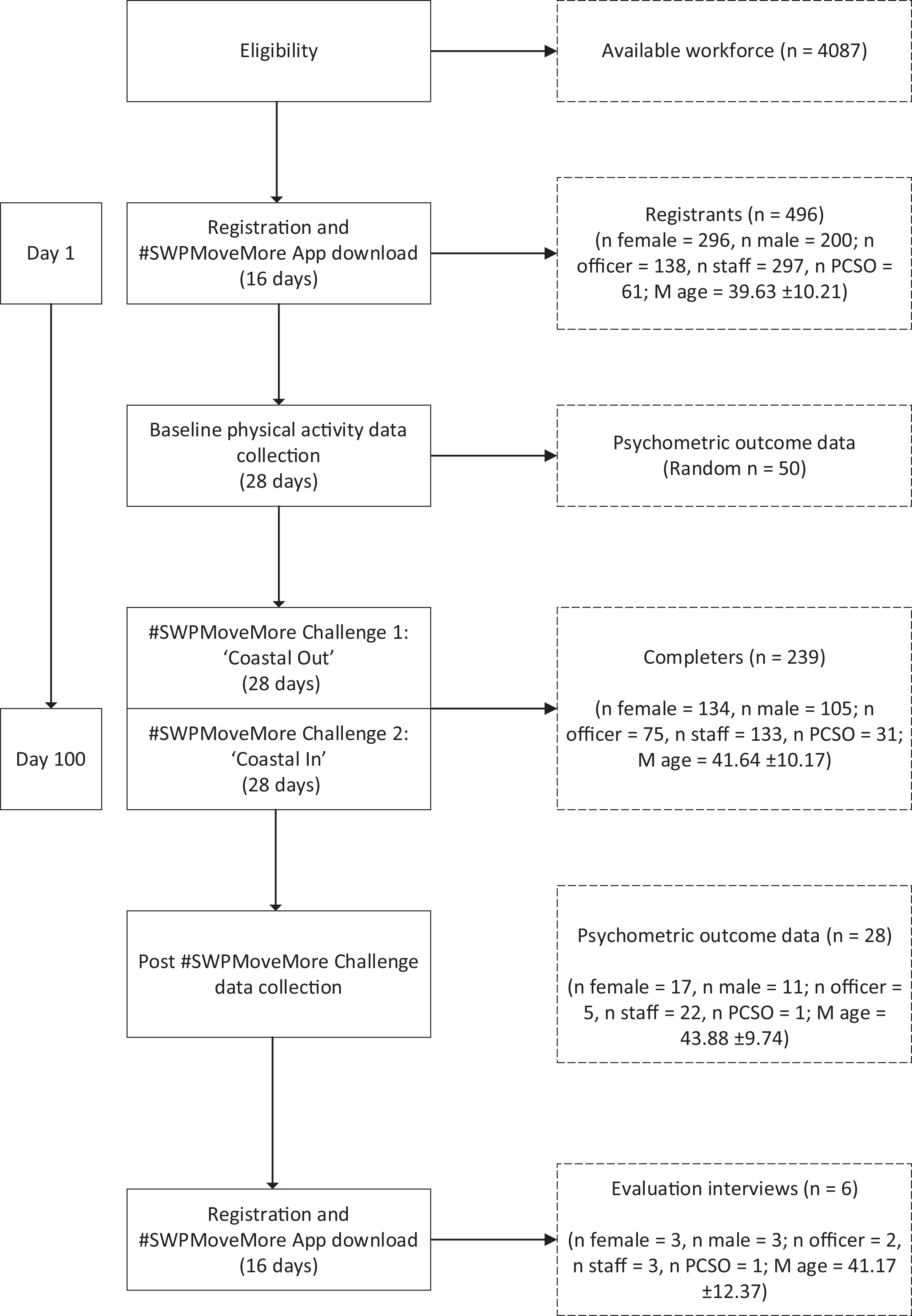
Flow chart of participant journey.
Intervention program and #SWPMoveMore App
The #SWPMoveMore Challenge was designed as a 100-day challenge split into four phases: 1) Registration and familiarization (16 days); 2) Baseline data collection (28 days); 3) Challenge 1 (28 days); 4) Challenge 2 (28 days), see Figure 1. During the registration and familiarization period, participants downloaded the #SWPMoveMore App and became familiar with it as an integrated interface to record movement minutes and self-selected into a team for the #SWPMoveMore Challenge. At this stage 496 SWP employees were involved in the project, self-selected into 65 teams. Teams comprised a minimum of 4 and a maximum of 10 individuals (¯x = 7.38 ± 2.73). Following registration and familiarization a 28 day ‘baseline’ period was completed where participants and teams were asked to undertake their ‘usual’ levels of movement. Those randomly selected to complete self-report measures also completed the suite of baseline measures during the first 14 days of the baseline stage.
Two special stage challenges were designed for Challenges 1 and 2 that both utilized the ‘Coastal Path of Wales’ (https://www.walescoastpath.gov.uk/?) as a virtual route (Wales Coastal Path, n.d.). The ‘Coastal Path of Wales’ is a unique Welsh tourist attraction where a public footpath circumnavigates the country. We integrated a virtual map of the Coastal Path of Wales into both Challenge 1 and Challenge 2. In both challenges, a team’s average daily movement minutes were converted into distance traveled using conversions recognized within extant literature (e.g., Ainsworth et al., 2011). Each team’s progress was charted between 24 known landmarks on the Coastal Path of Wales (see Figure 2). Challenge 1 was named the ‘Coastal Out’ challenge—here teams left their first virtual destination in the South of Wales and attempted to circumnavigate the Coastal Path of Wales in the 28 days set aside for the ‘Coastal Out’ challenge. Challenge 2 was named ‘Coastal In’ challenge and adopted a similar design—with one key distinguishing feature. Here, to maintain motivation within and across teams undertaking the #SWPMoveMore Challenge, teams began their race back to South Wales from the point they had reached around the Coastal Path in Challenge 1. For example, a team who reached Conwy Castle in the ‘Coastal Out’ challenge began their race back to South Wales from that point; conversely, a team who reached St Non’s Chapel began their ‘Coastal In’ challenge from that point. The goal here being for teams to set themselves a target of completing their inward journey home in a shorter number of days than it took them to reach that point on their ‘Coastal Out’ journey.
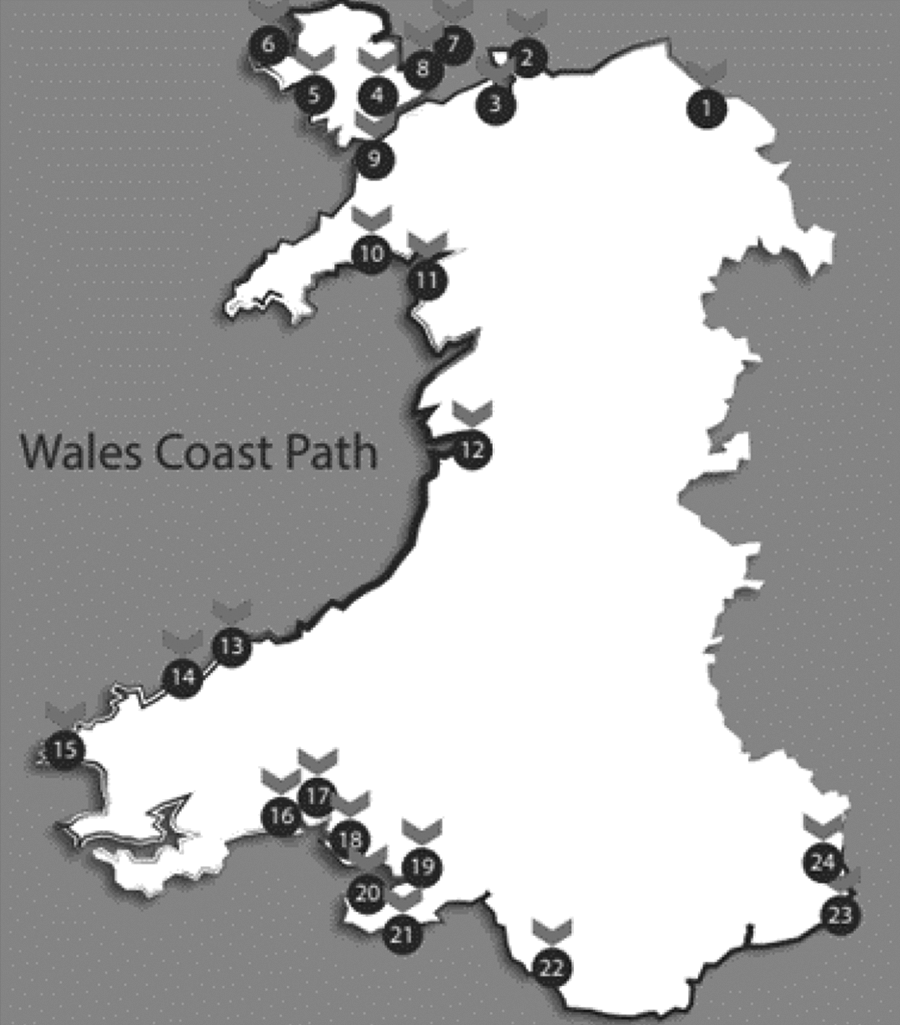
Coastal path.
Digital leader boards were provided within the #SWPMoveMore App and on a dedicated website that showed team and individual progress across activities (see Figures 3 and 4). This ‘gamification’ of physical activity has previously been shown to enable peer support to be enacted and help sustain engagement over time (Kappen et al., 2017). Individual participants were considered to have removed themselves from the #SWPMoveMore Challenge if they recorded less than an average of five minutes movement per day across any of the four distinct phases within the intervention.
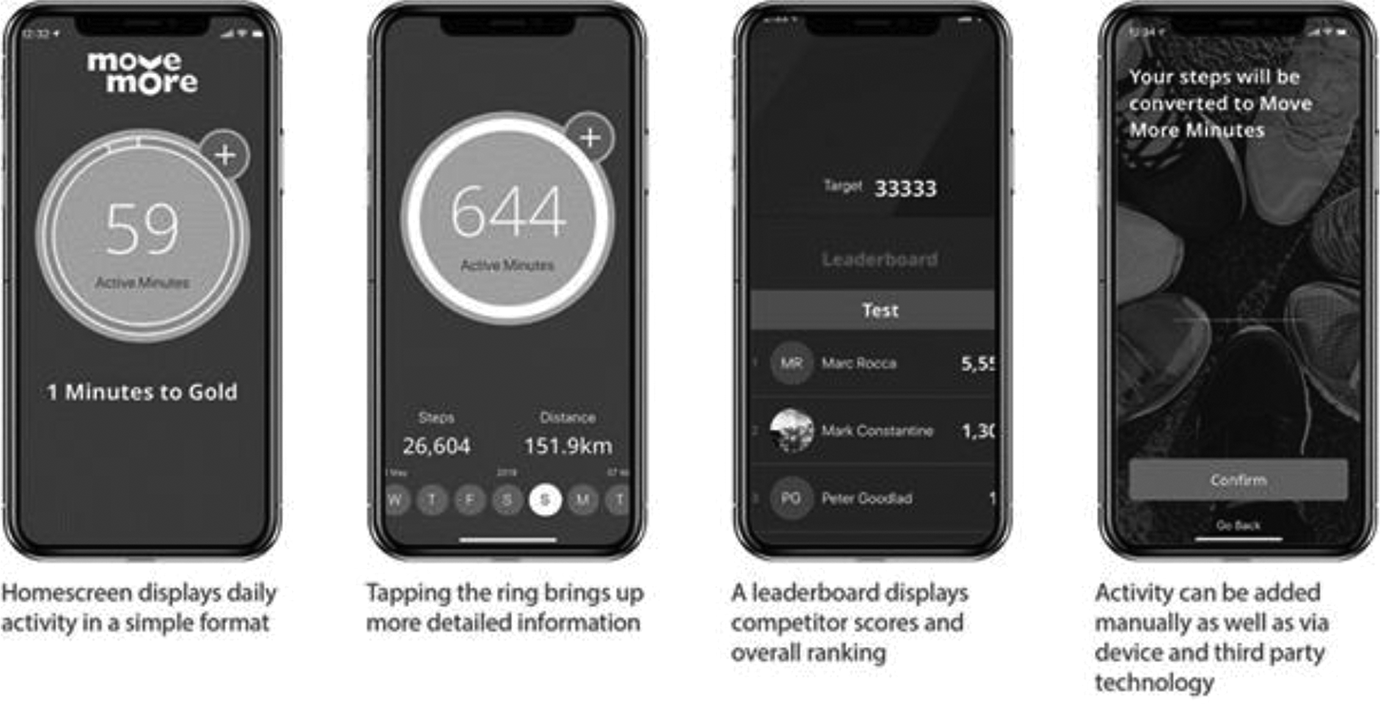
The MoveMore Challenge App.
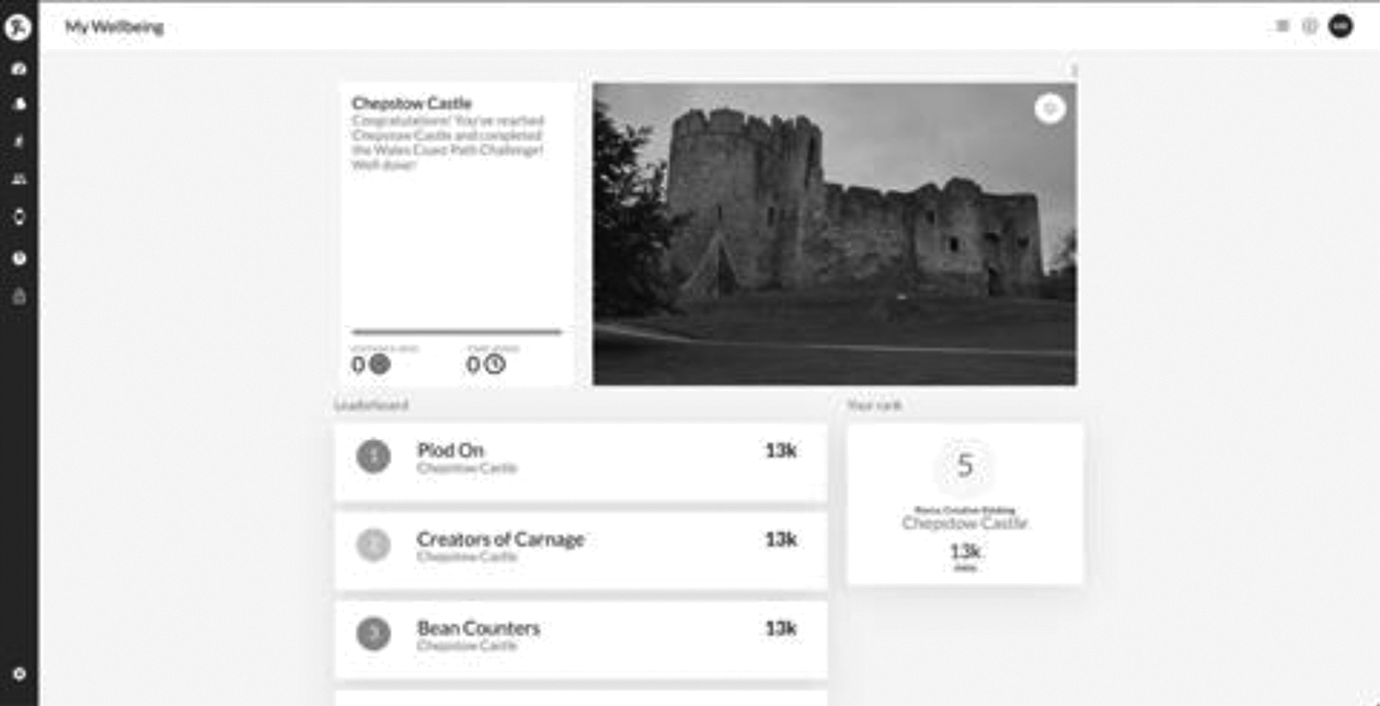
Coastal Challenge website dashboard.
Outcome measures
Physical activity
‘MoveMore’ minutes were used as a direct outcome measure of physical activity so that users could engage in a myriad of activities to register movement. The capturing of minutes allowed users to record time spent undertaking non-ambulatory activities (e.g., swimming and cycling; Miller et al., 2006), and other types of physical activities (e.g., gardening, washing the car, performing other household chores) often not counted in ‘step’ based interventions despite these being valid modes physical activity. Our goal here was to create an inclusive intervention program that allowed users to engage wherever possible. These data could be entered manually or captured automatically using either the participant’s mobile device’s on-board pedometer and GPS system or via third party devices and software (e.g., Smart Watches, Fitbit, or movement tracking apps such as Strava), connected through an API (Application Programmer Interface).
Participants were enabled to add steps to their score; however, these data were converted to minutes using 120 steps as the equivalent for 60 seconds of activity, which represents a moderate pace for an individual of average height (Hoeger et al., 2008). Individual performance was further incentivized by introducing bronze, silver, gold and platinum ‘medals’ for 30-minute sections of activity. For example, to reach bronze, a participant would need to be active for 30 minutes whereas to reach platinum they would need to be active 240 minutes daily. These milestones were based on government guidelines for physical activity attainment (e.g., World Health Organization recommendations of a minimum of 150 minutes moderate activity per week; Bull et al., 2020) and used in the intervention as a rough guide. Attainment resulted in a medal being marked against the individual on the leaderboard which could be viewed by peers.
Well-being and work-related variables
To meet our feasibility and proof of concept aims, but to minimize participant load, we assessed self-reported well-being and work-stress related variables using a range of items/subscales from validated psychometric scales used within well-being, stress and/or related police research (e.g., Gillet et al., 2013; Jelas et al., 2014; Nelson and Smith, 2016). Specifically, general well-being and components of general mental well-being were measured via 16 items from four subscales (general health, vitality, social functioning and mental health) of the 36-Item Short Form Health Survey (SF36, Ware and Sherbourne, 1992). Work-related stress and work-related well-being outcomes were measured by four items from four scales (job stress, job satisfaction, use of positive coping styles and use of negative coping styles) of the Well-being Process Questionnaire (WPQ; Mark and Smith, 2008). And, engagement in work was measured via the 9-item short Utrecht Work Engagement Scale (UWES-9; Schaufeli et al., 2006).
The SF36 assesses health-related quality of life across eight subscales (see Lins and Carvalho, 2016) with previous specific use in a police context (see Jelas et al., 2014). Researchers can use a global computed score from the inventory to reflect health-related quality of life, and generate summary scores of physical health components, and mental health components. However, the various scoring methods and cross-loading of subscales on summary and global scores creates questions over their validity (see Lins and Carvalho, 2016). To maintain accuracy, and minimize survey burden on participants, we utilized the SF36 subscales most relevant to our research aims; specifically, general health, vitality, social functioning and mental health. The SF36 has high discriminant and construct validity (see Hays et al., 1993) across these subscales: general health (n = 5 items; e.g. ‘I am as healthy as anybody I know’; α = .78); vitality (n = 4 items; e.g. ‘How much of the time in the past four weeks did you feel worn out?’; α = .86); social functioning (n = 2 items; e.g. ‘During the past four weeks, to what extent has your physical health or emotional problems interfered with your normal social activities with family, friends, neighbors or groups?’; α = .85); mental health (n = 5 items; e.g. ‘How much of the time in the past four weeks have you been a very nervous person?’; α = .90). Each item was calculated following Hays et al. (1993) criteria, to give a score of 0–100 per item. The score was averaged across items, realizing a final subscale score ranging from 0 (worst health) to 100 (best health).
Williams and Smith (2012) developed the WPQ as a single-item inventory that facilitated exploration of the multi-dimensions of work-related stress and well-being within one questionnaire. The single item nature of the WPQ also helps overcome some of the measurement issues (i.e., participant load) that other well-being measures suffer when obtaining a complete assessment of work-related stress (Williams, 2014). Mark and Smith (2008) encouraged researchers to include individual items relative to their research goals and context of study and some scales from the inventory have also been used within well-being research within a police context (see Nelson and Smith, 2016). Therefore, we included items that reflected both work-related stress outcomes (i.e., job stress, job satisfaction) and individual differences (i.e., positive coping and negative coping).
Williams (2014) demonstrated reliability for all single items of the WPQ using the Wanous method, and discriminant and concurrent validity against multi-item measures. Participants indicated their WPQ responses on a 11-point Likert scale; when items were in the form of a question (i.e., job stress and job satisfaction items), the Likert scale ranged from 0 (not at all) to 10 (extremely). For example, the job stress item read: ‘On a scale of 0 (not at all) to 10 (extremely)—overall, how stressful do you find your job?’ When items were in the form of a statement (i.e., positive and negative coping strategy use), the Likert scale ranged from 0 (strongly disagree) to 10 (strongly agree). For example, the positive coping item read: ‘Please respond to the following statement on a 0 (strongly disagree) to 10 (strongly agree) scale—When I find myself in stressful situations, I try to deal with it in a pro-active way (for example: by taking one step at a time, by changing something so that it would work out, by learning from the situation, by asking someone for help)'. None of the items were reverse scored so a high score always reflected a presence of the relevant item, i.e. a high score for negative coping strategy use indicated a high use of negative coping strategies (in work).
Schaufeli et al. (2006) evidenced the factorial validity, internal consistency and test-retest reliability of the short UWES-9 as a measure of engagement at work. Participants indicated their responses on a 7 point Likert scale ranging from 0 (Never: Never) to 6 (Always: Every day). For example, ‘At my job, I feel strong and vigorous’, ‘When I get up in the morning, I feel like going to work’.
Evaluation interviews
In line with Buckingham et al.’s (2019) recommendations, semi-structured evaluation interviews with six volunteers (N = female 3; N = male 3) were used to gain participants’ reflections on the #SWPMoveMore Challenge and #SWPMoveMore App (guide available from the first author) and to explore factors relating to the longer-term feasibility of app-based physical activity interventions. Questions related to: overall impacts; app and website design and usability; engagement; communication strategy; impact of the special stage coastal challenges and barriers and enablers to the intervention. In our reporting, we have focused on evaluation findings related to overall impacts, impact of special stages and barriers and enablers to the intervention as this best helped inform our proof of concept aims. Interviews lasted between 32 and 47 minutes (mean = 39.16 ± 5.57).
Data analysis
Statistical analyses were completed using the IBM SPSS 23 package. To determine intervention effects on physical activity levels, a repeated measures multivariate analysis of variance (RM-MANOVA) was completed with Eta Squared (η2) used to indicate any practical significance of effects. The Green-House Geisser correction factor was applied to the degrees of freedom (Field, 2017). Any physical activity data recorded in the registration and familiarization were excluded from analysis with baseline data, coastal out and coastal in data included. Daily minutes of movement recorded in the #SWPMoveMore App acted as the dependent variable. To determine any intervention effects on well-being and work-related variables an RM-MANOVA was completed. Qualitative analysis of interview data was completed using the six phases of thematic analysis developed by Braun and Clarke (2006).
Results
Changes in physical activity
RM-MANOVA indicated significant changes in minutes of physical activity across baseline (M = 64.99 ± 55.51), challenge 1 (coastal out, M = 85.77 ± 50.07) and challenge 2 (coastal in, M = 71.95 ± 47.54), F(2, 476) = 37.64, p < .001, η2 = .14. Follow-up Tukey HSD post-hoc comparisons indicated levels of physical activity were: significantly higher in challenge 1 (coastal out) than in baseline (p < .001); significantly higher in challenge 2 (coastal in) than in baseline (p < .001); and, were significantly higher in challenge 1 (coastal out) than in challenge 2 (coastal in) (p < .01). Figure 5 illustrates these differences.
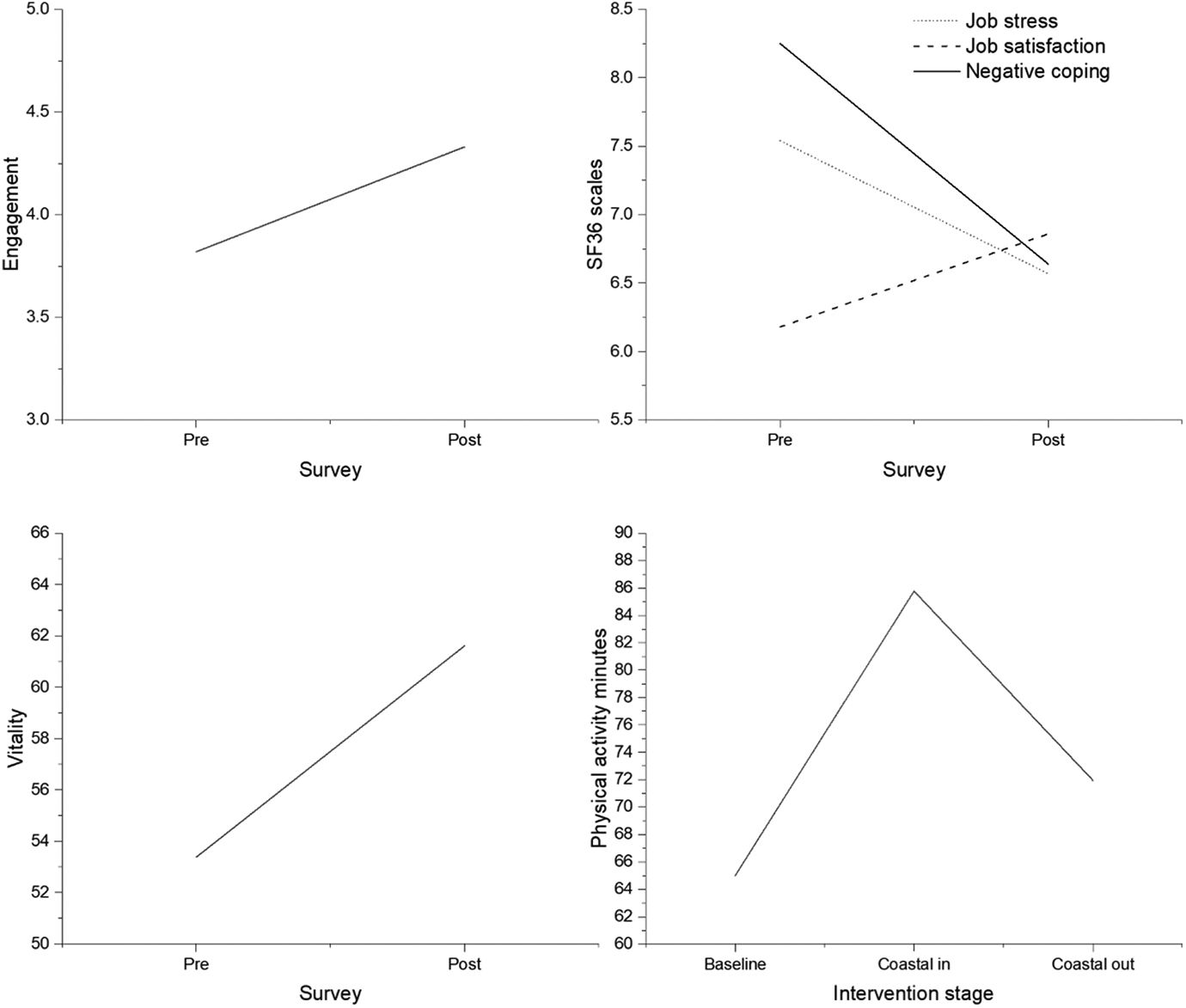
Impact of MoveMore Challenge on physical activity, individual differences and work-related stress variables.
Changes in well-being and work-related variables
RM-MANOVA indicated significant changes in well-being and work-related variables pre and post intervention, Pillai’s trace = .763, F(9, 19) = 6.80, p < .001, η2 = .76. Follow-up analysis indicated significant effects for SF36 vitality (F(1, 27) = 4.43, p < .05, η2 = .14), WPQ negative coping (F(1, 27) = 7.16, p < .01, η2 = .21), WPQ job stress (F(1, 27) = 8.68, p < .01, η2 = .24) and UWES engagement at work (F(1, 27) = 13.33, p < .001, η2 = .33). Specifically, participants who completed the #SWPMoveMore Challenge displayed significantly more vitality post intervention (M pre intervention = 53.39, M post intervention = 61.16), used significantly fewer negative coping styles post intervention (M pre intervention = 8.25, M post intervention = 6.64), experienced significantly lower job stress post intervention (M pre intervention = 7.36, M post intervention = 6.57) and were significantly more engaged at work post intervention (M pre intervention = 3.82, M post intervention = 4.33). No significant pre to post intervention differences were found for SF36 general health, mental health and social functioning, or WPQ positive coping and job satisfaction (see Table 1).
Univariate effects of RM-MANOVA for individual differences and work-related stress variables.
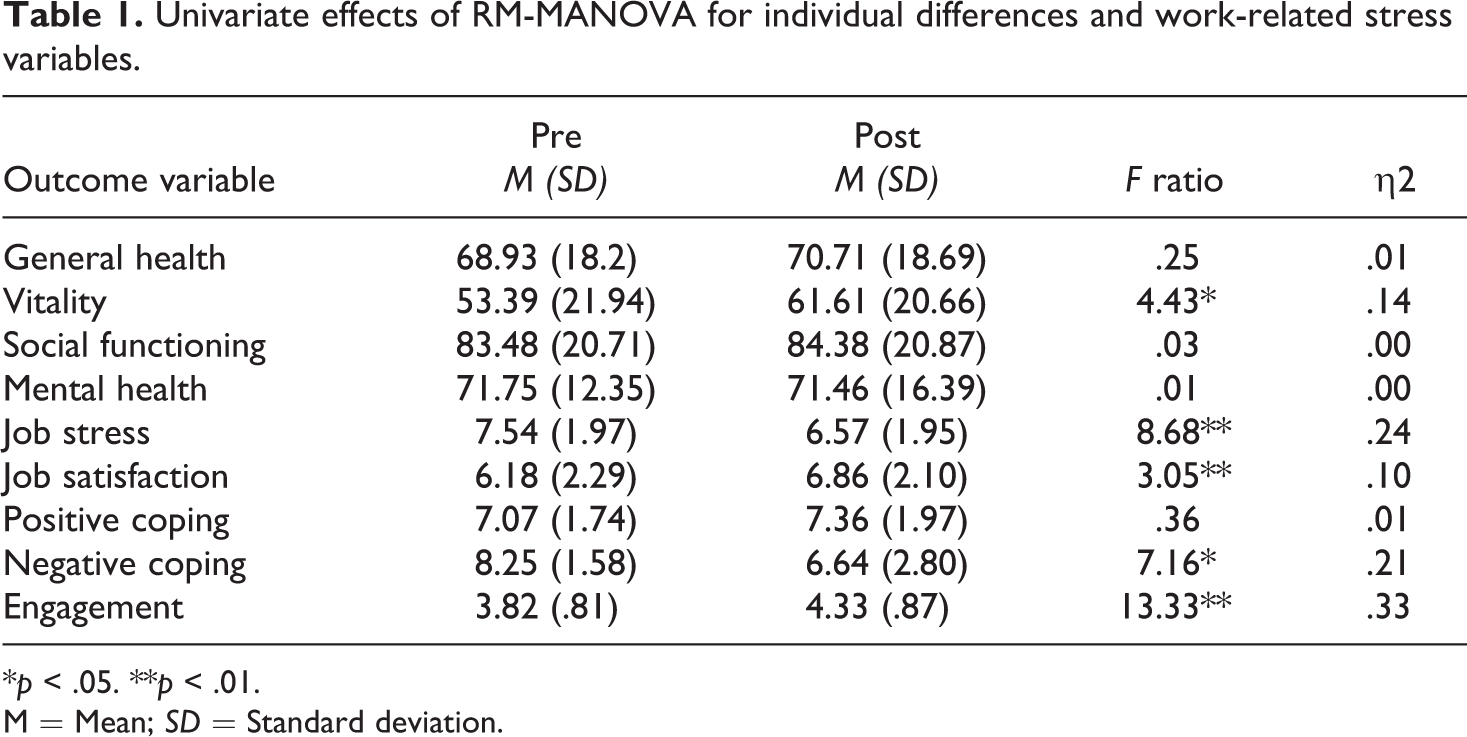
*p < .05. **p < .01.
M = Mean; SD = Standard deviation.
Evaluation interviews
Overall, participants suggested the #SWPMoveMore Challenge had a positive influence across individual, team and organizational contexts. For example, one individual noted how the challenge affected their attitude and behavior to physical activity: It (the #SWPMoveMore Challenge) definitely spurred me on to do more activity. At the time I was getting a lift (by car) into work. Whereas now I walk into work and walk home, unless it’s pouring down with rain—but then even then sometimes I’ve still walked home. Because, I now think well when you get home you can change. So, doing the (#SWPMoveMore) challenge helped trigger that because it made me think about what I was doing or not doing. You saw it on the screen everyday with my workmates—and sometimes it made me think you’re not doing many minutes of activity at all here, or that’s really not much activity, I thought I had done more, but it is there in black and white. So, it encouraged me to a little bit more and I’ve kept that going. I found the (#SWPMovemore) challenge really helpful. Because I’ve got my fitbit which is great—but this linked with that really well. And, the being in a team part really helped, we were competing against other teams and supporting each other to do that, it spurred us on. And, you do a bit more than you would on your own, we all did that. It was great that you could see lots of teams throughout South Wales Police when you joined. And, it was just that little bit of comradery and everybody sort of trying to get the increase in their movements, the work that they were doing, steps for work, in work—but out of work too. To get the numbers higher. You know, everybody was trying to get as many reward goals (i.e., bronze, silver, gold, legend rewards) as they could. So, it was encouraging I think, really encouraging for people to join in together and just get that little bit of healthy competition too. It was nice seeing where you were within your team and where you were against other teams—it spurred us on to try and get ahead of some of the other teams. So those updates (weekly leaderboards) were great. And, there was another team from just down the corridor who were quite fit…. they go out running, go to the gym and stuff like that. So we were, just in our little group encouraging each other—come on, you haven’t done many steps today yet. And, then there was the comradery thing, you know, to try and spur people in our group on and support them. We could be there to help chivvy each other along and do that within our group but also have some comradery with other teams as well—the others down the corridor and see where we were against them too. The first part of the coastal path was great. It was great. You had the challenge to get around to a certain place. We loved that. Moving around Wales, seeing the places we made it too, knowing how far it was to the next place. It was great that we were doing that from Wales in Wales. And, then we obviously had to come back home as the second part, and I think for us in our team that went on for a bit too long. It took us longer to get back than it did going out!– but then that’s normally the case when you go for a walk anyway isn’t it on the way back! So perhaps we needed something different at that stage to challenge us in a different way. From a work perspective, we’re in an office job as staff. That’s what we do. Sit down, look at your screen, work and that’s it, you know. The opportunities to get up and about and move around are limited. Only so many of you can do that at once. So, I would be saying right, I’ll go get the mail today or I’ll do this, or I can take that here or there, but we can’t all go and do that at the same time. Whereas I think if you’re an operational officer, you’ve maybe got a lot more opportunity to be out and about and have more opportunity to move generally anyway. So, I think that probably didn’t help us, you know, we still have to sit down and do our work at the end of the day for a lot of time.
Discussion
In this study we tested the feasibility of using an app-based physical activity intervention in a UK police population. We used the #SWPMoveMore App to illustrate whether the concept was translatable to a UK police population (objective 1) and measured the impact on physical activity, and some individual difference and work-related stress variables to support the efficacy of the concept (objective 2). Semi-structured interviews were used to also establish end-user perceptions of the feasibility and acceptability of the intervention as tool for promoting physical activity and well-being (objective 3).
Main findings
The #SWPMoveMore Challenge was successfully delivered in SWP, indicating the concept of an app-based physical activity intervention is translatable to a UK police context (objective 1). Approximately 10% of the SWP workforce (Home Office, 2019) registered to participate, suggesting that the intervention appealed to the workforce. Of the 496 registrants, 238 were still actively using the #SWPMoveMore App until the end of the intervention (see Figure 1). Although this suggests some decline in engagement, our attrition rates were similar to those reported in other app-based interventions (Buckingham et al., 2019).
Overall, the challenge had a positive impact on physical activity, significantly increasing the average daily minutes of movement (objective 2). However, there was a decline in minutes of activity during challenge 2 (coastal in; see Figure 5) when compared to challenge 1 (coastal out). The qualitative data provided some insight into why this might have occurred. Participants indicated that the coastal path challenge 1 (coastal out) worked particularly well for increasing physical activity as having a meaningful, recognizable target was a motivating factor, but a different challenge was perhaps needed to maintain their engagement in challenge 2. In relation to well-being variables, completing the #SWPMoveMore Challenge significantly increased vitality, job satisfaction, and engagement at work, while it significantly decreased job stress and negative coping (objective 2).
The qualitative data suggested that the #SWPMoveMore Challenge was well received and that an app-based intervention is an acceptable tool for promoting physical activity in a UK police population (objective 3). Participants reported that the app helped as it easily linked with other technology (e.g., Fitbit, Strava), and motivated them to do more physical activity by raising their awareness of the minutes they had recorded. All interviewees supported the team aspect of the #SWPMoveMore Challenge which appeared well suited for a police population where working together is integral to effective operational delivery.
Conceptual implications
Our study supported the concept that physical activity is a protective factor for the experience of work-related stress and beneficial to well-being. Following the #SWPMoveMore Challenge intervention, use of negative coping and perception of job stress significantly decreased, indicating that rather than engaging in negative coping strategies (e.g., self-blame, wishing the situation would go away) participants perceived the stress process differently. This is in line with Lazarus and Folkman’s transactional theory, as all aspects of stress process (i.e., individual differences and work-related stress variables) were impacted, and supports a multi-dimensional approach to well-being (see Mark and Smith, 2008). Further implications of a multi-dimensional approach to workplace well-being are that as well as providing individual benefits (e.g., increased vitality), there are also benefits for the workplace (e.g., increased engagement at work), as seen in our intervention.
It should be noted that the qualitative data did not elucidate any reasons as to why physical activity benefitted well-being variables (e.g., negative coping, perception of job stress, job satisfaction). Research has only recently begun to connect the theoretical underpinnings of work-related stress and well-being to the theoretical underpinnings of physical activity and well-being (see Häusser and Mojzich, 2017). However, the extant literature proposes that physical activity might promote recovery from work demands by providing psychological detachment or enjoyment (see Sianoja et al., 2018), in addition to the ‘time-out’ rationale suggested by Gerber et al. (2010) in a policing context. Following the #SWPMoveMore intervention, vitality and engagement at work significantly increased, suggesting some form of recovery and renewed energy is a benefit of physical activity at work. Our study therefore adds a line of evidence to suggest it is worth researchers exploring the mechanisms underlying work—physical activity—well-being relationships further.
Practical implications
Our findings indicated that physical activity interventions are suitable for supporting well-being and reducing stress for those in the police force. We found significant benefits from increased ‘MoveMoreTM’ minutes of physical activity; a measure inclusive of low to vigorous level activities. Police forces should extend their considerations of physical activity support beyond the current fitness and strength training focus (e.g., Lagestad and van den Tilaar, 2014) to encourage lower-level movements such as walking, as there were well-being benefits to all activities. This supports Gerber et al.’s (2010) finding that moderate exercise was more advantageous than vigorous exercise in counteracting stress among Swiss police officers and relates to a line of research reporting improved well-being from lunchtime park walks and relaxation exercises (e.g., Sianoja et al., 2018).
The team aspect of the #SWPMoveMore Challenge positively impacted on comradery and morale. Social support has been recognized as an influential factor for psychological well-being in policing (see Jackman et al., 2020); and, sport and exercise research repeatedly reports that physical activity interventions facilitate social interactions, social connectedness and a sense of belonging (see Taylor et al., 2015). For example, Brinkley et al. (2017) found improved interpersonal communication between colleagues following a 12-week workplace team sport intervention. To better support well-being in the police, forces should strive to continue to combine social support through team elements and physical activity.
Strengths, limitations and future research
The #SWPMoveMore Challenge offered a force-wide intervention through use of an #SWPMoveMore App that was accessible to all and was a strength of the initiative. We extended previous research that has thus far focused on police officers (e.g., Gerber et al., 2010; Lagestad and van den Tilaar, 2014; Maran et al., 2018), and found increased physical activity can support well-being across all roles of policing in an ecologically valid study. However, different roles in the police might benefit further from more specific interventions, as one interviewee commented that office-based police staff faced different barriers to increasing their ‘MoveMore’ minutes than police officers. Future research should explore these barriers to develop physical activity interventions that might overcome them.
There are some limitations to our study. We did not include a control group and have not provided follow-up data so cannot rule out that improvements to well-being were attributable to factors other than physical activity. In addition, our use of some single-item questions did not explore the full profile of measures, for example the 12 coping dimensions that have been reported elsewhere (see Biggs et al., 2017). Although the approach used suited our proof of concept aims, future research should strive to understand the relationships we have supported in more depth using full-length measurement scales.
As an accessible platform and framework for supporting physical activity, future research can build on the #SWPMoveMore Challenge in a number of ways. For instance, integrating additional challenges, gamification elements, rewards, increasing social features and advice are all techniques successfully used in previous physical activity smartphone interventions (see Mollee et al., 2017). Future studies should also strengthen the research design beyond the feasibility and proof of concept stage to a more rigorous methodology (e.g., including a control group).
Conclusion
This research has provided initial evidence to support the concept that an app-based physical activity intervention is translatable to a UK police population from a stress and well-being perspective. Using the #SWPMoveMore Challenge, police staff and officers competed in teams to record the most daily movement minutes of activity. Participating in the intervention significantly impacted physical activity, individual differences, and work-related stress variables. Specifically, perceived vitality, job satisfaction and engagement at work increased, while perceived job stress and negative coping decreased. To support well-being, police forces should consider physical activity interventions that target team aspects, as the benefit on morale and comradery within the work-force was notable. To build on this study, future research should conduct more rigorous study designs and inform of the mechanisms by which physical activity protects against the experience of work-related stress.
Footnotes
Authors’ note
To note, at the time of the research taking place Matt Jukes was the Chief Constable of South Wales Police.
Declaration of conflicting interests
The author(s) declared no potential conflicts of interest with respect to the research, authorship, and/or publication of this article.
Funding
The author(s) disclosed receipt of the following financial support for the research, authorship, and/or publication of this article: This research was directly funded by South Wales Police who received support from the National Police Wellbeing Service to undertake the programme of work.
