




Abstract
Around 60% of young people in conflict with the law experience speech, language and communication needs (SLCN). This study investigates Police Scotland officers’ awareness of the SLCN of young offenders, strategies officers use to support SLCN and their interest in further training on SLCN. A majority had worked with young offenders with SLCN and were fairly confident in recognising these needs. The most common support strategy was to involve outside agencies, specifically Appropriate Adults. Increased speech and language therapy services are needed to train Police Officers to recognise and support SLCN without reliance on other agencies.
Keywords
Introduction
A substantial body of international research demonstrates speech, language and communication needs (SLCN) are significantly and disproportionately over-represented in youth justice populations (Anderson et al., 2016). Statistically, more than half of young offenders in Scotland are likely to experience SLCN. Of those with SLCN, less than a quarter will have been referred to speech and language therapy (SLT) services (Hughes et al., 2017). Early recognition of SLCN is essential if a young person is to receive the necessary support to engage with and participate fully in the justice system. Offence referrals decreased significantly in Scotland between 2005/2006 and 2012/2013. Since then, number of referrals have stabilised, with 2,824 children and young people being referred on offence grounds in 2018–2019 (0.6% of the overall population of children and young people in Scotland) (Scottish Children’s Reporter Administation (SCRA), 2019). Police Scotland officers, as gate keepers to the justice system in Scotland (McAra and McVie, 2010), will routinely encounter young people with SLCN. If police officers are unaware of or fail to recognise and support SLCN, there is a high risk of unmet needs significantly impacting on the quality of justice for Scotland’s young people. This study explores Police Scotland officers’ perceptions of SLCN in young offenders and their confidence recognising and supporting these needs.
Literature review
SLCN is an umbrella term describing difficulties with speech, language and communication which significantly impact on an individual’s academic achievement or day to day social interaction (Hughes et al., 2012). The presentation of these needs is heterogeneous. Speech difficulties present as dysfluencies, articulation difficulties and voice disorders affecting quality, pitch or loudness. Language difficulties refer to problems understanding or expressing words and phrases, either their form and content. Beyond the spoken word lie pragmatic difficulties with non-verbal and social communication. Within those with SLCN, The Royal College of Speech and Language Therapists include individuals impacted by hearing loss, auditory processing difficulties and difficulties recall and relating to others (RCSLT, 2015). SLCN may be minor and temporary or complex and long-term (Coles et al., 2017). An individual may have difficulty in one or more areas (Afasic, 2018). As the development of literacy skills depends on oral language competency (Griffin et al., 2004), young people with SLCN are likely to struggle with reading and writing.
SLCN may be an individual’s primary presenting difficulties or may be symptomatic of another condition. In offending populations, a higher prevalence of the following conditions are reported: Attention deficit/hyperactivity disorder (ADHD); Autism Spectrum Disorders (ASD); Learning Disability (LD); Traumatic brain injury (TBI); Epilepsy; Foetal alcohol syndrome disorder (FASD); and Social, Emotional and Behavioural Difficulties (SEBD) (Coles et al. 2017; Hughes et al. 2012).
Over 1.4 million children and young people in the UK have SLCN, around 7–9% of the general population (Hughes et al., 2012). In areas of social disadvantage, the figure increases with up to 55% of children starting school with SLCN (Locke et al., 2002). Similarly, SLCN are consistently over-represented in young offender populations. UK data reports prevalence of language impairment in young offenders to be around 60–70% (Bryan, 2004; Bryan et al., 2007, 2015; Gregory and Bryan, 2011). International prevalence studies mirror these statistics (Sanger et al., 2001; Snow and Powell, 2008, 2011). Hopkins et al. (2016) found that young people themselves were dissatisfied with their communication and literacy abilities. Despite this, SLCN often go undiagnosed with studies showing that only 5–8% of those with measurable SLCN having had these previously identified (Bryan et al., 2007; Gregory and Bryan, 2011). Up to two thirds of young people who have communication difficulties have additional behavioural difficulties (Cohen et al., 1998), which can leave SLCN unidentified. A meta-analysis study gave a prevalence estimate of previously unidentified SLCN in SEBD as around 81% (Hollo et al., 2014). Where SLCN co-exist with behaviour difficulties, the latter is often the more overt behaviour and therefore the focus of concern, which may partially account for why so many SLCN are not previously identified (Humber and Snow, 2001).
The majority of data results from assessment using standardised language measures, which have been criticised for their lack of relevance to young offenders (Bryan, 2004). Many standardised assessments also fail to account for the pragmatics of language required for social interaction. As such, the findings may underestimate difficulties in day to day interactions.
Young people with SLCN are linguistically disadvantaged in their interactions with the law, whether this be as a victim, suspect or witness (Snow et al., 2012). To access the CJS a young person must have requisite skill to listen to, understand and process conversation, formulate ideas and experiences into words and narratives and understand abstract concepts including time, intention and motive, and do all of this in real time. If a young person has SLCN which hinders these processes, this negatively impacts the relationship building required in forensic settings (LaVigne and Van Rybroek, 2011). Specifically it will be more challenging to build a positive interaction with officers and may give rise to suspicion or mistrust. One study found the absence of ‘switching skills’ in young offenders may be perceived as boredom, rudeness or a lack of cooperation (Snow and Powell, 2011). The potential effect of this presentation can have a far-reaching detrimental effect. For example, 80% of magistrates in England and Wales believe that attitude and demeanour had an effect on sentencing (Audit Commission, 2004).
In a youth justice setting, the ability of a young person to recount ‘their side of the story’ is fundamental. Restricted narrative skills limit this ability. An Australian study (Snow and Powell, 2005) investigated the narrative language ability of 30 male young offenders and a control group of 50 typically developing, non-offending youths. The narratives offered by the young offenders scored significantly lower than those of the control group on pre-defined measures. Specifically, young offenders were significantly less able to describe the character’s plan, the direct consequences of his actions and the way in which resolution was achieved. Considering that the control group were, on average, 2 years younger with one less year of formal education, this difference in ability becomes even more marked. The study strongly indicates a lower narrative skill in young offenders and is not in isolation in its findings (Bryan et al., 2015; Humber and Snow, 2001). In these studies, there is minimal pressure from the listener and the tasks are highly structured, removing the reliance upon memory processes to recount the story, therefore they likely underestimate the level of difficulty a young offender may experience when relaying their experience in a forensic setting. Furthermore, a young person offering a limited or disjointed narrative in a police interview may be misunderstood by police as a fear of reporting actual events, or reluctance to participate (Snow and Powell, 2005).
In a US study of 67 incarcerated girls between 13 and 18 years old, Sanger et al. (2001) found that the majority of participants could not express an understanding of words such as crucial, penalty and justify. Likewise, they had trouble defining and understanding the significance of terms such as verify and priority. Other studies have recognised that beyond terminology, young offenders have difficulty with abstract language and inferencing (Humber and Snow, 2001; Snow and Powell, 2005, 2008). A study which piloted SLT services within a young offending team in England found that young offenders without SLCN would ask for clarification and persevered with tasks which were challenging, compared with the group of offenders with SLCN who rarely indicated that they had not understood, or needed help and instead gave up on the interaction (Lanz, 2009). Taken together, a young offender presenting with SLCN may not only lack the skills to understand the language appropriate to the forensic setting, but struggle to articulate their version of events and lack the skills to ask for help or demonstrate that they had misunderstood. This could significantly hinder the interaction between officers and young offenders. It is not unreasonable to assume that officers may conclude that a young person has presented themselves improperly.
Youth justice, in the Scottish context, encompasses the individuals, institutions and services with which young people come into contact as a result of their offending behaviour (The Scottish Centre for Crime and Youth Justice, 2016).
The Kilbrandon Report (1964) not only adopted the philosophy that young people involved in offending share a similar background to young people in need of care and protection but recognised that the most challenging young people are also those most in need of nurturing. The Children’s Hearing System (CHS) was created following the report and assumed responsibility for decision-making for young people who commit offences or are in need of care and protection, often the same individuals. Scottish Children’s Reporter’s Administration (SCRA) is the national body responsible for invoking a Children’s Hearing. If there is sufficient evidence from an offence referral to SCRA, they will refer to the CHS for compulsory measures of supervision to protect the child and/or address their behaviour.
In Scotland, ‘Getting it right for every child’ (GIRFEC) is the national approach for services delivered to children and young people in Scotland and introduces the Whole System Approach (WSA), the government programme for addressing the needs of young people involved in offending. It tightly stipulates that young people involved in offending behaviour should receive the right support, at the right time, provided by the most appropriate service. Fundamentally, the WSA advocates diverting young people who offend from punitive measures, prosecution and custody though the use of Early and Effective Intervention (EEI) multi-agency processes and robust community alternatives.
Although the over-representation of SLCN youth justice settings is well documented in academic literature, a comprehensive survey of SLT in the CJS in Scotland found that SLT provision was underrepresented with only one dedicated SLT service in Scotland’s CJS (21 hours per week) (Clark et al., 2012) which remains the same 7 years on. This service was offered in a prison setting, therefore there is a distinct lack of provision in early intervention prevention measures and community reintegration programmes aimed at preventing recidivism where, arguably, considerable impact could be made. 58% of SLTs working in the CJS (n = 14) were in adult teams. The most common age of youth offending is 14–15 years old. Therefore, intervention with younger offenders, not in adult client groups would be expected to meet these needs. Most provision in the 2012 study was specialist, followed by targeted interventions. This suggests a low awareness of the diversity of the role of SLT. A universal proposed framework for SLT intervention in CJS to improve communication outcomes for young offenders (Snow et al., 2015) details universal interventions, to promote SLCN screening on intake for young offenders (which is the case in one young offender institute in England) and professional development of teachers and justice staff. The lack of provision at this level in Scotland suggests this crucial stage of intervention is being overlooked, leaving the SLT service underutilised and other authorities less skilled in the area than would be ideal.
Police Scotland is the single service responsible for policing in Scotland, accountable by the Scottish Police Authority (SPA) which is responsible to the Scottish Parliament. Police Scotland make the majority of referrals of young people to the justice and welfare system, with 74.8% of all referrals to SCRA, and 99.5% of offence referrals (2018–2019) (SCRA, 2019).
To support the ideals outlined in the WSA, officers have a devolved power to deploy a range of youth justice solutions before referral to the CHS. These include direct police measures, restorative justice and EEI processes. Research evidence demonstrates that young people’s contact with formal criminal justice agencies can increase the likelihood of their reoffending; and that conversely, diversion from statutory measures, prosecution and custody together with early intervention and community alternatives are more likely to result in positive outcomes (McAra and McVie, 2007). Therefore, the decision-making powers of police officers can have a far-reaching impact on a young person’s future. Adoption of diversion measures across the nation remains unstandardised (Murray et al., 2015). This highlights that it is essential for officers to recognise and understand the potential impact of SLCN of individual young offenders in order to influence the best justice solution for the young person.
This study aims to explore and describe Police Scotland officers’ awareness of SLCN in young offenders: Are Police Scotland officers aware of SLCN of young offenders? Do Police Scotland officers have experience of recognising young offenders with SLCN? What strategies do Police Scotland officers use to support young people with SLCN? Who do Police Scotland officers believe is responsible for recognising SLCN and would they be interested in additional training on the subject? Are Police Scotland officers aware of the open referral system for SLT services in Scotland?
Method
Ethical approval was granted by Queen Margaret University Research Ethics Committee and the Scottish Institute of Police Research.
An online questionnaire was developed to capture the perceptions and experience of Police Scotland officers. The survey was open between October and November 2018.
The questionnaire was disseminated via social media. Information flyers were posted to Police Scotland head office and emailed to the Superintendent of each division for dissemination within teams.
For the quarter ending 31 December 2018, the officer workforce for Police Scotland, across all 13 policing divisions, not including regional and national resources was a full-time equivalent of 12, 682 (Police Scotland, 2019). A total of 162 respondents completed the questionnaire, representing all 13 geographic divisions of Police Scotland. The average time taken to complete the survey was 8 minutes. Two respondents who are not currently employed as Police Scotland officers (e.g. were retired) were excluded from this study. A further two respondents had not been in contact with a young person involved in offending and were therefore excluded. A total of 158 responses were included for analysis i.e. 1.24% of the total full time equivalent of divisional officers.
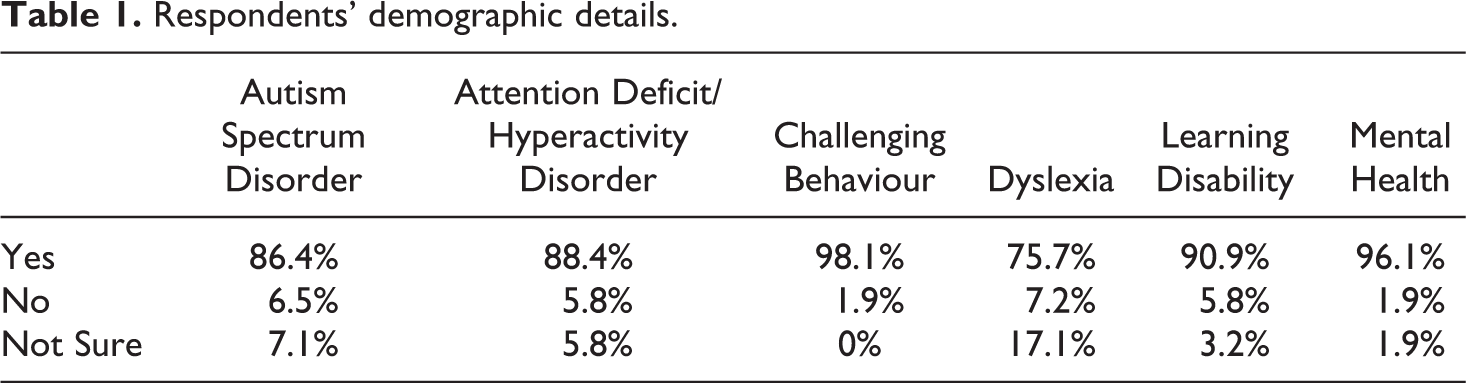
A majority of respondents had been employed by Police Scotland for 10 or more years (63.9%) and the majority were in the 25–44 age category. Respondents ranged in rank from Constable to Superintendent. No data was collected on gender as it was not considered to the research questions. Full demographic data for respondents is included in Table 1.
Respondents’ demographic details.
Results
Aim 1: Are Police Scotland officers aware of the term SLCN?
One hundred fifty-three of the 158 respondents answered this question. A majority (54.2%, n = 83) were either not aware (n = 64) or not sure (n = 19) of the term. The remaining 45.8% (n = 70) of the respondents reported awareness of the term SLCN: I would say I am but would have been unaware of the SLCN title. I am only recently aware of this term but I’m sure I’ve met young people with SLCN issues without realising what it is.
Aim 2: Do Police Scotland officers have experience in young offenders with SLCN?
When asked whether they had encountered young people with SLCN, of 155 responses, only 20 officers (12.9%) responded that they had not. A majority (n = 115, 74.2%) answered ‘yes’ and 20 (12.9%) were ‘not sure’. A chi-square test of goodness of fit showed no significant relationship between an officer’s age, banding or length of employment and their experience of young people with SLCN.
73.9% of respondents (n = 113) reported previous concerns about a young person’s language comprehension. Only 34 officers (22.2%) had not experienced this and 6 (3.9%) were not sure.
54.8% (n = 85) had previous concerns about a young person’s expression. Around a third of respondents (n = 48) answered that they had not previously been concerned about a young person’s expression. 14.2% (n = 22) were not sure.
As Table 2 shows, a clear majority of police officers reported they had experience of all clinical conditions when dealing with young offenders. Typically, the remaining respondents were an even split between having never seen that clinical presentation in practice or were not sure. The exception was dyslexia where 17.1% were not sure if they had worked with a young person with this disorder. No respondents were unsure if they had experience of challenging behaviour.
Police Scotland experience of specific conditions in young offenders (percentages).
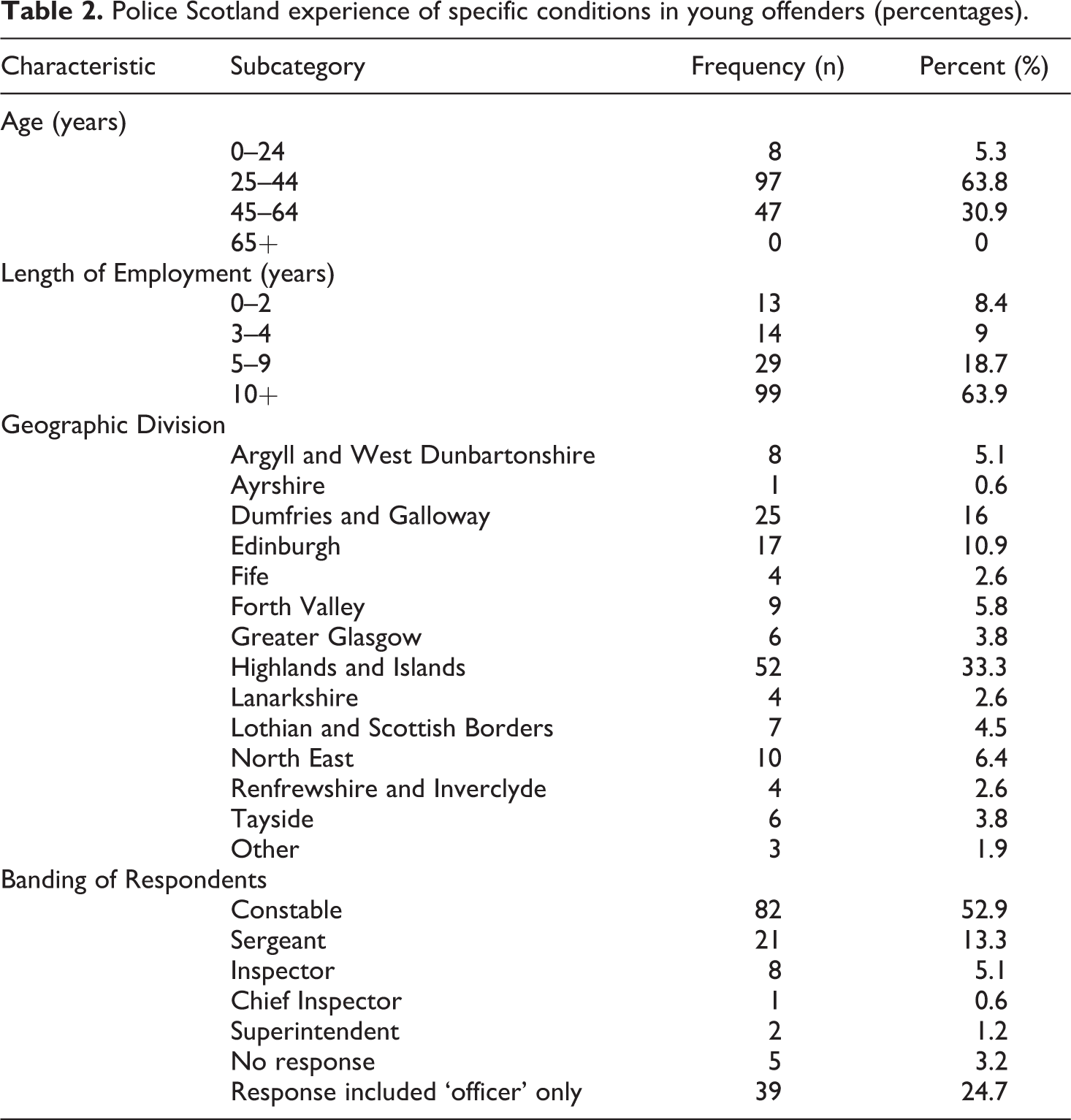
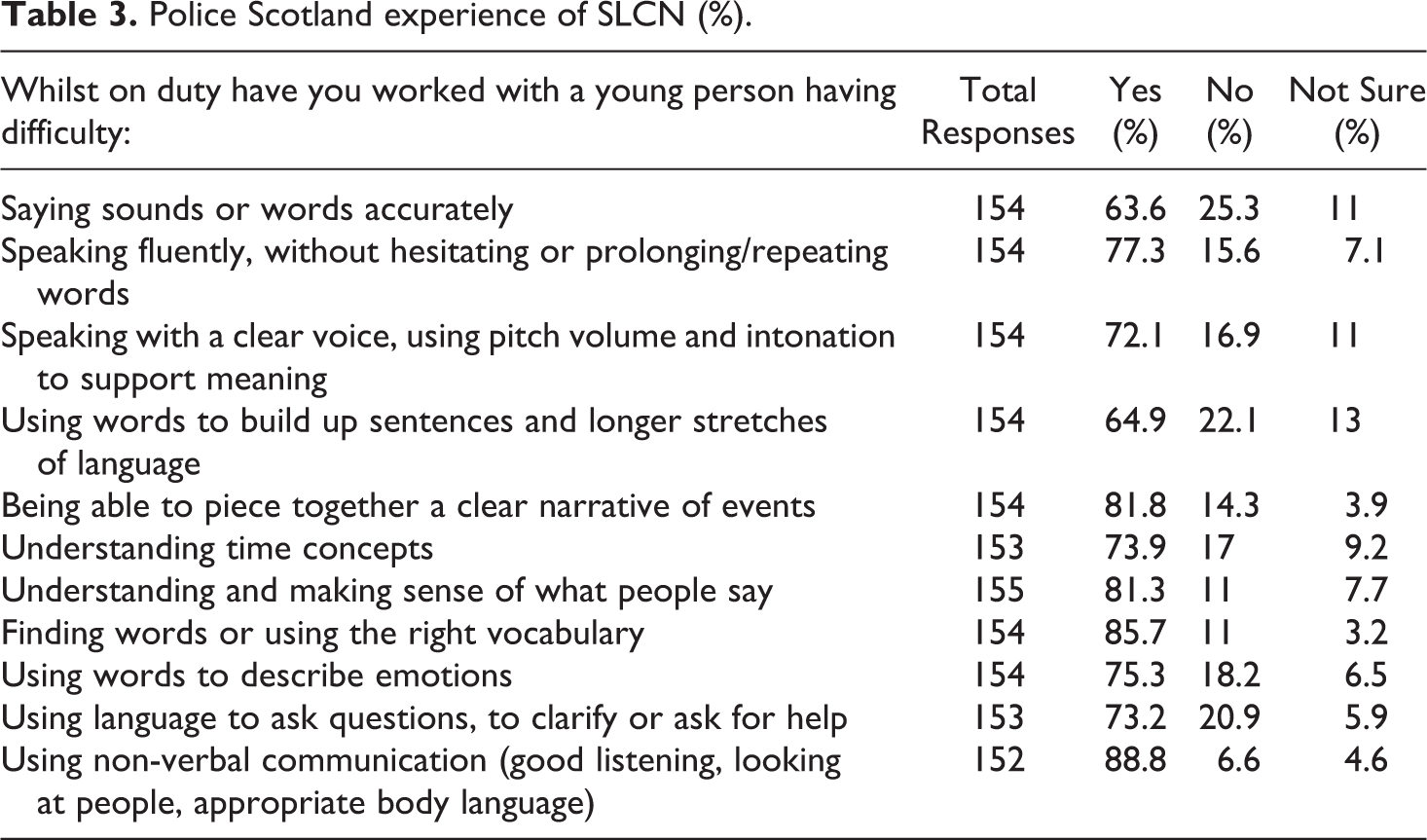
Table 3 shows a majority of respondents reported having worked with a young person having difficulty with each of the SLCN behaviours surveyed. The SLCN most commonly experienced were difficulties with narrative, comprehension, describing emotions, using the correct vocabulary and using non-verbal communication.
Police Scotland experience of SLCN (%).
Aim 3: What strategies do Police Scotland use to support young people with SLCN?
When asked the open question ‘What strategies do you use to promote understanding and support clear communication when working with young people?’, 87/158 elected to answer, over half of the whole sample. Of these, 14 said they were not aware of any strategies to use to support young people’s SLCN. Seventy-three reported using strategies as follows. In some cases, respondents gave more than one strategy.
The most frequently reported strategy for supporting SLCN was for officers to seek support from other trained professionals (n = 32). Not only did respondents point to the Appropriate Adult scheme, but commonly noted use of trained officers from within the force and collaboration with social work. Making use of appropriate adults & involving people with a knowledge of an individual’s learning needs to support and assist with communication. Speak slower, use more basic language. Simplifying language/reducing length of e.g. instructions. Listen, be patient, don’t interrupt… Rapport skills with a youth with a difficulty goes a long way. Taking time to build rapport, assess level of communication skills, and make the individual feel at ease.
Six of the 87 respondents expressed their concern at the apparent absence of respect for authorities in young people.
Aim 4: Who do Police Scotland believe is responsible for recognising SLCN and would they be interested in additional training on the subject?
Respondents were given the option to provide more than one answer when asked who was responsible for identifying SLCN. All officers (n = 154) who completed this section selected more than one person to be responsible (see Figure 1). Almost every officer reported that education and social work personnel (n = 149, 90.9% and n = 137, 89% respectively) are responsible, followed by parents and carers (87.7%). 59.1% (n = 91) considered police officers and 55.8% (n = 86) considered SLT responsible, at least in part. There was less, but still considerable, recognition for Children’s Panel Members having responsibility (n = 66, 42.9%). ‘Other’ responses included: anyone with contact with the young person has a responsibility or that it was the responsibility of a combination of services. One respondent believed the young person to have a responsibility. The other single response highlighted the respondents’ belief that the police should only be responsible and assist if other agencies have not ‘flagged’ the SLCN.
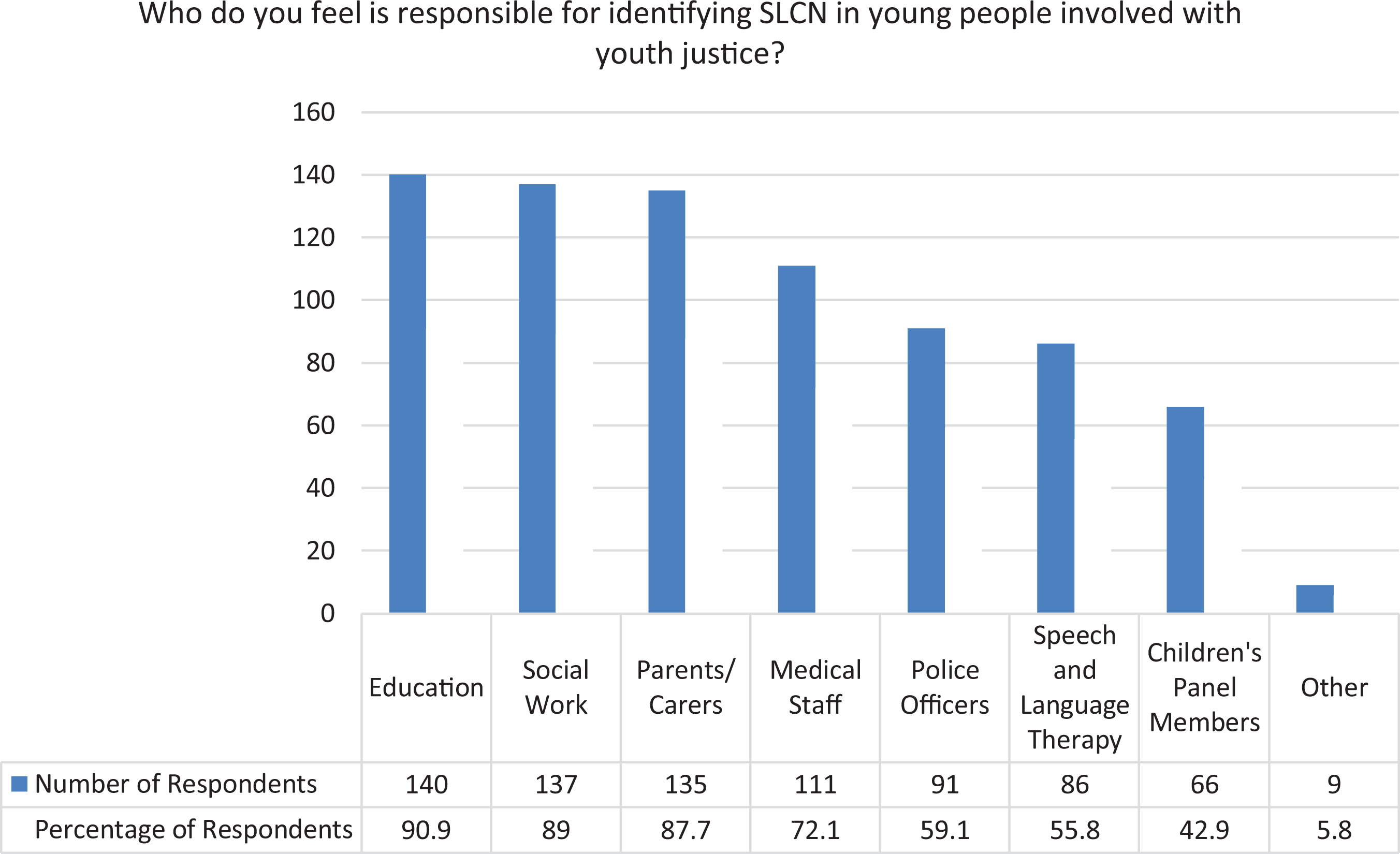
Responsibility for identifying SLCN in young offenders, reported by Police Scotland officers.
One hundred twenty-one respondents answered the question on whether they would be interested in further training. Fifty-three reported they would be interested. One respondent provided the caveat that this should specific and go beyond the ‘ticking boxes level of some of the online courses available for officers at present’. Thirty-two responded that they would not be interested and 36 were not sure. Using a chi-square goodness of fit analysis, there was no significant relationship between respondents’ age, length of employment or banding and their interest in further training.
Aim 5: Are Police Scotland officers aware of the open referral system to SLT services in Scotland?
A clear majority (87.7%, n = 136) of 155 respondents were unaware that NHS SLT services in Scotland operate on an open referral basis where anyone, with the permission of the young person/carer, can make a request for assistance.
Discussion
The overall aim of the study was to explore Police Scotland officers’ awareness of SLCN in young offenders. The higher proportion reporting of experience of SLCN than awareness of the term itself, indicates that there is a need for the SLT profession to campaign and improve awareness of SLCN with the justice system. SLTs are the professionals best placed to provide professionals working with the justice system with the training and terminology to identify and understand SLCN.
Considerably more respondents (75%) reported previous concern about a young person’s understanding than expressive difficulties (55%). The main reports of expressive difficulty concerned the inappropriate vocabulary adopted by young people as well as a lack of language to communicate feelings (often leading to a behavioural ‘outburst’). Several respondents went on to make a link between a young person’s lack of ability to express themselves and offending behaviours. A majority of respondents reported having experienced each SLCN condition and specific behaviour, which is positive as this is a crucial, first step in officers being able to support the needs of these young people.
Literature describing language functioning in young offenders does not typically report that comprehension deficits are more prevalent than expressive difficulties. Expressive SLCN in young offenders may be more difficult to identify and may masquerade as ‘poor attitude’. For example, a cross-sectional study (Snow and Powell, 2008) examining the oral language and social skills of 50 young offenders demonstrated that the young offenders scored significantly worse on all language and social skill measures than the control group and they scored particularly lower when expressing their thoughts and experiences. This often amounted to monosyllabic responses, shoulder shrugging and poor eye contact. A small number of officers in this study (n = 5) reported similar behaviours where a young person was then perceived to be unengaged or ‘awkward’. It is important that officers are trained to have a professional understanding of SLCN to recognise that this behaviour may for many individuals be best attributed to poor language functioning. SLTs must routinely raise awareness that difficulties in understanding and expression can masquerade as behavioural phenomena including rudeness, poor social skills and disinterest to avoid these potentially influencing a young person’s judicial outcome.
A young person’s ability to express themselves has been recognised as the primary skill required for effective participation in the CHS (Clark and Fitzsimons, 2018). A young person interacting with police officers demands the same ability of a young person to express their views and experience. Research suggests that young offenders avoid attempting to resolving conflict with the police to reduce the likelihood of further punishment (Hopkins et al., 2016). Therefore, it is likely that young people avoid sharing their views with police. To actively encourage engagement, there is a need for strategies for officers to use which support a young person to express their experience in a way which is meaningful to them. The United Nations Convention on the Rights of the Child (1989) Article 12 firmly attests that children and young people have the right to freedom of expression and that they have the right to express views on all matters which relate to them, with those opinions being given requisite weight in decision-making. Article 13 allows that such expression can be made ‘either orally, in writing or in print, in the form of art, or through any other media of the child’s choice’. If a young person does not have the opportunity to express their views because their needs are not being recognised and supported, then the system fundamentally is failing to meet their basic human right to freedom of expression. There should now be a drive to increase justice staff awareness that potential legal challenges may ensue, should there be a failure to uphold these international rights.
Although many respondents reported strategies to support young people with SLCN, a marginal majority did not answer this question or were unaware of any strategies. This indicates inconsistency amongst police officers in understanding how to support young people with SLCN. Those who identified strategies offered more means for supporting understanding than to encourage a young person to express themselves, with a strong emergent theme being the use of social services and Appropriate Adults to facilitate communication with a young person who has SLCN. Reliance on other agencies to support a young person with SLCN is not a sustainable strategy for Police Scotland as it is inevitable that there will be interactions with young people without immediate assistance from others. The existing role of Appropriate Adults is to facilitate communication between police and vulnerable suspects, victims and witnesses ‘who have communication difficulties as a result of a mental disorder’ (Scottish Government, 2018a). Although Scottish Government are seeking to change this, the service is currently delivered on a non-statutory basis, therefore there is variation in provision across the country. Considering the police reliance on the role of an Appropriate Adult reported in this study, the recent Scottish Government consultation to move to a statutory regulated service is welcomed (Scottish Government, 2018b). A recent project between RCSLT and Scottish Government to develop a screening and profiling tool for use by Appropriate Adults is also encouraging and is an example of SLT intervention at the universal level which was previously highlighted to be absent in the CJS in Scotland (Clark et al., 2012).
It can be argued that strategies to support SLCN is certainly an area open for professional development within the force. Building on the knowledge and understanding of SLCN already demonstrated by officers would improve interactions with young people involved in offending behaviour. This in turn would assist decision-making of youth justice workers in terms of the WSA and achieving the most appropriate outcome for young offenders. One respondent highlighted the inaccessibility of restorative justice to some young people. Restorative justice is about listening to them and trying to gauge how their behaviour affects others sometimes this is not possible as they just don’t see or understand their actions.
Encouragingly, positive relationship building was recognised as an important strategy for interacting with young people involved in offending. This message should be disseminated in order that a larger number of officers appreciate the benefits of this strategy. An emergent theme from a qualitative study of young offenders’ perceptions of their communication skill (Fitzsimons, 2019) found that a trusting and respectful relationship is important to enable young people to engage. Participants expressed feelings of disrespect from police officers which led to increased conflict and aggression towards police generally. Officers should be mindful that a potential precursor to effective communication with a young person is to offer mutual respect and refrain from emphasising their power and authority, where possible. The importance of building rapport and a safe environment for the young person can in turn facilitate better communication with reduced conflict and aggression, allowing officers time to make observations on how best to support the young person with SLCN, in line with the WSA.
Previously, Clark and Fitzsimons (2018) found that members of the CHS believed social work predominantly responsible for recognising a young person’s SLCN, followed by the parent/carer. Findings here are in line with that: the primary authorities held responsible for identifying SLCN in young people were education, social work and parents/carers. There was, however, a consensus amongst respondents that a collective approach is optimal, with all involved with the young person sharing responsibility.
Whilst it is important to recognise that no a single authority is responsible for identifying and supporting SLCN, it is necessary to remain realistic about who is likely to seek specialist SLT services to support SLCN. The RCSLT (2016) outline the ‘Intergenerational Cycle of Speech, Language and Communication, Outcomes and Risks’ which demonstrates that parents/carers of young people may be experiencing SLCN of their own and therefore in this context are unlikely to be the person who identifies the young person’s need. Young offenders are not always in education services, mainstream or otherwise therefore it is unrealistic to expect a large number of referrals to SLT from this source. Whilst the majority of police respondents felt they were, at least in part, responsible for recognising the need, their involvement with the young person may be limited and therefore it is, again, unlikely to expect a wealth of referrals from this authority. Future research should seek to understand Social Workers’ awareness of SLCN in young people involved in offending behaviour as this agency is well positioned to identify and refer for support.
A slim majority of respondents demonstrated interest in further training for recognising and supporting SLCN in young offenders. However, with the inconsistency of strategy awareness and high reports of experience of young people with SLCN, there is a clear need for non-specialist tools and interventions to be assimilated into police practice without them having a reliance on specialist intervention or other authorities to support young people with SLCN. Furthermore, officers of higher banding having more awareness of the term SLCN suggests the need for training to officers earlier in their career. SLT services in the CJS cannot continue working at specialist and targeted levels (Snow et al., 2015). At a universal level, the role of the SLT includes encouraging recognition for the efficacy of SLT in forensic settings and skilling up youth justice workers throughout the CJS. There is now a risk of this professional development, essential to meeting the needs of young offenders in the youth justice system, not being achieved if SLT are not instrumental in instructing training, developing resources and changing services, routinely working across all three tiers of intervention.
It was concerning that very few respondents said that the agency responsible for identifying SLCN is SLT services. This was in line with the finding that overwhelming majority of respondents were unaware of the open referral system for SLT services in Scotland. Research demonstrates that SLT intervention can directly improve a young person’s SLCN (Gregory and Bryan, 2011). Despite this, Speech and Language Therapists are not routinely employed in forensic settings despite the high prevalence of SLCN and efficacy of intervention (Clark et al., 2012). A small study of youth justice managers in Scotland reported a trend recognising a high level of need but frustration at trying to access services (Vaswani, 2014). The Centre of Youth and Criminal Justice (Nolan, 2018) reported suggestions for improving responses to SLCN in the youth justice system, in line with the national policy (Getting it Right for Every Child) which is committed to ensuring SLT are part of a multi-agency approach. It stipulates that SLT services should be piloted into a youth justice team and that each team should have direct access to a named SLT. Beyond this, it calls for funding to develop specialist SLT roles and create easier access to services.
Limitations
In the early stages of the project it would have been beneficial to pilot the project. This would have informed potential amendments to and inclusion of further questions. Although the study attracted a substantial number of respondents, at the time of the research there were over 17,000 Police Scotland officers (Police Scotland, 2019). Not all questions were compulsory so the number of responses to each question although high varied. This study was a convenience sample, likely influenced by snowball sampling and therefore findings cannot be generalised to all Police Scotland officers. Similarly, the self-selecting nature of the study gives rise to a greater chance of well-informed participants responding to the survey (Dillman et al., 1998), non-responders may have had significantly different opinions not credited in this study. Random sampling of officers from the national employee register would have helped avoid this, but limited resources did not allow for this.
Conclusion
A high level of discretionary authority coupled with a duty to administer the welfare principles that recognise young offenders as young people in need mean that police must be able to recognise and support young offenders with SLCN. There is now a substantial body of evidence which identifies a higher prevalence of SLCN in young offender populations. This study supports these findings in that police officers consistently reported having experience of encountering young people with SLCN. Overall, officers reported that they were ‘fairly confident’ recognising SLCN and identified some useful strategies to ensure such needs are supported. A prominent theme for supporting young people emerged as assistance from Appropriate Adults or social workers. This is likely to be an unsustainable strategy, therefore there is a need for further training in identifying and meeting SLCN. Greater understanding of SLCN will allow officers to take a holistic view of the young person and can facilitate clear communication to assist in their decision-making process for the suitability of EEI and other diversions from prosecution. Crucially a large majority of officers were not aware of SLT being an open referral service in Scotland and predominantly held education and social work responsible for identifying SLCN in young offenders. The role of SLT in the youth justice system is misunderstood and therefore under-utilised. As one respondent noted, ‘I’m sure I have met young people with SLCN without knowing what it is’. Speech and Language Therapists have a professional duty to raise awareness of SLCN for those working with young offender populations to avoid this statement becoming typical, including promoting understanding of the value and impact of SLT. SLT services are best placed to train and assist officers in supporting SLCN of young offenders and will accept referrals for further specialist services where required. The now established case for increased SLT provision across all areas of the CJS in Scotland is strengthened by the findings of this study.
Footnotes
Declaration of conflicting interests
The author(s) declared no potential conflicts of interest with respect to the research, authorship, and/or publication of this article.
Funding
The author(s) received no financial support for the research, authorship, and/or publication of this article.
