



Abstract
The preschool period is a critical stage of rapid development in motor and cognitive skills, and this development has significant implications for future academic success. During this period, the relationship between cognitive domains such as visual-motor integration, executive function, and memory may play a decisive role in children’s school readiness. However, studies examining the multidimensional relationships between these skills in early childhood are relatively limited. This study aims to explore the relationship between visual-motor integration scores and the levels of executive function and memory in children aged 48-66 months. The study was conducted with children attending public and private preschools in Kırşehir and Yozgat during the 2024-2025 academic year. The data collection process involved the Preschool Visual-Motor Integration Assessment (PVMIA), the Preschool Executive Functions Teacher Form, and a memory game designed by the researchers. The data were analyzed using t-tests, ANOVA, correlation, and regression analyses. The findings showed that the scores of children in the 60-66 month age group were significantly higher than those of other age groups. Furthermore, significant positive relationships were found between visual motor integration and executive function and memory. These results emphasize the need for a holistic approach in developmental assessments.
Introduction
The preschool period is marked by rapid gains in motor and cognitive skills as children actively explore their environment and begin to adapt to structured social settings. During this period, children lay the foundations for lifelong development and are first immersed in structured social environments outside the family. Visual–motor integration (VMI) refers to the ability to transform visual information into coordinated motor output, supporting early learning activities such as drawing, copying shapes, and pre-writing (Collin et al., 2015; Lyons et al., 2009). VMI is central to the performance of key preschool tasks such as hand-eye coordination, shape recognition, drawing, and writing (Cameron et al., 2012; Yuniarwati & Lin, 2025). VMI has been shown to be closely related not only to motor skills but also to cognitive skills such as attention, short-term memory, planning, and executive function (Chen et al., 2025; Pieters et al., 2012). Against this background, this study examines associations between visual–motor integration, executive function, and memory in children aged 48–66 months. By doing so, it seeks to provide a comprehensive perspective on the interplay between these cognitive processes and their collective influence on motor performance.
VMI enables the critical link between perception and action (Memisevic & Sinanovic, 2012). This process fundamentally supports children’s cognitive, social, and emotional development (Cameron et al., 2012). Delays in these skills can lead to problems such as reading and writing difficulties and academic difficulties later in childhood (Çetin Sultanoğlu & Aral, 2016). VMI is an important determinant of academic processes such as reading and writing readiness, drawing, and writing (Memisevic & Sinanovic, 2012; Pieters et al., 2012). When these skills are neglected, failures are observed in tasks such as hand-eye coordination, shape discrimination, and object recognition (Cameron et al., 2012; Yuniarwati & Lin, 2025), and if early intervention is not provided, it will harm the child in areas of cognitive, social, and emotional development, along with academic skills (Çetin Sultanoğlu & Aral, 2016). Literature reviews confirm that visual-motor integration is closely related to cognitive development as well as academic skills, revealing that it is a critical factor that provides in-depth predictions about children’s developmental performance (Lyons et al., 2009). A study conducted on preschool children suggests that running, jumping, and writing are both physical and cognitive tasks that are mutually influential (Yuniarwati & Lin, 2025). Furthermore, VMI has been proposed as a potential component in the early assessment of autism spectrum disorder in preschool children (Chen et al., 2025). All these findings indicate that visual-motor integration skills are central mechanisms that support not only motor skills but also cognitive development and are of critical importance for preschool children.
Executive function involves cognitive processes that facilitate the planning and organization of behaviors (Diamond & Lee, 2011). This function encompasses core components such as working memory, cognitive flexibility, and inhibitory control, which underlie decision-making and problem-solving (Carlson, 2003). This cognitive system, which begins in early childhood, plays a fundamental role in learning, social adjustment, and school success (Blair & Raver, 2015; Yamamoto & Imai-Matsumura, 2019). A review of the literature indicates that visual-motor integration is closely related to executive function skills such as attention, motor planning, and working memory (Cameron et al., 2012). Visual-motor integration and executive function skills have been shown to significantly predict the academic success of preschool children (Roebers, 2017). Furthermore, visual-motor skills are thought to be linked to visual perception, fine motor coordination, motor inhibition, attention, and memory skills (Memisevic & Sinanovic, 2012). Supporting this motor-cognitive link, meta-analytic evidence indicates that physical activity, which engages motor and coordinative skills, positively influences executive function and attention in children (de Greeff et al., 2018). However, comprehensive data on preschool children (48-66 months) remain limited. Overall, prior evidence indicates that visual-motor integration and executive function are interrelated in early childhood and are critical for understanding children’s holistic cognitive, motor, and academic development.
Memory in the preschool period refers to children’s developing ability to encode, store, and retrieve information from their environment (Gagne et al., 2025). During this period, memory enables children to control cognitive mechanisms such as learning, problem solving, and interaction with their environment (Wolfe & Bell, 2007). Rigoli et al. (2013) found in their study with elementary school children that higher motor coordination was associated with better working memory performance, which in turn positively influenced academic achievement. Another study indicated that short-term memory works in conjunction with executive function skills and supports visual-motor integration skills (Memisevic & Sinanovic, 2012). Agostino et al. (2023) showed that basic physical skills such as strength may be linked to short-term memory in elementary school children and emphasized the need for a clearer understanding of how motor and cognitive skills interact in early childhood. These findings suggest that motor skills and memory skills are reciprocally related, that motor and cognitive development should be addressed holistically, and that studies directly addressing the preschool period are limited.
While the critical importance of visual-motor integration and cognitive skills in preschool children is well-established, there is a notable lack of empirical studies examining their interrelationship within a Turkish sample. Given the developmental sensitivity of the preschool years and their foundational role for future growth, it is crucial to elucidate how motor skills influence cognitive development during this critical window. To address this gap, this study aimed to examine the relationship between visual-motor integration skills and the levels of executive function and memory in children aged 48-66 months. In light of this rationale, the research questions were formulated as follows: - Do children’s visual-motor integration, executive function, and memory scores differ significantly according to age and gender variables? - Are executive function and memory skills related to visual-motor integration in preschool children?
Method
Research Model
This study was conducted using a cross-sectional correlational design to examine the relationships between executive function and memory and visual-motor integration levels in children aged 48-66 months.
This study was reviewed by the Ethics Committee of Social and Human Sciences at Ankara Yıldırım Beyazıt University and approved on October 25, 2023, with decision number 08-177 (Project Code, 2023-177). The study was conducted in accordance with the ethical principles for human research outlined in the Declaration of Helsinki. Written informed consent forms were obtained from the parents and teachers of the children participating in the study. Verbal consent was obtained from the children to ensure voluntary participation.
Study Group
A power analysis was conducted using G*Power (version 3.1.9.7) to determine the minimum sample size. With parameters set for a medium effect size (d = 0.30), 80% statistical power (1-β = 0.80), and a significance level of α = 0.05, the minimum required sample size was calculated as 64. To account for potential participant attrition, a larger target sample size was pursued.
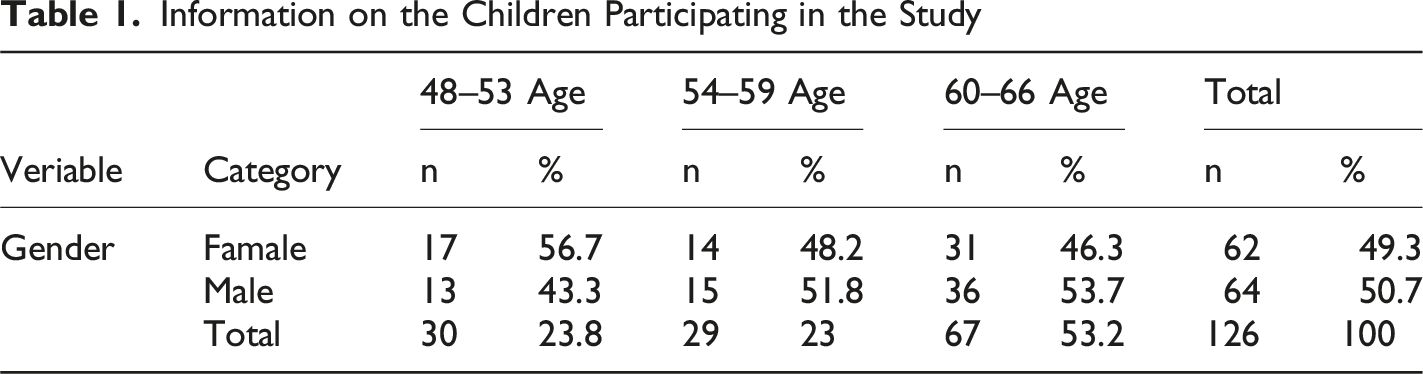
The study population consisted of 126 children aged 48-66 months, exhibiting normal development, living with their parents, and attending independent kindergartens affiliated with the Ministry of National Education in the provincial centers of Kırşehir and Yozgat. Kindergartens were selected from among the independent kindergartens located in the provincial centers of Kırşehir and Yozgat using a random sampling method, and institutional permission was obtained for these kindergartens. All kindergartens located in the provincial centers of Kırşehir and Yozgat were listed, and sample kindergartens were determined using a computer-based random number method, giving equal selection probability. Children attending kindergartens were grouped using stratified sampling according to their age and gender, and an equal number of children were selected from each stratum and included in the study. Children attending independent kindergartens selected using an appropriate method, which showed an approximately equal distribution according to age groups and had a suitable environment for the application, were included in the application after interviews with the administrators of the independent kindergartens. The children were divided into groups using a simple random assignment method to balance the age and gender groups. Care was taken to select an equal number of children of each age and gender. Consent forms were completed by the parents and teachers of the children who would participate in the study. The study was conducted with the children of families who volunteered to participate in the research and completed the consent form.
Information on the Children Participating in the Study
Data Collection Tools
The ‘Visual Motor Integration Assessment Tool’, ‘Executive Function Teacher Form’, and a memory game were used in the study. The measurement tools were administered individually to children in school buildings. All measurements were conducted on the same day by the researchers. They were conducted in a quiet classroom environment and with standard instructions. Teachers completed the executive function forms, and data were collected on the same day for each child.
Preschool Visual Motor Integration Assessment (PVMIA)
The “Preschool Visual Motor Integration Assessment – PVMIA”, developed by Deitchman & Puttkammer (2001), was validated by Çetin Sultanoğlu and Aral (2016). It is a standardized test developed to assess the relationship between visual perception and fine motor skills in preschool children. The tool consists of a total of 33 items and comprises two subscales: drawing and blocks. The drawing subtest measures similarity, number of segments, motor proficiency, relational skills, spatial positioning, and shape recognition skills. In the block section, children are expected to create shapes given to them using blocks of different colors and shapes that are shown to them, and then to examine a picture of a pattern of shapes shown to them and reproduce it. The preschool visual-motor integration test is administered to children individually and takes an average of 20-25 minutes. It is administered to preschool children between 42 and 66 months of age. Scoring is specific to the children’s age and gender characteristics. When evaluated psychometrically, content validity was reported to be significant at the 0.05 level, and Cronbach’s alpha internal consistency coefficient was reported to be 0.85 (Çetin Sultanoğlu & Aral, 2016). The tool is supported by normative studies across different age groups and has been standardized to account for developmental differences based on children’s age and gender. Furthermore, its construct validity has been confirmed through factor analysis. Regarding criterion validity, meaningful correlations have been obtained with similar tests.
Executive Function Teacher Form
The “Childhood Executive Functions Inventory,” developed by Thorell and Nyberg (2008) to assess children’s executive function skills, has been validated and reliability tested by Arslan Çiftçi et al. (2020). The inventory is suitable for children aged 4-12 and is completed by teachers. It measures the two subcomponents of executive function: working memory and inhibitory control. It is assessed using a 5-point Likert scale. High scores on the scale indicate low executive function skills. From a psychometric perspective, the correlation between the two factors was found to be 0.69 (Thorell & Nyberg, 2008). The Cronbach’s alpha coefficient for the working memory subscale was found to be 0.96–97, and for the inhibitory control subscale, it was found to be between .95–.96 (Arslan Çiftçi et al., 2020).
Memory Game
In this study, a researcher-designed memory game was utilized to assess children’s short-term and working memory. To ensure age-appropriateness and maintain engagement given preschoolers’ limited attention spans, the game was designed to be brief and enjoyable. The task involved showing children cards depicting animals for 10 seconds, after which the cards were hidden. Following a brief delay, children were asked to recall the animals they had seen, a procedure aimed at engaging both short-term storage and active recall (working memory). The task difficulty was adjusted by the number of cards: three cards were used for children aged 48–57 months, and four cards for children aged 57–66 months. Scoring was scaled accordingly, with younger children receiving 4 points per correct recall and older children receiving 3 points, allowing for comparable total score ranges across age groups. To establish content validity, the game materials and protocol were evaluated by three academic experts in child development. Their feedback on visual quality, instruction clarity, and timing was incorporated into the final design. The reliability of the game was assessed using the test-retest method. The game was administered twice to the same children with a two-week interval, and a strong positive correlation was found between the scores (r = .79). These steps support the conclusion that this memory game is a valid and reliable tool for assessing relevant memory skills in the preschool period.
Data Analysis
Following data collection, the scores from the Preschool Visual-Motor Integration Assessment (PVMIA), executive function measure, and memory game were entered for statistical analysis. The normality of the data distribution for each variable was assessed by examining skewness and kurtosis coefficients. All values fell within the acceptable range of ±1.5 (Tabachnick & Fidell, 2020), indicating that the data were approximately normally distributed. Specifically, the skewness and kurtosis values were −0.267 and −1.045 for PVMIA scores, −0.468 and −0.757 for executive function scores, and −1.05 and −0.191 for memory scores, respectively.
The multicollinearity problem was examined by looking at the Tolerance and VIF values. The tolerance values for the executive function and memory variables were calculated as .975 and the VIF values as 1.026.
An independent samples t-test was used to compare visual-motor integration, executive function, and memory scores by gender. Additionally, subscale scores were analyzed by gender. A one-way analysis of variance was used to determine differences in children’s scores across age groups. ANOVA analyses were used to evaluate the effects of age groups on scores in visual-motor integration, executive function, memory, and related subtests. Furthermore, Tukey values were analyzed to determine significant differences between age groups. Pearson correlation analysis was applied to determine the relationships between variables. Correlation analyses were used to examine the levels of relationship between the variables of visual-motor integration, executive function, and memory. Multiple linear regression analysis was performed to determine whether visual-motor integration skills were predicted by executive function and memory skills. This analysis assessed the explanatory power of the independent variables on the dependent variable.
Results
This section presents analyses and difference tests conducted to determine the relationships between visual-motor integration, executive function, and memory skills in children aged 48–66 months.
Descriptive Statistics
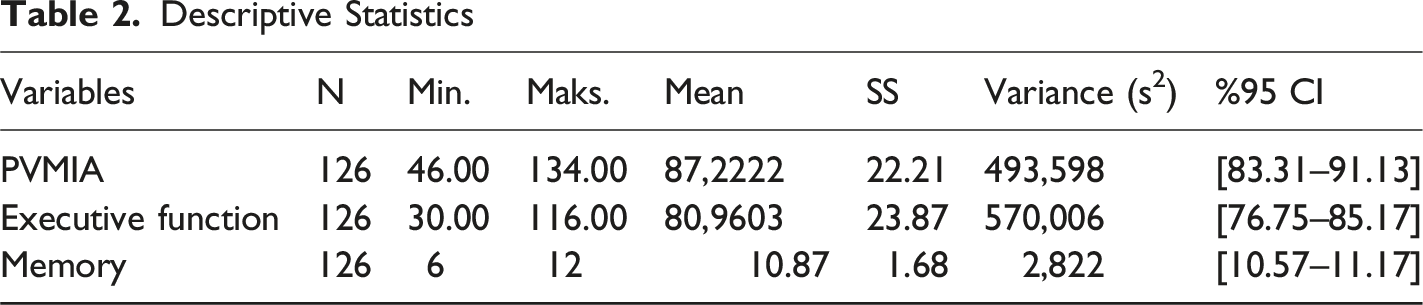
According to Table 2, PVMIA scores range from 46 to 134, with an average of 87.22 (SD = 22.21; 95% CI = [83.31 – 91.13]), indicating that the scores are clustered around the mean. Executive function scores range from 30 to 116, with an average of 80.96, indicating that they are concentrated around the average (SD = 23.87; 95% CI = [76.75 – 85.17]). Memory scores ranged from 6 to 12, with a mean of 10.87 (SD = 1.68; 95% CI = [10.57 – 11.17]), indicating that children’s memory performance was high.
t-Test Results of PVMIA, Executive Function, and Memory Scores of 48–66 Month-Old Children by Gender
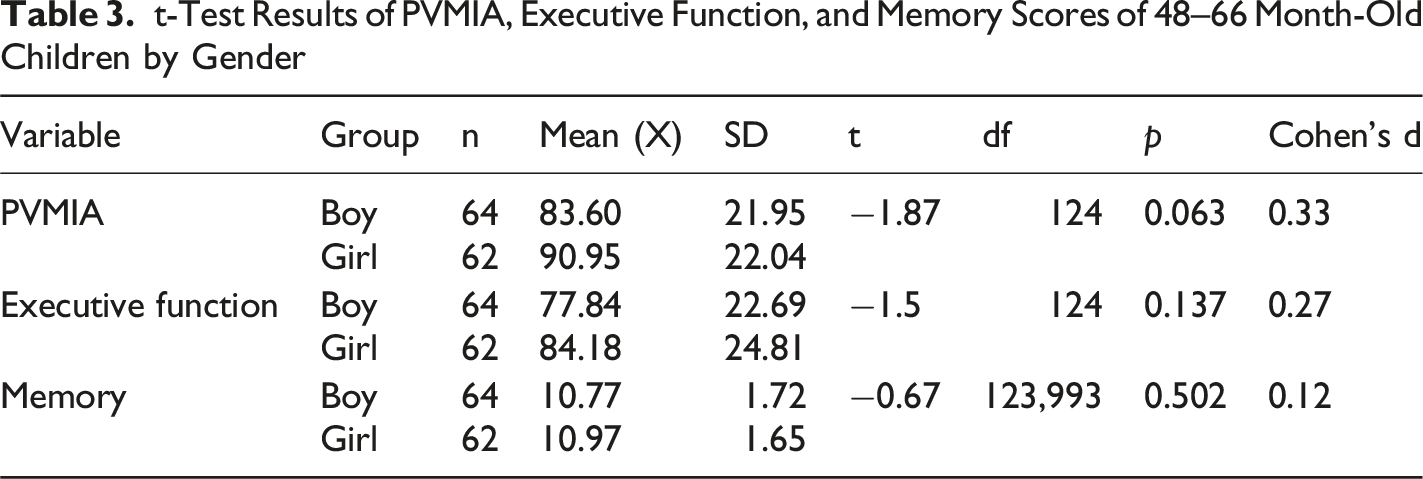
When Table 3 was analyzed, it was found that girls had higher mean PVMIA scores than boys, but this difference was not statistically significant [t (124) = −1.87, p = 0.063]. Cohen’s d = 0.33 indicates a small-to-medium effect size. Similarly, when comparing executive function scores by gender, no significant difference was found [t (124) = −1.50, p = 0.137]. The effect size is small, with Cohen’s d = 0.27. As with other variables, the difference between boys’ and girls’ memory scores was also not significant [t (123.993) = −0.67, p = 0.502)]. Cohen’s d = 0.12 indicates a very small effect. In conclusion, no statistically significant differences were found in any variables based on gender.
ANOVA Results for Visual Motor Integration Executive Function and Memory of 48–66 Month-Old Children by Age
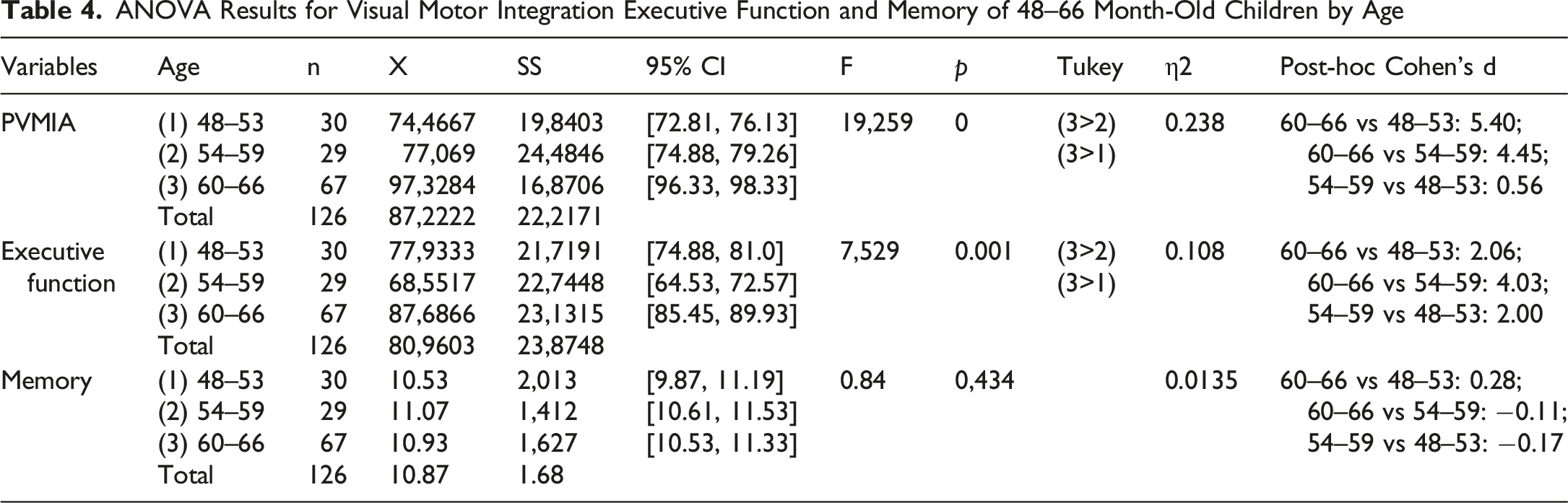
According to Table 4, PVMIA and executive function scores differ significantly across age groups. According to the ANOVA results, F (2,123) = 19.26, p < .001 and η2 = .238 were obtained for PVMIA scores; F (2,123) = 7.53, p = .001 and η2 = .108 were obtained for executive function scores. Age explains 23.8% of the variance in PVMIA scores and 10.8% of the variance in executive function scores.
On the other hand, memory scores did not show significant differences across age groups, and the effect of age on memory was found to be low (F (2,123) = 0.84, p = .434, η2 = .0135). These results indicate that visual-motor integration and executive function skills develop with age, but memory skills do not show significant change with age. The proximity of the average memory skill scores to each other stems from the expectation that age-appropriate tasks be used to measure memory in children.
Post-hoc (Tukey) tests revealed that the 60–66 month group scored significantly higher than other age groups. No significant differences were found between the 48–53 months and 54–59 months groups. This result indicates that visual-motor integration and executive function skills develop after the 60th month. For PVMIA, a large effect size of d = 5.40 was found for 60–66 months vs. 48–53 months, a large effect size of d = 4.45 was found for 60–66 months vs. 54–59 months, and finally, a medium effect size of d = 0.56 was found for 54–59 months vs. 48–53 months. Looking at executive function scores, similar results were found: 60-66 months vs. 48-53 months d = 2.06 large effect, 60–66 months vs. 54–59 months d = 4.03 large effect, and 54–59 months vs. 48–53 months d = 2.00 large effect. In contrast, the differences between groups in memory scores were found to be practically insignificant.
ANOVA Results for the Drawing Subsection of the Visual Motor Integration Test According to the Ages of Children Between 48–66 Months
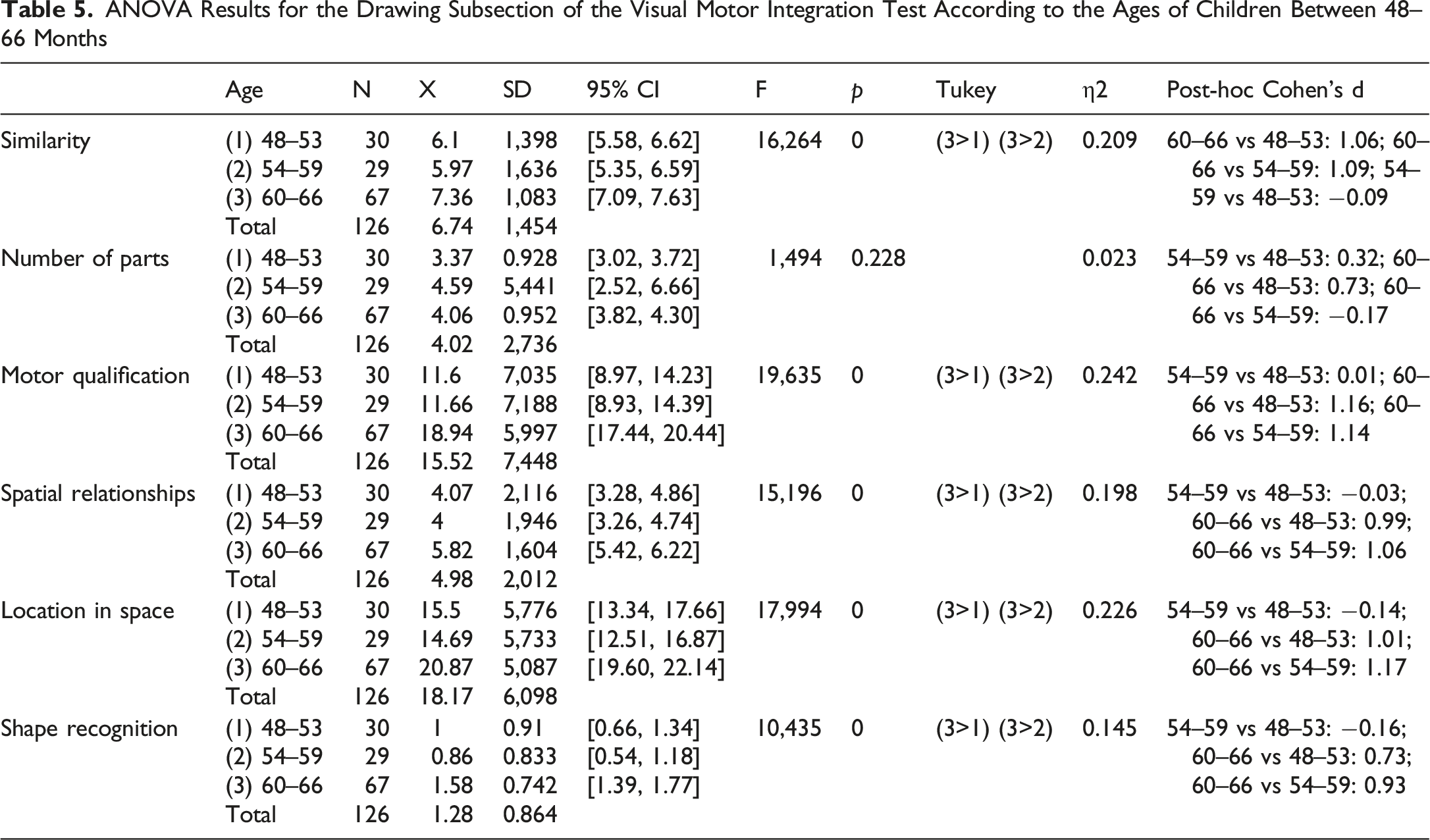
Table 5 shows that there are significant differences between age groups in various skills of the PVMIA drawing subtest. A significant difference was found in similarity scores, with the 60–66 month group scoring significantly higher than both the 48–53 months and 54–59 months groups. Age-group differences were observed in similarity skills (F = 16.264; p < 0.001; η2 = 0.209). No significant difference was found in the number of pieces scores between age groups, and the effect size was found to be quite low (F = 1.494; p = 0.228; η2 = 0.023). On the other hand, a significant difference was found in motor proficiency scores, with the 60-66 months group scoring significantly higher than the other two age groups. This indicates that age has a significant effect on motor proficiency skills (F = 19.635; p < 0.001; η2 = 0.242). A significant difference was also observed in spatial relations scores across age groups; the highest scores were again found in the 60-66 months group (F = 15.196; p < 0.001; η2 = 0.198). A similar result was observed in spatial location scores, with the 60-66 months group scoring significantly higher than other age groups (F = 17.994; p < 0.001; η2 = 0.226). Finally, a significant age-related difference was found in shape recognition scores, with the 60-66 months group scoring significantly higher (F = 10.435; p < 0.001; η2 = 0.145). Overall, it can be said that visual-motor integration skills developed across many subscales with age, and this development was particularly pronounced in the 60-66 months group. Looking at the post-hoc results, the 60–66-month-old children were significantly superior to the other groups in terms of the difference (3 > 1) and (3 > 2).
Correlation Between Variables: Visual Motor Integration, Executive Function and Memory
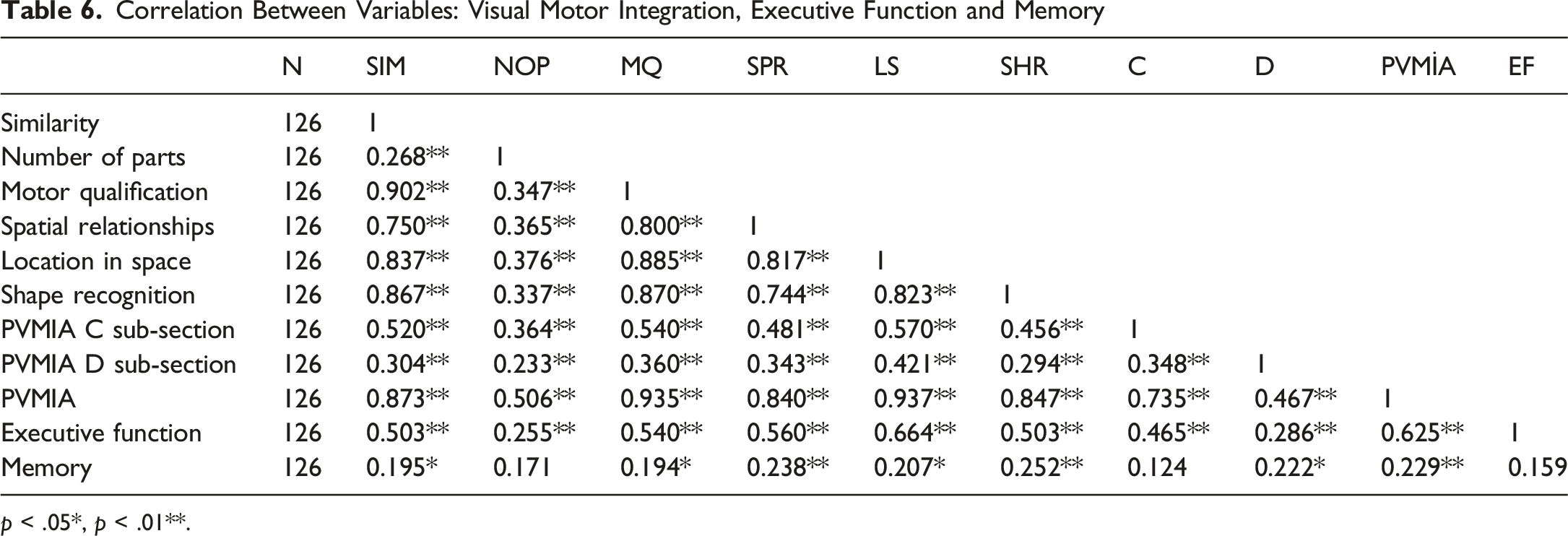
p < .05*, p < .01**.
When Table 6 was analyzed, findings were obtained regarding the relationships between visual-motor integration, executive function, and memory scores in children aged 48–66 months. A positive, moderate, and statistically significant relationship was found between visual-motor integration and executive function (r = .625, p < .01). This finding indicates that This finding indicates that higher visual–motor integration skills were associated with better executive function skills. A significant but weaker positive relationship was also found between visual-motor integration and memory (r = .229, p < .01). This indicates that visual-motor integration skills are related to memory, but this relationship is not as strong as the relationship with executive function. On the other hand, no significant relationship was found between executive function and memory (r = .051, p > .01). These results indicate that visual-motor integration skills are related to both executive function and memory, but the relationship between executive function and memory is not significant in this sample.
When examined in terms of visual-motor integration subtests, the strongest relationships with executive function were found in the “spatial positioning” (r = .664, p < .01) and “motor proficiency” (r = .540, p < .01) subtests. Additionally, the “shape recognition” subtest was also found to be significantly related to executive function ability (r = .503, p < .01). Furthermore, the highest correlations with memory were found in the “spatial location” (r = .238, p < .01) and “shape recognition” (r = .252, p < .01) subtests.
Regression Analysis Results Regarding the Predictiveness of Executive Function and Memory on Visual Motor Integration
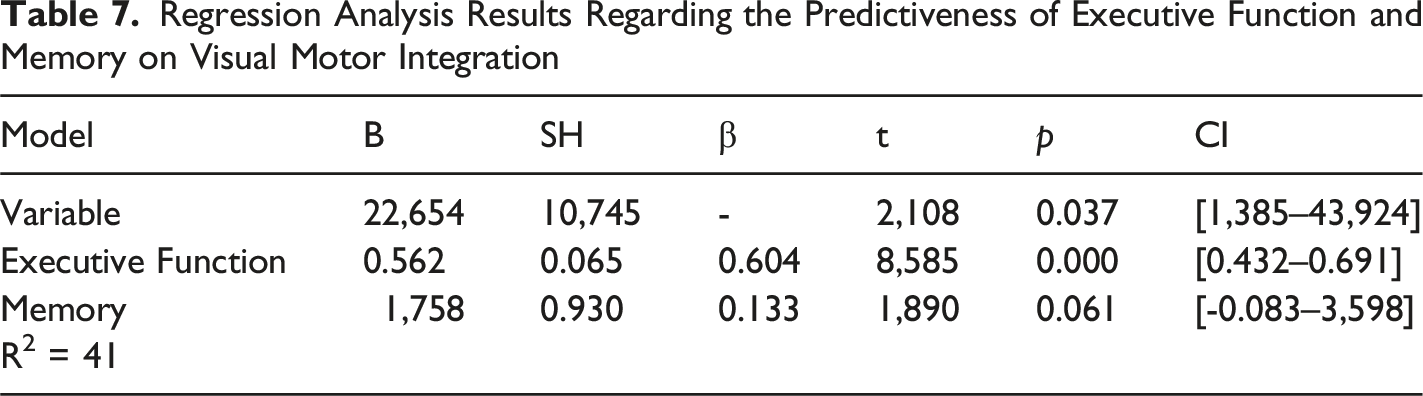
In the multiple linear regression analysis, the dependent variable (PVMIA) was predicted by the independent variables of executive function and memory.
Table 7 shows that the regression model is statistically significant [F (2, 123) = 42.29, p < .001]; children’s executive function skills positively and significantly predicted their visual-motor integration skills (B = 0.562, 95% CI [0.432, 0.691]), the contribution of memory skills to the model was not significant (B = 1.758, 95% CI [−0.083, 3.598]). This indicates that higher executive function skills are associated with higher visual-motor integration skills. The model explains approximately 41% of the variance in visual-motor integration skills and provides a moderate-to-high explanatory effect.
When examining Figure 1, a linear and positive relationship between visual-motor integration and executive function focus is observed in the scatter plot based on the partial relationships between the predictor variables and the dependent variable. Partial regression diagram between PVMIA and executive function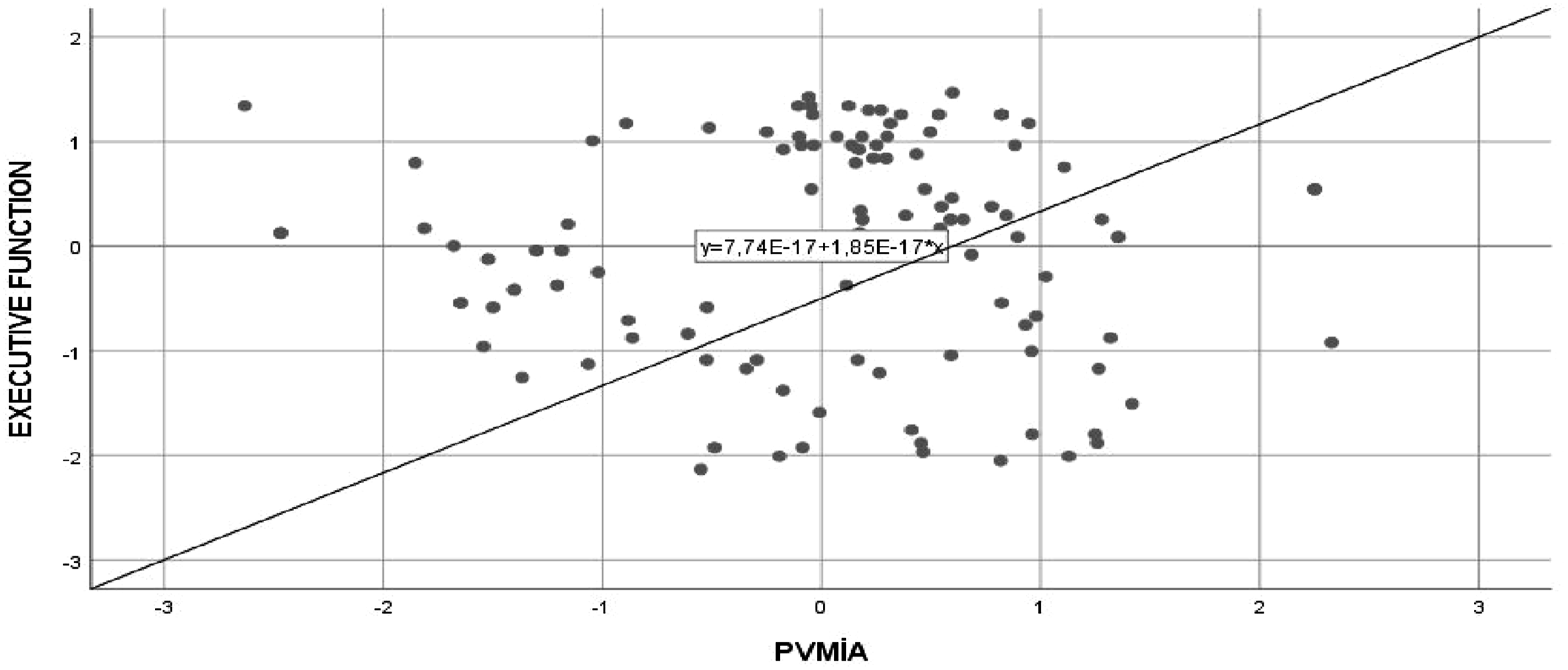
Discussion
This study investigated the relationships between visual-motor integration, executive function, and memory in children aged 48–66 months. Consistent with previous studies (Pieters et al., 2012), no significant gender difference was found in overall visual-motor integration scores. However, girls performed significantly better than boys on subtests measuring motor coordination and spatial positioning (Kokštejn et al., 2017). This gender difference in specific subtests aligns with research indicating superior fine motor skills in preschool-aged girls (Zheng et al., 2022). Girls also achieved higher average scores in executive function and memory, but not all differences were statistically significant. These findings support literature suggesting a potential early female advantage in executive function (Yamamoto & Imai-Matsumura, 2019), while also acknowledging conflicting studies that report no significant gender differences (Wiebe et al., 2008). These mixed findings emphasize that executive function is shaped by multifactorial influences, including biological, cultural, and environmental contexts. Memory scores also varied by gender, but as with other measures, this difference was not statistically significant. The literature shows inconsistent patterns, with some studies reporting higher scores for boys (Pittorf et al., 2014) and others for girls (Villaseñor et al., 2009). The study by Voyer et al. (2021) revealed that gender differences vary depending on the type of task, with girls performing better than boys on cued tasks and free recall, while boys showed superiority on complex interval tasks. These inconsistencies suggest that memory development may be influenced by individual differences and environmental factors.
No significant age-related differences were found in spatial processing tasks, such as the “Blocks” and “Number of Pieces” subtests. Given that these tasks involve spatial attention and problem-solving, the absence of significant differences may be explained by individual differences in the development of prefrontal and parietal regions during this period (Casey et al., 2005). However, age-related increases were found in motor skill and visual-motor integration scores; this is consistent with the literature suggesting that visual-motor integration develops with cognitive maturation (Beery & Beery, 2010). This study also supports the positive and significant relationship between visual-motor integration and executive function. This may suggest a co-occurrence between the development of planning, attention, and problem-solving skills and the refinement of hand–eye coordination and motor performance in preschool children.
A key finding of this study is that executive function significantly predicted visual-motor integration performance, accounting for 41% of the variance. This finding is consistent with Diamond (2013), who emphasized that core components of executive function, such as inhibition, attention, and working memory, are closely linked to motor planning. According to Diamond, as the prefrontal cortex matures, an individual’s ability to plan, monitor, and regulate their behavior also improves. Thus, the integration of visual inputs with motor actions may engage executive functions (Diamond, 2013). Therefore, the predictive role of executive function may suggest that visual–motor integration in early childhood may be supported by planning processes from a neurodevelopmental perspective. Furthermore, the findings are also directly related to the concrete cognition approach. According to Barsalou (2008), cognitive processes are grounded in bodily experiences and physical coordination with the environment. Therefore, the fact that executive function skills significantly predict visual-motor integration skills can also be explained by approaches that suggest cognitive processes and motor actions develop in mutual interaction. Similar findings have been reported by Alloway and Alloway (2010) showing that executive and motor functions develop in parallel during early childhood.
In line with these findings, it is recommended that teachers incorporate activities that integrate executive function and visual-motor integration skills. Classroom activities that engage attention, inhibition, and working memory may support cognitive–motor performance. Examples include stop–go games, mirror-based movement monitoring, and pattern tracing. Such activities may provide opportunities within naturalistic learning environments to support children’s executive and motor-related skills.
However, memory did not contribute significantly to the model. This may be influenced by reasons such as children’s strategy use not yet being mature at this stage, their difficulty in meeting task expectations, and individual differences becoming invisible. Additionally, the psychometric limitations of the memory game used can be considered a factor explaining why it did not predict other variables.
Cultural values such as preschool type, socioeconomic status, and parental involvement were not included in the data collection process of this study. Therefore, their possible effects on visual-motor integration, executive function, and memory variables were not considered. Evaluating these factors in future research may increase the generalizability and interpretability of the findings. Furthermore, short-term and working memory were assessed using a researcher-designed memory game, which demonstrated acceptable test-retest reliability (r = .79). However, as a non-standardized tool, it limits the generalizability of the memory findings. Future studies should employ standardized, norm-referenced memory assessments.
Theoretically, Barkley (2012) executive dysfunction model suggests that motor behavior is closely related to executive processes. Vygotsky (1978) sociocultural theory also supports the idea that cognitive and motor developments are interconnected through social interaction. These models reinforce current findings by demonstrating a close relationship between planning, attention, inhibitory control, and visuomotor integration.
While relationships between motor skills and academic performance are well-documented in the literature, the current study specifically examined this link through a correlational design (Schmidt et al., 2017). However, other research suggests that motor competence alone may not directly predict academic achievement; instead, a stronger and more consistent predictor is executive function (Blair & Razza, 2007). For example, the findings of Malone et al. (2022) support the role of motor skills in enhancing visual perception and executive processes and emphasize the importance of integrated motor-cognitive education in early education. Collectively, these findings suggest that the relationship between executive function and visual-motor integration in preschool children can be used to understand early academic development.
Although executive functions and memory are conceptually distinct, research indicates that their interactions evolve across the developmental stage (Carlson et al., 2013). While Engle and Kane (2004) emphasize the role of executive processes in retrieving information from memory, Miyake & Friedman (2013) suggest that there are more nuanced, component-specific relationships. Although this study found a positive correlation between memory and visual-motor integration, regression analysis revealed that memory did not significantly predict visual-motor integration scores. Future research using standardized, age-appropriate memory tests could help clarify the nature of its relationship with visual-motor integration.
Roebers et al. (2014) and Alloway and Alloway (2010) emphasize that motor development supports memory and executive functions through overlapping cognitive systems. This may suggest that advanced motor skills could be related to children’s interactions with their environment and learning processes, and that this relationship could be linked to academic success in the long term.
In conclusion, this study supports a multidimensional perspective on early childhood development and suggests that executive function may play an important role in predicting visual–motor integration, while the role of memory might be less direct. These findings indicate the need for integrative educational practices that support both cognitive and motor development to optimize learning outcomes. This study addresses a gap in the literature by focusing specifically on preschool children aged 48–66 months. Much of the existing literature focuses on older age groups, and comprehensive studies examining the interrelationships between visual-motor integration, executive function, and memory in early childhood are limited. Thus, these findings provide a valuable contribution by elucidating the complex interplay between motor and cognitive processes during a critical developmental window.
Results and Recommendations
This study examined the relationships between visual-motor integration, executive functions, and memory—which are critical cognitive building blocks of early childhood—in a sample of preschool children aged 48–66 months. The findings reveal that children’s cognitive functions develop not only individually but also through dynamic interaction with one another, forming an integral structure that supports developmental continuity.
One of the key findings of this study is that there is a significant and positive relationship between visual-motor integration scores and executive function levels. This finding shows that interpreting visual stimuli from the environment and obtaining motor outputs is directly related to higher-level executive skills, such as attention, planning, cognitive flexibility, and problem solving. Similarly, a positive correlation was found between visual-motor integration and memory levels. This finding reveals that children effectively use cognitive processes, such as encoding, storing, and recalling information while organizing their motor movements.
When examining the findings across age groups, the 60–66 months group scored higher than other age groups. This suggests that there may be age-related progression, highlighting the need for longitudinal studies on the subject. In particular, the fact that children in the 60–66 months group scored higher than other age groups indicates that there are time-dependent increases in the development of skills, such as executive functions and memory. This finding supports the need for pre-school education to be structured in a way that is sensitive to individual differences.
Another finding indicates a positive but statistically weak relationship between executive function and memory. This suggests that the two structures are not entirely independent but may be related to a limited extent. However, there is a need for studies that provide more detailed examination opportunities appropriate to children’s age and developmental characteristics in order to assess memory skills.
In conclusion, it has been concluded that jointly assessing and supporting executive functions, memory, and visual-motor integration skills during early childhood may provide a holistic approach to children’s cognitive development. This study provides both academic contributions and important implications for the field. It contains multifaceted results for preschool and classroom teachers, psychologists, and education policymakers.
Based on the findings, we recommend that preschool programs incorporate structured, play-based, and interactive activities designed to strengthen core cognitive skills—including attention, planning, problem-solving, cognitive flexibility, and memory. Such activities are expected to enhance children’s engagement in learning by simultaneously fostering cognitive development, classroom adaptation, and self-regulation skills.
Furthermore, it is recommended that learning environments be created with rich materials that allow for the use of fine motor skills and the creation of visual outputs to support the development of children’s visual-motor integration skills. Regular activities such as drawing, cutting, copying, visual matching, visual attention, block placement, and puzzle completion in these environments may support children’s motor coordination and cognitive skills.
Preschool teachers should be encouraged to use structured observation forms and developmental assessment tools to systematically observe children’s cognitive processes, such as attention, memory, and planning. In this way, it would be possible to support children’s existing skills, identify developmental differences at an early stage, provide necessary guidance, and increase opportunities for individualised teaching. Targeted activities like tangrams, block building, maze navigation, and directional games are highly effective for this purpose, as they directly support the development of visual-motor integration.
Limitations
• Not generalized across socio-economic and cultural settings. • Memory is easily affected by factors such as attention and motivation in young children. • Children’s memory skills can be assessed using a standardised test. • Limited assessment of relationships between variables due to cross-sectional design.
Footnotes

Ethical Considerations
This study was reviewed and approved by the Ethics Committee of Social and Human Sciences at Ankara Yıldırım Beyazıt University on October 25, 2023 (Decision No: 08-177; Project Code: 2023-177). The research was conducted in accordance with the ethical principles of the Declaration of Helsinki. Written informed consent was obtained from the parents and teachers of the participating children, and verbal assent was obtained from the children themselves to ensure voluntary participation.
Author Contributions
Research Assistant Mehmet Emin Çay: Development of the research idea, data collection process, execution of statistical analyses, interpretation of the findings, and manuscript writing. Prof. Dr. Fatma Elif Ergin: Refinement of the study design, selection of assessment tools, guidance during the data analysis phase, academic supervision, and content editing during manuscript preparation. All authors have read and approved the final version of the manuscript and agreed to its submission for publication.
Funding
The authors received no financial support for the research, authorship, and/or publication of this article.
Declaration of Conflicting Interests
The authors declared no potential conflicts of interest with respect to the research, authorship, and/or publication of this article.