



Abstract
Keywords
Introduction
For centuries, sports have brought people together, generated excitement, fostered competition, and served as a significant source of entertainment (Eitzen, 2012; Wann et al., 2017). Fairness and balance in this dynamic and competitive environment largely depend on referees’ objective decisions. Therefore, sports referees face a challenging task in competitive matches, they must process a large amount of information in a limited time and make quick and accurate decisions in noisy crowds and complex sporting arenas (Erikstad & Johansen, 2020; Mascarenhas et al., 2005; Spitz et al., 2016). Furthermore, to maintain their impartiality, they must not only enforce the rules but also constantly contend with environmental conditions and internal stressors (Bruno et al., 2023; Stanton et al., 2006). Dawson et al. (2007) emphasized that decision-making is a significant challenge, especially in complex and constantly changing environments. According to Plessner and Haar (2006), cognitive and social dynamics influence these decisions. Raab et al. (2020) used this process to understand sports referees’ decisions within the threshold-based decision-making framework. These tasks require the coordinated operation of attention, rapid perceptual processing, decision-making speed, and short-term memory (Ghasemi et al., 2011; Helsen et al., 2023; Kittel et al., 2019; Larkin et al., 2011; MacMahon et al., 2007; Marras & Hancock, 2014; Neville et al., 2016; Neville & Salmon, 2015; Spitz et al., 2018; Vestberg et al., 2012). Moreover, referees’ expert skills and accurate decision-making processes depend on their focus and perception (Brams et al., 2019). Referee decisions in fast-paced sports are highly dependent on the effectiveness of these perceptual and motor skills (Voigt et al., 2023). Because games are complex and time-sensitive, the cognitive load in combat and team sports is quite high. Furthermore, even small changes in environmental factors, such as lighting, noise levels, or the playing field’s spatial layout, can significantly impact referees’ decision accuracy and consistency. Despite these challenges, referees are obligated to make impartial and accurate decisions while minimizing external and internal influences to maintain competition integrity.
Decision support technologies, such as Video Assistant Referee (VAR) and goal-line technology, have been widely used in professional football, tennis, and other sports (Kolbinger & Lames, 2017; Schweizer et al., 2023). These systems have increased referee decision accuracy, reduced human error, and strengthened confidence in decision-making processes, thereby supporting sports integrity (Royce, 2012). Furthermore, referees’ physical positioning is also a determining factor in decision quality. For example, in football, assistant referees are careful to align themselves with the last defender to correctly assess critical situations such as offside or fouls (Mallo et al., 2012; Oudejans et al., 2000). When supported by technologies such as virtual acoustic radar (VAR), this spatial alignment increases the accuracy of instantaneous decisions and further reduces the margin of error. Similarly, advanced technologies, such as spatial optical tracking systems, make decision processes data-driven by more precisely tracking the positions of moving players and objects (Ding & Jiang, 2025).
However, the situation is different for boxing referees. In the traditional boxing ring, referees remain stationary at ringside, where the surrounding ropes limit their field of vision compared to that of more mobile positions. Therefore, making accurate decisions in fast-paced and dynamic matches is difficult. Empirical studies examining the effects of these visual limitations on referee decisions are limited. Removing or improving such visual obstructions to preserve the traditional boxing structure has not received sufficient attention or study.
The concept of visual ergonomics has gained importance in better understanding the impact of environmental factors on decision-making processes. Visual ergonomics is an interdisciplinary field that aims to ensure that individuals have uninterrupted and effective access to visual stimuli while performing their duties (Long & Richter, 2014). It is closely linked to cognitive-motor processes, such as visual attention, perceptual processing, and decision-making accuracy. The artificial and indoor conditions of today’s sports environments differ from environments to which the human visual system is accustomed, which evolved in natural environments, resulting in additional cognitive load for referees (Fostervold et al., 2014; Lavie, 2005; Oberauer, 2019).
Zetterberg et al. (2019) developed the Visual Environment and Referee Awareness Model (VERAM) based on these theoretical frameworks to assess the risk factors contributing to performance errors caused by visual access restriction. Heiden et al. (2019) used computational analyses to demonstrate the effects of light intensity, glare, reflection, and viewing angle on attentional processes and visual decision-making accuracy. These findings demonstrate the critical importance of environmental conditions in tasks such as refereeing, which require rapid and precise visual judgment.
Expert referees possess superior abilities to direct their attention to task-relevant cues, and these skills improve with experience (del Campo et al., 2018; Kittel et al., 2021; Roca et al., 2011; Ruiz et al., 2024; Russo & Ottoboni, 2019; Schweizer et al., 2011; van Maarseveen et al., 2018; Williams & Ericsson, 2005). However, external environmental factors influence the translation of these competencies into on-field performance. When visual access is restricted, attentional focus can be disrupted, leading to incomplete or inaccurate perception of critical information (Oberauer, 2019). Furthermore, increased physical exertion during play negatively impacts decision accuracy (Larkin et al., 2014). Therefore, optimizing environmental stimuli has become increasingly important to improve the quality of referee decisions. Recent research has demonstrated that simulated environments, such as virtual reality (VR), are effective in improving referee decision-making accuracy (van Biemen et al., 2023). Furthermore, sports-specific cognitive assessment tools can better predict referee performance than traditional tests (Reinhard et al., 2025).
This study provides experimental evidence that the use of transparent boxing ring ropes increases the accuracy and consistency of scoring decisions by expanding referees’ field of vision. Reorganizing a ring’s physical structure according to visual ergonomics principles is not only a technical innovation but also introduces important environmental factors that affect referee performance. The results suggest that structural interventions can be implemented to increase the reliability and consistency of referee evaluation. In this context, the study offers implications not only for sports like boxing, where visual perception and decision-making are critical, but also for other sports where decision-making is influenced by the physical environment.
Ergonomically Developed New Ring Ropes
The ropes used in boxing rings not only define the ring area boundaries but also ensure the safety of the athletes. They also maintain the ring’s structural integrity and facilitate the orderly conduct of matches. The traditional rings used in professional and amateur competitions consist of four opaque vinyl-coated steel ropes secured to the corner posts, with tension. While this structure provides overall durability, it can also restrict visual access, creating a physical obstruction in the field of vision, especially for referees stationed at ringside (Uca, 2020). Boxing matches are fast-paced and dynamic environments in which complex combination punches are constantly thrown. This intense pace makes it difficult for referees to make decisions, and even the slightest restriction in their field of vision can negatively impact scoring accuracy.
Studies on referee decision-making processes indicate that physical obstructions that restrict the view (e.g., player positions, posts, or on-field equipment) can increase visual fatigue, impair attention allocation, and increase the risk of cognitive judgment errors (Long & Richter, 2014; Zetterberg et al., 2019). Schweizer et al. (2023) emphasized that these visual limitations can lead to systematic inconsistencies and biases in referee decisions. Furthermore, current research reveals that referees’ visual attention and decision-making processes are challenged due to limited attentional capacity, making accurate decisions difficult, especially under time pressure. Decision quality, such as accurate scoring decisions in fast-paced situations, is determined by referees’ visual search strategies (Hüttermann et al., 2018; van Biemen et al., 2022). In this context, traditional ropes used around the ring create a physical obstruction in the referee’s field of vision (Figure 1). Adhering to visual ergonomic principles, a new rope prototype made of transparent materials was designed to reduce these obstructions. This design features a steel core surrounded by a transparent layer and a clear, impact-resistant vinyl exterior. The hybrid structure aims to minimize physical obstructions to the referees’ field of vision and provide uninterrupted peripheral perception while maintaining the traditional rope’s load-bearing capacity and safety features. Boxing-ring area and measures, illustrating standard boxing ring dimensions.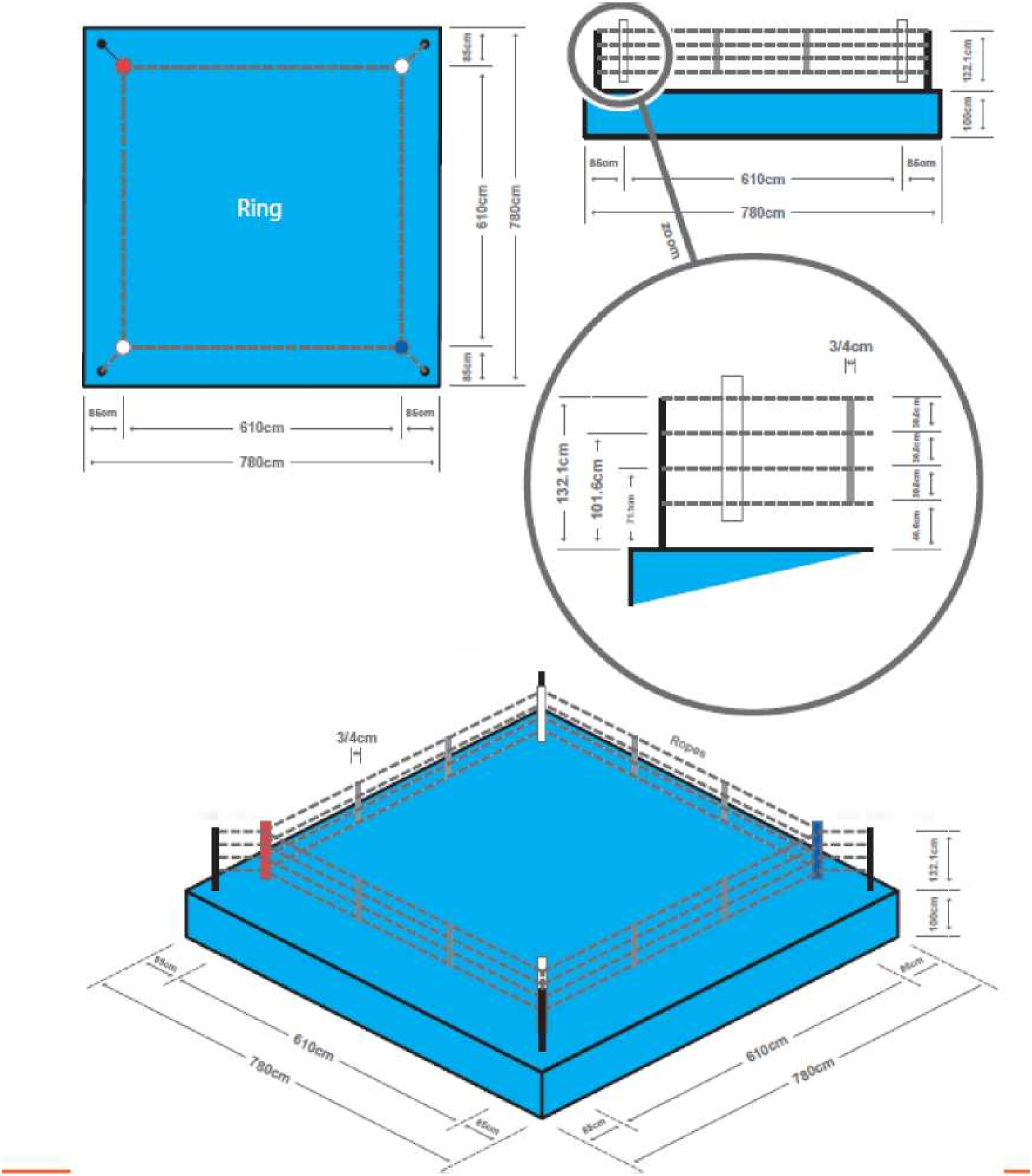
The arrangements made in the visual environment can affect not only vision but also the cognitive evaluation processes related to this sense. Mayes et al. (2023) demonstrated that alterations in environmental factors, including thermal stimuli, can impact basic sensory responses. These findings highlight the importance of specific visual cues in the interpretation of environmental conditions by referees. Similarly, Sunstrum et al. (2024) emphasized that simple, symmetrical, and transparent structures promote visual familiarity, facilitating more efficient decision-making.
Material-based ergonomic modifications enhance not only visual comfort but also decision accuracy and reaction time (Fostervold et al., 2014; Heiden et al., 2019). The literature also emphasizes that musculoskeletal strain can adversely affect decision quality, particularly during prolonged visual focus. Appropriate ergonomic interventions can mitigate these negative effects by promoting sensory-motor balance (Madeleine et al., 2024). For instance, hybrid glass systems developed by Zhang et al., (2025) achieve an optimal balance between optical transmittance and mechanical durability and represent a significant design innovation that ensures safety and facilitates decision-making.
A systematic review by Kermavnar et al. (2021) demonstrated that 3D printing and hybrid manufacturing technologies offer significant advantages in enhancing user-centricity and structural adaptability within personalized ergonomic product development processes. In this context, it can be argued that in the environment where referees work, physical obstacles that limit the line of sight not only increase cognitive load but also negatively affect visual processing accuracy. As emphasized by Erickson (2018), the process of optimizing athletes’ visual performance should be addressed not only at the individual level but also in conjunction with environmental design decisions based on visual task analyses specific to each branch of sport.
The screening study conducted by Zerguine et al. (2023) demonstrated that the effectiveness of ergonomic training and intervention programs depends on the holistic evaluation of components such as user experience, cognitive interaction, and system design. From this perspective, the effect of visual ergonomic arrangements on decision-making performance in the areas where referees work is not only practical but also theoretically important
In the design process of this prototype, ergonomic efficiency, production cost, field applicability, and sustainability were systematically evaluated. The value-stream costing approach—a method focusing on minimizing waste and optimizing costs across the production process—was implemented to enhance supply and assembly efficiency. Consequently, the total production cost of the transparent rope system remained competitive with traditional rope systems (Ayvaz et al., 2022). This innovative design provides a functional solution suitable for amateur and professional competitions, demonstrating high practical applicability. This study is the first experimental investigation to systematically assess the impact of environmental factors on referees’ decision accuracy and evaluation consistency.
Expert referees employ more effective visual search strategies and achieve higher decision-making accuracy under time pressure (Hüttermann et al., 2018; Roca et al., 2011; Spitz et al., 2016). These findings indicate that enhancing specific aspects of visual ergonomics in the field—such as optimizing lighting, reducing visual obstructions, and improving sightlines—can lead to measurable improvements in referees’ performance.
This study examines whether transparent ropes—designed with visual ergonomic principles—enhance referee decision-making by improving visual access to in-ring actions, minimizing scoring discrepancies, and supporting consistent evaluations across different bout dynamics.
Methods
Participants
Ten elite amateur boxers holding active licenses from the Turkish Boxing Federation were recruited for this study. All athletes met the official eligibility criteria and competed in weight divisions defined by AIBA, including Flyweight (51 kg), Welterweight (67 kg), Middleweight (75 kg), and Super Heavyweight (91 kg). Inclusion criteria for boxers were (a) at least three years of experience in boxing, (b) participation in at least five national and three international tournaments, and (c) at least three top-three placements in national competitions.
A total of 25 certified international referees participated in the study, including 20 who served as scoring judges and 5 who acted as chief supervisory officials. Among the latter, one highly experienced referee was designated as the supervisory referee responsible for post hoc video-based verification. Although this referee also contributed to live scoring, the verification of actual punch counts across zones was conducted independently and retrospectively to ensure no influence on the scoring processes of other judges.
All participants gave written informed consent after being clearly informed about the study’s objectives and procedures. Ethical approval was granted by the appropriate ethics committee, and all procedures adhered to the Declaration of Helsinki (2013). Participant data were anonymized to ensure confidentiality.
Experimental Design and Procedure
The study used a within-subjects experimental design to compare referee performance under two distinct ring configurations: one featuring traditional opaque ropes (control condition) and the other incorporating transparent, ergonomically enhanced ropes (experimental condition).
The Chief Referee used multi-angle video recordings to verify the number and type of punches intended for each scoring zone, thereby establishing a standardized reference for subsequent evaluations. The boxing ring was divided into five predefined scoring zones (labeled A through E; see Figure 2), and each boxer was instructed to execute designated punching techniques—such as hooks, jabs, and uppercuts—within each zone. During each two-minute round, every boxer threw 20 punches—including hooks, jabs, uppercuts, and punch combinations—as specified for each scoring zone. Boxing ring scoring area and judge position.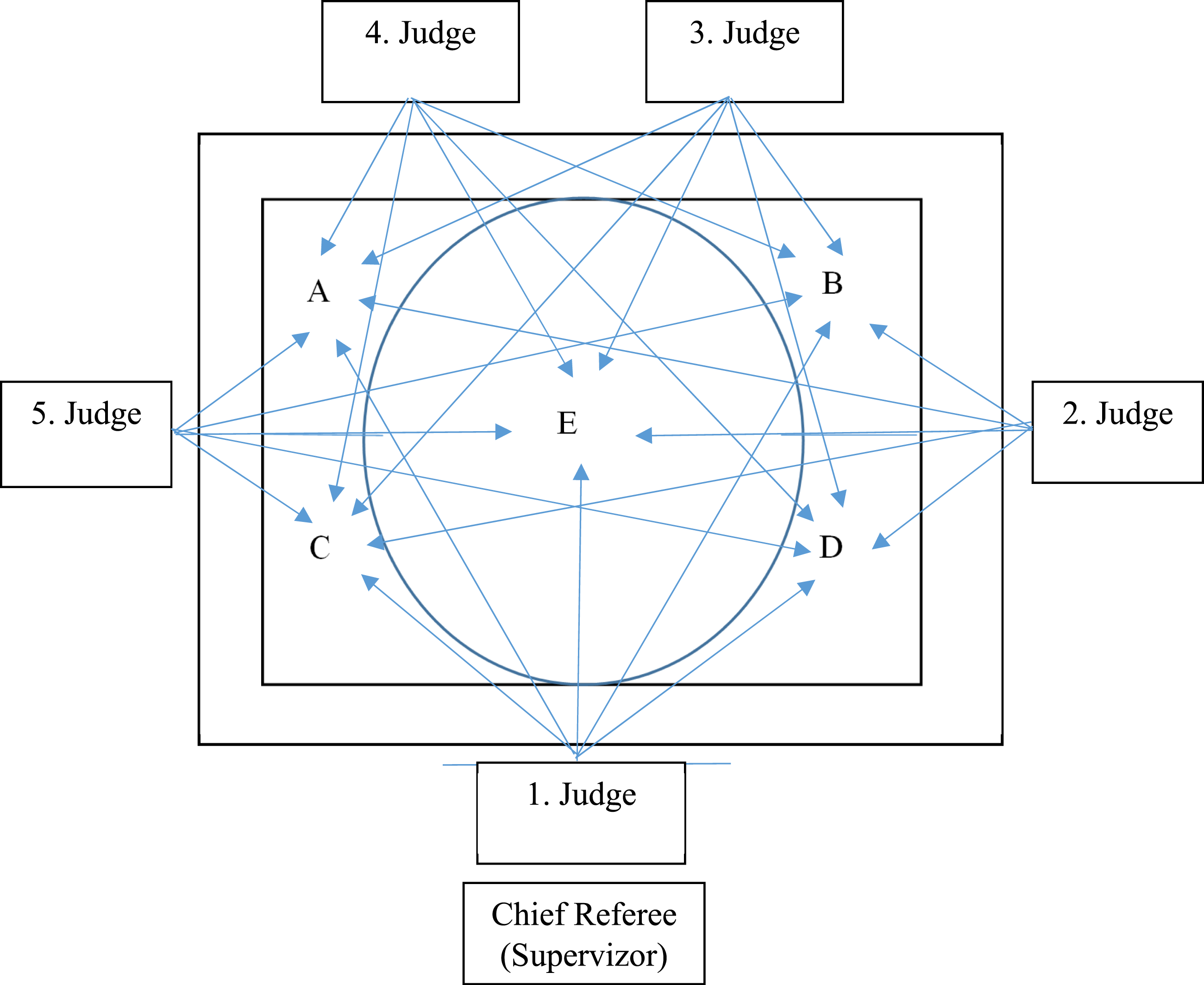
The sample included athletes from four recognized weight categories: Flyweight (51 kg), Welterweight (67 kg), Middleweight (75 kg), and Heavyweight (91 kg); according to the IBA (formerly AIBA) classification. All referees participated in both ring conditions in a counterbalanced within-subjects design, ensuring that each official evaluated an equal number of bouts under traditional and transparent rope settings. Scoring was conducted independently by five referees in each group, according to standardized AIBA positioning. All bouts were recorded using high-definition cameras positioned at referee eye level, providing a standardized visual perspective for subsequent analysis. These recordings were used by the supervisory referee to verify the predetermined number of valid punches per scoring zone and to assess inter-rater reliability in post hoc evaluations, confirming scoring accuracy across the two ring conditions.
Statistical Analysis
Data were analyzed using IBM SPSS Statistics (version 27.0). Descriptive results are presented as means and standard deviations (mean ± SD).
Independent samples t-tests were conducted to compare mean referee scores between the traditional and transparent rope conditions across all scoring zones. Effect sizes were calculated using Cohen’s d to quantify the magnitude of differences between conditions.
A one-way ANOVA was performed to assess score variation across different weight categories and ring zones. Dunnett’s post hoc test was employed to compare the scores of each individual referee against those of the supervisory referee, which served as the reference standard. It was also used to identify discrepancies within specific zones.
These statistical procedures were designed to examine whether the use of transparent ropes significantly improved scoring accuracy and reduced inter-referee variability. The combined application of between-group (rope condition) and within-group (weight and zone) comparisons provided a comprehensive assessment of visual ergonomics in relation to officiating performance under controlled experimental conditions.
Results
Scoring Consistency Across Zones Under Varying Visual Conditions
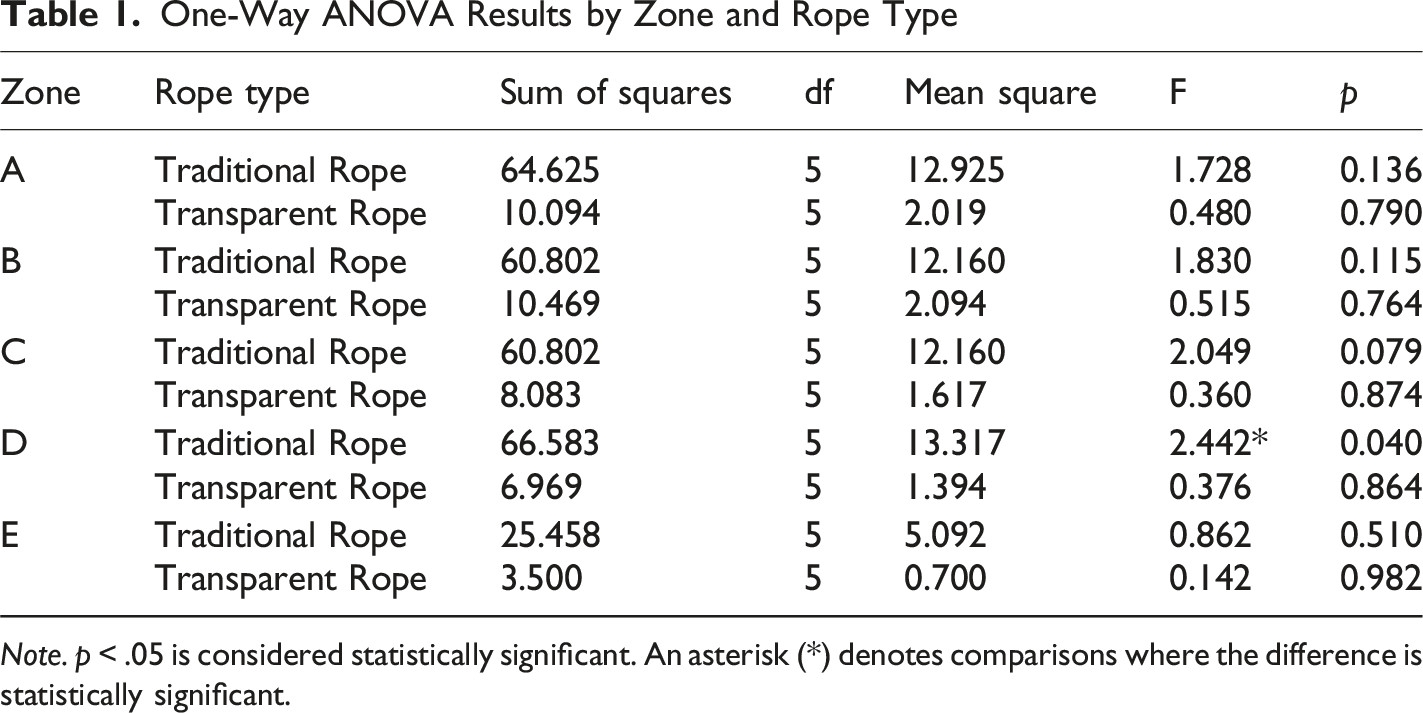
To examine how different rope designs in boxing rings affect referee scoring consistency, a one-way ANOVA was conducted to compare the scores of five predefined scoring zones (A–E) in both the traditional rope ring and the transparent rope ring. Levene’s test confirmed homogeneity of variances across all zones (p = .162 to .794), supporting the use of ANOVA.
One-Way ANOVA Results by Zone and Rope Type
Note. p < .05 is considered statistically significant. An asterisk (*) denotes comparisons where the difference is statistically significant.
In the transparent rope ring, none of the five zones showed significant differences in referee scores (F < 0.52, p > .75), indicating consistent scoring patterns across judges when visual obstructions were minimized.
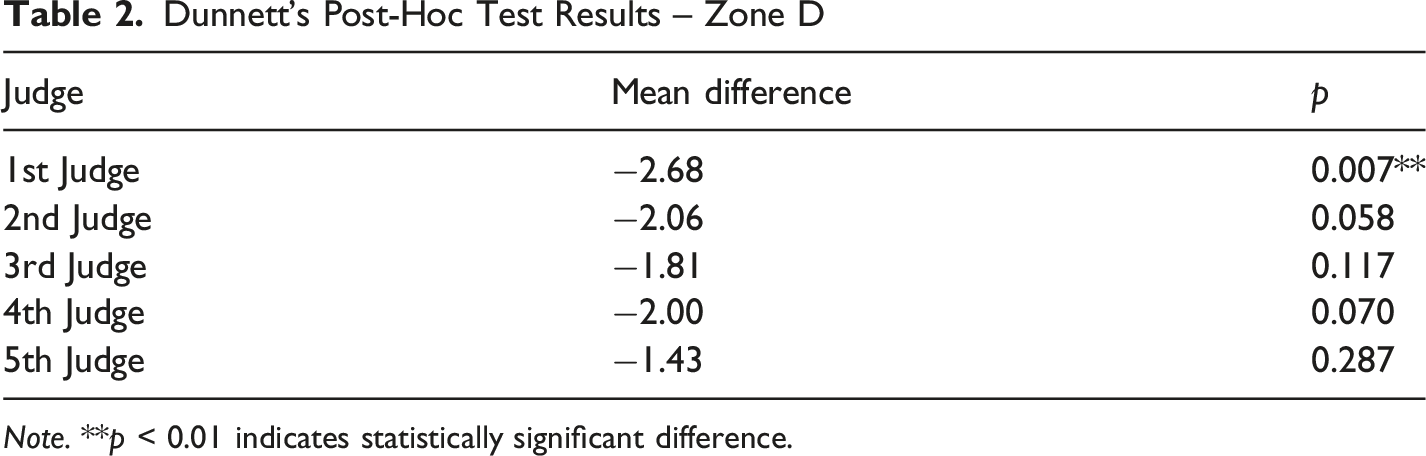
Given the discrepancy observed in Zone D, further analysis was performed using Dunnett’s post-hoc test to identify which individuals’ punch counts differed from the actual counts.
Dunnett’s Post-Hoc Test – Traditional Rope, Zone D
Dunnett’s Post-Hoc Test Results – Zone D
Note. **p < 0.01 indicates statistically significant difference.
Among the five referees, only the first judge’s scores significantly differed from the actual punch counts (p = .007). The results for the second and fourth judges did not show statistically significant differences (p = .058 and p = .070, respectively), but their results were close to the conventional threshold of p < .05. The third judge’s scores were not significantly different either (p = .117). Meanwhile, the 5th judge’s scores showed the smallest difference from the actual punch counts, i.e., p = .287, although this was not statistically significant.
Independent Samples t-Test – Traditional vs Transparent Rope Conditions
t-Test Results by Zone
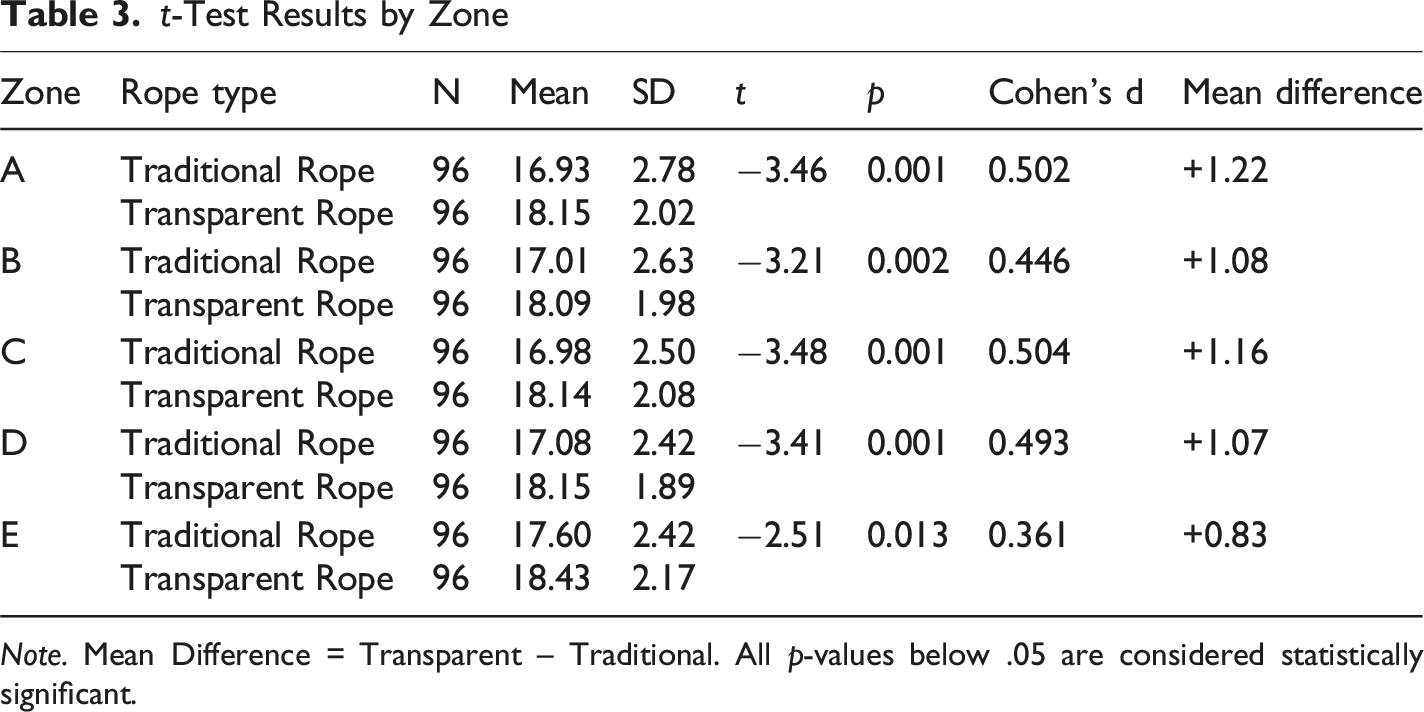
Note. Mean Difference = Transparent – Traditional. All p-values below .05 are considered statistically significant.
In all five scoring zones (A–E), independent sample t-tests revealed statistically significant differences in mean referee scores between the traditional rope ring and the transparent-rope ring (p < .05 for all comparisons). The t-values ranged from −2.51 in Zone E to −3.48 in Zone C, with the corresponding p-values ranging from .001 to .013. Mean scores were higher in the transparent-rope ring than in the traditional-rope ring across all zones.
When using transparent ropes, average referee scores increased by 1.22 points in Zone A (from 16.93 to 18.15), 1.08 points in Zone B, 1.16 points in Zone C, 1.07 points in Zone D, and 0.83 points in Zone E.
Effect size estimates (Cohen’s d) ranged from 0.361 in Zone E to 0.504 in Zone C, representing small to moderate effects. Within-group standard deviations remained relatively stable across the traditional-rope ring and the transparent-rope ring, indicating that variability in referee scoring was consistent across both ring configurations.
ANOVA – Weight Class Comparison Across Rope Conditions
To assess whether referee scoring differed across athlete weight classes, a series of one-way ANOVA tests were conducted for each scoring zone (A–E) using data from both the traditional rope ring and the transparent rope ring. The weight categories analyzed (51 kg, 67 kg, 75 kg, and 91 kg) represent a range from lightweight to super heavyweight, encompassing variation in athlete body size and movement patterns.
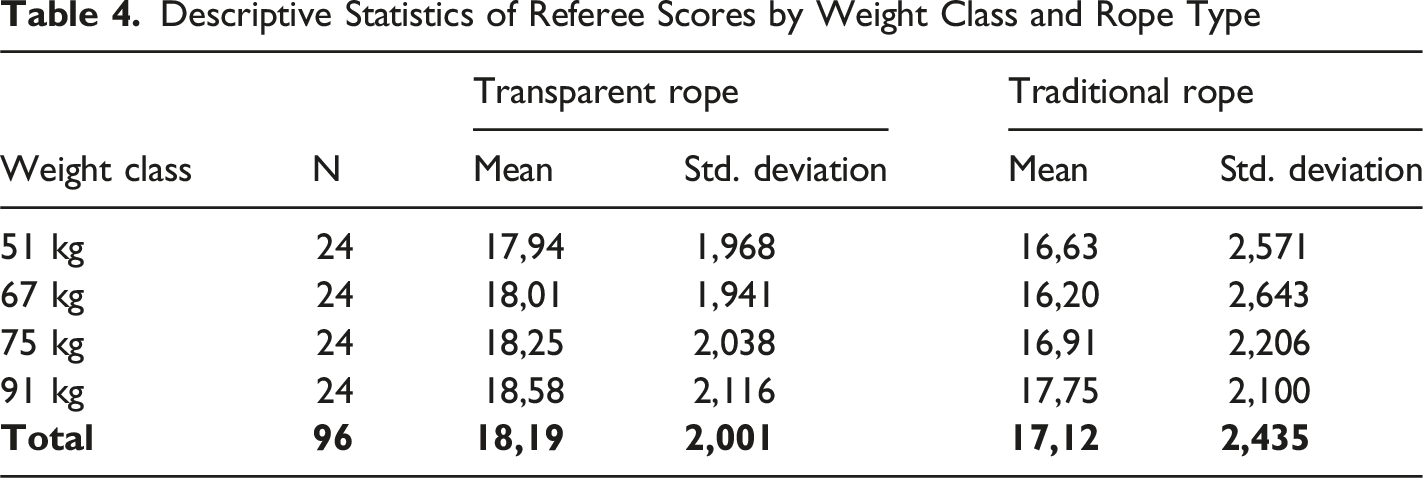
Descriptive Statistics of Referee Scores by Weight Class and Rope Type
One-Way ANOVA Results by Weight Class and Rope Type
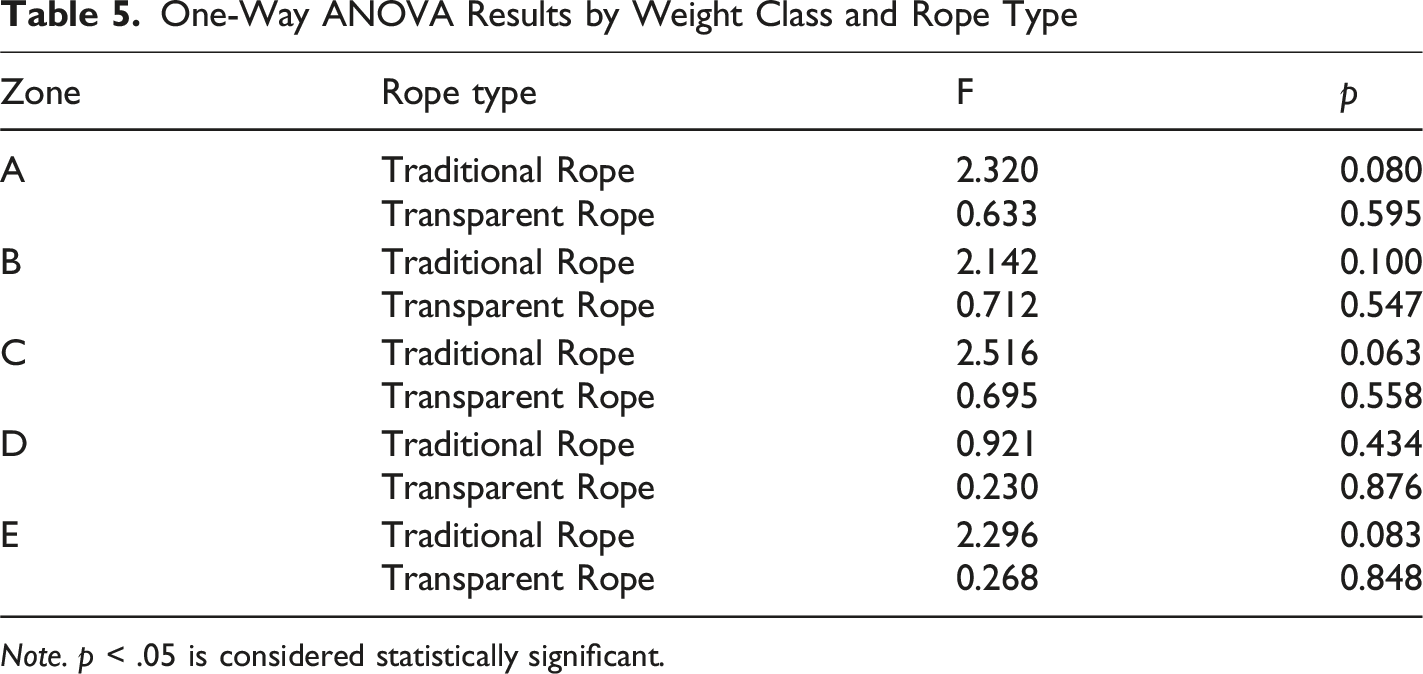
Note. p < .05 is considered statistically significant.
In the transparent-rope ring, all scoring zones exhibited low F-values (all < 0.75), with corresponding p-values ranging from 0.230 to 0.876. None of the results approached the conventional significance threshold (α = .05), indicating no substantial variation in referee scoring across athlete weight categories.
Zone-level results revealed some variation in scoring patterns across athlete weight categories. However, scoring remained relatively stable in the transparent-rope ring across all zones, indicating no substantial interaction between weight class and scoring in this context.
Discussion
This study evaluated the effects of traditional opaque rope systems used in boxing rings on referee decision processes. The study experimentally tested whether transparent rope prototypes developed to increase visual access can contribute to scoring accuracy and consistency. The main purpose of the study was to examine the risk of systematic errors due to perceptual inadequacy in the traditional ring environment, where the referees have a limited line of sight, and to determine whether this risk can be reduced by using transparent ropes. Since refereeing depends on rapid decision-making processes based on visual information (MacMahon et al., 2015; Schweizer et al., 2023), this study evaluated how redesigning the ring ropes according to principles of visual ergonomics could affect these processes.
The findings show that in the traditional rope ring condition, especially in Zone D, the differences in scoring reached a significant level (F(5, 90) = 2.442, p = 0.040; η2 = 0.12), which corresponds to a medium effect size. The Dunnett post-hoc test revealed that the first referee scored significantly lower than the scores from the reference video analyses (p = .007). The other two referees indicated borderline significance (p = .058 and p = .070). This indicates that traditional opaque ropes may limit the referee’s line of sight at certain angles, making it difficult to detect critical contacts. A difference approaching the significance level (p = .079) was detected in Zone C, which also points to potential visual limitations, especially due to the diagonal perspectives of the ring. In the transparent rope-ring condition, no significant difference was found in any region (all p > .75), suggesting that the consistency of evaluations by referees may have increased.
In addition, the results of independent sample t-tests showed that, in all zones, mean scores increased significantly under transparent rope conditions (t-values ranging from −2.51 to −3.48, all p < .05). The effect size (Cohen’s d = 0.504) reveals a moderate difference, particularly in Zone C. This increase suggests that not only may the consistency of scoring among referees have improved, but also the decision accuracy rate may have improved. The elimination of visual obstacles may have enhanced the referees’ ability to observe blows, thereby increasing evaluation confidence and scoring frequency (Fostervold et al., 2014; Helsen & Bultynck, 2004; Wu et al., 2024). This intervention is not only an aesthetic change but also an ergonomic innovation that directly affects cognitive decision processes.
Although the overall result was not significant in the analyses of variance conducted according to weight classes, a marginally significant result with a p-value of .063 was found in the traditional rope ring of Zone C. This suggests that the referees’ line of sight may have been obstructed due to interference from the faster and more dynamic movements of the athletes, especially in lighter weights (e.g., 51 kg and 67 kg). The results under transparent rope-ring conditions indicate consistent scoring across all weight classes, with no significant differences observed (p > .54) in any scoring zone. This suggests that standardizing the visual environment may offer a systematic advantage in referee evaluations.
The descriptive statistics presented in Table 4 further support this interpretation, revealing a clear increase in referee scores across weight classes in the transparent rope ring condition. For example, the mean score increased from 17.94 in the 51 kg category to 18.58 in the 91 kg category. In contrast, scores in the traditional rope ring condition remained between 16.20 and 17.75. These results indicate that the high-tempo movements in the lightweight categories and visual obstructions caused by the traditional rope structure may negatively impact the ability of referees to accurately evaluate boxers’ techniques. Furthermore, the relatively consistent standard deviation values across groups support the statistical significance and systematic nature of these mean score differences.
These findings align with theoretical models suggesting that expert referees rely on advanced cognitive processes—such as rapid pattern recognition, focused attentional control, and effective use of short-term memory—when making decisions based on environmental cues (Avugos et al., 2021; Boyer et al., 2020; Hüttermann et al., 2018; Spitz et al., 2016; Williams & Ericsson, 2005; Ziv et al., 2020). However, these competencies cannot be used optimally without support to reduce visual obstacles. Increased visual transparency allows these mechanisms to function effectively (Wu et al., 2024). Indeed, van Biemen et al. (2023) demonstrated that virtual reality simulations can improve referees’ attention calibration, suggesting that interventions aimed at optimizing visual conditions — such as the transparent rope design tested in this study — may offer comparable benefits.
Although the referees participating in this study have been recruited from Turkey, all are professionals with international certifications and have worked in high-level organizations such as the continental championships and Olympic qualifiers. Therefore, although the sample size is limited, it represents a homogeneous and qualified group in terms of referee experience and education standards. This strengthens internal validity. However, the external validity of the findings can be strengthened with future multicenter studies by including participants from different countries, taking into account cultural and cognitive differences.
In conclusion, this study shows that transparent rope systems not only increase visual comfort but also improve the accuracy, consistency, and reliability of referee decision processes. This intervention is an example of an ergonomic application that holistically addresses the interaction between visual environment design and cognitive performance, emphasizing the integration of physical and cognitive dimensions in task execution (Bar-Eli et al., 2011; Marras & Hancock, 2014; Mehta, 2016; Spitz et al., 2016). In sports in which errors in decision-making affect athlete safety, outcome fairness, and public trust, implementing such structural arrangements is of strategic importance for creating fairer and more objective competition environments.
Limitations of the Study
Although this study provides important findings regarding the effects of visual environment arrangement on decision consistency in boxing refereeing, some limitations should be considered.
The study was conducted using video recordings, and referee decisions were evaluated in a simulated environment. Although this approach enabled the comparison of two different rope designs, it did not include environmental factors that are present in live competition conditions (e.g., spectator noise, momentary emotional stress, light reflections). Therefore, evaluating the effects of visual ergonomic interventions on referee performance in real-time competitions is important for testing external validity.
Second, the study was conducted only with referees at a specific national level. While all participants were internationally certified and experienced, a larger and more diverse sample of participants in terms of application practices, cultural references, and referee training contexts is needed from different countries to enhance the study. Such sample expansions are necessary to evaluate the universal validity of the findings.
Third, this study focused only on the momentary effect of visual ergonomics on decision-making and excluded other cognitive or affective variables that may affect the decision-making process. In particular, failure to measure factors such as decision fatigue, distraction, time pressure, and implicit biases may lead to overlooking more complex mechanisms that affect referee performance. Future studies should use methods such as eye-tracking technologies and cognitive load assessment tools to examine these variables holistically.
Finally, only the initial exposure effects of the transparent rope design were evaluated in the study. However, the manner in which referees adapted to this new visual structure over time and the impact of this adaptation on their decision-making processes were not examined. Longitudinal studies are needed to reveal the possible effects of repeated exposure on decision accuracy, reaction time, and confidence.
Conclusion
This study provides empirical evidence that visual ergonomics — specifically the use of transparent ropes in boxing rings — can enhance referee decision-making by reducing scoring variability and improving inter-judge consistency. In rings with transparent ropes, scoring across all five zones was more consistent with fewer discrepancies compared to rings with traditional ropes. Notably, scoring divergence was observed only in the traditional rope ring, particularly in Zone D, suggesting that localized visual obstructions may negatively affect judgment accuracy.
Although differences across weight classes were not statistically significant, some marginal scoring patterns were observed in rings with traditional ropes. These preliminary trends should be interpreted with caution and examined more comprehensively in future research.
Overall, the findings align with the literature on perceptual-cognitive expertise and decision neuroscience, emphasizing the role of visual clarity in supporting accurate officiating under time pressure. Transparent-rope rings represent a practical and cost-effective ergonomic improvement that may promote fairness, reduce visual strain, and support decision reliability in amateur boxing.
Future studies should assess the generalizability of these findings under live competition conditions and explore whether integrating visual ergonomic designs with referee training or AI-assisted decision support systems can further enhance accuracy and athlete safety.
Footnotes

Funding
The authors received no financial support for the research, authorship, and/or publication of this article.
Declaration of Conflicting Interests
The authors declared no potential conflicts of interest with respect to the research, authorship, and/or publication of this article.