



Abstract
Despite recent research showing that early childhood education and daycare settings (ECEC) have an important role in promoting toddlers’ physical activity (PA), crucial information gaps remain regarding toddlers' PA and sedentary behavior (SB) in these outdoor settings. We aimed in this study to: (a) analyze PA patterns and SB during unstructured outdoor play time in preschool and daycare environments using accelerometry and systematic observation; (b) provide concurrent accelerometry and observational data to help validate the Observational System for Recording Physical Activity in Children-Preschool Version (OSRAC-P); and (c) examine individual, social and environmental correlates of PA and SB during toddlers’ unstructured outdoor play time. We found that: (a) toddlers displayed high amounts of PA with no sex, BMI, and/or age differences in PA and SB levels,; (b) environmental variables (e.g., fixed equipment and playground density) were not associated with PA levels or SB intensity; (c) the OSRAC-P was a reliable and valid means of observing and analyzing toddlers’ PA patterns during unstructured outdoor play time; and (e) different social patterns between boys and girls did not impact PA levels or patterns. Combining different measurement methods permitted an improved understanding of unstructured outdoor play in preschool and daycare settings.
Introduction
The World Health Organization (WHO, 2019) has recommended that children aged 2–3 years spend at least 180 minutes per day in various types of physical activity (PA). The negative effects of insufficient PA on present and future mental health, non-communicable diseases, and societal economic well-being have been well documented (Santos et al., 2022). In early childhood, health behaviors result from multifactorial interactions between personal, social, environmental, organizational, and policy factors (Brown et al., 2009; Sallis et al., 2008). Preschool and daycare settings are considered contexts in which toddler PA can be effectively promoted (Daly-Smith et al., 2020). In these settings, patterns and correlates of PA and sedentary behaviors (SB) have been described by others with some limitations (Díaz-Quesada et al., 2022; Hunter et al., 2019; Kelly et al., 2022; Vega-Perona et al., 2022), and adequate PA levels have been reported among toddlers (aged 2–3 years) during school hours (Díaz-Quesada et al., 2022; Vega-Perona et al., 2022).
Regarding the specific characteristics of the preschool and daycare context, “outdoor play and learning policy” is a structural environmental factor of direct relevance to PA (Zhang et al., 2021). Outdoor play has significant potential to benefit children’s health, including their physical, cognitive, emotional, and social development, as well as their attention and self-regulation skills (Kemple et al., 2016; Maynard & Waters, 2007). In a recent narrative review about babies’ and toddlers’ engagement with the outdoor environment, Josephidou et al. (2021) supported increased time in outdoor play in these settings as, perhaps the child’s only opportunity to experience outdoor settings (McClintic & Petty, 2015). Yet, there are still crucial information gaps regarding toddler’s PA and SB in these outdoor settings (Chen & Hamel, 2022; Dinkel et al., 2019; Elliott, 2021; Gubbels et al., 2012; McClintic & Petty, 2015; Shim et al., 2001).
Using direct observation systems, Gubbels et al. (2012) found that Dutch children spent 21.3% of their outdoor time in moderate-vigorous PA (MVPA) and 31.2% of it in SB. In the United States, Dinkel et al. (2019) found that young children were engaged in active movement and play and played more frequently with adults during unstructured outdoor play in open spaces than at other times (Dinkel et al., 2019). Teachers play an important role in accommodating the outdoor space to toddlers’ play preferences (Chen & Hamel, 2022). Indeed, Little (2022) explored the influence of redesigning the outdoor environment on 18–26-month-old children’s play behaviors. Redesigned permanent physical features in the environment provided diverse play opportunities, involving heights, speed, impact, and hiding, and, to a lesser extent, rough-and-tumble play (Little, 2022). Gubbels et al. (2012) also found that outdoor PA levels were positively associated with the availability of portable jumping equipment and the presence of a structured track on the playground. In this context, it is important to study what factors influence children’s use of outdoor space, where they engage in exploratory play both individually and in groups (Elliott, 2021).
To the best of our knowledge, neither accelerometry nor observational methods have been applied to analyze toddlers’ PA levels and patterns during unstructured outdoor play in preschool and daycare centers. While there is published research assessing toddlers’ PA in this context (Alhassan et al., 2022; Dinkel et al., 2019), no investigators validated their results with comparative observational and accelerometry data. Yet, valid contextual information regarding the types of PA and sedentary activities toddlers engage in during these hours is critical, and there may be different associations between varied aspects of these settings and PA and sedentary time (Zhang et al., 2021). Thus, there is a need to explore the childcare environment as a platform for intervention (Bruijns et al., 2020). Additionally, the recent pandemic and post-pandemic era may challenge prevailing assumptions about correlates of young children’s PA and SB and how educators promote quality PA (Martínez-Bello & Estevan, 2021). Thus, our aims in this study were to: (a) analyze PA patterns and SB during unstructured outdoor play time in toddler environments through accelerometry and systematic observation; (b) provide evidence of concurrent accelerometry validity for the Observational System for Recording Physical Activity in Children-Preschool Version (OSRAC-P); and (c) evaluate toddler’s individual (body mass index [BMI], age and gender), social (interaction and group composition), and environmental correlates of light PA (LPA), MVPA, total PA (TPA) and SB during their unstructured outdoor play time. Research to date has focused on patterns of play but not on the levels and patterns of PA using combined methods of direct observation and accelerometry. We hoped that our study would raise awareness in the early childhood community regarding the need to include validated observational protocols to measure PA.
Method
Study Design and Participants
Participant Characteristics (N = 110).
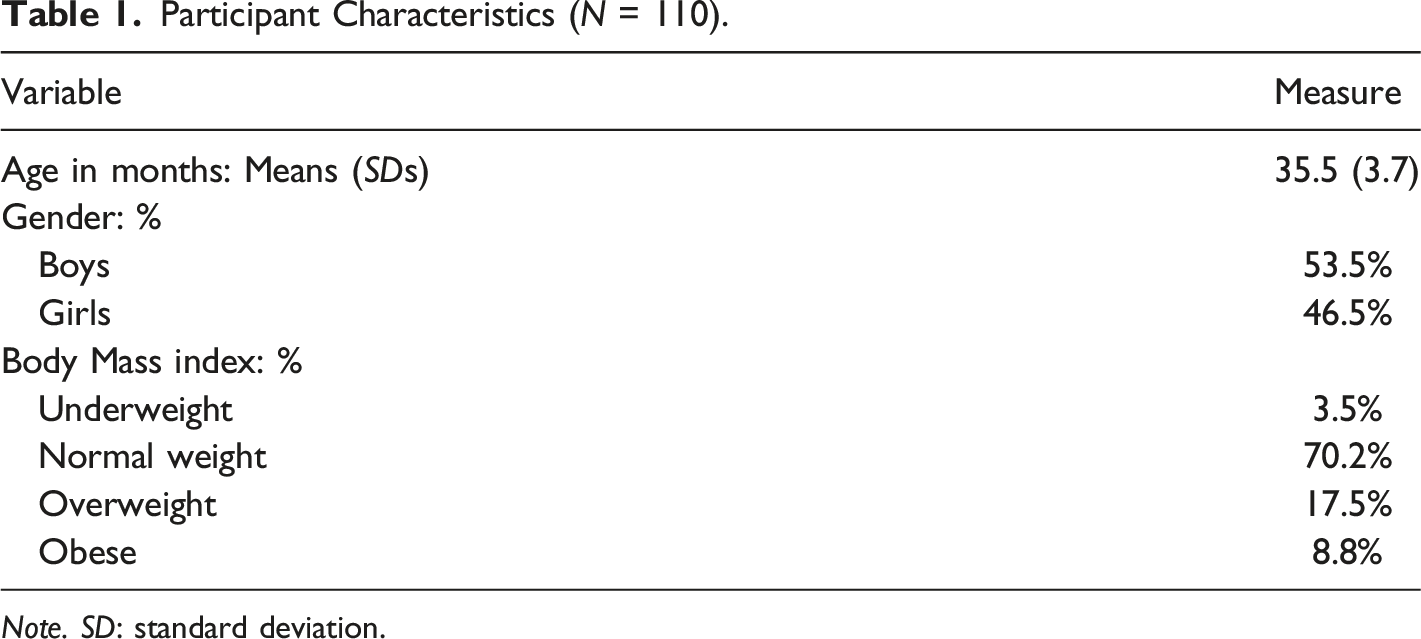
Note. SD: standard deviation.
The Human Research Ethics Committee at the Valencia university approved the study protocol (ethical approval code- UV-INV_ETICA-1441131). Before the study, we obtained written informed consent from the children’s parents.
Data Collection
PA Measurements
We used ActiGraph wGT3X-BT accelerometers (Pensacola, FL, USA), which have been validated as a PA indicator in the toddler population (Bisson et al., 2019). Children wore the accelerometers on their hips during unstructured outdoor play time (45 minute) on five consecutive days; educators recorded their observations on a study log sheet, recording the times and the reasons the instrument was put on and removed as well as lunch and nap times. Data for the children who did not wear the accelerometers for the minimum time requirement of four total days of unstructured outdoor play time were excluded from final analysis. For these measurements, the final sample was comprised of 110 young children. Accelerometer data were downloaded and converted to 15-s epoch files using ActiLife software version 6.4 (ActiGraph Inc, Pensacola, FL, USA).
Observational System
In addition to accelerometers, in line with several previous toddler studies (Alhassan et al., 2022; Dinkel et al., 2019), we used a modified version of the OSRAC-P to assess toddlers’ PA behavior during the unstructured outdoor play time. According to OSRAC-P training manual (Brown et al., 2006), the OSRAC-P is a direct observational system designed to collect information about children’s PA and contextual PA circumstances (e.g., location of PA, immediate educational/play context, group composition). The OSRAC-P is a focal child system meaning that a single child serves as the focus of the observation, and all decisions about categories to be coded are made in reference to that focal child. The OSRAC-P system incorporates a momentary time sample procedure for collecting observed information. Using this procedure, observers watch a child for a five second interval and, during the next 25 seconds, record one code for each variable. Five-second observation intervals are repeated every 25 seconds across a period to create an individual session for each focal child.
Play Frequencies (and Percentages) in Observational Categories (OSRAC-P) for Physical Activity by Gender.
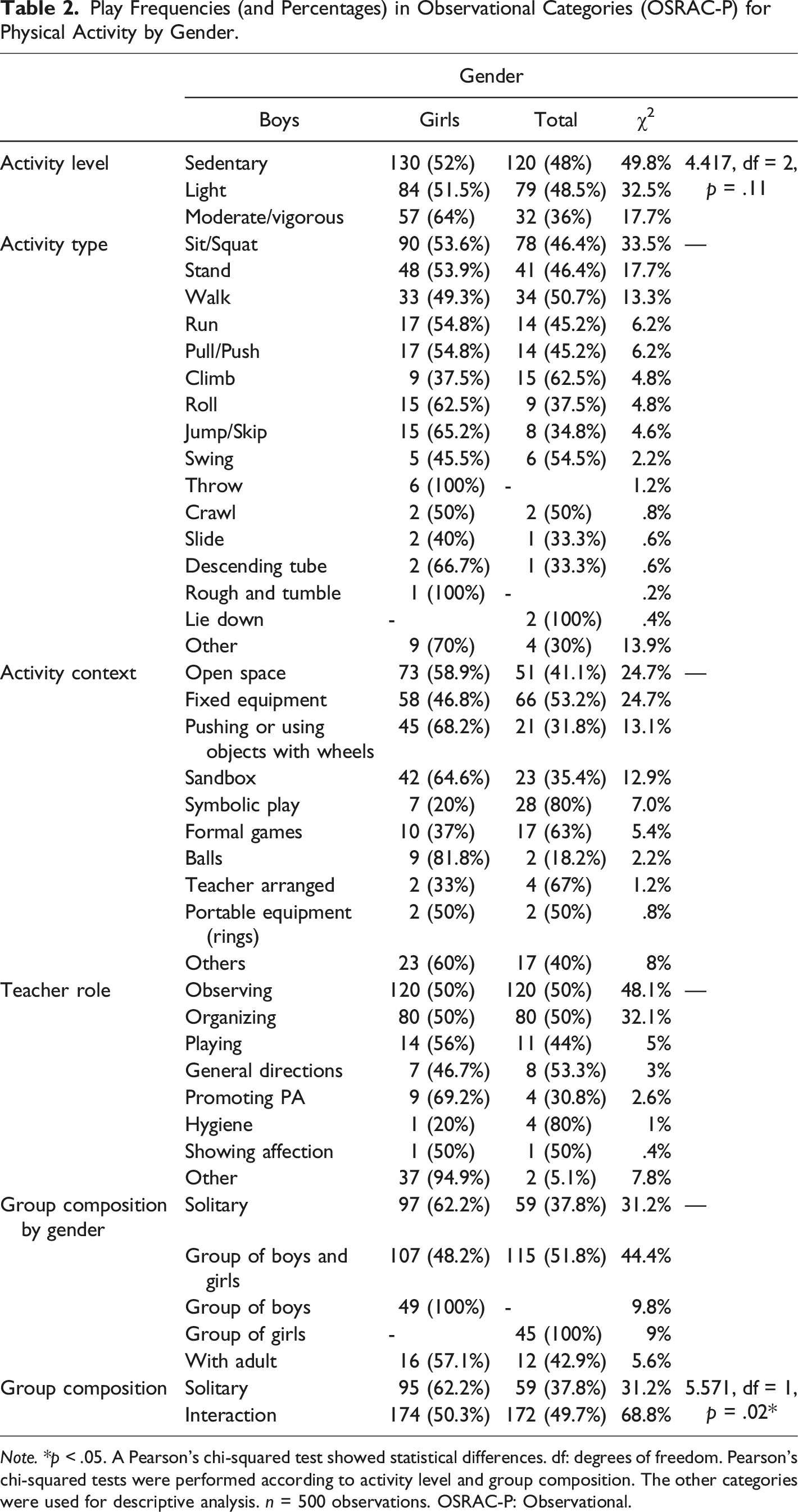
Note. *p < .05. A Pearson’s chi-squared test showed statistical differences. df: degrees of freedom. Pearson’s chi-squared tests were performed according to activity level and group composition. The other categories were used for descriptive analysis. n = 500 observations. OSRAC-P: Observational.
Two coders (H.V.-P. and V.E.M.-B.) were involved in assessing PA patterns with the OSRAC-P. These authors trained the research assistants on the coding scheme according to the OSRAC-P protocol (Brown et al., 2006) on two different days for half an hour each day. On the first day, the research team explained the aims of the project and the coding process, monitoring intercoder reliability. To ensure the reliability of the observations during unstructured outdoor play time, independent coders carried out an initial reliability test using a video tape of a different group of young children playing outdoors. On day two, coders were trained at an outdoor ECEC playground, recording intervals during the outdoor time, and the rate of intercoder concordance was calculated using Cohen’s kappa coefficients for each OSRAC-P category. The k value indicated good to excellent intercoder reliability for the activity level (k = .90), activity type (k = .72), outdoor play context (k = .82), and group composition (k = .84). Following this process, the final coding was carried out with the total sample.
The observational analysis during unstructured outdoor play was performed during the same week that the children used accelerometers. The total time used for observational analysis was 20 minutes (half the outdoor playground time) because the children were sometimes still finishing their morning snacks during outdoor play. For each observation day, upon entering the playground, observers randomly chose one boy and one girl to assess. Each child was observed for 20 minutes. During the recording intervals, the toddlers’ activity was coded as stationary, stationary with limbs, slow-easy, moderate, and fast. For later analysis, OSRAC-P data were translated to the proportion of intervals spent in SB, LPA, and MVPA, as detailed above (Alhassan et al., 2022). In total, we collected data for 500 observation intervals using the OSRAC-P system across recess periods.
Procedure
Unstructured outdoor play lasted approximately 45 minutes in the morning. In the seven participating daycares, all scheduled recess periods were between 10:30 AM and 12:15 PM. All the daycares scheduled outdoor times five times a week. All measurements were performed on days when it was not rainy.
We measured the playground area (m2) in each school using maps from Google Earth and analyzed it with Geographic Information System software (ArcGIS 10.2). As described elsewhere (Gubbels et al., 2018; Terrón-Pérez et al., 2019), we calculated playground density (toddlers/m2) and total free play space (m2). In addition, we recorded the number of children present. Total free play space was divided by the number of children to obtain free space per child (m2). Playground density was dichotomized by using the 50th percentile for analysis purposes: “low density” (≥8 m2/child); and “high density” (<8 m2/child).
We took the participants’ anthropometric measurements and calculated their BMIs (kg/m2) from a standard stadiometer scale (Añó Sayol SL, Barcelona, Spain). All measures were taken with shoes off and wearing light clothing. We used BMI percentiles (Kuczmarski et al., 2002) to classify the children’s weight status in accordance with their gender and age as follows: underweight (<18.5 m2); healthy weight (18.5–24.9 m2); overweight (25.0–29.9 m2); and obese (≥30.0 m2).
Statistical Analysis
Descriptive analyses were performed for the study variables, with categorical data expressed as percentages and continuous data as means and standard deviations (M, SD). For the statistical analysis, we constructed a contingency table using gender as an independent variable against the dependent variables of OSRAC-P categories. In addition, we calculated the Spearman correlation coefficients between mean OSRAC-P activity levels and mean accelerometer PA minutes during unstructured outdoor play time to evaluate the validity of the OSRAC-P measurements.
Linear mixed-effects models were fitted to associate LPA, MVPA, TPA and SB with the personal and environmental variables as fixed effects and school as a random effect. Saturated models were fitted and reduced using the Akaike information criterion (AIC). We analyzed each association between the exposures and outcomes independently and all predictors jointly in both unadjusted and adjusted models. We adjusted all models for age, sex, and BMI. Analyses were performed with R software version 4.1, and the lme4 module version 1.1-27.1.
Results
The mean playground area across the schools was 168.3 m2 (range 110–240). The mean number of children per m2 was 14 (range 9–20). Figure 1 shows individual children’s data points for mean OSRAC-P PA levels (light + moderate/vigorous PA), plotted against the minutes of their TPA engagement. We found a significant positive correlation between mean OSRAC-P PA level and minutes of TPA engagement (Spearman’s rho = .33, p < .04). Associations Between Individuals’ Data Points for the Mean Observational System for Recording Activity in Children (OSRAC-P) – Physical Activity Level and Minutes of Total Physical Activity Engagement.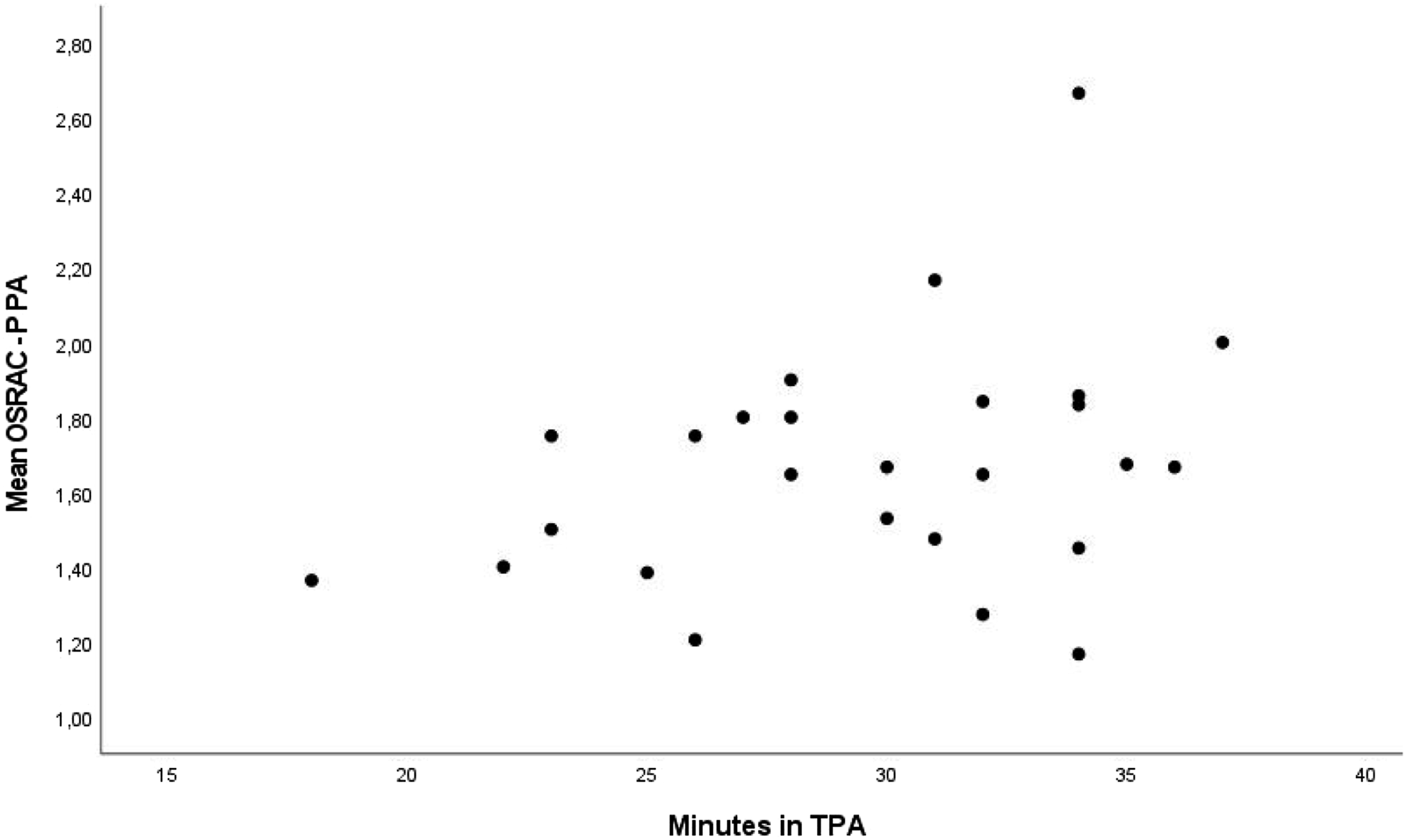
According to accelerometer data, for the total minutes of unstructured outdoor play time, the average time spent in LPA was 20.8 minutes (SD 3.5), compared to 7.5 minutes (SD 3.2) in MVPA, 28.3 minutes (SD 5.1) in TPA, and 16.8 minutes (SD 5.1) in SB. TPA represented 62.7% of the total unstructured outdoor play period. The mean time (minutes) spent in each PA level during unstructured outdoor play is shown by gender in Figure 2. For SB and PA outcomes, results were similar in boys and girls: (a) SB: M 16.3 minutes, SD 5.2 versus M 17.3 minutes, SD 4.9; (b) LPA: M 20.8 minutes, SD 3.6 versus M 20.7 minutes, SD 3.4); (c) MVPA: M 7.9 minutes, SD 3.0 versus M 7.0 minutes, SD 3.4; and (d) TPA: M 28.7 minutes, SD 5.3 versus M 27.7 minutes, SD 4.9, respectively. Level of Physical Activity and Sedentary Behavior During Unstructured Outdoor Play by Gender.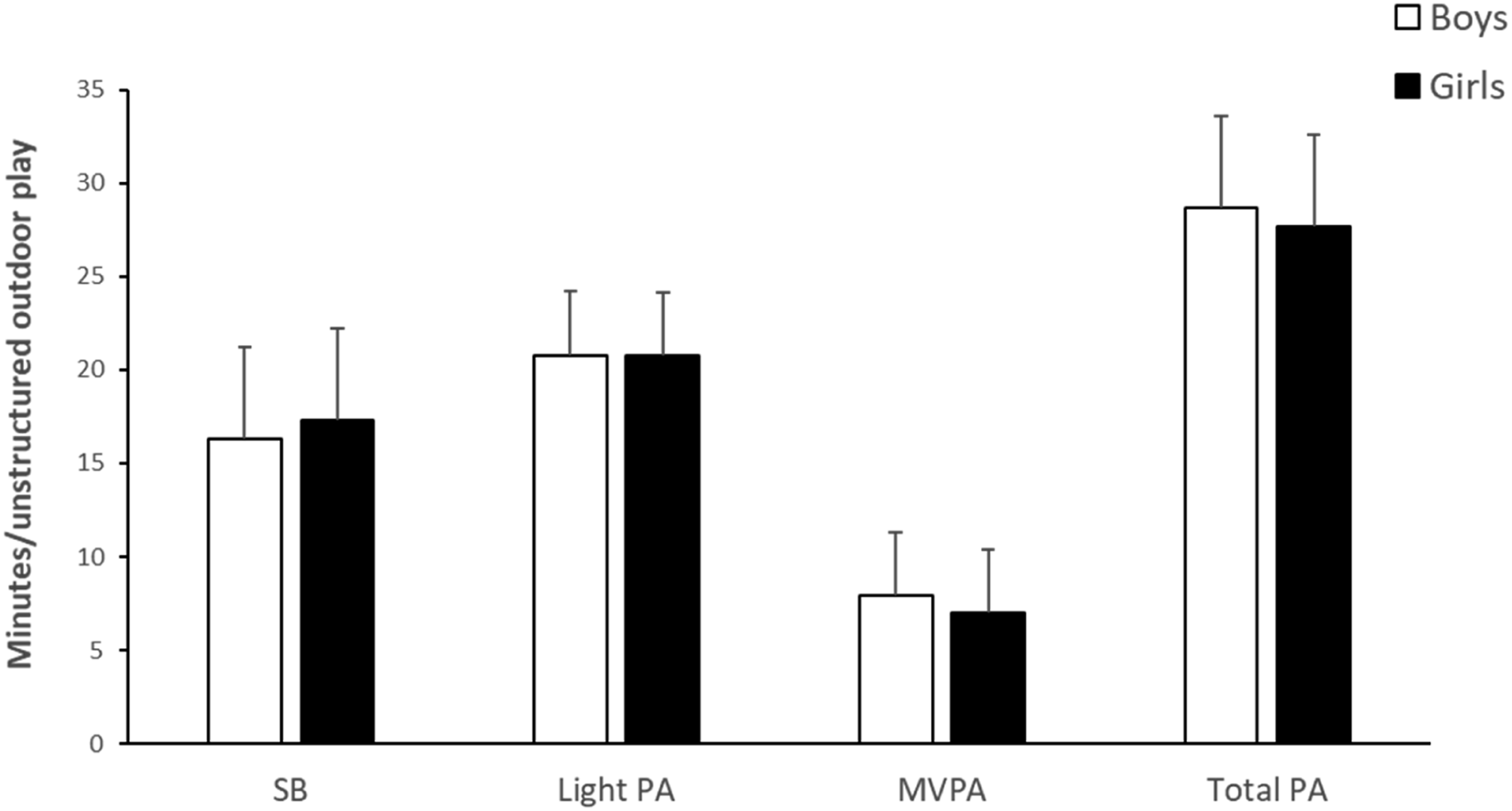
Table 2 presents data according to OSRAC-P PA categories. Regarding the time spent at each of three activity levels (sedentary, light, and moderate/vigorous), children spent 50.2% of their outdoor play time being physically active and 49.8% in sedentary behavior. Although boys spent more of their time in MVPA (64%) than girls (36%), there was no significant association between gender and PA levels (p = .11).
With respect to the 16 types of activity contemplated, 49.8% of the observations were of three types of SB: (a) sitting (33.5%); (b) standing (17.7%); and (c) lying down (.4%). As for the active behaviors, the three most common were: (a) walking (13.3%); (b) running (6.2%); and (c) pulling/pushing (6.2%). Consistent with our overall findings, there was a similar distribution by gender of observations of walking (49.3% in boys vs. 50.7% in girls), running (54.8% vs. 45.2%), and pulling/pushing (54.8% vs. 45.2%).
With respect to the 10 outdoor activity contexts contemplated, the five most common were: (a) open space (24.7%); (b) fixed equipment (24.7%); (c) pushing or using objects with wheels (13.1%); (d) sandbox (12.9%); and (e) symbolic play (7%). Educators spent almost half of the outdoor time observing pupils (48.1%), organizing (32.1%), playing (5%), giving general directions (3%), and promoting PA (2.6%). Activities like engagement in personal hygiene, showing affection, or others comprised 9.2% of the observations. Finally, in terms of the observed social circumstances during outdoor recess time, toddlers participated in several social groupings, including: (a) solitary (31.2%); (b) group of boys and girls (44.4%); (c) group of boys (9.8%); (d) group of girls (9%); and (e) interacting with an adult (5.6%). In general, both boys and girls were observed interacting with others (69.2%), whereas 31.2% of the observations were defined as solitary conditions. When toddlers were observed performing SB, boys spent more time in solitary conditions compared with girls (70.5% vs. 29.5%, respectively).
Frequencies (and Percentages) in Observational Categories (OSRAC-P) for Social Interactions and Physical Activity, by Gender.
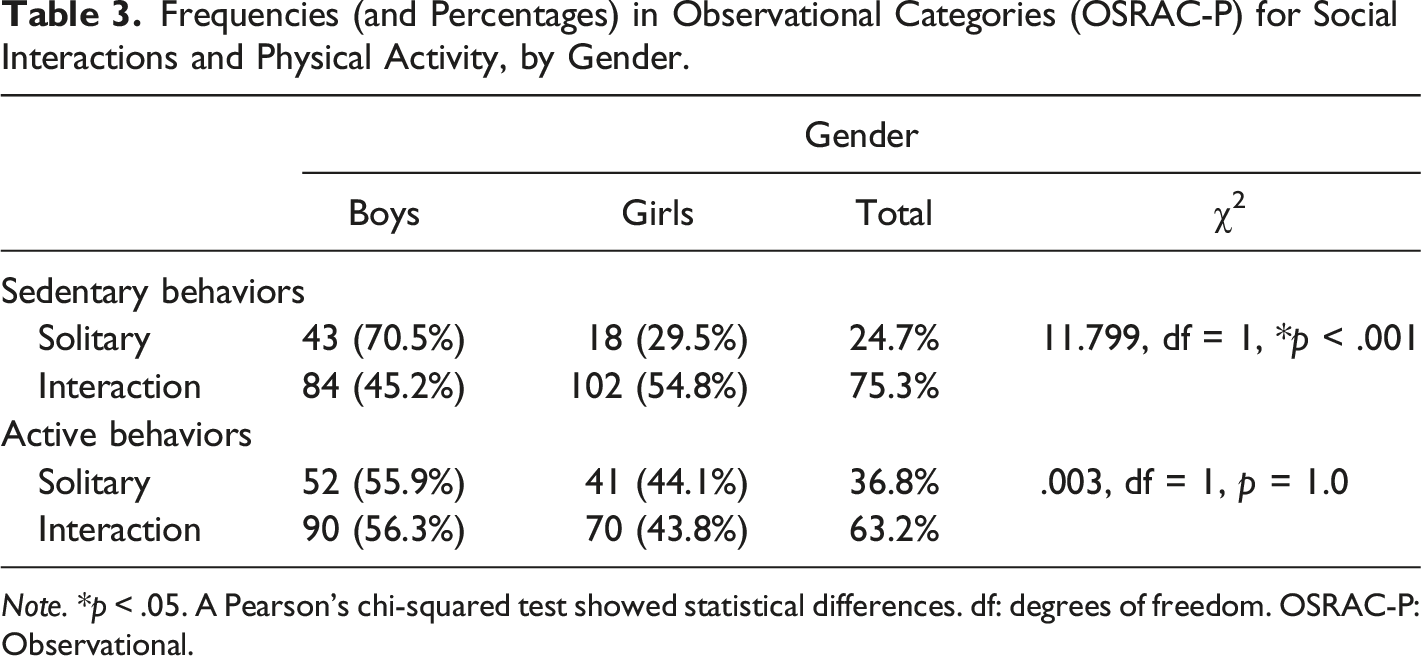
Note. *p < .05. A Pearson’s chi-squared test showed statistical differences. df: degrees of freedom. OSRAC-P: Observational.
Final Mixed-Model Regression for the Association Between Explanatory Variables and Objective Measures of Physical Activity and Sedentary Behavior During Unstructured Outdoor Play Time.
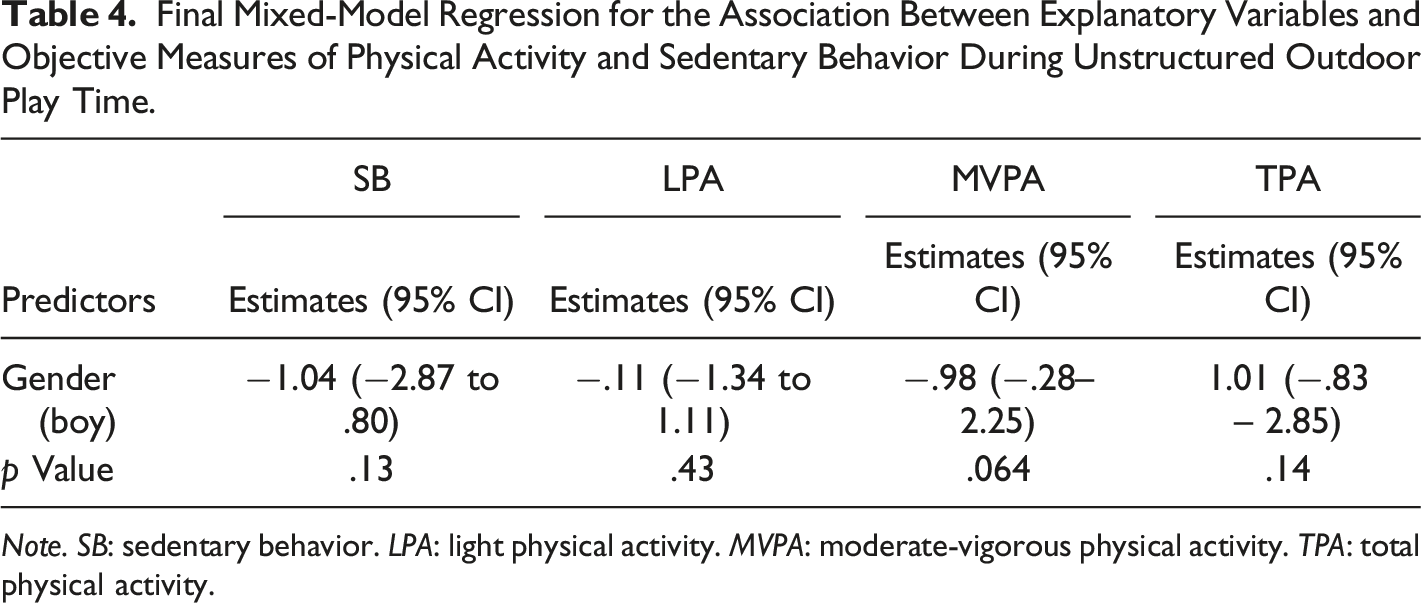
Note. SB: sedentary behavior. LPA: light physical activity. MVPA: moderate-vigorous physical activity. TPA: total physical activity.
Discussion
Relationship Between Mean OSRAC-P PA Levels and Minutes of TPA Engagement
To our knowledge, this was the first study of two-year-old children to objectively examine PA levels and patterns using two complementary sources of information (observation using the OSRAC-P and objective accelerometry) during unstructured outdoor play in the preschool and daycare context. One of our aims was to determine the concurrent validity of the OSRAC-P by correlating these data with accelerometry data for assessing PA levels in this setting and population. Our results showed a significant, positive relationship between mean OSRAC-P PA levels and accelerometry minutes of TPA engagement, (Figure 1), suggesting that the OSRAC-P provides a valid estimate of PA levels during unstructured outdoor play time.
Contribution of Unstructured Outdoor Play Time to TPA and MVPA
Among our most important findings were that unstructured outdoor play time contributed to TPA and MVPA, and young children spent relatively little time in SB in this context. For each 45 min period, they spent an average of 28.2 and 7.5 minutes in TPA and MVPA, respectively, compared to 16.8 minutes of SB. In other words, for around 65% of their unstructured outdoor play time, boys and girls performed active behavior. This result is consistent with other findings reported in a recent systematic review, showing that outdoor playtime was highly correlated with MVPA (Truelove et al., 2018). Specifically, Truelove et al. (2018) found that young children spent 14% of outdoor sessions engaged in MVPA and 44% in TPA. As would be expected, those results were also consistent with purely observational data from several previous investigators (Dinkel et al., 2019; Little, 2022). Dinkel et al. (2019) also reported that young children were more often observed in active movement (56.7%) than in SB (41.9%). Among the active behaviors we observed, 13.3% of the observation intervals were of walking, 6.2% of pushing objects, 6.2% of running, 4.6% of jumping, 4.8% of climbing, and 1.2% of throwing, suggesting that the outdoor environments facilitate fundamental motor skill experiences. Little (2022) reported similar results, observing that riding/pushing wheeled toys were the most frequent activity, while climbing a tire tower was a second most preferred activity.
With respect to World Health Organization recommendations (WHO, 2019) that children under three years old should have at least 180 minutes of PA of any intensity every day, Vega-Perona et al. (2022) and Díaz-Quesada et al. (2021) also found that daycare facilities were positive environments for achieving these PA recommendations for 2-year olds in Spain. As toddlers spend an average of 7 hours a day in preschool and daycare, outdoor time during school hours is a good opportunity for achieving their recommended PA levels. Furthermore, a recent systematic review showed that, although young children appear to spend more than half of their waking time being sedentary (Pereira et al., 2019), time spent in SB during outdoor time, as measured by accelerometry, was much lower (33%). To increase PA in young children, the U.S. Institute of Medicine recommended providing opportunities for TPA for at least 15 minutes per hour while children are in educators’ care (Institute of Medicine, 2011). Relevant to this recommendation, we showed that, for every 45 minutes of unstructured outdoor play time, young children in our study spent 28.3 minutes (>60% of their free play time) being active, meaning that they met this guideline.
In our study, boys and girls exhibited comparable MVPA and TPA levels during their unstructured outdoor play time. A lack of studies of outdoor play time in children under age three makes it difficult to contrast these results directly with other published findings. However, Kelly et al. (2022) observed similar levels of SB and MVPA in U.S. boys and girls in daycare/preschool settings. There were different results in some other studies, of toddlers during school hours, asboys exhibited higher levels of MVPA than girls (Ellis et al., 2017; Hesketh et al., 2015; Vega-Perona et al., 2022). Also in an Australian sample, Hnatiuk et al. (2012) found that young boys were more active than young girls in morning hours, while there were no sex differences over the entire day. These contradictory findings across studies could be because previous studies assessed activity levels over all school hours and did not differentiate between such contextual circumstances as unstructured versus structured activities or indoor versus outdoor time. Exploring gender differences in PA and sedentary time from when children commence independent walking is important for providing insights into how to better design educational programs to optimize PA and minimize sedentary time for toddlers of both sexes (Lamb et al., 2019).
We found that, during unstructured outdoor hours, toddlers’ ages and BMIs were not significantly associated with PA or SB. Due to a dearth of other data in this age group and setting, further comparisons are limited. However, Gubbels et al. (2012) found that older toddlers were significantly more active outdoors than were their younger peers. In a more recent study, Gubbels’s group used accelerometry to assess PA, and age was then significantly associated with less SB and increased PA during all daytime hours (Gubbels et al., 2018). In the Spanish preschool/daycare context, Vega-Perona et al. (2022) found that, during school hours, younger toddlers performed less LPA than older ones, but BMI was not associated with PA of any intensity or SB. In Swedish two-year-olds across all daytime hours, Johansson et al. (2015) found that children’s BMI was not significantly correlated with PA. In the United States, Kelly et al. (2022) found no significant interaction between being overweight and SB, LPA, or MVPA. Generally, these results suggest that, at very early ages, anthropometric factors (BMI and age) play a negligible role in explaining PA levels and patterns during unstructured outdoor play time.
Using random effects accounting for school characteristics (density, presence of equipment, and intrinsic conditions of the school), we found no positive association between ECEC characteristics and PA levels or SB. Furthermore, according to the environmental descriptive data we collected, the playground area, density and playground equipment presence were similar between our seven centers. These playground areas allowed children ample space. Gubbels et al. (2012) found that the size of the outdoor playground was significantly and positively correlated with young children’s activity level (Gubbels et al., 2012), and, in more recent research, Gubbels’ team again found that outdoor play space (m2 per child) was significantly associated with PA and, specifically, with time spent in MVPA during all daytime hours, but only among children who were overweight and not for normal weight, children (Gubbels et al., 2018).
OSRAC–P Contextual Information
Exploring how contextual features of settings relate to PA patterns is also important. Our use of the OSRAC-P was particularly apt for this purpose. The most common activity contextual features were: (a) open space (24.7%); (b) fixed equipment (24.7%); (c) pushing or using objects with wheels (13.1%); (d) sandbox (12.9%); and (e) symbolic play (7%). Young girls spent 31.8% of intervals pushing/using objects with wheels and 35.4% in the sandbox, compared to 68.2% and 64.6% for young boys, respectively. Symbolic play was more frequent for girl toddlers (80%) than among boys (20%), consistent with earlier findings in which the highest unstructured outdoor play frequency was in open play (43.2%) followed by fixed playground play (37.6%) (Dinkel et al., 2019). In Chen and Hamel (2022) open play and gross motor play were associated with higher amounts of PA, but the most visited fixed playground play areas for toddlers during outdoor time were areas with constructed features (i.e., swings, play structures, and playhouse), which comprised nearly half (46.7%) of their outdoor play visits. The availability of portable jumping equipment and the presence of a structured track on the playground have been associated with young children’s higher PA, whereas portable slides, fixed swinging equipment, and sandboxes were negatively associated with outdoor activity levels (Gubbels et al., 2012). Some inconsistencies in these findings may be due to how researchers observed children. We recommend that future investigators use standardized instruments that include contextual variables whenever possible, and the OSRAC-P served that purpose well in this study.
Regarding past findings from the OSRAC-P, the proportion of intervals spent in different movement behaviors seemed to depend to some extent on the child’s age. Pereira et al. (2019) found that toddlers showed higher levels of active behavior during unstructured outdoor play time compared to older, preschool children). Other studies also showed that, during recess, preschoolers spent about 57% of their time performing SB (Terrón-Pérez et al., 2019), whereas we found that both boys and girls spent a slightly lower proportion of observation intervals in SB (49%), compared to active behaviors (51%).
In terms of social interactions, the observational system we used showed that toddlers spent most (69.2% of observations) unstructured outdoor play time interacting with peers and the teacher, suggesting that outdoor play promotes social relations in educational settings. We found that toddlers of mixed groups of boys and girls interacted in almost 50% of their allotted time, with only 9.8% and 9% of play intervals characterized by same-sex boy and same-sex girl play, respectively; however, when toddlers performed SB, there was a statistical association between gender and group composition (Table 3). In Portugal, Moreira et al. (2022) showed that in higher-quality outdoor areas, preschool children spent less time alone and more time in social proximity to small groups of their peers (one or two children) and play was similar across gender (Moreira et al., 2022). In England, Elliot (2021) observed that young children aged 2–4 years looked to adults for partners in their play, as onlookers and supporters, as providers of equipment, and as sources of comfort. In the United States, Dinkel et al. (2019) reported that, toddlers were observed frequently (80% time) interacting during unstructured outdoor play time with their teachers, peers, or in groups. Whereas girls and boys in our study were observed to be interacting with a mixed group of peers and adults for 22% of these intervals; they were with peers for 10%, and with adults for 3%, Dinkel et al. (2019) reported that toddlers played most frequently with an adult present (49.0%). Also in the United States, Shim et al. (2001) reported that 4-5 year-olds were more likely than 2-3 year-olds to be engaged in solitary functional play outdoors. This result was contrary to Terrón-Pérez et al. (2019), who found that social interactions during recess predicted more MVPA in both girls and boys, suggesting that children became more active as more social participation was required in the play. While outdoor space promoted socialization, these varied patterns of social interaction are likely explained by the teacher’s pedagogical orientation and role.
Educators have a critical role to play in promoting PA and reducing sedentary time in preschool/daycare settings (Tonge et al., 2016). In our study, teachers spent 48.1% and 32.1% of their time observing and administrating/organizing the environment, respectively. Other roles teachers played were less prominent, with just 5% playing with young children, 3% giving instructions, and 2% promoting PA. These results are consistent with some previous investigations. For instance, Little (2022) found that a plurality of interactions with children (31.4%) involved supervision of the play space, and others also reported that children usually engaged in play without any prompting from a teacher (Chen & Hamel, 2022; Dinkel et al., 2019). We agree with Chen and Hamel’s (2022) conclusion that these results may be attributable to educators’ pedagogical actions, in which teachers encouraged young children to explore and lead play while they assumed the role of facilitator or guide. In our study, the role teachers had as observers may have helped them achieve facilitative and supporting roles in outdoor settings, and this possibility could be tested in future research.
Limitations and Directions for Further Research
Our study has some weaknesses that should be delineated, including the limited generalizability of our results from this convenience sample to a broad array of other populations. Additionally, our cross-sectional design precluded drawing any causal inferences about the relationship between contextual variables and the PA levels we observed. As all our assessments were outdoors, our data provide no insights on indoor environments and no ability to on compare indoor and outdoor environments. Future investigators should recruit larger and more diverse samples and explore both indoor and outdoor environments in different preschool/daycare contexts. In addition, future studies might analyze the relationship between socioeconomic variables and toddlers’ PA levels during specific contexts during all day hours (e.g. structured PA, free play time, indoor time). Ideally, future researchers might conduct longitudinal studies that allow monitoring young children over time.
Conclusions
Our major findings in this research were that, during unstructured outdoor play time in the preschool/daycare context, (a) toddlers engaged in high amounts of TPA and MVPA; (b) toddlers displayed similar levels of LPA, MVPA, TPA, and SB regardless of sex, BMI, or and age; (c) environmental variables like fixed equipment and playground density were not associated with higher levels of PA of any intensity or SB; (d) data from direct observation through OSRAC-P correlated highly with accelerometry as a reliable method to analyze PA patterns during unstructured outdoor play time in toddlers; and (e) despite the different social patterns between boys and girls during unstructured outdoor play time, sex differences did not impact PA levels or patterns. Preschool/daycare institutions seem to be able to positively impact active play during unstructured outdoor play time. By combining different methods for measuring PA levels and patterns (accelerometry and direct observation), we were able to improve an understanding of how the outdoor environment relates to toddler behavior during unstructured PA, and perhaps to encourage teachers to play an observational facilitative role in toddler-initiated PA.
Footnotes
Author Contributions
Conceptualization, V.E.M.-B., H.V.-P., and I.E.; methodology, V.E.M.-B., M.d.M.B.-V., , P.S.M., and H.V.-P.; formal analysis, H.V.-P., V.E.M.-B., D.A.M-B., and I.E.; investigation, H.V.-P., M.d.M.B.-V., V.E.M.-B., and P.S.M.; writing—review and editing, H.V.-P., V.E.M.-B., and I.E. All authors have read and agreed to the published version of the manuscript.
Declaration of conflicting interests
The authors declare that the research was conducted in the absence of any commercial or financial relationships that could be construed as a potential conflict of interest.
Funding
The author(s) disclosed receipt of the following financial support for the research, authorship, and/or publication of this article: Herminia Vega-Perona was supported by the Conselleria de Innovación, Universidades, Ciencia y Sociedad Digital, Generalitat Valenciana “Subvenciones para la contratación de personal investigador predoctoral”. This work was supported by the Conselleria de Innovación, Universidades, Ciencia y Sociedad Digital, Generalitat Valenciana,“Proyectos de I+D+i desarrollados por grupos de investigación emergentes (GV/2020/206)” and by the Universitat deValència, “Programa de Ayudas para Acciones Especiales de la Universitat de València (UV-INV-AE19-1203732)”.
Institutional Review Board Statement
Regarding the ethical implication, the study was conducted according to the guidelines of the Declaration of Helsinki and approved by the Ethics Committee of University of Valencia (Ethical approval code- UV-INV_ETICA-1441131). Furthermore, informed consent was obtained from all participants involved in the study.
