



Abstract
A history of stressors in athletes represents psychosocial factors that may lead to sport injury. However, empirical studies have provided varying results for the relationship between stress history and sport injury. We examined prior literature on the stress history - sport injury relationship within a systematic review and, by meta-analysis, we offered a pooled estimate of the strength of this relationship. We searched seven major academic databases (Sportdiscus, Psyinfo, Academic Search Premier, Ovid, Scopus, Web of Science, and PubMed) from January 2000 to September 2023 and identified 19 empirical studies that examined injuries in sports contexts for meta-analysis. In 19 empirical studies of moderate to high publication quality, we found moderate heterogeneity (Q(17) = 98.61; p < .001), low sensitivity (I2 77.82–83.77), and low publication bias (Z-value = 7.74; p < .001). Further, using a random effect estimate-r, we found a low but significant correlation between stress history and sport injury, yielding a small overall effect size (ES) of r = .12. Furthermore, moderation analyses found adolescents (r = .14), contact-sport athletes (r = .09), non-elite athletes (r = .13), and non-European athletes (America r = .16; Asia r = .14; Oceania r = .14) to have a relatively higher ES than their counterparts in this stress history/sport injury relationship. We concluded that inevitable life stressors may lead to many negative consequences for athletes, such that sports professionals should provide stress management educational programs to enhance athletes’ health and well-being.
Keywords
Introduction
Sport injury is a prevailing phenomenon in the athletic world, with an estimated of 10,000 hours of sports training and competition resulting in 636 injury cases in rugby, 422 in soccer, 402 in hockey, 193 in badminton, 100 in tennis, and 179 in running (Bueno et al., 2018). A Danish investigation of 10,000 adults found that 18.4% of adults experienced sport injury; males had higher injury rates than females, and running, soccer, and weight training had a higher incidence of sport injury than other sports. Similarly, Luiggi and Griffet (2019) investigated 1360 French sports participants and found that high-level athletes had a higher odds ratio for sport injury than low-to-medium-level athletes. Specifically, basketball players had a higher odds ratio in sports injury than handball, boxing, soccer, and gymnastics. In the 2017 Pyeongchang Winter Olympic Games, Soligard et al. (2019) cooperated with the International Olympic Committee (IOC) and 92 National Olympic Committees (NOCs) to investigate 2914 Olympic athletes’ injury experiences. During 17 days of the Olympiad, they found 376 athletes (12.6%) reported sport injury, with the highest sport injury rates in ski halfpipe (28%), snowboard cross (26%), ski cross (25%), snowboard slopestyle (21%), and aerials (20%).
Once a sport injury occurs, injured athletes must engage in a rehabilitation program that includes injury assessments, treatments, and rehabilitation offered by medical staff (Santi & Pietrantoni, 2013). Athletes may then experience temporary restrictions from sports participation and psychological disturbance during rehabilitation. Specifically, Wiese-Bjornstal et al. (1998) contended that pre-injury and post-injury factors interactively influence injured athletes’ psychological responses in a dynamic and bi-directional fashion. Further, personal and situational factors interact to influence injured athletes’ cognitive (e.g., self-efficacy, career goals, perceived competence), emotional (e.g., anger, fear, depression), and behavioral (e.g., adhering to rehabilitation, substance abuse, or taking risky behavior) responses. Through the process of rehabilitation, injured athletes may eventually reach psychological and physical recovery, after which further sport injury may influence not only the athletes’ physical conditions but also their psychological well-being. In some extreme cases, injured athletes experience major depression (Appaneal et al., 2009), anxiety (Rice et al., 2019), suicidal intention (Smith & Milliner, 1994), substance abuse (de Grace et al., 2017), and career termination (Ristolainen et al., 2012).
Because sport injury is so prevalent and influences injured athletes’ physical and mental health, many researchers have investigated the antecedents/causes of sport injury. Generally, researchers have proposed that both internal factors (e.g., overtraining, physical fitness, skill level, and psychological factors) and external factors (e.g., nature of sports, types of equipment, facilities, and field conditions) contribute to sport injury (Bahr & Krosshaug, 2005). Some researchers specifically suggested that psychological stress is a significant cause of sport injury (Petrie, 1993). In highly competitive settings, such as the Olympic Games, World Championships, and professional tournaments, competitors experience multiple stressors, including training adjustment, logistic adaptation, social expectations, media relations, interpersonal competitions/conflicts, and organizational demands (Fletcher & Arnold, 2016). Athletic stress, an inevitable part of competitive sports, can lead to injuries as well as negative consequences such as burnout (Lin et al., 2022), physical illness (Humphrey et al., 2000), depression (Nixdorf et al., 2020), and decreased performance (Nippert & Smith, 2008). Thus, it is imperative to examine how stress may influence sport injury.
Based on an integration of the stress-illness, stress-accident, and stress-injuries literature, Williams and Andersen (1998) proposed that, in stressful athletic situations, psychosocial factors such as personality (e.g., trait anxiety, hardiness), history of stressors (e.g. negative life-events, past injury, and daily hassle), and coping (e.g., stress management, social support) solely or jointly influence athletes’ cognitive appraisal of the balance between environmental demands and coping resources. Once perceived demands outweigh resources and outcomes, stress responses are triggered, such as heightened muscle tension, increased blood pressure, and elevated heart rate. Stress may also change cognitive functions, precipitating negative thoughts and narrowing attention to cause further sports injuries.
Following Williams and Andersen’s (1998) stress-sport injury model, many researchers examined psychosocial factors contributing to sport injury. Among four major categories of psychosocial factors (i.e., personality, history of stressors, coping resources, and intervention), athletes’ history of stressors has received the most research attention. A history of stressors includes major life events, daily hassles, and history of previous injury. According to stimulus-based theories of stress (Cooper, 2015), disturbing life events such as the death of a loved one, divorce, getting fired, and bad relationships strongly impact health and illness (Slavich, 2016). Because stress is embedded in competitive sports and has been found to be associated with athletes’ health-related problems (Nimmo & Ekblom, 2007), it is important to understand the influence of the history of stressors on sport injury.
In a study examining the relationship between social stressors (coaches, teammates) and acute/chronic injury, Pensgaard et al. (2017) sampled 193 elite Norwegian female handball/football players. They measured life stress and perceived motivational climate at the beginning of the season and then recorded injury records through the rest of the season. Perceived negative life event stress from teammates was associated with an increased risk of acute injuries (OR = 1.23), and there was a significant relationship between the coach’s perceived negative life event stress and risk of overuse injuries (OR = 1.21).
Li et al. (2019), in a prospective research design, examined relationships among 112 college student athletes’ basic psychological needs, satisfaction/frustration, stress responses, and sports injury. They measured participants’ basic psychological need satisfaction/frustration and perceived stress during the study’s first three months and then used self-report injury records in the second, third, and fourth months. They found that basic psychological need satisfaction had direct negative effects on sports injuries (R2 = −18), and stress directly affected sport injury (R2 = .29). Further, they found that basic psychological need satisfaction had an indirect effect on injury occurrence via stress.
Although these studies provide initial data on the relationship between stress history and sport injury, a pooled estimate across studies to summarize research findings on this relationship has yet to be produced. In past research, several investigators used general life stress scales (e.g., Perceived Stress Scale; PSS; Cohen et al., 1983; The Hassle and Uplift Scale, HUS; DeLongis et al., 1988), while others used sport-specific measures such as The Athletic Life Experiences Survey (ALES; Passer & Seese, 1983) and The Life Events Survey for Collegiate Athletes (LESCA; Petrie, 1992). Whether investigators revealed different findings with different measures remains unknown. Further, some research sampled youth athletes while others recruited senior athletes, and whether age moderates the relationship needs further examination (Rogers & Werthner, 2022). Sport type is also a relevant variable, as contact sports (e.g., basketball, boxing, rugby) versus non-contact sports (e.g., golf, tennis, archery) might moderate the history of stressors-sport injury relationship.
Based on this background literature, we examined past research addressing the relationship between the history of stressors and sport injury in a systematic review and by meta-analysis. We hoped to gain a pooled estimate of the strength of the relationship between history of stressors and sport injury. In addition, we attempted to examine whether this relationship was moderated by athletes’ age, athletes’ competition level, sport type, region, and stress measurement scale.
Method
Article Search Strategy
We adopted the Preferred Reporting Items for Systematic Reviews and Meta-Analysis (PRISMA, Page et al., 2021) statement to guide our study. First, we designed a comprehensive search strategy to select eligible studies that examined the history of stressors-sport injury relationships. We searched seven academic databases: Sportdiscus, Psyinfo, Scopus, Web of Science, Academic Search Premier, Ovid, and PubMed from January 2000 to September 2023. We used the following keywords to identify relevant articles (adding a Boolean operator [OR and/or AND] to combine them: (a) stress OR distress OR pressure OR hassle, (b) injury, (c) psychological predictor*, and (d) athlete* OR sport* OR player*. Finally, we included only peer-reviewed publications available in English.
Eligibility Criteria
In the first phase of this review, the first and second authors of this paper (TC and FJL) conducted separate searches using the same methodology. Additionally, they each used reference lists from selected papers to search for additional articles on Google Scholar. Following this phase, these two authors independently evaluated each article’s title, abstract, and full text to determine their relevance to this review. They double-checked each other’s individual search results to ensure that relevant articles had been selected. If there was a difference in whether an article was judged to be relevant, the third author (YCH) made the final decision.
Initially, this search produced 256 articles from online databases. After removing 124 duplicate articles, there were 132 articles from online databases and eight additional articles from other sources. We also screened the titles and abstracts of these remaining articles to determine those that might be subjected to meta-analysis. We excluded articles on the basis of the following criteria: (a) the sample was unrelated to injury or stress in athletes, and (b) the article did not involve quantitative analysis. After these procedures, we obtained and evaluated the full texts of just 15 online articles. In the full-text screening, we excluded articles based on the following further criteria: (a) injury/stress data were not obtained; (b) data were incomplete (e.g., lacking mean, standard deviation, r-value, R2, p-value); and (c) athlete stress was not compared/associated with injury. Ten studies were excluded because they failed to meet the selection criteria, leaving five online articles. In addition, we searched the eight articles that had been drawn from reference lists in other articles, and using the same procedures to filter them, we excluded five studies. Thus, eleven articles from the previous review by Ivarsson et al. (2017) and eight articles from the searching, selecting, and screening process in the present study were collected (five studies via databases and three studies via other methods) so that we included a total of 19 studies for analysis (Figure 1). PRISMA Flow Chart of the Studies Included in the Systematic Review and Meta-Analysis.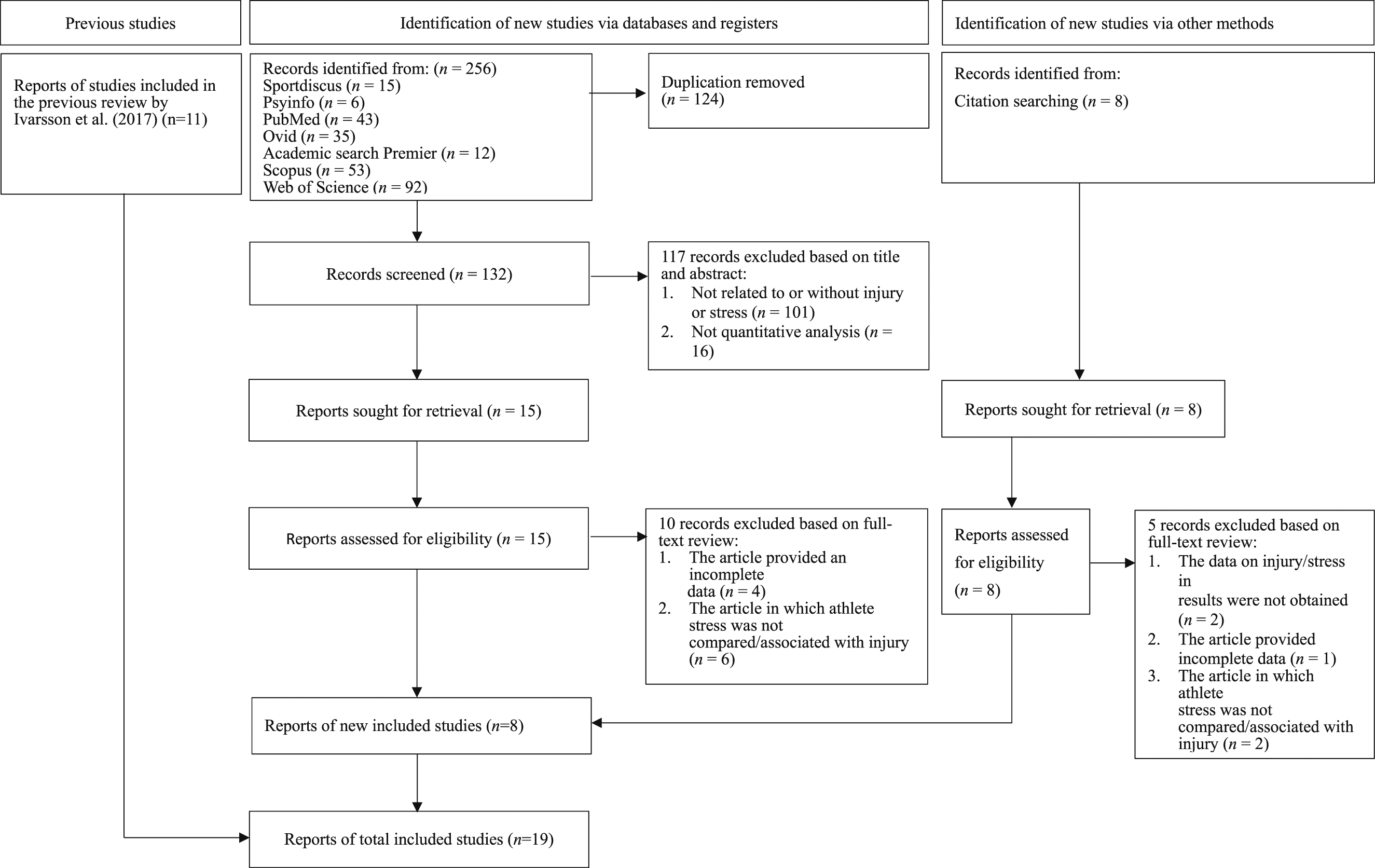
Article Quality Assessment
Quality Assessment of the Included Studies.
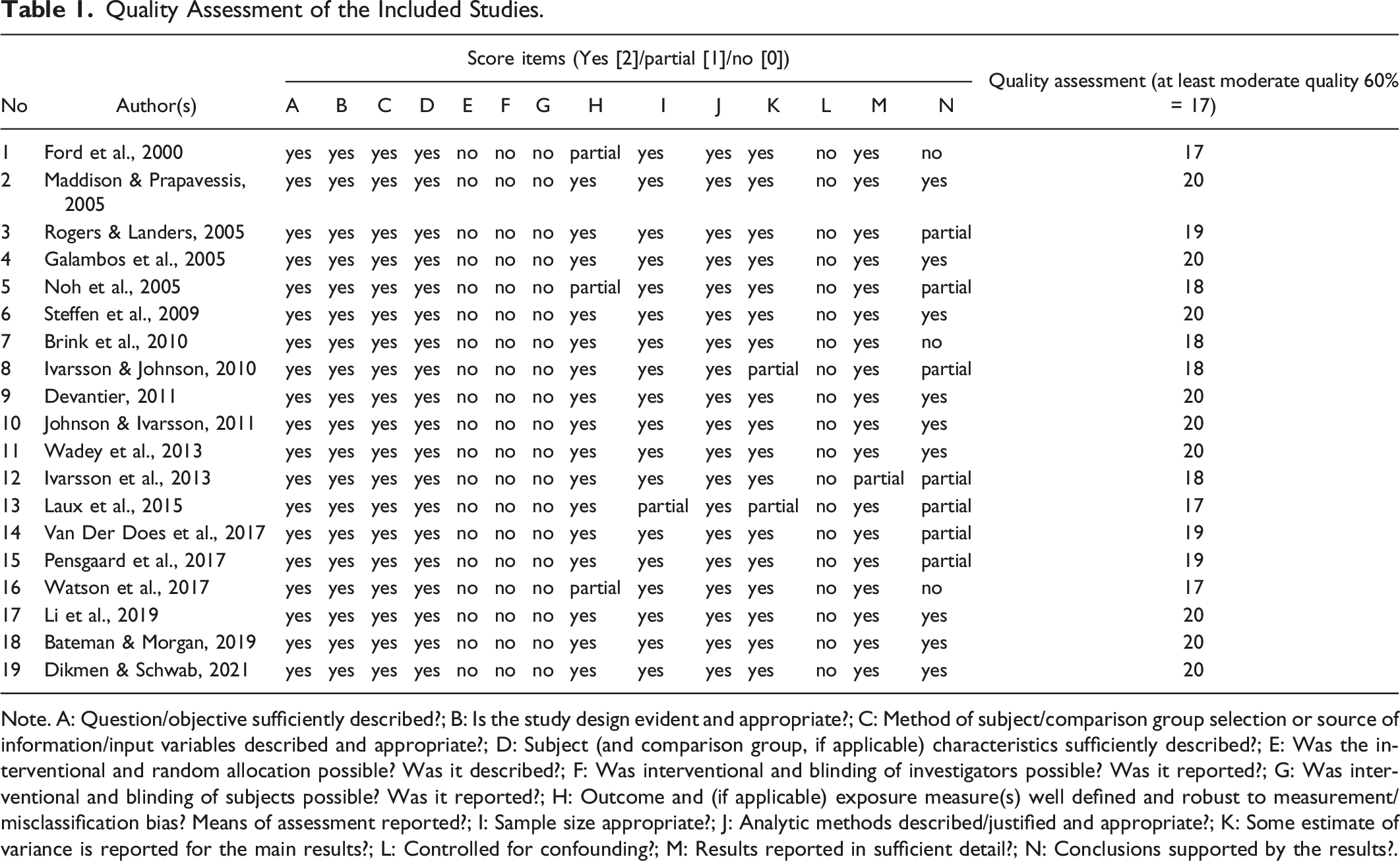
Note. A: Question/objective sufficiently described?; B: Is the study design evident and appropriate?; C: Method of subject/comparison group selection or source of information/input variables described and appropriate?; D: Subject (and comparison group, if applicable) characteristics sufficiently described?; E: Was the interventional and random allocation possible? Was it described?; F: Was interventional and blinding of investigators possible? Was it reported?; G: Was interventional and blinding of subjects possible? Was it reported?; H: Outcome and (if applicable) exposure measure(s) well defined and robust to measurement/misclassification bias? Means of assessment reported?; I: Sample size appropriate?; J: Analytic methods described/justified and appropriate?; K: Some estimate of variance is reported for the main results?; L: Controlled for confounding?; M: Results reported in sufficient detail?; N: Conclusions supported by the results?.
Meta-Analytic Strategies
We used Comprehensive Meta-Analysis (CMA) statistical software 4.0 to analyze the stress history/sport injury relationships with the 19 included studies. The CMA allows researchers to combine observational and experimental studies. So, we used correlation coefficients, means and standard deviations, t test values, Fisher’s z, p-values, sample sizes, and odds ratios (OR) as data inputs for this meta-analysis. We applied a random-effects model to conceptualize the meta-analysis and generate final study findings (i.e., unconditional inferences). Further, if a single article reported multiple results, all results within that single article were combined into one metric so that the meta-analysis was balanced across all studies.
We performed a sensitivity analysis of our articles by using the leave-one-out method (i.e., deleting one study at a time and repeating the analysis) to assess the stability of the meta-analysis. We used a Q-test to examine whether the true effect size (ES) varied between studies when a random effect was applied (i.e., heterogeneity, Tufanaru et al., 2015). A significant Q-value reflected heterogeneity between samples. In addition, the I2 statistic indicated different levels of heterogeneity at 25% (low degree), 50% (moderate degree), and 75% (high degree) (Higgins et al., 2003). We used I2 to interpret the magnitude of heterogeneity for significant Q-values.
Publication bias is common in meta-analysis because unpublished articles, often with null effects, are excluded from such analysis. We evaluated publication bias with the Fail-safe number (N, Nf.s) test (Field & Gillett, 2010) and Funnel Plot (Verhagen & Ferreira, 2014). A relatively high fail-safe number indicates publication bias. We used a forest plot to represent the ES and 95% confidence intervals (CIs) to indicate the correlation between the two variables (Marks-Anglin et al., 2021). We adopted McGrath and Meyer’s suggestion that values of .37, .24, and .10 represent large, medium, and small ES. The ES was considered statistically significant at the p < .05 level if the CI did not include zero.
Results
Descriptions of Study Characteristics
Characteristics of the 19 Included Studies.
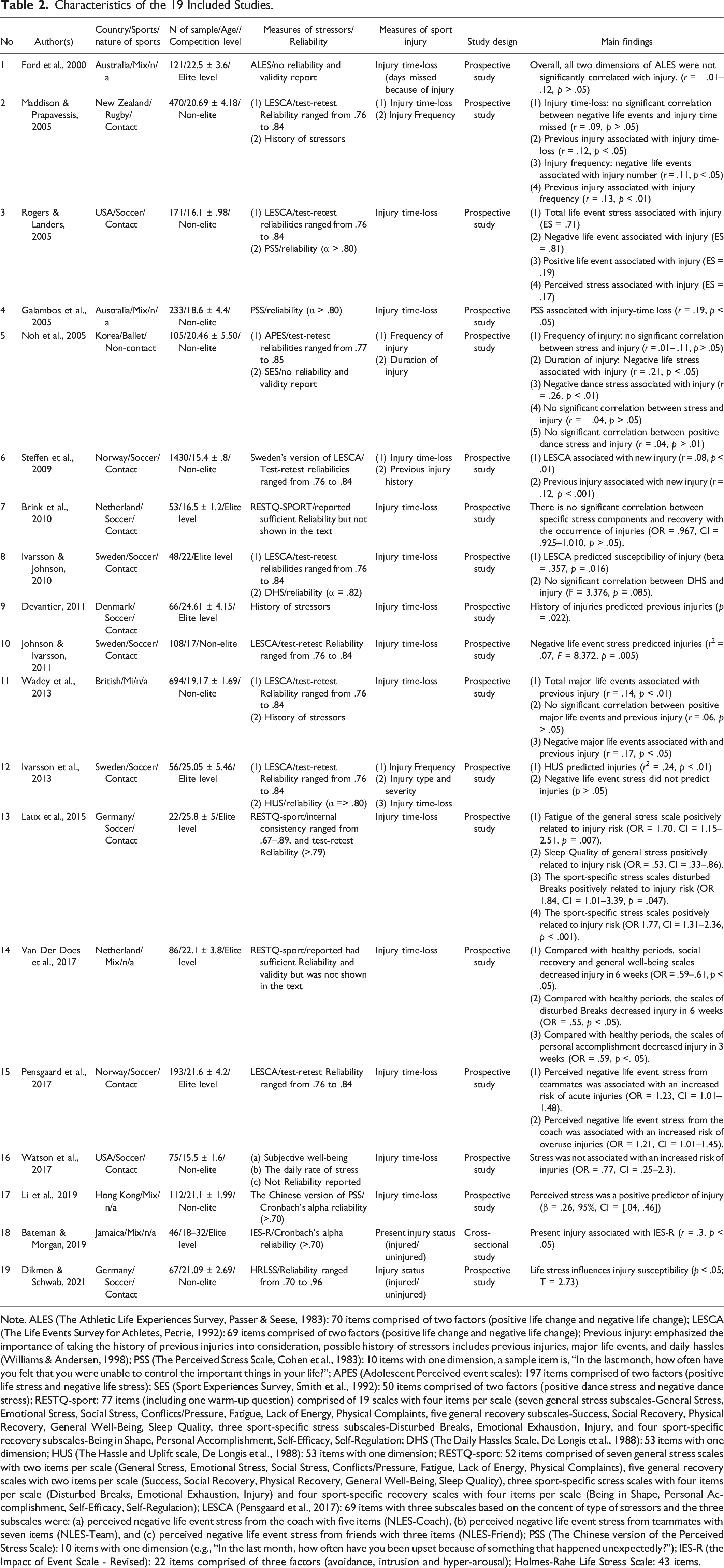
Note. ALES (The Athletic Life Experiences Survey, Passer & Seese, 1983): 70 items comprised of two factors (positive life change and negative life change); LESCA (The Life Events Survey for Athletes, Petrie, 1992): 69 items comprised of two factors (positive life change and negative life change); Previous injury: emphasized the importance of taking the history of previous injuries into consideration, possible history of stressors includes previous injuries, major life events, and daily hassles (Williams & Andersen, 1998); PSS (The Perceived Stress Scale, Cohen et al., 1983): 10 items with one dimension, a sample item is, “In the last month, how often have you felt that you were unable to control the important things in your life?”; APES (Adolescent Perceived event scales): 197 items comprised of two factors (positive life stress and negative life stress); SES (Sport Experiences Survey, Smith et al., 1992): 50 items comprised of two factors (positive dance stress and negative dance stress); RESTQ-sport: 77 items (including one warm-up question) comprised of 19 scales with four items per scale (seven general stress subscales-General Stress, Emotional Stress, Social Stress, Conflicts/Pressure, Fatigue, Lack of Energy, Physical Complaints, five general recovery subscales-Success, Social Recovery, Physical Recovery, General Well-Being, Sleep Quality, three sport-specific stress subscales-Disturbed Breaks, Emotional Exhaustion, Injury, and four sport-specific recovery subscales-Being in Shape, Personal Accomplishment, Self-Efficacy, Self-Regulation; DHS (The Daily Hassles Scale, De Longis et al., 1988): 53 items with one dimension; HUS (The Hassle and Uplift scale, De Longis et al., 1988): 53 items with one dimension; RESTQ-sport: 52 items comprised of seven general stress scales with two items per scale (General Stress, Emotional Stress, Social Stress, Conflicts/Pressure, Fatigue, Lack of Energy, Physical Complaints), five general recovery scales with two items per scale (Success, Social Recovery, Physical Recovery, General Well-Being, Sleep Quality), three sport-specific stress scales with four items per scale (Disturbed Breaks, Emotional Exhaustion, Injury) and four sport-specific recovery scales with four items per scale (Being in Shape, Personal Accomplishment, Self-Efficacy, Self-Regulation); LESCA (Pensgaard et al., 2017): 69 items with three subscales based on the content of type of stressors and the three subscales were: (a) perceived negative life event stress from the coach with five items (NLES-Coach), (b) perceived negative life event stress from teammates with seven items (NLES-Team), and (c) perceived negative life event stress from friends with three items (NLES-Friend); PSS (The Chinese version of the Perceived Stress Scale): 10 items with one dimension (e.g., “In the last month, how often have you been upset because of something that happened unexpectedly?”); IES-R (the Impact of Event Scale - Revised): 22 items comprised of three factors (avoidance, intrusion and hyper-arousal); Holmes-Rahe Life Stress Scale: 43 items.
Heterogeneity Analysis
The meta-analysis of these 19 studies indicated significant heterogeneity with a Q-value of Q(18) = 106.71 (p < .001) and an I2 value of 83.13, indicating a medium level of heterogeneity. This moderate heterogeneity can be attributed to the data or design, such as differences in study populations, targeted effects, survey recruitment, administration methods, and many others. Therefore, we adopted a random-effects model and conducted a further moderation analysis.
Sensitivity Analysis
Sensitivity analysis determines the robustness of each article’s contribution to the overall results. We removed one study at a time from the analysis to determine the change in overall ES when that article was removed. Our sensitivity analysis revealed that the exclusion of studies individually led to I2 values ranging from 78.37 to 84.07, showing little change (values all fall into large heterogeneity), compared with the overall analysis I2 value of 83.13, confirming that each separate study contributed about equally to these stable results.
Publication Bias
Although the Funnel Plots indicated a degree of asymmetry (Figure 2), this method has always been controversial because judging the symmetry of the subjective visual graph with only a few articles can be difficult. Thus, we used the Fail-safe Number test and found a Z-value of 8.20 (p < .001), indicating no publication bias. The number of missing studies required to bring the p-value to >.05 to overturn the conclusion of the positive effect of the study was 314, very large. Rosenthal (1979) indicated that a higher Nf.s suggests a smaller effect of publication bias. In this meta-analysis, an Nf.s higher than the tolerance level (5 K + 10) indicated a smaller effect of publication bias results. Further, we used the Begg and Mazumdar rank correlation test and found Kendall’s tau b = .05 (p-value = .73), indicating no publication bias. Moreover, we also examined Egger’s t test and found Egger bias = 2.41 (95% CI = 1.46–3.20) (p < .001) which indicated there was a publication bias. However, research suggests that Egger’s test may commit a type I error when there is heterogeneity (Jin et al., 2015, p. 348). Because of the high heterogeneity in our included studies, we adopted the Fail-safe Number test and Kendall’s tau and concluded that there was no publication bias in the included studies. Funnel Plot Showing Publication Bias for the 19 Included Studies.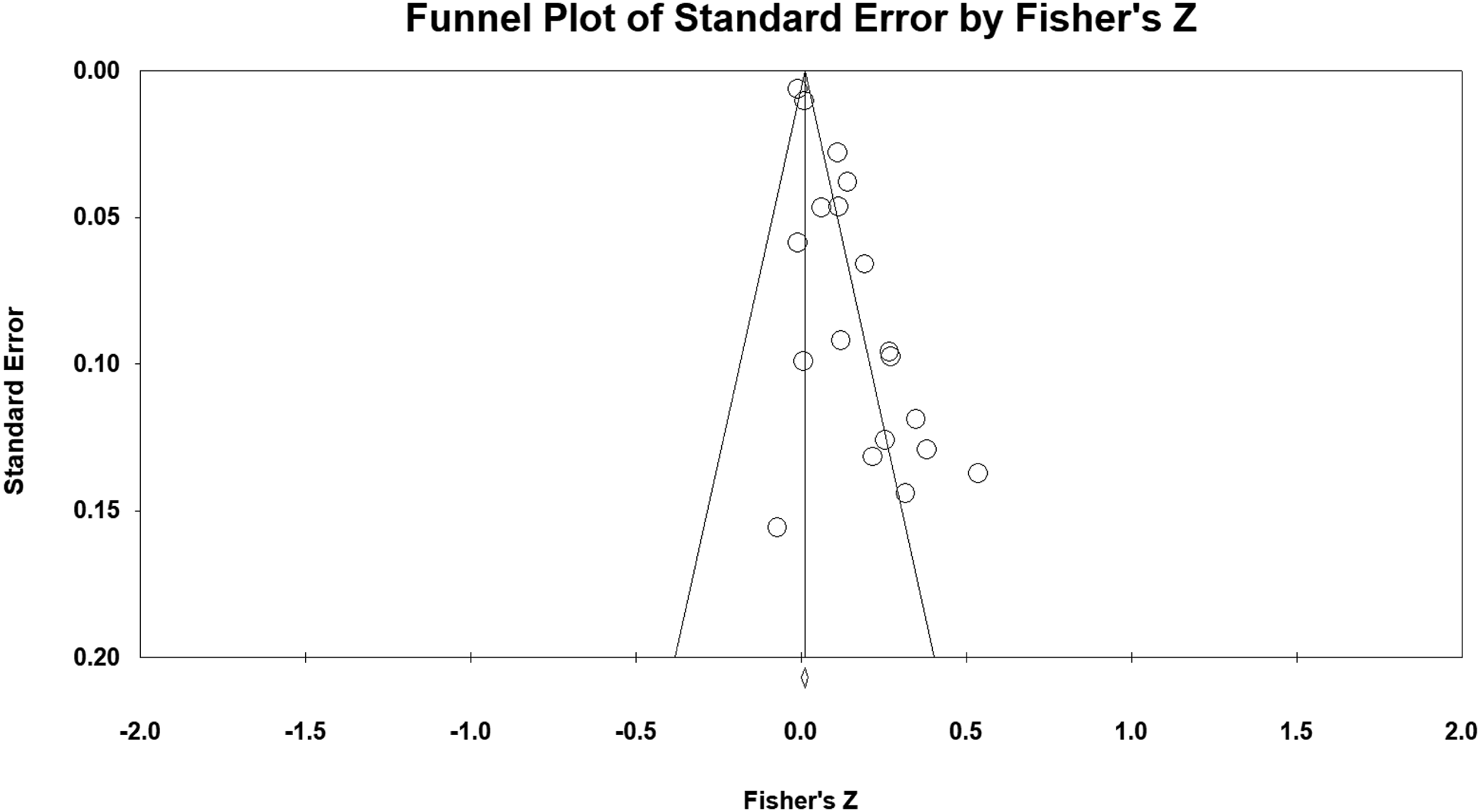
Effects of History of Stressors on Sport Injury
A summary of the random effects meta-analysis is presented in Figure 3, and corresponding forest plots showed the estimated standardized mean difference and its 95% CI. The Point estimate r = .12 (p < .001), and 95% CI (.08–.16) indicated a positive stress-history - sport injury relationship. According to McGrath and Meyer’s (2006) suggestion, this effect of the stress-sport injury relationship was low despite its statistical significance (Figure 3). Meta-Analysis of All 19 Studies Investigating the Effect between Stress and Athletic iInjury.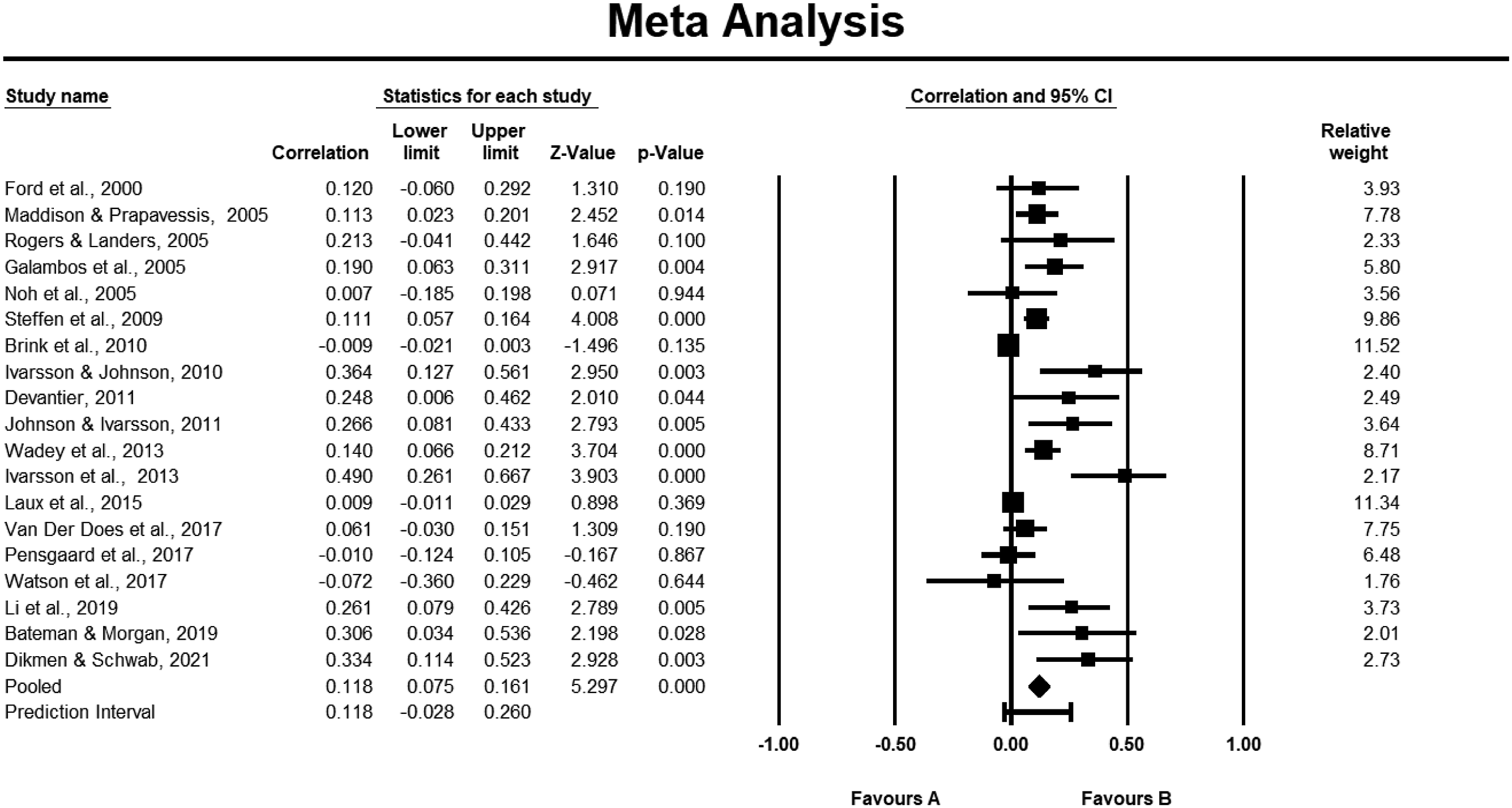
Moderation Analyses
Under heterogeneous conditions, we examined the moderating effects of the stress-history - sport injury relationship in the included 19 articles by four factors: age (adults vs. adolescents), participants’ region (Europe, Asia, American, and Oceania), sport type (contact vs. non-contact sports), and type of stress measurement scale (sport-specific vs. general life stress, and mixed), with results as discussed below.
The Moderating Effect of Age
Age significantly moderated the relationship between the history of stressors and sport injury (p < .001), as this relationship tended to be weaker among adolescents (r = .09, and 95% CI = .01–.20) than among adults (r = .14, and 95% CI = .08–.37). Thus, a relationship between a life history of stressors and sport injuries is moderated by age (Figure 4). Meta-Analysis of All 19 Studies Investigating the Effect between Stress and Athletic Injury (Group by Age).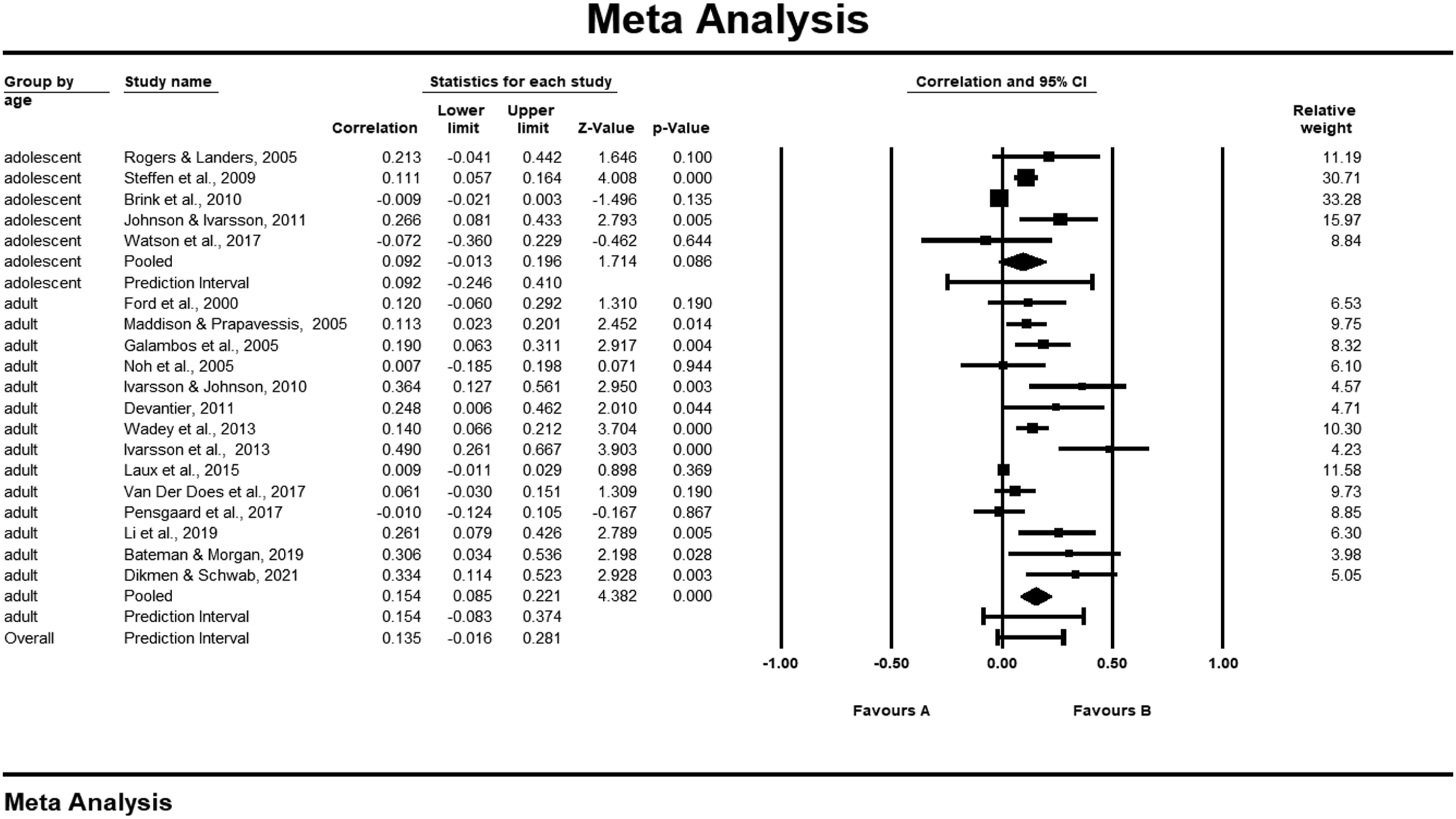
Moderating Effects of Participants Region
There was a significant moderating effect of participants’ region on the relationship between history of stressors and sport (p < .001). The three groups of America, Asia, and Oceania all showed higher relationships than Europe as follows: America r = .16, and 95% CI = .06–.36; Asia r = .14 and 95% CI = .12–.37; Oceania r = .14, and 95% CI = .07–.20; Europe r = .10, and 95% CI = .05–.15) (Figure 5). Meta-Analysis of All 19 Studies Investigating the Effect between Stress and Athletic Injury (Group by Region).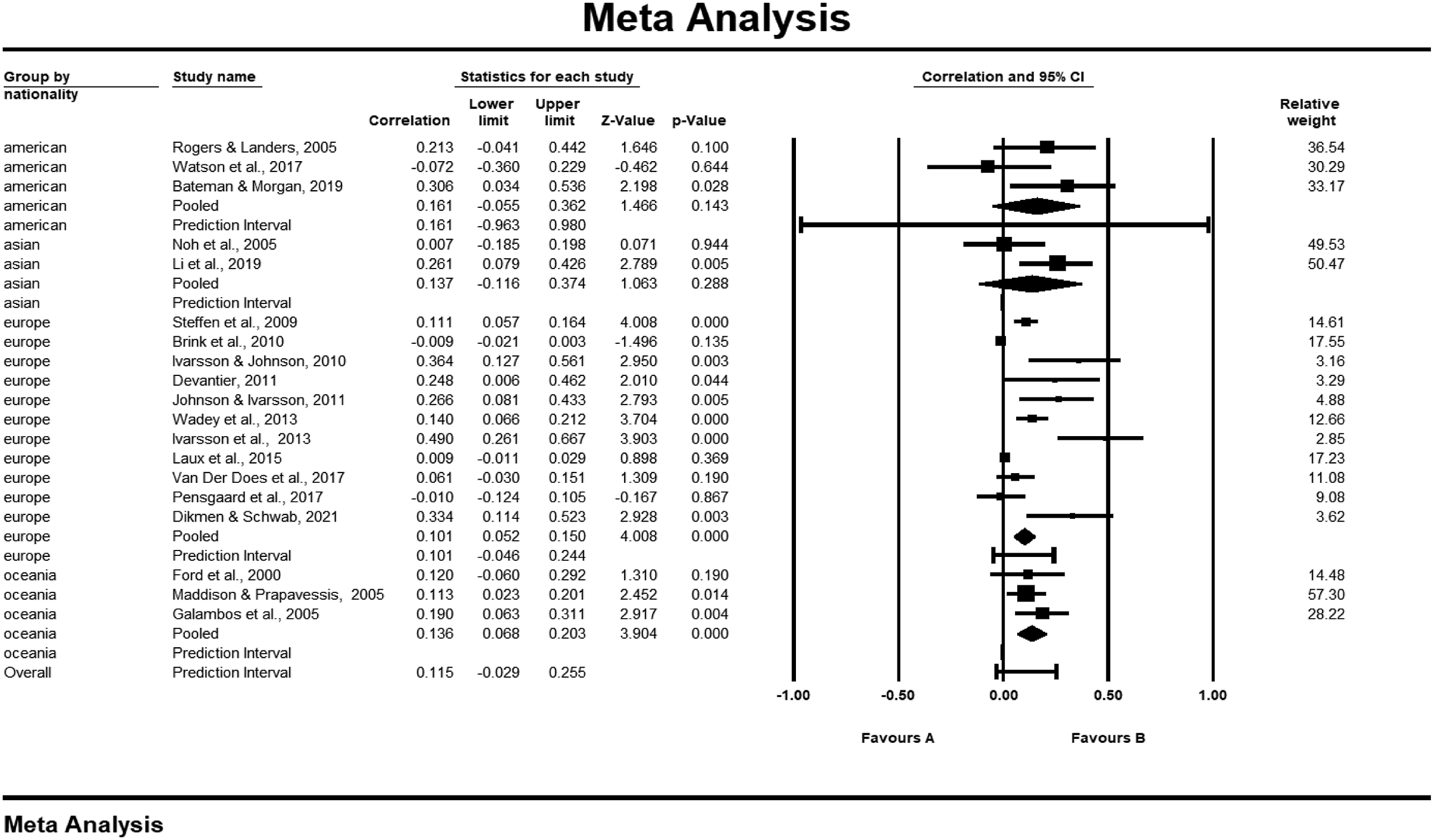
Moderating Effect of Sport Type
Further, we analyzed the moderating effect of sport type on the relationship between a life history of stressors and sport injury. Correlations were as follows: contact sports r = .10, and 95% CI = .05–.15; non-contact sports r .01, and 95% CI = .19–.20). Contact sports correlations were statistically significant (p < .001) and higher than non-contact sport correlations, meaning that sport type moderates the relationship between stress history and sport injury (Figure 6). Meta-Analysis of All 19 Studies Investigating the Effect between Stress and Athletic Injury (Group by Nature of Sports).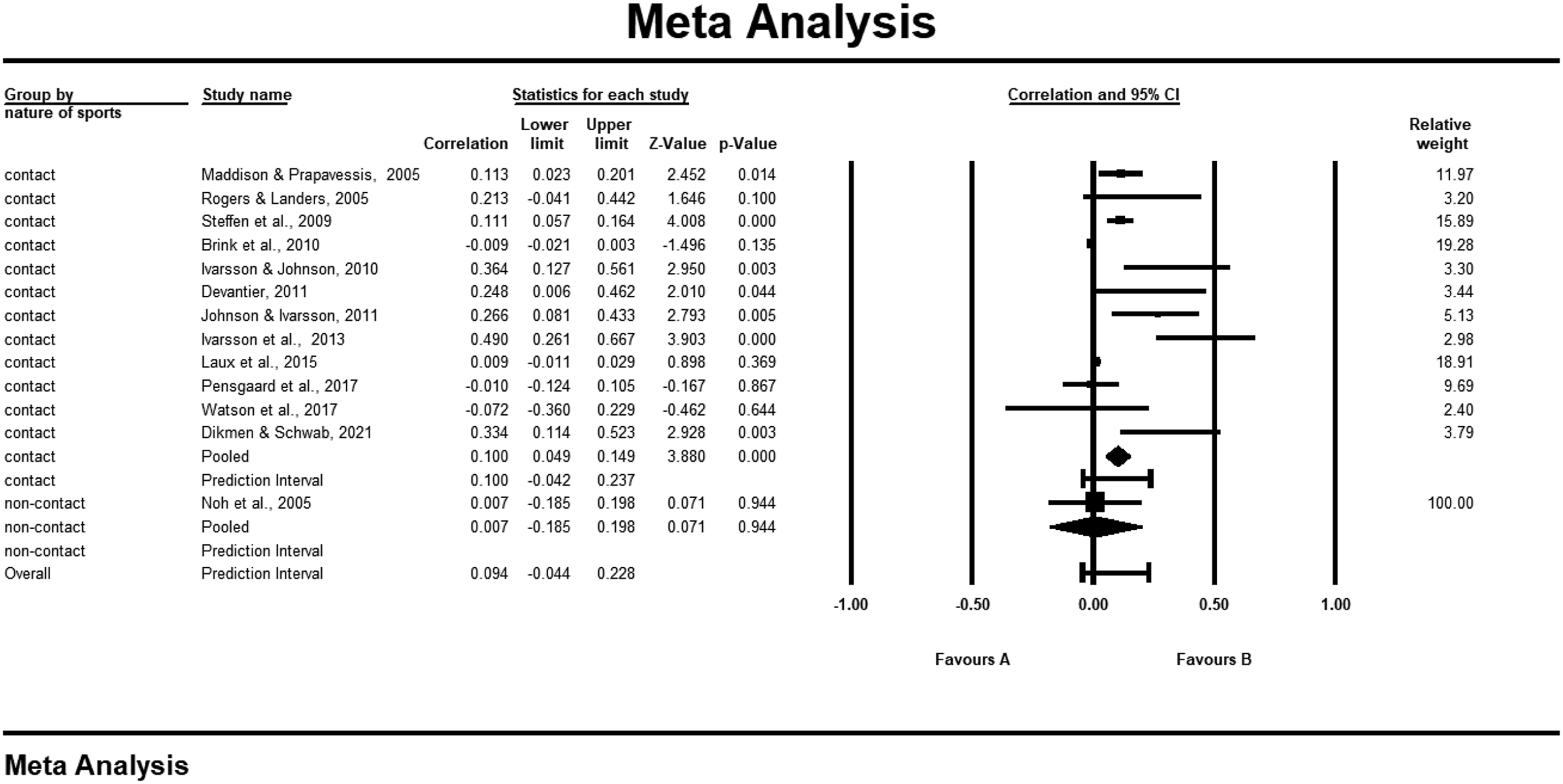
Moderating Effects of the Stress Measurement Scale Type
The moderating effect of type of stress measurement on the stress history - sport injury relationship was significant, with the following correlations: non-sport specific measures: r = .22, and 95% CI = .11–.32; sport-specific measures: r = .12 and 95% CI = .07–.17; mixed group: r = .05, and 95% CI = .00–.09). The two groups of non-sport-specific and sport-specific measures were significantly (p < .001) higher than the mixed measurements group (Figure 7). Meta-Analysis of All 19 Studies Investigating the Effect between Stress and Athletic Injury (Group by Stress Measurement).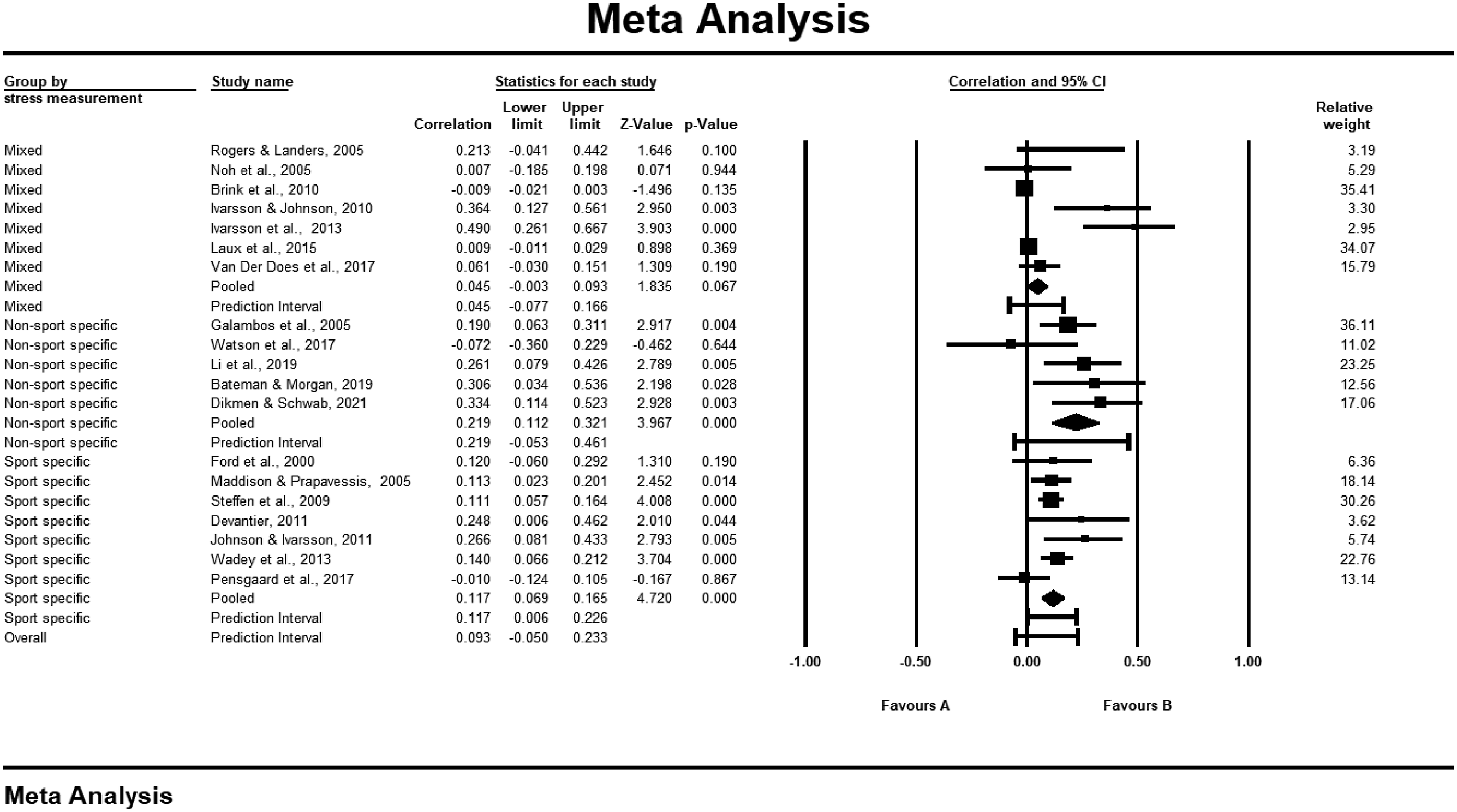
Moderating Effects of Competition Level
The moderating effects of competition level on the stress history - sport injury relationship were significant, with correlations as follows: non-elite group: r = .13, and 95% CI = .09–.18; elite group: r = .06, and 95% CI = .01–.11]). The correlation between stress history and sport injury was significantly higher in the non-elite group (p < .001) than in the elite group (Figure 8).
Discussion
By adopting Anserson and Williams’s (1998) stress-injury model, we systemically reviewed and conducted a meta-analysis for moderate-quality research published over a 23-year period between 2000 and 2023. We found the relationship between lifetime stress history and sport injury statistically significant but small in effect size (r = .12). Further, this relationship was moderated by: (a) athletes’ age (with the relationship stronger in adults than adolescents); (b) athletes’ region (with the relationship stronger in the Americas, Asia, and Oceana than in Europe); (c) sport-type (with the relationship stronger in contact than non-contact sports); (d) stress measurement scale type (with the relationship stronger on non-specific measures than sport-specific measures); and (e) athlete competition level (with the relationship stronger among non-elite than elite athletes). These initial findings provide several implications for researchers and practitioners. Meta-Analysis of All 19 Studies Investigating the Effect between Stress and Athletic Injury (Group by Competition Level).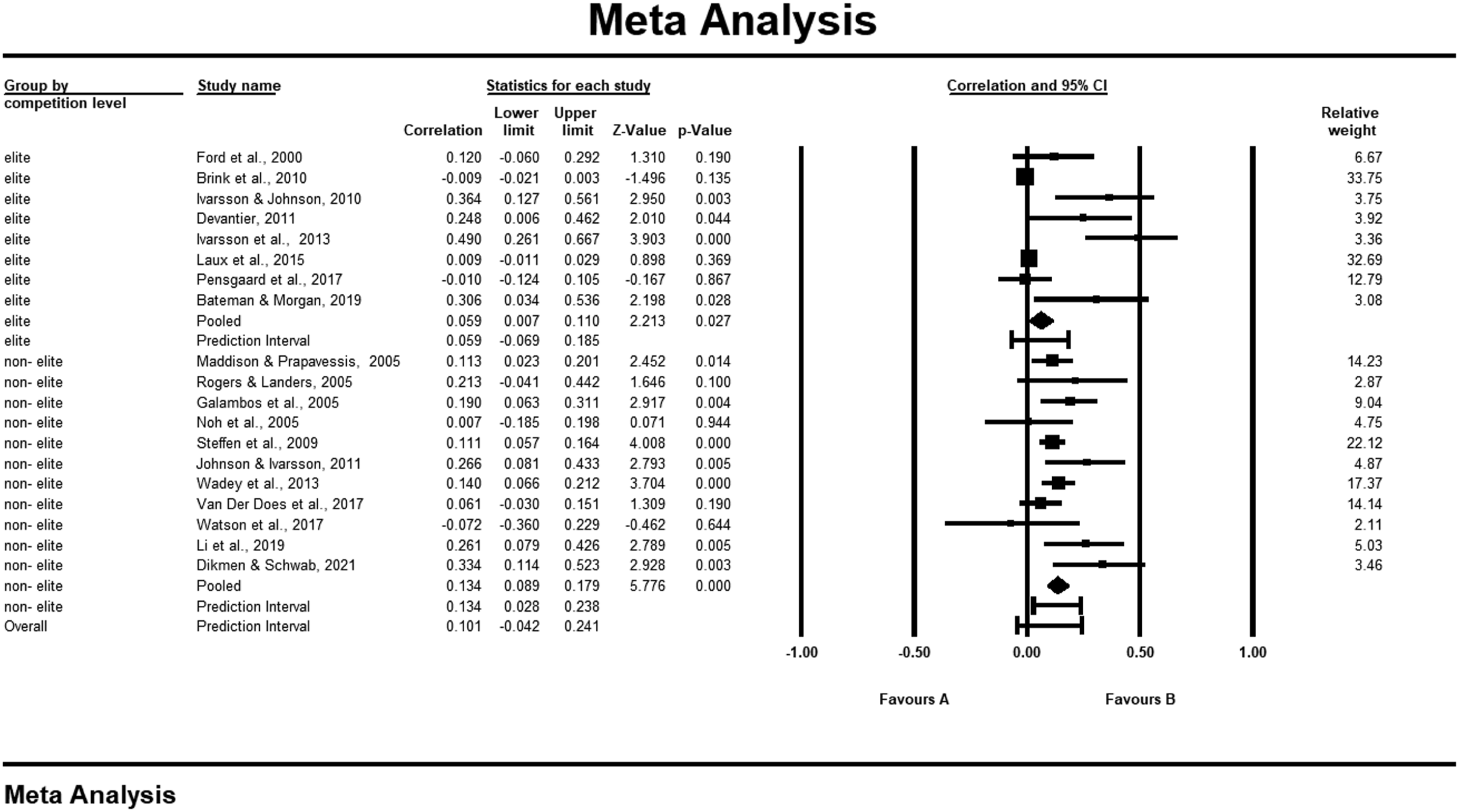
Theoretical Contributions and Implications
First, our results confirmed the overall presence of a significant stress history-sport injury relationship, supporting recent investigators’ reports (Li et al., 2019; Pensgaard et al., 2017) while also confirming Ivarsson et al.’s (2017) report that the effect size of this stress history - sport injury relationship is small (Ivarsson et al., 2017). While our results differ from some investigators’ conclusions (e.g., Maddison & Prapavessis, 2005) that there is no relationship between the history of stressors and sport injury, it is to be expected that this small effect size finding may be present in some studies and not others. This disparity may be explained in part by varying research designs (e.g., using injury time-loss as a criterion) or by different investigators having designs that emphasized different aspects of the five significant moderating effects detailed above, as, for example, a contact or non-contact type of sport (e.g., ballet, running). Future investigators should carefully consider and then discuss which moderating variables they wish to emphasize and why.
Our provision of quantified evidence on how the stress history – sport injury relationship might be moderated can be particularly valuable to researchers going forward. Theoretically, stressors are stimuli that exist naturally in the environment (Taylor, 2010). Yet, in sports settings, there are both sport-specific stresses (e.g., performance demands, training, competition adaptation, coach-athlete relationship, injury) and general life stress (e.g., family relationships, romantic relationships, and interpersonal relationships). For college student-athletes, academic demands can be major stressors (Lu et al., 2012). Not only are these important at the group level (as we studied in this meta-analysis), but they may be particularly important at the level of individual athletes. Our finding that non-specific stresses may be particularly influential to later sport injury is a potent reminder to coaches interested in protecting their players from injury to attend to stresses in an athlete’s general life experience. Since, over the long term, researchers contend that heightened stress may lead to distracted attention and muscle tension, which, in turn, leads to accidents during sports training and competition (Appaneal & Habif, 2013), sports professionals should help athletes manage their life stressors to reduce sport injury (Ivarsson et al., 2017).
Further, since competitive sports have unique cultures with embedded diverse stressors that include team and culture, selection, logistics and operations, and coaching (Arnold et al., 2013) as well as burnout (Lin et al., 2022), substance abuse (de Grace et al., 2017), and mental health concerns (Rice et al., 2016), practitioners, coaches, and sports professionals must manage athletes’ stressors to help athletes train and compete in a safe and protective environment.
Our discovery of a small ES in the stress history/sport injury relationship may be explained in several ways. First, in highly competitive modern sports contexts, many well-trained professionals, such as sports psychologists, physical therapists, and sports officials, offer stress management programs for athletes to protect them from stress-related illness, depression, or burnout. Athletes may learn diverse coping skills to handle life stressors during training and daily living to attenuate the effect of stressors on physical and mental well-being. Fortunately, some (perhaps particularly elite) athletes may have accumulated important coping experiences to content with stress, lowering their risk for subsequent injury. In keeping with Williams and Andersen’s (1998) proposal that psychosocial variables might moderate the stress history - sport injury relationship, these authors also suggested that psychological intervention might moderate it as well by reducing its strength. In fact, Galante et al. (2018) randomly assigned 616 UK college students to Mindfulness Skills for Students (MSS) training and found that this MSS training increased resilience and reduced stress compared to a control group.
Similarly, Cohen et al. contended that social support can buffer the effects of environmental stress. Thus, different personal or psychosocial factors influence this relationship in a dynamic, bi-directional fashion, opening a wide pathway for further study. Finally, the sample size of the included studies might have influenced effect size (i.e., if studies recruited large samples, statistical power and effect sizes would be increased). According to Sink and Mvududu (2010), the sample size, effect size, and statistical power will influence each other when conducting any research.
Regarding our discovery that the ES for the stress history/sport injury relationship was larger for adults than for adolescents, Lin et al. (2022) drew similar conclusions from their systematic review and meta-analysis comparing athletes’ stress and burnout. They too found that older athletes (age 19–22) had a higher ES in this in this relationship than did adolescent athletes (age 13–18). According to sports talent development theory (Pankow et al., 2021), as athletes mature, they must engage in more intensive training and competition, with increasing challenges and difficulties. Our data remind us that, beyond these sport specific stresses, older athletes may also face greater non-specific stress, especially of a cumulative nature.
The moderating effect of participants’ home regions on the stress history/sport injury relationship is interesting and requires much more study to fully understand. Effect size differences were small but significant between America, Asia, and Oceania (higher stress history -sport injury relationships) and Europe. Participants’ region encapsulates complex ethnic and cultural differences that may influence sports’ popularity, development, and management (Jarvie, 2013) and important non-specific stress levels. Perhaps it is important that sports participation in Europe is developed, organized, and practiced in local clubs, whereas in the United States, sport resides in schools, colleges, and universities. Or maybe there is importance in the idea that the United States has more early professionalized and commercialized sports than Europe or that sports competitions in Europe have international/global appeal and are governed by non-profit federations while, in the United States, professional sports are national in scope and profit-oriented.48 These complex variables and others will require considerable further research to understand.
Perhaps easiest to understand is our finding that the stress history/sport injury relationship is stronger for contact than non-contact sports. Contact sports such as soccer, basketball, rugby, and wrestling have the highest injury rates (Backx et al., 1989; Engebretsen et al., 2010), through which to express this relationship. Clearly, a great deal of past research shows that athletes, coaches, referees, physical therapists, and association officials should work together to address this problem in contact sports where injury levels are highest, including by changing sport rules to reduce behavior in a competition that is associated with the highest sport injury incidence and by providing appropriate equipment to prevent sport injury (Verhagen et al., 2010).
As already discussed, our finding of a moderating effect of the type of stress measurement scale on the stress history/sport injury relationship proved valuable in actually measuring differences non-sport-specific and sport-specific stress. The sport-specific measures of stressors used in the studies were reviewed included, for example, the Life Events Survey for Collegiate Athletes (Petrie, 1992), while non-sport-specific measures developed for the general population included the Hassle and Uplift Scale (HUS; DeLongis, 1988). Future investigators may want to select both or just one of these instruments to concentrate on the type of stress that matters most to a given research question.
Our finding of a moderation effect based on the athlete’s competition level (elite vs. non-elite) was instructive in that the stress history/sport injury relationship was strongest for the non-elite group, perhaps because elite athletes possessed better psychological skills than non-elite athletes (Mahoney et al., 1987). To become better athletes, they must engage in rigorous physical and skill training and psychological skills training (PST) programs or stress management. Further research is needed to affirm a hypothesis that there can be an insulating or immunizing benefit to the provision of stress management training (perhaps as opposed to a naturalistic tendency for elite athletes to possess more of this resilient capability than others), but our data here are important to highlight the need for those investigations.
Limitations and Directions for Future Research
Among several limitations of this study, we only included research published in English and excluded research in other languages. Whether our results can be generalized to non-English speaking athletes needs further examination. Further, we only included those studies that examined the stress history-sport injury relationships, and these results may be different from studies that focused on other inter-relationships, such as those between coping resources (e.g., personality and intervention training) and sport injury. Furthermore, the studies we included illustrate the r-value or R2 in the stress-hisotoy - sport injury relationship, ignoring more detailed relationships with different levels of stress or injury severity. There is clearly ample room for follow-on investigators to extend these findings.
Also, because of insufficient information from some included studies, we did not examine other potential moderating variables, such as gender, duration of sports involvement, training intensity, cultural differences, and psychological resilience. We suggest that future investigators examine whether these variables might also moderate the stress history - sport injury relationship. Specifically, Galli and Gonzalez (2015) argued that psychological resilience has an advantage in buffering stress from subsequent adversity (e.g., sport injury). Whether athletes high in psychological resilience react better than their counterparts in stressful situations needs further examination, and efforts to demonstrate that resilience can be enhanced would be particularly valuable. Similarly, culture plays an important role in cognition, emotion, and motivation (Atkinson, 1985); and its further study, while particularly complex, is needed.
Conclusion
Sport injury is both prevalent and broadly impactful for years to come to athletes’ physical and psychological well-being. There is an important and sometimes confusing relationship between a lifetime history of stress and sport injury. In this systematic review and meta-analysis, we affirmed that this relationship is statistically significant, even small in its effect size, and we identified and discussed a set of important moderating variables that may help account for variable findings and effect sizes in this important dynamic, and sometimes bi-directional inter-relationship.
Footnotes
Declaration of Conflicting Interests
The author(s) declared no potential conflicts of interest with respect to the research, authorship, and/or publication of this article.
Funding
The author(s) received no financial support for the research, authorship, and/or publication of this article.
