



Abstract
Our purpose in this review was to determine the effects of bodyweight-only neuromuscular training (NMT) programs on motor control of movement among youth athletes. We searched three electronic databases (CrossRef, Google Scholar, and PubMed), using the following inclusion criteria for selecting research studies: (a) healthy male and female participants aged 8-18 years who were engaged in organized sports; (b) interventions up to 16-weeks duration; (c) incorporation of a control group; and (d) interventions that utilized only exercises using participants’ body mass. We calculated pooled estimates of effect sizes (standardized mean difference) for changes in motor control across nine studies (12 comparisons) using the inverse-variance random effects model for meta-analyses and 95% confidence intervals. Among the nine studies included in our meta-analysis, there was a moderate, significant effect in favor of neuromuscular training programs (0.79 [95% CI: 0.38, 1.20], Z = 3.76 [p = 0.0002]) on motor control. Heterogeneity was high and significant (I2 = 77% [p = 0.00001]). Moderator analyses for age and stature revealed NMT programs to be more effective in younger, shorter, and lighter individuals. We found larger effect sizes in males, and for programs >8 weeks in duration. We concluded that the older and heavier an individual is, the less effective bodyweight-only NMT programs became, particularly for female participants. These results reinforce the notion that exercise to enhance motor control should be emphasized during pre-adolescence.
Introduction
Individual variations in the timing of the adolescent growth spurt, in addition to other biological changes associated with growth and maturation (Malina et al., 2015), including structural and functional alterations of the brain, and development of the neuroendocrine system (Spear, 2013), create complexity in the training and development of young athletes (Malina et al., 2015; van der Sluis et al., 2015). The period of maximal growth during the adolescent growth spurt has been termed peak height velocity (PHV) (van der Sluis et al., 2015), typically occurring between the ages of 10-12 years in girls, and 12–14 years in boys (Malina et al., 2015). This period can result in changes in stature of ∼8 cm/year in girls and ∼10 cm/year in boys (Stratton & Oliver, 2019). Importantly, however, changes in body mass do not occur in parallel to increases in stature (Carnevale Pellino et al., 2020). Such disparities between growth-related rates of change may be associated with a temporary reduction in motor coordination (Kemper et al., 2015) termed “adolescent awkwardness,” and they are purported to represent a period of impaired neuromuscular control as a result of increases in limb length in advance of muscular changes to strength (Corso, 2018), as well as possible temporary limb length discrepancies (Drnach et al., 2012). In addition, intensive sports-specific training occurring during periods of maturational changes are understood to increase the risk of traumatic and overuse injury occurrence (van der Sluis et al., 2015). Indeed, substantial literature has addressed associated problems of early sports specialization and injury risk (Ford et al., 2011; Leppänen et al., 2017; Lloyd et al., 2015; Mostafavifar et al., 2013; Pomares-Noguera et al., 2018), with young athletes’ heightened vulnerability around PHV having been previously highlighted in epidemiological studies of youth soccer (Rössler et al., 2016; van der Sluis et al., 2015).
The foregoing concerns have led to neuromuscular training (NMT) programs that better prepare children for the rigors of their sports (Lloyd et al., 2015; McLeod et al., 2009; Read et al., 2019). In this context, NMT has served as an umbrella term for an array of these training interventions, incorporated within a program of athletic development that includes exercises targeting muscular strength, mobility, balance, and impulsive movement (Filipa et al., 2010; Paterno et al., 2004). Accordingly, enhancing athletic foundations in young athletes, and presenting a diversity of physical demands to the neuromuscular system are considered important means of mitigating the risk of injury (Granacher et al., 2018; Lloyd et al., 2015).
A key objective of NMT programs is to improve movement competency (McGill et al., 2012). In light of this, NMT programs can be considered important to the development of fundamental movement skills (FMS) that are commonly promoted in models of youth athletic development (Liefeith et al., 2018) and broadly defined as movement patterns that involve two or more body segments (Morgan et al., 2013). Typically utilized in athletic settings, FMS have been assessed against criteria for desirable technical execution that are thought to be an indication of movement quality and proficiency (McGill et al., 2012). Consequently, FMS relate to motor control and represent the central nervous system’s ability to orchestrate coordinated and purposeful movement in relation to the body’s interaction with its environment (Latash et al., 2010). Further, motor control in the execution of movement may be characterized by the maintenance of posture and balance in the presence of expected and unexpected perturbations (Winter et al., 1990). Such characteristics are typically evaluated in the assessment of FMS proficiency (Morgan et al., 2013).
Generic programs, such as “integrated neuromuscular training” (Faigenbaum & Rial Rebullido, 2018), the “FIFA 11+” and “FIFA 11+ kids” warm-up protocols (Pomares-Noguera et al., 2018; Thompson-Kolesar et al., 2018) have emerged to enhance athletic foundations in youth athletes (Faigenbaum & Rial Rebullido, 2018; Lloyd & Oliver, 2019). Indeed, these programs have been found to contribute to a reduction in injury risk through improved motor control (Lloyd & Oliver, 2019). Importantly, these programs have appeared to be efficacious in mitigating the risk factors for injuries when they have been implemented in short bouts, such as within warm-up protocols (Steib et al., 2017). For example, following 15 sessions of the “FIFA 11+” warm-up program performed twice per week for 7–8 weeks, preadolescent female soccer players were found to have reduced knee valgus moment during a double-legged landing movement (Thompson-Kolesar et al., 2018). Similarly, in boys, the “FIFA 11+” kids program, consisting of seven key movement patterns, including running, jumping and landing mechanics, and balance and coordination tasks (Rössler et al., 2016; Zarei et al., 2020), improved dynamic postural control, as well as jumping and change of direction abilities (Pomares-Noguera et al., 2018).
While the results of intervention studies provide evidence for the effectiveness of NMT in contributing to injury risk reduction, it remains unclear if changes in motor control are influenced by an individual’s stage of biological maturation, as has been found in relation to other types of training (Moran et al., 2017a, 2017b). It has previously been suggested that, due to children’s high neural plasticity, FMS should be developed in preadolescence (Behringer et al., 2011; Ford et al., 2011; Liefeith et al., 2018). Spear (2013) theorized that repeated exposure to FMS activities in middle childhood leads to a greater display of retained skills as individuals mature through adolescence. This notion, however, has yet to be confirmed within the relevant literature. In the case of NMT specifically, there has been no review of pooled data from prior research to determine the effects of those NMT programs that exclusively rely on bodyweight training on motor control for tasks such as jumping, dynamic balance or coordination. While a recent systematic review and meta-analysis by Faude et al. (2017) investigated the efficacy of injury prevention programs on neuromuscular performance, that study did not examine the effects of these programs on motor control. In this systematic review and meta-analysis, we aimed to determine the effects of bodyweight-only NMT programs on motor control of movement among youth athletes, and to evaluate the moderating effects of factors related to growth and maturation, sex, and program duration. We suspected that the effects of NMT programs on motor control moderated by body size and mass would be of value in the surveillance of youth athletes and add to research related to allometric scaling across stages of maturation (Carnevale Pellino et Carnevale al., 2020; Lovecchio & Zago, 2019).
Method
Experimental Approach to the Problem
We conducted this meta-analytical review in accordance with the Preferred Reporting Items for Systematic Reviews and Meta-Analyses (PRISMA) statement (Liberati et al., 2009).
Literature Search
In October 2020, we searched three electronic databases (CrossRef, Google Scholar, and PubMed) without date restrictions. We first performed a systematic search followed by manual searches of electronic data bases and reference lists of relevant studies and reviews, including only articles published in the English language. We used the following search terms: “Youth” OR “adolescents” AND “maturation” AND “neuromuscular programme” OR “foundational movement skills” OR “fundamental movement skills” AND “movement quality” OR “movement control.” In selecting studies for inclusion, we reviewed all seemingly relevant article titles within each data base before examining article abstracts and then full published articles.
Procedures
We entered data related to the main study characteristics from the included articles into a spreadsheet created in Microsoft Excel. In instances where data were not reported clearly, we contacted article authors for clarification. In cases where this was not possible, we removed the respective data set from further analyses.
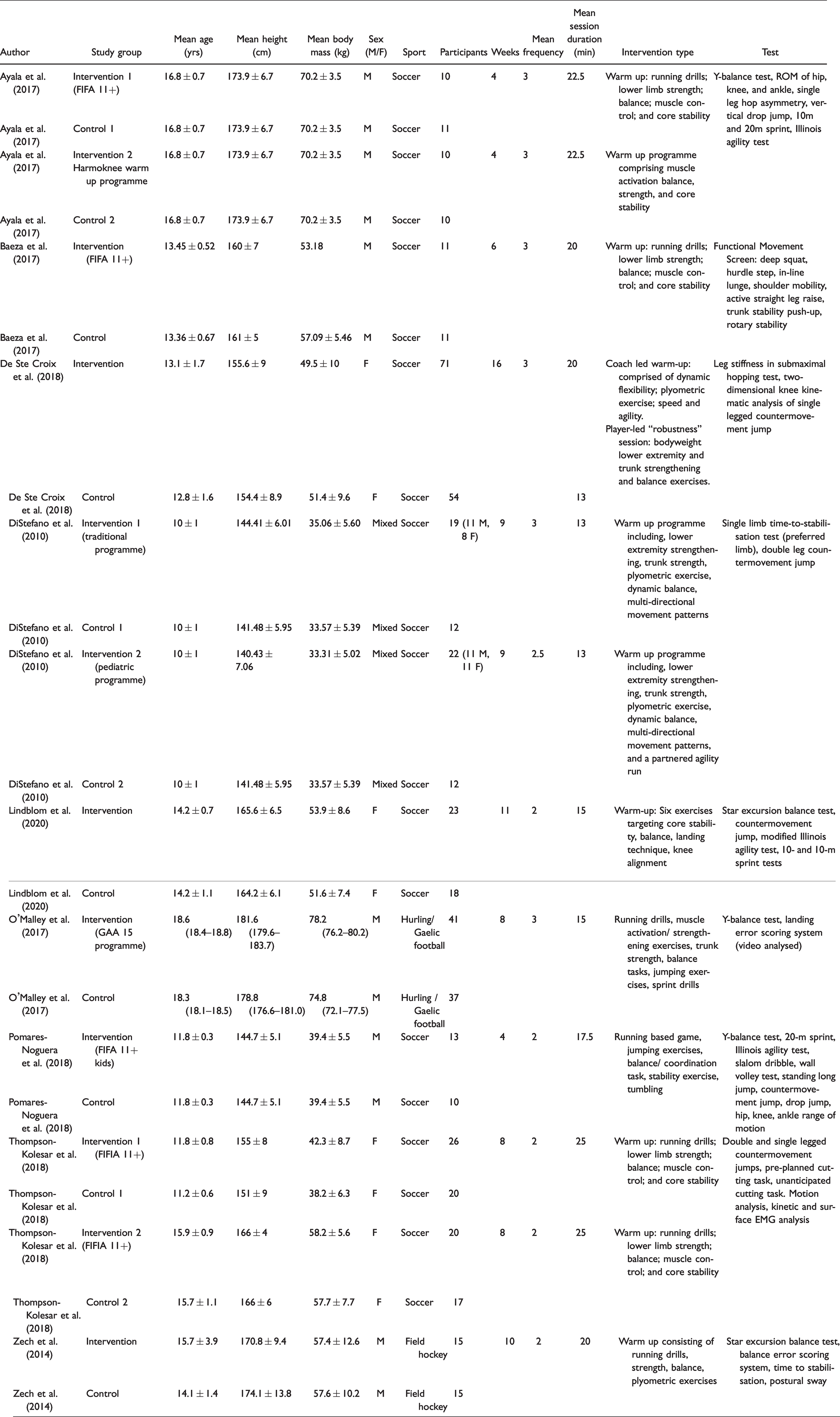
We selected only original, peer-reviewed research articles for inclusion, and we required that each study involve only healthy males and females with a mean age 8–18 years who were engaged in organized sports. To reduce the likelihood of influence from participants’ maturational changes, we selected only studies with interventions up to 16-weeks in duration (Moran et al., 2017b). We required each included study to have compared an intervention group against a control group (continuing to participate in their typical sports practices), and we required intervention programs to have utilized only exercises that depended upon participants’ body mass. However, in accordance with the definition of NMT, the training program could incorporate FMS and strength and conditioning activities, such as (bodyweight) resistance exercise, and plyometric training (Hopper et al., 2017). The outcome measures must have assessed motor control movement tasks involving the lower limb wherein either technique was measured against biomechanically desirable criterion (McGill et al., 2012), or dynamic balance was quantified. Therefore, these requirements included measures related to kinematic variables in tasks such as jumping, measures of dynamic balance and coordination (including qualitatively assessed movement patterns), and quantitively measured control of center of mass, such as time-to-stabilization. We excluded measures related to concentric force production. We did not consider study designs that did not involve comparative research of two or more independent groups, nor did we consider cross-over designs. The characteristics of the study participants in selected studies are displayed in Table 1.
Summary of Included Studies.
Data Analysis
Meta-analyses were conducted to determine the effects of NMT programs in youth participants using the computer program, Review Manager (RevMan version 5.4, The Cochrane Collaboration, 2020). We used means and standard deviations for a post-training measure of movement control to calculate effect sizes (ES) across studies. Applying a decision rule related to the most relevant outcomes to the research question (McKenzie et al., 2019) alongside a “logically defensible rationale” (Turner & Bernard, 2006), we included Y-balance and star excursion test scores and measures of knee valgus and time to stabilization on landing tasks. We used the inverse-variance random-effects model for meta-analysis to allocate a proportionate weight to trials based on the size of their individual standard errors (Higgins & Green, 2008), and this also accounted for heterogeneity across studies (Kontopantelis et al., 2013). The obtained ES values were represented by the standardized mean difference and presented alongside 95% confidence intervals (CI). The calculated ES values were interpreted using the conventions outlined for standardized mean difference by Hopkins et al. (2009) (<0.2 = trivial; 0.2–0.6 = small, 0.6–1.2 = moderate, 1.2–2.0 = large, 2.0–4.0 = very large, >4.0 = extremely large). In cases where there was more than one intervention group in a study, the number of participants in the control group was proportionately divided (means and standard deviations left unchanged) to facilitate comparisons across all participants (Higgins et al., 2019).
We determined heterogeneity by I2 values, which provide a percentage of the total variability in the ES owed to between studies variability (Huedo-Medina et al., 2006). Tentative classifications of heterogeneity were low, moderate, and high, and corresponded to I2 values of 25%, 50%, and 75%, respectively (Higgins, 2003). Heterogeneity was assessed with the Chi2 test to determine whether the observed differences were compatible with chance alone or, as indicated by a low p value, the variation in effect was beyond chance alone (Deeks et al., 2019).
We used the Physiotherapy Evidence Database (PEDro) scale to assess the risk of bias and methodological quality of the eligible studies included in the meta-analysis, which evaluated the internal study validity using a 10-point scale (0–10; 0 = low risk; 10 = high risk) (Maher et al., 2003). The median value of ≥6 was the threshold considered to represent a low risk of bias.
Analysis of Moderator Variables
To assess the potential effects of moderator variables, we performed subgroup analyses on moderators likely to influence the outcomes of the NMT programs. Using the median split technique to form the subgroups, the selected moderators we analyzed included chronological age, stature, body mass, sex, and intervention duration. Studies in which the recruited sample included males and females were removed when we analyzed sex as a moderator variable among the remaining sub-group of studies.
Results
Study Selection
Nine studies met our inclusion criteria and were included in our meta-analysis. Figure 1 shows the PRISMA flow diagram illustrating the number of excluded studies at each stage of the systematic review process. One study was not included because of the lack of data. The included studies met the required standard to be considered at low risk of bias (median quality score = 6.0). These data are presented in Table 2.
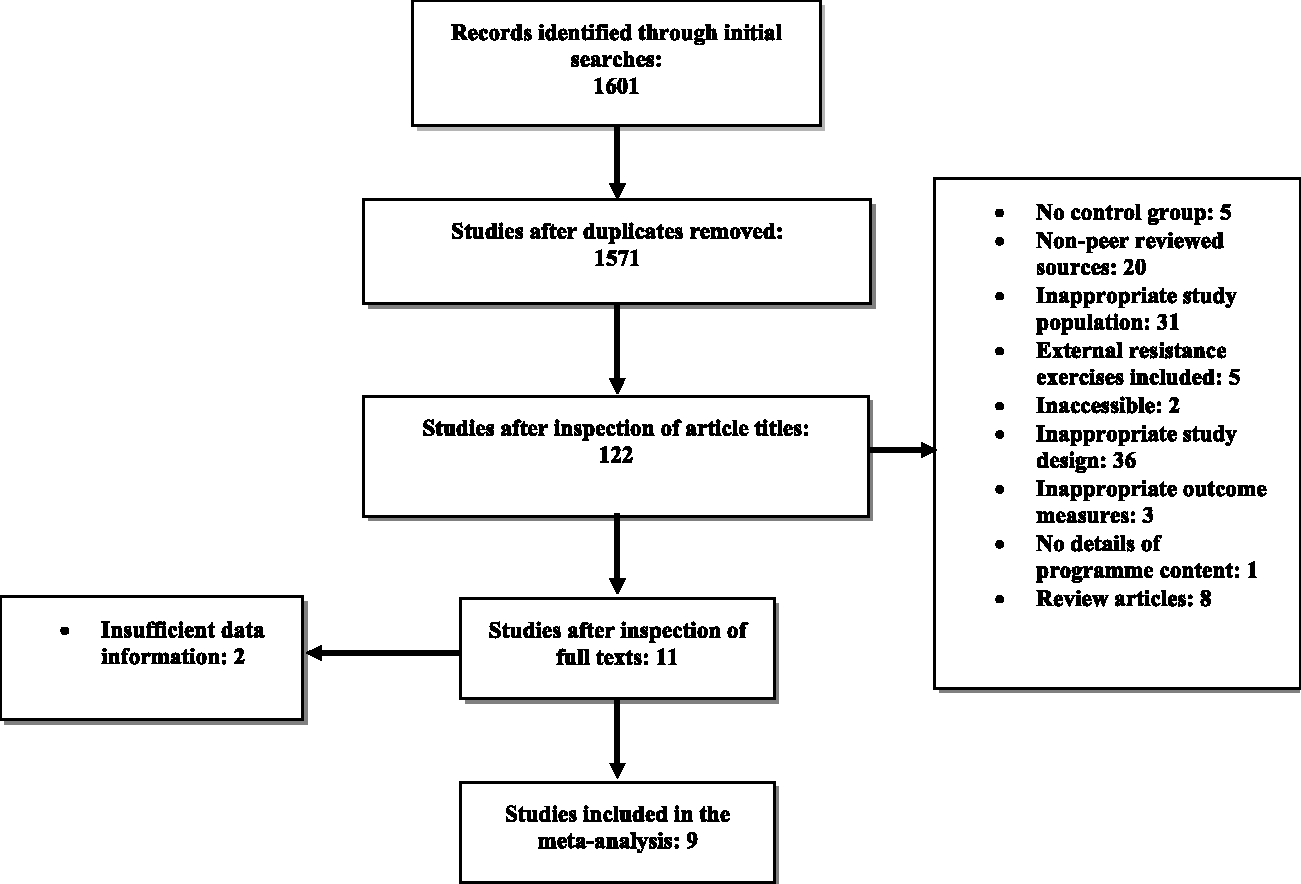
PRISMA Flow Chart Illustrating the Search and Study Selection Process.
Results of Risk of Bias Analysis Included Studies.
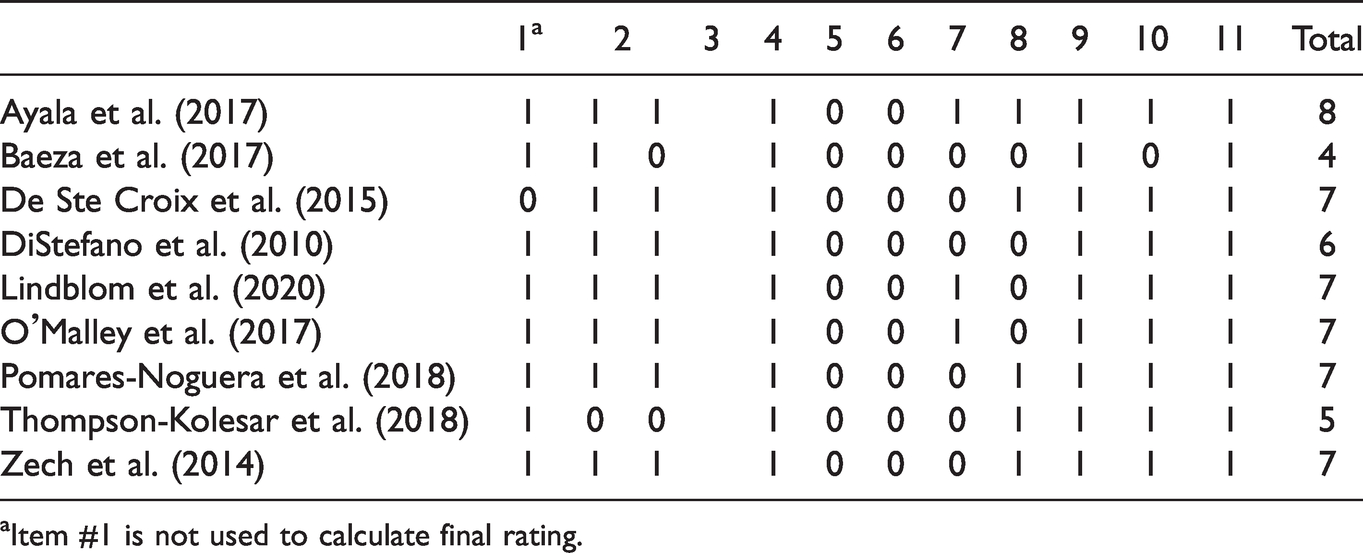
aItem #1 is not used to calculate final rating.
NMT Program Characteristics
The NMT programs from the included studies utilized a range of training modalities, including plyometric, lower limb and trunk strength, balance, and running based exercises (see Table 1). Three of the nine included studies used the “FIFA 11+” warm-up programme (Ayala et al., 2017; Baeza et al., 2017; Thompson-Kolesar et al., 2018), which incorporated unilateral lower limb movement patterns, jumping and bounding exercises, and the “Nordic hamstring” curl. Other included studies implemented very similar programs to the “FIFA 11+” that also included various forms of unilateral lower limb balance and multi-directional jumping-based exercises, as well as the “Nordic hamstring” exercise (De Ste Croix et al., 2015; OʼMalley et al., 2017; Zech et al., 2014). However, in two studies (DiStefano et al., 2010; Lindblom et al., 2020) as well as in the “Harmonknee” program in Ayala et al. (2017), the NMT programs did not include the “Nordic hamstring” exercise. One study (Pomares-Noguera et al., 2018) utilized the “FIFA 11+ Kids” program, specifically aimed at children below 14 years of age to develop general balance and coordination. Across all NMT programs, prescribed sets for each exercise ranged from one to three. However, depending upon the exercise type, prescriptions of repetitions, distances, and durations differed between NMT programs.
Main Effect
The primary meta-analysis in this study compared the effects of NMT programs versus control groups on movement control in youth athletes. From the nine studies included, there were 12 experimental and 12 control groups included in the meta-analysis. From this analysis, there was a moderate, significant ES in favor of NMT programs (0.79 [95% CI: 0.38, 1.20], Z = 3.76 [p = 0.0002]) on measures relating to motor control on movement tasks requiring dynamic balance or biomechanically desirable technique. Heterogeneity was high and significant (I2 = 77% [p = 0.00001]). These results are displayed in Figure 2.
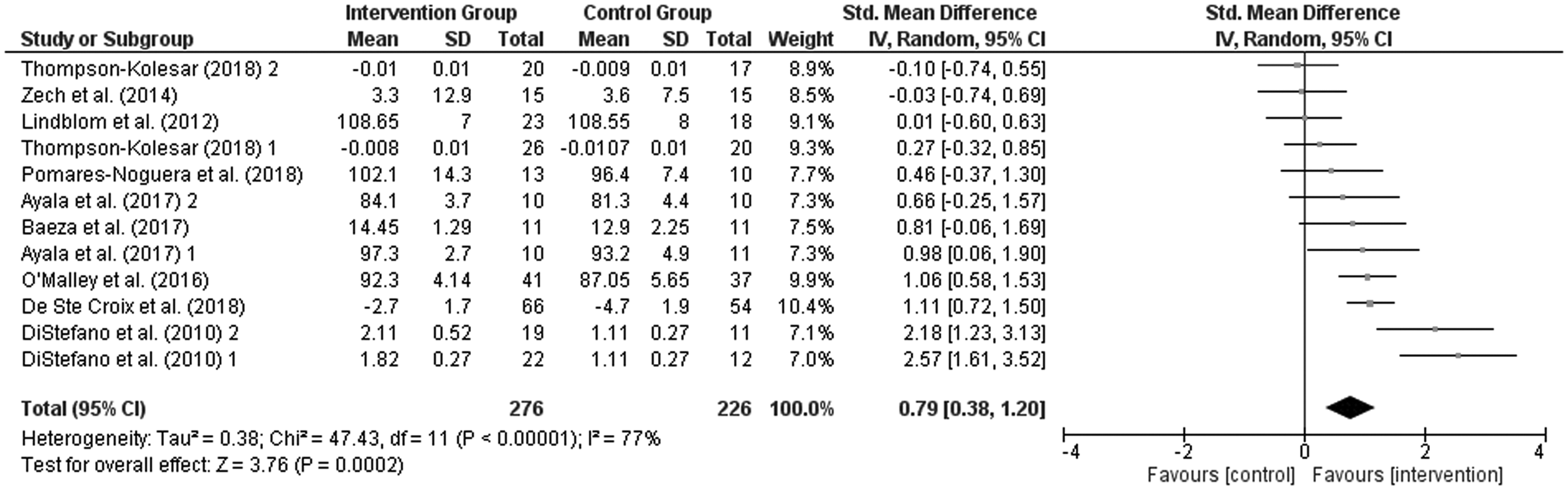
Forest Plot for All Included Studies.
Effect of Moderator Variables
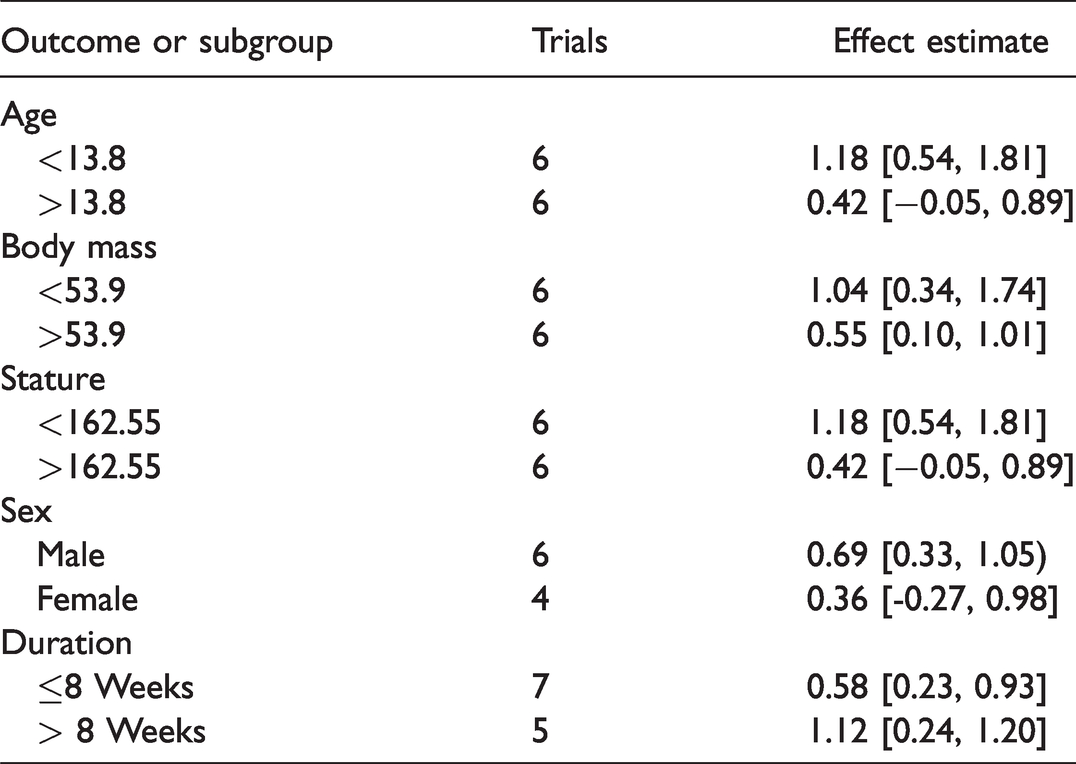
A summary of the effect of moderator variables can be found in Table 3. We found heterogeneity between trials to be high across subgroups, except for intervention duration <8-weeks, which was moderate. The subgroup analyses for age and stature revealed bodyweight-only NMT programs to be more effective among younger (<13.8 years), and shorter (<162.6 cm) than among older and taller individuals. In terms of body mass, there was a larger effect among lighter individuals compared to heavier individuals. Regarding sex, larger effect sizes were found among males than females. For program duration, there was a larger effect size for longer programs (>8 weeks) than shorter programs (<8 weeks).
Summary of Subgroup Effect Estimate.
Discussion
The purpose of this systematic review and meta-analysis was to assess the effects of bodyweight-only NMT programs on motor control among youth athletes. Our main findings revealed that bodyweight NMT programs are effective in improving motor control on tasks requiring dynamic balance and/or a biomechanically desirable movement strategy. Since poor movement quality has been considered a risk factor for lower limb injury (Whittaker et al., 2017), our results imply that NMT can be an effective training method for modifying such risk factors among youth athletes.
NMT programs have been thought to enhance neural and muscular adaptations that occur in development (Ford et al., 2011; Myer et al., 2011). Our meta-analysis supported this impression and highlighted the effectiveness of bodyweight-only NMT programs on improving motor control among child and adolescent athletes. This finding is particularly interesting given the disparities in the exercises included and the exercise volumes prescribed within NMT programs among the studies we analyzed. In fact, the diversity of training modalities included within these NMT programs is important to the enhanced development of motor control in this population.
Another important feature of our results is that these improvements were attained through time-efficient warm-up programs. This presents an attractive training method that can be applied within traditional sports practice structures (Jeffreys, 2019). However, the efficacy of this approach may vary according to the existing level of individual motor control and movement competence (DiStefano et al., 2009). In NMT studies that have compared the effects for participants that were categorized by their level of initial proficiency, greater improvements were found among less proficient individuals (DiStefano et al., 2009; Thompson-Kolesar et al., 2018). However, the limited availability of this type of data in these reviewed studies prohibited us from analyzing initial proficiency as a potential moderator. Nonetheless, we speculate that implementing generic NMT programs will be unlikely to present all individuals with an appropriate stimulus as there is apt to be a need for some level of individualization in applying NMT programs (De Ste Croix et al., 2015).
Concerning our subgroup analyses, potentially important moderators were related to participant maturational characteristics. Though some subgroup differences remained non-significant, we found that NMT programs were less effective among heavier, taller, and chronologically older youth athletes, suggesting that maturation could have a disruptive effect on the extent to which an individual adapts to the imposed NMT stimuli. Importantly, these results suggest greater that challenges are posed to motor control training for larger and more mature individuals.
Our findings support the notion that motor control and movement skill acquisition are easier to develop in prepubescent children (Lloyd et al., 2015a, 2015b). In the first decade of life, levels of neural plasticity and new myelin formation are high (Purger et al., 2016). As individuals approach adolescence, there is a peak in grey matter development before a non-linear decline occurs (Lenroot & Giedd, 2006), and this may contribute to the more difficult acquisition of new motor skills in older individuals. Similar to our findings, Wälchli et al. (2018) previously found that dynamic balance improved more in younger children (<12 years of age) than in older children. Furthermore, a meta-analytic review by Behringer et al. (2011) examined the effects of strength training on motor performance skills and found age to be negatively correlated (r = −0.25; p < .05) with training-related improvements in motor skills that included jumping, running, and throwing. Collectively, these studies support the presence of a sensitive or golden period for motor learning in pre-adolescent children (Penhune, 2011; Solum et al., 2020).
Another interesting result from our moderator analysis was that NMT programs were more effective among males than females. This finding may relate to differences in female maturation processes, including decreased neuromuscular control, and associated imbalances in muscle strength and activation patterns (Hopper et al., 2017). However, another important consideration is allometric scaling, which may provide greater insight into the effects of physical growth on males and females (Carnevale Pellino et al., 2020). Previously, Carnevale Pellino et al. (2020) found that girls outperformed boys in the standing broad jump when allometric modelling was used to normalize performance for anthropometric characteristics, further highlighting the complex effect of growth and maturation on physical performance. Indeed, increases in mass and stature, alongside increases in knee valgus angle (Lloyd & Oliver, 2012), cause different challenges for females, and these might help explain findings in our meta-analysis. Females typically display decreased knee stability with a concomitant increase in joint torque loads following PHV (Hewett et al., 2015). Therefore, NMT programs should gradually become more divergent in their designs in order to account for sex differences around PHV (Lloyd et al., 2015).
In terms of intervention duration, we found advantages to longer intervention periods (>8 weeks), supporting Faude et al. (2017) who also found larger effects from longer training periods. These findings may be explained by the combined effects of exercise diversity and relatively low magnitude stimuli in NMT programs. The programs included in the present meta-analysis each incorporated a broad range of activities, including landing tasks, multi-directional movement patterns, and sprinting within singular training bouts. Such diverse within-session activity logically limits the magnitude of the adaptations that can occur due to low levels of exposure to the applied stimuli within a given session. Accordingly, this increases the duration of the training period necessary to elicit a tangible adaptation. In support of this, NMT programs implemented within warm-up protocols have previously been found to be effective for a training period of up to six months (Steib et al., 2017). Indeed, in the meta-analysis by Faude et al. (2017), a moderate effect was found in balance/stability tasks for NMT training >23 weeks, while <23 weeks revealed an effect size that was negligible. A trade-off may therefore exist between the convenience of NMT programs implemented within the warm-up and the required duration to yield improvements in motor control over time. On this basis, timeframes >8 weeks may be required for positive alterations in motor control to be achieved.
Limitations and Directions for Further Research
There are limitations to the current study requiring that they be interpreted with a degree of caution. First, two of our included studies (Baeza et al., 2017; Thompson-Kolesar et al., 2018) scored below the median quality score for risk of bias (see Table 2). These low scores for both studies related to the criterion for blinding of the respective participants and assessors that increased potential bias within the outcome measures. In addition, heterogeneity owing to between-study variability limited the generalizability of these findings (Higgins, 2003). This between-study variability may relate to the disparate methods used within them. Furthermore, the univariate analysis of our subgroup analyses limited an understanding of the study interventions’ broader outcomes and any multivariate interactions. Beyond these limitations, the included studies did not include an assessment of the participants’ maturity status. Such an assessment may provide a better insight into the effects of NMT programs based upon the participants’ stages of maturation. Such information would provide improved understanding of the impact of growth on motor control and substantiate the believed importance of broad and diverse development of FMS and general physical fitness qualities in youth populations that extend beyond sports performance (García-Hermoso et al., 2020).
Conclusion
The implementation of NMT programs are understood to better prepare children for participation in organized sport (Lloyd et al., 2015; McLeod et al., 2009; Read et al., 2019). Such programs target improved motor control, which is of particular importance in individuals around the period of the adolescent growth spurt when coordination may be temporarily impaired (Corso, 2018). Based on the findings of this meta-analysis, the incorporation of bodyweight NMT programs, within the pre-training warm-up, appear to be effective in improving motor control in youth athletic populations. Importantly, these effects appear to be larger in less mature individuals as indicated chronological age stature, and body mass. These findings may relate to increased neural plasticity occurring in preadolescence, representing a golden period for motor learning. Based upon the characteristics of the included studies, as a general recommendation to improve motor control, strength and conditioning practitioners could expose youth athletes to NMT-based warm-ups performed 2–3 times per week across a timeframe of ≥8-weeks. Importantly, these programs should target a range of physical qualities relating to neuromuscular control. In this regard, it appears that generic programs such as the “FIFA 11+” can provide adequate stimulus. However, for older and larger youth athletes, more individually tailored content may be warranted and may include greater training volumes.
Footnotes
Declaration of Conflicting Interests
The author(s) declared no potential conflicts of interest with respect to the research, authorship, and/or publication of this article.
Funding
The author(s) received no financial support for the research, authorship, and/or publication of this article.
