




Abstract
Well-functioning seed systems are fundamental to agricultural sustainability and food security. In many countries, farmers’ seed systems supply the bulk of seeds used, and different approaches to support such systems as alternatives to fully formalized seed system development are increasingly gaining interest. This article presents and analyzes the historical development and impact over three decades of one of the best-known “intermediate” seed system development programs, the seed clubs of Vietnam. We focus on An Giang province where seed clubs have transitioned from being small-scale participatory crop improvement projects to playing significant roles in variety development, seed production and seed dissemination within the rice seed system. As of 2021, the seed clubs were the single most important seed producer category in the province, producing more than twice the volume as private companies and cooperatives. However, this seed production was done mainly on contract with companies. The production and dissemination of seed clubs’ own farmer-developed varieties were constrained by prevailing market dynamics, the localized adaptation of some varieties and regulatory barriers—including a new law that makes plant variety protection mandatory. The history of the seed clubs provides important lessons for other intermediate seed system programs with ambitions to transition from small-scale development projects to self-sustained organizations. We discuss the relationship between terminology, scale and objectives in such endeavors.
Keywords
Introduction
In the 1990s, scholars and practitioners started discussing the shortcomings of formal seed systems, in terms of their ability to deliver varieties adapted to farmers’ needs and the accessibility of the seeds produced (Almekinders et al., 1994; Sperling, 1999; Thiele, 1999). Studies of seed use in developing countries typically report that between 80% and 100% of the seeds are sourced from “informal” seed sources outside the formal seed system that supplies certified seeds of registered varieties (McGuire and Sperling, 2016; Louwaars and de Boef, 2012). Based on such insights, approaches to involve farmers in different seed system functions have been launched, including participatory plant breeding (PPB) (Ceccarelli and Grando, 2009; Weltzien et al., 2003), community seed banks (Vernooy et al., 2015; Song et al., 2021) and farmer seed producer groups (Dey et al., 2022). These approaches to combine elements of formal and informal seed systems, sometimes referred to as “intermediary” seed system approaches, have gained traction over the last three decades (Mulesa et al., 2021; Thijssen et al., 2025). Research into the experiences, performance and impact of such projects has pointed to considerable challenges with reaching scale and establishing an economic model sustainable beyond typical development project funding cycles (Dey et al., 2022; Westengen and Winge, 2020). But there are also some widely known and heralded cases that have persisted and grown in scale (de Boef et al., 2025; Kuhlmann and Dey, 2021). In this article, we present a study of a sustained and large-scale program of this kind, the seed clubs in Vietnam.
During the food crisis in Vietnam in the 1980s, the government decided to intensify rice cultivation from one to two crops per year to increase grain production and improve national food security (Le Coq and Trebuil, 2005; Tin et al., 2020; Le et al., 2018). This policy led to higher seed demand for rice production, but the seed supply from the formal seed system was limited to only about 7% of the annual seed requirement in the Mekong Delta, the most important rice-growing region of the country (Tin et al., 2020). At the same time, there was concern about the loss of traditional varieties and potentially valuable genetic resources under the policies of intensification (Tin et al., 2020). It was in this context that the seed club approach was launched, with national and international support. Seed clubs are groups of farmers involved in participatory crop improvement and/or seed production, and the first seed clubs were operational in the mid-1990s. The seed clubs have two main objectives: (1) supply farmers with quality seeds at an affordable price and (2) conserve and mobilize local varieties and associated traditional knowledge in participatory crop improvement (Tin et al., 2011, 2020).
The seed clubs of the Mekong Delta are often cited for their merits in involving farmers in seed system development (Dey et al., 2022; Kuhlmann and Dey, 2021; Tin et al., 2011; Berg and Westengen, 2020), although others have also mentioned some challenges, particularly regarding the current regulatory regime and restrictions on market access (Dey et al., 2022). The seed clubs are a particularly interesting case for scholars, practitioners and policymakers engaged in seed system development, due to their long history and successful upscaling, which has seen them grow from a locally important initiative to regionally important seed system actors in one of the country's most important crops, rice.
The objective of this study is to (1) describe the development and evolution of the seed clubs over time, (2) identify the seed clubs’ role and contribution in the larger seed system they are part of today, (3) analyze to what extent seed laws and the agri-food system context is conducive to the operation of the seed clubs and (4) draw lessons for the upscaling of other intermediate seed system development efforts.
Methods
This article is a collaboration between scientists involved with the implementation of the seed club approach in the Mekong Delta and scientists involved with the support and analyses of seed systems internationally. We structure our analysis according to the framework presented by Westengen et al. (2023), which defines three key functions of seed systems (variety development and management, seed production and seed dissemination) as well as two contextual factors that influence seed system functioning (governance and food system drivers).
We collected primary data in An Giang province, which has more than half of the seed clubs in the Mekong Delta (Table 1). This data set included nine in-depth key informant interviews (KIIs) and three focus-group discussions (FGDs) conducted in September and October 2022, as well as quantitative data on seed and crop production compiled from databases and records maintained by the An Giang Agricultural Extension Center and the An Giang Department of Agriculture and Rural Development. The KIIs were conducted with three plant breeders, one gene bank manager, two agricultural technicians, and three policymakers. FGDs with approximately six participants each were held with three groups of actors: (i) farmers involved in seed club projects, (ii) representatives of farmer-run cooperatives and seed companies that emerged from seed clubs and (iii) technical advisors/agricultural scientists at the national and regional research organizations involved in the seed club projects. Ethics approval for the study was obtained from the Agricultural and Natural Resources Department of An Giang province before initiation of field work, and prior informed consent was obtained verbally from all participants.
Number of seed clubs involved in externally funded projects in Vietnam, 1995–2025.
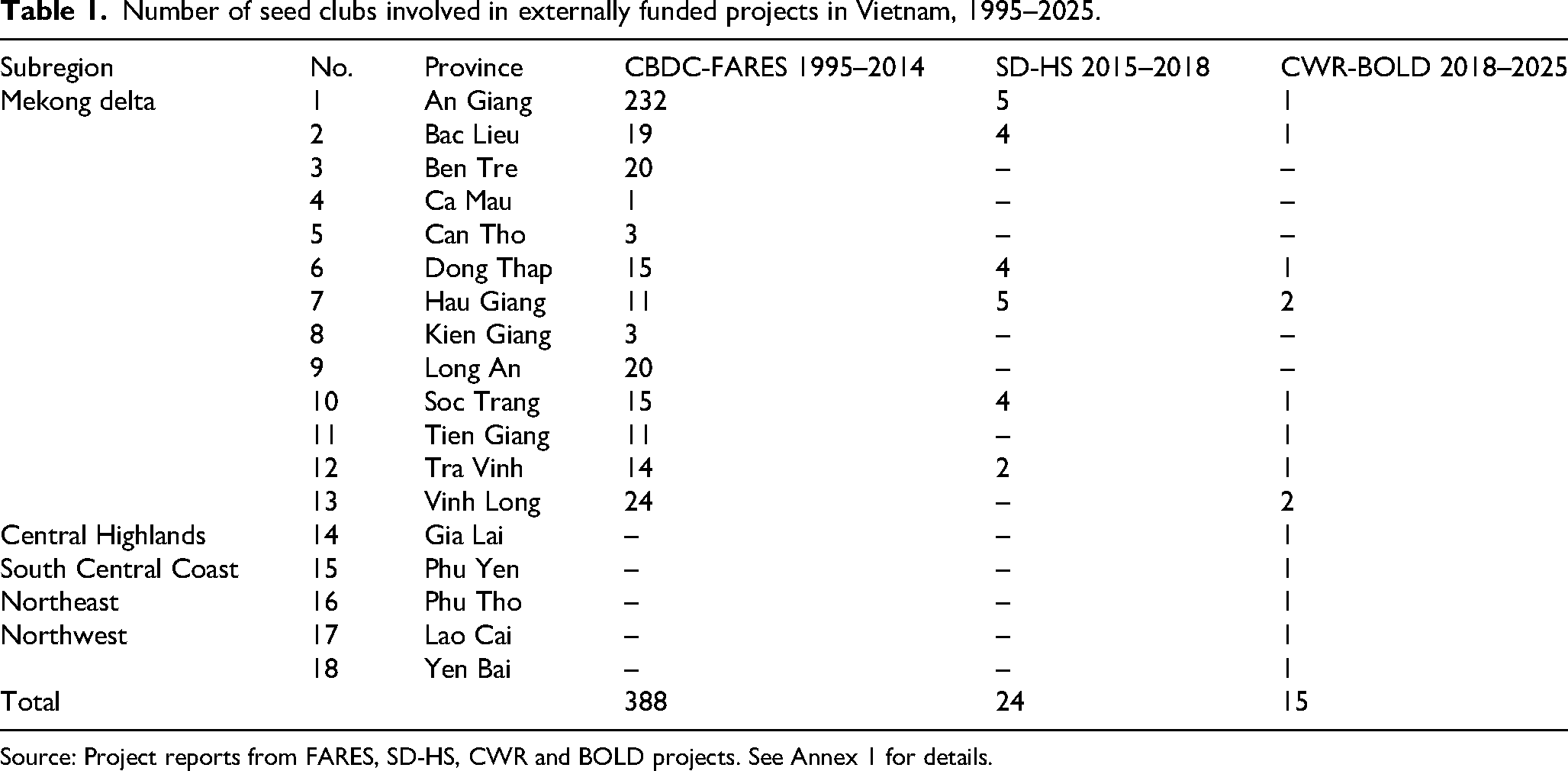
Source: Project reports from FARES, SD-HS, CWR and BOLD projects. See Annex 1 for details.
All interviews and FGDs were audio-recorded with permission and subsequently transcribed verbatim. Qualitative data were analyzed using a thematic analysis approach, in which initial codes were generated inductively and grouped into broader themes reflecting patterns across actor groups. In addition to the primary data, we draw on technical reports, workshop proceedings, books and published articles about different aspects of the seed clubs.
Results
The history of seed clubs
Seed clubs have been supported through various international and national partnerships. The first four seed clubs were established in 1994–1995 in the provinces of Long An, Ben Tre, Soc Trang and Bac Lieu under a project entitled Plant Genetic Resources Conservation and Improvement (PGRCI). The project was managed by the Mekong Delta Development Research Institute (MDI) at Can Tho University (CTU) with support from the regional NGO Southeast Asia Regional Initiatives for Community Empowerment (SEARICE). The main objectives were to conserve plant genetic resources for food and agriculture and to improve the seed quality of improved and local rice varieties at the community level (Tin et al., 2020). Activities focused on selection and enhancement of existing local varieties through participatory variety selection (PVS) 1 and participatory variety rehabilitation (PVR).
Following this initial experience, the seed club model was further developed under a series of projects spanning 30 years (Table 1). From 1995 to 2014, the Community Biodiversity Development and Conservation (CBDC) and Strengthening Farmer-Agricultural Research and Extension System Partnership in Vietnam (FARES) projects supported a total of 388 seed clubs across 13 provinces of the Mekong Delta, the majority of which (232 or 60%) were in An Giang province. This was followed by the Sowing Diversity—Harvesting Security (SD-HS) project between 2015 and 2018, which supported a total of 24 seed clubs in the Mekong Delta. The major focus of these projects was on-farm agrobiodiversity conservation, strengthening the informal seed supply system to meet farmers’ need for quality seeds and selecting and developing improved rice varieties through PVS and PPB (Tin et al., 2021a). Since 2018, 15 seed clubs have been involved in the evaluation of rice pre-breeding lines derived from crop wild relatives under the projects Adapting Agriculture to Climate Change: Collecting, Protecting and Preparing Crop Wild Relatives (CWR) and Biodiversity Opportunities, Livelihoods and Development (BOLD). As part of this effort, seed clubs expanded into five other subregions of Vietnam (Table 1). Further details on the objectives, dates of implementation, lead agencies and funding sources of these projects are presented in Annex 1.
Over the years, MDI has played a central role in supporting the seed clubs technically. Furthermore, the provincial extension centers, plant protection sub-departments, and departments of agriculture and rural development (DARDs) have made essential contributions in mobilizing farmer participants, coordinating activities, organizing training sessions and facilitating fieldwork in the seed clubs. The support from these institutions has extended beyond the externally funded projects, helping many seed clubs sustain their activities beyond the lifetime of these projects.
An Giang stands out as the province with the fastest-growing community seed production and rice seed supply activities. The sustainability of many seed clubs in the province is evidenced by annual monitoring data on the number of active seed clubs (Figure 1). The number expanded quickly from the six seed clubs initially established in An Giang in 2001, peaking at 221 active seed clubs in the province by 2010. Although the number of active seed clubs has declined steadily since then, by 2021, there were still 119 seed clubs covering all the province's 110 rice-producing communes 2 (Figure 2), even though only a small number were supported by externally funded projects (Table 1). Furthermore, the number of farmers involved in seed clubs has increased over time, as farmers continued to join active seed clubs, with a total of 6068 participating by 2021 (Figure 1).
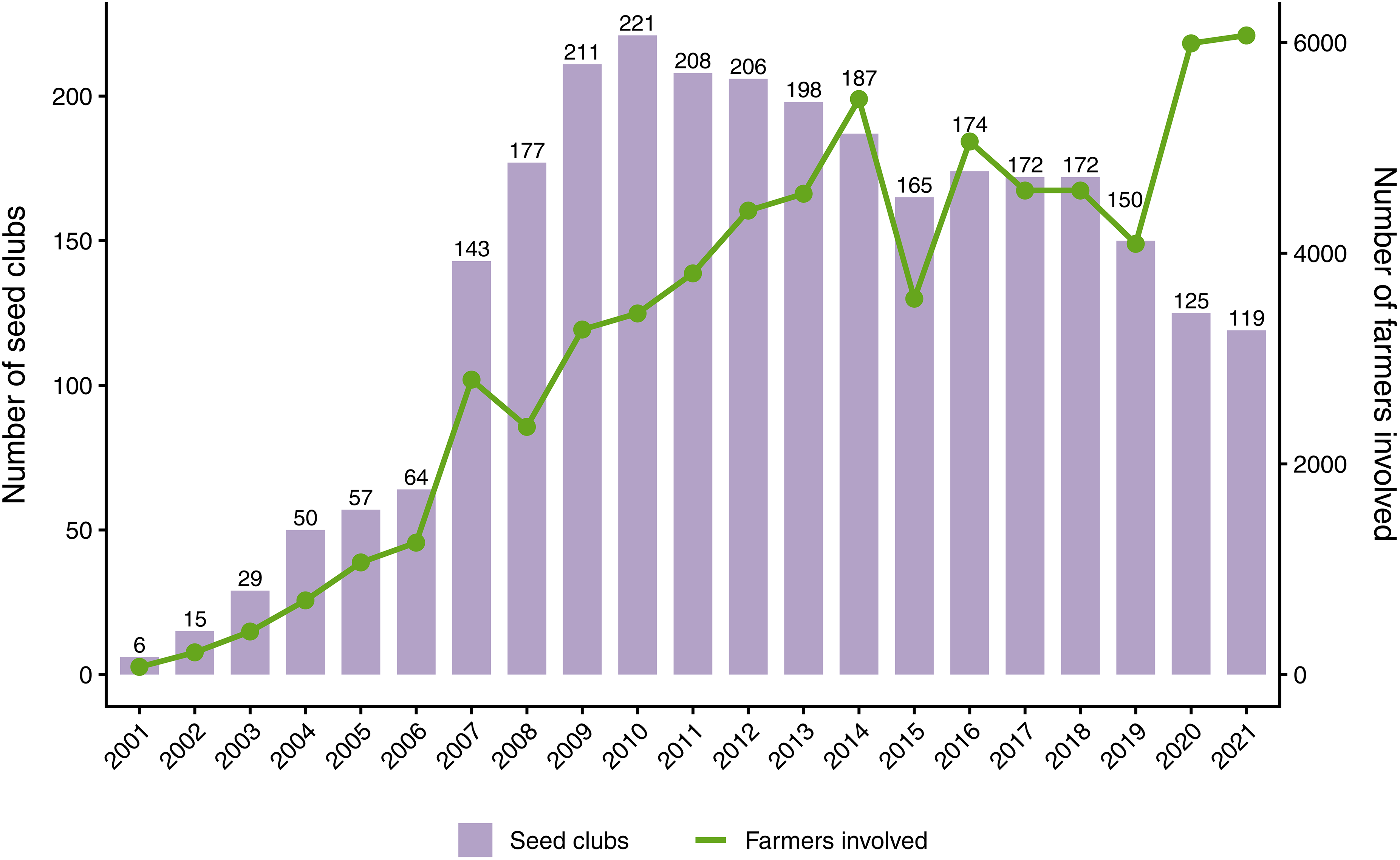
Number of active seed clubs and farmers involved in An Giang province between 2001 and 2021. Source: Data provided by the An Giang Agricultural Extension Center.
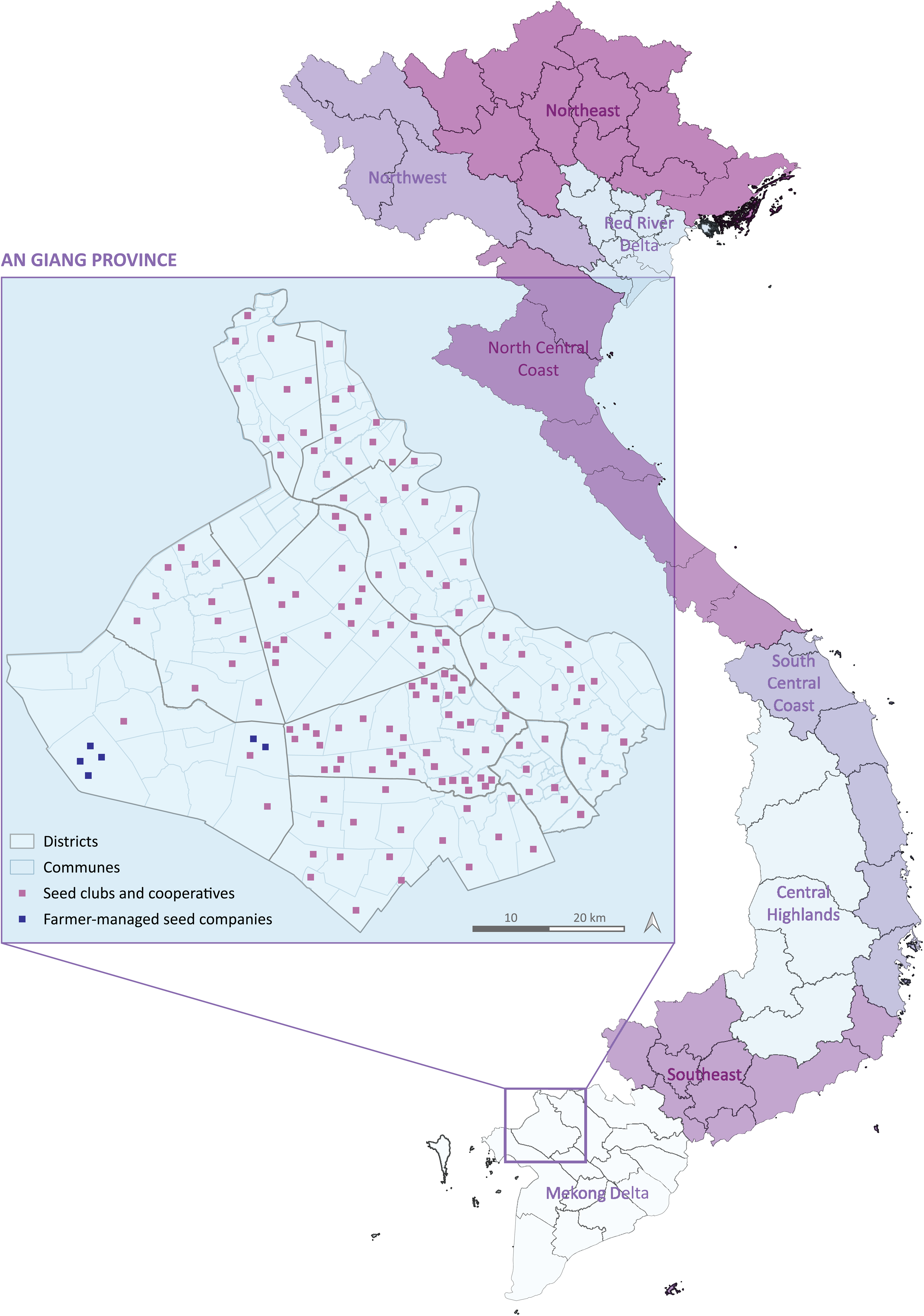
Map of seed clubs, cooperatives and farmer-managed seed companies in An Giang province, 2021.
Over time, seed clubs in An Giang province have undergone changes in their organizational structure (Figure 3). Although originally established as informal groups, most seed clubs have since gained official recognition as “artels” under the Law on Cooperatives, 3 in particular to support their seed production activities. Although they are not legal entities, this status allows seed clubs to open bank accounts and enter contracts, for example, as outgrowers for seed companies or public entities. In addition, artels can access the same preferential policies and state supports as registered cooperatives, including government financing and other support for the acquisition of equipment (i.e. for transplanting, seed cleaning, and drones for application of fertilizers and pesticides). Here, we refer to seed clubs having this designation as “seed production artels.”
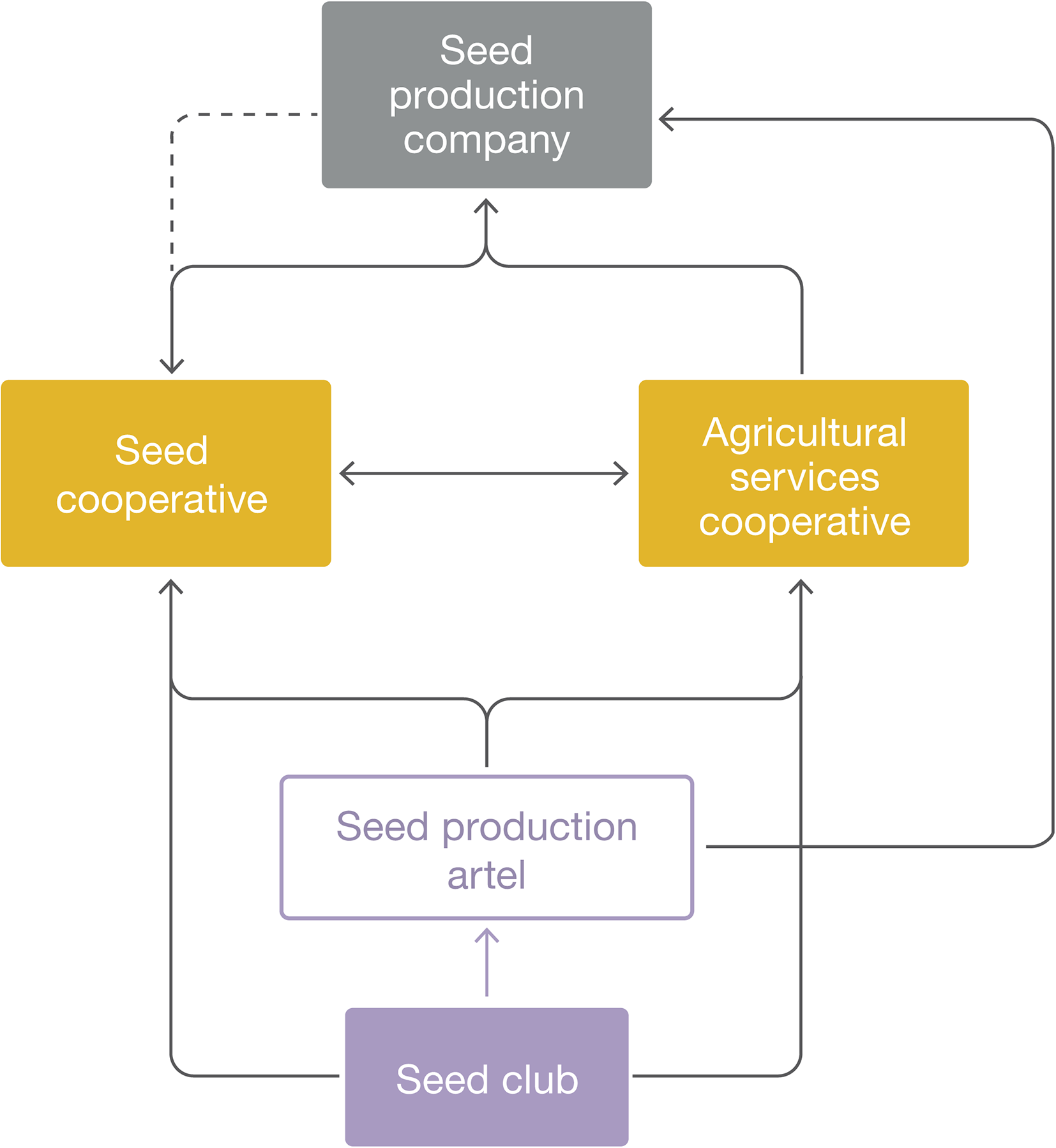
Organizational development pathways identified in this study for seed clubs in An Giang province. Many seed clubs have obtained recognition as seed production artels (purple), enabling them to enter contracts as outgrowers, but they do not have the legal status to commercialize seed. This has motivated some seed clubs to establish cooperatives (yellow), which have the right to commercialize seed provincially, or as companies (gray), which can do so nationally.
In addition, some seed clubs have gone on to register as formal cooperatives or seed companies (Figure 3), which, as legal entities, are eligible to be certified as seed producers and sell seeds. We do not have data on the total number of seed clubs that have undergone this transition, but it may partly explain the decline in the number of seed clubs over time. For example, according to An Giang Agricultural Extension Center's 2015 annual report, 4 38 seed clubs had formally transitioned into farmer-managed seed cooperatives or seed companies. Given that only 165 clubs were active at that time (compared to 232 supported by CBDC-FARES, Table 1), we estimate that transition to formal entities accounts for 56% of the decline in seed clubs, while the remaining 29 had presumably ceased to operate.
The role and contribution of seed clubs
In this section, we assess the seed clubs' role across the three seed system functions: variety development and management, seed production and seed dissemination.
Variety development and management
Variety development has been among the core activities of the seed clubs since the start, through close collaboration between seed club members and scientists at MDI. Over time, seed club members have developed advanced skills and capacity in plant breeding, as explained by one MDI scientist: In the early years, when the seed clubs were first established, farmers participated in selecting varieties from segregating populations through to stable lines, while the breeding and early-generation selection were carried out by scientists at MDI and CTU. However, as these seed club networks developed, farmers received training in plant breeding and selection techniques. They eventually began to carry out their own crosses and selections—from segregating generations to stable lines. In An Giang, many well-known farmer-bred varieties were made through crosses entirely by farmers themselves, without direct guidance or support from scientists; at that stage, scientists mainly provided advisory support.
As a result of these efforts, seed clubs in the Mekong Delta have selected more than 499 stable rice lines. Of these, 28 lines have undergone Value for Cultivation and Use (VCU) and Distinctness, Uniformity and Stability (DUS) tests. Thirteen varieties have obtained plant variety protection (PVP), and six have been approved and formally released (Table 2). In addition, seed clubs have “locally released” some lines with preferred traits at the district level. 5 Here, we refer to both formally and locally released varieties arising from the seed clubs’ breeding work as “farmer-developed varieties.”
Number of stable lines selected, tested for VCU-DUS, officially released and registered with PVP by participatory plant breeding projects in the Mekong Delta, Vietnam.
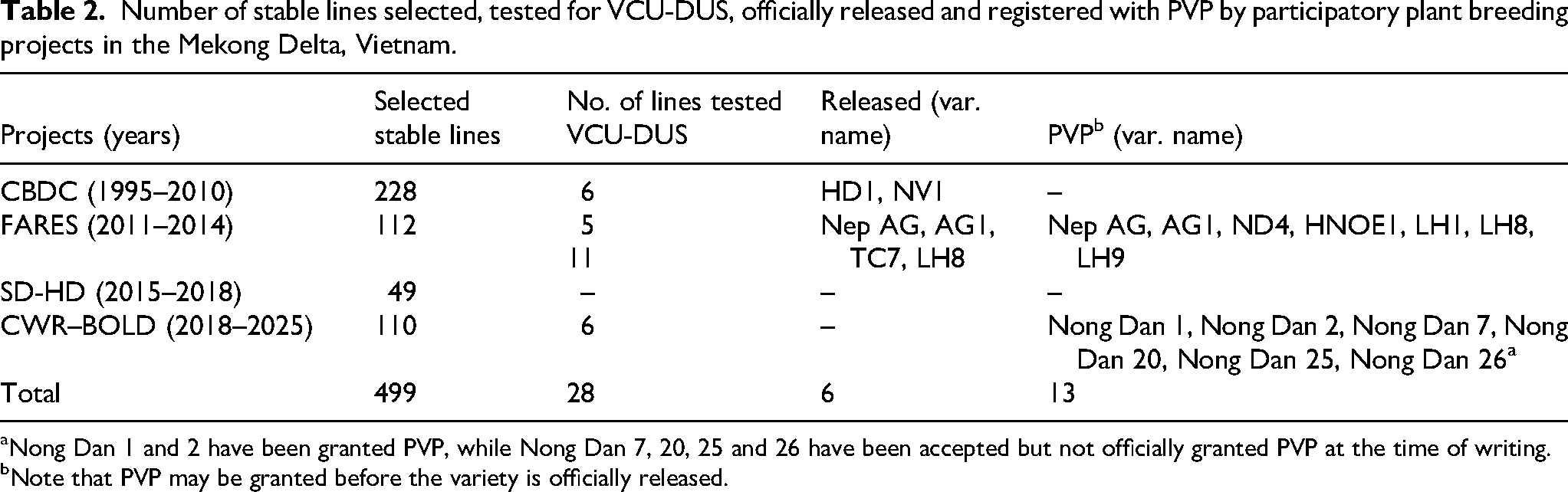
Nong Dan 1 and 2 have been granted PVP, while Nong Dan 7, 20, 25 and 26 have been accepted but not officially granted PVP at the time of writing.
Note that PVP may be granted before the variety is officially released.
The breeding lines used in PPB have, for the most part, been provided by CTU scientists. In addition, 200 CWR-derived pre-breeding lines from the International Rice Research Institute (IRRI) were shared with CTU under the CWR project for evaluation across locations in Vietnam (Tin et al., 2021a, 2021b). The breeder seeds of the farmer-developed varieties are kept at the university gene bank. This gene bank also conserves a total of 752 accessions of traditional local rice varieties that were collected from 40 districts across 11 provinces in the Mekong Delta during the first phase of the seed club program (Tin et al., 2020). 6
In An Giang, seed clubs have generated 73 farmer-developed varieties. Four of these are released nationally: NV1, TC7, AG1 and Nep-AG. The remaining 69 varieties have been locally released at the district level. In 2021, 62 of these farmer-developed varieties were being cultivated, covering about 13% of the total area under paddy grain production (Table 3). In contrast, six varieties owned by private companies accounted for 54% of the land area, while nine public-sector varieties (IRRI-derived varieties released in the 1990s) covered 33%. No local rice varieties were reported.
The number of varieties cultivated in An Giang in 2021 and their land coverage.
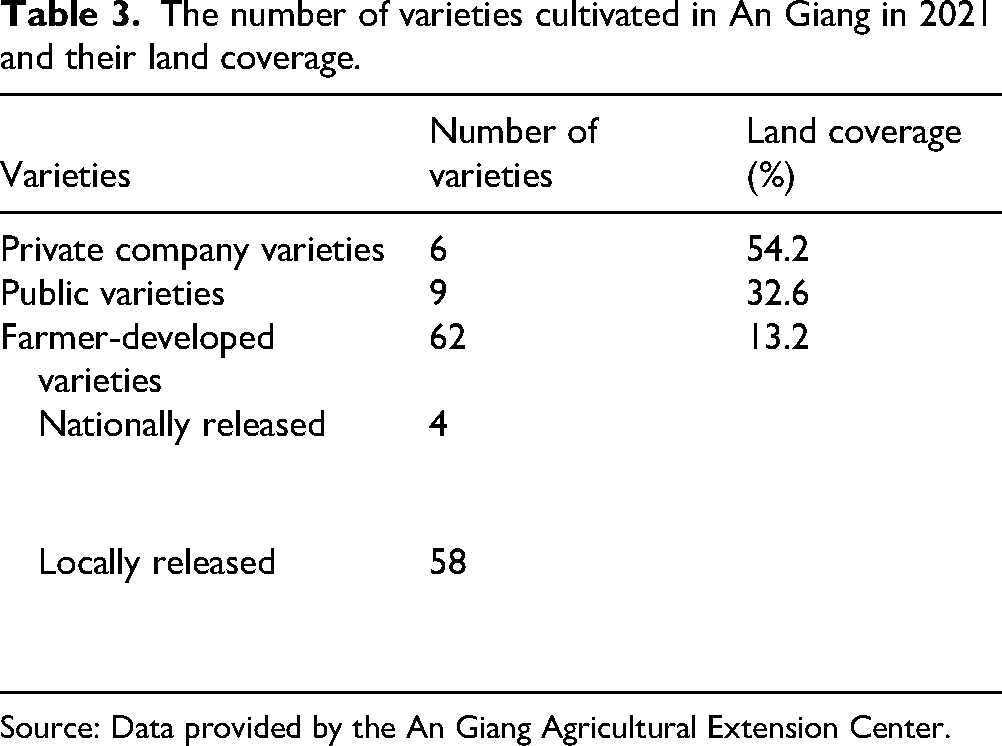
Source: Data provided by the An Giang Agricultural Extension Center.
Several informants explain that the private-sector varieties are widely cultivated due to their high acceptance in the market, for traits such as long grain and aroma. The cultivation of farmer-developed varieties is limited by regulatory constraints, since Vietnamese legislation requires that varieties be registered and released nationally before they can be commercialized. Although this has been achieved for some varieties (Table 2), the process is particularly demanding for the seed clubs. As a result, most farmer-developed varieties can only be shared informally among farmers and are produced at a small scale for local consumption or to maintain the seeds.
Another factor limiting cultivation of the farmer-developed varieties is the very local adaptation of some varieties, such as Nep-AG. Although released nationally, this variety of sticky rice is adapted to very specific agroecological conditions. In An Giang, it is grown on only about 50 ha by farmers in the Phu Tan district, where the variety was first developed. Although its extension is limited, it is the only variety of sticky rice that performs well in this area.
Seed production
In addition to plant breeding, seed club members have been trained in quality seed production and have organized subgroups who are responsible for this task. This has included development of capacities for internal quality control of seeds. For instance, through the CBDC project, farmers were trained and certified by the Southern Center for Variety Evaluation and Seed Certification, enabling them to conduct field inspections of varietal purity within their seed clubs. Staff from provincial seed centers and agricultural extension centers also perform random inspections of the clubs’ seed production fields. Although not fulfilling all requirements for official seed certification which include more extensive field inspections and lab testing, between 2005 and 2010, 48 seed clubs won awards from the National Department of Crop Production for producing rice seeds that met official quality standards. 7 In addition, many seed clubs also establish outgrower contracts with seed companies and public entities (provincial seed centers or agricultural extension centers), in which they produce certified seeds, with all required inspections and testing conducted by the competent authority. The ability to enter such contracts has been one of the motivations for seed clubs to obtain recognition as artels; however, it is the contracting seed companies that are registered with the Ministry of Agriculture and Rural Development (MARD) as official seed production establishments.
A study by Tin et al. (2011) showed that by 2008, seed clubs in the Mekong Delta had secured a strong foothold in seed production, producing more than twice as much rice seeds as the formal sector (83,659 vs. 35,560 tons). While impressive, the seed clubs’ production still accounted for only 16% of the estimated annual seed requirement of 530,622 tons in the Mekong Delta, while the contribution of the formal seed system was 7% (Tin et al., 2011). However, the picture is different if we zoom into An Giang province. Boasting the majority of the seed clubs, An Giang province accounted for 86% of the rice seeds produced by seed clubs in the Mekong Delta in 2008, representing 92% of the province's estimated annual seed demand of 77,920 tons (Tin et al., 2011). This same study reports that most seeds produced by both formal system actors and seed clubs in the Mekong Delta was sold to farmers within the same province, suggesting that the output from An Giang's seed clubs was mainly serving to cover the provincial seed demand.
Since that time, seed demand has increased steadily. This has been driven by the expansion of agricultural land associated with economic reforms and investments in agricultural infrastructure, as well as by the intensification of rice production through increased cropping intensity and the adoption of short-duration varieties (Tin et al., 2020; Le et al., 2018). As a result, by 2021, the province's annual seed requirement increased to 93,000 tons, assuming three crop cycles per year. Data from the An Giang Agricultural Extension Center show that seed clubs in the province have kept pace with this trend, remaining the single most important seed producer category in the province, producing more than twice the volumes produced by private companies or cooperatives (Figure 4). Furthermore, by 2012, seed production in An Giang had surpassed the annual seed requirement, and the province had become a net exporter of rice seeds, largely due to the contributions of the seed clubs. In more recent years, rice seed production among all actors has declined slightly (Figure 4), as the government has reduced the rice-growing area at the national level in favor of other crops such as maize, mung bean and others, reducing the demand for rice seeds.
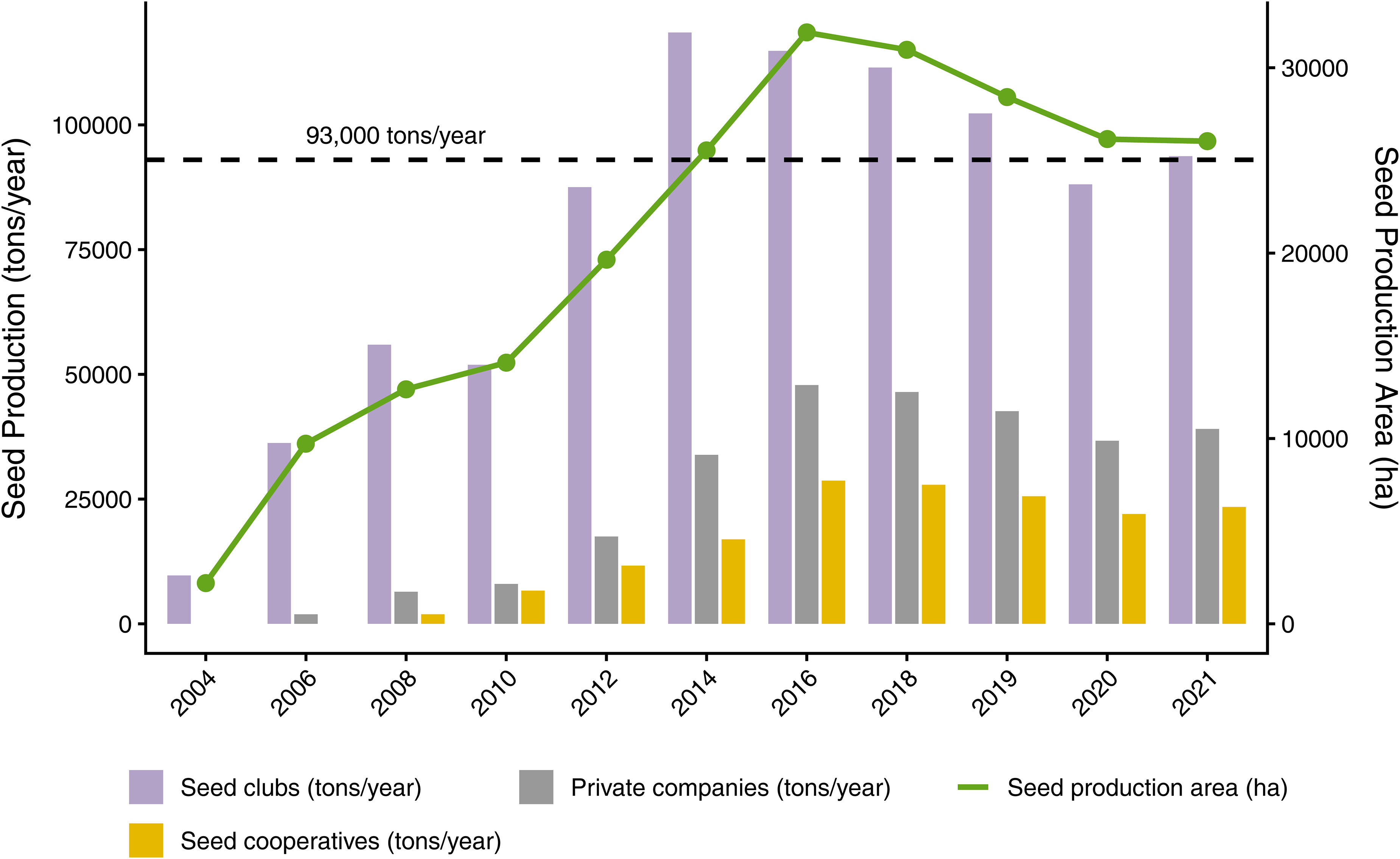
Seed produced by different actors (tons/year) and total seed production area (ha) in An Giang province between 2004 and 2021. The threshold line (93,000 tons/year) indicates the estimated maximum seed requirement in 2021. It is based on the total paddy production area in 2021 multiplied by the average seed sowing rate in the province, assuming three crop cycles per year. All data provided by the An Giang Extension Center.
While the seed clubs in An Giang province have made impressive contributions to the province's seed production, it is important to note that this is not restricted to the farmer-developed varieties developed in the PPB and PVS projects. Indeed, our data suggest that seed production is carried out primarily through contracts established with seed companies, mainly to produce varieties registered by formal public and private companies (Table 3). Farmers were already playing important roles as outgrowers in 2008, multiplying 46% of the seed volume produced by seed companies and government seed and extension centers (Tin et al., 2011). Only 6% of the seed volume produced by seed clubs in An Giang at that time corresponded to farmer-developed varieties (Tin et al., 2011), a trend that has continued. The reasons for this become apparent when examining the role of seed clubs in seed dissemination.
Seed dissemination
We identify nine channels through which rice seeds produced by seed clubs in the Mekong Delta are disseminated to end users (Figure 5). For the most part, this is done through other actors, such as seed companies, seed cooperatives or the provincial seed or extension centers with which seed clubs interact (channels 1–8). Generally, seed clubs do not have the required seed cleaning equipment to process the seeds, so most are sold to buyers directly in the field as unprocessed seeds for about 20% below the market price. The buyers process, market and sell the seeds to farmers directly or through agro-input shops; in the case of agricultural extension centers, the seeds are used in demonstrations and extension work.
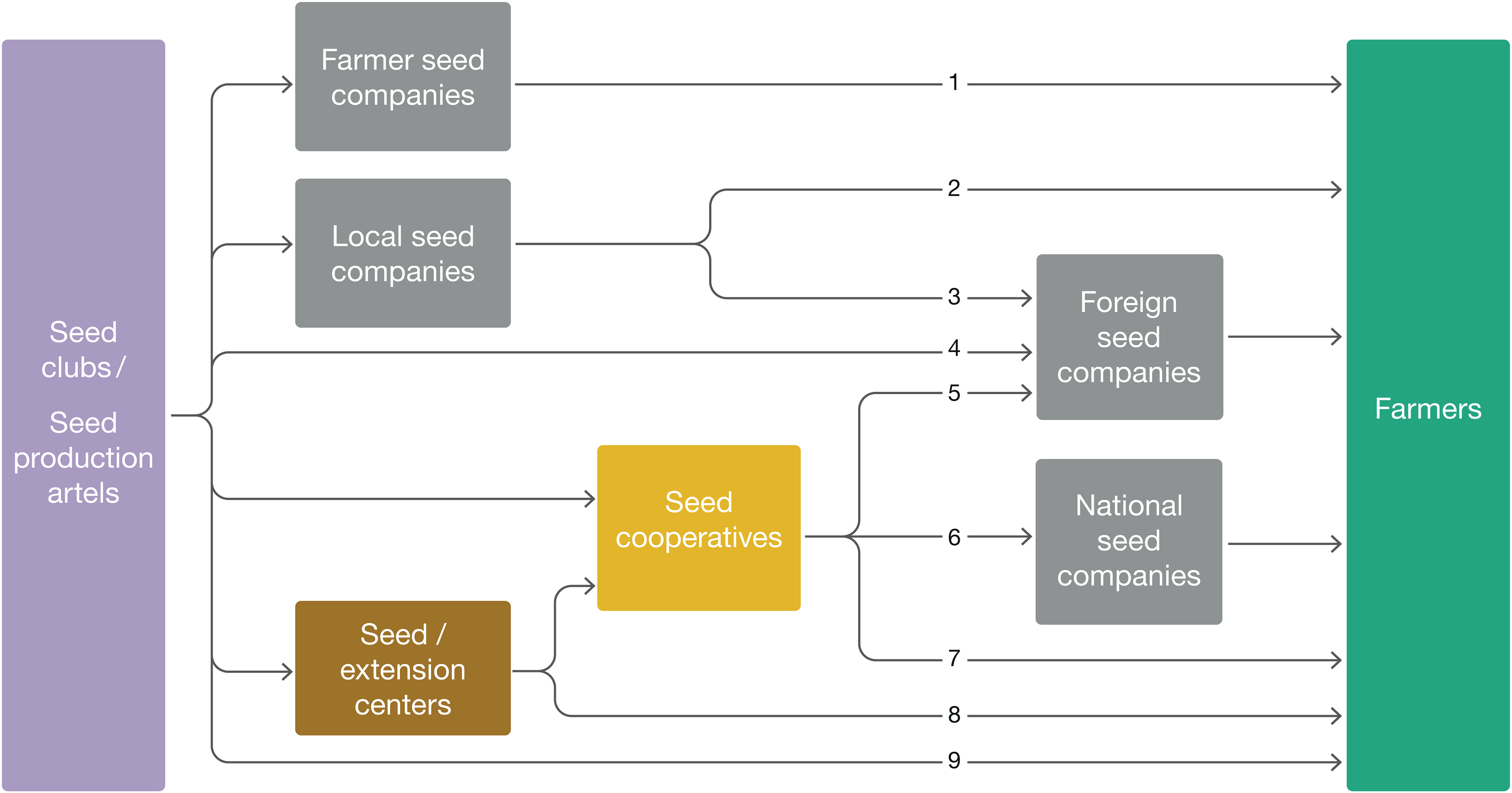
Seed dissemination channels used by seed clubs in the Mekong Delta. By obtaining recognition as artels, seed clubs can produce seed on contract for seed companies, cooperatives or provincial seed/extension centers who then disseminate the seed (channels 1–8).
In some cases, seed clubs also distribute rice seeds directly to nearby farmers (channel 9). These seeds are either public varieties or locally released farmer-developed varieties and the distribution is done on a noncommercial basis. In the early years (1990s), the seed clubs set a price to cover the cost of production and accumulated investments for seed club activities, which farmers paid for in grain (e.g. 1 kg of rice seeds was sold for 1.2 kg of rice grain). Today, cash transactions are more common; however, this is still done on a noncommercial (at-cost) basis, as seed clubs are not permitted to commercialize seeds. This again is one of the reasons that some seed clubs have established seed cooperatives or companies. These entities have countrywide accreditation and can sell seeds at provincial or national levels. However, seed cooperatives and seed companies can only sell seeds of varieties that are formally released. Since they would need to obtain licenses to sell varieties protected by PVP, farmer seed cooperatives and companies generally focus on open-access public varieties, which have a lower market share than private-sector varieties (Table 3).
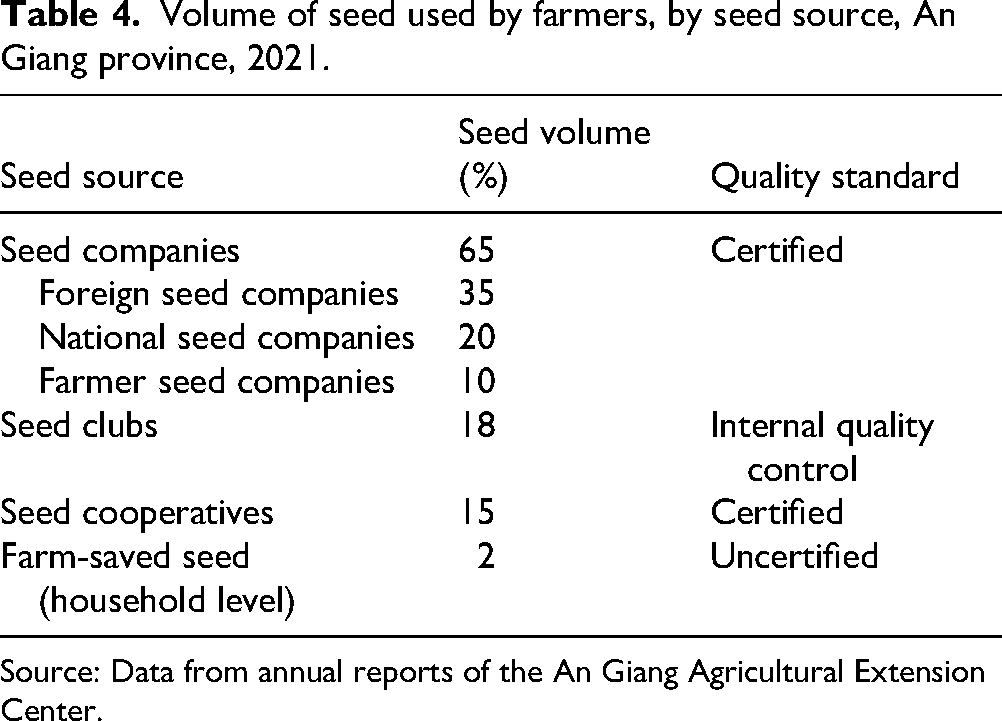
Data on seed sources used by farmers show that the share of seeds disseminated directly from the seed clubs is rather limited. According to data provided by the An Giang Agricultural Extension Center, as of 2021, the majority of seeds used by farmers in the province was sourced from private seed companies (65%), while seed clubs and seed cooperatives accounted for 18% and 15%, respectively. Only 2% of seeds used were farm-saved at the household level (Table 4). 8 Thus, while seed clubs are the largest category of seed producers, seed dissemination is dominated by private seed companies.
Volume of seed used by farmers, by seed source, An Giang province, 2021.
Source: Data from annual reports of the An Giang Agricultural Extension Center.
As seed production in An Giang surpassed the province's annual seed requirement in the mid-2010s, the surplus has been sold to agro-input shops in neighboring provinces of the Mekong Delta, such as Can Tho, Kien Giang and Dong Thap. However, the overall availability of seeds from formal sources (companies and cooperatives) appears much higher in An Giang compared to the rest of the Mekong Delta, driven largely by the outgrower role performed by the seed clubs and the strong presence of private companies.
Formal seed and agri-food system regulations
The seed system functions described above are influenced by seed policies and regulations as well as other structural factors such as market forces. In this section, we highlight some of the key policies that influence seed clubs’ role within the seed system, in particular, institutional challenges that limit seed clubs' role in seed dissemination, as well as the use and commercialization of seeds of farmer-developed varieties.
Vietnam began developing legislation related to seeds in 1996, the same year that the first seed clubs were established. Since that time, several laws and regulations have been passed, mainly regulating the formal seed system (Gatto et al., 2021). In the early 2000s, Vietnam passed the Ordinance on Plant Varieties (15/2004/L-UBTVQH), which established the regulatory framework for the management and conservation of plant genetic resources; the development, registration and release of plant varieties; and the production, quality control and commercialization of seeds. This law also included an initial system for protection of plant varieties, which was further consolidated in the Intellectual Property Law (50/2005/QH112005) and related regulation (104/2006/ND-CP), enacted as part of Vietnam's accession processesto the UPOV 9 1991 Act in 2006 and the World Trade Organization in 2007 (Nguyen and Lindroos, 2021).
For major crops, including rice, the 2004 Ordinance only permitted commercialization of registered varieties, requiring DUS and VCU testing and multilocation trials. It also required that seed producers and traders selling seeds for commercial purposes be registered. Farming households and individuals producing or selling seeds for noncommercial purposes were exempt from these requirements but needed to ensure their seeds met quality and phytosanitary standards (Art. 36.3). The efforts by the CBDC project to train seed clubs in quality seed production described earlier (section 3.2.2) were thus in line with this requirement.
The roles of farmers and farmers’ organizations within the seed system were not addressed until 2008 when the MARD issued the Regulation on Production Management of Farm Households’ Plant Varieties (MARD Decision 35/2008/QD-BNN). Drafted between 2006 and 2008 by a multistakeholder task force and in consultation with various actors, the regulation formally recognized the contributions of farm households, cooperatives and clubs (Nguyen and Nguyen, 2016). The 2008 Decision encouraged these entities to participate in the collection, conservation and exploitation of local varieties and in the development of new varieties. This included specifying budgetary support from the provinces for the period 2006–2010 for farmers’ breeding activities, including equipment and infrastructure for seed production and processing and for testing, trials and registration of new plant varieties.
The 2008 Decision also clarified that farm households, cooperatives and clubs had the right to register new varieties and apply for PVP in their own name. It further confirmed that they could “use or exchange” seeds within their district, without being required to register as seed producers as stipulated in the 2004 Ordinance. However, this exemption applies only to farming households, cooperatives and clubs distributing seeds on a noncommercial basis. Those engaging in commercial seed production and dissemination must still meet all requirements of the law. This has been one motivation for seed clubs to register as seed cooperatives or seed companies, as they have the right to produce certified seeds and to commercialize them at provincial and national levels, respectively (see Figure 3).
Finally, through the 2008 Decision, MARD also delegated responsibilities to several government departments and research institutes to support farmers’ seed activities, while allocating the most direct responsibilities to the DARDs of the provinces and cities (Nguyen et al., 2016; Nguyen and Nguyen, 2016).
In line with the MARD 2008 Decision, at the provincial level, An Giang province has also issued other policies and programs in response to the increasing importance of seed clubs in rice production. These include the following:
Decision 3368/2005/QD-UBND issued in 2005 promulgated regulations on lending funds to support the development of agricultural cooperatives. This allowed groups or cooperatives to obtain loans of up to 300 million VNDper group for 3 years with preferential interest rates to invest in dryers, seed screening and agricultural tools for production and business. Decision 3048/2010/UBND-KT issued in 2010 facilitated seed production by community organizations (seed clubs, cooperatives) by establishing a subsidy covering 50% of the price of foundation seeds of common varieties. An Giang People's Committee established a successful training program for farmers using the “1:1:1 sponsoring model” in which costs were shared by the district government, provincial DARD and related businesses such as food and tourism companies (Tin et al., 2011).
Together, the MARD Decision, combined with provincial policies and programs, provided an important recognition of seed clubs' activities within the seed system and set a framework for financial, technical and organizational support from government agencies at different levels. Kuhlmann and Dey (2021) argue that support at the sub-national level has been important for seed clubs to organize collectively to register and release varieties at the national level, as well as to gain more market access through the establishment of seed cooperatives and farmer seed companies. Some flexibility is also afforded to seed clubs by allowing “exchange” of farmers’ seeds at the district level, although many seed clubs have the ambition to sell their seeds more widely (Tin et al., 2011).
While significant, over time, these policies have become stagnant, with many programs developed and enforced only within a limited period, from the 2000s until the early 2010s. More recent policies at both provincial and national levels have offered limited support for seed clubs. For instance, An Giang People's Committee developed and implemented a 2017–2020 project, under Decree 1019/QD-UBND, to expand and promote seed club activities. Although some new seed clubs were established (e.g. Vinh Khanh seed club and Vinh Trach seed club in the Thoai Son district), the project reported that, overall, only 50% of the existing seed clubs benefited from the plan.
At the national level, the 2004 Seed Ordinance was updated in 2018 through the Crop Production Law (No. 31/2018/QH14) and its subsequent enforcement through Decree No. 94/2019/ND-CP. This new law covers the regulation of the formal seed system, including research on conservation, use and exploitation, variety registration (referred to as “recognition of circulation”), variety testing, production, trading, quality assurance and export/import, as well as the rights and obligation of organizations and individuals engaged in these processes. However, it does not recognize farmers’ roles in the seed system or include other provisions set out in MARD's 2008 Decision.
The 2018 Crop Production Law does nonetheless include some changes in the procedures for variety registration, introducing processes for different types of varieties. While registration of new plant varieties of “main species” 10 still requires VCU and DUS tests, simpler procedures are outlined for the approval of “privileged circulation” for specialty, indigenous and existing plant varieties with a long history of use, as well as for “self-declaration of circulation” for varieties not belonging to the main species. These new provisions for varietal registration allow a greater diversity to enter the seed market (Gatto et al., 2021). Yet this does little to promote the use and commercialization of the large number of rice varieties developed by the seed clubs in the Mekong Delta, as these must meet the more stringent requirements for the “main species.”
The 2018 law also includes provisions that pose significant barriers for seed clubs, especially regarding requirements for production and trade of seeds. While variety registration is still required for commercialization, the 2018 law also makes it an obligation to register PVP before plant varieties can be commercialized or transferred to another entity (Art. 30). Furthermore, in order to be eligible to produce or trade seeds, it is a requirement to own the plant variety or have authorization from the owner (Art. 22). To our knowledge, Vietnam is the only country making PVP mandatory. Although some seed clubs have successfully registered their varieties and obtained PVP (Table 2), these procedures are excessively complex and costly for farmers’ organizations to negotiate (De Jonge et al., 2019). On the one hand, these requirements create a financial burden for farmers’ and seed clubs’ plant breeding activities, with fees for DUS and VCU as well as the registration charges that cost over US$4000 per line per season. On the other hand, with the new requirements to register PVP, access to public varieties is diminishing, leaving seed clubs with few options besides signing contracts as outgrowers or, in the case of farmer cooperatives and companies, paying royalties to produce and sell protected varieties. These challenges are explained in an interview with a seed cooperative director with 15 years of experience in An Giang province: For us, the most difficult problem right now is the issue of PVP. If 8–9 years ago, we wanted to produce and sell rice varieties preferred by farmers in the commune (e.g., OM5451 and OM18), we often went to CLRRI [Cuu Long Rice Research Institute] to buy foundation seeds. However, 6 years ago, those varieties were bought by Loc Troi and registered for intellectual property protection. They said in the newspaper that we couldn't produce it anymore or they would file a lawsuit against us. If we wanted to produce these varieties, we would have to register with them and pay them a fee of 200 VND/kg of seed produced, which was about 2% of the selling price at that time.
As this analysis shows, the development of the seed clubs was facilitated by a period of relatively favorable policy conditions, notably the MARD 2008 Decision and associated forms of support implemented at provincial and local levels. This coincided with a temporary window of institutional openness resulting from Vietnam's agricultural decentralization and seed system reforms in the 2000s and early 2010s. During this time, provincial DARDs, district extension services and donor-supported participatory breeding programs actively encouraged community-based seed production to address chronic shortages of quality seed, improve varietal adaptation and reduce dependence on state farms and private suppliers. Successes of projects in the late 1990s and early 2000s informed, at least in part, the decision to develop the MARD 2008 Decision (Nguyen et al., 2016). The subsequent shift to a more restrictive policy environment reflects a recentralization and commercialization of the seed sector with enactment of stronger seed certification, PVP and market-oriented agricultural policies. Although these reforms did not explicitly target seed clubs, they have narrowed the institutional space within which they can operate.
Discussion
This study has examined the role of seed clubs in the seed system in Vietnam, with a particular focus on how they operate in An Giang province. The findings highlight the significant impact of seed clubs on the seed system, while also underscoring the challenges they face within the broader regulatory and market context. This study highlights important opportunities for further strengthening the role of seed clubs in Vietnam as well as salient lessons for intermediary seed system development efforts elsewhere.
Insights from the seed club experience
Considering the operation and impact separately by function, the seed clubs have made significant contributions to all of them. In terms of variety management and development, the seed club program has enabled collecting and ex situ conservation of a large number of traditional farmer varieties (>750 accessions) and participatory selection and development of about 500 stable lines out of which six are formally released nationally and many more are informally released locally on a noncommercial basis. The scale of the participatory breeding work done in the seed clubs, in terms of both number of farmer groups involved and number of stable lines and varieties developed, is probably unprecedented in comparison with other PPB programs around the world (Berg and Westengen, 2020). The seed clubs thus contribute importantly to increasing genetic and varietal diversity in the seed systems they are part of.
With regard to seed production, the fact that seed clubs have become the largest actor in terms of total volumes of seeds produced in the major rice-growing province of An Giang is also remarkable from an international perspective. The numbers presented here show that the seed clubs alone have produced sufficient volumes of seeds to meet the annual seed demand in the province (∼93K tons/year), contributing significantly to the province becoming a net rice seed exporter. While many intermediary seed system actors become important seed producers locally (Dey et al., 2022; Tione et al., 2025; Vernooy et al., 2015), it is, to our knowledge, rare for them to become major producers at the scale achieved by the seed clubs in An Giang.
Considering the last mile in the seed value chain, our presentation of the role of the seed clubs shows that they are performing very important roles in disseminating seed to end users. The direct supply of approximately 18% of the seeds used by farmers in An Giang is significant, and the fact that this happens on a noncommercial basis can be assumed to contribute significantly to the access dimension of farmers’ seed security in the province. The seed clubs’ large supply of seeds to registered seed companies and cooperatives that sell seeds on a commercial basis is likewise a crucially important contribution to the functioning of the seed system in the province and beyond. The fact that many seed clubs have transitioned to become authorized commercial outlets themselves further testifies to the ambitions and ability of the seed clubs to become major players in the seed systems farmers use. Nonetheless, some major challenges faced by the seed clubs crystalize when considering this last-mile function, with repercussions for the seed clubs’ activities upstream in the value chain as well as for their overall impact.
Challenges in seed dissemination can be summarized in relation to national seed system governance and market drivers. The large varietal diversity developed collaboratively by seed club farmers and scientists is cultivated on a relatively small share of the land (e.g. about 13% in An Giang province). This is probably partly because some of these varieties are adapted to specific agroecological or user needs, such as the sticky-rice variety Nep-AG, but also because most of the varieties developed cannot be sold on a commercial basis. The legislation requires that varieties be registered and released nationally before they can be commercialized, and with the introduction of the Crop Production Law from 2018, it is now also obligatory to obtain PVP before varieties are put on the market. The stringent requirements and fees involved constrain the seed clubs’ ability to go for formal release, and the majority of farmer-developed varieties are therefore disseminated only locally and on a noncommercial basis. The income-generating potential for seed clubs is therefore larger in seed production of registered varieties. But some of the registered varieties with the highest market share are protected by PVP. As reflected in the quote from the cooperative director above, such intellectual property rights are considered to put the seed clubs and their commercial spin-offs at a disadvantage in competition with seed companies with the financial muscle to obtain PVP.
In conclusion, the seed clubs in An Giang province are without doubt making significant contributions to the seed system through their innovative approaches to variety development, seed production and dissemination. However, policies designed to support seed clubs have been limited in scope and duration, failing to address the evolving needs of these organizations. To support the continued existence of seed clubs, there is a need for more flexible and supportive implementation of policies. This should include increased investment in public variety development and seed production—including technical equipment and capacity building—as well as reduced registration fees and waiver of PVP requirements for farmer-developed varieties. The policy basis for such regulatory flexibility exists in policies introduced in the 2000s such as the Regulation on Production Management of Farm Households’ Plant Varieties (MARD Decision 35/2008/QD-BNN), which are identified also by other authors as key to the achievements of the seed club model in Vietnam (De Jonge et al., 2019; Kuhlmann and Dey, 2021). For the seed clubs, it is important that the implementation of the Crop Production Law (No. 31/2018/QH14) be guided by the same understanding of the need for regulations that protect farmers and ensure sustainability of the system, while also maintaining flexibility and adaptiveness in implementation. Tin et al. (2011) also suggest that farmers be allowed to disseminate seed beyond the district level, a restriction that is established in the MARD 2008 Decision and would also require revision of this regulation.
Lessons for similar projects elsewhere
We end this article with some reflections on the implications of the seed clubs’ experience for other intermediate seed system programs with ambitions to transition from small-scale development projects to self-sustained and/or publicly mainstreamed organizations.
Words matter
It is important to use clear terminology. Throughout most of the history of seed clubs as well as in supporting policies and regulations, the term “informal seed systems” is used to describe the functions performed (Nguyen and Nguyen, 2016; Tin et al., 2011). In this article, we have rather referred to the seed club activities as a type of “intermediary seed system development” to highlight the fact that they are collaborations between farmers and other stakeholders such as researchers, public- and private-sector partners and legislators. This terminology is in line with developments in the international literature in the field, which for years have stressed the importance of moving beyond the binary formal-vs.-informal seed systems (Almekinders and Louwaars, 2002; Bellon and Risopoulos, 2001; Louwaars and de Boef, 2012; McGuire and Sperling, 2016; Westengen, 2017). Thijssen et al. (2025) distinguish between the three “archetypes” of farmer-managed, formal and intermediary seed systems while stressing that these are “analytical constructs developed to help interpret and simplify complex realities.” Seed clubs combine their own knowledge with skills learned from researchers and other actors to develop new varieties, conduct internal inspections to produce good-quality seed and release and distribute these locally. At the same time, they have taken on roles in the formal system, primarily as outgrowers for seed companies, but also by establishing their own seed cooperatives or companies and even obtaining PVP and officially releasing some varieties. We believe that the scope of these activities demonstrates an ambition that goes beyond the informal. Thus, a first overarching reflection emanating from this study is that terminology matters; if a project combines forces of farmer groups and formal system actors in ways similar to the Vietnamese seed club model, then recognition as intermediate actors may be important for developing appropriate policy and institutional support, such as those that now exist in countries that have adopted policies for integrated seed system development (de Boef et al., 2025; Thijssen et al., 2025).
Scale matters
It is important to know the “seed regulatory value chain” (De Jonge et al., 2025) and consider how scale matters for the relevant activities. For small projects like a stand-alone community seed bank, it might be enough to have legal space to operate on a local and noncommercial scale. Such legal space is sometimes explicitly defined in seed laws (Kuhlmann and Dey, 2021), whereas in our experience, it is more commonly just quietly tolerated by the authorities. But if the ambition is to establish a sustainable business model, knowledge of existing regulations as well as a strategy for influencing their development is a necessity. In Vietnam, the seed clubs and budding cooperatives must abide by a seed regulatory value chain holding them to the same standards as formal actors as regards variety release and seed certification if they are to enter the market alongside other commercial actors. Other countries, most notably those where seed system actors have advocated for and co-created regulatory regimes for pluralistic seed systems, now have provisions for variety registration and seed quality control systems adapted to the needs of intermediary actors (de Boef et al., 2025; De Jonge et al., 2025; Thijssen et al., 2025). Such persistent policy work is needed for intermediary seed system development to fully realize ambitions for programs that aim for larger-scale impact in the “mainstream” national seed system.
Goals matter
It is important to be clear about objectives. It makes a difference if the goal is to contribute to in situ conservation, realizing farmers’ rights, seed sovereignty, seed security, climate adaptation, productivity increase or promotion of entrepreneurship and market orientation in seed systems. Many projects claim to address a range of goals that sometimes are synergistic—but often are in outright conflict with each other. Strategies to “formalize the informal” should be well thought through in relation to the overall objectives of the project and the outcomes sought. If, for example, the goal is to enhance farmers’ seed security, i.e. their access to quality seeds of preferred varieties, project planners should carefully consider their envisioned impact pathway along the seed regulatory value chain. Difficult, but important, questions include the following: Are relaxed quality control systems in the interest of the farmers buying seeds? Does the recognition granted by farmer variety registration translate into tangible benefits for the farmers involved? Is formalization of farmers’ rights in ways that resemble breeders’ rights in line with farmers’ norms and seed system realities? Regarding the latter topics, the experience of seed clubs working in a governance context requiring both registration and PVP shows the importance of considering how power dynamics can favor larger incumbents, such as national and multinational seed companies. Even regulatory value chains for pluralistic seed systems, co-developed to enhance the complementarity of different seed systems, are of limited value for farmers if such power imbalances are not addressed.
Finally, it is important to emphasize that there is no one-size-fits-all approach for seed system development. Local, regional and even geopolitical contexts differ, and seed system development efforts must be tailored, and remain adaptive, to the specific agroecological and sociopolitical situation.
Supplemental Material
sj-docx-1-oag-10.1177_00307270261422412 - Supplemental material for Farmers as breeders and seed producers: Insights from 30 years of scaling up seed clubs in Vietnam
Supplemental material, sj-docx-1-oag-10.1177_00307270261422412 for Farmers as breeders and seed producers: Insights from 30 years of scaling up seed clubs in Vietnam by Loi Huu Nguyen, Sarah Paule Dalle, Shivali Sharma, Benjamin Kilian, Teshome Hunduma Mulesa, Tin Huynh Quang and Ola Tveitereid Westengen in Outlook on Agriculture
Footnotes
Acknowledgements
We extend our thanks to the local authorities and participating farmers who contributed to the field data collection by taking part in FGDs and KIIs. Mr Phan Thành Tâm provided valuable data and reports from the An Giang Agricultural Extension Center, which supported the completion of the study. Marta Morais and Ana Leite assisted with the preparation of the figures and map, respectively. A special acknowledgment is extended to Ms Normita Ignacio of SEARICE for her long-term contributions to the development of seed clubs in the Mekong Delta since 2003.
The research was supported by the Biodiversity for Opportunities, Livelihoods and Development project ( ), coordinated by the Global Crop Diversity Trust and funded by the Government of Norway (grant number QZA 20/0154). The first author also received financial support from the ASEAN Master in Sustainability Management program, funded by the Norwegian Ministry of Foreign Affairs and administered under a Grant Agreement between the Embassy of Norway for ASEAN and the ASEAN University Network (AUN).
ORCID iDs
Ethical considerations
Ethics approval for the study was obtained from the Agricultural and Natural Resources Department of An Giang province before initiation of fieldwork.
Consent to participate
Prior informed consent was obtained verbally from all participants.
Consent for publication
Not applicable.
Funding
The authors disclosed receipt of the following financial support for the research, authorship and/or publication of this article: The research was supported by the Biodiversity for Opportunities, Livelihoods and Development project (), coordinated by the Global Crop Diversity Trust and funded by the Government of Norway (Norad, grant number QZA 20/0154). The first author also received financial support from the ASEAN Master in Sustainability Management program, funded by the Norwegian Ministry of Foreign Affairs and administered under a Grant Agreement between the Embassy of Norway for ASEAN and the ASEAN University Network (AUN), Direktoratet for Utviklingssamarbeid (grant number QZA 20/0154).
Declaration of conflicting interest
H.Q.T. and N.H.L. are involved in managing the seed club program in Vietnam, and S.S. and B.K. are employees of the Crop Trust, which funded the program. These roles facilitated data access but did not influence the analysis or its conclusions. All roles are fully disclosed in the manuscript.
Data availability
The data generated and analyzed during this study cannot be publicly shared due to participant confidentiality and agreements with local authorities who facilitated the field research. The KII and FGD transcripts contain personal and location details that cannot be anonymized sufficiently to ensure compliance with ethical requirements. Access to the data was granted solely for research purposes under these conditions, and further distribution is not permitted.
Supplemental material
Supplemental material for this article is available online.
Notes
References
Supplementary Material
Please find the following supplemental material available below.
For Open Access articles published under a Creative Commons License, all supplemental material carries the same license as the article it is associated with.
For non-Open Access articles published, all supplemental material carries a non-exclusive license, and permission requests for re-use of supplemental material or any part of supplemental material shall be sent directly to the copyright owner as specified in the copyright notice associated with the article.
