



Abstract
This study examines the constraints posed by labor shortages, rising costs, and regulatory barriers on the adoption of labor-saving technologies among facility vegetable farmers in China. Based on an empirical analysis of 1147 farm surveys, we find that labor cost and supply pressures significantly increase both the willingness and intensity of technology adoption, especially among larger farms and when supported by adaptable technology dissemination systems. In contrast, regulatory constraints exhibit a weaker influence, and existing government support measures prove ineffective. These findings suggest that policy reforms should focus on facilitating farm consolidation, strengthening organizational capacity, and developing context-specific technology extension systems to alleviate labor constraints and promote sustainable agricultural modernization.
This is a visual representation of the abstract.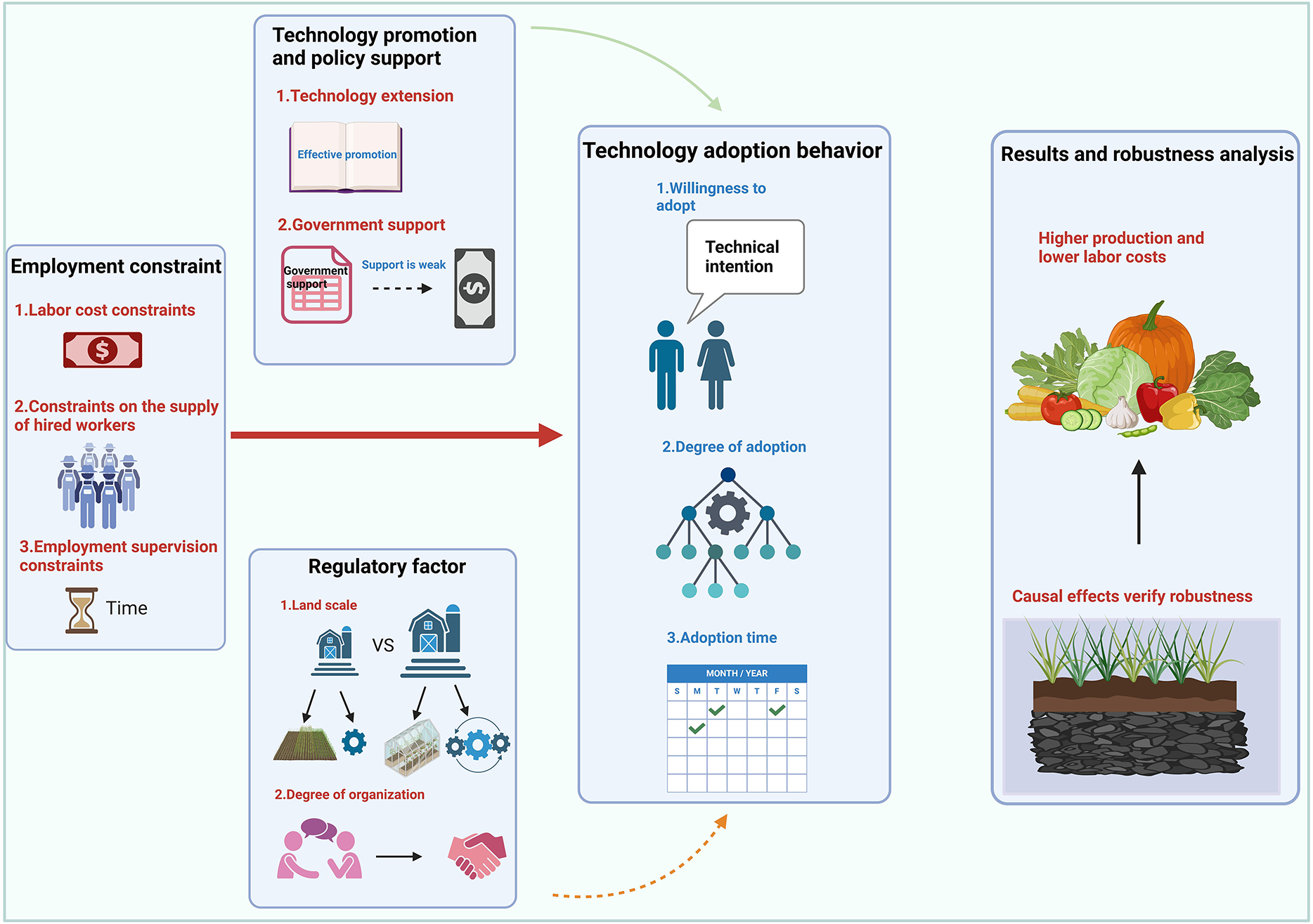
Keywords
Get full access to this article
View all access options for this article.
References
Supplementary Material
Please find the following supplemental material available below.
For Open Access articles published under a Creative Commons License, all supplemental material carries the same license as the article it is associated with.
For non-Open Access articles published, all supplemental material carries a non-exclusive license, and permission requests for re-use of supplemental material or any part of supplemental material shall be sent directly to the copyright owner as specified in the copyright notice associated with the article.
