




Abstract
This paper analyses Norwegian Church Aid's evolving agricultural interventions in Somalia, tracing the transition from emergency relief to resilience-focused development in conflict-affected and climate-vulnerable regions. Drawing on thirty years of operational experience and mixed-methods evidence, it examines the effectiveness of climate-smart agriculture, renewable energy solutions, inclusive cooperatives and gender-responsive programming. The results show that combining sustainable inputs, clean technologies, cooperative governance and nutrition-sensitive practices has raised household crop yields by 68% on average, expanded local food security, diversified incomes and strengthened social cohesion. Cooperatives have emerged as critical platforms for inclusive governance and market access, while targeted interventions have empowered women and displaced households to lead agricultural and peacebuilding activities. The study concludes that flexible, locally driven approaches are vital for navigating persistent insecurity and climate shocks. It recommends greater investment in renewable infrastructure, tailored financing for smallholders and the institutionalisation of cooperative models to strengthen resilient food systems and sustainable rural recovery.
Keywords
Introduction
Context and drivers of food insecurity in Somalia
Somalia faces chronic food insecurity driven by climate shocks, conflict, displacement and weak institutions. Recurrent droughts and floods – intensified by climate change – have devastated crop and livestock production, reducing food availability and eroding household resilience. Armed conflict further disrupts agricultural activity and humanitarian access. In 2025, over 4.4 million Somalis are projected to face acute food insecurity, with rural southern and central regions most affected. Economic pressures, such as inflation and reliance on food imports, make basic goods unaffordable. Displacement has fragmented communities, limiting agricultural capacity, particularly in insurgent-held areas. Vulnerable groups, including young children, pregnant women and internally displaced persons (IDPs), suffer from persistently high malnutrition rates (Arias et al., 2019; Shemyakina, 2022; WFP, 2025).
To respond, national and international agencies have implemented both emergency and resilience-building interventions. Short-term actions include distributing agricultural inputs and supporting vaccination campaigns. Long-term strategies focus on climate-smart agriculture, conservation farming and agroforestry. Initiatives also integrate nutrition services, market access and land tenure support. Despite the security challenges, these interventions help stabilise rural economies and reduce reliance on food aid (Durao et al., 2020; FAO, 2018). Despite notable successes, scalability remains constrained by insecurity, weak governance and inconsistent donor engagement.
By providing a rare, practice-based account of three decades of agricultural work of Norwegian Church Aid (NCA) in Somalia, the paper demonstrates how climate-smart farming, cooperative models and resilience frameworks can be practically implemented and sustained despite chronic insecurity and environmental shocks. The paper also offers practical insights into operationalising local, community-driven strategies in volatile settings and highlights women's leadership and the role of cooperatives as a foundation for both agricultural productivity and local peacebuilding. The study also contributes to donor debates on transitioning responsibly from direct food and cash aid to investments in scalable infrastructure, green technologies and locally governed institutions that build self-reliance and sustainable food security in crisis-affected regions.
From relief to resilience: Evolution of local agricultural interventions
This section traces the evolution of NCA's three-decade agricultural programming, demonstrating how an initial focus on humanitarian relief gradually matured into an integrated, resilience-oriented approach tailored to the realities of conflict-affected and climate-vulnerable communities. By situating the organisation's interventions within the broader context of Somalia's chronic food insecurity, this historical account underpins the paper's central argument: flexible, locally driven agricultural solutions are critical to building sustainable livelihoods and reducing dependency on direct food and cash assistance in fragile contexts.
These evolving operational strategies, which address climate risks, conflict dynamics and changing livelihoods, offer practical evidence for rethinking the scaling and institutionalisation of resilience programs within fragile rural economies. This insight is particularly useful for policymakers and donors aiming to connect short-term relief efforts with long-term development objectives.
A detailed account of programmatic inputs
Beyond seeds, farmers have received basic tools to improve cultivation and reduce labour demands, with tailored support for women in IDP settlements. These women have benefited from kitchen gardening inputs, practical training and the innovative use of recycled household wastewater for irrigation, promoting water-efficient practices in resource-scarce environments.
To boost productivity and address immediate financial needs, NCA has combined input support with cash distributions for 100 women farmers and Cash-for-Work for 150 farmers in Jubaland during 2022 and 2023. These interventions have restored 45 critical irrigation canals in 25 villages, improving water flow, reclaiming farmland and protecting against erosion.
These systems are integrated with drip irrigation and climate-smart greenhouses to boost efficiency. To date, three greenhouses in Jubaland and nine in Puntland use drip irrigation, enabling year-round cultivation of high-value crops while conserving water and minimising soil degradation.
Introducing ox-ploughing as an alternative to mechanised ploughing met initial resistance, as local farmers saw motorised ploughing as a sign of progress. However, sustained community awareness efforts have encouraged wider adoption of animal traction, lowering costs and reducing environmental impact.
A strong gender focus underpins this work. Women-led cooperatives have been prioritised for these clean technologies, enhancing women farmers’ access to sustainable energy, water and productive resources.
Post-harvest management training addressed high food losses – often exceeding 30% – by improving drying, storage and food safety practices to preserve nutritional value and market competitiveness.
As part of its commitment to environmental sustainability, NCA provided practical training on land and water conservation, including drip irrigation, wastewater reuse, rainwater harvesting and soil management tailored to different soil types (Osman, 2023). For rocky terrain, farmers adopted techniques such as rock catchments, swales, mulching and cover crops, while sandy soil training focused on enriching organic matter and implementing micro-catchments to boost water retention.
Training also covered responsible cattle management to protect crops and reduce land-use conflicts. Notably, video-based learning with examples from Bangladesh and India increased engagement and effectiveness.
Finally, beekeeping was integrated to enhance crop pollination and diversify income sources. Farmers learned good agricultural and hive management practices, boosting yields while generating revenue from honey and other bee products – strengthening resilience through climate-adaptive livelihoods.
Cooperative leaders receive training in governance, financial management, savings and loans and bulk marketing. Between 2021 and 2024, NCA piloted apiculture with 180 farmers
To ensure inclusivity, NCA requires that at least 25% of cooperative leadership roles are held by women, promoting gender equity in decision-making and access to resources.
Conceptual framework and methodology
Conceptual framework: Local resilience for sustainable farming in insecure areas
In the context of this paper, resilience refers to the capacity of individuals, households and communities to anticipate, absorb, adapt to and transform in response to shocks and stresses – including conflict, climatic hazards, displacement and market disruptions – without compromising their long-term food security, livelihoods, or social cohesion
Core components of the framework.
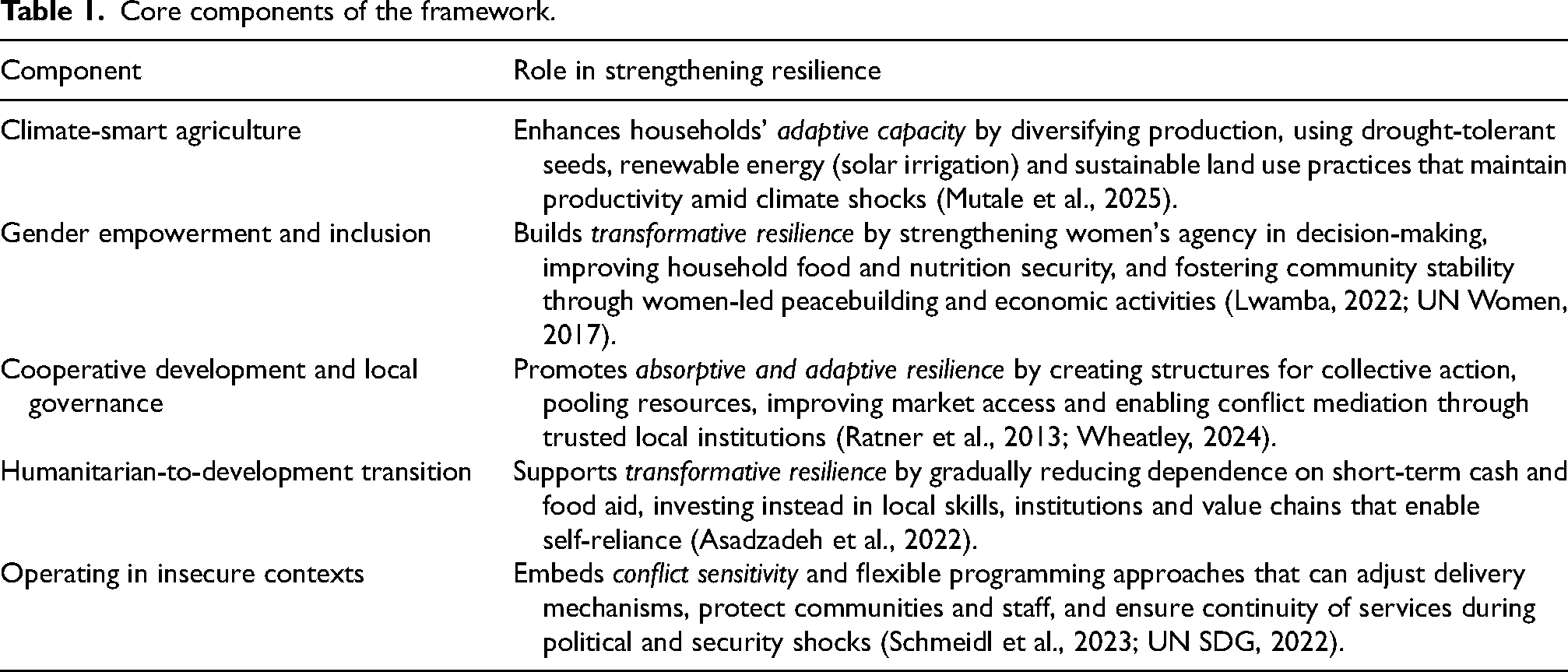
The framework positions resilience as a dynamic process achieved through three interlinked pathways:
Absorptive capacity: Households’ and communities’ immediate ability to cope with shocks (e.g. emergency relief, short-term aid and crisis coping mechanisms). Adaptive capacity: Medium-term adjustments that improve livelihoods (e.g. training, diversified crops, renewable energy solutions and cooperative marketing). Transformative capacity: Long-term systemic changes that alter structural vulnerabilities (e.g. gender equity in governance, policy advocacy, institutionalisation of cooperative models and durable exit from dependency on external aid).
The framework guiding NCA's interventions is anchored in four core principles: localisation, inclusivity, flexibility and sustainability. It prioritises community ownership and draws on local knowledge to ensure that solutions are context-specific and driven by those they affect most directly. Inclusivity is central, with deliberate efforts to ensure that women, displaced people and other marginalised groups not only participate but also lead and benefit from interventions. Given the unpredictable security conditions and climate risks in Somalia, programming is designed to remain flexible and responsive to emerging challenges and opportunities. Ultimately, sustainability is a constant goal, with an emphasis on building local capacities and institutions that can continue to function effectively and independently long after donor funding cycles have ended.
This conceptual framework underpins the paper's analytical lens by clarifying how NCA's interventions contribute to each dimension of resilience – absorptive, adaptive and transformative – and how these are operationalised through climate-smart practices, gender-focused initiatives, cooperative structures and conflict-sensitive delivery methods. It also clarifies the strategic aim of transitioning from externally funded short-term assistance toward locally owned systems that sustain food security and social cohesion, thus providing a structured basis for the paper's conclusions and recommendations.
Research scope and methodology
This paper documents NCA's evolving agricultural interventions in Somalia, drawing on more than thirty years of operational experience, and focuses on three main areas:
The effectiveness of climate-smart agricultural practices and renewable energy solutions. The impact of gender-responsive approaches and community participation in building local resilience. The role of agricultural cooperatives in inclusive governance and market access.
The study employs a mixed-methods approach, combining quantitative program monitoring and evaluation data with qualitative insights to highlight successes, implementation challenges and lessons learned in fragile and conflict-affected contexts.
Quantitative data drew on NCA's detailed records of beneficiaries, agricultural input distribution, crop yields and income levels. Baseline and endline evaluations complemented these records. Monitoring data were collected using the Kobo Collect digital system and, where access was limited, by phone interviews.
Qualitative data included 18 case studies (5 in Puntland and 13 in Jubaland) between 2022 and 2024 by using focus group discussions and semi-structured interviews with farmers, cooperative members, women's groups, displaced households, local officials and private sector actors. Of these, eight were conducted directly by the author during monitoring visits; the remainder were integrated into routine program visits by trained staff using a standard guideline. In addition, the historical narrative presented is based on the unique oral accounts of interviewees who participated in, witnessed, or had extensive knowledge of the NCA’s program operation. To the possible extent, the stories obtained through the qualitative techniques were validated by cross-checking them against information available from program reports and public websites.
Sites were chosen based on NCA's operational reach, varying security conditions and agro-ecological contexts. Participants were purposively selected to include diverse perspectives, with a focus on gender balance, displacement status and involvement in cooperatives.
Furthermore, over the past decade, NCA has released numerous project reports, success stories and evaluations to assess the effectiveness of its interventions and monitor progress. These documents have offered valuable information and insights into the outcomes of NCA's initiatives, including lessons learned (Ahmed, 2023; CeRID, 2022; CeRID, 2025; NCA, 2024; Muse, 2025).
Somalia's insecurity significantly shaped research execution:
Restricted travel and conflict risks were mitigated through remote data collection, which involved collecting information over an extended period and utilising local focal points. Mobile populations made longitudinal tracking difficult; data were collected at key points: profiling, midline and endline. Bureaucratic clearance for data collection was secured through early engagement with local authorities and transparent registration. To control costs and manage verification constraints, NCA digitised tools and used remote cross-checks (photos and follow-up calls) alongside limited in-person spot-checks.
All participants gave informed consent. The study took care to protect respondents’ safety and confidentiality, especially in insecure areas. Data are reported in aggregate to prevent the identification of individuals or communities at risk.
Results: Programme outcomes and evidence
This section presents the key results of NCA's agricultural programming in Somalia, structured to address the paper's three core research objectives. The findings combine quantitative monitoring data with qualitative evidence drawn from case studies, interviews and NCA's historical archives.
Effectiveness of climate-smart agriculture and renewable energy
Programme monitoring data covering 2200 smallholder farmers between 2022 and 2024 indicate an average 68% increase in crop yields per household per season. This substantial productivity gain has ensured improved food availability at the household level and generated a combined USD 65,176 in surplus revenue through local market sales. As highlighted in Case Studies 1 and 2, targeted interventions such as greenhouse farming, solar-powered irrigation, drought-resistant seeds and shallow well systems have helped farming households move from subsistence to market-oriented production.
The beekeeping component further illustrates climate-smart diversification: 180 farmers managing 160 beehives produced an estimated USD 14,400 in gross annual income, with additional value potential from beeswax and related by-products. This integrated approach not only improved yields but also cushioned farmers against climatic and market shocks by diversifying income streams and strengthening local food systems.
According to the programme's final evaluation report (Muse, 2025), many farming households that were previously dependent on humanitarian aid and informal wage labour have significantly reduced their reliance on these coping mechanisms, owing to sustained gains in agricultural output and income generation. This shift marks a transition from subsistence farming to more market-oriented agro-enterprise models.
A climate-resilient path to food security
Following the 2018–2019 drought that devastated livelihoods in Puntland, farmers from Balley village turned to agriculture as a means of survival. Supported by greenhouse technology, solar irrigation systems, water storage facilities and capacity-building initiatives in crop production, the farmers of this community rebuilt their livelihoods. As captured in the monitoring system, the greenhouse farming initiative in the Balley community, Puntland, empowered local farmers to produce 3.2 tons of fruits and vegetables during the December 2023–February 2024 farming season. Of this, 0.8 tons were consumed domestically, while 2.4 tons were sold on the market, generating a total value of US$4157 and a direct cash income of US$3078. The community now benefits from greater dietary diversity, increased market engagement and enhanced economic resilience, demonstrating how agricultural innovations can transform food systems in climate-vulnerable areas.
Abdullahi Abdi Hashi – cultivating prosperity
Abdullahi Abdi Hashi, a smallholder farmer from Roox village in the Galkacyo district, Puntland, exemplifies the transformative impact of agricultural intervention. With targeted support of training, agricultural inputs (100 g tomato seeds, 100 g watermelon seeds, 0.6 g red onion seeds, 2 kg maize seeds and 500 g fertilisers), and access to solar pump-enabled shallow wells for irrigation, Abdullahi significantly increased his agricultural productivity. After receiving inputs in December 2023, he began harvesting by late January 2024, producing 2630 kilograms of tomatoes and earning approximately US$2630 from sales. As he prepares for the upcoming watermelon harvest during the high-demand Ramadan period, Abdullahi stands as a model farmer in his community, demonstrating how tailored support can boost income, enhance food security and inspire local resilience.
Role of agricultural cooperatives in governance and market access
NCA has supported the establishment of 145 cooperatives in Jubaland and 10 in Puntland, each engaging an average of 30 farming households. These cooperatives have emerged as vital local institutions that strengthen governance, facilitate collective marketing and improve access to inputs and markets. By pooling resources and coordinating production and sales, members are better positioned to negotiate fair prices and reduce post-harvest losses.
The Balladul Amin Cooperative, featured in Case Study 6, illustrates this integrated model in practice. By adopting solar-powered irrigation, the cooperative expanded its cultivable land from 4 to 17 hectares, diversified its crop base and lowered fuel dependency – leading to higher yields and increased household income for its 55 member families.
Powering progress – solar irrigation and cooperative farming
The Balladul Amin Cooperative in Belet Hawo district, Jubaland, exemplifies how clean energy and cooperative farming can simultaneously boost agricultural productivity and strengthen community structures in fragile contexts. With support from NCA, the cooperative replaced costly diesel generators with a solar-powered irrigation system, cutting fuel dependency and enabling sustainable, year-round cultivation. This shift enabled 55 farming households to diversify their crops, expand cultivable land from 4 to 17 hectares, and increase their income through reduced input costs and higher yields. More than just an agricultural upgrade, the initiative has fostered collective ownership, inclusive decision-making and equitable access to resources, key factors that have reduced local tensions and promoted social cohesion. By aligning renewable energy with a cooperative model, Balladul Amin has become a resilient, community-led platform for sustainable development and peacebuilding in a region historically challenged by conflict and resource competition.
Beyond production, cooperatives serve as trusted interlocutors with local authorities, contributing to community-level planning, needs assessments and equitable input distribution. In fragile and contested environments, they also help mediate land and resource disputes through locally led dialogue and conflict resolution, building trust between internally displaced populations and host communities.
Crucially, cooperatives function as informal social safety nets, offering microloans and in-kind support to vulnerable members during crises. Their participatory structures promote inclusive decision-making and gender equity, ensuring that marginalised groups have a voice in governance.
Gender-responsive programming and women's empowerment
Women represent over 35% of all direct beneficiaries, reflecting NCA's commitment to gender-transformative agriculture. Practical measures include targeted input packages, greenhouse access and climate-smart kitchen gardens. Notably, 440 women-headed households, mostly among IDPs, established kitchen gardens producing nutritious vegetables, using recycled wastewater for irrigation. As highlighted in Case Studies 4 and 5, these gardens reduced household food expenditure, improved dietary diversity, created surplus produce sold for income used to cover school fees and health costs and empowered women as main caregivers and economic contributors.
Growing dignity – nutrition and empowerment in IDP camps
In response to persistent malnutrition and limited food access among IDPs in Puntland, NCA implemented a transformative kitchen garden initiative across IDP camps in Garowe, Galkacyo and Qardo District. Targeting 300 vulnerable households, particularly women-led families, the initiative promoted small-scale, household-level food production by equipping participants with agricultural tools, a diverse set of vegetable and fruit seeds and hands-on training in sustainable gardening techniques. These gardens, typically located in backyards, utilise recycled kitchen wastewater and other locally available resources to produce nutrient-rich foods, thereby significantly enhancing household diets and food security. Beyond improving nutrition, the initiative has become a vital source of economic and social empowerment for displaced women. Participants report reduced dependency on market-purchased vegetables, with many earning income from surplus produce sales. This economic gain is accompanied by enhanced self-sufficiency and dignity, as women assume active roles in sustaining their families’ livelihoods. The initiative has also stimulated local market mobility, created healthier food habits and fostered a renewed sense of purpose among displaced women who often face marginalisation.
A Seed of Hope – kitchen gardening to achieve self-reliance
Kadra, a 40-year-old mother of ten, resides in the Luuq district of Jubaland – an area characterised by chronic poverty and food insecurity. For years, her family faced severe economic hardship and malnutrition, with both Kadra and her husband unable to find stable employment. Her life started to transform with the kitchen garden initiative. Kadra was given practical training, quality seeds, important tools and access to irrigation water, all provided through a coordinated Water Sanitation and Hygiene (WASH) intervention. With this support, she established a productive kitchen garden that now provides her family with a steady supply of nutritious vegetables. The surplus produce has become a valuable source of income, significantly improving the household's financial stability and eliminating malnutrition among her children. Kadra describes the experience as transformative – not only for her family's wellbeing but also for her sense of purpose and dignity. Empowered by her success, she has taught her children basic farming skills and inspired others in her community to follow her example, sparking broader interest in sustainable home gardening and self-reliance.
Beyond production, women's participation in leadership has increased: 25% of cooperative leadership roles are now held by women – an outcome achieved through targeted mentorship, leadership training and technical coaching. As illustrated in Case Study 6, capacity-building in governance, conflict mediation and cooperative management has strengthened women's agency and role in local peacebuilding. Collectively, these initiatives challenge restrictive norms, expand women's control over resources and reinforce household and community resilience.
Cultivating change – women farmers leading agricultural transformation
The climate-smart agriculture initiative in Balley village, Puntland, has transformed both agricultural practices and gender roles, with women emerging as key agents of change. Through targeted training and support, women like Sadia Xaji Farah, formerly reliant on pastoralism, have successfully transitioned into greenhouse farming, managing crop cycles, water use and pest control independently. Saida Hassan emphasises the health and nutritional benefits, noting improved diets for families, especially for pregnant and lactating mothers, underscoring agriculture's impact on maternal and child well-being. Meanwhile, Faduma Said illustrates how the initiative accommodates traditional gender dynamics through a rotational labour model that balances farming duties with household responsibilities, while encouraging rest for pregnant women. Collectively, these women-led efforts have fostered local food security, maternal health and microeconomic growth. With produce now entering local markets and generating income, the greenhouse initiative has not only reduced reliance on external aid but also empowered women as leaders in climate resilience. This case demonstrates the value of culturally sensitive, gender-responsive and community-led approaches to sustainable agriculture in Somalia's climate-affected regions.
Challenges encountered and lessons learnt
Security risks and adaptive measures
NCA's agricultural interventions were carried out in a highly complex and volatile environment marked by persistent insecurity, including armed conflict, clan tensions, friction between host communities and IDPs, and the presence of non-state armed actors in both rural and peri-urban areas (Krampe, 2021). In Jubaland, a particularly acute challenge emerged from tensions between local farmers and returnees from IDP camps. Incidents involving the felling of trees for shelter construction and the encroachment on farmland for livestock grazing escalated into serious disputes, at times resulting in violence and fatalities. These localised conflicts, coupled with broader security threats, significantly impacted program operations in regions such as Gedo and parts of Puntland. Restricted humanitarian access, threats to staff safety, and episodes of community unrest led to delays or interruptions in supply distribution, monitoring activities, and training delivery.
In response, NCA adopted a multifaceted risk mitigation strategy. Engagement with community-based actors – such as elders, religious leaders, and women's groups – was central to enhancing trust, fostering community acceptance, and facilitating early warning mechanisms. To further address the root causes of conflict, NCA supported the establishment of local peacebuilding structures and mediated dialogue among key stakeholders to promote the peaceful resolution of disputes.
Operationally, NCA coordinated closely with local authorities and security committees to ensure the safe scheduling of activities and the safeguarding of valuable program assets, including solar irrigation systems and greenhouses. A decentralised implementation model, relying on local civil society partner organisations with proven acceptance and access, allowed for continued operations in hard-to-reach or insecure areas. Additionally, remote monitoring tools – such as mobile-based data collection and geotagged reporting – were employed to maintain oversight and accountability during periods of restricted field presence.
These adaptive and community-driven approaches enabled NCA to sustain critical agricultural programming despite the fluid and often challenging security landscape.
Community dynamics and conflict-sensitive programming
NCA's agricultural interventions in Somalia were implemented in complex social environments shaped by longstanding clan rivalries, competition over scarce natural resources, and the disruptive impacts of displacement and marginalisation. These dynamics frequently resulted in disputes over land tenure, water access, beneficiary selection and the management of shared productive assets such as irrigation systems and greenhouses. In areas where IDPs coexisted with host communities, such pressures often exacerbated mistrust and heightened the risk of localised conflict.
To navigate these challenges, NCA embedded peacebuilding and social cohesion strategies within its agricultural programming. Each intervention began with participatory conflict assessments and stakeholder mapping exercises to identify existing grievances, power imbalances and social structures. This ensured that programme design was context-sensitive and that resource distribution and beneficiary selection processes were perceived as fair and transparent. As captured in Case Study 7, community engagement was facilitated through inclusive dialogue forums that brought together a wide range of local actors, including elders, women's groups, youth representatives and religious and civic leaders. These forums fostered open communication, mutual understanding and collaborative decision-making, while joint planning committees and conflict resolution platforms provided mechanisms for addressing emerging disputes constructively.
The formation of cooperatives, while beneficial for local development, also introduced internal challenges. Not all members were equally active, which created tensions regarding shared responsibilities. Land tenure insecurity – particularly for members farming on leased land – further complicated cooperative stability, especially when lease agreements expired. In conflict-affected areas, the displacement of cooperative members occasionally led to structural breakdowns. To address these issues, NCA supported cooperatives in establishing clear bylaws, inclusive leadership structures and equitable benefit-sharing arrangements. Peace messaging was incorporated into training sessions, and local peace champions were identified and supported to mediate internal and inter-community disputes.
In fragile settings, activities such as cash injections and infrastructure rehabilitation were strategically prioritised for their dual impact: generating immediate livelihoods and reinforcing cooperation through shared ownership of public goods. These initiatives served as tangible peace dividends, fostering a sense of collective progress and reducing intergroup tensions.
By integrating livelihood support with inclusive governance and peacebuilding mechanisms, NCA successfully transformed potential conflict triggers into entry points for collaboration. This approach not only improved the effectiveness of agricultural programming but also contributed to lasting social cohesion in vulnerable Somali communities.
From displacement to dialogue – journey of reconciliation
Nuriyo Osman, a 55-year-old woman, faced displacement from her home due to both drought and armed conflict, losing not just her residence but her ancestral farmland – also her main source of livelihood and identity. Following years of unsuccessful attempts to reclaim her land amid growing tensions in the Alcadala IDP camp in the Deynile district of Jubaland, Nuriyo's circumstances changed when she participated in a peacebuilding training program. Though initially doubtful, she slowly adopted the concepts of mediation, trust-building and nonviolent communication. A pivotal moment occurred when she learned that the person who had taken over her land was also a participant in the training. Utilising her newly gained skills, she opened a respectful dialogue that facilitated mediated discussions and ultimately led to a peaceful resolution for the return of her land. Nuriyo's journey of personal reconciliation transformed into a compelling community example. By choosing dialogue over hostility, she motivated others to pursue peaceful resolutions for conflicts. Her achievements not only revitalised her livelihood but also established her as a respected mediator within her community. Now, she assists others in navigating land disputes and family conflicts, fostering peaceful coexistence in an area historically rife with discord. Her narrative illustrates how empowerment through peacebuilding can transform personal tragedy into opportunities for leadership and enduring change.
Gender barriers
NCA faced substantial gender-related obstacles while implementing its agricultural programs in Somalia, particularly in addressing cultural and societal norms that limited women's involvement in leadership positions, market activities and decision-making. In many target communities, both rural and displaced, traditional patriarchal norms dominate, often placing women in subordinate roles within households and community organisations (FAO, 2021). Initially, these cultural barriers led to resistance against women attending training sessions, joining cooperatives, or taking on prominent roles in production and trade. Men were frequently seen as the rightful leaders of farming operations, while women's economic contributions were often unrecognised or undervalued. Consequently, even interventions specifically aimed at women, such as kitchen gardens, greenhouses and savings groups, still found female beneficiaries struggling to access land, control their income, or engage with markets beyond their immediate area. Additionally, many women farmers struggled to balance their household responsibilities with agricultural interventions due to their heavy workloads. Insufficient resources often presented obstacles for low-income pregnant women farmers in hiring labour for tasks such as clearing the land and ploughing.
To address these gender barriers, a gender-transformative approach was incorporated into program design and execution. Initially, community sensitisation and dialogue sessions were held with local elders, religious leaders, men's groups and clan representatives to foster a collective understanding of the importance of women's roles in agriculture and community leadership. By contextualising women's empowerment within family and community resilience, social resistance was diminished, garnering wider support.
Second, interventions were developed that purposefully established safe spaces and customised opportunities for women to lead. For example, greenhouses and kitchen gardens were specifically assigned to have women leaders in cooperatives, allowing them to manage and gain from these resources independently. Training schedules were modified to accommodate women's domestic duties and female extension workers were hired to conduct sessions, thereby improving accessibility and cultural understanding.
Additionally, women farmers received support through mentorship, training in governance and leadership development programs. This empowered women to take control of their finances, negotiate with buyers and represent their groups in public settings. As a result, successful women agro-entrepreneurs and cooperative leaders became role models, showcasing the advantages of female leadership and gradually changing community perceptions.
By employing these deliberate and inclusive strategies, not only was women's economic involvement boosted, but a broader social transformation was sparked, fostering more equitable and resilient community frameworks in Somalia's deeply gendered landscape.
Environmental hazards
Environmental challenges, especially persistent droughts and intermittent floods, have significantly hindered NCA's agricultural efforts. The nation's delicate and arid terrain, aggravated by the intensifying effects of climate change, renders farming increasingly erratic and perilous. Prolonged dry spells in various regions of Jubaland and Puntland have led to inadequate soil moisture, diminished crop germination and the depletion of conventional water sources, severely limiting both rain-fed and irrigated farming. In contrast, the rainy season often brings flash floods that damage irrigation systems, erode topsoil and submerge cultivated lands, resulting in unexpected crop failures and harm to agricultural resources. Erratic weather patterns have disrupted agricultural cycles, making it challenging to plan and time interventions effectively. For instance, installing solar-powered irrigation systems and distributing seeds were sometimes delayed or needed quick adjustments due to shifting rainfall patterns or flooding risks. In certain instances, irrigation canals rehabilitated under the Cash-for-Work schemes became temporarily inoperable because of flood damage.
Additionally, Somalia experienced an unprecedented desert locust crisis in 2020, posing a significant threat to food security. This situation particularly affected smallholder farmers and women involved in subsistence agriculture. The locust invasion destroyed both crops and pastures, worsening malnutrition and displacement among communities that were already vulnerable (Aljazeera, 2020).
To address the escalating challenges of climate change and environmental hazards, climate adaptation and disaster risk reduction were integrated into agricultural programming. Central to this approach was the promotion of climate-smart technologies such as drip irrigation systems and greenhouses, which provided controlled environments less vulnerable to weather extremes. Greenhouses, in particular, enabled year-round vegetable cultivation, shielding crops from drought and heavy rainfall. Complementing this, support was provided for the adoption of drought-resistant seed varieties, and farmers were trained in water conservation, soil management and erosion control to preserve soil health during dry spells.
In flood-prone areas, communities were engaged in flood-sensitive planning, including the elevation of irrigation infrastructure and the use of sandbags and drainage systems to divert excess water from farmland. Early warning systems, disseminated through local networks, enabled timely preparedness for anticipated heavy rains. These efforts were supported by adaptable program designs, flexible funding mechanisms and partnerships with local civil society organisations, allowing rapid adjustments to shifting environmental conditions.
In response to the desert locust crisis, targeted support was implemented for affected farmers, including the provision of resilient seeds, training in integrated pest management and access to alternative livelihood options. These interventions not only addressed immediate agricultural losses but also strengthened community resilience and food systems in the long term, particularly for women, who are often central to household food production. The introduction of beekeeping in Jubaland has also played a significant role in addressing environmental issues by promoting sustainable agriculture and enhancing biodiversity. It aids natural pollination, which directly enhances crop productivity.
Through a holistic blend of anticipatory planning, technology transfer, resilient infrastructure and community empowerment, the impacts of climate- and pest-related shocks on Somali agriculture have been effectively mitigated.
Short training durations
One major challenge faced in implementing agricultural interventions was the limited duration of training (Mullen, 1989). This issue arose particularly when introducing complex and unfamiliar technologies like solar-powered irrigation systems, drip irrigation networks and greenhouse management. Many target beneficiaries, including smallholder farmers, IDPs and pastoralists, had limited previous exposure to these innovations and varied levels of literacy and technical skills. Consequently, the standard short-duration workshops, typically conducted as one-time events, were inadequate for participants to effectively understand, remember and apply the technical concepts necessary for sustained success. This resulted in gaps in adoption, inconsistent implementation of techniques, and, in some instances, the inappropriate use of provided resources, such as incorrect calibration of drip systems or neglect in maintaining solar pumps.
To tackle this challenge, a more iterative and integrated training and capacity-building approach was implemented. First, the training model was transformed from single sessions to phased, modular instruction, which included refresher training and follow-up coaching to reinforce learning. This method enabled beneficiaries to gradually absorb information and apply it in real-world contexts with support. Second, local extension workers and community-based facilitators were engaged, remaining in project areas to deliver ongoing technical assistance. These facilitators were proficient in local languages, familiar with community dynamics, and played a key role in providing personalised coaching and troubleshooting support at the farm level. Additionally, demonstration plots and greenhouse learning sites were established, allowing seasoned farmers to guide their peers.
By implementing these changes, skill retention and the practical application among beneficiaries improved, the effectiveness of technology transfer was boosted, and ultimately, the sustainability of agricultural interventions was enhanced.
Access to capital and market constraints
One of the most persistent challenges in implementing agricultural initiatives has been the limited access to capital among smallholder farmers. Despite the provision of improved inputs, training and climate-smart technologies, many farmers, particularly women and IDPs, lacked the financial means to invest in expanded production or transition to market-oriented farming. The predominance of informal economies, the absence of collateral, and exclusion from formal banking services prevented these farmers from accessing loans or making essential investments in infrastructure, labour, or equipment. In some cases, farmers resorted to borrowing from local traders, only to be trapped in unfavourable repayment conditions. Repayment often coincided with harvest periods when traders imposed low purchase prices, reinforcing cycles of indebtedness and vulnerability.
Compounding these financial barriers were logistical and structural challenges. Poor road infrastructure, limited access to affordable transportation, and ongoing security threats significantly hindered farmers’ ability to access markets, particularly in remote areas of Jubaland and Puntland. The absence of local food processing units further limited farmers’ ability to add value to their produce or command competitive prices.
While NCA was unable to directly address infrastructure and market access limitations, it implemented targeted measures to reduce financial exclusion. A comprehensive capital support strategy was introduced, focusing on direct start-up grants, particularly for women and farmers’ cooperatives. These grants enabled beneficiaries to invest in land preparation, purchase agricultural inputs and undertake essential post-harvest activities. By complementing existing technical and input-based support, this initiative empowered marginalised farmers to make meaningful use of the resources provided, laying the groundwork for more inclusive and sustainable rural economic growth.
Engaging local authorities in fragile governance contexts
Implementing agricultural interventions in fragile and conflict-affected regions required navigating a complex governance environment characterised by weak institutional capacity, limited technical expertise and overlapping formal and informal authority structures (Nor and Raheem, 2025). Agricultural departments at both district and regional levels were often understaffed, underfunded and reliant on external actors for operational support. At times, there were implicit expectations from local authorities and line ministries for material or financial benefits from NCA's interventions, further complicating coordination and stakeholder management.
To address these challenges, NCA adopted a dual strategy focusing on institutional capacity strengthening and inclusive engagement. From the outset, local authorities were actively involved in project planning and implementation, ensuring alignment with district development plans and enhancing local ownership. Where technical gaps were identified, NCA delivered targeted training to government officials and extension workers in key areas such as climate-smart agriculture, irrigation management, pest control and post-harvest handling.
In order to translate training into practical field-level support, extension workers were paired with farmer groups during implementation. NCA also facilitated monitoring visits by district and state-level officials to target areas, offering them an opportunity not only to oversee interventions but also to engage directly with farming communities and learn from local experiences. These visits strengthened transparency, reinforced mutual learning and fostered a shared sense of accountability. To further enhance service delivery, NCA supported extension personnel with transport allowances, field tools and context-specific training materials. This investment improved the mobility, credibility and technical effectiveness of agricultural outreach efforts.
Through this approach, NCA successfully strengthened operational partnerships with government actors, built trust with local communities, and contributed to more resilient and coordinated agricultural service systems in challenging environments.
Conclusions and policy recommendations
NCA's long-standing agricultural interventions in Somalia illustrate the potential of integrated, community-led approaches to building food security and resilience in fragile and conflict-affected environments. Over the past three decades, NCA has transitioned from emergency relief to resilience-focused development by embedding climate-smart agriculture, local capacity building, inclusive governance and clean technologies into its programming. The initiatives have made significant contributions to increased agricultural productivity, income diversification, environmental sustainability and social cohesion, particularly in underserved regions of Jubaland and Puntland.
A significant strength of NCA's approach is its adaptability to local contexts and dedication to participatory methods that empower smallholder farmers, particularly women and IDPs, to become agents of change. By encouraging cooperative farming, improving access to inputs and technologies and promoting inclusive leadership, the program is gradually transforming subsistence farming communities into thriving agro-enterprises. Additionally, strategic investments in infrastructure such as solar-powered irrigation, greenhouses and demonstration farms, combined with focused training in land and water management, value addition and conflict sensitivity, have further enhanced these outcomes.
However, sustained impact will require a set of policy measures to address enduring structural challenges. First, the effectiveness of climate-smart agriculture depends on expanding access to capital and markets for smallholder farmers. The establishment of revolving funds and tailored microfinance schemes should be prioritised to facilitate equitable investments in production, storage and distribution. Second, while cooperatives have proven instrumental in delivering services and promoting social cohesion, their long-term viability requires continued support in areas such as legal registration, governance training and market linkages. Policymakers should work to institutionalise cooperative models within broader rural development frameworks, ensuring that they are adequately resourced and locally anchored (Chen and Scott, 2014).
Moreover, the integration of women into agricultural leadership and enterprise should be institutionalised through gender-responsive policies that promote access to land, technology and decision-making spaces. This includes the design and dissemination of time-saving, women-friendly technologies that reduce labour burdens and expand economic opportunities for female-headed households (FAO, 2021). At the same time, local governance systems must be strengthened to provide transparent and consistent support to farming communities, especially in areas where state authority is weak or contested. Collaborative partnerships among local authorities, civil society and development agencies are crucial for bridging these institutional gaps.
Ultimately, future programming should prioritise data systems that inform decision-making, guide adaptive management and promote accountability. Robust monitoring and evaluation frameworks, grounded in local knowledge and participatory feedback mechanisms, are essential for scaling successful interventions and mitigating risk in dynamic environments. Investments in regional seed banks, agro-processing hubs and farmer-led innovation centres can further decentralise resilience, reduce external dependencies and strengthen food systems at their core (Datta, 2007).
In conclusion, agricultural transformation in Somalia requires a sustained commitment to community agency, ecological sustainability and inclusive governance (Longley et al., 2001). NCA's experience offers a valuable roadmap for how development actors can navigate the intersection of conflict, climate change and rural livelihoods, while catalysing equitable and lasting change from the ground up.
Final remarks
NCA's agricultural journey in Somalia highlights the crucial importance of adaptive and context-specific approaches in addressing the complex challenges of conflict, climate change and persistent food insecurity. Rather than relying on rigid programming models, NCA's interventions have evolved organically in response to local realities, enabling a shift from short-term relief to more sustainable, resilience-oriented development.
What distinguishes this trajectory is the organisation's ability to build trust with local communities and institutions, even in highly fragile environments. Through its long-term presence and partnership-driven model, NCA has cultivated a foundation of legitimacy that allows for innovation, risk-taking and community ownership. This commitment to staying the course, while adjusting strategy as needed, has been instrumental in sustaining impact over time.
Additionally, NCA's experience reveals the value of learning as a central pillar of effective programming. The integration of farmer feedback, peer learning and adaptive management has not only improved implementation but also generated practical knowledge that informs broader sectoral practices. These learning loops have been especially critical in advancing inclusive solutions for women, youth and displaced populations – groups often excluded from formal development pathways.
As the humanitarian and development landscape continues to evolve, there is a pressing need to reframe agriculture not merely as a means of food production but as a vehicle for dignity, cohesion and community leadership. The Somali experience shows that, even in the most complex settings, agricultural development can anchor peacebuilding, strengthen local institutions and promote equitable futures – if it is led by communities and supported by flexible, patient partnerships.
Footnotes
Acknowledgements
The author is grateful to Abukar Haji Aden, Ali Abdille Ahmed, Suad Hassan Arale and Daud Mohamed Dahir of Norwegian Church Aid in Somalia, who provided invaluable insights into the development of this paper. The views expressed in this paper are those of the author and do not necessarily represent the author's present or former employers or any of their country programs and partner organisations.
Declaration of conflicting interests
The author declared no potential conflicts of interest with respect to the research, authorship, and/or publication of this article.
Funding
The author received no financial support for the research, authorship, and/or publication of this article.
Informed consent
The case studies presented in the paper were collected in accordance with the data sharing and informed consent collection protocol of Norwegian Church Aid.
