




Abstract
This article contributes to the debate on Integrative Governance by studying integration in the global forest–agriculture–climate change nexus. Since the 1990s, the role of the land-use sector, in particular forests and agriculture, has become increasingly prominent in climate change debates due to its vulnerability and its contribution to global greenhouse gas emissions. Addressing agriculture, climate change and forest policies in an integrated way could therefore create important synergies and reduce trade-offs. This article aims to analyse the extent of integration in current global governance in the nexus of agriculture, forests and climate change, and to explain this extent of integration. Based on the analysis of secondary data, participation in key events and semi-structured interviews, this article concludes that efforts to enhance integration have taken different forms for the different pairs of domains (climate change–agriculture, agriculture–forest, forest–climate change) as well as for the nexus of the three. Integration has been mainly enhanced through soft law, programmes and integrative approaches (e.g. landscape approach, climate smart agriculture, agroforestry). The analysis also shows that the extent of integration among the governance systems has differed. Interplay management efforts on forests and climate change have been relatively successful. Agriculture and forest, and agriculture and climate have low and modest levels of integration respectively, except adaptation in agriculture, which enjoys higher integration levels. Differences in integration can be explained by the medium to high degrees of legalization and the (in)compatibility of the dominant frames present in the different governance systems. Furthermore, our results show that integration in a governance system with a high degree of legalisation, and dominated by one regime, as is the case in climate change, presents important challenges. In such cases, integration might have greater potential outside the intergovernmental regime through soft law approaches.
Keywords
Introduction
Agriculture, forestry and other land uses (AFOLU) account for almost one-quarter of global anthropogenic greenhouse gas (GHG) emissions (IPCC, 2014a), with agriculture by itself responsible for most of the deforestation globally (Kissinger et al., 2012). The global governance systems for forests, agriculture and climate change are therefore closely interlinked. These relationships can compromise or enhance the effectiveness of their governance instruments. However, global efforts to address land-use sector emissions and sinks in an integrative manner have remained modest.
This article aims to further our understanding of the current extent of integration in the agriculture–forest–climate change nexus at the global level. This is crucial because addressing these issues in a comprehensive way could create important synergies and reduce trade-offs. The article will address the following research questions: (1) What efforts have been undertaken to enhance integration among the three governance systems and (2) What is the extent of integration among the three governance systems and how can this be explained? The paper contributes to debates on Integrative Governance (IG), defined as the theories and practices that focus on the relationships between governance instruments and/or systems (Visseren-Hamakers, 2015), which thus includes the main concepts used in this article, namely policy integration, interplay management and the nexus approach (see also Visseren-Hamakers, 2018b) and adds a framing layer.
We will start by introducing the conceptual framework and research methods. This is followed by an analysis of each of the three governance systems in terms of degree of legalization and dominant frames. We then focus on the integration among the systems, followed by the discussion of our main findings and conclusions.
Conceptualizing framing and integration
After the World Economic Forum in 2011, the “nexus approach” started to be used as a way to learn how different sectors are interconnected, especially in the water, food and energy domains (Biggs et al., 2015; Hoff, 2011; Rasul, 2016). The nexus approach is conceived as a way to balance conflicting sectoral objectives (Smajgl et al., 2016), enhance resource efficiency and promote policy coherence and integration (Hoff, 2011; Rasul and Sharma, 2016). The literature also expands to other domains, such as climate change, soil, waste management (Kurian and Ardakanian, 2015; Lal, 2015), and more recently, the Sustainable Development Goals (SDGs) (Boas et al., 2016; Rasul, 2016). The nexus approach, just like interplay management and policy integration (discussed below), requires conscious efforts by actors to enhance synergies and avoid conflicts among the different policy domains. However, while the nexus approach gives equal importance to the different sectors (Benson et al., 2015), integration can be limited to one direction, for instance, integrating environmental considerations into other sectors (through Environmental Policy Integration – EPI) – but not necessarily the other way around. In other words, the nexus concept does not preponderate one sector over the other(s), as in unidirectional integration. The nexus approach could represent a next step towards enhancing policy coherence and strengthening coordination, once the current relationships between the governance systems are better understood.
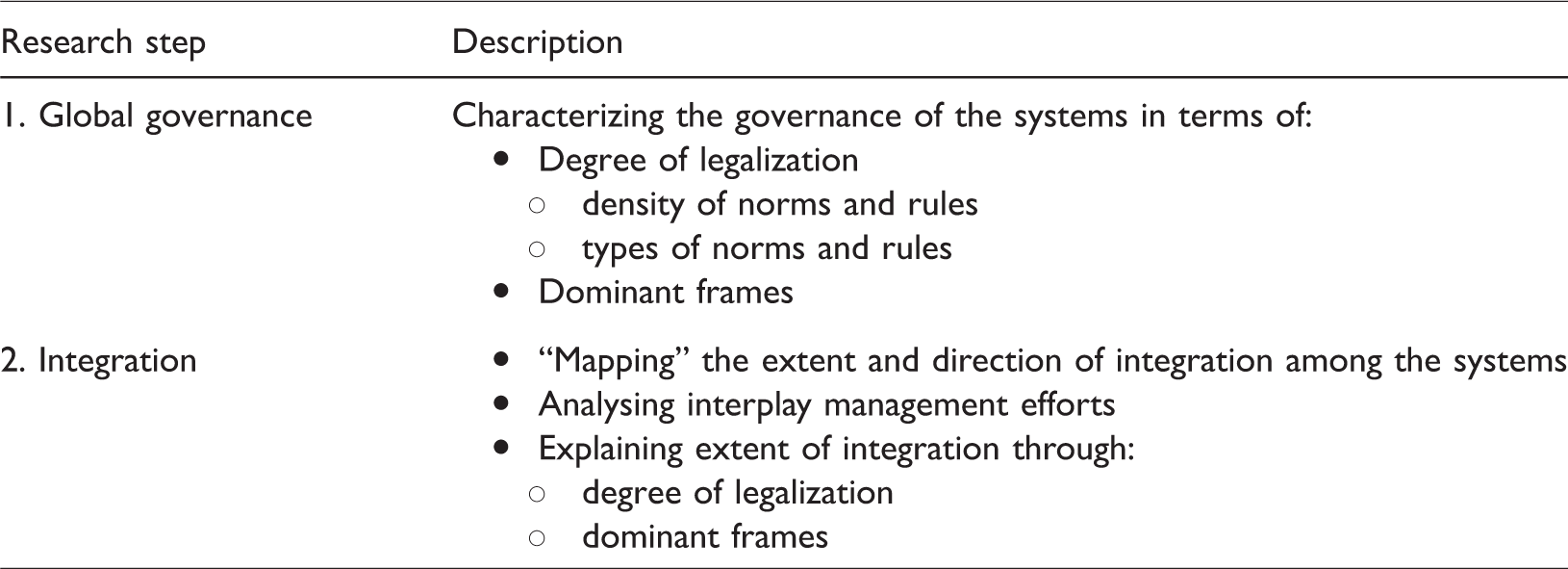
Our analysis encompasses two steps. Before tackling the research questions, as a first step, we characterize the forest, agriculture and climate change global governance systems. Here, global governance is understood as the sum of the different ways in which public and private actors govern certain issues at the international level, acting individually or jointly (adapted from Arts and Visseren-Hamakers (2012). We interpret actors as governmental, non-governmental, private sector, and research organizations active at the international level. The governance is analysed in terms of the degree of legalisation and dominant frames, thereby building on the framework introduced by Karlsson-Vinkhuyzen and Kok (2011), but adding the dimension of frames.
The degree of legalisation is analysed in terms of density and types of norms and rules, with norms characterised as “standards of behaviour defined in terms of rights and obligations” (Krasner, 2007: 3), and rules as “prescriptive statements that forbid, require, or permit some action or outcome” (Ostrom, 1990: 139). The density of norms and rules refers to the number of norms and rules in a certain domain, and is related to the concept of fragmentation (Biermann et al., 2009), defined as “an ongoing proliferation, specialization and diversification of institutions, actor-constellations, norms and discourses active in an issue-area…” (Pattberg et al., 2014: 9). For the types of norms and rules, we differentiate between soft and hard law. Hard law includes legally binding agreements (e.g. treaties), while soft law refers to non-legally binding agreements (e.g. resolutions, decisions, codes of conduct from public or private actors).
Dewulf (2013: 321) defines framing as “the process by which issues, decisions or events acquire different meanings from different perspectives”. Depending on the frame used, different reactions can be expected, including why something is a problem, who or what is accountable for the problem, and what needs to be done about it (Nisbet, 2009). Frames will have an effect on what interests are promoted or ignored (Schön and Rein, 1994), who takes part and who is prevented from participating, and how power positions are dealt with, but will also have an effect on defining the scale of a situation or problem (Dewulf, 2013).
For the second step, we draw on the literature on EPI, interplay management and framing. This step focuses on the integration among the three global governance systems (including the integration between pairs of governance systems and integration among the three systems). We analyse the degree and direction of integration, interplay management efforts, and explain the extent of integration, and thus zoom in on our second research question.
Based on the EPI literature (e.g. Lafferty and Hovden, 2003), (policy) integration is understood as the inclusion of sector-specific objectives, considerations or concerns into other policy domains. The term policy integration is closely related to the concept of interplay management: “In essence, interplay management is about policy integration at the international level” (Oberthür, 2009: 374). Interplay management can be defined as “conscious efforts by any relevant actor or group of actors, in whatever form or forum, to address and improve institutional interaction and its effects” (Stokke and Oberthür, 2011: 6); in other words, efforts to enhance the relationships between various institutions.
Integration can be achieved through different interplay management efforts, including communication, policies and programmes, legalisation (adoption of norms and rules) (Karlsson-Vinkhuyzen and Kok, 2011) and framing. Here, we thus answer the first research question.
In step two, we will also use the previous analysis on degree of legalisation and dominant frames in the three global governance systems to explain the extent of integration. This will also contribute to answering the second research question. Understanding the degree of legalisation is relevant for interplay management and integration because, as indicated by Karlsson-Vinkhuyzen and Kok (2011: 304), “a domain with a high degree of legalisation … can stand on its own, and can resist interaction with other, weaker regimes”. Or, the other way around, when there is a small number of norms and rules, new ones could more easily be developed (Karlsson-Vinkhuyzen and Kok, 2011). The role of frames in interplay management has been less explored. Its consideration, however, can help explain why efforts to achieve integration are more or less successful.
With this conceptual lens, this article addresses several gaps in the IG literature (Visseren Hamakers, 2015, 2018a). It contributes by providing an explanatory analysis, aiming to better understand why the relationships in the nexus are the way they are and also provides enhanced insights into the relationships among the governance systems. These issues have received relatively little attention in the IG literature to date.
Table 1 provides an overview of the conceptual framework.
Conceptual framework.
Methodology
The research took place from March 2014 to February 2016. Research methods include a literature review and document analysis, which included over 80 articles from peer reviewed journals, books, reports from different international organizations; data bases (e.g. food and agriculture data in FAOSTAT, World Development Indicators from the World Bank), websites from key stakeholders, 60 submissions by countries and stakeholders to United Nations Framework Convention on Climate Change (UNFCCC), the United Nations Forum on Forest (UNFF) and other relevant intergovernmental processes, as well as primary sources, which include 26 semi-structured interviews with actors who have been involved with one or more of the following areas: international or regional forest (46% of the interviewees), agriculture (69%) and climate change (77%) policy processes. They represented different sectors: government 1 (35%), intergovernmental organizations (15%), research institutes (12%), NGOs (23%), regional financial organizations (8%), business 2 (4%) and farmers’ organizations (4%). Sources also include 20 informal conversations with different informants directly involved in the analysed governance systems. The interviewees included current and former negotiators, facilitators, experts and policy makers, who shared their own personal view. Data collection involved a strategic snowball sampling approach. The sampling also ensured that interviewees represented the views of both northern and southern countries. Interviews were conducted in person or via video conference, and transcripts were made for further analysis. Some of the interviewees preferred to stay anonymous.
Frames were identified by reviewing documents and presentations from various key actors involved in each sector, participation in conferences as well as from interviews. This part of the analysis focused on the way a problem is conceptualised, who is regarded as responsible to take action, and ways forward, utilising a retrospective approach in the interviews to understand how frames have evolved and topics have been reframed, in particular over the past 20–25 years (starting with the Rio Summit and adoption of the UNFCCC in 1992). Once the different frames were identified, the dominant frame was identified as the one that most of the international actors supported and used. The mapping of main international actors in the governance systems was also undertaken and we have included this data where relevant.
This research also builds on the first author’s experience of 12 years. First, as a negotiator for the Government of Costa Rica on development, environment, forest and climate change issues at the international level, then as staff member of the United Nations and, finally, as external advisor to the Directorate General for Agriculture of the Ministry of Economic Affairs of The Netherlands.
Global agriculture, forest and climate change governance
Global agriculture governance
The various actors involved in global agriculture governance have different priorities and conceptualisations of what the main agricultural challenges are, who is responsible for agriculture governance and what actions are needed to address the challenges. However, dominant frames indicate that due to population growth, particularly in developing countries, the world will be faced with the challenge of feeding over nine billion people by 2050 (UN, 2013). The United Nations Food and Agriculture Organization (FAO) estimates that by 2050, the world will require 70% more food than in 2009 (FAO, 2009). Dominant frames have thus focused on the need to increase agricultural production as a way to ensure food security and promote economic growth. The vulnerability of agricultural systems to climate change and the call for adaptation is also highlighted. In some cases, the need to take into account environmental considerations when increasing agricultural production is recognised. In short, dominating frames have a “productivist” approach, justified in the need to increase food supply under changing climate conditions. Solutions focus less on matters related to equity, changing diets, unsustainable consumption and production patterns. Some main actors such as the World Food Programme (WFP) (2016) stress that there is enough food in our planet to feed everybody, and attribute hunger to poverty and inequality, not to lack of food (Holt-Giménez et al., 2012).
Multiple norms and rules govern agriculture, in a combination of soft and hard law instruments. The main rules and norms governing agriculture can be classified as follows (as confirmed by several interviewees):
Legally binding instruments that deal with or affect agriculture, in particular, the World Trade Organization (WTO) and the Agreement on Agriculture, Trade Related Aspects of the Intellectual Property Rights Agreement and the Agreement on the Application of Sanitary and Phytosanitary Measures (SPS Agreement). Various bilateral, plurilateral and regional trade agreements also have important implications for agriculture. Resolutions, decisions and voluntary instruments of international organisations, such as the Principles for Responsible Agricultural Investment (PRAI) that respect rights, livelihoods and resources developed by the World Bank, United Nations Conference on Trade and Development (UNCTAD), FAO and the International Fund for Agriculture Development (IFAD); Codex Alimentarious (for food standards) developed by FAO and World Health Organization (WHO). Resolutions adopted by Multilateral Environmental Agreements (MEAs), which have implications for agriculture (e.g. Stockholm Convention on Persistent Organic Pollutants). Agricultural policies of large economies, which have important repercussions on the production and international flow of agricultural goods, such as the Common Agricultural Policy of the European Union (EU). Private instruments, such as codes of conduct (e.g. from the pesticide industry), eco-labelling and certification, traceability standards, etc.
The different organisations developing those norms and rules approach agriculture from their own frames (e.g. biodiversity, climate change) and not in an integrative manner. For instance, MEAs have a more restrictive approach, while the WTO promotes free trade and liberalisation. The consequence is that rules and norms can overlap or even conflict with one another. Moreover, subsidies in the North, intellectual property rights and genetically modified organisms, among others, continue to be divisive issues within the global agriculture governance system (as several interviewees confirmed).
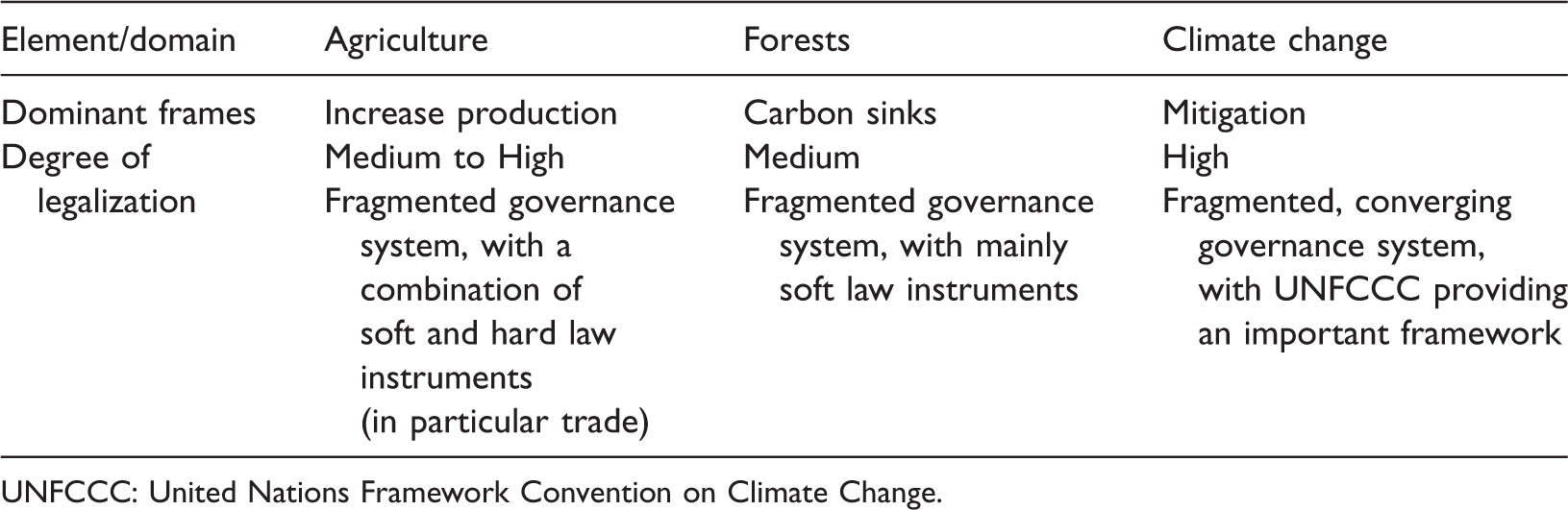
The global agriculture governance system can thus be characterised as fragmented, with a medium to high degree of legalisation (see Table 2). Many of its norms and rules are in the soft law realm, which makes them voluntary, with some hard law, particularly in trade-related agreements. In general, a multitude of actors are involved in global agriculture governance, but in a very fragmented and uncoordinated way. There is no overarching framework or actor with sufficient authority to resolve emerging conflicts. In the absence of a dominant actor or overarching institution, the WTO and bilateral trade agreements – as well as the World Bank with its agriculture portfolio and financial resources – are playing key roles, as confirmed by our interviewees, framing agriculture with an emphasis on increasing production, market access and trade liberalisation (Wise and Murphy, 2012). Some interviewees consider that FAO’s current niche seems to be more at the technical expertise level and country implementation, with a large number of country offices enabling this role.
Overview of global governance for agriculture, forests and climate change.
UNFCCC: United Nations Framework Convention on Climate Change.
Global forest governance
The many stakeholders involved in global forest governance have different, sometimes conflicting interests and priorities (Hoogeveen and Verkooijen, 2010). Forest policies have evolved over time in response to different frames over time, including forests having no economic or social value or “empty lands” in many countries (ECLAC et al., 1971; Larson et al., 2010; Morales et al., 2011), to providers of important ecosystem services for human wellbeing (Millennium Ecosystem Assessment, 2005; United Nations, 1992a) and framing forests as the “lungs of the Earth”. Currently, there is an important emphasis on the role of forest in climate change, in line with increased media coverage and donors prioritizing their resources towards climate change instead of other issues (Veríssimo et al., 2014). The conceptualisation of forests thus evolved from “lungs” to “sinks”. Sustainable forest management (SFM) 3 also remains an important frame (Arts and Babili, 2013). The sustainable management of forests is currently considered in the context of climate change as well.
Main rules and norms governing forests are a combination of forest-related or forest-focused norms and rules (Humphreys et al., 2010) and can be classified as follows (see also Arts and Babili, 2013):
Legally binding agreements that directly address some aspects of forests, for instance, the International Tropical Timber Agreement (ITTA). Legally binding agreements and relevant resolutions that relate to forest or have an impact on forests, such as the Aichi targets of the UN Convention on Biological Diversity (CBD). Non-legally binding instruments emanating from different global conferences or fora, such as the “Forests Principles” agreed in 1992 at the Rio Conference. Voluntary instruments and relevant resolutions or decisions of international organisations (e.g. FAO, United Nations Environment Programme (UNEP), UNFF). (Public–)private mechanisms, for example, certification schemes (Visseren‐Hamakers, 2013). Regional or bilateral forest agreements, such as the Regional agreement for the management and conservation of natural forests ecosystems and forests plantations development of Central American countries or the EU’s Forest Law Enforcement, Governance and Trade initiative.
Global forest governance lacks an integrative approach to forests. For instance, each MEA approaches forests from its own perspective: climate change, biodiversity, etc. For the UNFCCC, a ton of carbon is a ton of carbon, no matter whether it originates from a primary forest or a plantation, which creates tension with the biodiversity objectives under the CBD (Caparrós and Jacquemont, 2003; Kim, 2004). UNFF, on the other hand, could be one of the organisations that could address forests in an integral way insofar as it has a broad mandate, but it lacks political impact, effectiveness and is underfunded (Blaser et al., 2014; Dimitrov et al., 2007; Humphreys, 2006). Some interviewees argue that UNFF has lost some of its mandate to the UNFCCC, since UNFF members are prevented from addressing climate change, a key issue for forests, outside the UNFCCC.
For several years, the pressure from some for an all-encompassing globally binding commitment (hard law) has resulted in the proliferation of global soft law instruments instead, including the Forest Principles of 1992 and the Non-Legally Binding Instrument on All types of Forests of 2007, which was renamed in 2015 as the “United Nations Forest Instrument”.
Overall, the global forest governance system is fragmented, characterised by the absence of an overarching framework and the prevalence of soft law arrangements within and outside the UN umbrella, with some legally binding treaties addressing specific aspects of forests. Hence, we consider its degree of legalisation as medium: global forest governance has overlapping norms and rules, competition for scarce resources and an inability to address forests in an integrative manner (Hoogeveen and Verkooijen, 2010).
Global climate change governance
While initially considered an environmental concern, today climate change is seen as also encompassing health, security, development and trade issues, amongst others. In general, the dominant frame of climate change has centred around the need to reduce GHG emissions – a focus on mitigation. Still, adaptation continues to be key for many countries, as highlighted by various interviewees, and is becoming more prominent in policy decisions (e.g. the Paris Agreement (UNFCCC, 2015), or the Green Climate Fund (2014) decision to invest 50% of its resources in adaptation and 50% in mitigation). There are, however, important tensions between mitigation and adaptation priorities (Dewulf, 2013; Somorin et al., 2012), with mitigation overall having more emphasis and resources allocated (Buchner et al., 2011; Harvey et al., 2014). Several of our interviewees agree that the “common but differentiated responsibility” principle is starting to depart from the distinction between developed and developing countries to become more self-defined (e.g. national determined contributions – NDCs), in accordance with national capacities and priorities. There is a greater recognition – or pressure – for developing and emerging economies to take a more proactive role, especially in light of current and projected emissions by some. As UNFCCC Executive Secretary mentioned in our interview: “The way in which countries are differentiated among themselves has evolved, […] it is gradual along a line where each one can determine how to contribute and seek their place in that line.”
Global climate change governance is characterised by its multi-institutional nature (Gehring and Oberthür, 2008). The governance system is a mix of hard and soft law. Main rules and norms can be classified as follows:
Legally binding agreements directly addressing climate change, mainly the UNFCCC, including the Kyoto Protocol and Paris Agreement. Legally binding agreements and relevant resolutions that relate to or have implications for climate change, such as the Vienna Convention for the Protection of the Ozone Layer. Non-legally binding instruments agreed in different global conferences or fora that address climate change as part of their outcomes, for example, the Small Island Developing States Accelerated Modalities of Action (Samoa Pathway) or the Addis Ababa Action Agenda on Financing for Development. Voluntary instruments, relevant resolutions and decisions of international organisations (e.g. FAO’s Voluntary Guidelines to support the integration of Genetic Diversity into National Climate Change Adaptation Planning). IPCC methodology guidelines for national GHG inventories. Relevant decisions and agreements of major economies and different international fora or organisations with limited membership, e.g. the Major Economies Forum on Energy and Climate, the OECD, the G8 and G20. Private mechanisms like voluntary carbon market arrangements and certification standards, e.g. International Sustainability and Carbon Certification, the Gold Standard and the Carbon Disclosure Project (Plaza Esteban et al., 2014). Regional climate change agreements, e.g. the EU Emissions Trading System (ETS), CARICOM’s Regional Framework for Achieving Development Resilient to Climate Change.
While most actors recognise the core role of the UNFCCC in establishing global climate change responses, there are cases in which non-UNFCCC arrangements, initiatives or partnerships lack consistency with UNFCCC norms and rules. In some cases the compatibility of certain norms and rules are challenged (see the case of hydrofluorocarbons under Kyoto Protocol and the Montreal Protocol in UNEP (2012)). In other cases, governments, in particular several major economies, are trying to use international trade policies to address climate change challenges (European Commission, 2015; ICTSD, 2014; Executive Office of the President, 2013). Some of our interviewees highlighted that trade, to a large extent, is shaping how countries address climate change.
Overall, global climate change governance has a high degree of legalisation. It can be characterised as a fragmented, converging governance system, dominated by a legally binding treaty but also including soft law, involving a wide array of actors. This has led to duplication, incoherence, competition for resources and as highlighted by some, “climate governance […] shows indications of conflictive fragmentation” (Biermann et al., 2009: 23).
The global governance of the three domains is summarised in Table 2.
Integration in the forest, agriculture and climate change nexus
Climate change and forests
Forest and climate change integration can currently be considered rather extensive and multi-directional (Figure 1), although full integration of forests within the climate change policy domain, especially in the UNFCCC, has proven to be difficult. With the introduction of Reducing Emissions from Deforestation (RED) in developing countries on the agenda of the UNFCCC in 2005, integration was enhanced. Attempts for integration before that had generated limited results, for instance, in the Marrakech Accords, where reforestation and afforestation were included as part of the Clean Development Mechanisms (but deforestation was excluded) (Den Besten et al., 2014).
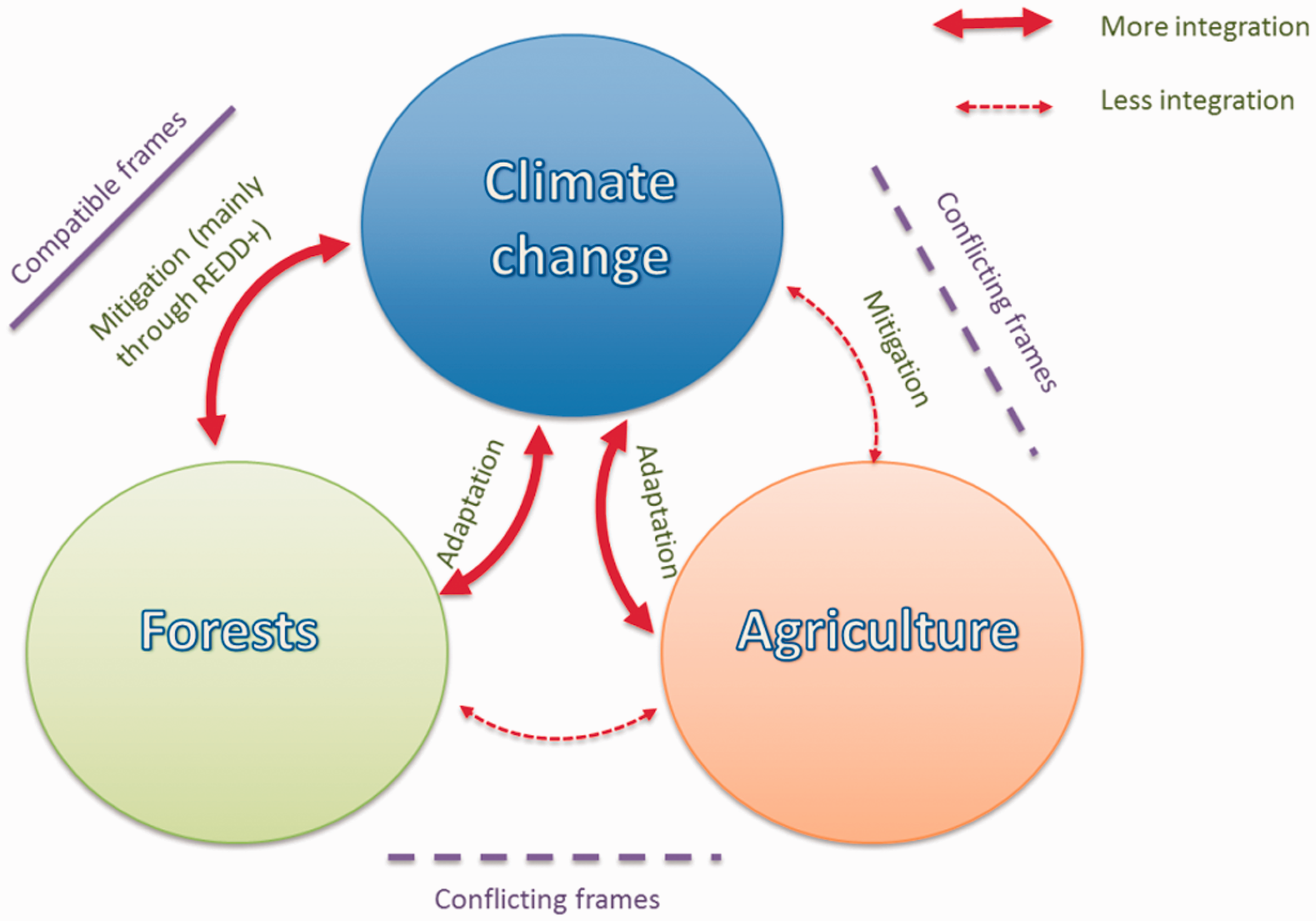
Extent of integration among agriculture, forest and climate change governance systems.
RED was a joint initiative of Costa Rica and Papua New Guinea (2005), supported by other countries. It can be regarded as an interplay management initiative aimed at integrating forest and climate change issues. In 2007, RED was reframed as REDD+, as the concepts of forest degradation and the role of conservation, sustainable management of forests and enhancement of forest carbon stocks in developing countries were included. REDD+ was incorporated as a mitigation mechanism under the Bali Action Plan in 2007 (UNFCCC, 2007: Art 1.b.iii) and in the Paris Agreement (UNFCCC, 2015). Developed countries are also using the forest sector to achieve their mitigation targets.
The integration of climate change considerations into the forest domain, on the other hand, has happened more easily, especially in terms of adaptation and more recently for mitigation through REDD+ in the case of developing countries, and other related initiatives (UN REDD by FAO, UNEP and UNDP and the World Bank’s Forest Carbon Partnership Facility). Other efforts include the revision of the Forest Stewardship Council (FSC) certification standards to include carbon sequestration and storage issues (FSC, 2015).
The compatibility of the dominant frames in the forest and climate change governance systems – forest as sinks and climate change as mitigation – has facilitated integration. Framing forest concerns as REDD+ was not only compatible with mitigation objectives, but also explicitly placed some level of responsibility with developing countries. The latter is compatible with the evolution of the principle of common but differentiated responsibilities, with increased action expected also from developing countries. The degree to which science and increased technological capacity has influenced the integration process cannot be underestimated, by informing policy (e.g. satellite images, CO2 sequestration potential of different tree species) and reinforcing the important role of forests in climate change. The relatively slow integration of forests into the climate domain can be explained in part by the high degree of legalisation and the centralised, complex and core institutional position of UNFCCC in the climate change governance system. The comparatively smooth integration of climate considerations into the forest governance system can be partly explained by the fact that the latter is highly fragmented and lacks a dominant legal framework.
Climate change and agriculture
The integration of climate change and agriculture has been relatively modest and not fully multidirectional. Efforts to enhance integration have been undertaken mainly on the adaptation side. For years, actors have sought to integrate agriculture considerations in a more comprehensive way into climate policy, in particular in the Subsidiary Body of Scientific and Technological Advice (SBSTA) under the UNFCCC, but progress has been limited (CCAFS, CTA, & Farming First, 2013; Kalfagianni and Duyck, 2015) and its consideration has remained voluntary (FAO, 2010; CCAFS, CTA, & Farming First, 2015). 4 Both the UNFCCC (United Nations, 1992b) and its Paris Agreement (UNFCCC, 2015) recognise the need to safeguard food production. There is, however, no “coherent vision and a set of incentives or financial mechanisms” to achieve mitigation and adaptation goals in agriculture (Zurek et al., 2014: 42). Interplay management efforts to achieve policy integration among these two domains have actually faced a “forum kicking” dynamic, i.e. when some governments push for a discussion on climate change and agriculture, for instance in FAO, other governments indicate that the right forum to address climate-related policy is the UNFCCC; and when the integration is raised in the UNFCCC, others argue that agriculture should be discussed in WTO, not UNFCCC.
As confirmed by some interviewees, major concerns, in particular from many developing countries and other opponents of the inclusion of an agriculture work programme within SBSTA, mainly relate to mitigation:
Inclusion will lead to developed countries using the mitigation qualities of agriculture to offset their industrial emissions and extend carbon markets, without making any real progress in fulfilling their mitigation responsibilities under the UNFCCC (Paul, 2012). Agriculture being an important sector in the economy of many developing countries (World Bank, 2015), some of them perceive that agriculture mitigation might lead to targets, interfering with domestic policies related to food security (Zurek et al., 2014). Methodological challenges such as additionality, leakage, baselines, monitoring, and permanence (Paul, 2012), and lack of technical capacity or general gaps or uncertainties in scientific knowledge. UNFCCC covers all anthropogenic emissions with an economy-wide, not sectoral, approach.
5
Some Parties thus consider that there should not be a specific focus on agriculture; they are afraid it may result in trade barriers, including border tax adjustments. Developing countries are dealing with increasing populations, which will translate into the need for more food production. This, with current practices, will mean higher GHG emissions.
On the other hand, those actively pursuing the comprehensive integration of agriculture into the climate change governance system
6
argue that the UNFCCC (or SBSTA) can provide guidance for better incorporation of agricultural considerations; identify barriers to implementation and policy options; improve scientific understanding and technical solutions and methodologies; and promote a comprehensive and integral treatment of the land-use sector in terms of both mitigation and adaptation (CCAFS, CTA, & Farming First, 2015; Submissions from Costa Rica, European Commission, Japan, New Zealand, Environmental Integrity Group, USA in UNFCCC, 2012; FAO, 2010). Some developed countries are interested in fully integrating agriculture into climate change governance in order to have a “level playing field” in terms of trade competitiveness, since developing countries are currently not subject to the same quantifiable emission reductions that several developed countries are (under the Kyoto Protocol).
Opportunities for governments to integrate agriculture into the climate domain currently exist, for instance in the reporting process or on a discretionary basis. Examples include through the UNFCCC’s NAMAs (Nationally Appropriate Mitigation Actions), aimed at reducing emissions in developing countries by 2020 (UNFCCC, 2007) and the NDCs. 7 However, there are some concerns over consistency and comparability among countries. Countries have also addressed adaptation concerns of agriculture through the Nairobi Work Program on Impacts, Vulnerability and Adaptation, and several SBSTA workshops (UNFCCC, 2013b; UNFCCC, 2014). Countries can also apply for resources through the Green Climate Fund to link adaptation and mitigation with agriculture (GCF, 2016).
Progress on integrating climate change into agriculture has been mainly on adaptation. Rosenzweig and Tubiello (2007: 860) indicate that “adaptation in agriculture is actually the norm rather than the exception”. Agricultural productivity, and consequently food security, will be affected if climate change considerations are not integrated into agriculture policies and practices. This has translated into large research efforts and investments to make agriculture more resilient to climate change (Rimmer, 2012; Wise and Murphy, 2012). Several of our interviewees agree that the need for adaptation is perceived as being more urgent than mitigation. Since 2009, however, the concept of climate smart agriculture (CSA) has gained some strength as a new approach. It is built around three pillars, namely increased productivity, adaptation and also mitigation (FAO, 2013).
The fact that the dominant frames in the climate and agriculture governance systems sometimes conflict can explain the relatively modest integration. While climate change seeks to reduce emissions with a sense of priority, agriculture’s “responsibility” to feed the growing population has been associated with the need to increase productivity, 8 which will increase GHG emissions. Some of our interviewees state that the intensity of agricultural emissions (per hectare, per animal, etc.) could be reduced, but in absolute terms, emissions will be higher. The perceived need to produce more food and the related increased GHG emissions hinders the comprehensive integration of agriculture and climate policies, allowing only for partial integration, namely on adaptation. The need to make agriculture more resilient, especially if framed as a food security 9 concern, supports the frame of – and it is a prerequisite for – increasing productivity. In some cases, more resilient agriculture may actually also lead to lower emissions as a co-benefit (IPCC, 2014b; Zurek et al., 2014), which facilitates its integration.
The high degree of legalisation of the climate change governance system can also contribute to explaining the modest integration of agricultural concerns. The fragmented nature of and lack of an overarching institution in the agricultural governance system, on the other hand, can also contribute to the explanation of the easier – although also modest – integration of climate change concerns, mainly in terms of adaptation.
Agriculture and forests
Interplay management efforts aimed at policy integration between agriculture and forests are rather weak in both directions. Both sectors have a history of following separate, unconnected tracks. Several actors have undertaken some initial interplay management efforts to enhance integration, through, e.g. soft law, communication or programmes of financing organisations. Some of these actors are active in one system or the other, but some are involved in both (e.g. the FAO).
For the integration of agriculture considerations into forest governance, some examples include the Ministerial declaration of the UNFF, which recognised the need to address the drivers of deforestation and forest degradation (UNFF, 2015). There is also a call for the integration of SFM and the commitments of the Forest Instrument into, among others, sectoral policies (UNFF, 2015), although agriculture is not mentioned directly. The International Union of Forest Research Organizations (IUFRO) has tried to create more awareness about the contribution of forests to food security, stating that while its importance is recognised at the local level, national and global strategies are missing (IUFRO, 2015).
As for the integration of forests into the agriculture domain, examples include the Principles for Responsible Investment Agriculture and Food Systems of the Committee on World Food Security (CFS). It considers, amongst its principles, respect for forest land tenure (principle 5) and calls for “preventing, minimising and remedying, as appropriate […] negative impacts on forests” (CFS, 2014: principle 6). Through different initiatives and public–private partnerships, several NGOs, governments and private sector actors are promoting “zero deforestation” commitments in the supply chain of agricultural products. 10
Actors involved in both domains, such as the World Agroforestry Centre, also have been actively promoting the integration of trees into agriculture (World Agroforestry Centre, 2017). The IPBES (Intergovernmental Science-Policy Platform on Biodiversity and Ecosystem Services) has also made some efforts to integrate forests and agriculture, with biodiversity as the bridge between the two.
Of the MEAs, the United Nations Convention to Combat Desertification (UNCCD) seems to have a relatively integrative approach to forests and agriculture, since it focuses on addressing land degradation, including through sustainable land management and agroforestry practices (UNCCD, 2015). The GEF, the financing mechanism of the three Rio Conventions (UNFCCC, CBD and UNCCD), has a comprehensive approach to its focal area on Land Degradation, and highlights the landscape approach as a tool “for an integrated natural resources management” (GEF, 2014: 137), defining it as “… a framework to integrate policy and practice for multiple land uses, within a given area, to ensure equitable and sustainable use of land while strengthening measures to mitigate and adapt to climate change” (Reed et al., 2015). The landscape approach has also been promoted by the FAO, EU and several NGOs and research institutes.
The friction between the dominant frame in agriculture governance of higher productivity levels (and consequently the need for more productive land) and forest’s dominant frame of the need for forest conservation for carbon sequestration and storage prevents the integration of global policies in these domains. Also, multiple efforts to integrate agriculture and forest considerations in both directions have not led to significant results due to both domains having a medium and medium-to-high density of institutions, with no overarching framework.
Integration among the three domains
Efforts aimed at integrative policies among the three governance systems have been limited and promoted mainly through programmes (in particular of financing organisations), approaches or by framing the domains as being related, as a first step.
Financing mechanisms have been key in influencing decision making at the national level and channelling global and national policies towards more integrated land-use approaches. Examples include the World Bank’s Forest Investment Plan and the Biocarbon Fund Initiative for Sustainable Forest Landscapes (ISFL), which, besides forests, also includes sustainable agriculture. Climate Smart Territories and Climate Smart Landscapes are promoted by research institutes (e.g. CATIE, 2015), and several NGOs (e.g. Conservation International, Environmental Defence Fund) combine CSA and integrated landscape management approaches (Harvey et al., 2014; Scherr et al., 2012). As for framing, the IPCC, for example, in its latest report addressed the land-use sector in one single chapter for the first time (Chapter 11: AFOLU; IPCC, 2014a) and not separated as in previous reports.
Also, REDD+ (representing the integration of forest and climate change) can affect agriculture and vice versa. The success of REDD+ will depend on the capacity of stakeholders to address the underlying drivers of deforestation and cooperate with other sectors affecting land use (Corbera et al., 2010; Kissinger, 2013; Salvini et al., 2014). Currently, agriculture is only weakly addressed in REDD+ as one of the many drivers of deforestation (UNFCCC, 2013a: Decision 15/CP.19).
Also, while several national REDD+ strategies do consider matters related to agriculture, on many occasions REDD+ goals are compromised by agriculture development plans, and few REDD+ strategies address this conflict (Kissinger, 2013; Kissinger et al., 2012). Some governments are not willing to formally integrate agriculture within REDD+ 11 because agricultural emissions may be larger than forest-related avoided emissions, causing the country to lose out on REDD+ payments. As long as agriculture is lightly framed as one of the drivers of deforestation within REDD+, some Parties have “tolerated” its inclusion. The three dominant frames in the nexus are simply not compatible.
Interplay management efforts to integrate agriculture, forest and climate change need to deal with a high density and complexity of norms and rules. Since the UNFCCC dominates the development of climate-related norms and rules, efforts to agree on climate change matters in other intergovernmental fora creates some resistance, since governments do not want to weaken the UNFCCC (Karlsson-Vinkhuyzen and Kok, 2011) or pre-empt its negotiations. This reduces the possibilities of enhancing the integration of the three domains through further legalisation in intergovernmental fora, and opens up the door for soft law approaches.
Discussion
The conceptual framework applied in the analysis above combines several concepts under the umbrella approach of IG, including the nexus approach, integration, interplay management and framing. This has allowed a rich analysis of the relationships between the three studied governance systems.
While building on Karlsson-Vinkhuyzen and Kok’s (2011) approach to integration through interplay management, adding the consideration of framing theory has allowed for a more comprehensive analysis of why integration can take place (or not), beyond factors such as degree of legalization. The presence of compatible frames can have a synergistic effect; interplay management efforts can be more successful if frames are compatible, as shown for the forest and climate change governance systems. On the other hand, the existence of conflicting frames can generate negative effects on interacting institutions, and integration efforts can be hindered or even be done in vain, as shown in the agriculture and climate change governance systems (Table 3). The analysis of frames has also helped in understanding difficulties in, and opportunities for, enhancing interplay management. Framing can be consciously used by actors as a strategy to encourage or hinder integration. For instance, reframing forest as sinks in the context of UNFCCC, where mitigation is a priority, provided the opportunity for tropical forest to be integrated in the climate change domain.
Frames in the context of integration.

This incorporation of a framing lens into the policy integration literature also enhances attention for the politics of integration, in line with the IG approach. An IG perspective promotes attention for relationships between governance instruments or systems, since a better understanding of these relationships can be used to enhance coordination, or, in cases where the relationships are more political or contentious, inform negotiations on addressing trade-offs. Thereby, the approach highlights the need for more IG in order to address complex and highly interrelated sustainable development issues while recognizing the role of politics and power.
Expanding the nexus approach research to other sectors, like agriculture, forest and climate change, and understanding the direction of integration, dominant frames and the interplay among these domains has provided important insights into the appropriateness of the nexus approach. Considering the non-preponderance of one sector over the other one in the nexus approach (Benson et al., 2015), its use for improving policy coherence and coordination will be more successful when integration has the potential to be multidirectional. In order for integration to become multidirectional, frames need to compatible with the domains, and the governance systems need to have a low or medium degree of legalization, and a relatively high degree of fragmentation.
In general, while integration can take place in different forms, a domain with a high degree of legalization would favour the development of norms and rules to address an issue; however, this can take more time and face more obstacles. In a domain with a low degree of legalization, softer approaches might be sufficient and faster, but these might have a smaller global impact (e.g. individual programmes, projects).
Conclusions
This article has aimed to further our understanding of the current extent of integration in the agriculture–forest–climate change nexus at the global level. The analysis has shown that coherent policies and integrative approaches are urgently needed, since these three governance systems are highly interlinked.
The global agriculture, forest and climate change governance systems are characterised by a multitude of actors and institutions and a great diversity of frames. Efforts aimed at integration to enhance synergies and avoid conflicts among the systems have taken different forms, in particular for the different pairs of domains in the nexus. Integration has been mainly promoted through soft law, programmes, promotion of integrative approaches (e.g. the landscape approach, CSA and agroforestry) and framing. The integration at the nexus of the three domains is still more incipient, although there is potential, with the advantage of having several actors (e.g. FAO, UNEP, World Bank, UNCCD) involved in two or all of the domains and international financial mechanisms already promoting integration.
The extent of integration has been different for the separate pairs of governance systems. So, while forest and climate change enjoy an extensive two-way integration for both mitigation and adaptation, agriculture and forest, and agriculture and climate represent lower and modest levels of integration respectively, with the exception of climate change adaptation in agriculture. The differences in integration can be explained by the degree of legalisation and the dominant frames in the different governance systems.
The analysis of the degree of legalisation of each governance system has shown that multidirectional integration is a tremendous challenge in a context of multiple actors and a high density of norms and rules, particularly if one of the governance systems has a strong set of norms and rules dominated by one regime, as is the case in climate change. This high degree of legalization of the climate change governance system makes it less open to interaction with others, or to accept that new climate change norms and rules are developed outside of the UNFCCC, confirming Karlsson-Vinkhuyzen and Kok’s (2011) view on this. This also indicates that integration has greater potential to be enhanced from the direction of the “strong” domain to the others (one-way integration). The prevalence of soft instruments for forest and agriculture and the absence of a strong legally binding agreement have given more space and flexibility to integrate emerging or urgent issues, such as climate change, into their governance systems. The dominant frames in the governance systems have also influenced the extent of integration. Especially, the dominant “productivity” frame in the global agriculture governance system has inhibited the integration with forest and climate change mitigation concerns.
Interplay management efforts in these three governance systems could perhaps be best enhanced outside the formal intergovernmental processes, as is already happening through initiatives such as the Global Alliance on CSA (GACSA). Working outside of the highly politicised intergovernmental regime might lower the “threat” of potential legally binding targets, and allow us to move beyond the separation of mitigation and adaptation, thereby opening up more opportunities for effective integration through landscape approaches.
Interplay management efforts among the three domains are also influenced by factors, policies or decisions that fall outside their scope, for instance water scarcity, energy prices, or trade. Regarding the latter, international markets and financial incentives sometimes seem to have more – negative or positive – influence on behaviour than the norms and rules regulating natural resource use. Trade and trade agreements are clearly influencing the way the governance systems interact and the trade-offs they encounter. More research on the role of trade in the climate change, forest and agriculture nexus would be beneficial for understanding the driving forces leading to unsustainable land-use change and developing the most effective policies to address these issues.
Political will and (inter-)national institutional and organisational reforms are necessary in order to move from conflicts to synergies in the interaction among the three governance systems. Current relatively successful approaches such as REDD+ or CSA alone will not be sufficient to ensure durable and sustainable results. Transformative changes are needed to address fundamental inconsistencies, such as perverse incentives, lack of multi-sectoral policies and impacts of global unsustainable consumption patterns. 12 The recognition by the international community of the need for transformational change, and the role of IG in such change, among others in the Aichi Targets and SDGs, provides opportunities for further enhancing the synergies in the agriculture–forest–climate nexus and beyond.
Footnotes
Acknowledgements
We would like to thank the Dutch Ministry of Economic Affairs for funding this research, Ricardo Ulate and Peter Iversen for their valuable feedback and the two anonymous reviewers for their comments.
Declaration of conflicting interests
The author(s) declared no potential conflicts of interest with respect to the research, authorship, and/or publication of this article.
Funding
The author(s) disclosed receipt of the following financial support for the research, authorship, and/or publication of this article: This research was funded by the Dutch Ministry of Economic Affairs.
Notes
 of the Global Assessment of the Intergovernmental Science-Policy Platform on Biodiversity and Ecosystem Services (IPBES).