



Abstract
Aspirations of young people in northern Benin reflect the dynamic social, economic, and environmental realities. They are influenced by conflict and instability in this fragile context. Thus, we examine how these aspirations motivate participation in agricultural and food security programs. We randomly sampled 309 young men and women to derive qualitative narratives with quantitative survey data across Matéri, Kandi, and Natitingou communes in northern Benin. In that way, we identified three primary aspiration clusters (immediate needs, prevalent in Matéri, where food security is critical; personal ambitions, dominant in Kandi, focusing on upward mobility and entrepreneurship; and social obligations, reflecting family and community responsibilities). These aspirations are shaped by a combination of all these drivers—basic needs, social pressures, and personal goals—but show a notable trend toward individual aspirations. Conflict exacerbates challenges and perceived opportunities by fostering self-reliance while undermining trust and collaboration. Respondents perceive Non-Governmental Organisations (NGO) programs as externally driven rather than participatory. Future research should explore longitudinal changes in aspirations and the impact of tailored interventions and provide insights for actors seeking to align agricultural and food security programs with community needs in fragile contexts.
Introduction
Access to meaningful employment for young people in farming or other sectors is a key challenge in rural Benin (Akrong and Kotu, 2022; Kubik et al., 2024). This is particularly acute in northern Benin, where climate change-related pressures on farming intersect with rising insecurity spilling over from the northern borders (Clingendael, 2023). Despite numerous strategies deployed by development agencies, policymakers, and researchers to address this issue, young people often face limited access to land and seem disinterested in farming as a livelihood. The resulting increased outmigration of rural youth to unstable urban job markets exacerbates concerns of increasing insecurity and instability (Koussou and Afolabi, 2022; Mercandalli et al., 2019).
Agricultural and food security programs aimed at improving rural livelihoods often focus on enhancing production and creating employment in or around farming. However, market-driven agricultural development requires substantial investment and production capacity to meet market demands and generate viable returns. Yet, young people lack access to the land and resources necessary to participate in such programs, leaving them excluded from development initiatives designed for those with greater capacity to invest (Gassner et al., 2019; Harris and Orr, 2014; Sumberg et al., 2021). Thus, programs do not necessarily align with the aspirations of young people and any opportunities they see in farming, particularly in regions where social tensions, conflict, and fragility are escalating.
Understanding youth aspirations and the factors shaping them is crucial for designing agricultural and food security programs (Mausch et al., 2018; Verkaart et al., 2018). Aspirations are shaped not only by individual preferences and life goals but are moderated by social and institutional circumstances (Bennike et al., 2020; Hart, 2015; Sumberg and Okali, 2013). Here, social and institutional factors can broaden opportunities and increase the range of potential aspirations or restrict them where social pressures dictate certain trajectories. Connecting aspirations to practical opportunities can inform more effective youth employment strategies (Kosec and Mo, 2017; Okello et al., 2019). Further, a deeper understanding of youth aspirations can generate insights to better account for young people's visions for the future, better connect to their current aspirations and incorporate both into youth employment strategies embedded in agricultural and food security programs (LaRue et al., 2021). Sumberg et al. (2017) conclude that “the challenge is not so much how to get young people interested in agriculture, but how to make agriculture worthy of their attention” (p. 159).
In this article, we explore the aspirations of young people in northern Benin. Against a poverty rate around 38.5% (United Nations, 2024), we seek to understand what drives these aspirations and how they are shaped by the local context. We then examine whether existing agricultural and food security programs in the study areas align with these aspirations. Analyzing the disconnects and synergies between youth aspirations and project designs aims to provide insights into how development initiatives can better align with young people's visions for the future, so fostering more effective and inclusive engagement.
Theoretical framework
Aspirations, defined as the hopes, ambitions, or goals people hold for the future, represent a critical lens through which to understand human motivations and decision-making (Mausch et al., 2021a). For youth in northern Benin, aspirations reflect both immediate/basic needs and long-term livelihood ambitions. These aspirations are shaped by a complex interplay of social, institutional, economic, and environmental factors that influence both their content and attainability (Bennike et al., 2020). They create a range of perceived possible futures.
Research shows that limited access to resources, education, land, and capital can constrain aspirations, thus restricting the possibilities young people envision for themselves (Mausch et al., 2018). For example, in areas with limited farming opportunities or persistent social instability, aspirations may focus on goals perceived as more achievable. Aspirations are thus inherently dynamic and adaptive (Huijsmans et al., 2020; Macours and Vakis, 2014). Often, they reflect individuals’ interactions with the opportunities and barriers within their environments (Dilley et al., 2021). This makes them a crucial element in understanding individual livelihood trajectories and in designing effective development interventions.
Negative sentiments such as disappointment, frustration, or hopelessness can drive individuals away from their communities, potentially increasing susceptibility to the blandishments of extremist groups (World Bank, 2015). Conversely, fostering a sense of belonging, enhancing capacities, and expanding economic opportunities can counteract these drivers (Mercy Corps, 2019; Sonnenfeld et al., 2021). A holistic approach to providing support mechanisms that includes marginalized youth groups is therefore critical to strengthening social resilience and reducing vulnerability to negative influences (Olawole et al., 2022a, 2022b).
A gender- and generational-sensitive approach is also essential to understand how aspirations vary between women, men, and youth, both within and across households (Crossland et al., 2021; LaRue et al., 2021; Sumberg et al., 2021). Social norms, access to resources, and individual experiences all influence what people see as possible for their future and thereby the aspirations they wish to pursue. By examining these variations, we can identify gender and youth specific drivers and obstacles to achieving aspirations, allowing for more targeted and effective support. This approach enables the identification of aspiration windows—the perceived range of possible futures—and strategies to expand these windows by presenting new and more positive options within communities (Mausch et al., 2021a). Aspiration windows are conceptualized as imaginable futures. They are shaped by real options a person has given the current situation influenced by social interactions and cognitive biases based on observations of peers and evolves through social interactions (Appadurai, 2004; Dilley et al., 2021; Mausch et al., 2021a; Ray, 2006). Strategies that influence aspirations could be through the introduction of new technologies or exposure to role models that came from similar starting situations but utilized their resource base differently (Macours and Vakis, 2014; World Bank, 2015). The underlying hypothesis is that individuals with narrow aspiration windows are more likely to feel stuck, hopeless, and isolated (Ray, 2006). It is therefore not only important to understand what current aspirations are but furthermore what shapes the current aspiration windows. Increasing the range of possible options to broaden these windows, whether at the individual or community level, can foster optimism and agency.
Increasing the possible options people can objectively pursue will increase their opportunity space. Opportunity spaces are the sum of possibilities and pathways available to individuals or groups within which they can form their aspirations and pursue their goals (Mausch et al., 2021a; Sumberg and Okali, 2013). They reflect the enabling or constraining external factors within an environment, such as employment opportunities, market dynamics, or societal values, that influence what individuals perceive as achievable (Appadurai, 2004; Aring et al., 2021; Chamberlin et al., 2021; Macours and Vakis, 2014; Mausch et al., 2021b; Ray, 2006). Opportunity spaces are dynamic, context-dependent, and constantly evolving with shifts in economic, political, or social conditions.
Agriculture and food security programming based on these concepts has multiple entry points to increase personal and community agency and resilience. Opening wider opportunity spaces (e.g. making new technology available) and broadening aspirations windows (e.g. through training and exposure events) would allow people to consider more options in pursuit of their aspirations or a reconsideration of their aspirations. Therefore, expanding opportunity spaces and aspiration windows would empower individuals to explore pathways aligned with their aspirations, fostering personal and community satisfaction.
In the implementation of programs, it remains important to consider how aspirations and their underlying drivers or motivations play out during different phases of programs. Here the PEDR framework of Glover et al. (2019) offers connecting points by splitting the interactions of programs and people along four aspects: propositions, encounters, dispositions, and responses. In a practical application to the adoption of new chickpea varieties, Glover et al. (2021) summarize this and outline that a proposition of alternative modes or outcomes connect directly to an aspired future, and it is likely that it would be evaluated against those aspirations. This would be the precondition to be attractive and for any encounters would be based on a positive frame of mind and people would engage with the proposition meaningfully. The combination of these two factors will shape the disposition of people toward the new mode and lead to the response. Consequently, customizing the basket of options (Ronner et al., 2021) that is proposed to align with aspirations of people would be a critical success factor. Programs that manage this process and connect these to the aspirations of the people they work with will more likely be successful.
Methodology
Eliciting aspirations
Aimed at gradually establishing a methodology, we build on an approach developed by Mausch et al. (2021a), which is based on the premise that individuals’ aspirations and perceived opportunity spaces exert a significant influence on their investment decisions (Galiani et al., 2021; Mausch et al., 2021a; Verkaart et al., 2018). Mausch et al. (2021a) demonstrated the efficacy of this approach in eliciting aspirations and their underlying drivers on a large scale while capturing the diversity of perspectives across population groups. The approach starts from a narrative that respondents share about their aspired future which is subsequently interpreted by the respondent through a structured survey tool (see Supplemental Material).
This approach allows for a more profound comprehension of the intricate elements that shape individual satisfaction and uncovers the foundations of social cohesion. Furthermore, it offers insights into feasible measures that could motivate and enhance self-determination. For individuals whose aspirations are constrained by narrow aspiration windows, the resulting data and insights provide a basis for project implementers to reflect and strategize with project participants, potentially facilitating the exploration of hitherto unexplored opportunities. By prioritizing the heterogeneity of needs over the provision of generic solutions for the majority, this approach can facilitate enhanced agency and satisfaction among development program participants. While it would still be unlikely that support mechanisms can cater for everyone's individual needs, it would support clearer and more open communication about programs' priorities and potential connections and spillover benefits to those with different aspirations.
The insights derived from initially elicited narratives about respondent's aspirations are employed to identify and evaluate alternative modes of engagement and rollout strategies development programs could pursue. The approach and corresponding survey tool take a positive, respondent-centered approach, enabling participants to articulate their visions, hopes and dreams for the future. When integrated into development projects, these aspirations can increase community agency and buy-in and support sustainable change.
Study sites
The study was carried out in three communes in northern Benin: Natitingou, Matéri, and Kandi, all of which face significant socioeconomic and security challenges. Natitingou, located in the Atakora department, has a population primarily engaged in agriculture, with conflicts arising over grazing land, crop damage, and land ownership, alongside sporadic terrorist activities. According to Samson and Houessou (2022), 97% of residents of Atakora department were living in poverty in 2020. Matéri, bordering Burkina Faso and Togo, also experiences high population pressure, resource-based conflicts between farmers and pastoralists, and terrorist incursions exploiting the Pendjari National Park for refuge. Kandi, in Alibori department, is ethnically diverse and predominantly Muslim, with rapid population growth and youth vulnerability fueling potential terrorist recruitment. Poverty rates in Alibori are slightly lower than in the other two study sites, although 83% of respondents still reported incidences of lived poverty. 1
Across all three regions, traditional and religious leaders often mediate disputes, though systemic grievances and limited economic opportunities leave populations vulnerable to extremist influences. Abdou and Okioh (2023) reports differences in terrorist activity across the three departments. According to their data, 83% of respondents in Kandie reported no incursion while only 35 and 30% in Natitingou and Matéri. According to respondents, several reasons motivate terrorists to operate in Kandi. The W National Park in the area offers a refuge for terrorists from the neighboring countries, youth vulnerability due to the lack of economic opportunities and the possibility of these extremist groups to exploit people's grievances and latent conflicts.
Sampling
We randomly sampled 309 young men and women across six municipalities across the three communes, employing a stratified approach at four levels: threat level of unidentified armed groups, commune, village, and household. Communes were selected based on security classifications from the Ministry of Foreign Affairs, France (2020), leading to the inclusion of Matéri, Kandi, and Natitingou. Within these communes, three villages were randomly selected, excluding those affected by recent terrorist attacks. Household sampling followed an interval-based method due to the absence of comprehensive household lists, starting from a central point and progressing systematically. Eligible respondents were young residents aged 14–40, with verbal parental consent for minors (under 18). In cases where multiple individuals met the criteria within a household, a random selection process determined the participant. This approach balances methodological rigor with pragmatic considerations for data collection in insecure and resource-constrained settings.
Data collection and analysis
Our approach combines the depth of qualitative ethnographic inquiry with the efficiency and broader reach of quantitative survey techniques, requiring less than an hour per respondent for data collection. Using the Sensemaker 2 platform (Polk, 2017), participants begin by providing a brief, prompted 3 narrative of their aspirations for the future. These narratives are then interpreted by the respondents themselves in relation to relevant concepts that influence engagement with various project offerings (self-signification). The questionnaire was developed in French 4 and was administered by local enumeration teams that were hired for the survey. This process ensures that the analysis directly incorporates diverse narratives and reasoning. Additionally, the survey included questions pertaining to demographic characteristics, thereby facilitating an analysis of the data across various subgroups.
The quantitative data derived from the self-signification questions were analyzed using the R and Stata software packages. In order to conduct a qualitative analysis, the aspiration narratives were deductively coded into categories based on their content, which included farming-related, nonfarming, and both categories as well as other themes that provide indications of different levels of ambition (e.g. car, motorbike, bicycle). The research identified the key themes and commonly mentioned topics.
The mixed-methods design facilitated the integration of qualitative and quantitative insights. The narratives were employed to contextualize and interpret the patterns observed in the quantitative data. This approach enabled a comprehensive and nuanced understanding of aspirations while facilitating quantitative analysis across the sample.
Results
General overview
Across the 309 households interviewed, respondents are relatively evenly spread across Kandi (110), Natitingou (96) and Matéri (103). Table 1 presents the demographic characteristics of the study population.
Demographic characteristics of the study population (n = 309).
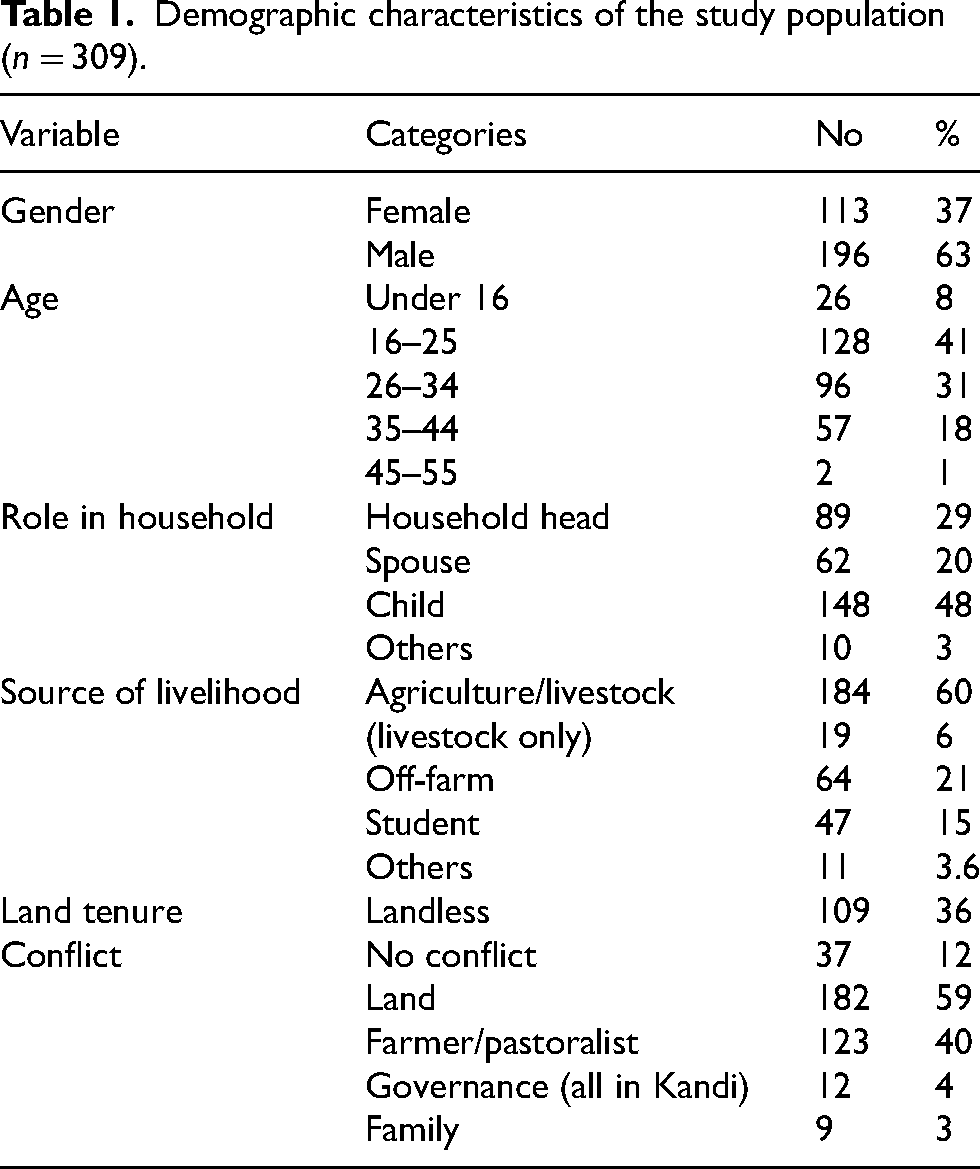
Based on the sampling targets, the majority of the study participants are relatively young with 72% aged between 16 and 34 years. Despite a balanced sampling target, female respondents are underrepresented because of lower rates of consent to participate in the interviews. Among the research participants, 54% are engaged in agriculture, 6% in pastoralism/livestock only and 21% in off-farm employment. Table 2 displays the distribution of land among research participants. The average land size is 3.5 ha (equivalent to 0.5 ha per person). These land sizes mean that it is very hard to make a living from agriculture alone (Harris, 2019).
Distribution of land among research participating households (n = 309).

Conflicts increasingly affect northern Benin and are an important factor to consider when attempting to improve the understanding of people's aspirations and livelihood trajectories. Only 12% of the research participants mentioned there is no conflict within the community. Most conflicts are reported in Natitingou. Most conflicts are around land. These conflicts are not further specified so they are likely a combination of conflicts within families about land allocations and conflicts between families over ownership and use of land. Further land based but specific conflicts that were mentioned are transhumance related conflicts between pastoralists and farmers.
Aspiration narratives
Table 3 displays the categories of aspirations that youth articulated during the interviews. To differentiate between younger and older segments of youth, we further divided our sample in those under 25 years of age and those older than 25 years. The respondents’ visions for their future were largely concrete rather than generic, either in terms of the scenarios they envisioned or the strategies they outlined to achieve them.
Narrative categories among research participants (n = 309).
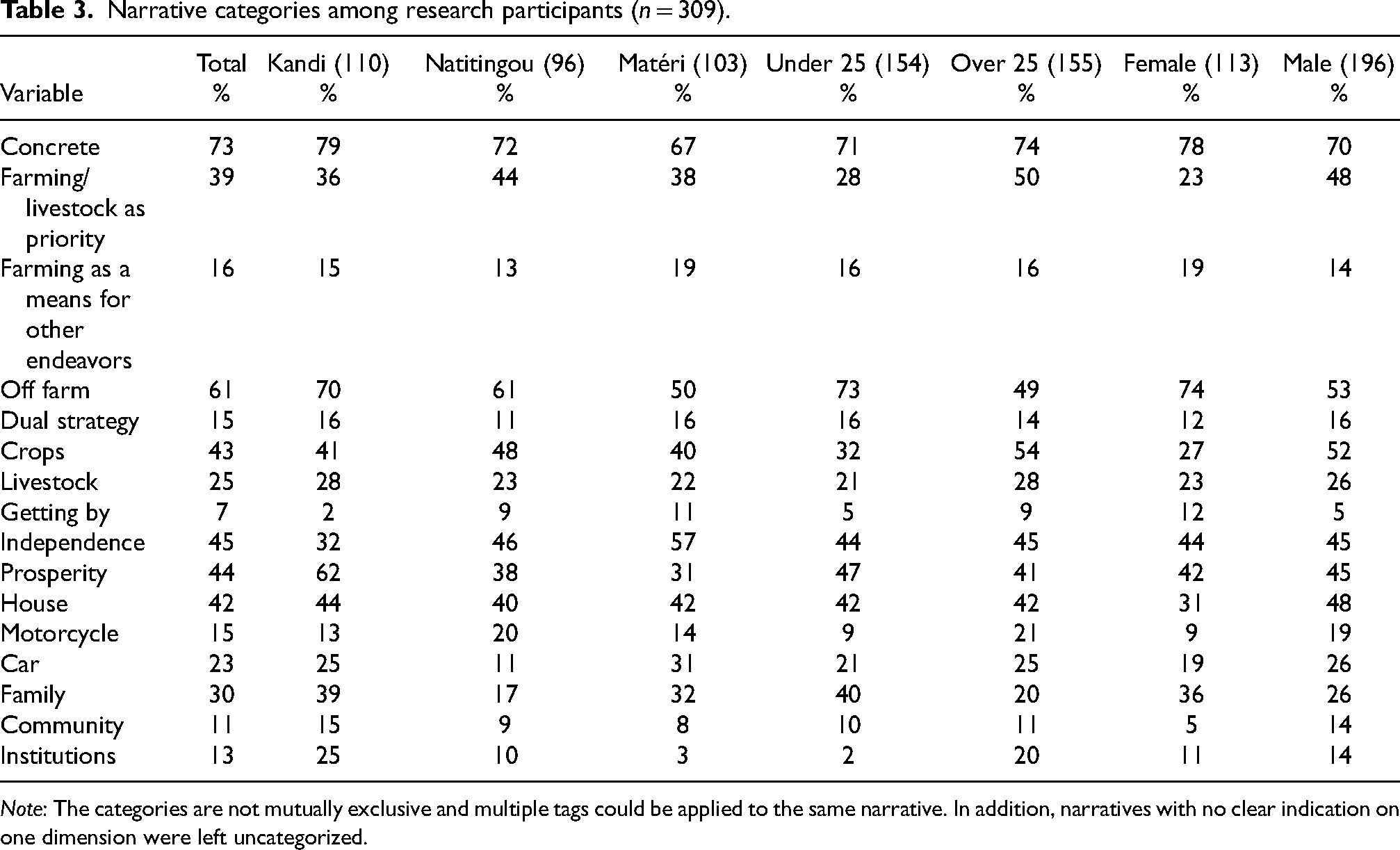
Note: The categories are not mutually exclusive and multiple tags could be applied to the same narrative. In addition, narratives with no clear indication on one dimension were left uncategorized.
There is significant variation in priorities among interviewed research participants across the three locations. Thus, aspirations are context-dependent and influenced by local social conditions, demographic factors, and gender. Some respondents aim to transition out of farming entirely by establishing small businesses, using farming to generate capital for their ventures (see “Farming as a means for other endeavors” in Table 3). Others plan to leverage business income to enhance their farming operations, while several envision a mixed livelihood strategy combining both approaches.
The dynamics between farming and off-farm aspirations reflects moves of interviewees toward diversification is also highlighted in Table 3. Off-farm livelihoods are often seen as a viable pathway by 61% to the aspirations categorized under independence and prosperity. Additionally, the emphasis on independence and prosperity across groups points to a strong drive for upward mobility and self-sufficiency consistent across gender. The levels of aspirations along the created range of “getting by,” “independence,” and “prosperity” do reflect the general socioeconomic conditions across the three locations (Table 3). In Kandi, people are generally better off (Samson and Houessou, 2022) according to secondary statistics and therefore aspire to prosperity as indicated by houses with a fenced compound, cars or other indicators of welfare. Matéri on the other hand has the highest proportion of respondents’ narratives focusing on having enough food for the family and similar aspirations.
Table 3 further highlights notable differences between male and female respondents where farming as a priority is more popular among male participants and an off-farm focus is found more often among female participants. Similarly, crop farming is more interesting for male respondents. A family focus is more important to female respondents while more status related aspirations such as a car or community focused goals are more often mentioned by male respondents.
Table 4 highlights a notable trend: while many research participants envision continuity in their current livelihoods, a substantial portion aspire to shift to alternative occupations which might be driven by the low land availability and the limited potential to intensify and move out of poverty (Harris, 2019).
Future livelihood strategies by current livelihood (n = 306).
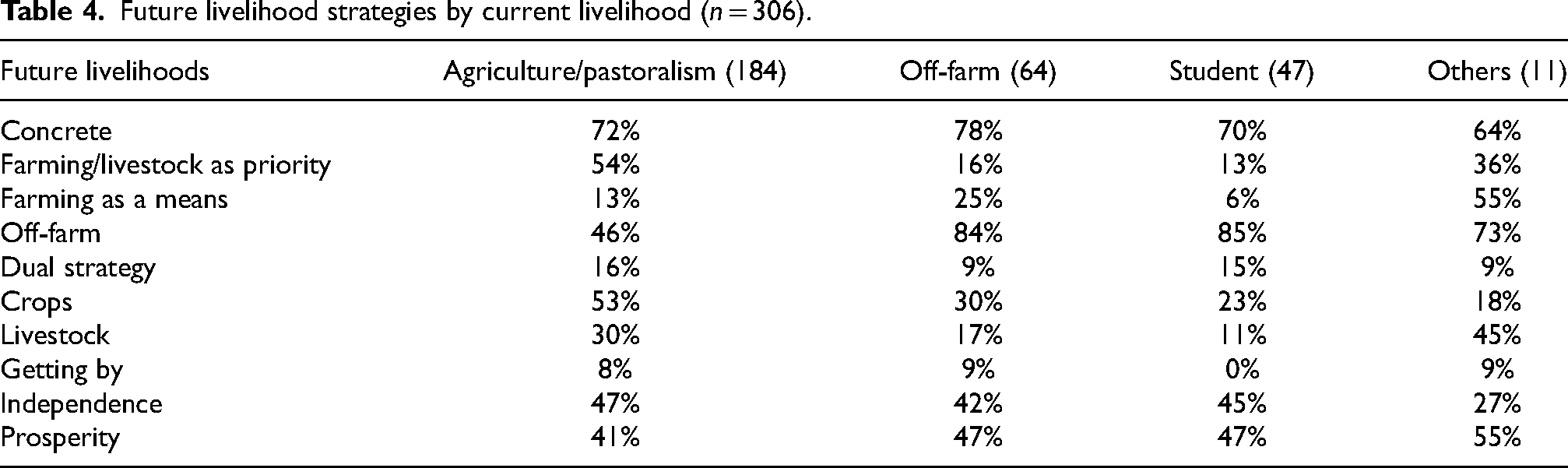
Among those currently identifying as farmers, just over half anticipate continuing in agriculture, with a notable fraction considering farming to fund other pursuits or envisioning a shift entirely to off-farm livelihoods. Those already engaged in off-farm activities show the least inclination for change, with a large majority expecting to maintain this focus. Notably, those currently studying show limited interest in agricultural futures.
Motivations and drivers of aspirations
Our inquiry into internal and external drivers seeks to uncover the foundational motivations shaping aspirations of research participants and shed light on decisions they are making about their future. Figure 1(a–f) offers insights into those inquiries.
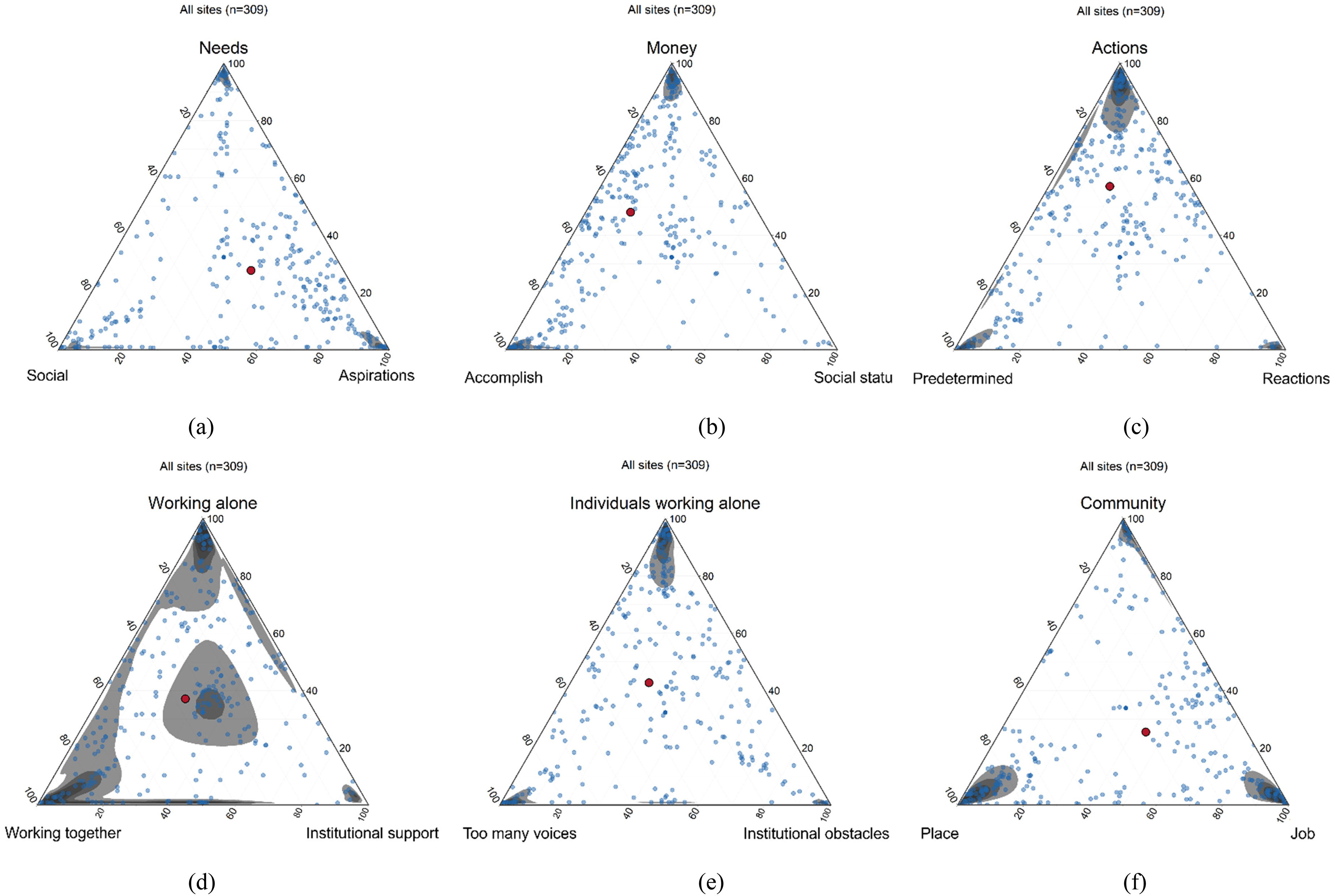
(a) Drivers of aspirations; (b) priorities for aspirations; (c) determinants of success for achieving aspirations; (d) sources of success; (e) hindrances for achieving aspirations; (f) sources of identity.
First, we asked participants what motivates them to pursue their aspirations (Figure 1a): fulfilling basic needs (i.e. existential), meeting social obligations (external), and pursuing their own aspirations (internal). In that way, participants examined tradeoffs among three dimensions of goals they pursue with their aspirations. While there is a slight overall trend toward personal aspirations being the primary driver of decisions, a significant cluster of responses indicates choices are primarily influenced by immediate needs. Fewer participants identified social obligations as the primary driver of their future, and this factor appears to be less important overall.
Second, we examined the balance between material, psychological and social factors that influence people's goals and ambitions (i.e. money, accomplishment, and social status as drivers of their aspirations) (Figure 1(b)). Most participants identified money or accomplishment—or a balance between the two—as the primary motivation for their aspirations. Social status was rarely chosen as a main driving factor.
Third, we asked who has control over lives and futures, or the extent to which they believe outcomes are predetermined (Figure 1(c)). It seems that accomplishment is mostly judged to be around one's own action although there is a cluster of respondents who feel they have little to do with what happens and everything is predetermined. The low agency perceived in their lives could be a significant entry point for empowerment actions. The motivation for change is likely to be much lower 5 and people would not invest significantly into new endeavors so efforts to increase perceived agency would be needed before starting actions.
Fourth, we asked research participants to judge reasons why people tend to succeed (Figure 1(d)) or where sources of failure (Figure 1(e)) tend to be found. Only a few rely on institutions to reach their aspirations. They may be disillusioned but for any project it is worth noting that they are more likely to engage with projects in an opportunistic way rather than believing that the intervention will do much for them. Interestingly there is also a strong cluster of responses saying that plans fail due to people working alone while there is another cluster judging that to be a source of success. However, the means are closer to a combination of these factors. Those that would judge working together to be a success factor and people working alone to be a hindrance would be likely targets for group-based interventions.
Fifth, our final question to explore drivers addressed identity. Here the place where people live, and their job show strong clusters. The cluster (Figure 1(f)) around place appears to be different from the rest; the selections are closer to the corner here while for jobs there is a tendency to also allocate some importance to the other two options.
Characteristics of different aspirations groups
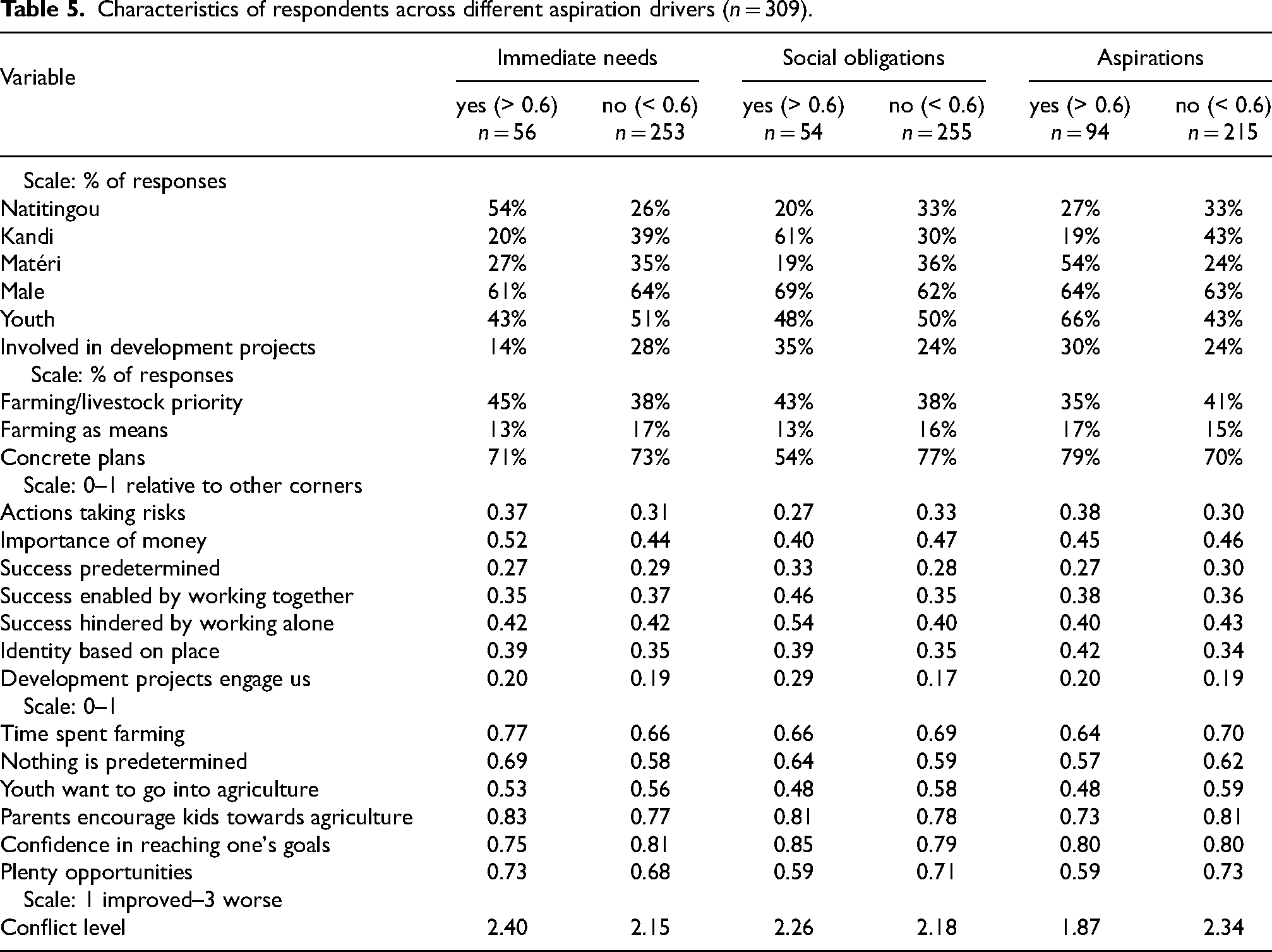
In order to design programs that respond to different underlying drivers it is important that we better understand what the characteristics of the different groups are to better connect to their current realities. We took the top answers (more than 0.6 on the 0–1 scale) for each of the three dimensions. This provides an overview of different patterns these groups showed (see Table 5).
Characteristics of respondents across different aspiration drivers (n = 309).
Focus on immediate needs
A cluster of 56 respondents (18%) identifies their aspirations as primarily driven by the fulfillment of immediate needs, thus their motivation stems from existential reasoning (Table 5). Over half of these respondents are residents of Natitingou.
As shown in Table 5, the aspirations in this group often revolve around a mix of farm and off-farm activities, emphasizing the evolving roles of income sources over time rather than dual strategies. Fewer than half of the respondents view agriculture as their core strategy, with many focusing instead on “getting by” or achieving independence. These aspirations are less likely to emphasize prosperity based on the classification of the narratives. Aspiration statements such as “in life there are some of us who live in misery, we do not even find accommodation” (see Box 1) highlight what our classification of getting by entails.
Examples of immediate needs focused aspiration narrative.
“In life there are some of us who live in misery, we do not even find accommodation. My dream is to have a habitat, enlarge my farm and if possible open a shop” Strategy: “I have no other strategy if it is not working hard in my farm and the income can use invest in my aspirations.” (Female, 26–34, Natitingou)
“I think I trade in soybeans and processing, and have fields and animals. We want to get out of poverty and be comfortable.” Strategy: “Purchase of food; Produce food; Solicit the help of parents and husband.” (Female, 16–25, Matéri)
“I am a former student who has not finished studies, I would like to create a personal business including an agro-pastoral farm, also do general trade.” (Male, 26–34, Natitingou)
“In 10 years, I see myself having a large field of yam and rice, seamstress, and having a bar where I sell local drinks; be married and have children.” Strategy: “I am currently training in sewing, after this training I intend to work as a seamstress and save the money that I earn, buy and keep chicken and goats. Then I'm going to start to open my local bar.” (Female, 16–25, Natitingou)
“In 10 years, I will always be a farmer and I will be around 50 years old. I will no longer have enough strength to continue. I will ask for help from my children who are in Nigeria to ensure my succession.” Strategy: “I cultivate on a land that is not mine just to provide for my needs and those of children who are still with me.” (Male, 35–44, Natitingou)
“I would like to live a life other than this, a more improved life. I want to build my house and live there. I also want to trade.” Strategy: “Make the cotton field, soy, corn and many others and earn money after sale. Trade too.” (Male, 16–25, Kandi)
Note: The original narratives are collected in French which were directly translated to maintain the original character and highlight that they are not fully structured stories.
Table 5 further shows that participants focusing on immediate needs perceive their actions as risky slightly more often than those prioritizing social obligations. They are also more inclined to prioritize earning money over other goals, such as social status or life satisfaction.
Agriculture remains a prominent focus for this group's future. Parents often encourage their children to pursue agricultural work, even though only half believe their children are interested in this path. As with the broader group, working independently is perceived as both a barrier to success and a potential source of achievement.
Overall, those focusing on immediate needs view the opportunities around them as more limited compared to other clusters. This perception is reflected in slightly lower confidence in achieving their goals, though their confidence remains relatively high overall.
Focus on own aspirations
Many aspiration-focused stories come from young people in Matéri (Table 5), while the least aspirational stories are from Kandi, despite it being the municipality with the lowest lived poverty incidences (Samson and Houessou, 2022) and highest net overall income. This cluster is the most positive regarding conflict and evaluates their situation more favorably than any other group—as Table 5 indicates the highest share of respondents in the aspirationally driven cluster residing in Matéri. Although the sampling emphasized a population under 40, this cluster skews younger, with 66% of respondents under 25 years old.
The aspirations shared by this group are less likely to center on agriculture as the core of their future lives but tend to be more concrete compared to other clusters. Despite their focus on nonagricultural sectors, they express a desire to expand farm production and improve agriculture—but primarily as a means to generate income, support their families, and achieve broader goals. This interplay between agricultural and nonagricultural income sources can be seen from narratives such as: “I want to have a business that can help me take care of my children […] of myself. […] in addition to the money that my agriculture gives me I will buy and resell kitchen condiments. […]” (see Box 2 for further examples).
Examples of own aspiration focused aspiration narrative.
“I see myself in a classroom, teacher in college, my students succeed in various exams, I have a beautiful car and a family with whom we live happily in our beautiful fenced house … I also farm a few hectares where I produce soybeans, peanuts to take care of me during the holidays. With my retirement I increase my areas with my savings and the workforce of my workers.” Strategy: “Having obtained my BEPC this year, after my baccalaureate, I will study university to the level necessary to teach in colleges while helping my parents in country activities … with the help of my parents I invested my savings to develop and improve my return and to increase my income, build my house and buy my car.” (Female 16–25, Kandi)
“make a cashew farm, enlarge my farm, have financial means to do charities” Strategy: “I have to work to have enough food. For the trade I count on my father and mother or other parents to help me learn a job.” (Female, 16–25, Matéri)
“In 10 years I will be the mayor of a municipality of Benin, I have a farm combined with keeping sheep and poultry. I am also the father of two children out of need. I will also be a trader.” Strategy: “I do small jobs to get money today and get into poultry farming. Built the chicken coop, started trade. I try to behave well so that the people I rub shoulders with never have a bad impression of me so that when they come they can support me in my ambition to occupy the town hall.” (Male, 16–25, Natitingou)
“I am a farmer, I want in 10 years that my agricultural production activity gives me money so that I can build my house, buy a motorcycle.” Strategy: “I will continue in my agriculture and save a little, then buy animals to raise and breed and that I can, plant trees and sell the wood. This is all that will allow me to achieve my goals.” (Male 16–25, Matéri)
“I want to have a business that can help me take care of my children and take care of myself. Looking for a small capital in addition to the money that my agriculture gives me I will buy and resell kitchen condiments. Within 10 years, the profits will enhance activity and provide family needs.” (Female, 26–34, Matéri)
“Today I am 17 years old. When I am 27 years old I would have a wife and two children, a large field and I would be a hairdresser. I would also have a livestock farm with sheep, goats, pigs, chicken, duck, and Guinea fowl.” Strategy: “For the moment I am doing agriculture. After that I will pay for training to do the hairstyle and then make money in the hairstyle and invest in agriculture and livestock little by little until reaching my dream.” (Male, 16–25, Natitingou)
Note: The original narratives are collected in French which were directly translated to maintain the original character and highlight that they are not fully structured stories.
This group is less likely to envision young people's futures in agriculture and observes that parents are less encouraging toward agricultural work (see Table 5). They demonstrate a higher propensity for risk-taking and a stronger sense of identity tied to their locality. However, they perceive fewer opportunities in general.
Highly motivated and driven by a strong sense of local identity, this group participates in development projects more often than the one focused on immediate needs. They, along with the cluster focused on the immediate needs are the most critical of NGO engagement. This presents an opportunity to strengthen commitment by designing projects that align with their aspirations while addressing the shortcomings they find most frustrating.
Focus on social obligations
Stories focused on social obligations predominantly come from Kandi and are more likely to be shared by female respondents (Table 5). These narratives are less likely to include off-farm livelihoods, though they are not necessarily centered on agriculture as a primary focus. This discrepancy may stem from many female respondents emphasizing their role in providing for their families without presenting a clear or concrete plan for achieving these goals.
Participants in this group are less inclined to take risks and prioritize outcomes other than financial gain. They also exhibit lower perceived agency, often expressing the belief that outcomes are predetermined. However, they strongly value collaboration, seeing working together as a key success factor, while identifying individuals working alone as a significant hindrance. The community focus is also highlighted through narratives such as “I would like to work to have food self-sufficiency, build a road for my village […]” (see Box 3 for further examples).
Examples of social obligation focused aspiration narrative.
“In 10 years I want to have two other women. The first I already have will be three, Livestock keeping and having at least 100 heads of oxen and 50 sheep. Having a large shop, going to live in town to sell in my personal shop, buy a car, also buy a tractor, become a large Muslim.” Strategy: “Doing agriculture to find money and save to start the shop, I will also count on the revenues of the livestock keeping to realize my dreams. Buy a plot in town to build it and make my shop there.” (Male, 26–34, Kandi)
“I want to have enough money within 10 years, having oxen, goats, chickens, and Guinea fowl, I think I also have enough children. Send my children to school and take care of their education so that they become great personalities later.” Strategy: “Seeking small money, asking for financial aid from projects, I am already selling agricultural products, especially corn. I will exploit the income of this activity to be able to start keeping chickens and small ruminants first. Subsequently I will add oxen. When I have enough money I will be able to send my children to school and take care of their education.” (Female 16–25, Kandi)
“In 10 years, to ensure a better future for children, I will have my own house. Have my building masonry business.” Strategy: “I support everything necessary for children's education, I bought a plot of land, and I started gathering all the documents to settle formally. “ (Male, 45–55, Natitingou)
“I would like to work to have food self-sufficiency, build a road for my village, drill where to dig a well for my village” Strategy: “Work to enlarge my agricultural exploitation, exploit my relationships to be able to achieve my objectives.” (Male, 16–25, Natitingou)
“I want to have a lot of money, I want to go to school to become a midwife and help the women in my village to give birth or to be a policewoman. At worst, I would like to become a seamstress. I also want to have a good husband and have children (at least 10 in 10 years). I also want to have the means to be able to go to Mecca and become Azia.” Strategy: “To be able to realize my dream I must first register at school, work well at school to have enough diplomas. After that I will be trained in the health field and take the test to become a midwife. If it does not work I will take the test for the police to serve the country. My third option in the event of failure of the other two is to learn sewing. After my success in one of these options, I could marry the man who would like me, have children and go to Mecca.” (Female, under 16, Kandi)
“My dream is to develop my locality through the construction of a well, buy me a motorcycle and build a beautiful house” Strategy: “I have the will, I have to work hard and save money, be in decision-making groups to defend the development of my locality.” (Male, 26–34, Natitingou)
Note: The original narratives are collected in French which were directly translated to maintain the original character and highlight that they are not fully structured stories.
While this group perceives fewer opportunities overall, they remain highly confident in their ability to reach their goals. Notably, they rate development projects more positively than other groups, suggesting a more favorable view of NGOs and their efforts.
Conflict perceptions mediate aspirations
Conflict dynamics do not differ significantly across regions. About one-third of respondents perceive conflict levels as decreasing, while slightly more than half believe they are worsening (see Table 1).
These assessments appear strongly linked to participants’ livelihood focuses (Table 5). Respondents who see conflict levels worsening are more likely to have aspirations driven by the satisfaction of immediate needs, whereas those who perceive stability or improvement tend to focus more on social obligations or personal aspirations. While the averages are similar, there are pronounced clusters at the extremes.
For those who perceive worsening conflict, their aspirations and strategies often reflect a mix of hopefulness, determination, and frustration. Statements like “I want to live a different life” or “I really hope that it will work” suggest a degree of desperation, underscoring the emotional toll of conflict. The uncertainty created by conflict dynamics understandably pushes people to focus on immediate needs, as long-term planning becomes riskier and less feasible. Table 5 highlights that those in the immediate needs cluster see conflict worsening more often than the other clusters and the aspirations cluster has the most positive assessment of conflict.
Additionally, worsening conflict appears to weaken social networks, traditionally an important source of resilience and mutual support. As trust erodes, individuals increasingly prioritize self-reliance, further undermining collective strategies (see Table 6). This shift is reflected in their lower assessment of collaboration's benefits. While individual effort is seen as a key driver of success, it is paradoxically also identified as a significant hindrance—especially among those who perceive conflict levels as worsening.
Assessments by different conflict perceptions (n = 309).
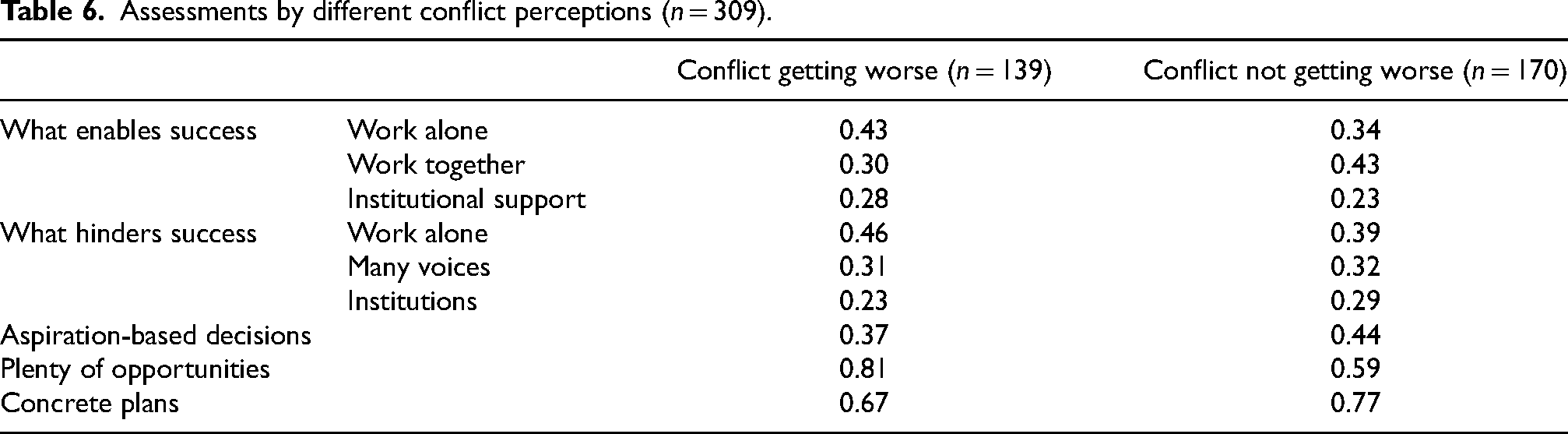
This dynamic presents both challenges and opportunities for projects. On one hand, the recognition of collaboration's value, coupled with the awareness of the drawbacks of working alone, highlights a potential entry point for group-based interventions. If trust can be restored and strengthened within groups, collaborative projects may serve as positive examples for the wider community. On the other hand, projects that favor individual success could inadvertently exacerbate the erosion of trust and social cohesion if not carefully designed.
Perceptions of development programs
In understanding the current and future livelihoods of the population, the role of agriculture and food security becomes a critical factor in shaping development trajectories. NGOs have been active in northern Benin for a long time. Their influence and the perception of their work is essential in understanding their potential to drive change. The diversity and density of NGOs also determine how many competing programs people are exposed to and highlight opportunities for partnerships that could create more synergistic approaches supporting youth aspirations.
Figure 2 illustrates community perceptions of NGO engagement mechanisms. When asked about the work of NGOs in their communities, research participants expressed relatively negative sentiments. NGOs are perceived to pursue their own agendas rather than collaborating with communities to design interventions tailored to local needs and aspirations. Comments on projects include: “Come and get the opinion of the population first before any intervention,” “I wish the project leaders were more serious, sometimes after they come and ask how we live and what our needs are, they leave and never come back with the promised help,” “Nothing to say because it won't change much … Despite all the promises, they always end up doing as they please and only the same people develop and flourish,” or “Nothing to say because they will always do as they please.” This is a worrying dynamic that may hint at some of the above speculation on the dynamics might well be observed in the locations.
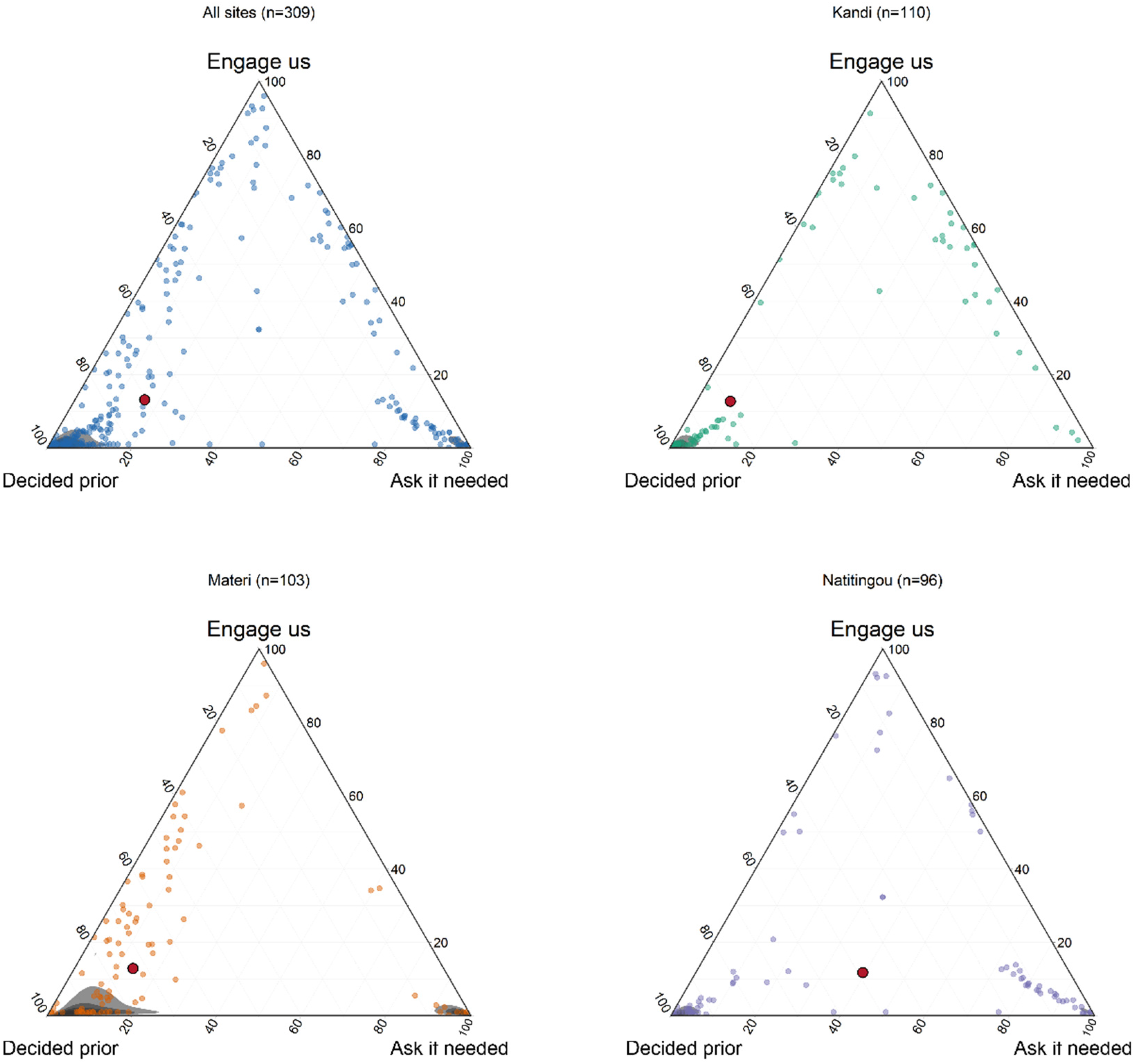
Perceptions about NGO engagement mechanisms (n = 309). Notes: Shading represents the relative density, red/large circled dot marks the geometric mean (n = 309). Calculations using the R package ggtern (Hamilton and Ferry, 2018).
Most research participants believe that NGOs decide on their interventions before arriving, with only a small group perceiving NGOs as engaging the community when necessary. This sentiment is relatively consistent across the three locations studied, though Natitingou shows a slightly higher number of respondents who feel NGOs engage with the community when needed.
While this is a subjective assessment, as much of this survey data is, it sheds light on critical dynamics that could affect the success of future projects. People who perceive NGOs as disconnected from their needs are unlikely to fully engage with new initiatives. However, this also presents opportunities for new actors in these communities. Designing initial engagements that genuinely listen to people, incorporate their aspirations, and align with their priorities could foster true collaboration, generate buy-in, and build positive momentum for impactful change.
Discussion
Youth aspirations in northern Benin reveal the complex interplay of factors youth is confronted with—ranging from immediate needs to long-term ambitions for independence and prosperity. These aspirations are deeply influenced by regional, demographic, and social contexts, with significant variation between groups and clusters.
Our findings reflect the diverse realities of northern Benin. For instance, respondents in Matéri largely prioritize immediate needs, while those in Kandi express ambitions tied to upward mobility, such as improving housing or acquiring vehicles. This aligns with studies on rural aspirations (Johnson et al., 2020; LaRue et al., 2021; Leavy and Smith, 2010; Sumberg and Okali, 2013), which highlight the influence of contextual realities, including resource availability and economic opportunities, on shaping youth goals.
This diversity calls for program designs that address immediate needs and long-term ambitions concurrently. Regions facing livelihood challenges like Matéri require interventions focused on securing basic resources, whereas areas like Kandi need programs that support entrepreneurial and market-driven opportunities. However, these broad differences should be complemented with more individualized options that address heterogeneous aspirations within these population groups. This aligns with previous findings from Kenya (Mausch et al., 2021a).
The prevalence of dual livelihood strategies—combining farming and off-farm activities—highlights the importance of diversifying income sources likely to mitigate risks or supplement low agricultural incomes. The dual livelihood strategies observed, combining farming with off-farm activities, are consistent with Ellis (1998) framework on rural livelihood diversification, which emphasizes the role of mixed-income strategies in reducing vulnerability. However, the limited interest in agriculture among those currently studying in school or university raises concerns about the sustainability of rural farming, as that group is unlikely or at least unwilling to return to agriculture. This reflects findings by Sumberg et al. (2014) and LaRue et al. (2021), who identify the declining appeal of agriculture among youth, driven by perceptions of limited profitability and societal devaluation of farming as a career. To address this, programs should integrate off-farm opportunities with agricultural support to make farming more appealing and economically more viable. In addition, efforts to broaden the aspiration windows through options like exposure to role models within the agricultural sector could offer opportunities to highlight different aspects of these careers that are in line with young people's underlying motivations. Furthermore, focusing on relevant attributes of new farming options that align with aspirations could increase their appeal while also communicating a degree of understanding priorities of the population and responding to needs for the NGOs.
Aspirations of youth in northern Benin are shaped by three primary drivers: immediate needs, social obligations, and personal goals. While personal aspirations dominate, immediate needs remain an understandable motivator, particularly in regions facing heightened economic or security pressures. Material factors like money and psychological drivers such as accomplishment influence youth motivations. This corresponds with Maslow's hierarchy of needs (1943), where individuals (need to) prioritize basic survival before pursuing higher-order goals such as esteem and self-actualization. Navigating those as development programs is not easy but is central to enhance engagement. Addressing basic needs through direct support can create a foundation for participants to pursue higher-level goals such as independence and prosperity. At the same time, fostering a sense of accomplishment through skill-building and entrepreneurial opportunities can sustain long-term participation. Kabeer's (1999) work on empowerment highlights the importance of agency in enabling individuals to move beyond survival-focused aspirations, emphasizing the role of education and capacity-building.
Conflict significantly influences youth aspirations and strategies in northern Benin. Worsening conflict dynamics push individuals toward self-reliance, eroding trust in collective strategies. This aligns with Putnam's (2000) observations on the erosion of social capital in conflict-affected areas, where trust and collaboration decline in the face of instability. This duality—where individual effort is seen as both a driver of success and a hindrance—presents challenges for program design. Rebuilding trust and fostering collaboration require interventions that prioritize group cohesion and shared goals (Mercy Corps, 2019; Sonnenfeld et al., 2021) would likely reshape the aspiration windows and open up new opportunities. Research by Colletta and Cullen (2000) on social cohesion in fragile states underscores the importance of rebuilding trust and shared community networks to create resilience. Conflict-sensitive programming that addresses immediate needs while fostering longer-term planning can help communities navigate uncertainty and instability. Such interventions must also include opportunities to rebuild social networks, which are critical for resilience in fragile contexts. This would lead to a broadening of opportunity windows which in turn will move the aspiration windows highlighting alternative pathways.
The findings also highlight a disconnect between community aspirations and NGO interventions. Many respondents perceive NGOs as pursuing their own agendas rather than aligning with local priorities. This fosters opportunistic engagement, where participants use resources for personal goals outside the project's scope. Such perceptions are consistent with critiques of top-down development approaches (Chambers, 1994), which often fail to incorporate community voices into project planning (Dilley et al., 2021; Greiner et al., 2021; Matejcek and Verne, 2021). However, this also presents an opportunity for NGOs to rethink their approaches. Actively involving communities in project planning, being transparent about goals, and integrating complementary activities can foster greater trust and alignment (Olawole et al., 2022a, 2022b). For example, programs that balance agricultural and off-farm opportunities rather than promoting specialized agriculture can better resonate with diverse aspirations and aspirations for diverse livelihoods, ensuring broader community buy-in.
Several cross-cutting themes emerge from these findings. Enhancing perceived agency is critical for motivating youth to engage with development programs. Empowering young people through skill development, mentorship, and participatory approaches can shift aspirations from survival-focused goals to long-term ambitions. Sen's (1999) capabilities approach provides a useful lens here, emphasizing the importance of expanding individual freedoms and opportunities to achieve desired outcomes. Inclusivity and equity must also be prioritized, addressing the unique challenges faced by marginalized groups such as women and youth with limited resources. Finally, conflict-sensitive approaches are essential for designing interventions that adapt to the realities of fragile contexts. When done well, they build trust-building and rebuild social cohesion.
Aligning development programs with youth aspirations in northern Benin requires a good understanding of these context-specific dynamics and the type of data used here can support additional insights into motivations and future aspirations.
Conclusion
The findings from this study provide insights for aligning development programs with the context-specific aspirations of youth in northern Benin. To address the varying needs and motivations of different groups, development agriculture and food security programs should tailor interventions to specific youth aspirations. Programs should balance short-term goals, such as securing basic livelihoods for those driven by immediate needs, with long-term strategies, such as fostering entrepreneurial opportunities for youth focused on independence and prosperity. Incorporating dual livelihood strategies that combine farming with off-farm opportunities can also enhance program relevance and impact, addressing the economic and social realities of fragile contexts.
Building trust and engaging communities meaningfully are essential for the sustainability of agriculture and food security programs. We found that participants see NGOs as externally driven and perceive some as disconnected from local priorities. To overcome this, agriculture and food security programs could more actively involve communities in project design and decision-making. Transparent communication about project goals, intended beneficiaries, and expectations can foster a sense of ownership and greater alignment with youth aspirations. Programs that demonstrate responsiveness to community needs are more likely to gain buy-in and support, creating a foundation for sustained engagement.
Future research should explore how youth aspirations evolve over time, for instance during agriculture and food security programs. Furthermore, a broader sample could support a deeper understanding of intergenerational differences and the shifts of aspirations along people's lifetime. Similarly, an exploration of how religious beliefs and backgrounds could influence aspirations, and underlying motivations could allow further insights on changing aspirations. Longitudinal studies could help understand dynamics of aspirations and the factors influencing their transformation given that a substantial portion of respondents aspire to shift to alternative strategies. Especially when embedded with different types of development programs that broaden opportunity spaces and aspirations windows the exploration of this dynamic could prove highly insightful. Additionally, testing the impact of interventions—such as those addressing specific aspiration clusters or fostering collaboration in conflict-affected areas—could inform the design of more effective programs.
Supplemental Material
sj-pdf-1-oag-10.1177_00307270251339194 - Supplemental material for What motivates young people in fragile contexts to participate in agriculture and food security programs? Insights from aspirations in Northern Benin
Supplemental material, sj-pdf-1-oag-10.1177_00307270251339194 for What motivates young people in fragile contexts to participate in agriculture and food security programs? Insights from aspirations in Northern Benin by Kai Mausch, Titia Nijeboer, Wakil Arouna Amadou, Piet Vroeg, Dave Harris and Michael Hauser in Outlook on Agriculture
Footnotes
Acknowledgments
We would like to thank the highly engaged enumeration team, the survey participants who spend their time and energy. In addition, we would like to thank the reviewers for very detailed and constructive comments.
Declaration of conflicting interests
The authors declared no potential conflicts of interest with respect to the research, authorship, and/or publication of this article.
Funding
The authors disclosed receipt of the following financial support for the research, authorship, and/or publication of this article: This work was supported by the Embassy of the Kingdom of the Netherlands in Benin (grant number 4000003975).

Supplemental material
Supplemental material for this article is available online.
Notes
References
Supplementary Material
Please find the following supplemental material available below.
For Open Access articles published under a Creative Commons License, all supplemental material carries the same license as the article it is associated with.
For non-Open Access articles published, all supplemental material carries a non-exclusive license, and permission requests for re-use of supplemental material or any part of supplemental material shall be sent directly to the copyright owner as specified in the copyright notice associated with the article.
