




Abstract
Agriculture and other land use practices have severely affected the quality of soils and food production systems in South Africa. In addition, these practices significantly contribute to greenhouse gas (GHG) emissions. Soil quality is generally associated with soil organic matter (SOM) along with elemental Carbon (C) and Nitrogen (N). Approximately 58% of South African soils contain <0.5% organic C, 38% contain 0.5–2% organic C, and 4% contain >2% organic C. The extensive aridity and lack of SOM content in South African soils cause them to lack resilience and have a delicate nature compared to soils in temperate regions. In a country where almost 60% of the land is degraded, and 91% is prone to desertification, farming practices require a revised framework for land management. The challenge of producing food on degraded land that is often water-scarce and particularly vulnerable to the effects of climate change is a threat to South Africa's food and nutritional security. Therefore, this review aims to equip farmers with knowledge and principles of innovative and sustainable alternatives such as regenerative agriculture that naturally and progressively improves soil quality/fertility and ecosystem health; and reduces GHG emissions through carbon sequestration. Quantitative studies in South Africa show that during 5–90 years of crop cultivation in the Free State province resulted in a 10–73% reduction in C and N relative to natural grasslands. Similar studies reported a 50% reduction in C after 50 years of cultivation on Hutton soil in Pretoria; and a 50% reduction in C after only 3.5 years of cultivation in the Free State. Considering that the world's food systems are responsible for more than a third of anthropogenic GHG emissions, we are convinced that the shifting trend toward regenerative agriculture is a sustainable climate-smart solution for global food production systems.
Keywords
Introduction
An estimated 38–55% of Earth's habitable land is used for agricultural food production; an industry that could add nearly 1°C to global warming by 2100 (Boakes et al., 2024; FAOStat, 2022; Ivanovich et al., 2023). Therefore, improving the efficacy of agricultural practices is crucial for the sustainability of global food production systems. However, the challenge of producing food on degraded land that is often water-scarce is a threat to food security for many commercial and small-scale farming communities in South Africa and abroad (Sithole et al., 2016). In a country where almost 60% of the land is degraded, 91% is prone to desertification, and warming is twice the average global rate, farming practices require a revised framework for land management (Daniell and van Tonder, 2023). As researchers within this domain, we recognize a need for the development or adoption of innovative sustainable food production systems in South Africa. We are also aware that agriculture and other land use practices account for approximately a third of global GHG emissions as a direct consequence of anthropogenic activity (FAO, 2023). These effects to the environment need to be better managed to ensure that we can continue to meet the food production demands of a rising population. Industrial agriculture which is a globally adopted practice often used by growers in South Africa has led to poor soil quality and ecosystem health; but more importantly, it generated a massive carbon footprint. The poor quality of food resulting from centuries of industrialized agriculture indirectly affects the health of people. Boakes et al. (2024) and Toplensky (2024) further indicate that global food production systems are key drivers of land use and climate change which adversely affect biodiversity, freshwater resources, and deforestation. Therefore, revised strategies have become exceedingly important to sustain food and nutritional security, while reducing our carbon footprint and possibly mitigating the effects of climate change by 2050. Our research led us toward exploring the principles of regenerative agriculture. We know that the practice and benefits of regenerative agriculture in Africa are not well understood or widely practiced, therefore, our research outcomes will not only add value to the growing body of knowledge on the future of sustainable agriculture, but more importantly it will educate and convince farmers, researchers, institutions, and policy-makers to shift the trend toward this climate-smart solution.
Regenerative agriculture requires a fundamental understanding of soils and carbon sequestration and can provide essential long-term benefits to millions of resource-poor small-scale, subsistence, and commercial farmers throughout the world. Soils contain more carbon than the earth's atmosphere and all plant life combined; there are approximately 2500 billion tons of carbon in soil, 800 billion tons in the atmosphere, and 560 billion tons in plant life (Schwartz, 2014). Conventional agricultural land use practices throughout the world have released more than 500 billion tons of original carbon stock back into the atmosphere, which significantly contributes to the rising global carbon footprint (Schwartz, 2014). The Food and Agriculture Organization (FAO) of the United Nations (UN) indicates that a lot of cultivated soils throughout the world have lost 50–70% of their original carbon, and excess CO2 in the atmosphere comes from destroying the soil (FAO, 2023; Rawnsley, 2024). Every time soils are tilled, they lose 50% of soil organic matter (with reference to compounds that lock carbon into the earth) (Rawnsley, 2024). At least a third of excess CO2 in the atmosphere that started life in the soil was released by changes in the planet's land use and not by the burning of fossil fuels (FAO, 2023; Rawnsley, 2024). Carbon farming or regenerative agriculture is a paradigm shift from conventional food production methods to a more organic approach that resembles natural ecosystems. According to the Carbon Cycle Institute (CCI), it is an integrative implementation of principles that are known to optimally sequester carbon from the atmosphere and store it in plant and soil organic matter (CCI, 2022). Additionally, it is a framework designed to drive systematic change by engaging with agroecosystems (CCI, 2022). It is also well known that the dynamics of these agroecosystems are essentially influenced by solar energy, and carbon is a carrier of solar energy.
Carbon farming and regenerative agriculture are synonymous terms often used interchangeably, however, the latter leans more toward an understanding of agroecosystem dynamics and positive feedback mechanisms associated with improved soil fertility, farm productivity, and marginalized input costs. Against this background, it becomes fundamentally important to identify activities that contribute to the earth's rising temperatures and design alternative strategies to adapt and possibly mitigate the effects of climate change. This review aims to provide industry professionals, policy makers, and stakeholders across the value chain with sustainable, scalable, and climate-smart solutions such as regenerative agriculture to potentially reverse the impact that centuries of conventional agriculture, land misuse, and food production systems have produced on global carbon emissions and the subsequent warming of our planet. It also provides key insights into the drivers and barriers influencing the adoption of regenerative practices and what areas of support can be provided to possibly de-risk and overcome these constraints to farmers.
Material and methods
For our review of the literature, we selected 100 (out of a total of 132) articles, book chapters, and websites investigated through Google and Google Scholar that we considered to be the most relevant to our research objectives for this review. In addition, we chose from the most recently published articles except for those that were historically relevant. We used keywords, such as carbon farming, soil quality management, soil organic matter, regenerative agriculture, global carbon emissions, regenerative agriculture in South Africa, principles of regenerative agriculture, sustainable agriculture in South Africa, South African agroecosystems, South African agricultural statistics, regenerative agriculture case studies, and drivers and barriers to the adoption of regenerative agriculture.
Global carbon emissions
CO2 levels spiked since the industrial revolution and have since been a key factor for global carbon emissions. The first revolution was coal and mechanization in 1765, the second was gas in 1870, the third was electronics and nuclear in 1969, and the fourth was internet and renewable energy in 2000 (Liang et al., 2018). These events led to the release of stored organic carbon into heat-trapping CO2 molecules that accumulate in the atmosphere. Deforestation, soil disturbance, mining and burning of fossil fuels, and industrial agriculture are some of the anthropogenic activities that perpetually accelerated the rate of global CO2 emissions.
According to Crippa et al. (2021) and Tubiello et al. (2021), agricultural food systems contribute approximately one-third of the total anthropogenic GHG emissions. In 2020, the total global GHG emissions resulting from anthropogenic activity were recorded at 52 gigatons CO2eq measuring 4% less than the recorded value obtained in 2019. Conversely, it has risen by a staggering 34% since 2000. This marginal decrease in 2020 was an apparent reflection of reduced economic activity due to the COVID-19 pandemic.
Statistics released by the Food and Agriculture Organization (FAO) of the United Nations (UN) indicate that agroecosystems and other land-use practices, i.e., deforestation, peatland drainage, and pre-/post-production processes such as food manufacturing, retail, household consumption, and food wastage stably account for 24% of global GHG emissions (for industrialized countries, and notably less for developing countries from 68% in 1990 to 38% in 2015), and the total global livestock emissions were 7.1 billion tons of CO2 per annum which represents a total of 14.5% of the total GHG emissions as a result of anthropogenic activity (FAO, 2023).
It has been established that fertilizers are presently the leading contributor of GHGs, constituting 39% of the total overall food system emissions. Industrial agriculture and other land-use practices contribute 38% while distribution accounts for 29% with the expectation of further inflation in the near future. Packaging is estimated to contribute in the region of 5.4% of global food system emissions which is higher than any other factor listed along the supply-chain including transportation. The FAO explains that the intensity of GHG emissions varies according to the product. For example, wine and beer significantly impact packaging emissions, whereas, banana and sugar beet contribute more toward transportation emissions.
Soil quality management
According to Sharma et al. (2021), novel methods are being developed to better manage cropping systems and soil health to adapt to excessive concentrations of atmospheric CO2 while simultaneously improving water use efficiency and soil quality. The capacity of soils to retain water, and the extent and composition of soil organic matter (SOM) depend on the type of management/farming methods being implemented (Aranda et al., 2011; Fageria, 2012). The importance of SOM in the management of soil quality in agroecosystems is highlighted in Box 1. Ideally, global food systems should produce enough to ensure that societal demands are met with minimal damage to the subsequent ecosystems. Sharma et al. (2021) emphasize that effective planning strategies should fundamentally be centered around cropping systems that fulfill market requirements while simultaneously protecting environmental resources. The authors further accentuate that improving and maintaining the integrity of soils requires a revised and thorough understanding of soil management practices in order to take advantage of its inherent qualities. There are several factors that influence soil health; however, organic matter content is of crucial importance (Bolan et al., 2011; Scotti et al., 2015).
SOM and soil quality.
SOM content is a key characteristic of soil quality/soil health (Bolan et al., 2011). Decaying plant and/or animal matter by soil macrofauna and microorganisms increase soil SOM content, however, most SOM originates from plant residues (Fierer, 2017). Plant residues comprise 60–90% moisture; the remaining dry matter is made up of carbon (C), oxygen (O), hydrogen (H) and trace amounts of sulfur (S), nitrogen (N), phosphorus (P), potassium (K), calcium (Ca) and magnesium (Mg) (FAO, 2005). These elements play an important role in soil fertility management. SOM consists of various components in varying proportions and intermediate stages; an active organic fraction (10–40%) and a resistant/stable organic matter (40–60%) also known as humus (FAO, 2005). For purposes of simplicity, SOM can be divided into above ground fractions (comprising plant and animal residues) and below ground fractions (comprising soil fauna and microflora, decomposing plant and animal residues, and humus) (Paul, 2016). SOM contains and stores essential plant nutrients. Humus holds and absorbs nutrients in a plant available form (Paul, 2016. The active and some of the resistant organic elements of SOM together with fungi improve soil structure by binding soil particles into larger aggregates which is important for aeration, water filtration, water holding capacity, resilience to drought and flooding, and resistance to erosion and crusting. SOM varies between 1% and 10% in most agricultural soils, however, in South Africa, soils contain less than 2% (Lobe et al., 2001). Almost 60% of South African soils comprise a low SOM content which has resulted in low soil productivity and high soil degradation (Lobe et al., 2001). In addition, land use and soil management practices also influence fluctuations of SOM. Anthropogenic activity which includes the use of biocides, chemical fertilizers, and tillage, etc. adversely affects the SOM content, soil quality, and soil fertility of agroecosystems throughout the world; and particularly those in South Africa.
The presence of organic matter in agroecosystems is generally ubiquitous and can be easily improved with land management practices. SOM enhances soil structure and its capacity to retain water. These soils typically comprise a wide diversity of naturally occurring insect and microbial species which help to improve agricultural productivity and reduce the incidence of drought, floods, and pests and disease. According to Hartmann et al. (2013), agricultural activities that increase organic matter in soils reduce atmospheric CO2, yet, many agroecosystems are deficient in carbon as a result of soil erosion and soil breakdown (Xiao et al., 2018). It is also well known that agroecosystems with low CO2 inputs compromise their productivity. For this reason, governments incentivize soil management practices that conserve soil carbon, which assists farmers to improve biomass and soil quality. It is further recommended that in agroforestry management systems, particular tree species grown in combination with crops may feasibly solve various agricultural challenges (Dewi et al., 2017). Governments strive to reduce CO2 emissions in agroecosystems by implementing environmental policies. Some of these policies include no-till, vegetal mulch, the use of biofertilizers, and systems operating under agroforestry (Chapagain and Raizada, 2017; Chhabra et al., 2018).
Sharma et al. (2021), highlight that forestry is yet another important factor that influences the content of CO2 in soils. In addition, the patterns of land use and river flow are significantly affected by deforestation (Liu et al., 2013). Forests can reduce GHG emissions through CO2 sequestration and hence reduce global warming. Forests are home to a plethora of microalgal species which sequester atmospheric CO2 for photosynthesis and store it as organic carbon molecules in their cells. Planning and management of forest systems must consider its impact relative to other ecosystems. According to Sharma et al. (2021), CO2 sequestration is the preferred and more advantageous method when compared to the use of flue gas aquifers (for storage and disposal of CO2) which pose the risk of leakage over time.
According to Mafongoya et al. (2006), soil nutrient reserves in Southern Africa are being depleted by nutrient mining. As a consequence of reduced soil fertility and crop yields, there has been an increase in food and nutritional insecurity, and food aid. Mafongoya et al. (2006) further emphasize that the central dogma to improving agroecosystems is the building and maintenance of soil structure and soil fertility; despite the challenge's farmers face (particularly in low-income, subsistence farming, and increasing land and labor constraints). Although practices such as inorganic fertilizers, grain legumes, animal manures, integrated nutrient management, and agroforestry options are comprehensively presented for small-holder and emerging farmers, these methods can easily be scaled up and adopted by commercial farmers. Although these practices have their benefits, there is still a significant carbon footprint and input costs associated with the application of inorganic fertilizers, herbicides, fungicides, and insecticides in addition to tillage. Almost two decades later, and we still have not significantly reduced agroecosystem emissions. Consequently, erratic weather conditions such as floods, droughts, and the onset of insect pests, weeds, and diseases have substantially increased. Mafongoya et al. (2006) indicate that issues such as quality of inputs, nutrient balancing, labor to collect and transport organic inputs, and their management need to be addressed and optimized.
South African agroecosystems
Mills and Fey (2004) indicate that reducing soil erosion has been the focal point in conserving soils in South Africa. However, it is equally important to understand the subtle nuances of how land use practices affect soil quality (Gregorich et al., 1994). Their study shows how land use can result in soils that are poor in organic matter; and in a greater tendency for soils to crust (Mills and Fey, 2004). Ultimately, the integrity of soils is a direct result of land use, and any further decline thereafter, is a result of land misuse. The decline of soil quality in South Africa has been an agricultural and political debate for centuries (Scott, 1947; Scott, 1970; Scott, 1975). The damage to soils in South Africa was initially only quantified in terms of soil erosion without considering other important indicators for measuring soil quality. Policies to reduce and possibly mitigate soil erosion from South African agroecosystems began with the Drought Investigation Commission report of 1923, followed by the Soil Erosion Advisory Council in 1930, and the Soil Conservation Act of 1946 (Mills and Fey, 2004). However, using only erosion to measure soil quality without factoring in the physical and chemical properties of a particular agroecosystem creates a bias and is therefore considered erroneous. Importantly, the physical and chemical properties of these soils change under different land use practices.
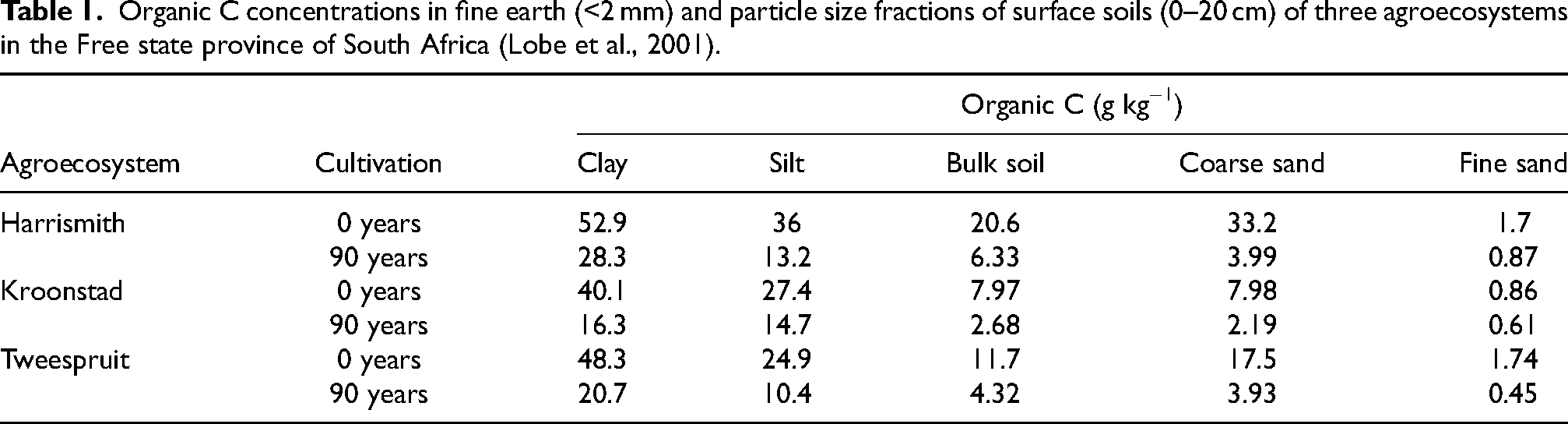
Mills and Fey (2004), emphasize that soil quality is generally associated with SOM along with elemental Carbon (C) and Nitrogen (N). According to Du Toit (1938), the extensive aridity and lack of SOM content in South African soils causes them to lack resilience and have a delicate nature when compared to soils in temperate regions (Box 2). Penzhorn (1972) describes South African soils as “thin, vulnerable and unstable soil mantle.” Since the emergence of quantitative studies, Du Toit et al. (1994) reported that during 5–90 years of crop cultivation in the Free State province of South Africa resulted in a 10–73% reduction in C and N relative to natural grasslands. In similar studies Nel et al. (1996) reported a 50% reduction in C after 50 years of cultivation on Hutton soil in Pretoria (Gauteng province of South Africa); and Lobe et al. (2001) reported a 50% reduction in C after only 3.5 years of cultivation in the Free State. Table 1 shows losses of carbon from various particle-size fractions with prolonged arable cropping from sandy soils of the South African highveld (Lobe et al., 2001). This study showed that clay was more resistant to carbon loss when compared to the sand fractions. In addition, the concentration of SOM decreased as follows: clay > silt > bulk soil > coarse sand > fine sand (Table 1); hence, rate loss increased as particle size increased. The authors concluded that even after 100 years of crop cultivation, changes in soil properties continued, resulting in a sustained loss of carbon. Swanepoel et al. (2016) emphasize that a continually growing population requires increased food production placing an ongoing burden on limited natural resources. According to Lal and Stewart (2010), this outlines the trajectory for Southern Africa where soils are vulnerable and prone to degradation by means of erosion, SOM depletion, salinization, acidification, and nutrient mining. The FAO predicts that food insecurity will persist and possibly worsen for people living in Africa while the rest of the world sees improvements (FAO, 2023). If land misuse continues, soil quality decreases and agroecosystems production is negatively impacted which results in an ecological cascade that increases the carbon footprint and contributes to global climate change.
Land use and SOM in South Africa.
According to du Preez et al. (2011), only limited data is available on the soil organic carbon status of soils in South Africa. Results from their study indicate that approximately 58% of South African soils contain <0.5% organic C, 38% contain 0.5–2% organic C, and 4% contain >2% organic C. Organic C under savannah ranged from 0.18% to 4.86% with a median of 2.51%. An investigation of SOM content in semi-arid Acacia and Burkea savannahs contained between 50% and 90% of organic C (McKean, 1993). Trees and grass in both savannahs contributed 24% and 76%, respectively. A 51% turnover in clay-associated organic C over a period of 26 years suggesting that in sandy soils, clay-associated organic C has a more rapid turnover time relative to the hundreds of years estimated for temperate ecosystems (McKean, 1993). Mills and Fey (2004) report that soil C stocks to a depth of 500mm in untransformed indigenous veld ranged from 21 Mg/ha in the Karoo to 168 Mg/ha in the thicket. The mean soil C of 5.6% to 100mm depth in the thicket was approximately five times greater than expected for this semi-arid region. Restoration of the thicket could possibly sequester 40 Mg/ha. A study in the northern KwaZulu Natal province comparing cultivated fields to adjacent virgin soils showed that dryland sugarcane production depleted the SOM content from 3.87% to 3.31% in the 0–150 mm layer; 3.33% to 3.19% in the 150–300 mm layer; and 3.16–3.04% in the 300–450 mm layer (Van Antwerpen and Meyer, 1996). The average depletion of SOM under irrigated sugar cane was from 2.40% to 1.88% in the 0–150 mm layer, from 2.08% to 1.69% in the 150–300 mm layer, and from 1.46% to 1.39% in the 300–450 mm layer. Depletion of SOM in both cases decreased with depth; however, it increased under irrigation. In a study which compared annually cultivated and permanent pasture soils (in the sandy lower rainfall eastern Tsitsikamma) to undisturbed natural vegetation, Milne (2002) showed, that at the higher rainfall clayey end, there was a loss of SOM under both types of pasture relative to the undisturbed natural vegetation. In addition, soil organic C was lower under annual ryegrass than under permanent kikuyu pasture at all the sites which is a reflection of the degrading effect of annual cultivation on SOM.
Organic C concentrations in fine earth (<2 mm) and particle size fractions of surface soils (0–20 cm) of three agroecosystems in the Free state province of South Africa (Lobe et al., 2001).
South Africa along with many other countries around the world are burdened with sustaining food production and food security on poor/degraded soils (Sithole et al., 2016). Subsequently, there is a need for revised and demonstrated land use and agronomic practices to not only produce enough food but to ensure that food production systems limit/possibly mitigate their carbon footprint. Daniell and van Tonder (2023), explain that the use of rock dust has demonstrated promising results to improve soil health in areas already being cultivated for food production by adding trace elements and increasing essential nutrient remineralization; particularly where fertilizers lack. The authors further indicate a knowledge gap (lack of localized studies) for the use of rock dust to improve non-arable and poor-quality soils to sustainably grow crops in various agro-ecological zones throughout the country. Based on supply and demand, South Africa requires new and innovative agricultural practices to improve soil quality and the use of non-arable land may be a viable option, given the scarcity of available agricultural land. These innovative methods can be optimally combined with area-specific climate-smart technologies to improve crop production through adaptation and mitigation strategies.
Residents and policymakers recognize that climate change, land use, and industrialized agricultural practices pose a major threat to food security in South Africa (Daniell and van Tonder, 2023). According to Hunter et al. (2017), global food production is expected to double by the year 2050 (based on a sustained population growth of 2% each year) whereas, South Africa's food production is expected to double by the year 2035 with possibly fewer resources to growers than what's presently available (Goldblatt, 2010). Daniell and van Tonder (2023) further emphasize that agriculture significantly contributes toward South Africa's economy; and are integral to its populous and its overall sustainability from a socio-economic perspective. Agriculture contributes 2.59% of South Africa's gross domestic product (GDP); export earnings equaling approximately 4.89 billion dollars (Stats SA, 2023).
The surface area of South Africa is approximately 122.34 million ha, of which only 12% (11.040 ha) is suitable for dryland or rainfed cropping (DAFF, 2017; Goldblatt, 2010; Twomlow et al., 2006). Two to three percent of this (approximately 4 million ha) is considered fertile land with a high agricultural potential (Beukes et al., 1999; Goldblatt, 2010; Twomlow et al., 2006). The rest of the land is nonarable used for grazing and wildlife or influenced by urbanization (Daniell and van Tonder, 2023). Daniell and van Tonder (2023) further report that 98% of land use in South Africa is dominated by severe limitations concerning soils, climate, and terrain. Due to the impact of ongoing drought together with political and economic unrest facing South Africa, food-producing farming systems have decreased by approximately 33% since the early 1990s while demand has grown considerably, leading to the implementation of industrialized agriculture (Goldblatt, 2010). Du Preez et al. (2011) indicate that the single most important factor affecting soil fertility in South Africa is acidification. According to Barnard and du Preez (2004), soils with low buffering capacity are naturally acidic in high rainfall areas; however, in South Africa, its primarily due to anthropogenic activities such as intensive crop cultivation and massive inputs of reduced nitrogen fertilizers (Mills and Fey, 2004). Nutrient mining has a devastating effect due to the over-utilization of agricultural land, and it must be replenished to maintain soil health and fertility. Subsequently, soil structure is also compromised as a result of degradation. During water scarcity, it becomes imperative for soils to absorb and retain rainwater. According to Goldblatt (2010), the dependence and misuse of chemical fertilizers, pesticides, fungicides, and herbicides in agroecosystems significantly affect long-term soil fertility leading to soil erosion, water pollution, and poisoning of the ecosystem relative to climate change. In addition, farmers incur increasingly higher input costs arising from volatile domestic currencies affecting profit margins (Goldblatt, 2010). Sustainable and productive farming is the foundation for the development, maintenance, and well-being of society on a national and global scale (Van Straaten, 2002). Daniell and van Tonder (2023) emphasize that soils are the basis of employment and food/nutritional security in South Africa, therefore, it is necessary to manage land resources by implementing a combination of sustainable and innovative strategies that improve and maintain soil fertility.
Regenerative agriculture
People all over the world are seeking new and sustainable alternatives to address the global climate crises. Although there are several innovative solutions to reduce and possibly mitigate the effects of global warming, these need to be scalable, effective, and economically viable; and soil health may be the single most important factor facilitating change towards reducing the global carbon footprint. Soils in organic farms practicing permaculture and regenerative agriculture are very rich in carbon and have a “dark chocolate-like” appearance with a fresh, earthy odor.1 This is a paradigm shift from modern industrialized agriculture that is gaining traction and popularity among farming communities worldwide that are now able to utilize carbon in the atmosphere to enrich soils and produce more nutritious food. Deforestation and intensive industrialized agriculture are some of the anthropogenic activities responsible for releasing billions of tons of carbon from the soil into the atmosphere. These are major contributors of carbon emissions that significantly influence rising temperatures and subsequent warming of the planet. However, regenerative agriculture offers the potential to reverse this trend by putting the carbon from the atmosphere back into the soil. “The operative term is ‘regenerative’ since these methods help to revive the soil and restore the natural ecosystems”1; and “efforts to adopt and implement these methods have now gained global recognition”.1
According to Giller et al. (2021), it has become increasingly common that agriculture and the global food system are experiencing a crisis, soil health is rapidly deteriorating, and biodiversity faces its sixth mass extinction. These claims have manifested in a variety of ills, from hunger, poverty, and obesity, because of industrial agricultural practices that largely depend on the use of biocides and chemical fertilizers which have led to the production of poor quality and potentially unsafe food, soil degradation, biodiversity loss, exploitative labor relations, and animal welfare; to cooperate dominance and a lack of resilience (Giller et al., 2021). For these reasons, growing concerns about the food production system and its distribution and consumption have been raised; which has spurred global interest in an upward shift toward regenerative agriculture. Duncan et al. (2021) indicate that corporates, activists, and civil society groups are now calling for the renewal, transformation, and revitalization of global food production systems. Giller et al. (2021) present a comprehensive perspective on the use of plant, soil, ecological, and system sciences, to support the production of food, feed, and fiber in a sustainable manner.
The origins of the term “regenerative agriculture” dates back to the late 1970s (Gabel, 1979) gaining wider recognition during the early 1980s when it was stumbled upon by the Rodale Institute in the United States (Giller et al., 2021). The Rodale Institute has, through its wide array of research and publication outputs, been at the forefront of organic farming initiatives and the global organic farming movement. According to Robert Rodale (1983), regenerative agriculture can be defined as an agroecosystem that is free of biocides, and, at increasing levels of productivity, also improves its land and soil biology. In addition, it provides social and economic stability with minimal to no antagonistic effects on the environment outside of the farming parameters. Fundamentally, it affords a productive contribution to incremental numbers of people as they advance to minimal reliance on non-renewable resources (Rodale, 1983). Richard Howard, a renowned agronomist from the international farming systems research movement and director of the Rodale Research Institute contextualized regenerative agriculture relative to the historical evolution of different schools of organic and biodynamic farming (Harwood, 1983). He published a review on regenerative agriculture which incorporated Robert Rodale's suggestion that “regenerative” was beyond “organic” in the sense that it included changes in macro structure and soil relevancy with the expectation to increase rather than decrease productive resources (Harwood, 1983; Rodale, 1983).
Giller et al. (2021) summarize the importance surrounding the early philosophy of regenerative agriculture according to Harwood (1983). Firstly, agroecosystems should produce high-yielding crops that are free from biocides and have a high nutritional content. Agricultural practices should not cause soil degradation but rather increase soil quality, depth, fertility, and characteristics of the upper layers. There needs to be a process of soil genesis whereby nutrient flow systems efficiently integrate soil flora and fauna to accomplish an upward flow of nutrients in the soil profile; thereby reducing/mitigating environmental degradation. There should also be no use of synthetic biocides for crop production; but rather a dependence on biological interactions for stability. Farmers should refrain from the use of synthetic fertilizers since they disrupt biological structuring of the agroecosystem, and interfere with the symbiotic relationship between plants and soil microorganisms. There needs to be a close integral relationship between all personnel managing the crop production system and the system itself. Integrated systems that are able to acquire their nitrogen source via biological nitrogen fixation should be prioritized. Livestock used for agriculture should be strategically managed/housed to mitigate the use of hormones and/or prophylactic antibiotics; so that people do not consume it. Agriculture should be synonymous with job creation and capacity building; particularly in emerging, small-holder, and subsistence farming. Regenerative agriculture requires national-level planning. However, a significant reliance on localized and regional planning is required to close nutrient flow gaps (Harwood, 1983). According to Giller et al. (2021), the first journal article on “regenerative agriculture” was likely published by Francis et al. (1986) in the “American Journal of Alternative Agriculture.” The authors link it to organic/low external input agriculture and raise the importance of biological structuring, progressive biological sequencing and integrative farm structuring. Additionally, they link it with “specific technologies and systems” such as nutrient cycling, nitrogen fixation, crop rotation, integrated nutrient management, weed cycling, and integrated pest management (IPM). Giller et al. (2021) illustrate that after an initial surge of interest in the mid-1980s, regenerative agriculture “died off” (in the mid-2000s) only to resurface and build momentum two decades later (around 2015).
Principles of regenerative agriculture
Initially, there were five core principles governing regenerative agriculture, however, recently a sixth (“context”) has been added. According to Wood (2023), a technical officer at LEAF (Linking Environment and Farming) in the United Kingdom (UK), the six principles include: (1) Minimal Soil Disturbance, (2) Diversity, (3) Protect Soil Surface, (4) Maintain Living Roots; (5) Livestock Integration, and (6) Understanding the Context of the Farm Operation. Improving the quality and health of soils are of paramount importance when practicing regenerative agriculture, therefore, applying the first principle of limited soil disturbance is essential. There are three types of soil disturbance, i.e., chemical, physical, and biological. Physical disturbance includes tillage or grazing which compromises the biological integrity of the soil. This can be reduced or eliminated by practicing no-till, reduction of machinery-driven soil compaction, and minimizing overgrazing. Chemical disturbance involves the application of chemical fertilizers and biocides which are detrimental to soil microbial communities and affect the symbiotic relationship between plants and microbes. Biological disturbance is a lack of living roots within the soil affecting the integrity of soils and further reducing carbon sequestration.
The second principle is diversity which points toward practices such as rotational leys, companion cropping, and cover cropping which encourages plant diversity. Cover crops enhance the soil's physical, biological, and chemical properties by improving the organic matter content. In addition, cover crops help with nutrient release in the soil and to suppress problematic weeds (Adetunji et al., 2020). In recent years, the use of cover crops has been widespread, especially in no-till farming systems under commercial setups (Romdhane et al., 2019). Although this is becoming popular, the challenge remains to select the appropriate cover crop for a specific purpose. Phophi et al. (2017) screened annual legume cover crops for weed suppression and macrofaunal abundance. The study recommends using Vigna unguiculata and Lablab pupureus L. to improve soil macrofauna abundance and diversity. The soil macrofauna is critical in improving soil properties and quality. Their primary function is to improve soil fertility and structure by mixing organic matter. The two cover crops influenced the abundance of soil organisms such as ants, earthworms, beetles, and millipedes (Phophi et al., 2017).
Diversity promotes a healthier functioning agroecosystem that can reduce the onset of pests and diseases. Having a broader diversity of livestock grazing on various types of forage species in pastures could encourage habitat diversity. The third principle is to protect the soil surface. When the surface layer comprises a high content of minerals and organic matter, then the soil structure, fertility, water filtration, and nutrients are maintained. This can be achieved through overwintering cover cropping alongside the maincrop/cover crop management. Having the soil surface constantly covered with plant species and crop residues reduces weathering and erosion and facilitates a healthier and more balanced ecosystem of flora, fauna, and microorganisms. The fourth principle of maintaining living roots ensures that soils remain fertile and retain nutrients which improves plant growth and microbial diversity. It also helps to sequester CO2 from the atmosphere during photosynthesis. Without roots, the energy-bound molecules from photosynthesis continues to metabolize organic matter releasing CO2 back into the atmosphere. Living root cells also secrete exudates which are chemical compounds that are used as plant–plant, plant–soil, and plant–microbe communication channels. Through various mechanisms, root exudates have a positive effect on plant growth and soil health by increasing the supply of nutrients, nitrogen fixation, and stress tolerance. Mycorrhizal fungi form root extensions that interconnect individual plants. Through this network, water and nutrients are more efficiently transported to the plant and the mycorrhizal fungi is in turn supplied with energy that the plant produces during photosynthesis; a mutualistic symbiotic relationship. Mycorrhizal networks can protect plants by producing a chemical response/signal in relation to attack from pests and pathogens; and can therefore act as a natural pest and disease management system.
Principle five is livestock integration, whereby animals are allowed to graze for a certain period of time to increase the spread of organic matter, nutrient cycling, and plant growth. According to Wood (2023), five critical grazing fundamentals, i.e., timing, frequency, intensity, duration, and rest must be considered to successfully implement this principle. In agroecosystems where integrating livestock is not possible, the use of manure and slurry can be compensated for as an inorganic source of nutrients. Principle six is to understand the context of the farm operation. Since each farm differs from the next in terms of soil type, climatic conditions, type of crop/livestock, availability of funding, and skills and goals; these factors influence their operations. The farmer may set specific objectives aimed at demonstrating regenerative outcomes.
Adopting regenerative agricultural practices in South Africa
A few years ago, Andrew Ardington, a farmer situated in Cape Town (Western Cape province of South Africa) developed a growing interest in the practice and benefits of regenerative agriculture. He wanted to transform the way we produce food in South Africa and reduce the damage caused to the environment using our current methods of producing food (RegenAG SA, 2023). Although the concept of regenerative agriculture has been gaining popularity since 2015, there has since been a huge absence of knowledge and literature on this farming approach. In 2019, Andrew Ardington founded the Regenerative Agricultural Association of South Africa (RegenAG SA, 2023), a platform for South African farmers to create a community, share ideas, and document their regenerative farming journey and experience. South Africa boasts one of the world's most diverse agricultural sectors which consists of corporate and private intensive and extensive crop farming systems. These include fruit, vegetables, nuts, and grain. The agricultural economy in South Africa is driven by a well-structured backbone associated with its commercial farming sector. The climate in South Africa ranges from subtropical to Mediterranean. Therefore, it provides for an array of farming opportunities. There is, however, a growing demand on how to improve the outcomes for subsistence, emerging, and informal small-scale farmers in South Africa.
In developing countries such as South Africa and many other countries around the world, mankind faces two major issues, one is human health and the other is environmental health; and both are significantly impacted by climate change (RegenAG SA, 2023). We need to move toward regenerative agriculture because we lose 0.3% of our soils per year which has amounted to approximately 30% in the past century. The combination of tillage, biocides, and fertilizers by farmers in the past 75 years has negatively affected soils and the nutrient content of food, producing downstream impacts on human health (RegenAG SA, 2023). By sequestering more carbon from the atmosphere into our soils, we can tackle both problems of soil depletion and the impact of nutrient-poor produce on human health. There is a worldwide consensus that resource-intensive and negligent farming methods such as those practiced in South Africa have an array of unsustainable elements, which, with continued use, threaten global food and nutritional security (FAO, 2008). For example, a study by Blignaut et al. (2015) indicates that grain-producing areas in South Africa based on intensive and continuous soil tillage have led to high soil degradation rates which intensifies low profitability and poverty in some rural areas. Soil loses in South Africa reach up to 13 tons ha−1 yr1 under annual grain crop production (Le Roux et al., 2008), suggesting that soil depletion rates are tremendously higher than soil formation rates, and implies that we lose 3 tons ha−1 yr−1 of soil per ton of maize produced each year. Therefore, a paradigm shift is required if sustainable and economical agriculture as well as food and nutritional security are to be achieved, and the same applies for cattle farming (Blignaut et al., 2015). There is a global agreement between policymakers, government officials, research institutions, and producers’ organizations that the adoption of conservation agricultural methods can be implemented to achieve these outcomes successfully. An abundance of evidence exists on the successive outcomes of conservation agriculture in diverse agro-ecosystems to justify a substantial investment in social and economic resources toward a greener, climate-smart approach for producing food (Calegari et al., 1998; Derpsch, 2003; FAO, 2001; Modiselle et al., 2015; Nangia et al., 2010; Pretty et al., 2003; Smith et al., 2008; Smith et al., 2010; Strauss et al., 2012; Thierfelder and Wall, 2010).
According to Blignaut et al. (2015), the shift to regenerative agriculture will lead to demonstratable reductions in the use of machinery and energy, improve soil organic matter and biotic activity, and lower carbon emissions. In addition, it will reduce soil erosion, increase water availability and filtration (build-up of drought tolerance), improve recharge of aquifers, and reduce erratic weather events associated with climate change. But most importantly, it will marginalize production costs, lead to more reliable harvests and reduce risks; particularly in the context of small-holder, subsistence, and emerging farmers (Blignaut et al., 2015). While the benefits of regenerative agriculture are obvious for commercial farmers, it is especially tangible for the food and nutritional security of more than three million small-holder families in South Africa. Based upon the multitude of benefits associated with adopting and implementing the principles of regenerative agriculture, it has become familiar and increasingly practiced in many countries around the world; largely due to farmer initiatives, and their organizations (Derpsch, 2008; Derpsch et al., 2010). Blignaut et al. (2015) indicate that in South Africa, the total area of grain crops farmed under no tillage is relatively small, however, through promotional research and development initiatives many commercial and small-holder farmers are able to successfully practice these principles (Figure 1). These initiatives are more thoroughly explained by Smith et al. (2008), Smith et al. (2010), and Smith and Visser (2014). Figure 1 provides information relative to the implementation of no-till systems in South Africa; the Western Cape province (>70%) and the KwaZulu Natal province (50–60%) have the highest adoption rates. Knot (2014), explains that due to economic deliberations more farmers are converting to no-till systems for producing food. It is therefore empirical that we as scientists, researchers, and academics work closely with farmers to initiate change. Blignaut et al. (2015) highlight several barriers that need to be overcome in order to scale up these principles; which include a change in mindset originating from tradition and prejudice, capacity building and knowledge transfer on how to adopt these principles, the availability of proper tools and machines, and appropriate policies to promote and implement the techniques. According to Derpsch and Friedrich (2009), a general consensus should be agreed upon by politicians, public administrators, growers, researchers, extension workers, agriculturalists, and university professors to overcome these barriers. With adequate policies in place, it's possible to acquire social, financial, and environmental sustainability. In addition, soil health and increasing food and nutritional security are conserved. As we move forward it must be widely recognized that industrial agricultural methods such as tillage are no longer tangible.
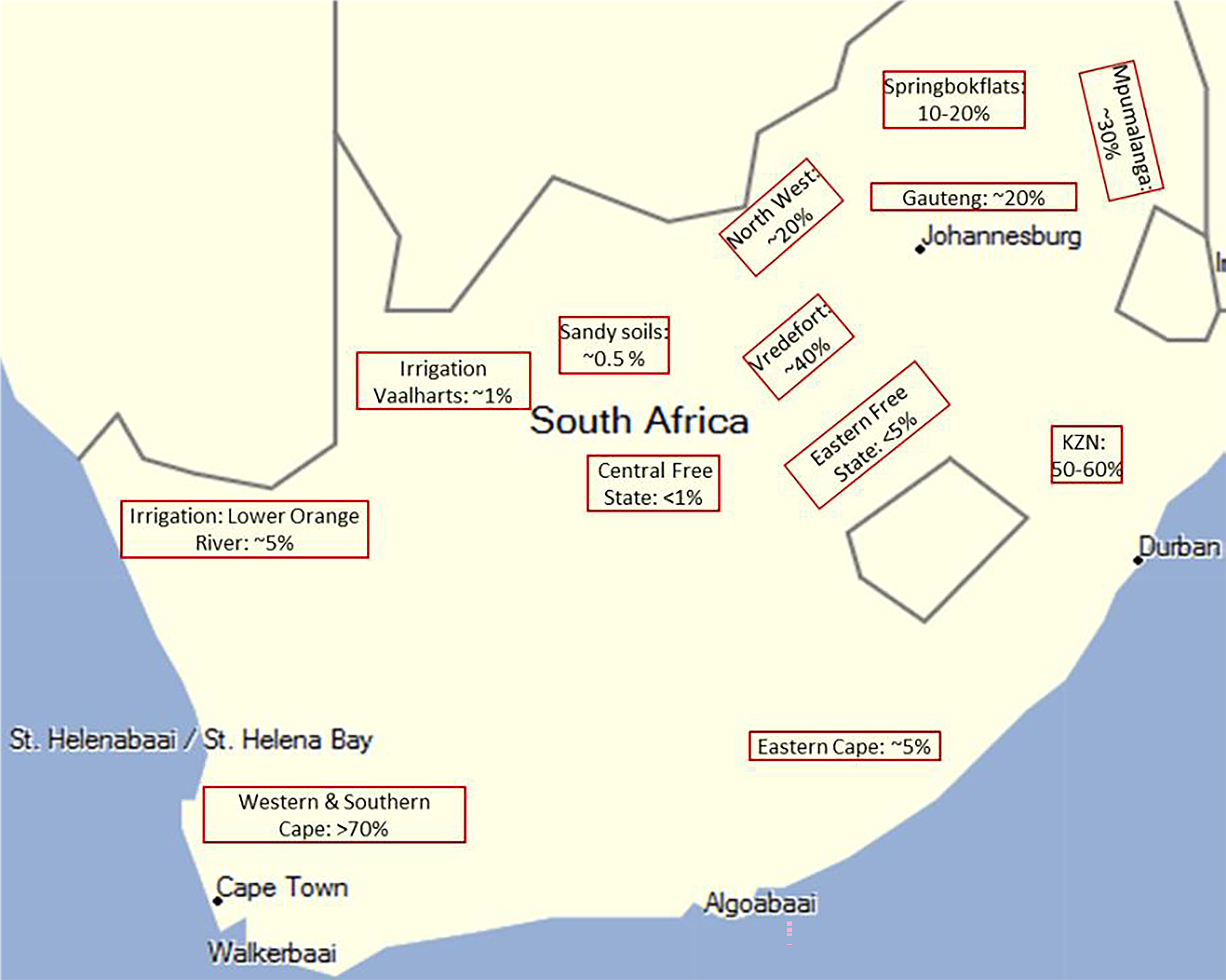
Percentage of grain-producing provinces in South Africa practicing no-till (Blignaut et al., 2015). Source: Personal communication: Sybrand Engelbrecht, Maize Trust (2015).
Drivers and barriers of the transition to regenerative agriculture
Convincing more farmers to adopt regenerative agricultural practices could potentially half GHG emissions by 2030, however, this change can incur additional costs and the risk of short-term yield losses for poorly paid farmers who struggle to make a living (Early, 2024). For example, if a large-scale beef farm in the United States was to mitigate 30% of its GHG emissions, it could cost approximately 17% of revenues which is enough to cause insolvency; the impact on smallholder farmers in developing countries would be even worse (Early, 2024). Campaigners are calling for companies to incentivize more of these costs. Food brands play a significant role in food system transformation considering that half of food system emissions are down to agricultural production and land-use change in corporate value chains (Early, 2024). Institutional investors such as Federated Hermes are driving companies in the land and agriculture business to implement more regenerative agricultural practices as part of their net zero commitments developed by the Science Based Targets initiative (SBTi) (SBTi, 2024; Swartz, 2022). According to the SBTi, their guidance enables companies to reduce 22% of global GHG emissions from agriculture, forestry, and other land use (SBTi, 2024). Based on the much smaller costs incurred by a typical meat trader (estimated at approximately 3% of revenues), and less than 1% for a multinational food company, it makes sense for companies further up the value chain to incentivize these costs, however, only a few are making efforts to share the transition costs equitably (Early, 2024). The World Benchmarking Alliance (WBA) reports that while 27 companies support farmers’ income stability through procurement and pricing practices, less than 4% identify living income benchmarks or calculate income gaps (WBA, 2023). In addition, less than 10% of companies disclose information on fertilizer optimization and less than 4% provide data on minimizing the use of pesticides which is a cause for concern (WBA, 2023). Nestle supports its farmers via a network of more than 700 agronomists located throughout the world who work directly with farmers providing them with support and expertise during pilot studies to determine which regenerative agriculture principles work best, for example, agroforestry in cocoa and coffee (Early, 2024). Moreover, its Nespresso coffee brand is protecting its harvests with a micro insurance initiative, should they fail as a result of climate change or during the introduction of regenerative agriculture practices. Ultimately, if some measure of insurance or income stability can be made available to farmers during the transition phase it will provide a sense of security and confidence to adopt and scale these practices. The One Acre Fund (Sibomana, 2024) secures financial support from corporates and uses the funding to develop and test models of regenerative practices that provide customized training for smallholder farmers in Africa to make the transition (Early, 2024; Sibomana, 2024). However, to properly address the issue, they believe that smallholder farmers must be paid a premium for crops produced using regenerative agriculture as it does not make financial sense go through time-intensive training and adoption of alternative agricultural practices if nobody is prepared to compensate for more than if they just used existing methods (Sibomana, 2024).
It must be clearly understood that regenerative agriculture is not a one-size-fits-all, but rather a location-specific choice from practices including growing cover crops, reducing tillage, crop rotation, and agroforestry (Toplensky, 2024). A study conducted by the Boston Consulting Group (BCG), showed that farmers long-term income increased by an alarming 120% following an initial 3- to 5-year transition period (Bugas et al., 2023). According to Toplensky (2024), experts estimate that soils have the capacity to sequester approximately 100–120 gigatons of CO2 from the atmosphere. With 160 countries that are presently signed up to the COP28 U.A.E. Declaration on Sustainable Agriculture, Resilient Food Systems and Climate Action, governments are making the effort to fast-track the shift.2 In the United States, the Inflation Reduction Act set aside $19.5 billion for climate-smart agriculture and the Agriculture Department has its $3.1 billion Partnerships for Climate Smart Commodities program (Toplensky, 2024). Farmers recognize the value and benefits of these partnerships with the fundamental understanding that working with biological systems requires a significant amount of time for tangible changes to occur, therefore, one should not assume that farmers are not willing to incorporate changes to their current land use practices, it's just a little slower than the expectations of some companies and the general public (Toplensky, 2024). Companies that offer farmers the choice of regenerative agricultural practices need to understand that technical assistance is a necessity in making those choices. In 2020, a private sector group known as the Sustainable Markets Initiative (SMI) launched the Agribusiness Task Force which included senior leaders such as McDonald's, McCain, Bayer, Mars, PepsiCo, etc. with the aim to accelerate and scale regenerative farming practices while maintaining positive collaborations with farmers throughout the world (SMI, 2023). In 2022, the task force reported that a key constraint to adopting regenerative practices was the short-term farm economics. Moreover, there were major knowledge gaps which needed to be aligned across the value chain. Importantly, the report also concluded that farmers require derisking mechanisms, financial incentives, technical assistance, and peer-to-peer support (SMI, 2023; Toplensky, 2024). Sustainability analysts, Systemiq, indicate that the regenerative agriculture growth rate should ideally triple in order to reach 40% of global cropland and to subsequently limit global climate change to 1.5 degrees Celsius (SMI, 2023). In 2023, the task force grouped with members across the agribusiness value chain to identify levers that were farmer-centric and practical (SMI, 2023). The four levers comprised: (1) Financial: Develop funding and source new models; (2) Ecosystem Service Market: Payments for ecosystem services such as the restoration of biodiversity and water quality; (3) Policy: Ensuring that government policies compensate farmers for their transition; (4) Metrics: Determine common environmental metrics to measure and monetize outcomes (SMI, 2023).
From globally important case studies worth mentioning, Walter Furlong, a third-generation farmer reported that the implementation of regenerative agriculture on his farm located in southeast Ireland has significantly increased profit margins as well as resilience to extreme weather events while also making it more environmentally friendly (Toplensky, 2024). He grows and sells barley to Diageo, a drinks company that manufactures Guinness. He has been successfully using some of the regenerative principles for more than 20 years; however, he added new ones as part of a Guinness pilot. Emissions were measured at various intervals throughout the trial, and they found that by implementing four or five simple changes, they were able to make a huge impact in reducing carbon emissions. Diageo's 3-year Guinness pilot was launched in 2022 and recruited 44 farmers. Andy Griffiths, the head of sustainable procurement at Diageo who previously worked for Nestle where he spearheaded similar programs, affirms that current food production systems are moving toward a tippling point. According to Barry Parkin, the chief procurement and sustainability officer at Mars Inc. (an American multinational manufacturer of pet food and confectionery), despite the benefits to agribusinesses and the planet, the adoption of regenerative agriculture has stalled globally (Toplensky, 2024). He added that regenerative agricultural practices “have been adopted across 12% of farmland, and its rolling out at less than 1% a year,” and that “we don't have 50 years or more for this to roll out.” One important reason for this is slow-moving policy regarding agricultural expectations and subsidies (Gish, 2022). Mars currently has 27 initiatives covering more than a million acres of land in more than 10 countries cultivating crops such as rice, almonds, wheat, barley, corn, soy, and cocoa (Toplensky, 2024). Their aim is to strategically implement large-scale climate-smart programs to reach net zero across its value chain by 2050. In recent years, the Canadian frozen food multinational McCain Foods which claims to supply a quarter of the world's French fries, carried out a risk assessment of frequent and extreme weather events on its potato harvest (Toplensky, 2024). Charlie Angelako, McCain's vice president of global external affairs and sustainability, reported that the outcomes were so alarming that they committed to adopting regenerative agriculture across its potato acreage throughout the world by 2030, however, McCain is an outlier (Toplensky, 2024).
The Farm Animal Investment Risk and Return Initiative (FAIRR Initiative), is a UK-based investor network that not only provides its members with research and tools but also facilitates investor engagements with companies in the global food sector. Their aim is to determine the growing number of regenerative agriculture commitments across publicly listed agri-food companies to understand if such criteria can tangibly drive climate, social, and nature goals. They conducted a first of its kind study which assessed the commitments of regenerative agriculture by 79 food and retail giants located throughout the world worth more than three trillion dollars, and representing a third of the sector (Boucher et al., 2023). Results from the analysis showed that although 50/79 companies mentioned regenerative agriculture initiatives in their disclosures, the regenerative outcomes sought after by these companies were scattered with a preference for soil health and carbon (Boucher et al., 2023). More importantly, only 18/50 have company-wide targets for regenerative agriculture, 8/50 companies discussed metrics and data of which only four of these companies had established baselines to measure progress, and only 4/50 companies have motives to financially support farmers with the shift to regenerative agriculture (Boucher et al., 2023). According to the Climate Policy Initiative (CPI), an analysis and advisory organization with deep expertise in finance and policy, agri-foods received only 4.3% of the total global finance investment during 2019/2020 (an annual average of $28.5 billion dollars), despite generating a third of global emissions (Chiriac et al., 2023). In addition, only one in 10 dollars (an annual average of $2.3 billion dollars) of the total venture capital (VC) investments in agri-food tech went to companies focused on climate-smart solutions (Chiriac et al., 2023). The Food and Land Use Coalition (FOLU) reported that a 7-fold increase in climate finance for agri-foods is required to reach the most modest estimated needs for the climate transition which amounts to hundreds of billions of dollars annually (FOLU, 2019). However, the CPI indicates that enough liquidity of the general climate finance allocated to agri-food-related sectors exists globally to finance this transition (Chiriac et al., 2023). There is an estimated $670 billion dollars in global public subsidies for agriculture and fisheries paid annually in 84 countries with more than two-thirds supporting practices that are harmful to the environment (World Bank, 2023). Additionally, there is an estimated $630 billion dollars per annum of private capital that is available for investment in agri-food systems (Elwin et al., 2023). Reallocating these subsidies to support regenerative practices is a political challenge that is necessary to boost the levels of climate finance needed to reduce the risk to farmers (Chiriac et al., 2023).
Discussion
The positive narrative associated with regenerative agriculture is perpetuating its rise in popularity among scientists, practitioners, and policy-makers across different contexts and sectors (Tittonell et al., 2022). Regenerative agriculture is often correlated with improved soil and ecosystem health, dependence on biological interactions and ecosystem services, combination of domestic plants and animals, and effective use of the photosynthetic potential of annual and perennial combinations (Giller et al., 2021; Schreefel et al., 2020; Soto et al., 2020). According to Tittonell et al. (2022), political engagement is one aspect that vaguely fits the concept of regenerative agriculture. Recent farmer protests have shied away politicians from decarbonizing agriculture because they are frustrated with increased regulations, lower-cost imports, and squeezed livelihoods while experiencing the impacts of extreme weather events, biodiversity loss, and environmental degradation (Toplensky, 2024).
Rosset and Altieri (2017) explain that regenerative farming principles are increasingly but not exclusively adopted by commercial farmers and external investors who are not generally concerned with natural resource access or food sovereignty issues. The agroecology movement regards sustainability as a political issue; however, regenerative agriculture leans less toward politics or the social dimension of sustainability (Tittonell et al., 2022). Regenerative agriculture, permaculture, agroecology, conservation farming, organic farming, etc., ultimately align within the context of sustainable agriculture; which is defined as the ability to meet the needs of the present without compromising the needs of the future (Tittonell et al., 2022). Elements of regenerative agriculture do, however, extend beyond sustainability, i.e., continually improving the agroecosystem (Ikerd, 2021), and farmland economic viability (Elevitch et al., 2018). A diversity of regenerative agriculture definitions based on practice-orientated principles are highlighted by Tittonell et al. (2022).
According to Daniell and van Tonder (2023), considering South Africa's relative scarcity of agricultural land, water, and erratic climate conditions against an increasing population with rising food productivity requirements, it is essential to identify, develop, and adopt innovative strategies and practices to improve the soil health of arable and non-arable (depleted soils) land. Since the demand for land space significantly increases as the country's population increases, a tremendous amount of strain is placed on the current arable soil resources, which now require an exponential increase of food to be produced on the same land. A plausible solution to this issue is to be able to utilize the land deemed non-arable or of poor soil quality.
The importance for the need to shift toward innovative, sustainable methods of producing food is because current methods degrade soils, damage the environment, and contribute to 24% of the global carbon footprint. In addition, the extensive use of biocides, chemical fertilizers, and tillage over the past century has significantly depleted soil health. Degraded soils saturated in chemicals produce less nutritious food which subsequently impacts on human health. There is a growing global consensus that the solution to these issues is carbon. The green revolution and industrialized agriculture, in their pursuit for higher yields, have destroyed soil health and the nutrient quality of produce. Cattle and sheep are grain-fed rather than grass-fed and the entire system is powered by fossil fuels instead of the sun (RegenAG SA, 2023). Practicing regenerative agriculture restores soils, improves health, and fixes environmental issues such as desertification, the carbon cycle, the water cycle, and climate change (RegenAG SA, 2023). The adoption of regenerative agriculture is essential because through current practices, we lose 0.3% of soils per annum; we are increasing CO2 levels in the atmosphere rather than in the soils; we use 10-fold the amount of energy to produce our food compared to what our food contains; our crops and livestock are nutrient-poor; and our consumption of nutrient-poor food affects our health.
Conclusion
Tillage, biocides, chemical fertilizers, monocultures, continuous grazing, and indiscriminate grazing damage soils, whereas, cover crops, no-till, organic matter, species diversity, stimulation of soil microfauna, introducing animals into grazing, and regenerative grazing improve and build-up soil health. Healthy soils are rich in carbon, infiltrate water, support microbiology, retain moisture, do not require synthetic inputs, increase biomass, and produce nutrient-dense crops. Practicing regenerative agriculture restores soil quality without compromising on yields, improves human health through nutrient-rich produce, heals the environment by working with nature, reduces global warming through CO2 sequestration, and is able to meet the food demands of a rising global population. However, shifting the culture takes time, for example, practicing no till involves leaving crop residues on the soil surface as opposed to tilling it under for a tidier field. To convince farmers to overcome the barriers of adoption, some multinational food companies host field days which bring farmers together to demonstrate the benefits of regenerative agriculture on land similar to their own. The global food company Cargill indicates that “the biggest thing is really just getting some to do it and bringing their neighbors by to see it” (Toplensky, 2024).
Footnotes
Declaration of conflicting interests
The authors declared no potential conflicts of interest with respect to the research, authorship, and/or publication of this article.
Funding
The authors disclosed receipt of the following financial support for the research, authorship, and/or publication of this article: The authors would like to extend their gratitude to the National Research Foundation (NRF) of South Africa for funding this research, Grant No. (86893).
