



Abstract
Bangladesh experienced widespread wheat blast infections for the first time in 2016. The outbreak of the disease has significantly affected wheat acreage and production. This study uses an ‘action theory’ framework to identify the determinants that affected wheat growers to adopt certain production practices to deal with the situation. We followed a multistage sampling procedure and interviewed 150 wheat growers from two severely blast-affected districts, Meherpur and Kustia. According to 91.3% of farmers, the most remarkable adoption strategies were ‘improved intercultural practices,’ ‘shifting variety,’ ‘shifting crops’, and ‘undertaking off-farm activities,’ of which farmers mostly followed the former. We also used multivariate probit model analysis to identify factors that shape farmers’ adaptation choices in wheat blast-affected areas. The adaptation strategies are influenced mainly by farmers’ education, primary occupation, family size, government incentives, extension services, access to Information and Communications Technology (ICT), and annual income. According to the notable similarities between the four adoption strategies, an adoption study should consider all potential factors influencing farmers’ adoption decisions. Policy implications include strengthening extension services, developing tailored adaptation strategies, and conducting relevant research.
Introduction
Infestations of diseases and pests can be catastrophic, and the effects can extend beyond agriculture to livelihood losses. The changing climate and the increasing intensity and severity of associated anomalies and hazards are major concerns of agriculture worldwide, significantly influencing the distribution and severity of plant pests and disease attacks (FAO, 2013), which can escalate into a global crisis (Juroszek and von Tiedemann, 2011; Macfadyen et al., 2018).
To cope with such challenges, farmers adopt diversified adaptation strategies that extend beyond simple pest management efforts to complete changes in their existing livelihood domain. The uptake of a particular adoption strategy is influenced by various factors, such as the resources at the disposal of the farmers, their level of knowledge, the institutional context, and indigenous practices. Adaptation contributes beyond individual farmers’ livelihoods to food security at the community level and the conservation of biodiversity (Altieri, 2004). However, due to their poor economic conditions and other socio-economic constraints, many farmers, particularly those living in developing countries, possess limited adaptation capacities, which are further limited for those belonging to the lower economic quintiles (Adger et al., 2003). Adaptation practices are also vital to sustainable agricultural development, as they can contribute towards the attainment of different national and international development targets, including the Sustainable Development Goals related to hunger (SDG 1), poverty (SDG 2), climate change and sustainable production and consumption (SDG 12 and 13). In this article, we explore how wheat growers in Bangladesh adopted different strategies to cope with the losses caused by the destructive wheat blast. This disease was first observed in the country in 2016.
Wheat production scenario in Bangladesh
Wheat is the second most important staple in Bangladesh, following rice, in terms of economic importance and consumer preference (Hossain et al., 2014). However, wheat production in Bangladesh has faced several challenges. The wheat cultivation area and yield increased by around 2.8 and 3.5 times from 1970 to 2020, with fluctuations in both area and yield (FAOSTAT, 2022). The 1970s marked a period of significant growth (Rahman and Hasan, 2009), when wheat area and production increased by 3.4 and 7.4 times, respectively (FAOSTAT, 2022). However, due to unfavourable weather conditions and increased demand for other crops, there was a decline in the following decade (Ahmed and Meisner, 1996; Rahman and Hasan, 2009).
Bangladesh faces two significant agro-meteorological challenges in wheat production. Firstly, as a tropical country, the short winter spell hampers wheat cultivation throughout the year. Moreover, recent reductions in cold days and increased temperature differences during the wheat grain filling stage have created unfavourable conditions. Secondly, limited land availability and the rising demand for other crops like rice, maize, vegetables, potatoes, and cash crops during the winter, which have high market demand, further compound the challenges (Rahman and Hasan, 2009; WRC, 2009).
The outbreak of wheat blast has had a significant negative impact on wheat production in recent years. The current production can only meet less than one-fifth of the total domestic demand, and consequently, in 2018, wheat worth USD 1440 million was imported (BBS, 2023).
The outbreak of the wheat blast disease
Wheat blast is one of the most fearsome and intractable wheat diseases in recent decades. The disease can cause losses of 40%–100% (Goulart et al., 1992; Kohli et al., 2011). It was first reported in 1985 in wheat in Parana State, Brazil, and spread thereafter to other South American nations (Maciel, 2018). Brazil lost over 30% of the wheat it produced in 2009 (Wei, 2015). It was warned that a substantial area in Bangladesh, Pakistan, and India could be affected by the wheat blast and cause a significant loss of wheat production (Mottaleb et al., 2018). In February 2016, an outbreak of the disease caused by a South American lineage of the hemibiotrophic filamentous fungus Magnaporthe oryzae Triticum (MoT) path type occurred in Bangladesh, spread by international trade (Islam et al., 2016; Singh et al., 2021). This marked the first instance of such an outbreak in Asia (Islam et al., 2016). The disease impacted around 3.5% of the wheat area in eight regions in the southwest (Figure 1), resulting in a 5%–51% yield reduction (Islam et al., 2016). To eliminate the pathogen, all government-owned seed multiplication farms in the affected districts were cleaned by burning (Zohura et al., 2018). The MoT pathogen is extremely aggressive, rapidly evolving, and potentially catastrophic (Singh et al., 2021). It can spread even in unfavourable climatic conditions (relatively dry with little rain) (Mottaleb et al., 2018).
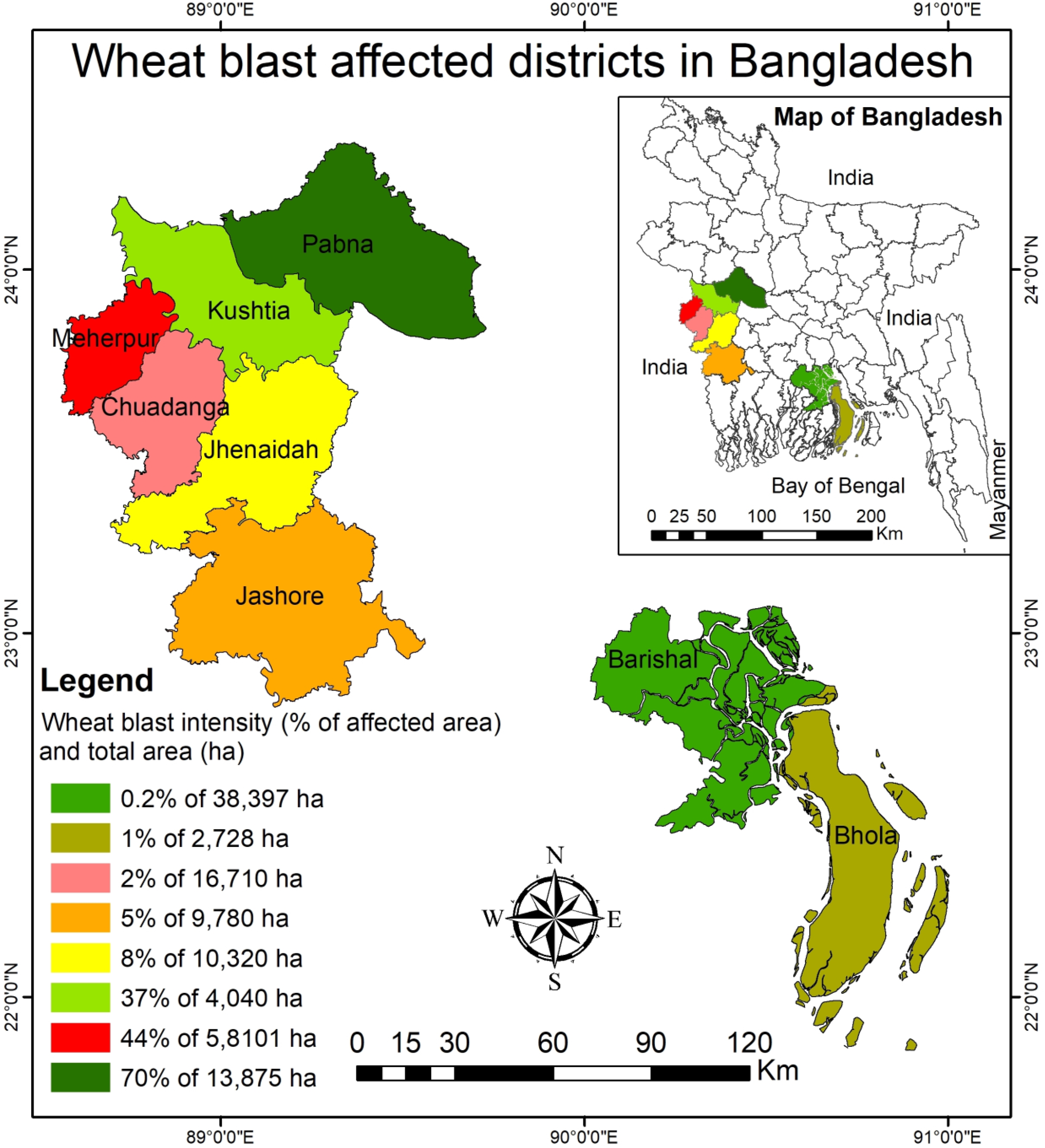
Wheat blast affected areas of Bangladesh in 2016. Source: Islam et al. (2016).
Understanding farmers’ adaptation strategies in blast-affected areas
While Wheat Blast has posed a longstanding global threat to wheat for decades, its recent emergence as a threat in Bangladesh underlines the importance of shaping effective strategies. Learning from the experiences of farmers and researchers in regions where Wheat Blast has been a challenge can provide valuable insights. Effective approaches to managing the disease encompass various methods, such as using 2NS carrier varieties to combat the disease (Cruz et al., 2016) and employing fungicides, which demonstrate varying effectiveness based on regional conditions (Roy et al., 2020; Urashima et al., 2017). These strategies align with other potential measures, including seed quarantine (Ceresini et al., 2018), impactful cultural practices like deep ploughing and residue removal (Ceresini et al., 2019), disease forecasting (Yesmin et al., 2020), and harnessing beneficial organisms for disease control (biocontrol) (Singh et al., 2021).
When addressing the evolving threat of Wheat Blast, it's crucial to draw insights from elsewhere and adapt them to Bangladesh's unique context. Despite considerable efforts directed toward developing blast-resistant wheat varieties (Hossain et al., 2019; Vales et al., 2018), there remains a distinct need to comprehensively explore the adaptation strategies employed by farmers responding to this disease. Regrettably, empirical studies on the adaptation strategies of Wheat Blast-affected farmers are scarce. Understanding farm-level adaptation practices is pivotal as farmers tailor strategies to fit available resources, agricultural systems, and goals. This adaptation accounts for diverse aspects of livelihoods, including food security, dietary diversity, return maximization, and risk reduction (Altieri, 2004). The amalgamation of local wisdom with global insights forms a holistic understanding, facilitating the formulation of context-specific, effective strategies aligned with local farmers’ objectives and the broader agricultural landscape.
Existing research primarily centers on agricultural adaptation to climate change, warranting an in-depth investigation into farmers’ responses to catastrophic events like the Wheat Blast. The literature underscores the nexus between adaptation, farmers’ perception of event severity, and their confidence in the efficacy of adaptation measures (Anik and Khan, 2012; Tucker et al., 2010). Moreover, farmers’ adaptive responses are contextual and localized, with event effects varying over time (Hisali et al., 2011). Thus, conducting a dedicated study on Wheat Blast is time-intensive, yet its findings can offer insights for countries facing similar challenges, especially those with small-scale farming systems.
Methodology
Study area and the survey
The primary data required for the study were collected during August–November 2019 through a multi-stage sampling technique in which locations were purposefully chosen and farmers at the village level were randomly picked. First, among the eight administrative divisions of Bangladesh, the most severely affected Khulna division where the disease outbreak was first reported, was chosen. Around 80% of the wheat blast-affected districts belong to this division. Second, the Meherpur and Kustia districts, which rank top in Khulna in terms of wheat area, production, and yield, were selected (BBS, 2023). Third, the major wheat-producing sub-districts within the selected districts were selected purposively. Since Kustia is a larger district than Meherpur and has around 1.2 times more wheat-cultivated land, we have chosen two sub-districts namely Kustia sadar and Dowlatpur from Kustia and Meherpur sadar from Meherpur. Fourth, from selected sub-districts of Kustia and Meherpur we have randomly chosen three and two villages, respectively. Finally, 30 wheat growers from each of the surveyed villages were randomly chosen for interview from the list of farmers collected from the local extension office. Thus, the survey interviewed 150 wheat growers from five villages in three sub-districts belonging to two districts. Figure 2 presents the geographic location of the study area.
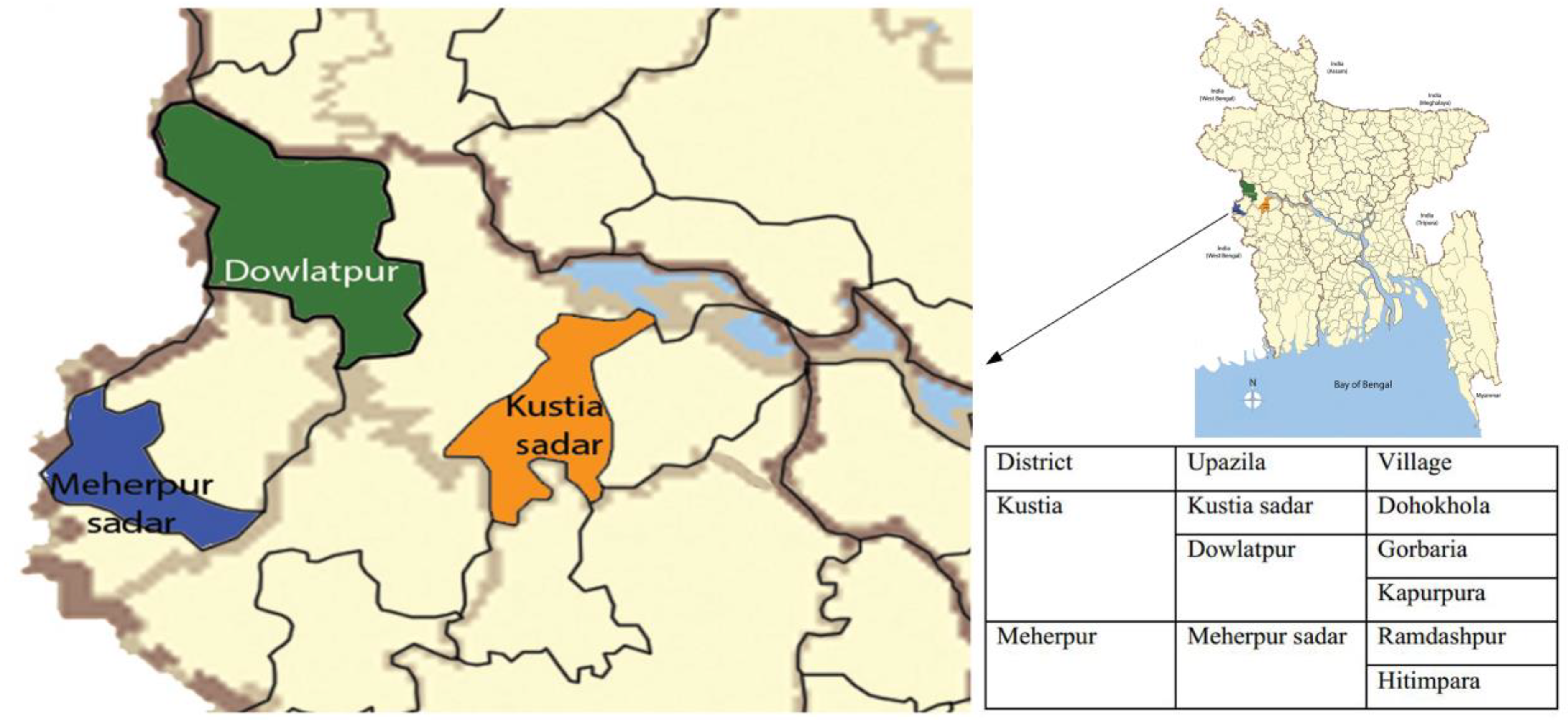
Map of the study area. Source: http://maps-of-bangladesh.blogspot.com/2010/06/upazila-map-of-ban gladesh.html.
Farmers’ adaptation strategies for wheat blast
We have adopted the widely used ‘action theory’ framework to comprehend and explain farmers’ adaptation strategies in the face of wheat blast infection (Arimi, 2014; Eisenack and Stecker, 2012). Adaptation refers to a farmer's plans and actions to cope with production losses caused by the wheat blast. We consider the wheat blast as a stimulus that becomes relevant when it affects an exposure unit, which can include all relevant actors, whether they are technical or non-human systems.
Within this framework, the farmer, as the primary actor in our study, responds to the stimulus to achieve specific benefits, utilizing a range of available resources (such as natural and social networks, access to institutions and information, etc.) and considering the prevailing conditions under which the farm operates (including both constraints and resources beyond the farmer's control). A farmer collaborates with different social entities and non-human systems during adaptation. A farmer adopts when the perceived gain from adopting is greater than non-adopting (Adesina and Baidu-Forson, 1995; Baidu-Forson, 1999). Figure 3 presents a schematic diagram showing the adoption process. The exposure unit, receptor, and operator can be either actors or biophysical units, while an operator is always an actor, though these three need not necessarily be identical. A causal relationship exists between stimulus and exposure unit, while a technological relationship exists between operator and receptor.
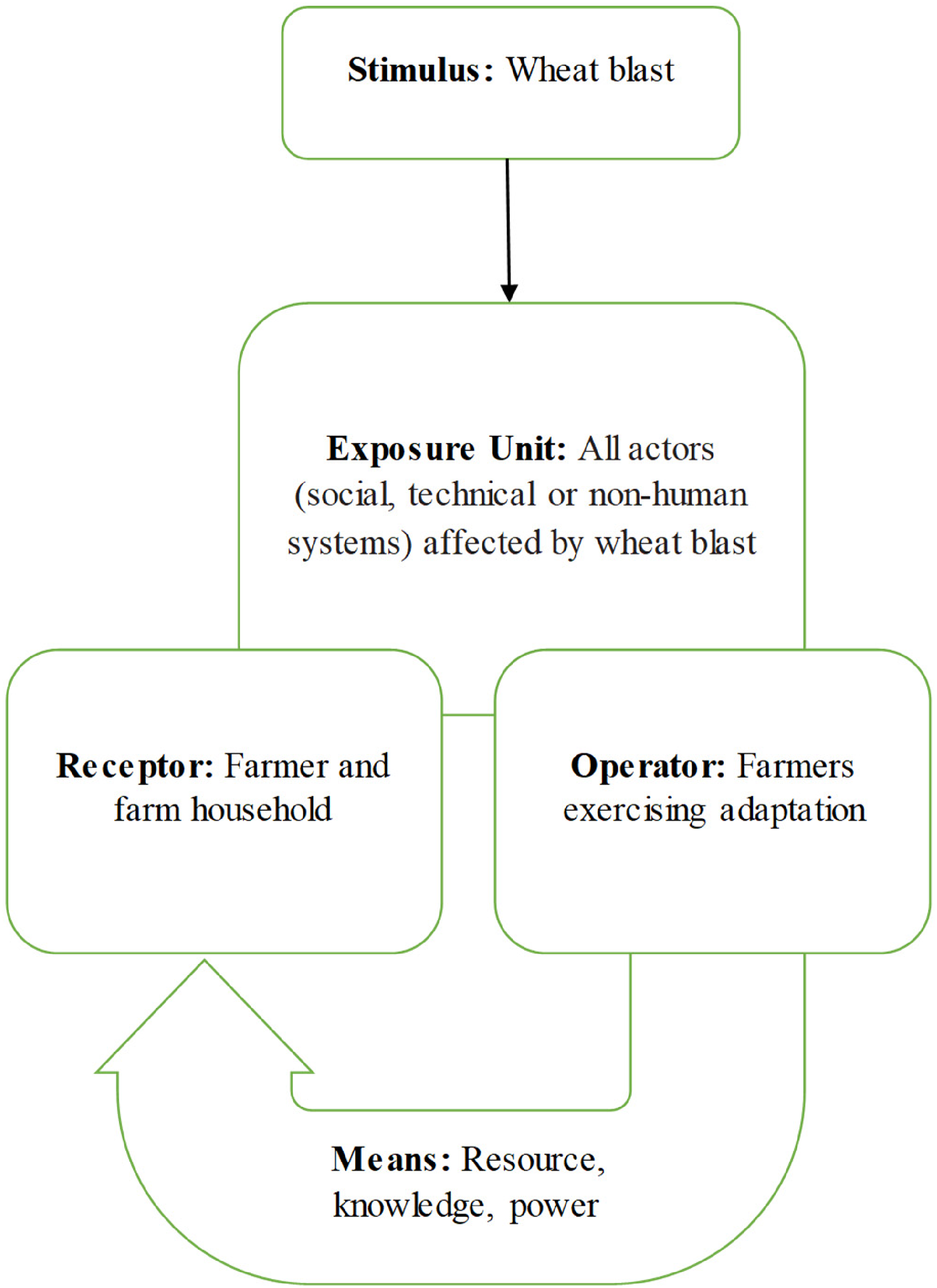
Schematic diagram showing the core concepts related to adaptation. Source: Adapted from Eisenack and Stecker (2012).
By employing this action theory framework, we aim to gain insights into the complex dynamics of farmers’ adaptation strategies and the factors influencing their decision-making process in response to the wheat blast outbreak.
Identification of determinants of multiple adaptation strategies and their measurement techniques
To determine the factors influencing various adaptation strategies (i.e., actions) that a farmer (an actor) adopts in response to the wheat blast event (i.e., stimuli), we have used a multivariate probit model. Following Harmer and Rahman (2014) and Anik et al. (2021), we have identified several probable adaptation strategies for the wheat blast-affected farmers. We then further refined the list of strategies through consultation with the Department of Agricultural Extension (DAE) officials and incorporated them in the questionnaire accordingly. These strategies encompass both farm and off-farm activities, and farmers’ responses to them were categorized into four distinct groups. Table 1 provides a detailed description of these strategies, along with their respective adoption rates.
Different adaptation strategies and adoption rates along with return.
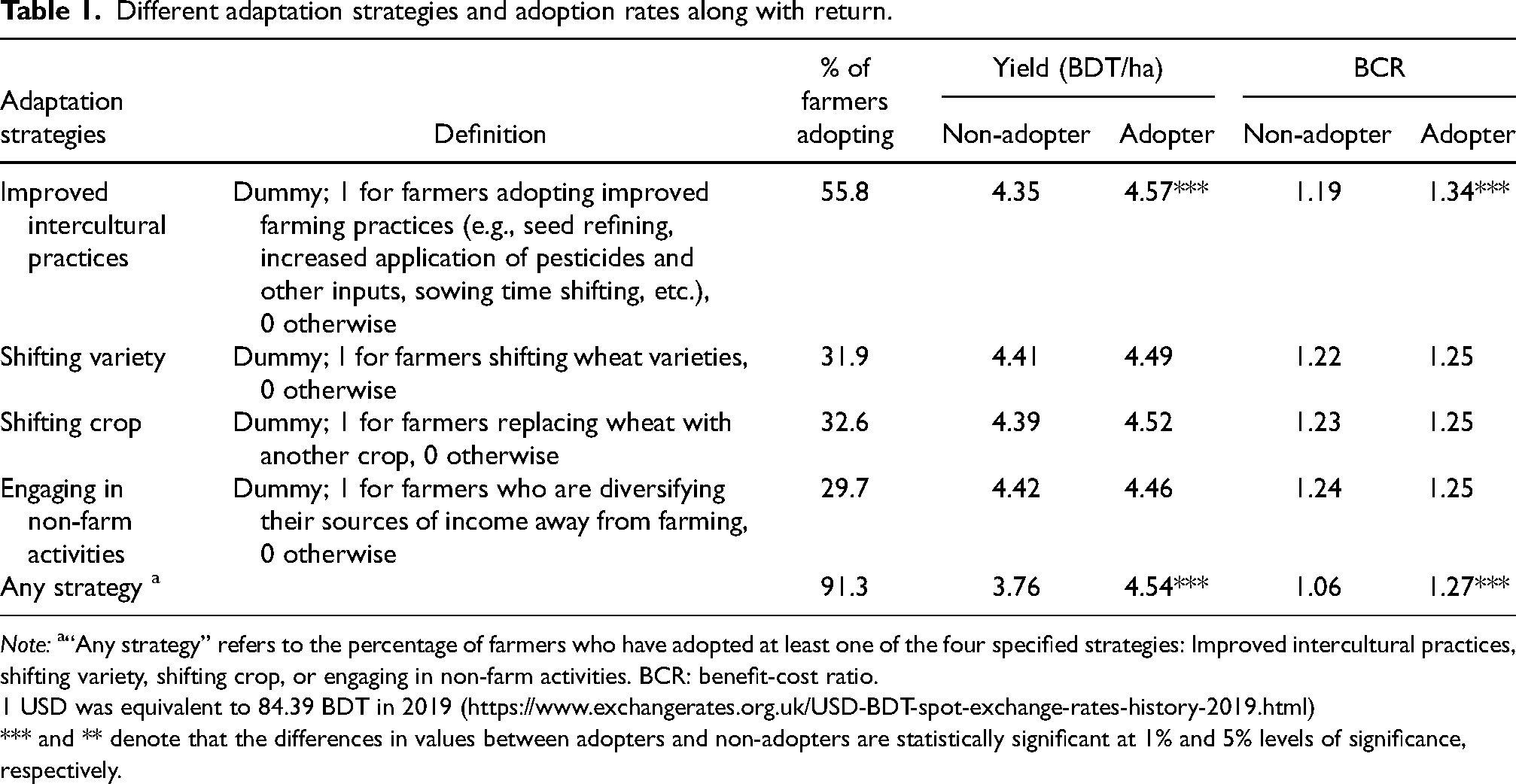
Note: a“Any strategy” refers to the percentage of farmers who have adopted at least one of the four specified strategies: Improved intercultural practices, shifting variety, shifting crop, or engaging in non-farm activities. BCR: benefit-cost ratio.
1 USD was equivalent to 84.39 BDT in 2019 (https://www.exchangerates.org.uk/USD-BDT-spot-exchange-rates-history-2019.html)
*** and ** denote that the differences in values between adopters and non-adopters are statistically significant at 1% and 5% levels of significance, respectively.
Among the strategies three are agriculture based, including two specific to wheat cultivation: ‘improved intercultural practices’ and ‘shifting variety’. The third strategy, ‘shifting crop’, involves farmers replacing wheat with competing crops. Additionally, some farmers reported replacing farming with off-farm activities, which were classified under the category ‘engaging in non-farm activities.’ Furthermore, farmers often employed multiple strategies simultaneously, indicating the synergistic nature of their adaptation decisions.
Therefore, instead of using a bivariate type model, we adopted multi-variate probit (MVP) model which is a binary response regression model to estimate both observed and unobserved influences on dependent variables by several independent variables simultaneously (Kariuki and Loy, 2016). The general specification for MVP model (Greene, 2000) is:




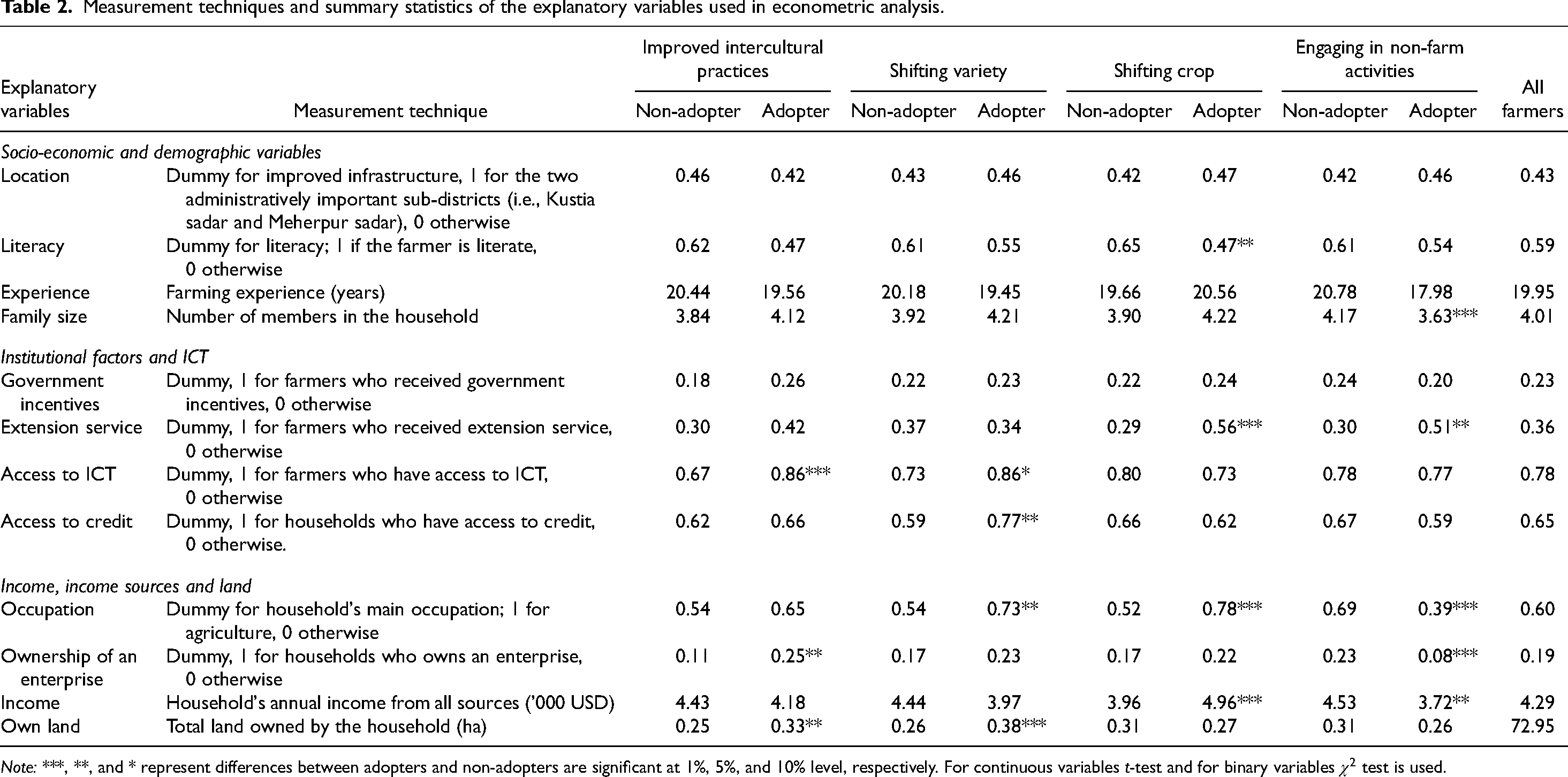
We have used 13 explanatory variables that were further classified into three broad categories. The selection of these variables was based on a comprehensive literature review and informal discussions with DAE officials and farmers. Table 2 details the methods for measuring these explanatory variables.
Measurement techniques and summary statistics of the explanatory variables used in econometric analysis.
Note: ***, **, and * represent differences between adopters and non-adopters are significant at 1%, 5%, and 10% level, respectively. For continuous variables t-test and for binary variables
Results
Farmers’ adaptation strategies
In the aftermath of the wheat blast, 91% of surveyed farmers reported adopting at least one strategy. The most commonly adopted strategy is ‘improved intercultural practices’, reported by 56% of the surveyed farmers. Roughly one in three farmers adopted the other two agriculture-based strategies. The least adopted strategy, although reported by a significant 30% of farmers, is ‘engaging in non-farm activities’ (Table 1).
Yield and profit differences between adopters and non-adopters
The estimated yield and benefit-cost ratio (BCR) for adopters and non-adopters of the identified adaptation strategies are reported in Table 1. Compared to the non-adopters, the adopters of any strategy obtained around 20% significantly higher yield and BCR. The adopters’ yield and BCR are higher for each strategy, though the difference is significant only in the case of the ‘improved intercultural practices’ strategy.
Socio-economic status of adopters and non-adopters
In Table 2, we present detailed summary statistics of the explanatory variables used in the MVP model. A farmer owns only 0.30 hectares of land on average. Those who adopted the strategies ‘improved intercultural practices’ and ‘shifting variety’ owned significantly more land than those who did not. Average household income is 4290 USD/year, which is also significantly higher among farmers who adopted the strategies ‘shifting crops’ and ‘engaging in non-farm activities’. Agriculture is the primary occupation of most households (60%). The proportion of households with agriculture as their primary occupation is higher among adopters than non-adopters for all adaptation strategies except ‘improved intercultural practices’.
Except for literacy and family size in the case of the strategies ‘shifting crop’ and ‘engaging in non-farm activities’ respectively, none of the variables representing farmer's socio-economic and demographic profile show significant differences between adopters and non-adopters. Only one out of three farmers have access to extension services. It is impressive that 78% of farmers have access to ICT facilities. Credit facilities are available to most farmers (65%). One in four farmers reported receiving government incentives to overcome the wheat blast effect, with no significant difference between adopters and non-adopters of any strategy.
The MVP model estimates for determinants of adoption
Joint determination of adaptation strategies
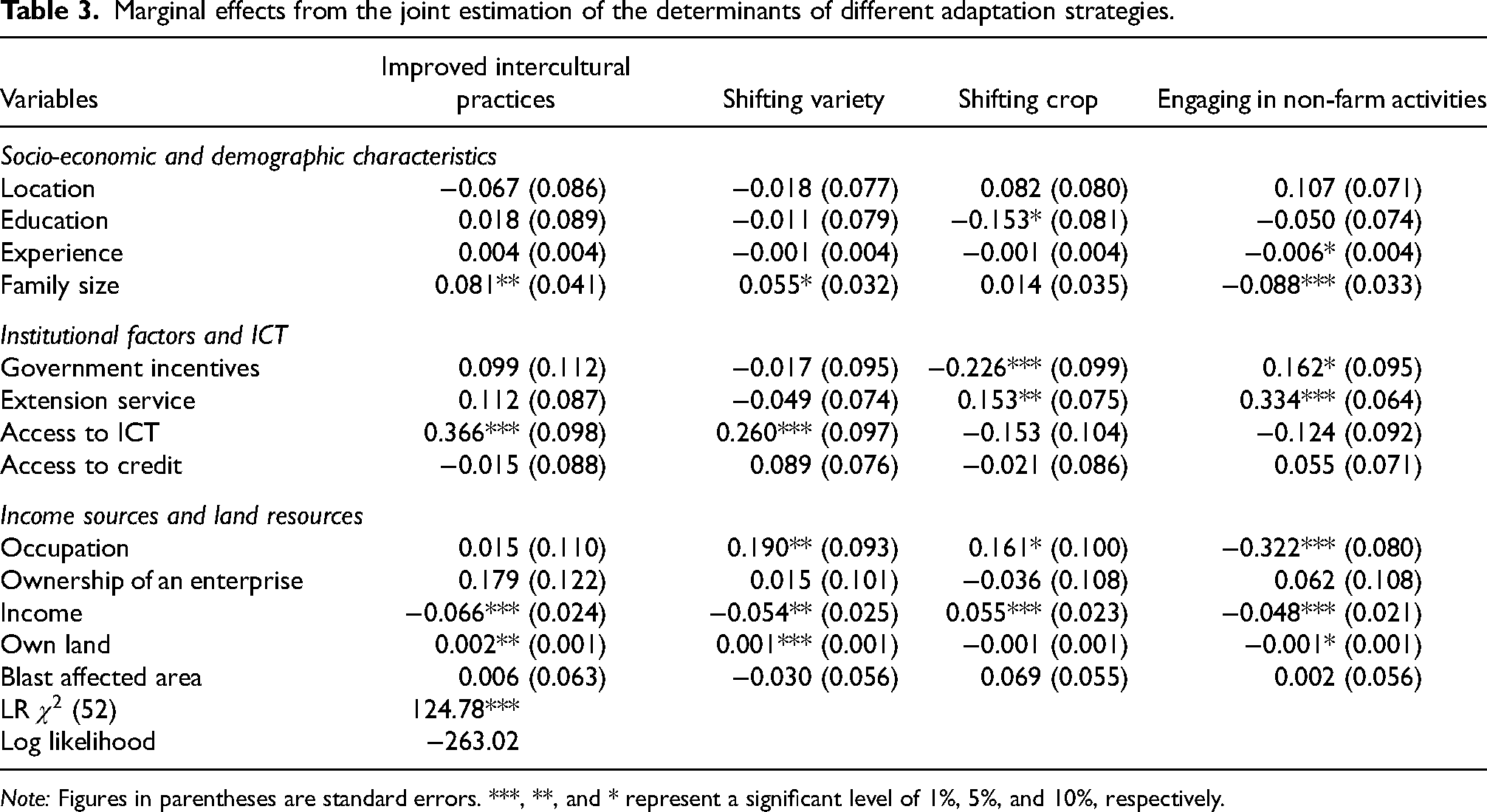
The marginal effects of the explanatory variables chosen to explain the adoption decisions of the four selected adaptation strategies are presented in Table 3. One of the critical hypotheses in the multivariate model is that the ‘correlations of the error terms across the four equations are jointly zero.’ The null hypothesis is strongly rejected at the 1% significance level, which justifies the appropriateness of our chosen method compared to the bivariate and multinomial ones commonly found in the literature.
Marginal effects from the joint estimation of the determinants of different adaptation strategies.
Note: Figures in parentheses are standard errors. ***, **, and * represent a significant level of 1%, 5%, and 10%, respectively.
Farmers’ socio-economic and demographic characteristics explaining adaptation decisions
We utilized four explanatory variables to represent the socioeconomic and demographic profile of households: location, literacy, experience, and family size. Our findings indicate that literate farmers are more inclined to adopt the ‘shifting crop’ strategy compared to their illiterate counterparts. Additionally, the variable of family size exhibits a significantly positive coefficient in the equations for ‘improved intercultural practices’ and ‘shifting variety,’ signifying a higher likelihood of households with larger family members embracing these wheat cultivation-based adaptation strategies. On the other hand, the adoption of ‘engaging in non-farm activities’ is less common among experienced farmers and larger families.
Institutions, ICT and adaptation
Farmers who were compensated by the government for wheat blast damage are less likely to switch to other crops compared to those who did not receive compensation. Furthermore, farmers with access to extension services are more likely to consider shifting to other crops than those without such assistance. The adoption of two wheat cultivation-based strategies, namely ‘improved intercultural practices’ and ‘shifting varieties,’ is more likely to be adopted by farmers who use the ICT technologies.
Income, income sources and land as determinants of adoption
Among the various categories of explanatory variables used to explain farmers’ adoption strategies, the variables representing farmers’ economic status have the most significant effects. Households whose primary occupation is agriculture are more inclined to adopt agriculture-based strategies, such as ‘shifting crop’ and ‘shifting variety,’ but are less likely to venture beyond agriculture. Income is the only variable that consistently exhibits a significant effect across all four equations. A $1000 increase in a household's annual income increases the probability of transitioning to other crops by 0.055 units, while simultaneously reducing the likelihood of adopting ‘improved intercultural practices,’ ‘shifting variety,’ and ‘engaging in non-farm activities’ by 0.066, 0.054, and 0.048 units, respectively.
Moreover, relatively land-rich farmers are more likely to adopt ‘improved intercultural practices’ and ‘shifting variety’ while being less inclined to engage in off-farm activities. A decimal increase in the amount of owned land raises the probability of adopting ‘improved intercultural practices’ and ‘shifting variety’ by 0.002 and 0.001 units, respectively, while decreasing the likelihood of ‘engaging in non-farm activities’ by 0.001 unit.
Synergies in farmer's adaptation practice choice decision
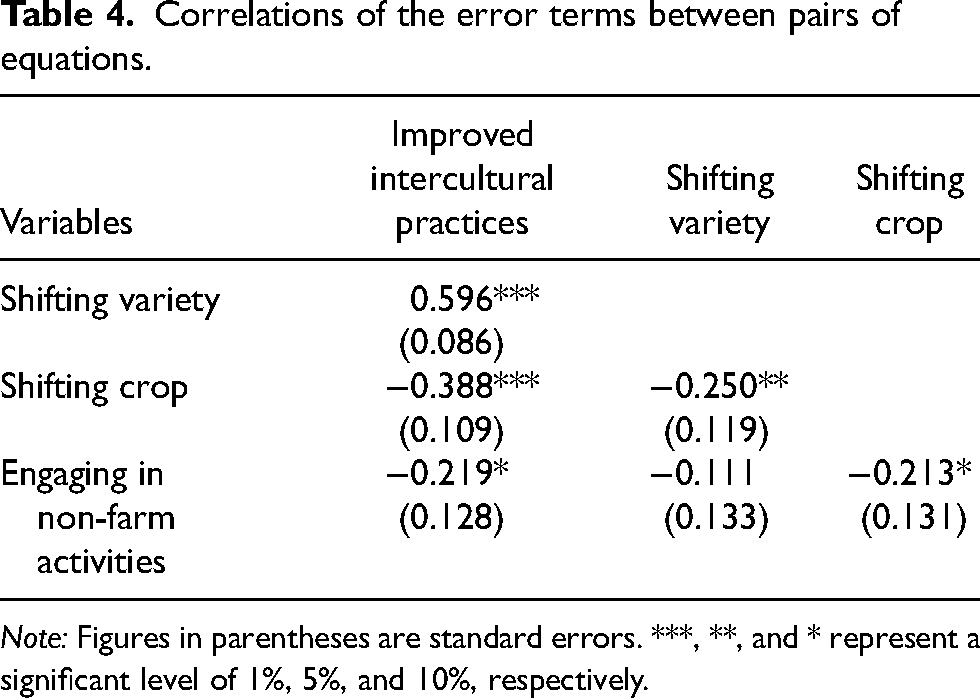
One of the key reasons for selecting the MVP model is its capability to test the correlations of the disturbance terms between any pair of equations (i.e.,
Correlations of the error terms between pairs of equations.
Note: Figures in parentheses are standard errors. ***, **, and * represent a significant level of 1%, 5%, and 10%, respectively.
A positive correlation between the error terms in two equations indicates that adopting one strategy increases the probability of adopting another. On the other hand, a negative correlation suggests a supplementary relationship between the two strategies. Notably, the error term of the equation ‘improved intercultural practices’ exhibits a positive and significant correlation with the equation ‘shifting variety,’ indicating a complementary relationship. This suggests that farmers who adopt either of these strategies are likely to adopt the other.
Conversely, farmers who adopt the ‘shifting crop’ strategy are less inclined to adopt ‘improved intercultural practices’ and ‘shifting variety.’ Additionally, strategies that extend beyond agriculture, such as engaging in non-farm activities, decrease the likelihood of adopting ‘shifting crop’ and ‘shifting variety.’
Discussion
Following the wheat blast's devastation, Bangladesh witnessed a significant decline in wheat acreage and production. To cope with this shock, farmers implemented diverse adaptation strategies. Guided by ‘action theory,’ we argue that the wheat blast served as a stimulus, prompting farmers to adopt specific strategies or combinations thereof. Their adoption decisions were influenced by socio-economic status, available resources, and institutional frameworks, which shaped their choices.
The substantial number of farmers adopting various strategies is consistent with existing literature, highlighting the proactive nature of Bangladeshi farmers in embracing new approaches (Anik et al., 2021; Uddin et al., 2014). The high adoption rate of the ‘improved farming strategies’ can be attributed to the simplicity of many included practices, such as seed refinement, increased pesticide usage, and adjustments in sowing times. Moreover, these strategies often complement farmers’ indigenous practices and knowledge, facilitating their adoption (Altieri, 2004). However, it is essential to acknowledge that strategies relying on intensive use of chemical inputs may pose challenges concerning health, environmental impact, and biodiversity preservation (Boxall et al., 2009).
Different crops and varieties exhibit varying vulnerabilities to pests and diseases. Farmers are more inclined to adopt a specific wheat variety if they perceive it as less susceptible to wheat blasts. Conversely, risk-averse farmers may opt to replace wheat with alternative crops. Similar strategies may also be employed by farmers for whom wheat plays a less significant role in their food consumption and income generation. Alauddin and Sarker (2014) have mentioned that shifting crops and varieties are commonly observed adaptation strategies.
Despite the emergence of alternative livelihood options and the impact of climate change on agriculture in Bangladesh (Huq et al., 2015), agriculture continues to be prioritized by Bangladeshi farmers, as observed in our study. However, our findings reveal a higher proportion of farmers engaged in off-farm activities than in earlier studies (e.g., Anik et al., 2021), suggesting an increasing diversification of livelihoods among farmers. This indicates that while agriculture remains important, there has been a notable shift towards non-agricultural options, especially when facing severe climatic stress (Keshavarz et al., 2017). The discrepancy in our results compared to previous research may be attributed to the significant impact of the wheat blast outbreak, introducing heightened uncertainty and potentially influencing farmers’ decision-making regarding their livelihood options.
It is worth noting that despite the potential for farmers to shift towards off-farm income, this aspect has not been extensively discussed in the Bangladesh-specific literature (e.g., Al-Amin et al., 2019; Alauddin and Sarker, 2014; Sarker et al., 2013). However, our study sheds light on the increasing engagement of Bangladeshi farmers in off-farm activities, signalling a changing trend that requires further exploration and analysis. This changing pattern highlights the need to broaden the discourse on livelihood diversification in the context of Bangladesh and its implications for agricultural practices and resilience.
Compared to non-adopters, adopters of adaptation strategies achieved higher yields and BCRs, although these differences were not statistically significant in all cases. The insignificant differences may be attributed to farmers’ failure to fully exploit these strategies’ potential benefits.
Understanding the synergies among adaptation strategies is crucial, as these strategies can supplement or complement each other. Using these strategies wisely and understanding their relationships can enhance the effectiveness and efficiency of adaptation efforts. When farmers replace an existing wheat variety with a different one, they may need to adopt various intercultural practices. For example, the newly adopted variety may require specific input and management techniques to achieve optimal production. These complementary measures contribute to the overall success of the adaptation strategy.
When confronted with the stress caused by wheat blast disease, farmers are more inclined to switch crops within their existing agricultural domains. Farmers adopt crops, varieties, and practices from their familiar fields, making them less inclined to explore new options regarding varieties and intercultural practices. Likewise, farmers transitioning from farming to off-farm activities can avoid the challenges of adopting new crops and practices.
The econometric analysis revealed key factors influencing farmers’ adoption decisions. Land-rich farmers demonstrate a higher propensity to adopt wheat-based adaptation strategies, aligning with previous literature highlighting the increased likelihood of adoption among wealthier farmers possessing higher income, more land, and additional resources (Adger et al., 2003; Sheikh et al., 2003). These households are less inclined to replace wheat with alternative crops or pursue off-farm livelihoods. Rahman and Akter (2014) have noted the preference of land-rich farmers in Bangladesh for agriculture-based livelihood options. Additionally, due to the allocation of their lands to competing crops, larger farmers are less inclined to substitute wheat with other agricultural options.
Household adaptation decisions are influenced by income and its sources. However, in contrast to previous literature suggesting a positive correlation between adoption and income/wealth (Adger et al., 2003; Sheikh et al., 2003), our study found that the relationship between income and adoption varied across different adaptation strategies. This suggests a range of possibilities regarding the impact of income on adoption decisions. While farmers with higher off-farm income generally exhibit reluctance to adopt agricultural technologies (Wollni et al., 2010), challenges in capital markets can lead farmers to redirect earnings from off-farm sources towards farming activities (Pender and Gebremedhin, 2008).
Households that rely on agriculture as their primary source of income exhibit a higher likelihood of adopting agriculture-based strategies while displaying a lesser inclination towards engaging in off-farm activities. Farming necessitates specific skills, resources, and mindsets that differ from those required for off-farm endeavours. As a result, households relying on agriculture as their primary income source are less inclined to transition towards off-farm activities. Similarly, experienced farmers demonstrate a lower probability of replacing farming with off-farm endeavours due to their accumulated knowledge and expertise in agricultural technologies. Studies have shown that older farmers have more farming knowledge and expertise (Ainembabazi and Mugisha, 2014) and prioritize investing in sustainable agricultural technologies (Nyangena, 2008).
Contrary to the generally held perception that education influences households’ livelihood decisions, our findings indicate that households with literate heads were less likely to adopt ‘shifting variety’ as a livelihood strategy. While many researchers argue for the significant influence of education on agricultural technology adoption (e.g., Asfaw and Admassie, 2004; Weir and Knight, 2004), conflicting research from Bangladesh suggests an ambiguous relationship. This inconsistency may be attributed to concerns regarding the quality of education and the tendency of educated households to pursue non-agricultural opportunities (Anik et al., 2021; Sen et al., 2021).
Households with larger family sizes often engage more family members in farming activities. In rural Bangladesh, farming is considered a collective household endeavour, involving even economically inactive people. The involvement of more family labour in farming contributes to cost reduction and mitigates uncertainties, ultimately enhancing the return on investment for agriculture-based adaptation strategies. This relationship has been documented in various agricultural economics studies (e.g., Ojiako et al., 2007). Carter and Wiebe (1990) found that farms utilizing more family labour tend to be more efficient, as the marginal value product of family labour is lower than the opportunity cost of hired labour based on market wages. Therefore, households with larger family sizes may prioritize farming and reduce their engagement in off-farm activities.
Few farmers received government extension services, consistent with literature indicating that only a few farmers benefit from these services in Bangladesh and many other developing countries. This can be attributed, among other reasons, to the limited workforce and institutional bottlenecks within the extension office. Extension services are critical in shaping farmers’ adoption decisions (e.g., Maddison, 2006; Ojo and Baiyegunhi, 2020). This is evident from the positive coefficient of the extension service variable in the ‘shifting crop’ equation.
Extension service recipients are more inclined to explore adaptation strategies within agriculture and are less likely to engage in off-farm activities. However, an alternative perspective exists. Government extension services in many developing countries, including Bangladesh, have faced criticism for favouring wealthy farmers with diversified income sources, including off-farm activities. In the event of wheat blast attacks, these farmers can quickly shift to alternative income sources. This bias is partly driven by the fact that most farmers in the country have limited land and can allocate some of it to demonstrate new technologies.
The limitations of traditional extension services highlight the growing importance of modern communication technologies for adoption (Balaji et al., 2007). In Bangladesh, ICT has significant potential due to the widespread access reported by most farmers, consistent with previous research reporting high mobile phone ownership and household access (IFPRI, 2020). The econometric findings suggest that ICT technologies can facilitate the adoption of wheat-based adaptation strategies, indicating a positive shift towards enhanced communication and information access in the agricultural sector.
Conclusion
In this paper, 150 wheat farmers from the severely wheat blast-affected Meherpur and Kustia districts are surveyed to identify their adaptation strategies. According to the ‘action theory’ framework, the wheat blast outbreak was a stimulus that forced farmers towards diversified adaptation strategies. A farmer's decision towards adopting a particular strategy is shaped by different means and conditions, which this paper identifies through a MVP model. The model also identifies synergies between any two strategies.
A high proportion of farmers adopting indicates the severity of the disease outbreak and farmers’ proactive nature, primarily facilitated by different means and conditions. Four broad categories of strategies were identified: ‘improved intercultural practices,’ ‘shifting variety,’ ‘shifting crop,’ and ‘engaging in non-farm activities.’ Adopting these strategies was worthwhile as they contributed to production and return, though the effects on all the strategies were insignificant.
Synergies exist between farmers’ adoption decisions. Adoption of ‘improved intercultural practices’ increases farmers’ likelihood of adopting ‘shifting variety.’ Unless these two strategies are used, farmers can substitute between any two adoption strategies, so adoption is less likely if one is adopted.
Among the different categories of explanatory variables used in the MVP model, the variables representing farmers’ income and economic status have a more profound effect. This is followed by the category of variables representing farmers’ institutional access. The associated signs with the variables within the same category vary across strategies, supporting the argument that adoption is an individual's decision and context-specific. Income is the most crucial factor that influences all four adaptation strategies. With increasing income, except for ‘shifting crop,’ the adoption probability of the other three strategies decreases. Farmers with relatively more land and for whom agriculture is the primary income source are more likely to adopt agriculture-based strategies but less likely to explore off-farm ones. Extension services and access to ICT positively contribute to a farmer's adoption decision. The other factors contributing to the adoption, though only robust across some strategies, are family size, education, experience, and government incentives.
Some policy options are derived based on the findings of the study. especially for low-income and smaller farms, there needs to be a greater emphasis on providing farmers with access to knowledge and training on disease control through extension services. Farmers will benefit from information about crops, varieties, and intercultural practices. Dissemination strategies based on ICT can be helpful in this regard. Secondly, strategies should be tailored to farmers’ socio-economic conditions. For example, ‘engaging in non-farm income’ is a less preferred strategy for households with more land and family members.
In contrast, the same households are more likely to explore agriculture-based strategies. Third, as farmers engaging in off-farm activities are less likely to adopt agriculture-based strategies beyond the household level, food security might have implications. Conducting a separate study to assess the impact of such shifts in farmers’ livelihood domains is necessary.
The insights gleaned from this paper, detailing how farmers deal with the challenges posed by wheat blast, hold global significance given the disease's prevalence in various regions. The knowledge gained here not only aids in comprehending effective coping strategies but also bears relevance for similar situations where farmers encounter different diseases. This understanding can contribute to a collective reservoir of expertise, serving as a guiding light for agricultural communities worldwide in their collective battle against diverse challenges.
Footnotes
Declaration of conflicting interests
The authors declared no potential conflicts of interest with respect to the research, authorship, and/or publication of this article.
Funding
The authors received no financial support for the research, authorship, and/or publication of this article.
