



Abstract
In the context of sustainable agricultural development, much has been made of the need to apply agroecology or regenerative principles to improve rural livelihoods and to align the sector with critical planetary health boundaries. This movement is a reaction to the perceived private and social costs arising from both production and consumption associated with industrialised agriculture, mostly in upper-income countries, with several default assumptions being apparent about applicability elsewhere. The notion of circularity, or the circular economy, is frequently conflated with agro ecological rhetoric, often overlooking a longer tradition of circular resource use efficiency in traditional mixed crop–livestock farming in low-income settings. This paper examines the concept and origins of circularity and reviews some examples of historic circular economy research within the international agricultural research system as applied to smallholder agriculture. These include (i) studies focusing on the impact of crop residue retention, (ii) work on residue incorporation and/or mulching and their effects on crop yields and soil fertility, (iii) research on the effects of manure use on crop yields and soil fertility and (iv) work on the feeding of crop residues to livestock. We consider some promising innovations or practices adhering to circular economy principles. Candidate innovations focus on the improvement of livestock feeding practices including the breeding of dual-purpose crops to enhance livestock nutrition, conversion of cereal straw residues to high-quality feed, use of cassava waste as livestock feed and use of insects as livestock feed. We conclude by considering how circular bio-economy principles might be maintained in the future evolution of food systems in Sub-Saharan Africa.
Introduction
Food systems are highly implicated in global sustainability trajectories with trends in both production and consumption practices giving rise to increasing private and social costs, the latter often externalised onto other sectors including health, water and the global environment (Sandhu et al., 2019). A debate about the need to transform food systems highlights the evolution of alternative agricultural practices and the historical roles of inter alia mechanisation, intensification, supply chain integration and market power. Ongoing re-evaluation of production systems also addresses impacts arising from intensive versus extensive systems and large and small farms, and the potential for upscaling agro-ecological niche systems that seek to reconcile production practices with planetary boundaries and consumer preferences. Circular economy (CE) principles are often integral to these niches and have a longer antecedent in engineering principles that seek to improve material resource use efficiency in production. In agriculture, circular bio-economy principles are being mainstreamed in government and sector strategies and plans (European Environment Agency, 2018; UK Government, 2015). Less attention is arguably being paid to where such practices might be applied and the maintenance of pre-existing traditional CE experience and practices. Calls for greater attention to promotion of circular bioeconomy principles are often conflated with wider natural agriculture movements such as the agroecology movement. For example, Barrios et al. (2020) include the “circular and solidarity economy” as one of ten elements of agroecology. Similarly in a recent High-Level Panel of Experts report, circular bioeconomy principles are a core element of agroecological principle #11: Connectivity (FAO, 2019). This paper explores the role of CE in agriculture with a focus on traditional mixed crop–livestock farming in Sub-Saharan Africa. To support our perspective paper, we focus on long-term research since the 1980s by the Consultative Group on International Agricultural Research (CGIAR) and its partners on nutrient flows in mixed crop–livestock systems and how to maximise nutrient use efficiency. We examine key practices and discuss their potential evolution as part of a broader food systems transformation agenda. The paper (i) starts by addressing the definition of CE and how its application in agriculture aligns with prior sustainability and resource use efficiency objectives. (ii) We then focus more specifically on CE principles in agriculture. (iii) The following section provides a review of archetypal CE practices in mixed crop–livestock farming. (iv) We go on to outline the process of evolution of agricultural systems/practices and consider the implications for adhering CE principles, specifically in relation to crop–livestock interactions. (v) Next, we present some case studies of livestock feed innovations that could help to preserve CE principles as Sub-Saharan Africa livestock systems intensify. (vi) A further section considers the institutional context for maintaining and promoting CE in mixed crop–livestock farm systems in Sub-Saharan Africa, specifically the use of market-based approaches and government intervention to support innovation and adoption. (vii) We finish with some conclusions.
Background to CE
Figge et al. (2023) note that the CE concept is now omnipresent in any discussion on sustainability. Its conceptual origins lie in the earliest and (ironically) subsequently somewhat circular sustainability debates around limits to growth, exploitation of renewable and non-renewable resources, resource use efficiency, and more recent rhetoric around planetary boundaries. The central concept is to minimise resources use by exploiting and closing loops, i.e., by using the same resources or their residues repeatedly. In its perfect state, a CE requires no further virgin resources.
The most formal although still contested definition of CE was previously provided by a review by Kirchherr et al. (2017) “A circular economy describes an economic system that is based on business models which replace the ‘end-of-life’ concept with reducing, alternatively reusing, recycling and recovering materials in production/distribution and consumption processes, thus operating at the micro level (products, companies, consumers), meso level (eco-industrial parks) and macro level (city, region, nation and beyond), with the aim to accomplish sustainable development, which implies creating environmental quality, economic prosperity and social equity, to the benefit of current and future generations”.
Arguments about the scope persist, particularly in relation to the inclusion of social equity criteria and social responsibility in supply chains. But basically, the necessary and sufficient CE definition should encompass closed loops, optimised resource use in the system, multilevel resource cycling and recognition of imperfect recycling due to the laws of thermodynamics. This has led Figge et al. (2023) to offer an alternative definition: “The circular economy is a multi-level resource use system that stipulates the complete closure of all resource loops. Recycling and other means that optimise the scale and direction of resource flows, contribute to the circular economy as supporting practices and activities. In its conceptual perfect form, all resource loops will be fully closed. In its realistic imperfect form, some use of virgin resources is inevitable.”
Circular economy in agriculture
In the agricultural and food systems context, CE tends to be termed circular bioeconomy to distinguish from circularity in manufacturing, which tends to rely more on extracted non-renewable resources. CE is often conflated with farm-to-fork and supply chain responsibility rhetoric, which encompasses life cycle and traceability elements prior to and beyond the farm gate and which typically implicitly refer to farming and food systems in upper-income countries. Due to its biological complexity, and as an adjunct to natural ecosystem processes, agriculture offers some of the clearest examples of circular resource use, many of which have evolved over centuries of practice and formal and informal knowledge exchange in transitional low input and extensive farming systems (Figure 1). Examples include the observance of seasonality in production to match crop calendars with peak growing conditions, the use of crop residues in animal feeds, soil nutrient augmentation from livestock and human waste and optimised use of other animal bio products including for renewable energy production. These practices highlight the interdependence between crop and animal production, and the development of genetic technologies and breeding etc. has broadened the scope for increasing their efficiency in some contexts. The following sections highlight the wealth of historical research on circularity in mixed crop–livestock systems conducted within the international research system and point to various circular bioeconomy innovations that could be transformational as these systems evolve. The challenges in maintaining circularity as systems evolve are then considered.
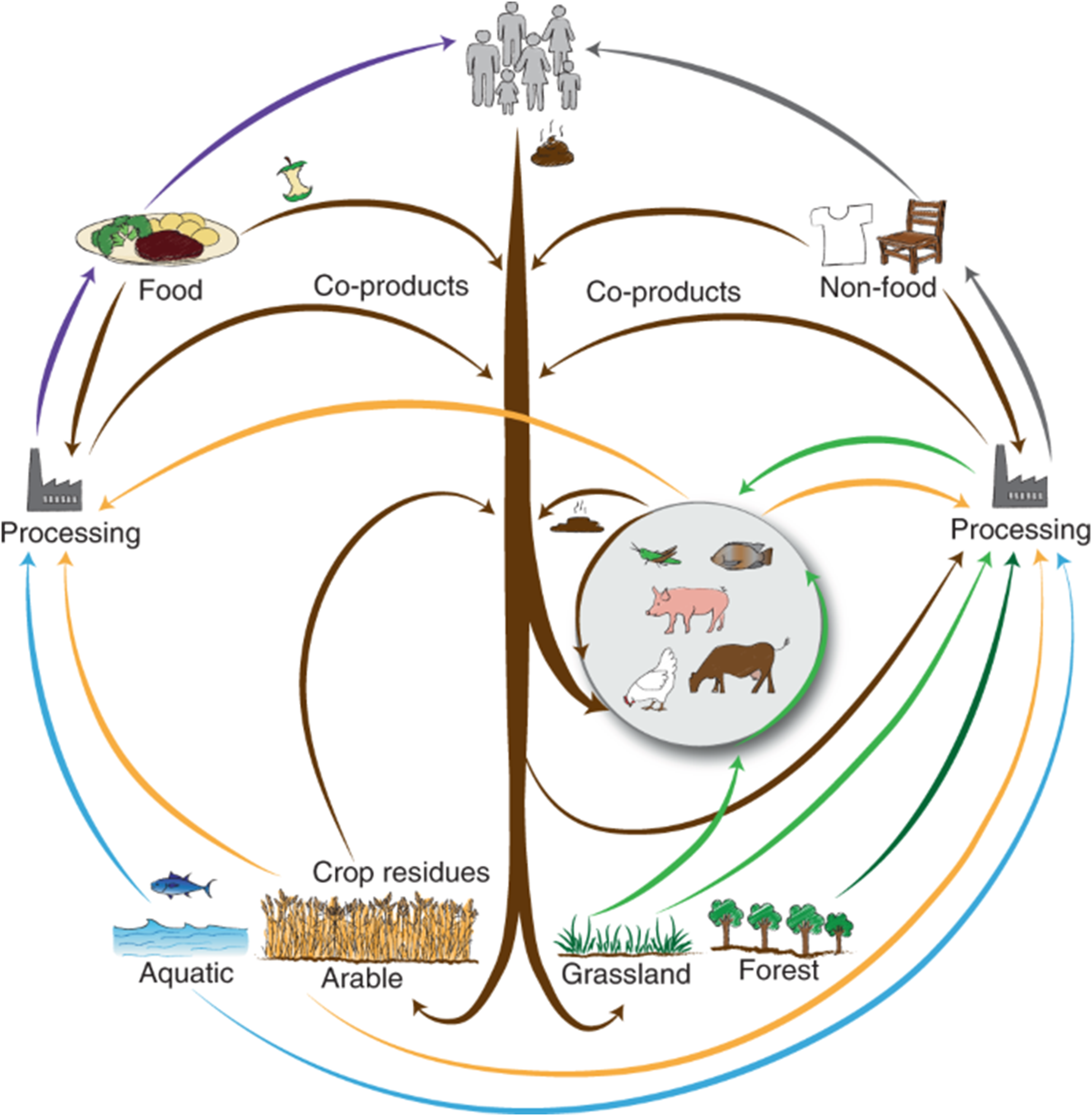
Biomass flows in a circular bioeconomy. Source: Muscat et al. (2021).
Mixed crop–livestock farming – An archetypal circular bioeconomy
Mixed crop–livestock production is the dominant farming system in Sub-Saharan Africa with varying degrees of interaction between crop and livestock enterprises depending on agroclimate and population density (McIntire et al., 1992). The smallholder mixed crop–livestock system is characterised by nutrient flows among the components of the system (soil, rangeland, crop and livestock). For example, crop residues are fed to livestock while livestock deposit manure on crop fields as shown in Figure 2. In line with circularity principles, a significant proportion of the nutrients is recycled within the systems, particularly animal manure and crop residues while grains are largely consumed by the households (Stangel, 1995). The cycling of biomass through livestock, and the use of manure and urine to fertilise the soil, has long been an important linkage between livestock and soil productivity in semi-arid Africa (Powell et al., 1996). Efficient cycling of nutrients in mixed crop–livestock systems is important for soil fertility management, elimination or reduction of nutrient loss, primary productivity (rangeland, crop and livestock), and consequently household food security. Although efficient nutrient cycling in the smallholder mixed crop–livestock system is inadequate to sustain the productivity of the system to meet today's growing food needs without external inputs (Bationo et al., 2007), nutrient cycling is an important element of mixed crop–livestock farming, substantially reducing the need for importation of external inputs in the form of inorganic fertiliser and concentrate feed for livestock.
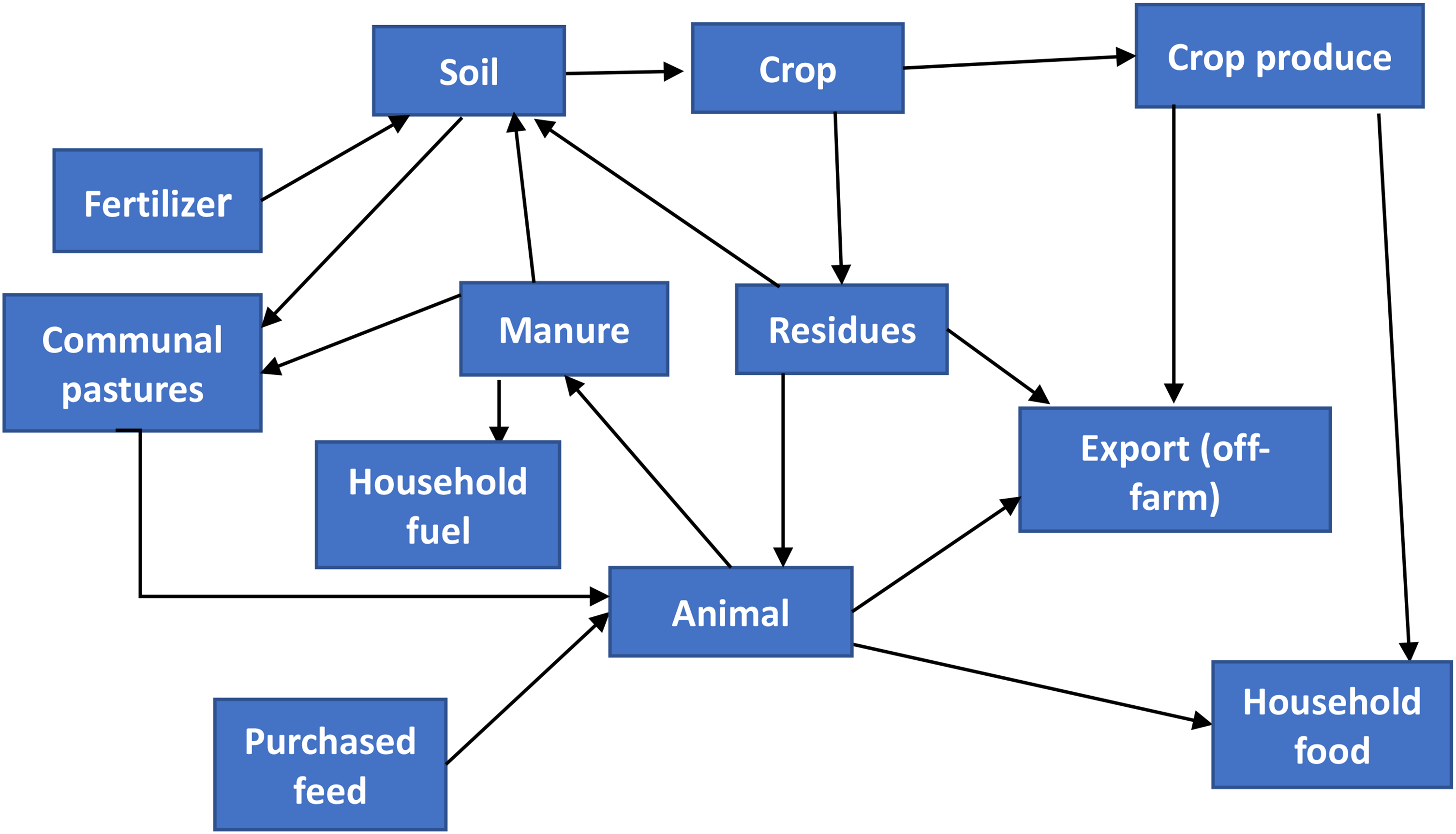
Pathways of nutrient flows in mixed crop–livestock systems in Sub-Saharan Africa.
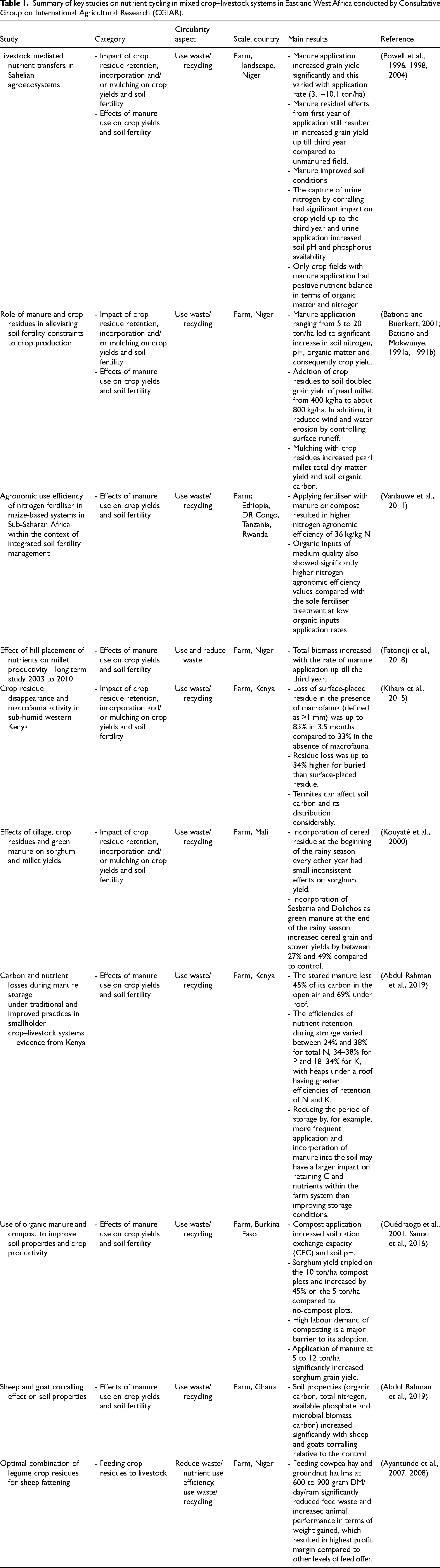
Reusing and recycling of materials (biomass and nutrients), which are key principles of the circular bioeconomy, has been an integral part of the smallholder mixed crop–livestock systems in Sub-Saharan Africa long before the recent popularity of the CE discourse. Reusing and recycling of materials is a necessity for smallholder farmers in Sub-Saharan Africa because external inputs are not easily available or affordable. There has been extensive research carried out by CGIAR with many partners over 40 years which has generated a large corpus of knowledge to inform agroecological approaches. Some of the published CGIAR research is summarised in Table 1. Studies can be broadly categorised into those (i) focusing on the impact of crop residue retention, (ii) work on incorporation and/ or mulching and their effects on crop yields and soil fertility, (iii) research on the effects of manure use on crop yields and soil fertility and (iv) work on the feeding of crop residues to livestock. The studies presented in Table 1 are representative of these four categories of the published CGIAR long-term research on nutrient cycling in smallholder crop–livestock systems in Sub-Saharan Africa. Enhanced nutrient use efficiency, soil fertility amendment and improved crop and/or livestock productivity are the common objectives of all these studies. Despite the inherent nutrient recycling in mixed crop–livestock farming in Sub-Saharan Africa, closing nutrient loops is a challenge since such systems are still characterised by waste and nutrient loss through animal grazing (deposition of manure on non-productive areas, for example, around watering points), nitrogen volatilization through manure and urine, harvesting of crop produce and residues for off-farm use, significant nutrient loss due to soil leaching, and off-farm export of crop produce (grains, roots and tubers) and livestock products. The main limitation of these historical studies is that they focus at farm scale without considering landscape-level nutrient flows. Also, there has been limited work on recycling of household waste, particularly urban waste streams.
Summary of key studies on nutrient cycling in mixed crop–livestock systems in East and West Africa conducted by Consultative Group on International Agricultural Research (CGIAR).
Evolution of farming systems and implications for nutrient use efficiency
As the global population grows, agriculture has had to undergo radical transformation to keep pace and continue to supply adequate food (Ramankutty et al., 2018). This transformation has had a major impact on land use patterns and on the natural environment. Agricultural transitions vary depending on context but can be crudely characterised as moving from livestock herding to smallholder/subsistence agriculture, through to more market-oriented/semi-commercial production, moving on to industrial models of production and then evolving into a phase where the pre-eminence of production is subsumed into a more conservation-oriented form of agriculture where farmers become land stewards responsible for delivering environmental objectives. The extent to which circular bioeconomy principles are adhered to during this transition is partly a function of the degree of coupling between livestock and crop enterprises. As pointed out by Steinfeld (1998) and taken up by Powell et al. (2004) mixed crop–livestock production is the “sweet spot” for livestock-crop interactions (Figure 3).
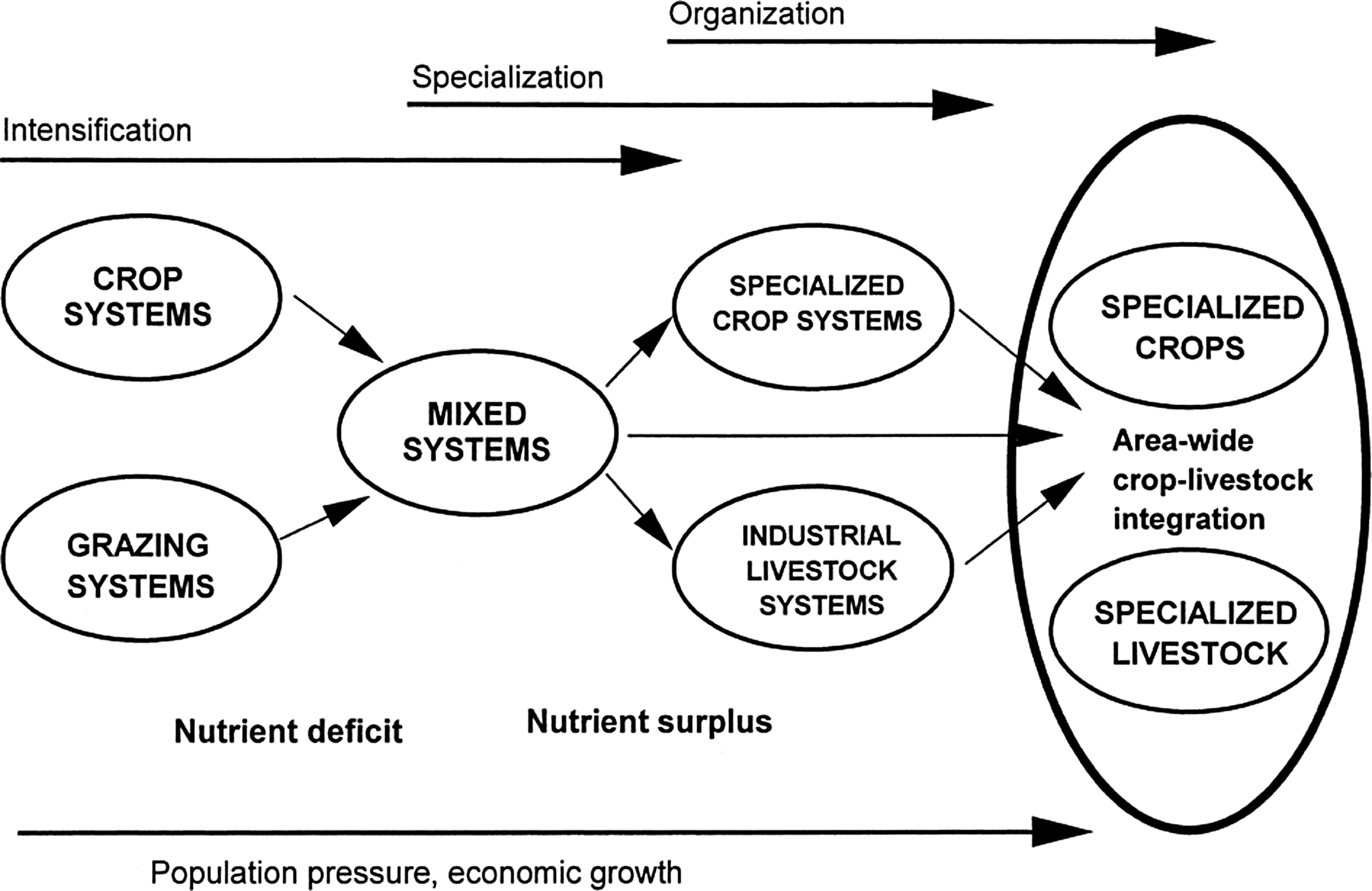
Evolution of crop–livestock interactions as systems evolve in response to population and economic growth (from Steinfeld, 1998).
As systems intensify, farms specialise into crop and livestock production and the nutrient transfers between livestock and crops become more challenging; intensification puts pressure on maintaining circular bioeconomy principles (Oosting et al., 2022). Taken to its extreme this leads to, for example, beef feedlots with complete import of feed nutrients in some areas with wide-scale crop monocultures in others. This decoupling of crop and livestock production comes with significant environmental problems, for example, through spatial concentration of livestock and resulting difficulties with disposing of excreta as well as biodiversity loss through the use of mono-crops. As an example of the former, consider waste disposal issues, e.g., in the Western Europe (Gesing, 2023; Van Der Peet-Schwering et al., 1999) and as an example of the latter, consider the biodiversity loss associated with modern arable production (Robinson and Sutherland, 2002; Stoate and Wilson, 2020). This kind of transition is already well underway in regions such as South-East Asia and China (Lam et al., 2017). Farming in Sub-Saharan Africa, by contrast, is still predominantly based on mixed crop–livestock production on small farms. The growing demand for food has been met mainly by the expansion of land use for cropping and for livestock at the expense of previously natural habitats (Ramankutty et al., 2018). Environmental issues associated with intensification have, therefore, yet to fully materialise in Sub-Saharan Africa but with population growth and rising incomes leading to increased demand for livestock products a similar trajectory is eventually likely in Sub-Saharan Africa. The scope for expansion of land use will ultimately disappear. The question is whether there are policy steps and development of livestock feed innovations such as dual-purpose crops that can be taken in advance of the transition to mitigate the worst environmental outcomes and maintain the circular bioeconomy advantages of continued integration of crop and livestock production, namely enhanced nutrient use efficiency and reduced environmental impacts.
Livestock feed innovations with potential to close nutrient loops
To get ahead of the potential decoupling of livestock and crop production that could result from system intensification, there is a need for circular bioeconomy innovations that fit the context in Sub-Saharan Africa. A range of innovations come to mind including those centred on improved manure management but here we focus on re-use and recycling of existing biomass as livestock feed which might otherwise enter the waste stream. Livestock feed solutions seem among the most promising because of the central place of feed in the intersection between crop and livestock production. Here, we set out four promising livestock feed technology options.
Breeding of dual-purpose crops in the crop–livestock circular bioeconomy
Crop–livestock integration is an efficient option for agricultural intensification in many regions of Sub-Saharan Africa, especially where land is limited for expansion of food production. Dual-purpose crops are especially suited to meet increased food production and security from such systems (Blümmel et al., 2020; Lenné et al., 2003) as both food and feed are produced from the same land, water and other inputs. Dual-purpose crops are defined as those that produce both food for human consumption and feed for livestock. They can be an integral part of a resource-efficient CE in crop–livestock systems.
During the past 20 years, a comprehensive research effort has been focused on the development of a number of dual-purpose crops including work with sorghum, pearl millet, barley, maize, wheat, rice, groundnut and cowpea. Much of this research has been consolidated and synthesised (Blümmel et al., 2013, 2020; Lenné et al., 2003). There has been a key interest in increasing the nutritive value of the stover especially in improving the protein content and reducing the fibre. Laboratory analyses of nutritive value through near-infrared spectroscopy allow highly accurate prediction of most quality traits in support of crop breeding programs. Germplasm screening for most of the above crops has shown exploitable variation in both grain and fodder traits which has already been designed into improvements in stover quality. Utilization of stover from dual-purpose crops within a crop–livestock system can reduce the requirement for external inputs contributing to resource use efficiency and reduced environmental impact. More research is needed on institutional, economic and policy requirements to support the adoption of dual-purpose crops and their management strategies by smallholder farmers in Sub-Saharan Africa.
There is also potential for developing crop grazing strategies for dual-purpose crops in some countries of Sub-Saharan Africa based on recent research in the USA and Australia. Grazing of winter wheat is a growing beef cattle production system in the Southern and Central Plains of the USA (Lollato et al., 2017). In Australia, dual-purpose cereals such as wheat, barley and triticale have increased productivity across diverse regions with high rainfall (Sprague et al., 2018). Further work is required to fine-tune grazing management to reduce grain yield losses. Financial analysis and modelling have demonstrated improved profitability and reduction in business risk (McGrath et al., 2021). Crop grazing strategies are used in Middle East/North Africa (Ceccarelli et al., 1999) but there is potential to expand their use in Sub-Saharan Africa.
Conversion of cereal straw residues into high-quality feed
Cereal straws and stovers are a key contributor to livestock feed resources in developing and transition countries. However, the basic carbohydrates trapped in the biomass cannot be fully accessed by animals as they are embedded in a lignified matrix. Therefore, any technology to increase energy recovery from crop residue will significantly improve its quality and would contribute to a positive impact on animal performance when used as feed (Blümmel et al., 2014). Furthermore, increasing the quality of crop residues would increase their value and reduce the need for disposal as waste by burning with all the attendant negative environmental consequences. Uptake of these technologies remains low for economic and socio-economic reasons (Owen and Jayasuriya, 1989). Recent global interest in second-generation biofuel technologies to produce ethanol from lignocellulosic biomass, provides an entirely new perspective to up-grading crop residues and could be transformational. Such an innovation would contribute in multiple ways to CE objectives: closing nutrient cycles, recycling of nutrients, upgrading of by-products to name a few.
Four candidate 2nd generation biofuel technologies in this context are: (i) Steam treatment, (ii) Ammonia Fiber Expansion (AFEX); (iii) Two Chemical Combination Treatment (2-CCT); and (iv) use of white rot fungi to degrade lignin (van Kuijk et al., 2015). Comparison of the first three treatments on fodder quality revealed (Blümmel et al., 2019) that the increases in true in vitro organic matter digestibility (IVOMD) measured after 48 h of incubation were greatest upon 2-CCT (increase of 38.2% units), followed by AFEX (increase of 19.3% units) and finally steam treatment (increase of 8.9% units). 2-CCT increased average apparent and true IVOMD of straws to above 80 and 90%, respectively.
Transforming the nutritive value of straws and stovers would contribute to CE in several ways. Increased digestibility of fodder leads to a reduction in the quantities of fodder and supplementary feed required reducing land and water requirements for feed production. It would also increase utilization of available biomass due to reduced feed rejection by animals. The technology could contribute to reducing greenhouse gas (GHG) emission intensity through improved feed quality. As crop residues will become a more valuable commodity due to their higher value, burning of biomass can be avoided, leading to less release of nutrients to the atmosphere and preventing destruction of soil microflora.
Use of cassava waste as livestock feed
Cassava is a staple food crop across much of the humid tropics of Sub-Saharan Africa with Nigeria being the primary producer of cassava. Processing Nigeria's 50 million tons of cassava fresh roots into food and industrial products yields about 15 million tons of wet peels annually (Okike et al., 2022). Peels are usually dumped near processing centres to rot or are dried and burned with resulting environmental degradation including effluent waste in water courses and GHG/particulate emissions. Attempts to use peels in animal feed have failed to yield profitable options due to (i) constraints associated with drying, and (ii) concerns about safety of use, particularly about hydrocyanide and mycotoxin-related food poisoning. Drying peels outside is practically impossible during the rainy season but if properly dried, peels can be a healthy and energy-rich animal feed ingredient with energy values approaching those of maize grain (Okike et al., 2015).
Consultative Group on International Agricultural Research scientists have developed – beyond proof of concept – a technology that drastically reduces cassava peel moisture content to 10–12% within six hours, using only equipment that is already in current use by small-scale processors and households (Okike et al., 2015). These methods involve a combination of different physical methods, such as grating, dewatering, pulverizing and sun-drying or drying by toasting on a fire-heated pan or flash dryer in the case of commercial production. The research efforts have produced a registered product “High Quality Cassava Peel” meal (HQCP®), which has attracted considerable interest from the livestock feed private sector. Next to this primary innovation, new ideas are being explored that further contribute to the CE credentials of this innovation. These ideas focus on re-using effluent from cassava waste piles as a substrate for biogas plants to supply energy needed in cassava processing.
Turning agricultural waste such as cassava peels into livestock feed ingredients contributes strongly to CE principles by closing nutrient loops and avoiding pollution in various ways. For example, the practice reduces waste by reusing peels in a productive way rather than allowing them to enter the waste stream. If offers potential for generation of biogas as a clean source of energy for cassava processing reducing reliance on firewood. Furthermore, the use of slurry from biodigesters as organic fertiliser potentially reduces the need for external soil amendments. Together, these actions could contribute strongly to improved nutrient use efficiency. The scale of cassava production in the humid tropics and the current scant use of cassava waste as livestock feed makes this innovation potentially transformative in enhancing livestock production by using CE principles (Amole, 2021).
Conversion of food waste to livestock feed through insect production
High-quality livestock feed is a key constraint to livestock production in developing countries. Production of pigs and poultry is heavily reliant on the use of human foods such as maize grain as an energy source and soya bean meal as a protein source. Much of this feed is imported with inherent inefficiency of nutrient use related to transport of feeds over long distances. Substitution of maize and soya with locally produced high-quality feeds would make important contributions to the CE.
Cultivation of insect larvae, notably black soldier fly larvae, on organic waste has attracted considerable attention in recent years (Makkar et al., 2014; Van Zanten et al., 2015). Black soldier fly can subsist on a wide variety of substrates and generate larvae of high fat and protein content dependent, of course, on the substrates used for their cultivation. There are various barriers to widespread use of this technology including issues about maintaining consistency of substrate quality, safety issues associated with contaminants in the substrate and regulatory issues around safety (Ojha et al., 2020). The use of insects in livestock feeding has strong potential to turn domestic waste streams into livestock feed and through into the human food chain.
Other innovations
There are many other possible technological solutions that would allow intensification but maintain CE benefits. These include the increased use of legumes in mixed crop–livestock production (Muoni et al., 2019). Legumes fix atmospheric nitrogen reducing requirements for inorganic nitrogen fertiliser and improving nutrient use efficiency at system level. Improved manure management methodologies that reduce N volatilization are also an important research area for enhancing nutrient use efficiency in smallholder systems (Diogo et al., 2013). Small-scale mechanization has strong potential to increase the feasibility of manure application to crop plots by reducing the labour constraint to manure use (Van Loon et al., 2020). Enhanced use of cultivated forage to reduce the need to import N through purchased feed is also a strong potential pathway to enhancing the smallholder circular bioeconomy during their system's evolution (Paul et al., 2020).
Institutional/policy considerations
Circularity as a concept continues to be debated and reinterpreted in the agricultural context and this paper has side-stepped some of the ethical debate that queries the efficiency of using livestock to convert crop biomass to protein. This debate is becoming central to how we address livestock emissions in the Global North where livestock products are over-consumed but is less relevant to many systems in Sub-Saharan Africa where livestock production is likely to remain critical to household livelihoods and family nutrition (McDermott et al., 2010).
More generally fostering greater adoption of CE principles aligns agriculture with sustainability principles which have traditionally been embedded by default in many farming systems in Sub-Saharan Africa. In seeking to promote further use of CE innovations an important institutional question concerns the respective roles of the market and governments to deliver the circular innovations into systems in low-income countries. If CE innovations are technically proven and profitable we should be seeing private adoption. However, non-adoption is often observed due to economic and behavioural barriers that are difficult to measure. Further policy barriers may also impede the development and adoption of farm-level innovations. That is, there may simply be insufficient knowledge or financial support to incentivise innovations that are socially beneficial but unattractive from the private producer's perspective.
This leads to at least two further considerations. To what extent can the market help to overcome economic barriers – through (1) externality pricing (e.g., carbon markets and credits) or through (2) consumers’ willingness to pay premiums on products produced in more CE systems? In both cases, market-based approaches can lead to potential compensation for farmers who adopt measures where the financial benefits are marginal or less apparent relative to the social or external benefits enjoyed by all. This is the basis for environmental subsidies in the EU, for example, or the various proposals for a “meat tax” (Simmonds and Vallgårda 2021). Arguably, these developments are still in their infancy in Sub-Saharan Africa and the development of niche markets globally does not yet guarantee a sufficient incentive for smallholders in lower- and middle-income countries.
If there is an evident market failure then government support for adoption is the alternative driver of uptake, either through improved information on private or public benefits and/or using direct and indirect support to producers and other supply chain actors. In practice, the lack of financial resources to support the sector limits the government role in many parts of rural Sub-Saharan Africa. As seen in the examples highlighted in the section on mixed crop–livestock farming, research from the CGIAR and national partners has taken up the slack in terms of helping producers understand where technological innovations could be particularly relevant for the evolution of their systems, while observing CE principles.
Conclusions
The circular bioeconomy concept captures some important principles around reuse, recycling and nutrient use efficiency in farming practice. As we have seen in this paper, smallholder agriculture in Sub-Saharan Africa has many of these principles at its core, more out of necessity than because of any ideological adherence to sustainable agriculture. In common with various other “natural agriculture movements” that have gained prominence in recent years, there has been a tendency to attempt to transplant ideas/ideologies derived from Global North discourse to Global South farming systems but as has been pointed out by others this is often not sensible (Giller et al., 2009, 2021; Mugwanya, 2019; Vanlauwe et al., 2014). We have attempted to emphasise the extent to which Sub-Saharan Africa farmers lead the way in terms of applying circular bioeconomy approaches in their farming practice. The big question is about what happens next. Sub-Saharan Africa is eventually likely to follow the trajectory of farming intensification seen in other global regions, with specialization into crop and livestock production, increasing size of operations and the potential negative environmental consequences of such intensification that are characteristic of industrialised agriculture in other parts of the world. There is, however, scope to maintain circularity and resource use efficiency in Sub-Saharan Africa farming and we have pointed out some candidate innovations in the livestock feed sector that could be transformational. Adoption of such innovations at scale is unlikely without significant public support to provide appropriate incentives; the market is unlikely to enable widespread uptake because of technical and economic barriers to adoption (Baltenweck et al., 2020). The challenge for policy makers is to find appropriate ways to incentivise promising circular bioeconomy measures to enhance the efficiency of production and reduce the environmental costs of intensification of farming in Sub-Saharan Africa.
Footnotes
Declaration of conflicting interests
The author(s) declared no potential conflicts of interest with respect to the research, authorship, and/or publication of this article.
Funding
The author(s) disclosed receipt of the following financial support for the research, authorship, and/or publication of this article: This work was supported by the CGIAR Trust Fund through Sustainable Animal Productivity for Livelihoods, Nutrition and Gender inclusion Initiative.
