




Abstract
“Demonstration farms” can disseminate knowledge on farming practices and help to promote animal welfare. When on-farm visits are impractical, remote demonstrations are a feasible alternative. This study used videos of higher welfare beef, fish and free-range egg farms in China. It aimed to determine whether the videos affected attitudes and intentions toward animal welfare and whether such videos are useful training tools. Participants indicated a high acceptability of demonstration farm videos for learning about their industry and the needs of animals. Videos shifted participant attitudes toward animal welfare, but only when actively engaged in rating the farm on specific characteristics. Attitude changes suggested participants gained a greater understanding of animal welfare, a greater intention to improve on-farm welfare, and more confidence in peer support for welfare innovations after viewing the video. The findings indicate videos of demonstration farms are useful for remote training but passive viewing may be insufficient to create change, and outcomes should be monitored for success.
Introduction
Food production industries use billions of animals annually, with chicken, pork, and beef being among the largest industries (FAO, 2019). Between 2000 and 2019, egg production increased from 51 to 83 million tonnes and finfish farming became the fastest-growing fisheries sector (FAO, 2019, 2021). Due to this growth and the number of animals used, animal welfare has become an important component of modern food systems, with implications for product quality, safety, profitability, and sustainability (Buller et al., 2018; Fernandes et al., 2021).
Animal welfare is defined as “the physical and mental state of an animal in relation to the conditions in which it lives and dies” (WOAH, 2021, p. 1). Several frameworks exist for the scientific assessment of welfare, for example, the “Five Domains” model is a general framework that assesses welfare along five interacting domains: nutrition, physical environment, health, behavioral interactions, and mental state (Mellor et al., 2020).
Livestock production is unevenly dispersed across the world, and for sustainable development of livestock industries, it is critical to have sufficient capacity building, education, and stakeholder engagement in high-production regions (WOAH, 2017). China is currently the largest producer of animal products, producing more pork, eggs, and farmed fish than any other country (FAO, 2019, 2021). The concept of animal welfare is not widely understood by the general public in China (Carnovale et al., 2021), despite widespread sentiments of care toward animals (Sinclair et al., 2022). China lacks a specific legal framework for animal welfare but has relevant sections in several laws; for example, Animal Husbandry Law, 2015 Revision and voluntary standards exist for several production species (Chen et al., 2022). A recent survey of broiler farmers in China found most were aware of the importance of animal welfare and more than one-third were willing to improve welfare on their farms (Jo et al., 2022), with similar results found across other industries (Chen et al., 2021). Consideration for the welfare of fish in China is also increasing but is not yet as strong as for terrestrial animals (Yang et al., 2021).
Welfare improvements are driven by a range of mechanisms including societal pressure and voluntary industry uptake (Hötzel, 2014; von Keyserlingk and Hötzel, 2014). Farmer attitudes and perceptions shape their behavior to impact animals in their care (Losada-Espinosa et al., 2020), and these are influenced by an individual's values, experiences, norms, and interests (De la Fuente et al., 2017; von Keyserlingk and Hötzel, 2014). Welfare-positive attitudes result in positive trickle-down effects on welfare outcomes (Munoz et al., 2019), while negative attitudes increase the likelihood of aversive management methods such as rough handling (Zulkifli, 2013). Animals experiencing negative affective states (e.g., fearfulness) also tend to be more unpredictable, dangerous, and difficult to manage, impacting stockperson well-being (Ceballos et al., 2018; Coleman et al., 2012; Waiblinger et al., 2002). Attitudes are one predictor of behavioral intentions, which typically correlate with future behavior according to the “Theory of planned behavior” (Ajzen, 2011).
To encourage on-farm animal welfare improvements, a range of approaches can be taken including peer-based training, video or webinar delivery, and on-farm demonstrations (Bentley et al., 2016; Descovich et al., 2019; Pangborn et al., 2011). Education and training are important where there is a knowledge deficit (Coleman, 2010). However, learning uptake will be influenced by beliefs, experience, personality, and culture (Hemsworth and Coleman, 2011; Swetha et al., 2020). “Demonstration” farms disseminate knowledge around farming practices, demonstrate agricultural techniques and tools, and provide peer-to-peer advice (Ingram et al., 2018; Št’astná et al., 2019). Demonstration farms that use clearly defined messages and visual aids can improve farmer knowledge and encourage pro-welfare attitudes (Pangborn et al., 2011) and may be more effective than written training due to low literacy rates in some farming sectors (Bello-bravo et al., 2013). Face-to-face training has been limited by the COVID-19 pandemic in recent years (Chen and Fu, 2022) and other biosecurity risks, such as avian influenza outbreaks. Contact-free alternatives may be necessary avenues for delivering training initiatives, advice to farm employees, and information about industry developments (Rose et al., 2020).
This study assessed participants’ experiences of demonstration videos from farms in China with a focus on animal welfare. Participants were farm employees from one of three production industries; beef, egg, or fish.
The aims of this study were to determine:
Whether participants perceived demonstration farm videos as useful for learning about their industry or the needs and management of animals Whether videos encouraged pro-welfare behavioral intentions or attitudes If participants associated high-welfare farms with other important farm characteristics such as product quality and profitability
Materials and methods
Demonstration farm materials
Three commercial farms were selected as demonstration farms; one producing chicken eggs (extensive, free-range system) (Beijing, Beijing Municipality), one producing fish (indoor/outdoor, recirculating, pond system) (Hangzhou, Zhejiang Province), and one producing beef cattle (non-tie stall barn-housing with some outdoor access) (Gaoan, Jiangxi Province). These farms were invited to participate because they were considered by local experts to have animal welfare conditions above the industry standard in China. On each farm, video footage was collected of the facilities, and a farmer interview was conducted and recorded. Canvassing interview questions were developed in Chinese to assess practices pertaining to animal welfare, including farm characteristics, staff attitudes toward their animals, breeding practices, biosecurity, animal behavior, and nutrition. Transcripts from preliminary interviews were translated to English after which species-specific animal welfare scientists decided which on-farm processes should be demonstrated in each instance. After this consultative process, a Chinese-speaking production team visited farms to obtain footage and conduct formal interviews. Footage was again assessed by welfare experts to ensure featured practices were (i) an improvement to animal welfare in comparison to average farms for the industry, and (ii) not depicting practices of concern for animal welfare. Finally, the footage was edited into a single video for each farm, 5–7 min in length. Audio was in Mandarin and subtitles were provided in English and simplified Chinese.
Survey participants
The target participant group was a cross-section of people working on farms in China, in one of the industries that aligned with the demonstration farms. Participants were required to be 18 years of age or older, currently living and working in China, currently working on an egg, beef cattle, or fish farm, and have at least 1 year of experience in that industry. All participants were made aware that participation was voluntary, they could withdraw at any point, their data would be collected anonymously and stored securely, and how their data would be used. This study was approved by the Human Research Ethics Committee of the University of Queensland (#2021_HE001461).
Questionnaire design
The questionnaire was originally designed in English before translation into simplified Chinese by a bilingual collaborator. It was back-translated by a second translator, blind to the original version, in order to check translation fidelity. The questionnaire was comprised of five sections. Part A checked inclusion criteria. Part B assessed attitudes, knowledge, and intentions prior to viewing the demonstration farm video. This section included a series of statements (adapted from Descovich et al. (2019), original validation in Sinclair et al. (2017)) to which the participant indicated their level of agreement or disagreement. Statements included “The welfare of animals is important to me” and “I intend to make improvements to the welfare of the animals under my care.” Participants were then shown a video that aligned with their own industry. In Part C, participants rated their impression of the farm overall and assessed how the farm compared to their own workplace and the industry average. They were also asked to rate specific elements of the farm, including animal physical and mental health, and perceived characteristics such as trustworthiness, customer satisfaction, and profitability. A subset of participants was not shown the questions in Part C, in order to assess whether any evident changes in the attitudes or intentions of the participants resulted from the video itself or from the questions in combination with the video. Part D was comprised of voluntary, demographic questions such as gender, age, and job type. In Part E, participants were asked whether demonstration farm videos, like the ones shown, are helpful for learning about their industry or the needs and management of farm animals. They were then asked the same questions from Part B again, in a randomized order, and were also given the opportunity to make any further comments.
Data collection
The survey was conducted between October 2021 and April 2022 and was delivered using two approaches. Respondents could participate online via a China-specific survey platform (WJX, Changsha Ranxing Information Technology Co. Ltd, Changsha, China) connected to the WeChat social media application (Tencent Inc., Shenzhen, China) (n = 186 participants). The online questionnaire was promoted through social media and via the research team's existing stakeholder network, and participants were asked to send the survey to their own network after completion. Farms were also emailed directly and asked to pass the online survey on to their employees. The second approach was via verbal delivery with a local Mandarin-speaking research assistant (n = 138 participants from 13 farms). This approach was included to overcome barriers from low literacy levels among some farm employees. Participation in the questionnaire took approximately 15–20 min, and participants were offered a small financial incentive (∼US$5) out of respect for their time, which is customary in China for surveys.
Statistical analysis
Statistical analysis was carried out using R software (R Core Team, 2020) with RStudio (RStudio Team, 2020). Questions measured on a 5-point ordinal scale were analyzed using ordinal logistic regression models (polr function (Venables and Ripley, 2002)) after reduction to 3-point scales due to overdispersion. Final models were constructed using forward stepwise modeling, fitting the following explanatory variables, some with reduced levels due to data sparseness: Farm type, gender (male/female), age group (four levels), education (three levels), years of experience (three levels), and whether they worked directly with animals or not (binary). Age group and education were fitted as nominal variables based on model fitting. AIC, deviance, and likelihood ratio tests (lrtest function (Zeileis and Hothorn, 2002)) were used to determine the inclusion of a variable, and confounding was checked using coefficients/standard errors. Stability of the final models was checked by changing the introduction order of the explanatory variables. Brants tests were used to check the proportional odds assumption (brant function (Schlegel and Steenbergen, 2020)), and fitting was assessed using pseudo R2 values (Cox-Snell method) (PseudoR function (Signorell et al., 2022)) (Appendix 3). Although significant effects of explanatory variables were found, in general, the final models only explained a small amount of the variation.
Attitudes and intentions toward animal welfare were assessed before and after viewing the farm videos. To identify changes between timepoints, Stuart–Maxwell tests of marginal homogeneity were used as omnibus tests (StuartMaxwellTest function (Signorell et al., 2022)). When significant, McNemar tests were used to determine pairwise changes in proportions (mcnemar.test function in base R). Data were tested using responses from all participants and then retested after segmenting into two groups—the first of which was given the Part C questions about the farm, while the second only viewed the video. One farm characteristic (operational costs) was excluded from the analysis as it was uncertain whether the rating scale was interpreted as intended. Relationships between farm characteristics were assessed using hierarchical cluster analysis. Cluster presence was assessed with a Hopkin's statistic of 0.76 (get_clust_tendency function (Kassambara and Mundt, 2020)). Three clusters were identified using the “silhouette” method (fviz_nbclust function (Kassambara and Mundt, 2020)). Agglomerative hierarchical clustering was carried out using the “complete” method (agnes function (Maechler et al., 2022)), based on a dissimilarity matrix constructed with Spearman's correlations subtracted from 1, resulting in an agglomerative coefficient of 0.50.
Results
Participants
Responses were collected from 324 participants (Appendix 1), 186 online and 138 face-to-face. A subset of the online participants (12.7%, n = 41) was automatically selected by the platform to skip the farm-specific questions (Part C). Two-thirds of participants were 45 years old or younger and around a third were women (Appendix 1). Around two-thirds had worked in the field for three years or less, and approximately half had completed some form of post-school education (Appendix 2). Participants held a range of job types. Of those who revealed their job, 64.5% (n = 207) worked with animals, while others worked in supervisory (13.1%, n = 42) or management roles (7.8%, n = 25), were farm owners (12.2%, n = 39), or had another farm role (2.5%, n = 8).
Educational sources
Over one-third of participants had acquired their farming knowledge through formal training (35.5%, n = 115), and from on-the-job experience (33.6%, n = 109). Friends and family were common sources of knowledge (47.5%, n = 154), as was information gained through personal interest, for example, reading books or information on the internet (28.7%, n = 93). Many participants pointed to multiple sources of farming knowledge.
More than 80% of participants indicated that demonstration farm videos are helpful for learning about their industry (81.8%, n = 268) or the needs and management of farm animals (83.3%, n = 270). One in six participants was neutral (17.0%, n = 55 for learning about the industry, and 16.0%, n = 52 for learning about animals) and less than 5 people (<1.5%) disagreed with either statement. Participants who had completed education at a technical college found the videos more helpful than school-educated participants for learning about their industry (OR: 11.9) or animals (OR: 7.2) (Table 1). The youngest participants were more likely to view the videos as helpful in terms of learning about their industry than those in the 36–45 years age bracket (OR: 3.5). When asked if demonstration farm videos are helpful to learn about the needs and management of animals, participant scores were affected by demographics such as gender, with women 4.5 times more likely to give a higher score than men (Table 1). Participants with more experience in the field, or who had jobs with animals were also more likely to give a higher helpfulness score (OR: 2.1 and 3.3, respectively; Table 1).
Helpfulness of demonstration farm videos, and effect of demographic variables on response.
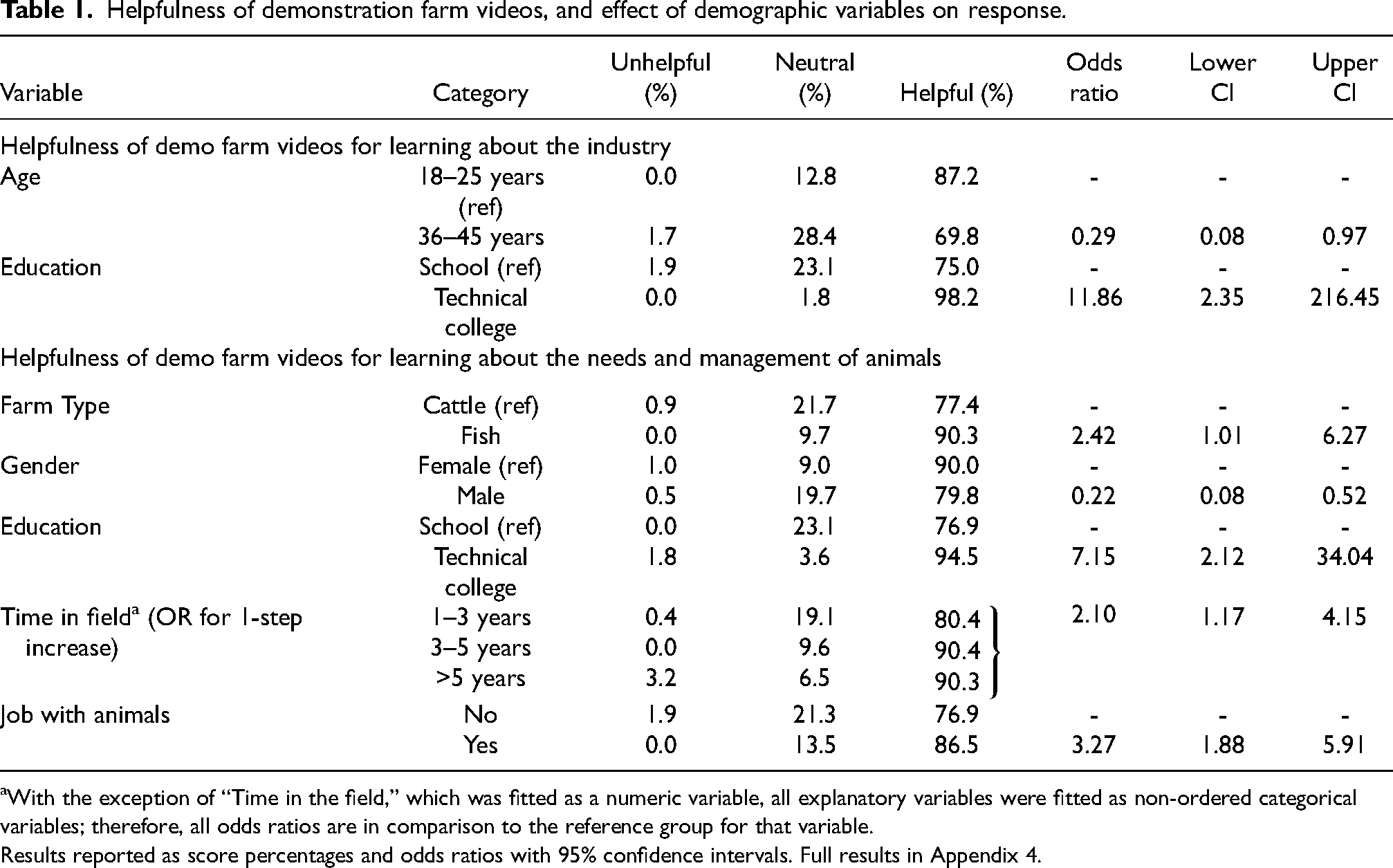
With the exception of “Time in the field,” which was fitted as a numeric variable, all explanatory variables were fitted as non-ordered categorical variables; therefore, all odds ratios are in comparison to the reference group for that variable.
Results reported as score percentages and odds ratios with 95% confidence intervals. Full results in Appendix 4.
Farm impressions
The majority of participants asked farm-specific questions after viewing the video (88%, n = 249) had a positive/very positive farm impression (Figure 1). Women were 3.1 times more likely to give a higher impression score than men, and the youngest participants were much less likely to give a higher impression score than those aged 26–35 years (OR: 3.35) or over 55 years (OR: 18.2; Table 2).
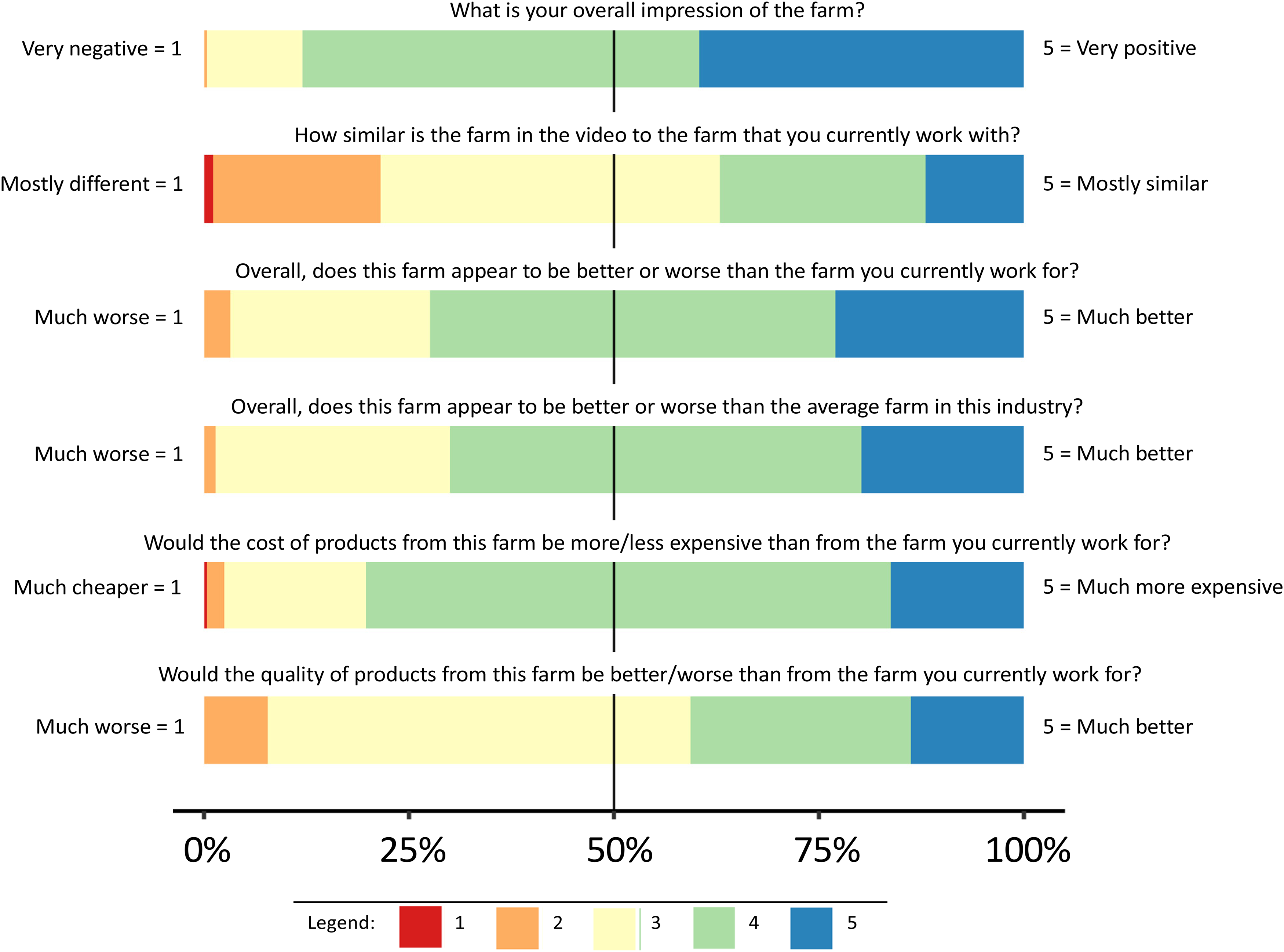
Participant (n = 283) impressions of demonstration farm.
Participants’ impressions of the demonstration farms, and the effect of demographic variables on response.
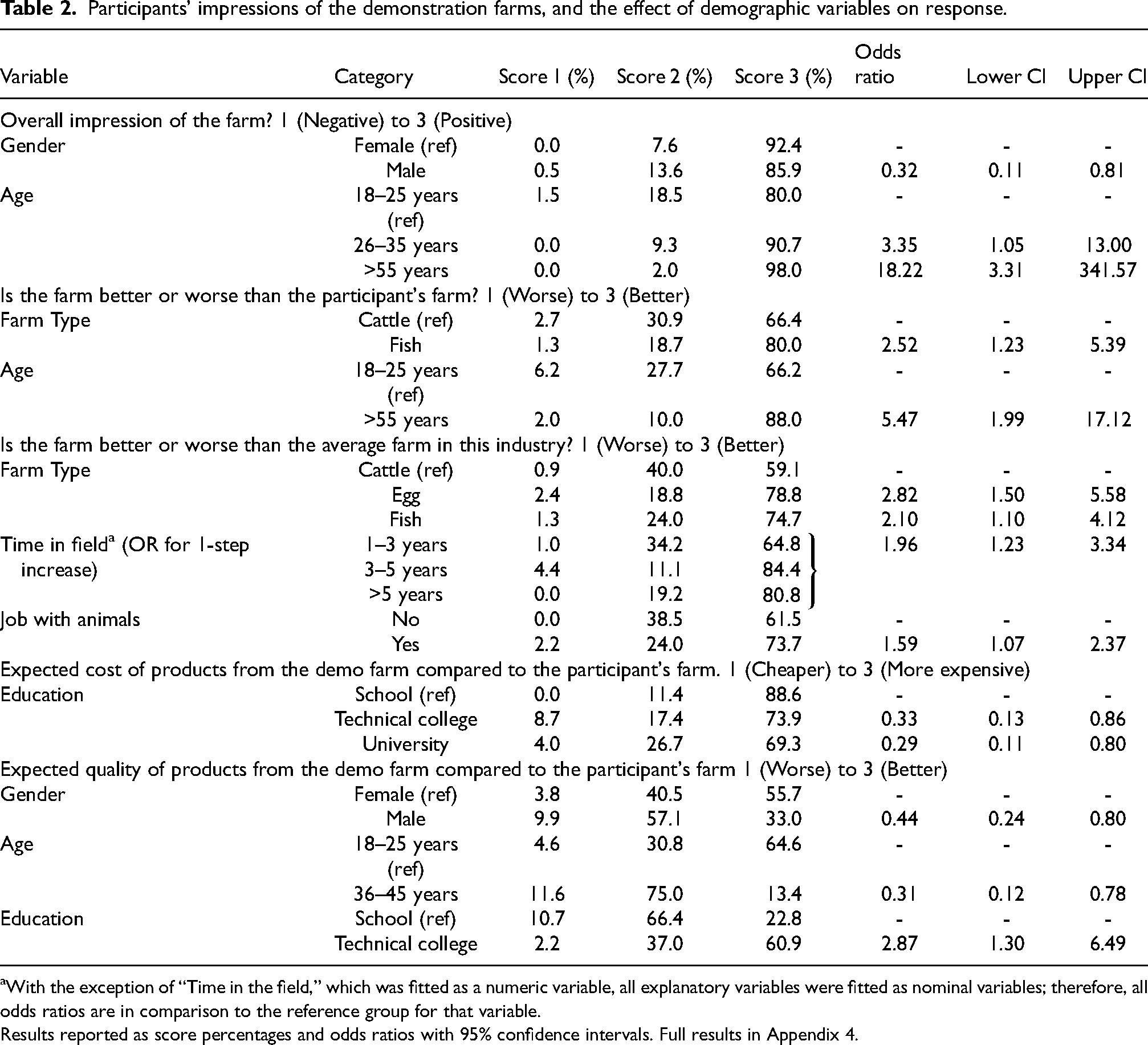
With the exception of “Time in the field,” which was fitted as a numeric variable, all explanatory variables were fitted as nominal variables; therefore, all odds ratios are in comparison to the reference group for that variable.
Results reported as score percentages and odds ratios with 95% confidence intervals. Full results in Appendix 4.
The majority of participants (72.4%, n = 205) indicated the demonstration farm was better than their own, or the industry average (n = 198, 70.0%) (Figure 1). This was affected by farm type, with fish farm participants more likely (OR: 2.5) to rate the demonstration farm as better than their own than cattle farm participants (Table 2). Participants were more likely to believe that the demonstration farm was better than the industry average if they came from a fish or egg farm compared to a cattle farm (OR: 2.8 and 2.1, respectively), if they had worked in the field longer (OR: 2.0), or if they worked directly with animals (OR: 1.6; Table 2).
Most participants (80.2%, n = 227) believed products from the demonstration farm would be more expensive than those from their own farm, but only half of this number (40.6%, n = 115) believed the quality would be better (Figure 1). Perceived cost was affected by education, with school-educated participants more likely to indicate a higher expense score than those with college or university training (OR: 3.0 and 3.4; Table 2). Perceived quality was affected in the opposite direction with college-trained participants more likely than school-educated participants to give a higher product quality score for the farm compared to their own (OR: 2.9).
Participant attitudes and intentions
Before viewing demonstration farm materials
The majority of participants agreed that animal welfare was important to them personally (83.6%, n = 271) and to others in their workplace (80.2%, n = 260) (Figure 2). This was affected by education as well as age (Table 3). Around two-thirds (64.2%, n = 208) agreed that animal welfare in their workplace was satisfactory (Figure 2). Participants from cattle farms were 1.9 times more likely to have a lower agreement score than those from egg farms, and 2.3 times more likely compared to those from fish farms (Table 3). Similar results were found for school-educated participants compared to technical college graduates (OR: 3.7), and women compared to men (OR: 1.9).
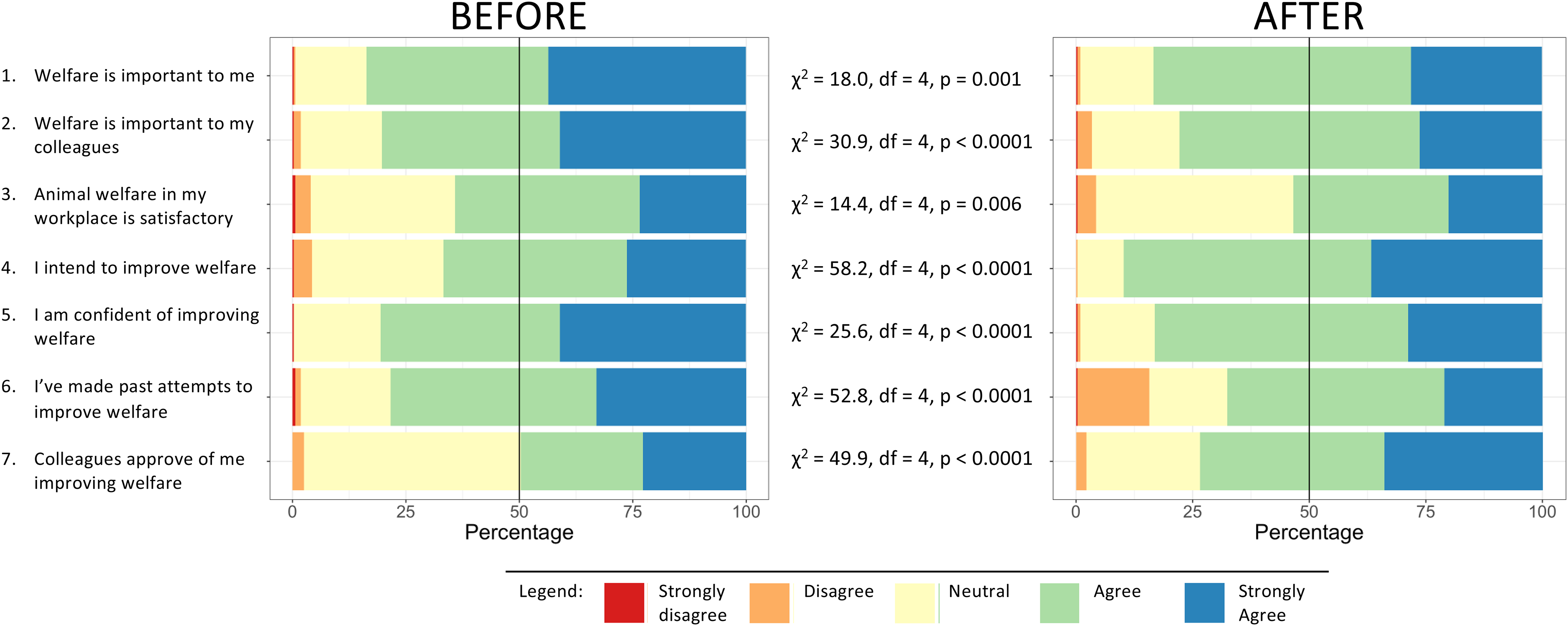
Attitudinal item responses before and after viewing a demonstration farm video. Test statistics and p-values from Stuart–Maxwell tests are reported.
Attitudes and intentions toward animal welfare and effect of demographic variables on response.
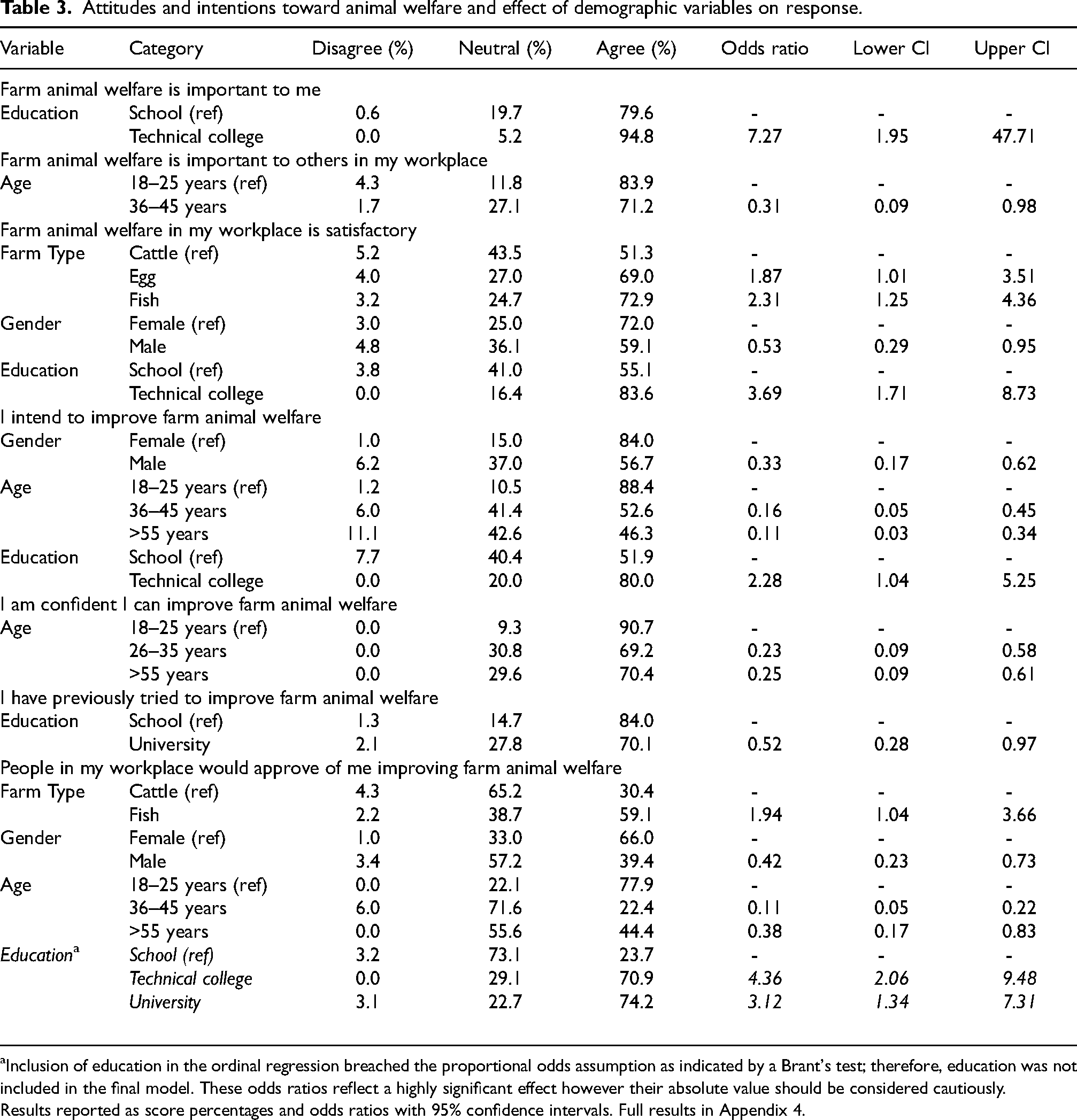
Inclusion of education in the ordinal regression breached the proportional odds assumption as indicated by a Brant's test; therefore, education was not included in the final model. These odds ratios reflect a highly significant effect however their absolute value should be considered cautiously.
Results reported as score percentages and odds ratios with 95% confidence intervals. Full results in Appendix 4.
Two-thirds of participants indicated an intention to improve the welfare of animals in their care (66.7%, n = 216; Figure 2). Intention score was more likely to be higher for women compared to men (OR: 3.0), for the youngest participants compared to those aged 36–45 years or >55 years (OR: 6.3 and 9.1, respectively), and for those who were educated at college level compared to school-educated participants (OR: 2.3; Table 3). Most (80.6%, n = 261) were confident they could make improvements, and a similar number (78.4%, n = 254) had tried to improve welfare in the past (Figure 2). Confidence was affected by participant age (Table 3).
After viewing demonstration farm videos
Attitude and intention scores significantly changed after viewing the demonstration farm materials in an inconsistent direction (Figure 2). Scores for five of the statements, “Welfare is important to me,” “Welfare is important to my colleagues,” “Animal welfare in my workplace is satisfactory,” “I am confident of improving welfare,” and “I have made past attempts to improve welfare” all shifted downward (Figure 2). In contrast, scores rose for the remaining two items, “I intend to improve welfare” and “Colleagues approve of me improving welfare.” These changes were not evident in the participants who watched the video without answering specific questions about the farm (Appendix 5).
Associations between farm characteristics
Ratings for all farm characteristics were positively correlated with all other characteristics, with three main clusters (Figure 3). “Animal physical health” was most closely correlated with worker safety, “Animal mental health” to “Trustworthiness” of the farm, and “Ability of the animal to show natural behavior” to a subcluster containing product quality and customer satisfaction. “Animal production rate” was most closely linked to product safety.
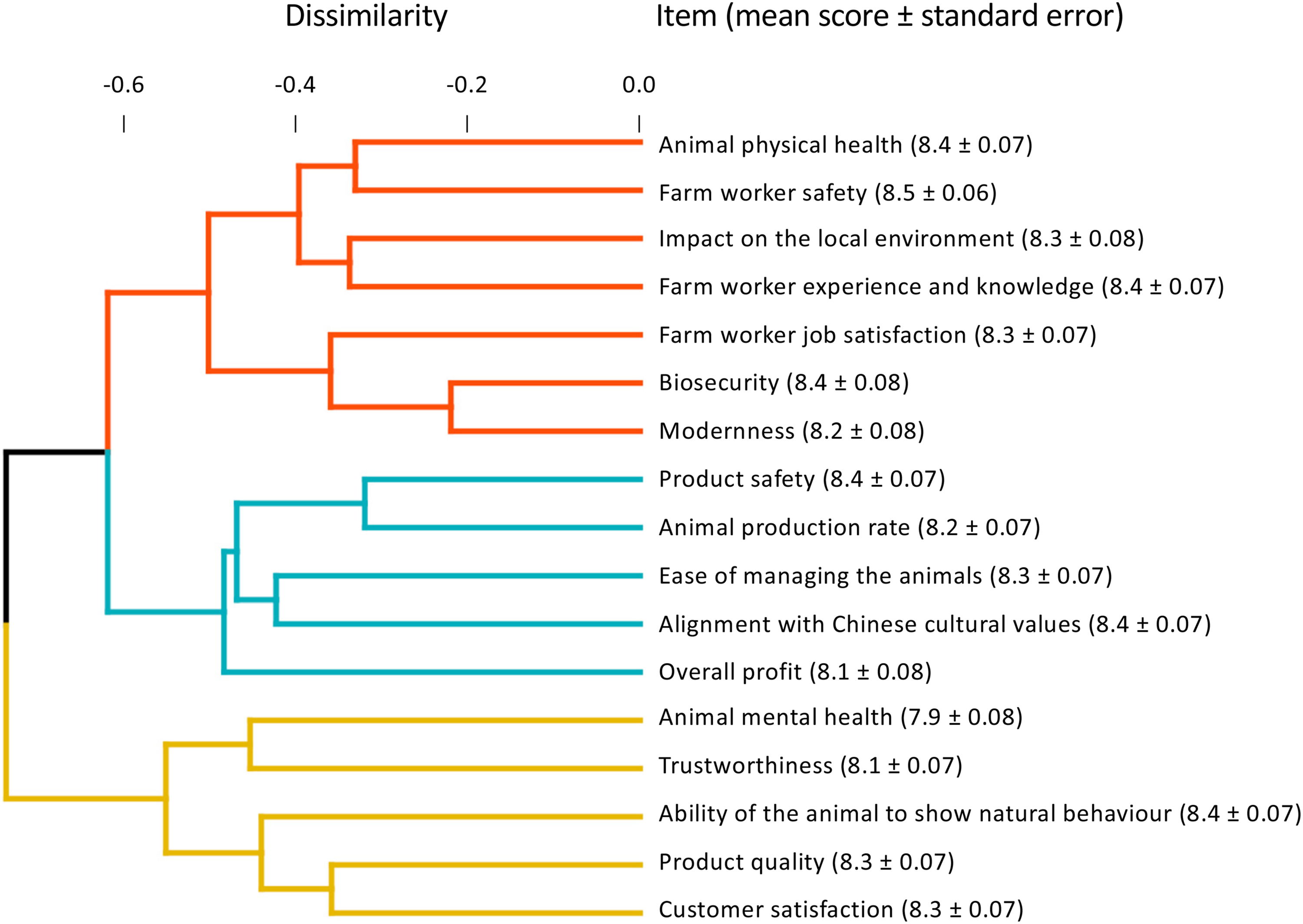
Hierarchical cluster analysis with three clusters, constructed from dissimilarity (Spearman's correlations subtracted from 1). Items connected via shorter horizontal branches are more closely related than those connected via longer branches.
Discussion
This study explored peer-to-peer modeling of farm animal welfare through demonstration farm videos as a remote training approach in three Chinese animal production industries. This study aimed to determine: (1) whether participants felt the videos were useful for learning; (2) if videos encouraged pro-welfare intentions and/or attitudes toward animals; and (3) whether participants associate high-welfare farms with other characteristics such as customer satisfaction.
Attitudes toward animal welfare and on-farm improvements
Education level
Participant attitudes toward animals were largely positive. It was expected that participants with a higher level of education would further support attitudes toward animal welfare due to a higher knowledge on animal care and management (You et al., 2014). This expectation was partially supported as participants with a technical college education, but not university graduates, placed more importance on welfare than school-educated participants, and a greater intention to improve welfare on their own farm. Although both universities and technical colleges offer important training opportunities for adult learners, differences potentially arise from syllabus variation around animal welfare concepts, or in underlying characteristics of students that select one educational avenue over another (Chen et al., 2021). Interestingly, school-educated participants were more likely than university graduates to have made past attempts to improve animal welfare, although they were less confident that colleagues would approve of them making welfare-related improvements. A large proportion of farm workers in China have very low levels of education (e.g., Zhang et al., 2002, 2022) and these results suggest the importance and value of investing in adequate training in animal welfare for all farm workers. Farm workers tend to receive lower returns on educational investments than nonfarm workers (Knight et al., 2010), therefore, with less incentive to individually pursue higher education, informal, and on-farm training may offer opportunities to address education imbalances and empower those workers with less education to improve animal welfare.
Participant age and gender
Age was influential on attitudes/intentions toward animal welfare. Younger participants generally showed more intention and confidence toward improving animal welfare and had more confidence in their coworkers' intentions and support. Younger generations may be more aware of concepts around animal welfare and aligning results have been found in surveys of the general public in China (Carnovale et al., 2022) as well as the farming community (Mazas et al., 2013) and may be more adaptable to change (Trewartha et al., 2011).
Animal welfare was considered equally important by male and female participants, but gender differences were observed for other items. Men were less satisfied with welfare standards in their own workplace but women had greater intentions to improve animal welfare and more confidence that colleagues would support them in improving welfare. Previous research suggests women (Carnovale et al., 2022) typically show more support for animal welfare than men. However, gender differences may arise in communication style as men are considered less likely to use complimentary language (Duan and Guo, 2009), possibly explaining their lower expressed satisfaction with conditions on their farm.
Impressions of the demonstration farm
Most participants rated the demonstration farm better than their own and the average farm for their industry. By and large, demo farm products were expected to be more expensive than from participants’ farms; however, higher education of any kind lowered support for this assertion. This somewhat contradicts other findings from China showing educational levels generally correlate positively with income (Su and Heshmati, 2013), and people with a higher income have been found to be less sensitive to pricing (Choi, 2016; Wakefield and Inman, 2003) and more concerned about animal welfare (You et al., 2014). Despite the perceived product expense, this did not translate into perceived product quality, with less than half of participants believing the product quality would be better than their own farms. This may be a reflection of confidence/knowledge of their own products or they may be less convinced that farming approaches and animal welfare standards impact product quality, although previous surveys in China have suggested strong perceived links in the general public between animal welfare and product quality/safety (Carnovale et al., 2022; Liang et al., 2022). Participants with higher education may have more knowledge about the relationship between animal welfare and product quality (You et al., 2014); however, in this study, university graduates were not significantly different from school-educated participants and only participants with technical college backgrounds rated product quality more highly.
Effect of the demonstration farm video on attitudes/intentions
Participants generally reported that demonstration farm videos are useful tools to learn about their industry, with support higher from the youngest participants and those with a technical college education. There was also general agreement that these resources are useful for learning about animal welfare and management on farms. This high level of acceptability is an important finding as, in many informal education initiatives, student engagement is self-driven and dropout rates tend to be high (Badali et al., 2022). Perceived value of teaching material is generally influential in how likely students are to use and find useful available resources (Chen et al., 2017). Additionally, learning from video-based media has been found to result in improved learning outcomes (Moen, 2021; Sablić et al., 2021). Importantly, video-based teaching tools support students who struggle with traditional teaching approaches (e.g., lectures and textbooks) and enable practical content to be delivered visually and asynchronously (Sablić et al., 2021), aspects that assist farm workers with lower levels of education and those who are balancing work and learning with other commitments such as a family.
However, the aim of using demonstration videos in this study was not to influence participant learning outcomes but to determine whether attitudinal changes occurred, although this process can be influenced by learning (Watson et al., 2018). Participant ratings for how important animal welfare is to themselves and to their colleagues, unexpectedly decreased after viewing the videos, as did their confidence in being able to improve welfare on their farm. Overall, however, they remained on the positive side of these sentiments, as the downward shift was largely from “strong agreement” to “agreement.” Similarly, participant satisfaction with welfare on their own farm also decreased after watching the video, as did the strength of their assertions that they had tried to improve welfare in the past. These changes could be attributed to a deeper understanding gained by participants about what animal welfare means, and what improvements are possible on a farm from their industry. Animal welfare science is a complex and multifaceted field that is relatively new in China. It is likely that the videos introduced issues or concepts that were unfamiliar to some participants, leading them to reevaluate their level of satisfaction with the animal welfare standards on their farms, and their confidence in making changes. Encouragingly, however, after viewing the video, participants indicated greater intentions for improving welfare and more confidence that their colleagues would approve of them making changes for animals on their farm. This suggests there is potential for demonstration farm videos to create an enhanced on-farm culture around animal welfare improvements.
For participants who only watched the videos without critical assessment of the farm characteristics, there was an absence of any attitudinal changes. Active learning tasks are known to engage deeper levels of learning; therefore, this could be indicative of that deeper learning not being achieved (e.g., Algurén, 2021). This has implications for remote delivery of educational initiatives as it appears the combination of materials enhanced understanding and influenced intentions/attitudes, while videos on their own lacked impact.
Associations with other farm characteristics
Good animal welfare has been associated in China with better product quality and product safety (Carnovale et al., 2021) but international studies suggest it is also perceived to be associated with a more expensive product (Sweeney et al., 2022). These relationships can identify potential barriers to, or leverage points for, improving animal welfare. Cluster analysis linked animal physical health with important aspects of the farm environment including safety, environmental impact, biosecurity, and modernness, reflecting the concept of “One Health,” which is the inter-relatedness between animal health and the health of people, communities, and environments (Lebov et al., 2017). This suggests that the links between animal health and other health and safety aspects are well-recognized by the farm employees in this study. A second cluster linked business values such as profit, product safety, and production rate, as well as “alignment with Chinese cultural values.” A third cluster contained two animal welfare indicators and consumer-related variables relevant to social license: product quality, customer satisfaction, and trustworthiness (Fernandes et al., 2021; Sinner et al., 2020; Yunes et al., 2017). Animal welfare improvements can have economic benefits for farms (Villettaz Robichaud et al., 2019). However, this structure suggests the farming community in China perceives animal welfare to have a closer relationship with consumer values than with profitability. Consumer perceptions and social license may be more useful for encouraging on-farm welfare improvements than economic outcomes, particularly as animal welfare investments do not always increase farm profitability (Fernandes et al., 2021). One limitation is that participants did not view farms of varying quality. This was not possible because of the burden it would place on participant time. Future research incorporating a range of farms would provide stronger evidence for how perceived characteristics covary in relation to each other. This is important because on-farm welfare improvements typically require investment by producers (Fernandes et al., 2021) and the pay-off for this investment is affected by customer willingness to purchase higher welfare products (Heise and Theuvsen, 2018).
Animal welfare implications
The results from this study demonstrate that video modeling of farm practices in China can affect attitudes and intentions toward animal welfare by farm staff. Participants indicated a high acceptability of demonstration farm videos for learning about their industry and the needs of animals although this was moderated by some demographic variables. Demonstration videos had no effect on attitudes/intentions when not paired with an active learning activity that required critical assessment of the farm. Therefore, similar training initiatives should carefully consider delivery approach and how best to monitor outcomes to ensure training aims are met.
Supplemental Material
sj-docx-1-oag-10.1177_00307270231173137 - Supplemental material for Use of “demonstration farm” videos to affect attitude change toward animal welfare on beef, egg, and fish farms in China
Supplemental material, sj-docx-1-oag-10.1177_00307270231173137 for Use of “demonstration farm” videos to affect attitude change toward animal welfare on beef, egg, and fish farms in China by Yifei Yang, Tianxu Liu, Danielle Nilsson, Kate Hartcher, Hao-Yu Shih, Zhong-Hong Wu, Zhong-Ying Liu, Michelle Sinclair, Xochitl Samayoa, Kate Henning and Kris Descovich in Outlook on Agriculture
Footnotes
Author's note
Michelle Sinclair, Humane and Sustainable Food Lab, School of Medicine, Stanford University, Palo Alto, CA, USA.
Acknowledgments
The authors would like to acknowledge the contribution and support of all survey participants and their employers. The authors also thank Mr Allan Lisle for his statistical advice during the data analysis.
Authors’ note
This study was assessed and approved by the Human Research Ethics Committee of the University of Queensland (#2021_HE001461).
Declaration of conflicting interests
The author(s) declared no potential conflicts of interest with respect to the research, authorship, and/or publication of this article.
Funding
The author(s) disclosed receipt of the following financial support for the research, authorship, and/or publication of this article: This research was funded as part of the Animal Welfare Standards Project by Good Ventures Foundation and Open Philanthropy.

Supplemental material
Supplemental material for this article is available online.
References
Supplementary Material
Please find the following supplemental material available below.
For Open Access articles published under a Creative Commons License, all supplemental material carries the same license as the article it is associated with.
For non-Open Access articles published, all supplemental material carries a non-exclusive license, and permission requests for re-use of supplemental material or any part of supplemental material shall be sent directly to the copyright owner as specified in the copyright notice associated with the article.
