




Abstract
The understanding of the role of using forest resources in the livelihood strategies of smallholder farmers is limited. Rural household surveys often omit this aspect. From a survey of 600 Indonesian cattle farmers, we apply the sustainable livelihood framework to investigate the role extracting forest resources has in livelihood strategies and household income. We also quantify which farmers’ characteristics impact the decision to extract them. Forest extraction appears a core livelihood strategy of farmers who rely in some way on forests, which are on average poorer. Our findings suggest that forest extraction increases with increased income diversification. Farmers who specialize as feeders in the cattle supply chain engage significantly less in that. The promotion of sustainable forest resource usage schemes, such as agroforestry or silvopastoral systems that facilitate, and support cattle breeding would maintain the supply of youngstock for feeders and contribute to sustainable future use of forest resources.
Introduction
The livelihoods of smallholders depend upon their assets, which include human-, natural-, social-, physical-, and financial capital (DFID, 1999). Cattle play a significant role in the livelihoods of the rural poor (FAO, 2021). They contribute to human capital by providing animal protein for consumption (Chaminuka et al., 2014). As natural capital, grazing areas for cattle provide ecosystem services and benefits, such as firewood, grass, and herbs (Chaminuka et al., 2014). As social capital, cattle have cultural values linked to welfare status and can be slaughtered for traditional ceremonies (Widi et al., 2014). Cattle contribute to physical capital through draught power for ploughing in crop production (Ifar, 1996). Lastly, live cattle and cattle products constitute financial capital that can be sold when cash is needed to pay for household needs, such as education and healthcare (Ifar, 1996).
In Asia, approximately 70%–95% of cattle are produced on smallholder farms in mixed crop-livestock systems, in which cattle and crop production benefit from each other, i.e., utilizing animal power and manure for crop production, and crop residues for animal feeds (Devendra and Thomas, 2002). To support crop farming, smallholders raise on average one to three cattle per farm using a cut-and-carry system to derive fodder from freely available resources, such as roadsides, field margins, and forests (Ifar, 1996; Widi et al., 2015).
It can be expected that households may have different strategies to improve their livelihoods (Dorward et al., 2009). Such strategies depend upon livelihood assets and on-farm context. Hence, livelihood strategies are often site-and-situation specific. In Southeast Asia, Minot et al. (2006) found that engagement in high-value crops, such as tea and coffee production, increased the crop income of smallholders in the Northern Uplands of Vietnam. In Cambodia, farmers’ income increased with non-farm activities run alongside crop farming and livestock keeping (Jiao et al., 2017).
Most literature on livelihood strategies often considers conventional rural activities, e.g., crop production and livestock rearing, but rarely incorporates forest extraction (Babulo et al., 2009). Forest resources are not expressively cultivated (Babulo et al., 2009). Hence, they are often omitted in rural household surveys (Nguyen et al., 2015), resulting in a knowledge gap in our understanding of their contribution to the livelihood strategies of smallholders. Therefore, this paper aims to elucidate the role of forest resource extraction in the livelihood strategies and the income of smallholder cattle farmers in Indonesia. We also examined determinants for choosing forest extraction.
For Southeast Asia, our findings serve as a relevant study case for stakeholders, such as policymakers and scientists, to consider how to enhance farmers’ livelihoods. Our results could also contribute to poverty alleviation strategies by providing valuable insights into the livelihood strategies of smallholder cattle farmers.
Conceptual framework
We applied the sustainable livelihood framework adapted from DFID (1999) to study the role of forest extraction in the livelihood strategies and the income structure of smallholder cattle farmers (Figure 1) as it has been used in numerous studies of farmers’ livelihoods in a range of contexts (Nielsen et al., 2013; Trædal and Vedeld, 2018; Wu et al., 2017 and others). Livelihood strategies refer to diverse activity choices constructed by households to cope with and improve living standards (Ellis, 1998). Dorward et al. (2009) identified three broad types of livelihood strategies pursued by poor people: hanging-in, stepping-up, and stepping-out. Hanging-in uses assets and activities to maintain and protect the current levels of livelihood in the face of perturbations, such as shocks, trends, and seasonality (Dorward et al., 2009). Stepping-up invests assets to expand current activities to increase production and income to improve livelihood, such as the accumulation of reproductive cows (Dorward et al., 2009). Stepping-out is the engagement of the household in accumulating assets to provide a foundation for moving into different activities that require initial investments leading to higher or more stable returns (Dorward et al., 2009). An example is the accumulation of cattle as savings, which can then be used to finance children's education, purchase transport vehicles, or fund migration.
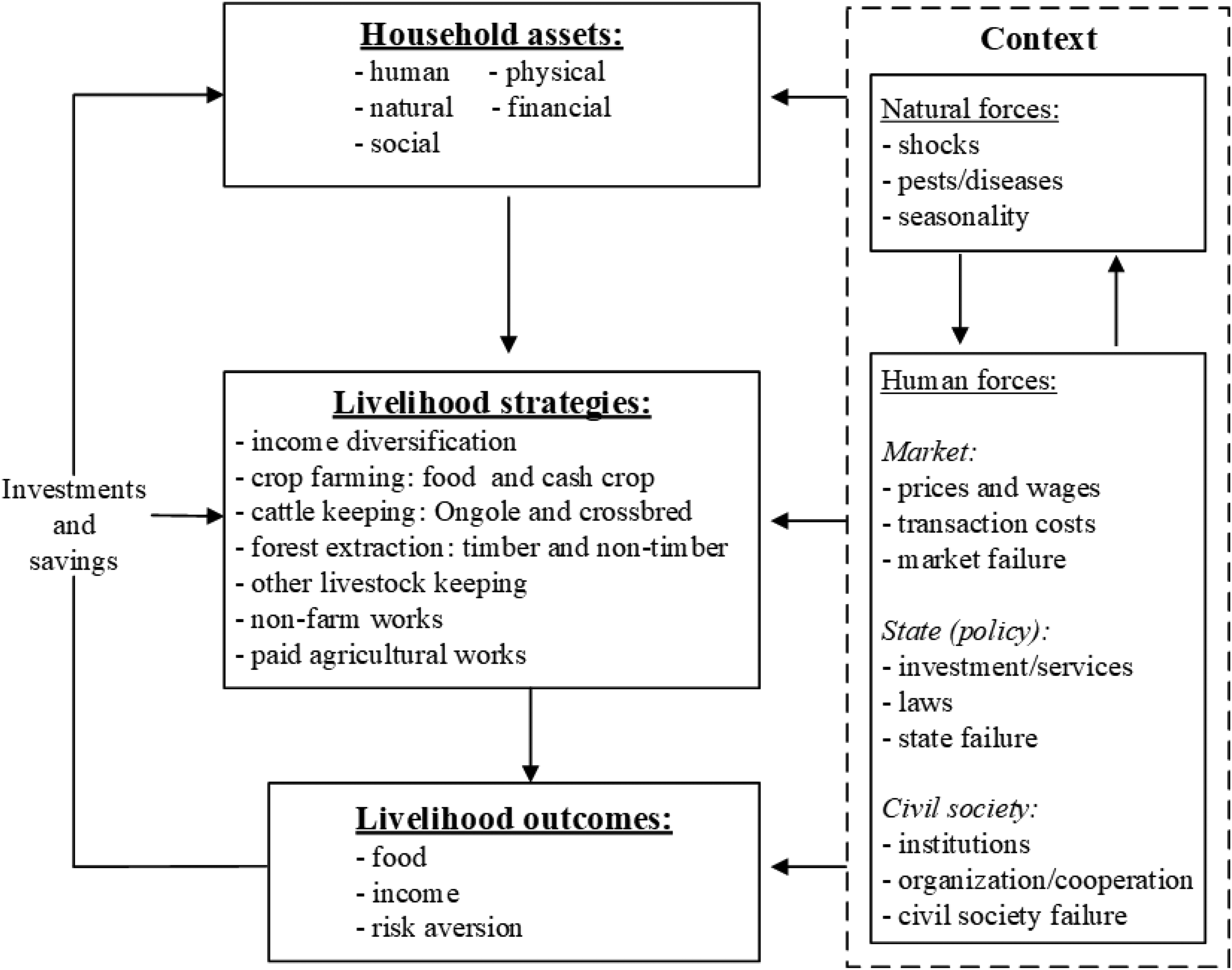
Livelihood framework of Indonesian cattle smallholders. Source: Authors adapted from Jiao et al. (2017).
The livelihood framework primarily connects three main elements: households’ asset endowment, livelihood strategies, and livelihood outcomes (DFID, 1999). Depending upon the asset endowment in terms of human-, natural-, social-, physical-, and financial capital, a household can allocate its assets to a wide range of strategies to generate livelihood outcomes, e.g., food, cash income, and risk-coping capacity (Nguyen et al., 2015). Farmers in rural areas may rely on crop farming to produce food for home consumption, complemented by keeping one to two cattle as a hanging-in strategy. They may also grow cash crops, i.e., tobacco, to increase crop income as a stepping-up strategy. Farmers’ engagement in forest resource extraction may contribute to hanging-in if the income from crop production and other sources does not suffice (Nguyen et al., 2015). Each livelihood strategy selected by the households leads to livelihood outcomes (Nguyen et al., 2015). Households can be poor or even severely poor if they lack the assets to generate sufficient income, or because of limitations on their ability to make use of their assets (Jiao et al., 2017).
Contextual factors, including natural- and human forces, can impact asset endowment, livelihood strategies, and livelihood outcomes (Jiao et al., 2017). For example, natural calamities, such as floods and landslides can destroy cropland, whereas weather shocks and pests may lead to crop failures. Likewise, prices, potential for wage-earning in off-farm jobs, accessibility to credits needed for investments, and institutions may directly influence households’ strategies to generate their livelihood outcomes. The result can affect asset endowment, for instance, through investments and savings.
Material and methods
Data collection
The data for this study has been collected in the Indonesian province of East Java, where interactions between cattle keeping and forest usage are widespread. Data was collected from 600 farmers in 2017 in the Bojonegoro district of the Indonesian province of East Java. This district hosts the largest forests (96,000 ha) in East Java, covering about 40% of its land area (GoB, 2016). The district is also a national cattle production centre (cattle population approximately 200,000 heads) (BPSJ, 2017).
The sample farmers were selected using a three-stage procedure. Firstly, six sub-districts were selected based on cattle density 1 : three with high cattle density and the other three with low cattle density. As the numbers of farmers differed widely between sub-districts, sample size in each sub-district proportional to the total number of farmers there was determined. In consultation with the sub-district officers, 4–15 villages per sub-district were chosen on the accessibility and concentration of cattle farmers. Next, disregarding the size of the village in each sub-district, an equal number of sample farmers per village were interviewed starting with a farmer nominated by the village officer. Finally, as we studied smallholder cattle farmers that represent about 90% of the farmers in Bojonegoro, the sample farmers were selected if: (a) they had been keeping cattle for at least 1 year, and (b) they were operating less than one hectare of agricultural land.
With research approval from the local Government of Bojonegoro, individual interviews with the selected farmers were conducted by means of questionnaire. Farmers were asked about socio-economic characteristics of the farm household, its income structure and sources, cattle production characteristics, policies related to beef cattle production, and the extent of its teak forest extraction.
Empirical analysis
The role of extraction of forest resources in the livelihood strategies and the income of smallholder cattle farmers was studied. To achieve this objective, four aspects were analysed. As first step of the analysis, t-tests were used to compare socio-economic characteristics of the farm households and their livelihood strategies between farmers who extract timber or non-timber forest products (NTFPs) and those who do not, to investigate differences in household characteristics and livelihood strategies. The conceptual framework in Figure 1 explains that livelihood strategies refer to household activity choices to cope with and to improve their living standards. Thus, farmers’ livelihood strategies consist of diverse activities and income diversification, such as crop farming, cattle farming, forest extraction, other livestock keeping, non-farm employment, and paid agricultural works.
Income diversification was considered as one measurement of farmers’ livelihood strategies because literature shows that rural households diversify their income sources as a strategy to minimize risks (Abdulai and CroleRees, 2001). An index of farmers’ income diversification was created, which was measured using the inverse of Herfindahl-Hirschman index as proposed by Ellis (2000). Due to its straightforward interpretation, a great deal of literature has used such an index to study income diversification of rural households in different contexts (Jiang and Han, 2018; Kassie, 2017; Tesfaye et al., 2011). The income diversification index calculated for each farmer was based on all relevant income sources:

For measuring crop farming activity, the variables of cropping intensity, an index for crop diversity, and the amount of cash crop production, i.e., tobacco yield (kg) were included. Cropping intensity (Turner and Doolittle, 1978) was used to estimate the total production of various crops grown by farmers over the past 12 months. The total production of each crop grown by a farmer was converted from kg/ha/year to kcal/ha/year using figures, such as those from the Indonesian Ministry of Health (MoH) (BPS, 2018; MoH, 2018).
The crop diversity index was used to quantify the type of crops grown by farmers towards assessing the importance of crop diversification within farmers’ strategy in attaining their livelihoods. Adjimoti and Kwadzo (2018) observed that crop diversification is an important livelihood strategy to reduce food insecurity, increase farm income, conserve soil and water resources, and alleviate poverty. To estimate the crop diversity index, the inverse of the Herfindahl-Hirschman index (Ellis, 2000) was adopted and also used to measure the income diversification index.
For measuring cattle farming activity, several variables were used, such as keeping Ongole, keeping crossbred cattle, the cattle farming system feeders, and mixed breeder-feeders 2 . Keeping Ongole means in our context that a farmer who had kept only Ongole cattle for the last ten years. Literature shows that keeping Ongole and crossbred cattle occurs on the Indonesian island of Java because of their big body size and higher market values than the traditional Ongole cattle, although crossbred cattle require high animal fodder and extra supplementary feed (Widi et al., 2015). Likewise, farming system feeders and mixed breeder-feeders are parts of farmers’ livelihood strategies. Literature shows that feeders are more market-oriented than breeders and mixed breeder-feeders (Nugroho et al., 2022). Feeders are farmers who rear young bulls for about one year (from 250 to 350 kg live weight) by utilizing moderate inputs, such as concentrates (Nugroho et al., 2022).
For measuring forest extraction activity, the variables of extracting diverse timber, extracting diverse NTFPs, extracting frequent timber, and extracting frequent NTFPs were used to assess extent of forest resource extraction. Farmers were classified as extracting diverse timber if extracting at least four out of six resources from the teak forest, such as fuelwood, charcoal, teak wood, teak roots, teak leaves, and teak branches. Farmers were classified as extracting diverse NTFPs if extracting at least three out of five non-wood forest products, such as herbs, grasshoppers/worms, forestland, grass, and use of the forest for cattle herding. Farmers were classified as extracting frequent timber if they scored at least three of these (used from time to time) on the frequency 3 of fuelwood and teak branches extraction, as the extraction frequency of these two forest products was higher than the average score. Farmers were classified extracting frequent NTFPs if they scored at least three (used from time to time) on the frequency of forest grass extraction. Forest grass only was considered in the analysis of the extraction frequency of NTFPs, as there were too few observations for the remaining NTFPs to draw robust conclusions.
As the second step of the analysis, income portfolios were compared (Ellis, 2000) between farmers who extract forest and those who do not, to derive information about the difference in income sources of farmers. For this, the means of total household income, income sources, and the shares of income sources in total household income between the two differing group of farmers were compared using t-tests. Income sources were defined as the actual earnings (in Rupiah) derived by farmers from a number of income-generating activities over the past 12 months. The shares of income sources in total household income are the proportion of each income source in total household income. Details of total household income and each income source are described in Supplemental Table S2.
As the third step of the analysis, the prevalence of poverty between farmers who extract forest and those who do not was compared using Chi-square tests, toward designing the necessary support measures to eradicate rural poverty. For this, a total of 14 poverty indicators were used, as proposed by the Indonesian Ministry of Social Affairs (MoSA, 2012) to identify which poverty indicators were predominant in the two differing groups 4 . Farmers were identified as poor if they showed at least five poverty indicators. Details of the poverty indicators can be found in Supplemental Table S3.
As the fourth step of the analysis, the factors associated with forest extraction were examined toward identifying which factors substantially underlie forest extraction for better targeting by the Government and towards developing strategies to improve farmers’ livelihoods. Towards this, a logistic regression model was used (Verbeek, 2012):

Table 1 summarizes the expected relationships between forest extraction and several key variables of livelihood strategies. We expect that forest extraction associates positively with income diversification, keeping Ongole cattle, and farming system mixed breeder-feeders. We expect that forest extraction is associates negatively with cropping intensity, crop diversity, tobacco yield, keeping crossbred cattle, and farming system feeders.
Expected relationships between selected key variables of livelihood strategies (independent variables) and forest extraction (dependent variables).
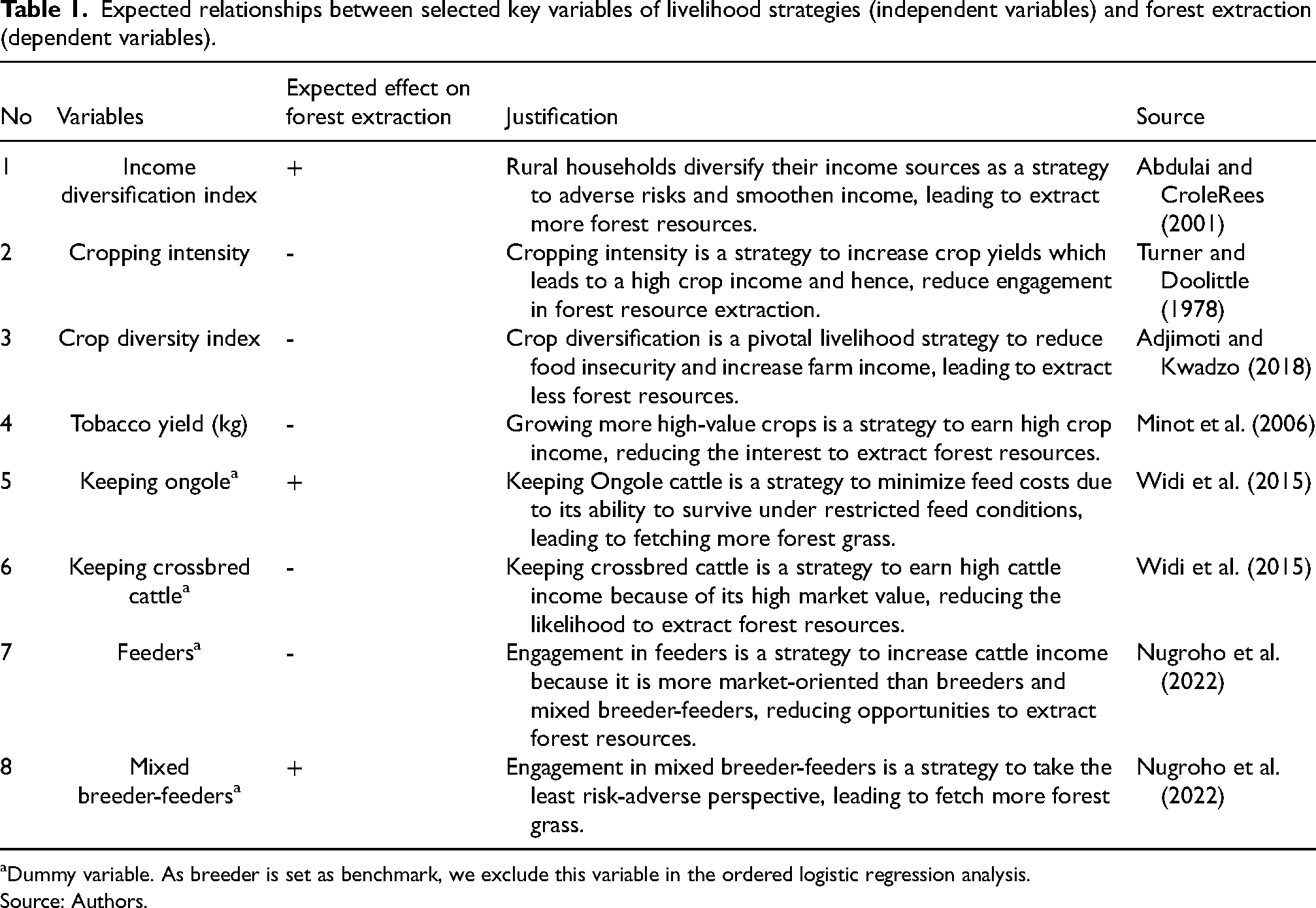
Dummy variable. As breeder is set as benchmark, we exclude this variable in the ordered logistic regression analysis.
Source: Authors.
Results
Characteristics of farm households
Of the 600 cattle farmers surveyed, 43% participated in forest extraction and the remaining 57% did not (Table 2). Forest extractors were significantly poorer and lived further away from forests compared to non-forest extractors. Regarding livelihood strategies, forest extractors significantly diversified income sources and crops, had higher cropping intensity and kept more Ongole cattle than non-forest extractors. Forest extractors significantly extracted more diverse and frequent forest resources than non-forest extractors. However, forest extractors kept significantly fewer crossbred cattle and were less engaged in feeders than non-forest extractors.
Mean comparison of farm characteristics and livelihood strategies (standard error between brackets).
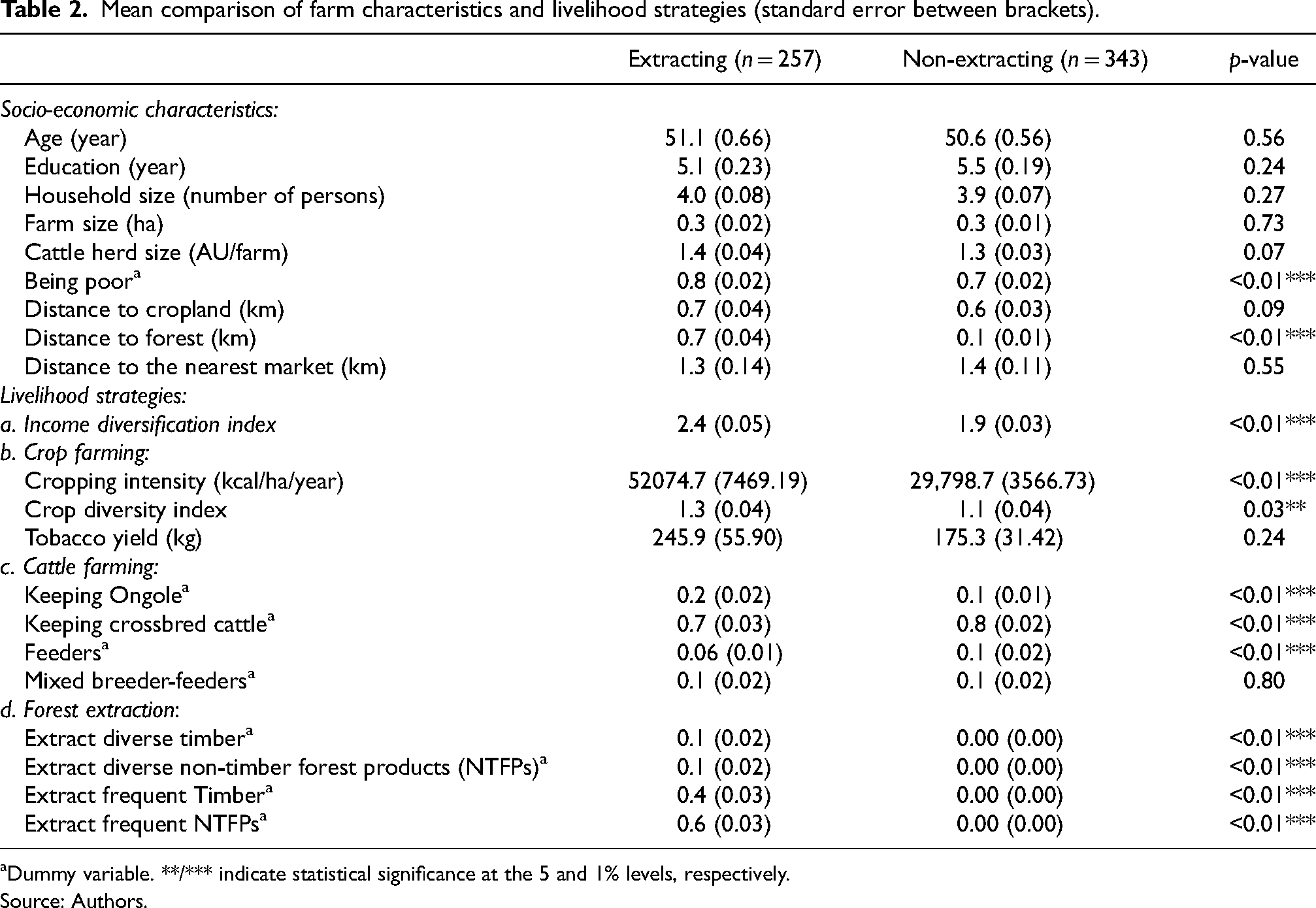
Dummy variable. **/*** indicate statistical significance at the 5 and 1% levels, respectively.
Source: Authors.
Farmers’ income portfolios
Forest extractors had a significantly higher total household income, forest income, and share of forest income in total household income than non-forest extractors (Table 3). However, forest extractors had significantly lower non-farm income and income shares from crop farming, cattle keeping, and non-farm employment than non-forest extractors.
Mean comparison of total income, income sources, and share of income source in total household income (standard error between brackets).
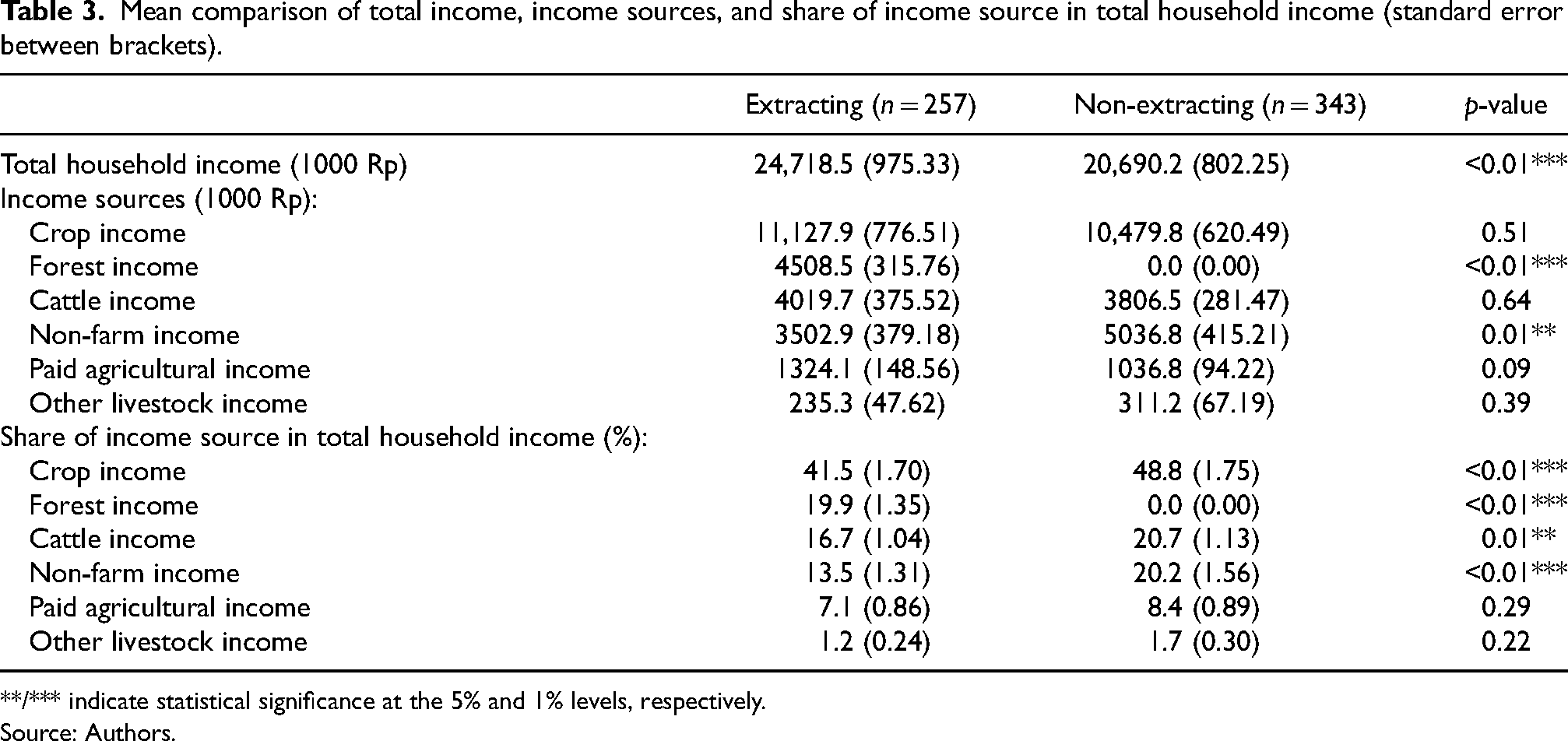
**/*** indicate statistical significance at the 5% and 1% levels, respectively.
Source: Authors.
The prevalence of poverty among farmers
Table 4 presents the prevalence of poverty among forest extractors and non-forest extractors based on the poverty indicators. Overall, few differences were found regarding the poverty indicators between forest extractors and non-forest extractors. However, forest extractors with a house made of low-quality wood or board were significantly higher than non-forest extractors. Forest extractors who obtained drinking water from wells or rivers were significantly lower than non-forest extractors, though the proportion was minor. Forest extractors significantly used more fuelwood, charcoal, or kerosene as fuel for cooking compared to non-forest extractors.
Proportion of poor farmers with forest extraction and without forest extraction based on the poverty indicators.
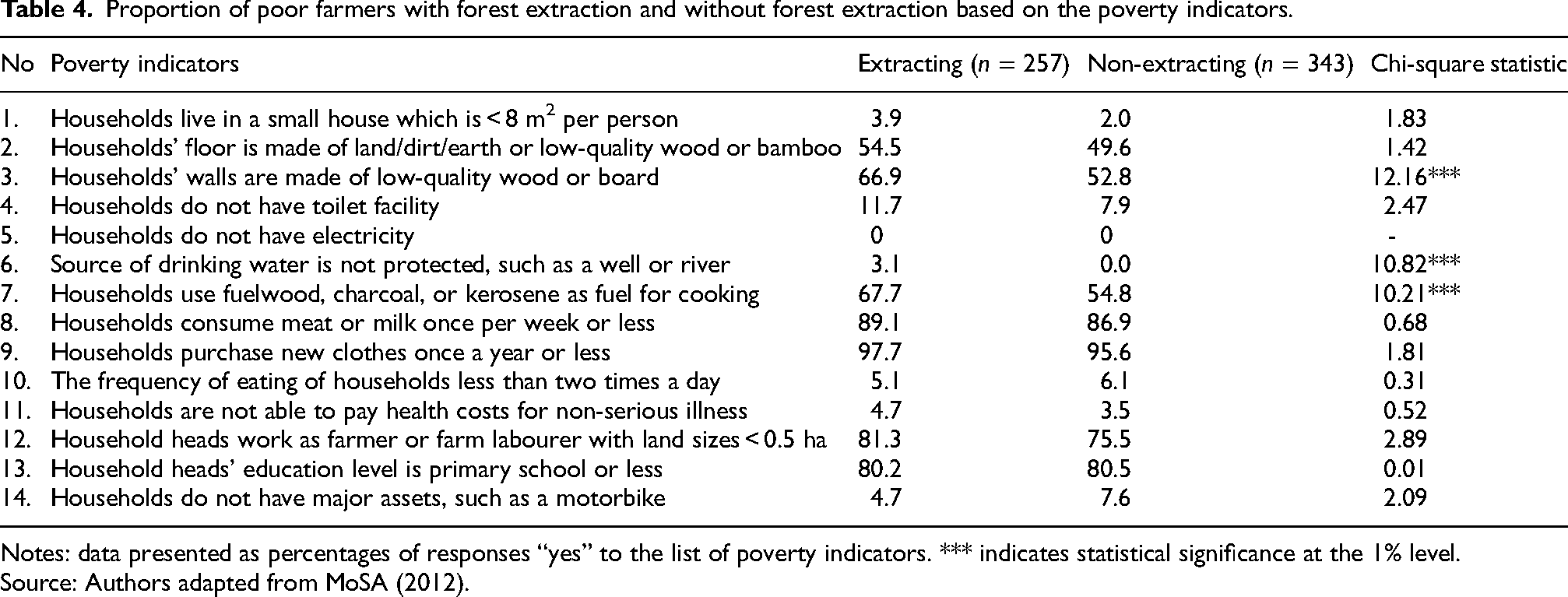
Notes: data presented as percentages of responses “yes” to the list of poverty indicators. *** indicates statistical significance at the 1% level.
Source: Authors adapted from MoSA (2012).
Determinants of forest extraction
Table 5 presents the factors associated with farmers’ likelihood to engage in forest extraction as formulated in equation (2). Farm size, distance to forest, and income diversification were significantly and positively associated with farmers’ likelihood to extract forest resources. Farmers with relatively bigger farms lived further away from the forests, and more diversified income sources are 15.7%, 43.1%, and 10.6%, respectively more likely to extract forest resources. Feeders were significantly and negatively associated with farmers’ likelihood to extract forest resources. The marginal effects show that feeders were 14% less likely to extract forest resources.
The factors determining farmers’ likelihood to extract forest resources.
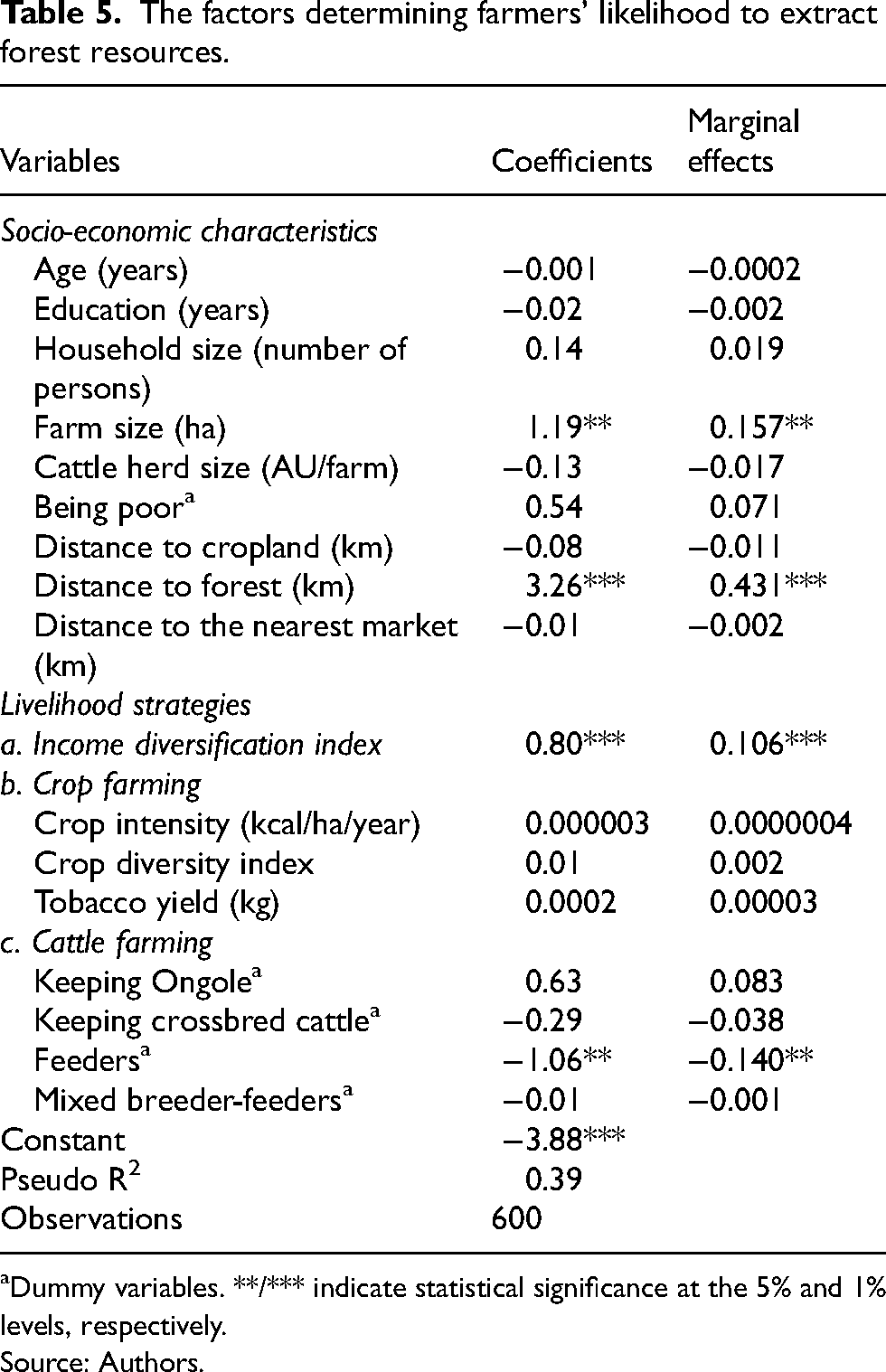
Dummy variables. **/*** indicate statistical significance at the 5% and 1% levels, respectively.
Source: Authors.
We created a hypothesis of selected key variables of livelihood strategies that determine forest extraction, as shown in Table 1. Among the eight livelihood strategies, only two variables, i.e., income diversification and feeders met our expectations, whereas the remaining six variables had no significant effects on the extraction of forest resources (Table 6). As income diversification can mainly be achieved via the diversification of the agricultural activities of the farm, this will also result in a decrease in peer pressure and competition among farmers which has been found to improve income levels (Wardhana et al., 2021) as well as their resilience to cope with multiple shocks (Ansah et al., 2021).
Summary of results on the selected key determinants of forest extraction.
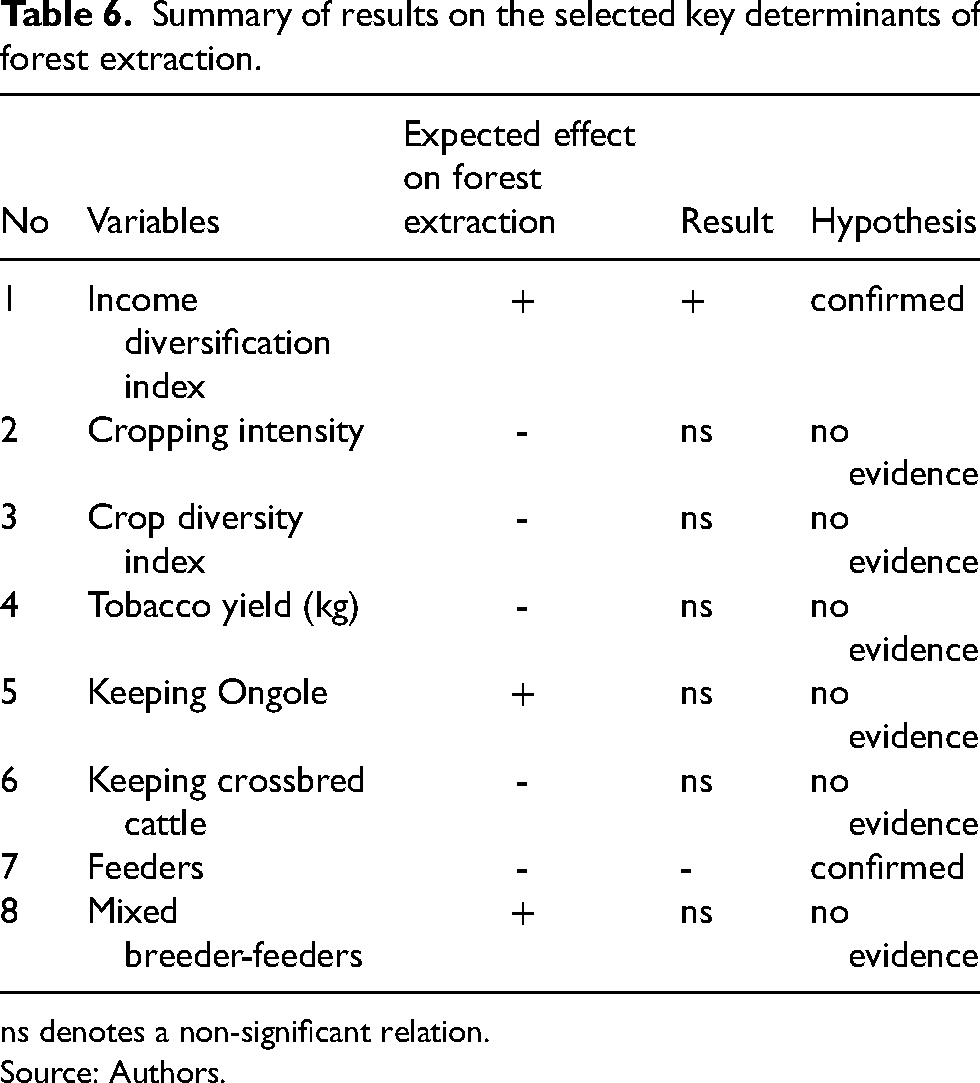
ns denotes a non-significant relation.
Source: Authors.
Discussion
Table 2 highlights that according to the official definition of poverty proposed by the MoSA (2012), forest extractors were significantly poorer than non-forest extractors, although they had a higher total household income than non-forest extractors (Table 3). This finding sounds counterintuitive but indicates that the non-monetary measurement of poverty extends beyond income in this situation. Given that forest extractors have an average extra income of 4.5 million rupiahs derived from forest use (Table 3), this extra income was not used to overcome poverty indicators, such as households’ walls made of low-quality wood, source of drinking water is not protected, and the use of fuelwood as fuel for cooking (Table 4).
As highlighted in Table 4, forest extractors having a house made of low-quality wood and using fuelwood as fuel for cooking are significantly higher than non-forest extractors. This is probably because forest extractors do not use forest products, i.e., teak wood for building or renovating their house, while non-forest extractors can afford to purchase better quality wood for building their house. Of the 257 forest extractors, approximately 70% used fuelwood and charcoal as fuel for cooking. The reason may be that forest extractors can’t afford to purchase commercial fuel, such as liquefied petroleum gas (LPG), although the Indonesian Government has instigated the national fuel conversion programme since 2007 to convert domestic kerosene users to LPG for cooking (Thoday et al., 2018).
Forest extractors live significantly farther away from forests than non-forest extractors (Table 2), contrary to the theory that suggests that greater distance to the forest reduces interest in extracting forest resources because of high transaction costs for extracting resources (Trædal and Vedeld, 2018). The reasons are unknown. However, the difference in average forest distance between farmers in both groups was only 0.6 km and hence, does not make a difference economically.
Regarding livelihood strategies, Table 2 shows that forest extractors had a significantly higher diversity of income sources and crops and higher cropping intensity compared to non-forest extractors, supporting the findings in Table 5. The reasons may be that forest extractors diversify more in order to stabilize their income and food stocks and the potential risks to their income created by shocks to their amounts harvested or to their selling prices, as was also reported by Abdulai and CroleRees (2001). Mango et al. (2018) suggested that farmers who grow more than one crop species will have options to manage price and production risks better than less diversified crop farmers.
Forest extractors keep significantly more Ongole but fewer crossbred cattle than non-forest extractors (Table 2). The reasons may be that farmers opt for keeping Ongole over crossbred cattle because of the ability of this breed to survive under restricted feed conditions, as was observed by Widi et al. (2015). Hence, those farmers could choose to fetch forest grass as source of fodder for Ongole cattle to minimize feed costs. Table 2 shows that forest extractors choose significantly less often to be feeders than non-forest extractors which supports the finding in Table 5. This is plausible because feeders are more market-oriented and use more inputs in their farms than breeders and mixed breeder-feeders.
Table 3 shows that farmers extracting and not extracting forest resources have distinct livelihood strategies. However, because of the limited farm size of an average of 0.3 ha (Table 2), farmers from both groups engage in subsistence crop production that is not sufficient to meet their livelihood needs. For forest extractors, forest was the second most prominent income source, contributing about 20% of total household income. Forests are important for forest extractors, serving as inputs into household production or consumption activities, such as an alternative (new) agricultural land and providing resources that can be sold in the market as observed by Kamanga et al. (2009). However, cattle and non-farm employment are important for non-forest extractors as they may be more market-oriented, and hence, not dependent on forest resources.
Considering that we obtained only two of the expected signs (i.e., income diversification index and feeders) and the remaining variables do not appear to have a significant effect, we outline pathways for future research which might pursue alternative frameworks and research designs to uncover additional insights of the relationship between smallholder production of cattle and other animals and the extraction of forest resources. One major extension would be to measure the dependent variable of forest extraction more comprehensively as any socio-economic analysis of that matter will be best if the variable of interest is measured in the best possible way. Due to limitations in time and funding, we could only measure the subjectively reported typical frequency of the farmer's extraction of forest resources. A logical next step would be to actually record the frequency and duration of forest usage per farmer per day or week either as cross-section or as a time series. The collection of that data will, of course, need much more time and effort. Ideally also the types and amounts of extracted resources would be recorded together with an objective measurement of such temporal variables.
Given such improved measurement, alternative research designs might clarify the socio-economic as well as the ecological conditions and implications forest extraction has, e.g., which information and training ensure sustainable extraction (Apipoonyanon et al., 2020). This improved understanding would facilitate the development of economically and ecologically sustainable forest usage systems which provide the basis for resilient farmer livelihood and the preservation of untouched natural forests in Southeast Asia.
Second, future research might clarify and categorize the ways in which the specific structure of the underlying agroforestry and silvopastoral system (Cubbage et al., 2012; Jose et al., 2019) affects resource extraction and how the various types of systems can be optimized. Third, another important step to take would be to quantify the importance of the food security situation of the farm household (potentially in relation to its other socio-economic characteristics) for determining forest extraction intensity and diversity as a strategy to cope with natural and economic shocks threatening the household's food security (Ansah et al., 2021). Last, future research might make an effort to collect comprehensive data on to what extent sudden natural shocks, such as pests, diseases or extreme seasonality—likely to become magnified by climate change - may affect the extraction of forest resources.
Conclusions
This study shows—using the sustainable livelihood approach—that forest resource extractors and non-extractors pursue differing strategies to attain their livelihoods. Crop farming appears to be the most important livelihood strategy for all farmers. For forest extractors, income generated from forest resources occupies the second largest share (20%) in household income, whereas cattle income is third (17%). Hence, forest extraction is one of the core livelihood strategies for those farmers, who are on average poorer than non-forest extractors. This confirms Vedeld et al. (2007) who found that omitting forest income from calculations of household income results in biases in the livelihood strategy analysis and rural poverty assessment.
Creating an agro-cluster in the region which establishes a sustainable silvopasture system (Jose et al., 2019; Plieninger and Huntsinger, 2018) is likely to not only help reducing poverty among forest-extracting farmers, those economic benefits are also expected to spill over to farmers in the region in general (Wardhana et al., 2017) by fostering increased cooperation between farmers (Wardhana et al., 2020). Moreover, they will create multiple ecological benefits (Cárdenas et al., 2019) and increase the resilience of farm households (Ansah et al., 2021). If the food produced from such a sustainable system would be marketed via newly established geographical indications, farmers would be able to realize higher selling prices while the resulting diversification of food supply would create value added for consumers (Lambarraa-Lehnhardt et al., 2021).
Our findings have demonstrated that the extraction intensity of forest resources increased with increased income diversification. If all farmers were to diversify their income through forest extraction to ensure their livelihoods, forest productive capacity would soon be exceeded. That would eventually lead to unsustainable resource use that would create conflicts between forest authorities and forest extractors, which often occurs in many state-owned forests in Java (Maryudi et al., 2016). However, restricting access to forest resources may deprive the livelihoods of forest extractors especially the poor, as observed by Babulo et al. (2009). Therefore, the promotion of sustainable forest resource extraction, for example, through agroforestry may be one way to accommodate both issues. We suggest further research to assess sustainable pathways of forest extraction in the Southeast Asian context.
Our findings have demonstrated that the extraction of forest resources decreases with increased engagement in feeders. This is plausible, as forests have been reported to mostly be used by marginal farmers (Babulo et al., 2009), while more active feeders integrate farmers more into economic markets and reduces their need to depend on forest resources. So feeders are distinct with regards to the use of forest resources, as they use less forest resources compared to breeders and mixed breeder-feeders. On the contrary, breeders are more subsistence farmers who use more forest resources than feeders, and thus, breeders are more likely to be forest extractors. However, feeders and breeders are interdependent farming systems, in which feeders still rely on breeders to have youngstock. We suggest reformulating the existing use and access regulation to forest resources in a way that cattle breeding is facilitated and supported, such as through silvopastoral systems (Cubbage et al., 2012; Jose et al., 2019). This would maintain the supply of youngstock for feeders in the long-run and contribute to the sustainable use of forest resources.
During the gathering of primary data we carried out, it was not feasible to measure the amounts of forest resources extracted by each farmer. Therefore, our data does not allow to analyze any extraction quantities. 5 Time and financial limitations of our research project only allowed us to gather one cross-sectional dataset consisting of 600 observations and reported typical usage frequency. Asking farmers about the amount of forest resources they extracted, say, in the course of the last 6 or 12 months would have resulted in very imprecise measurements of these amounts. As this self-reported information would have been plagued with immense measurement errors—which might actually be even larger than the quantity actually extracted—they would be of very small usefulness for scientific analysis as they would either distort results or yield actually wrong results. Hence, we measured for each farmer only the typical frequency of her forest resource extraction. That is information that is much less complex for the respondents to remember and has a much smaller measurement error. We recommend that future research will collect complementary longitudinal measurements of forest extraction intensity so that the highest measurement standards are met concerning the variable of interest.
Supplemental Material
sj-docx-1-oag-10.1177_00307270231161652 - Supplemental material for The role of forest extraction in the livelihood strategies of Indonesian smallholder cattle farmers
Supplemental material, sj-docx-1-oag-10.1177_00307270231161652 for The role of forest extraction in the livelihood strategies of Indonesian smallholder cattle farmers by Eko Nugroho, Rico Ihle, Simon J Oosting and Wim Heijman in Outlook on Agriculture
Footnotes
Acknowledgements
The first author wishes to acknowledge financial support from the Indonesia Endowment Fund for Education (Lembaga Pengelola Dana Pendidikan/LPDP) scholarship. We thank the Indonesian forest authority, Perhutani, the Bojonegoro Government, and its livestock service agency, for granting a research permit and supporting the survey. We also wish to thank an anonymous reviewer for providing constructive criticism on earlier version of this article.
Declaration of conflicting interests
The author(s) declared no potential conflicts of interest with respect to the research, authorship, and/or publication of this article.
Funding
The author(s) disclosed receipt of the following financial support for the research, authorship, and/or publication of this article: This work was supported by the Lembaga Pengelola Dana Pendidikan (grant number PRJ-2738/LPDP/2015).

Supplemental material
Supplemental material for this article is available online.
Notes
References
Supplementary Material
Please find the following supplemental material available below.
For Open Access articles published under a Creative Commons License, all supplemental material carries the same license as the article it is associated with.
For non-Open Access articles published, all supplemental material carries a non-exclusive license, and permission requests for re-use of supplemental material or any part of supplemental material shall be sent directly to the copyright owner as specified in the copyright notice associated with the article.
