



Abstract
To determine whether a farmer’s accessibility predicts the delivery of extension services, this study used banana Xanthomonas wilt (BXW) disease-management advisory as a typical case with which to collect extension-delivery information from 690 farmers, distinguished by their respective accessibility. Cost–distance analysis was applied to define each farmer’s accessibility. The results revealed that a farmer’s accessibility does not predict extension delivery to that farmer in all forms of the examined extension parameters. Significant factors contributing to the delivery of extension services included BXW incidence and membership in Twigire Muhinzi groups. Given the results of this paper, I argue that the nature of the advisory and the type of farmers’ networks are more predictive factors than physical proximity. The findings of this study support the argument that the group-based extension approach is more effective; therefore, the Twigire Muhinzi initiative is recommended as a suitable model for delivering agricultural advisory services. The absence of a significant association between extension delivery and distance (accessibility) suggests that extension agents do not follow the first-reached, first-served rule but instead follow the problem-solving-based approach.
Introduction
The importance of agriculture as a food source for the world population and the primary economic source in most sub-Saharan African countries has always compelled involved parties to invest more for its advancement by developing and transferring innovations (Traxler, 1992). Agricultural extension, dating from 1800 BC (Halim et al., 1998), plays a significant role in making new technologies visible, available, facilitating learning, and ensuring the proper use of indigenous knowledge (Anandajayasekeram, 2008). Extension agents are the main sources of knowledge supporting farmers in making informed decisions about agricultural management (Assefa et al., 2014; Anderson and Feder, 2004). This has been the formal way to disseminate appropriate information to farmers on new technologies and, thus, to foster sustainable agricultural management (Baloch and Thapa, 2018).
Despite the substantial efforts put into improving the agriculture sector, both by governments and stakeholders, agricultural production is still undergoing significant yield gaps in most East and Central African countries (Leitner et al., 2020; Clay and King, 2019). This has been attributed partly to the failure of agricultural extension services. On the other hand, studies present challenges hindering extension systems from delivering to their full potential. For example, farmers’ natural and socioeconomic settings (Bernet et al., 2001), farmers’ heterogeneity (Hammond et al., 2020), the complexity of agricultural systems (McCampbell et al., 2018), institutional settings (Lamprinopoulou et al., 2014), limited resources, the capacity of extension agents, and stakeholders from different backgrounds needing to cooperate (Esparcia, 2014) are listed, among others, as bottlenecks of extension services delivery.
Scientists have come up with suggestions to reorganize agricultural extension systems, both for effective adoption of improved technologies and to align with global development (Sewell et al., 2017; Nkonya, 2009; Qamar, 2005). From this viewpoint, agricultural extension has changed from a technological approach to a systemic approach through a series of approach adjustments (Wigboldus et al., 2016). Furthermore, a significant progressive shift in views of the farmer’s role in the process of developing and scaling agricultural innovations has occurred, from the farmer as an adopter of technologies to the farmer as a partner and part of the innovation network (Schut et al., 2014). Many studies have been conducted to understand the bottlenecks hindering the effective delivery of extension services (Olorunfemi et al., 2020; Amsalu and De Graaff, 2007; Kidd et al., 2000).
What has escaped the attention of scientists, however, is how the distance to farmers and farmers’ accessibility are likely to influence the effectiveness of extension service delivery. A farmer’s location and the distance covered by the extension agent to the farmer play evident, important roles in extension service delivery (Oyegbami, 2018). Furthermore, in most cases, extension agents are limited in number and resources, which make it difficult for them to reach all farmers (Baloch and Thapa, 2018; Vouters, 2017). Although agricultural activities are strongly associated with geographical location, the spatial dimension has not yet been discussed within the Agricultural Knowledge and Information System (AKIS). Borrowing from the theoretical argument from economic geography on geographical proximity effects, extension services may be delivered first to the nearest farmers who are more accessible than others are. Another view is that the development of information and communications technologies, such as the increasing saturation of the internet, smartphones, and social media, has brought the idea of “death of distance” as a way of abating the relevance of geographical proximity (Rietveld and Vickerman, 2004). However, much of the economic geography literature deals with western industrial clusters or well-established agricultural clusters in western countries (see, e.g., the clusters in Ayrapetyan and Hermans (2020), and Abbasiharofteh and Dyba (2018)). I argue that the context of smallholder farmers in developing countries should be regarded as a particular case for which physical interactions are (even) more significant. For example, mobile phone ownership and use are still low among this group (Forenbacher et al., 2019), probably because it is positively associated with income, and smallholder farmers have low income (Sekabira and Qaim, 2017). In this case, the possibility of virtual communication also is limited; thus, physical interactions are still significant. Hence, it is very crucial to understand how proximity, in terms of accessibility, is likely to influence extension services delivery in the context of smallholder farming, such as in Rwanda.
To bridge this knowledge gap, I first define the factor of a farmer’s accessibility using cost–distance analysis. This must take into consideration potential geographical barriers to accessibility, such as topography, physical features (e.g. bodies of water or forests), the physical distance, and road networks. We used the case of banana Xanthomonas wilt (BXW) to collect information about extension visits, BXW management training, and the information source. BXW is a fast-spreading banana disease that is easily transmitted, has no cure after infection, and can cause 100% farm-level yield losses (McCampbell et al., 2018). In Rwanda, the value of the losses due to BXW in 2015 was estimated at USD 2.95 million (Nkuba et al., 2015). The disease threatens the production of bananas, the important crop for food security in the country. Bananas in Rwanda occupy a large part of the arable land (23%), are grown by 90% of households, and comprise more than 50% of Rwandans’ diets (Nsabimana et al., 2008). Despite efforts by the government and stakeholders to control and prevent BXW, the disease is prevailing and is reappearing in the same areas (Geberewold, 2019). In this context, the delivery of BXW management extension services is a good case because farmers desperately need assistance. The main research question of this study is whether a farmer’s accessibility predicts the delivery of extension services. Regression analysis shows that the nature of the advisory and membership in farmers’ groups are more relevant than a farmer’s accessibility in predicting extension delivery.
The paper is structured as follows: The subsequent literature provides background about the extension system, the extension services in Rwanda, and the spatial dimension of innovation systems. The methodology goes in-depth to describe the study context (including the study sites and case selection) and how the data were collected and analyzed. The Results section contains the findings, and the Discussion section links the findings with the existing theoretical arguments on the geography of innovations. I then conclude this study by highlighting its limitations and providing directions for future research.
Background literature
Agricultural extension overview
Agricultural extension is the process of educating farmers on how to apply scientific agricultural knowledge into practices for better agricultural productivity through training and sometimes participatory evaluation of new technologies (Swanson and Rajalahti, 2010). In developing countries such as Rwanda, where agriculture is one of the main economic drivers, agricultural extension services are essential for increasing agricultural productivity and reducing poverty (Swanson et al., 2011). Agricultural extension has existed since the advent of permanent agriculture back in 1800 BC (Halim et al., 1998). The British government first applied the term “extension” to advisory services in 1914, when responsibilities for extension services were transferred to the Ministry of Agriculture (MINAGRI). Since then, the terms “extension” and “advisory services” have been used interchangeably, but “extension” tends to express non-formal education while “advisory services” stress technology transfer more (Swanson, 2008). The challenges that current extension services delivery faces are socio-cultural, environmental, technological, political, or institutional in nature (Peterson, 1997). For example, the social and natural environment where agriculture occurs is subjected to changes. Furthermore, agricultural production is operating on non-expanding amounts of land, yet the demand for food is increasing (Leeuwis, 2004). From a technological point of view, modernization, industrialization, and urbanization require new technologies and innovations to be developed. In this case, the extension system should be reorganized to align with global development (Qamar, 2005).
Agricultural extension systems in Rwanda
The government of Rwanda recognizes agriculture as a significant pillar of the country’s economic development. In this respect, the country has initiated various programs for both developing agricultural technologies and conducting smart transfers of those technologies to intended stakeholders. In the framework of agricultural technology transfer, the Government of Rwanda established its national agricultural extension strategy in 2009, through the MINAGRI. The guiding principles of the strategy are inclusiveness, multidisciplinary approaches and actors, a market and results orientation, and demand-driven innovations while building on other ongoing development initiatives (R MINAGRI, 2009). An agricultural-related advisory is channeled into both the formal government-led and the farmer-to-farmer approaches. On the one hand, the formal extension services are coordinated by the Rwanda Agriculture and Animal Resources Development Board (RAB) under the MINAGRI (MacNairn and Davis, 2018). The formal national extension structures and staff extend down to the sector level. In this study, I refer to the formal extension agents (including RAB and MINAGRI employees, district agronomists, and sector agronomists) as the government-facilitated agents.
The RAB has established the Twigire Muhinzi, a farmer-to-farmer extension model referred to as a community-based extension system (MacNairn and Davis, 2018). The model is based on two approaches, namely, the farmer field school (FFS) and farmer promoters (FPs) approaches, whereby an FFS facilitator mobilizes farmers in an FFS group around a field school while an FP organizes farmers under the Twigire group around a demo plot. This farmer-facilitated extension approach is coordinated by the RAB but in close collaboration with districts and sectors (Kantengwa and Giller, 2017). The FFS facilitator and the FP are identified from among farmers and equipped with different levels of training by the RAB, which is why the approach is called farmer-to-farmer extension (Figure 1).
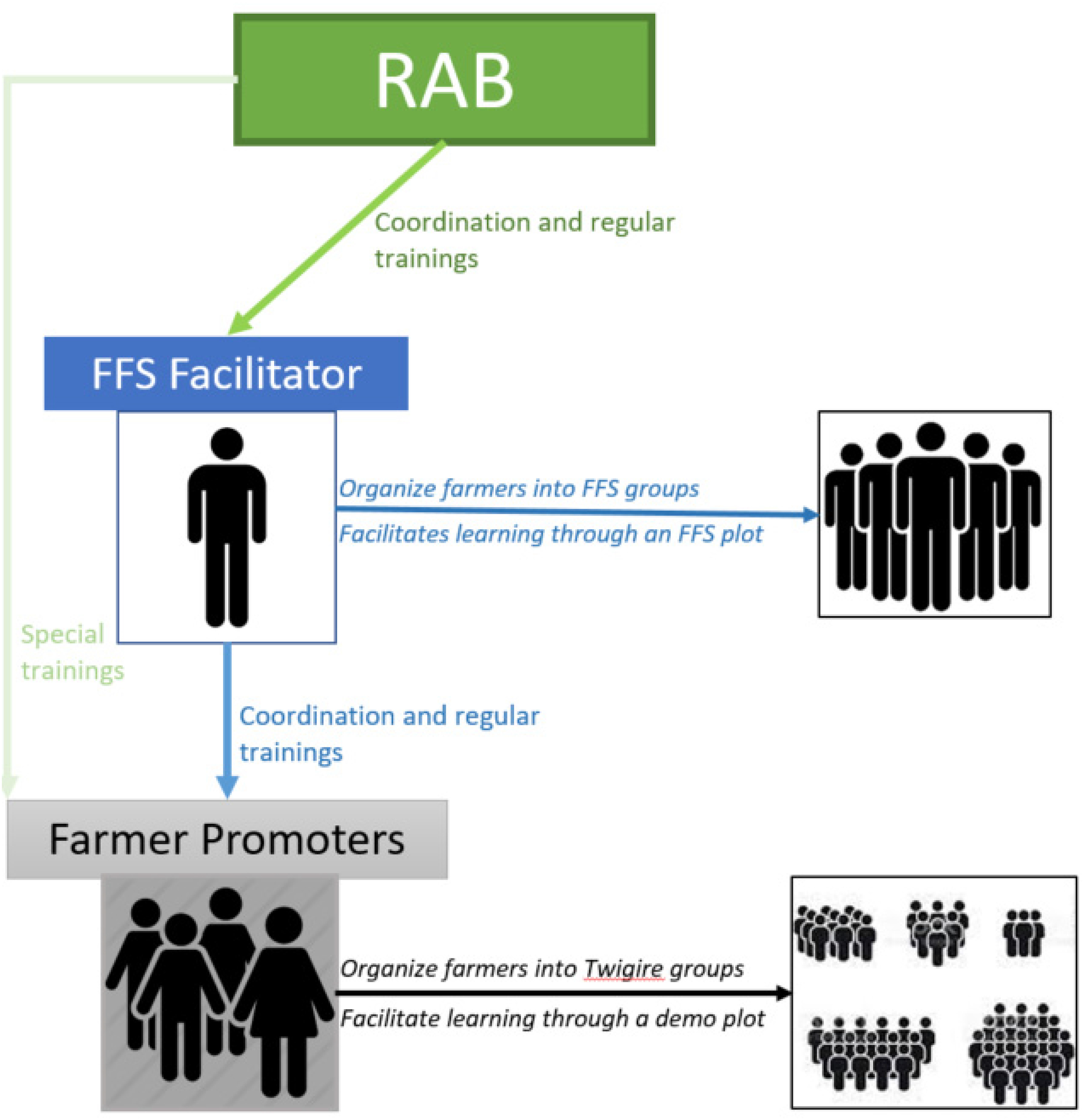
Schematic representation of Twigire Muhinzi extension model,
Geographical location and innovation system
The geography of innovations is related to evolutionary economic geography (EEG), which emerged in the 1980s to discuss the relationship between geography and technology (Boschma and Martin, 2010; Gallaud and Torre, 2005). Furthermore, the literature highlights how innovation networks are structured in space and how they evolve (Clark et al., 2018). The literature argues that understanding the geographical context of innovation is the key to properly understanding an innovation itself (Asheim and Gertler, 2005). The EEG literature discusses the spatial dimension as geographical proximity, which simply denotes closeness between individuals, in terms of geographical distance (Asheim and Gertler, 2005; Boschma, 2005). The literature distinguishes physical distance from functional distance (which takes into account the environmental arrangement). The functional distance considers road networks, forest features, water bodies, topography, and other physical barriers to determine accessibility, whereas the physical distance would determine the time needed to reach the destination. This becomes more relevant in AKIS given that extension agents are likely to be affected by both in reaching farmers. Extension agents are meant to travel to farmers to assist with the practical application of knowledge regarding innovations resulting from research. A farmer’s location and the distance covered by the extension agent to the farmer play important roles in delivering extension services (Oyegbami, 2018).
Materials and methods
Case selection, sampling, and data collection
For this study, I used the case of advisory services provided to farmers on how to deal with BXW disease in Rwanda. This is an effective case with which to study the effectiveness of extension delivery for two reasons: (i) bananas are very important to Rwanda and (ii) BXW is an aggressive, fast-spreading disease resulting in 100% yield loss (McCampbell et al., 2018). Thus, advisory on how to deal with BXW is of utmost relevance for both farmers and the government. I selected eight districts to cover the major agro-ecological zones in Rwanda and to represent different types of banana-producing farmers. At the village level, BXW incidence and the distance to extension district headquarters were classified into three levels each, resulting in nine strata that guided the sampling of villages (Figure 2). The strata based on BXW incidence levels were defined based on expert input from the district and sector agronomists, whereas the strata based on distance were defined using cost–distance analysis (Figure 3). The nine selected villages were replicated to provide 18 villages in each district, to provide a design for further studies of the ICT4BXW project, which will require intervention and control villages. In the Rubavu district, the number of villages was limited to 12 due to the absence of villages that matched the criteria for long-distance to district headquarters. Five banana-growing households were interviewed in each village, resulting in 690 total households surveyed.
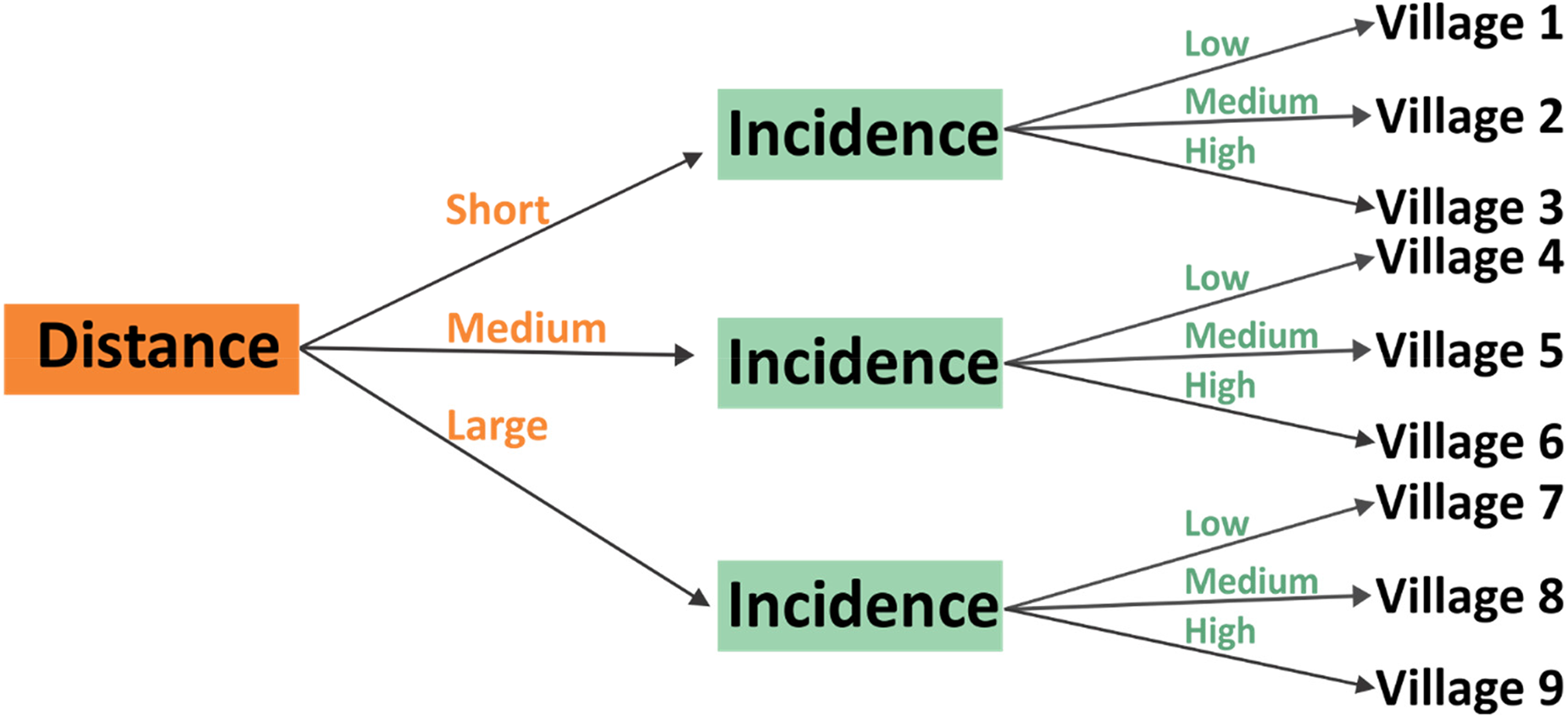
Village sampling scheme.
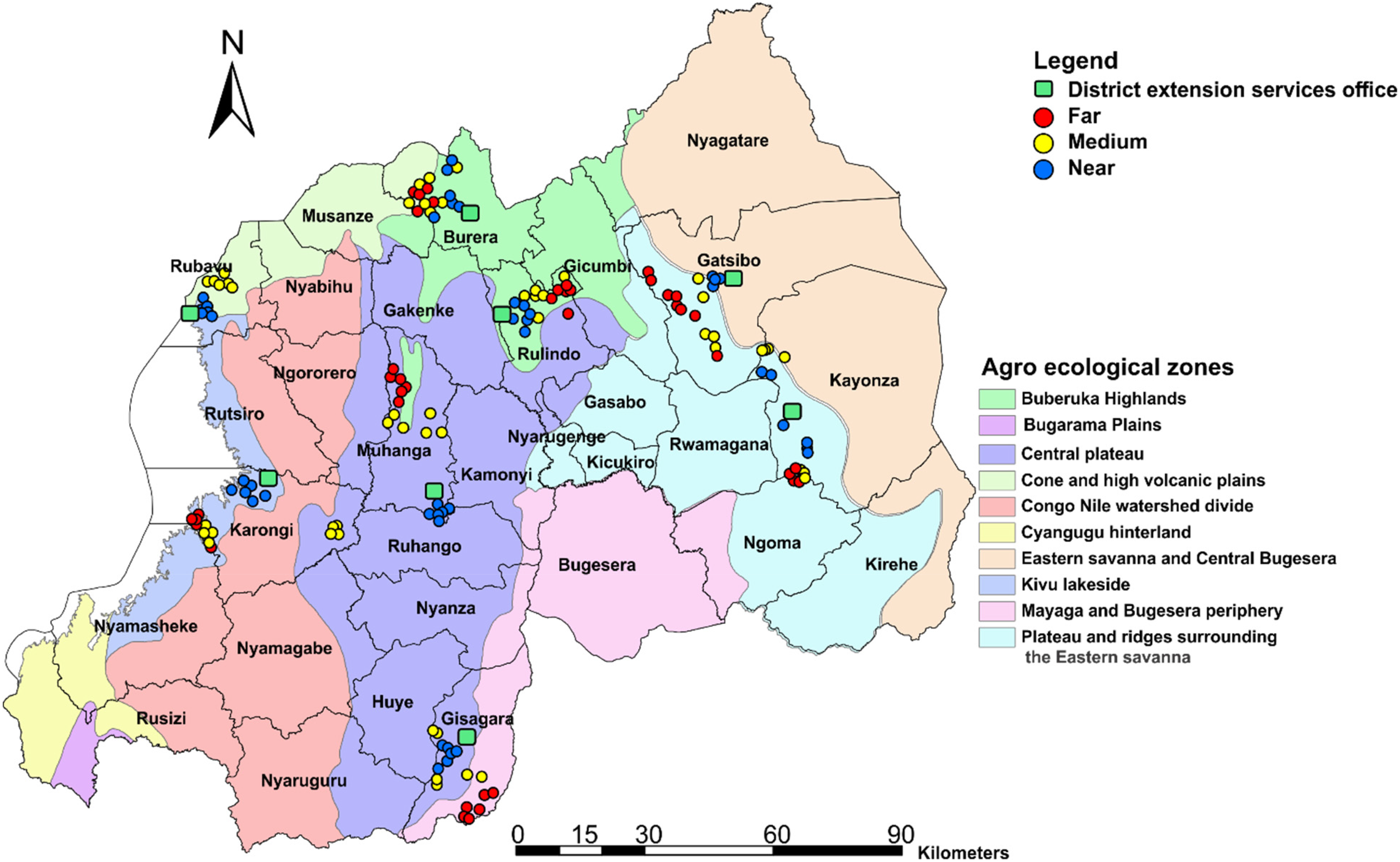
Selected villages and their respective locations vis-a-vis the location of the district extension office.
A household survey was conducted between July and August 2018 by trained RAB technicians from the Banana Program. Data were collected using a structured questionnaire, which was developed based on the study objectives and related literature. As key outcome variables for this study, I used information collected about extension visits, trainings, and the main sources of information on how to deal with BXW. These pieces of information were recorded as responses to three main questions. The first question was, “Have you been visited by an extension agent to receive advice regarding BXW management in the last 2 years?” This was followed by the sub-question “Who visited?” The second question was, “Have you been trained on how to deal with BXW?” This was followed by the sub-question “Who trained you?” The third question was, “What is your main source of information regarding BXW management?” We categorized extension agents as (i) government facilitated (RAB and MINAGRI employees, and district and sector agronomists) and (ii) farmer facilitated (FFS facilitators, FPs, and cooperative leaders), as described in the “Background literature” section. Additionally, I also collected data on other household factors such as gender, age, education, and farmers’ group membership, which were used to characterize the respondents.
Cost–distance analysis
Each farmer’s accessibility was measured using cost distance metrics developed using ArcGIS (Greenberg et al., 2011; Mitchel, 2005). The spatial analysis tool was used to model the cost distance between the district extension office (source) and a farmer (destination) on a surface, or map grid, known as a cost raster. The optimal cost routes (referred to as the shortest path or least-cost distance) apply the distance in cost units, rather than in geographic units, based on the fundamental geographic principle of friction of distance. In this case, the farmers’ accessibility included major physical and geographical features as potential barriers to ease of access, using digital elevation maps, land cover, water bodies, and road connections as input maps. Furthermore, the geographical location of the district extension office was used as the source, whereas the village point map was used for the destinations. A farmer’s accessibility corresponds with his or her respective village’s levels of accessibility.
Data analysis
The household survey data were analyzed using the statistical package R, version 4.0.3 (10 October 2020). Descriptive statistics are reported to characterize our respondents and to describe the variables used in the regression model. The nature of the data (responses) dictated the type of logistic regression model applied for this study. I used a binary logistic regression model to predict the outcome variables based on the independent variables since the data are recorded as dichotomous variables. In this case, the outcome was coded as 0 or 1 because doing so leads to the most straightforward interpretation. The formula for binary logistic regression, as specified by Agresti (1996) is as follows:

The outcome variables used in the regression model were (i) whether a farmer was visited by an extension agent to receive advice on BXW management or not (by a government- or farmer-facilitated agent), (ii) if the farmer was trained or not (by a government- or farmer-facilitated agent), and (iii) whether the main source of information of the farmer is either from a government-facilitated (yes or no) or farmer-facilitated (yes or no) agents.
The main independent variable for this study was the farmers’ accessibility (the cost-distance). However, the data were collected from villages with contrasting levels of BXW incidence, from farmers who were or were not members of the Twigire Muhinzi group. This was an advantage because it provided additional relevant factors to compare with the farmers’ accessibility.
To account for farmers who had been visited more than once, we performed an analysis of variance (ANOVA) on the frequency of visits against the farmers’ accessibility and the level of BXW incidence.
Results
Respondent characteristics
Table 1 shows that the farmers in the study areas were predominantly male (60.5%). Their mean age was 47.6 ± 13.7 years, and a majority of the respondents (68%) had a primary level of education. A majority of the respondents were visited and trained by government-facilitated agents. More than 60% of the farmers received BXW management information from government-facilitated agents. The mean short cost distance was 1.7 km and the mean large distance was 5.8 km. Around 38% of the farmers were members of Twigire Muhinzi groups.
Descriptive statistics (mean and standard deviation) of the variables used in the logistic regression model (n = 690).
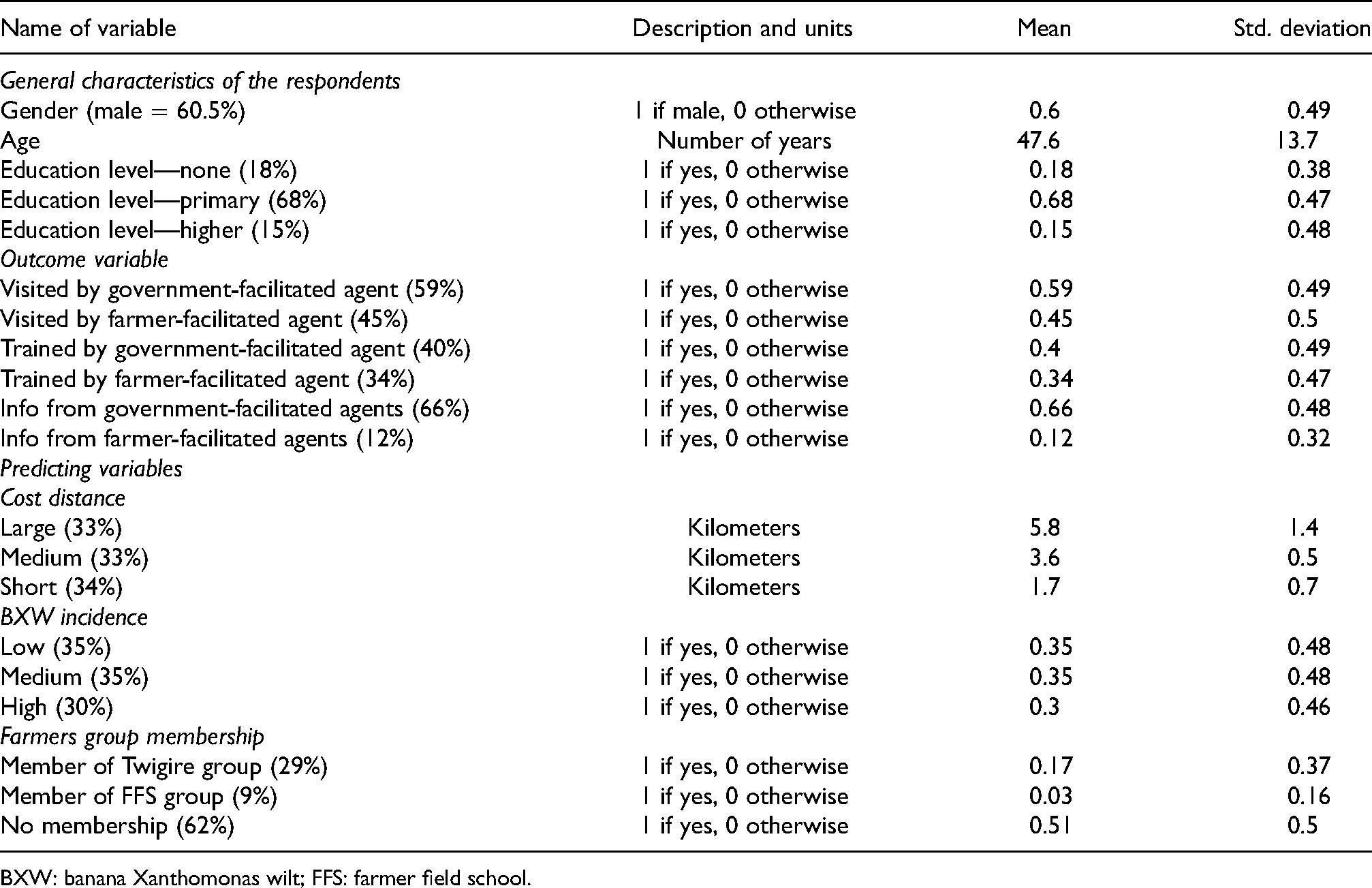
BXW: banana Xanthomonas wilt; FFS: farmer field school.
Farmer accessibility and extension services delivery
Farmer accessibility had no significant relationships with being visited or receiving training. Instead, farmers with a high level of BXW incidence were more likely to be visited and trained. Furthermore, farmers who belonged to the Twigire Muhinzi groups (FFS and Twigire groups) were more likely to be reached (Table 2).
Results from a binary logistic regression analysis on visits by extension agents and training to farmers on how to deal with BXW.
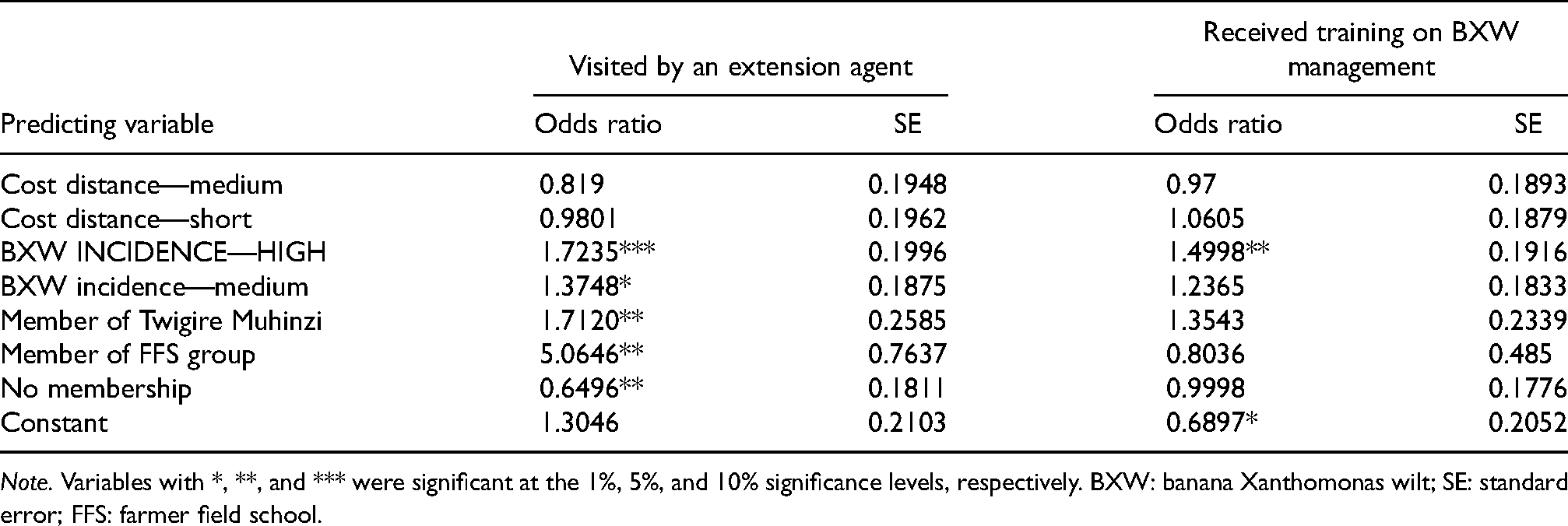
Note. Variables with *, **, and *** were significant at the 1%, 5%, and 10% significance levels, respectively. BXW: banana Xanthomonas wilt; SE: standard error; FFS: farmer field school.
The results from Table 3 present the category of the extension agents who visited or trained the farmers. Farmers with high BXW incidence and farmers who belonged to the Twigire Muhinzi groups had higher probabilities of being reached by both categories of extension agents. A high level of BXW incidence was the main determinant factor for a farmer to be trained by a government-facilitated extension agent.
Results of a binary logistic regression analysis on the category of extension agents who visited or trained farmers.
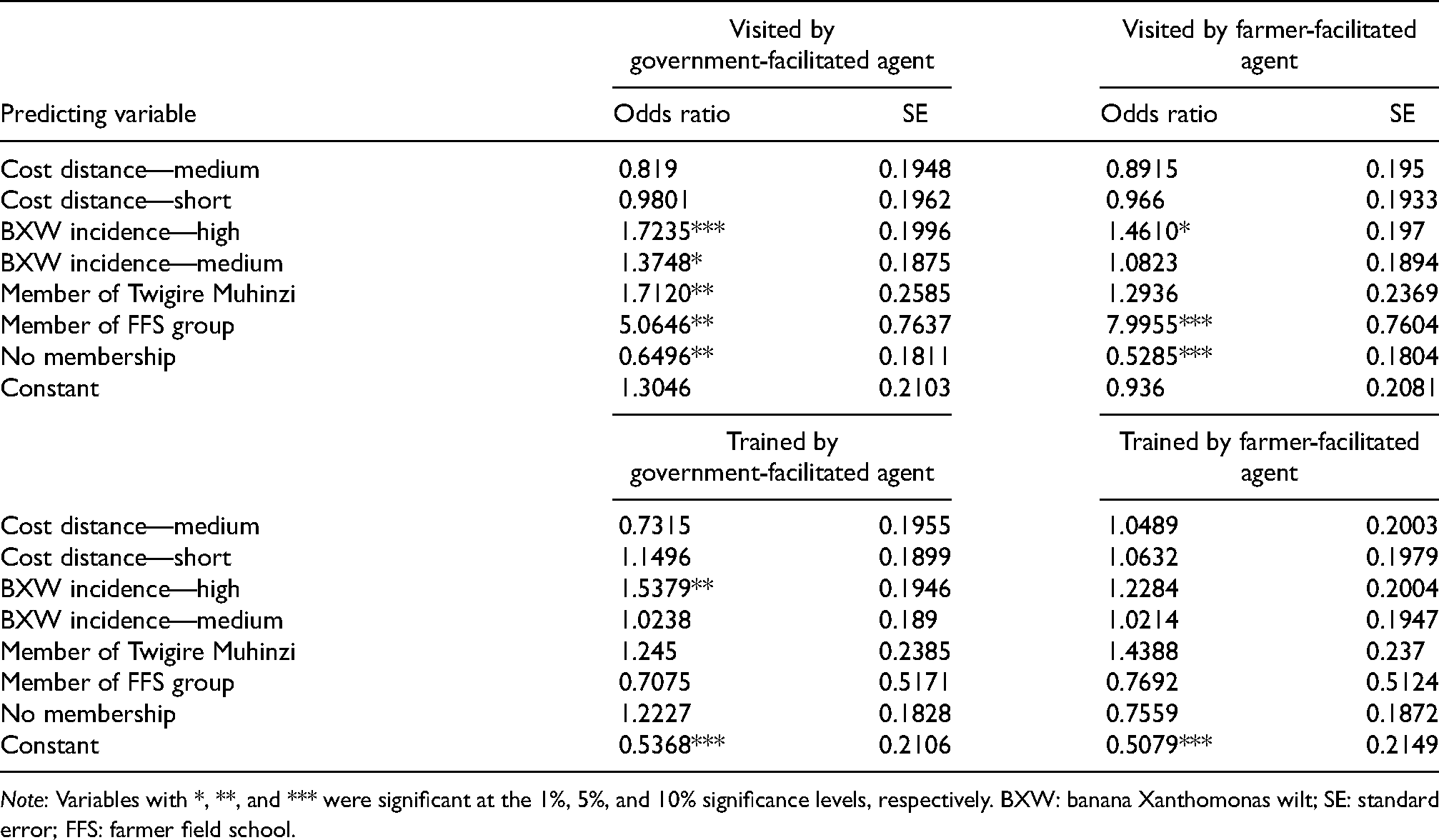
Note: Variables with *, **, and *** were significant at the 1%, 5%, and 10% significance levels, respectively. BXW: banana Xanthomonas wilt; SE: standard error; FFS: farmer field school.
Farmer accessibility and access to information
Table 4 presents the results regarding the main information source related to BXW management. The factors that increased the odds of obtaining information from both categories of extension agents were the level of BXW incidence and membership in Twigire Muhinzi farmers’ groups.
Result from a binary logistic regression analysis about the main source of information related to BXW management.
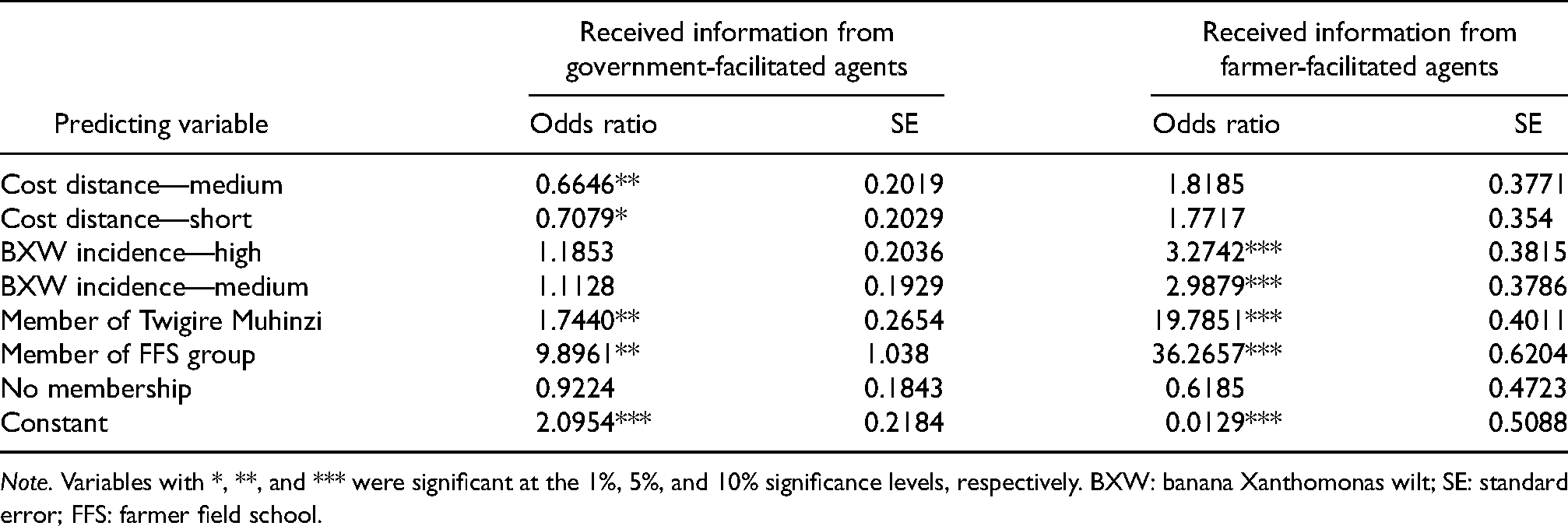
Note. Variables with *, **, and *** were significant at the 1%, 5%, and 10% significance levels, respectively. BXW: banana Xanthomonas wilt; SE: standard error; FFS: farmer field school.
Discussion
The aim of this study was to assess how farmer accessibility predicts the effective delivery of extension services among banana farmers in Rwanda. We used quantitative analysis to show that the nature of the advisory and the type of farmers’ network were more predictive than physical proximity was. Furthermore, the results show that the group-based extension approach was more effective; therefore, we recommend the Twigire Muhinzi initiative as a suitable model for delivering agricultural advisory services.
The findings of this study show that farmer accessibility did not predict extension delivery to farmers of all forms of extension parameters examined (extension visits, training, and source of information). In addition, farmer accessibility did not predict the frequency of visits, as presented in Figure 4.
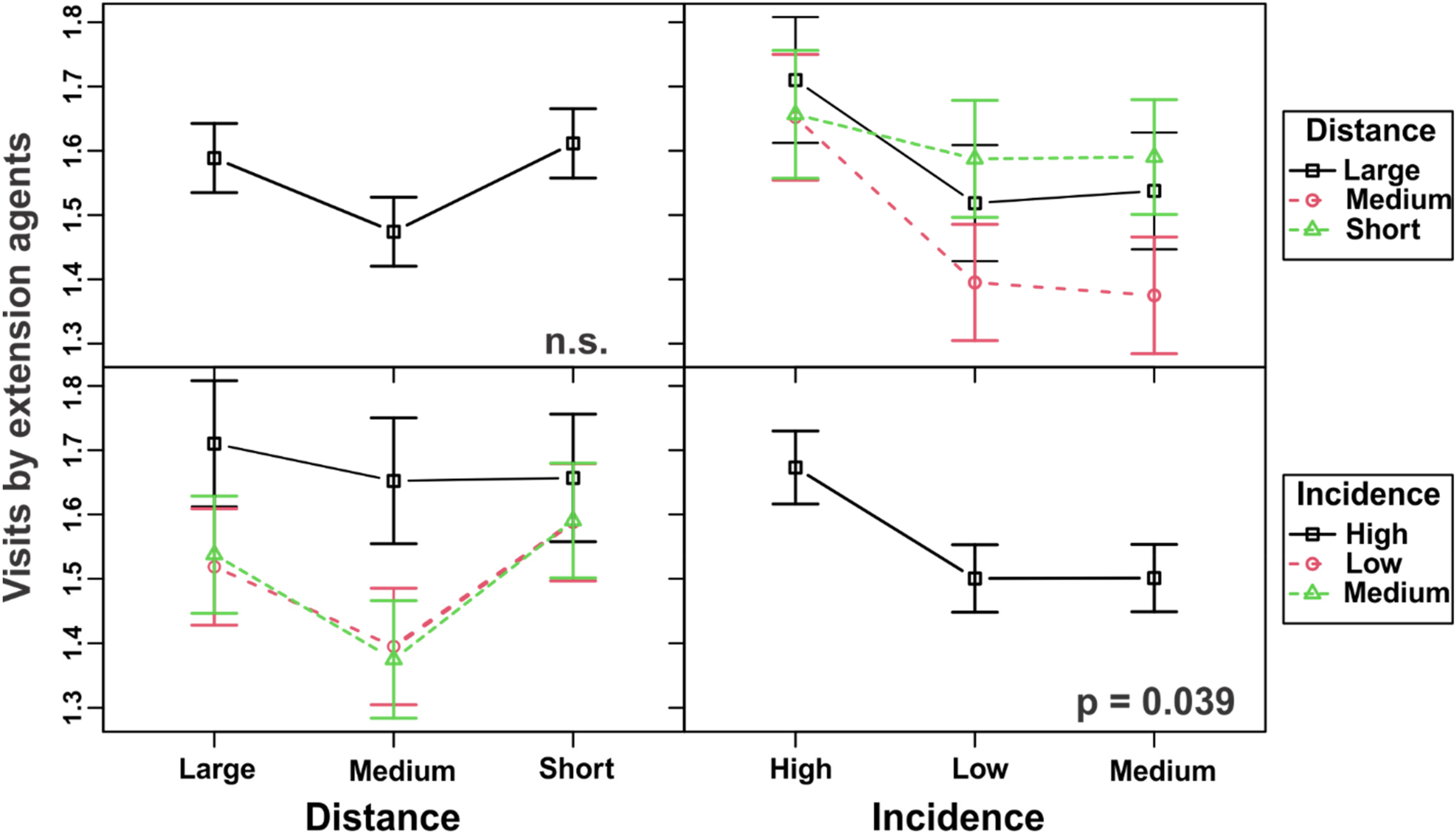
ANOVA results for visit frequency, as influenced by farmer accessibility of a farmer and BXW incidence level.
The results do not support the general theoretical argument of the proximity literature suggesting that physically closer individuals are likely to interconnect and exchange information (Ter Wal and Boschma, 2009; Sykes, 1977). This proximity argument advocates that farmers who are more accessible are more likely to be visited by extension agents. The lack of association between accessibility and extension services delivery in our study can be attributed partly to the fact that infrastructures, mainly road networks, are well established, to the level at which most farmers are almost equally accessible. I will not argue much about infrastructure; however, the definition of accessibility used for this study was not based merely on the geographical (or physical) distance but also on the cost (or functional) distance. The cost distance takes into consideration the natural arrangement or configuration of a location, therefore defining accessibility better.
Unsurprisingly, no proximity effect existed for farmer-facilitated extension agents because these facilitators are selected from among farmers located in the same village. Instead, both categories of extension agents are more likely to deliver extension services to farmers who have a high incidence level of BXW and those who are members of farmers’ groups. Our results support the argument that the adoption of new crop-management practices is linked with the practice’s role in promoting agricultural productivity (Anang et al., 2021). This argument sheds some light on the reason why extension services delivery has a significant association with the level of BXW incidence. In other words, the nature of BXW (easily and rapidly transmitted, and resulting in 100% yield losses) and the importance of banana production in Rwanda justify why farmers with a high incidence of BXW receive more attention. In this case, the incidence level of the disease becomes more relevant than the farmers’ proximity. Regarding the proximity argument, I support the argument of Abbasiharofteh and Broekel (2020) that proximity effects should be viewed after accounting for the context in which network actors operate. Notably, the literature argues that geographical proximity (physical distance) is neither a necessary nor a sufficient condition to interact or to share information (Boschma, 2005).
Another factor significantly affecting the delivery of extension services, as identified from the results, is membership in Twigire Muhinzi groups. Importantly, the RAB—whose mission is to develop agriculture and animal husbandry through modern methods of crop and animal production, research, agricultural extension, education, and farmer training in new technologies—is behind the implementation of the Twigire Muhinzi system (MacNairn and Davis, 2018; Kiptot et al., 2013). In this respect, the RAB equips both FFS facilitators and FPs with technical knowledge. Therefore, the fact that FFS facilitators and FPs are selected from farmers located in the same village facilitates access to information. The present results agree with those of Manda et al. (2020), stating that membership in a farmers’ cooperative positively influences the effective adoption of innovations. The logical argument here is that farmers who have regular contact with extension agents are in a better position to obtain beneficial information regarding new technology. This is in line with studies showing a higher probability of successful innovation diffusion when using the group-based extension approach (Darr and Pretzsch, 2008). In addition, the group-based extension method is an effective way of managing available resources.
Conclusion, limitations, and directions for future research
This paper was aimed at answering whether farmer accessibility can predict the delivery of extension services. We used the case of advisory services on how to deal with BXW, an infectious and fast-spreading banana disease resulting in 100% yield loss. Farmer accessibility was defined using the shortest path, or the least-cost distance, from the geographical location of the district extension office to the village where the farmers were located. The findings of this study show that farmer accessibility does not predict the delivery of all forms of extension examined (extension visits, training, and source of information) to farmers. Significant factors contributing to the delivery of extension services included the level of BXW incidence and membership in Twigire Muhinzi groups. Given the results of this paper, I argue that the nature of the advisory and the type of farmers’ network were more predictive than physical proximity was. The present results support the argument that the group-based extension approach is more effective; therefore, the Twigire Muhinzi initiative is recommended as a suitable model for delivering agricultural advisory services. The finding of this study implies the importance of using the social network approach as a strategy to deal with crop diseases such as BXW.
Due to the nature of data, I do not elaborate more on the social network to infer farmer attributes that are likely to increase their probability of contact with an extension agent. Therefore, I recommend a full network study to identify the effective pathways with which to deliver extension services. Caution is needed in generalizing the results to all agricultural advisory services for two reasons. First, BXW, used as the example case here, is causing devastating problems to small-scale farmers; thus, advice on how to deal with it is desperately needed. Second, the disease is too aggressive and threatens food security; therefore, both farmers and the government are alarmed. Thus, future studies should use different case studies to draw stronger conclusions.
Footnotes
Declaration of conflicting interests
The authors declared no potential conflicts of interest with respect to the research, authorship, and/or publication of this article.
Funding
The authors disclosed receipt of the following financial support for the research, authorship, and/or publication of this article: This work was supported by the Deutsche Gesellschaft für Internationale Zusammenarbeit (grant number 81219434).
