




Abstract
The resilience of food systems, including agricultural systems, has become a high profile issue in the face multiple disease, environmental and social challenges. Much of agriculture takes place in remote locations where social networks, or connections between individual actors, have been implicated in increasing resilience. We examine a case study of Orkney, Scotland, a remote rural location, using interviews and Social Network Analysis. This case study provides evidence indicative of resilient patterns of social networks, emphasising the importance of schools, transport links and livestock markets in creating and maintaining these networks. These domains are rarely included in agricultural policy, highlighting the need for wider framing of questions. Our research suggests Social Network Analysis is a fruitful avenue for investigating resilience of agricultural systems that can identify hitherto hidden elements.
Introduction
Maintaining food security in the face of challenges such as extreme weather events and a rapidly increasing global population (Godfray et al., 2010), and more recently the COVID-19 pandemic (Moran et al., 2020) has given rise to a growing focus on the resilience of food systems. In this paper, we investigate how social networks can contribute to resilience of agricultural systems in remote, under-resourced rural situations. We seek to demonstrate that this approach is useful for an improved understanding of resilience and is able to identify hitherto unrecognised networks that are important for food system resilience.
Food systems are dynamic rather than static and embrace complex interactions, drawing in food production, ecosystems and the maintenance of successful rural areas. Ingram (2011) describes a food system as consisting of a series of activities (production, processing, retailing and consuming), and a series of outcomes (food availability, food access and food utilisation), as well as the environmental and social contexts in which these activities take place. This complex system has many potential points at which it can become vulnerable to challenges and where questions as to the resilience of the system may arise.
Social networks map connections among people, including flows of resources, information and practical knowledge. They can contribute to understanding resilience by contributing insights on how social networks facilitate collective action, enable knowledge diffusion and promote social support for households and communities to cope with change (Rockenbauch and Sakdapolrak, 2017).
More specifically, our research focuses on improving our understanding of the role of social networks in the resilience of sheep and beef cattle production in remote upland and island regions of the UK. These areas are typified by distance to markets, low population densities with few employment prospects and usually limited infrastructure, such as internet services.
Our approach, is to use Orkney as a case study to explore the contribution that social networks and Social Network Analysis (SNA) could make to understanding resilience and vulnerability in agricultural systems. Many forms of farming, such as beef cattle and sheep production, are embedded in specific geographical contexts. This is particularly true of remote areas where agricultural systems tend to be economically marginal, but where agriculture is an important component of the economic, social and cultural fabric. Furthermore, remote regions are also often of high nature value that would suffer from land abandonment. These agricultural systems are fragile and often depend on people working together to provide resilience. We therefore hypothesise that the structure of social networks is an important factor contributing to the resilience of remote agricultural systems, and that SNA can help understand where vulnerabilities and strengths are likely to exist.
Firstly, we will consider the nature of resilience, what makes a food system resilient? Then we will consider the evidence that social networks are important for resilience. In the following section, we examine SNA theory, and consider what this theory might contribute to an understanding of resilience. We conclude by reflecting on how SNA could make to better understanding resilience of agricultural systems in a remote area, based on a case study of the Orkney Islands in Scotland. Our contribution is a first step in combining resilience theory with SNA in the context of remote agriculture. In doing so, we seek to address the need for additional research into the factors that stimulate and obstruct collaborative planning and action within rural and agricultural contexts (Knickel et al. 2018: 11).
Introducing resilience
The concept of resilience has been applied in many different contexts, such as socio-ecological networks (e.g. Folke, 2006), recovery from disasters (e.g. Mazel-Cabasse, 2018), and development studies (e.g. Rivera et al., 2018b). Resilience thinking has been applied at different scales in the food system, such as farm, value chain, region, landscape and food system (Bailey and Buck, 2016; Darnhofer, 2010; Forney and Stock, 2014; Pomeroi, 2015; Tendall et al., 2015). The concept of resilience captures the idea that key functions are being maintained in the face of challenges and disruptions, whether long-term trends or sudden, extreme events. The greater the ability to cope with change and continue to maintain essential functions, the greater the resilience.
Resilience is typically considered to consist of three different (but related) responses or capacities of the system (e.g. Ashkenazy et al., 2018; Folke et al., 2010): the ability to maintain functions through (i) absorbing or buffering, (ii) adapting to change, and (iii) ‘transforming’ or ‘re-orienting’ the food system to a new configuration.
The essential functions maintained can vary. Resilience of an individual farm, for example, could include maintaining financial viability, levels of production of food products, biodiversity on the farm, value of breeding stock, quality of water and soil, landscape impact, animal welfare, welfare of the farming family and maintenance of social capital, but is most likely to consist of some combination of all of these.
Berkes (2007) suggests four critical capacities for resilience; learning to live with change and uncertainty, nurturing diversity, combining different types of knowledge, and creating opportunities for cross-scale linkages. Bailey and Buck (2016) submit that resilience is reduced with specialisation, export orientation, dependency on external inputs, using agricultural practices that degrade the natural resource-base, and neglecting historical, political and cultural contexts. The link between resilience and diversity may refer to diversity of species in an ecosystem (Folke et al., 2002), but can also refer to diversity in human opportunities and economic options (Darnhofer, 2010). Case studies of rural areas have highlighted a number of possible activities to increase resilience, including increasing cost efficiency, using technological innovation, promoting economic diversification, developing local agro-food networks, drawing on local capacities and traditions to promote artisanal products, and increasing cohesion between different social groups within and outside the region (Esparcia, 2014, Ashkenazy et al., 2018).
Lebel et al. (2006) argue that the capacity to manage resilience depends on agents, networks and institutions. Evidence from research on resilience undertaken in the context of natural resource management affirms this conclusion, and has identified social networks and the structure of those networks as important to resilience (Adger, 2003; Bodin and Crona, 2009; Chapman et al., 2018; Ostrom, 2000).
We therefore conclude that social networks are important for resilience. From the above it is already apparent that social networks could contribute to resilience by combining different types of knowledge, providing opportunities for wider-scale linkages, developing local agro-food networks and increasing social cohesion between different groups. We now examine the literature on social networks in more detail.
Social networks and their contribution to resilience
Social networks move the focus from individual actors to groups of people who interact. Giurca and Metz (2018: 4) describe social networks as ‘comprised of actors who are tied to each other through socially meaningful relations’. A number of functions of social networks have been identified as being pertinent to resilience, including i) co-operation in shared activities ii) enhancing collective action, iii) sharing resources iv) exchange of favours, v) exertion of social influence, vi) knowledge exchange and social learning (Chapman et al., 2018; Esparcia, 2014, Henry and Vollan, 2014; Hileman and Lubell, 2018). Levy and Lubell (2018: 1236) concluded that ‘Networks that support multiple social processes are more capable of positively contributing to sustainable and resilient social-ecological systems in the face of environmental change’.
As noted in the previous section, innovative capacity is an important aspect of resilience. Resilient food systems, and resilient farms in particular, benefit from combining formal and informal knowledge sources (Šūmane et al., 2018) and having access to a wide range of information (e.g. Lambrecht et al., 2018). Lowe et al. (2019) emphasise valuing locally generated knowledge and skills as well as recognising the need for external exchange, to generate what they term ‘vernacular expertise’. The role of social networks in knowledge transfer have been studied (e.g. Cadger et al., 2016; Hermans et al., 2017; Prativi and Suzuki, 2017). Interestingly Prativi and Suzuki (2017) found that in some instances peer advice networks were more important than official advice networks in acquisition of knowledge.
A strong sense of community developed by social networks is often linked to the specific nature of particular rural locations, and the use being made of that natural environment, as well as the culture and traditions of that area (Adger, 2003; Chapman et al., 2018; Ramirez et al., 2018; Rivera et al., 2018a). Therefore, regional differences in geography and institutional histories are important and can influence the capacity to respond to challenges (Levy and Lubell, 2018).
Social capital is relevant to the ability to adapt to changing conditions (Moody and Paxton, 2009). Adger (2003: 392) goes as far as to state that ‘social capital is a necessary “glue” for adaptive capacity.’ Social capital has been described as the quality and quantity of resources available in a person’s social network (Lin, 2001). Rivera et al. (2018b) identify four key elements of social capital: trust, common interests, sense of community, and culture and tradition. The amount of social capital a person has is affected by their social network structure and how these networks are used (Burt, 2000; Moody and Paxton, 2009). People can be well connected but have little influence in the network (Vishnu et al., 2020).
On the negative side, a strong social network does not necessarily work for the benefit of everyone in the area. Networks can also work to exclude some people to their disadvantage (Adger, 2003; MacGillivray, 2018). Strong networks may impose significant costs on participants and dominant network actors may stifle rather than enable change. The norms of the network may become maladaptive, for example stressing self-reliance as a value to be upheld rather than promote co-operation (MacGillivray, 2018).
Social networks are not static. The development of strong social networks can be thwarted by institutional constraints, out-migration leading to loss of people who contribute important resources, in-migration of people who do not trust the existing network member or do not rapidly learn the social norms of such a network, rapid changes in technology, failure to transmit network behaviours between generations, and excessive reliance on monetary transactions (Adger, 2003; Ostrom, 2000).
We conclude with Chapman et al. (2018) that resilient communities benefit from a focus on networked capacities, rather than merely individual, disconnected capacities, increasing their collective agency to respond to challenges in a creative and flexible way. However the mere existence of a strong network does not guarantee resilience. Nevertheless, even if the existence of networks does not guarantee resilience, their absence is likely to reduce resilience. We now consider what kinds of network structures are found to be most resilient.
Resilient social networks
We draw on theories of Social Network Analysis (SNA) to gain an understanding of what makes a social network resilient. For the purposes of Social Network Analysis (SNA), social networks are defined and measured as connections among people, organisations, political entities (states and nations) and/or other units. SNA is a theoretical perspective and a set of techniques used to understand these relationships (Valente, 2010: 3).
The two network structures that have been most identified with resilience are Small World Networks and Scale-Free networks.
Small World Networks are characterised by local clustering which indicates dense pockets of interconnectivity. There are bridges, however, that connected these subgroups and these bridges enable people to connect to seemingly distant others by fewer steps than would occur in a random network.
In Scale-Free Networks, most people will have only a few connections but there will be a few that will have hundreds or even thousands of connections. Barabási (2003) hypothesised that the scale-free distribution occurred because people preferred to connect to a network at its most central locations. Thus, as the network grows, people who are most central retain their central position.
Small World Network structures are associated with resilience due to the redundancy of network connections; if one connection fails, there are alternative network routes that can link the agents in the network. A Small World Network can therefore be associated with increasing resilience. Scale-Free Networks can provide an efficient way of transmitting information or other connections. An example is the hub airports used by airlines. However, Scale-Free Networks are associated with resilience in more negative ways as the reliance on a central agent makes the network vulnerable to failure should that central agent disappear or fail to function in some way.
The ability to innovate is an important aspect of resilience, particularly where transformative action is required. Networks can function to facilitate innovation in different ways. Valente (1995) argued that innovations diffuse more quickly in dense rather than in sparse networks. However, empirical evidence suggests that this is not always the case. Too much density creates redundant communications and reduces the ability of people in the network to access outside sources of information and influence (Valente et al., 2007). As Granovetter (1973) noted in his strength of weak ties argument, connections to outside sources of information and resources can be very valuable, and achieving a balance of both strong and weak ties in social networks is important for innovation. Granovetter (1983: 209) argues that ‘weak ties provide people with access to information and resources beyond those available in their own social circle; but strong ties have greater motivation to be of assistance’. Rost (2011) suggests people in networks with strong ties, and embedded in networks with weak ties, are the most innovative. Newman and Dale (2005) warn that strong ties among a close network of people together with few, weak ties to people outside the network or to other networks, decreases resilience as it acts to limit the number of ideas for creative innovation by the network.
Hileman and Lubell (2018) suggest that closed network structures help facilitate co-operation while open structures may help facilitate knowledge sharing and resource distribution. Networks that possess Small-World properties may provide joint benefits for co-operation and social learning as they combine closed structures that support local co-operation with open structures that can more effectively transmit information and resources across the entire network.
We have found very little evidence of the use of SNA to understand food systems in practice. One exception is Ramirez et al. (2018) who compared social networks of mango and oil palm farmers in South America. They concluded that oil palm producers in this case had a high reliance on a central actor, typical of a Scale-Free network, whereas mango farmers had far more complex social networks. Their finding suggested that without the central actor, the oil palm network would collapse. SNA has been also extensively used in the control of infectious livestock diseases and to increase resilience to such threats (e.g. Kao et al., 2006; Robinson and Christley, 2007).
Having established that SNA can be used to better understand resilience of networks, this does not guarantee that content of the network provides resilience. In order to investigate how networks are formed, maintained and how they might increase farming resilience we now turn to an empirical case study of the Orkney Islands.
An Orkney case study
Orkney is an archipelago of some 70 individual islands (only about 20 of them populated) lying 20 miles north of mainland Scotland. With a population of about 22,000, the islands also hosts the highest density of beef cattle in Europe (around 76,500 cattle in 2017). Sheep are mostly kept together with cattle, with few farms only keeping sheep. Almost 93% total agricultural area in the Orkney Islands is grass and rough grazing and characterised as Less Favoured Area. The islands have a culture distinct from mainland Scotland, and as well as agriculture, the economy relies heavily on tourism (much of it based around archaeological remains), fishing and energy production. Orkney beef is aimed at high quality markets and has a protected name (Protected Designation of Origin) within the European Union.
We focussed our case study on an island, as it proved easier to draw boundaries than around an area of mainland. Our research in Orkney found that there were limited processing facilities on the islands, mostly involving dairy although until recently there was also an abattoir. Many butchers also process meat in various ways. Because of the limited amount of processing on the island we have restricted our examination of social networks primarily in the farming community.
Heffernan et al. (2016) studied a livestock disease eradication programme and found that Orkney farmers related animal-disease information to neighbours, friends, family members, relatives and other farmers that they met at markets, to a much greater extent than farmers in mainland England (no comparison was made with mainland Scotland). The authors suggest that Orkney farmers form part of a close-knit island community where there is social pressure to act in the interests of the whole community. However, little evidence was provided of this social pressure.
Materials and method
As part of a larger research project examining resilience in upland and island beef and sheep production in Scotland and Northern England, we undertook individual face-to-face interviews with 20 people in Orkney (including farmers, butchers, local administration), as well as 18 respondents with Scotland-wide relevant knowledge (retailers, industry representatives, environmental organisations). The 20 respondents in Orkney were purposefully sampled through a trusted gatekeeper and were deliberately stratified to provide representation of different farming types (conventional/organic, a range of ages, and geographical location). Interviews were conducted face-to-face apart from three telephone interviews. The farmers interviewed were all either beef farmers or had both beef cattle and sheep. For this reason, no attempt was made to compare beef and sheep farmers. To further inform an understanding of social networks, we invited responses to questions relating to social networks on an agricultural Facebook site, and undertook individual telephone interviews with people living in Orkney recruited using a range of different sources. We placed six short questions on networks on an agricultural Facebook site and received 14 responses. A further nine telephone interviews were undertaken to broaden the research. Interviewees were recruited primarily via contacting local ministers of religion, on the basis that they provided contacts in a wide-range of settlements. This method recruited a further two farmers, two ministers, two workers in the renewable energy sector, one three others. All interviews were conducted between September 2018 and November 2019. Further secondary data was collected from publicly available data such as sales records from the auction mart, ferry schedules, maps and educational sources. Interview data were analysed inductively by themes and SNA was used for mapping non-interview data.
Results
There was strong agreement that Orkney has strong social networks, one respondent using the word ‘communitarian’ to describe the island. Schools were identified as one of the key places where lasting social bonds are formed into networks that may last a lifetime. Figure 1 represents the progression from primary to secondary schools (obtained from website data), and demonstrates some of the features of a Small World Network. The connections in Figure 1 show which primary schools on which islands the students of each secondary school originate from. Schools were also important because of the geography of the Orkneys, which meant that students that came from several different islands to this central location where they had the opportunity to form networks.
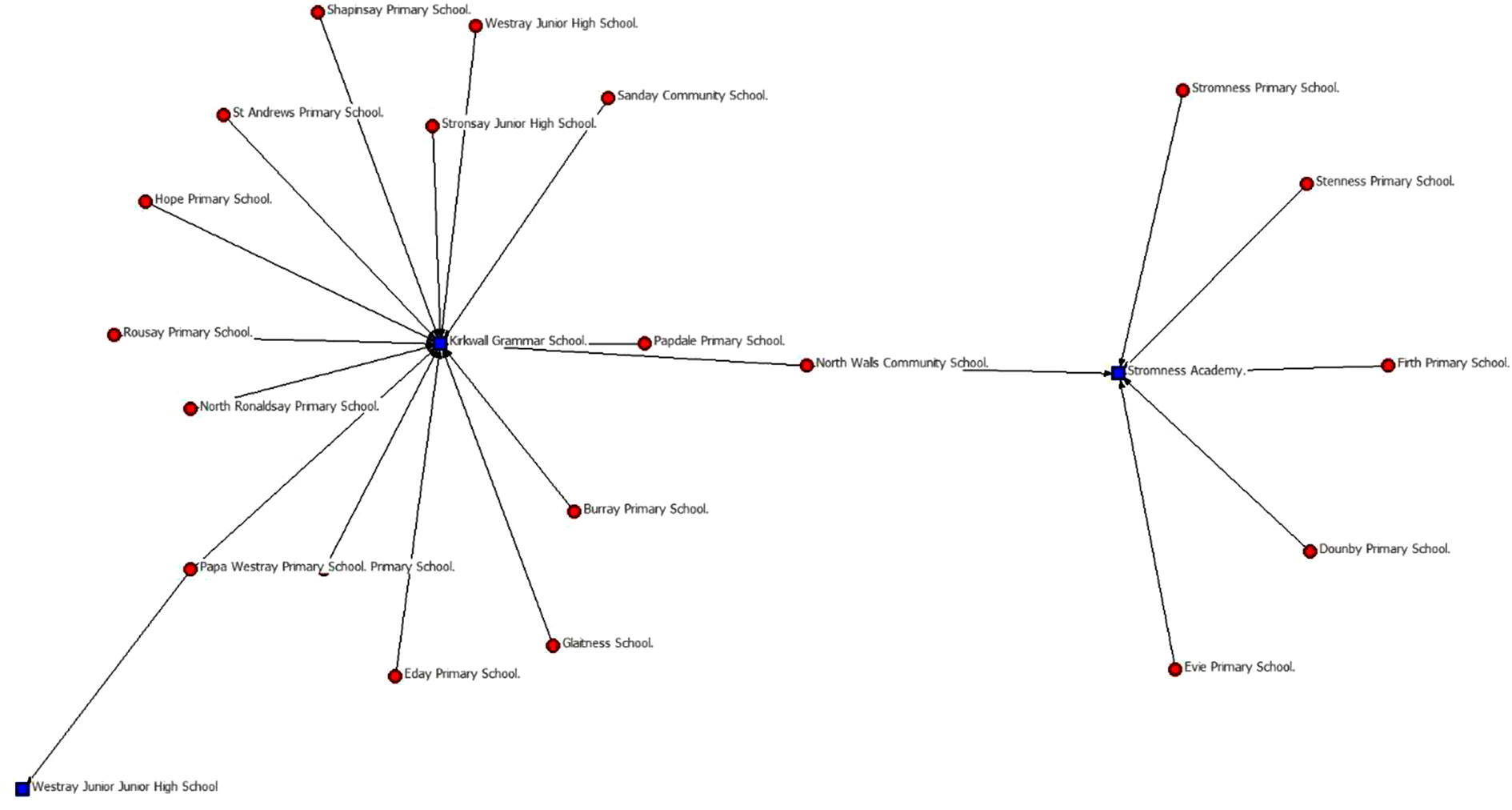
Orkney schools network showing which primary schools feed which secondary schools.
Some of the challenges to these networks were young people moving away from the islands after finishing schooling, and incomers (non-natives) moving into the area. Some of the young people returned to the islands and some did not. However, the multiple ties suggested that even if some people move away, there are still other ties remaining. A key feature of Small World Networks is that if a few links are removed, it is still possible for any person to connect to any other, albeit through an alternative, longer route. Small world resilience comes from a combination of its clusters which encourage cohesion, and interconnections between the clusters which encourages flows of information and ideas. This begs the question as to whether any decisions about school closures can take into account factors such as the maintenance of social networks. The loss of key schools would seriously disrupt social networks. Furthermore, if schools are important for the formation of social networks, this will make it more difficult for incomers, who do not have those networks, to engage with others.
The translation from incomer to community member is pivotal, and requires people to stay for a sufficient period of time. Locals spoke of people remaining in Orkney if they could cope with three winters of relative darkness and strong winds. We were told of two contrasting islands in the archipelago, one where incomers became embedded in the community, the other where this did not happen with resultant cycling of incomers arriving and then leaving again every few years. The willingness of incomers to volunteer and participate in communal activities was also important. Locals spoke of needing to see a commitment to the locality from incomers before expending energy in developing social ties with them. Of course, incomers can also bring with them new dimensions of resilience (Forney and Stock, 2014).
Some respondents suggested the National Farmers Union Scotland and Church networks have important roles in social networks, as has the local newspaper ‘The Orcadian’. In terms of knowledge flows, the role of the Orkney Livestock Association, the Orkney Agricultural Society, National Farmers Union Scotland and Scotland’s Farm Advisory Service were identified as key conduits of knowledge and for strategy design and forming the farming culture in Orkney. Farmers also gave us examples of seeking information outside Orkney, including internationally, using the internet. A larger research sample may have highlighted further avenues. Reference was made also to some informal sharing of labour and equipment, although this was perceived to be declining and being replaced by contractual relationships.
The interviews and Facebook responses confirmed the importance of the livestock mart (or market) for social networking, emphasising the social aspect of attending sales. A livestock mart, originally set up as a farmers co-operative, exists on the mainland of Orkney. Marts enable farmers to sell their live animals, by auction, to further meat chain actors. In the case of Orkney, young animals may be sold to other farmers on mainland Scotland to rear to an appropriate slaughter weight, or less often, to sell slaughter weight animals to meat processors. From our interviews, we found that four out of the five butchers in Orkney purchased only Orkney produced livestock, and sold the resulting products only in Orkney.
We examined movements of farmers in Orkney to the livestock mart to sell sheep, over a period of 4 months (Figure 2). These data were extracted from publicly available records of sales at the mart. Cattle sale data were also available but too complex to map in the time available due to their larger volume. We were intrigued to find one person travelling considerable distances (including using ferries) multiple times during this period (Figure 3). A plausible explanation offered was that the person was taking advantage of good market prices. Access to greater quantities of data on livestock movements could be used to infer more about social networks and these data are collected as part of livestock disease management in the United Kingdom. As with livestock disease data (e.g. Robinson and Christley, 2007), markets can provide a Scale-Free Network arrangement for social networks. As noted earlier, the Scale-Free Network depends on the existence of many connections made to a single entity, or hub. If one or more of the connections is lost, there are still plenty of connections remaining to ensure the resilience of the hub. Of course, there will be a point where if too many connections are lost, the hub will collapse. Loss of the market or the hub itself, would also seriously disrupt social networks. However, the hub can also result in making the network vulnerable to cascading failure, where the hub acts as a way of transmitting breakdown to its spokes. This could happen if there is a livestock disease outbreak, or if the market lost credibility for some reason, such as a human health concern. For example, Kao (2020) has suggested that Scale-Free networks and Small World networks in isolated communities would be effective in spreading COVID-19. It should be noted, however, that the mart has been able to continue during COVID-19 with social distancing and attendance strongly controlled, with no disease outbreaks reported at the time of writing.
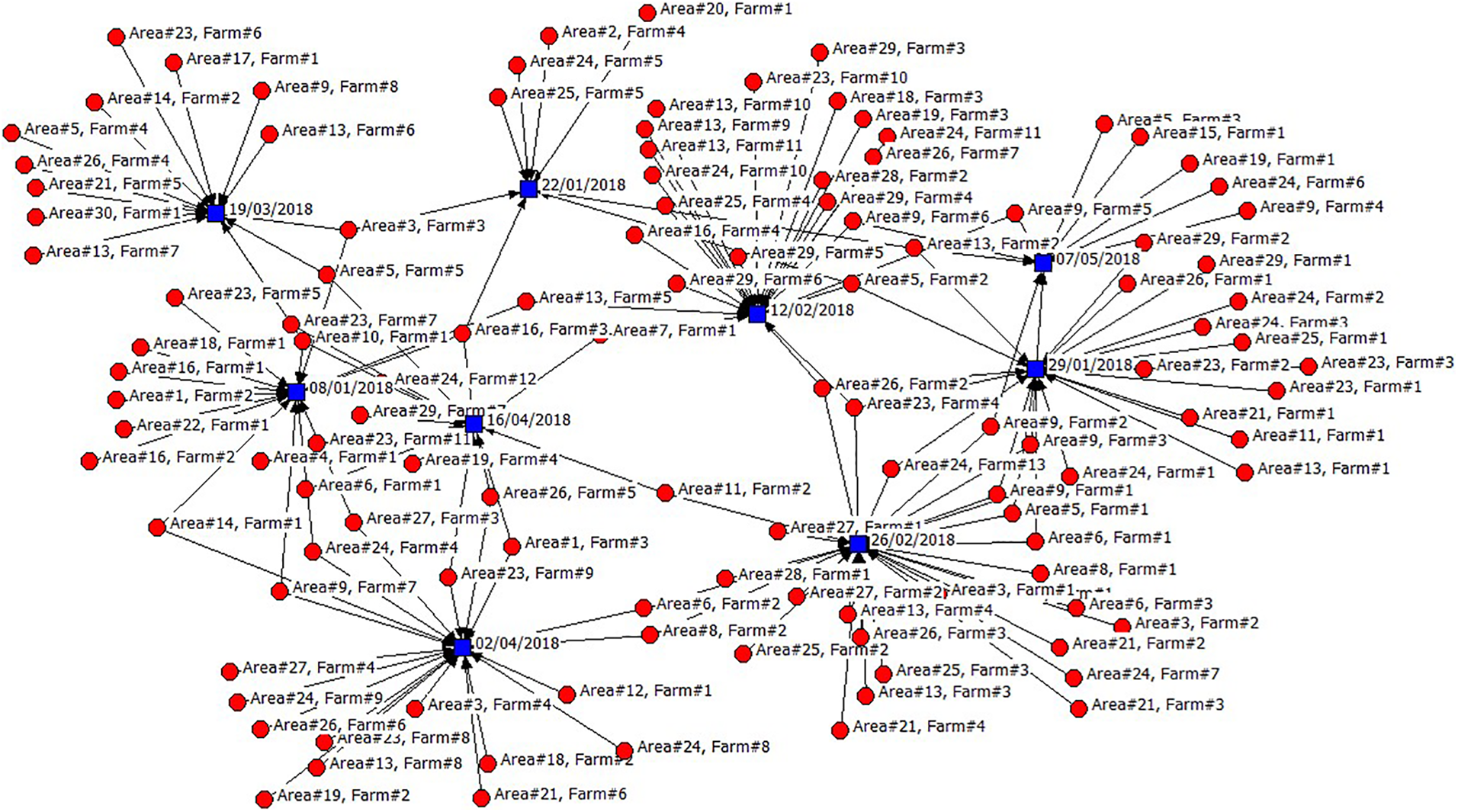
Orkney market sheep sales January–April 2018 (circular nodes – farms, square nodes – market sheep sales dates).
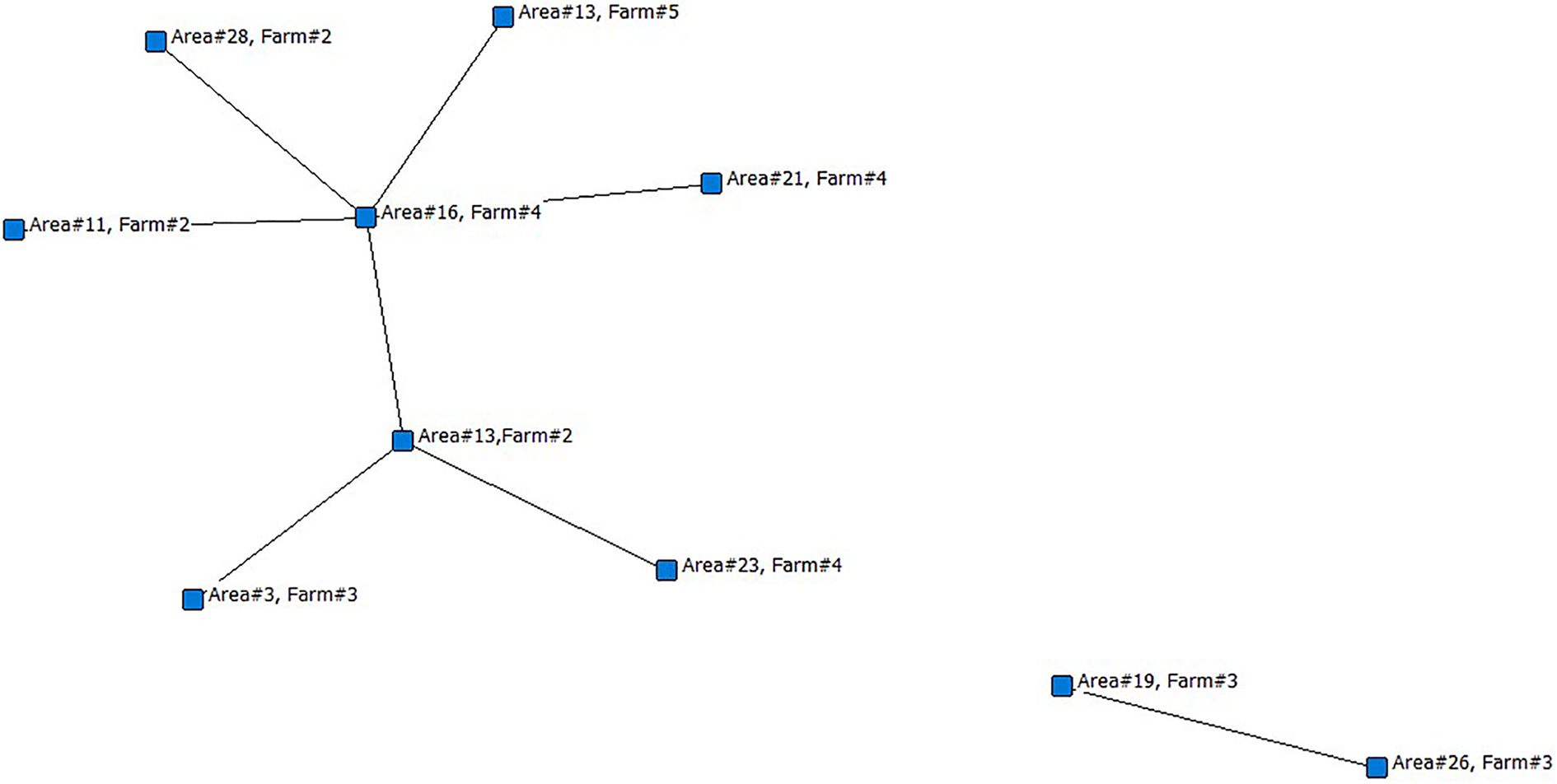
Farms that sold sheep together four times.
As is evident both from the school networks, and networks associated with mart, transport is another factor that could influence resilience networks. Although internet-mediated communications are important, connections often do not work well in remote, rural areas. We therefore examined transport networks (Figure 4) based on website information. As Orkney consists of a group of islands, ferries are particularly critical, as was emphasised in our interviews. Again, we were intrigued to discover a frequent ferry service among a triangle of three islands with a total population of less than 300. A number of plausible explanations were advanced by interviewees, including historical and business ties, but whatever is the case, the suggestion is that there exists some group norm that binds the three islands together and may be worth examining in further detail.
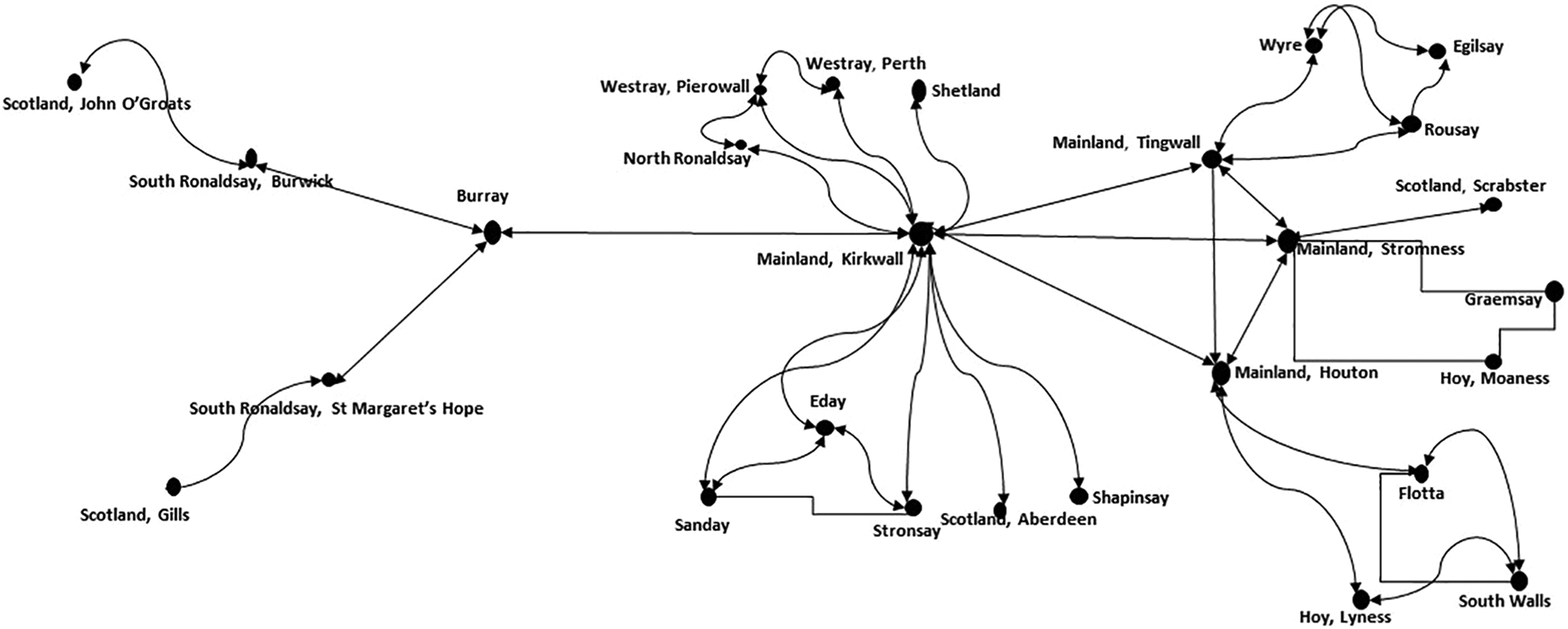
Orkney transport network (straight lines are road connections, wavy or curve lines are daily ferries and lines with loops in them are non-daily ferries).
We therefore suggest that social networks are increasing farming resilience in Orkney through a range of practices, including co-operating, collaborating in developing local agri-food networks, contributing to knowledge flow, and some sharing of resources. These networks are formed already at school and the livestock mart is one important place where networks are maintained.
Discussion
Our interest is in how agricultural systems in remote, upland areas can maintain their resilience. Our research in Orkney has provided some evidence of the buffering action of social networks, through co-operative and shared actions, as well as adaptation, including developing local markets for meat. We also have evidence for the potential of innovative capacity, given routes for information and knowledge flow within and outside Orkney, thus providing both adaptive and transformative capabilities.
Innovative capacity is facilitated by agricultural groups, agricultural advisory services, local media and internet resources enabling ties both locally and externally. Sutherland et al. (2017) identified that farmers use different networks for different types of knowledge, and this is likely to be similar in Orkney. The combination of strong ties within the community of farmers and weaker bridging ties with extra community networks (what Cofré-Bravo et al., 2019 call ambidexterity) enables openness to new ideas as well as the ability to work together. King et al., 2019 found that boundary spanning activity across different groups was needed to stimulate innovation. We found no evidence of such boundary spanning activity. However, the context of King et al. (2019) was that of specific research projects to facilitate co-innovation. It is of course possible, that in the Orkney context further boundary spanning activity could also further foster innovation leading to greater resilience.
The strong personal ties that enabled absorptive capacity, also enabled personal ties that could allow people to reach consensus in difficult situations. However, the strong social pressure to conform can conversely either prevent novel activity, or drive people to adopt the same new practices. The perils of everyone relying on a single specific market is exemplified by Ashkenazy et al. (2018) who identified farmers over-reliant on one lucrative source of income (in this case pepper) who then found themselves in difficulty when that market became more problematic.
Our research has also highlighted the need to take a wider perspective on resilience of agricultural systems, for example taking into account transport infrastructure, and less obvious features, such as schools. Other structures add to resilience, such as social activities, agricultural groups and faith groups. Our data are insufficient to conclude the existence of a Small World Network in Orkney, but are consistent with the existence of one. This would suggest the social networks in Orkney involved with agriculture exhibit a high degree of resilience.
Integrating in these social networks requires a degree of commitment from people new to the area. This is similar to findings by Sutherland et al. (2017) who found farmers on the Isle of Skye (off the West coast of Scotland) were reluctant to share their knowledge with new entrants to farming in the area, until the newcomers had contributed to community activities. As well as signalling commitment to the area, joint activities can also develop trust in each other, and trust has been found to be important in well-functioning social networks (King et al., 2019; Pachoud et al., 2019; Do Adro and Franco, 2020).
We have gathered some evidence on how these networks are developed, maintained and function, but a larger project could usefully examine the nature of these links in much greater depth. Although we have cited evidence of how the social networks function, we have not quantified or mapped these in detail. We have not examined any beliefs that are disseminated through the networks, such as a sense of community, common interests and appreciation of culture. Furthermore, networks are dynamic so their contents and structure can change.
There are also clear links between social networks and functioning of food chains. The unequal power distribution in food chains leaves farmers in remote areas at a disadvantage. However, the ability of Orkney cattle farmers to compete in global markets for high quality meat have been facilitated by the co-operative effort to establish the livestock mart, and the work of the Orkney Livestock Association in promoting cattle health, notably being at the forefront of eliminating specific cattle diseases (as reported by Heffernan et al., 2016). The Birsay Farmers Ltd – a formal input procurement co-operative – makes bulk purchases not only of straw, but of all agricultural inputs (e.g. straw, pesticides, fertiliser) and negotiates the prices for inputs, thus strengthening the purchasing power of individual farmers.
The benefits of social networks have been recognised by other authors. For example in transforming to private farming in post-Soviet era Russia (Golovina et al., 2019), in engaging with Non-Governmental Organisation programmes (Dapilah et al., 2020) and in creating small rural businesses (Do Adro and Franco (2020). However, the links between social networks and resilience have not been thoroughly examined.
As a single case study, the findings here have to be transferred to other spheres with care. The nature of an island (or an archipelago) is that outside help can be more difficult to obtain, potentially leading to more pressure to share resources. However, we suggest that this approach to examining resilience is a useful research direction in other remote areas.
We have restricted our research to the agricultural part of food systems, but it is likely that an examination of the whole food system would identify further areas of resilience and vulnerability. The COVID-19 pandemic, for example, has highlighted in the UK the difficulty of shifting food supply chains from provision to restaurants to provision to retailers, given the different quantities and qualities demanded by the different markets.
Conclusion
Livestock production in remote and upland and island areas is deeply embedded in a local area. It is reliant on the resources available and the specific circumstances of the individual place. Remote, upland and island, agriculture is characterised by being distant from markets and supplies, functioning under environmental challenges with sparse population and limited infrastructure. Agriculture in these areas are therefore more likely to rely on social networks in order to remain resilient. Resilience requires capacities for absorbing and adapting to change, as well as for innovative transformation.
We undertook a case study of sheep and beef cattle production in Orkney and found that there was considerable shared activity, with social networks developed at school maintained later in life, with schools forming patterns consistent with a resilient Small World Network. We also found that the livestock mart formed a key centre for networking, having the form of a Scale-Free Network providing an opportunity for facilitating innovation but also providing a potential vulnerability should the mart close, or act as a point for transmitting disease or other form of cascading failure.
We suggest SNA would provide a systematic way of better understanding the social component of food system resilience. Our case study already identified the likely importance of policy areas other than agriculture in building-up and maintaining resilient social networks in agricultural systems, such as decisions around school catchment areas and maintenance of transport infrastructure. We conclude that there is useful theory in SNA that could contribute to better understanding of resilience of agricultural systems, particularly remote rural areas. Ensuring resilience of agricultural and food systems in remote areas requires paying attention to where and how social networks are formed, maintained and function.
Footnotes
Acknowledgements
We are hugely grateful for the people of Orkney who helped us understand the social networks there, and to colleagues who stimulated our thinking, particularly Katie Adam and James Lowe.
Declaration of conflicting interests
The author(s) declared no potential conflicts of interest with respect to the research, authorship, and/or publication of this article.
Funding
The author(s) disclosed receipt of the following financial support for the research, authorship, and/or publication of this article: This work was funded by the Global Food Security’s ‘Resilience of the UK Food System Programme’ with support from BBSRC, ESRC, NERC and Scottish Government: project BB/R005796/1.
