



Abstract
Suicide bereavement is a uniquely challenging form of loss, yet little is known about how it is expressed in language and how it reflects the meaning-making process. Here, we leveraged naturalistic online language to capture grief expressions beyond traditional help-seeking populations, applying a validated computational text-analysis method (LIWC-22) to 713 posts from the r/SuicideBereavement subreddit and comparing them to 1149 bereavement posts in the r/GriefSupport subreddit. Compared to other bereaved individuals, suicide-loss survivors used more cognitive processing words, reflecting deeper engagement in meaning-making, and displayed distinct attentional focus, frequently revisiting the past and the deceased’s life to make sense of the loss. They also expressed greater anger and interpersonal conflict, and used language emphasizing collective and relational aspects of grief. These findings illuminate transdiagnostic processes relevant to bereavement, advancing understanding of suicide loss and suggests new avenues for monitoring and supporting survivors’ adjustment in online and community-based postvention contexts.
Introduction
Suicide bereavement affects a substantial portion of the population. Between four and six immediate family members are deeply impacted by each suicide (Berman, 2011; Chen et al., 2009), and when friends and other contacts are included, this figure may rise to as many as 60 individuals (Berman, 2011). In fact, a recent meta-analysis found that approximately 4.3% of people are exposed to suicide annually, and 21.8% during their lifetime (Andriessen, Rahman, et al., 2017). Suicide-loss survivors—individuals who have “lost a significant other or a loved one by suicide, and whose life is changed because of the loss” (Andriessen, 2009, p. 43)—are at heightened risk of depression, anxiety, suicidal ideation, and suicidal behaviors (Bolton et al., 2013; Dyregrov & Dyregrov, 2005; Pitman et al., 2016). These figures underscore the urgent need for research that can inform effective postvention services.
Although some suicide-loss survivors navigate their loss by seeking formal postvention services (De Groot et al., 2006; Lindqvist et al., 2008) or informal support from friends and family, a sizeable number prefer to process their grief online, whether anonymously or not. Existing research offers insights into grief expression in both formal and informal settings, yet little is known about online expressions of suicide-loss grief. Addressing this gap is important because online expressions are likely to persist, and such expressions offer a unique, underexplored window into survivors’ coping processes and grief experiences (Leaune et al., 2022; Scourfield et al., 2020). The present study addresses this gap by examining the linguistic features of online expressions of suicide-loss grief relative to grief from other causes, integrating perspectives from clinical psychology and computational linguistics to advance understanding of bereavement processes.
Themes in Suicide Loss Grief
Themes such as abandonment, rejection, blame, shame, and stigma are recurrent in suicide-loss grief (Bell et al., 2012; Jordan & McGann, 2017). Suicide-loss survivors often view suicide as a voluntary act, leading to feelings of abandonment and rejection. This perceived intentionality complicates meaning-making, prompting survivors to question the assumptions underlying their relationship with the deceased (Jordan & McIntosh, 2011; Sands et al., 2011). Stigma and moral judgments surrounding the intentional act of suicide (Owens et al., 2008; Vandecreek & Mottram, 2009, 2011) can further shape grief, sometimes compelling survivors to conceal the mode of death and withdraw from social support networks (Cerel et al., 2008; Jordan, 2020).
Suicide-loss survivors frequently grapple with unanswered questions about why the suicide occurred (Tal Young et al., 2012). For much of the public, suicide remains a baffling cause of death (Jordan, 2020). Survivors require significant time and psychological effort to make sense of this seemingly senseless loss, form a coherent narrative, and restore meaning to their lives (Armour, 2006; Currier et al., 2009; Neimeyer, 2005). This process often involves assigning responsibility to themselves or others, leading to self-blame or anger toward the deceased or family members (Andriessen, Krysinska, & Grad, 2017; Jordan & McGann, 2017; Sugrue et al., 2013). Such anger and blaming may reflect efforts to shift focus away from oneself to deflect guilt and perceived failure (Peters et al., 2013). In some instances, suicide brings relief to survivors from the disruption and problems associated with the life of the deceased. Ironically, this relief also contributes to feelings of guilt (Jordan, 2001).
Existing literature on the expression of suicide bereavement has largely relied on case reports, interviews, and self-report questionnaires, with samples often limited to help-seeking individuals and first-degree relatives such as spouses (De Groot et al., 2006), parents (Wilcox et al., 2015), children (Brent et al., 2009), and siblings (Dyregrov & Dyregrov, 2005). Such samples often overlook suicide-loss survivors who do not engage with formal services due to costs, stigma associated with suicide, or distrust of mental health professionals (Moore et al., 2013; Toller, 2011). With the exception of a few studies (e.g., Pitman et al., 2016; Tal Young et al., 2017), other relationships, such as friendships, have also typically not been represented. These limitations constrain representativeness and obscure the diversity of bereavement experiences.
Online Expressions of Suicide-loss Grief
Studying online expressions of suicide loss may provide a unique window into the worldview of suicide-loss survivors as social presentation concerns are diminished. Due to perceived or actual stigma about suicide (Peters et al., 2016; Sanford et al., 2016), when interviewed by researchers or mental health professionals, suicide-loss survivors may be motivated to withhold disclosure of details surrounding the death, or to disclose these details in a more positive manner than they genuinely feel (Peters et al., 2013; Trimble et al., 2012). Writing, however, allows bereaved individuals to introspect on inner thoughts and feelings and organize their experiences in a coherent manner (Pennebaker et al., 1997). When such writing is done online in a way that is not directed towards any particular person (“undirected”), not constrained to self-presentation concerns because users can post anonymously behind pseudonyms (“unfiltered”), and are spontaneous (“unguided”), it has the potential to reflect profoundly authentic experiences. Thus, linguistic analysis of online grief offers a naturalistic and unobtrusive window into survivors’ cognitive, emotional, and social processing (Pennebaker et al., 2003; Tausczik & Pennebaker, 2010).
Such online writing has taken two major forms. Online memorials have emerged as a prominent avenue for suicide-loss survivors to express their grief. These memorials are purposively set up and cannot be anonymous. Using a linguistic word count approach (Pennebaker et al., 2003), Lester (2012) analysed 34 memorial posts and found that suicide-loss survivors made fewer references to the self (first person singular pronouns, e.g., I) and to the deceased (second person pronouns, e.g., you) than other bereaved individuals. There were also more words depicting anger and sadness, indicating greater emotional distress. In another study, Scourfield et al. (2020) compared words used in public Facebook memorials for 52 suicides and road traffic accident deaths. Unlike Lester (2012), they did not find any significant differences in the use of first-person singular pronouns. However, Scourfield et al. (2020) found that suicide memorial posts had more cognitive processing words, non-fluencies (e.g., oh, um) and question marks, suggesting that suicide-loss survivors experienced greater difficulties making sense of their loss. At this point, it is worth noting that both studies had small sample sizes of posts mostly written by the deceased’s first-degree relatives, which limited the range of experiences that were captured. Moreover, the posts were not anonymous, thus suicide-loss survivors who choose to post on these sites despite the lack of anonymity may be a self-selected sample who are more open to discussing suicide.
In parallel with this work, researchers in recent years have increasingly employed machine learning-aided analyses of social media data to study grief, trauma, and mental health at scale (Doyle et al., 2024; Guntuku et al., 2017; Low et al., 2020). While such approaches have advanced large-scale identification of linguistic patterns, narrative forms, and indicators associated with psychological distress and adaptation, they often offer limited insight into the specific psychological processes through which individuals adapt to loss. In contrast, theory-driven linguistic tools such as LIWC provide interpretable, psychologically grounded categories that map directly onto constructs central to bereavement research, including meaning-making, emotional processing, and social orientation (Boyd et al., 2022). Given that meaning reconstruction is widely regarded as a core process in suicide bereavement (Neimeyer, 2005; Sands et al., 2011), an interpretable linguistic approach is particularly well suited to examining how suicide-loss survivors make sense of their loss in naturalistic online contexts.
The Present Research
Building on prior work on online grief expression and recent computational approaches to studying bereavement, we examined Reddit as a novel data source for studying suicide bereavement. Reddit forums (“subreddits”) provide undirected, anonymous, and unguided posts, minimizing self-presentation concerns and offering spontaneous expressions of grief (Chung & Pennebaker, 2007). This methodological innovation allows for unprecedented access to diverse and naturalistic grief expressions that extend beyond traditional samples.
Our study addressed two core questions: (1) Are there distinctive linguistic features in suicide bereavement posts compared with non-suicide bereavement posts? (2) What do these features reveal about the uniqueness of suicide bereavement? Addressing these questions integrates clinical psychology with computational linguistics, offering insights into the core mechanisms of grief and potential targets for intervention. Beyond theoretical importance, identifying the linguistic markers of meaning-making and emotional adaptation may inform community-based postvention. Online forums represent accessible, peer-led spaces where bereaved individuals express their grief openly, offering an opportunity to understand and support adaptive coping at scale.
We analysed posts on two subreddits, one where users experienced suicide bereavement (r/Suicidebereavement) and one where users experienced bereavement following other deaths (r/GriefSupport). We focused on four linguistic categories: function, cognitive processing, emotion, and social processing words. For function words, we focused on pronouns as they have been well documented in the literature to reflect one’s subject of attention (Tausczik & Pennebaker, 2010). For example, extensive research has demonstrated that greater use of first-person singular pronouns (e.g., I, me, my) reflects greater self-focus (Brockmeyer et al., 2015; Chung & Pennebaker, 2007) and an attempt to look inward and make sense of one’s internal thoughts and feelings, in order to gain closure or emotional relief (Pennebaker et al., 1997; Wilson & Gilbert, 2008). As suicide-loss survivors are at higher risk of developing post-traumatic stress disorder and depressive symptoms (Dyregrov & Dyregrov, 2005), which are associated with greater self-focus (Brockmeyer et al., 2015; Pennebaker et al., 1997 Wilson & Gilbert, 2008), we hypothesized that they would use more first-person singular pronouns. In addition, we expected that suicide-loss survivors would use fewer first-person plural pronouns (e.g., we, our) than other bereaved individuals because of the stigma associated with suicide, which often leads suicide-loss survivors to be isolated from existing social support systems (Cerel et al., 2008; Dyregrov & Dyregrov, 2008; Jordan, 2020). We also hypothesized that suicide bereavement posts would have a greater focus on the past, and less focus on the present and future, as there is a greater need to process past events leading up to the suicide, and the suicide itself.
We also focused on content words that indicate cognitive processing (e.g., know, think, because) because they are associated with an active attempt to make sense of a stressful event (Klein & Boals, 2010), which is a key aspect of the coping process (Park & Ai, 2006). Multiple studies have demonstrated that cognitive processing words are used more frequently when describing negative, stressful or traumatic events, such as the death of a loved one (Pennebaker et al., 1997), the ending of a romantic relationship (Boals & Klein, 2005) and a physical or sexual assault (Kleim et al., 2018), because the writer is in the midst of making sense of the event so as to eventually produce a coherent narrative (Boyd et al., 2020). Because suicide-loss survivors have a stronger need to make sense of the suicide (Andriessen et al., 2017; Neimeyer, 2005), we also expected a greater percentage of overall cognitive processing words in the suicide bereavement posts, and that they would use more causation (e.g., because, why) and insight (e.g., realise, know) words, as found in previous research (e.g., Pennebaker et al., 1997; Rivkin et al., 2006).
In addition, consistent with prior research showing elevated depressive symptoms, anxiety, and anger in suicide-loss survivors (Bell et al., 2012; Dyregrov & Dyregrov, 2005; Kaltman & Bonanno, 2003), we further predicted that suicide-loss survivors would use more sadness, anger, and anxiety words than other bereaved individuals. Lastly, because there are often strong moral judgments surrounding the act of suicide (Owens et al., 2008), we predicted that suicide bereavement posts would have more moralization words (e.g., right, wrong, judge) than non-suicide bereavement posts. We also predicted that suicide-loss survivors would use more words related to interpersonal conflict (e.g., argue, fight, accuse) and fewer words related to communication (e.g., say, tell).
Method
Design
This study used a quantitative analysis of text drawn from the social media platform Reddit, which allows anonymous, spontaneous, and undirected self-expression, providing an ecologically valid source of language relevant to understanding grief processes. This approach aligns with contemporary calls in clinical psychological science to integrate computational linguistics and digital data sources to better understand mental health phenomena (Boyd et al., 2022). Professional norms on data mining were also followed (Landers et al., 2016).
Demographic Characteristics
Our analysis treats the Reddit post as the unit of observation, meaning we are analyzing human-generated content rather than human participants. Although Reddit’s overall demographics indicate that users are predominantly American (47.89%), male (63.8%), and young (36% aged 18–29 years, 14% aged 30–49 years) (Statista, 2023), demographic data for each subreddit are not available. Hence, we have no demographic data on the content creators, specifically lacking information on their racial/ethnic identity, cultural background, sex, gender, or socioeconomic status (e.g., income and education).
Procedure
Data Acquisition
Data were obtained from the subreddits r/SuicideBereavement (https://www.reddit.com/r/SuicideBereavement/), a specific community for individuals who have lost someone to suicide., and r/GriefSupport (https://www.reddit.com/r/GriefSupport/), a generic community for individuals dealing with loss or bereavement of any kind.
Sample Size Determination
We aimed to extract the 2,000 most recent posts from each subreddit, counting backwards from the project’s end date. This sample size was determined by practical constraints, including the project timeline (6 months) and the technical limit of the Reddit ExtractoR package (Rivera, 2023), which permits a maximum of 1,000 posts per extraction. To meet this target, extractions were conducted at two time points. In total, 2,000 posts were retrieved from each subreddit, covering the period from January 13, 2023, to June 21, 2023.
Data Pre-processing
A total of 225 users (post authors) had submitted more than one post (r/SuicideBereavement: k = 195; r/GriefSupport: k = 30). Because multiple posts from the same user would violate the assumption of independent observations and potentially bias comparisons between subreddits, only the first post per user was retained for analysis. Posts containing fewer than 25 words were also excluded to reduce noise and potential bias (Ashokkumar & Pennebaker, 2022). In addition, non-English posts and those authored by moderators or bots were removed.
To ensure independence between groups, posts from users who posted in both subreddits were excluded. For r/GriefSupport, additional filtering removed posts that mentioned suicide-related terms (e.g., “suicid*,” “hang*,” “overdose,” “took/taken his/her own life,” “kill* himself/herself”). Posts describing losses other than death (e.g., relationship break-ups, anticipated death, or pet loss) were also excluded. After filtering, 713 posts from r/SuicideBereavement and 1,423 posts from r/GriefSupport remained. A random sample of 10% of the filtered posts was manually checked to verify the effectiveness of the filtering process. Subsequently, abbreviations, acronyms, and internet colloquialisms (e.g., “idk” → “I don’t know”, “bc” → “because”) were converted into standard words detectable by the LIWC-22 dictionaries. Using a text-mining package (Feinerer & Hornik, 2023), hyperlinks, extra white spaces, and meaningless character strings commonly found in internet-extracted data (e.g., “&”, “&#x200B;”, “<3”) were removed.
Text Analysis
Text analysis was conducted using Linguistic Inquiry and Word Count 2022 (LIWC-22; Boyd et al., 2022), a widely validated tool for quantifying psychological and linguistic processes in natural language. LIWC-22 categorises words into function and content categories, including cognitive, emotional, and social processes. For each category, LIWC-22 calculates the percentage of words in a text that match that category.
The LIWC-22 dictionaries have been validated across diverse contexts, including blogs, spoken language, social media platforms (Twitter, Facebook, Reddit), novels, and student writing (Boyd et al., 2022). Internal consistency for the dictionaries used in the current study ranged from 0.69 (third-person plural pronouns) to 0.99 (cognitive processes), as assessed by the Kuder–Richardson Formula 20 (KR-20; see Table 2 in Boyd et al., 2022, pp. 11–12).
Results
This study’s analysis plan were pre-registered on Open Science Framework (https://osf.io/25fy7/). We clearly labelled cases where our findings did not conform to our a priori hypotheses; we did not engage in the practice of “Hypothesizing After the Results are Known” (i.e., HARKing) nor p-hacking.
Analyses were conducted on 713 posts from r/SuicideBereavement and 1,149 posts from r/GriefSupport. There were no missing values for the linguistic variables. As Reddit posts are anonymous, demographic information about authors was unavailable.
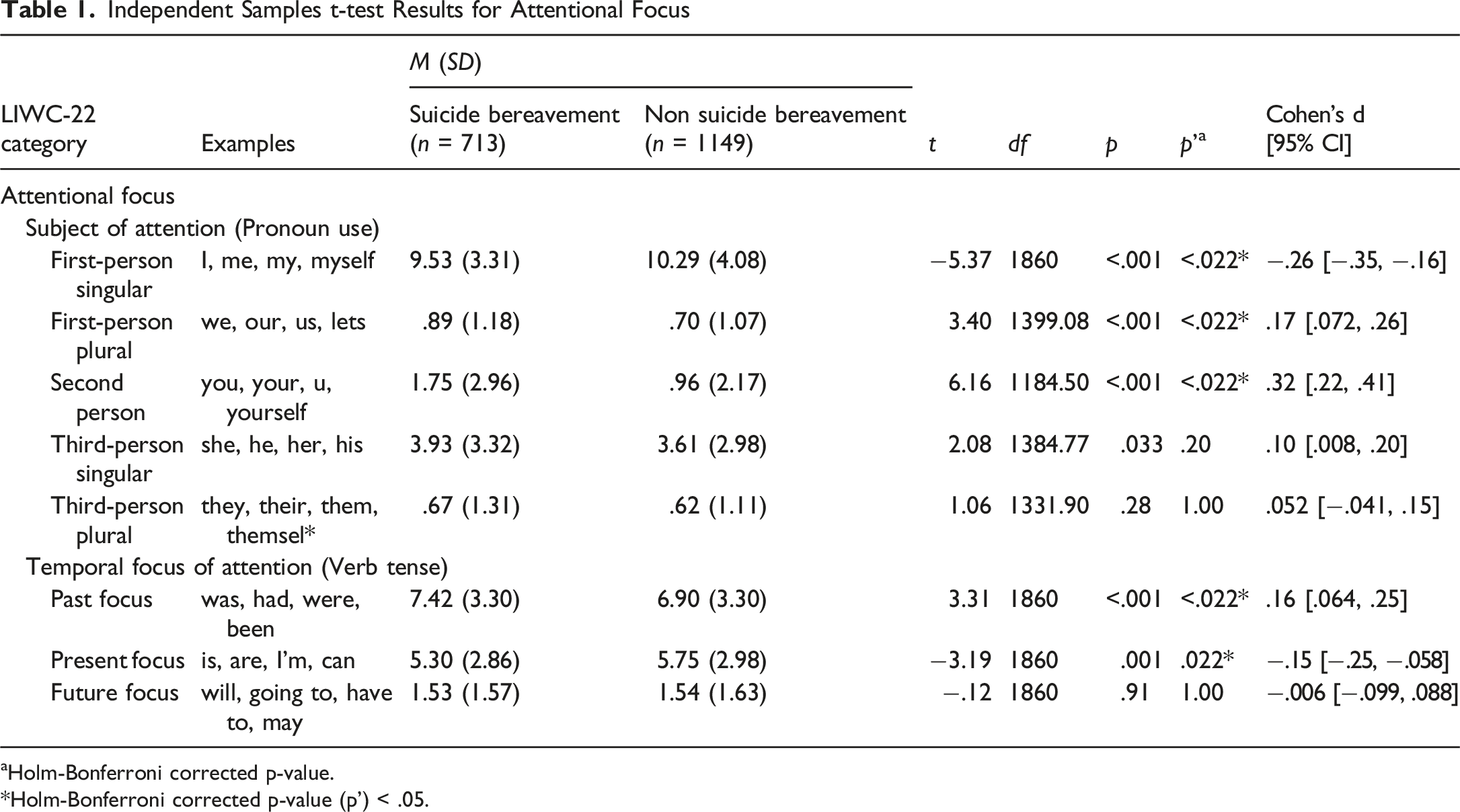
Independent Samples t-test Results for Attentional Focus
aHolm-Bonferroni corrected p-value.
*Holm-Bonferroni corrected p-value (p’) < .05.
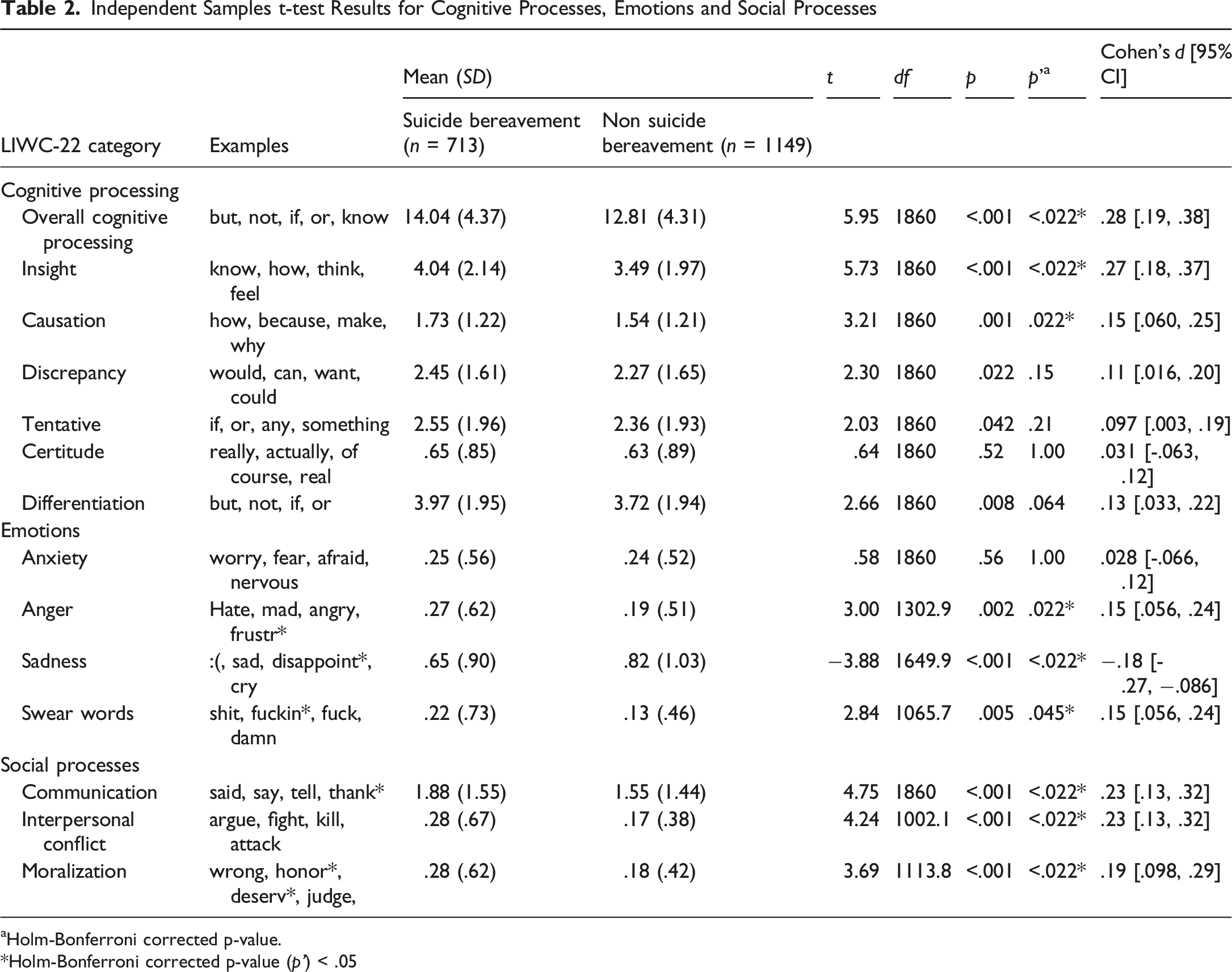
Independent Samples t-test Results for Cognitive Processes, Emotions and Social Processes
aHolm-Bonferroni corrected p-value.
*Holm-Bonferroni corrected p-value (p’) < .05
Attentional Focus: Subject of Attention
Pronoun use provides insight into attentional focus (Tausczik & Pennebaker, 2010). Comparisons of pronoun use between the two groups are summarised in Figure 1. Contrary to our hypothesis, suicide bereavement posts contained fewer first-person singular pronouns (e.g., I, me) than non-suicide bereavement posts, suggesting less self-focus among suicide-loss survivors. An example from r/GriefSupport illustrates the high use of first-person singular pronouns (yellow highlights), reflecting an emphasis on the self and individual grief experience: Since I lost my son my life has gone downhill I’m struggling with everything I’m working myself to death just trying to feed my daughter and I can barely do that. I’ve asked for help but I don’t expect it honestly. I just want my life back that I had before he was gone I want to give up (Amnesia_Addams. 19-06-2023) Between-group comparisons for subject of attention (Pronoun Use)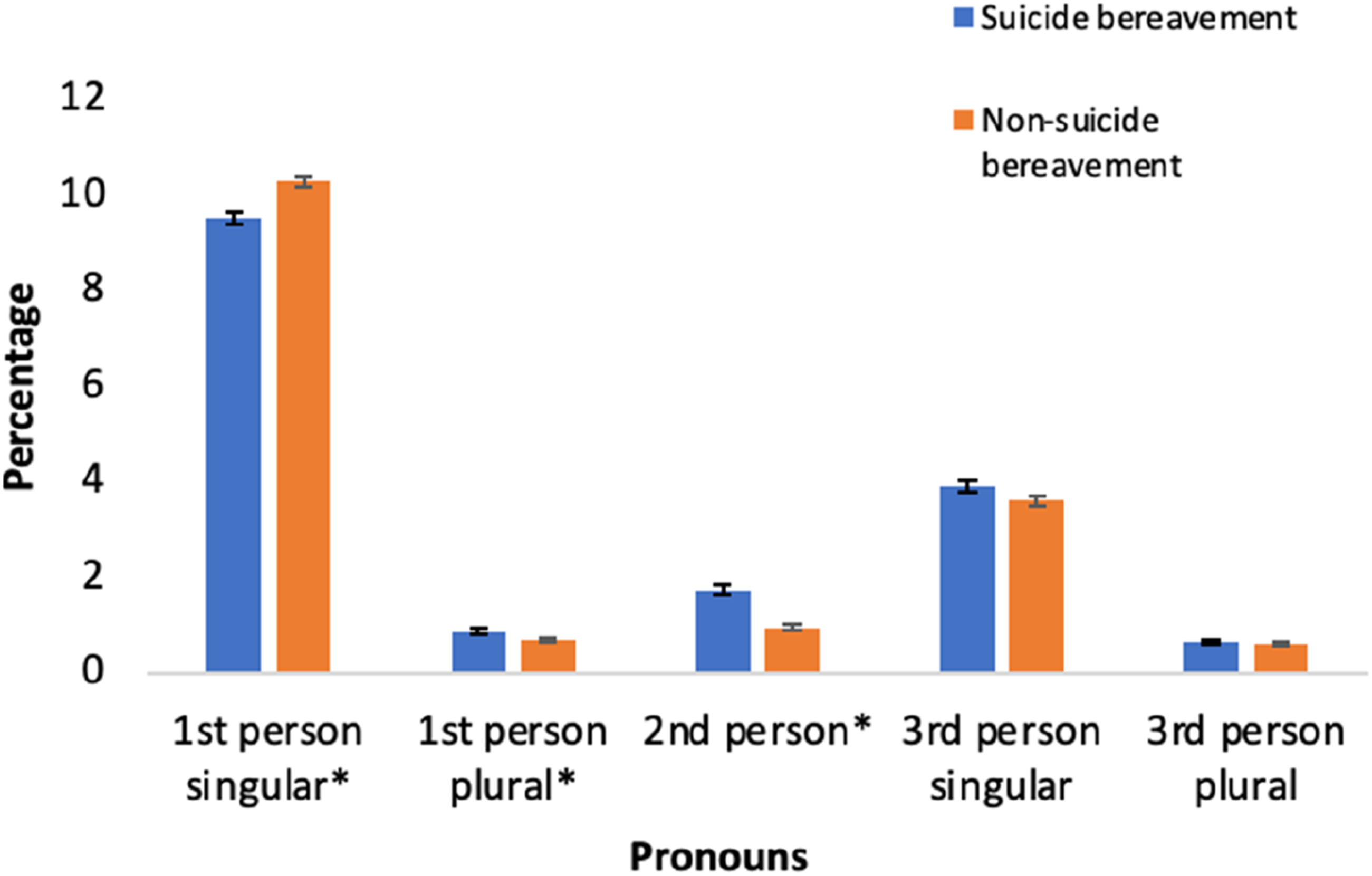
In contrast, suicide-loss survivors used more second-person pronouns (e.g., you, your), reflecting direct address to the deceased and an increased attentional focus on them. An illustrative example from r/SuicideBereavement with a high percentage of second-person pronouns (yellow highlights) is shown below: My baby brother. You had your whole life ahead of you. Your 26 years on this earth were not enough to see how drastically things can change. You were slowly getting on the right path. You were so loved. If you'd have stayed longer I'm sure you would have seen the results of your work. (Marielllaaa, 20-01-2023)
Contrary to our hypothesis, suicide-loss survivors used more first-person plural pronouns (e.g., we, our) than other bereaved individuals. These pronouns were often used to express a shared grief experience within the subreddit community or to interpret the relationship with the deceased, as illustrated below: We were all thrown the most terrible wrench in the vision we had for our life. And yet we’re here day in and day out finding our way and supporting each other as we learn how to cope adapt and grow. (Zestyclose_Pack_3517, 27-04-2023)
First-person plural pronouns (e.g., we, our) were also used by suicide-loss survivors to refer to their relationship with the deceased and to express interpretations of the suicide as an intentional act (“he decided”) directed toward themselves (“he did that to me”): We were together 18 years. He shot himself in the head on April 26/21 at 1150 pm. I know the exact time because he did it in front of me. We weren’t fighting. We had money in the bank and successful careers. No mortgage. We sold real estate together. On paper we were golden. Until we weren’t. His depression screamed louder in his ear than me. And just like that he was gone. Moments after telling me he would never do that to me, he did that to me. Two weeks after his 51st birthday he decided I’m better off his widow. He would rather shoot himself in the head than spend another day here with me. And I’m just supposed to be ok with that. (lindabrum, 19-04-2023)
Another post highlighted how suicide prompted the author to question assumptions about their relationship: My significant other killed themselves and I didn’t even know they were struggling so bad. Is there any other conclusion on this that our relationship was not working out. I loved them so much and we had our problems which I thought everyone has some issues. I felt that we had good communication and we talked about many issues and improved. I knew they had challenges but I never understood the magnitude before it was too late. I thought we had amazing relationship together and there was much love but this end of it makes me question everything we had. (muhku666, 13-06-2023)
Lastly, there were no significant differences between groups in the percentage of third-person singular (e.g., he, she) or third-person plural pronouns (e.g., they, them).
Attentional Focus: Temporal focus of Attention
As shown in Figure 2, consistent with our hypothesis, suicide bereavement posts contained significantly more past-tense verbs (e.g., “he lied, stole, and ruined me”) and fewer present-tense verbs (e.g., “I am glad she is resting now”) than non-suicide bereavement posts. This suggests that authors of suicide bereavement posts focused more on the past and less on the present. Contrary to our hypothesis, there were no significant differences between groups in the use of future-tense verbs, indicating similar levels of future orientation in both suicide and non-suicide bereavement posts. Between-group comparisons for temporal focus of attention (Verb tense)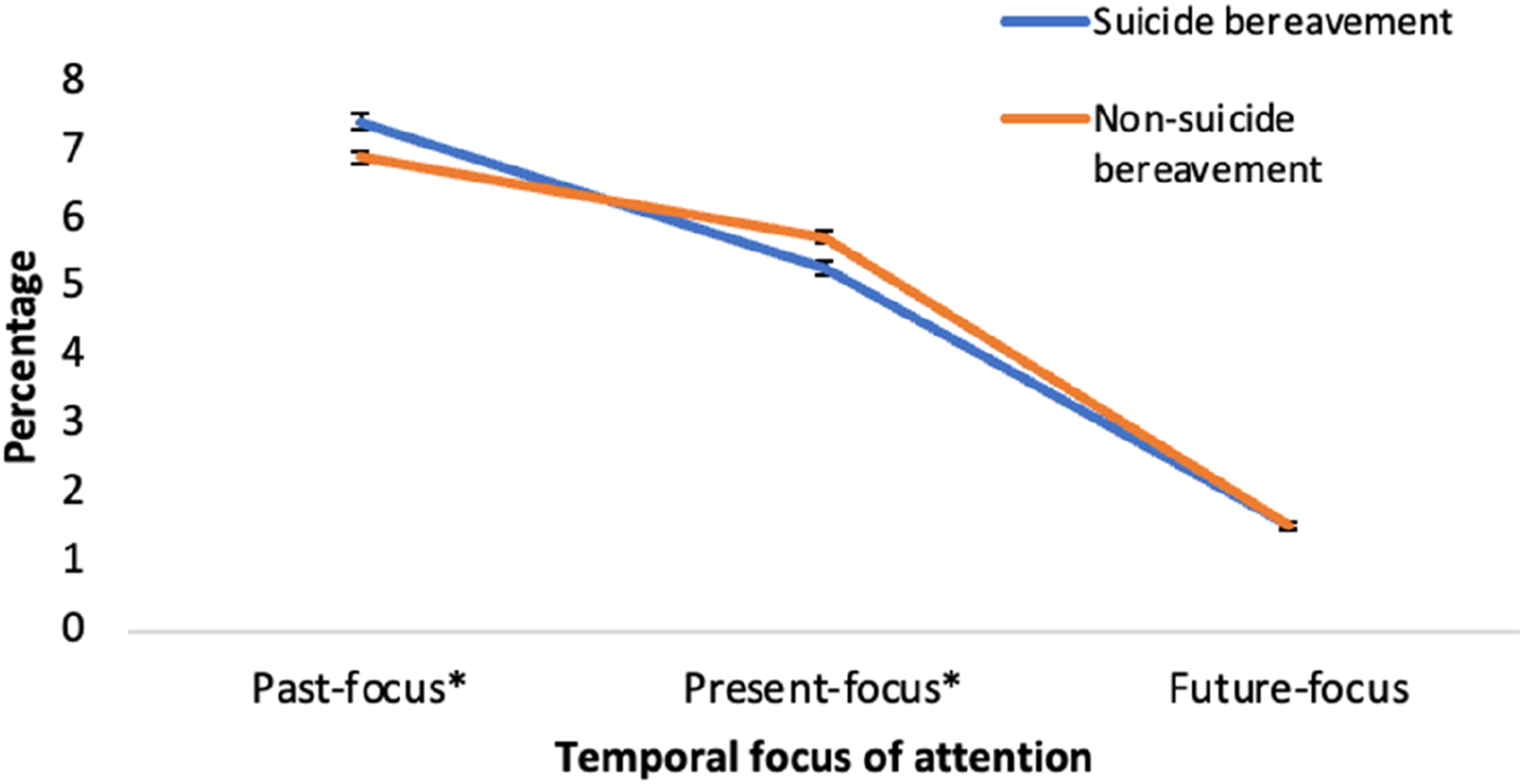
Cognitive Processing
Consistent with our hypothesis, suicide bereavement posts contained a significantly higher percentage of words indicative of overall cognitive processing (e.g., know, understand) compared to non-suicide bereavement posts. This difference was particularly pronounced in two subcategories: insight words (e.g., realise, know) and causation words (e.g., because, why). The results for these subcategories are summarised in Figure 3. Between-group comparisons for Sub-categories of cognitive processing words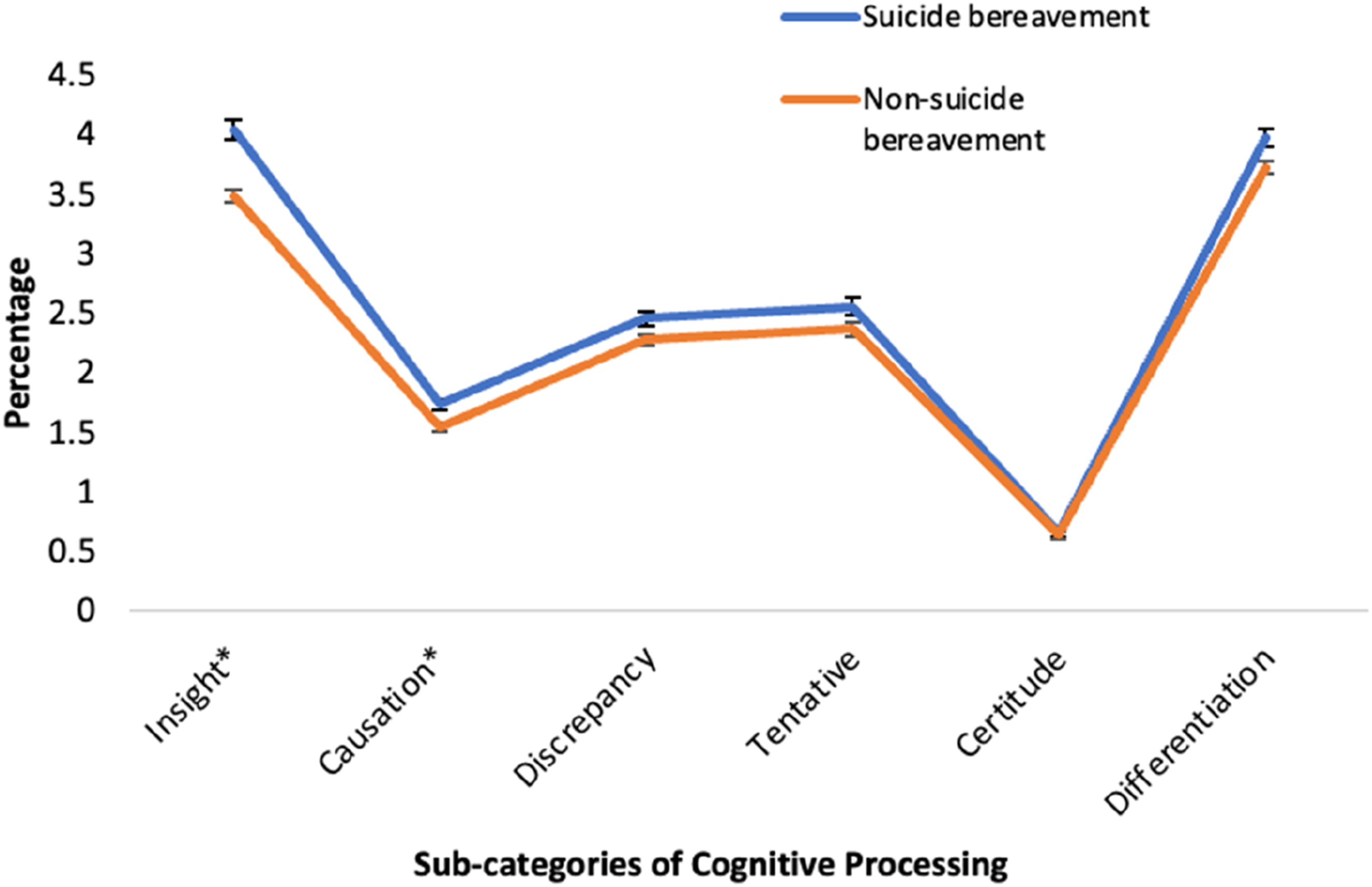
Emotions
Suicide-loss survivors expressed significantly more anger but fewer sadness-related words compared to individuals bereaved by other causes (see Figure 4). They also used more swear words. No significant differences were found between groups in expressions of anxiety. A closer examination of the data (non-preregistered analysis) revealed that the difference in sadness was mediated by first-person pronoun usage (ab = .028, 95% CI = .014 to .047). Specifically, suicide-loss survivors used fewer first-person singular pronouns (a = .855, p < .001), which in turn predicted fewer sadness-related words (b = .033, p < .001). However, differences in anger were not explained by the use of first-person singular, first-person plural, or second-person pronouns (all 95% CIs of indirect effects included zero). Between-group comparisons for Emotions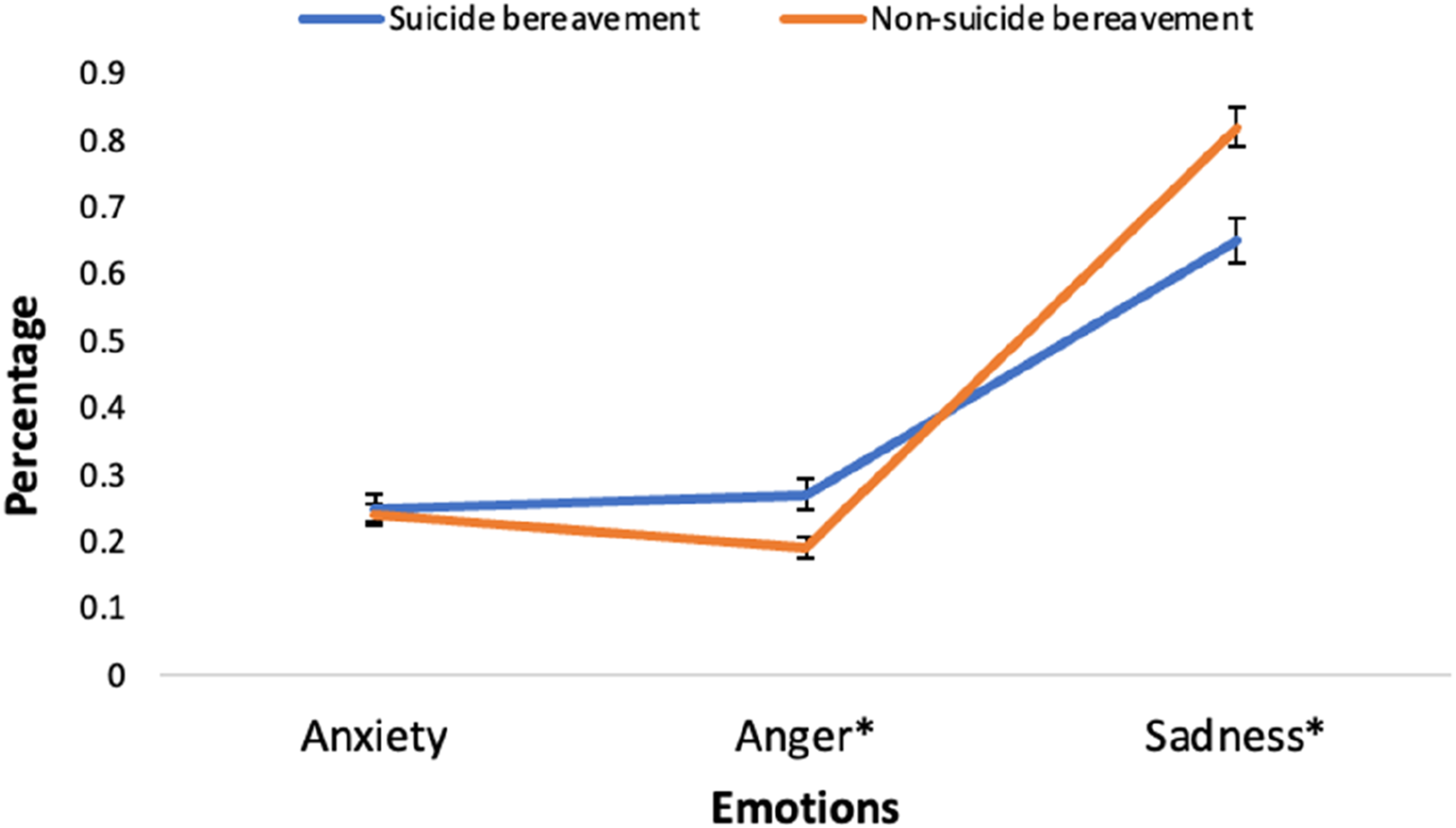
Social Processes
Suicide bereavement posts contained a significantly higher percentage of moralization words (e.g., wrong, judge), conflict words (e.g., argue, fight), and communication words (e.g., say, tell) compared to non-suicide bereavement posts. Many posts with high conflict scores concerned familial conflict following the suicide (“It just sucks how much collateral damage comes with this… family dynamics split, tension, anger, resentment, secrets.”), suggesting that suicide bereavement may involve heightened moral and interpersonal tensions that contribute to its unique grief profile.
Discussion
This study examined linguistic markers of grief in suicide- and non-suicide bereavement within large-scale, naturalistic Reddit posts, offering a rare window into spontaneous, unfiltered grief expression free from the self-presentation biases of traditional grief research. Consistent with our hypotheses, suicide-loss survivors used significantly more cognitive processing words, particularly causation (e.g., because, why) and insight words (e.g., realise, know), reflecting intensified meaning-making efforts (Boals et al., 2011; Neimeyer, 2005). This aligns with prior evidence that suicide-loss survivors strive to answer the question “why” a suicide occurred (Andriessen et al., 2017; Kaslow et al., 2011; Pitman et al., 2017) and underscores meaning-making as a core component of suicide bereavement.
The attentional focus findings offer further insight into the meaning-making process in suicide bereavement. Contrary to our hypothesis, suicide-loss survivors displayed less self-focus, using fewer first-person singular pronouns (e.g., I, me) than other bereaved individuals. This contrasts with prior research suggesting higher self-focus among suicide-loss survivors due to their elevated risk for post-traumatic stress and depressive symptoms (Brockmeyer et al., 2015; Dyregrov & Dyregrov, 2005; Wilson & Gilbert, 2008), but aligns with Lester (2012), who observed reduced self-focus in online memorial writing. Instead, suicide-loss survivors showed greater focus on the deceased, as indicated by increased use of second-person pronouns (e.g., you). This pattern may reflect an effort to “walk in the shoes” of the deceased — to understand their pain, mental state, and the circumstances leading to suicide (Sands, 2009, p. 1). In doing so, survivors may have been shifting attention away from themselves toward the deceased, which may explain why suicide-loss survivors used fewer first-person singular pronouns (reflecting less self-focus) and more second-person pronouns (reflecting greater focus on the deceased).
Second, the increased use of second-person pronouns (e.g., you) among suicide-loss survivors may reflect their effort to make sense of what the suicide signifies about their relationship with the deceased and to express emotions such as anger toward them (Sands, 2009). Previous studies have shown that people use online platforms to communicate with deceased loved ones as a means of reflecting on the relationship and processing the loss (De Groot, 2012; Williams & Merten, 2009). Given the perceived intentionality of suicide, survivors often interpret it as an interpersonal message from the deceased about their relationship (Jordan & McGann, 2017), which can challenge their assumptions about that relationship. Thus, suicide-loss survivors may feel a greater need to address the deceased directly as part of making sense of the death and reaffirming continuing bonds — an essential component of bereavement (Goodall et al., 2022; Hunt et al., 2019; Klass et al., 1996).
Third, contrary to our hypothesis, suicide-loss survivors used a greater proportion of first-person plural pronouns (e.g., we, our) than other bereaved individuals, reflecting a stronger focus on their collective selves. Many survivors framed their grief as a shared experience within the subreddit community, suggesting that despite potential isolation from existing support networks due to the stigma surrounding suicide (Cerel et al., 2008; Dyregrov & Dyregrov, 2008; Jordan, 2020), they may find connection through groups who share similar losses. This sense of collective grieving can facilitate the meaning-making process by providing survivors with opportunities to share their narratives and gain insight from others’ perspectives (Neimeyer et al., 2014; Tedeschi & Calhoun, 2004; Wolchik et al., 2009).
Fourth, consistent with our hypothesis, suicide-loss survivors exhibited a stronger focus on the past and a reduced focus on the present. This finding aligns with prior research (e.g., Andriessen et al., 2017; Jordan et al., 2011; Pitman et al., 2017) and suggests that revisiting the past may be a key mechanism through which survivors attempt to make sense of the suicide (Hogan et al., 1996). Contrary to our expectations, there was no significant difference in future focus between the groups, indicating that, regardless of the type of loss, envisioning a future without the deceased remains a considerable challenge for the bereaved (Bryant et al., 2014; Robinaugh & McNally, 2013).
Emotions
The finding that suicide-loss survivors expressed more anger than other bereaved individuals aligns with previous research showing heightened anger toward themselves, others, and even the deceased (Jordan & McGann, 2017; Peters et al., 2013; Ross et al., 2021). Interestingly, this difference was not mediated by the use of first-person pronouns (e.g., “I”) or third-person pronouns (e.g., “she”). Although it is possible that some writers referred to the deceased by name (e.g., “Mary”), which LIWC does not classify as self- or other-focused language, such cases were rare.
Contrary to our hypothesis, suicide-loss survivors used fewer sadness-related words than other bereaved individuals. This difference was mediated by their lower use of first-person pronouns, supporting the notion that sadness is a self-focused emotion (Mor & Winquist, 2002). However, if sadness word usage predicts depression (Rude et al., 2004), it remains unclear why suicide-loss survivors use fewer sadness words despite being at higher risk of developing depression (Brent et al., 2009; De Groot & Kollen, 2013).
Finally, anxiety—typically linked to future-oriented thoughts—did not differ significantly between groups in either anxiety-related words or future-focused expressions. Words such as “worry,” “fear,” and “afraid” often signal a future time perspective, and prior research has found a relationship between a negative future orientation and worry (Åström et al., 2019). Given the lack of difference in future focus, it is unsurprising that expressions of anxiety were also similar across groups.
Social Processes
In line with our hypothesis, suicide bereavement posts contained a significantly higher percentage of moralization words (e.g., “wrong,” “judge”) than non-suicide bereavement posts, consistent with research showing strong moral judgments surrounding suicide (Owens et al., 2008). Suicide-loss survivors also used more words pertaining to interpersonal conflict and difficulties (e.g., argue, fight) than other bereaved individuals. This is consistent with previous research demonstrating increased conflicts about who is responsible for the suicide, and also due to conflicting grieving styles (Kaslow et al., 2011; Parrish & Tunkle, 2005).
Contrary to our hypothesis, there were more communication-related words (e.g., say, tell) in suicide bereavement posts than non-suicide bereavement posts. This appears to contradict previous research demonstrating that suicide-loss survivors tend to experience more isolation from their social support systems (Cerel et al., 2008; Jordan & McGann, 2017; Kaslow et al., 2011). Closer examination of the suicide bereavement posts revealed that many suicide-loss survivors were not referring to communication in the present, but to their communication with the deceased in the past (e.g., “she’d confided in me during our video chats”, “we spoke about that stuff”). Once again, this may be part of suicide-loss survivors’ attempts to make sense of their relationship and communication with the deceased.
Implications for Theory and Practice
Our study yielded a combination of findings that both supported and contradicted our hypotheses. The results that aligned with our predictions reinforce the robustness of existing knowledge, demonstrating that these patterns can be replicated in a novel medium of expression. Conversely, the unexpected findings are particularly valuable, as they highlight potential misunderstandings or gaps in current theoretical and clinical perspectives on the suicide-loss process.
These findings carry important implications for clinical practice and for supporting suicide-loss survivors in their bereavement journeys. Meaning-making is central to adapting after suicide loss, with extensive research demonstrating it to be a strong predictor of both wellbeing (Coleman & Neimeyer, 2010) and post-traumatic growth (Smith et al., 2011). Clinicians should therefore be well equipped with appropriate assessments and interventions to facilitate this process. Moreover, as language is a core medium through which meaning-making occurs, the present study’s focus on linguistic expression offers particular relevance for informing how clinicians might support survivors in constructing meaning from their loss.
Our findings further suggest ways in which clinicians can support suicide-loss survivors in the meaning-making process. First, because suicide-loss survivors tend to focus less on themselves and more on the deceased, interventions might accordingly encourage survivors to tell their story by sharing their experiences and working through their relationship with the deceased. In these narratives, it is important to acknowledge the act of suicide without allowing it to define the entirety of the deceased’s life (Dransart, 2013). Through this balanced approach, survivors can gradually integrate the loss and construct meaning from it (Pritchard & Buckle, 2018).
Second, because suicide-loss survivors were more likely to use first-person plural pronouns, clinicians may find it helpful to assess the extent to which survivors experience their grief as shared with others. In treatment, this could involve fostering a sense of community and strengthening social support, while also gently guiding survivors toward processing their individual experiences of grief—an aspect they may find more difficult to access.
Third, suicide-loss survivors showed greater expressions of anger and interpersonal conflict in their posts. Clinicians can support survivors in processing these emotions by creating a safe, nonjudgmental space and introducing interventions that facilitate continuing bonds with the deceased. Approaches such as grief letters (Larsen, 2022) and empty-chair work (Kellogg, 2014; Neimeyer, 2021) allow survivors to communicate directly with the deceased —a tendency reflected in their frequent use of second-person pronouns (e.g., you) (Sands, 2009). These practices not only help survivors express unresolved emotions but also provide opportunities for meaning-making. In addition, clinicians can offer psychoeducation about the nature of suicidal thoughts and behaviors—for example, that their loved one may have sought to end psychological pain rather than relationships—helping survivors reframe the loss in a less self-blaming or conflict-laden light (Berardelli et al., 2020; Jordan & McGann, 2017).
Finally, the finding that suicide-loss survivors place greater focus on the past and the deceased suggests that clinicians should attend to suicide-loss survivors’ attentional focus at different stages of treatment. It may be necessary for suicide-loss survivors to first work through the past and their loss before shifting attention toward the present and future. Indeed, our findings suggest that suicide-loss survivors often “walk in the shoes” of the deceased as a way of making sense of their loss. Once they feel they have “walked” sufficiently in those shoes, they may be more ready to “take them off” (Sands, 2009; Sands et al., 2011) and reorient their focus toward themselves. At this stage, clinicians can gently guide survivors to reconnect with their own personal experiences, enabling them to access the pain and emotions inherent in grief (Worden, 2018). As our findings also indicate that such personal experiences may be more difficult to access, it may be clinically meaningful for clinicians to support suicide-loss survivors through this process with sensitivity and patience.
More broadly, the results of this study suggest that social media sites such as r/SuicideBereavement hold promise as valuable resources for suicide-loss survivors on their bereavement journey. These forums provide platforms for survivors to share their grief and receive mutual support, reducing isolation and facilitating meaning-making (Bell et al., 2012; Feigelman et al., 2008; Hoy, 2016; Neimeyer et al., 2014). It is therefore important for clinicians to be aware of such supportive platforms so they can guide survivors toward appropriate resources (Falconer et al., 2011; Jordan, 2020). For survivors who face psychological or physical barriers to accessing professional services, these online resources can serve as an important alternative (Andriessen et al., 2019). The benefits of these forums may be enhanced through facilitation or moderation by clinicians (Bailey et al., 2017) to mitigate potential risks such as unstructured or negative interactions (Chapple & Ziebland, 2011; Kramer et al., 2015). While these findings highlight the value of human-driven forums like Reddit, the growing use of generative AI platforms for grief support (Yang & Khanna, 2025) presents both opportunities and risks, underscoring the need for future research on how survivors navigate these evolving forms of support.
Beyond their value for survivors and clinicians, online bereavement forums also constitute an important resource for researchers studying suicide loss. Although computational analyses of social media have increasingly been used to examine suicide risk, ideation, and trajectories (see Abdulsalam & Alhothali, 2024, for a review), comparatively little work has focused on the experiences of suicide-loss survivors. Naturalistic platforms such as Reddit offer unique opportunities to study bereavement processes at scale, particularly when combined with interpretable, theory-driven linguistic approaches.
Taken together, these findings underline the importance of tailored, language-sensitive approaches to supporting suicide-loss survivors. They highlight the need for clinicians to attend not only to the content of survivors’ narratives but also to the linguistic patterns through which grief and meaning-making are expressed, thereby offering pathways for more nuanced and effective support.
Limitations and Future Directions
This study has several limitations that should be acknowledged. First, the word-count strategy employed (LIWC-22) was unable to capture subtleties such as irony, metaphor, and other nuanced forms of communication (Pennebaker & Francis, 1996). Nevertheless, this approach offers the undeniable advantage of enabling reliable and efficient analysis, less prone to human biases and errors (Lester, 2012), and is the most practical method for processing vast volumes of text—often numbering in the thousands or even billions of utterances (e.g., Ashokkumar & Pennebaker, 2021; Massell et al., 2022).
Another limitation is the absence of demographic information for post authors, including racial/ethnic identification, cultural or geographic background, sex/gender, and socioeconomic indicators such as income and education. Thus, we could not examine how factors such as age, nationality, gender, culture, time since death and perceived closeness to deceased may influence the experience and expression of suicide bereavement. As these factors have been shown to affect the bereavement process following a loss (Doka & Martin, 2010; Lobb et al., 2010; McGill et al., 2023), future research should examine them in the context of suicide loss. Indeed, to deliver effective postvention services, clinicians and researchers need to have a good understanding of the bereavement process and needs of suicide-loss survivors as a group, while also considering the individual differences between suicide-loss survivors (Andriessen & Krysinska, 2012).
Finally, this study focused on the negative emotion categories of anger, sadness, and anxiety because these were the categories available in LIWC-22. We were unable to examine other emotions commonly associated with suicide bereavement, such as guilt, shame, and regret (Jordan, 2001; Stroebe et al., 2014), nor did we investigate positive emotions that are part of the bereavement experience (Bonanno & Kaltman, 2001; Wortman & Boerner, 2011). Suicide-loss survivors’ meaning-making processes may involve post-traumatic growth (Drapeau et al., 2019; Moore et al., 2015), encompassing a renewed outlook on life, greater resilience in the face of stress, and increased pro-social emotions such as compassion and hope (Jordan, 2020; Jordan & McGann, 2017). Future research should explore how clinicians can harness these positive and pro-social emotions to foster post-traumatic growth and healing in suicide-loss survivors. Addressing these limitations in future research will strengthen the evidence base and enhance the development of targeted, language-sensitive interventions, providing clearer guidance for clinicians working with suicide-loss survivors.
Finally, as this study focused on human-driven online forums such as Reddit, it does not address the emerging use of generative AI for grief support (Yang & Khanna, 2025). Given concerns that AI may both expand access and pose risks (e.g., inadvertently encouraging harmful behaviours), future work should examine how survivors engage with AI-mediated support in relation to peer-driven platforms.
Conclusion
In sum, by combining computational linguistic analysis with theoretical and clinical perspectives, this study offers new insights into the language, attentional focus, and emotional expression of suicide-loss survivors, highlighting how their bereavement journey differs from other types of loss. Suicide-loss survivors used more cognitive processing words, reflecting greater engagement in the meaning-making process. Their grief reflects heightened meaning-making, relational focus, moral processing, and collective identity, emphasising the value of tailored, language-sensitive interventions. These findings offer important theoretical and clinical insights, pointing toward richer, more nuanced support for suicide-loss survivors both within therapy and in online communities. While every grief journey is unique, these findings offer important guidance for clinicians seeking to support suicide-loss survivors with sensitivity, depth, and understanding.
Footnotes

Ethical Considerations
This research was approved by the Human Research Ethics Committee of James Cook University, approval number H9078.
Funding
The authors received no financial support for the research, authorship, and/or publication of this article.
Declaration of Conflicting Interests
The authors declared no potential conflicts of interest with respect to the research, authorship, and/or publication of this article.