




Abstract
The traumatic death of a child profoundly disrupts parents’ lives, challenging their sense of meaning and purpose. Despite its significance in understanding parental grief, this topic remains underexplored. This study addresses this gap by examining how Finnish parents reconstruct life purpose and meaning following the loss of a child. Data were collected through an open-ended online questionnaire, distributed via grief support organizations in Finland, and in-depth telephone interviews. Sixty-six parents completed the questionnaire, and 17 (15 women and 2 men, aged 30–70 years) participated in interviews. The interview data were analyzed using inductive content analysis. Parents described redefined life purposes that included living a meaningful everyday life, nurturing physical and mental well-being, building a purposeful life, utilizing experiential expertise, fostering family-centeredness, and processing grief. Their understanding of life’s meaning encompassed shifts in worldview and values, renewed belief in the goodness of life, stronger emphasis on family and relationships, experiences of personal growth, spiritual transformation, and conversely a diminished sense of joy. These findings underscore that bereaved parents experience both constructive and adverse changes after a child’s death. Tailored support is therefore essential to help parents navigate these complex transformations and safeguard their long-term well-being.
Introduction
Following the traumatic death of a child, parents may experience one of the most profound losses imaginable, placing them at heightened risk of a wide range of psychological and physical consequences (Kochen et al., 2023). This loss often initiates profound and life-changing shifts in worldview, values and life purpose (Champion & Kilcullen, 2023; Lee et al., 2020). Parents may face a crisis of identity, in which their previous self-understanding as a parent feels irreparably altered. This process can provoke intense self-reflection and fundamental doubts about one’s sense of self, but also lead to a deeper reflection on the purpose of life and what is truly important (Hussin, Peltomäki, et al., 2025; Meert et al., 2015; Wheeler, 2001). While existing studies have documented diverse changes in parental roles and life changes following the death of a child, less is known about how bereaved parents reconstruct their identity and meaning in life in different cultural contexts.
In order to perceive life as meaningful, an individual must also experience a sense of purpose. The concept of life purpose is shaped by individuals through the interplay of cultural values, religious beliefs, and personal aspirations, as reflected in their lived experiences (Meert et al., 2015). Life purpose is also closely tied to identity, and its disruption is a central challenge for bereaved parents. Many parents describe their children as a continuation of their future, deriving meaning and purpose from providing care (Hussin, Talvitie, et al., 2025). However, after the loss, parents’ senses of life purpose and meaning may shift dramatically (Hussin, Peltomäki, et al., 2025). Identity changes may be constructive or detrimental depending on how the loss is processed, and while some parents report growth, others describe a diminished sense of self (Lee et al., 2020). At present, there is still insufficient research that explores how these changes in life purpose and identity are understood and experienced by parents.
Beyond individual identity, social reintegration represents another significant challenge. Parents often experience alienation and feelings of being misunderstood, as the death of a child fundamentally disrupts their place in society. A sense of not belonging diminishes perceived self-worth and undermines the experience of life´s meaning (Meert et al., 2015). Peer support has been identified as particularly valuable in this process, offering comfort, validation, and opportunities to transform suffering into communal bonds (Hussin & Aho, 2024; Wheeler, 2001). For some, parental identity is replaced or reshaped by new roles, such as participation in social activism or community support that offers bereaved parents a renewed sense of purpose and meaning (Lee et al., 2020). Conversely, domains once considered central to identity and meaning such as work may lose their significance, with employment becoming a mere means of survival rather than a source of fulfilment (Lee et al., 2020).
Family relationships and dynamics are also deeply affected. Parents may struggle with daily functioning and emotional regulation, which can disrupt marital and family life (Manninen & Aho, 2018). Feelings of self-blame can also prevent bereaved parents from rebuilding a sense of purpose and meaning in life (Kim et al., 2024). However, many parents emphasize the importance of sustaining hope and prioritizing the well-being of the surviving family unit (Hussin et al., 2024; Titus & de Souza, 2011). Remaining children often provide a renewed sense of purpose, playing an essential role in the recovery process (Lee et al., 2020; Wheeler, 2001). Yet the symbolic presence of the deceased child also remains significant, as parents seek to honor their bond and preserve shared memories (Hussin & Aho, 2024).
Spirituality represents another common yet complex coping mechanism, with religious faith often serving as a vital source of purpose and meaning of life. Individuals actively seek meaning and explanations for life events to maintain their sense of life purpose (Meert et al., 2015). For some parents, religious faith offers hope and the belief in a reunion with the deceased child and provides meaning and comfort through a continuing spiritual bond (Hussin et al., 2024). But for some parents who previously found meaning in spirituality, the child’s death can provoke a spiritual crisis, leading to disillusionment with religious practices and even an abandonment of faith (Lee et al., 2020; Superdock et al., 2025).
Overall, the experience of child loss profoundly reshapes identity, purpose, family relationships, social belonging, and spirituality. Although the existing literature has documented various changes in the lives of parents following the traumatic death of a child, most studies have focused on cases of anticipated child death, such as those resulting from long-term or chronic illness. Additionally, while previous studies have documented changes in parental roles, spirituality, and coping strategies, little is known about how bereaved parents reconstruct identity and meaning across different cultural contexts and over time after sudden traumatic child-loss.
Aims
This study looks to explore parents’ experiences of life purpose and changes in meaning in life following the traumatic death of a child. Our research focuses specifically on the parents’ own perspectives, seeking to deepen the understanding of how parents re-evaluate and experience meaning in life, and how they describe their life purpose in the aftermath of such a traumatic event.
Methods
Research Design
This qualitative study explores changes in life purpose and meaning in life among Finnish parents who have experienced the traumatic death of a child. A descriptive qualitative design was employed to capture in-depth insights from individuals with firsthand experience of this phenomenon (Bradshaw et al., 2017).
Data Collection and Participants
Recruitment for the study was carried out through member mailing lists, closed online forums, and the websites of grief support organizations in Finland. The call for participation included details of the study’s aims and objectives, researcher contact information, and a link to an electronic questionnaire hosted on the LimeSurvey platform. Parents who fulfilled the inclusion criterion of having experienced the traumatic loss of a biological child were invited to participate. The age of the deceased child was not restricted. These criteria were designed to ensure the collection of rich, contextually relevant data that would effectively address the aims of the study.
The electronic survey, offered in both Finnish and English, included items assessing key demographic and background characteristics, such as age, gender, cause of the child’s death, time elapsed since the loss, number of surviving children, and self-perceived health status. An informed consent form was embedded within the survey.
To capture the subjective and evolving nature of meaning-making after traumatic child loss, the survey incorporated an open-ended question inviting parents to describe how their sense of life purpose and meaning had changed over time. Participants were encouraged to provide detailed narrative accounts, allowing them to express their reflections, emotional processes, and personal interpretations in their own words. This approach was intended to elicit rich data on their post-loss meaning reconstruction.
After completing the online questionnaire, participants were invited to indicate their willingness to participate in a follow-up telephone interview. Contact details were obtained only from those who expressed interest and provided informed consent. Researchers then arranged interviews via text message or email at times convenient for the participants.
Demographic Characteristics of the Interview Participants
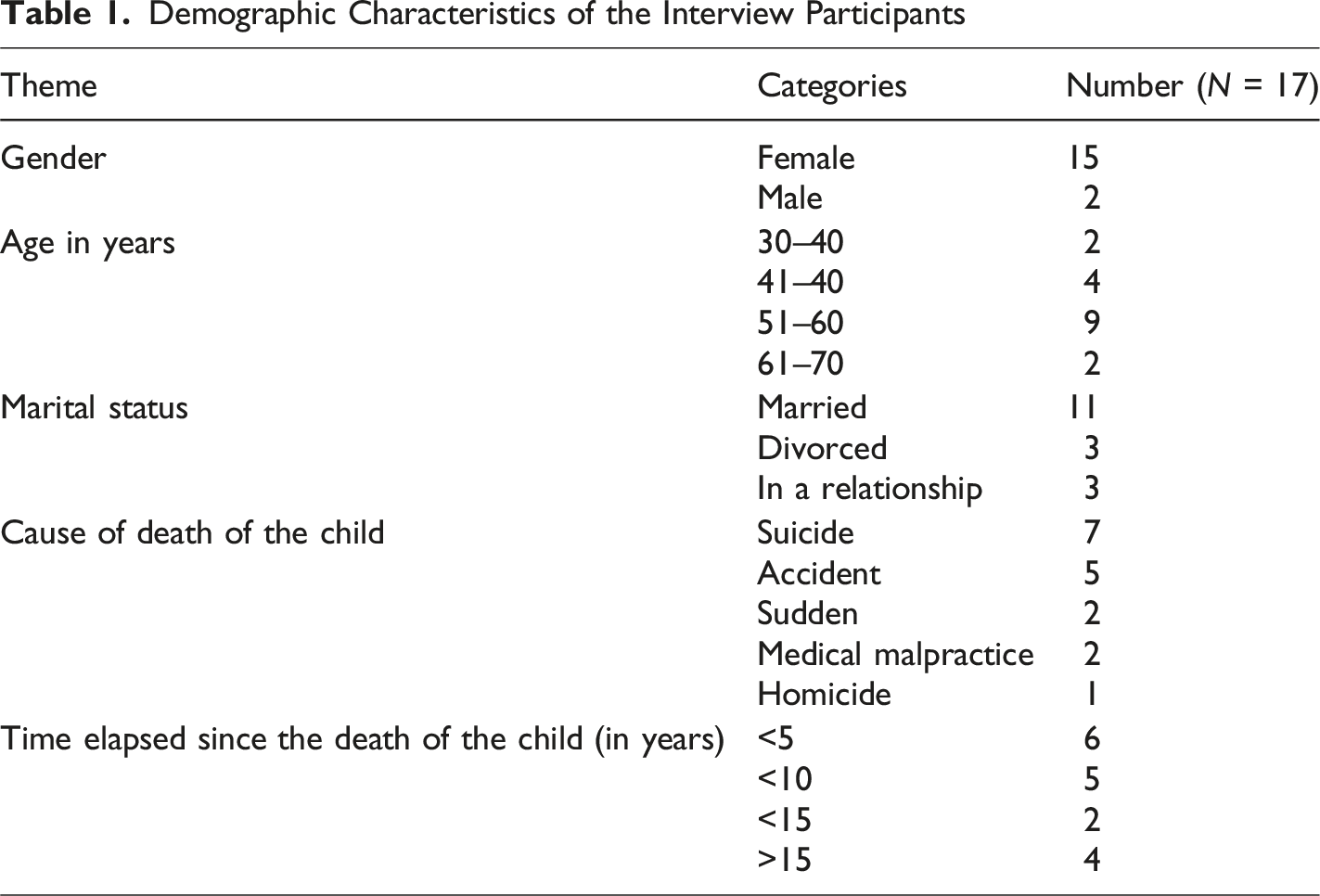
Interviews were conducted via telephone or Microsoft Teams and lasted between 45 and 90 minutes. All sessions were audio-recorded with participants’ consent. Throughout the interview, parents were invited to reflect on their sense of life purpose and meaning following the traumatic loss of their child. They were encouraged to elaborate on their experiences and provide rich, detailed narratives to support deeper exploration of the phenomena under study.
Trustworthiness
The trustworthiness of this qualitative study was established according to Lincoln and Guba’s (1985) criteria of credibility, transferability, dependability, and confirmability. Credibility was strengthened through close alignment of data collection with the study objectives and continuous peer debriefing within the research team. Transferability was supported by purposive sampling of parents with relevant lived experience, although the limited reporting of demographic details—necessary to safeguard anonymity—may constrain the broader applicability of the findings. Dependability was addressed by maintaining a transparent and detailed audit trail of the methodological and analytical procedures, enabling intersubjective review. Confirmability was ensured through collaborative analysis and reflexive discussions, drawing on the research team’s extensive expertise in qualitative inquiry and parental bereavement.
Ethical Approval
All stages of the study, including planning, implementation, and reporting, were conducted in accordance with the guidelines for the responsible conduct of research issued by the Finnish National Board on Research Integrity (TENK, 2023). The study formed part of a larger international and multidisciplinary project that received research permission and ethical approval from the Ethics Committee for Human Sciences in the Tampere region (76/2022). Research data were accessible only to members of the research team and secured through a two-step verification system.
Participants were fully informed about the objectives and conditions of the study and were given the opportunity to raise questions before participation. Informed consent was obtained through the electronic questionnaire and reconfirmed at the beginning of each interview. Participation was entirely voluntary, and individuals retained the right to withdraw at any time without explanation. No financial incentives were provided.
Given the sensitive and emotionally demanding nature of the topic, measures were taken to safeguard participants’ well-being during data collection. Breaks were offered throughout the interviews, and at the conclusion, participants were invited to reflect on their experience and were provided with information on available support services if required. All interview transcripts were anonymized, ensuring that individual participants could not be identified. To further protect privacy, demographic details have been reported only to the extent necessary for contextual understanding.
Data Analysis
The interviews were conducted in Finnish, and transcribed verbatim and translated into English by a professional translator. Each interview was labeled numerically (e.g., Interview 1, Interview 2, etc.). Structured survey questions were analyzed using statistical methods with IBM SPSS Statistics 28.0. Frequency distributions were calculated for the structured variables. The qualitative data were analyzed using inductive content analysis, allowing theory to emerge from individual observations toward broader categories. The analysis was conducted separately for each research question, progressing from condensed expressions to higher-level categories.
Example of Original Expressions and Their Simplifications Codes
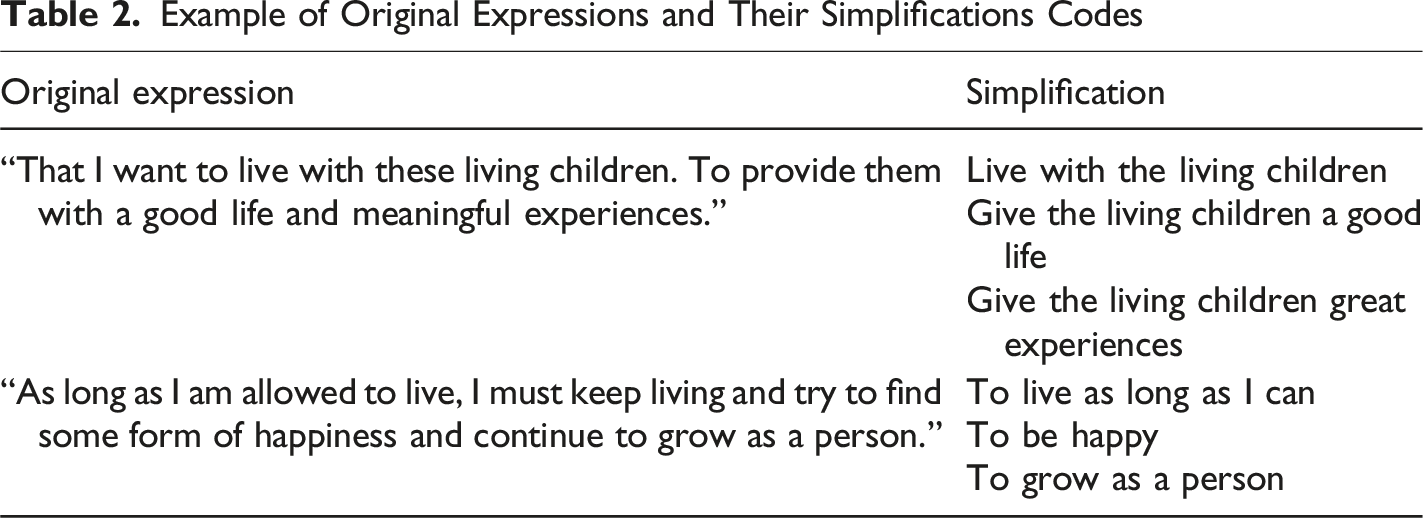
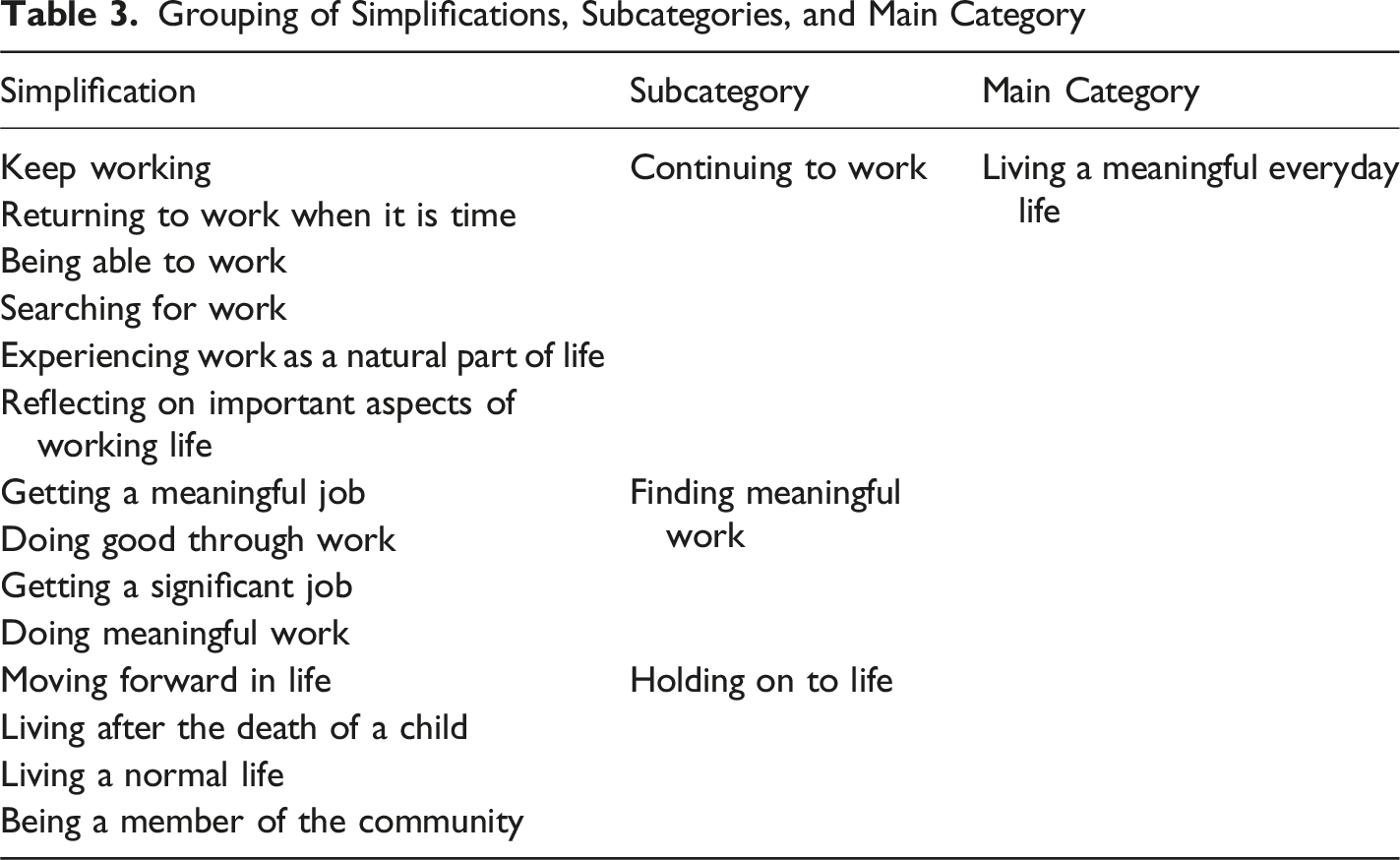
During the grouping of condensed expressions, the original context was frequently revisited to ensure that the core meaning was preserved throughout the analysis process (Assaroudi et al., 2018). From these grouped expressions, subcategories were formed and named based on their content. These subcategories were then further grouped into broader categories (main categories) according to thematic similarity. Microsoft Word’s table function was used to support the categorization process, enabling condensed expressions to be systematically transferred across stages and ensuring that the category labels accurately captured the meaning of the included expressions (La Pelle, 2004).
Grouping of Simplifications, Subcategories, and Main Category
Results
Objective One: Life Purpose as Experienced by Parents After the Traumatic Death of a Child
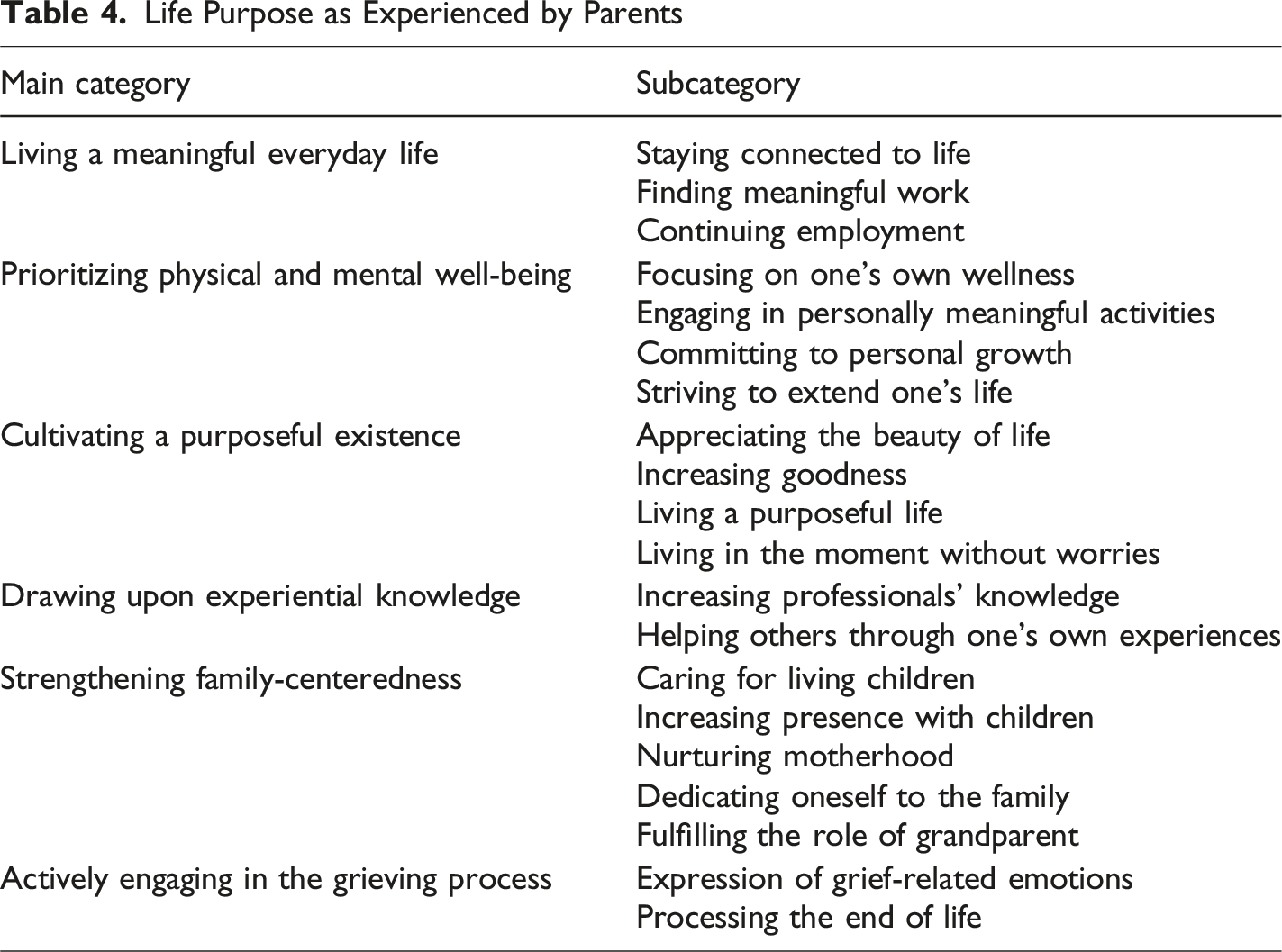
Life Purpose as Experienced by Parents
Living a Meaningful Everyday Life
Living a meaningful everyday life encompassed staying connected to life, engaging in meaningful work, and the aspiration to continue employment. Parents described staying connected to life as striving to move forward, maintaining a sense of normalcy after the child’s death, and sustaining ties with their community. Meaningful work was characterized as work that provides a sense of purpose, enables contribution to the well-being of others, and offers opportunities for reflection on significant aspects of working life. Continuing employment was expressed as the hope of eventually resuming professional roles, with the anticipation that work might once again become a natural and integrated part of life. As one parent explained: “It has never really been that important, but I’ve thought that it would still be a natural part of life. At the moment, there’s no real place for it. I hope that at some point it won’t feel bad—the thought of going back to work.” (Participant 4)
In addition, several parents described a renewed sense of optimism about their future, perceiving life as both meaningful and miraculous despite their loss. For these individuals, hope—particularly the belief that they will one day be reunited with their deceased child—served as a powerful source of motivation. Their living family members and continued engagement in work emerged as central anchors of meaning. As one parent expressed: “I want to live, and that is the driving force for me. I am moving forward, and I am meant to live as good a life as I can so that I feel well. I enjoy life, and it is quite a miracle and a gift. I can be happy, and I still see colors in life. I have two other living children, and I hope to see my dead child someday. I receive praise for my work and for the way I connect so well with children. I work as an expert by experience in a few associations, and it gives my life meaning.” (Participant 2)
Prioritizing Physical and Mental Well-Being
This theme captures parents’ intentional efforts to safeguard their health and longevity in the aftermath of their child’s death. It encompasses a renewed focus on self-care and overall well-being, as parents began to recognise the importance of prioritising their physical and emotional health. As one parent reflected: In my view, health has become increasingly important. After undergoing a recent health check, all my blood values and other results were within normal limits, which prompted further reflection on these issues. I now appreciate the significance of preventive care and make it a point to attend every screening I am invited to—mammograms, Pap tests, and all other recommended examinations. I go to everything. This emphasis on maintaining my health has become much stronger, and it represents a clear change in how I approach my well-being. (Participant 12)
Similarly, parents described an emerging awareness of the need to step out of overwhelming sadness and pain in order to move toward a more functional life. They recognized the importance of continuing to live and survive, which gradually became a guiding principle as they learned to navigate life after the loss of their child. One parent explained: As one parent no I have not remained in that place of sadness and pain. I have moved forward. I allow myself to feel happiness and to laugh again. There was simply no other choice but to continue living; I was forced to keep going. Even if I had wanted to stay in that darkness, I could not. In the early days, I often thought about how others were able to carry on with their lives while I was enduring something so devastating. I felt as though I was experiencing the very worst. I sometimes use the word survived to describe my journey, but surviving does not mean that I have forgotten. The memories and the loss remain with me, even as I learn to live alongside them. (Participant 12)
Cultivating a Purposeful Existence
Parents described cultivating a renewed appreciation for life by intentionally noticing and engaging with the small, meaningful moments around them. Drawing inspiration from their deceased child, they expressed how these seemingly simple experiences helped restore a sense of hope and purpose. Although the pain of loss remains, they allowed themselves to heal at their own pace, without forcing or suppressing their emotions. As one parent explained: “My purpose in life now is to notice, appreciate, and take joy in the beauty around me. I feel stronger than before, and I have drawn inspiration from my [deceased child]—to do small things whenever I want to and whenever I am able. I have regained a sense of hope, and I genuinely love living again. The pain is still there, and the journey ahead remains long, but I can take pleasure even in small steps forward. I allow myself the time and space I need to heal and recover at my own pace.” (Participant 10).
While other parents emphasized the importance of living in the present and strengthening their relationships with their surviving children, the uncertainty surrounding the future also fostered a deeper appreciation of life. As one parent explained: Live fully in the present moment and avoid leaving things unresolved—especially in our relationships with our children. We can never know what tomorrow will bring: what might happen to our child, to ourselves, or to those we love. This uncertainty has, in a way, brought a heightened awareness and appreciation for life. (Participant 11).
Drawing upon Experiential Knowledge
The use of personal experiences as a source of expertise encompassed two primary dimensions: strengthening professional competence and extending support to others. Strengthening professional competence involved engaging in research and contributing to the training of professional helpers. Supporting others through lived experience was described as offering companionship, providing empathetic understanding, advocating for traumatised children and youth, contributing to organisational activities, and actively “passing on the good” to individuals facing similar losses. As one participant reflected: “I am now more actively involved with this organisation, especially after I eventually found my way to them. I currently serve as one of the group leaders alongside a deacon and professional facilitators. Although our group is small, it is warm, supportive, and functions well. We are grateful to have access to church facilities and other resources that enable our activities. In addition, I have served as an expert-by-experience and as a telephone support volunteer. These roles have strengthened my commitment to helping others, as I myself once received support from this organisation. I still remember attending for the first time and seeing the older women who were there; in that moment, I thought to myself that one day I, too, would stand in their place. (Participant 12)
Strengthening Family-Centeredness
Family-centeredness emerged as a central orientation through which parents reconstructed meaning following the traumatic loss of a child. This orientation manifested across several interconnected dimensions, including caring for surviving children, strengthening parental presence, nurturing one’s identity as a parent, devoting oneself to the broader family unit, and embracing grandparenthood as a renewed source of purpose. Caring for surviving children was often described as living for their sake—ensuring their well-being, guiding their development, and fostering opportunities for a balanced and meaningful life. Parents framed this responsibility as an enduring commitment to protect and support their children’s futures, even as they navigated their own grief: “In this sense, I have changed profoundly as a person. I still participate in the lives of others when needed, but I no longer see this as my primary responsibility. My perspective has shifted: my foremost commitment now is to my own family and children.” (Participant 3).
Dedication to the family extended beyond immediate parenting roles, encompassing the marital relationship, intergenerational caregiving, and obligations to aging parents. Such dedication was often accompanied by the conscious setting aside of personal aspirations to prioritize collective familial needs and stability. The role of grandparenthood was described as particularly significant, offering both continuity and renewed purpose in the aftermath of loss. For many, grandchildren became a source of healing and legacy, symbolizing hope within the family system. As one parent expressed: “I now have two wonderful grandchildren, and after enduring so much pain, they have given me a renewed sense of purpose. My hope is to provide them—and my daughters—with the support and security they need. At this stage of my life, my sense of purpose is closely tied to motherhood and grandparenthood; this family orientation forms the core of who I am. Being a mother remains deeply central to my identity and meaning-making..” (Participant 8).
Actively Engaging in the Grieving Process
Parents described grieving as an active, ongoing engagement with both emotional expression and cognitive processing of the child’s death. Emotional expression was characterised by persistent sorrow and melancholy and by efforts to keep the deceased child present within daily life. Cognitive processing involved confronting mortality—anticipating one’s own death and coming to terms with the finality of life. Together these processes reflected a sustained, embodied work of grief that shaped parents’ everyday experience and sense of future. “I am still actively engaged in my own grief work, and one of the most challenging aspects is witnessing the milestones of other people’s children—such as going on exchange or pursuing their studies. These moments inevitably prompt questions about what my own child might be doing now, or who they might have become. At times, I watch schoolchildren step onto a stage with confidence and sing with bright smiles, and I find myself swallowing back tears as I imagine how my child might have performed in similar situations. Others remain unaware of the internal struggle unfolding within me. This experience of feeling different or standing on the margins has been painful, yet over time I have come to recognise it as a source of strength..” (Participant 2)
Objective two: Changes in Meaning in Life as Experienced by Parents after the Traumatic Death of a Child
Changes in Life´s Meaning as Experienced by Parents
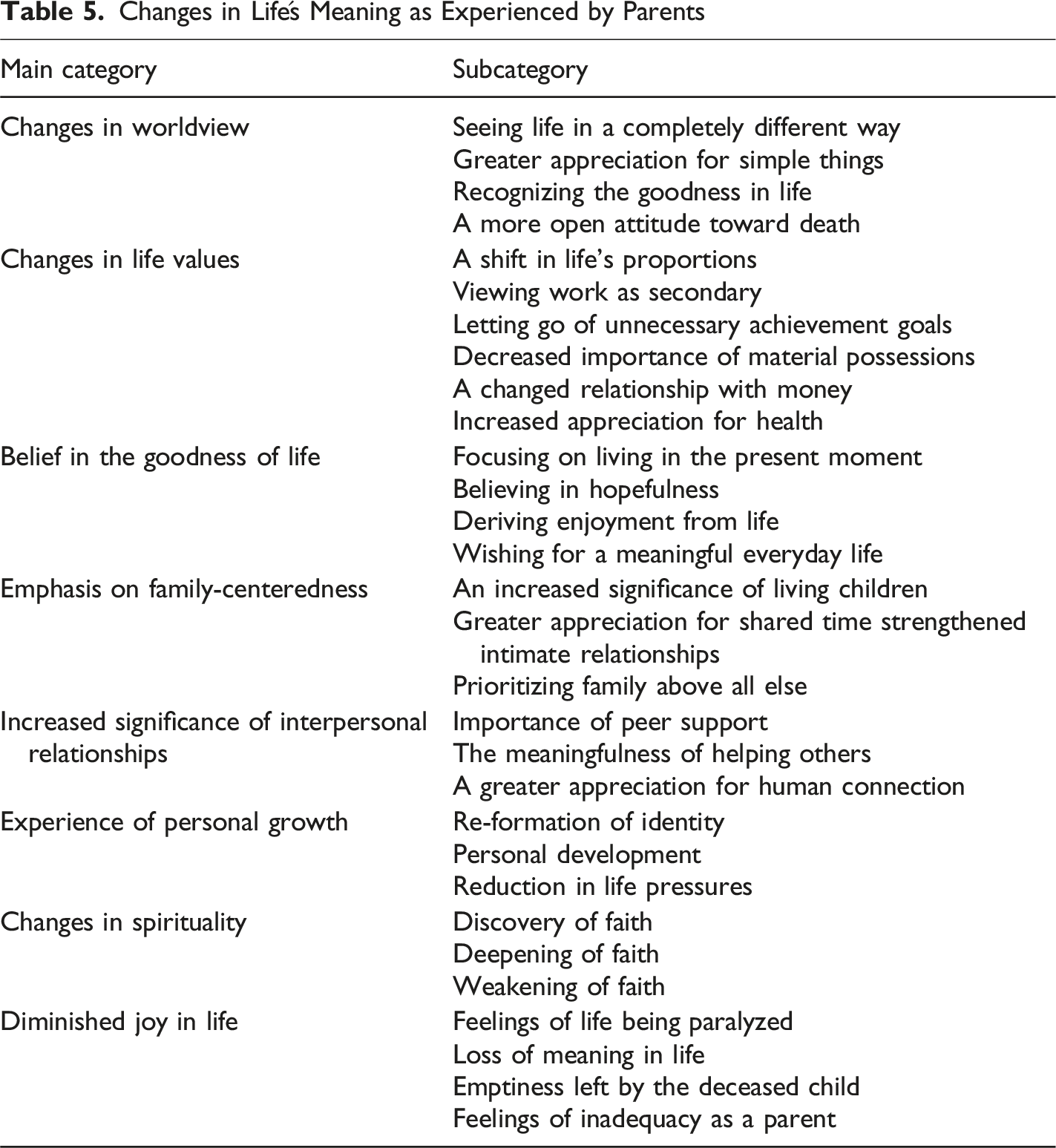
Changes in Worldview
Changes in worldview represented a profound domain of meaning reconstruction for parents, encompassing a renewed appreciation for the simplicity of life, an enhanced recognition of its inherent goodness, and a more open and contemplative stance toward death. Seeing life “differently” was described as a fundamental transformation in perspective—a reorientation that altered how parents understood the world, the meaning of existence, and their place within it. Many articulated a deepened philosophical reflection on life, the universe, and spiritual meaning. One parent expressed this shift as follows: “Perhaps now I am able to look toward life with slightly brighter eyes. Still, in the early stages of trying to make sense of everything, what emerged most strongly was anger—intense anger—at why this had happened to us. My relationship with what is “above” remains deeply strained. The childhood belief in angels, such as the familiar image of an angel guiding a child safely across a bridge, has been completely shattered.
Another parent shared: I grew up in a religious family, as did my spouse. Although I distanced myself from formal religion in adulthood, my struggle is not directed at religion itself. Rather, it is toward the larger universe. It feels like an illusion to believe in angels; if angels truly existed, I cannot help but feel that things would have unfolded differently..” (Participant 3)
A more open attitude toward death also emerged as a notable shift. Parents described death as more tangible and less frightening, and many began speaking about it with greater ease. This openness extended to practical considerations, such as planning their own funerals and discussing these plans with friends. For some, the fear of losing surviving children receded, accompanied by deeper reflections on the journey of the soul and the scientific dimensions of death. As one parent noted: “That fear of death – it disappeared after that.” (Participant 9)
Changes in Life Values
Greater appreciation for simple things was described as finding meaning in small daily moments, valuing positive encounters and small successes, and enjoying the little things in life. Recognizing the goodness in life involved noticing and acknowledging good things, finding positivity in everyday life, feeling more gratitude and appreciation, wishing well for loved ones, and experiencing life as more meaningful. “Sometimes comfort comes from simple things, such as watching a good programme on television or discovering an enjoyable book. I often share these small moments with others—telling someone about a book I have read. I enjoy detective stories; I have always read them and still do. I avoid anything excessively graphic or harsh. I have a colleague at work who also enjoys reading, and we often exchange thoughts and recommend books to one another..” (Participant 12)
Some parents described experiencing a diminished need to pursue material aspirations, noting that such concerns no longer held the same significance after their loss. As one parent expressed: “Everyone is more or less superficial or materialistic. There are trips to the south, cars, fancy houses, and all that… None of it really matters in life.” (Participant 5)
In addition, several parents emphasised that the safety of those around them, particularly family members, had become their foremost priority. They described good physical and mental health as the most essential condition for moving forward, noting that other concerns felt secondary in comparison. A parent said: “I also told him that as long as no one is seriously harmed and no one dies, there is ultimately nothing worth worrying about—everything else is just material and earthly. This experience has profoundly shifted my values. Of course, health becomes more important with age, and I have always tried to live a reasonably healthy life, but this change is not simply about physical health. Rather, it is about recognising that survival itself—remaining intact, emotionally and physically—is what truly matters. Everything else feels secondary.” (Participant 8)
While some parents described gaining new insights and a heightened awareness of life’s fragility, others reflected more deeply on how the loss had reshaped their worldview and emotional responses. One parent articulated this ongoing internal shift as follows: I have reflected on this extensively, and I realise that regardless of how many factors have shaken my sense of security, this experience has been profoundly transformative. I often wish I did not approach situations by first anticipating the most difficult outcomes. Instead, I wish I could adopt a more positive and carefree outlook—one grounded in trust that things will unfold as they should and that life will continue to carry me forward. (Participant 2)
Belief in the Goodness of Life
Belief in the goodness of life was reflected in participants’ efforts to remain present, engage meaningfully with the current moment, and seek out new social connections that offered positive and life-affirming interactions. Some parents also described a shift in their appreciation of everyday life, noting that their perspectives on well-being and resilience had changed markedly after the loss. They spoke of finding meaning in small, previously overlooked aspects of daily living, and of reassessing their assumptions about their own physical and emotional strength. As one participant reflected: “Very small things have begun to matter—tiny details that once felt insignificant have now grown deeply meaningful. I have realised that you do not need much in your surroundings to experience moments of happiness. In terms of health, I think that because I have been ill frequently in recent years, it has challenged my long-held belief in my own physical resilience. I used to feel certain that I would not fall sick easily, but these experiences have tempered that sense of invulnerability..” (Participant 3)
Some parents also described a shift toward finding purpose through meaningful social connection and acts of helping. They explained that encountering new people, engaging in peer-support networks, and contributing to the wellbeing of others enabled them to cultivate a renewed sense of meaning after their loss. As one parent reflected: “Life has changed in many ways, and I now encounter people I would never have met before. Through these interactions—and through the peer support I receive—I have learned to find meaning in this new life. It feels, in a way, as though my son’s death is not entirely in vain. By offering support to others and doing good where I can, I feel that I am, perhaps, giving something back..” (Participant 16)
Emphasis on Family-Centeredness
Parents described a profound shift in how they related to life, relationships, and the passage of time following the death of their child. Their narratives revealed an intensified appreciation for the people who remained in their lives, particularly children and grandchildren, and a renewed awareness of life’s fragility. For many, the experience of bereavement fostered a deeper commitment to living intentionally, staying present, and cherishing moments that might previously have been overlooked. This heightened sense of valuing life is illustrated in the following accounts: “What I appreciate most at this moment is the presence of my two grandchildren, both born after my child died. Although I sometimes feel afraid to be with them, they are the most important people in my life. I have always called them my “little lifesavers.” (Participant 9) “After the death of a child, the reality of mortality becomes profoundly tangible. Parents describe valuing their surviving children and life itself in a deeper, more deliberate way. Nothing is taken for granted, and many strive—whenever possible—to remain present and to live meaningfully in each moment.” (Participant 15)
Increased Significance of Interpersonal Relationships
This theme captured participants’ reflections on the profound value of shared understanding, mutual support, and renewed human connection in the aftermath of their loss. Many described peer support as an essential source of comfort and meaning, particularly during the early stages of bereavement when the experience felt most overwhelming. Engaging with others who had endured similar losses provided a sense of validation, reduced feelings of isolation, and offered insights that were perceived as unattainable through professional support alone. Peer-support networks not only facilitated emotional resonance but also deepened participants’ understanding of the complexity and suddenness of their loss. As one participant explained: “In the beginning, it was incredibly important because the situation is so incomprehensible, and it’s hard to grasp unless someone else has gone through the same.” (Participant 16)
Experience of Personal Growth
Participants often described a gradual reorientation toward stability and emotional endurance as they navigated the aftermath of their loss. Their reflections captured both the overwhelming intensity of early grief and the slow emergence of inner strength that enabled them to continue functioning despite profound distress. This evolving sense of resilience is illustrated in the words of one parent: “I have managed to keep my composure. I was extremely anxious when everything happened, but I did not fall into depression. I feel that I have endured and survived something profoundly dark. Perhaps, when I fully move through this experience, I will once again find something to look forward to..” (Participant 12)
Changes in Spirituality
Despite many parents drawing strength from spirituality, others described profound disruptions to their faith following the traumatic loss of their child. For these parents, the experience of grief was intertwined with a weakening of religious or spiritual belief, characterised by doubt, anger, and a sense of spiritual estrangement. Long-held childhood images of protection—such as guardian angels—were shattered, leaving some parents questioning the presence, benevolence, or even the existence of a higher power. Several described moving toward atheism as they struggled to reconcile their loss with previously held beliefs. As one parent explained: “Well, spirituality… if I had even a little belief in some kind of god, it completely disappeared. I actually felt angry – why couldn’t he save [my child]; if he can do anything, why didn’t he?” (Participant 13)
Diminished Joy in Life
Expressions of existential dissonance were evident among several participants, who described a heightened awareness of life’s value alongside an enduring struggle to fully embrace it following their loss. This tension between recognising life’s goodness and experiencing an inability to engage with it meaningfully is illustrated in the words of one parent: “We have so many wonderful, important, and good things in life. It just saddens me that I can’t fully enjoy them.” (Participant 4)
Participants also described profound disruptions in their sense of parental identity following the loss, highlighting how grief reshaped their capacity to be emotionally present for their surviving children. As one parent explained: “Then that sense of inadequacy in relation to my children is quite overwhelming… I can no longer be the same mother, or that same kind of engaged, active, and genuinely present person in those situations.” (4)
Discussion
This study demonstrates that the meaning and purpose of life for bereaved parents undergo complex and multifaceted transformations following the sudden and unexpected death of a child. The significance of everyday matters increases, yet existential reflections on life’s purpose and meaning are also deepened through changes in personal worldviews and values. Parents described their sense of purpose through meaningful daily life, well-being, peer support, meaningfulness, and family. They expressed a desire to live in the moment, with intensity, and as well as possible. The importance of family was emphasized, with a strong focus on nurturing family-centeredness as a core life purpose. The deceased child was also symbolically maintained as a part of everyday life, highlighting that the bond with the child persists despite their death. The increased significance of family and surviving children has also been noted in previous studies (Lee et al., 2020; Wheeler, 2001), and the spiritual continuation of the parent-child bond has been discussed in research by Hussin and Aho (2024).
In addition to family, participants emphasized focusing on themselves through holistic well-being and personal growth. Parents reported experiencing less pressure from life, personal development, and a renewed focus on fulfilling personally meaningful goals. Although work and career were no longer perceived as central to life after the child’s death, the ability to continue working was still considered important. Parents also emphasized the importance of finding new, genuinely meaningful work. Employment was seen as part of a meaningful daily life and as a pathway back to life after the loss. While Lee et al. (2020) primarily reported a decline in the perceived importance of work and career, the findings of this study suggest that parents view employment as a way to remain connected to society and to regain a sense of purpose. However, experiences regarding the ability to return to work varied, and in some cases, employers allowed only a very short leave of absence following the child’s death. Therefore, more flexible and sensitive work arrangements such as reduced hours or phased returns should be made available to bereaved parents. In Finland, the introduction of formal bereavement leave for parents who have lost a child should be promoted, ensuring paid time off for those who wish to take it.
Parents also highlighted the importance of peer support, using their own experiences to help others. This altruistic engagement can be interpreted as part of the search for meaning in the child’s death. Despite having endured the worst, parents found value in supporting others. The significance of peer support and helping others has also been emphasized in previous research (Hussin & Aho, 2024; Wheeler, 2001). Bereaved parents are experts by experience, and by listening to, understanding, and utilizing their insights, support for other families in similar situations can be improved. In Finland, training is provided for experts by experience, enabling them to contribute within social and healthcare contexts and across society, thereby increasing awareness of their lived experiences.
Participants also reported experiencing an identity crisis following the death of their child, wherein the parental identity was shattered, prompting a re-evaluation of both parenthood and personal identity. These identity shifts evoked a range of emotions, including feelings of alienation, difficulty in self-understanding, and a sense of being solely the parent of a deceased child. On the other hand, parents also described personal growth, a strengthened sense of self, and an increased appreciation for courage and goodness in life. These conflicting emotions related to identity transformation align with previous findings (Hussin, Peltomäki, et al., 2025; Meert et al., 2015). Thus, despite the traumatic experience and negative changes, parents may also experience positive personal transformation.
The results indicate that bereaved parents reflect on the meaning of life through their worldview and personal values. Parents reported becoming more attuned to and appreciative of simple everyday experiences. They emphasized a purpose in life centered on living without causing harm, striving for balance and happiness, and loving those close to them. Despite the loss, parents were able to perceive and experience goodness in life. The death of a child also led to a more open attitude toward death itself. Changes in life values included a shift in the perceived importance of money and material possessions. Material wealth, place of residence, or social status no longer held significant meaning, and money was no longer seen as essential. The meaning of life after the death of a child was perceived in a fundamentally different way, consistent with findings of previous research (Lee et al., 2020; Wheeler, 2001). The time elapsed since the child’s death ranged from less than one year to over two decades, indicating that changes in life meaning may endure across time. This aligns with prior research emphasizing the enduring nature of parental grief (Hussin et al., 2018). Nevertheless, further investigation is required to ascertain whether these transformations are permanent or subject to fluctuation over the course of bereavement.
Religious and spiritual dimensions also emerged in the parents’ evolving sense of life’s meaning. Some parents reported discovering faith through the loss of their child, believing in a reunion with the child, perceived signs in their environment, and experienced supernatural phenomena that deepened their spiritual awareness. Even parents who were not affiliated with any religious community found comfort and support in faith. Among those who had a spiritual background prior to the loss, some experienced a strengthening of faith, while others reported a weakening or complete collapse of their beliefs. Spirituality and faith have been widely recognized in previous studies as playing a role in coping, meaning making, and navigating the grieving process. Spirituality has been described both as a source of comfort and resilience, and as an area of struggle or disintegration following the death of a child (Hussin, Talvitie, et al., 2025; Superdock et al., 2025). It is therefore essential for professionals in social and healthcare services to recognize the potential importance of spirituality, and to be prepared to guide parents toward spiritual support, even if they are not actively involved in a religious community.
The study also revealed that parents experienced negative and distressing changes following the traumatic loss of a child, and some parents described life as having become entirely devoid of value. The findings highlighted feelings of hopelessness, a lack of meaning, and persistent depressive symptoms. Parents reported ongoing sadness, a sense that life had nothing more to offer but crises, and at times, a wish for death. Feelings of inadequacy were common, and life was perceived as ruined with no remaining sense of purpose, and some parents expressed that they were merely waiting for their own death. These findings are consistent with earlier studies which have shown that bereaved parents may experience a complete loss of meaning, and may struggle to find a new purpose in life after the death of a child (Huggins & Hinkson, 2022; Lee et al., 2020; Wheeler, 2001). It is therefore crucial that social and healthcare professionals work to instill hope in bereaved parents following traumatic loss. Importantly, professionals can help normalize these negative experiences as part of the grieving process, while also introducing coping strategies that have been found helpful by other parents.
Changes in life purpose and meaning appear to be universally similar among parents who have lost a child, whether the death was sudden or due to a prolonged illness. However, the impact of traumatic and unexpected loss is particularly severe, long-lasting, and associated with a slower grieving process. Parents who have experienced traumatic child loss are at greater risk for developing mental health disorders, underscoring the importance of long-term, individualized support (Huggins & Hinkson, 2022; Kristensen et al., 2012). Supporting parents through complicated and prolonged grief is especially critical, and if parents are unable to find any sense of purpose or meaning in life, their risk of suicide and mental health issues may increase significantly.
Conclusions and Suggestions for Future Research
The death of a child profoundly alters every aspect of a parent’s life, bringing it to a complete standstill. Parents are compelled to reconstruct their lives and sense of self across all domains of life. The changes in parents’ sense of life purpose and meaning are multifaceted, manifesting in positive and negative ways. These changes range from concrete, everyday experiences to profound shifts in values and worldview. Family, interpersonal relationships, and especially the significance of surviving children were strongly emphasized in this study.
Future research should further examine how parents who have lost a child under particularly complex and challenging circumstances, for example the death of an only child, reconstruct meaning and purpose in life following the loss. The experience of a new life purpose and changes in meaning varied among parents. For some, it was particularly difficult to find any new purpose or joy in life after the death of their child. Accordingly, future studies could investigate whether the ability to find meaning and purpose is associated with demographic factors or the type and amount of support received.
This study highlighted the challenging and prolonged nature of traumatic grief. Future research should focus on identifying the types of support that bereaved parents require, particularly in relation to how such support may facilitate the rediscovery of meaning and purpose in life. The findings suggest that alterations in life meaning are long-lasting, with participants reporting such changes from less than one year to more than two decades after their child’s death. These enduring shifts are consistent with literature describing parental grief as a chronic and often debilitating experience (Hussin et al., 2018), one that in some cases parallels the clinical trajectories of moderate to severe or even treatment-resistant depression. However, this study did not determine whether such transformations in meaning are permanent or subject to fluctuation, underscoring the importance of future research that integrates clinical definitions of prolonged and pathological grief into its conceptual framework.
Footnotes
Acknowledgment
We would like to thank the European Union for supporting this project with the title Fostering Participation in Action Research to Develop an Online Bereavement Support Application to Support Bereaved Parents after the Traumatic Death of Their Child. We would also like to thank the parents who participated in this study.

Ethical Considerations
This study received ethical approval from the Tampere University ethics committee (76/2022).
Funding
The authors disclosed receipt of the following financial support for the research, authorship, and/or publication of this article: Funded by the European Union. The views and opinions expressed in this article are those of the authors and do not necessarily reflect those of the European Union or the European Research Executive Agency. Neither the European Union nor the granting authority can be held responsible for them.
Declaration of Conflicting Interests
The authors declared no potential conflicts of interest with respect to the research, authorship, and/or publication of this article.