




Abstract
This article examines whether the gains from economic integration agreements (EIAs) vary across firm sizes. The empirical analysis makes use of a unique and unbalanced panel dataset with 1,520 country pairs, firm sizes and EIAs from 2007 to 2017. First, we decompose the aggregate export flows across firm sizes, that is, micro, small, medium and large. Second, we deconstruct the extensive and intensive export margins across firm sizes. The empirical model follows a panel estimator with structural gravity specification and estimates the EIA coefficients by employing three-way (exporter-time, importer-time and country-pair) fixed effects. The results indicate that EIAs positively affect overall export flows for firms of all sizes; however, for large and medium-sized firms, this positive effect is primarily through the intensive margin, whereas, for the small and micro-sized firms, it is exclusively through the extensive margin.
Keywords
1. Introduction
‘Economic integration’, is an important economic policy instrument that allows the member states to unify their common interest by lessening the tariff and non-tariff barriers to trade. The scope of the economic integration agreements (EIAs) extends to aligning monetary and fiscal policies as well. Numerous empirical studies have been done to understand the impact of specific EIA on the aggregate level of trade in the context of ‘trade creation and trade diversion’ (Baier & Bergstrand, 2007; Balassa, 1967; Bergstrand, 1985; Clausing, 2003; Krueger, 1999; Mattoo et al., 2017; Yang & Martinez-Zarzoso, 2014) and/or by comparing the trade relationship with/without effects of EIAs (Baier & Bergstrand, 2007; Baier et al., 2014; Egger et al., 2011). EIAs would lead to ‘trade creation’ when the importing member state changes its import sourcing from non-members with increased costs to its members with decreased costs. On the contrary, import shifts from non-members with decreased costs to the EIA members with increased costs would result in ‘trade diversion’ (Viner, 2014). The implications on welfare gains depend on which of these effects is conclusive, where ‘trade creation’ is often referred to as a gain while ‘trade diversion’ to a loss.
The recently developed trade theories are based on firm heterogeneity and argue that only the most productive firms export and there is a prior fixed cost to exporting. Importantly, firm heterogeneity coupled with ex ante– fixed costs of exporting adds to the previous literature, and thus it gives an improved explanation of the two (firms) margins of trade, that is, the extensive and intensive margins. These two margins of trade explain the aggregate trade flows from a country to specific destination markets, where the former refers to the number of exporting firms and the latter to the export volumes per firm (Alessandria et al., 2021; Chaney, 2008; Helpman et al., 2008; Lawless, 2010). The differentials in these two margins are that the former depends on both fixed and variable costs, whereas the latter depends on the variable cost only, as fixed costs are incurred before exporting.
Trade costs are liberalised through economic integration, thus, for existing exporting firms, there would be a greater reduction in marginal costs post-integration and impacts the intensive margin as existing firms respond to declining trade costs (Melitz & Trefler, 2012). When trade costs fall, new firms enter the export market (Arkolakis et al., 2012; Chaney, 2008, p. 1708). Reducing trade barriers is an important feature of economic integration (Balassa, 2013, p. 2). Pre-integration, there is a certain threshold of marginal costs for firms that get reduced post-integration because of the tougher selection process (Melitz & Ottaviano, 2008, p. 300). Hence, the reduction in cost threshold will motivate some new firms in favour of exporting. For new entrants, those who can produce within the new and decreased threshold level of marginal costs after integration will sustain while others exit (Melitz & Trefler, 2012). On the one hand, the impact of economic integration on the intensive margin can be realised in the short term as existing exporters have already absorbed the fixed cost of exporting, only variable costs affect them. On the other hand, the impact on the extensive margin can be sought in the long-term perspective since new entrants need to incur both the ex ante fixed costs of exporting and variable costs (Baier et al., 2014).
Existing literature on the impact of EIAs and the two margins of trade is very few and most focussed on goods margins with varying degrees of integration (Baier et al., 2014; Bensassi et al., 2012; Márquez-Ramos et al., 2015). Baier et al. (2014) investigated the impact of different degrees of integration on the two goods margins of trade at cross country level with a large data set of country pairs. The authors find that a higher degree of integration has a larger impact on the margins compared with the lower degree ones. Furthermore, the authors find conclusive evidence that overall elasticity related to the intensive margin is greater than the one of the extensive margins. Bensassi et al. (2012) explored the impact of Euro-Mediterranean free trade agreements on North African and Middle Eastern countries and found that the free trade agreements (FTAs) positively influence the export margins. For some countries, the authors find that these FTAs have a significant positive effect on the extensive margin, while for others, the effect is only conclusive on the intensive margin. Márquez-Ramos et al. (2015) examined the impact of integration on 11 Latin American countries and found similar evidence. Comparing the effects across the sectors, the authors conclude that gains from EIAs happened through the intensive margins, and the effect of a higher degree of integration is greater on these two margins compared to that of the lower degrees. More recently, Park and Park (2023) identified Korean exporting firms based on their firm size—small and medium-sized enterprises (SMEs) and large enterprises (LEs) at the HS six-digit commodity level. The authors then estimate the impacts of Korean firms’ participation in regional trade agreements (RTAs) on the firm size–specific extensive and intensive export margins. The authors find that LEs’ export creation is mainly driven by the intensive margin, while SMEs’ export creation is mainly driven by the extensive margin.
Liberalisation of trade costs through economic integration has implications for different firm sizes. This is because of the difference in cost structures between large and small firms. The marginal costs of production of large and more productive firms are lower than those of the less productive small firms. Large firms have cost advantages due to economies of scale and they are more efficient than small firms. This occurs because of the costs of large firms being distributed over a greater volume of output. Small firms’ costs, on the other hand, are spread over a smaller volume of output. How firms react to the falling trade costs is related to the firm size as a result.
Costs of rules of origin (ROO) is one example where trade policy instruments like EIAs and firm size interact strongly because firms need to prove the ROO in getting the benefits of the EIAs. The ROO establishes a standard under which products imported by a member state will be deemed to have originated from within the framework of integration agreements and hence qualify for preferential treatment in case of preferential trade agreements or duty-free treatment (in case of FTAs or CUs) (Brenton & Manchin, 2003; Krueger, 1997, 2012). ROO establishes where products originate (means where they were made or manufactured, not where they were delivered from). As a result, the origin of ‘products’ in international trade is their ‘economic nationality’. A product’s value, origin and classification all play a part in determining how it will be treated by customs authorities. Two sorts of origins-namely, non-preferential origin and preferential origin- are distinguished in terms of customs. Before claiming favours under the terms of an EIA, firms typically face administrative or documentation costs to ensure that their products meet the appropriate ROO (Augier et al., 2005; Brenton & Manchin, 2003; Krueger, 1997; Manchin & Pelkmans-Balaoing, 2007).
Smaller firms cannot usually bear such high costs of ROO and lack the ability to have the relevant human resource personnel, such as legal experts, to help them with the complexity of the preferential claim process. Large and more efficient firms, on the other hand, are more capable of maintaining the administrative procedures accurately and able to bear such ROO costs when supplying products abroad (Bombarda & Gamberoni, 2013; Cadot & De Melo, 2008; Medalla & Yap, 2008). We believe that EIAs should differentially affect the export margins when analysed across firm sizes. For smaller firms, we expect the benefits of EIAs to be greater on extensive margins as a reduction in cost cut-off post-integration might attract some smaller firms into foreign markets that have not exported before. Importantly, to get the benefits of reduction in trade costs through EIAs, these existing smaller firms must incur the higher costs of proving ROO. Because of such high costs, they may not be enjoying the benefits of the EIAs; hence, adjustment to the intensive margin may not happen. However, for larger firms, this may not be the case. We expect the effect of EIAs on larger firms to be greater on intensive margins as they can enjoy the preferential tariff by paying the higher costs of proving ROO.
With a unique data set of 26 countries’ exports to 66 destinations over 11 years (2007–2017), we are attempting to examine the firm size–specific effects of EIAs. To do so, first, we decompose the aggregate export flows across firm sizes, that is, micro, small, medium and large. We further deconstruct the export margins, that is, (a) extensive margin (number of exporting firms) and (b) intensive margin (mean size of exports per firm) across firm sizes, that is, micro, small, medium and large as well. Thus, it allows us to quantify the gains across firm sizes at the aggregate level and infer changes in export margins differentially for different-sized firms as well. In this article, we utilise Poisson pseudo maximum likelihood (PPML) panel gravity specifications with average treatment effects (ATE) models for estimating the effect of EIAs on individual firm sizes and examine the effect on their extensive and intensive margins of trade.
This article contributes to the existing literature by showing that there are differences in the effects of EIAs on extensive and intensive margins and by providing conclusive evidence that the differences differ by firm size. On the one hand, the large and medium firms gain from the EIAs mostly through the intensive margin. Small and micro firms, on the other hand, gain from the EIAs only through the extensive margin; however, we found conclusive evidence that there is no gain through the intensive margin for small and micro firms. Thus, we suggest that existing small and micro firms should be given special attention within the framework of EIAs to upgrade their competitiveness in the export market.
The remainder of the article is structured as follows. Sections 2 and 3 explain the data and deconstruction of export flows and export margins across firm sizes, respectively. Section 4 outlines the empirical estimation strategy and a ‘strict exogeneity test’ of EIA changes to the export flow changes. Section 5 summarises the empirical findings, followed by a conclusion in Section 6
2. The Data
The data on extensive and intensive margins of the firm-level exports of 26 countries to 66 destinations are obtained from the OECD Globalization Database (OECD, 2017). The data cover the period 2007–2017 and contain information on the firm-size parameters (number of employees), thus making it unique and rare. We will define the methodology adopted on the firm size–based margins in the next section. Furthermore, the information on EIAs has been recorded from two sources, that is, the NSF–Kellogg Institute Database on Economic Integration Agreements (Bergstrand & Baier, 2017) and the RTA Database, The WTO (WTO, 2020). Trade agreements are usually signed by two country pairs first, after which a period is allocated for them to finish their internal legal processes and the agreements come into force. For instance, in October 2018, the EU and Singapore signed an FTA, which came into force in November 2019 (Council, 2023). The agreement’s legal existence is indicated by the date of its entry into force. The information on the EIAs’ entry into force is recorded in the WTO database, not when they are signed. Therefore, in this work, we consider the EIAs after they enter into force. The data on the list of origin and destination countries used is given in the Appendix Section.
3. Decomposition of Export Flows and Export Margins
First, we decompose the aggregate export flows across firm sizes such as (Equation 1):

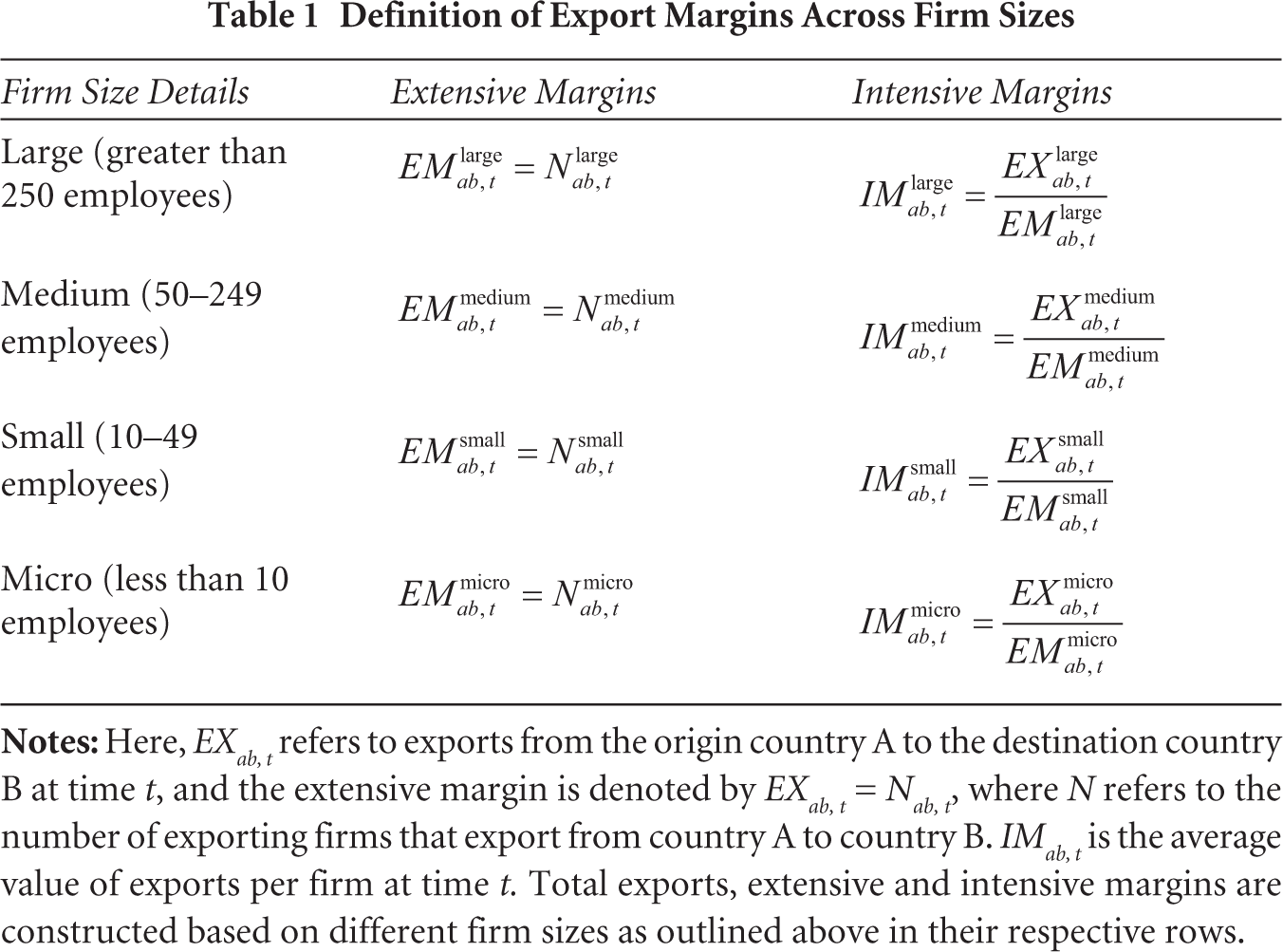
Here, EXab, t refers to the origin country’s (referred to as a) aggregate exports to the destination countries (referred to as b) at time t, and the right-hand side refers to the aggregate exports by the respective firm sizes. We define the size of the firms based on the number of employees, and the details are given in column (1) of Table 1. Second, we disaggregate the unidirectional exports into two margins based on the firm sizes, that is, large, medium, small and micro, such as (Equation 2):

Here, EM refers to the extensive margin, and IM refers to the intensive margin. We disaggregate exports like this across firm sizes; aggregate exports can vary along the extensive margin (number of firms) and the intensive margin (mean size of exports per firm).
We further define how the margins are deconstructed based on the firm sizes and outline them in the following Table 1. Here, we follow the OECD stratification, which is our data source, and it stratifies the firm size levels into four categories based on the number of permanent workers and is the same compared to the stratification followed by EUROSTAT.
Definition of Export Margins Across Firm Sizes
Summary of Export Details Across Firm Sizes
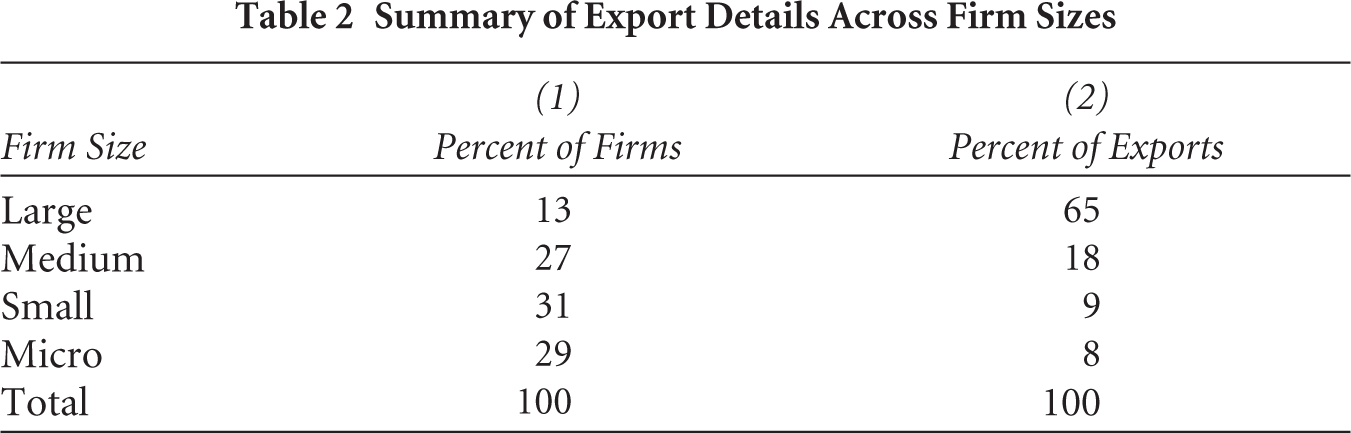
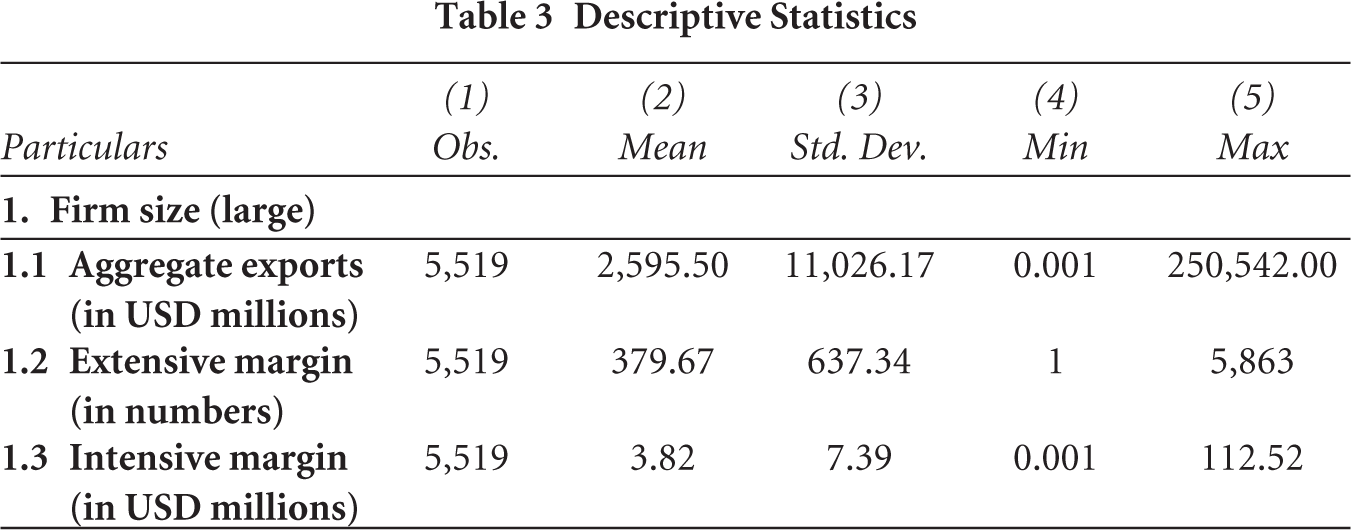
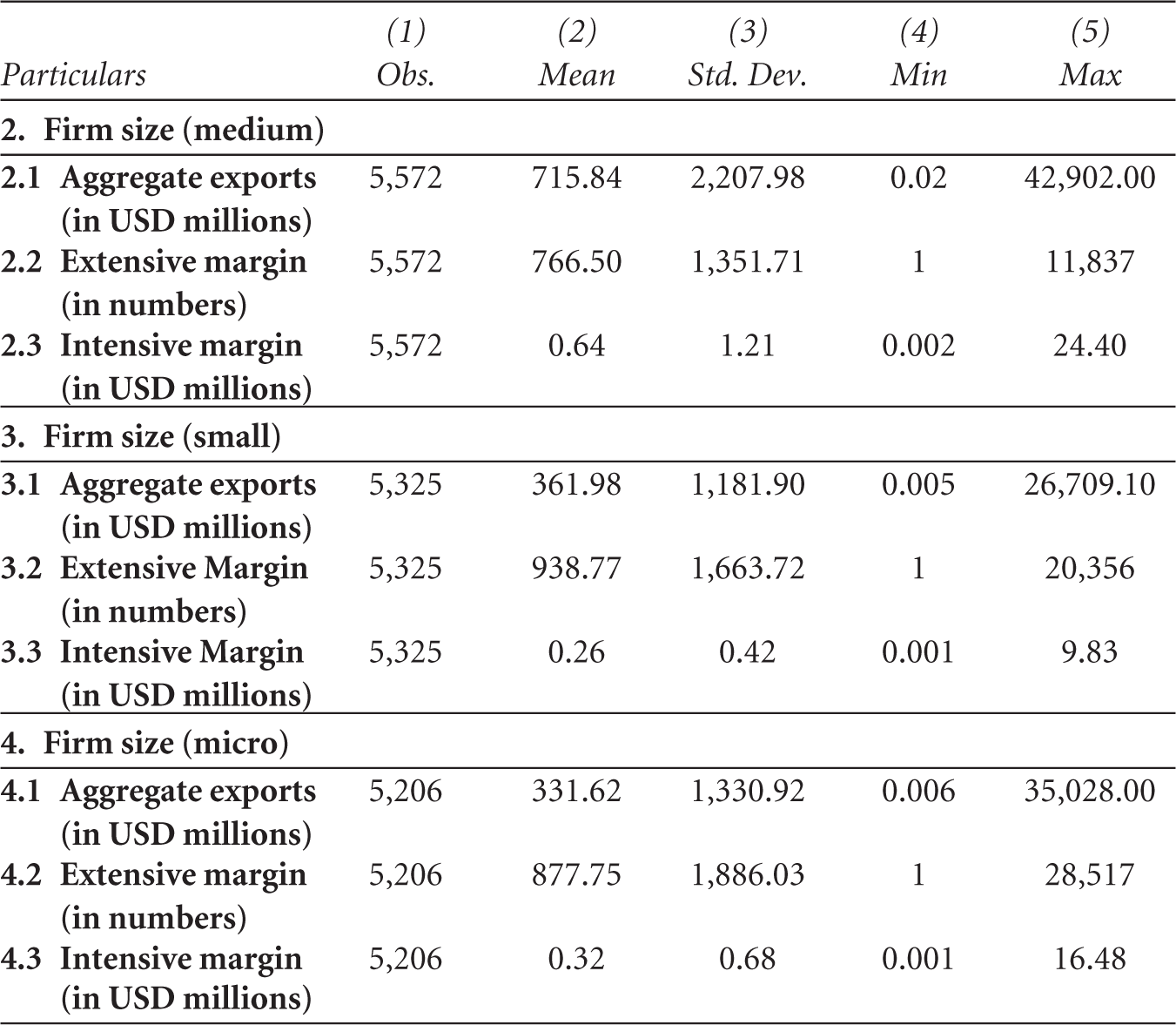
We find that aggregate export flows of different-sized firms and their participation in exports compared to the total exports poses an interesting finding that large and medium-sized firms’ export share to the total exports is considerably larger (83 per cent of the total), although they constitute a lower percentage in numbers (40 per cent of the total) when compared to the small and micro firms in terms of numbers. On the other hand, small and micro firms are large in numbers (60 per cent of the total); however, their export share is significantly lower (only 17 per cent of the total). The summary is provided below in Table 2, followed by the descriptive statistics in Table 3.
Descriptive Statistics
4. Empirical Strategy
4.1 Panel Gravity Specifications
Quantitative trade literature is dominated by the gravity model, which is usually used to estimate the trade flows between two trading partners and a logarithmic form of a typical gravity structure between countries A and B can be expressed as (Equation 3):

Here, EXab refers to the export flows from countries A to B, Z EX a and Z IM b refer to characteristics that are specific to exporter A and importer B, Dab is the bilateral distance and Lab are bilateral linkage characteristics between the two. The model suggests that trade between the two nations is directly related to their economic sizes and inversely to trade frictions. Bilateral variables like a common language, common border, colonial history, landlock status, and so on, are usually added to the gravity equation as explanatory variables proxied for extraneous factors like culture, geography, history, and so on (Anderson, 1979; Anderson & Van Wincoop, 2003; Bergstrand, 1985; Chaney, 2008; Yotov et al., 2016).
The gravity model has been extensively used to evaluate the effect of trade policy instruments, including EIAs (Baier & Bergstrand, 2007; Baier et al., 2014, 2007; Yotov et al., 2016). A typical structural gravity setup, including EIAs, has the following reduced form (Equation 4):

Here, the coefficient θ represents the effect of EIAs on the trade flows, which is a binary variable that takes the value 1 if there is an economic integration agreement in place between the country pair at time t and 0; otherwise. The traditional theoretical models used to generate the gravity equation usually assume that firms are homogeneous (Anderson, 1979; Anderson & Van Wincoop, 2003; Bergstrand, 1985, 1989). However, the literature on trade models with heterogeneous firms predicts that the extensive margin (number of firms) is affected by both fixed and variable trade costs, while the intensive margin (mean size exports per firm) is only affected by the variable cost, as fixed cost f is ex ante and after exporting it is sunk. The theoretical foundation of structural gravity based on these two margins lets researchers use these two margins differentially in the gravity equation. The total effect of trade costs on the number of firms and the size of individual exports is the theoretical link between trade costs and export flows (Chaney, 2008; Crozet & Koening, 2010; Lawless, 2010).
In the usual panel gravity specification Equation (4), the EIAs are not exogenous with the binary variable representation (θEIAab, t) on the right-hand side of the equation. It is often argued that trade policies are endogenous as countries are likely to liberalise trade policies with their natural partners, or there might be other unobserved reasons like peaceful or religious ties that contributed to forming the EIAs (Baier & Bergstrand, 2007; Egger et al., 2011; Yotov et al., 2016, p. 21). Furthermore, if there is a hidden intent like trade frictions leading to EIAs, there might be a case of reverse causality. Usually, endogenous variables are dealt with using ‘instrumental variables’, and the econometric model is estimated in two steps. However, finding good instruments while estimating gravity with trade policy instruments is often very difficult.
With panel data, country-pair fixed effects can be employed to get a better measure of gravity estimates (Yotov et al., 2016), or the first differencing of trade flows combined with country-pair fixed effects can be considered (Baier & Bergstrand, 2007; Baier et al., 2014). Baier and Bergstrand (2007) suggest that partial effects of trade policy instruments like EIAs can be reliably obtained by fixed effect estimation of the following (Equation 5, expressed in the logarithmic form):

Here, the country-pair fixed effect ηab captures the bilateral time-invariant factors that affect trade while δa, t,ψb,t are exporter-time and importer-time fixed effects that capture the time-variant factors, including the multilateral resistance terms. The country-pair–specific effects consider the time-invariant factors like the bilateral distance and if there are any other factors like peaceful or religious ties between the partners that might have led to forming the agreements. Excluding these additional factors on the right-hand side of the gravity equation might lead to omitted variable bias. While estimating ex post the partial effects of EIAs, in first differencing terms, Baier and Bergstrand (2007) propose the alternate model (Equation 6):

where Δ5 depicts the first differencing of 5 years. Usually, this approach is useful when the time (T) in the panel is large (Baier et al., 2014, p. 10). Baier et al. (2014) introduce the so-called random growth first differencing model Equation (6) by adding country-pair fixed effects to Equation (7) that account for the country-pair–specific unobservable factors those not related to the EIAs (like reduced trade costs with an increase in technology) over time:

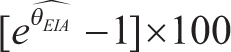
There are three important models introduced and those widely used in the literature for estimating the EIAs effect on trade: (a) fixed effects (FE) estimator, (b) first differencing (FD) estimator and (c) random growth first differencing (RGFD) estimator. However, for panels with a small T, the existing literature suggests that country-pair FE coupled with exporter-time and importer-time FE give unbiased and reliable estimates of the effect of EIAs (Baier & Bergstrand, 2007; Baier et al., 2014). For panels with a large T, either of the FD estimators can be used. The effect of trade policies, such as EIAs, can be expressed in percentage terms in multiplicative specifications by calculating the change in the binary EIA variable (Equation 8) (Baier & Bergstrand, 2007; Yotov et al., 2016, p. 22):
First, we would like to clarify that our data source do not reflect zero trade flows between country pairs on an aggregate level. We assume that varying sizes of firms cannot be deconstructed from the zero trade flows; hence, the OECD does not report the zeroes in firm-level export data. In the data, there are 1,868 missing observations which we excluded from the analysis. 1,188 are classified as ‘non-publishable and confidential value’ and 680 are ‘non-publishable, but non-confidential value’ out of the total missing observations. The identified, FD and RGFD estimators are not suitable for our estimation as we have export flows from 12 countries having data of less than five years. Cumulatively, we will lose around 6,958 observations by opting for either of these two estimators. The fixed effect estimator used by Baier et al. (2014) is, however, appropriate for our estimation purposes. In our data set, some of the firm sizes do not export between country pairs at a given point in time. Let us use the examples of two country pairs in our data sample from 2007 to quickly illustrate it. There are 136 firms that export from Mexico to South Africa and 5,408 firms export from Mexico to the United States. Exporters are only small and micro firms when the export flows from Mexico to South Africa as can be seen when we break down the total number into four categories (Table 4). In the latter scenario, however, all four categories of firms are among the exporters.
Examples of Zeroes in the Data
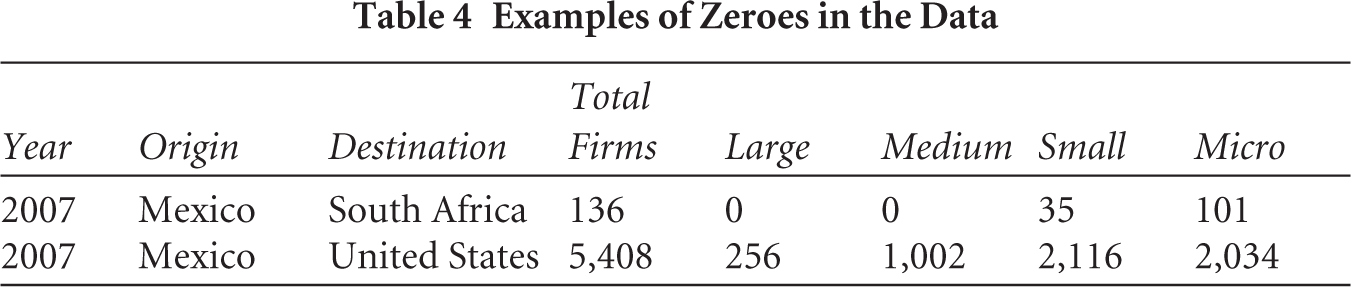
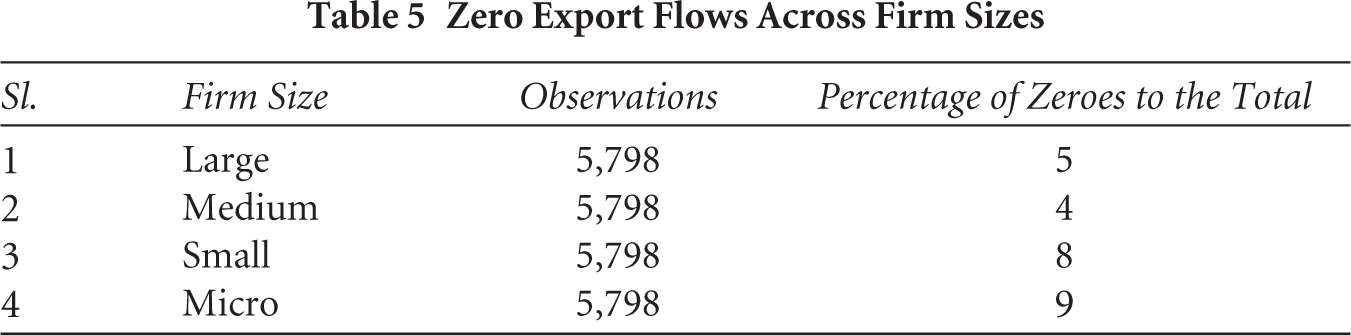
The largest percentage of zeroes (9 per cent) belong to micro-sized firms, whereas the smallest percentage of zeroes belong to medium-sized firms. So, we need to account for those zeroes in our estimation procedure. The details of zeroes across firm sizes are given in Table 5.
Zero Export Flows Across Firm Sizes
Hence, we implement a PPML estimator to intending to reliably estimate the impact of EIAs (Here a dummy variable that takes the value 1 for the existence of an economic integration agreement between the origin country, a, and the destination country, b at time t, 0; otherwise) on export flows, using ‘structural gravity’ as a specification. The PPML estimator has been extensively used by researchers as it captures the zero trade flows while estimating the gravity models. Because most of the variables are converted into logs, zero export flows often are not considered when running the regressions. Hence, the information related to the zero trade flows is neglected as they are often dropped from the observations. To overcome this problem, Silva and Tenreyro (2006) propose the PPML estimator, where trade flows are usually applied in multiplicative form; it takes care of the zeroes in observations and performs better in dealing with the heteroskedasticity in trade data.
In our PPML panel estimate, the FE of exporter-time and importer-time ensure that the theoretical constraints suggested by structural gravity are fulfilled. Importantly, the importer-time FE control for the fixed cost of exporting in the gravity specification (Crozet & Koening, 2010, p. 48). Theoretically, in the structural gravity specification, the barriers are specific to the respective trading partners, represented by the ‘multilateral resistance’. This term ‘intuitively’ represents a country’s barriers relative to a country’s average trade barriers to the rest of the world (Anderson & Van Wincoop, 2003; Yotov et al., 2016). In simpler terms, the more resistant to trade with the rest of the world a country is, the more it is inclined to trade with a given bilateral partner country. In our specification, we include the exporter-time and importer-time FE, respectively, to capture time-varying exporter and importer-specific unobservables, including their respective ‘multilateral resistance’ terms.
The country-pair fixed effect then captures all time-invariant pair-specific characteristics that could be associated with the likelihood of forming an EIA. This country-pair fixed effect accounts for any potential variables that might have been excluded and can lead to omitted variable bias. Usually, EIAs have varying phased-in timeframes, and because EIAs aim at altering the terms of trade, the terms of trade changes will have lagged effects on trade flows.
1
To account for the nature of the EIAs, as discussed, we have included two lags of the EIA variable in our specifications. We tested the correlation between three EIA-related variables for identifying any multicollinearity issues and found them to be appropriate for inclusion. The correlation matrix of the EIA variables is included in the Appendix Section. As a result, we use an ‘average treatment effect (ATE) model’ to estimate the effect of EIAs, with the integration effect being the sum of the statistically significant coefficients of the variable EIA and the two lags following Baier and Bergstrand (2007). The multiplicative specifications of the panels representing the varying sizes of firms are as follows (Equations 9–12):




Here, the term Zab, t represents the aggregate export flows, extensive and intensive margins of respective firm sizes as mentioned in Equations (9) to (12), and the aggregate export flows, extensive, and intensive margins are alternately used as dependent variables. Furthermore, δa,t, ψb,t and ηab are the exporter-time FE, importer-time FE and country-pair FE, respectively.
4.2 Testing for Potential ‘Reverse Causality’ Between Export Flows and EIAs
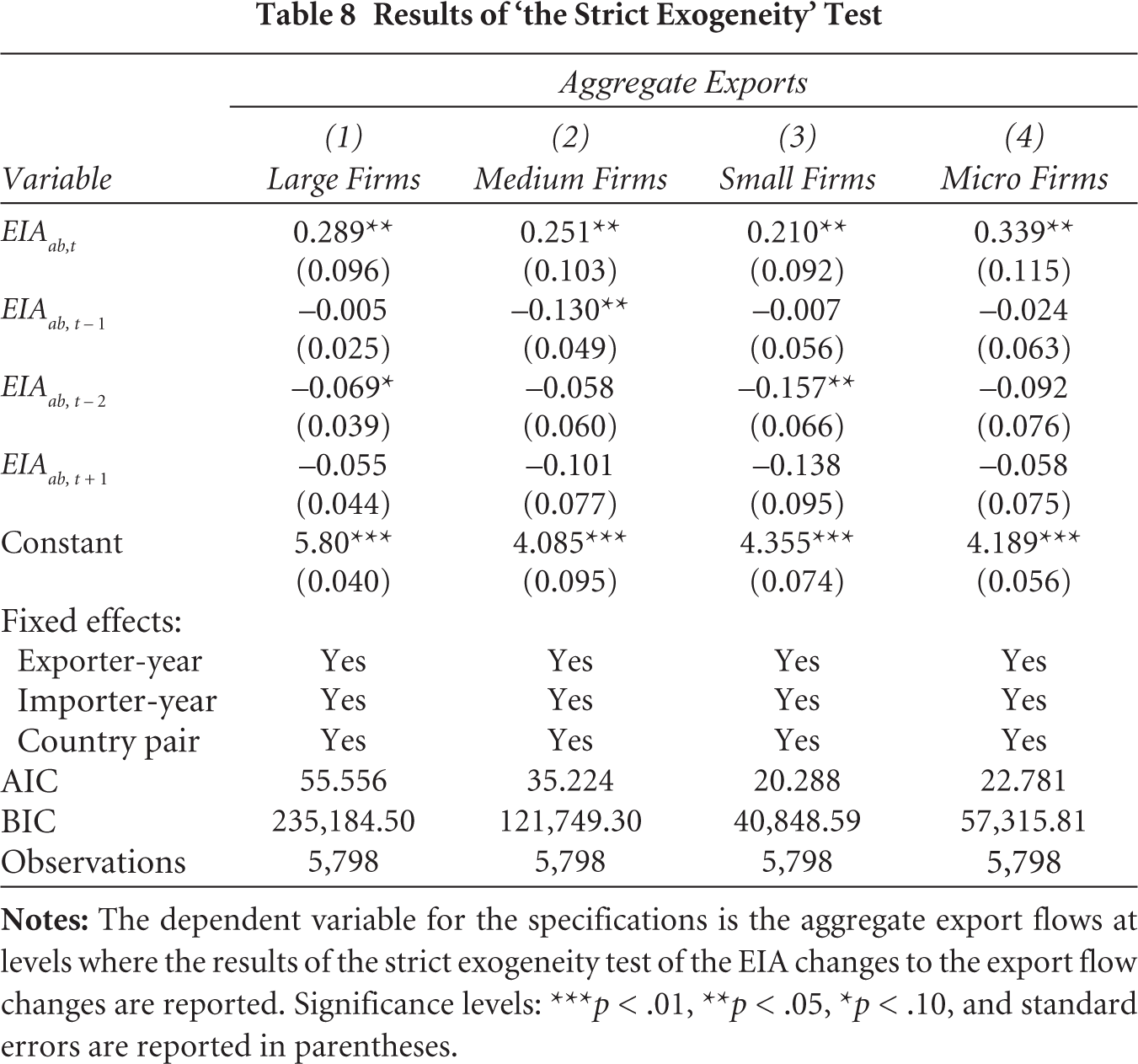
To confirm that there are no feedback effects from aggregate export flow change to EIAs change, we carry out a test to investigate the ‘strict exogeneity’ of EIAs by introducing a new variable EIAab, t + 1, capturing the future level of EIAs to test for potential ‘reverse causality’ between exports and EIAs via country pairs. The additional variable EIAab, t + 1 must be statistically inconsequential if EIAs are exogenous to the export flows. The specifications are as follows (Equations 13–16) (Baier & Bergstrand, 2007; Yotov et al., 2016, p. 52):




Here, the term EXab, t represents the aggregate export flows of respective firm sizes as outlined in Equations (13)–(16). Furthermore, δa,t, ψb,t and ηab are the exporter-time FE, importer-time FE and country-pair FE, respectively.
5. Estimation Results
Table 6 shows the empirical results of the panel gravity specifications, which are separated into four sub-sections to represent the different firm sizes. The effect of EIAs on aggregate export flows is shown in column (1), the extensive margin in column (2), and the intensive margin in column (3).
Panel Gravity Estimations with Three-way (Exporter-time, Importer-time, and Country-pair) Fixed Effects
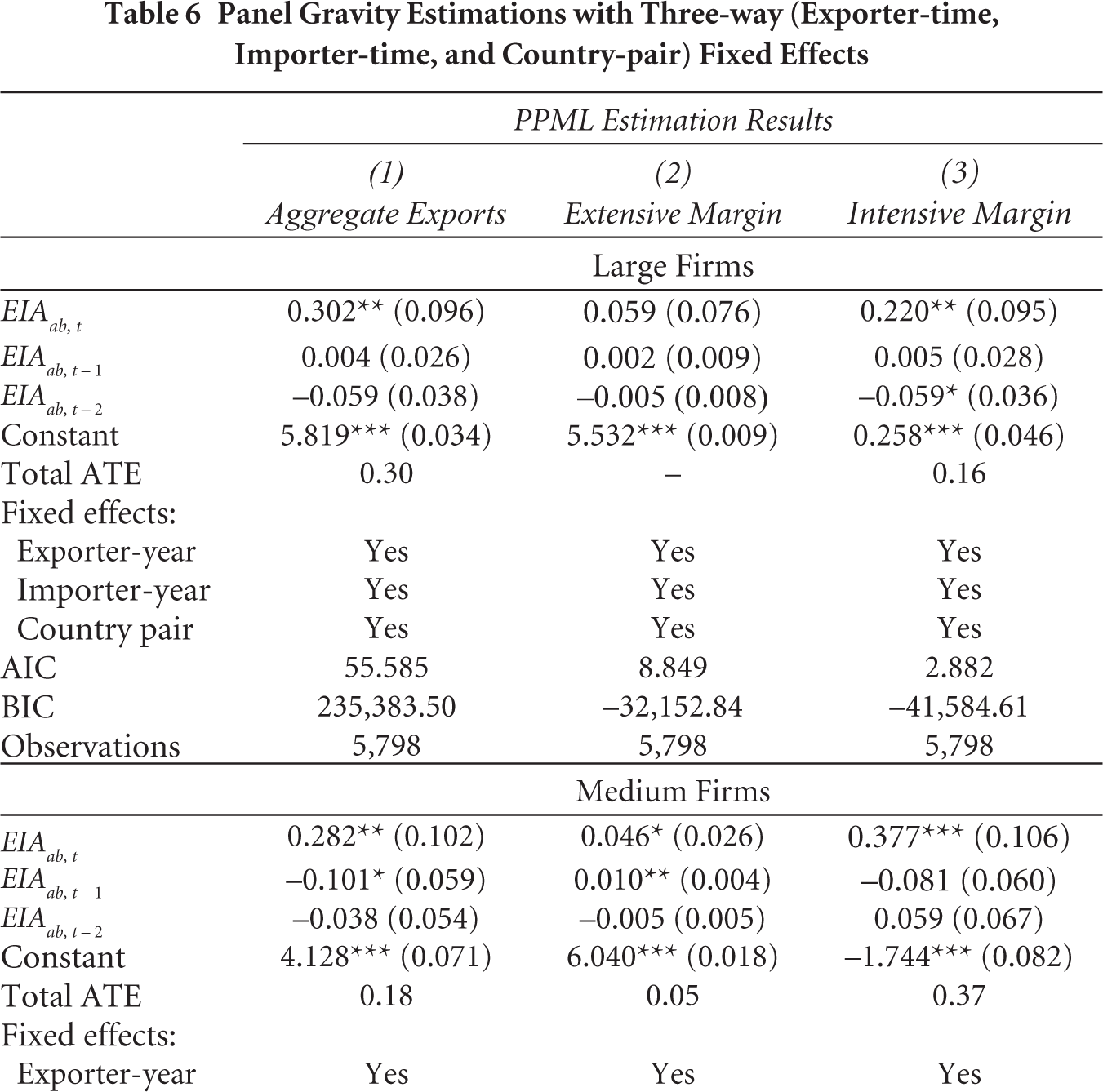
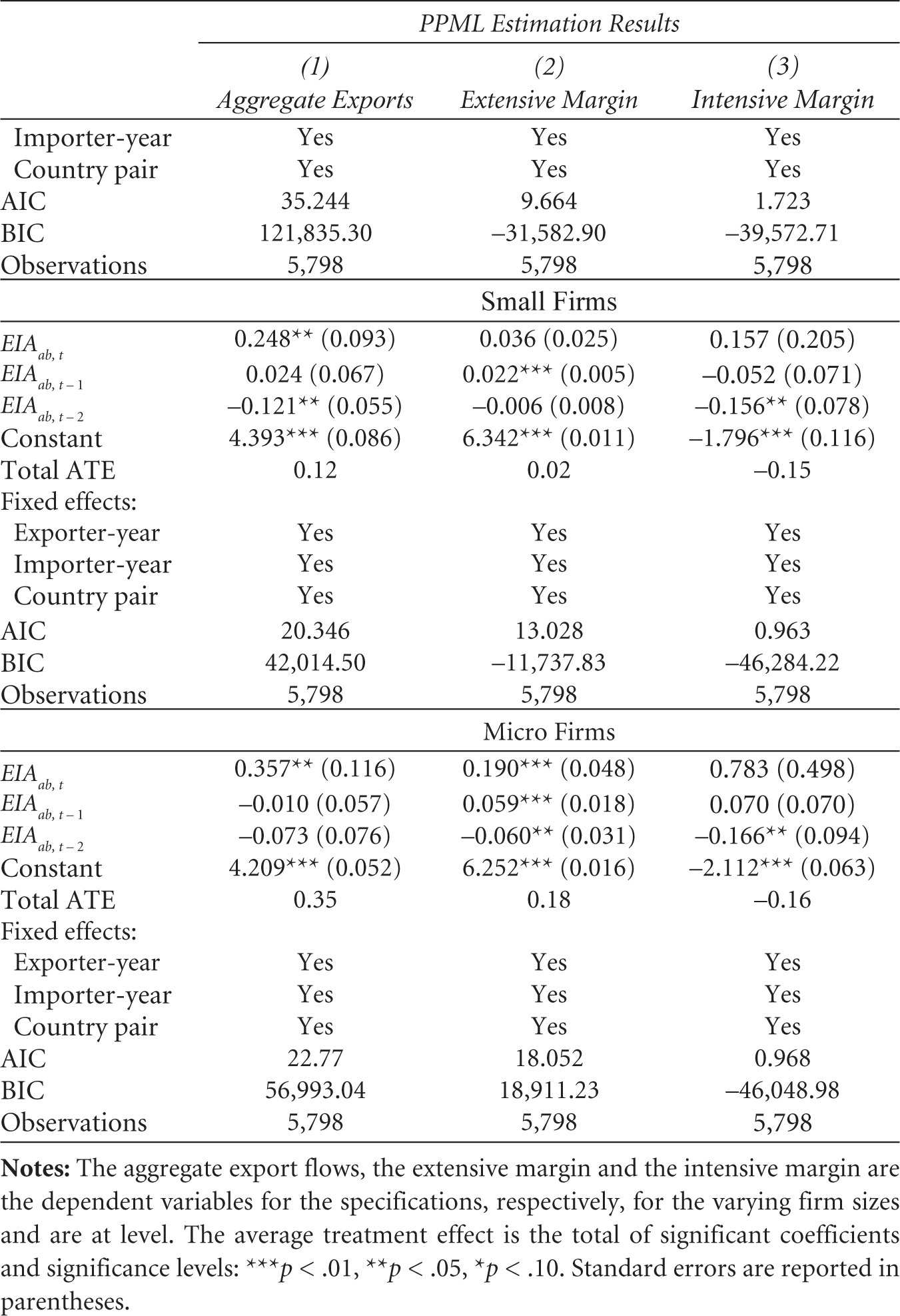
First, considering the effects of EIAs on large firms, we discover that EIAs have a positive influence on aggregate exports. The estimates suggest that having EIA between country pairs increases the exports of large firms by an average of 35 per cent [(e0.30 – 1) × 100]. Because the effect on extensive margin is statistically not significant, we can infer that the increase in export flows is mostly driven by the intensive margin. This is plausible as the extensive margin of large firms is difficult to adjust compared to smaller-sized firms. The coefficient associated with intensive margin indicates that, on average, EIAs increase the intensive margin of large firms by 17 per cent [(e0.16 – 1) × 100].
Second, the effect of EIAs on aggregate exports of medium firms is also positive and statistically significant. It shows that EIAs positively affect overall exports by an average of 19 per cent [(e0.18 – 1) × 100]. Here, the positive effect on medium firms is mostly driven by the intensive margin, where the average increase is 44 per cent [(e0.37 – 1) × 100], greater than the effect on the extensive margin, which is 5 per cent [(e0.05 – 1) × 100]. When we assess the effects of integration at the margin level, we notice that the positive effects on large and medium firms are mostly through the intensive margins, but it also has a positive impact on the extensive margin of medium firms. As explained before, the cost structure and efficiency of larger firms give them the advantage to successfully utilise the EIAs and gain preferential access. Hence, the results indicate that existing larger firms can increase the scale of their exports which is in line with theoretical predictions.
Third, the effect of EIAs on the aggregate export flows of small and micro firms is positive, and estimates show that having EIA between country pairs increases the aggregate export of small firms by an average of 12 per cent [(e0.12 – 1) × 100], and micro firms by an average of 41 per cent [(e0.35 – 1) × 100]. However, this positive effect is exclusively through extensive margins; on average, EIAs increase the extensive margins of small firms and micro firms by 2 per cent [(e0.02 – 1) × 100] and 19 per cent [(e0.18 – 1) × 100], respectively. Given the effect on intensive margins is negative and statistically significant, we can infer that the existing small and micro firms are unable to increase the size of their exports. The empirical results show that EIAs have a detrimental effect on their intensive margins, with those margins falling by an average of 14 per cent [(e–0.15 – 1) × 100] and 15 per cent [(e–0.16 – 1) × 100], respectively.
Small and micro firms, on the other hand, gain exclusively through extensive margins as the intensive margins are negatively affected, implying that the existing small and micro firms are unable to increase the scale of their exports. EIAs can be effective in promoting trade by reducing costs associated with trade restrictions. However, this is only true if smaller firms can successfully use them to their advantage. It is also plausible that smaller and inefficient firms may prefer to pay MFN tariffs since the administrative costs and the hassle of qualifying for preferential terms exceed the advantages. One of the key reasons why intensive margins might not be impacted by EIAs could be due to restrictive ROO (Krueger, 1997, pp. 177–178). Before claiming favours under the terms of an EIA, firms typically face administrative or documentation costs to ensure that their products meet the appropriate ROO (Augier et al., 2005; Brenton & Manchin, 2003; Manchin & Pelkmans-Balaoing, 2007).
To illustrate the complexity of ROO documentation costs, let us look at the example of Rule 4, that is, ‘not wholly obtained or produced goods’ in the Association of Southeast Asian Nations (ASEAN) ROO Criteria. Firms are required by the regional value content (RVC) to monitor both direct and indirect costs that go into producing a final good. To qualify for preferential tariff, firms must confirm what percentage of the good’s overall value is attributable to an eligible ASEAN member state. The threshold in the ASEAN Trade in Goods Agreement (ATIGA) is 40 per cent (ASEAN, 2016, p. 3). Firms must precisely identify the country of origin of each item and meticulously track the costs of raw materials, components and other related costs to be eligible for preferential treatment. These computations comprise formulas such as the ‘Build Up Method’ for summing up eligible originating costs, and the ‘Build Down Method’ for non-eligible costs (ASEAN, 2016, p. 4). Managing an intricate formula-based RVC accumulation situation might be costly for smaller firms, making it difficult for them to qualify for preferential rates. Larger firms, however, generally do not have this constraint, as they can set aside specific resources for ROO computations, which leads to significant savings through preferential tariffs. We believe that the costs of ROO are relatively higher for smaller firms compared to larger and more efficient firms due to the following:
The inability of smaller firms to get appropriate information on ROO. Documentary burdens to establish the origin of their products. Procedural hassles to prove the ROO and getting tariff preferences granted.
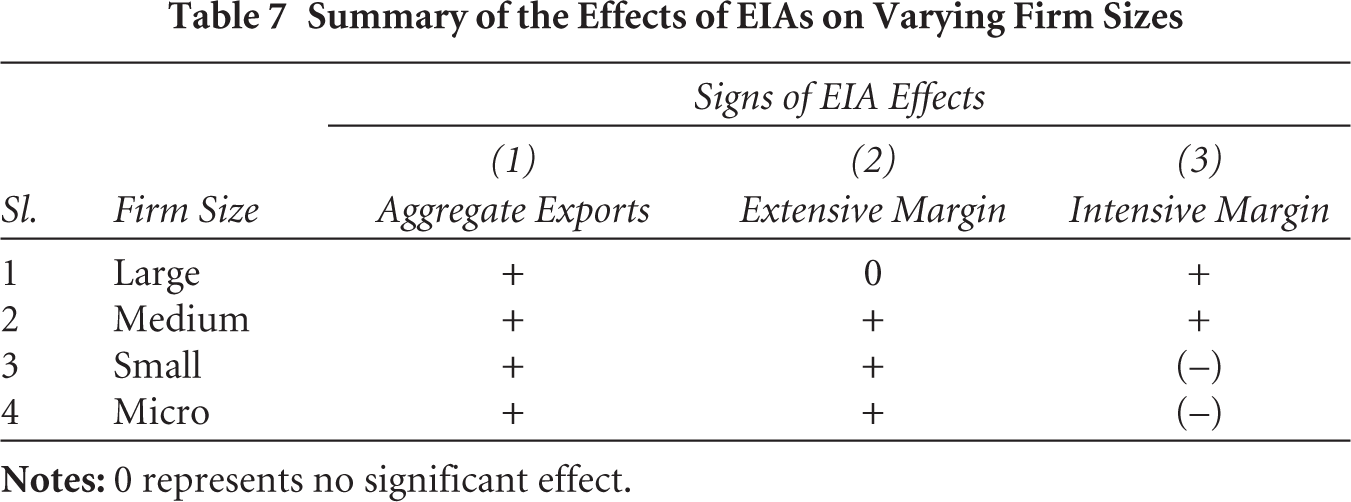
Another important determinant of the utilisation of EIAs is ‘tariff margins’, that is, the difference between MFN tariffs and preferential tariffs (Jongwattanakul, 2014). The greater the tariff margins, the greater the advantage that exporting firms have over overseas competitors. Tariff margins are not discriminatory: businesses of all sizes will be accorded the same tariff margin according to the kind of goods they export. However, utilisation of EIAs under ROO restrictions may result in an increased burden for smaller firms. Consequently, the negative effect of EIAs on intensive margins of small and micro firms may be due to this feature. Thus, we can conclude that the gains from integration are unequal for smaller firms in terms of the effects on intensive margins when compared to that of the larger firms as we see larger firms are benefiting more by increasing their size of exports when economic integrations are in place. Our results are consistent with the empirical findings of Park and Park (2023) who find that LEs’ export creation is mainly driven by the intensive margin, while SMEs’ export creation is mainly driven by the extensive margin. The effects of EIAs on different firm sizes are summarised in terms of signs in Table 7.
Summary of the Effects of EIAs on Varying Firm Sizes
Lastly, we would like to stress that due to the limited country pairs included in the sample, the number of EIAs covered is not large. To be more exact, most of the agreements included in the sample—such as the EU–have existed since the beginning of the sample period. Therefore, even though the effects of these agreements are absorbed in the country-pair FE, the empirical results should be read cautiously. We are including a list of all EIAs between country pairs that came into force during the sample period in the Appendix since the coefficients on the EIA dummy illustrate the effects of these EIAs exclusively.
Table 8 reports the results of the strict exogeneity test for identifying potential reverse causality between export flows and EIAs. Comparing the results of the coefficients of EIAab, t + 1 in all specifications (columns 1–4), we find that there are no feedback effects from the export flows on the EIAs.
Results of ‘the Strict Exogeneity’ Test
6. Conclusion
Following the heterogenous firms’ model in trade theory, this article aimed to examine the impact of EIAs and test whether the impact varies across firm sizes. Using structural gravity equations of aggregate export flows, and the intensive and extensive (firm) margins that are specific to the firm sizes, we examined the impact by employing a panel data set of 26 countries’ exports to 66 destinations. We address the following issues to generate econometrically valid estimates of the EIA parameters: (a) the existence of zero export flows, (b) heteroskedasticity in trade data, (c) the endogeneity of EIAs, and (d) multilateral resistance terms. We found evidence of the differential impact of EIAs on various ‘firm sizes’, which shows the unequal effects of the economic integration agreements on firms at the extensive and intensive export margin levels.
The findings suggest that EIAs have a positive influence on aggregate export flows for firms of all sizes; however, the distinct effects on export margins vary across firm sizes. For small and micro firms, the positive effect is exclusively driven by the extensive margin; however, for large and medium-sized firms, this positive effect is primarily driven by the intensive margin. The policy implication is that the gains from integration will be unequal for smaller firms compared to the larger ones; thus, in the agreements, special attention should be given to the smaller firms, particularly the existing small and micro firms, to level the playing field. In sum, EIAs should strive to:
Member states should dedicate a specific small firm chapter to ensure that the interests of smaller firms are considered in integration agreements. Reduce the complexity of the implementation of the ROO and strengthen the ability of smaller firms so that the cost of ROO is lower for them. Facilitate the ROO implementation process by considering the best practices of other regional and global integration agreements. Pay close attention to best practices for pre-release controls, post-release verification, and audit of the ROO process. Provide increased access to free information on ROO, guidance and institutional support to smaller firms. Policymakers may, for instance, implement capacity-building programmes like teaching smaller businesses how to use the ROO facilitator. The database of trade agreements, documentation requirements, tariff schedules and ROO maintained by the International Trade Centre is accessible at no cost. Better comprehension and access to this information could assist smaller businesses increase trade by taking advantage of global trade opportunities, such as low tariff rates under EIAs.
Footnotes
Declaration of Conflicting of Interests
The author declared no potential conflicts of interest with respect to the research, authorship and/or publication of this article.
Funding
The author received no financial support for the research, authorship and/or publication of this article.