



Abstract
Laboratory Animals Technologist degree (Técnico Universitario en Gestión Integral de Bioterios) was created in 1989. It is offered jointly by the Faculty of Veterinary Sciences and the Faculty of Pharmacy and Biochemistry at the University of Buenos Aires. The complete programme is organized into 15 courses, including basic and applied sciences, along with specific courses (Técnicas de Bioterio I to V) with a solid practice content that students must achieve.
An additional challenge occurs when practices consist of animal handling and procedures, which can be stressful for students and animals. Since traditional evaluation methods may not be the best way to determine the acquisition of knowledge and practical performance, an evaluation rubric is proposed to assess the practices carried out by students.
The aspects and criteria to be examined were previously known of by students and teachers. The evaluation levels include: ‘Daily report and record-keeping’, ‘Food and water supply’, ‘Cleaning and disinfection of areas, Standardized Operational Procedures and routines fulfilment’, ‘Personnel and supplies circulation’, ‘Use of personal protection equipment and physical care’, ‘Fulfilment of tasks in established times’, ‘Animals procedures and organization of needed materials’, ‘Animal care’ and ‘Teamwork camaraderie and organization’.
The proposed tool was implemented with good results to achieve the academic objectives while augmenting the confidence for practical expertise, minimizing doubts and uncertainties related to traditional evaluation methods, and providing students with an environment that favours knowledge acquisition and practical skills, establishing standard criteria among the teaching staff, and reducing and refining the use of animals for educational purposes.
The Laboratory Animal Technologist degree (Técnico Universitario en Gestión Integral de Bioterios) was created in 1989 at the University of Buenos Aires (UBA) and it is organized jointly between the Faculties of Veterinary Science and Pharmacy and Biochemistry. To date, this is the only specific training for the care and use of laboratory animals at university grade in Latin America.
The programme, expected to be concluded in three and a half years, is organized into 15 courses, including basic and applied sciences and specific topics for Laboratory Animal Technologists (Técnicas de Bioterio I to V). These courses quantify a total of 1000 hours of hands-on practice, 1 experience which will be relevant to the student in their professional development.
In the beginning, students are involved in support areas such as deposits or laundry areas and receive training in the use and maintenance of specific equipment, such as the autoclave.
Later they cross to the clean rooms, developing duties in breeding, maintenance and animal production of mouse strains (BALB/cJ, C57BL/6J) and rats (Sprague-Dawley) in different types of housing and associated equipment, such as free exchange cages for conventional animals or isolated ventilated cages (1291H NEXT, Blue Line Tecniplast®) and changing stations (CS5 Evo Plus, Tecniplast®) for specific pathogen-free animals.
The students also receive training in managing special micro and macro environment needs for each category, acquiring training in a high-standard animal facility. During these hours, procedures such as handling, inoculation, fluid extraction and other specific techniques are also practised.
Each student is assigned to a specific area weekly for four months. They must carry out the corresponding tasks according to the daily schedule, guided and accompanied by the trainers. This practical content is complemented with theoretical lectures and simulated practices where students acquire the fundamentals of what they will perform inside the animal facility.
Evaluating specific training and acquired skills involving living animals results in challenges. 2 Examination and judgment criteria are always influenced by a subjective experience among the professor’s team. Therefore, it is of the utmost importance to define a conception of evaluation in each instance, which allows us, based on the agreements, to redefine why evaluations are made.
Many efforts have been made throughout the years to establish examination methods that benefit learning and possess the greatest possible objectivity since always someone will report severity or laxity, arbitrariness, inconsistency, or lack of transparency of the procedures or evaluation criteria. 3
Practical skills should be assessed on a personal, continuous basis to evaluate the progress in real time and make decisions during the learning process. Continuous assessment improves the learning environment, the student’s motivation and their chances of success. Consideration of this principle means increasing the usefulness of evaluation and the ethical dimension. 4
Rubrics are grids, tables or matrices that articulate assessment standards for teachers and students to assign a grade or give feedback for a given performance. 5 Since traditional evaluation methods may not be the best way to determine the acquisition of knowledge and practical performance, we present the process of developing a rubric to assess the learning training process of students from the Laboratory Animal Technologist (LATG) degree at UBA.
Materials and methods
Rubric design and assessment criteria
The design of the rubric was made based on previous guidelines. 6 The topics to be evaluated included: ‘Daily report and record-keeping’, ‘Food and water supply’, ‘Cleaning and disinfection of areas, Standardized Operational Procedures and routines fulfilment’, ‘Personnel and supplies circulation’, ‘Use of personal protection equipment and physical care’, ‘Fulfilment of tasks in established times’, ‘Animal procedures and organization of needed materials’, ‘Animal care’ and ‘Teamwork camaraderie and organization’. The different levels to be examined are defined in Table 1.
Criteria levels and definitions.
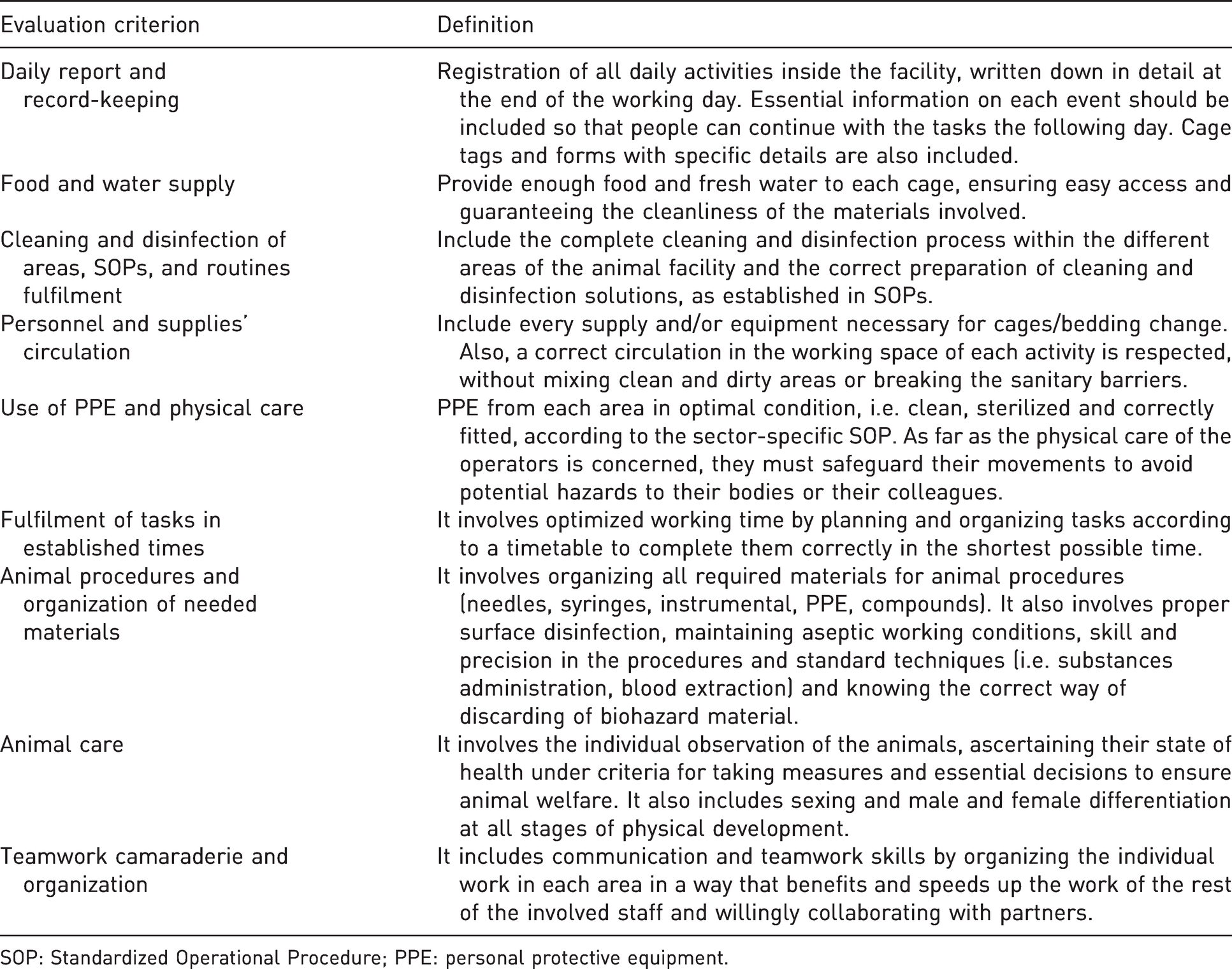
SOP: Standardized Operational Procedure; PPE: personal protective equipment.
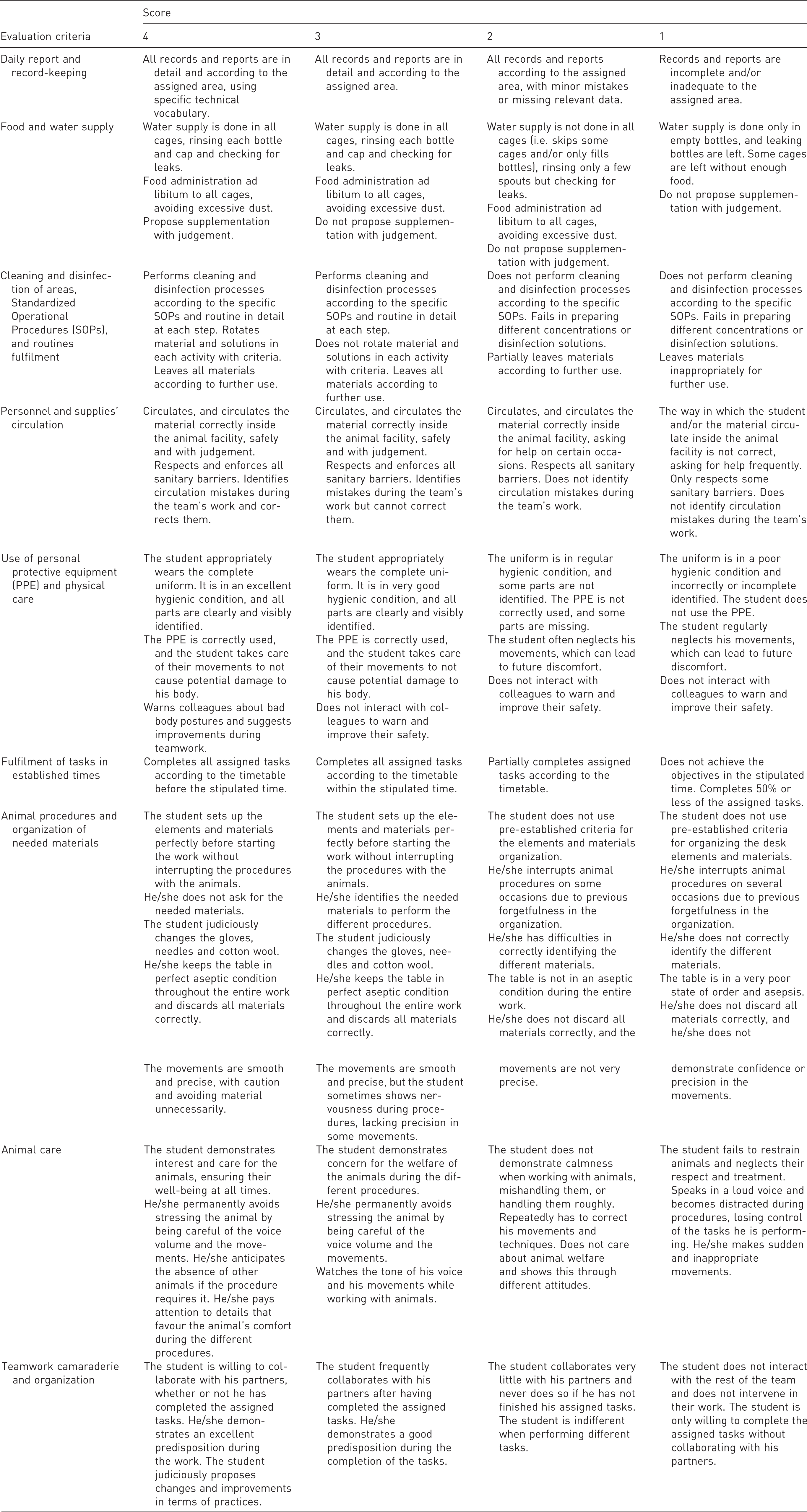
Each correction criterion is awarded a different percentage of the final score. It varies according to the relevance of each one regarding the assigned area (support area or animal rooms), and within this sector, according to whether the student performs routine maintenance such as water and/or food supply, mating, sexing, weaning, and the associated registers, or whether the daily task involves animal handling or procedures.
The overall score must be 3 or more to achieve acceptable performance during the semester.
Internal validation
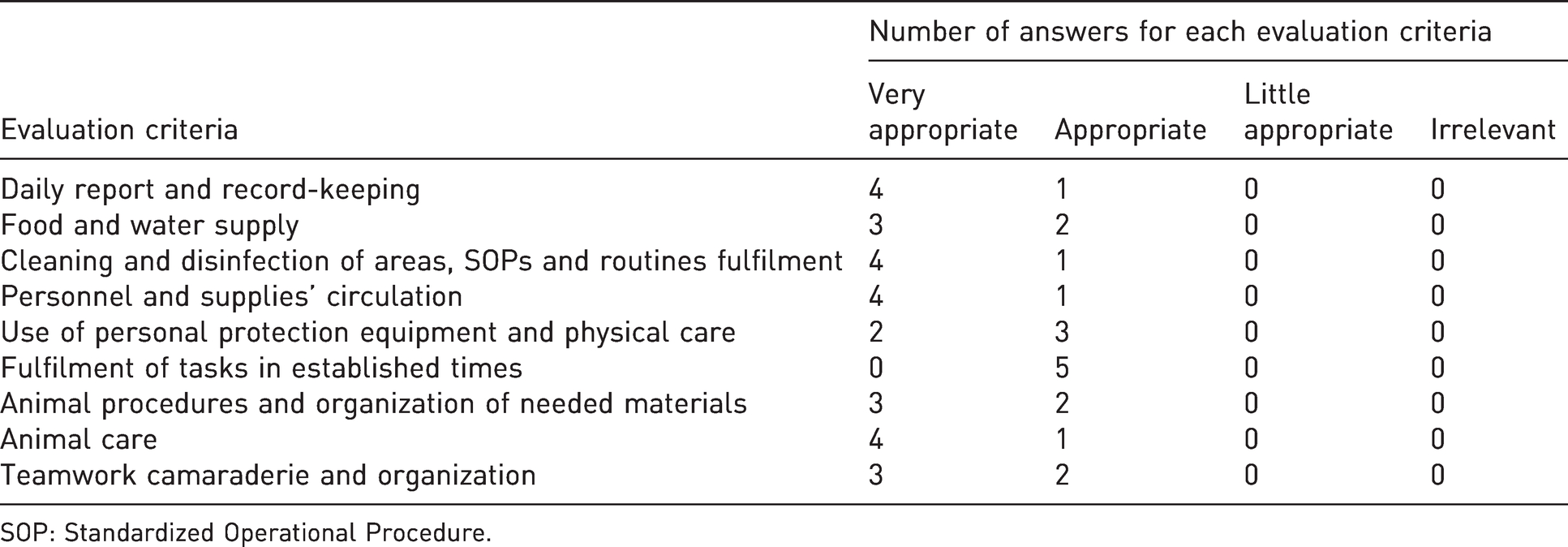
Before the rubric implementation, all members of the teaching body filled out a voluntary and anonymous survey with closed and open questions, regardless of their position and working schedule (full- or part-time). The relevance of each evaluation criterion was assessed in closed questions (very appropriate/appropriate/little appropriate/irrelevant), while the possibility to include, discard or modify any of the criteria levels was asked in open questions. Finally, the potential rubric application and the grade of objectivity were also requested. The results were collected and analysed, and the rubric was modified if needed.
Student performance
Before the rubric was applied, all the students had to pass a final exam with practical skills involving living animals produced for educational purposes, independently of their performance during the semester. After the rubric was established in 2015, only the students that failed in the continuous evaluation with no evident improvement in their performance were examined in a final exam.
We conducted a retrospective analysis from 2015 to 2018 on students’ performance in the specific training courses (Técnicas de Bioterio I to IV), assessed by the final version of the evaluation rubric. Data were collected from original documents and expressed as students who accredited the course and those who had to take a final exam.
Results
Rubric design
The criteria and different levels to be examined are defined in Table 2, and students and teachers were previously aware before starting the performance assessment with the presented instrument.
Final version of the rubric for curricular assessment in Laboratory Animal Technologists career.
Internal validation
Five surveys from the entire teaching body were collected and analysed. All the department members accepted the rubric well, with no major modifications suggested (Table 3). A minor suggestion was to include animal sexing at the ‘animal care’ level. Other perceptions about the rubric are indicated in Figure 1.
Survey results of rubric opining from full teaching body.
SOP: Standardized Operational Procedure.
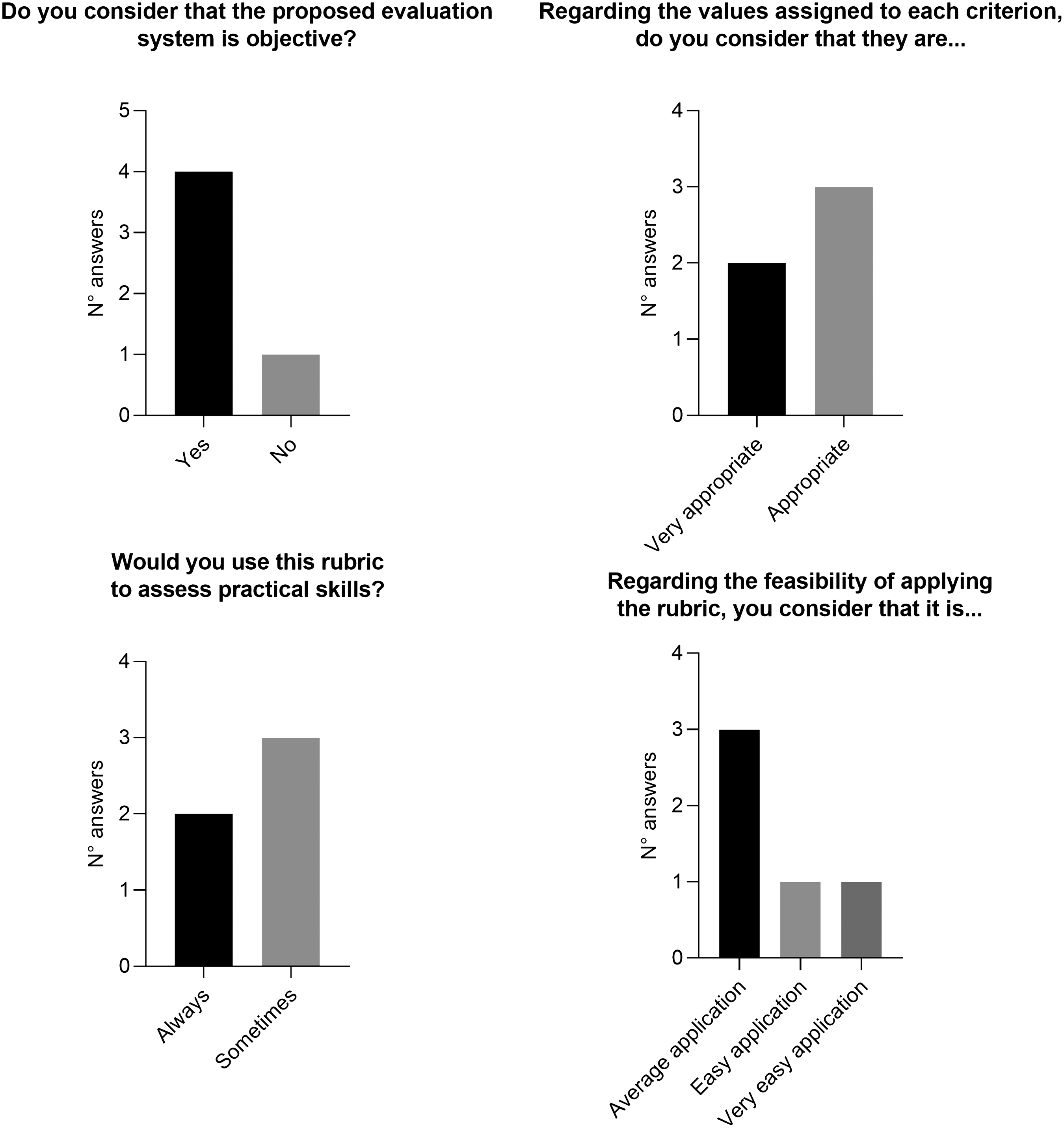
Results of survey of opinion of rubric from the entire teaching body.
Student performance
Once the rubric’s final version was established, it was decided to apply it as a summative and formative evaluation to assess the student’s performance during the whole semester, with real-time feedback from the teacher body.
A retrospective analysis from 2015 to 2018 revealed that of 110 students’ performance assessed by the rubric, 76 (69%) passed the practical evaluation in all the specific subjects for the LATG degree. Also, when comparing the rates from different courses, there is a trend for students to improve their performance as they move forward in their career (Figure 2).
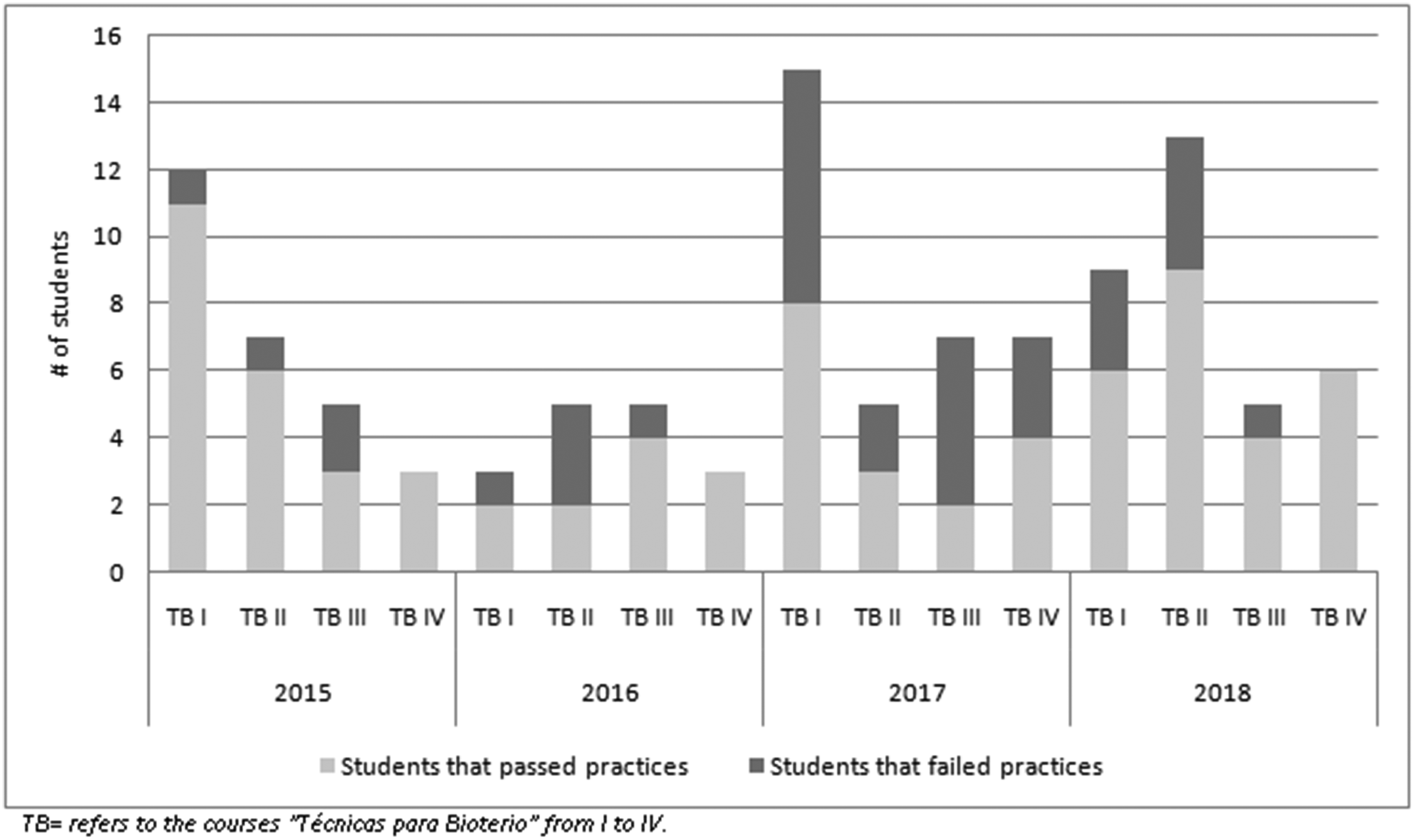
Students' performance (disaggregated by course) assessed by the rubric.
Discussion
This work aimed to improve the evaluation objectivity in students’ academic performance using an individual rubric during the specific courses (Técnicas para Bioterio I to IV) in the LATG career at the Faculty of Veterinary Sciences of the University of Buenos Aires.
During these courses, it was necessary to establish realistic and measurable objectives, allowing feedback and constructive criticism to improve learning while acquiring autonomy during the learning process to carry out the supervised practices.
The evaluation and accreditation of acquired knowledge have two main functions at the university grade: first, a social level for student selection, classification and orientation. The final outcome will report the learning progress inside academia and society. It will determine whether the students have acquired the minimum knowledge to fulfil the certification that society demands from the educational system. Second, the pedagogical level regulates the teaching–learning processes in which the students must recognize the evaluation process to learn meaningfully.
The proposed tool, an evaluation rubric, was intended to facilitate the teaching–learning process in courses with a high content of practical skills. Whitcomb and Wilson 5 described the development of a rubric used to evaluate courses in a three-year American College of Laboratory Animal Medicine-recognized residency training programme culminating in a Master of Science degree for postgraduates in Veterinary Medicine. However, there is a lack of published previous experience in rubric design for LATG performance evaluation.
Since there are no laws or regulations in Argentina regarding laboratory animal care and use, there is no legal necessity to get any licence to perform any procedure in a living animal. However, one of the most important competences in the LATG degree is to carry out breeding, husbandry and experimental procedures in living animals, with strong emphasis on rodents. Along their career, the students are allowed to practise different duties and procedures always under the supervision of a teacher body member graduated in LATG or in Veterinary Science.
The acquisition of this specific task during the career allows improvement of the graduate’s skills and confidence in animal handling, performing procedures in adherence to good laboratory practices and contributing to the refinement in animal use.
Despite the advantages of this evaluation tool, it is important to note that the criteria and the tasks are specifically applied to the LATG career at the Animals Facilities from the Faculty of Veterinary of the University of Buenos Aires. Therefore, this rubric can be used as a model, but it should be adapted if it is to be applied to another career or environment. Also, this rubric is useful for small groups of students, but it could be impractical to use in the largest courses.
It has been observed that when assessing students in a planned situation, the stress generated by this situation is the main factor influencing negatively, as students have to demonstrate their manual skills to the teacher – in these cases, with the responsibility of handling live animals.
Moreover, there is a close relationship between the care-giver and the animals.7,8 Rodents can discriminate against experimenters, mainly due to smell, and animal behaviour can be influenced. 9 Thus, we could speculate that fear, anxiety or stress displayed by the student being examined would induce physiological parameters and affect animal wellbeing during the exam.
For this reason, this rubric was implemented to exempt the students from taking a practical exam on a specific date if they progressively achieved the expected objectives during the daily supervised practices throughout the semester.
As an interdisciplinary activity, the implementation of the rubric as a new evaluation instrument was proposed to the entire teacher body in the Department, and the feedback obtained during the anonymous survey was useful to identify needs and get an internal validation before application in the field.
All of the students were examined throughout the semester, correcting and improving their performance, gaining knowledge and technical skills without the stress of a final exam since they are evaluated individually while completing the training.
Modifying the evaluation instrument also had consequences in applying the 3Rs (replacement, reduction and refinement) principle in education. As fewer students had to pass a final practical exam, fewer animals were needed as living models for practising. This also contributed to elevating the students’ confidence in handling and carrying out procedures involving animals.
Training involves developing skills necessary for specific tasks or responsibilities and, therefore, is for immediate application. 10 In the case of repetitive manual tasks, such as the routine in a laboratory animal facility, if mistakes are not corrected immediately, they tend to become automated due to their repetitive nature, and malpractice is incorporated mechanically.
From the moment the rubric was implemented, examiners observed that the students felt more confident in developing tasks in the various areas, handling the supplies and materials and performing procedures.
This rubric proved to be extremely useful for the monitoring of each student, both for teachers and as a self-examination for the students, as they see reflected in the scores obtained daily which are the most vulnerable subjects and which are the most outstanding, generating a stimulus to improve day by day.
In conclusion, the proposed rubric was implemented with good results to achieve the academic objectives while augmenting the confidence for practical expertise, minimizing doubts and uncertainties related to traditional evaluation methods, and providing students with an environment that favours knowledge acquisition and practical skills, establishing standard criteria among the teaching staff, and reducing and refining the use of animals for educational purposes.
Footnotes
Acknowledgements
We thank Sol Hernández Cicale for the manuscript translation and grammatical style. This paper is dedicated to the memory of Prof. Federico Gullace, our mentor, colleague, and a pioneer in Laboratory Animal Science in Argentina.
Data availability
Data is available on demand by contacting the corresponding author.
Declaration of conflicting interests
The author(s) declared no potential conflicts of interest with respect to the research, authorship, and/or publication of this article.
Funding
The author(s) received no financial support for the research, authorship, and/or publication of this article.
Research ethics
This paper does not involve animal use. However, animal use for educational purposes for specific training was approved by the IACUC from the Faculty of Veterinary Sciences (University of Buenos Aires).
