




Abstract
Competent, confident and caring laboratory animal caretakers, technicians and technologists (LAS staff) are vital for good animal welfare, high-quality science and a secure Culture of Care. This requires high-quality education, training, supervision and continuing professional development (CPD) of LAS staff. However, there is a lack of harmonisation regarding how this education and training is conducted among European countries, and nor are there recommendations adapted to Directive 2010/63/EU. Therefore, FELASA and EFAT established a working group with the task of establishing recommendations for education, training and CPD for LAS staff. The working group established five different levels (LAS staff levels 0–4), defining the required level of competence and attitude, as well as suggesting educational requirements for reaching each level. Defining these levels should help to ensure that appropriate educational and CPD activities are in place, and to enable employers and LAS staff to determine the level and career stage attained. Furthermore, proper assessment of competencies and effective CPD schemes for all relevant staff should be established. Regulators should support this by setting standards for competence assessment and ensuring that they are consistently applied. In addition, establishments should involve the LAS staff in defining and developing the Culture of Care. The Animal Welfare Body should be involved and have oversight of education, training and CPD. These recommendations will contribute to harmonisation and increased quality of education, training and CPD, as well as provide clearer career pathways for LAS staff, helping to ensure high standards of animal welfare and science.
Introduction
Article 23 of Directive 2010/63/EU requires staff to be adequately educated and trained before taking care of animals and supervised until they have demonstrated the requisite competence. Besides these clear legal requirements, there are other compelling reasons for ensuring good quality education, training, supervision and continuing professional development (CPD) for laboratory animal caretakers, technicians and technologists (hereafter referred to as ‘LAS staff’).
Competent, confident and caring LAS staff are vital for good animal welfare, high-quality science and a secure Culture of Care. A sound knowledge of animal biology, behaviour and welfare needs will clearly help staff to ensure good animal welfare at the establishment. LAS staff should have the confidence to suggest refinements and raise any concerns they may observe. It is also widely recognised that better animal welfare means better science and reproducibility. For example, if animals’ environments do not meet their needs, or discomfort, pain or distress are not adequately alleviated, this is likely to cause physiological responses leading to confounding variables. 1
A good Culture of Care is best fostered and developed with the assistance of knowledgeable, empathetic and empowered LAS staff. The establishment culture should recognise their efforts to maintain caring and respectful attitudes, implement refinement, communicate with scientific staff and interact with the Animal Welfare Body (AWB). Care for, and recognition of, LAS staff should also be demonstrated by investing in their education, training and CPD and insisting on respect for their roles and the contribution they make to humanely conducted, good-quality science at the establishment.
Therefore, it is essential to ensure that systems are in place for uniformly good basic education and training, as well as for CPD, that can ensure high skills and competences of this category of staff. Education and training routes and opportunities for LAS staff, however, appear to vary considerably between European countries, which means that harmonisation within Europe is yet to be achieved. This is the case for both basic education and training and CPD. This presents risks to animal welfare and the quality of science within Europe as a whole. So, prompt and strategic action is required.
Some educational career pathways have been established, for example by the European Federation of Animal Technicians (EFAT), 2 and recommendations have been set forth by the Federation of European Laboratory Animal Science Associations (FELASA) in the guidelines for the education of LAS staff. 3 These are, however, not well adapted to the diversity of the national educational pathways in Europe, nor have they been updated to conform fully with EU Directive 2010/63/EU Article 23 and its Annex V, 4 or the learning outcomes for function C in the adjacent Education and Training Framework. 5 While the former FELASA guidelines for Category A do contain relevant and important information about how to educate professionals with different roles, they focus on the content of the various topics and the duration of education at different levels. In Directive 2010/63/EU, and the adjacent Education and Training Framework, the focus shifted to the importance of fulfilling the specific learning outcomes and obtaining skills and competencies, and the time spent in delivering these became less important. The Working Group supports this approach; we believe that the primary emphasis should be on harmonising levels of competence, skills and empathy, with flexibility around course durations to suit individuals and their employment settings.
A harmonised system for education, training and CPD that applies to all European LAS staff would facilitate comparison of skills and competencies, ensuring that all staff attain an acceptable level. It would also facilitate the mobility of these professionals between different establishments and/or countries. Mutual recognition is also one of the focuses of the 2010/63/EU Directive. In addition, there is a need to increase awareness among establishments and management regarding how LAS staff ought to be educated and trained, and about the vital importance of their roles.
Based on this, FELASA and EFAT established an expert Working Group in 2018, with the objective to establish recommendations for basic education, training and CPD of LAS staff. These recommendations should be a guide for those involved in the education and training of LAS staff on how this could best be carried out and serve as a platform for the establishment of new or adaptation of existing basic education, training and CPD activities. The Working Group believes that harmonisation is essential to achieve a robust European life-science base that pays regard to animal welfare and meets public expectations for minimising harms to animals.
The specific aims of this report are: to define different career pathways for LAS staff; to demonstrate that additional practical training, to ensure competency and empathy, are required in addition to the minimum training requirements in the Directive; to reinforce that training is not a one-off event, and CPD is essential; and to encourage the harmonization of schemes for education and training of LAS staff.
Methods
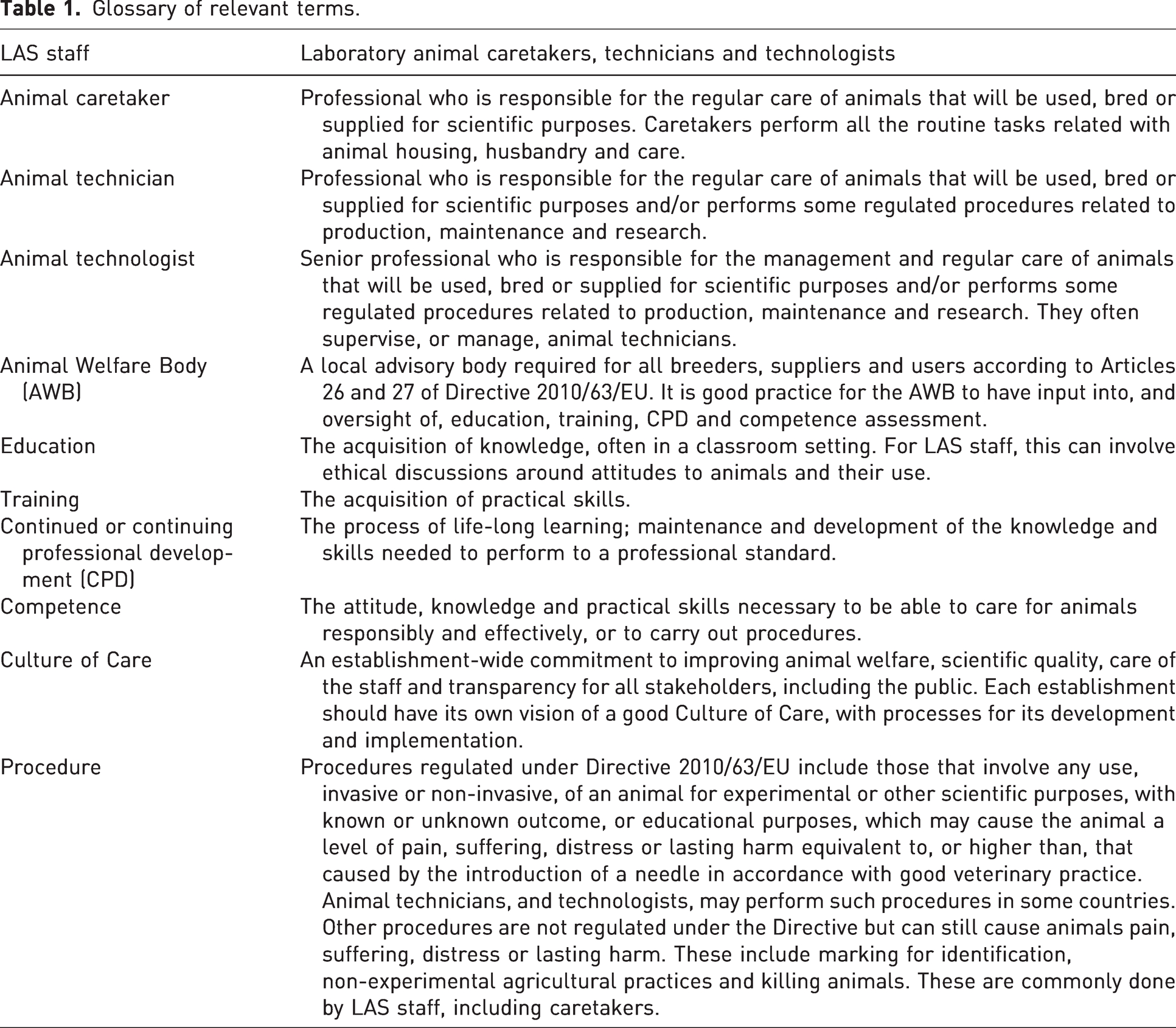
Please refer to the glossary, which defines laboratory animal caretaker, technician, technologist and other relevant terms used in this document (Table 1).
Glossary of relevant terms.
The group began by gathering information about education, training and CPD in selected countries (Denmark, France, Germany, Greece, the Netherlands, Portugal, Spain, Sweden and the UK). The intentions were to map the roles of different LAS staff and to compare different educational and CPD programmes and career pathways for people holding these roles throughout Europe. Based on the information gathered, the group defined different levels of roles, skills and competencies that would be relevant at different career stages within the various roles.
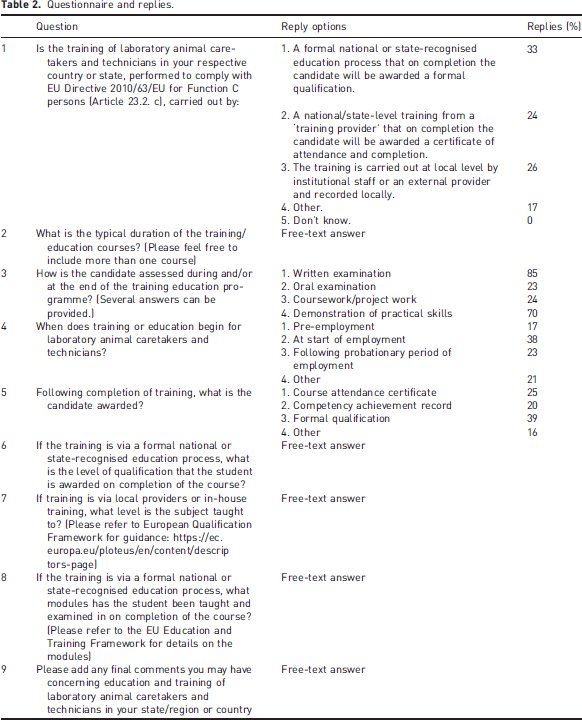
Next, a questionnaire was widely distributed through EFAT and FELASA to people involved in the education and training of LAS staff in all EU/ESS countries to obtain a broader picture of the various educational systems in Europe (Table 2).
Questionnaire and replies.
Results and recommendations
Survey results
The survey resulted in 133 responses from 25 European countries. From some countries, there were several respondents from the same or different regions, while other countries were represented by only one respondent. The results need to be interpreted with care because they are inevitably somewhat skewed and not fully representative of the true situation across all European countries. Therefore, the full details of the survey are not discussed in this report. All data from the survey are publicly available via Figshare. 6 Nevertheless, the responses from the survey demonstrated that there is a considerable variation in how LAS staff are educated and trained between European countries. The proportion of replies for the multiple-choice questions 1, 3, 4 and 5 are shown in Table 2. In those cases where respondents answered ‘other’, it has in most cases been a combination of the different options. Notable from the free-text answer were the responses to question 2, which revealed a huge difference between the time spent on education of LAS staff, ranging from a few hours to three or four years. Replies for question 7 also demonstrated that the modules within the Education and Training Framework are often referred to, and applied, in the education and training of LAS staff, which is why the application of these modules in the levels presented must be considered as highly relevant.
Levels of LAS staff skills and competencies
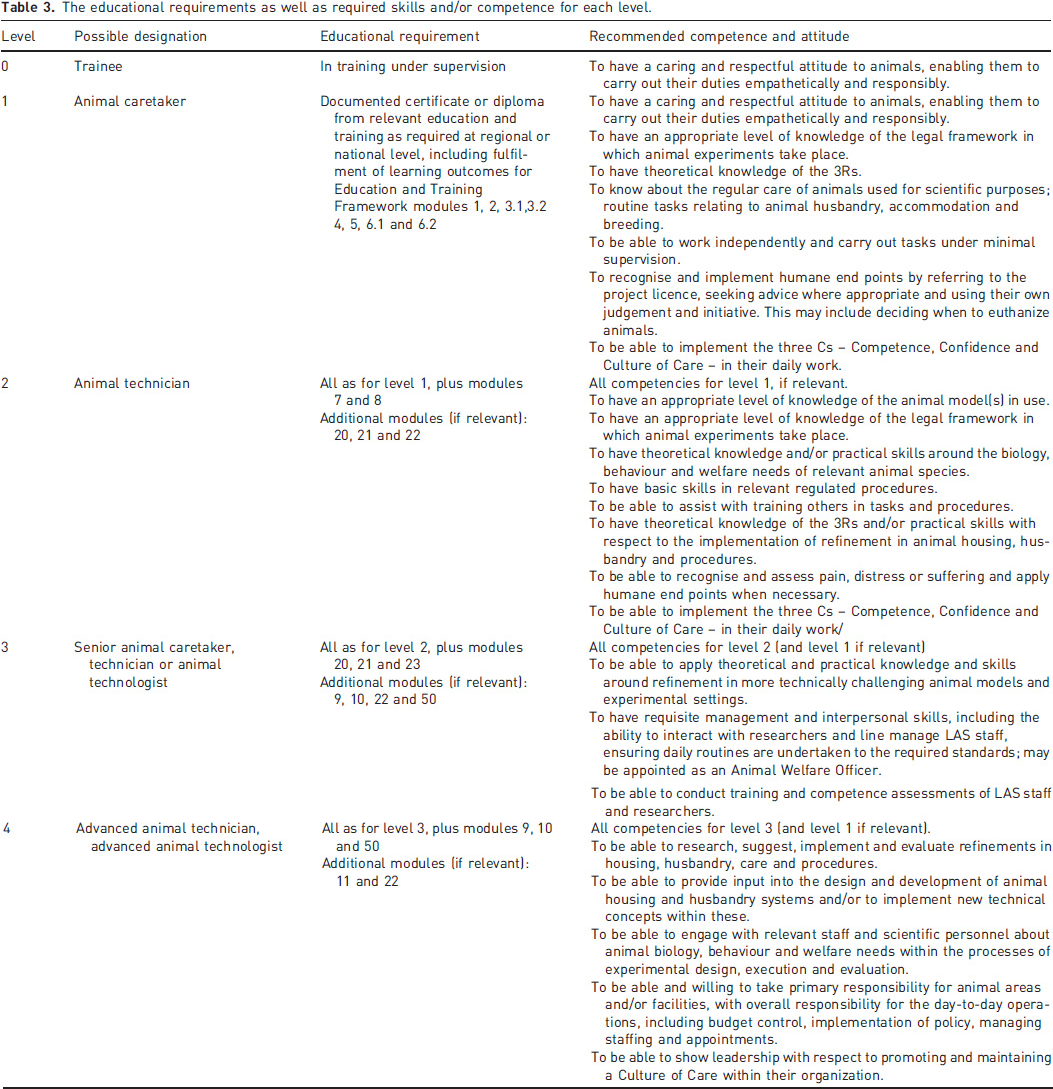
The first round of scrutiny of the systems in selected countries formed the basis for the career pathway shown in Figure 1. This has been divided into five levels (LAS staff levels 0–4). The skills and competencies required for each level are specified in Table 3 and are intended to serve as a guideline for educational institutions in how to facilitate education, training and CPD for LAS staff. It is also intended to guide authorities, employers and the staff themselves to determine which level an individual has currently attained. Table 4 shows how levels 0–4 are related to functions A–D and the previous FELASA A–D categories.
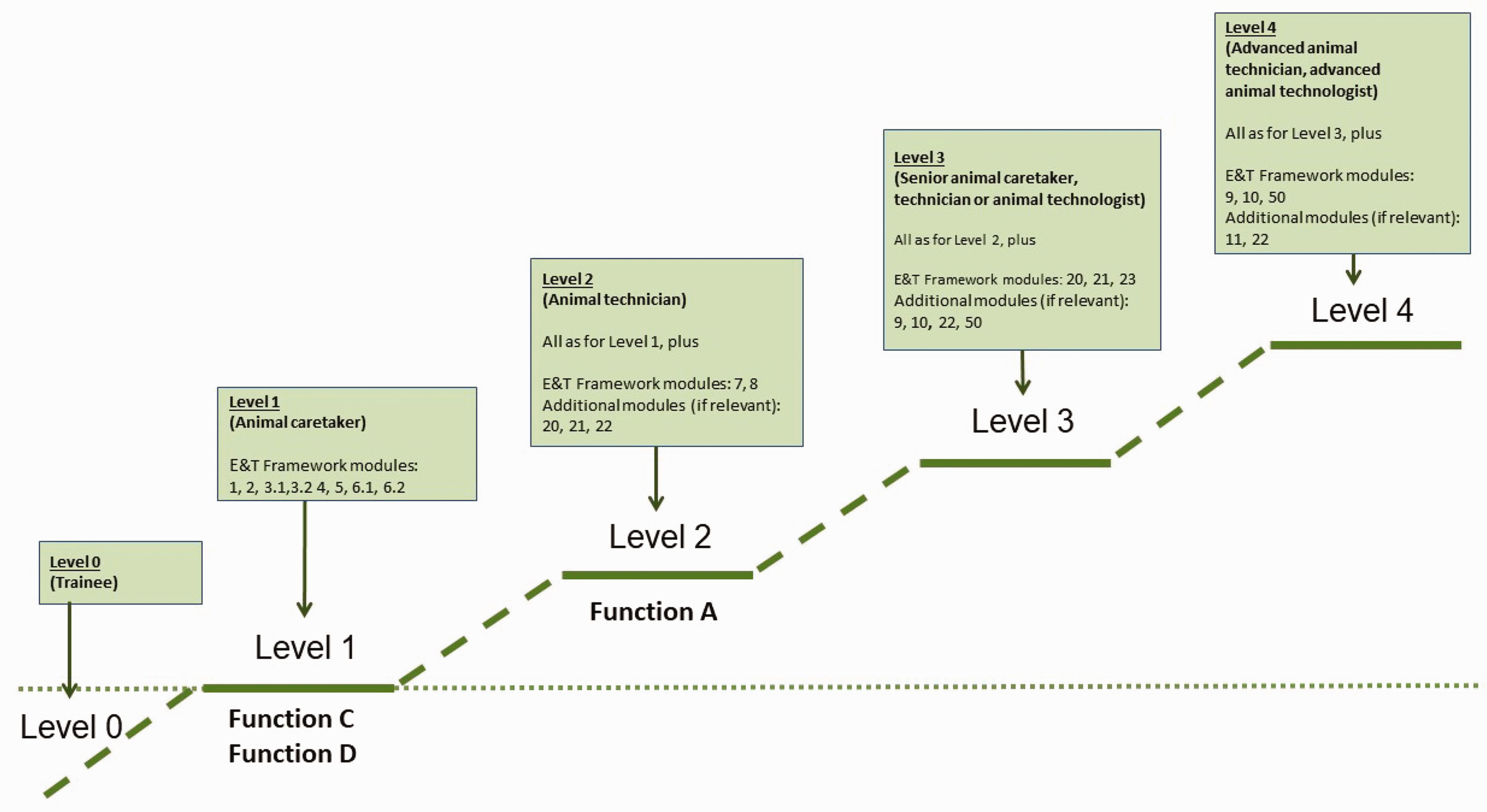
Suggested career pathway with the LAS staff levels 0–4. The boxes list the modules from the Educations and Training Framework that should have been completed to reach that level. Functions are according to those listed in Directive 2010/63/EU Article 23. Function C could be relevant to levels 2–4, but not all LAS staff at these levels are taking care of animals. Function B is not compulsory but can have relevance to some LAS staff at level 4.
The educational requirements as well as required skills and/or competence for each level.
Relationship between the proposed LAS staff levels, Directive functions and former FELASA categories.

The present report sets out recommendations for educational staff, regulators and LAS staff in European countries, with the aims of harmonising the way in which education, training and CPD is delivered for LAS staff and of clarifying which level an individual has attained. The results from the survey indicated great variation between individual countries, making these recommendations both timely and necessary. The survey also demonstrated that the modules described in the Education and Training Framework are used in many countries. So, it was relevant to apply the framework when establishing the various levels described in this report. The modules and the learning outcomes linked to these should also be used as a basis when establishing or developing education, training and CPD activities.
It is important to note that the Education and Training Framework does not specify the level or depth of teaching, or the time necessary to achieve the requisite knowledge or skills specified within each module. As discussed above, achieving competencies is the primary objective, not spending a specific amount of time on a course, given that the time needed to obtain necessary competencies may vary significantly between individuals. However, it would be helpful to define minimum course durations, below which it would be impossible to deliver the learning objectives.
Ultimately, curricula should be established for the different modules. Such curricula should preferably contain minimum course durations and specific content, with a strong focus on the depth of learning, including both the level that material is taught to and the breadth of material taught. The learning outcomes should correspond to the third reference level of the European Qualification Framework (EQF; https://www.cedefop.europa.eu/en/projects/european-qualifications-framework-eqf), as shown in Table 5. These considerations are beyond scope of the working group, but we endorse the establishment of specific curricula detailing content, minimum duration and depth of learning, and the establishment of an accreditation system specifically for the education and training of staff fulfilling functions A, C and D.
Learning outcome of to third reference level of the European Qualification Framework (EQF).

Recommendations:
Persons responsible for ensuring that staff are educated, trained and competent (Directive Article 24 1c) and line managers of LAS staff: Use this document to assess the levels currently attained by LAS staff and to review the education, training and CPD structures and processes at your establishment. AWBs: Ensure that appropriate persons within the animal unit, and senior management, have access to – and use – this document. LAS staff: Share this document with your line management and AWB; ask for a review of levels, education and training as above. Regulators: Disseminate this document to designated establishments to facilitate compliance with Directive 2010/63/EU and to improve practice beyond the legal minimum requirements.
Assessment of competencies
Effective assessment of competencies is key to enabling a fully functional application of the recommended levels in this report. Assessing the competence of LAS staff during their training may be undertaken by people with a number of different roles. A person from within the institution may be assessing and signing off competency for specific equipment or procedures, for example dosing specific species and routes, animal handling, cage change and so on, while an external organisation may have been used to teach other aspects of the modules and would therefore sign off competencies. In some countries, Direct Observation of Procedural/Practical Skills (DOPS) are used to assess competence, and this should be encouraged.
Whatever systems are used, an audit-based system to record individual competencies is needed, as these will be acquired over a training period and the records will be used as proofs of achievement. Those carrying out competence assessments may have a background in teaching or be specialists in their field. Regardless of which, they need to be competent in undertaking the task. However, there is currently no international standard for this, and the competence assessment is often directed by national authorities or their nominated awarding bodies.
For every level of professional development, the staff should pass an initial period of education and then receive training under supervision so that they can apply what they have learned and explain why every step of a task is performed. From level 1 onwards, LAS staff should be able to demonstrate and conscientiously perform any task that they will be responsible for. To be considered a professional at any level, a responsible attitude and the capacity for autonomous performance should be in place. Figure 2 represents the increased complexity, and the development in competence, that is expected from the ‘cognition’ phase to the change in behaviour, as is also recognised when training medical professionals.7–9 This process of professional development applies within each of the levels 0–4, although longer periods of work under supervision, and independent practice, will be required for reaching competence at higher levels (Figure 1).
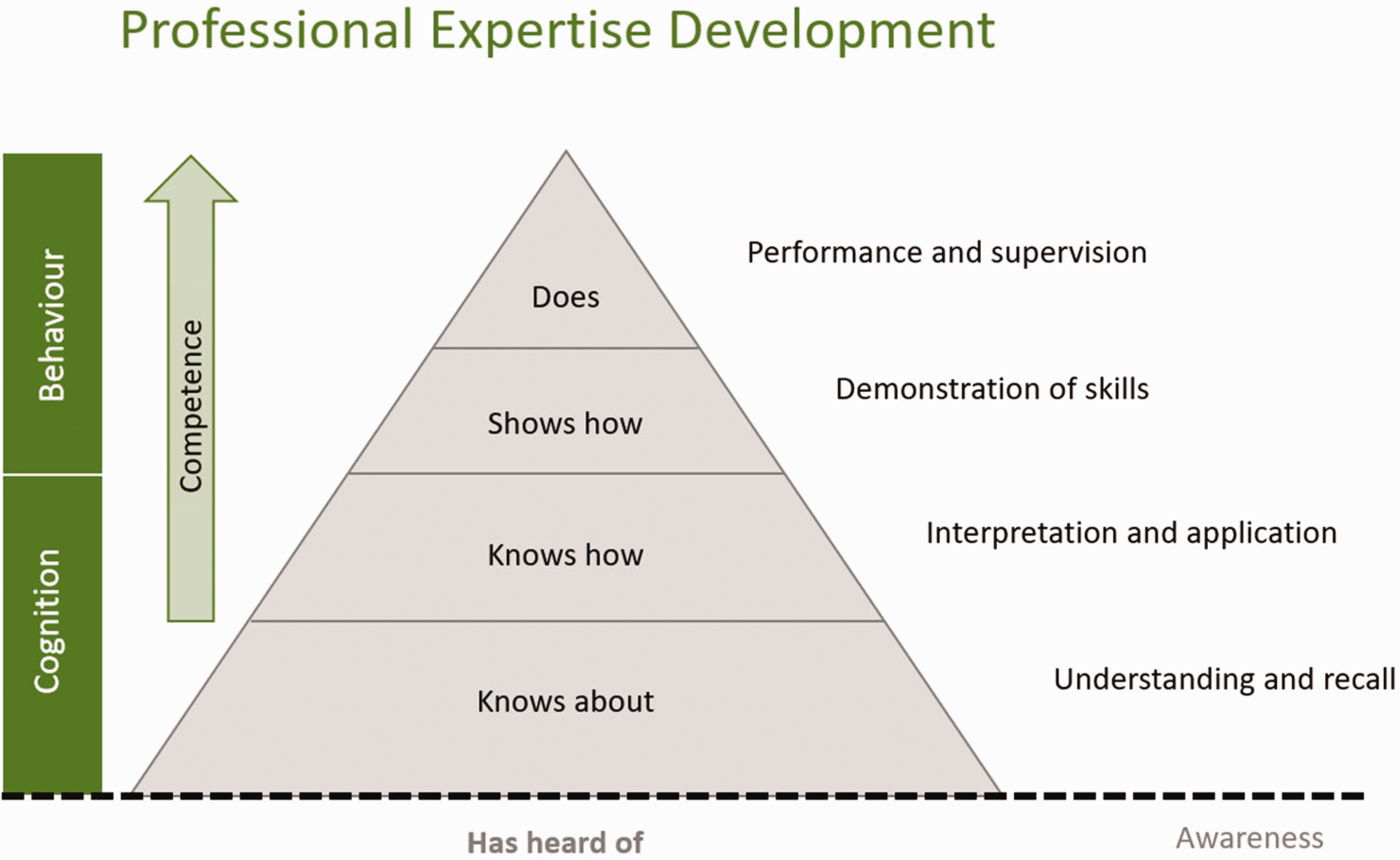
Competence assessment will be necessary, and specific CPD credits should be in place, to assure that LAS staff meet acceptable high professional standards in order to help deliver good animal welfare and high-quality scientific results. CPD will also allow individuals to take control of their own learning and development through empowerment, but it needs adequate support and a structured approach to work successfully.
Recommendations:
Consider how competencies are currently assessed at your establishment. Is this done in the most effective way by people with the appropriate knowledge and skills? Use DOPS to assess competence wherever appropriate. Ensure that an effective CPD scheme is in place for all relevant staff, including a CPD credit scheme. Regulators: Set standards for competence assessment and ensure that they are consistently applied.
The Culture of Care
It is clear that appropriate investment in education, training, CPD and competence assessment for LAS staff is crucial for a good Culture of Care. Institutional support and leadership, including from senior staff and management, is a fundamental component of good establishment culture. This applies especially to training and CPD, which require resources and commitment.
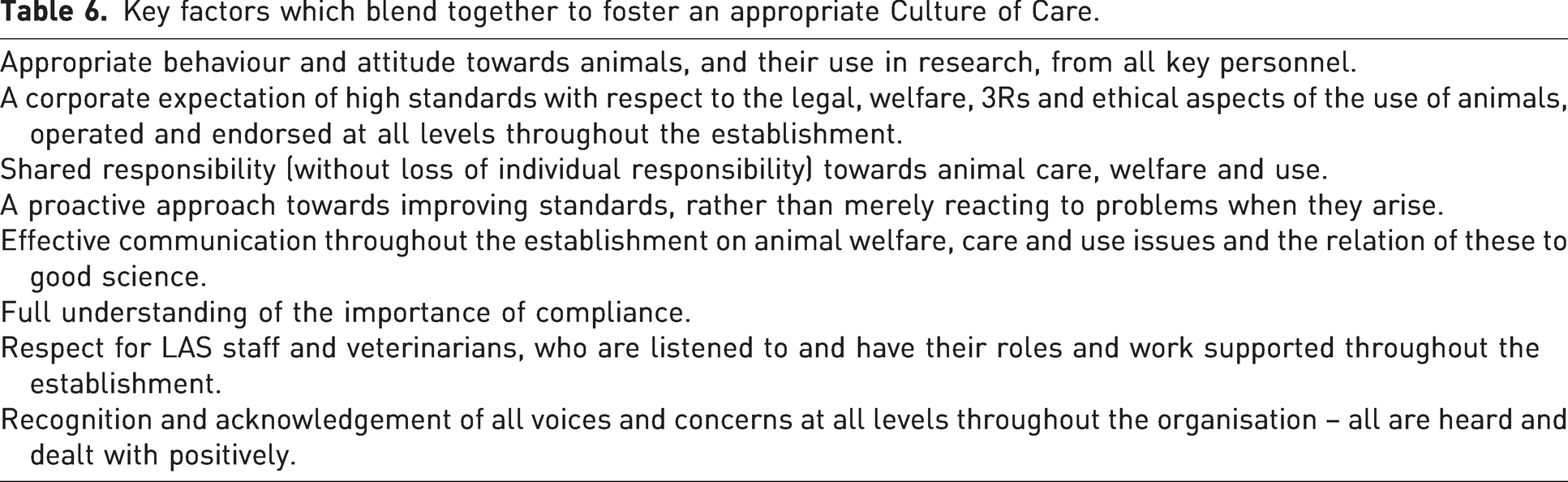
Staff should be involved in defining and implementing the Culture of Care, which is best achieved with input from employees with a range of different roles. LAS staff involvement is key because they can be at particular risk of ‘compassion fatigue’,10,11 and their perspectives, expertise and feelings should be respected throughout all relevant decision-making processes at the establishment. The above approach to recognising and empowering LAS staff is an essential component of the Culture of Care, which should be regarded as an all-round commitment to caring for animals, ensuring good staff morale, implementing the 3Rs, ensuring good-quality science and being open and transparent about their animal use, including with the public (Table 6).
Key factors which blend together to foster an appropriate Culture of Care.
An increasing number of establishments are assessing their Culture of Care and setting objectives to build on and improve practice.12–14 It is important to include a combination of subjective, objective and animal-centred indicators when assessing the Culture of Care. Examples of different types of indicator relating to LAS staff training could include:
Subjective: ‘I feel well-trained and confident with respect to all my duties’ – strongly disagree/disagree/neutral/agree/strongly agree. Objective: Well-maintained training records with evidence of regular review. Animal-centred: Fewer mis-dosing incidents following refresher training.
Further information about resources and references on developing, implementing and assessing the Culture of Care is listed at norecopa.no/coc.
Recommendations:
Ensure that all LAS staff are aware of the establishment’s Culture of Care and have opportunities to become involved in defining and developing this. Make sure everyone is aware that the Culture of Care includes caring for LAS staff. When setting up an exercise to assess the Culture of Care, include information, or questions, around LAS staff education, training and CPD opportunities.
The role of the AWB
Article 27 of Directive 2010/63/EU sets out the five minimum tasks of the AWB, which is required at every breeder, supplier and user establishment. One task is to ‘advise the staff on the application of the requirement of replacement, reduction and refinement, and keep them informed of technical and scientific developments concerning the application of those requirements’. The EC Working Document on AWBs and national committees sets out some approaches to achieving this task (Table 7).
Examples of training-related AWB activities.

Directive Article 26 sets out the minimum requirements for AWB membership, which includes ‘at least the person or persons responsible for the welfare and care of the animals’. This presents an important opportunity for LAS staff to have direct input into training, CPD and competence, provided that the AWB is fulfilling the recommendations in the EC Document.
The AWB should therefore have an appropriate level of awareness and oversight of, and input into, education and training at the establishment. The Working Group has identified some current instances of good practice with respect to this. One approach is for the AWB to recognise the person responsible for training and competence formally. For example, they may attend all AWB meetings and have a standing agenda item or set expectations for CPD which are endorsed by the AWB. Some AWBs produce resources, for example intranet sites, listing training opportunities, which are regularly updated. The AWB may be responsible for checking training and CPD records and can also initiate training workshops if knowledge gaps are identified.
Recommendations:
Make sure that the AWB has suitable oversight of, and input into, education, training and CPD. Ensure that the person responsible for ensuring staff education, training and competence (required by Directive Article 24) is provided with the resources they need and has a clear line of communication with the AWB. Discuss the above list of examples of good practice with the AWB and see which you could implement or adapt.
Conclusions and thoughts for the future
The survey, and subsequent work to define levels and requirements for education, training and CPD, provided a basis for the above guidance and recommendations, which aim to achieve a basic level of harmonisation. The Working Group encourages regulators, LAS staff and management, senior organisational management and AWBs to implement, and build on, this document.
A relatively simple next step would be sharing good practice around education, training and CPD within and between different countries. This could be achieved through meetings and discussions and by staff exchange programmes between establishments. Meetings for LAS staff, associations and networks could commit to including the topic on the agenda of every meeting. This would be easy for organisations and professional bodies to implement and would help with consistency regarding the content and quality of training for LAS staff.
Greater consistency would be achieved with a system for training the trainers and supporting them when they work to develop the education programme in their own country. A centralised and coordinated system for LAS education and support would provide benefits for animal welfare, staff morale, scientific quality and public trust in the regulatory system.
Footnotes
Acknowledgements
The authors wish to express their sincere gratitude to Delphine Grézel at the VetAgroSup – Campus Vétérinaire de Lyon, France, and Martin Heath at The Learning Curve (Development) Ltd, UK, for their most valuable contributions to the initial work of the Working Group. The authors would further also like to acknowledge Ronald Vlasblom, Institute for Life Sciences and Chemistry, Utrecht, the Netherlands, and Jos Hendriks, Yuverta mbo, Nijmegen NL, for their valuable contribution to  .
.
Declaration of conflicting interests
The author(s) declared no potential conflicts of interest with respect to the research, authorship, and/or publication of this article.
Funding
The author(s) received no financial support for the research, authorship, and/or publication of this article.