




Abstract
Fetal growth restriction (FGR) is a common and potentially severe pregnancy complication. Currently there is no treatment available. The guinea pig is an attractive model of human pregnancy as placentation is morphologically very similar between the species. Nutrient restriction of the dam creates growth-restricted fetuses while leaving an intact uteroplacental circulation, vital for evaluating novel therapies for FGR. Growth-restricted fetuses were generated by feeding Dunkin Hartley guinea pig dams 70% of ad libitum intake from four weeks before and throughout pregnancy. The effect of maternal nutrient restriction (MNR) on dams and fetuses was carefully monitored, and ultrasound measurements of pups collected. There was no difference in maternal weight at conception, however by five weeks post conception MNR dams were significantly lighter (P < 0.05). MNR resulted in significantly smaller pup size from 0.6–0.66 gestation. Ultrasound is a powerful non-invasive tool for assessing the effect of therapeutic interventions on fetal growth, allowing longitudinal measurement of fetuses. This model and method yield data applicable to the human condition without the need for animal sacrifice and will be useful in the translation of therapies for FGR into the clinic.
Fetal growth restriction (FGR) is one of the most common obstetric complications, affecting approximately 8% of pregnancies. 1 It has implications for fetal and neonatal morbidity and mortality,2–4 as well as neurological and developmental delays in childhood5,6 and cardiovascular–metabolic syndrome during adult life.7,8 The condition is defined as the failure of a fetus to achieve its genetically determined growth potential, and the primary cause of FGR is placental insufficiency 9 characterized by reduced uterine blood flow (UBF) and reduced placental nutrient transfer capacity.
A number of animal models have been developed to study the complex mechanisms of FGR and to test therapies aimed at improving fetal growth, using a range of species 10 and techniques including surgical intervention directly altering the uterine and radial artery circulations.11–13 Alternatively, using maternal nutrient restriction (MNR) to create FGR has the advantage of an intact uteroplacental circulation,14–18 allowing interventions aimed at increasing uteroplacental blood flow to be evaluated.
The guinea pig is a valuable model of human pregnancy due to its haemomonochorial placentation (a single layer of trophoblast between the maternal blood space and the fetal vessels), which besides non-human primates and older mammalian superorders such as armadillos, is morphologically the most similar to human placentation.19,20 Experimental results obtained from pregnant guinea pigs are thus likely to hold relevance for clinical translation. In contrast to most other laboratory rodents, guinea pigs have extensive trophoblast invasion of the spiral arteries,21,22 and bear precocial young. The placenta does differ from humans as it is labyrinthine rather than villous, and the dam carries a litter of 3–5 pups. Guinea pigs also have a relatively long gestation for a small animal (65 days), which gives the opportunity to evaluate the effects of any treatments during gestation. We have previously shown in a sheep animal model of FGR that fetal growth can be measured non-invasively and longitudinally using ultrasound, 23 and that ultrasound is a powerful tool for assessing the effect of therapeutic interventions on fetal growth. 24 We aimed to use the MNR guinea pig model of FGR to investigate the efficacy of a novel treatment based on administration of maternal vascular endothelial growth factor (VEGF) gene therapy to the uterine arteries.25,26 Previous studies in the MNR guinea pig had examined fetal size at one or two time points only, and measured term fetal size at post-mortem examination. Generation of the model was also relatively poorly described, with no reported details such as the length of time the female was with the male, time the hymen was open and conception rate. In this study we examined if repeated fetal and placental ultrasound measurements would yield information on fetal growth parameters without the need for animal sacrifice. We also carefully examined important parameters in the dam such as maternal weight loss on the restricted diet, conception rate, and litter size.
Materials and methods
Animals
Dunkin Hartley guinea pigs (HsdDhl:DH, virgin female, weighing >600 g) were purchased from a specific pathogen free colony (Harlan Animal Research Laboratory, Hillcrest, Leicestershire, UK). The colony was examined for the following agents: guinea pig adenovirus, lymphocytic choriomeningitis virus, Sendai virus, Bordetella bronchiseptica, Chlamydia psittaci, Clostridium piliforme, Corynebacterium kutscheri, dermatophytes, Pasteurella spp, Salmonella spp, Streptobacillus moniliformis, streptococci beta-haemolytic (not group D), Streptococcus pneumoniae, Yersinia pseudotuberculosis, ectoparasites, Encephalitozoon cuniculi and endoparasites. Animals were acclimatized for at least one week. The guinea pigs were held in a room with a 12 h:12 h light:dark cycle, with lights on at 06:00 h. Room temperature was 16–25℃ and humidity 45–65%, as per Home Office (UK) requirements. Before going on study, female guinea pigs were housed in cages (84 × 72 × 52 cm) in groups of up to three animals, and fed ad libitum with guinea-pig pellets (Special Diets Services, Essex, UK). Tap water supplemented with vitamin C (400 mg/L) was available ad libitum. All animals were handled and weighed daily. Male stud guinea pigs were housed individually under the same conditions. At term (60–63 days of gestational age (dga)), animals were euthanized with an overdose of Euthatal (sodium pentobarbitone; Rhône Merieux, Essex, UK) by intraperitoneal or intracardiac administration. All procedures on animals were conducted in accordance with UK Home Office regulations and the Guidance for the Operation of Animals (Scientific Procedures) Act 1986. Ethical approval was obtained from the Royal Veterinary College and University College London ethics committees.
Timed-mating of guinea pigs
Before entering the study, virgin females were housed individually for at least one week. During the study all females were weighed daily and the vagina observed for membrane rupture. Once ruptured the membrane usually remains open for 2–3 days during the period of ovulation. On finding the hymen ruptured and the vagina open, female guinea pigs were deemed to be in estrus and were placed overnight with a male initially. But this was found to be an insufficient length of time for conception; subsequently after this, they were placed with the male for 3–6 nights until the hymen closed after which they were separated. Coitus was assumed to have occurred independently of whether or not a copulatory plug was found. The middle day of this 3–6 day period was considered to be day 0, and the next day was considered to be day 1 of gestational age.
Guinea pigs continued to have daily hymen checks after mating. They underwent an ultrasound scan (7–10 MHz probe, GE Logiq 400 CL; GE Healthcare, Buckinghamshire, UK) approximately 20–26 days after presumed conception. The fur was closely clipped from their abdomen, the animals were gently restrained sitting up for 10 min and ultrasound gel was applied to their lower abdomen. Detection of one or more gestation sacs confirmed conception. Where a gestation sac was not found the guinea pigs were rescanned one week later to confirm the findings and then placed back with the male when estrus next occurred. Hymen checks were stopped when a pregnancy was confirmed by ultrasound.
Diet restriction
To calculate the average amount of food consumed per kilogram body weight, 10 female guinea pigs on an ad libitum diet were followed preconception and throughout pregnancy. The animals were weighed three times per week, and the food remaining in the hopper was weighed before feeding each day. Food was delivered to the hoppers once daily, at 09:00 h. Normal pregnant animals were found to be consuming an average of 0.6 g of feed daily per 100 g body weight before and during early pregnancy. Animals on the growth-restricted diet were therefore fed 0.42 g of feed daily (70%) per 100 g body weight when put on the under-nutrition regime, and 0.54 g (90%) per 100 g body weight after 35 dga.
To generate FGR, female virgin Dunkin Hartley guinea pigs were acclimatized to individual housing for one week on an ad libitum diet, and then placed on the restricted diet. During this week of acclimatization environmental enrichment such as hay was used to reduce their stress, but this was removed once they were placed on the restricted diet. Females were weighed daily, as was the food left in the hopper before feeding each day to determine the actual amount of food consumed per kilogram body weight. The guinea pigs were maintained on the nutrient-restricted diet for at least four weeks during which time the vagina was visually observed daily. After at least four weeks on the diet regime, as soon as the hymen opened the female guinea pigs were mated as above. During mating the pair was fed ad libitum. The guinea pigs were scanned at 20–26 dga to confirm pregnancy. If pregnancy was confirmed, the nutrient-restricted animals continued to be fed 70% of the ad libitum food intake per gram body weight until day 34 post-conception. From day 35 onwards until the end of pregnancy, food was increased to 90% of the ad libitum intake, to keep the food ration of the food-restricted animals stable. 27 Food intake continued to be monitored until the end of pregnancy. If a pregnancy was not confirmed, a repeat ultrasound scan was performed around one week later (27–31 dga). Non-pregnant guinea pigs were continued on the 70% nutrient-restricted diet for further cycles of mating at the next estrus.
Detailed fetal ultrasound
Initially detailed fetal ultrasound was attempted with the guinea pigs restrained while awake and sitting up. It was not possible however to get a sufficiently clear view of all pups and gestation sacs within the pregnancy due to the fetal position and maternal bowel contents, and further scans were conducted under general anaesthesia. Guinea pigs were fasted overnight before anaesthesia, and procedures routinely performed in the morning. General anaesthesia was induced with diazepam (5 mg/kg subcutaneously; Hameln Pharmaceuticals, Gloucester, UK), atropine (0.5 mg/kg subcutaneously; Martindale Pharmaceuticals, Essex, UK) and ketamine (40 mg/kg intramuscularly; Hameln Pharmaceuticals) to relax the dam. After 20 min to allow the injected agents to take effect, a face mask was then applied to the animal, through which isoflurane (Isoflurane-vet; Merial Animal Health Ltd, Essex, UK) was administered. General anaesthesia was maintained with 1.5–2.0% isoflurane in oxygen and the animal was placed supine on a heated operating table for rodents. Once anaesthetized, the fur was clipped from the guinea pig’s abdomen, contact gel applied, and a detailed ultrasound examination of the uterus and its contents, including all of the pups, was performed. Fetal measurements were collected: biparietal diameter (BPD), occipito–snout length (OSL), abdominal circumference (AC), femur length (FL), placental length, placental thickness and crown–rump length (CRL). A pulse oximeter placed on the guinea pig’s ear was used to monitor oxygen saturation and pulse rate. The guinea pig was then allowed to recover and placed in its cage which was pre-warmed with a hot water bottle. It was kept under close observation and not returned to the home cage until it regained the righting reflex (ability of rodents to regain footing when placed with the back down on a flat surface) and showed some interest in the hay placed in the cage. Hay was provided, as it has minimal nutritional value but acts as an appetite stimulant. All dams underwent a scheduled post-mortem examination at term which included detailed analysis of pup number, position, gender and weight.
Statistical analysis
These observations were recorded as part of a larger study evaluating a novel therapy for FGR (manuscript in preparation). Appropriate sample size calculations were based on the expected outcomes of that study. A total of 55 guinea pigs were used for the conception rate analysis, of which 38 were included in the diet restriction study. A generalized linear mixed model approach was used for statistical analysis referred to for each dam, with fetal gender, litter size and gestational age at scan as covariates. Fetal gender was found to have no effect and was removed as covariate. To evaluate weight change in dams and mating outcome t-tests were used. Statistical significance was considered to be achieved if P < 0.05, and P-values are reported.
Results
Complications
There were no deaths or complications attributable to diet, anaesthesia or the ultrasound procedure.
Effect of individual housing
The guinea pigs were placed in single housing for seven days on an ad libitum diet prior to experimental group allocation. Mean female weight at re-housing was 839.5 ± 117.4 g, range 580–1040 g. Mean weight after seven days of single housing was 819.1 ± 102.7 g, with a mean weight change of –20.4 ± 41.0 g. This effect of single housing on weight was significant (P = 0.005, paired t-test).
Effect of diet on weight
Dams on a restricted diet (MNR) lost more weight than those on the ad libitum diet, both in terms of absolute weight loss (P = 0.005) and relative weight loss (P = 0.002, Figure 1).
Weight changes in dams before and during gestation. Dams were housed individually for one week before commencing dietary restriction: maternal nutrient restriction (MNR) or ad libitum diets. Time 0 = time of conception. At two weeks before conception (–2 weeks) there was no difference in maternal weight but by five weeks after conception (5 weeks) MNR dams were significantly lighter (*P < 0.05).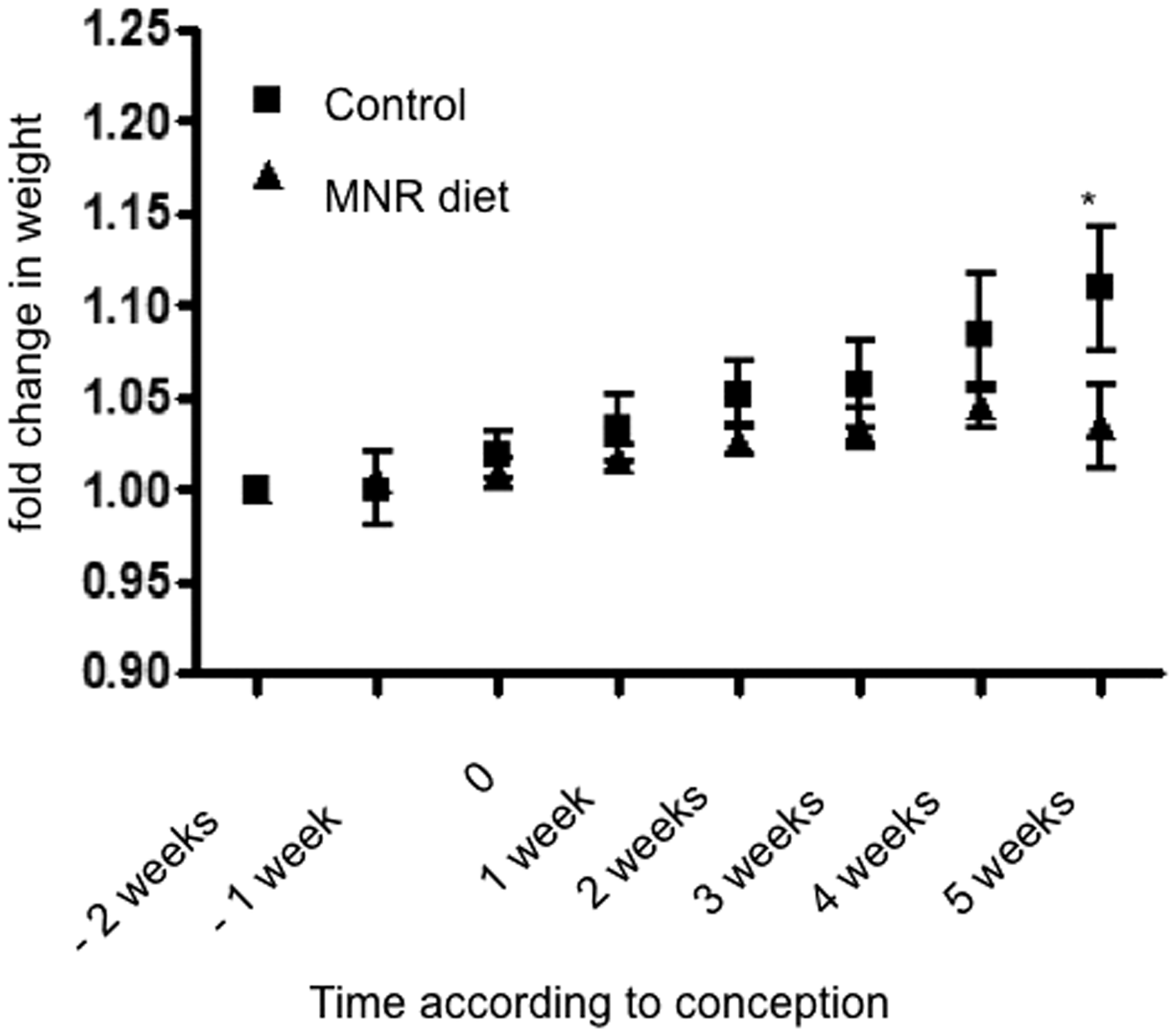
Conception rate
In the preliminary studies, males were mated with females for a single night, on the first day of vaginal membrane rupture. This yielded a very low pregnancy rate, where only two of seven tups (29%) resulted in pregnancy. We considered that the most likely cause was that mating was occurring outside the time period deemed estrus. While the guinea pig hymen generally remains open for 2–3 days, the estrus phase lasts only 8–12 h during the night. Following discussion with Professor Claire Roberts (personal communication), who originated this particular FGR model, 17 the mating time was increased to three days. This improved the conception rate to six of 10 tups (60%). Subsequently and for the remainder of the study, males were placed in the cage with the female for the duration of time that the hymen was open (mean 4.3 ± 2.7 days).
From a total of 55 females, 34 became pregnant at the first tup (62%) (Figure 2). The remaining females were then mated each time the hymen opened, with eight of 20 becoming pregnant at the second tup (40%), three of 11 (27%) at the third tup, one of eight (12.5%) at the fourth tup, four of six (66.7%) at the fifth tup, zero of two at the sixth tup, and zero of one at the seventh tup.
Cumulative conception rate of dams housed with males for duration of hymen opening. Successful outcome tended to decrease with repeated tupping.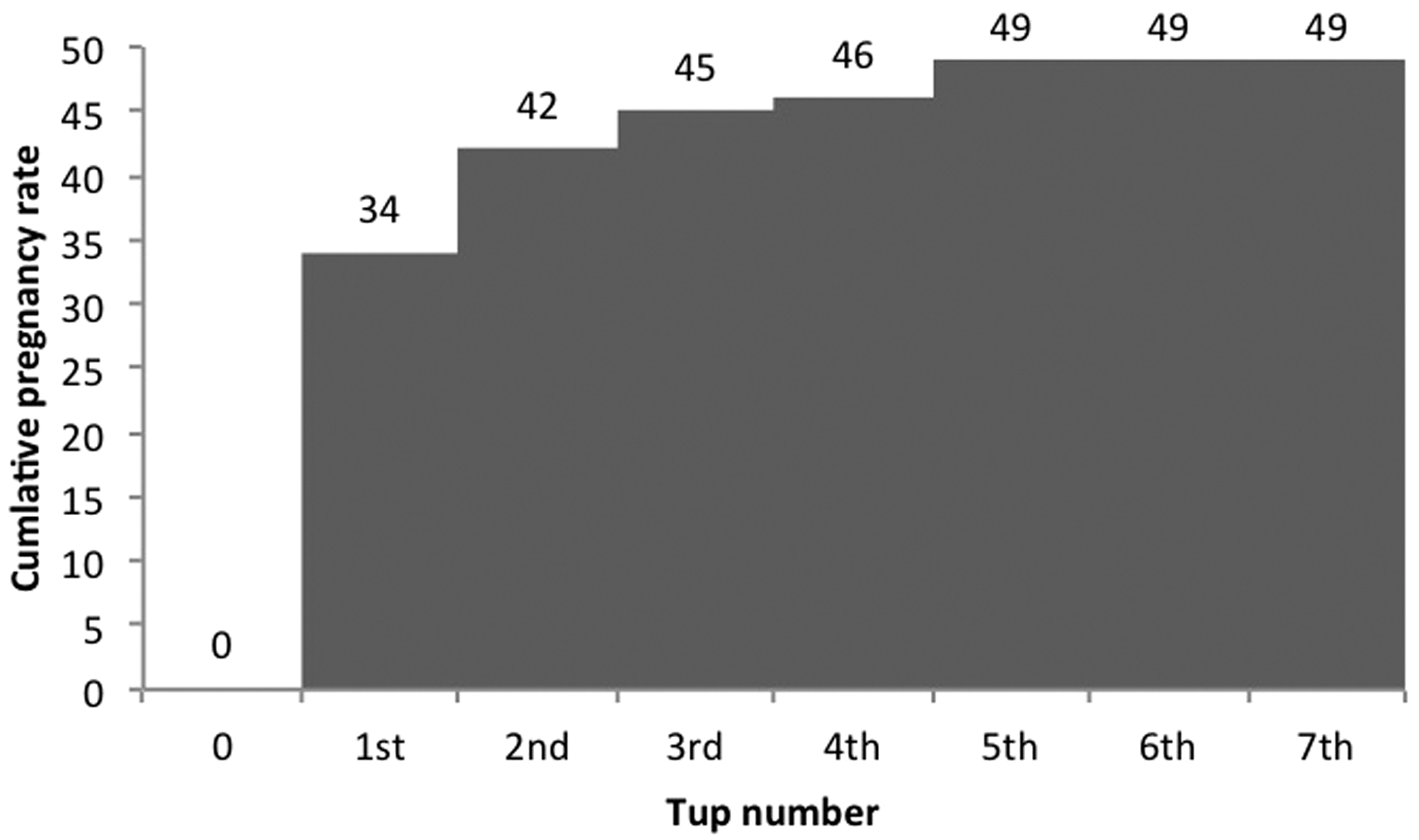
Successful mating was occasionally found in females that did not have a copulatory plug. The number of days the male was housed with the female was not significantly associated with conception success of the first tup (P = 0.701) or the second tup (P = 0.223). The weight of the female at the time of tupping was not significantly associated with the outcome of the first tup (P = 0.112) or the second tup (P = 0.125) nor was the outcome of the first tup associated with diet (P = 0.163). There was no relationship between the weight change preconception (between day 1 and day 28 on the restricted diet) and the chance of successful conception with the first tup, either in absolute weight change (P = 0.448) or relative weight change (P = 0.377). Females lost weight between the first and second tups (mean weight loss 29.2 ± 59.5 g, P = 0.045). The chance of successful conception of the second tup was not influenced by weight loss (P = 0.257). Although anecdotal evidence suggested that females were more likely to conceive when ≥800 g at the time of tupping, there did not appear to be a minimum weight below which conception did not occur, and this was not found to be the case statistically (P = 0.256).
Hymen rupture
Hymen checks on mated animals were continued until pregnancy was confirmed by ultrasound. We observed ruptured vaginal membranes in 29 of 60 (48%) animals that were later confirmed to be pregnant at the time of hymen opening. The median dga of hymen opening was 25 (range 10–35 dga), and the median opening interval was three days (range 1–6). In MNR animals, 22 of 49 (45%) pregnancies had a period of hymen opening, as did seven of 11 (64%) pregnancies in the ad libitum fed animals (P = 0.12).
Litter size
The mean number of pups per litter was not significantly different in the ad libitum dams (3.7 ± 1.3, n = 26 pups from seven litters) compared with MNR dams (3.3 ± 1.2, n = 79 pups from 24 litters, P = 0.548). Mean weight at conception had no effect on litter size at first tup (P = 0.825).
Fetal measurements mid-gestation
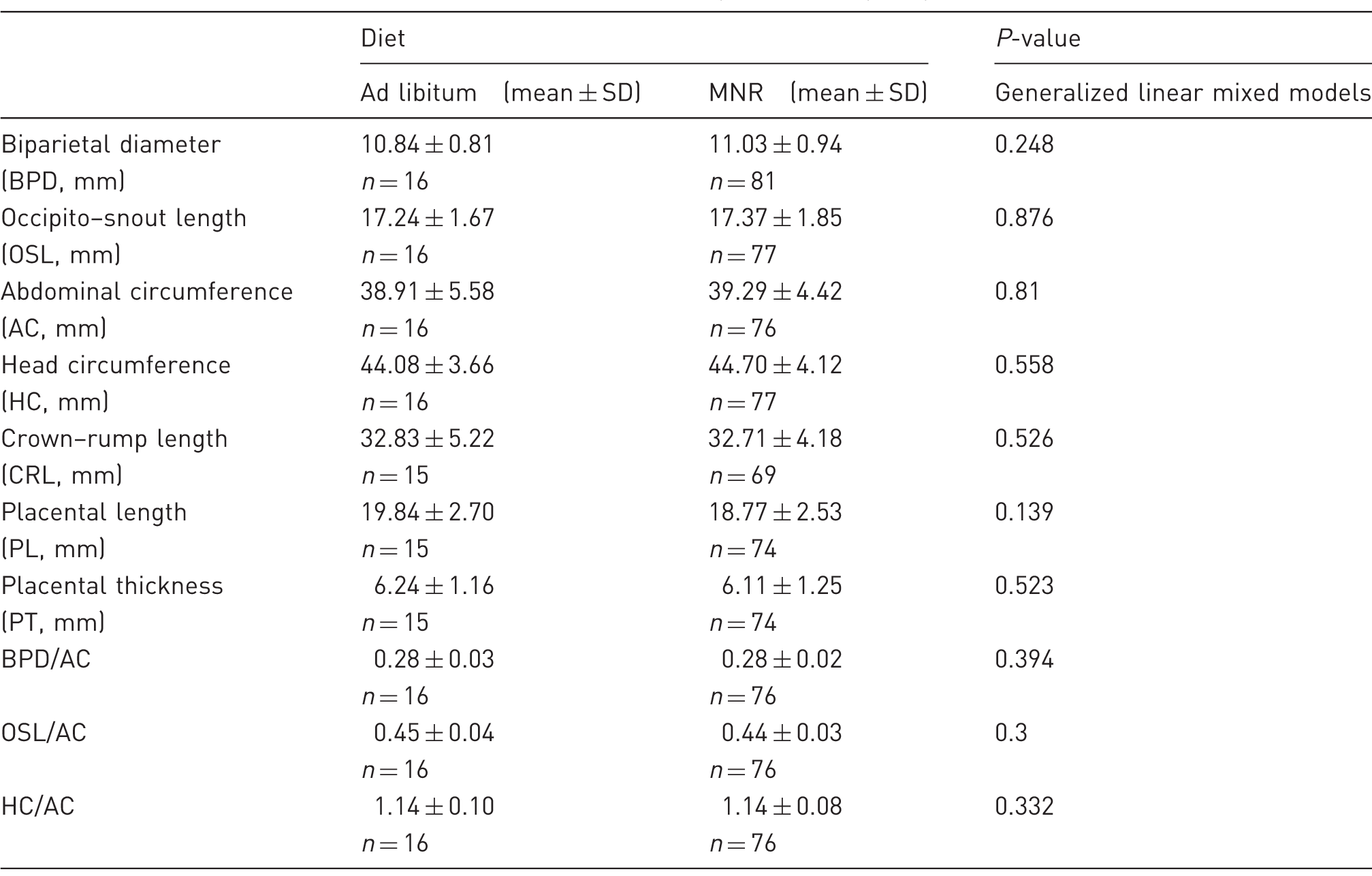
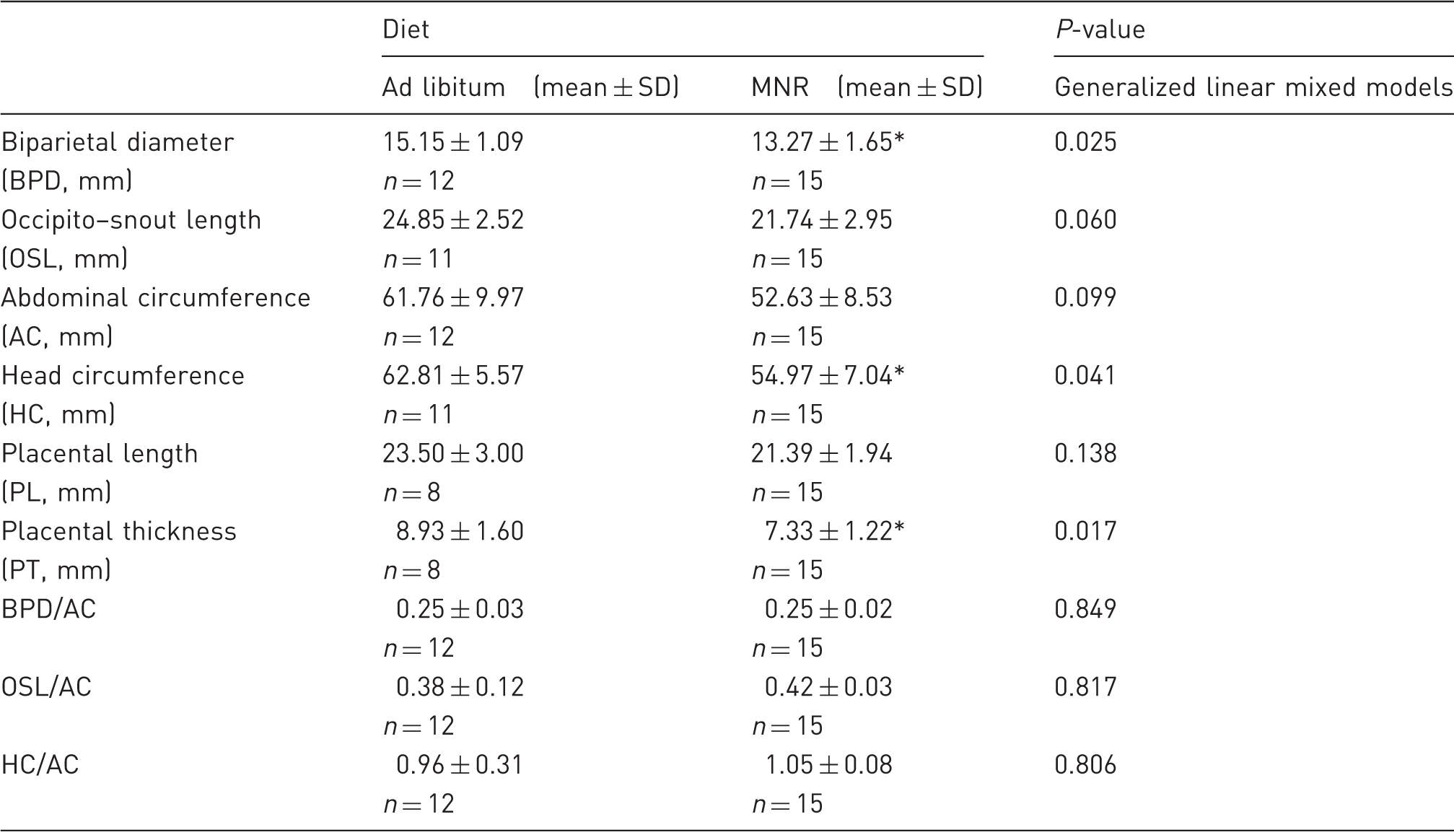
Ultrasound was able to detect all pups in each litter examined, but we were unable to get a clear view of the fetal gender. Examples of fetal measurements are shown in Figure 3. At 31–36 dga MNR had no effect on fetal or placental size measurements by ultrasound examination (Table 1). By 39–43 dga however, fetal skull measurements were significantly smaller in the MNR group, by 12% (BPD: ad libitum 15.15 ± 1.09 mm vs MNR 13.27 ± 1.65 mm, P = 0.025; and head circumference (HC): ad libitum 62.81 ± 5.57 vs MNR 54.97 ± 7.04 mm, P = 0.041, Table 2). Placental thickness was reduced by 18% (ad libitum 8.93 ± 1.60 mm vs MNR 7.33 ± 1.22 mm, P = 0.017), although there was no effect on placental length (ad libitum 23.50 ± 3.00 mm vs MNR 21.39 ± 1.94 mm, P = 0.138). Other fetal measurements such as OSL and AC were also smaller in MNR fetuses, although these differences did not achieve significance (OSL: ad libitum 24.85 ± 2.52 mm vs MNR 21.74 ± 2.95, P = 0.060: AC: ad libitum 61.76 ± 9.97 mm vs MNR 52.63 ± 8.53, P = 0.099). The ratios of head measurements (BPD or HC) to abdominal circumferences were not different between treatment groups. It was not possible to reliably measure CRL by ultrasound at 39–43 dga due to the fetal position. Measurement of femur length was difficult in most fetuses even after 30 dga due to its short length and fetal lie.
Representative ultrasound images of fetal guinea pigs, showing measurements taken. Ultrasound was performed using a L14–5/38 probe. A: biparietal diameter (BPD); B: occipital–snout length (OSL); C: abdominal circumference (AC); D: femur length (FL); E: placental diameter and thickness; F: crown–rump length (CRL). Fetal and placental measurements at 31–36 days of gestational age (dga). MNR: maternal nutrient restriction. Fetal and placental measurements at 39–43 days of gestational age. MNR: maternal nutrient restriction. *P < 0.05.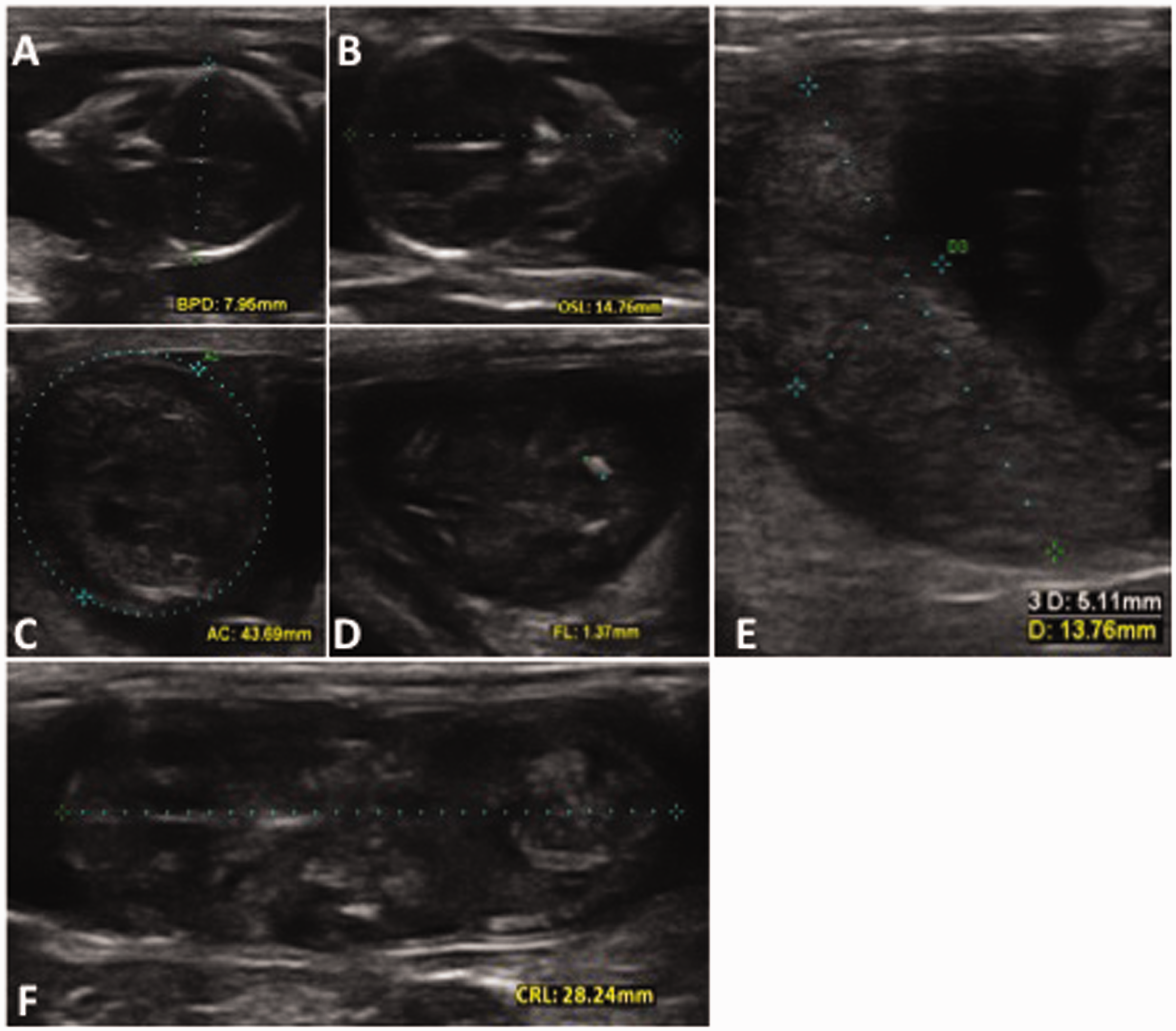
Discussion
In this study we have shown that ultrasound is a valuable tool for assessing fetal size in guinea pigs subjected to ad libitum diet or nutrient-restricted diet, and demonstrated that by 0.6–0.66 gestation, MNR is associated with significantly smaller pup size. Previous studies using the MNR guinea pig model of FGR have shown a significant effect on fetal size of MNR by 30 dga,17,27,28 or 45 dga, 29 using fetal weight at post-mortem examination as the primary measure. Using ultrasound examination we were able to assess fetal size non-invasively, demonstrating differences in fetal measurements that others have found. One previous study on fetal ultrasound measurement in guinea pigs demonstrated in normal pregnant animals that BPD size may be used to reliably estimate gestational age in this species from 20 dga. 30 We were able to confirm pregnancy from 20 dga in some cases but this depended on the presence of maternal bowel contents and fetal position. Anecdotally, ultrasound early in the day before the dam had eaten improved the view. We found that the optimum gestational age to confirm pregnancy by sonography was 24–25 days.
While we did not demonstrate FGR as early as other studies that used post-mortem examination in MNR guinea pig pregnancy, we believe that any loss in sensitivity is compensated by the ability to take repeated measures in the same animal. Kind et al. 28 showed a significant reduction in fetal head width at 60 dga, but did not take measurements mid-gestation. In a smaller study the same group showed an increase at term in the head width/abdominal circumference ratio in male but not female offspring, indicating brain-sparing in the fetus. 31
We retained litter size as a covariate in our generalized linear mixed model analysis of the data since some previous authors have observed an effect. We did not however observe any apparent significant effect of litter size or pup position on pup size as measured by ultrasound at 0.5 and 0.66 gestation. Eckstein et al. found that litter size affected the placental weight of the litter, 32 but Roberts et al. 17 removed litter size from their analysis as it had no effect on the fetal measurements taken. Turner and Trudinger 30 examined the effect of pup position on birth weight, showing a tendency for fetuses at the cervical end of the uterus to be bigger than those immediately above them in the uterine horn, but they did not assess the effect of litter size on birth weight.
We have previously demonstrated that ultrasound could detect differences in fetal size in a sheep dietary model of FGR, the adolescent over-nourished ewe wherein fetal AC, BPD, tibia and femur length and renal volume were reduced in comparison to the control normally-fed ewes. 24 It was not possible to reliably measure tibia and femur lengths or renal volume in the guinea pig pup due to the limitations of the ultrasound system used. Similarly we were unable to get umbilical artery Doppler blood flow waveforms for assessment.
Guinea pigs are social animals, and a move to single housing, where necessary for experiments, places stress on the animals which can manifest as food refusal. 33 We acclimatized our females for a week in single housing before MNR so as not to affect the validity of nutrient restriction and showed that there was a significant weight loss from single housing. Although single housing would have been necessary to enforce MNR in other studies, not all studies demonstrate maternal weight loss. Two groups used guinea pigs at approximately 500 g with contradictory results of weight loss 27 and no weight loss 17 observed. Using heavier guinea pigs similar to our study (750–800 g) Dwyer et al. 29 showed weight loss despite pregnancy in MNR groups with no change in the control ad libitum fed animals. As with other studies, 31 MNR did not affect litter size.
When setting up the MNR model we found there to be a lack of published information regarding conception rate in this model. Following the method most often cited, that of overnight co-housing of a stud male with a female with an open hymen,17,27,31 our conception rate was just 29%. In our colony, increasing the time the male was in the cage to the entire length of the hymen opening markedly increased the conception rate, to 62%. This compares well with other colonies, wherein the success rate of FGR guinea pig pregnancy was 60% (Professor Claire Roberts, personal communication). Guinea pigs maintained on an ad libitum diet generally have conception rates >90%. Co-housing did necessitate feeding the study females ad libitum during the mating period. Neither the overall length of time the male spent housed with the female nor the maternal weight at conception, however, was significant in determining a successful conception.
The finding that hymen opening could occur even when the dam was pregnant surprised us and we could find no previous reports of this. Other groups have assumed pregnancy ‘by presence of vaginal copulatory plug and a failure to return to estrus in the subsequent cycle’. 31 Guinea pig estrus cycle lasts approximately 16 days with a proestrus of approximately 36 h characterized by vaginal swelling and rupture of the vaginal membrane which usually remains open for 2–3 days, covering the period of ovulation, although we occasionally observed it for up to five days. Estrus lasts 8–12 h and most commonly occurs at night. The occurrence of coitus during this period is usually marked by a copulatory plug, containing hardened semen. In our hands, unusually rapid weight gain was a better indicator of pregnancy rather than the presence of a plug, since this could fall out. Ultimately ultrasound is the most accurate method of confirming pregnancy, although this is not reliable prior to 20 dga.
The length of time spent on a restricted diet by dams varied since a number of females were kept on the MNR diet for two or more estrus cycles. Given the time and expense of returning these females to an ad libitum diet, it was not feasible experimentally to do so. We observed that following the initial weight loss, the weight of MNR dams tended to stabilize rather than decrease further the longer they spent on the diet. Therefore those animals that became pregnant on the second or subsequent tup were included in the study. Finally, it would have been ideal to be able to include ultrasound data past 45 dga. However, an intervention at this time point in our main study meant untreated animals were not available, and it was deemed inappropriate to dedicate animals to this purpose alone where acceptable post-mortem data in this model are available.19,25,26
In conclusion in the MNR guinea pig model of FGR we observed reduced fetal and placental sizes when compared with ad libitum fed dams as assessed by ultrasound examination. This allows in vivo tracking of fetal sizes without the need to sacrifice animals prematurely, which is likely to be useful when testing out novel therapies for FGR in MNR guinea pigs. Ultrasound head measurements are a relevant tool to assess efficacy of therapies to improve fetal growth in FGR, as measurements taken late in gestation will be highly applicable to the human condition.
Footnotes
Acknowledgments
The authors wish to thank Mr Adnan Avdic-Belltheus for his advice with regard to guinea pig care and surgery. We would also like to thank Dr David Carr and Dr Paul Bassett for statistical support.
Declaration of Conflicting Interests
The author(s) declared the following potential conflicts of interest with respect to the research, authorship, and/or publication of this article: ALD is an unpaid consultant and director of Magnus Growth, part of Magnus Life Science, which is aiming to take to market a novel treatment for fetal growth restriction. The other authors have no conflicts of interests to declare.
Funding
The author(s) disclosed receipt of the following financial support for the research, authorship, and/or publication of this article: This project has received research funding from Action Medical Research (GN1738) and the Rosetrees Trust (SP4409). ALD is funded by a HEFCE/Department of Health Clinical Senior Lectureship. This work was undertaken at UCLH/UCL which received a proportion of funding from the Department of Health NIHR Biomedical Research Centre’s funding scheme.