




Abstract
Oriental fire-bellied toads (Bombina orientalis) are small semi-aquatic anuran species popular as both pets and laboratory animals. Although they are commonly anaesthetized to undergo clinical and experimental procedures, very little is known about their anaesthetic management. The aims of this prospective, randomized, cross-over experimental trial were to establish effective butorphanol and morphine concentrations to be added to alfaxalone for immersion anaesthesia (pilot study), and to compare the anaesthetic and antinociceptive effects of the two drug mixtures (alfaxalone–butorphanol and alfaxalone–morphine), in Bombina orientalis toads. For the actual trial, the toads were randomly assigned to one of two treatment groups: AB and AM, with seven animals in each group, which received alfaxalone–butorphanol and alfaxalone–morphine combinations, respectively, at the concentrations established during the pilot study. Heart rate, respiratory rate, von Frey filament threshold and response to nociceptive withdrawal (NWR), righting and myotactic reflexes were measured at 5 min intervals until return of righting reflex was observed. The investigator who carried out all the measurements was blinded to the treatment. Any undesired effect or complication was noted and recorded. The two treatments were found to be comparable in terms of onset and duration of anaesthesia, and occurrence of undesired effects. However, group AM resulted in lower NWR scores and higher von Frey filament thresholds than group AB. It is concluded that, at the investigated concentrations and in combination with alfaxalone by immersion, morphine provides better antinociception than butorphanol in oriental fire-bellied toads.
Oriental fire-bellied toads (Bombina orientalis) are one of the most popular anuran species, bred as both companion and experimental animals. Harvesting of oocytes and neurophysiological studies on isolated neural structures are the invasive procedures they undergo most commonly in the experimental setting,1–4 whereas as pets they are likely to experience handling, diagnostics and potentially various types of surgery.
There are a very few studies focusing on analgesia in amphibians, the majority of which were carried out in Rana pipiens species.5–7 Even more limited is the published work which aimed at establishing proper anaesthetic protocols for Bombina orientalis,8,9 none of which resulted in effective antinociception. Alfaxalone, a hypnotic agent commonly used in companion animals, 10 resulted in safe anaesthetic induction, but lacked antinociception, when administered by immersion in Bombina orientalis. This finding suggests that the addition of an analgesic to an alfaxalone-based bath solution may produce immobility, unconsciousness, myorelaxation and also antinociception in oriental fire-bellied toads.
Among the compounds which could be combined with alfaxalone for this purpose, butorphanol and morphine are the ones which have been most investigated in amphibians.6,11–13
The aims of this work using oriental fire-bellied toads (Bombina orientalis) were:
to identify effective butorphanol and morphine concentrations to be added to an alfaxalone-based bath solution (pilot study); and to compare alfaxalone–butorphanol and alfaxalone–morphine combinations in terms of duration and quality of anaesthesia and antinociception, and occurrence of any undesired effects.
Materials and methods
Study design
The study was performed at the University of Berne with approval from the local Ethics committee (Canton Berne, Switzerland, license number: BE/40-14), and was designed as a pilot phase followed by a prospective, randomized, investigator-blind, cross-over experimental trial.
Animals
A total of 15, 11-month-old toads were used in this study. Assessment of animals’ health status was performed at arrival by visual examination. The toads were similar in terms of body size. Animals were housed in three groups of five in 60 × 40 × 40 cm water terraria filled with dechlorinated bottled mineral water. Water and room temperature were kept at 22 ± 2℃ with a 12:12 h light:dark cycle. The following water parameters were kept within optimal ranges for the species: pH between 6.8 and 7.2, absence of detectable chlorine or nitrites and ammonia concentration lower than 0.2 mg/mL. Water was changed every second day. Animals were fed with high value commercial food for the species and fasting time prior to anaesthesia was set at 12 h. A two-week period was allowed for acclimatization before commencing the experiments. All animals were anaesthetized twice with a two-week washing-out period. At the end of the experiments, the toads were adopted to be kept as pets in ornamental terraria.
Pilot study
The initial concentrations for butorphanol and morphine were decided on the basis of published data collected from amphibian species other than Bombina orientalis.11,14 The pilot study which aimed at identifying an effective butorphanol–alfaxalone combination was carried out first, on the basis of a manual method of drawing lots. The investigator who carried out the measurements was blinded to the treatment. Butorphanol (Morphasol; Graeub, Berne, Switzerland) was combined with a previously established alfaxalone (Alfaxan; Jurox, London UK, Australia) dose (2 mg/100 mL), 8 at an initial concentration of 0.5 mg/100 mL, wheres the initial morphine (Morphin HCL; Amino AG, Neuenhof, Switzerland) concentration was set at 2.5 mg/100 mL, in combination with 3 mg/100 mL alfaxalone. The anaesthetic bath was prepared with the same dechlorinated bottled mineral water used for the house terrarium, and a freshly prepared solution was used for each toad. Immediately before immersion, the water pH was measured with a pH meter (PCE-PH22; PCE Instruments, Southampton, UK) and adjusted with sodium bicarbonate (sodium bicarbonate 8.4%; B Braun Medical, Melsungen, Germany) to 7 ± 0.2. Water temperature was maintained at 22℃. In order to avoid drowning during anaesthetic induction, while still ensuring adequate exposure of the inguinal and abdominal areas to the anaesthetics-containing solution, an amount of water sufficient to submerge one-third of the toads’ surface area was used (200 mL in a 12 × 20 cm box).
Baseline values for heart rate (HR), detected by placing a Doppler probe (Flow Detector 811-B; Parks Medical Electronics, Aloha, OR, USA) over the heart, and respiratory rate (RR), detected by observation of gular movements, were obtained in each toad before the beginning of the experiment. Additionally, evaluation of righting, myotactic and nociceptive withdrawal reflexes (NWR) was part of the pre-anaesthetic examination of each animal. For each of these descriptors a score ranging from 0 to 2 was assigned, where 0 was indicative of absent response, 1 of delayed response (more than one second after stimulus application), and 2 of normal response. Righting reflex was defined as spontaneous return to ventral recumbency after the animal had been positioned in dorsal recumbency on a flat surface. Myotactic reflex was defined as tonic contraction of the pelvic limb muscles in response to gentle stretching of the limb to extend the stifle joint. NWR was defined as pelvic limb withdrawal following hard pinch on the inter-digital skin with blunt surgical forceps for a maximum of 2 s. The obtained values were manually recorded and used as baseline.
The toads were left undisturbed in the anaesthetic bath for 20 min. The time to anaesthetic induction, defined as the number of minutes elapsing from immersion to complete immobility, head down position and loss of responsiveness to gentle stimulation with a stick, was recorded. After 20 min of immersion all the toads were removed from the anaesthetic bath and placed in individual recovery boxes with transparent walls and a humidified floor. The same parameters evaluated during pre-anaesthetic examination were recorded at 5 min intervals until recovery from anaesthesia, defined as a return of spontaneous righting reflex in the non-stimulated toads. Additionally, the von Frey filament threshold was evaluated for each toad every 5 min. For the first measurement, a series of von Frey filaments ranging from 3 to 12 was applied sequentially at the dorsal aspect of the tibia, for 2 s. The filament at which limb withdrawal could still be elicited was defined as the threshold, and was used as first during the subsequent measurements. The time to surgical anaesthesia, defined as the number of minutes from immersion to complete loss of NWR, as well as of righting and myotactic reflexes (score: 0), was recorded, as well as the time at which the first spontaneous movement occurred. At recovery, residuals of the anaesthetics were wiped off by irrigating the skin with fresh dechlorinated water. Thereafter, in order to speed up the recovery phase, naloxone (Naloxon OrPha 0.4 mg/mL; OrPha Swiss, Küsnacht, Switzerland) was diluted 1:100 and used at a dose of 0.0008 mg (equal to a volume of 0.2 mL) per toad, for irrigation of the ventral skin areas.
The toads were observed at 1, 2, 4 and 24 h after recovery and the occurrence of undesired effects, namely vomiting, skin erythema and/or changes in pigmentation, were noted. Recovery was defined as delayed when the return to righting reflex occurred more than 90 min from removal of the toads from the anaesthetic bath. Delayed recovery, death and widespread cutaneous erythema were defined as major complications.
A decision tree (Figure 1) was used to establish the butorphanol and morphine concentrations to be sequentially tested, in combination with alfaxalone. The drug combinations were defined as effective when they produced surgical anaesthesia without resulting in any undesired effects.
Decision tree used to establish effective concentrations for butorphanol, morphine and alfaxalone to be used for immersion anaesthesia. Surgical anaesthesia was defined as complete loss of nociceptive withdrawal, myotactic and righting reflexes. Undesired effects were defined as follows: vomiting, skin erythema and/or changes in pigmentation. Delayed recovery, widespread cutaneous erythema and death, as well as any pre-anaesthetic event deemed unacceptable by the investigator, were regarded as major complications.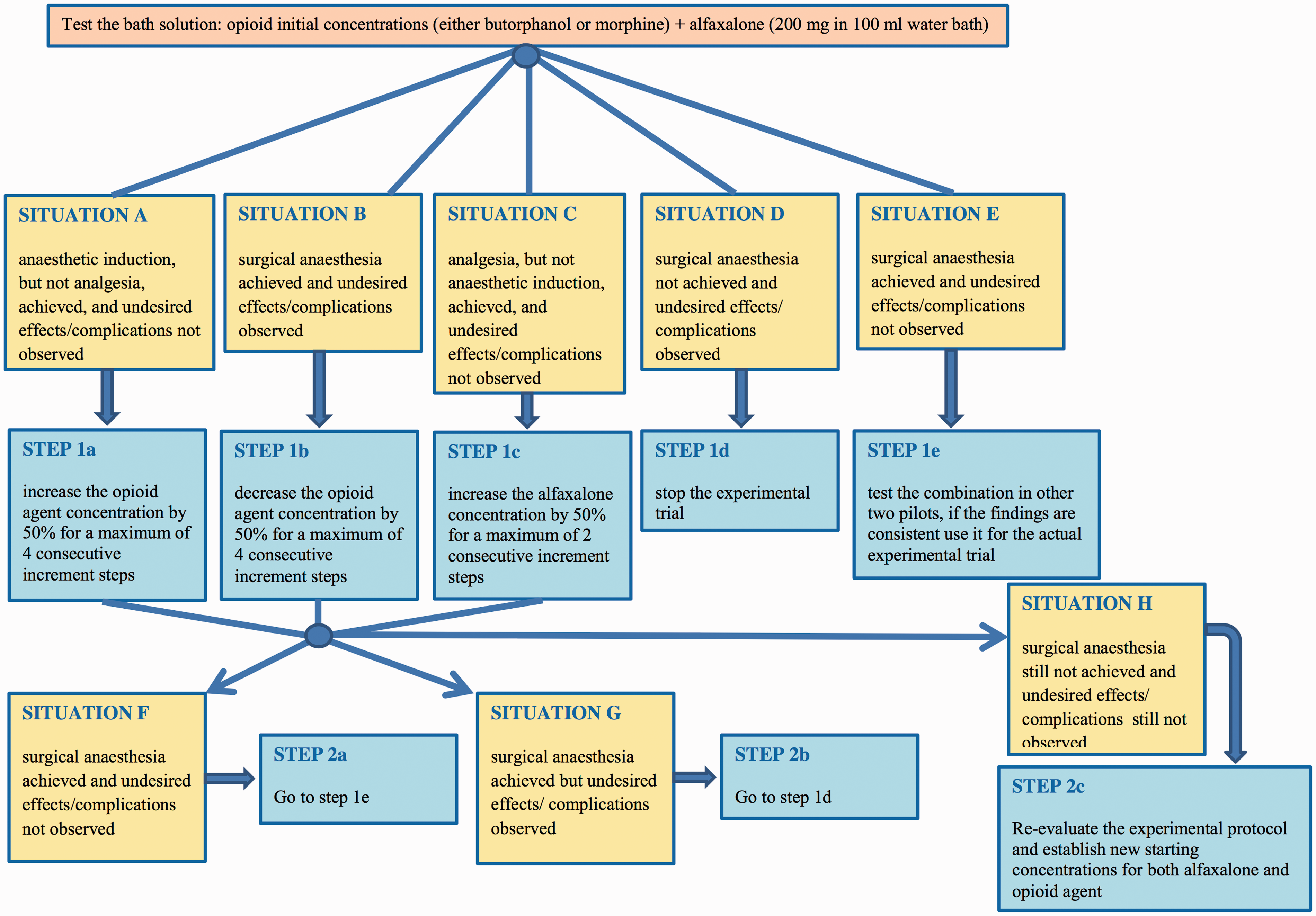
Actual experimental trial
The toads were randomly assigned to one of two treatment groups, each composed of seven animals: group AB, which received bath immersion with alfaxalone and butorphanol (3 and 2.5 mg/100 mL, respectively), and group AM, which received bath immersion with a combination of alfaxalone and morphine (3 and 5 mg/100 mL, respectively). A block randomization method, based on shuffle and drawing of treatment assignments inside an opaque, sealed envelope, was used.
The number of animals per group was decided on the basis of a sample size calculation. The latter revealed that each treatment group should be composed of at least seven subjects, in order to detect, using the Wilcoxon signed-rank test, a minimum difference between groups in the median NWR score equal to 1, with a power of 0.9, 95% level of confidence and α value set at 0.05.
Monitoring of anaesthesia and data collection were carried out as for the pilot study. The measurements were always performed by the same investigator (CA), who was blinded to the treatment.
Statistical analysis
For statistical analysis, commercially available software (NCSS-2007; NCSS LLC, Kaysville, UT, USA, and SigmaStat and SigmaPlot 12; Systat Software Inc, San Jose, CA, USA) were used. For each treatment, the data collected from the pilot toads receiving the ultimate drug combination were analysed together with the seven toads enrolled in the actual experimental trial. Normality of data was tested with the Kolmogorov–Smirnov test and the Shapiro–Wilk test. The Fisher’s exact test was used to compare the numbers of toads within each group in which induction and surgical anaesthesia were achieved, and in which undesired effects occurred. Data recorded from the anaesthetized toads at 5 min intervals were used for either repeated measures analysis of variance (ANOVA) or Friedman’s non-parametric test where it applied, with the treatments and the time-points as grouping factors. ANOVA on ranks, or alternatively the Mann–Whitney test where it applied, was used for the following variables: time to anaesthetic induction, time to surgical anaesthesia, duration of surgical anaesthesia, time to first spontaneous movement and time to recovery, with the treatment as grouping factor. The Spearman correlation coefficient was used to investigate the association between NWR scores and von Frey filament thresholds. P values < 0.05 were considered to be statistically significant.
Results
Data are presented as either means ± SD or medians and ranges (max–min), where it applies.
Pilot study
Eleven and five toads respectively were necessary to establish effective butorphanol and morphine concentrations to be added to alfaxalone. The first alfaxalone–butorphanol combination (2 and 0.5 mg, respectively, per 100 mL) produced anaesthetic induction but not antinociception, without resulting in side-effects, therefore the butorphanol concentration was increased by 50% for four subsequent steps until 2.5 mg/100 mL was obtained. The new combination resulted in partial antinociception and some degree of sensory block – as demonstrated by the delayed NWR and by the von Frey filament threshold at the upper range (9–12) – without causing any undesired effects, but failed to produce anaesthetic induction. Therefore a new starting butorphanol dose, set at 10 mg/100 mL on the basis of the previous findings, was established. The latter caused increased locomotor activity and still failed to produce anaesthetic induction. A 50% increment step was attempted but produced similar effects. At this point, the only promising combination investigated so far (2 mg alfaxalone and 2.5 mg butorphanol in 100 mL) was tested in a second toad and again it produced antinociception but not anaesthetic induction. Therefore, at this point the alfaxalone concentration was increased by 50%. The obtained drug combination (3 mg alfaxalone and 2.5 mg butorphanol in 100 mL) resulted in both anaesthetic induction and surgical anaesthesia, and was further tested in two other pilot toads. Owing to consistent findings, this combination was selected for the actual trial.
In order to have comparable alfaxalone doses between treatment groups, for a pilot aimed at establishing an effective alfaxalone–morphine combination, the alfaxalone initial concentration was set directly at 3 mg/100 mL. The initial morphine concentration added to the latter (2.5 mg/100 mL) resulted in anaesthetic induction without causing any undesired effects, but antinociception was not complete. One 50% increment step eventually produced surgical anaesthesia, and this combination was further tested in another two toads. Because the results were consistent in one of these two toads only, the combination was tested in yet another pilot toad, which yielded satisfactory results. The final alfaxalone–butorphanol and alfaxalone–morphine solutions required 8.4% sodium bicarbonate, 0.5 mL/100 mL, to titrate the water pH to 7 ± 0.2.
Actual experimental trial
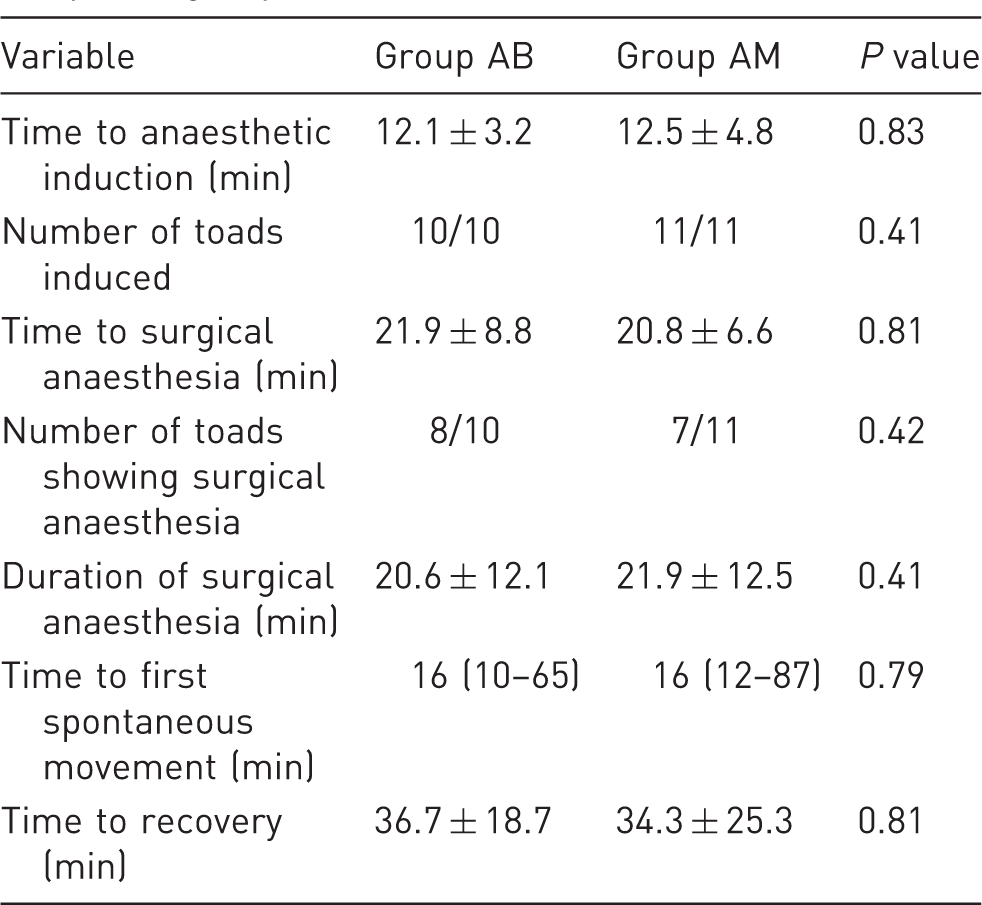
Data (means ± SD, or medians and ranges [max–min] where it applies) from Bombina orientalis toads anaesthetized by immersion technique with either alfaxalone–butorphanol (group AB, 10 toads) or alfaxalone–morphine (group AM, 11 toads) combinations.
Cardiorespiratory variables recorded from Bombina orientalis toads anaesthetized by immersion technique with either alfaxalone–butorphanol (group AB, 10 toads) or alfaxalone–morphine (group AM, 11 toads) combinations.
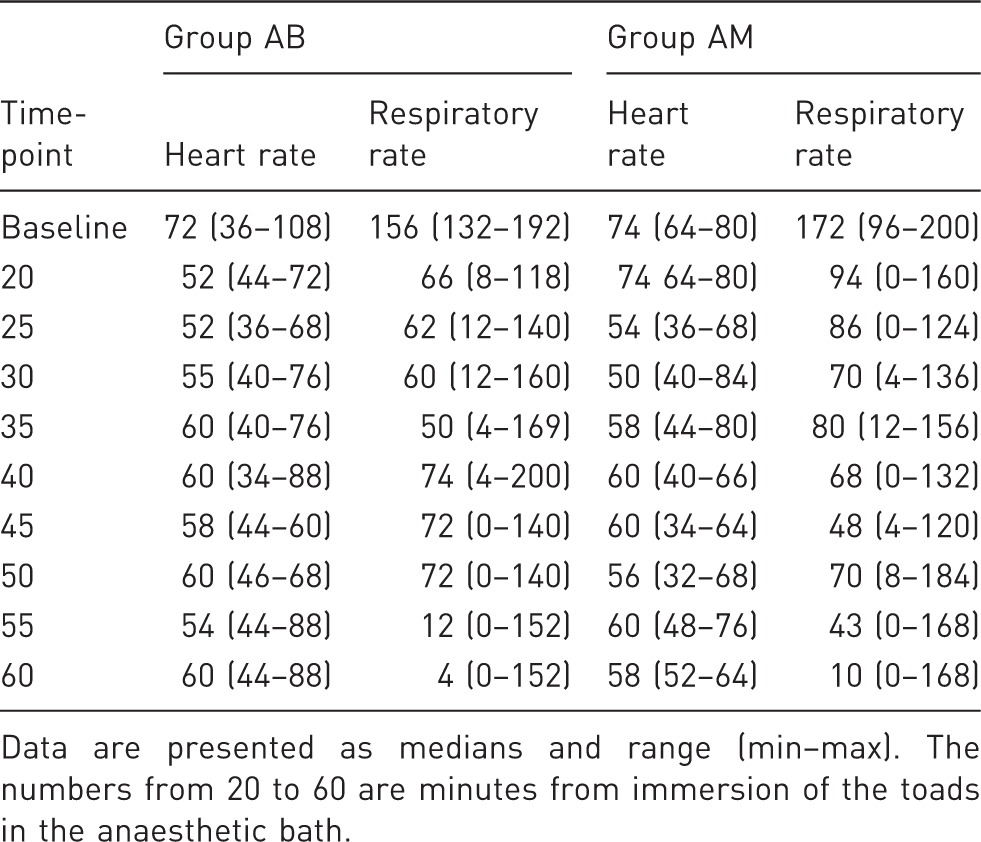
Data are presented as medians and range (min–max). The numbers from 20 to 60 are minutes from immersion of the toads in the anaesthetic bath.
Undesired effects observed in Bombina orientalis toads anaesthetized by immersion technique with either alfaxalone–butorphanol (group AB, 10 toads) or alfaxalone–morphine (group AM, 11 toads) combinations.
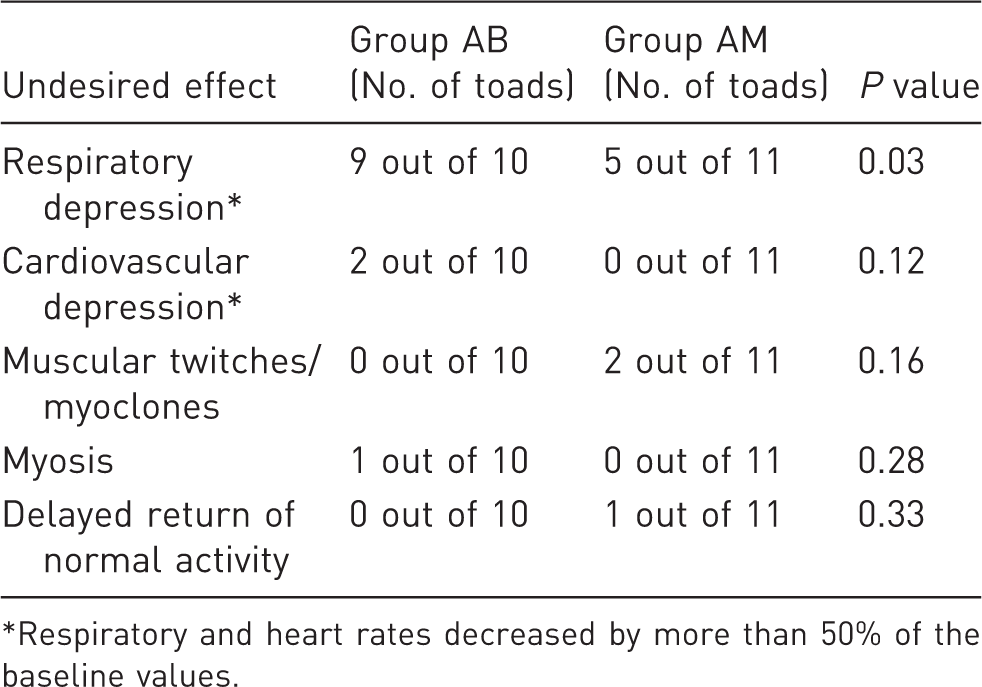
Respiratory and heart rates decreased by more than 50% of the baseline values.
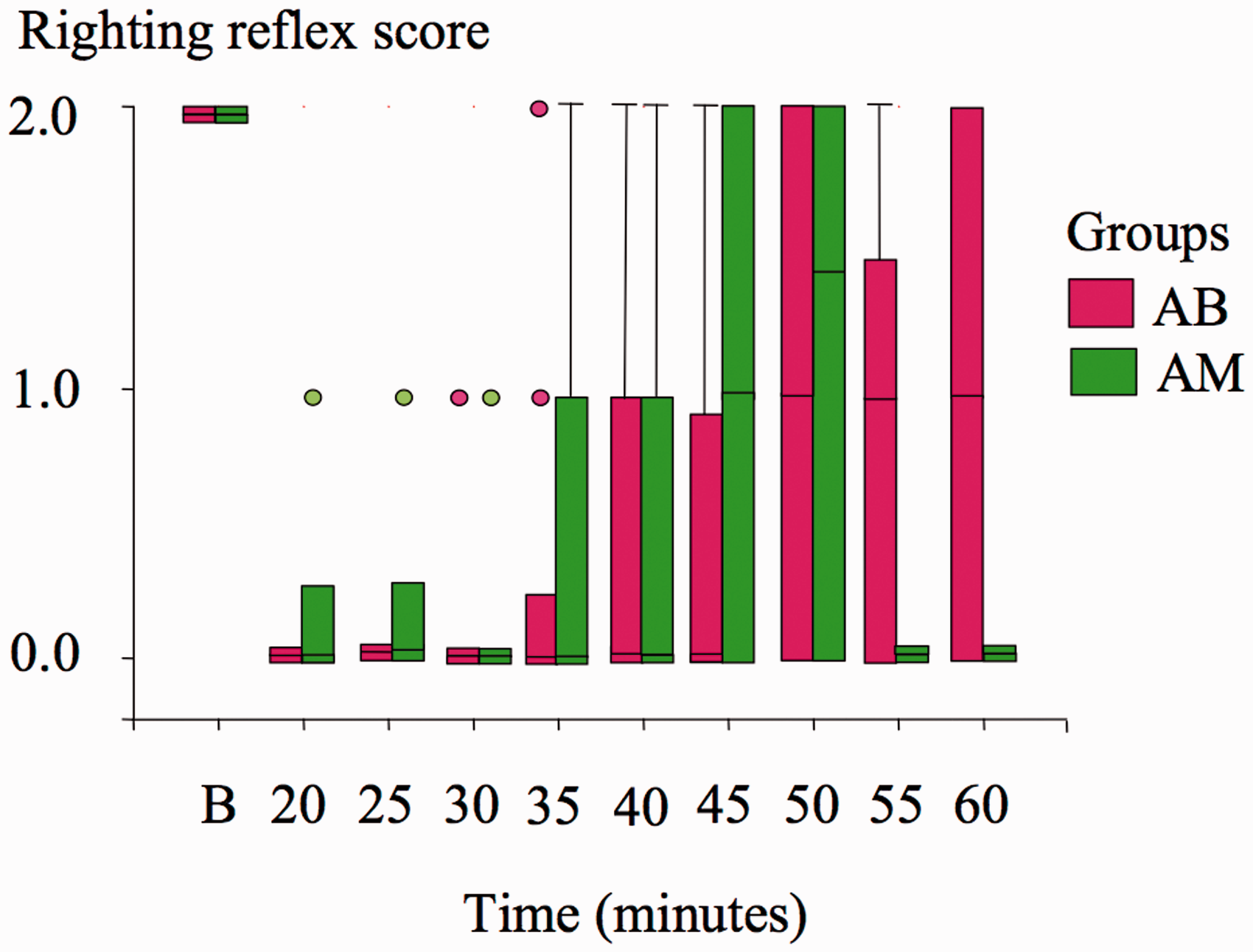
The box and whisker plots show the medians and the 25th and 75th percentiles (lower and upper quartiles, respectively) of righting reflex scores recorded from Bombina orientalis toads, anaesthetized with either an alfaxalone–butorphanol (group AB; 10 toads) or an alfaxalone–morphine (group AM, 11 toads) combination by immersion. The dots represent the outliers. B: baseline; numbers from 20 to 60 are minutes from removal of the toads from the anaesthetic bath.
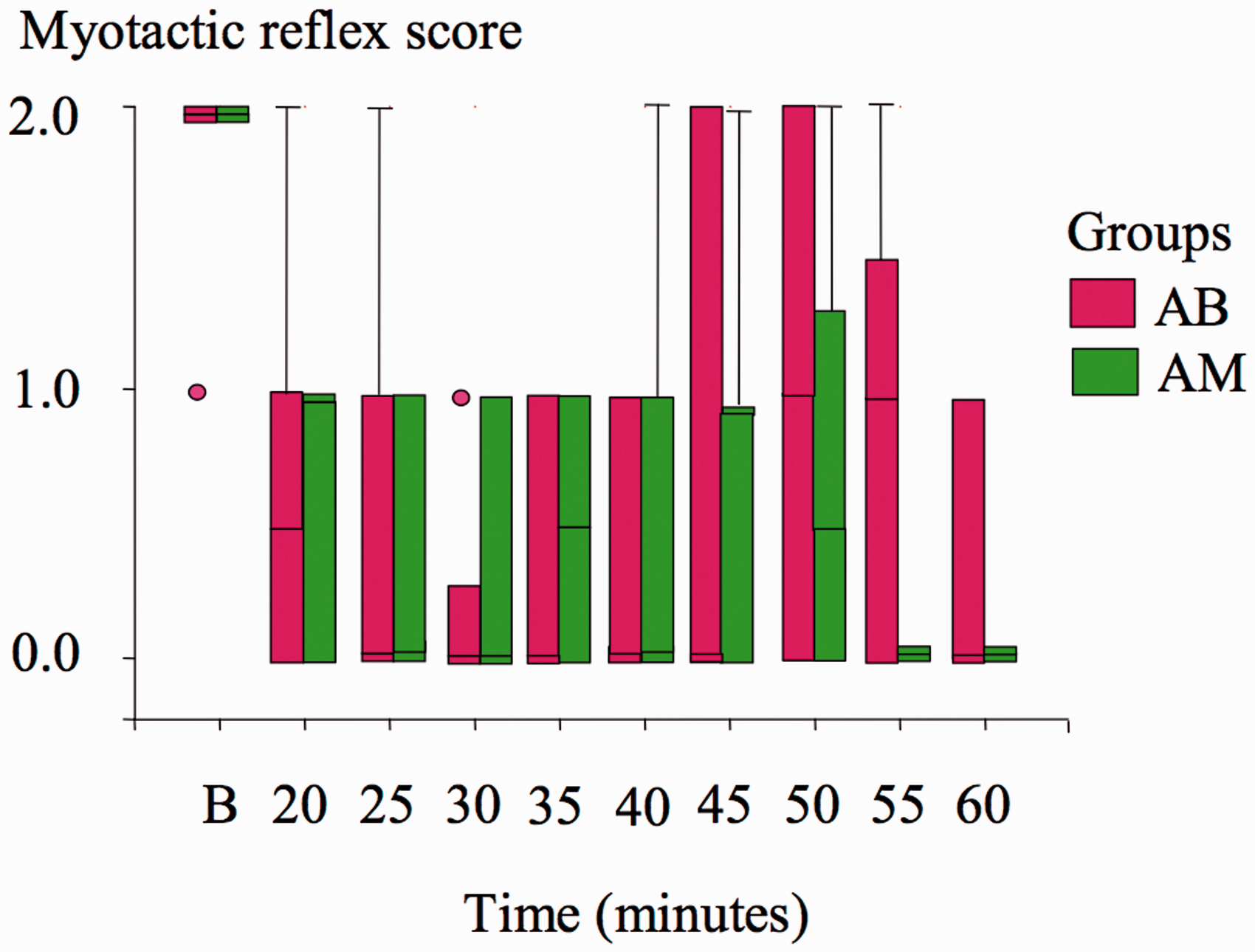
The box and whisker plots show the medians and the 25th and 75th percentiles (lower and upper quartiles, respectively) of myotactic reflex scores recorded from Bombina orientalis toads, anaesthetized with either alfaxalone–butorphanol (group AB; 10 toads) or alfaxalone–morphine (group AM, 11 toads) combination by immersion. The dots represent the outliers. B: baseline; numbers from 20 to 60 are minutes from removal of the toads from the anaesthetic bath.
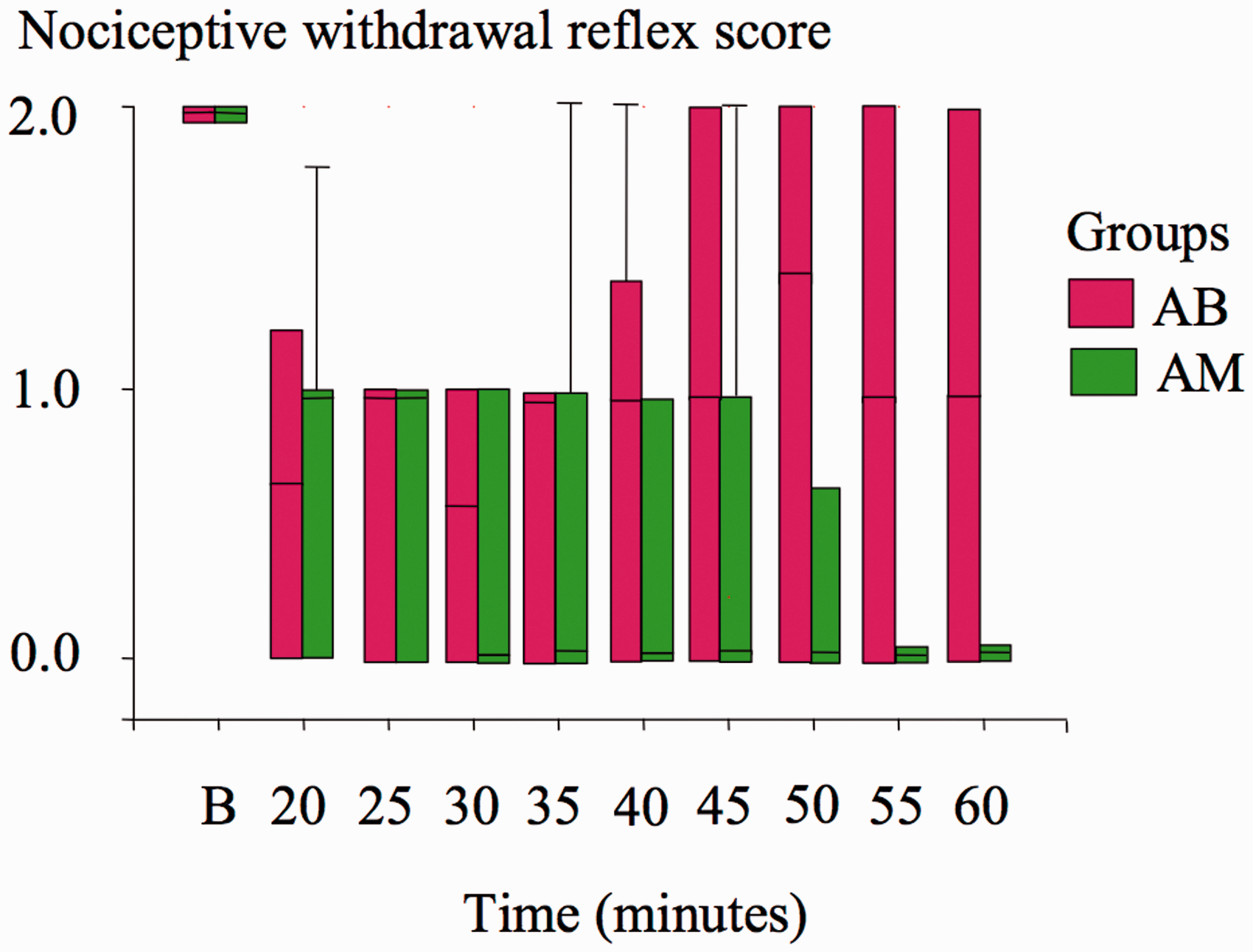
The box and whisker plots show the medians and the 25th and 75th percentiles (lower and upper quartiles, respectively) of nociceptive withdrawal reflex scores recorded from Bombina orientalis toads, anaesthetized with either alfaxalone–butorphanol (group AB; 10 toads) or alfaxalone–morphine (group AM, 11 toads) combination by immersion. The dots represent the outliers. B: baseline; numbers from 20 to 60 are min from removal of the toads from the anaesthetic bath.
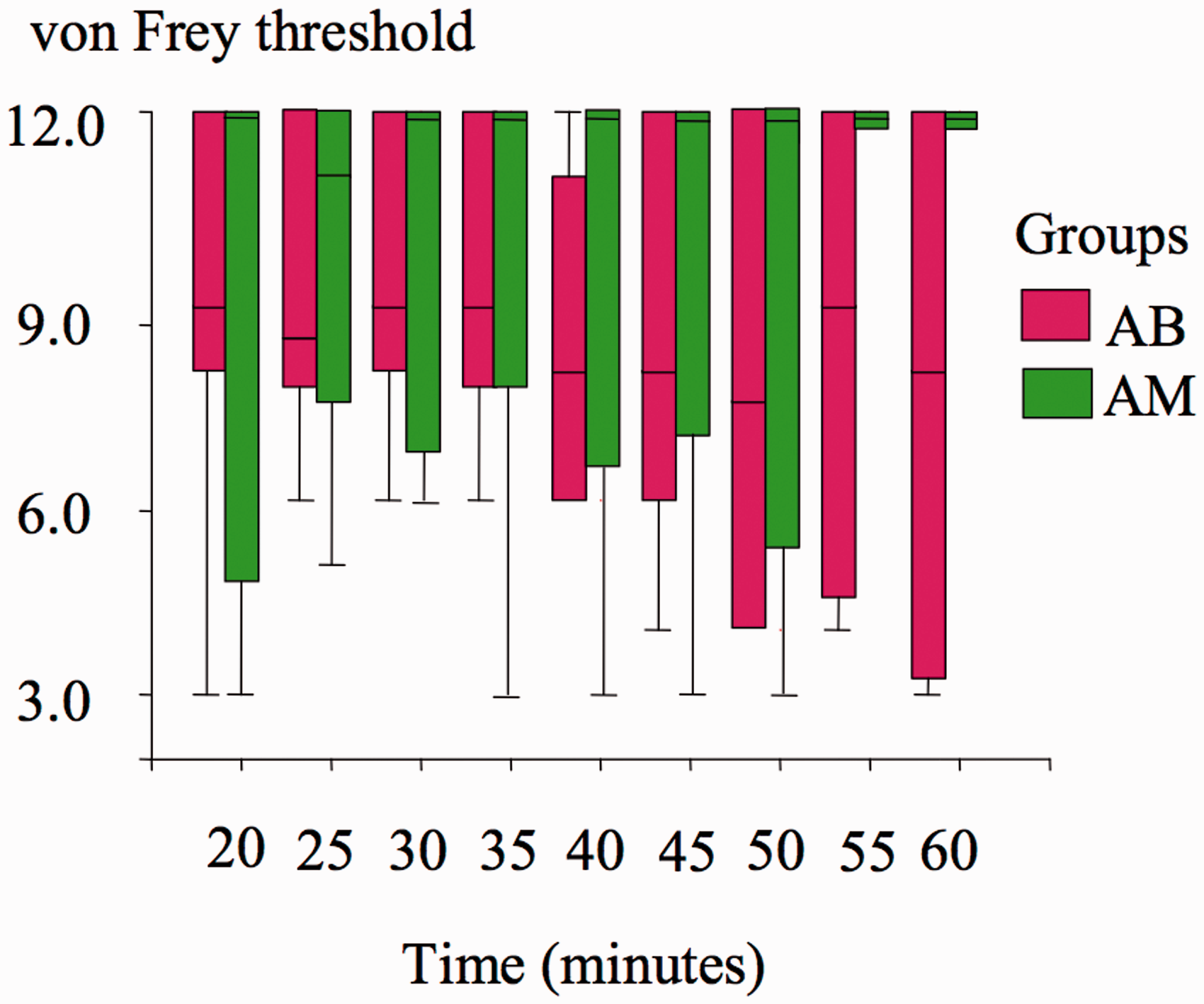
The box and whisker plots show the medians and the 25th and 75th percentiles (lower and upper quartiles, respectively) of von Frey filament thresholds recorded from Bombina orientalis toads, anaesthetized with either alfaxalone–butorphanol (group AB; 10 toads) or alfaxalone–morphine (group AM, 11 toads) combination by immersion. The dots represent the outliers. B: baseline; numbers from 20 to 60 are min from removal of the toads from the anaesthetic bath.
Recovery was smooth in all the toads enrolled in the study. Irrigation of the ventral skin with naloxone did not produce any appreciable effects, neither had it speeded up the recovery. Although delayed recovery was not observed in any of the toads, in one toad of group AM the return of normal muscular strength and locomotion occurred only 120 min from reoccurrence of the righting reflex. Undesired effects were observed in both groups (Table 3).
Discussion
The main finding of this study is that, at the investigated concentrations and in combination with alfaxalone, morphine provides similar anaesthesia in terms of depth, onset and duration as butorphanol, but better antinociception, in oriental fire-bellied toads.
Butorphanol was investigated in this trial owing to its attractive pharmacological profile. First of all, it was found to be an effective analgesic in amphibian species other than Bombina orientalis.12,13 Moreover, it offers the logistical advantage that, unlike more potent opioids, it is not registered as a controlled substance, which makes it easier to obtain and to keep in animal facilities. Finally, being a mixed agonist–antagonist agent, it resulted in less respiratory depression than pure mu agonists not only in mammals but also in turtles.15,16 Nevertheless, this was not the case for the toads enrolled in this study, in which butorphanol caused more cardiorespiratory effects than morphine.
Providing a reasonable explanation for this finding is a challenge. One possibility – corroborated by the fact that the study was designed to evaluate the antinociception rather than the side-effects, and the sample size was calculated accordingly – is that this finding was accidental, and that its statistical significance does not reflect its biological value. Alternatively, although the nociceptive pathways of amphibians are overall similar to their mammalian counterpart, 17 the distribution of opioid receptor types in the brainstem and spinal cord may vary markedly between species. To the best of the authors’ knowledge, at the time of writing a detailed map of the opiate receptors in oriental fire-bellied toads’ nervous systems has never been characterized.
Whether the respiratory depression observed in both groups was of any clinical significance is however debatable. Indeed, none of the toads had long-term consequences and all of them recovered successfully from the anaesthesia.
The pilot study resulted in the identification of two different ultimate concentrations for butorphanol and morphine. Using the same opioids concentrations may be regarded as a more straightforward comparison, however choosing such an approach would have lacked scientific bases. Because there are no published data regarding the pharmacology of opioid agents in Bombina orientalis, there is also no reason to assume that butorphanol and morphine are equipotent in this species. Additionally, butorphanol at concentrations lower than morphine did produce more side-effects, whereas the highest butorphanol concentrations tested during the pilot study caused increased locomotor activity in the toads, events which further bears out the choice of the authors to set up individual effective concentrations for the two agents.
The increased locomotion was interpreted by the authors as a sign of central nervous system excitement. Indeed, increasing the butorphanol concentration during the pilot study improved the antinociception but it also seemed to lighten the depth of anaesthesia, for which reason it was necessary to increase the concentration of the hypnotic agent as well. The neuroexcitatory effects of butorphanol have been well documented in mammals. In sheep, intrathecal butorphanol was reported to cause agitation, vocalizations and restlessness, 18 while when administered intramuscularly it resulted in significant behavioural changes. 19 Additionally, in neonatal foals parenteral butorphanol considerably increased nursing activity, which was also regarded by the authors as a neuroexcitatory effect. 20 Although the central nervous system of amphibians certainly lacks the complexity and the fine organization of mammalian species, it is reasonable to assume that opioids, and particularly butorphanol, may produce the same neuroexcitatory effects in toads as well as in mammals.
One limitation of this study is that there is no nociceptive model, including the mechanical ones we used, whose validity has been proved in Bombina orientalis toads. Some authors regard the acetic acid test as the best developed and reliable algesiometric model in amphibians. 21 However, beside the fact that its usefulness has never been previously investigated in oriental fire-bellied toads, in Switzerland the use of this model requires that the animals should be utilized only once, which would not have been feasible with this study design. Furthermore, due to the possibility of provoking iatrogenic skin damages, adoption would not have been an option and the toads should have been euthanized at the end of the experiments.
Conclusions
The combination of alfaxalone–morphine is suitable for immersion anaesthesia in oriental fire-bellied toads, and provides anaesthesia and antinociception of sufficient duration to complete average clinical procedures. This anaesthetic protocol may also be proposed for Bombina orientalis toads undergoing experimental surgeries.
Footnotes
Declaration of conflicting interests
The authors declared no potential conflicts of interest with respect to the research, authorship, and/or publication of this article.
Funding
The authors received no financial support for the research, authorship, and/or publication of this article.