




Abstract
England's “right to roam” continues to be a misnomer which is uneven in scope and inclusivity. While the Countryside and Rights of Way Act 2000 opened access to privately owned mountains, moors, heaths, and downs, the changes were not as bold as they at first seemed and access was still restricted. The 2000 Act was representative of the contemporary atmosphere in which concern for accessibility and inclusivity was strongly qualified, with a focus on non-disabled walkers at the expense of others. Though physical disabilities were now better catered for, much less was said about intellectual disabilities, race, ethnicity, place, income, and transport. Such issues have gathered increased awareness in recent years, but more remains to be done if access to the countryside is to be more equal. This article examines how “right to roam” and access legislation developed, and how engagement with disabled people was limited from the outset.
Introduction
In post-pandemic England, long-standing debates continue about who owns any “right to roam” the countryside. In December 2020, activists Guy Shrubsole and Nick Hayes set up a new campaign to extend this right, citing a need for “freedom to reconnect with nature extended to cover woodlands, rivers and Green Belt land – allowing more people to explore the countryside on their doorstep”. 1 They emphasised the importance of access to the countryside in relation to public health and the inequity of provision along lines of race and class, though there was far less mention of access for those with chronic health conditions and disabilities. 2 Far too often, our frame and analysis are focused on the non-disabled “walker”, rather than the citizenry as a whole. These are not new emphases, and a longer-term study of the history of both the right to access the countryside and the rights of people with physical restrictions is required to understand the present silences in the debate. This article aims to take this longer view.
The late twentieth and early twenty-first century calls for greater access for all people in England, whatever their mode of accessing the outside or ability to do so, are the focus of this article. This is particularly important given that between March 2020 and April 2021 one of the top three reasons given by adults for not spending time outdoors was “poor physical health (or illness)”. 3 In this article, we consider the shift in access to the countryside legislation in the context of late twentieth-century disability rights, to explore connections between the two and to correct some of the gaps in the literature about the importance of disability issues in the fight for access. When it comes to national policies on access for all, and local material aspects of landscapes and path structures, both offer barriers and opportunities. This is especially the case when, in England, they are part of long-inherited ideas about – and conflicts over – citizens’ rights on the land, albeit recently formalised but often homogenised into an approved heritage culture of signposted “ways”, “trails”, and “paths”. 4
In this article, we therefore consider how both the policies of central and local government, and the situation “on the ground”, have developed in the context of access to the countryside for disabled people, whatever the type (or types) of their disability or differences. To do so, we draw on government papers and research, Ministerial speeches, Parliamentary debates, legislation, publications by pressure groups, and countryside guides to show how the struggle for access and fights to break down barriers for the disabled were intertwined with, and impacted on, one another. Our research question is, therefore: over the past fifty years, to what extent has England’s “right to roam” debate reflected, reinforced, or changed England’s cultures of access, ownership, and ideas about the countryside and heritage, and to what extent does that culture as it changes emanate from and reflect the struggles of disabled groups more specifically?
“Rights of Way” and the “Right to Roam”
England was the first urbanised country in the world, with over half of the population living in urban settlements by 1851. 5 Compared to other countries in Northern and Western Europe, accessible open land was scarce and so access to the countryside became an increasingly important issue from an early date before growing in salience throughout the nineteenth and twentieth centuries. At the same time, recreational walking developed in England in a relatively organised manner. There were several reasons for the transformation of walking from a humdrum necessity to a revelatory pastime during the eighteenth and early nineteenth centuries – the roots of England’s culture of access and ideas of “the countryside”. Such wanderings were often conceived as passage through a “true” England far from the dangers and pressures of the world’s first urban and industrial nation. It is significant that Thomas Pennant, a Welsh traveller and antiquarian, wrote in the 1770s that his walking guides were seeking “the authentic natural-born Briton” who were descendants of tribes that had survived “the onslaught of modern civilization”. 6
England’s walking culture is often traced back to the romanticism of the siblings William and Dorothy Wordsworth, walking huge distances in and around the Lake District to put themselves amidst a countryside newly perceived as beautiful because it revealed profound feelings and ideas that modern luxuries and inventions stymied. 7 But in truth, it is the ubiquity of walking as a source of inspiration and meaning that is so striking. The Wordsworths sought truth in exertion; the poet John Clare walked to think and settle his mind; the critic and essayist William Hazlitt to speak and campaign for his radical ideas. 8 It is not so much that waking was unique to England (or Britain): the French and Danish philosophers Jean-Jacques Rousseau and Søren Kierkegaard recommended the practice just before and after the Wordsworths. It is the scale and scope of walking’s appeal as leisure, an aesthetic and industry canalised into set routes and places that then became fixed as universal rights of way, that seems unusual. The sheer number of guides available to middle-class walkers, who had the time and money to take time away from work, is revealing. 9 Pennant’s guides might look back to a deep, mythical past; other writers, such as the cleric and influential travel writer William Gilpin, developed the idea of the “picturesque”, within which one might commune with the countryside’s landscapes as it was then – or is now. 10
Before long, and certainly by the 1820s, England was crisscrossed by Footpath Preservation Societies, particularly in the north – testament to rambling’s appeal. 11 By the 1880s, one landowner blocking a path to a Lake District summit could bring out two thousand protestors against the barrier, in part stirred up by the local Footpath Preservation Society. 12 By this time, popular walking landscapes – most notably the Lake District in the north west, but also for instance the New Forest in the south – had become associated with the heritage of “the nation”, and with popular patriotism in general. 13 Walking had become an enduring, popular, well-ordered pastime with a positive, healthful image and a mass appeal. The foundation of the Ramblers’ Association and the Youth Hostels Association in the 1930s helped to complete the picture. 14
There is a paradox here, of course, which is that moving into more remote areas was only made more possible by the growth of government, not least in building more roads and pursuing and punishing more highwaymen. 15 The country was also increasingly (and accurately) mapped by the government’s new Ordnance Survey organisation, which from 1791 to 1792 began to measure the country with a precision that would previously have been impossible: Wordsworth himself lionised the Survey in his “Black Combe” poems, published in 1815. 16 It is the government’s central role in this story that requires a deep understanding of both national and local policy if we are to understand who was included in, or excluded from this recreational culture.
The deep history of rural English walking resonates in much more recent stories, conflicts, and policies. England remains one of the most densely populated places in Europe, and much of its countryside has for centuries been a densely farmed industrial landscape. As Paul Readman has emphasised, it is counterintuitively this very modernity that has allowed famous landscapes (such as the White Cliffs of Dover and the downland around them) to take their place in the national imagination for most classes and cultures, alongside urban landmarks in England’s industrial cities. 17 It therefore provides an interesting case study to examine mobility experiences outside of the city as access to rural areas became more commodified in the twentieth and twenty-first centuries. Defined “public rights of way”, routes which anyone can legally use, were established comparatively early in England and Wales – demonstrating the equilibrium point between a heavily farmed and commercialised countryside and a large population seeking to traverse it contrary to the interests of landowners and farmers. Neither those who owned the land, nor those who wanted to access it, got everything they wanted from this system. Some access was maintained, but along strictly limited historic lines. A complicated nomenclature developed to describe different public rights of way, from “footpaths” to “byways open to all traffic”. However, they do share important common features. Public rights of way are open to all, legally protected from physical barriers, and defined by specific widths.
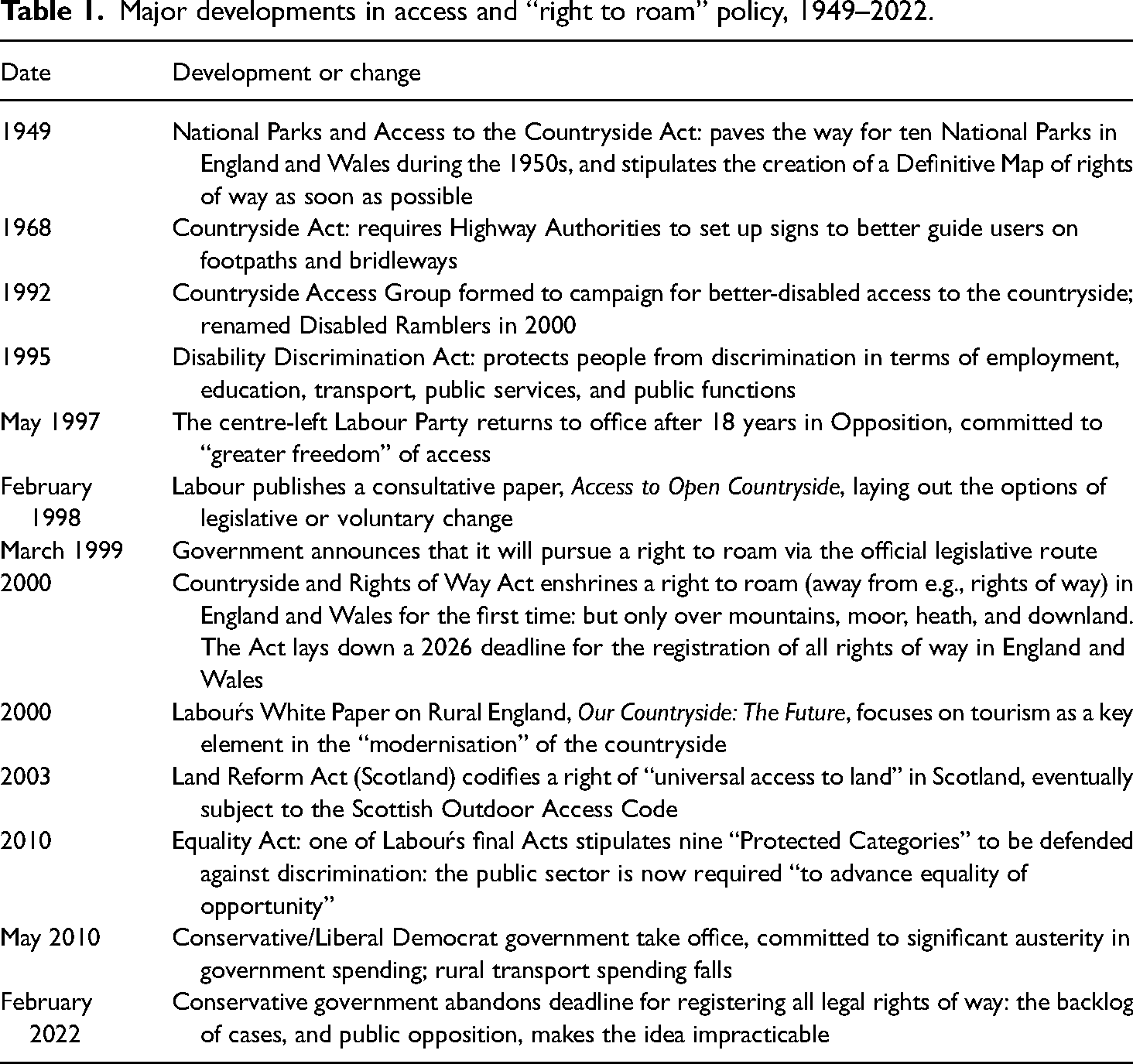
Nor have these battles around access abated: if anything, they sharpened around the turn of the twentieth and twenty-first centuries, as an increasingly assertive and leisured public shifted from demanding access to linear routes, beginning with more widespread urgency to call for general access based on absolute rights rather than a compromise settlement. In 2000, the Countryside and Rights of Way Act 2000 (CRoW) introduced a “right to roam” in England and Wales, which allowed people to wander without reference to rights of way in specified “open access land” covering mountain, moor, heath, and down (see Table 1). While this expanded access, it did not always or effectively widen access for disabled people, and accessibility has remained a subsidiary focus since 2000. An exploration of National Park websites in the United Kingdom allows some insight into the current scale of accessible routes. Around 24,475 km of public rights of way (representing almost 11 per cent of the estimated total 225,300 km of rights of way in the United Kingdom) lie within the boundaries of the 15 National Parks. According to the National Parks website, 2,231 km (or 9.1 per cent) of these paths are suitable for those with access challenges. 18 This constitutes a significant change from the late 1990s when a study found that only eight of eleven National Parks in England and Wales had trails “suitable for use by the wheelchair bound and ambulatory disabled” and two had trails specifically for those with sight impairments. 19 Even so, while easy accessibility for all and as of right has become more important in twenty-first century England and Wales, it often remains an overlooked issue in the available historiography as well as contemporary policymaking. In this article, we attempt to rectify this imbalance somewhat.
Major developments in access and “right to roam” policy, 1949–2022.
New labour’s “Right to Roam”
Today’s limitations on accessibility to rural spaces for those with chronic health conditions and disabilities can be understood by examining the history of access policy and legislation. Inevitably, this is complicated as the policy process was, by its very nature, a maze through which governments “puzzled” as access cultures shifted from emphasising rights of way to a right to roam. Table 1 provides a guide to many of the key moments in the complex history of access rights. 20 It is nonetheless necessary to understand the contemporary atmosphere in which decisions were made if we are to analyse these decisions. Although the centre-left “New” Labour government of 1997–2010 did respond to changing public views by creating expansive new rights to access the countryside that fact was by no means assured when the party returned to power in 1997, after 18 years in Opposition. Labour’s 1997 Manifesto was, in fact, quite cautious in this regard, as alongside a raft of reformist plans it contained only the following very vague promise: “our policies include greater freedom for people to explore our open countryside. We will not, however, permit any abuse of a right to greater access”. 21
At the same time, divides within parties – between a fairly cautious Prime Minister at the centre in Tony Blair, and more radical individual departments – were just as important as formal electoral contests between political groupings. A long debate between a voluntaristic approach, and actually legislating to create a concrete right to roam, ensued within the New Labour government, demonstrating all the while how changing cultures of access emphasising a rights-based framework put pressure on central government. Right up to the moment Environment Minister Michael Meacher announced the government’s right to roam proposals in March 1999 (see Table 1), rumours swirled that Prime Minister Blair would prefer a more consultative and voluntary approach to opening up the land that would not offend powerful pressure groups such as the Country Landowners’ Association. 22 In the end, as we shall see, this approach did not prevail – in part because of public and pressure groups’ views, to some extent because the department responsible resisted a weaker approach, and also because a wide-ranging right to roam could be enmeshed within a wider settlement that included important limits and safeguards.
A right to roam for all?
New access policies were certainly not intended purely for non-disabled Britons: from the inception of the English and Welsh right to roam, the idea was that more space be opened for recreation for a wider range of people to enjoy. This idea actually became current during the centre-right Conservative Party’s final years in office during the 1990s, rather than just emerging under Labour. The Conservatives indeed passed the Disability Discrimination Act in 1995 (see Table 1), which for the first time explicitly protected disabled people from discrimination in terms of employment, education, transport, the provision of goods and the exercise of public functions – part of a gradual shift from a “negative” view of government action outlawing overt exclusion, and towards a more positive rights-based, “social” or “constructivist” view of a reorganised society which enabled and supported individuals and groups. 23
The 1995 Act was one culmination and example of what vigorous, committed campaigning could achieve – and further encouraged more progress, as well as having long-lasting knock-on effects itself. Land use managers, often local authorities, were asked to “positively promote” disability equality when the Act was amended under Labour in 2000: more participatory consultation and decision-making, community outreach and publicity, guided training, better guides, and stronger waymarking all resulted. 24 All this, of course, represented gains by under-represented groups who had traditionally not heavily accessed many types of rights of way, and that throughout this period still contained most legal rights of access. The lines of continuity between the 1995 Act, its 2000 revises and New Labour’s new CRoW show again that party political divides can be less important than the context of the social and ideological environment, including campaigning – in this case of user groups calling for greater access.
Crucially, the Disability Discrimination Act was itself limited in two ways: it asked only for “reasonable” steps to be taken to facilitate access, and, initially at least, it focused on the shape of physical space – especially the need to remove material features preventing access (Figure 1). 25
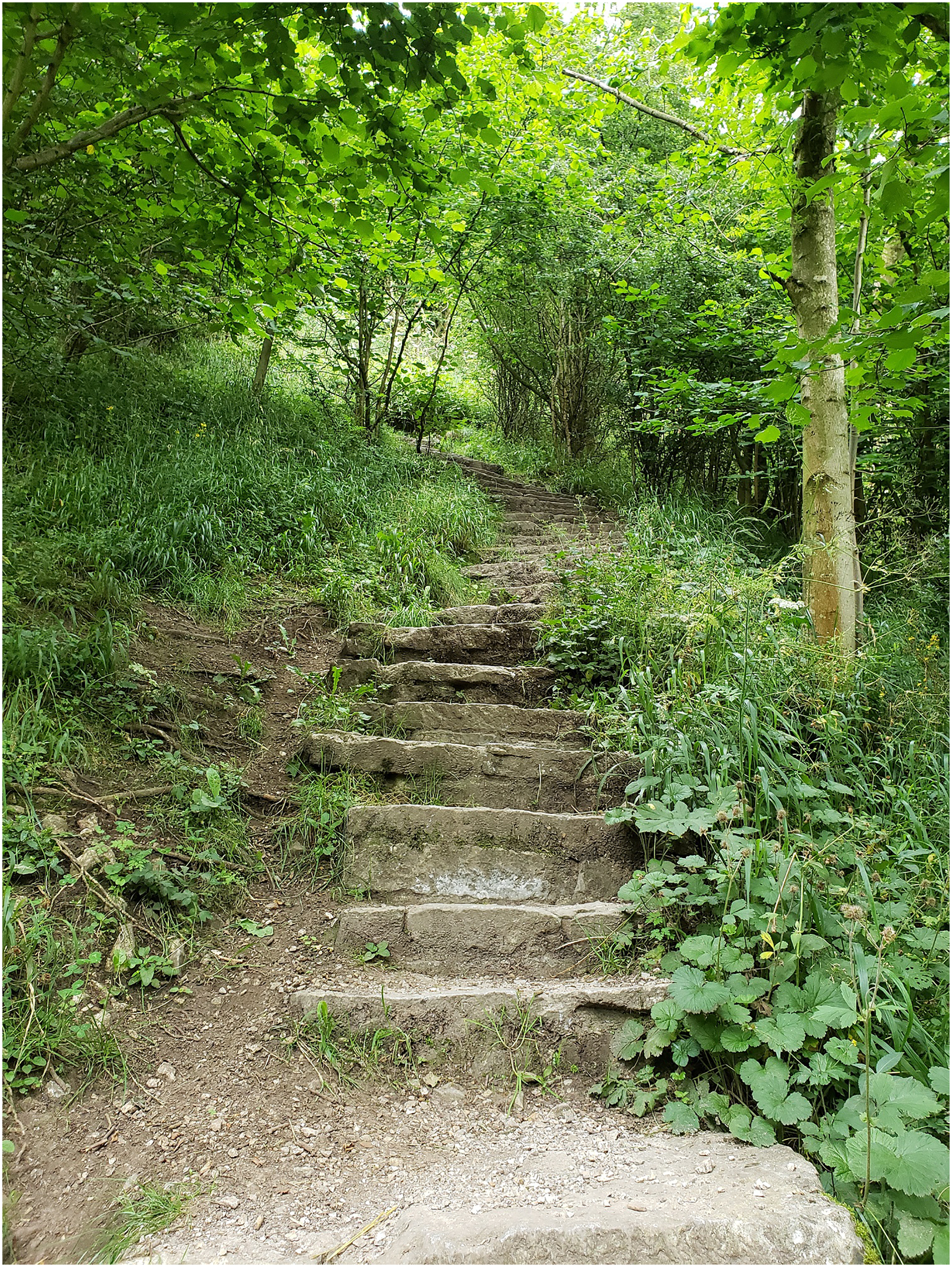
Access to areas such as this, the Limestone Way in Derbyshire, were never intended to be altered by the Disability Discrimination Act 1995. Image by Abbi Flint.
The legal term “reasonable” was of course a vague one, encompassing practicability and the availability of resources: as such, it would reflect any shift in public and political views of what changes were “reasonable”. In the 1990s this idea was thought to apply mainly to physical adjustments, but by the time of the 2010 Equality Act had widened to include the way organisations work and the provision of goods and services to enable people with any type of different needs. 26
Those prevalent 1990s attitudes corralled local responses on the ground into small- to medium-sized adjustments centred around for instance disabled parking and toilets, access to visitor centres, or flat trails for wheelchair users – cultural biases that would erode only very slowly, and hampered strong reactions to citizens with all sorts of disabilities – not just those that were physical and obvious. 27 Furthermore, these kinds of well-intentioned adjustments may have served to segregate and marginalise people with disabilities in public spaces. 28 These measures did not for a long time or necessarily involve root-and-branch consideration of the positive needs of disabled citizens, either in terms of reaching the countryside in the first place or their requirements when they got there.
A great deal of contemporary work was being undertaken in relation to this question across civic society, encouraged not only by the Disability Discrimination Act but also the campaigns that helped to secure its passage in the first place, often highlighting material concerns with the physical shape and tactile interactivity of these spaces. 29 For example, the campaigning body named the Countryside Access Group was renamed Disabled Ramblers in 2000: its aim was “to help make the countryside more accessible to people with limited mobility”. 30 The telecoms company BT launched a Countryside for All project in the mid-1990s and the disabled rights charity The Fieldfare Trust in 1997 pushed for much more emphasis on enabling – rather than simply allowing – movement into and across the countryside. The Fieldfare Trust published a Countryside for All Good Practice Guide in 1997 (updated in 2005) which laid out certain standards to ensure better access – including path surfaces, widths, gradients, passing, and resting places. 31
Countryside managers were, in this period, encouraged to ensure that “most wheelchair users, people with mobility or stamina difficulties, visually-impaired people using long canes or with guide dogs, and other users should be able to use the paths” – again to some extent at the expense of those with less visible needs. 32 Labour’s 1998 consultative paper Access to the Open Countryside, from which that opinion is taken, imagined the Disability Discrimination Act being used in a positive way to broaden the categories of people involved, but the consultation paper still sat very much within the passive rather than active legal tradition embodied by the Act, and only recommended that “local authorities and others should consider the needs of disabled people so that they do not put unnecessary obstacles in their way”. It did, even so, explicitly reference the BT and Fieldfare Trust guidelines as rules for local authorities “to take account of”. 33 Despite the government’s decision to go down the legislative path, this meant that many of the law’s new practical implications would be left to recommendations interpreted by local authorities – an example, along with the 1995 and 2000 Acts themselves, of the transitory and incomplete transformation from “negative” to “positive” approaches and the gradual adoption of a rights-based agenda.
Feedback from the official consultation launched by Access to the Open Countryside was overwhelmingly in favour of a statutory rather than a voluntary approach, a key factor in the Labour Government’s decision to take the former course and another demonstration of how to access cultures were changing. As the left-wing Environment Minister, Michael Meacher, told the House of Commons when he announced the government’s decision: The Country Landowners Association's Gallup poll last year showed that 80 per cent of people are in favour of greater access to the countryside. The Ramblers’ Association NOP poll last year demonstrated that 85 per cent of people wanted a legal right of access over mountain, moorland, heath and down and registered common land.
34
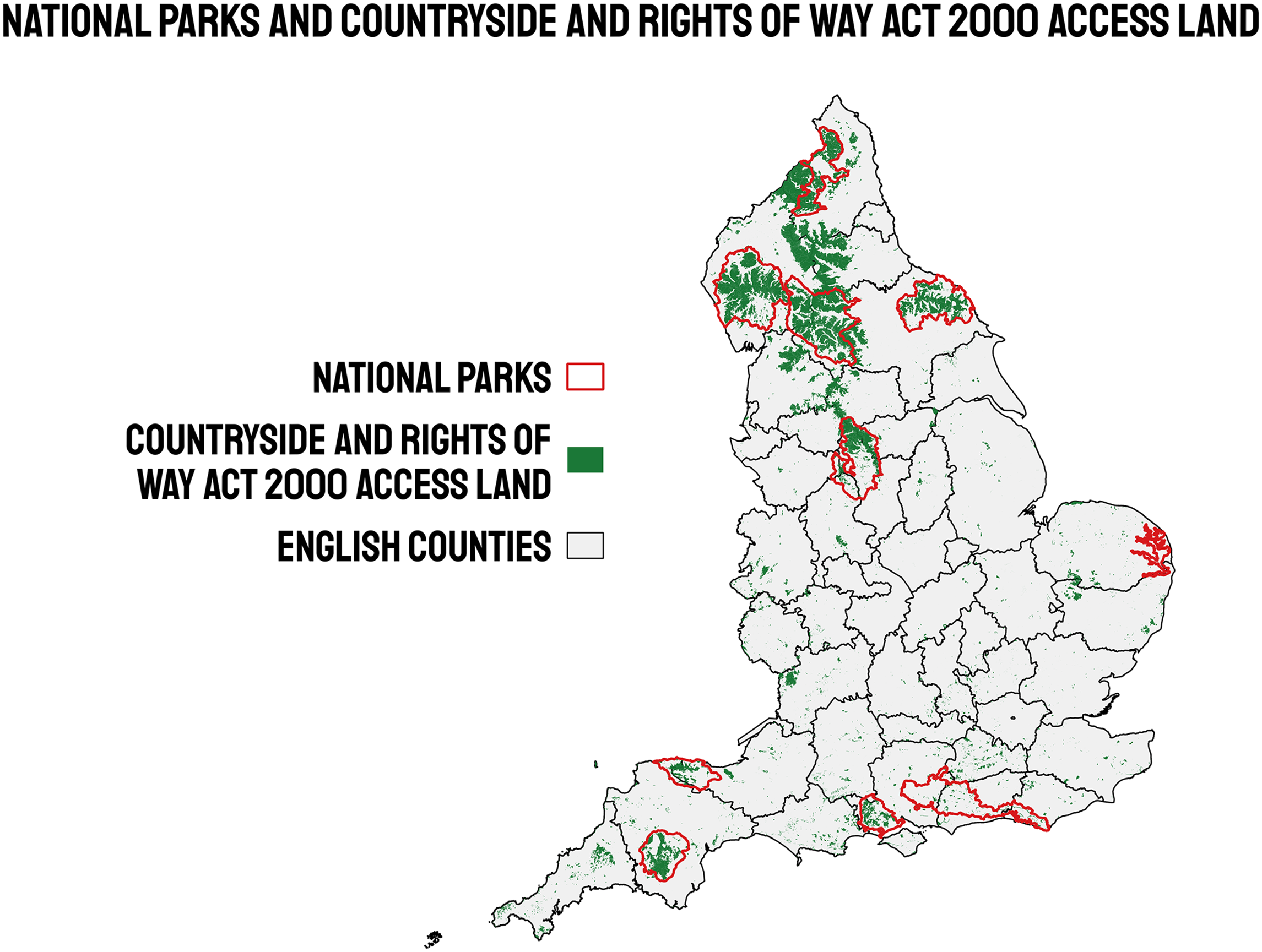
National Parks and Countryside and Rights of Way Act 2000 Access Land. Note the correlation between the two. Map by Tom Breen with data used under the Open Government Licence v3.0.
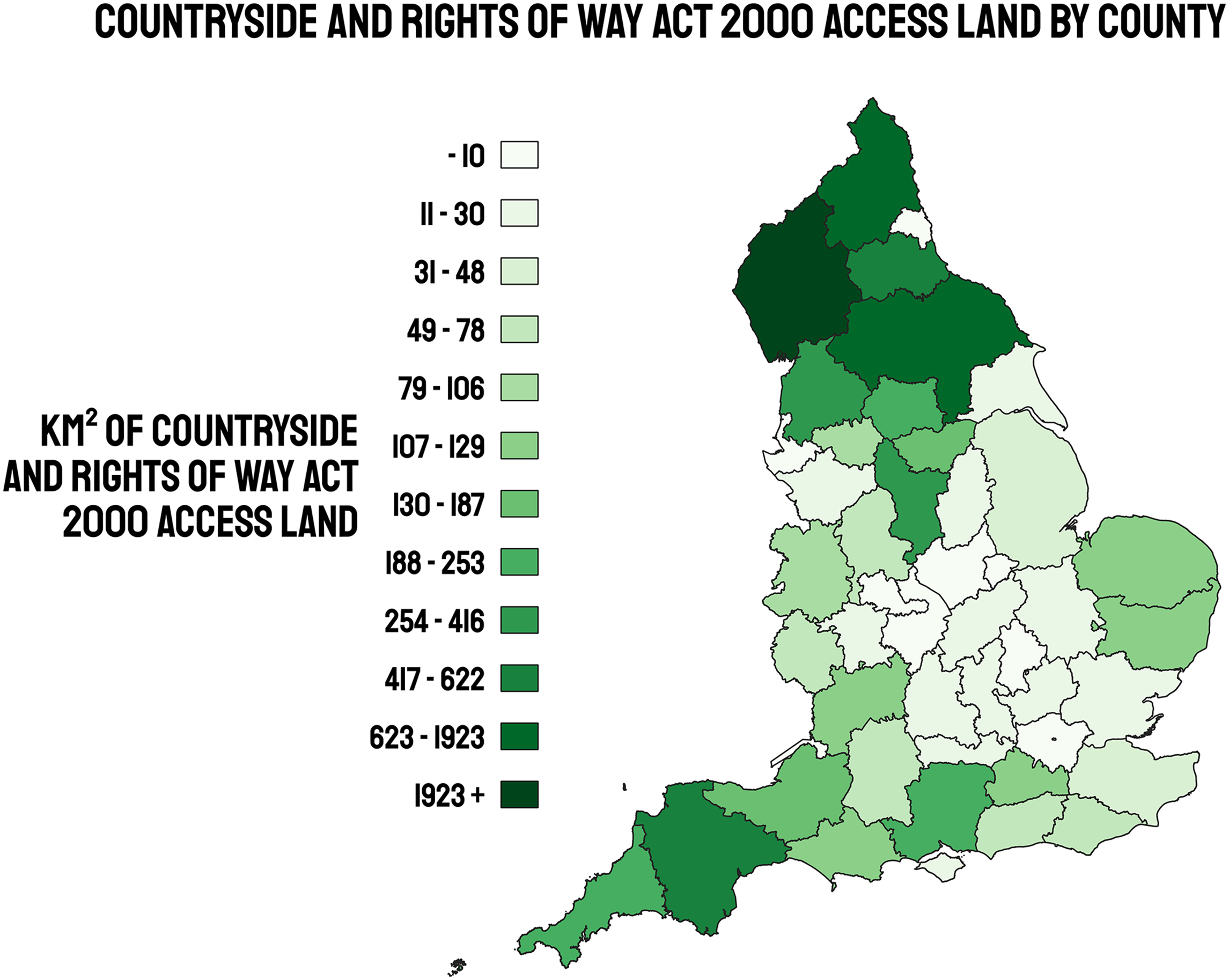
Countryside and Rights of Way Act 2000 Access Land by County. Note the abundance of access land in the north and south west on mountain, moor, heath and down, leaving low-lying lands less well represented. Map by Tom Breen with data used under the Open Government Licence v3.0.
The concentration of right-to-roam lands in traditional “walking” areas demonstrably shut them off further from non-traditional access groups – from those living in urban areas, for instance, or in parts of the country with little public transport infrastructure.
Landowners (including National Parks) would be able to close off access for land management purposes for up to 28 days a year. Local Access Forums would consider local authorities’ strategies not only in terms of people wanting to access new areas, making them easier to traverse, but also in terms of reaching a balance with access via specific rights of way. The more rights of way already present in the landscape, perhaps, the less “right to roam” was required. 36 These qualifications for the “right to roam” were of course intended to mollify landowners. A new layer would be added to the Definitive Maps imagined in the 1949 National Parks and Access to the Countryside Act – but while the Act would therefore open up the countryside in some areas, it would certainly not do so in all areas or for all people (see Figure 2). That would also prove a very large-scale task: the final access map drawn up under the 2000 Act was not submitted until October 2005. 37
Access in ideal and reality
The current level of access and accessibility in England and Wales was shaped by the political atmosphere in the late 1990s. In a fashion familiar from New Labour policies in education, health, and social services, these ideas appealed to certain clear “norms” and were cast within an accommodationist framework in which gains would be obvious and conflicts resolved – partly by reference to supposedly obvious benefits. Some of the reasons for this compromise were political. Labour was attempting to adjust to a new reality in which it not only held on to its core urban voters, but also won rural or semi-rural seats on a scale it had not achieved since 1945. 38
From the outset right to roam policy was centred upon walking in the countryside, with less focus placed on other forms of traversing the landscape, or indeed the urban experience. Walking is itself an exclusionary way to address this, but, in the rural context, this meant that the potential for tourist access – and of moving from towns and cities to “get away” from everyday life – became the focus. “Walking in the fresh air is one of the best forms of exercise for everyone”, Access to the Open Countryside concluded, avoiding the question of who was able to get to the start (or back from the end) of newly-accessible trails. “Walking is an antidote to the pressures of modern life”, the consultation paper argued, narrowing down the numbers who might benefit and emphasising the physical activity of walking itself. Above all, Ministers thought that more “understanding between town and country” would be prompted via increased access, because “more contact should make townspeople more aware of the needs and concerns of rural dwellers”. 39 A sense of the long conflicts over land use since the passing of the 1949 National Parks Act might have underpinned more nuanced predictions. 40
Here again, New Labour’s attempt to appeal across the board – in its own language, balancing rights, and responsibilities – made for relative silence on the rights of excluded groups, in particular disabled people. The consultation process over Access to the Open Countryside also stressed caution about positively expanding access to groups of disabled users: The most commonly expressed view was that provision should be made for disabled people and elderly people where practicable, but that it should not change the nature of the countryside and that costs should be taken into account. Some local authorities and recreational users suggested that Central Government should make grant aid available for improvements in access, such as improvements to surfaces, provision of parking and toilets and specially adapted public transport where appropriate … Some farmers considered that replacement of stiles with gates to improve access for disabled people could lead to problems with the containment of livestock. Some landowners expressed opposition to any duty on owners to make specific provision for disabled or elderly people.
41
The tension here between the perceived remoteness of existing countryside paths and more equitable access structures is something that continues to play out to the present day. 42 The language deployed at the time around “walking” was connected to an emphasis on joining up urban areas with rural trails, and with a new set of powers to ensure the upkeep of legal rights of way (quite separately from the “right to roam” more generally) (Figures 4 and 5). To this end, the CRoW Act contained powers to insist on the removal of obstructions on rights of way and required local highway authorities to draw up rights of way improvement plans.
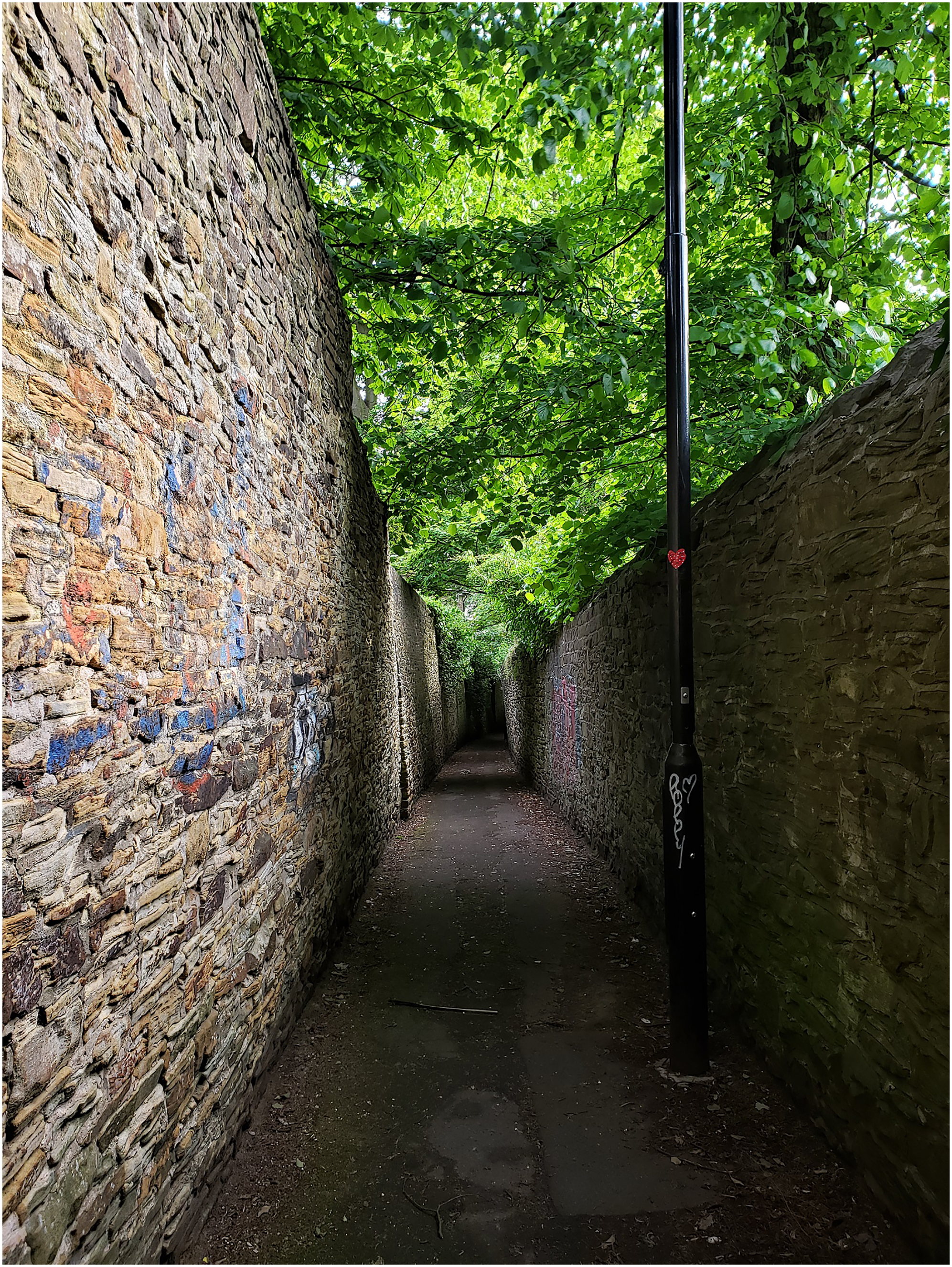
Urban walkways, like this one in Sheffield, were only tangentially considered by policy makers. Image by Abbi Flint.
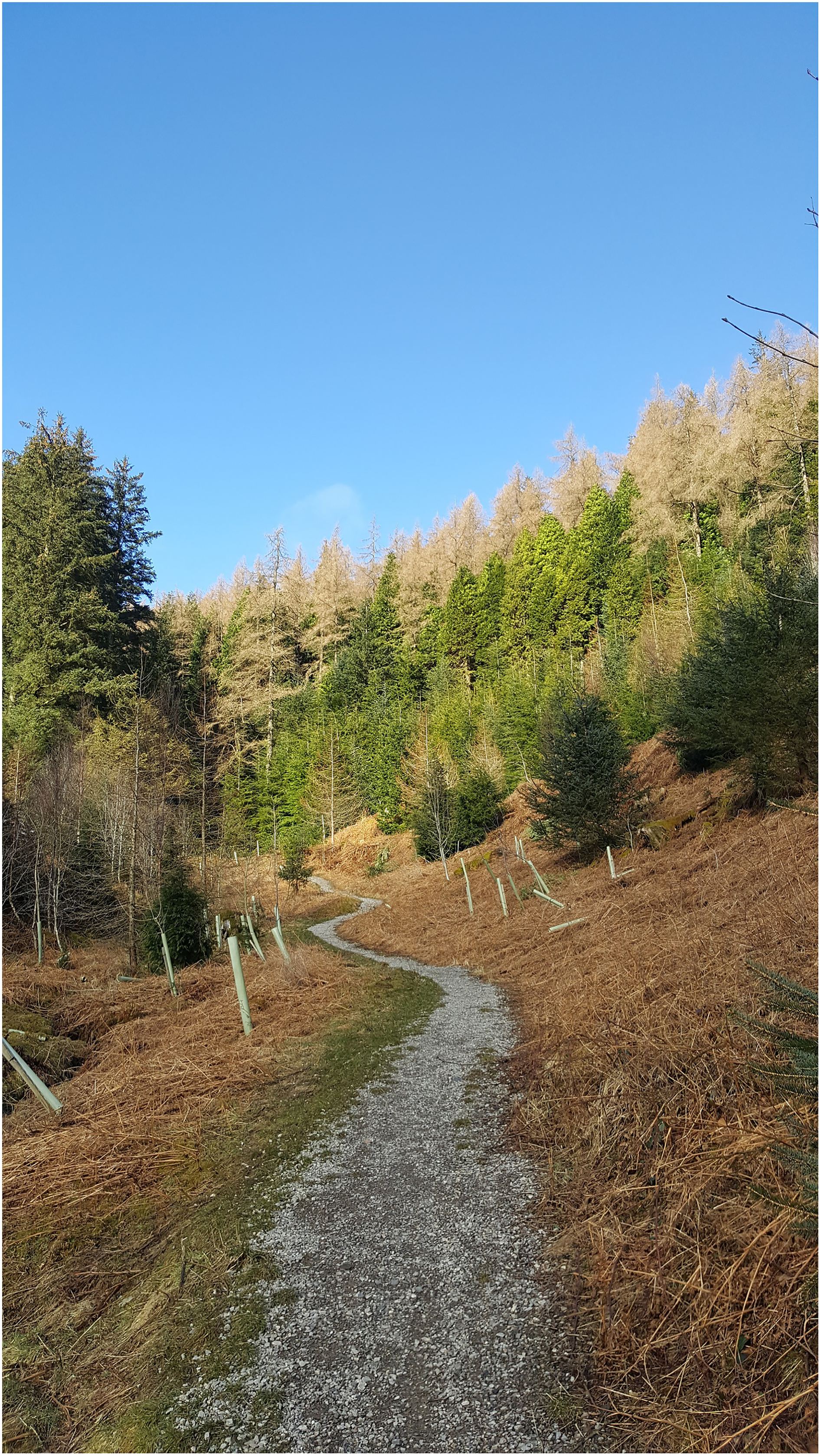
Rural routes, like this one in the Lake District, formed the focus of the “right to roam” policy. Image by Abbi Flint.
On the other hand, the new Act also brought in a right of appeal for landowners and created a final cut-off date for drawing up specific rights of way, the focus of efforts in the 2010s and 2020s to rediscover them in the lead-up to the 2026 deadline (see Table 1). 43 As for disabled access, the Government intended simply to ask the Countryside Agency to “investigate what more may be done to provide opportunities for disabled people, ethnic minorities, residents of inner-city estates, and young people to enjoy countryside recreation”. A series of pilot studies would be undertaken, and a Diversity Review would be published after 5 years. 44
Material aspects of rights of way and accessibility
Alongside broader political debates and policies, consideration of material aspects of landscapes and access structures provides a complementary lens through which to explore different groups’ right to access England’s countryside. The material aspects of landscapes are both a result of and influence on the way that people engage and relate to environments, with paths an integral feature within these material relations. Furthermore, paths may be seen as ways of constructing and experiencing mental, bodily and sensory engagements with a material world that includes anthropogenic and non-anthropogenic artefacts and structures: elements such as weather, light and shade, and other-than-human beings. 45
The material aspects of paths, therefore, include surface textures – tarmac, gravel, stone slabs, uneven stones, wooden boardwalks, mud, or grass – and the influence of local topography, vegetation, and weather conditions. They also include fences, signage, and access structures (such as gaps, gates, and stiles) – described by the Open Spaces Society as “Path Paraphernalia” – which have been subject to policy and guidance to varying degrees. 46 Important local buildings, including industrial or spiritual landmarks of long human habitation, may also be important, whether their role in sites importance or perceived attractiveness has developed originally or been recently produced as part of the tourism industry. 47 Given this emphasis on the countryside’s untouched beauty, these human and built elements of the interface between people and place, heavily laden by past interventions and ideas of historicity and heritage, require more research.
These material aspects, and their qualities, properties, and histories, are neither neutral nor experienced in the same way by individuals; they play a role in both facilitating and hindering access. For example, while for some a footpath stile may be framed as “a symbol of a right of way for public access to the countryside”, for others, it is a mechanism of exclusion. 48 Where public spaces are physically and socially constructed in ways that assume homogeneous and non-disabled users they can serve to exclude those that cannot access them, sending a message that their bodies are not expected in these spaces. 49 Such assumptions are also reflected in tensions around the development of material structures to facilitate access. For example, Alison Kafer has described how attempts to develop accessible trails in the United States have sometimes been perceived to be more environmentally damaging than non-disabled access structures. She posits that this is linked to perceptions that disabled bodies are “out of place” in these environments, accompanied by a lack of awareness that “the development of trails and buildings that suit very particular bodies goes unmarked as access; it is only when atypical bodies are taken into account that the question of access becomes a problem”. 50
In the UK context, the publication, in 2022, of updated guidance on the Countryside Code, led to some public reactions pitting the heritage value of traditional access structures (particularly footpath stiles) against the idea of wider access needs. Newspaper opinion pieces portrayed stiles as an unquestioned part of the aesthetics and history of the countryside and positioned guidance to replace these with less restrictive structures as a threat to this heritage, often using combative language. 51 In this instance, it is the less-restrictive access structures, as well as disabled bodies, which are implied to be “out of place” within an assumed view of what the countryside should look like, and who it is for. This in some ways represents the specific application, at an everyday level, of the silences and exclusions observable in national policy. Some path structures are also officially protected as heritage features – over one hundred stiles associated with paths are included within the National Heritage List for England. 52 This raises more formal questions, and potential tensions, around how access needs and heritage protections are balanced. In practice the solution may be simply to provide less-restrictive access alongside listed heritage structures, accommodating both historic and access values. 53
Partly because of campaigns for greater access for all, descriptive classifications of rights of way (rather than areas covered by the right to roam) have been recently adopted, aiming to provide guidance and information for potential users about the accessibility of routes grounded in material characteristics – and demonstrating how much the reforms of the 1990s and 2000s left uncompleted. A great deal of work aimed at opening up access does continue. Disabled Ramblers now offer a four-point system for grading accessible routes, which takes “into account path surfaces and general quality of the going and a view of the gradients and cambers likely to be encountered”. 54 By 2016, National Parks England were rolling out a three-point “Miles without Stiles” scheme to badge routes without prohibitive physical barriers to access. Other groups, such as Experience Community and Phototrails, provide detailed information, rather than a fixed classification system, enabling people to make informed individual decisions about whether activities and routes are suitable for their needs. 55 These approaches move away from a paternalistic and potentially exclusionary model of deciding which routes are suitable for specific users, to enabling “disabled hikers [to] have the same opportunities as nondisabled hikers to make their own decisions about access, including unsuccessful (or even risky) decisions”. 56
As another example, the website for Exmoor National Park, a popular tourist and recreation destination, lists five categories of walks, including “Explore Moor Circular” walks from villages; shorter “Exmoor Explorers” walks from car parks; longer, more challenging “Golden Walks”; and “Moorland Archaeology” focused walks, as well as detailed information about a variety of accessible walks on the Phototrails website. 57 Even more helpful, the Dunster Longcombe Circuit contains multiple photos and geo-located notes on accessibility, as well as an overall rating of “Black” for its high descending gradient (Figure 6). 58 This level of detail can only be made possible with modern technology, embraced and understood by access groups, and it is notable that this work is being undertaken by a charitable organisation rather than flowing from any top-down policy guidance.
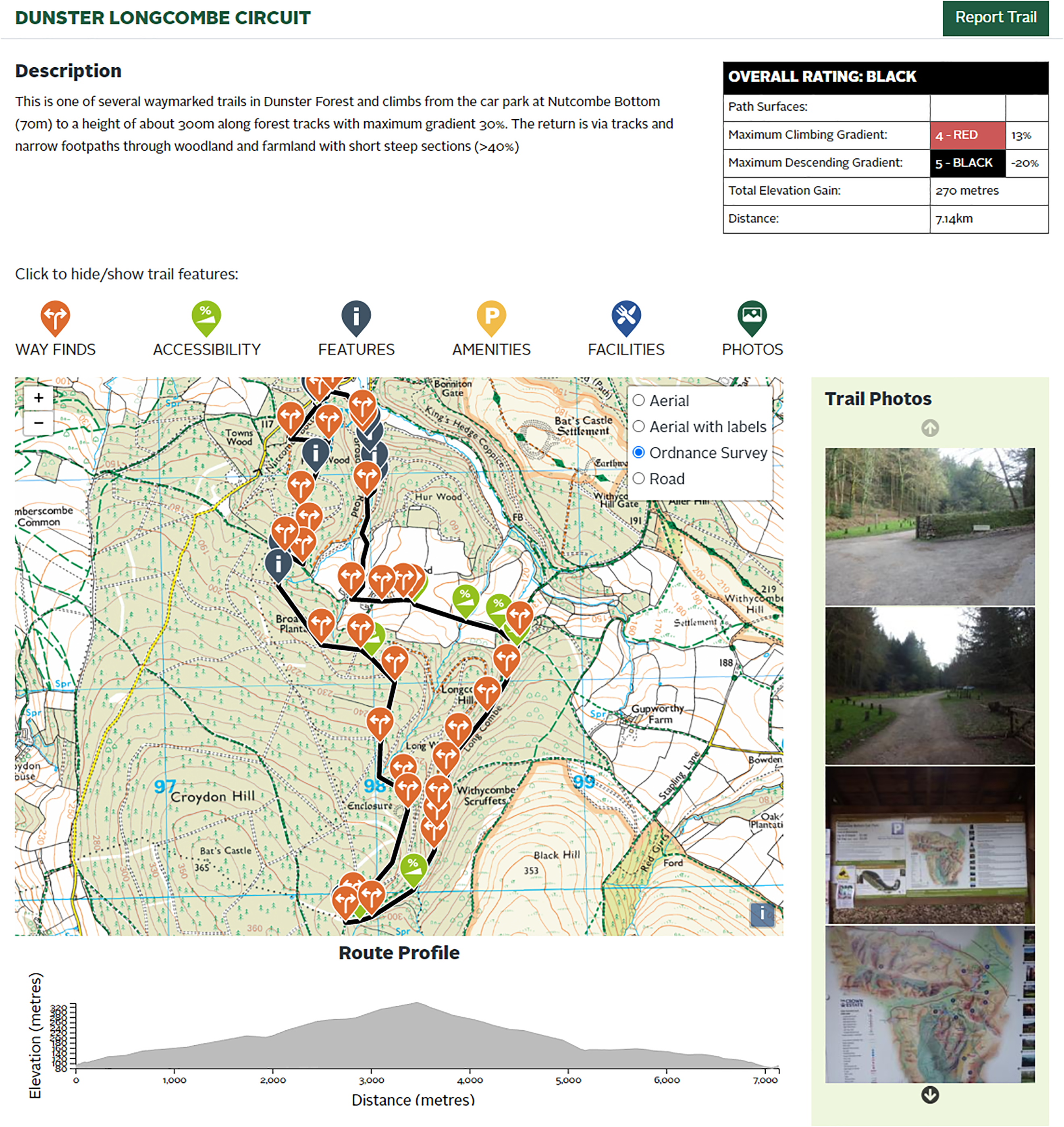
A trail on Phototrails, with a map marked with noteworthy features and photos of the trail. Phototrails website, https://www.phototrails.org/trailSearch/home/viewTrail/trail_name/Dunster-Longcombe-Circuit/trail_id/398.
Material considerations in policy and guidance
In national guidance, there has recently been a move towards a principle of the least restrictive access practicable and possible on rights of way, whilst considering the needs of users, land managers and, in some cases, the heritage value of existing structures. In 2005 the Countryside Agency worked with the Sensory Trust (a charity which is the UK’s leading authority on inclusive and sensory design) to produce a framework for improving inclusive access to the outdoors for disabled people. The framework was rooted in a social model of disability, referenced the 1995 Disability Discrimination Act and CRoW, and was offered “in the absence of statutory standards for outdoor access improvements”. 59 This was revisited by the non-departmental public body Natural England in 2017 and updated with a focus on inclusive design, taking account of the 2010 Equality Act (see Table 1).
The main changes between those editions of the framework are instructive in terms of the movement from “negative” to “positive” measures: a widening of the framework to improve access for all people with protected characteristics defined under the 2010 Equality Act (such as age, race or religious beliefs: see Table 1), not just those with disabilities, alongside an explicit focus on physical, psychosocial and organisational barriers to access. The inclusive design approach is framed as leading to benefits for a wider range of people, such as families with buggies and pushchairs, elderly people, or people unused to countryside walking. 60
The least restrictive access principle is also now applied in advice on the Countryside Code released by Natural England in 2022, which encourages land managers to install gaps or accessible gates rather than stiles where possible, and to follow the 2018 British Standard specification (BS5709:2018) for “gaps, gates and stiles”. 61 This specification provides guidance on the positioning, width, form, mechanisms and force required to use access structures, as well as surfaces, gradients, vegetation, and other possible obstructions near these structures. The attention to the material structures of rights of way is foregrounded in precise detail, with the guidance given to the millimetre. Natural England had already opened (in 2018) a new National Land Access Centre to showcase some of these accessible structures and improve countryside access. 62 The focus was not solely on enabling access for disabled people, but for all entitled users of public rights of way, including pedestrians, cyclists, horse-riders, and users of motorised and non-motorised vehicles – but these ideas’ debt to the positive idea of encouraging rather than simply allowing different groups to move across the land are obvious.
In contrast, another aspect of the material fabric of rights of way – signage – is rarely discussed in terms of accessibility. The Countryside Act 1968 established the power and duty of Highway Authorities to erect signs and waymarks along footpaths and bridleways. The Act stipulates that signs should be installed where rights of way leave roads, as well as where required “to assist persons unfamiliar with the locality”, thus facilitating general access. 63 Following this Act, the government’s Countryside Commission published guidance on recommended approaches to waymarking; a national code for the colour, size, and shape of arrows for paths, and practical advice on waymarking in different landscapes. 64 They also part-funded a project led by the Ramblers Association between 1976 and 1979, aiming to pilot local waymarking schemes and inform national approaches. The resulting report detailed numerous practical recommendations and acknowledged inconsistency in the scale of waymarking activity and approaches at the local level. 65
Whilst these initiatives did aim to facilitate access, this guidance and pilot study implied a focus on non-disabled, sighted, pedestrian users, as well as revealing patchy implementation of previous regulations. One official report suggested placing signs at 1.5 m high, which they described as eye-level, but this was and is likely to only be the eye-level of adult pedestrians. The latest guidance from Natural England encourages consideration of the different eye-levels of horse riders and walkers when positioning waymarkers, but again there is no direct reference to the wider accessibility of signage. 66 This can be seen as another example of how “able-bodied conceptions of the world are unconsciously accepted with disabled perspectives little considered”. 67 Whilst some specially designated routes may offer indications of accessibility through signage (Figure 7) there does not appear to have been a coordinated or comprehensive national approach to this.
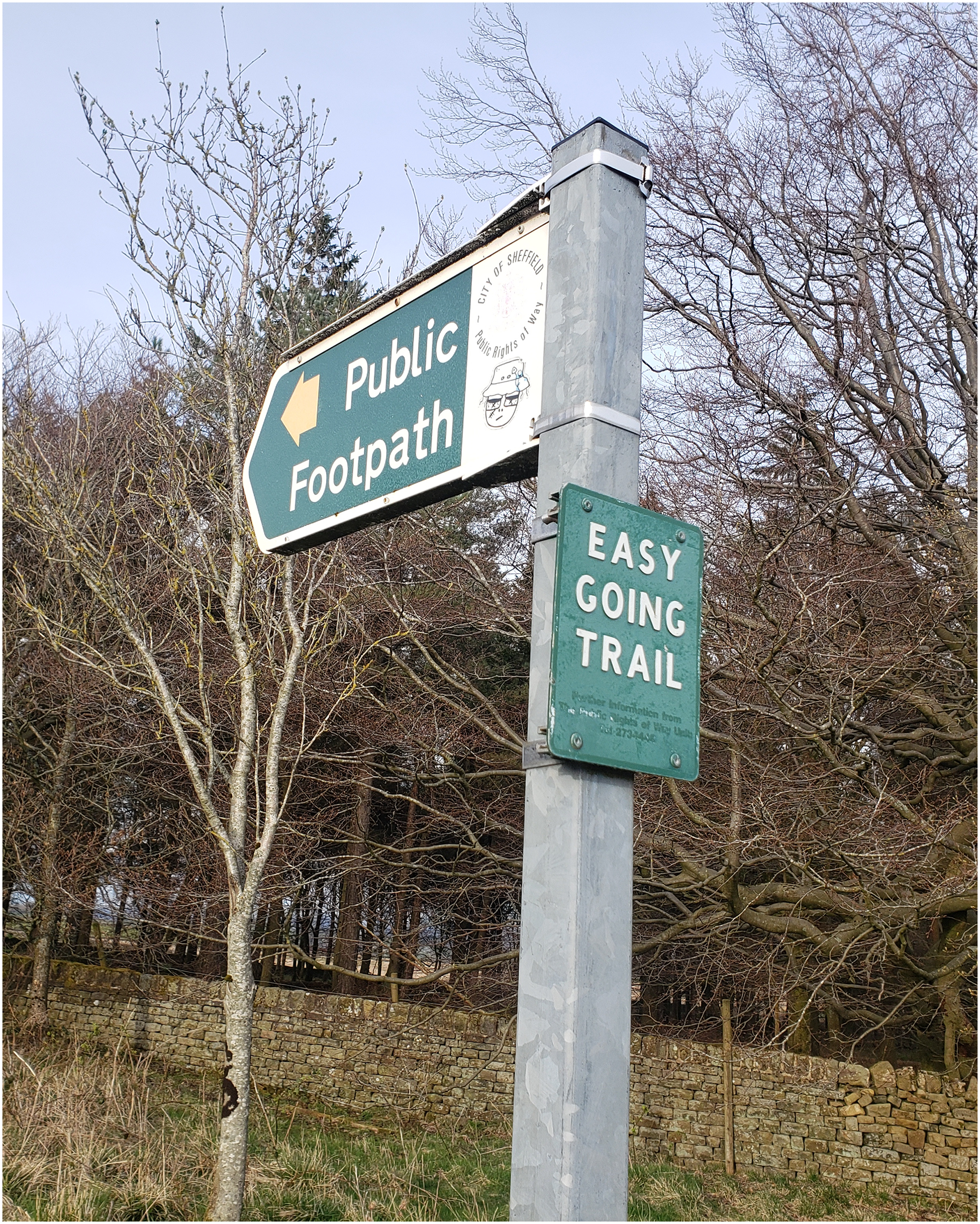
An “Easy Going Trail” in Sheffield, is an example of signage for an accessible footpath. Image by Abbi Flint.
The possibilities and limits of access reform
Not all initiatives were particularly well integrated with actual policy, either in terms of the right to roam or the new rights of way improvement process. This was likely because workstreams were not always connected with one another, despite Ministers’ increasingly insistent rhetoric about “joined-up government” under New Labour. Even more recently, one 2015 survey of different local councils’ formal equality strategies revealed much underlying confusion. 68 The Diversity Review conducted under CRoW between 2000 and 2005 was to some extent successful in identifying gaps in governance capacity. Clarifying the needs of users was important in stimulating thought across the authorities involved, if nothing else. The Diversity Review found that although many local authorities had thought deeply about equality strategies, others had not: many Race Equality Schemes, for instance, did not mention the countryside at all. More reluctant councils could now be encouraged to go further. 69
During the late 1990s and early 2000s, increased research was matched in some ways by action. The Countryside Agency and the government of Wales issued a set of guidelines for planners, entitled By All Means Necessary, laying out the changes in attitude and outlook that a more positively open access must entail. Key requirements were identified as better training for staff; profiling of potential visitors; engagement and consultation with people seeking to get around outdoors; and a proper audit of barriers to access. This mix of “positive” and “negative” policies, focused on actually bringing people into the countryside as well as removing barriers to doing so, sought to change the culture inside and around government agencies, local government, and landowning charities. 70 Specific policies also focused on increasing access for previously marginalised groups. The 2005 Environmental Stewardship grant scheme, aimed at farmers, included a goal “to improve countryside access for those with disabilities” among the four funding streams. Central government’s Social Exclusion Unit announced in 2005 that the second round of Local Transport Plans must positively provide for improvements in social inclusion and accessibility. 71
All that said, the predominant ideological atmosphere since the 1980s – often stressing the limits to what government can do, and for all but a few years under New Labour severely restricting spending – has also often cut across the idea of encouraging access. That has had an impact on actual achievements. Recent studies, such as the Government’s People and Nature surveys, show that among adults living with a “condition or illness”, 7.8 per cent had spent no time at all in green or “natural” spaces over the previous year, while 11.5 per cent visited them less than once every two to three months; the figures for the rest of the population were 3.8 per cent and 7 per cent. 72
Policy in detail, as well as principle, has often tried to address this situation. Natural England published guidelines for sustainable public transport for leisure in 2008, most of which could join up towns and cities with the countryside: it should be user friendly; help to tackle social exclusion; be based on successful partnerships with the community; and be planned for the long term. 73 That same year, a report for Natural England recommended that both they and local authorities were thinking of targeting upper thresholds for how long it took to access green spaces on public transport. 74 In the 2010s, a new Green Space Designation was designed to further protect and open up smaller pockets of accessible land, meaning that people do not have to travel great distances to spend time outdoors. Such access is much more important than some imagined cultures of access that stress large open spaces would make it: in 2012, Natural England found that 37 per cent of visits to the natural environment took place in towns and cities. 75 There is at least now a strategy of how better to join up people’s homes and abilities with the open spaces they want to get to: but enormous barriers to further progress remain. It is likely that a much more profound, more sensitive and more personalised approach to what “nature” does and can mean might be required if a really powerful paradigm shift is to occur. 76
Here a third set of problems, beyond the visibility and influence of different groups or how policies practically fitted together, also comes into view. Land ownership and management in these years was to a large extent privatised along with other large parts of the state and economy. To this extent, the right to roam was accommodating the business of walking to the political economy of the time, rather than altering the meaning of all access. One of the most important, but least talked about, privatisations of this era was of the land. Selling off the coal, water, and rail companies – as well as a host of other public utilities – meant that five million acres were moved into the private sector between the 1980s and 2010s. Only Railtrack was brought back into the public sector, as Network Rail, by New Labour in office. This had obvious, though less than party-political, implications for the role of democratic decision-making in access decisions. 77
Local Access Forums would also prove problematic sites for actual decisions rather than debate, in a very similar manner to pre-existing access liaison groups, and indeed Patient and Public Involvement Forums in the National Health Service. 78 Increasing access would be a long haul, full of contradictions and unintended consequences: Natural England conducted two early Open Access Land Monitoring Reports in 2006 and 2007, and found that a small increase in the use of newly-accessible areas was offset by a fall in people using rights of way. 79
Many rights to roam
Right to roam policy in England has been characterised by a very fractured and uncertain mix of many rights and obligations – a palimpsest of different policy initiatives that has gradually assembled, and not directly designed or settled, land access policy. The language involved, and the intent behind it, came from very different places and meant very different things to different groups. 80 One academic involved in New Labour policymaking has described this policy area as a “bran tub of new initiatives and programmes”. 81 In one sense this should not be a surprise, given the paradoxes obvious in path making: as we have observed already, the eighteenth-century countryside was to some extent “tamed” by the government, a process which counterintuitively then allowed its popularisers to access and sell its supposedly untamed appeal. 82
There were so many overlapping ideas being addressed here that the question of what access was for and the idea of rights it sprang from, let alone how those rights should be worked out on the ground, always remained unclear. In some ways, England’s deep history of walking for leisure helped lead to this situation, because although it encouraged many to access the countryside, their right to be there remained optional and contingent, as it had in the eighteenth and nineteenth centuries. At some points, rights-based access could clash with preservationist narratives, as we saw in Access to the Open Countryside’s insistence that new path surfaces, signposts, and seats “should not change the nature of the countryside”. On other occasions, including the present moment, the opposite trend has been to the fore: the Dark Skies movement seeking to reduce light pollution, or recent protests on Dartmoor over a legal case that ended the right to wild camp there, show that access and protecting the landscape can go together. 83 These many confusions helped to give England’s policy settlement the feel of an uneasy compromise. Every country has had to balance different ideas and interests in this sphere. Access for disabled people may have been further problematised by historic discourses that privileged “fit” bodies and associated outdoor pursuits with challenge, endurance and risk as routes to personal enrichment. 84 But England seems to have experienced the dilemmas relatively acutely. Practice in other countries, such as the Nordic nations’ much wider “right to roam”, might be seen as examples of more distinct approaches that led to more clear-cut outcomes – with citizens ending up with either much more, or less, access. 85
Both in ideological and temporal terms, the governance of these issues in England – as opposed to the clearer, sharper strategic direction taken by successive Scottish governments as embodied in Scotland´s Land Reform Act of 2003 (see Table 1) – has remained muddled, to the detriment of non-traditional access groups and particularly disabled Britons. 86 “Negative” and “positive” freedoms have been constantly evoked, but in a confusing manner, and to some extent oscillating with one another. Many “minorities” identified as less likely to access outdoor facilities were understood via a thin research base that was only gradually improved. Of course, any process of change settled by statute or order is assembled rather than dictated. 87 New initiatives were built up or collaged partly from elements found in previous administrative practices, to some extent from foreign examples, and also by conflicting interest groups: all governments must indeed “puzzle” rather than “power”, though some – as in England – have done more of the former than the latter. 88
In England, the right to be simply present, and the right to actually unlock meaningful access in practice, were and are still differently constructed and experienced, requiring sensitive exploration. Constant compromises between legislation and voluntarist application – often the hallmarks of supposedly “less controversial” laws – also left a very large degree of discretion to be worked out in practice. Almost all Ministers and MPs usually thought and spoke about “walkers”, relegating citizens who wanted to walk from one point to another without becoming “walkers” to a lower status, and to some extent effacing other figures in the landscape. The “countryside” involved was usually conceptualised as far from cities – England’s uplands as embodied in the Lake District, or mountainous north west Wales – to the exclusion of cities’ many semi-rural or at least “green” hinterlands that urban dwellers could actually reach.
Further research is obviously required on movement around the urban fringe, supposed to be preserved in England’s Green Belts – in suburbs and exurbs where people both want to walk, and which they have to traverse to enter the wider “countryside”. 89 In this connection, a deeper understanding of pathmaking can make a useful contribution to transport history by adding to recent historiographical innovations: those that understand the importance of image-making in decisions on how to move, for instance, or more generally acknowledge the different speeds of all types of movement by market, place, politics, social class, and self-definition. 90
Conclusions: Access for some, not for all
As in other policy areas, recent governance in England (particularly under New Labour) attempted to strike a balance between reform and consolidation, which left crucial definitions about ends and means unresolved; decision-making was not to any meaningful extent democratised, while reform of land ownership rather than access remained off the agenda. The Conservative Opposition harried Labour on rural issues such as fox hunting, making Labour Ministers wary of going further even when there was some consensus over increasing “rights” (as long as they were ill-defined) and opening up the countryside. Then the Conservatives and Liberal Democrats in office reduced much further the radical content and inclusivity of reforms that had yet to take full root – for one thing, reducing local government and transport funding so that actually arriving at rural trailheads became much harder. “Rights” and responsibilities, like transport innovation, are certainly not linear: they can jump around in unpredictable, uncertain ways. 91
The confusion evident in these assemblages had important practical consequences. In the absence of a clear a priori set of principles, the concepts involved lapsed back into basic, established and sometimes clichéd constructions evoking only the non-disabled, the physically very able and the relatively wealthy. There has, in recent years, been greater emphasis on encouraging inclusivity and challenging inequalities in access to the countryside, which may be experienced differently in relation to many overlapping aspects of identity, not just physical, cultural or geographical differences. Numerous initiatives and groups are working towards greater diversity in outdoor recreation and spaces: Black Girls Hike and Muslim Hikers are just two examples. 92
Such initiatives demonstrate the importance of understandings and alliances between all those groups less well-represented in access discourses of the past: intersectional relationships between groups, and individuals with different emphases and needs at different points, which came to seem important among twentieth-century ideas of the self and politics which stressed the multiple courses and identities of individual people’s lives. To this extent, these grassroots initiatives represent the opening of a new phase of access cultures, moving along again from human rights cadences and positive, affirmative discourses to what Sarah Bell and others have termed a “differentiated” sensibility that stresses how “different people will have different experiences of disability … shaped by specific impairment effects but also by life experiences, social relationships and wider experiences of inequality, for example in relation to age, gender, class, race, ethnicity and sexuality”. 93
Constant and acute challenges do, however, remain. For one thing, the voices and ideas of disabled people themselves are usually absent from these debates, especially in the policy sphere (which has been our focus in this article), but also in terms of enabling concepts as well as conceptual and physical infrastructure. As Larrington-Spencer and colleagues have highlighted in relation to environmentalism, disabled people may face a range of obstacles to participation, including material, social, institutional, financial, temporal, and personal barriers. 94 These should be one focus for collecting source materials on, and analysing the course of, disabled access in the future. As the Sensory Trust´s Access Chain tool articulates, disabled people’s or non-traditional users’ ability to access rights of way is not solely about the on-site experience and material aspects but includes the accessibility of pre-visit information and travel to and from destinations so that people can make positive decisions to visit. 95
Using the National Parks as an illustration again, a search of individual Park websites enabled us easily to find information for 578 km of the 2,231 km of paths specified as easy access. The length of these routes varied from 250 m to 32 km, though the majority were less than 6 km. As Bell has highlighted, even these discourses of outdoor recreation often emphasise and privilege non-disabled people. 96 Such restricted trails assume a limited view of which landscapes could be accessible to the intersectional needs of disabled people. For example, a recent article in The Times spoke to perceived tensions around replacing footpath stiles with accessible gates, with little consideration of the differentiated experiences of disability, stating that on a steep walk, “a gate does little to make the climb more accessible”. 97
The Fieldfare Trust has made clear the implications of these realities on the ground: “it is no good having excellent paths that do not lead to exciting and interesting areas. Nor should the needs of people with sensory or intellectual impairments be forgotten when access improvements are being made”. 98 Another avenue for further research is how policy and guidance around access for disabled people may be rooted in different theories and models of disability. For example, approaches that badge certain routes as accessible, based on fixed criteria, may imply a perception of disability as a static state, whereas approaches which provide detailed information to enable all path users to make decisions may align with more dynamic and fluid ideas of dis/ability and frame interactions with environments as a shifting relational practice. 99
When considering access, there is a need to think more inclusively – both historically and as citizens – and to take an approach that considers representation and interpretation, while also considering the diversity of needs and experiences of those who feel excluded from the countryside. Transport history as a whole has for some time been moving away from its association with expensive, physical, large-scale infrastructure, and towards a sense of cheaper, more traditional, perhaps interstitial movement: witness recent work on carts and shared taxis in South Asia, for instance. 100 Even more basic infrastructure – the mud or gravel track and the human feet upon it – should be seen as part of this shift towards more finely grained histories, changes that take account of social history and the making of very complicated and negotiated political, social, and cultural practices around all sorts of difference. 101 These have once again become pressing matters of public debate at this moment, as the UK government mulls reform of the law of trespass to make unauthorised access to the countryside in England a criminal, rather than a civil, offence. 102 Uncovering the histories of the right to roam, and access more broadly, must therefore become a key part of thinking about access to the countryside – in the present, as well as in the past.
Footnotes
Acknowledgements
This work was supported by the Arts and Humanities Research Council of the United Kingdom [AH/V00509X/1].
Declaration of conflicting interests
The author(s) declared no potential conflicts of interest with respect to the research, authorship, and/or publication of this article.
Funding
This work was supported by the Arts and Humanities Research Council of the United Kingdom [AH/V00509X/1].
