




Abstract
Although teachers make frequent decisions about whether and how to address difficult topics, they typically do so with minimal support. This article reports a case study of an inquiry community of 20 educators who engaged in practitioner inquiry as professional learning for addressing the difficult topics that they teach within their curricula or otherwise encounter within their professional practices. Through an inductive thematic analysis of semi-structured interviews with 12 community participants, the article’s authors identified four themes characterizing how the inquiry community supported teachers to lean into the difficult topics they believed they needed to address. The community helped teachers define difficult-topics inquiry while connecting them across divergent political and professional perspectives. The community assisted teachers in engaging difficult topics through purposefully structured inquiry talk, and it prompted them to (re)conceptualize difficult-topics teaching as inquiry. The article demonstrates the potential of difficult-topics inquiry communities as professional learning for turbulent times.
Keywords
K–12 teachers have long been cognizant of the contested nature of the content they teach and the pedagogies they employ. Although the political dynamics of teaching may be familiar, in recent years, a rise in polarization and partisanship in the United States has contributed to an especially turbulent context for schooling (Cochran-Smith & Stringer Keefe, 2022; Hallman et al., 2022). Within this context, some teachers are required by their standards or curricula to teach difficult topics such as slavery, genocide, or human rights abuses (e.g., Florida Legislature, 2023; New York State Education Department, n.d.).
Far from being limited to social studies, however, teachers irrespective of grade level or content area face a growing slate of difficult topics that can arise at any moment, entangling them in discussions of controversial issues such as abortion, policing, or gun violence. Regardless of whether such discussions occur within planned instruction or as “unplanned episodes” (Cassar et al., 2021), teachers continually make decisions about whether and how to address difficult topics—while news media, social media, school boards, and legislation contribute to a climate of fear surrounding any engagement with these topics (Carter Andrews et al., 2018).
Previous research has identified numerous reasons why teachers tend to avoid difficult topics (Cassar et al., 2023). Teachers may fear community backlash (Ranschaert, 2023), particularly when there is disagreement over which topics should be open to discussion or considered settled. They may feel insufficiently knowledgeable to teach certain topics, struggle whether to disclose their own perspectives, or believe some topics are not age-appropriate (McAvoy & Hess, 2013).
Extant scholarship has also contributed to current understandings of what can make a topic difficult to teach. Such literature has analyzed characteristics of difficult topics (e.g., Gross & Terra, 2018), examined difficult-topics classroom discussions (e.g., Garrett & Alvey, 2021; Hess & McAvoy, 2014), and described pedagogical approaches (e.g., Miles, 2019). By comparison, however, and despite calls for teacher educators to prepare teachers to teach difficult topics (e.g., Carter Andrews et al., 2018; Woolley, 2011), few publications have examined how teachers can be supported in learning to teach difficult topics (Pace, 2019). In response, the present study investigated the case of an inquiry community of K–12 educators from diverse professional roles who convened with the aims of becoming effective teachers of difficult topics within their curricula and learning to address difficult topics within their professional practices—rather than leaning away from such topics. The study asked: How does a difficult-topics inquiry community support teachers to lean into the difficult topics that they teach or encounter within their professional practices?
Professional Learning for Difficult Topics in Curriculum and Professional Practice
Prior scholarship has framed the issue of difficult topics through varying perspectives. Throughout this article, difficult topics is used as an umbrella term referring to a wide range of topics and issues that teachers may deem “difficult” to address, whether as part of their planned curriculum and instruction, or within the broader contexts of their professional practices. Difficult topics subsumes several other terms referring to events and issues that can be psychologically uncomfortable, sensitive, painful, or traumatizing—including difficult knowledge (Pitt & Britzman, 2003; Zembylas, 2014), difficult history or hard history (Gross & Terra, 2018), and tender topics (Mankiw & Strasser, 2013). The terms controversial issues or contentious topics identify contemporary issues that provoke intense disagreement, often involving clashes in values, identities, ideologies, or historical narratives (Goldberg & Savenije, 2018).
Scholars have advanced numerous arguments for teaching difficult topics in K–12 classrooms. Some arguments focus on benefits for K–12 students, observing that engagement with difficult topics can offer abundant opportunities for students to develop skills in critical-analytic thinking, empathy, and civic discourse (e.g., Haas, 2020; Middaugh, 2019; Pace, 2019). For example, Woolley (2011) argued that such teaching is important on the grounds that it can afford children opportunities for critical thinking, reflection, analysis, and evaluation (p. 281). Other arguments have advanced political or civic justifications. Britzman (2003) argued that teachers’ tendency to shy away from difficult topics contributes to the uncritical reproduction of dominant ideologies, while McAvoy and Hess (2013) argued for such teaching on the grounds that it can develop students’ democratic dispositions, help them become more informed about significant political issues, and learn to disagree respectfully. Cassar et al. (2023) identified still other justifications, including that teaching difficult topics can support students’ reasoning abilities and prepare them for engaged citizenship in a democratic society.
Despite the purported benefits of difficult-topics instruction, teachers widely report feeling unprepared to engage with such topics in their classrooms (Ersoy, 2010; Nganga et al., 2020; Pace, 2019). In response, a range of approaches to difficult-topics professional learning has been documented. Some approaches are tailored to particular topics, such as the Holocaust (e.g., Lemberg & Pope, 2021). Others focus on difficult-topics pedagogies such as deliberation (e.g., Hughes & Journell, 2023). These topic-specific and pedagogy-based approaches, however, are not necessarily applicable to the broadening range of difficult topics that teachers now face. They are not structured to provide ongoing support for classroom application, nor do they necessarily assist teachers in navigating the contextual factors (Pace, 2019) shaping difficult-topics instruction. Research about new forms of support for teachers to lean into difficult topics, despite the understandable reasons they may tend to lean away, is therefore needed. This study’s premise was that one way to provide such support is through sustained professional learning with a focus on developing teachers’ professional practices for addressing difficult topics.
The characteristics of high-quality professional learning have been extensively studied. Quality professional learning engages educators in experiences that are intensive, collaborative, reflective, content-rich, coherent, process-oriented, and led by skilled facilitators (Desimone, 2009; Rutten, 2021b). These characteristics can be integrated into a variety of designs for professional learning; the authors of this article utilized practitioner inquiry—the systematic and intentional study by educators of their own professional practices (Cochran-Smith & Lytle, 2009; Dana & Yendol-Hoppey, 2020). Earlier scholarship has demonstrated how this approach can help educators become more responsive to learners in their professional contexts and enhance their self-efficacy in content instruction (e.g., Kinskey, 2018). When grounded in an inquiry stance (Cochran-Smith & Lytle, 2009; Rutten, 2021a; Rutten & Wolkenhauer, 2023a, 2023b), practitioner inquiry offers an orientation to teaching that supports teachers amid changing political climates and contexts (Somekh & Zeichner, 2009).
While various approaches to practitioner inquiry have been described in many contexts, Dana and Yendol-Hoppey’s (2020) five-phase model was adapted within the context of this study. Dana and Yendol-Hoppey theorized that practitioner-inquirers:
pose questions or “wonderings” about their own practices;
collect data, including relevant literature, to gain insight into their wonderings;
analyze the data;
take action to make changes in practice; and
share their findings with others.
When this process is enacted within communities of teachers, it offers a significant means for educational change because inquiry communities have been documented as powerful contexts for professional learning (Wolkenhauer & Hooser, 2021). Cochran-Smith and Lytle (2009) theorized that teachers engaged in practitioner inquiry within inquiry communities critique their classrooms and schools, concurrently treating others’ knowledge, feedback, and experiences as worthy of both consideration and critique. Inquiry communities that encourage educators to become vulnerable while critiquing their practices foster a culture of professional learning in which educational practice is constructed through meaning-making across diverse perspectives. As such, the authors believed that an inquiry community could promote a more critical, productive orientation toward difficult topics, and it was within one such inquiry community that this study was situated.
Study Context
The inquiry community was developed within a politically divided public school district in the Mid-Atlantic United States. This district was an ideal setting for this study because such contexts can make difficult topics particularly challenging for K–12 teachers. Study participants tended to characterize the district as politically conservative, although not monolithic. In the 2020 presidential election, approximately 60 percent of votes were cast for the Republican presidential candidate and 35 percent for the Democratic candidate. The community’s work was conceptualized in April 2021, a time when the district and surrounding communities were embroiled in controversies about masking and vaccinating during COVID-19, as well as restrictions on classroom and school library books.
Additional partisan controversies surfaced during the 2021-2022 academic year related to the district’s policies about students identifying as transgender or gender non-binary. Antagonistic political debates and pointed criticisms of district teachers were reported on private parent/guardian-moderated social media pages. Teachers spoke of their trepidation about the impacts of heated school board meetings, with raucous board meetings in nearby districts being a frequent topic of discussion. Amid this turbulent context, district administrators sought support for their teachers when they connected with the authors, whose work includes facilitating professional learning programs focused on difficult topics.
Together, administrators and the authors conceptualized a professional learning program, which they introduced to teachers in May 2021 through a presentation on a district professional development day. They based the program’s design on Dana and Yendol-Hoppey’s (2020) model of practitioner inquiry, as illustrated in Figure 1, with the phases of the inquiry cycle being fueled with literature and activities focused on equity and trauma-informed practices. Twenty educators committed to participating during the 2021-2022 school year.
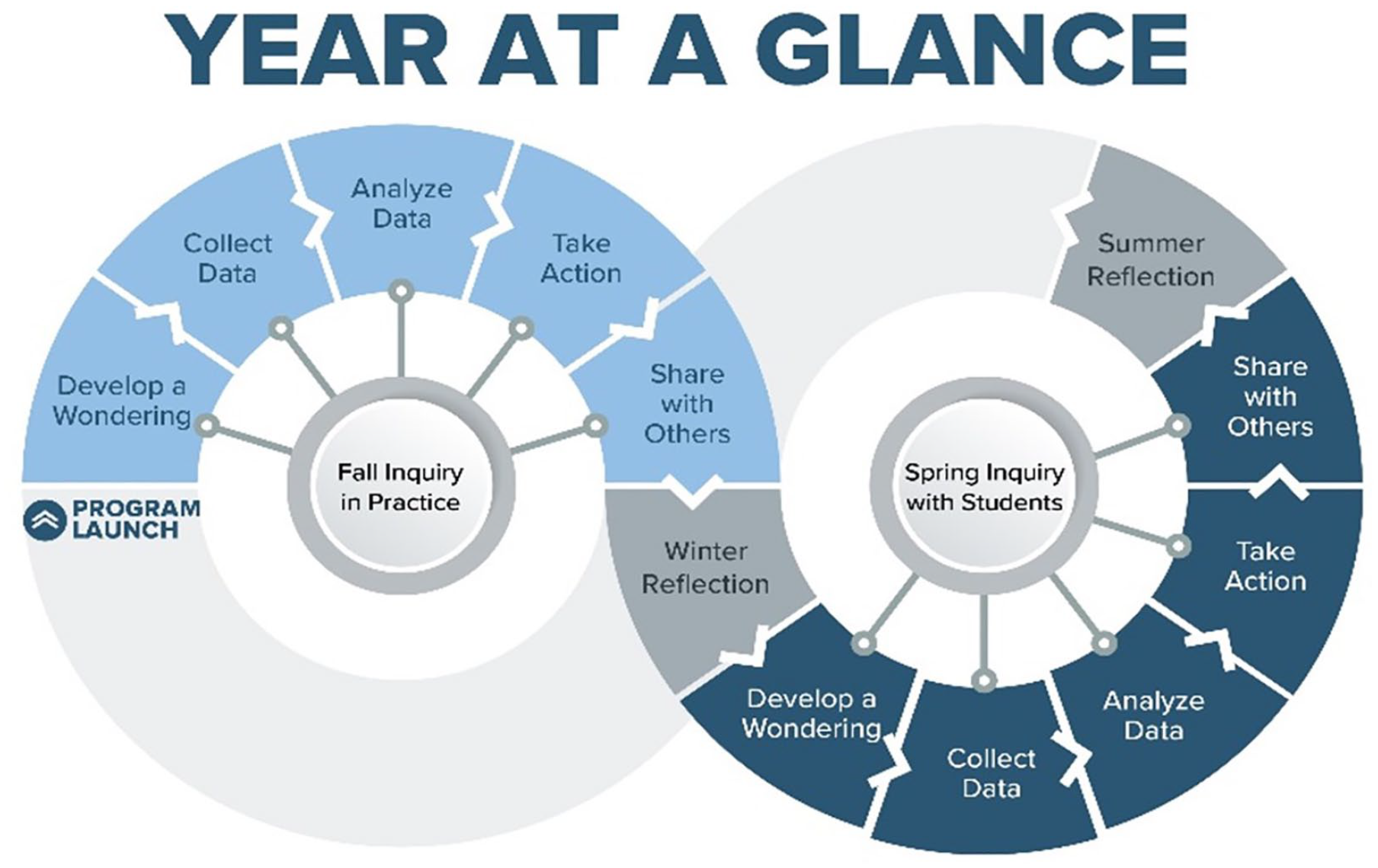
Conceptual Structure for Professional Learning, Adapted From Dana and Yendol-Hoppey (2020)
In July 2021, participating educators convened for a community launch. At the launch, the facilitators, including Authors 1 and 2, aimed to build a sustainable community, construct shared understandings of inquiry, and help participants begin to develop both shared and individual inquiries. Some educators’ inquiries focused on difficult curricular content and others on difficult issues within their professional practices. Throughout the year, the authors met with teachers for one-on-one check-ins of the type previously described in Rutten (2021a). During these check-ins, the authors provided differentiated coaching of critical junctures of the inquiry cycle (such as refining a previously drafted wondering, or planning for data collection), in response to teachers’ self-identified needs and interests.
Throughout Fall 2021, the inquiry community met approximately twice monthly as participants refined difficult-topics wonderings, experimented with data collection, considered multiple lenses on educational equity, and explored formative and summative data analysis. Educators developed initial insights into their wonderings, based on which they took informed actions or made changes in their practices. They gathered in December 2021 to share and celebrate their learning, reflect, and consider implications for future inquiry.
During Spring 2022, teachers shifted their focus to inquire into how they could invite learners in their context (e.g., K–12 students, parents and guardians, and other community members) into difficult-topics inquiry. To assist teachers in piloting the inquiry process, the facilitators provided three entry points in utilizing inquiry with students, which varied according to the origin of the wondering (e.g., curriculum, student curiosities, and community tensions) and the person or people responsible for framing that wondering (e.g., teacher, student, small group, and entire class).
As the teachers piloted inquiry and collected data in their classrooms and schools, the facilitators invited university colleagues to present sessions focused on additional perspectives to consider in their difficult-topics inquiry, such as the role of language in framing difficult historical topics and various ways to collect data during field research (e.g., interviewing, jotting field notes). The facilitators continued to meet with participants for regular check-ins. Like the fall semester, the spring concluded with a celebration and sharing of inquiry.
Method
The purpose of this research was to understand how an inquiry community supported teachers as they leaned into difficult topics in curriculum and professional practice. The research was conceptualized as a qualitative case study—an appropriate methodological choice when, as here, the research question starts with “how” or “why” and the researchers seek understandings about a contemporary social phenomenon (Yin, 2018, p. 9). In this instance, the phenomenon was a difficult-topics inquiry community of K–12 educators from disparate professional roles but who shared an interest in using inquiry to learn to address difficult topics.
The authors’ approach to this case study reflected their moderate constructivist epistemological stance. Researchers working from this perspective tend to approach qualitative research with the goal of synthesizing meaning from individuals’ perspectives within a social context (Rutten, 2021a). This stance guided the authors to seek each participant’s perspectives about the inquiry community and then to synthesize the perspectives shared broadly within the context in which they were constructed.
Researcher Positionality
To address their research question, Author 3 conceptualized the relationship between the university and the school district, which provided the study’s context. Authors 1 and 2 conceptualized this study and conducted all data collection and analysis activities. During the time of the study, Authors 1 and 2 facilitated the inquiry community’s activities. They self-identify as university-based teacher educators whose scholarship examines the phenomenon of inquiry stance. Although the inquiry community was not a credit-bearing course, and neither author served as an evaluator of participants’ work, there was nevertheless an inherent power imbalance created by the authors’ positioning as the community’s facilitators, and by the fact that they were required to take attendance at each community gathering as a way to confirm participants’ eligibility for the district’s professional development incentives such as trade time or credit toward step-movement on the district’s salary scale.
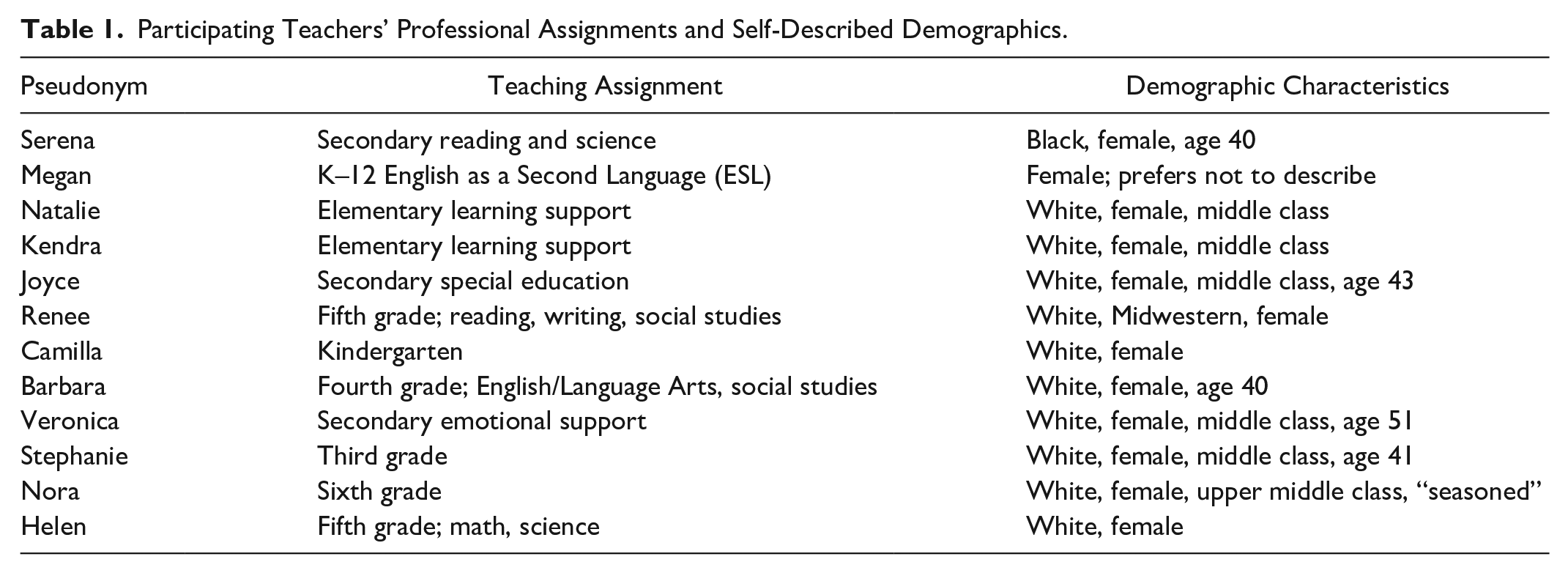
The authors took multiple steps to mitigate this power imbalance. First, they divided responsibilities for participant recruitment and consent to participate in the study. Author 1 took responsibility for developing the IRB proposal and holding an invitation-to-participate meeting to explain the study to the inquiry community’s participants and invite as many as were willing to join the research to participate. At the conclusion of this meeting, Author 1 left the room so that participants would not feel coerced to sign the IRB-approved informed consent paperwork. Author 2 collected paperwork from the 12 educators who had decided to participate. Second, because participants may have had varying levels of trust with the authors, the authors invited participants to choose the author with whom they interviewed. Third, the authors did not share with the school district the names of the educators who participated in the study to enable them to talk without fear of reprisal. Fourth, the authors utilized an online, random name generator to produce pseudonyms for each participant. An overview of participants appears in Table 1.
Participating Teachers’ Professional Assignments and Self-Described Demographics.
Data Collection
In alignment with their epistemological stance, the authors conducted one-on-one, semi-structured interviews (Patton, 2002) as their primary method of data collection. For secondary data sources, they utilized artifacts such as the inquiry community’s meeting schedule and agendas, and generated field notes during inquiry community meetings. These sources were utilized to generate descriptions of the inquiry community as the social context of the research and to triangulate key ideas participants shared about the inquiry community, such as describing the role of purposefully structured inquiry talk (Rutten, 2021a) in the findings reported below.
The authors interviewed the study’s participants about their experiences in the inquiry community once in the first half of the academic year to ask them to reflect on initial experiences, and once at the end of the academic year to ask them to reflect on the entire experience. Authors 1 and 2 recorded these interviews using Zoom videoconferencing software and transcribed them verbatim using the three-phase approach previously described by Rutten (2021a). During the interviews, the authors recorded analytic memos to sensitize them to emergent themes. These memos, along with the artifacts and field notes generated during the inquiry community’s work, were used in later phases of analysis as the authors reached a consensus on the themes they would report as the study’s findings.
Data Analysis
The authors analyzed the interview transcripts using a four-phase approach to inductive thematic analysis, adapted from the approach described by Rutten and Wolkenhauer (2023a, 2023b). In the first phase, the authors read the transcripts in tandem with the analytic memos they had jotted as they conducted the interviews, noticing salient details, quotations, and potential themes. The authors then convened to discuss potential themes, such as “initial uncertainty,” that they noticed. They then conducted an in vivo approach to open coding (Miles et al., 2020) of the first half of the transcripts, selected at random. In this process, they extracted salient phrases or segments of text from each of the transcripts, using the interviewees’ own words as the codes to stay as close as possible to the meanings the participants had shared. In the second phase of analysis, the authors clustered these phrases and segments into groups by semantic similarity, to which they assigned tentative labels such as “diverse purposes for participating” and “feeling safe and connected.”
In their third analytic phase, the authors read the second half of the interview transcripts through the lens of the tentative labels they had generated during the second analytic phase. As they did so, they looked for parts of the interviews that were concurrent with their tentative categories of meaning, and for points of potential discrepancy that could not be accounted for by their existing categories, which they recorded as they read. In their fourth analytic phase, the authors met to discuss the discrepancies they had noted and either revise their set of labels or create new clusters of meaning. They then clustered their set of clusters into broader groupings, for each of which they wrote a thematic statement responding to the study’s research question. This process produced four thematic statements, which are reported below as the study’s key findings and supported by illustrative interview quotations.
Findings
Through their analytic process, the authors identified four themes characterizing how the inquiry community supported teachers in leaning into difficult topics during turbulent times. The analysis indicated that the inquiry community supported teachers in negotiating apprehensiveness about engaging with difficult topics by helping them to construct their own understandings of difficult-topics inquiry. The inquiry community supported teachers in feeling connected across multiple perspectives–and purposes—and was an integral way the community helped the teachers navigate their initial uncertainty. As the teachers in the inquiry community learned to engage in purposefully structured inquiry talk, they began to (re)conceptualize their professional roles as intentional co-inquirers with their students. In this section, teachers’ experiences are presented through the four themes characterizing how the inquiry community supported them in leaning into difficult topics.
Negotiating Initial Apprehensiveness Through Practitioner Inquiry in Community
Each of the teachers described a sense of being uncertain about what it would mean to participate in a difficult-topics inquiry community. This widespread perception took multiple forms, including both an overarching concern that professional learning would be irrelevant to their individual needs and more specific concerns that it was not clear how to learn professionally through inquiry. As the academic year progressed, and they began to engage with the process of practitioner inquiry, however, teachers learned that they could define the experience for themselves.
Teachers were unanimous in reporting a sense of initial uncertainty about the inquiry community. For some, this sense was related to a lack of clarity about what inquiry-based professional learning entailed. As Natalie shared, “When this first started, I don’t think any of us really knew quite exactly what it was. So, you know, I was very unsure of exactly how this was going to unfold in the beginning, when we first started doing inquiry.” Like Natalie, Kendra explained, “I still don’t understand exactly what this thing is, but I want to go check it out.”
Similarly, Joyce shared that she had been confused by the title of the professional learning program. She observed: We were all. . .not really sure. Even in the beginning, and even after maybe the first, second [meeting], we were like, “Is this what we signed up for? Is this actually what we want?” But then it’s been amazing because to watch the inquiry practices and the styles and the work. Not only the work for students, but I think probably what has been even greater is that we’ve built this community across the district and made connections with other people that we never would have had the opportunity to do before. . . I just don’t know that, going into it, people realized that that’s what this process was going to be. I understand—now—that the end goal is up to us to define, which feels amazing.
For other teachers, the encouragement to define the ends of their inquiries led to confusion because of how different the experience of voluntary, inquiry-based professional learning felt in contrast to prior experiences with professional learning that had been defined and imposed upon them by others. Kendra shared: I don’t think I’ve ever been in a community with teachers, doing teacher things, where anybody in any capacity said, “Okay, this is all going to be completely driven by YOU. These are YOUR ideas; these are YOUR questions.” And for the first couple sessions, I was like, “I really don’t understand. They’re not telling us what to do!” But I think you guys got the results that you got BECAUSE you didn’t tell us exactly what to do—you left it up to us. You were like, “No, guys. We are trusting you. We are letting you do this. Go do it!” And I don’t think I was the only one that was like, “Wait a minute. Wait. . . There’s no syllabus. There’s no check marks. I need assignments!” And I don’t know if that was done on purpose. I don’t know if that was strategic, but I think it was excellent because it made us flounder. Well, it made me flounder, and I was uncomfortable, and from the place of being uncomfortable, I found my way. And that’s what life is about, is being uncomfortable and being in the place of uncertainty. And you have to live there for a little bit, and we don’t like that, but it was great. That’s exactly what I needed. I was like, “Okay? Logan really means that I can just take this where I want to go? Okay. . . All right. . . Wait, are you sure?” And you were like, “Yep, for the 50th time, yes, that’s what you should do.” So, whether that was by design or not, I thought that was brilliant.
As Kendra’s and Joyce’s quotes illustrate, the recognition that they held the power to define what difficult-topics inquiry would mean for them and that they could define inquiry in a way that was truly relevant to their professional roles, helped teachers to move through their feelings of apprehensiveness and begin to engage with the inquiry community.
For others, however, their sense of uncertainty was connected to the relevancy of difficult-topics inquiry to their professional roles. Megan shared about the gradual transformation of her initial concern that while difficult topics might be relevant to her colleagues who taught history, they might not necessarily relate to her own professional role: How is this relevant to me? Because I teach ESL [English as a Second Language], I thought, “Is the district even going to allow me to participate?” One of my questions was, “Okay, so I don’t teach history. I teach ESL. I’m thinking that maybe they’re thinking that I don’t fit into this community, but I’m going to check it out.” But once I sat through a couple of the sessions, I felt that it was absolutely relevant to me.
Megan’s sense of “thinking that I don’t fit” was also shared by teachers who perceived that their professional role identities and social identities may not be welcomed. Serena said, “Starting in August, I was a little bit apprehensive. Actually, more than a little bit. I was REALLY apprehensive. At the same time, I was also eager to go on a new journey.” She further explained that her apprehensiveness was also connected, in part, to being the only self-identified Black woman in the inquiry community. She shared, however, that through the inquiry community’s efforts to frame a shared inquiry, she began to develop new understandings: I was 100 percent wrong. In reality, in our community there’s more diversity than I thought, and our community is actually much more open to diversity than I thought. They’re willing to listen more than I’ve ever seen. So, it’s actually been really good. I’ve seen my colleagues in a much more positive way.
Serena’s explanations of her experiences illustrate how initial apprehensiveness about difficult-topics inquiry can arise simultaneously from multiple sources. Nevertheless, the inquiry community supported teachers as they began to learn together in new ways.
Feeling Connected Across Divergent Perspectives
As teachers realized that they were free to define their work in the inquiry community, they began to test the sense of connection that they were beginning to build by examining, through divergent perspectives, the specific issues that they deemed difficult. In some cases, they explored starkly contrasting political perspectives. In other instances, participants sought the perspectives of others who had different professional roles from themselves. Participants shared that as they explored whether their divergent perspectives would be welcomed, their sense of being connected to one another was strengthened. As such, the inquiry community supported teachers in leaning into difficult topics by helping them feel connected across their perspectives.
Kendra explained how the inquiry community helped her feel connected to others who shared her self-identified “progressive” political views in a school district where she had supposed that there were few others whose views aligned with her own, or who would be willing to engage with her ideas. She described how the inquiry community challenged this assumption, noting that It was very humbling. Like, “I thought I was alone, and I’m not alone!” And as soon as we walk in and see these people, and we see you guys [i.e., the facilitators], we’re like, “These are my people. This is my thing.” It’s always a very safe place. I’m always very, very grateful to be there and I feel like it is truly a community where we can just talk about anything.
Kendra’s perception of being alone in her political viewpoint, but ultimately coming to feel connected to others, was not limited to teachers espousing “progressive” politics. Rather, the inquiry community helped teachers begin to connect not only with others who shared their perspectives but also with others who did not. Similar to Kendra, Megan was challenged to rethink her initial assumption that her self-identified “conservative” political views would necessarily mean that she would be ostracized within an inquiry community she perceived to be dominated by people with opposing political views: Born and bred, I’ve always been very conservative. I’m very constitutionalist, and I’m very law-and-order. I feel like I’m an outlier sometimes. If I look at who people think educators are, as a group, and what the difficult topics are that we’re looking at in society, I know that I’m not going to agree with a good percentage of people sitting around me. And that has to be okay—because that’s part of it. At first [in the inquiry community], I thought, “I probably shouldn’t say anything, ever, in this room.” That’s where I was in the beginning—just listening to everybody else. And it was like one of those things where I felt like everybody had a really good comfort level because they all thought they were like-minded. Hearing some of the things that were discussed, I was kind of like, “Okay. . .I’m just gonna stay back here and just see how this all plays out.” But you know what? I think I’ve evolved. I can listen to something all day long, and it doesn’t mean that I have to agree. It doesn’t mean that we get into a fight, and we storm out and everybody’s mad. Now I see that it’s about your own journey within the journey.
As Megan’s quotation illustrates, simply being in a room with people who had different political perspectives felt threatening at first. Over time, however, the experience of spending time in a space where she was free to listen to other viewpoints without being pressured to agree proved transformative and helped Megan feel a sense of respect that enabled her to connect to her “journey within the journey” of the inquiry community.
Renee, who had previously shared that her own political views were in sharp contrast to Megan’s, nevertheless had a strikingly similar experience: I had really been feeling like an island. Part of the experience for me was learning that I can find common ground with people who seem so opposite and so different from me—and finding the language that would help me communicate with them. And I think that starting with our big, shared “wondering” for inquiry—that had so much to do with growing respect and a place at the table for anybody. . . If I hear how other people in the inquiry community are approaching different things, it helps me also to understand how other people in my building might be approaching things. . . Once you’re there, and you’re with the people, and you’re hearing the things that they’re encountering, and you’re learning new ideas, you’re like, “Well, I never thought about it that way!”
Although the inquiry community supported some teachers in feeling connected across their political differences, for others, this sense of connection across divergent perspectives emerged from teachers’ development of a deeper understanding of the various professional responsibilities present in the inquiry community. Kendra, an upper-elementary grades teacher, was concerned at first that the diversity of professional roles in the inquiry community would limit her capacity to connect with others. She shared, “[Helen] and I. . . We talked at one of the first sessions and I was like, ‘I don’t really know her. We don’t really have much in common. What can we have possibly have in common? She LOVES Kindergarten.’” But Camilla, the Kindergarten teacher Kendra was referencing, shared how the inquiry community supported her by helping her connect with Kendra and other educators from different professional roles. She explained, Hearing what goes on at the high school, not just all the way down in Kindergarten, was so helpful. We get a little isolated in Kindergarten and First Grade. We’re down at the end of the hall. Even in our own building, we don’t even really know what’s going on across the building.
Similarly, Barbara shared, “Some of these people in the inquiry community—I’ve worked with them for 10 or 15 years, and I feel like I have a better working relationship with them now because of the safety of the conversations we’ve been having.”
This sense of connection across professional perspectives extended to the relationships that teachers built not only with other teachers but with the school administrators who joined the community. Joyce shared, There’s started to be dialogue between the admin and teachers that has never, ever, happened before. That allowed for more collaboration in our building, so maybe that’s the piece that has been the most powerful, is that the inquiry community actually created a space for that difficult interaction to start happening. You know, you guys provide the structure to facilitate the conversation, but then the conversation organically blurs. That’s some of the most powerful learning that there is, those really good dialogues. To me that’s been the most impactful piece of our work.
As Joyce’s explanation illustrates, the intentional convening of educators from different professional roles within the inquiry community created a shared structure within which connections across perspectives became possible where they had previously not occurred.
Leaning in Through Purposefully Structured Inquiry Talk
The theme of connecting across divergent perspectives was particularly characteristic of the inquiry community’s first semester of collaboration. It was during this time that the teachers worked through their initial apprehensiveness about the inquiry community, defined their purposes for participating, and built meaningful connections across their perspectives. As Kendra’s quotations demonstrated, teachers often attributed their experiences to the facilitators’ stance toward them as professionals. They also, however, reported that one of the aspects of the inquiry community that most supported them in leaning into difficult topics was the opportunity to experience new ways of engaging in professional talk.
A key feature of the facilitators’ approach to positioning teachers as professionals was to use purposefully structured inquiry talk (Rutten, 2021a). Such talk was frequently structured through small-group discussions of three to five teachers asked to reflect both individually and collectively upon some aspect of their inquiries. For example, as teachers began to frame individual wonderings for inquiry into their practices, facilitators asked them to work through a “tension” they were feeling about their wondering by sharing early drafts of their wonderings along with questions for the small group and providing feedback to one another.
This basic structure for professional discussion proved intimidating to some teachers who were not accustomed to sharing vulnerably about their practices with anyone, let alone with people who may not share their perspectives. Still, Helen said, “I just think every time we have a discussion, and being able to speak openly made me feel like I was listened to, and heard. I felt like I didn’t have to agree with somebody. We could still talk and not get angry and upset.” Natalie noted a similar perception that structured talk made difficult-topics discussions possible. She explained: I think just the conversations that we’ve had as a group have been very different. People are really putting themselves out there. They’ve started saying things that make them vulnerable, saying things that other people may not necessarily agree with or can get behind. And there’s lots of good things that have come out of it.
Veronica shared that these structured conversations made it possible to learn together without needing to impress or please the facilitators: Some of the discussions that we’ve had in our groups have made me think very differently because I don’t feel like I’m being judged. I feel like it’s [i.e., the discussion structure’s] there for. . . helping it feel like a community. It’s not a class, and you’re giving the grade, like, “I’m hoping to get an A.” We’re there to have these open discussions and actually learn from each other.
As the community’s work continued and the practice of talking vulnerably about professional practice became more familiar, the facilitators began to introduce increasingly structured approaches to inquiry talk in the form of discussion protocols (National School Reform Faculty, n.d.). Protocols, defined as “structured processes and guidelines to promote meaningful, efficient communication, problem solving and learning” provided explicit directions about the focus of the talk, roles within the talk, and norms regarding equity of voice. They create a structure for talk in which all voices can be heard, multiple perspectives are considered, and participants feel safe enough both to share vulnerably and to receive honest feedback. This way of talking about professional practice was unfamiliar to most of the participants, but it gradually became become part of the inquiry community’s practices for supporting one another. As Stephanie shared: I think at first, [protocol discussions] can be kind of challenging if you’re not used to doing it, but then, once you start to listen to others and share ideas it starts to become a little more. . . I don’t want to say it’s easy, but it’s possible. It becomes more possible to do it. . . Through the discussions, I think we can really feed off each other and help each other—build each other up.
The sense of “building each other up” through the structured discussions was shared by Camilla, who reflected on how structured talk created the time she needed to explore her own thinking. She explained: It’s that collaboration and supportive environment where you can explore ideas and not feel silly, or somebody can build on what you start with, or you can you know, help them back-and-forth. There’s not a lot of time for that anymore. But we’re finding that place to respect concerns in a real way, and really delve into them and come to a common ground on them.
Learning about then experiencing a specific structure that could support engagement in a difficult conversation provided a model that some teachers intentionally began to connect to their classroom teaching practices. Camilla continued, describing how she started to engage her students in discussions across their differences: We all have different experiences, but living together in this community of learners, we need to share what we can and try to put aside what we can’t necessarily deal with the best, but have spaces to talk through it, too, with our kids, just like we talked through it.
Barbara shared a similar idea. She noted that learning to structure discussions for inquiry, rather than debate, has improved many of her interactions. She said, The discussions with either friends or colleagues or even family members on topics that we might disagree about—the way that I approached them I think now is more inquiry-based and less combative, like I need to convince you that you’re wrong.
As Barbara’s experience indicates, the structuring of professional talk, within the context of an inquiry community, contributed to a significant shift in her thinking about the purposes for engaging in difficult-topics discussions, from winning a debate to seeking understanding.
(Re)conceptualizing Difficult-Topics Teaching as Collaborative Inquiry With Students
As they reflected upon their first year in the inquiry community, participants widely shared that the inquiry community helped them to learn not only structured ways of leaning into their own difficult topics but also a systematic process for inviting students into difficult-topics inquiry. Many participants reconceptualized their roles in relation to their students as being co-inquirers into difficult topics, rather than as viewing difficult topics as outside the scope of their professional practices or viewing themselves merely as transmitters of knowledge about such topics. This perspective helped teachers feel able to lean into difficult topics with their students, rather than shutting down such discussions or feeling inadequate because they did not have all the answers.
Teachers reported that prior to the inquiry community, they typically did not provide much space for students to discuss difficult topics at all. Camilla reflected that, in the past, she believed that she had been willing to teach difficult topics but only so long as she could remain as her students’ authoritative source of knowledge. She acknowledged that, in years past, this approach did not create much space for her students’ perspectives to be considered. She shared, “Before, it was much more teacher-led. But through this year, I’m shifting to having the kids talking. I’m trying to listen more and to hear them more.” In contrast to Camilla’s approach, other teachers reported that their typical practice prior to participating in the inquiry community was to silence any student discussion of difficult topics. As Barbara shared, “At the beginning, I think I just shut them down. But then I started to navigate them when they came up. I started to come back at them with questions that would lead them to consider another point of view.” Helen echoed Barbara’s approach: I wanted to learn how to have difficult conversations about these difficult topics, because I was always on the side of caution. If I felt like the kids were getting into an area that felt scary to me, I would always say, “Why don’t you go home and talk to your parents about that?” That was my favorite comment. I would always do that.
Megan described how she, too, had shifted her thinking. In the past, she would have silenced her students’ voices, preferring instead to make decisions about difficult topics by consulting her colleagues when difficult topics arose: I probably would have gone to somebody. When it happened before our work [in the inquiry community], I think I just would have scared the kids and just would have shut it down. That would probably have been my go-to. I’d be like, “That’s really rude. Don’t ask that again.” And now it seems like this fantastically missed moment-in-time. I think I did the best I could with an ample amount of fear. But now, I’m letting go. I am not the “sage-on-the-stage” anymore. I’ll say, “You guys have to come together in a constructive way and figure this out. You have the information, so let’s get to it!”
While Megan, Helen, Camilla, and Barbara accepted that they had missed opportunities to engage their students with difficult topics in years past, for other teachers, the process of starting to position themselves and their students as co-inquirers was much more difficult because they initially rejected the inquiry community’s entire premise (i.e., that teachers continually make decisions about how to address difficult topics). For Nora, a significant shift in perspective began only when she began to accept that she did, in fact, have difficult topics that she needed to address within her practices—an idea she had previously rejected altogether. Nora described her own transformation: As a math teacher, I didn’t really think I had difficult topics. But now I also understand LGBTQ issues, and issues like abuse in the home, and all kinds of things that are not necessarily what I’m teaching—but when those are the issues that are walking in my door, I’ve realized that I need to address it and not pretend like it’s not here. Now we’re ahead of the game ahead in our thinking. These difficult topics aren’t going away. I mean, they are increasing by the hour, right? . . . You know, growing up in the ’70s, there were just certain things that you didn’t talk about. But now, I am grateful for the openness of our community and how that has enabled me to become more approachable for my students. . . The inquiry community has made me a different kind of teacher. I’m more open to hearing from students, and that affects every minute of every day—that I’m more open to hearing what students have to say. You may be teaching in one way, and then you’re going to find this whole new way of thinking. So, this is about giving students a voice and making them feel like they matter in the classroom and to me that is just a completely different mindset. This is intentionally giving everyone a voice, and I love it. And with the inquiry part, like you said to me, it never stops. We’re setting them up, then, to be thinkers and to be inquirers.
Teachers also described how they found themselves making more intentional decisions about whether and how to engage their students in conversations about the difficult topics that bubbled up in their classrooms. Like Camilla, in the past, Kendra tended to avoid, redirect, or simply shut down discussion of any topic that could verge on controversy. She described how, through her participation in the inquiry community, she felt she had become prepared to make more decisions more intentionally about difficult discussion topics as they arose. She noted: Now, I’m kind of just slowing down and being in the moment. I’m willing to ask those tough questions and just being in and staying in the moment of being uncomfortable. That makes it very broad, but yet we’re not pigeonholing, and we’re not telling kids what to believe, or what to think. That’s a different type of brain—a mind-shift, I guess.
This “mind–shift” was similarly understood by Renee, who explained that contrary to her prior perceptions, using inquiry to address difficult topics with her students did not actually contribute additional work to her already full plate: I’m learning that teaching difficult topics isn’t actually extra work. It’s a different work qualitatively. And it’s not dependent on what you teach. It’s dependent on finding questions. And you know what? That’s what we want everybody to be doing. All kids can think, and all kids can think deeply, but you have to engineer it for them in a way that makes them comfortable with it and allows them the space to make mistakes. I think, in today’s world, with all the dissent, that’s the only way to handle it: with true respect for all. So that was a big, “Bonk! Bang-on-the-head-with-a-mallet” type of thing.
Once teachers had experienced the mind-shift and begun to embrace inquiry as a way to navigate difficult topics, several described how adopting an inquiry stance freed them from perceptions that their students were somehow not ready to become inquirers. Megan described how she had believed that she needed to control the process and engage her students in an inquiry only at the end of a school year: I wanted it scripted. [As teachers], we’re so used to coming up with a report, coming up with something, that I wanted to show the kids, “Hey, here is all my data.” I did do a Google Form in the first part of the year, just to get a sense of how they felt about their freedom of voicing their opinions. I do have that but, by the end of the year, I was like, “I want you guys involved. I want you to do this with me. I want you to have your own voice in this process.” Before, I would tell them what I was doing, but it just felt forced. I shouldn’t have forced an inquiry on them. We should have just explored.
Empowering students to “just explore” was particularly important for Barbara, who had begun to engage her elementary students in curriculum-based discussions of the role of racism in shaping the history of the United States. She said that, with inquiry: We’ve been analyzing what our country’s history is, and how we got where we are, and what mistakes we did make, and how we can move forward acknowledging but not repeating those mistakes. The discussions that we’ve had in the inquiry group have been really helpful for me to navigate those organic discussions that happen in my class anyway. I can put more of the onus on them and not have to worry so much about my own bias coming out because I’m helping them dig and discover and come up with their own opinion.
What Barbara’s description illustrates is how, by reconceptualizing difficult-topics teaching as inquiry, teachers started to understand how they might engage with such topics without repercussions from parents and guardians in their school district’s community. By positioning their students as inquirers, teachers began to lean in where, previously, they reported that they had felt inclined to “scare the kids” and “shut it down.”
Discussion
The purpose of this research was to describe how an inquiry community supported teachers leaning into difficult topics. Findings indicated that teachers were supported to negotiate initial apprehensiveness across divergent perspectives and that structured inquiry talk supported them as they (re)conceptualized their roles vis-à-vis difficult topics. The study thus contributes a promising case to the literature on inquiry communities (e.g., Wolkenhauer & Hooser, 2021) by illustrating how inquiry communities can be adapted to support teachers’ professional learning in polarized contexts. The study further contributes by affirming that teachers’ difficult-topics professional learning needs are not tied to particular grade levels or content areas (e.g., Cassar et al., 2021; Pace, 2019).
This study responds to calls for teacher educators to prepare teachers to engage in difficult topics (Carter Andrews et al., 2018; Nganga et al., 2020), finding that inquiry stance provides a strong theoretical basis for such preparation. In this regard, the study’s findings contrast with Ranschaert’s (2023) description of the inability of teachers prepared to be justice-oriented “to be both an outspoken advocate for justice and politically neutral in the classroom” (p. 379). Although the present study’s participants negotiated apprehensiveness similar to Ranschaert’s participants, several nevertheless began to engage justice-oriented issues through an inquiry stance, such as Nora’s openness to addressing LGBTQ topics. Barbara shared how she could “put more of the onus on [students] and not have to worry so much about my own bias” when discussing topics like racism. The study thus suggests that teachers prepared to address difficult topics through an inquiry stance can also create viable entry points to questions of justice.
The study’s findings related to teachers’ reconceptualizing their understanding of their roles also raise new questions about unplanned episodes related to difficult topics. Nora initially perceived that she did not have difficult topics to teach but came to realize that “those are the issues that are walking in my door.” Kendra described how her difficult-topics instruction evolved to be about “being in the moment.” The study thus both extends and complicates the theorizing of Cassar et al. (2023), who argued for a temporal framework to understand teachers’ decisions about unplanned controversial issues. The narrative of Megan, who shifted from wanting to “shut it down” to telling students “You have the information, so let’s get to it!” illustrates how in-the-moment decisions could become significant foci for teacher education research since teachers’ decision-making processes can change during sustained professional learning. In particular, the study’s findings about shifts in teachers’ willingness to address difficult topics suggest that a temporal framework could be used not only to account but to plan for linkages between teachers’ classroom decisions and their professional learning.
Limitations and Implications
The findings reported in this article are limited by multiple considerations. A key consideration is that teachers’ self-identified characteristics and non-conscious factors may shape participation in practitioner inquiry surrounding difficult topics. Factors such as race, gender, political ideology, and socioeconomic status were self-disclosed but not explicitly examined, while factors such as personality traits and motivational profiles were unexplored. Thus, a first limitation was that, despite variation in participants’ role identities, the study was conducted in a single, relatively homogeneous community in the United States where the majority of participants self-identified as White, female, and middle class. In this regard, the study’s participants mirrored the demographics of teachers in the state where this study was conducted and the United States more broadly; yet future research is needed to examine difficult-topics inquiry communities that include more diverse populations.
A second limitation, informed by Bahrami and Hosseini (2023), was that teachers’ underlying personality traits may have affected their motivation to participate but were not explored. The motivation to engage in practitioner inquiry focused on the instruction of difficult topics could vary by individual, with already-motivated individuals most likely to participate. Approaching professional learning focused on difficult topics through mechanisms other than practitioner inquiry could have yielded different results. As the study did not control for mediating effects of personality differences or make comparisons to other professional learning approaches, it is limited in its transferability.
A third limitation was reliance upon a single data source. Thus, although teachers reported significant shifts in their practices, the study is limited in its capacity to demonstrate how shifts in perspective may be linked to shifts in classroom practices—yet exploring this relationship offers a powerful basis for future research. The perspectives of K–12 students should also be integrated into future research for a more holistic understanding of how this professional learning approach functions.
Fourth, the study was limited by the researchers’ positionality as the community’s facilitators. The participants in the study, given their awareness of the researchers’ interests, may have shared only perspectives that portrayed the community positively.
Despite these limitations, the study nevertheless suggests several implications for future practice and research. The finding that the inquiry community supported teachers in defining for themselves what difficult-topics inquiry would entail suggests that teachers need space, time, and support in constructing what counts as a “difficult topic” in their contexts. As such, the study suggests that teacher educators can construct inquiry communities from varied professional roles but that they need to anticipate taking the time for what Lawton-Sticklor and Bodamer (2016) termed “open grappling” as educators make meaning about topics they find difficult to address. This understanding supports Somekh and Zeichner’s (2009) contention about how practitioner inquiry can be “remodelled” across contexts and political environments, yet it also highlights how remodeling might be applied in a politically divided community.
The study’s finding that the inquiry community supported teachers in reconceptualizing their relationships to knowledge by framing their roles in difficult-topics instruction as shared inquiry with their students signals the importance of grounding efforts to promote student inquiry pedagogy in the development of teachers’ own inquiry stances. This process, too, requires that teacher educators create the time and space for teachers to engage in this reconceptualization, providing encouragement and asking questions to problematize potentially taken-for-granted conceptualizations of teachers’ roles as providers of knowledge about difficult topics (Rutten, 2021a). An implication is that the process described in the study has the potential to contribute to the growth of students’ voice and agency within their own learning and throughout their schools.
For future research, this study signals a need for additional case reports of other inquiry communities from other contexts and cross-contextual analyses. Multiple case studies of inquiry communities spanning distinctive political and cultural contexts could strengthen the potential transferability of scholarship about difficult-topics professional learning. In addition, the focus of this study was on how an inquiry community supported teachers as they learned to address difficult topics, yet the study did not examine evidence of changes over time in teachers’ practices for addressing such topics in their classrooms. Future research could therefore also examine teachers’ professional understandings of, and practices for, addressing difficult topics and investigate how these evolve through sustained participation in difficult-topics inquiry communities.
Footnotes
Declaration of Conflicting Interests
The author(s) declared no potential conflicts of interest with respect to the research, authorship, and/or publication of this article.
Funding
The author(s) received no financial support for the research, authorship, and/or publication of this article.
