




Abstract
Preservice English language teachers (PSTs) realize and shape their perceptions regarding preparedness to teach during their education. However, being prepared to teach is complex and multifaceted and requires individual factors and interaction with context and other people. Therefore, understanding it from stakeholders’ lens is needed. Within a descriptive and exploratory design, one-on-one, semistructured interviews were conducted with 8 faculty advisors (FAs) and 11 cooperating teachers (CTs) supervising PSTs in primary, secondary, and high schools in a northwestern city in Türkiye. The data collected in teaching practicum stage of field experience was coded and categorized via constant comparison method of analysis. The FAs, except for few issues, regarded the PSTs as unprepared to teach, while the CTs did as prepared to teach. The emergence of a perception gap could show lack of common understanding and mismatch between the stakeholders’ perceptions regarding their standards of and approaches toward high-quality teacher preparation.
Keywords
Introduction
English language teachers are expected to acquire and develop a wide array of teaching knowledge, skills, and behaviors and apply them in their own contexts at higher levels of mastery to ensure 21st century learners get equipped with various skills and competences ranging from critical thinking to digital literacy (Caena & Redecker, 2019; Kim et al., 2019). In this vein, the goal of language teacher education is to prepare teachers to teach effectively in any school context. In the Turkish context, preservice English language teachers’ (PSTs’) faculty education includes teaching practicum (TP) in their senior year to support professional learning by immersing them into classrooms to be involved in assisting, observing, and teaching alongside mentors (Hamilton & Margot, 2019). This first exposure to “real” teaching takes place under the supervision of cooperating teachers (CTs) and faculty advisors (FAs) (Cohen et al., 2013). It is a “co-constructed activity between mentor and pre-service teacher” (Allen et al., 2019, p. 323) through which PSTs get prepared for teaching and its responsibilities ranging from lesson planning to assessment and evaluation. However, demonstrating the knowledge and skills acquired throughout faculty education is not simple (Cohen et al., 2013). Hence, understanding if and to what extent PSTs are prepared to teach, as evaluated by their CTs and FAs, plays an invaluable role to feedback into the quality of their education.
In the Turkish teacher education context, English language teacher education comprises a 4-year university study preceded by a year-long preparatory English language education that enables PSTs to develop their language skills. Once they complete it, they continue with their faculty education. While they take various courses on content and pedagogical content knowledge in the first 3 years of their education, it is the last two semesters comprising field experience when PSTs go to practicum schools. There is school experience in the first semester where PSTs develop knowledge and understanding regarding teaching and school-related tasks through observations. However, TP in the second semester provides them with the opportunity to test and develop their teaching skills through teaching practice.
Field experience, as the final and most important step in English language teacher education, has been investigated abundantly in the Turkish context. However, the focus is mostly on mentoring rather than PSTs’ preparedness to teach, despite the inseparable link between the two (Aydın, 2016; Aydın & Ok, 2020; Ersin & Atay, 2021; Orsdemir & Yıldırım, 2020; Rakicioglu-Soylemez & Eroz-Tuga, 2014; Yaylı, 2018). Similarly, in the global context, studies exploring mentoring abound (see Allen et al., 2013; Becker et al., 2019; Browne Hogan, 2011; Mok & Staub, 2021). However, some studies exploring preparedness to teach report one group of stakeholders’ perceptions such as PSTs’ own evaluations (Brown et al., 2015, 2021; Clark, 2009; Kraut, 2013; Tran, 2011). A recent study examines FAs’ evaluations of PSTs’ teaching skills during field experience to interpret their preparedness to teach (Goldhaber et al., 2022). Research bringing all key stakeholders, that is, PSTs, CTs, and FAs, together is very rare, and one which did so examined PSTs’ self-evaluations and FAs’ and CTs’ evaluations of the PSTs’ teacher quality in field experience (Tsai & Ku, 2021) rather than aiming to interpret their preparedness to teach. As seen, both the national and international literature suggests the need for a multiperspective exploration and understanding of PSTs’ preparedness to teach. To address this gap in English language teacher education in the Turkish context, a small-scale case study involving FAs and CTs was designed to explore their perceptions regarding PSTs’ preparedness to teach in TP and its sources. Moreover, the study aimed to reveal any potential similarities and differences in their perceptions and addressed the following questions:
What are the stakeholders,’ FAs at faculty and CTs at practicum schools, evaluations of PSTs’ preparedness to teach in their TP?
a. To which sources do they attach the PSTs’ preparedness to teach?
b. Is any convergence or divergence observed in their evaluations?
Theoretical Background
In this paper, the concept of preparedness to teach is theoretically linked to professional readiness or teaching readiness. Although there are no clear frameworks showing whether the content properties of these concepts are the same, several researchers use them interchangeably (see Mohamed et al., 2016; Straková, 2015). Considering that the theory on professional readiness and models offered to explain the construct may give us directionality and guidance in understanding preparedness to teach, we first explain it, then present the literature on preparedness to teach.
Professional Readiness
The complexity of the teaching profession has increased due to various issues such as societal expectations from schools and teachers, classrooms with more diverse learners, and changes in knowledge bases of teaching due to recent educational technology developments (Snoek et al., 2019) which require teachers to facilitate learning by creating and using technological resources. These indicate that PSTs are trained for a constantly changing and developing profession, which makes the construct of professional readiness even more difficult to define and understand.
Beginning with the pioneering research of Housego (1990) on PSTs’ feelings of preparedness to teach, there has been a lot of interest in defining professional readiness in teacher education, but without a unified definition, despite a strong agreement regarding its complexity and multifacetedness. For instance, Artemenko and Artemenko (2020) regard professional readiness as “a complex structural formation” (p. 545). According to Slusareva et al. (2019), this complex structure is the result of “the formation, development and improvement of mental processes, states, properties and qualities of the person necessary for the successful performance of professional activities” (p. 404).
Teaching readiness is defined as a process where professional competences develop and as a result of which PSTs become prepared for the profession (Mohamed et al., 2016). Straková (2015) states that it is “the feeling of being ready for the job with the consideration of all aspects and elements which contributed to that feeling during pre-service training” (p. 33).
Some models have been proposed to conceptualize the constituents of professional readiness. Yıldırım’s (2016) three-dimensional model comprises cognitive readiness (professional qualifications and competences), psychological readiness (attitudes, concerns, and professional liability), and physical readiness (physical and mental health), whereas Fedirchyk and Didukh (2021) explain it in four dimensions as cognitive, motivational, operational, and personal (see p. 72 for further details).
As this concise review suggests, professional readiness is a complex construct and is never a mono-dimensional state to attain. Therefore, in the pursuit of their professional readiness, PSTs need to acquire and develop various qualities ranging from teaching knowledge, skills, and competences acquired in faculty education to teaching motivation and commitment which are developed during PSTs’ faculty education and are realized and further developed in the TP. Besides, the role-played by FAs and CTs is also crucial to provide PSTs with high-quality TP. Moreover, personality factors such as conscientiousness, goal-orientedness, and care are also among those qualities since as Noddings (2012) stated teaching involves “. . . establishing and maintaining [personal] relations of care and trust which include listening, dialogue, critical thinking, reflective response, and making thoughtful connections among the disciplines and to life itself” (p. 771).
Preparedness to Teach
Preparedness to teach is defined as a set of self-perceptions that PSTs have related to the performance of a group of tasks that are central to teaching, applicable across grade levels and subject matter, and are likely to be influential on their ability to perform these tasks (Faez, 2012; Housego, 1990). It is regarded as the power encouraging PSTs to believe that they can handle problems in class, reach all students, make a difference in their learning, and ultimately make a difference in their lives (Darling-Hammond et al., 2002). From a wider perspective, preparedness to teach includes indicators of teaching efficacy, confidence, knowledge of curriculum and teaching and professional understanding of it, teaching performance during TP, and personality (Alsaleh, 2017, 2019; Alsaleh & Anthony, 2018; Brown et al., 2021; Çelik, 2017; Clark, 2009). Meeks et al. (2016) reported that preparedness to teach is mainly determined by the degree of confidence that PSTs hold toward their ability to teach. However, Darling-Hammond et al. (2002) argue that those who feel underprepared are more likely to feel unsure about how to teach some students and believe that some other factors such as peers and home environment are influential on student achievement more than themselves as teachers. All in all, there are various explanations about what constitutes the underlying sources of preparedness to teach which points out a need for further research.
However, there has been a consensus regarding the key role TP plays in educating adequately prepared teachers (Alsaleh, 2019; Cohen et al., 2013; Mudra, 2018). Goldhaber et al.’s (2022) study proves the direct link between the quality of field experience and the extent of growth of teaching effectiveness during it. As another study revealed, “teachers’ sense of preparedness [is] . . . the strongest predictor of instructional quality” (Blömeke et al., 2016, p. 2). When the effect of teaching and instructional quality on the quality of student learning is considered (Rice, 2003), the significance of exploring if PSTs possess the necessary skills and knowledge enabling them to perceive themselves as prepared in the classroom and beyond becomes evident.
However, direct evaluation of PSTs’ preparedness to teach seems almost impossible since preparedness is a complex phenomenon shaped by some intellectual, psychological, and personal factors such as PSTs’ teaching knowledge and skills, motivation, emotional attachment to the profession, and personal characteristics, that is, being responsible, caring, and dedicated. Moreover, contextual factors such as TP process, practicum schools, and significant stakeholders including advisors, mentors, and even peers are influential on preparedness to teach (Alsaleh, 2019; Day et al., 2005; Gray et al., 2019).
In line with this complex web of factors, PSTs’ preparedness to teach has been examined from different perspectives including curriculum knowledge (Aygün, 2019); teaching knowledge and skills, such as classroom management and knowledge of assessment or teaching multicultural students (İnceçay & Keşli Dollar, 2012; Magogwe & Ketsitlile, 2015; Xu & He, 2019); integration of technology into teaching (Batane & Ngwako, 2017; Gill et al., 2015); teaching practice in TP (Brown et al., 2015, 2021); strengths and weaknesses of it (Celen & Akcan, 2017); or type of program being certified (Kee, 2011). In short, various lenses, contexts, and constructs have been brought together to interpret preparedness to teach. The current study aims to add a novel dimension to this body of research by uncovering the evaluations of two pivotal stakeholders, FAs and CTs, regarding PSTs’ preparedness to teach in TP and its likely sources.
The Study
Methodology and Instrumentation
In this study, we adopted a qualitative, exploratory design and used semistructured interviews with a preprepared list of questions. To establish the content validity and credibility of the interview protocol (see Appendix), we reviewed the initial drafts (Zohrabi, 2013). Based on our feedback and comments, we revised the questions for clarity and effectiveness. We held frequent online debriefing sessions (Shenton, 2004) to discuss alternative questions and test developing ideas and interpretations. For instance, the question which initially only asked the duration that the CT/FA spent in PST supervision was expanded to include the number of the PST groups that they had supervised until that time, the number of the PSTs that they were supervising at the time of this study, and the teaching grade(s) they were supervising the PSTs in. Besides, for Part B, questions 2 and 3, the second researcher suggested some follow-up questions to prompt the respondents to elicit in-depth data (Dörnyei, 2007; Mackey & Gass, 2005). Thus, we negotiated, improved, and added them to understand what made the CTs/FAs hold a particular perception.
Context, Participants, and Data Collection
The study took place at the English language teaching (ELT) program of the Faculty of Education (School of Education) of a state university in northwest Türkiye. At universities in Türkiye, English language teacher education is carried out by Faculties of Education and comprises a 4-year study preceded by a year-long language preparatory program. Those successfully completing the program graduate with a BA degree. Students are placed in the ELT programs based on their scores in a nationwide, centralized exam. A competency-based approach toward teacher education (Yükseköğretim Kurulu [YOK], 2011) is adopted and the knowledge and skills to be acquired by PSTs are determined by the Ministry of National Education (MoNE) both at generic (Türk Eğitim Derneği, 2009) and domain-specific levels (Ministry of National Education, 2008). Despite some variations due to contextual factors, a 155-class hour long, standardized ELT program is implemented at universities including 48% of content knowledge, 34% of pedagogical content knowledge, and 18% of general culture knowledge courses (YOK, 2018). Therefore, in the Turkish context, successful completion of the program is interpreted as being prepared to teach. Table 1 shows details of the participants and the research context.
Participant and Context Characteristics.
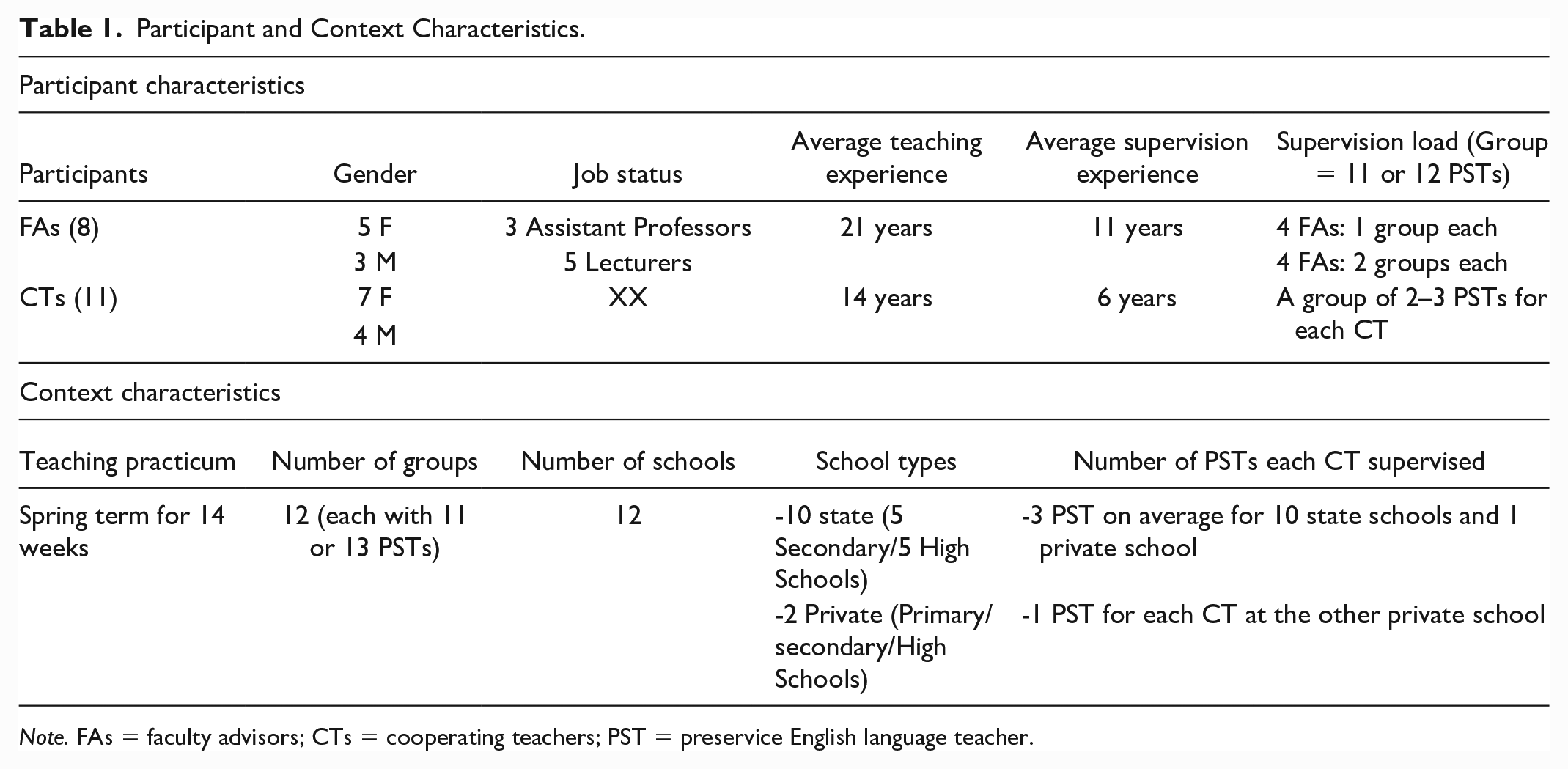
Note. FAs = faculty advisors; CTs = cooperating teachers; PST = preservice English language teacher.
The study included 8 FAs (5 females and 3 males) and 11 CTs (7 females and 4 males). On average, the FAs had 21 years of teaching experience (range = 12–29). Three were assistant professors with PhD degrees in ELT. Five were lecturers two of whom were pursuing their PhD degrees. Three had MA degrees in ELT. All CTs had BA in ELT. In the Turkish context, Directorates of Ministry of National Education in each city organize inservice training programs for CT training. CTs take a 4-day, 24-hr course based on clinical supervision model. Those who successfully complete the program can supervise PSTs in their TP. The FAs were teaching in a more composite structure as they were members of the Faculty of Education which is responsible for teacher education at the undergraduate level. However, the schools where the CTs taught were diverse in terms of the grades and the students, or their facilities.
Initially, 28 CTs were interviewed, but the sample size decreased to 11 (7 females and 4 males) through data saturation, details of which are provided below. Nine had at least 12 years of teaching experience, while two had 3 years. Two CTs (CT1, CT11) were very experienced in PST supervision with 16 years of experience. Only one was new to supervision, and eight had between 3 and 7 years of experience.
There were 12 TP schools covering primary, secondary, and high schools, two of which (School#1/2) were private schools. The PSTs were divided into 12 practicum groups each comprising 11 or 13 PSTs. Each school had one practicum group. At the ELT program, four FAs supervised one group, while the other four supervised two groups. Therefore, their supervision workload was about 25 PSTs. In five TP schools (School# 2/5/9/10/11), there were four CTs, while in the other four, the number changed between five (School#4/6) and six (School#8/12) for each school. Only two schools (School#3/7) had three teachers. In other words, each CT supervised two or three PSTs, except for the private school (School#1) where there were 12 teachers, each supervising one PST.
Ethical guidelines were carefully observed during this study. First, permission was obtained from the Faculty of Education. Then, the school principals were contacted. After granting their permission, we prepared a consent form for FAs and CTs to communicate the purpose, design, and procedures of the study and to invite them to the study. With those who consented, the interviews started toward the end of the TP in the spring term believing that the PSTs had spent adequate time at schools, and the stakeholders gained sufficient insight regarding the PSTs’ preparedness to teach. Depending on their convenience, the first author, Handan, interviewed the CTs from May 21 to 26 at their schools and the FAs from May 28 to June 4 at the Faculty. All interviews, varying between 15 and 45 min, were conducted in Turkish to let the respondents feel more at ease to express their thoughts. They were audio-recorded upon receiving consent and complemented by field notes to ease data analysis.
Data analysis and Saturation
We first transcribed the interviews, entered them into electronic word documents, and read them several times to get a complete sense of them and assure familiarization (Creswell, 2009). For the analysis of research questions 1 and 1a, we used the constant comparison method in which concepts are called basic units of analysis, while categories are explained as “higher in level and more abstract than the concepts they represent” (Corbin & Strauss, 1990, p. 7). We implemented inductive, open, and axial coding and followed the steps below in Corbin and Strauss (1990).
Identification of concepts in the raw data
Open coding to develop concepts from the first round of data reduction
Searching for evidence or disevidence for further recoding within the interview itself and the interviews in the group
Grouping concepts pertaining to the same phenomenon to form categories
Identification of categories to allow possible core categories to emerge
Integrating categories (if necessary)
We “inevitably engage[d] in a progressive focusing to concentrate [our] efforts on emergent themes” (Olson et al., 2016, p. 28). As we did so, we were well informed about the literature which enabled us to catch certain themes. Therefore, our researcher lens helped us “mak[e] relevant connections in the data and creat[e] a ‘thickness’ that enhances the value of qualitative analysis” (Olson et al., 2016, p. 28).
To answer research question 1b, a cross-case analysis whereby the interviews were compared in terms of patterns of similarity and difference was used (Khan & VanWynsberghe, 2008). As for data saturation, as the sample size of CTs’ interviews was too large (N = 28), we knew that the data would naturally become repetitive and superfluous. However, we also knew that qualitative samples need to be large enough to guarantee that most or all perceptions which may be diverse and of value are uncovered (Mason, 2010). Hence, comparing within a single interview and between other interviews, we continually saturated the data to eliminate the irrelevant and extract the relevant data, thus, to make it more manageable without significant loss of information (Creswell, 2009; Namey et al., 2008). Such issues as gender, teaching experience, and participants’ reflectivity were considered to assure the representatives of the sample gained through saturation. The data were kept being coded until no new themes were found (Fusch & Ness, 2015). Saturation was reached with 11 participants. To assure confidentiality, the CTs and FAs were given numbers as FA1, FA2, CT1, CT2, and so on when the findings were reported.
Findings
1 and 1a: The FAs’ and CTs’ Evaluations of the PSTs’ Preparedness to Teach and its Sources
The participants were first asked to make an overall evaluation of the PSTs’ preparedness to teach. Majority of the CTs (n = 9) regarded them as prepared, whereas seven out of eight FAs reported limited positive perceptions. The CTs’ data yielded seven major categories as the sources of the PSTs’ preparedness to teach (Table 2).
CTs’ Perceptions Regarding the Sources of the PSTs’ Preparedness to Teach.
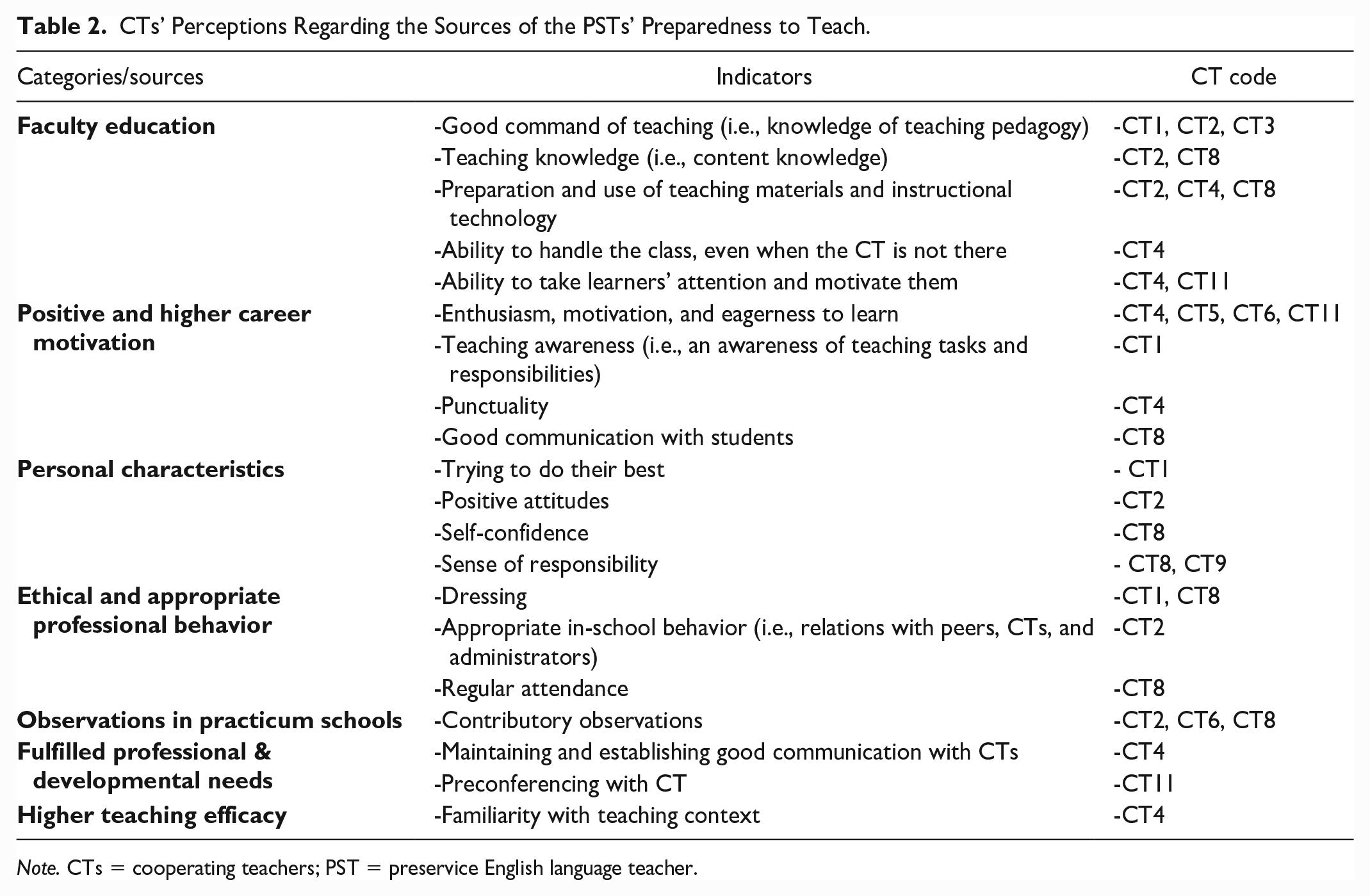
Note. CTs = cooperating teachers; PST = preservice English language teacher.
Faculty education was regarded as the primary source. The analysis of the data revealed that it referred to teaching knowledge and skills including several aspects of PSTs’ education including, knowledge of teaching pedagogy, classroom management and materials preparation, and so on CT4 stated,
In terms of teaching knowledge and skills, the PSTs are very well-equipped. They are almost always prepared and make use of materials such as playing cards. They also know what to do with the student, which makes me think that they must have had chances to practice teaching.
Positive and higher career motivation was another equally emphasized category for which the PSTs’ enthusiasm and eagerness were the indicators as they made them appear on time at their schools. Personal characteristics were also thought to have a role as the CTs believed higher levels of self-confidence and a sense of responsibility helped. Ethical and appropriate professional behaviors were regarded as another source by the CTs (n = 3) manifestations of which were appropriate dressing and behaviors and regular attendance at TP. Observing the CTs was also considered significant by the CTs (n = 3). Fulfilled professional and developmental needs was seen as another source by two CTs. For example, CT4 stated,
The PSTs adjusted to the teaching environment better as they had more dialogue with their CTs. They became more interactive since they found answers to their questions. This was observable as they started appearing earlier to pre-conference with the CT.
Higher teaching efficacy resulting from the PSTs’ prior teaching experience was another source. However, for CT7 and CT10, the PSTs were not prepared to teach due to such issues as KPSS (State Staff Selection Examination) anxiety and the time they spent on getting prepared for it, future career plans, or avoiding (extra) workload. CT1, despite regarding the PSTs as prepared, stated,
They are not prepared as they are anxious about their future; mainly about KPSS which is a burden pressurizing them to pass and be appointed to a (MoNE) school. Therefore, they approach TP like any other course in the curriculum. There are even differences between those who carry KPSS anxiety and who do not.
Contrary to the CTs, the FAs reported limited positive perceptions and the data analysis revealed fewer categories. Majority (n = 7) regarded the PSTs as somewhat prepared (Table 3).
FAs’ Perceptions Regarding the Sources of the PSTs’ Preparedness to Teach.
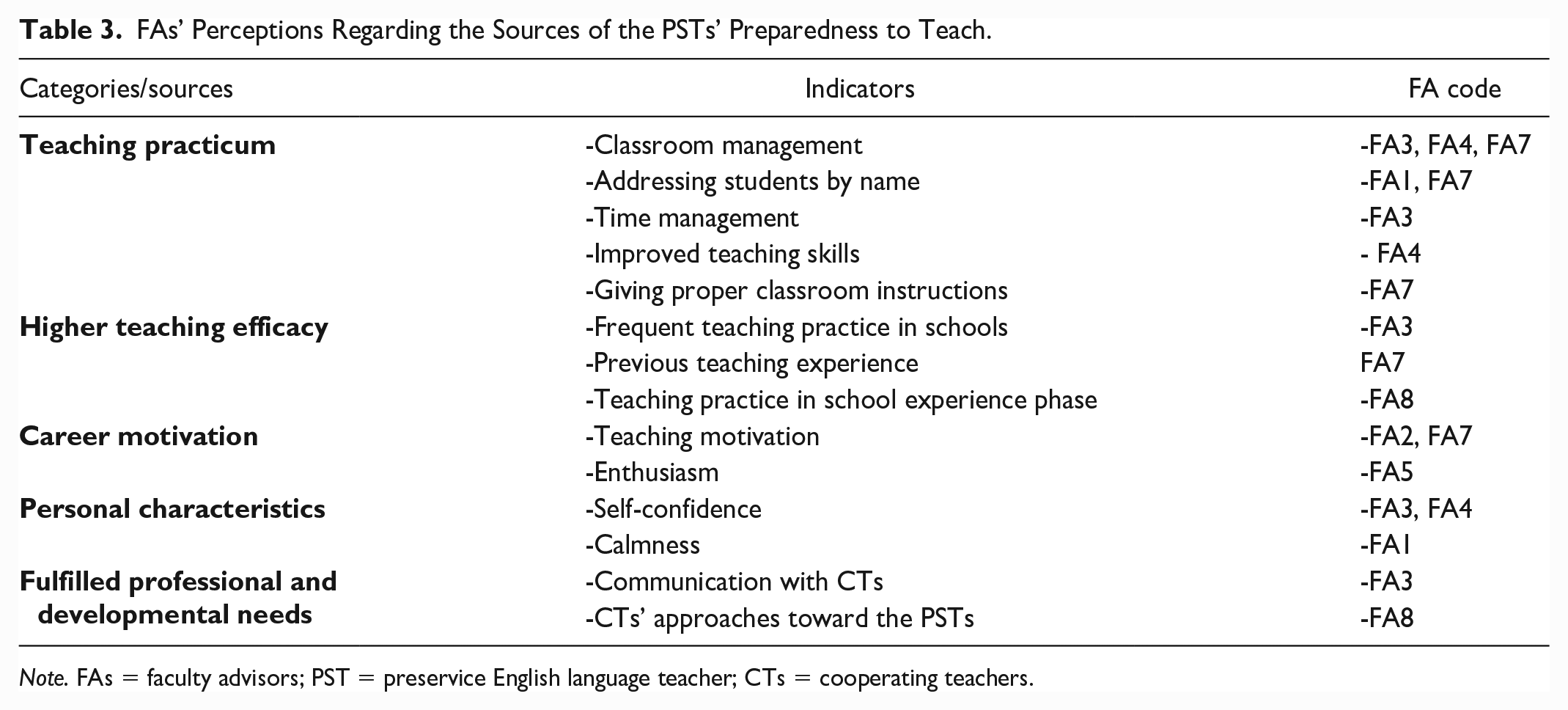
Note. FAs = faculty advisors; PST = preservice English language teacher; CTs = cooperating teachers.
TP was emphasized by several FAs (n = 4). They reported that the PSTs became better in time and classroom management, giving instructions, and addressing students by name as they practiced more and frequently. Similarly, higher teaching efficacy was thought (n = 3) to develop through frequent teaching practice over TP, voluntary teaching, and previous, one-on-one private tutorials. Moreover, career motivation was another source as the PSTs preserved their teaching motivation and enthusiasm. Personal characteristics, that is, self-confidence, were thought to facilitate their preparedness to teach. Finally, fulfilled professional & developmental needs were considered by two FAs because of quality-supervision through communication and dialogue. Despite these positive perceptions, the FAs mostly held negative perceptions (Table 4).
FAs’ Perceptions Regarding the Sources of the PSTs’ Unpreparedness to Teach.
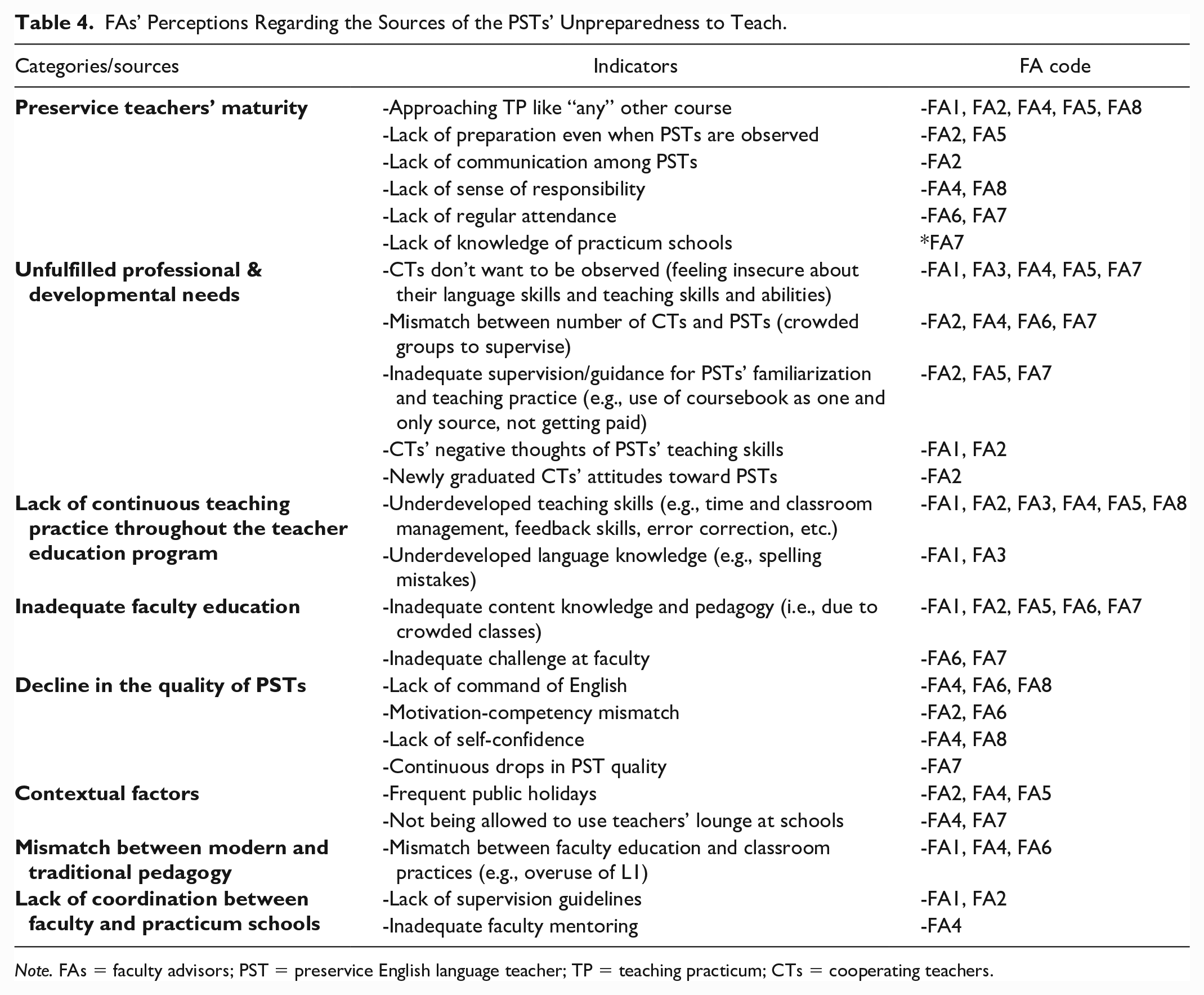
Note. FAs = faculty advisors; PST = preservice English language teacher; TP = teaching practicum; CTs = cooperating teachers.
For most (n = 7), the PSTs’ maturity which was insufficient to take the responsibility of TP tasks was a source. Lack of emotional attachment to teaching and lack of regular attendance were among the indicators of it. FA2 stated,
Even when I was there to observe, the PST had not prepared the observation checklist for me and the CT. He did not even provide me with a copy of his lesson plan. There are even some other PSTs who think that it will be fine if they only follow the coursebook to teach, and they will teach as far as they know and can. However, this is not what we expect them to do.
Similarly, unfulfilled professional & developmental needs which were mainly attributed to the CTs’ perceptions of the PSTs’ low teaching skills, their poor engagement with PSTs’ development, and poor mentoring skills were thought to have a role. Due to their negative perceptions regarding the PSTs’ teaching skills, the CTs were thought not to create opportunities for the PSTs to teach and did not want to be observed as they felt insecure about their language and teaching knowledge and skills. FA1 even claimed that “CTs are afraid of PSTs.” The mismatch between the number of PSTs per CT was also seen as a barrier. When the current study was carried out, PSTs would be assigned to practicum schools in groups of 10 or 12. However, mostly there were three or four CTs at schools, sometimes fewer. This created an extra workload for the CTs who had to continue their teaching responsibilities. In such cases, the CTs avoided providing adequate and quality supervision which caused the PSTs not to fully benefit from CTs’ knowledge and experiences. To highlight its consequence, FA4 stated “There are some PSTs who haven’t even been observed yet, although the TP process is about to finish.”
Lack of continuous teaching practice throughout the teacher education program which resulted in problems with managing classroom and time, giving feedback, and correcting errors was considered by some FAs (n = 6) as another source:
There are great deficiencies. . . . problems with classroom management and giving feedback, correcting mistakes, use of reinforcement, board work and use, word choice, and even grammar and spelling mistakes. . .. There are also problems with material selection and adaptation to the students’ level. The materials are generally obtained from the internet without adequate consideration (FA1).
Inadequate faculty education was also suggested by FAs (n = 5) due to crowded classes causing ineffective assessment and evaluation, inadequate language skills education at the language preparatory year resulting in underdeveloped language skills, and the academic departmental staff’s low expectations, particularly in microteachings:
. . . the groups are very crowded, therefore, in courses such as teaching language skills, even if they underperform in microteachings, the faculty teachers tend to be too affectionate towards the PSTs which encourages them to think “I will pass anyway.” (FA6)
Another indicator for this source emerged to be lack of challenge at their faculty education. “There is no ‘fail mechanism’ at faculty, thus the PSTs underestimate faculty education” (FA7).
Decline in the quality of PSTs due to such issues as lack of self-confidence, competency and motivation mismatch, and lack of good command of English was another source. Some (FA5, FA7) thought that the quality of PSTs decreases each year, and PSTs do not even try to improve themselves. Thus, they suggested that program entry requirements need to be revised.
Contextual factors due to frequent public holidays decreasing the time PSTs spend at practicum schools were another source. Besides, the PSTs were not offered to use the teachers’ lounge or were allocated to a different room. This was regarded as a negative contextual issue. These were thought to debilitate PSTs’ adequate preparation, discouraging them to develop a sense of belonging to the school system.
The mismatch between modern language teaching pedagogy taught at the faculty and the traditional pedagogy still employed at schools was another source. In their visits to the practicum schools, the FAs saw that most classroom practices included traditional teaching methods and techniques. Overuse of L1 was one of them which encouraged the PSTs to do the same as they took the CTs as role models (FA1, FA4).
Lack of collaboration between practicum schools and the faculty was the final category. FA1 stated that all teacher education programs used one single guideline and added that educating language teachers is different from educating primary school teachers. Therefore, he prepared his own supervision pack. Consequently, no matter how both groups regarded the PSTs, the analysis yielded various sources explaining their preparedness/unpreparedness to teach.
1b: Diverging and Converging Evaluations of the CTs and FAs Regarding the PSTs’ Preparedness to Teach
In this section, we bring both parties’ evaluations together to see if they converge or diverge. To uncover if the FAs’ and CTs’ evaluations matched, we conducted a cross-case analysis (Figure 1).
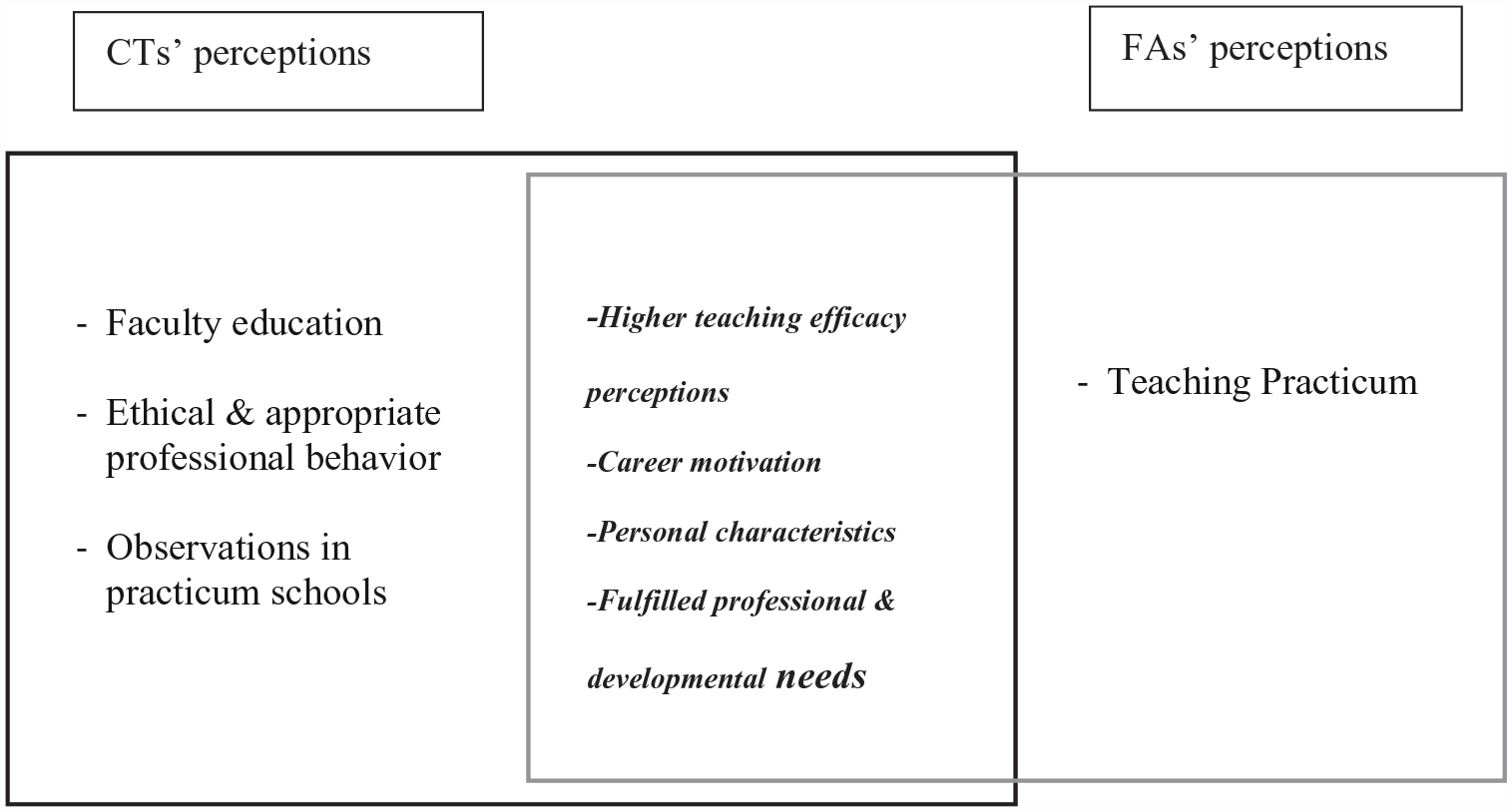
Cross-Case Analysis Regarding the Sources of the PSTs’ Preparedness to Teach.
The CTs regarded the PSTs as prepared to teach and thought such sources ranging from faculty education to observations in practicum schools facilitated their preparedness, while the FAs had limited positive perceptions. Due to a perception gap between them, the sources that they both thought facilitated the PSTs’ preparedness to teach were limited to higher teaching efficacy, career motivation, fulfilled professional & developmental needs, and personal characteristics. Besides, the FAs differed from the CTs as they emphasized TP supporting improvement in the PSTs’ teaching knowledge and skills despite being limited in time and frequency. Finally, we compared the negative evaluations of both stakeholders (Figure 2).
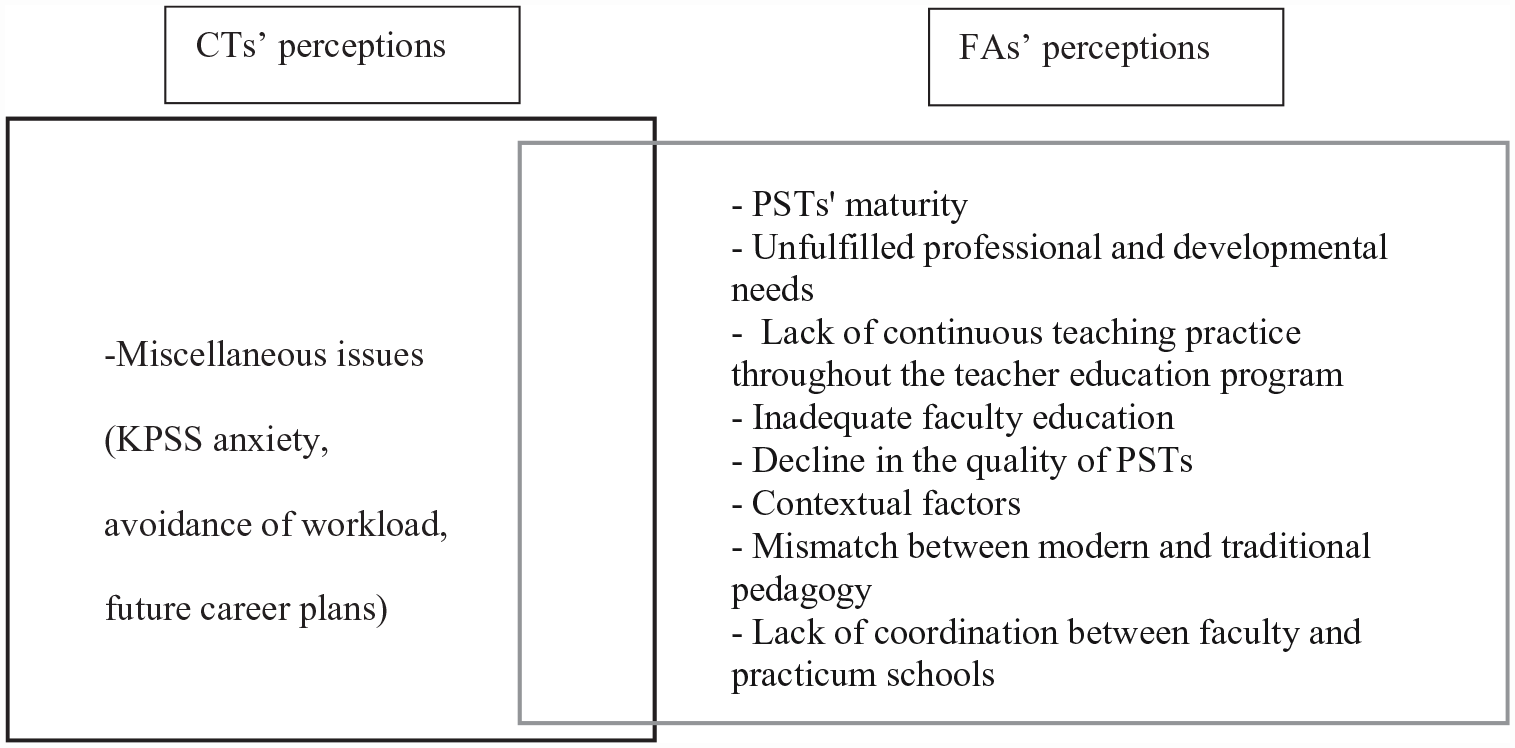
Cross-Case Analysis Regarding the Sources of the PSTs’ Unpreparedness to Teach.
An obvious gap is seen between their perceptions regarding the PSTs’ unpreparedness to teach since only CT10 and CT7 mentioned some miscellaneous issues, while all FAs were critical of the PSTs’ preparedness to teach and expressed negative perceptions resulting from various sources such as PSTs’ maturity, inadequate faculty education, or lack of coordination between faculty and practicum schools. Despite their negative perceptions, some FAs evaluated the deficiencies and lacks as a natural part of PSTs’ professional development and stated they would disappear in time as PSTs got more experienced, knowledgeable, and skillful (FA1, FA5).
Discussion
We investigated the FAs’ and CTs’ evaluations regarding the PSTs’ preparedness to teach and its sources during TP and explored whether and in what ways their evaluations converged or diverged. The most important finding of the study is the gap between the FAs’ and CTs’ evaluations as while most FAs regarded the PSTs as unprepared to teach, only a few CTs evaluated them as somewhat less prepared to teach. Some other studies in the Turkish context also show that CTs and FAs differ in their approaches to PSTs’ evaluation. Aydın (2016) found that CTs felt insecure about their abilities to detect PSTs’ weaknesses and to provide feedback. Therefore, they provided only positive feedback and failed to justify their grading of PSTs, preferring numerical evaluation rather than open-ended comments and explanations. Tüfekçi Can and Baştürk (2018) found similar results as PSTs evaluating their FAs and CTs in relation to their TP roles and responsibilities reported that CTs were ineffective to provide them with adequate feedback. In Orsdemir and Yıldırım (2020), PSTs reported feedback as the least observed mentor behavior and indicated feedback skills as the most important area CTs need to improve. These indicate a prevalent problem in the Turkish teacher education context related to CTs’ skills for evaluating PSTs’ teaching competencies which are relatable to preparedness to teach. This points out the need for continuous CT training and the importance of support from the university, which is not assigned any roles by the Turkish MoNE in CT training. The existence of such a partnership is known to make a significant difference in CTs’ feedback skills (Becker et al., 2019).
Besides, the CTs did not perceive the PSTs as unprepared to teach but rather referred to such sources as future career plans or KPSS anxiety as factors debilitating their practicum performance. The FAs, on the other hand, were more critical and considered faculty education and specifically the preparatory English language education as sources for the PSTs’ unpreparedness. Few studies on the effectiveness of preparatory English language programs in Türkiye revealed that they do not respond to students’ needs for productive skills development (Sert et al., 2013), and are not effective in preparing students for their faculty courses (Özkanal & Hakan, 2010). In a study conducted by the British Council (2015) with 24 Turkish universities’ preparatory language programs, instructors reported a need to improve their English language proficiency, which is fundamental for the effectiveness of these programs. These support the FAs’ low perceptions regarding the preparatory English language program in their own context and the need to increase their effectiveness. Without a doubt, language teachers need to have a strong knowledge of the language and well-developed language skills since they have a direct impact on their teaching efficacy, which is regarded as one of the most essential constructs of preparedness to teach (Alsaleh, 2019; Alsaleh & Anthony, 2018).
The FAs also questioned the effectiveness of the faculty courses tutored by less experienced faculty members, which refers to a context-specific factor influencing the quality of teacher education in Türkiye. Due to the massification of higher education in the country, several universities with ELT programs have opened in the last decades, some experiencing faculty shortages and recruiting inexperienced teachers who have excessive workloads with very little time for planning, preparation, and professional development. Policy-level efforts are needed to overcome this problem. Yet, this study, being conducted in a similar context provides evidence for the need for quality faculty as a key to quality teacher education and to PSTs’ preparedness to teach as perceived by the FAs.
One major finding, which contributes to the existing literature, is the difference between the CTs’ and FAs’ opinions concerning the context in practicum schools and the quality of mentoring PSTs received there. The CTs regarded observations in practicum schools as important for PSTs’ preparedness to teach. Previous research supports that seeing CTs and peers in action in real classrooms encourages learning from others’ experiences, and is valuable for PST development (Clark, 2009). Yet the FAs thought that observation alone is inadequate if CTs fail to fulfill their mentoring and supervision roles. Hence, they identified this as a source of the PSTs’ unpreparedness to teach. The literature is replete with studies revealing CTs’ underdeveloped mentoring skills including communication, providing feedback and guidance as reported by PSTs (Aydın & Ok, 2020; Celen & Akcan, 2017; Martinez Agudo, 2016; Öztürk & Aydın, 2019; Yaylı, 2018). Moreover, in support of the FAs’ assertion, Sethusha (2014) reports untrained CTs as a challenge for the fulfillment of mentoring roles, and Smagorinsky et al. (2004) identify CTs’ failure to provide room for experimentation and their preference for a “mimetic approach” as a tension for PST’s identity building (p. 8). Conversely, Goldhaber et al. (2022) report that when placed to qualified and experienced mentors, PSTs display higher growth during their field experience. All in all, the discrepancy between the perceptions of the two parties underlines the significance of adequate and quality mentoring and qualified mentors for the education of well-prepared PSTs.
A perception gap was found between the CTs and FAs regarding the PSTs’ ethical and appropriate professional behaviors, which is another unique finding of the study. While the CTs described the PSTs as being interested, motivated, open to learning, and displaying appropriate professional behavior, the FAs found them not mature enough to take the responsibility to teach since they approached TP like any other faculty course. This corroborates the result of Tsai and Ku (2021) which showed that FAs rated PSTs’ professional ethics lower compared to CTs. The researchers explained it as a result of CTs’ having more time to observe and communicate with PSTs during their TP and FAs’ limited opportunities to do so but their higher expectations from PSTs. The difference between perceptions of both parties in this study can be related to contextual factors such as the quality of teacher education both at universities and practicum schools, the quality of FAs and CTs as competent, expert, visionary role models, and the personalities of PSTs and how they develop in teacher education over time. To uncover the impact of these factors on the development of PSTs’ ethical and professional behaviors, several issues need to be addressed. First, university admission requirements for teacher candidates in Türkiye which is solely based on the scores students obtain at a nation-wide, standardized, multiple-choice exam need to be revised to become more comprehensive of other criteria such as English proficiency at the entrance or statement of purpose to enter the program. Second, without a doubt, a system which only invests in building professional knowledge and skills and fails to encourage and nurture PSTs’ psychological and personal development will not educate well-prepared PSTs. Therefore, room for PSTs’ affective and personal development throughout their education should be made.
Despite the gap between their evaluations, the CTs and FAs agreed on several factors, that is, career motivation, CTs’ mentoring skills, teaching efficacy, and personality, having a pivotal effect on preparedness to teach. Research revealed that both FAs and CTs regarded PSTs’ career motivation as a strength (Gürbüz, 2006) and CTs’ effective supervision as a factor on PSTs’ decisions to stay in the profession (Altan & Sağlamel, 2015; Paulson, 2014; Rots et al., 2007; Smith & Ingersoll, 2004). When supervised well by both FAs and CTs during TP, PSTs develop and strengthen teaching efficacy which is linked to teaching competencies (Tschannen-Moran & Woolfolk-Hoy, 2001, 2007). Finally, both parties agreed on the role of personality in the PSTs’ preparedness to teach as they regarded being self-confident and responsible as important factors.
Conclusion
Certain aspects of this study make it different from others and underscore key conclusions to draw implications from. First, the results show that preparedness and unpreparedness to teach are obviously hard to define since various underlying sources interact and intersect. Therefore, this study emphasizes the multifaceted nature of preparedness to teach and the complexity of educating well-prepared teachers as suggested by professional readiness (Artemenko & Artemenko, 2020; Slusareva et al., 2019). Macro policies shaping teacher education, high-quality programs, well-trained FAs and CTs, and entrance requirements for teacher education seem to be in interplay in determining PSTs’ quality and their preparedness to teach.
In addition, this study is one of the first attempts to bring FAs’ and CTs’ evaluations together regarding PSTs’ preparedness to teach during their TP. Studies examine various issues such as the effectiveness of TP (Allen et al., 2013), its evaluation from the perspectives of PSTs, FAs, and graduates (Celen & Akcan, 2017), mentoring during TP (Aydın, 2016; Orsdemir & Yıldırım, 2020), or challenges that PSTs face in their TP (Gan, 2013; Mudra, 2018). Research directly examining PSTs’ preparedness to teach from stakeholders’ lens is very rare, although preparedness to teach is co-constructed by multiple actors in teacher education. School-based teacher education is already a globally accepted model based on faculty-school cooperation. This study, by bringing FAs’ and CTs’ perspectives together, sheds light on their espoused theories regarding PSTs’ preparedness to teach and its sources. Considering the perception gap revealed between them, as one of the biggest findings and contributions of this study to the literature, new models of teacher education can be offered on the grounds that not only all stakeholders evaluate PSTs’ preparedness to teach and how they perform over their TP, but also explore their understanding of high-quality PST education and standards of it. Hence, the results strongly indicate the need for more dialogue between the stakeholders to uncover, build, and strengthen such knowledge and practices.
However, as the FAs emphasized, to become informed about faculty-based teacher education, CTs need to engage in project partnerships which could also encourage FAs to become better aware of the realities and challenges of schools and PSTs’ school-based education. Mentor training programs, a neglected area in the Turkish teacher education context, could be a venue for both parties to do so. Thus, the perception gap can be minimized as both become more aware of their shared roles and responsibilities in teacher education and develop stronger empathy and understanding toward each other.
Since this study was conducted when the PSTs were about to graduate, the findings may also be regarded as an overall evaluation of teacher education from different angles such as the faculty program, preparatory English language education, quality mentoring and supervision provided by FAs and CTs, the role of feedback in TP. Therefore, the findings highlight the need to evaluate the effectiveness of teacher education programs to respond to PSTs’ needs and help them become prepared to teach.
Another significant conclusion is that PSTs’ personal characteristics as well as professional ones need to be cultivated during their education. Goal-orientedness, conscientiousness, responsibility for self and others with the motivation to care for and meet the needs of students to enable them to succeed (Noddings, 2012), communication and social skills, professional motivation and commitment are a few of those that a well-grounded teacher education program should nurture.
Finally, as preparedness to teach, particularly from the lens of significant others, is a recent area of interest, the discussions, conclusions, and implications are limited to what has been revealed so far. Therefore, research with thicker and richer data of various forms such as stakeholders’ assessments and evaluations of PSTs’ teaching performance is needed both within the English language teacher education in Türkiye and abroad. Therefore, besides soliciting perceptional and evaluative data, observational data relying on rubric assessment could help strengthen stakeholders’ evaluations.
Footnotes
Appendix
Declaration of Conflicting Interests
The author(s) declared no potential conflicts of interest with respect to the research, authorship, and/or publication of this article.
Funding
The author(s) received no financial support for the research, authorship, and/or publication of this article.
