




Abstract
Understanding the experiences of autistic high school students, including participation in social and vocational activities, has important implications for high school programming and links to postsecondary outcomes. The primary aims of this study are to describe these experiences and examine relationships with two aspects of educational programming: diploma status (standard and modified) and autism program quality. Researchers collected data from 547 autistic high schoolers across three U.S. states at pretest as part of a large-scale intervention study. Results demonstrate a wide range in frequency of participation in social and vocational experiences. Diploma status was related to several types of participation while, in contrast, overall program quality was linked to only one outcome. Implications for high school planning and educational placement decisions are discussed.
Many autistic (see Note 1) individuals experience markedly less involvement in activities during adulthood compared with their peers, with differences across a range of domains including postsecondary education, employment, social participation, and independent living (Anderson et al., 2014; Gotham et al., 2015; Shattuck et al., 2012). Although we know that some high school experiences are well linked to more positive adult outcomes in those domains, such as student participation in and quality of transition planning, programming or curriculum, and educational placement (Chiang et al., 2012; Migliore et al., 2012; Wehman et al., 2014), many questions remain about which aspects of high school activities and programming play a clear role in positively impacting life in youth and adulthood. For example, some autistic high school students follow the standard course of study resulting in a standard diploma (i.e., generally for students who meet all graduation requirements), while others follow alternative standards and receive a modified diploma or certificate (i.e., generally for students who do not meet graduation requirements even with instructional accommodations and modifications). As an additional example, some students attend high schools with exemplary program quality, while other students are at schools with low-rated program quality. There is little information about how these educational paths (standard vs. modified diploma) or how educational quality relate to the activities of autistic students during the high school years, and thus the potential impact on adult outcomes.
Participating in vocational and social activities is of increased importance in high school. Teens are often beginning jobs and/or career exploration (e.g., identifying skills and interests, engaging in volunteer activities or internships, and getting their first job), and social activities (e.g., peer interactions, hanging out with friends, and organized activities such as clubs or sports) frequently become more nuanced and central for teens. Participation in these activities is important for gaining experiences and developing valuable skills during the transition period from adolescence into adulthood. While there are a number of predictors of postschool success for students with disabilities, including school-related variables (e.g., diploma status and inclusion in general education) and student and parent characteristics (e.g., independent living, self-determination, social skills, and parental expectations) for individuals with disabilities broadly (Mazzotti et al., 2021), engagement in high school-based vocational and social activities also play an important role (e.g., transition program, career and technical education, paid employment, and goal setting; Mazzotti et al., 2021; Rowe et al., 2021). However, initiating and navigating social and vocational activities may be especially complicated for autistic high school students given that some of these predictors overlap with challenges many youths on the spectrum have (e.g., adaptive behavior and social skills) and high school settings can be complicated and nuanced.
Vocational and Social Experiences and Outcomes for Autistic High School Students
Research has shown that autistic youth have different high school experiences than their peers with and without disabilities, and that there are also differences in experiences among autistic youth based on student characteristics. In the National Longitudinal Transition Study (NLTS-2), which followed students receiving special education services who were 13 to 16 years of age in December 2000, autistic students had fewer experiences and hours in community-based employment compared with peers without a disability and peers with intellectual disability during high school (Roux et al., 2020). Within the population of autistic students, students with lower parent-reported functional skills were more likely to participate in school-based employment, but less likely to participate in community-based employment compared with autistic students with higher functional skills (Roux et al., 2020). Smaller studies suggest that transition services and activities are quite variable across autistic youth and are perceived as limited, disconnected from student goals, and uncoordinated (Alverson et al., 2019; Hedges et al., 2014; Kirby et al., 2020). Collectively, these studies point to a need for deeper understanding of the vocational experiences of autistic high school students and a gap in understanding how high school programming and quality may relate to those experiences.
There is a small but growing body of research on the social experiences of autistic high school students, and available research suggests that social participation and peer relationships are limited. One study found that only 14% of autistic adolescents (17–22 years of age at enrollment) engaged at least weekly in unstructured social activities with peers from school or work at time points during and after high school (Lounds Taylor et al., 2017). A survey among parents in Israel found lower levels of participation with autistic adolescents in peer get-togethers and school-sponsored activities compared with neurotypical peers (Lamash et al., 2020). Importantly, qualitative research has highlighted a desire for social participation and friendships among autistic adolescents but also some challenges and barriers (Black et al., 2024; Tesfaye et al., 2023). Emerging themes such as “seeking social connections on their own terms” (Tesfaye et al., 2023) and “some people are lonely and need friends” suggest that there may be a gap between their current social participation and their desires.
Educational Factors Impacting Social and Vocational Experiences and Outcomes
The opportunities for social and vocational activities are potentially susceptible to differences based on the educational context. Considering the range of pathways to a diploma or certificate for autistic youth, there are practical differences in exposures or opportunities with both social and vocational activities and experiences. Autistic students receiving a standard diploma often have more time with neurotypical peers and stringent course requirements (i.e., fewer opportunities for elective courses), whereas autistic students receiving a modified diploma typically have less time with neurotypical peers, but more flexibility and potential individualization in course work and content. Notably, this can differ greatly across states and districts based on policies and practices, including some states that do not offer modified diploma options. Receiving a high school diploma and inclusion in general education are both known predictors of postschool outcomes such as employment and postsecondary education among individuals with disabilities broadly (Mazzotti et al., 2021). However, these linkages are less studied within samples of autistic youth. One now-dated study examined the relationships between the school environment and social participation and found that inclusion in school settings did not significantly predict peer relationships but did significantly predict participation in social activities (Orsmond et al., 2004). Research using contemporary cohorts is needed to examine the impact of diploma pathway on autistic student’s social and vocational participation.
The quality of the educational programming may likewise directly impact the level of participation in social and vocational activities of autistic youth (Findley et al., 2022). Among youth with disabilities broadly, the presence of elements that are part of quality transition programs such as career and technical education classes, instruction and participation in transition planning, and employment opportunities within high school are predictive of later outcomes (Mazzotti et al., 2021). Qualitative studies have highlighted concerns related to educational programming such as limited training and resources for school staff supporting transitions, limited transition planning, and few opportunities for work-based learning (Awsumb et al., 2022; Schutz & Travers, 2023). However, questions remain regarding the degree to which program quality may relate to participation outcomes for autistic youth during high school, particularly across the range of the autism spectrum.
Research Questions
To improve school supports and services for autistic youth, it is critical to better understand social and vocational experiences of autistic individuals during high school and, in particular, understand how educational programming and quality may impact those experiences. This study utilizes pretest data from a large, multisite study of geographically and racially and ethnically diverse autistic high school students to answer the following research questions:
What is the frequency of participation in social and vocational activities for autistic high school students broadly and for students receiving standard and modified diplomas?
Do autism program quality and diploma status predict concurrent participation in social and vocational activities of autistic high school students? Furthermore, do autism program quality and diploma status interact in predicting these outcomes in high school?
Method
The Center on Secondary Education for Students with Autism (CSESA) project was a large multisite randomized control trial study of a comprehensive intervention program for autistic high school students (Hume et al., 2022). The CSESA study enrolled 547 autistic students in 60 different high schools in three different states (CA = 199, NC = 195, and WI = 153) in 2014 and 2015. Schools were located in town/rural settings (n = 9), suburbs (n = 27), and cities (n = 24; see Hume et al., 2022 for additional school characteristics). The percentage of students eligible for free and reduced lunch ranged from 4.9% to 87.2% with a mean of 39.5% (standard deviation [SD] = 20.9%). The parents consented and provided permission for their children to be in the study, and the students assented to be in the study. The study was conducted in accordance with the University of North Carolina’s Institutional Review Board. The participants, procedures, measures, and data analysis relevant to this study are described in detail below.
Participants
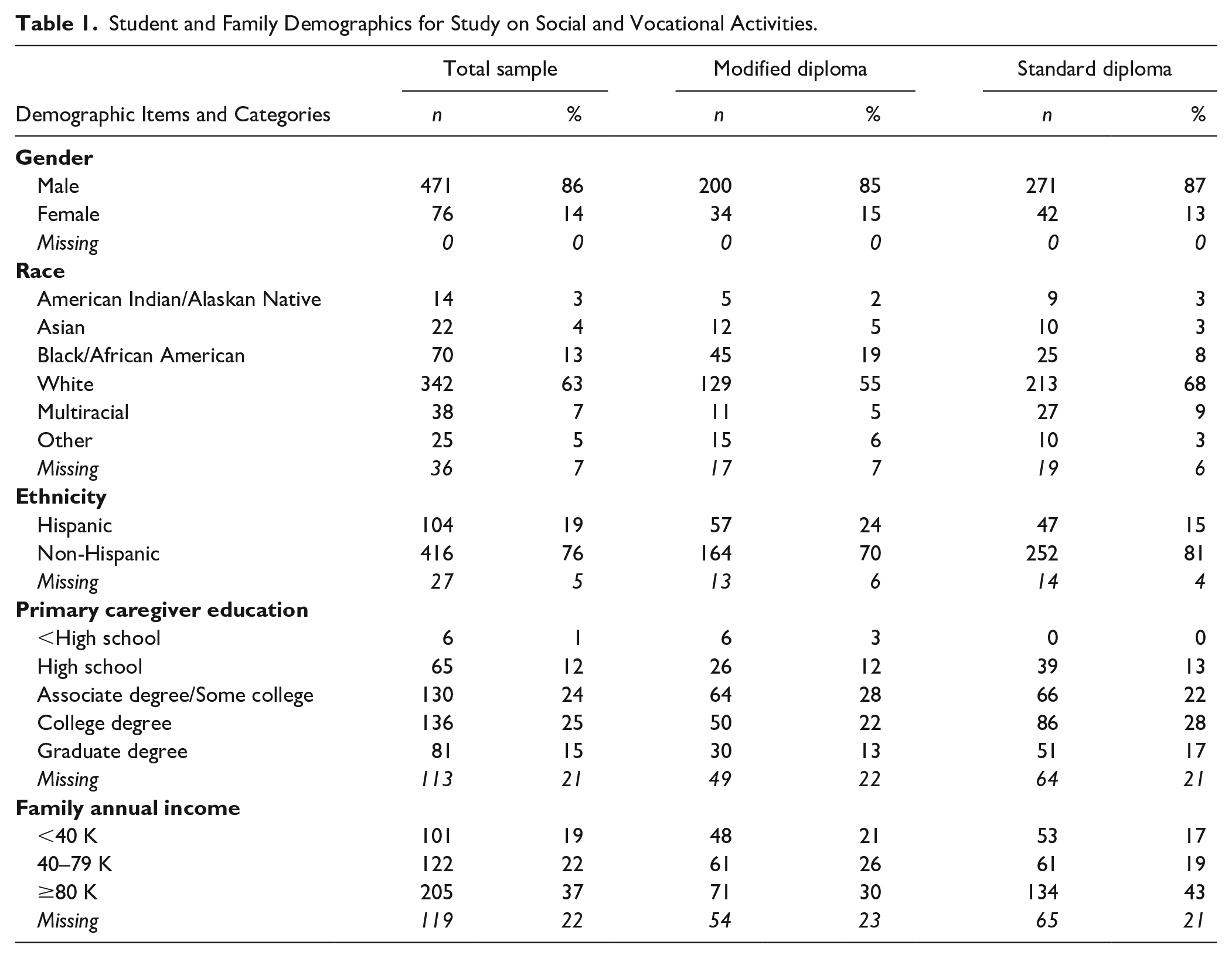
The school team sent recruitment and consent packets home to students with a primary or secondary educational label of autism at each of the 60 high schools in the study. This study includes data from all 547 students. The sample is 86% male and 14% female, which is slightly more males than would be expected based on prevalence estimates for autism. Approximately 45% of the students are from racially or ethnically underrepresented groups (non-White and/or Hispanic/Latino). For educational programming, 239 (43.7%) of the students were on a path to receive a modified diploma and 308 (56.3%) of the students were on a path to receive a standard diploma. Ages ranged from 13 to 21 years, with a mean age of 16.2 (see Table 1 for detailed information about student and family demographics and student characteristics).
Student and Family Demographics for Study on Social and Vocational Activities.
Procedures
All data for this study were collected prior to implementation of the intervention programming for the CSESA project. The research team collected student data from three sources—the students themselves, parents (or caregivers), and school staff. Trained research staff administered the direct assessments with students in a separate room at the school. Parents and a school staff member familiar with the student (referred to as teacher) completed assessments and questionnaires about students. Trained research staff also collected data on program quality.
Measures
The measures for this study included several measures related to student demographics and characteristics, two primary predictor variables (diploma type and autism program quality), and the primary outcome measures (in-school social interactions, out-of-school social interactions, and vocational activities).
Descriptive Variables
Student and Family Demographics
Parents completed a child–family demographic form that included information about age, sex, race/ethnicity, diagnostic history, parent education, and family income. The research team supplemented missing sex and race/ethnicity data with data collected from the school as needed, but prioritized parent report of these demographics.
Student and School Characteristics
The research team assessed nonverbal IQ, adaptive behavior, academic achievement, and autism symptomatology of students in the study. Research staff administered four subscales from the Leiter International Performance Scale–Third Edition (Leiter-3, Roid et al., 2013) with students to obtain a brief nonverbal IQ. The Leiter-3 nonverbal IQ was used to describe the sample and as a covariate in supplemental analyses. A teacher completed the Vineland Adaptive Behavior Scales–Second Edition, Teacher Report (Sparrow et al., 2005), and a teacher report tool designed to measure adaptive behavior skills from birth through adulthood across three domains (communication, daily living, and socialization). It provides an adaptive behavior composite (M = 100, SD = 15). Parents completed the Social Communication Questionnaire–Lifetime (SCQ, Berument et al., 1999) to measure lifetime autism symptomatology. It is a parent-reported tool with 40 yes/no items and generates a numerical score (0–39) with higher numbers indicating higher severity of symptoms. The SCQ-Lifetime reports strong internal validity (.70–.91 for subscales; Wei et al., 2015) and convergent validity with the gold standard Autism Diagnostic Interview–Revised (r = 0.73, Corsello et al., 2007). Descriptive statistics for nonverbal IQ, adaptive behavior, and autism symptomatology are presented in Table 2.
Descriptive Statistics for Standardized Measures of Student Functioning and Performance.
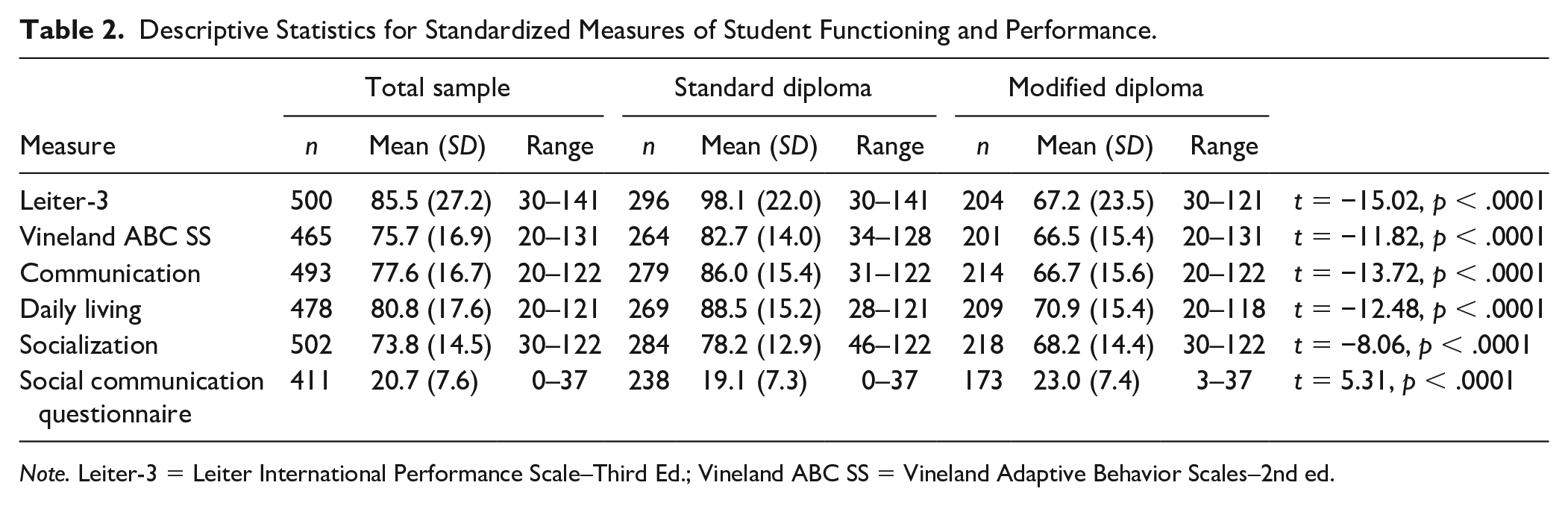
Note. Leiter-3 = Leiter International Performance Scale–Third Ed.; Vineland ABC SS = Vineland Adaptive Behavior Scales–2nd ed.
The research team gathered information about school characteristics through the National Center on Education Statistics (NCES) database. The percentage of students receiving free and reduced lunch was used as a covariate in supplemental analyses to account for differences in and autism symptomatology are presented.
Predictor Variables
Diploma type, a student-level variable, was collected through student information forms completed by school staff. It is a dichotomous variable indicating whether the student was receiving a standard diploma (e.g., following standard course of study) or a modified diploma (e.g., following alternate standards and engaging in an alternate/functional curriculum). Diploma type was indicative of differences in student characteristics (see Table 2).
Autism program quality, a school-level variable, was collected using the Autism Program Environment Rating Scale–Middle/High School Version (APERS; Odom et al., 2018). The APERS is a 66-item rating scale that uses a combination of observations, interviews, and record reviews and to evaluate quality across 11 different sub-domains critical to educational program quality for autistic children and youth including several domains (e.g., learning environment, social competence, and personal independence) and specific items (e.g., use of peer networks, opportunities for inclusion, direct supports for building social skills and peer relationships, opportunities for career exploration and word-based learning, and transition planning) that may be particularly relevant to social and vocational participation in the secondary setting. Each item is rated on a 5-point scale, and the APERS score reflects the mean of all items. The APERS has been shown to be a reliable and valid measure, with high internal consistency and construct validity, sufficient interrater reliability (Odom et al., 2018), and sensitivity to change (Hume at al., 2022). For this study, the APERS was collected by trained observers at pretest (see Kraemer et al. (2020) for details about the APERS use and results as part of this study).
Outcome Variables
The primary outcome variables included data drawn from the CSESA proximal measure. The research team created a parent and teacher version of the proximal measure using primarily multiple-choice questions and rating items to collect information across skill areas targeted by the CSESA intervention, including participation in social and vocational activities. The proximal measure focused on short, recent time periods (previous 2 weeks to 1 month) as it was intended to be sensitive to change and repeated on five occasions throughout the larger CSESA study. Most items were drawn or adapted from previously conducted studies which provided support for the validity of the items (e.g., Carter et al., 2016; SRI International, 2000 [NLTS-2]). There were two CSESA proximal measures—one completed by a parent, and one completed by a school staff member identified as knowing the student well (often a special education teacher and/or case manager; referred to as “teacher” throughout). Parents and teachers were prompted to ask their child/student and other adults (e.g., other caregivers and other teachers) when completing the proximal measure to increase the accuracy of the information.
This study includes a subset of items from the proximal measure that address in-school peer interactions (collected from teachers), in-person and technology-based peer interactions (e.g., calls, texts, and Internet interactions) across settings (collected from parents), and participation in vocational activities (collected from parents and teachers, e.g., school-based jobs and paid employment; see Table 3 for a summary of the items/scores in the proximal measure).
CSESA Proximal Measure Items for Participation in Social and Vocational Activities.
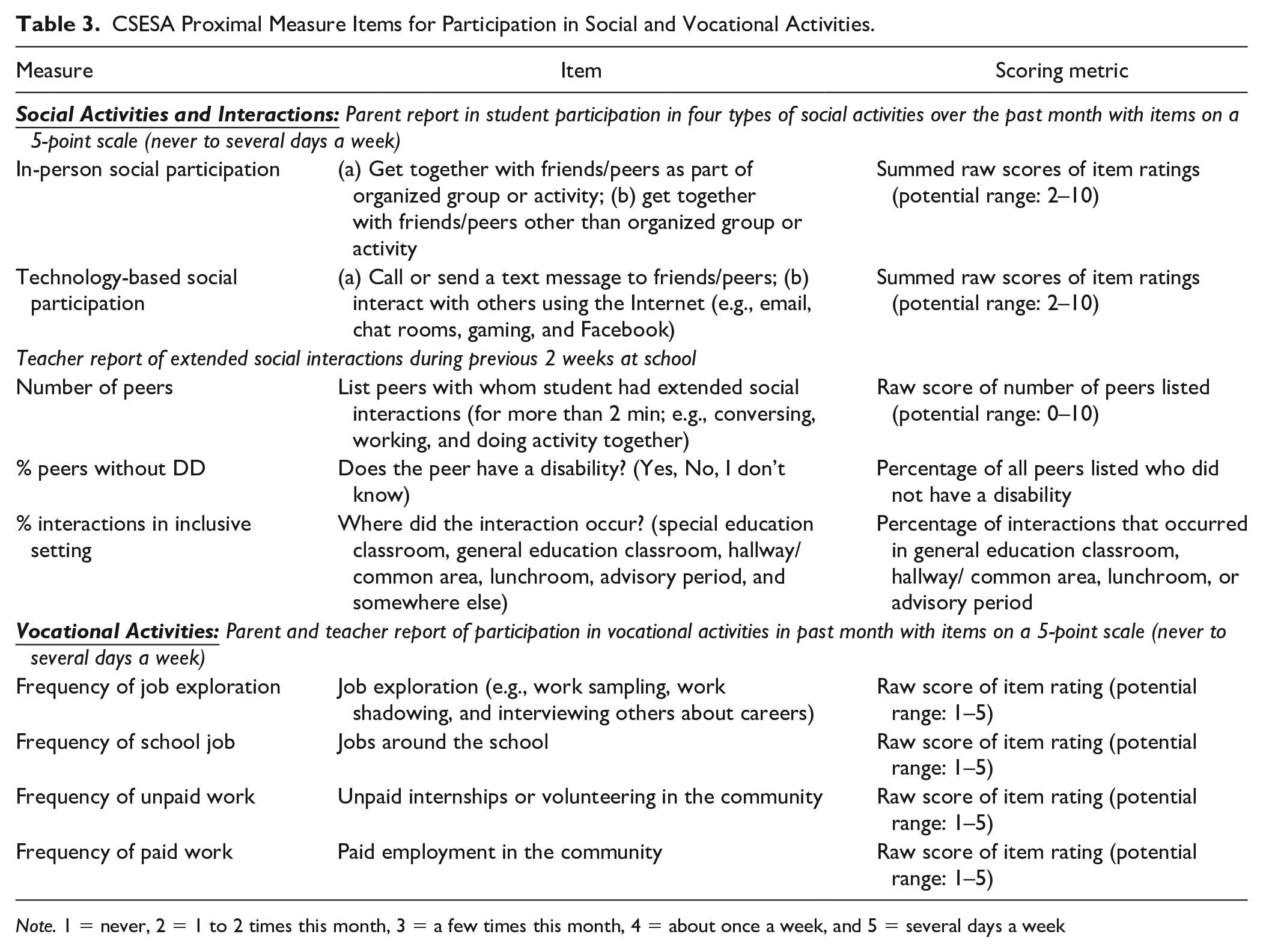
Note. 1 = never, 2 = 1 to 2 times this month, 3 = a few times this month, 4 = about once a week, and 5 = several days a week
Data Analysis
For our first research question, we reported descriptive statistics (mean, SD, range) for student participation in social and vocational activities. For all analyses, data were reported for the entire sample and by diploma type (i.e., standard diploma vs. modified diploma). For our second research question, we used two-level hierarchical linear modeling (HLM; student nested within school) to predict student participation in social and vocational activities based on key student and school programming variables (student diploma type, school-level autism program quality, and a cross-level interaction of diploma type by quality). In these analyses, school-level random slopes were specified for diploma type in addition to school-level random intercepts; school program quality was entered as a predictor of both school intercept and school diploma type slope. In each analysis, program quality scores were centered so that 0 reflects a program of mean quality within the sample. For each studied outcome, the model yields three fixed effect estimates of interest (average diploma type effect for a school of mean program quality, an effect of program quality on outcomes across both diploma types, and an interaction between program quality and diploma effect), as well as quantification of variability of overall school and diploma type effects. In addition to reporting p values for individual tests, we also applied Benjamini-Hochberg (1995) control of false discovery rate across tests of all fixed effects, assuming a false discovery rate (q) of 5% across 39 tests of fixed effects. For all fixed effect estimates found to be statistically significant, we also report an effect size by dividing the fixed effect estimate by the student-level residual standard deviation, which is similar to Cohen’s d effect size.
Results
Frequency of Social Participation
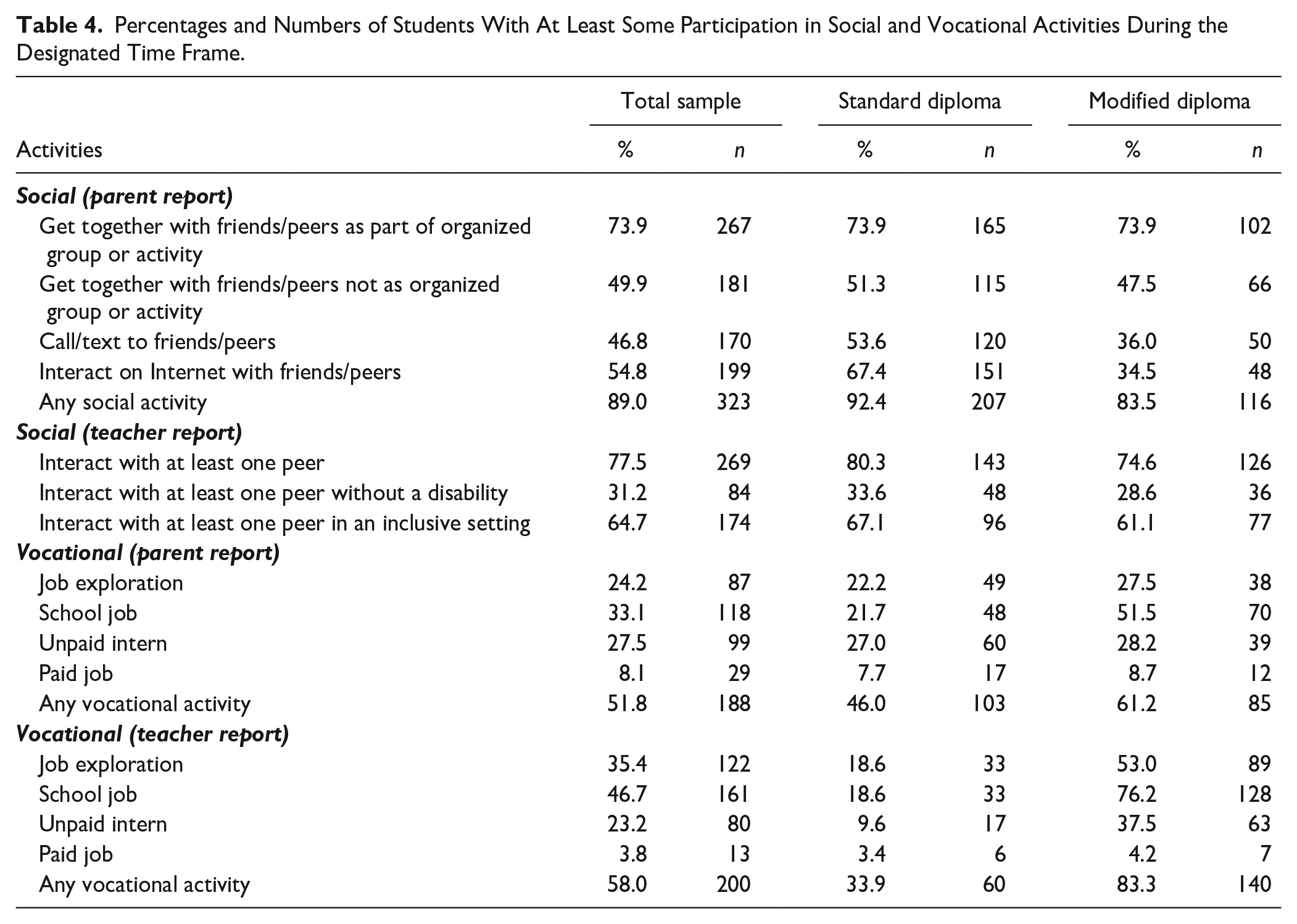
As shown in Table 4, more than three-fourths of the students participated in at least some in-person social activities in the past month, with more students indicating time spent with friends in organized activities compared with outside of organized activities. Just less than two-thirds of students participated in at least some technology-based social activities; with around 20% to 30% more participation by students with standard diploma reporting for these items. Based on teacher report, students interacted with approximately two peers while at school over a 2-week period on average (range of 0 to 10+ peers). Around 21% of the total interactions were with peers without disabilities, and 53% of interactions occurred in inclusive settings. For students who had social interactions, 31% interacted with at least one peer without a disability, and 65% had at least one peer interaction in an inclusive setting, with relatively similar percentages across students with modified and standard diplomas. Furthermore, 78% of students had at least one peer interaction (75% modified vs. 80% standard). When considering the amount of social participation (as opposed to simply the presence of any participation), both in-person and technology-based participation was relatively low, with average scores of less than 5 (possible range: 2–10). More detailed descriptive statistics for parent and teacher report of social participation are presented in Supplemental Table A.
Percentages and Numbers of Students With At Least Some Participation in Social and Vocational Activities During the Designated Time Frame.
Frequency of Vocational Activities
As shown in Table 4, around half of parents indicated that their child participated in at least one vocational activity in the past month, although this percentage was higher for students with a modified diploma. Teachers reported slightly higher participation than parents, and teacher report was markedly higher for students with a modified diploma (83% modified vs. 34% standard). Based on parent report, the highest reported activity was engaging in a job at school, followed by unpaid internship and job exploration, and then, very low numbers were reported for paid jobs. Teachers reported higher numbers than parents for school jobs and job exploration but had similar numbers for unpaid internships and paid jobs.
For both parent and teacher report, on average, overall participation in vocational activities was low, with most mean ratings falling between 1 (never) and 2 (1–2 times this month) for the overall sample. Notably, for the students receiving a modified diploma, teachers reported higher frequency of participation compared with parents, with mean ratings above 2 for three of the four vocational activities. When examining participation in specific vocational activities (i.e., job exploration, job at school, unpaid internship, and paid job), having a job at school was the most frequent and having a paid job was the least frequent for the full sample and within the modified and standard diploma groups. More detailed descriptive statistics for parent and teacher report of participation in vocational activities are reported in Supplemental Table B.
Predictors of Social and Vocational Participation
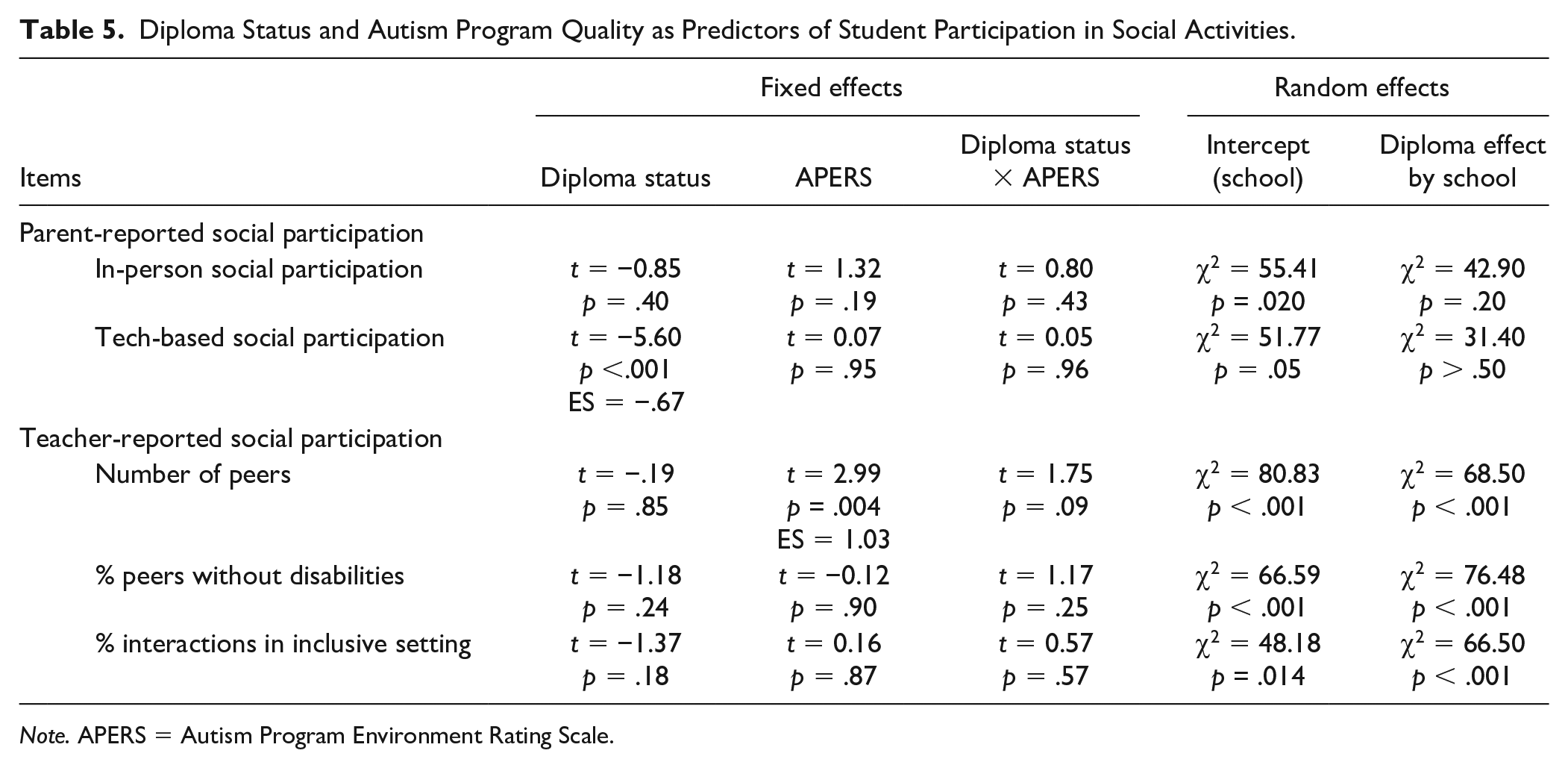
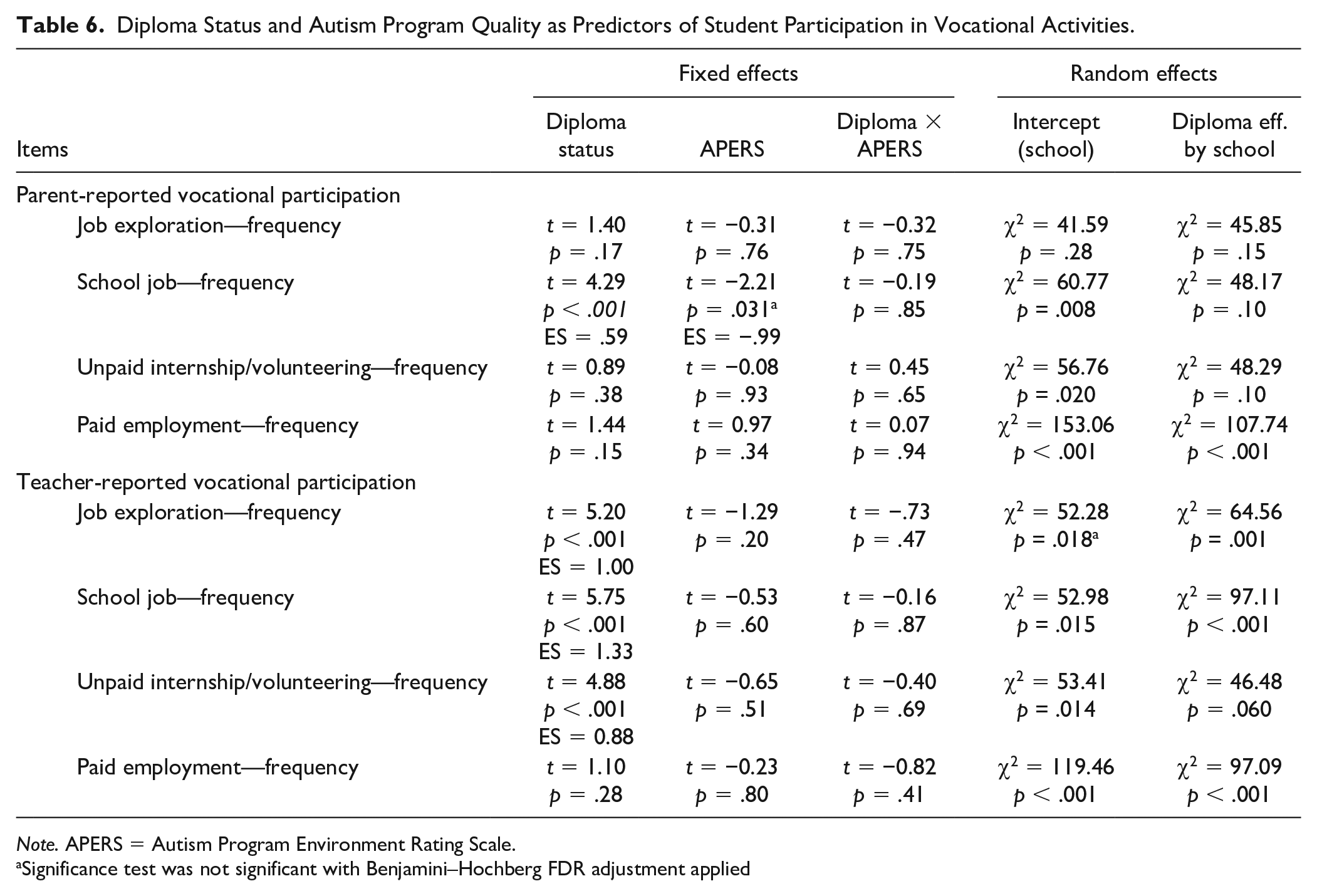
We conducted HLM analyses to examine the impact of student diploma type, the quality of school autism program and their interaction on parent and teacher report of student participation in social and vocational activities, as well as examining variability between schools generally and variability of the impact of diploma status between schools (see Tables 5 and 6). Across 39 tests of fixed effects (13 variables, each tested for three effects—diploma status, autism program quality, and an interaction term), we report statistical significance for seven effects; six effects maintained significance following Benjamini–Hochberg False Discovery Rate (FDR) control at q = .05, and no additional effects emerged as significant. For each significant effect, we provide the associated effect size estimate, which in this case reflects the difference (i.e., a single unit change in the predictor) in relation to the residual standard deviation within diploma type category (analogous to Cohen’s d effect size).
Diploma Status and Autism Program Quality as Predictors of Student Participation in Social Activities.
Note. APERS = Autism Program Environment Rating Scale.
Diploma Status and Autism Program Quality as Predictors of Student Participation in Vocational Activities.
Note. APERS = Autism Program Environment Rating Scale.
Significance test was not significant with Benjamini–Hochberg FDR adjustment applied
Predictors of Participation in Social Activities
Based on parent report, diploma type (but not program quality) was a significant predictor of technology-based social interactions such that being on a modified diploma was associated with lower frequency of technology-based social participation. Diploma type, program quality, and the interaction between the two were not significant predictors of parent report of in-person social interactions. Notably, there was significant variability between schools, indicating potential residual school-related phenomena that was not explained in our model.
Program quality was predictive of one of the teacher-reported social measures: the number of peers with whom students had interacted. Neither diploma type nor the interaction term was found to be predictive of any of the teacher-reported variables for social participation (number of peers, percentage of peers without disabilities, and percentage of interactions happening in inclusive settings). The residual variability of these outcomes by school was statistically significant for all variables. Residual school variability in the effect of diploma type by school was also statistically significant across the three teacher-reported social participation variables, meaning that the impact of diploma status was inconsistent across schools (i.e., students working toward modified diplomas were potentially more likely to have higher social participation at some schools and lower social participation at other schools). We present these results not as findings, but as places where future attention might be devoted toward better understanding school differences in relation to diploma type.
Predictors of Participation in Vocational Activities
For parent-reported vocational activities, diploma type was a significant predictor of engagement in vocational activities such that being on a modified diploma was associated with greater frequency of school-based jobs, but not frequency of job exploration, unpaid internships/volunteering, or paid employment. Neither autism program quality nor the interaction between quality and diploma type predicted any of the parent-reported variables for vocational participation. The residual school variability was significant for three of four outcomes (all except job exploration), and residual school variability in the effect of diploma type was significant for frequency of paid employment.
For teacher report of vocational participation, diploma type was a significant predictor of engagement in vocational activities such that being on a modified diploma was associated with greater frequency of job exploration, school jobs, and unpaid internships/volunteering. Diploma type did not predict paid employment. Autism program quality and the interaction term were not significant predictors of any measures of teacher-reported vocational participation. The variability of the impact of diploma type across schools was significant for all but the frequency of unpaid internships/volunteering. There was significant variability by school for frequency of all four types of vocational activities.
Post Hoc Analyses
Counter to our expectation, overall autism program quality was found to be significantly related to only one of the social and vocational outcomes. As such, we conducted exploratory analyses to examine relationships between subdomains of program quality and the outcome variables. It is possible that overall program quality may be less relevant than more specific aspects of program quality most relevant to the studied outcomes. We repeated the HLM analyses and examined the APERS social subdomain in relation to the social outcomes and the APERS transition subdomain in relation to the vocational outcomes. These analyses showed significant relationships between the APERS-Social and the number of peers per teacher report, and the APERS-Transition and frequency of paid employment per parent report. Since these were secondary exploratory tests, we did not apply the Benjamini–Hochberg FDR control. The full results can be found in Supplemental Tables C and D.
It is also possible that our failure to observe significance was at times affected by uncontrolled variability due to unmodeled covariates. This possibility is further supported by our frequent detection of sizeable residual variability at the school level and in the cross-level interaction between school and diploma type. We thus repeated the HLM analyses while, in addition, controlling for student nonverbal IQ on the outcome, as well as the percentage of students at the school eligible for free and reduced lunch on both school and interaction (school by diploma) effects. Overall, the results were largely unchanged. The two significant effects remained significant for social activities variables and the four significant effects remained significant for vocational activities, with no new effects emerging as statistically significant. Across social and vocational participation, the diploma status by program quality interaction similarly remained nonsignificant. The significant variability at the school-level remained present for the same variables as the planned analyses with one exception (random effects of diploma by school interaction were now significant for parent-reported unpaid internship and volunteering). Nonverbal IQ was predictive of three of 13 variables (parent-reported technology-based social participation, parent-reported school jobs, and teacher-reported school jobs). The percentage of students receiving free and reduced lunch was predictive of two of the 13 variables (parent-reported job exploration and parent-reported unpaid internships and volunteering). The full results can be found in Supplemental Tables E and F.
Discussion
This study examined social and vocational participation of autistic youth participating in a large, school-based study, and differences in participation based on high school programming (i.e., diploma status and autism program quality). The participating students had a wide range of characteristics in intellectual ability, adaptive skills, and autism severity, and also came from diverse racial and ethnic backgrounds and locales. As such, this study provides more contemporary data on social and vocational participation about a large, diverse, set of students from across the country and examines linkages with malleable educational variables.
Social Participation
There was a broad range of reported social participation for autistic high school students based on parent and teacher report. On average, students were engaging with peers both in-person and via technology between 1 and 2 times per month and a few times per month based on parent report. Teachers reported students engaged with an average of around two peers in the most recent 2-week period. These rates are slightly higher than previous studies in which parents reported less than monthly interactions for the large majority of autistic high school students (Lounds Taylor et al., 2017). Notably, most previous studies did not include teacher report, which may provide different data about peer interactions. The teacher data provided information about the peers and the location of interactions. Approximately 80% of the peers with whom the autistic participants interacted had an identified disability. Around 50% and 60% of interactions occurred in inclusive settings for students receiving a modified and standard diploma, respectively. Thus, while interactions occur over half of the time in inclusive settings, autistic high school students primarily interact with other peers with disabilities. In considering how this compares to peers without disabilities, studies found that high school students have frequent peer interactions in class at school (peer interactions in 20% of intervals during a full class observation; Feldman et al., 2016) and spend about 9 hr per week on average socializing with friends outside of school (Twenge et al., 2019). Notably, we did not gather data on the length or quality of the interactions, nor did we gather data from the students about their satisfaction or preferences related to peer interactions, so are unable know if these results reflect the social desires of the autistic students.
Vocational Participation
The parent- and teacher-reported vocational activities were also broad in range, with relatively low participation overall (on average between never and 1 to 2 times per month). Participation in school jobs was reported as most frequent and paid jobs outside of school were reported as the least frequent. For vocational participation, rates of participation were lower overall compared with the NLTS-2, with parents and teachers reporting that 33% and 47%, respectively, participated in-school jobs (compared with 68% in the NLTS-2). This study examined a shorter time frame (1 month compared with 12 months), so it is possible that this difference reflects exposure to school-based jobs over shorter and longer periods of time. However, it could also reflect changes in demographics among autistic individuals (more autistic students without intellectual disabilities) since the students on the modified diploma pathway had much higher reported participation (76% by teacher report).
Predictors of Participation
In general, it appears that diploma status does not have a large impact on the measured social participation of autistic high school students with the exception of technology-based interactions with peers. It is possible that schools are offering opportunities for students working toward a modified diploma to engage with peers in a way that reduces disparities, despite being educated in separate settings during the day. However, it does not necessarily indicate that the benefits of inclusive environments are fully realized by autistic students, just that social participation is similar across the two groups. The descriptive data perhaps suggest the latter, as the number and frequency of interactions reported by teachers and parents seem low overall. This mirrors some of the findings by Orsmond and colleagues (2004) who found that inclusion status was not related to the number of friendships, although they did find that inclusion did impact social participation broadly.
Diploma status was more closely linked to vocational participation, as diploma status was a significant predictor for four of eight tested variables (parent-reported school-based jobs, and teacher-reported school-based jobs, job exploration, and internships/volunteering) and always favored students on the modified diploma. This aligns with the finding that the quality of transition services was found to be lower in standard diploma programs compared with modified diploma programs (Kraemer et al., 2020). The exposure to vocational activities may be somewhat expected, as there are often differences in the courses of study and experiences for students receiving modified versus standard diploma. Students working toward a modified diploma have more flexibility in their coursework, and often times, life skills, including prevocational skills, can be embedded in the courses. In addition, these students often have more access to vocational resources and supports from outside agencies such as the Department of Vocational Rehabilitation (VR) during the school day. This has been even more pronounced since the passing of the Workforce Innovation and Opportunity Act of 2014 which mandates the provision of pre-employment services for youth with disabilities in high school (Mueller & Weintraub, 2020). Although all transition-age students have a legal right to receive vocational services through VR, previous research indicates that school and community factors can impact service provision (Awsumb et al., 2020; Carter et al., 2021). Thus, the burden of finding vocational experiences for students working toward a standard diploma often falls to families. Notably, there were fewer differences on parent-reported items based on diploma status, which could suggest families are filling some of the gaps created in the different experiences based on diploma status. But it is equally important to note that parents were reporting fewer vocational experiences for many of the items, which could also suggest a lack of communication between schools and families about students’ participation in these activities at school. Regardless, given the importance of vocational experiences in high school in predicting adult outcomes for autistic students (Mazzotti et al., 2016, 2021), it is critical to prioritize prevocational experiences for all autistic high schoolers. These experiences may vary from career exploration assignments to embedding courses of interest into their course of study to identifying extracurricular clubs or activities that may align with future educational and career goals.
We were surprised that neither autism program quality nor the interaction between program quality and diploma status were significant for any social or vocational variables. This prompted the post hoc analyses exploring links between specific domains of autism program quality and outcomes of interest, but these also resulted in similar patterns of nonsignificance. Interestingly, the random effects for school and school by diploma type were significant for nearly all social participation variables (aside from technology-based peer interactions) suggesting residual variability at the school level not captured by other variables; that is, that the experiences for an individual youth depended heavily on which school they were attending. This pattern was similar for vocational participation variables with seven of eight variables having significant random effects for school (all but parent-reported job exploration) and four of eight variables having significant random effects for school by diploma type (parent-reported paid employment and teacher-reported job exploration, school jobs, and paid employment).
Importantly, as a follow-up analysis, we included student nonverbal IQ as well as the percentage of students at the school eligible for free and reduced lunch as covariates to examine additional student- and school-level variables that may account for variability. Overall, the findings were very similar in terms of statistical significance. Thus, there is considerable school-level variability that is unaccounted for even when including autism program quality and a proxy for school and family resources. Notably, students at schools with a higher percentage of students receiving free and reduced lunch had lower parent-reported job exploration and unpaid internships and volunteering.
Researchers should continue to explore the differences between schools and programs within schools that might be linked to higher social and vocational participation but were not captured through our broader measure of autism program quality. Relatedly, the program quality was a school-level variable, and it may be important to measure quality on a smaller scale, perhaps within specific programs within schools (e.g., programs for students accessing standard vs. alternate standards) or even at an individual student level (Findley et al., 2022). For example, it may be important to gather more detailed data about available social and vocational activities, examine district or classroom curricula, or perhaps assess the strength of school-community networks to better understand school-level variables that are linked to social and vocational outcomes. Finally, it may be that we had other missing variables in our models, perhaps student-level variables or interactions between student and school-level variables or even between the predictor and outcome variables. Indeed, previous research has noted the importance of school staff factors (e.g., training and student–teacher ratios) and community factors (e.g., availability of public transportation and community attitudes) in the provision of transition-related services (Awsumb et al., 2022; Schutz & Travers, 2023).
Limitations
There are several limitations to this study. First, the study was drawn from high school students who opted into a study conducted in three different states in the United States and thus may not be generalizable to other states or countries with different educational models, policies, and trends. For example, even across these three states, schools varied greatly in their policies and practices for placing students into modified versus standard diploma tracks. This study included supplemental analyses with one school-level (percentage of students eligible for free and reduced lunch) and one student-level (nonverbal IQ) covariates. However, other covariates were not included in the model including additional community-level variables, school-level variables (e.g., locale and staffing), staff-level variables, and student demographic variables (e.g., sex, race/ethnicity, and socio-economic status), which may impact outcomes. Second, this study did not include student reports related to social and vocational experiences, and proximal measures were completed by a single teacher. Teachers and parents were directed to ask their student/child and ask other adults about interactions and activities as they completed the proximal measure, but that may not have consistently happened. We also did not gather data about neurotypical peers or peers with other disabilities, so we cannot speak to whether the patterns in social and vocational experiences would be similar or different to peers. Third, we did not gather any data about the social desires of the autistic students; thus, we cannot speak to if the level of social and vocational participation was aligned or misaligned with their own preferences. Finally, the proximal measure items used to capture social and vocational participation were designed to gather data about relatively short time frames (2–4 weeks) to capture change over time in the context of an intervention study. Thus, it was a relatively short snapshot of participation and may not reflect variation in participation that happens across time (e.g., having a summer job but not a job during the school year).
Conclusions and Future Directions
The social and vocational participation of autistic high school students is varied and is impacted by educational placements as it relates to standard and modified diploma. Thus, when making these educational decisions, it is important for educators, families, and students to consider the potential impact related to social and vocational experiences. Social participation as reported by teachers was relatively low overall, and a large majority of social interactions were autistic students interacting with other students with disabilities regardless of educational placement, so it is important to consider that inclusive educational placements alone are likely not sufficient for social inclusion. Because there was significant variability between schools that was not accounted for by diploma status and autism program quality, it is also important to explore other factors that may be accounting for differences in social and vocational participation. Given the link between high school activities and adult outcomes, and the continued reports of dissatisfaction with many aspects of postsecondary life by autistic adults (e.g., Sáez-Suanes & Álvarez-Couto, 2022), there is still a great deal of room for improvement in how schools provide opportunities for social and vocational participation.
Supplemental Material
sj-docx-1-sed-10.1177_00224669241301732 – Supplemental material for Social and Vocational Activities of Autistic High School Students and Relationships With Educational Programming
Supplemental material, sj-docx-1-sed-10.1177_00224669241301732 for Social and Vocational Activities of Autistic High School Students and Relationships With Educational Programming by Jessica R. Steinbrenner, Leann DaWalt, Kara A. Hume, Bonnie Kraemer, Samuel L. Odom, Laura J. Hall, Chris Brum, Kate Szidon and Dan Bolt in The Journal of Special Education
Footnotes
Acknowledgements
The authors thank many schools, staff members, adolescents on the autism spectrum, and their families who made this study possible and also thank the CSESA research team.
Declaration of Conflicting Interests
The author(s) declared no potential conflicts of interest with respect to the research, authorship, and/or publication of this article.
Funding
The work reported here was supported by the Institute of Education Sciences, U.S. Department of Education (grant no. R324C120006) awarded to UNC-Chapel Hill. The opinions expressed represent those of the authors and do not represent views of the Institute or the U.S. Department of Education.
ORCID iD

Notes
References
Supplementary Material
Please find the following supplemental material available below.
For Open Access articles published under a Creative Commons License, all supplemental material carries the same license as the article it is associated with.
For non-Open Access articles published, all supplemental material carries a non-exclusive license, and permission requests for re-use of supplemental material or any part of supplemental material shall be sent directly to the copyright owner as specified in the copyright notice associated with the article.
