



Abstract
States and international organizations have become increasingly willing to proscribe armed groups, labelling them terrorists and imposing legal, economic and political sanctions. To enable investigation into terror-listing and its effects, this paper introduces the Proscribed Armed Actors Dataset. The dataset records information on the proscription regimes maintained by 18 governments and multilateral organizations, including the European Union, all the permanent members of the United Nations Security Council and several regional powers in the Global South. Covering the 1979–2022 period, it records the proscription of 386 unique groups, including 93 groups listed as armed actors in Uppsala Conflict Data Program/Peace Research Institute Oslo conflict data, with information on listings, targeted groups and imposed sanctions. This paper introduces the dataset, provides descriptive patterns and discusses possible applications. To illustrate the utility of the data, we perform a quantitative analysis of the impact of terrorist designations on conflict intensity in civil wars, showing that both the source and characteristics of proscriptions shape belligerent behaviour.
Introduction
Both governments and international bodies show a growing readiness to engage in proscription, designating armed groups as ‘terrorists’ and imposing legal, economic and political sanctions. It is increasingly recognized that proscription regimes, the legal and governmental frameworks that support such terrorist designations, deserve further investigation, given their central role in counterterrorism, effects on belligerent behaviour and impact on conflict resolution (Beck and Miner, 2013; Best and Lahiri, 2021; Legrand and Jarvis, 2018; Phillips, 2019; Tominaga et al., 2022). However, while there exist several datasets that provide information on terrorist organizations and violence (e.g. LaFree and Dugan, 2007; RAND Corporation, 2012), data on proscription regimes (or ‘terror-lists’) are limited in time, confined to a few actors and fail to capture variation in sanctions instruments. The implication is that crucial questions regarding the nature of proscriptions, their sources and effects have been difficult to research empirically.
The Proscribed Armed Actors Dataset (PAAD) dataset is an attempt to rectify this situation. It records the timing, nature and legal consequences of proscription of armed non-state organizations. Combining information from 18 national and international proscription regimes, the dataset covers 884 individual proscriptions (‘listings’) of 386 armed groups between 1979 and 2022 (and 55 ‘de-listings’). The dataset allows for integration with datasets on terrorist groups and armed conflict, such as Hou et al. (2020) and Pettersson et al. (2021).
The PAAD will be particularly useful for three strands of research. A first domain of application is research on the characteristics and evolution of proscription regimes, which is attracting growing attention in political science, sociology and international law. For example, by providing a greater range of variables and observations, PAAD data can help advance research from comparative (Freedman, 2010) or diffusion perspectives (Ilbiz and Curtis, 2015). Next, the PAAD can be a resource for research on counterterrorism. By expanding the range of listing entities and sanctions characteristics, PAAD data can help adjudicate claims regarding the effect of terror-listings on the ability of groups to stage attacks (Best and Lahiri, 2021; Phillips, 2019). Finally, the dataset can help to investigate how terror-listings affect conflict dynamics and conflict resolution efforts. Important propositions developed in qualitative research, such as the argument that terror-listings complicate mediation (Dudouet, 2010; Haspeslagh, 2021; Toros, 2008), can be tested on a wider set of cases.
The rest of the paper is structured into five parts. The first section provides an inventory of existing data and explains why a new dataset is motivated. The second section summarizes the data collection, detailing sources, variables, coding considerations and limitations. The third section provides an empirical overview, illustrating patterns across time, listing actors and listed groups. The fourth section provides a concise data application, examining the impact of terrorist designations on conflict intensity in civil wars. The fifth section concludes and discusses how the PAAD can help advance specific research agendas.
Existing research and data on terror-listings
Terrorism and counterterrorism have attracted increasing scholarly attention since the terrorist attacks against the United States on 11 September 2001 (9/11). Several datasets on terrorist groups and events have emerged, including the Global Terrorism Database (GTD) (Lafree and Dugan, 2007), the Extended Data on Terrorist Groups (EDTG) (Hou et al., 2020), the International Terrorism: Attributes of Terrorist Events dataset (Mickolus et al., 2016) and the RAND Database of Worldwide Terrorism Incidents (RAND Corporation, 2012). The counterterrorism literature has provided insights into the compatibility, effectiveness and legitimacy of counterterrorism instruments (e.g. Boaz, 2005; Crelinsten, 2014; English, 2009). Qualitative research has assessed how proscription is used in counterterrorism (Byman, 2007), for delegitimization (Chou, 2016) and to justify extraordinary legal powers (Saul, 2006). Research has also investigated the consequences of proscription, including on terrorist attacks (e.g. Best and Lahiri, 2021; Jo et al., 2020; Phillips, 2019) and conflict resolution (e.g. Dudouet, 2010; Haspeslagh, 2021).
Pioneering efforts to collect comparative data on proscription regimes have been undertaken. Freedman (2010) presents data on 120 officially designated terrorist organizations while Beck and Miner (2013) present information on United States, United Kingdom and European Union (EU) proscriptions between 1994 and 2008. Ilbiz and Curtis (2015) analyse six proscription regimes, concluding that the United States and the United Kingdom are proscription ‘trend setters’ while Australia and Canada are ‘trend followers’. El Masri and Phillips (2021) expand upon the work of Beck and Miner, matching information from six proscription regimes with the GTD and EDTG. In the most comprehensive data collection effort to date, Tominaga et al. (2022) provide data on proscriptions by 35 countries and two international organizations, covering 281 terrorist groups, focusing on the characteristics of listings, such as date and the listing agent, while providing no information on de-listings or the nature of imposed sanctions.
Considering the research needs, existing data on proscription regimes are inadequate in some important regards. First, existing data either lack or provide insufficient information on the sanctions that flow from proscriptions. To understand the effect of proscriptions, fine-grained information on their legal and substantive repercussions is necessary. Second, most data sources are temporally limited. While Tominaga et al. (2022) include listings until 2019, most other datasets, including Freedman (2010) and Beck and Miner (2013), end much earlier. Third, most existing data cover proscriptions by liberal Western democracies, creating a risk of regional bias. Finally, most existing data are temporally static, which implies limitations when it comes to analysis of temporal dynamics. Acquiring data on how listings – and, importantly, de-listings – are distributed over time is a condition for such analyses. In sum, existing data are significant and valuable, but they are an insufficient evidentiary basis to support an expanding research agenda on proscriptions. In particular, information on the nature of the political and legal sanctions that flow from terrorist designations is of central importance, given that this is likely to shape both the politics of designations themselves and determine whether they have sufficient ‘bite’ to alter the behaviour of targeted groups.
The PAAD dataset seeks to address these limitations. It provides an extensive temporal range, covers both Western and non-Western actors, provides information on both listings and de-listings and, crucially, includes nuanced information on the sanctions associated with each listing event. Thus, the PAAD responds to the call for better and more extensive data on proscription regimes (see Legrand and Jarvis, 2018).
The dataset: Selection, variables, and coding
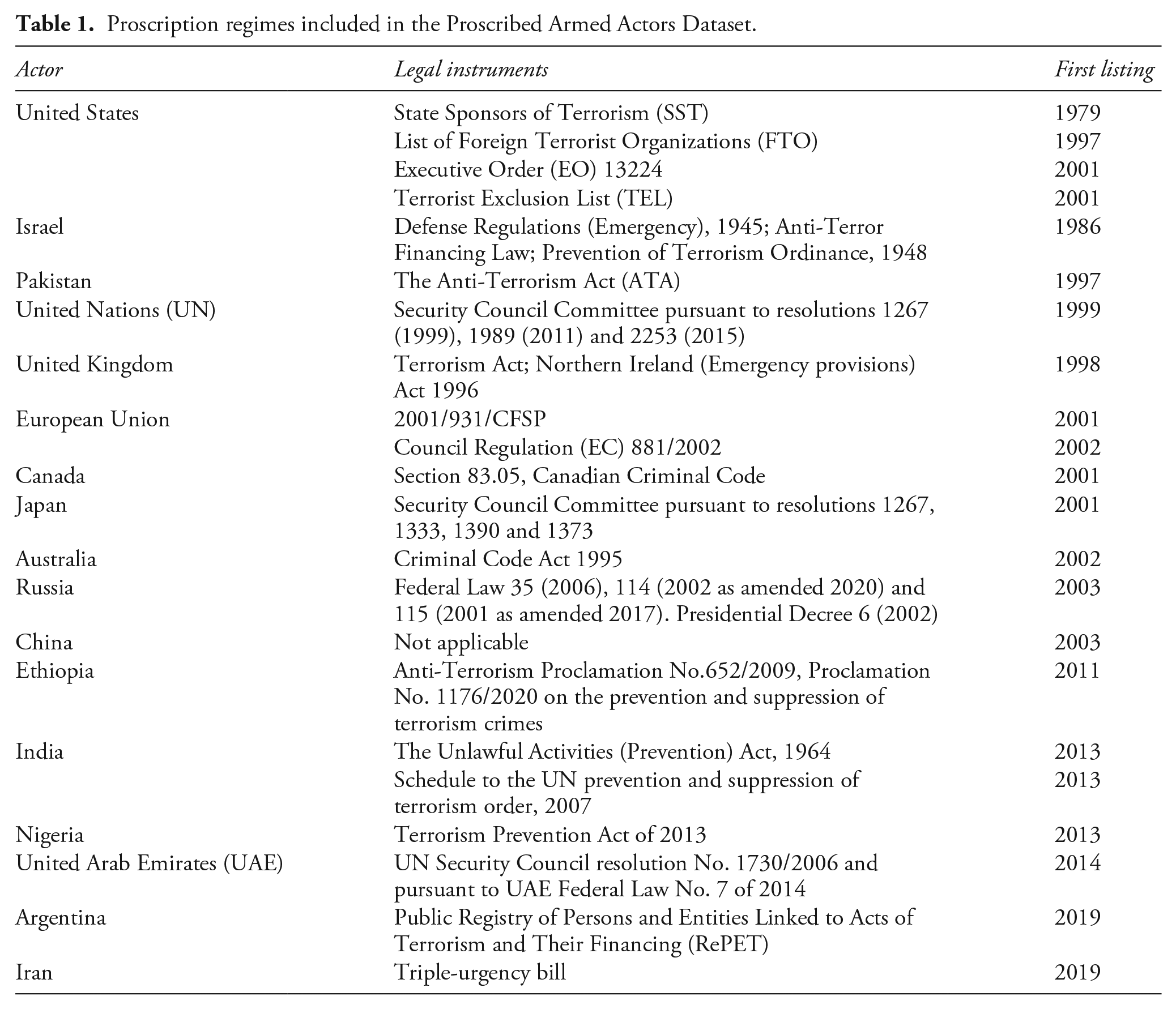
The dataset encompasses terrorist designations by 18 listing actors (Table 1). Our selection of proscription regimes is informed by historical and political significance, reflected in the inclusion of key multilateral proscription regimes maintained by the United Nations (UN) and the EU, along with individual regimes upheld by the permanent members of the UN Security Council (P5). Additionally, the dataset aims for geographical diversity by including regimes from eleven countries with significant regional influence: Argentina, Australia, Canada, Ethiopia, India, Iran, Israel, Japan, Nigeria, Pakistan, and the United Arab Emirates (UAE). The selection process also considered diversity in legal design. While most countries operate lists with transparent legal procedures, others, such as the UAE and China, frequently communicate their proscriptions through press releases. We also sought to attain variation in authorized sanctions instruments. For example, whereas travel bans are commonly applied by Western actors, most non-Western actors use them more rarely. Lastly, the selection includes lists with temporal variation, ranging from long-established frameworks to newer initiatives, thereby offering a long-term view of the evolution and variance in global counterterrorism strategies.
Proscription regimes included in the Proscribed Armed Actors Dataset.
We restrict our data collection in two regards, motivated by our objective of focusing on terrorist designations targeting armed groups. First, we only include proscriptions of organizations, excluding proscriptions targeting individuals. This means, for example, that we include listings of the Abu Sayyaf Group, an Islamist separatist group in the Philippines, but exclude separate listings of its leader, Radullan Sahiron. Second, our main dataset only includes organizations that engage in, or propagate for, armed violence. Thus, we exclude terrorist-designated charities, companies, or non-governmental organizations that cannot be conclusively tied to armed violence. 1 For example, we include the Islamic State (ISIS) and Boko Haram but exclude the Baghdad Stock Exchange and The Islamic Association of Norway, which have been listed but cannot clearly be linked to armed violence.
Information on listings, de-listings and sanctions was sourced from government and IO proscription lists and legal documents. 2 In line with conventions in the field (e.g. Tominaga et al., 2022), we do not assess whether listings are justified on substantive grounds. We therefore include all listings by each actor. Where listing actors differentiate between different branches of an armed organization (such as different branches of ISIS), we create a unique identification number for each sub-organization (T200 for ISIS and T201, T202, etc., for its branches). In cases where the military wing of an organization has been listed prior to the organization as a whole, we have maximized granularity by treating the two as separate listings. For example, listings of Hamas-izz Al-din Al-Qassem, the military of wing of Hamas, have been recorded separately from listings of Hamas itself.
When an actor is removed from a list, it has been recorded as de-listed. For example, when the terrorist designations of Revolutionary Armed Forces of Colombia were revoked, first by the EU in 2017 and then by the United States in 2021, these are recorded as de-listings of this group.
Information on sanctions has been sourced from legal documents, typically the instrument that gives legal power to a particular proscription regime (see Table 1). For information on group characteristics, we relied on several external sources, such as the Terrorism Research & Analysis Consortium and the Mapping Militants Project. 3
The resulting dataset is organized at the proscription–regime-listing level. Each row in the data corresponds to one specific actor’s listing of an armed group at some point in time. Taken together, the data cover 884 individual listing events (and 55 de-listing events) of 386 individual groups, 1979–2022.
Description of variables
The dataset contains three categories of variables (Table A1, Online Appendix). First, listing variables record characteristics of the observed proscription decision, including the listing actor, the listing date and its legal source. When applicable, we also provide information on de-listing.
The second category of variables provides information on sanctions and measures. An asset freeze refers to the freezing of funds and other financial resources. An arms embargo bans the provision of weaponry to the designated terrorist organization. Support bans make it unlawful to provide support to and/or harbour members of listed organizations. Financing bans target the provision of monetary resources. More rarely, proscription decisions call for counterterrorism cooperation, for example via the sharing of intelligence.
The third category, organization variables, records characteristics of the listed group. This includes variables for its name and – since many groups change names – alternative names. We record the type of the observed group while we also distinguish between sub-types. For example, among Islamist groups, we record whether they hold Sunni or Shia ideology. 4 We also include three geographical variables: region, following World Bank definitions; base location, denoting the country from which the group originates or has its stronghold; and area of operation.
For each listing we provide a set of identifier variables to facilitate the merger with datasets such as the EDTG, Uppsala Conflict Data Program (UCDP) and other datasets compatible with them. Since the granularity of identity attribution differs between the EDTG and UCDP, we have coded a variable, match certainty, which provides information on the estimated likelihood that an actor in the PAAD overlaps with an actor in the other datasets.
Limitations
While extensive care has been taken in the creation of the PAAD dataset, it is important to acknowledge some potential limitations. Firstly, although the dataset encompasses 18 governments and multilateral organizations across regions, its geographical and temporal coverage may affect the generalizability of some findings. Secondly, for certain research aims, the variability in the definition and classification of terrorism used by listing entities could introduce inconsistencies. Thirdly, the dataset’s exclusive focus on organizations, while methodologically intentional, may limit its applicability for research aims that require understanding the roles of individual actors in terrorist activities. Lastly, while also intentional, users should be aware of the variability in the formality and comprehensiveness of proscription regimes within the dataset, with some entries lacking detailed information on legal ramifications and sanctions.
Patterns in the data
We now turn to the content of the collected data, demonstrating some key patterns and trends in terrorist designations.
Figure 1 summarizes temporal patterns, presenting the annual count of new listings, de-listings and active listings. Comparing the left-hand and middle panels, we note that new listings far outweigh de-listings. The net effect, illustrated in the right-hand panel, is a growing population of active proscriptions. If we take the latter as an indication of the scope of the global proscription regime, these data suggest that it has expanded considerably in the last three decades.
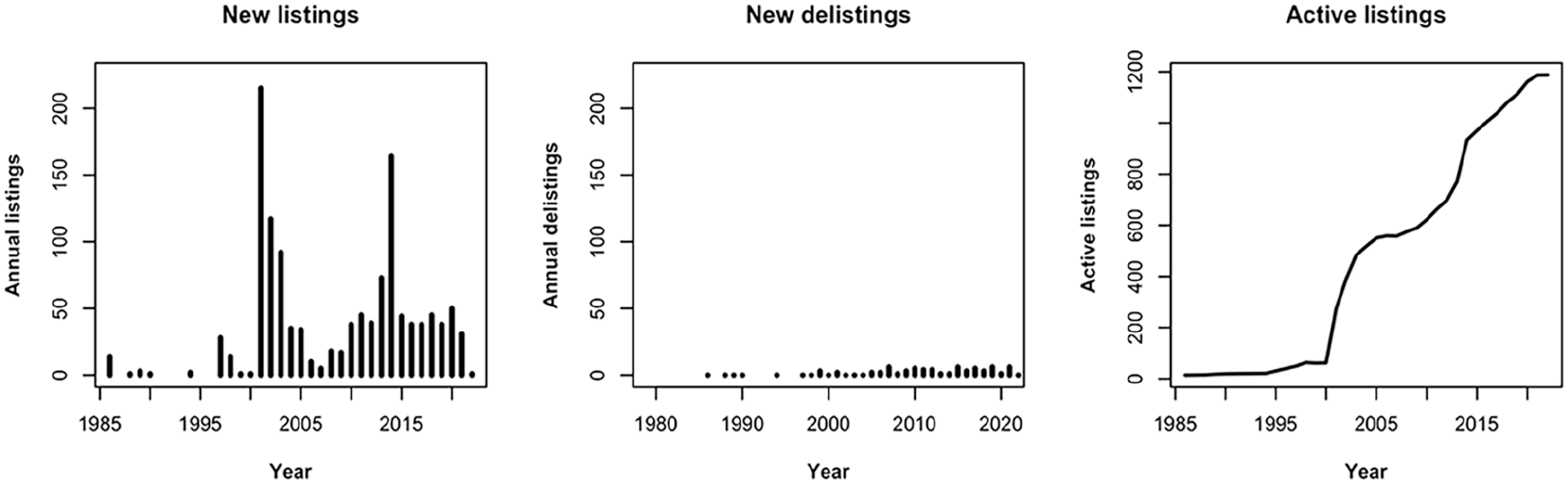
Listings, de-listings, and cumulative active listings over time.
We note significant temporal variation in new listings. Only 11% of recorded listings occurred before 2000, while 89% were made in 2001 or later. Some individual years stand out. In 2001, a total of 94 new listings were made, primarily in the months following 9/11. During this year, the United States accounted for 46 individual listings between September and December, while the United Kingdom, EU and the UN collectively added 48 listings. These patterns corroborate assertions that 9/11 transformed the international response to terrorism (Peers, 2003). Another significant year for listings is 2014, with 34 individual listings, many targeting ISIS and groups that gained momentum following the Arab Spring in the early 2010s, such as the Libyan branch of Ansar al-Sharia.
If we disaggregate listings by listing actor (Figure 2), we note that the United States has made the most listings (269), followed by France (114), EU (114) and India (101), while Russia (29) and China (2) have made comparatively few. 5 This suggests that major international actors, while accepting proscription as a policy instrument, exhibit significant variation in the frequency and scope of its application (see Zhang, 2021 regarding proscriptions by China).
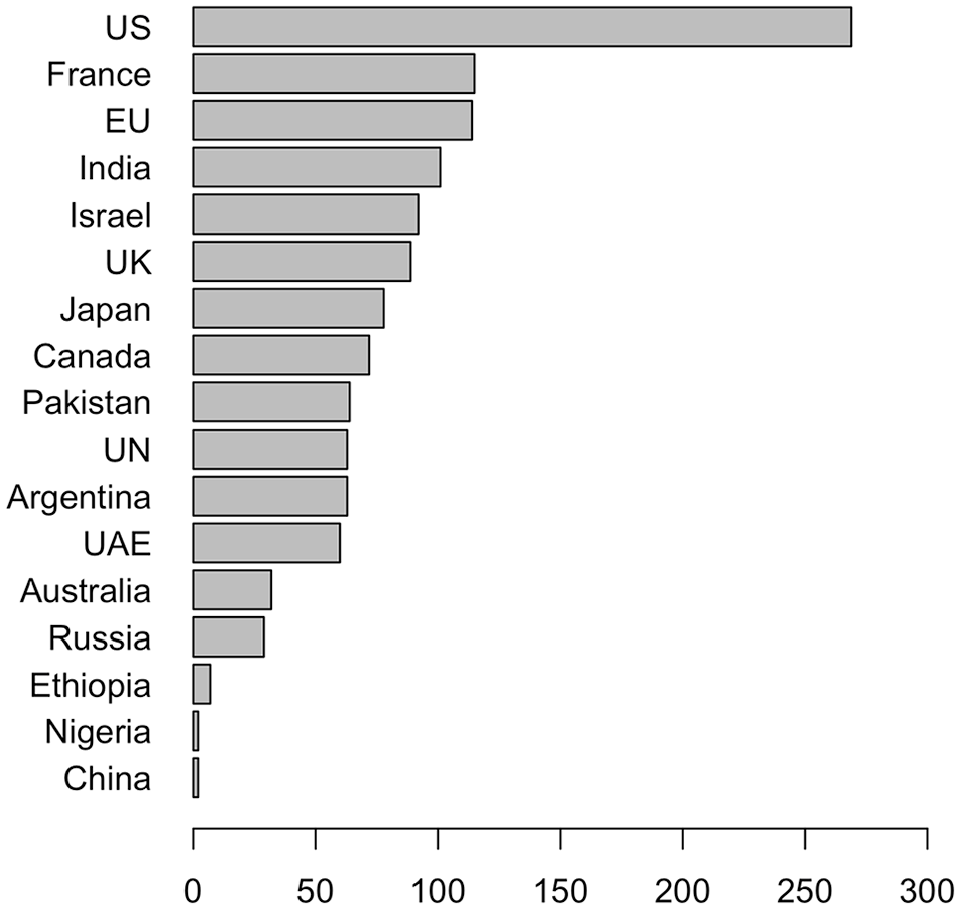
Number of terror-listings, by actor.
In Figure 3, we showcase the data pertaining to the sanctions and measures associated with proscriptions. It is evident that three measures predominate – support bans, financing bans and asset freezes – each of which is implemented in over 80% of recorded listings. On the other hand, arms embargoes are enacted in approximately 25% of the cases, while counterterrorism cooperation is the least frequently applied measure. This disparity underscores the fact that terror listings are not uniform, highlighting the potential for diverse legal and material repercussions.
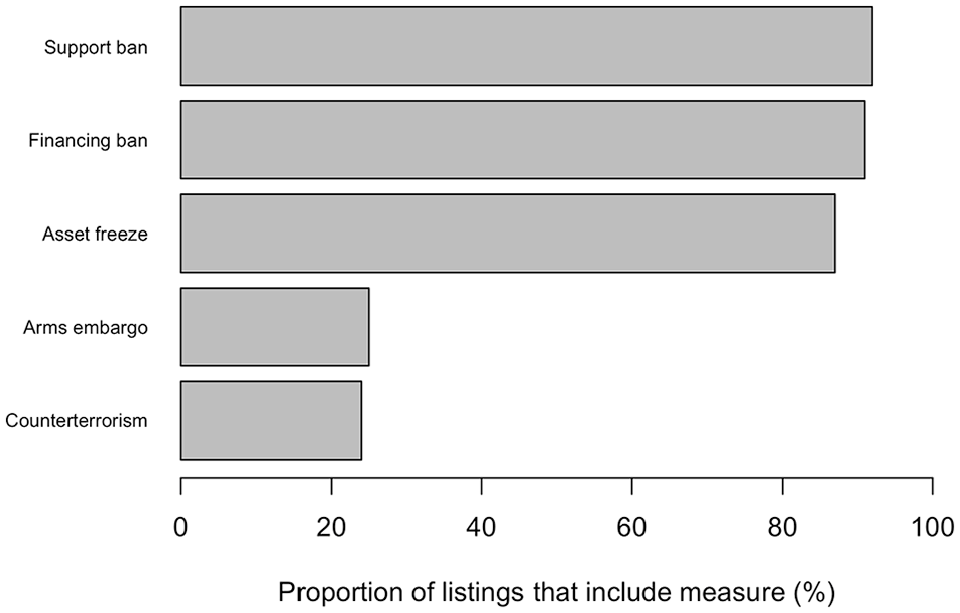
Distribution of terror-listings by sanctions/measures.
We also note that the majority of proscriptions (76%) target religious extremist groups (Figure 4). Corresponding to what we know about the nature of contemporary armed groups (Pettersson et al., 2021; Svensson and Nilsson, 2018) and the counterterrorist campaigns of major states, many of these groups have Islamist policy preferences. The UN list exclusively contains Islamist groups, likely reflecting its origins in the Al-Qa’ida sanctions regimes established in 2001. In contrast, the EU list is more diverse, with nearly two out of five proscriptions targeting Communist groups, such as Revolutionary Organization 17 November, a Greek Marxist-Leninist outfit.
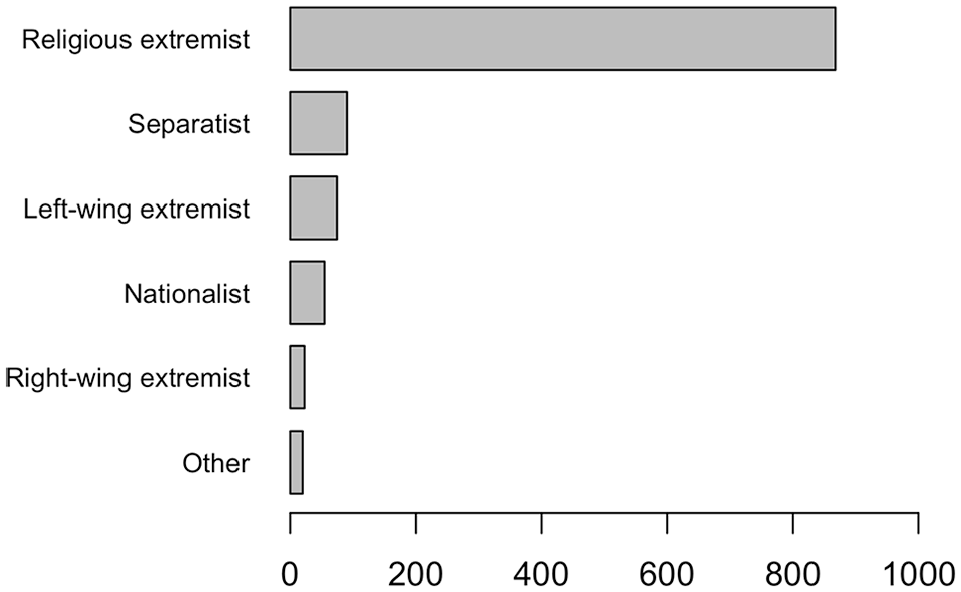
Distribution of terror-listings by primary group type.
In Figure 5, we disaggregate listings by both type and time, which allows us to identify more exactly how the proscription regime has evolved. We observe greater diversity before 2000, when listings frequently targeted left-wing groups (such as the Lebanese Armed Revolutionary Factions) while religious extremist groups represented less than a fifth of all observations. In contrast, since 2000, religious extremist groups constitute 79% of the observations, and since 2010 the figure is 89%. Of these, Islamist groups represent 96 and 99%, respectively. In other words, the proscription regimes maintained by the actors discussed here have come to increasingly focus on Islamist groups.
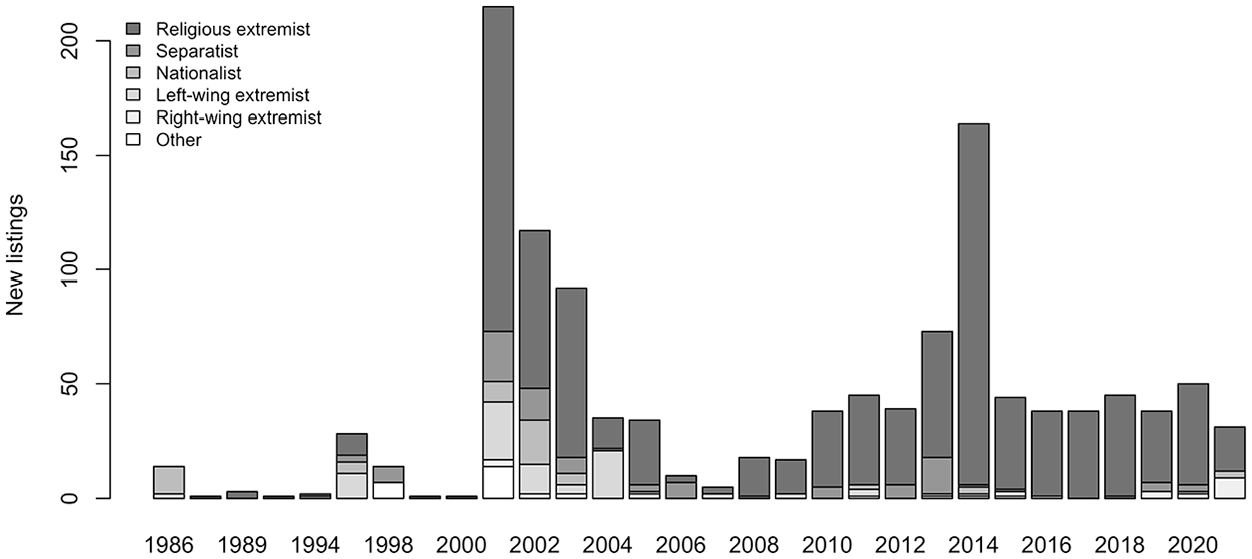
Distribution of terror-listings across group type and time, 1986–2021.
Application: Impact of terrorist designations on conflict intensity
What is the impact of proscriptions and the sanctions that flow from them? To concisely illustrate one way in which the PAAD data can be used, we proceed to a statistical examination of the impact of terror-listings on conflict intensity.
The issue of how sanctions influence the dynamics of conflict has garnered attention in existing scholarly literature. So far, research has focused on identifying the influence of economic sanctions on the intensity of civil conflict. Eriksson and Wallensteen (2015) examine the onset and impact of 30 sanctions regimes established since 1945, finding that sanctions appear to have a connection to conflict resolution while concluding that more research is required. Hultman and Peksen (2017) study the impact of economic sanctions on conflict intensity in a sample of civil wars in Africa, 1989–2005, finding that it varies across different types of sanctions, with arms embargoes having the largest effect. Meanwhile, Radtke and Jo (2018) find that UN sanctions in civil wars have a larger conflict-abating effect if they target actors with little ability to offset sanctions via alternative income generation (such as the National Union for the Total Independence of Angola, UNITA) compared to groups reliant on several income streams (such as Al-Shabaab).
While these studies have advanced our understanding of the effects of economic sanctions, we know less about the impact of terrorist designations and the sanctions and measures that accompany them. With the PAAD data at hand, particularly the sanctions variables, we can extend this research agenda and perform a pioneering test of how terrorist designations shape belligerent behaviour.
When considering the proscription of a rebel group in a civil war dyad, theoretically, we may derive divergent expectations. As terror-listings typically lead to social stigmatization and complicate the acquisition of weaponry, resources and support (Haspeslagh, 2021), they may shift the power balance against the targeted actor, reducing their ability and incentives to stage further attacks. If so, we would expect terror-listings to be followed by decreasing conflict intensity. However, terror-listings may also bolster hardliners in the targeted group, favouring continued belligerence, while simultaneously reducing the government’s incentives to negotiate (Dudouet, 2010). If these dynamics dominate, we instead expect that terrorist designations are followed by increasing conflict intensity, as hardline perspectives take hold on both sides. By examining the issue empirically using PAAD, we can identify which of these effects dominate.
We use a panel of conflict dyads observed monthly between 1989 and 2020. Given that our interest is conflict intensity, the dependent variable in our analyses is the monthly count of battle-related fatalities, which we construct from UCDP data (Pettersson et al., 2021).
The independent variables, created from our PAAD data, are a set of proscription (‘listing’) variables. These variables are used to test whether proscriptions, regardless of their nature, have an impact on conflict intensity. The first is a continuous proscription variable, any listing, which records the number of active listings, by any proscription regime, targeting the rebel side in the observed dyad. The remaining three variables – UN listing, EU listing and United States listing – are dichotomous variables coded as 1 if there exist active proscription by these actors of the rebel side in the observed dyad-month. When a government maintains several proscription lists, we use the earliest listing for each group.
To account for variation in sanctions and measures, we create another set of independent variables. The variable asset freeze is the count of active proscriptions targeting the rebel side in the observed dyad-month that impose asset freezes. Analogous variables are created for arms embargo, support ban, financing ban and counterterrorism cooperation. These variables allow us to test whether different terror-listing measures have differential impacts.
We use a two-way (unit and time) fixed effects estimator and add controls to adjust for time-varying confounders. These include external support, recording the extent of financial, material, or military assistance by external actors to rebels, coded from Meier et al. (2022). We include a measure of the contested incompatibility, separating conflicts over government from conflicts over territory, using data from Pettersson et al. (2021). We also include three measures of time-varying political economy factors likely to affect both conflict dynamics and proscriptions, including level of liberal democracy, gross domestic product (GDP) and GDP per capita, coded from Varieties of Democracy and Quality of Government data (Teorell et al., 2023). Finally, using data from Di Salvatore et al. (2022), we code the variable peacekeeping operation as 1 for dyads in countries where peacekeepers were deployed at the time of observation and 0 otherwise.
We rely on Poisson regression since negative binomial regression is unsuitable in conjunction with fixed effects in a panel setup (Wooldridge, 1999). All time-varying independent variables are measured at t-1, to ensure that they precede the outcome. To control for autocorrelation, we include a lagged dependent variable, that is, the battle-related deaths recorded at t-1. 6 To account for possible heteroskedasticity and autocorrelation, we calculate robust standard errors (HC3) clustered on dyads.
Results
Figures 6 and 7 summarize our key findings. Figure 6 assesses the association between proscriptions, irrespective of sanctions or measures type, and conflict intensity, measured as battle-related fatalities. We first explore the any listing variable, representing the total active terrorist designations at the time of observation, thereby providing a proxy for the overarching social and material pressure that proscriptions place on the targeted actor. The coefficient is not statistically significant at standard levels (p = 0.06), suggesting that an increase in overall external proscription pressure does not consistently correlate with less conflict intensity. In other words, dyads where the rebel side is designated as terrorists do not generate a lower amount of armed violence than the non-listed counterfactual. Though more data could refine this estimate, possibly revealing a systematic association, the estimated effect size is modest: each additional terrorist designation decreases expected fatalities by a mere 1.2%.
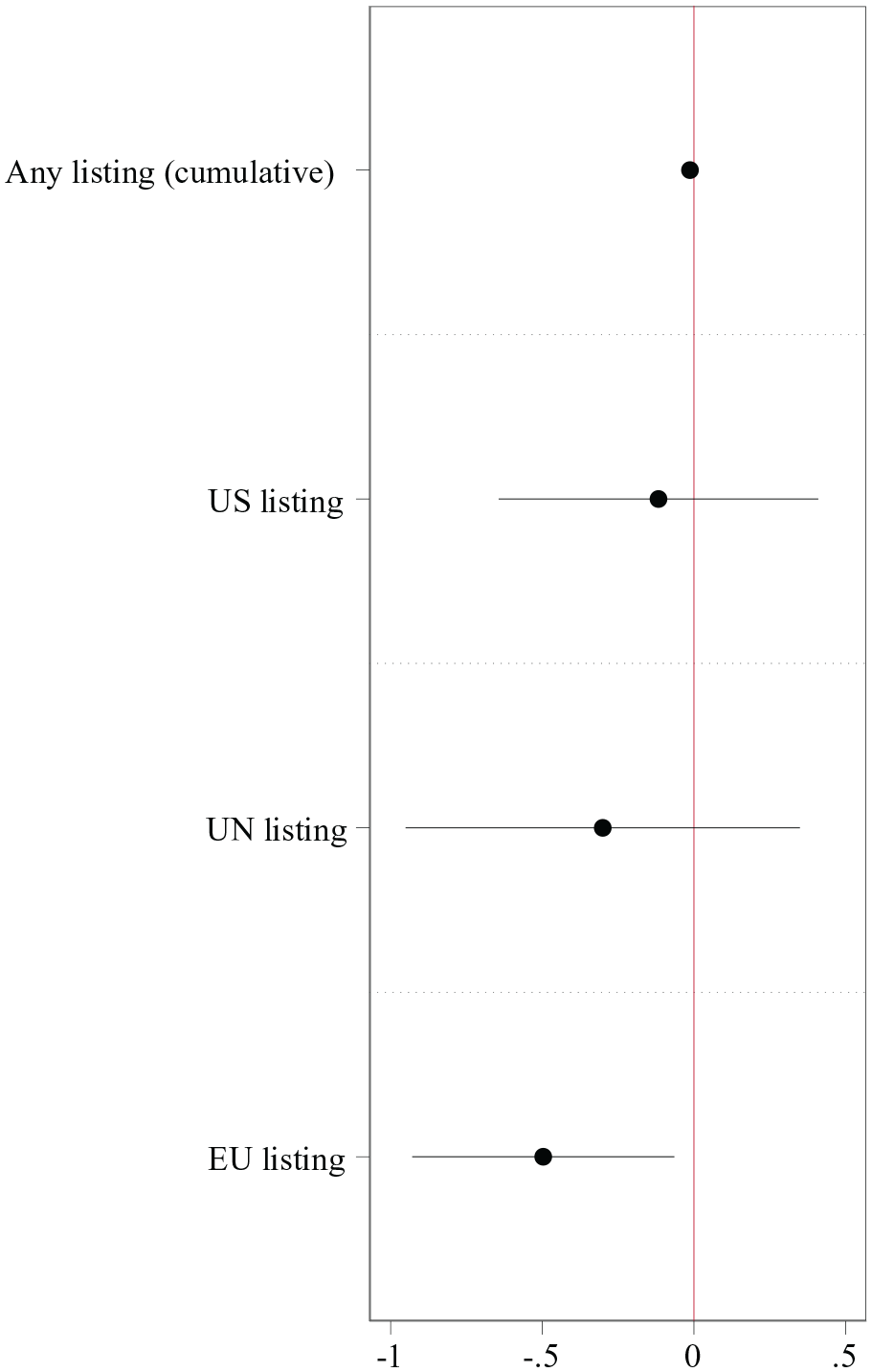
Proscription and conflict intensity, Poisson estimates, monthly panel of conflict dyads, 1989–2020.
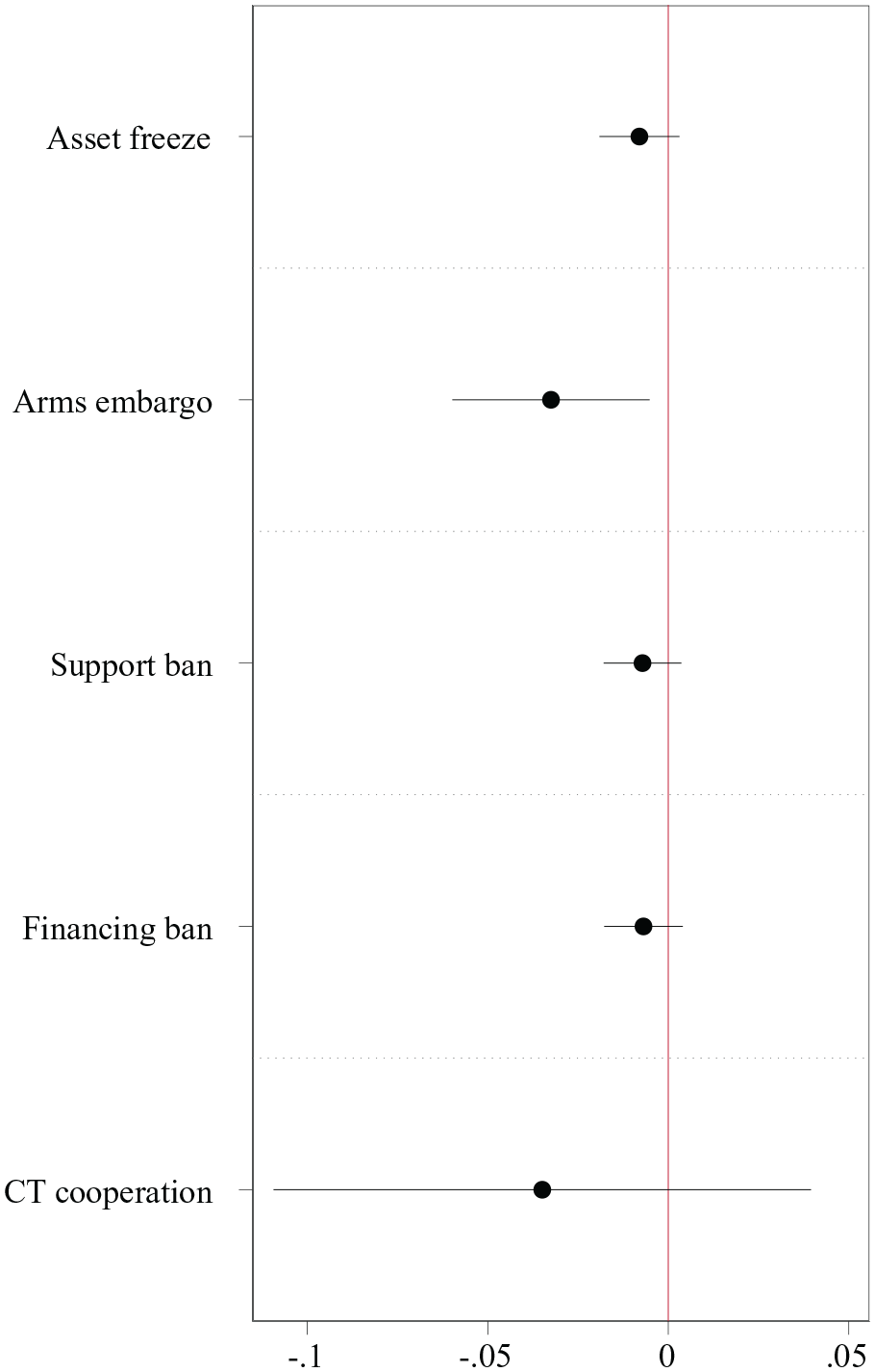
Proscription sanctions and conflict intensity, Poisson estimates, monthly panel of conflict dyads, 1989–2020.
Figure 6 also reveals that there are no systematic associations between listings by the United States or UN and conflict intensity, but the coefficient for the EU is both negative and statistically significant (p = 0.02). In terms of the substantive impact, the effect of the EU is considerably larger than that of listings in general, but still relatively modest: A terrorist designation by the EU is associated with a 5% reduction in expected battle-related fatalities, all else equal.
Does the design of proscriptions shape their impact? Figure 7 presents coefficients for different types of sanctions and measures. We note that the point estimates are negative for all types, which is unsurprising considering previous results. However, only the coefficient for arms embargoes is statistically significant (p = 0.02). In other words, if we have sufficiently adjusted for confounding, the association between terrorist designations and conflict intensity depends on the types of sanctions imposed on the designated actor. This reinforces the importance of capturing heterogeneity in sanctions in data on terror-listings. The finding that arms embargoes stand out in this comparison is particularly interesting, as it corresponds to previous findings regarding economic sanctions. Hultman and Peksen (2018) demonstrated that while sanctions in general are ‘counterproductive’ when it comes to conflict mitigation, the imposition of arms embargoes are typically followed by reduced violence, just as we observed using the PAAD data.
This concise illustration sets the stage for further research into the impact of terrorist designations. Taken together, the preliminary findings suggest, firstly, that proscriptions are more likely to be followed by conflict mitigation than intensification, while listings by some actors may have larger effects than others. Secondly, they suggest that the design of proscription regimes matter. While all measures may potentially reduce the ability of targeted rebel groups to stage violent attacks, arms embargoes are associated with the largest impact. This indicates that third parties are more likely to achieve conflict mitigation if they reduce access to the primary tools of violence – arms and ammunition – while also suggesting that the material effects of terror-listings are more important than is conventionally recognized in proscription research, which has focused on social and stigmatizing effects (cf. Haspeslagh, 2021).
Conclusion
This paper has introduced the PAAD, which records information on 18 proscription regimes in the 1979–2022 period. The data show that proscription has become dramatically more common in the last decades, as more actors have established legal frameworks aiming to blacklist non-state actors. While some states and IOs engaged in proscription prior to 2001, the data suggest that the 9/11 attacks constitute a watershed moment, spurring the international proliferation of terror-listings. As de-listings are rare, the population of banned groups have grown larger over time, with a variety of sanctions being imposed on the proscribed groups. The evidence indicates an escalating trend where proscription regimes primarily target religious extremist groups, particularly Islamist actors, establishing them as the most prevalent category subjected to such measures.
As an illustration of the utility of the data, we examined statistical associations between proscriptions and conflict intensity. While further research is required, we found evidence that both the source and nature of proscription regimes mattered for their impact on the level of violence. The aggregate social and material pressure imposed by proscriptions appears to matter, while listings by the EU and those incorporating arms embargoes are more strongly associated with conflict mitigation than other listings.
We believe that the PAAD dataset will be particularly useful to three areas of research. The first is research on the evolution of proscription regimes, which is ongoing in several social science disciplines, including political science (e.g. Freedman, 2010; Ilbiz and Curtis, 2015), sociology (e.g. Chou, 2016) and international law (e.g. Peers, 2003; Saul, 2006). Access to more comprehensive data on the characteristics of existing proscription regimes will enable more precise tests relating to the comparative design of regimes, the social forces that shape them and their legal implications. The coding procedures established here allow for extension of the PAAD in both time and space, while also providing guidance on how to incorporate more granular measures of sanctions into parallel data collection efforts (e.g. Tominaga et al., 2022).
Given that many consider proscription a tool to curtail the operational efficacy of terrorist groups, another domain of application of the PAAD is research on counterterrorism. By expanding the range of listing actors and groups, the PAAD can help to adjudicate claims regarding the effectiveness of proscriptions, for example relating to the survival time of listed groups (Phillips, 2019) or the intensity of their attacks (Best and Lahiri, 2021). It may also be useful for the literature on terrorism in the context of civil war, adding a further resource for scholars seeking to connect the literatures on terrorism and armed conflict (e.g. Asal et al., 2019; Polo and Gleditsch, 2016).
Finally, the data will provide a resource for research on the consequences of proscription for third party conflict resolution. Several arguments have emerged in the case-based literature, generally concluding that proscriptions undermine third party interventions such as mediation (Dudouet, 2010; Haspeslagh, 2021). For example, Dudouet (2010) argues that proscription may fuel radicalism, with detrimental consequences for third party mediation efforts premised on the searching for workable compromises, while Haspeslagh (2021) argues that terror-listings complicate efforts to establish a sense of symmetry and mutual recognition between belligerents. While there is some preliminary evidence for this ‘chilling effect’ of proscription (Lundgren and Svensson, 2020), the full extent of proscription on third party conflict resolution remains to be quantitatively examined. The PAAD data provide a basis for such tests and complement existing theoretical and qualitative work by helping to identify scope conditions more broadly.
Footnotes
Acknowledgements
Previous versions of this article were presented at the American Political Science Association Annual Meeting, Montréal, September 2022, and at the ‘Resolving Jihadist Conflicts’ workshop, Uppsala, October 2021. We are grateful to Brian Phillips, Véronique Dudouet, Dino Krause, Harmonie Toros, Isak Svensson, Mimmi Söderberg Kovacs, David Randahl, Helena Hinkkainen and two anonymous reviewers for insightful comments and suggestions.
Replication data

Funding
The authors disclosed receipt of the following financial support for the research, authorship, and/or publication of this article: The data collection for this article was funded by the Folke Bernadotte Academy (Grant 20-00246) and the Swedish Research Council (Grant 2020-01796).
Notes
MAGNUS LUNDGREN, b. 1976, PhD in Political Science (Stockholm University, 2014); Associate Professor, University of Gothenburg (2021–present). Recent articles in British Journal of Political Science, Journal of Conflict Resolution and Review of International Organizations.
EMMA JANSON, b. 1995, Master’s student, University of Oxford (2023–2024); Associate Researcher, University of Gothenburg (2021–2023).
MARTIN LUNDQVIST, b. 1989, MA in Political Science (Stockholm University, 2017); Associate Researcher, University of Gothenburg (2021–2023).