



Abstract
This article introduces the Lynching in Latin America (LYLA) dataset. Lynching is a surprisingly prevalent form of collective violence, but the systematic study of this phenomenon has previously been hampered by a lack of cross-national event data. The LYLA data covers reported lynching incidents across Latin America between 2010 and 2019. In total, it includes 2818 lynching events in 18 countries. The data features information on the alleged wrongdoing that motivated the event, the type of violence deployed, the size of the mob, the exact date of the event and geo-coded coordinates capturing where the event took place at the street level. The LYLA data provides an empirical basis to assess questions concerning the conditions that give rise to lynching, the impact of lynching on communities and social processes, and policies to prevent this form of violence. This article introduces the rationale for the data collection, the coding rules and procedures, and offers an illustrative example of how this data can be used, focusing on state illegitimacy as a key condition for lynching.
Introduction
When, where and why do communities choose to take justice into their own hands and ‘lynch’ alleged wrongdoers? Analysis of lynching is mainly focused on historical US cases (Pfeifer, 2004), but lynching is today common in many countries across the Global South, including India, Indonesia, Nigeria, South Africa, and Mexico (Jung and Cohen, 2020). Contemporary cases of lynching appear to be closely connected to the state’s political institutions. Lynching participants often claim that they act in the service of justice and complain about the state’s ineffectiveness or unwillingness to deal with wrongdoers (Godoy, 2006). Yet the prior lack of suitable cross-national data means that even basic relationships between lynching and core factors such as state capacity and legitimacy remain poorly understood.
Lynch mobs have rarely been identified as political agents, perhaps because they neither systematically attack state representatives nor follow clear ideological precepts. However, lynchings represent a political expression of the marginalized (Goldstein, 2003). Lynchings belong to the same category as Edward Thompson’s description of the food riots in 18th century UK and James Scott’s Cold War account of the peasant rebellions in Southeast Asia (Scott, 1976; Thompson, 1971). They also resemble vigilantism, although they do not usually count on sustained organizational structures (Bateson, 2021; Moncada, 2017). Lynching can thus be classified as a form of political violence (Kalyvas, 2019). It represents a glaring symptom of deficient state rule and should attract attention from policymakers.
In this article, we introduce the Lynching in Latin America (LYLA) dataset. This is the first dataset spanning more than one country, which for the first time enables researchers to conduct cross-country research on lynching. The LYLA data captures 2818 reported fatal and non-fatal events across 18 Latin American countries from 2010 to 2019. It also includes details such as the alleged wrongdoing that motivated the lynching, the type of violence involved and the number of lynched persons. The data can be used to identify temporal trends across Latin America, offering unique insights to media reporting and policy debates. All events in the LYLA data are geo-coded and compatible with other spatial data, making it possible to examine previously untested assumptions and generate a fuller understanding of lynching, in comparison to other more commonly studied forms of violence. Using this dataset, researchers can examine the drivers of lynching, such as state deficiencies, community characteristics, delinquency, and the consequences of lynching, for example its alleged deterrent effect on petty crime or its capacity to increase community cohesion.
In this article, we first set out the need for a new lynching dataset. Progressing, we discuss the process of conceptualizing lynching, our coding approach, followed by a series of descriptive analyses of the data and an illustrative empirical application focusing on state legitimacy and lynching. The final section concludes by discussing how this data creates new avenues for research.
Why a new dataset on lynching in Latin America?
Existing lynching data is mainly focused on historical lynchings in the United States. For example, data collected by the Tuskegee Institute contains 4742 lynching victims for the period between 1882 and 1968 (Ramey, 2017), and more recent datasets include additional cases (Equal Justice Initiative, 2017; Seguin and Rigby, 2019) and more information on the victims (Bailey and Tolnay, 2015; Tolnay and Beck, 1995).
Evidence of lynching from other contexts is more limited. It often refers to lynching-related violence, with local researchers adopting a different terminology. It is nonetheless informative for the wider phenomenon of lynching-related violence. In Indonesia, the World Bank collected data on vigilante violence, a phenomenon that often overlaps with lynching, encountering 33,627 cases with 1659 fatalities between 2005 and 2014 (Jaffrey, 2019; World Bank, 2014). The South African Police Service identified 846 murders in 2017 and 2018 in relation to mob justice, the term used locally to describe lynching-related incidents (Institute for Security Studies, 2019). In the capital of Tanzania, Dar es Salaam, public health scholars counted 1249 people killed in cases of mob justice in the five years from 2000 to 2004, drawing on autopsy reports from the Department of Pathology combined with interviews (Ng’walali and Kitinya, 2006). In Latin America, several organizations and scholars have collected data on lynching in single countries, including Guatemala (MINUGUA, 2000; see Mendoza, 2008), Mexico (Rodríguez Guillén and Veloz Ávila, 2019) and Argentina (Gamallo, 2020). 1
Lynching is thus a widespread phenomenon, notably in mid- and low-income countries of the Global South with imperfect democracies. Yet to reliably capture the frequency of lynching and understand its causal drivers, we need comparable cross-country event data. Each of the prior discussed datasets use different definitions, rely on different sources and cover different time periods. This may explain many of the differences between the figures both across and within countries and limits any systematic comparison.
To date, the only cross-national data was collected by Jung and Cohen (2020). They use mentions in US State Department human rights country reports as sources of information. Lynching is mentioned in reports from all world regions and increasingly so from the 1970s to the 2000s. Beyond this creative approach, which does not allow for insights about the frequency and specific characteristics of lynching events, there is no cross-national data on lynching. 2
To develop the first cross-national lynching event dataset, we focused on Latin America. Several reasons motivated this choice. Firstly, existing data suggests lynching is a common form of collective violence in many Latin American countries, and surveys show there is broad support for community justice (Nussio, 2023; Nussio and Parás, 2022; Zizumbo-Colunga, 2015). Yet, as we have detailed above, there is a deficit in systematic cross-national data.
Secondly, as a region, Latin America is comparatively homogenous, which allows researchers to keep relatively constant several background factors that may bias data collection. Importantly, there is a similar vocabulary and use of the term lynching in Spanish and Portuguese. This facilitates data collection based on news reports, which would not be the case if countries from different world regions were compared.
Thirdly, despite the relative homogeneity of the region, there is significant variation within Latin America. For example, there are both relatively strong states in the Cono Sur region and relatively weak states in Central America. Perhaps more importantly, most countries are characterized by notable variations in state presence across their territories, with pockets of state weakness or ‘brown areas’ (O’Donnell, 1993). This variation provides a fertile terrain within which to examine theoretical claims about lynching.
To summarize, existing lynching data is usually limited to single countries, and mixed in terms of the temporal scope and conceptual approach. While the data provides indicative if anecdotal evidence, it does not allow for a thorough comparative analysis. To address this, we compiled the first cross-national lynching event data, focusing on Latin America for pragmatic and methodological reasons.
The concept of lynching
The term lynching can be traced back to a certain Judge Lynch, who defended extralegal justice in 18th century Virginia (Waldrep, 2002). Several languages, including German, French, Spanish and Portuguese have adopted a version of the term. Locally, other terms are used to describe a similar phenomenon, such as dikeroyok massa (beaten up by a crowd) in Indonesia (Colombijn, 2002), or justicia por mano propia (justice by our own hands) in Latin America (Goldstein, 2003). Scholars often use terms like extralegal justice (Kloppe-Santamaría, 2020), popular justice (Berg, 2011), mob violence (Bailey and Tolnay, 2015) and punitive violence (Baron et al., 2022) to denote essentially the same phenomenon.
We understand lynching as ‘publicly displayed physical violence executed by a group of civilians against alleged wrongdoers’. For a lynching to occur we therefore require that the following four criteria are met.
First, ‘an act of physical violence’. This act of violence can be, but does not need to be, fatal. In line with most authors from outside the US context, and especially Latin America (Godoy, 2006; Kloppe-Santamaría, 2020), we do not believe that a fatal outcome should be a necessary criterion, as this risks excluding relevant events where the target escaped, was rescued, or simply survived the attack. Readers should note that this is an important distinction to common usage of the term in the US context, which does require a fatal outcome. US researchers have called lynchings that did not end in fatality due to interventions of state agents ‘threatened’ or ‘averted’ lynchings (Beck, 2015; Beck et al., 2016; Hagen et al., 2013).
Second, the act is ‘perpetrated by a group of civilians’, rather than members of a standing armed organization (Senechal de la Roche, 1997). This differentiates lynching from violence used by gangs, rebels and regular security forces. The term ‘mob’ is often used in this context, denoting a temporary and fickle civilian group with an ambiguous agenda and fluid and fuzzy membership (Senechal de la Roche, 1996). Members of organizations may join in a lynching, but the perpetrators must act in their capacity as civilians and not as members of an existent standing organization (e.g. the Ku Klux Klan, or a drug cartel). Different from other researchers, we abstain from using the related term vigilantism, which includes, in addition to acts of violence, the prevention and investigation of violence (Bateson, 2021). Lynching is the more precise term for our dataset as it denotes the act of violence, rather than a more sustained social practice, as implied by vigilantism.
Third, the perpetrators must act against ‘some alleged wrongdoing’. In lynching violence, targeted individuals are held responsible for what they allegedly did. This distinguishes lynching for example from rioting or hate crimes, which do not require a particular wrongdoing. Senechal de la Roche (1997: 61) calls this aspect of lynching ‘individual liability’. We use the inclusive term ‘wrongdoing’ rather than the more specific crime or offense as transgressions that give rise to lynchings can either be against the law (like theft) or against some social norm (concerning for example appropriate sexual behavior or witchcraft).
Fourth, the act must include a form of ‘public display’, sometimes enacted as a spectacle (Fujii, 2017). This differentiates lynching from clandestine forms of collective violence like social cleansing. Ritualized actions may be part of lynching, but this is not a definitional aspect, as lynchings vary so much that they cannot be generally classified as a ritual. Some authors have distinguished different types of lynchings depending on different levels of publicness (Smångs, 2016). We only require that the violence be undertaken in public without any intention to conceal it.
Coding lynching
To identify and categorize lynching events, we primarily relied on Factiva, the most comprehensive global news database, containing almost two billion news articles from more than 33,000 news sources from 200 countries in around 28 languages. 3 This includes news networks, such as Reuters and the Associated Press, as well as local radio, television and newspaper reporting in local languages. 4 Factiva allows researchers to search for keywords and specify the countries of interest. 5 We tested several search strings, ultimately settling on a specification that included common terms for lynching in English and Spanish (e.g. Lynching and Linchamiento), a number of related colloquial terms in Spanish (e.g. justicia por mano propia), terms relating to mob violence in both Spanish and English (e.g. lynch mob or vigilantes) and excluding a number of common terms unrelated to our concept (e.g. the bank Merrill Lynch).
Next, we limited the geographic scope of our search to Latin America. Given that our data collection was mainly based on newspapers, we limited our focus to Spanish- and Portuguese-speaking countries in Latin America for reasons of language comparability. These included Argentina, Bolivia, Brazil, Chile, Colombia, Costa Rica, Dominican Republic, Ecuador, El Salvador, Guatemala, Honduras, Mexico, Nicaragua, Panama, Paraguay, Peru, Uruguay and Venezuela. We excluded Jamaica, Belize, Haiti, Guyana, Suriname and a series of smaller Caribbean states due to different language use hampering the comparability of news-based text searches across countries and limited news coverage. We also excluded Cuba due to limited newspaper reporting. The temporal focus was 2010 to 2019. This approach produced a corpus of around 80,000 news articles.
Human coders then reviewed each article to determine whether it identified a lynching event. Identified cases were coded to capture details such as the date of the event, the location, number of targets and perpetrators, 6 and a series of variables such as the form of violence, the alleged form of wrongdoing, and the physical consequences suffered.
Following best practices (Davenport and Moore, 2015), all coding sheets were then checked by one of the more experienced coders. Any disagreements or contentious issues were either discussed in meetings with the project leaders or solved between the coders in the event of a clear error. Therefore, all lynching events included in the LYLA data were checked by at least two persons, and unclear cases reviewed by at least one project leader. To avoid double counting, we cross-checked all events that happened on similar dates and in similar locations at the end of the coding process.
We set a low bar for events to be entered into the dataset, including cases that some may not consider lynchings, but ‘attempted’ or ‘averted’ lynchings. The boundary condition for inclusion was a clear threat of lynching violence, expressed by the presence of a mob showing intimidating behavior or engaging in vandalism of goods that belong to the target. This low bar allows researchers who use the dataset to set their own threshold, for example, including all LYLA cases, only cases resulting in injury or, even more restrictively, only cases resulting in death. This low bar also allows researchers to examine what causes lynchings to be lethal versus non-lethal (see Hagen et al., 2013).
While a news-based approach is best-suited to gathering systematic cross-national lynching data, there are well-known limits to collecting violent event data using news reports. News can have a significant reporting bias for lynchings (Godoy, 2006: 26; Mendoza, 2008: 51), which affects the collection of data on all types of violent events (see Weidmann, 2015). More newsworthy events are prioritized, which means that more violent, more urban, and more spectacular lynchings involving unusual protagonists are reported more often (Miller et al., 2022). Our approach therefore risked introducing systematic bias (e.g. urban bias, bias toward bigger events). Similar problems also afflict well-known and high-quality lynching datasets from the United States (Spilerman and Gerratana, 2009). By relying on local media sources included within the Factiva database, we hoped to mitigate some of these problems; prior research has shown that despite these challenges this type of data can be instructive (Sundberg and Melander, 2013). This must however remain an important consideration for researchers who use the LYLA data.
It is important to stress that the LYLA data captures reported lynchings. There is a significant number of lynchings that go unreported in news media. Hence, we are not blind to potential biases in the data collection and have tried to be as transparent as possible in our presentation. We also conducted additional validation checks using locally coded national datasets, which largely supported the validity of our data. In addition, we provide researchers with information on a country–year level on overall Factiva news coverage, which allows identification of potential biases stemming from changes in the source material (Clark and Sikkink, 2013). We discuss validation in Online appendix 4 and provide a separate 50-page document that includes country reports comparing our data with datasets available for individual countries.
We opted to rely on news media reports after carefully considering the alternatives, including crime statistics, social media and surveys. First, lynching is not defined as a crime in the penal code of any Latin American state (see Online appendix 2). A lynching incident may enter crime statistics, for example, as a homicide or injury, but given the large number of homicides and injuries unrelated to lynchings, these forms of violence do not provide a meaningful proxy. Hence, there is no readily available official information.
Second, we decided against using social media. News reports provide a consistent corpus of data that can be analyzed systematically and retrospectively, and of which the biases are relatively well understood (Miller et al., 2022). Social media is harder to study systematically, and the biases are less clear. Furthermore, social media entries on brutal violence tend to be quickly deleted from platforms. Using social media would also have risked exposing our coders to considerable psychological harm. We made sure that our coders were only exposed to text, rather than to potentially more harmful visual material about lynching, shown on Facebook and other platforms. 7
Third, we opted against using surveys. To achieve sufficient coverage across time and space would have been prohibitively expensive and likely to only reveal scattered and geographically limited information. Instead, we ran a survey to validate the LYLA data at the level of Mexico City neighborhoods (see below and Online appendix 4.3). We also explored whether existing surveys might provide a workable source of data. However, possible indicators, such as expressed support for self-justice, were found to be relatively poor proxies for lynching events. 8
The Lynching in Latin America dataset
The LYLA dataset includes 2,818 reported lynching events from 2010 to 2019. 9 It is the first cross-national lynching event dataset, and the first Latin America-wide lynching dataset spanning multiple years of observation based on a unified coding scheme and common data sources. The most important variables concern date and location (in most cases identified down to the street level), the types of wrongdoing giving rise to lynching, the number of perpetrators, the types of violence inflicted, and the types of harm suffered by the targeted persons. Individual variables are described in detail in a separate codebook.
Geographic distribution of lynching
Figure 1 shows a map of Latin America. Each country is shaded relative to the total reported lynchings per million inhabitants. Darker shading signifies a higher rate of lynching. Guatemala is the country that had the highest rate over the whole 10-year period with 19 events per million inhabitants (261 cases for a population of roughly 14 million inhabitants). Bolivia had a rate of 11 per million inhabitants. Mexico had by far the most cases (1134) and the third highest rate with nine per million inhabitants. Peru (6) and Argentina (5) also had relatively high rates. In contrast, we registered no lynchings in El Salvador. This is possibly a result of limited news coverage, as an open internet search pointed to evidence of isolated lynching events. Another explanation is that other forms of collective violence, especially gang violence, replace lynching, or instead ‘crowd out’ the reporting of lynching in El Salvador (Castillo Claudett, 2000: 219).
Figure 1 also marks the locations of all lynching events, with higher densities of black dots indicating greater frequencies of lynching in that region. The areas in and around Mexico City and the southwestern highlands of Guatemala stand out as hot spots. Highland regions in Bolivia and Peru as well as urban areas across Latin America (e.g. Lima, Buenos Aires, Rio de Janeiro) also show a concentration of lynchings. In Colombia, we see lynchings clustered around major population centers, with low levels of lynching in the most conflict-affected areas. It is not clear whether this corresponds to a process of violence substitution or reflects the ‘crowding out’ of lynching reporting. These patterns of geographic variation may provide interesting gateways for the study of violence substitution, the importance of urbanity, and the role of the state. Just from eyeballing the LYLA data we can already cast serious doubt on the prevalent notion that lynching is specific to rural societies.
As most lynchings are geo-coded at the street level, the LYLA data can be utilized for fine-grained analysis at the subnational and even subcity level. As an example, Figure 2 presents lynchings across Mexican states. Here, we see that lynchings are largely concentrated in the most populated area of Mexico (even when accounting for population size) in and around Mexico City, including Puebla with a rate of 30 lynchings per million inhabitants, Tlaxcala (28), Mexico State (Estado de México) (21), Mexico City (20), Hidalgo (16), and Morelos (12). Oaxaca (14) and Chiapas (8) also have relatively high amounts of lynchings. This supports prior research by Fuentes Díaz (2005: 13) who reported the same eight states as having the highest concentration of lynchings for the period 1984 to 2001. Similarly, Kloppe-Santamaría (2020: 127) reports that most lynchings were concentrated in the three states of Mexico City, Puebla, and Mexico State for the period between 1930 and 1959, suggesting a considerable historical continuity in the geographic prevalence of lynching.
Figure 3 zooms in on Mexico City. This granular level reveals the location of lynchings down to the roughly 1800 Mexico City neighborhoods (colonias).
10
We observe that lynchings were concentrated in the southern, semi-urban outskirts of the city, in the highly populated area of Iztapalapa, and in some areas of the center, especially the neighborhood of Tepito, which has an important market area. Using this highly granular approach, we validated our news-based data collection
Reported lynchings across Latin America, 2010–2019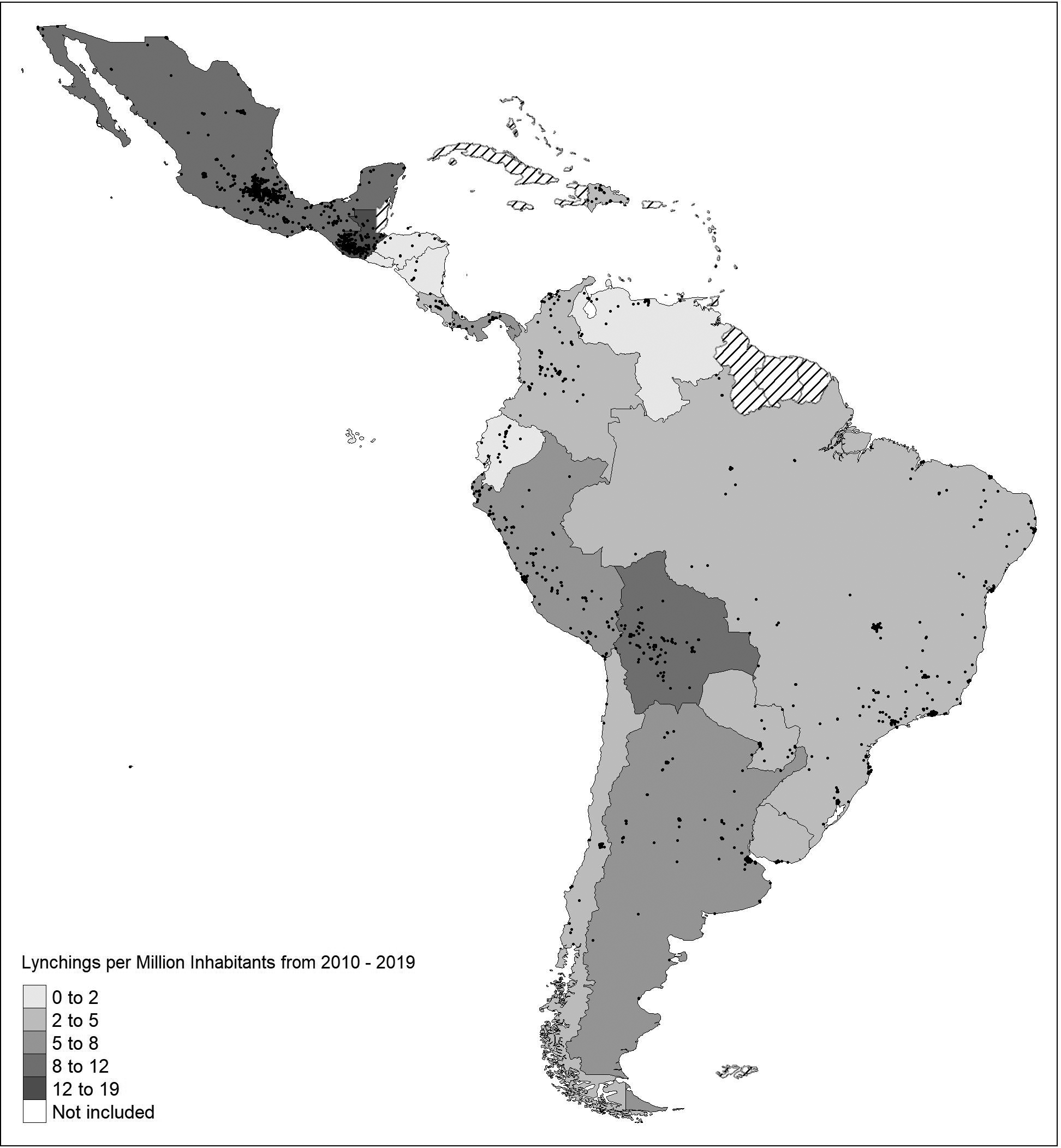
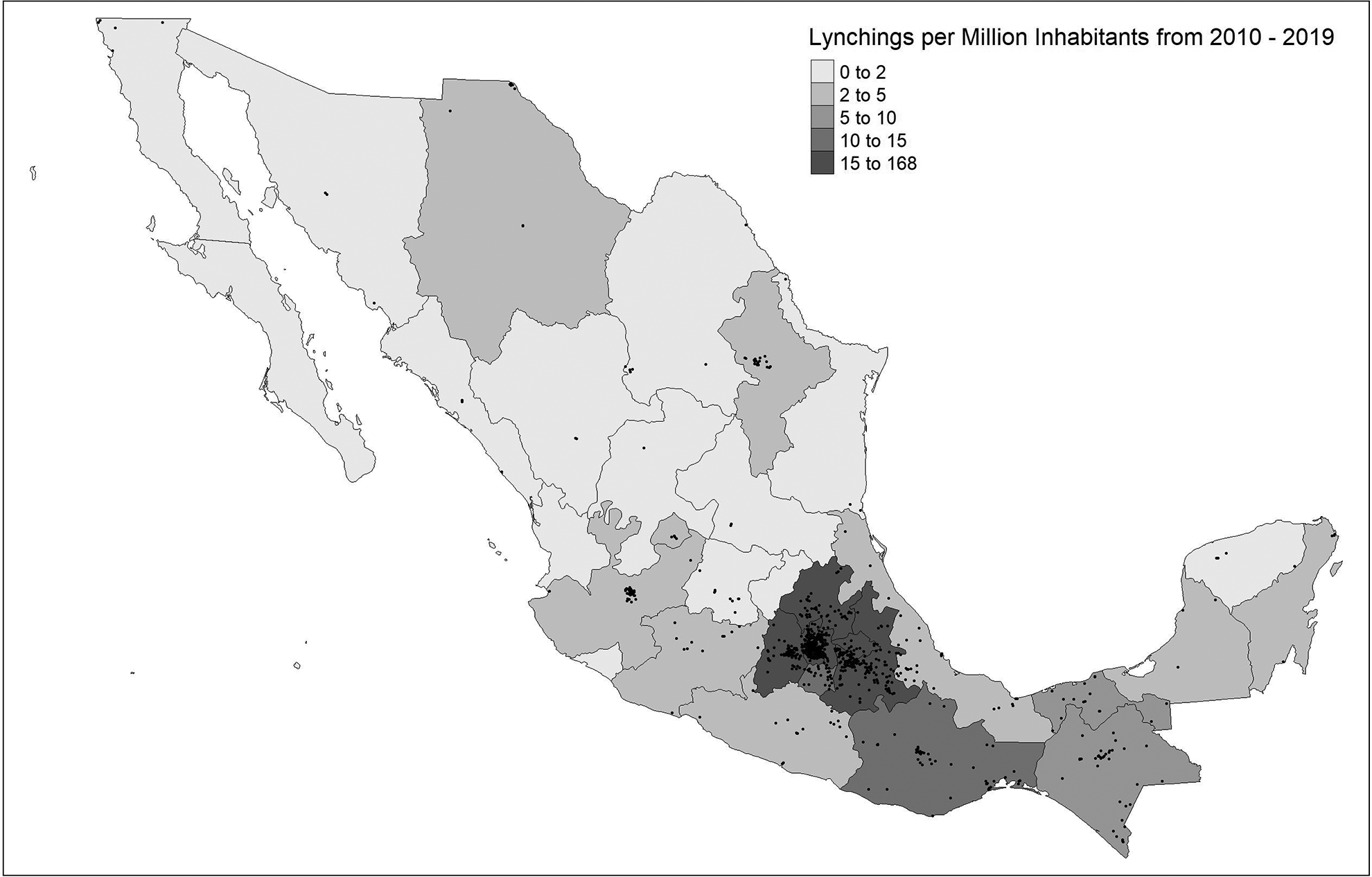
Reported lynchings across Mexico, 2010–2019
Temporal distribution of lynching
A repeated claim in the Latin American news media is that lynching has increased in recent years. Yet a lack of data has limited empirical assessments of this claim. The LYLA data captures the precise date of each event, allowing researchers to explore trends.
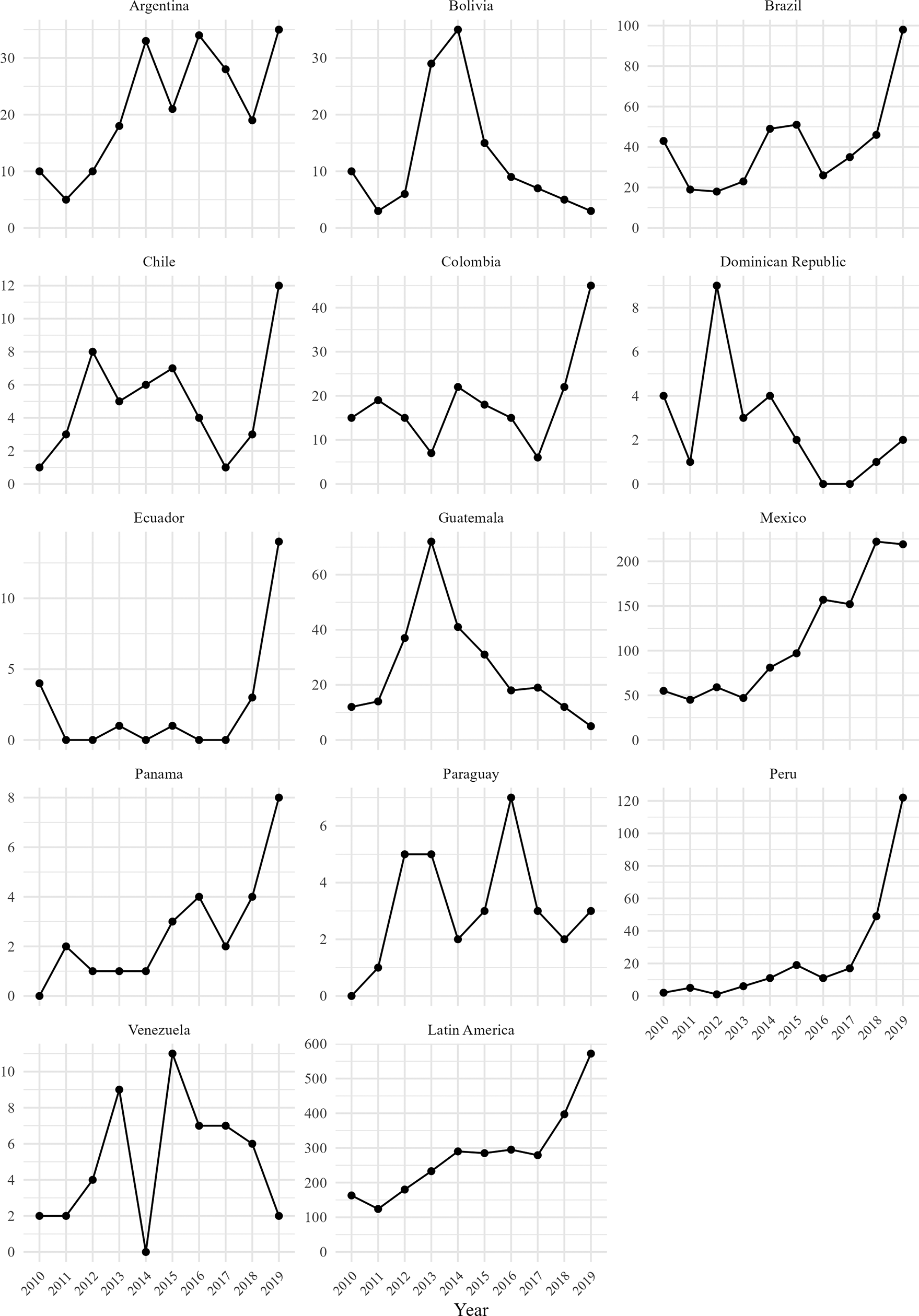
Figure 4 presents the total number of reported lynchings over time in the countries covered. The final panel shows the trend across all Latin America. Overall, we observed a tendency toward an increase in lynchings. Interestingly, reported lynchings did not show a common temporal pattern when comparing countries. For example, for both Bolivia and Guatemala, 2013 was a pivotal year from which point lynching became less common. In contrast, in several countries, reported lynchings increased dramatically toward the end of the study period. In Brazil, Colombia, Peru, and Mexico, for example, the last two years witnessed the highest absolute number of lynchings on record.
We were mindful that these increases might have emerged from an increase in the sources included in the Factiva database, which has improved its news coverage over time. We investigated this further and determined that this did not seem to have been a decisive factor in shaping our trends. In Mexico, for example, we found increased news coverage, but the increase in reported lynchings was much larger than the increase in news coverage, suggesting that there is also an increase in the actual number of lynchings. We are thus confident that our data provides support for the widely held impression, particularly in Mexico, that lynchings have been increasing in recent years.
To validate the temporal trends, we also compared our data with other datasets at the country level. We found that the LYLA data provided comparable figures to other country-focused datasets based on local newspapers. We detail these validation checks in Online appendix 4 and in a separate Online appendix that includes individual country reports.
The wrongdoers and their wrongdoings
In addition to date and location, the LYLA data captures several other attributes. For example, we registered the alleged wrongdoings that precipitated the lynchings (see Figure 5). Alleged theft was by far the most common catalyst of lynchings in all countries (1745 cases in total). This is in line with other country-specific datasets that also point to a large majority of cases triggered by
Absolute number of reported lynchings in Mexico City, 2010–2019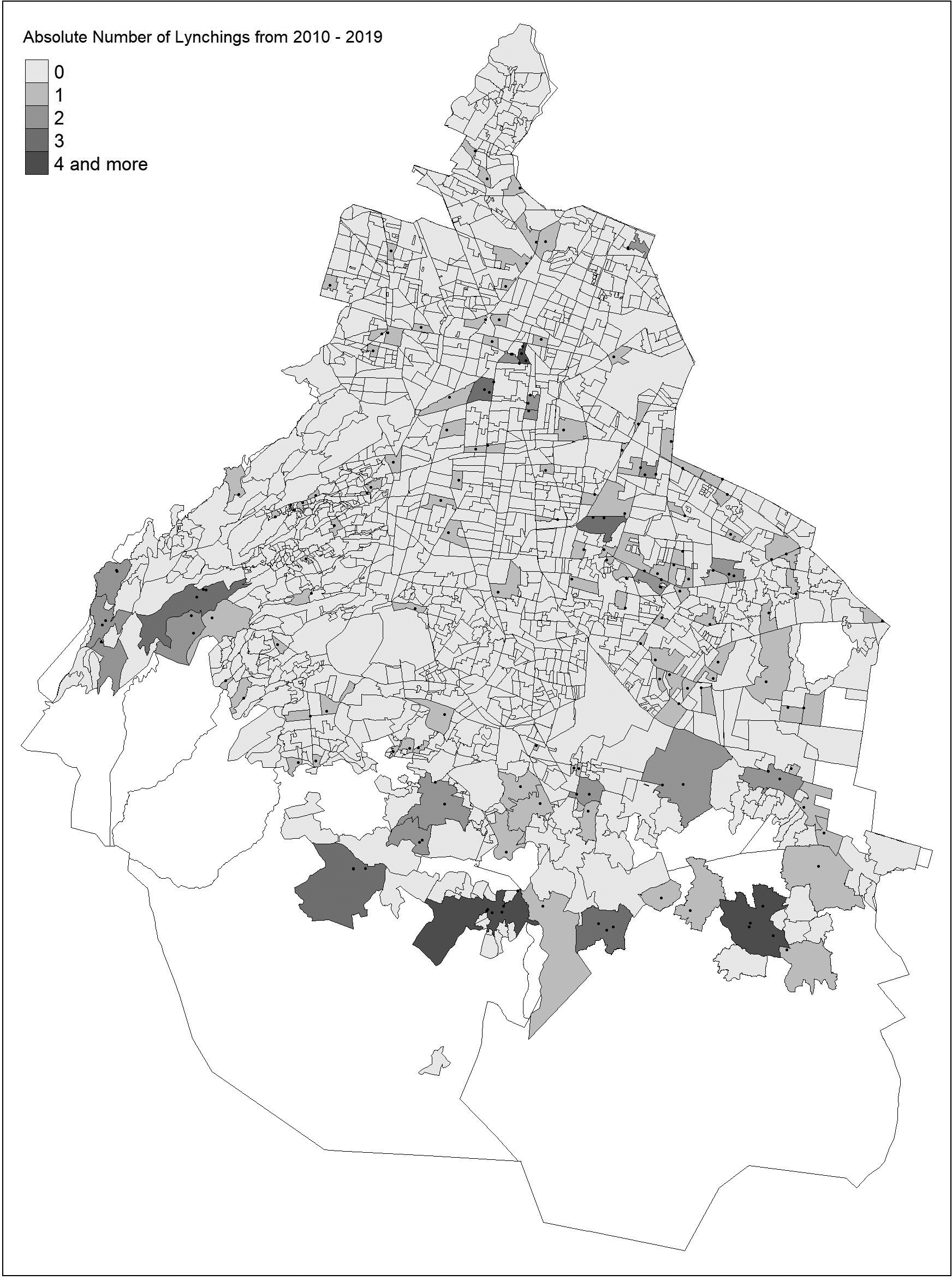
After theft, alleged murder (439 cases) and child abuse (359 cases) were the most frequently mentioned wrongdoings giving rise to lynchings. In Brazil and Colombia, murder and child abuse were more frequent than theft. Cases of child abuse have the potential to generate moral outrage in the community and thus
Reported lynchings by country and Latin America, 2010–2019
11
Number of reported wrongdoings that gave rise to lynching by country
12
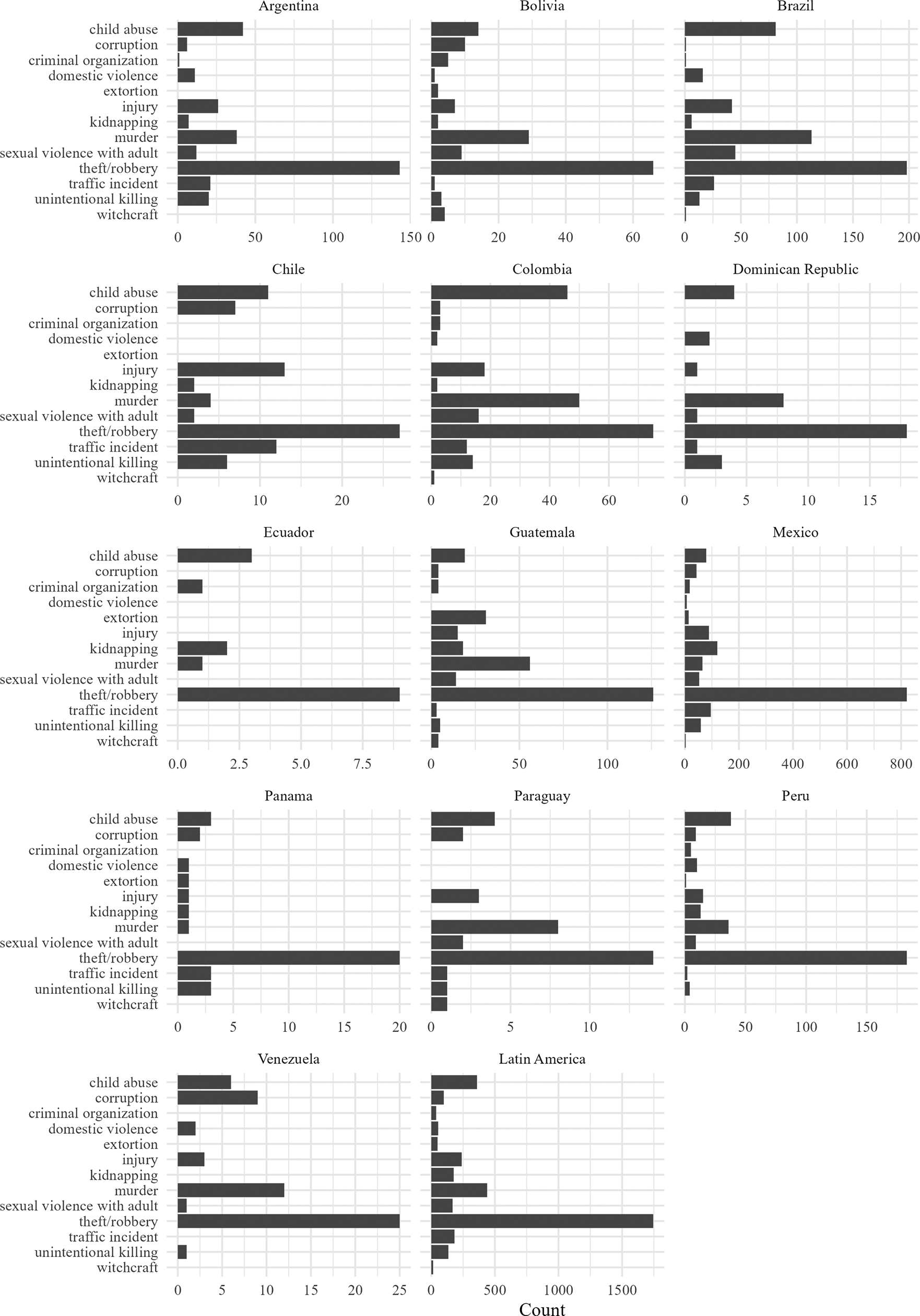
The catalysts of lynching may well have shifted over time together with a general cultural change. For example, lynching due to allegations of witchcraft are rare today (14 cases reported), but were relatively common in the first half of the 20th century, at least in Mexico (Kloppe-Santamaría, 2020), and still seem to be common in places such as Papua New Guinea (Forsyth, 2018).
Although Latin America, particularly countries such as Mexico, Colombia, and Brazil, is plagued by organized crime, lynchings of members of criminal organizations are rare (38 cases). Smaller groups of kidnappers were targeted relatively often (176 cases). However, the alleged wrongdoings giving rise to lynching showed that mobs prefer to attack isolated petty delinquents, as they may fear repercussions from criminal organizations.
In most reported cases (69%), only one person was targeted by the lynch mob. In 18%, it was two persons. More than five persons were targeted only in exceptional cases. This speaks to the strong asymmetry between perpetrators and targets that facilitates the act of violence. Some authors even argue that asymmetry is a definitional aspect of lynching (Vilas, 2008).
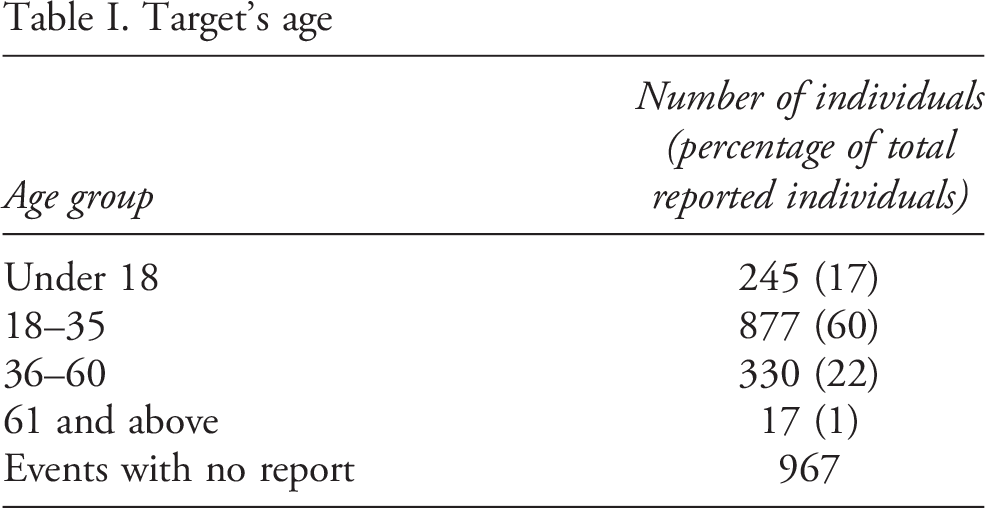
At commencement of the data collection, we defined four focus countries to estimate the time to completion of the dataset. These countries included the three most populous countries, Brazil, Mexico, and Colombia, and Guatemala, as a country known for a high lynching prevalence. For these countries, we coded an expanded list of variables. Due to time and financial constraints, we could not code this expanded list of variables for all countries, as the data collection would have become overly time-consuming. We report descriptive statistics for some of the variables that were coded only for these four focus countries. For these four countries, 91% of the targets (2562 individuals) were male and 9% female (246). Males were also more often killed in lynchings than females (24% vs. 14%). The most frequently targeted age group was young adults (see Table I). In cases where information was available, the main target was between 18 and 35 years old (60% of cases). Both sex and age group distributions mirrored work on lynching victims in the United States (Bailey and Tolnay, 2015).
Target’s age
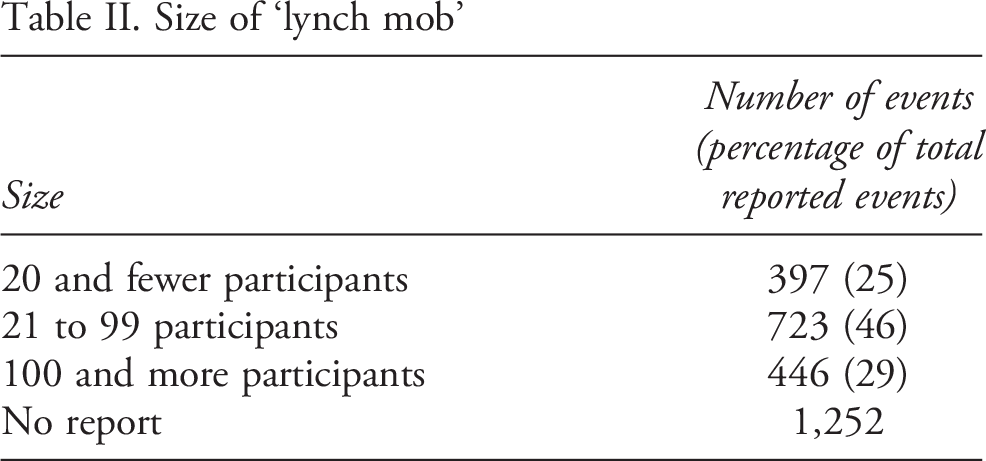
Size of ‘lynch mob’
The perpetrators
How many people take part in a lynch mob? This variable was collected for all countries. For the cases where we were able to capture this information, we found 24% of lynching events involved groups with fewer than 20 participants, 46% between 20 and 99 participants, and 30% with more than 100 participants (Table II). Large variation in the number of mob participants is common across contexts, including in the United States (Smångs, 2016). Some extreme, rare events have involved more than a thousand participants. For example, 2500 villagers burned two alleged kidnappers in Guatemala in 2010.
There is some debate about the role of the state in lynchings. Tolerance of lynching by state agents can facilitate lynching, such as in the historical US South (Kato, 2015). 13 For the four focus countries, news reports indicated that the state acted against lynching in 1438 cases and in favor in only 21 cases. However, the pressure applied by local lynch mobs seems to be influential, as in most cases it was the targets of the lynch mobs that were arrested (1085 reported arrests of targets), not the lynching perpetrators (68 reported arrests). In 20 cases, there were arrests of both targets and perpetrators.
Nevertheless, when state agents get involved, violence tends to be less severe, as evidence from the four focus countries suggests. With no state involvement, 66% of lynchings resulted in a fatal outcome, whereas when state agents were present 14% resulted in a fatality. An initial descriptive analysis of our four focus countries did not therefore suggest that state agents systematically tolerated or even promoted lynching violence. While state agents acquiesced in some cases, they usually acted against lynch mobs. This is different from other cases and time periods when state agents have more often collaborated with lynch mobs, as for example in post-revolutionary Mexico (Kloppe-Santamaría, 2020) and Indonesia (Jaffrey, 2019).
Another debate in the literature concerns the relationship between lynching and the customary law of indigenous communities, particularly in Guatemala (Mendoza, 2008; Sieder, 2011) and Bolivia (Yates, 2017). In Guatemala, we found evidence of participation of indigenous communities in 44 of 261 cases (17%), in Mexico in 26 of 1134 cases (2%). In Colombia and Brazil, we did not find evidence of participation of any indigenous communities. Overall, there is thus little evidence to suggest that indigenous populations are the main driver of lynchings in Latin America. Guatemala – and perhaps Bolivia for which we had no systematic information – was an exception, where indigenous communities were more often involved in lynchings. In contrast to common media narratives, even in those countries, most cases of lynching did not seem to be related to indigenous communities. However, we did find that events involving indigenous groups might be more deadly. For those cases in which indigenous communities were involved, 74% ended with a fatal outcome, compared with 21% for the whole sample. This presents several important avenues for future research.
The violence
What kinds of violence do lynch mobs use? While the exact types of violence are not always reported in the news, some patterns do emerge (Figure 6). We recorded beatings in 59% of all cases (1672 cases). Some form of forced detention was also common (24% and 690 cases). Often, alleged wrongdoers were for example tied to a traffic light and abandoned there. Burning was reported in 9% of the cases, and stoning in 7%. Burning was conspicuously more common in Guatemala and Bolivia, perhaps contributing to more sensationalist news about lynching in those countries. Hanging was registered in 48 cases and shooting in 52 cases. As mentioned, the boundary condition for inclusion in the dataset was a clear threat of violence. In some cases, there was thus no actual violence inflicted, most often because the target escaped or was protected by the authorities. Taken together, the data suggests that the most common forms of violence are those that most easily allow for evasion of individual responsibility.
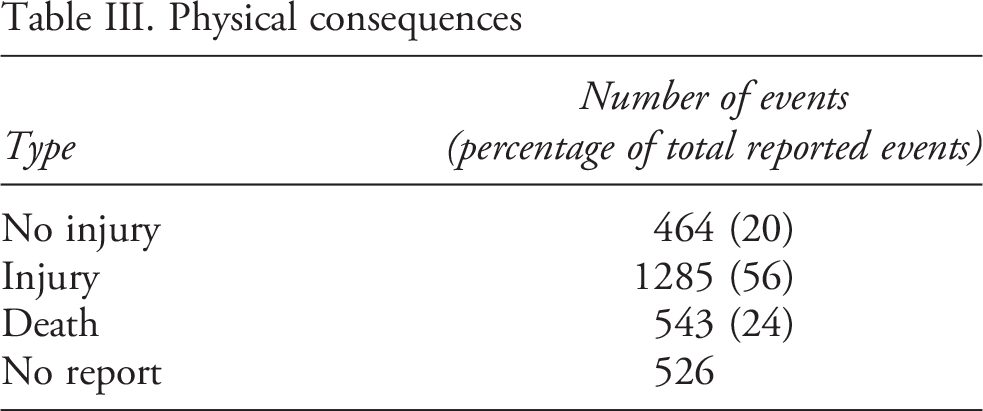
Not all targeted persons in our dataset suffered direct physical consequences from the lynching (Table III). Roughly 20% remained uninjured, mostly because the police intervened in time, or the targeted person was able to escape. However, in 24% of the registered cases (543 cases), there was at least one fatality, and in 56% at least one of the targets suffered an injury. In 75% of the cases resulting in fatalities, there was exactly one fatal victim, while in 25% of the cases there was more than one. 15 Journalists often immediately report a lynching before the physical harm suffered by the target is clear. This could explain the high number of cases without reports.
Application: Lynching and legitimacy
We offer a brief application to show how the LYLA data can be used. We focus on the relationship between state legitimacy and lynching. Prior research shows that when citizens perceive the government to be fair and just, they tend to comply with the law (Levi, 1997). But when citizens do not see states as legitimate authorities, in particular, when states fail to respond to what citizens perceive to be serious threats, the authorities lose legitimacy, and support for violence and vigilante justice increases (Cruz and Kloppe-Santamaría, 2019; Nivette, 2016).
Several case studies indicate that lynch mobs arise in the absence of a legitimate state authority to deliver justice and punish wrongdoers (Godoy, 2006; Goldstein, 2003; Jung and Cohen, 2020; Nussio, 2023; Nussio and Clayton, 2023; Smith, 2019; Yates, 2017). Yet a prior lack of data means there is limited evidence supporting this claim. The LYLA data allowed us to examine whether ‘lynching is more likely to occur in areas with low state legitimacy’.
Measuring state legitimacy across Latin America
To capture variation in state legitimacy across Latin America, we created a province-level dataset covering the whole of Latin America, including geographic characteristics and average attitudes concerning state legitimacy (see Online appendix 5). Province-level measures of state legitimacy were based on all ‘AmericasBarometer’ surveys, 16 which include approximately 200,000 respondents from 2002 to 2019.
We generated estimates of the levels of state legitimacy in each geographic unit by averaging the score individuals prescribed to a barrage of related questions. This
Reported violence used by perpetrators by country
14
Physical consequences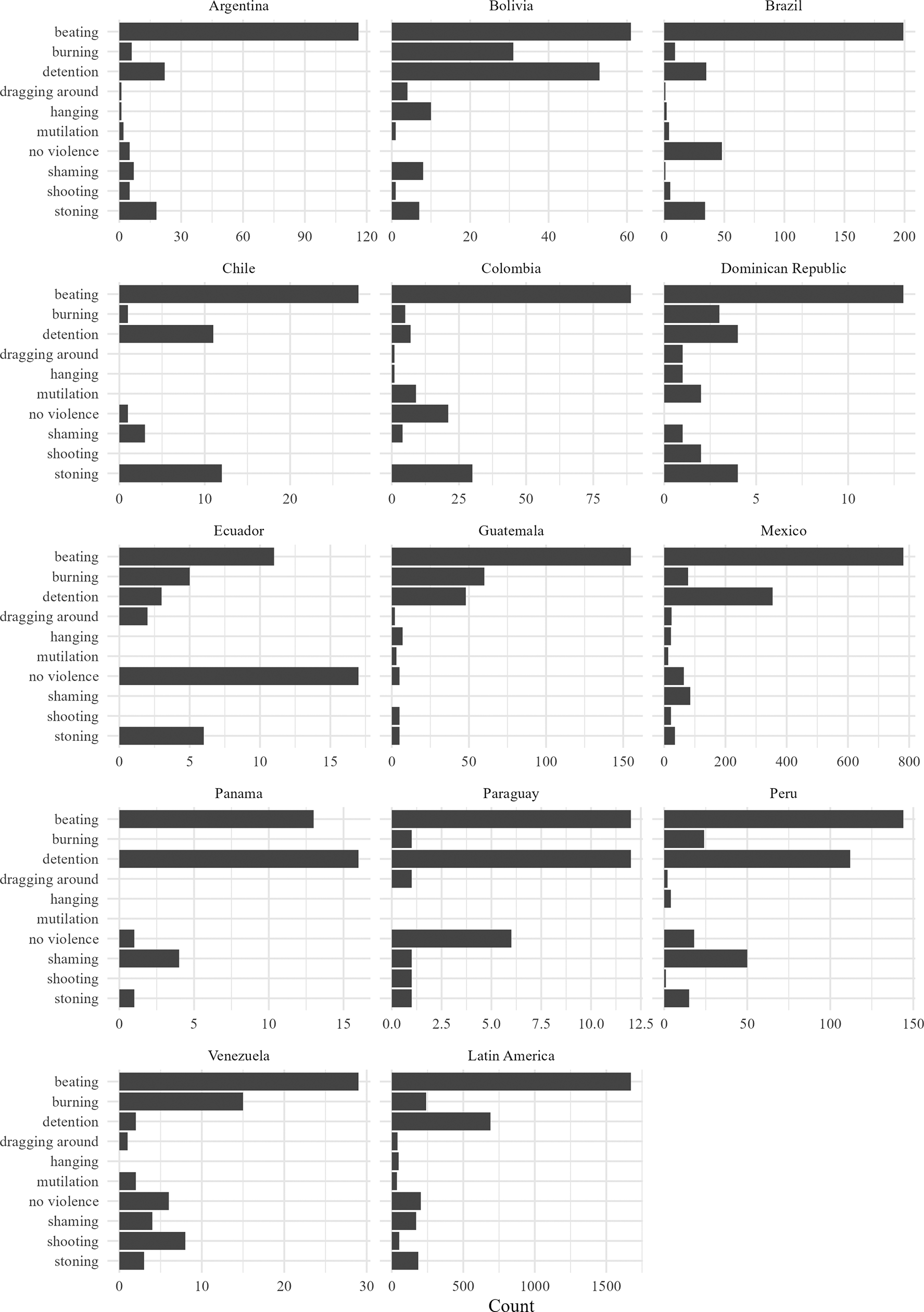
The selection of appropriate indicators was limited by the availability of existing measures. We focused on indicators of trust in institutions. Specifically, we measured legitimacy with trust in the government, police, and justice, and whether the courts could be considered fair (all originally rated on a 1- to 7-point Likert scale). We aggregated responses at the province level (admin1, N = 349). We also used an index that combined all four variables to reduce random variation, 17 and a measure derived from principal component analysis (the first component of all individual items).
Analysis and findings
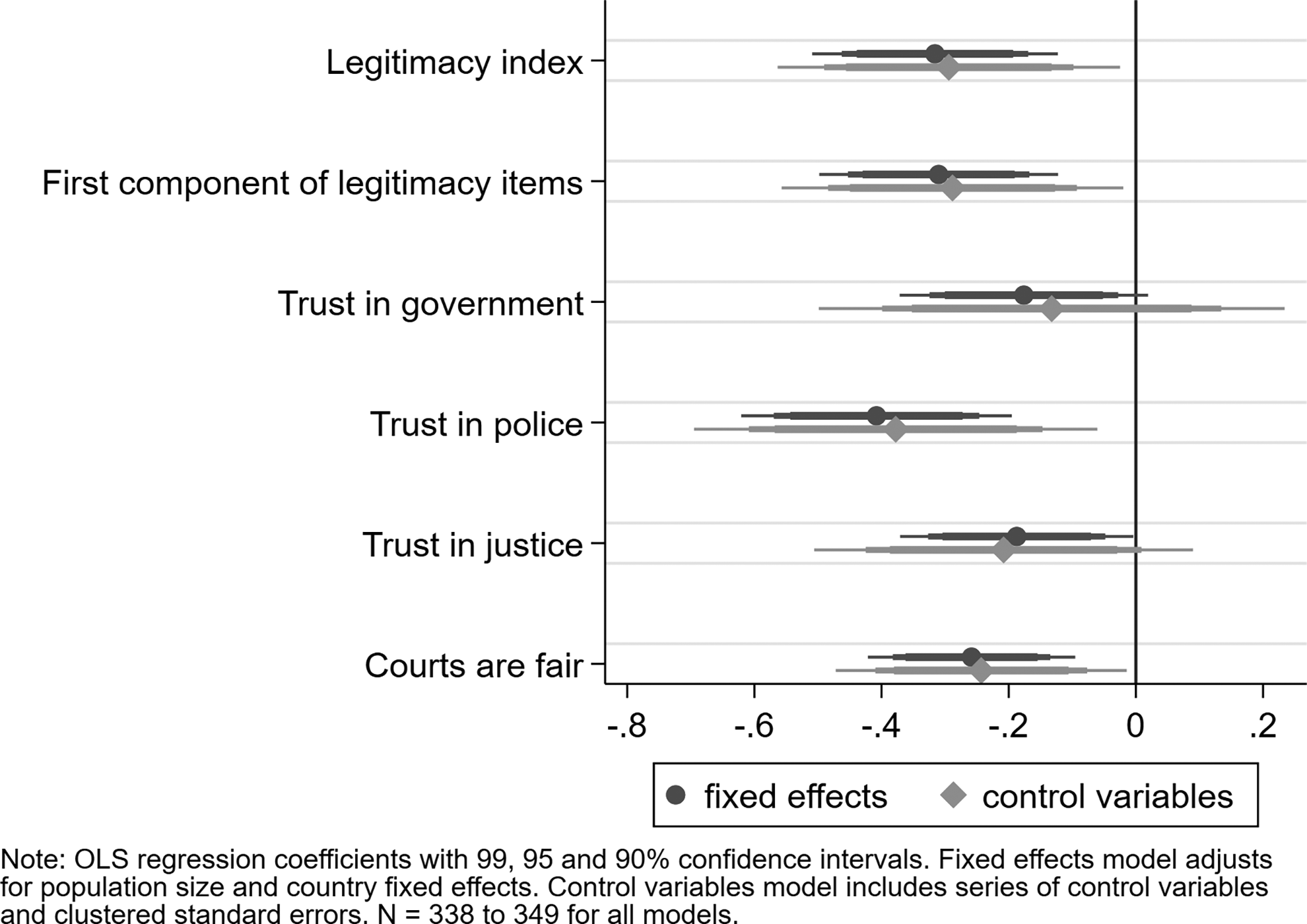
We used linear regression models to estimate the relationship between indicators of state legitimacy and lynching across Latin America. The dependent variable consisted of lynchings per million inhabitants. We logarithmically transformed this variable to account for potential heteroscedasticity. 18 The independent variables were normalized to facilitate comparability, and used in separate models.
We estimated, first, a fixed effects model, adjusting for population size and country fixed effects and, second, a control variables model using an extended set of control variables and clustered standard errors, but no fixed effects. Country fixed effects for the province analysis were used to adjust for national-level traits that affected the whole country and might influence lynching, including national laws, history of violence, and political systems. Furthermore, by including country fixed effects, we accounted for differences in reporting on lynching across countries. The control variables model included an extended set of province-level control variables: surface area, distance to capital, homicide rate, car ownership as an indicator of wealth, and urbanity. Control variables help account for potential confounding. We report the sources of these variables in Online appendix 5.1.
We focused on the association between legitimacy and lynchings, rather than their causal relationship. In fact, lynchings may not only be caused by low legitimacy, but may contribute to illegitimacy. Hence, an association between the two may be the result of an endogenous relationship. Soifer (2012: 592) even argues that lynchings can be seen as an indicator of state weakness. Given the condition of the research on lynching, examining the association between legitimacy and lynching provided an important piece of evidence. Future research should seek to disentangle the causal direction.
Figure 7 shows the coefficients along with their confidence intervals (full regression tables are available in Online appendix 5.2). We observed a negative relationship between indicators of state legitimacy and logged lynching per million inhabitants. For the legitimacy index, a 1 standard deviation reduction corresponded to roughly 25% additional lynchings per million (the average yearly lynching per million is 4.6). Using the first component of the four items from a principal component analysis, the result was very similar. The individual items showed similar relationships, with the trust in government indicator showing the smallest- and the trust in police indicator showing the largest coefficient. The two specifications (control variables and fixed effects) produced similar coefficients, suggesting that the results were not due to minor modeling choices.
In additional analysis, we found that this relationship was specific to lynching and not to all forms of violence, as the state legitimacy index is not robustly related to homicide rates (Online appendix 5). We thus found evidence suggesting that lynching is associated with a context of state illegitimacy, at the level of provinces across Latin America. These findings confirmed previous insights and open several avenues for future research.
State legitimacy and lynching per million inhabitants (log)
Conclusions
This article introduces a novel dataset on lynching in Latin America. The dataset covers reported lynching events, which we define as publicly displayed physical violence executed by a group of civilians against alleged wrongdoers. The data covers all Spanish- and Portuguese-speaking countries in Latin America between 2010 and 2019, and includes details such as the alleged wrongdoing, size of the mob, and type of violence deployed. The LYLA dataset is considerably broader in scope and more detailed than existing data sources. All events in the LYLA data are geo-coded and compatible with other spatial data, allowing for a fuller understanding of the causes and consequences of lynching. To this end, we provided an empirical application that showed that lynching tends to be more common where state legitimacy is low.
The LYLA data complements a growing body of research on violence in Latin America – the world region with the highest homicide rates (UNODC, 2019). While anthropologists often focus on violence at the community level (Godoy, 2006; Goldstein, 2003), political scientists and economists have mainly focused on civil wars and organized crime as the main manifestations of the epidemic of violence across this subcontinent. The LYLA data thus provides an important addition to the literature on violence in Latin America and allows researchers to contrast their findings about other forms of violence with those for lynchings.
Footnotes
Replication data
The dataset, codebook and do-files for the empirical analysis in this article can be found at http://www.prio.org/jpr/datasets. An interactive data tool can be found at  .
.
Acknowledgements
We acknowledge the generous funding from the Swiss National Science Foundation. For their research assistance we are very grateful to (in order of joining the project) Alina Gäumann, Ana Maria Burgos, Clélia Savary, Sophia Johanna Schlosser, Reetta Välimäki, Stefanie Matter, María Murias Muñoz, Victor Muñoz Varela, Zoé Goy, Onerva Martikainen, Marco Grünenfelder, Maurus Dora, Victoria Haerter, Norman Kneubuehler, Nicolas Schmidheiny, Liliana Martínez, Fernando González Adauto, and Cristina Guzmán Solís.
Funding
The authors disclosed receipt of the following financial support for the research, authorship, and/or publication of this article: This research was funded by the Swiss National Science Foundation (Project Grant 184957).