




Abstract
How does war affect states’ tolerance toward foreign culture? It is well documented by historians that democratic countries, despite their heralded values of liberty and diversity, acquiesce and even promote the practice of cultural intolerance in wartime. The available evidence, however, remains either anecdotal or limited to a specific context, and the extent to which war-induced cultural intolerance persists has so far rarely been examined. In order to investigate the short- and long-term effects of war on the degree of foreign cultural acceptance, this article focuses on patterns of classical music performances before, during, and after the two World Wars, based on a novel dataset assembled from concert program notes of ten renowned symphony orchestras from five countries (Austria, Germany, Japan, the United Kingdom, and the United States) between 1900 and 1960, covering 29,135 concerts and 125,530 pieces. Quantitative analysis suggests that the rate of performing pieces originating from belligerent countries in wartime declines markedly for music written in relatively modern times and that the defeat in wars led to a swift recovery of the exclusionary tendency against former enemy music. These findings demonstrate that states’ security concerns and relative power, rather than political regime types, dictate international transaction patterns, including cultural flows across sovereign state borders.
Introduction
Examples where countries restrict an influx of foreign culture for political purposes abound across time, around the world. Japan under Tokugawa’s isolationist policy, the Soviet Union during the Cold War, and China and North Korea in the contemporary era represent perhaps the most familiar cases of the ruling elites tightly controlling alien cultural influences which they consider as harmful to social order, governing ideology, and the legitimacy of their governments. Types and contents of culture targeted by such state actions have been historically diverse. They range from language, to religious beliefs, to literary and philosophical publications, to art and entertainment products.
The practice of regulating inbound culture is by no means confined to premodern feudal states or past/surviving autocratic regimes. Modern liberal democracies, which uphold the norms of individual liberty and human rights, including the freedom of religion, thoughts, and expression, also sometimes reveal pervasive intolerance against foreign culture. Well-documented by historians in this regard is the United States during World War I. Culture associated with its chief adversary, Germany, was practically ‘erased’ (Siegel & Silverman, 2017), as the German language was forbidden in schools (Ramsey, 2002), the German press was heavily censored (Wittke, 1942), and German music was banned (Rosenberg, 2020). More recently, the norm-defying practices in liberal democracies have been highlighted in the work of political scientists, particularly in association with the September 11 terrorist attack (Davis & Silver, 2004; Hetherington & Suhay, 2011). The rise of intolerance in its aftermath exposed the citizens’ willingness to trade off individual liberty for a greater sense of security under such exigent circumstances (cf. McClosky & Brill, 1983; Sniderman et al., 1996; Berinsky, 2009). One may discount the significance of these episodes as exceptions in US history, noting that they reflect the experience of extreme cases when the national animosities toward the enemies were at the highest. The orthodox understanding of liberal democracy emphasizes its tolerance toward minority opinions and different ideas, according to which it should be predicted that pervasive cultural intolerance would disappear once the security threats were gone. But did it really disappear? More generally, was cultural intolerance restored more instantly and fully under liberal democracies than other types of political regimes once the crises ended?
In attempts to present a quantitatively comparable assessment of the temporary and long-term impact of war on tolerance toward foreign culture across countries, this article investigates the pattern of classical music performances before, during, and after the two World Wars, based on the records of concert program notes assembled from ten globally reputable symphony orchestras. Specifically, these ten orchestras are located in five countries – Austria, Germany, Japan, the United Kingdom, and the United States – and the dataset extends over the period roughly between 1900 and 1960, containing information about the dates of the concerts and all pieces of music played, as well as the nationalities of composers of these pieces. Descriptive statistics and Bayesian hierarchical regression altogether confirm that the great wars had a tremendous impact on the orchestras’ performance patterns in that music pieces originating from enemy countries (defined as pieces composed by composers born in enemy countries) tended to be played less frequently around the time of the wars. 1 Such patterns can be detected conspicuously for those orchestras of the United Kingdom and the United States compared with those elsewhere, confirming that, under circumstances of heightened international hostilities, regime types do not make much difference in determining the level of tolerance toward enemy culture.
Arguably, the more novel finding presented in this article is the difference in the performance patterns of the postwar eras in relation to who won the wars. That is, in those countries which had been defeated, such as Germany, Austria (after World War I), and Japan (after World War II), the frequency with which former enemy music was played in concerts returned to the prewar level swiftly after the wars were over. In contrast, in the United States, victorious in both wars, the frequency with which its orchestras played pieces originating from its former enemies, most notably Germany, never returned to the high level of the pre-World War I period. In the United Kingdom, another country consecutively on the winning side, German music was played most frequently during the interwar period, but the trend showed a drastic plunge in the mid-1930s, corresponding with the apparent failure of appeasement, after which the frequency never returned to that peak. These findings seem indicative of the world reality, echoing the claim of the realist tradition in the literature of International Relations, that states’ security concerns and relative power dictate the patterns of international transactions, including the flow of culture across sovereign state borders (Morgenthau, 1973; Krasner, 1999; Mearsheimer, 2001). The findings also speak to the literature on collective trauma of major wars, suggesting that such psychological effects do seem to affect the postwar distribution of foreign culture, particularly in the defeated countries (Alexander, 2004; Hashimoto, 2015; Olick, 2016). Finally, the findings add to the growing insights on the legacy of war (e.g. Blattman, 2009; Lupu & Peisakhin, 2017; Rozenas, Schutte & Zhukov, 2017; Harada, Ito & Smith, 2020), showing that the impact of major war is long-lasting, affecting basic milieu for cultural activities in some victorious countries.
War and classical music
The salience of culture has long been recognized in facilitating mutual understanding and communal bonding among people (e.g. Deutsch, 1962), as well as in securing an effective functioning of governments (e.g. Almond & Verba, 1963). It has also been argued and shown that culture can serve as a symbol and focal point in propaganda aimed at arousing nationalism, ethnocentrism, and xenophobia (e.g. Lasswell, 1927; Anderson, 1983). In times of war, notably, cultural products become tools for manipulating patriotism and perceptions of enemy (Regan, 1994). From the viewpoints of the ruling elites, then, an influx of culture emanating from foreign places can be a matter of grave concern. Inbound culture may reflect soft power of other states, which shape some basic attitudes, including important political preferences, of domestic populations (Nye, 2004). The elites thus often regard alien cultural influences as harm to social order, governing ideology, and the legitimacy of their governments. This explains why so many countries, both past and present, have tried to monitor and limit an influx of foreign culture.
Music, in particular, which indisputably is a principal element of any culture, has been regulated and manipulated by many governments for outright political purposes. For example, soon after the attack on Pearl Harbor in December 1941, Japan’s military government initiated extensive societal control, with its intelligence bureau essentially ordering citizens to exclude from their lives music tunes and lyrics originating from or associated with enemy countries (Shillony, 1981). Nazi Germany also attempted organized cultural control under the leadership of Propaganda Minister Joseph Goebbels. While restricting the performance of American jazz and French music and prosecuting some Jewish and avant-garde composers, the Third Reich used the works of native composers, most famously Richard Wagner, in its attempt to exhibit the supremacy of the German race (Holborn, 1964; Levi, 1994). To be sure, given citizens’ ultimate privacy and the autonomy of established orchestras, it was difficult even for the oppressive wartime regimes to fully enforce their cultural restrictions. However, as the war progressed, the mutual-surveillance practice within Japanese and German societies became increasingly routinized, which in turn made the governmental schemes more successful.
Politically motivated regulation and manipulation of music took place in countries typically categorized as liberal democracies as well. In the United Kingdom during World War I, for example, all German musicians were either exiled or interned, and German music was not played in concerts but replaced with pieces composed by living British composers (Kennedy & Tate, 2011). Practices undertaken in the United States during World War I were also pervasive, as documented by many historians. Some of the prominent German musicians were arrested and interned, including Karl Muck and Ernst Kunwald, the directors of Boston and Cincinnati Symphony Orchestras, respectively. Further, President Woodrow Wilson and his administration ordered domestic symphony orchestras to perform the national anthem at the end of each concert as part of an effort to rally public support for the war against Germany (Tischler, 1986).
It was not always the government that led a crusade against enemy culture. In the United States, for example, orchestras, music teachers’ associations, and musicians’ unions took their own initiatives and avoided playing German music during the war (Rosenberg, 2020). The general public was also part of the national campaign, as their preferences had to be taken seriously by orchestras in deciding concert programs. Indeed, the public acted as ‘political consumers’ or ‘boycotters’ in this respect (Micheletti, 2003); if the orchestras had included in their repertoire such pieces that the public demarked as enemy music and deemed unacceptable, they would have faced the risk of losing popularity, reputation, and even financial support (Gienow-Hecht, 2009; Rosenberg, 2020). Thus, not only the government but also the public were able to exercise veto-like power over the choice of orchestras’ programs, if not all art and entertainment activities.
The revisionist view that cultural intolerance can prevail even under liberal democracies has more recently been reinforced by the work of political scientists, particularly in association with the September 11 terrorist attack (e.g. Davis & Silver, 2004; Hetherington & Suhay, 2011). Observers often attribute the rise of intolerance in its aftermath to the willingness of ordinary US citizens to trade off individual liberty for a greater sense of security under the exigent circumstances (cf. McClosky & Brill, 1983; Sniderman et al., 1996; Berinsky, 2009).
Despite growing evidence to the contrary, however, it is still difficult to discredit the orthodox faith in liberal democracies entirely. All the episodes presented above reflect the experience in certain countries of extraordinary times when the national animosities toward the enemies were at the peak. As such, the evidence remains either anecdotal or limited to specific contexts and does not allow for a quantitatively comparable assessment of the varying tolerance toward foreign culture across countries over time. More critically, a narrow focus on the practice of cultural intolerance in wartime reveals little about the long-term impact which war may leave even after the security threats are gone. Based on the conventional understanding, one would predict that, once war ends, cultural tolerance would be restored more quickly and fully under liberal democracies than other types of political regimes. Yet, no previous research has confirmed or challenged this prediction.
Regimes, war outcomes, and restoration of cultural tolerance
This article explores the impact of major wars on states’ tolerance toward foreign culture, first, by probing the salience of political regimes. According to the common understanding, liberal democracy emphasizes, as its core value, the diversity of opinions and ideas (US Constitution, 1791; Dahl, 1966) as well as fundamental individual rights, including rights to produce and consume art (Freemuse, 2020). The ruling elites in authoritarian states, on the other hand, readily censor the press to eliminate domestic dissent (e.g. Dimitrov, 2014; Guriev & Treisman, 2015; Lorentzen, 2014) and expurgate foreign culture to impose peculiar ethical and behavioral standards convenient for their dictatorial rule (Byman & Lind, 2010; Esberg, 2020). I simply argue that this regime-based asymmetry of cultural tolerance/intolerance cannot be sustained during major wars. Despite the orthodox view of liberal democracies, a variety of documentation and analyses have cast doubt about their benign treatments of enemy cultures, as surveyed in the previous section. I intend to show the irrelevance of regime effects during major wars by taking advantage of the original dataset I have created from the records of concert program notes across the world for the period roughly from 1900 to 1960.
Second, in addition to the wartime practices, this article investigates, based on the above extended dataset, the pattern of cultural intolerance in the postwar period, namely, whether the tendency not to play (the former) enemy music remains for some time even after the wars. The existing literature on war and culture hardly addresses this question. Here, I argue what shapes postwar tolerance toward the culture of former enemies is the outcome of the war. More specifically, I hypothesize that the war-induced cultural intolerance, if any, is likely to be restored swiftly and fully in the defeated countries, while this tends not to happen in the victorious countries.
This prediction derives from the plain fact that the major wars, such as World War I and World War II, fundamentally change the distribution of power among the formerly rival states, enabling the victorious countries to disseminate their own cultural products. The literature of International Relations, though perennially plagued by macro-theoretical quarrels between different isms and schools in the past, seems to bear a minimal consensus about the centrality of power in shaping the patterns of interstate interactions. The most forceful and straightforward claim about the pervasive consequence of power transitions has been advanced by scholars associated with the realist tradition (Organski, 1958; Gilpin, 1981). 2 The winners of major wars can dictate basic tenets of the postwar orders, by establishing international organizations and proliferating transnational norms and principles (Ikenberry, 2001). The victorious nations may also have interests in changing the cultural milieu of the defeated nations, believing that the ultimate peace cannot be achieved unless their intention of reviving aggressive expansion is eradicated (e.g. Morgenthau, 1973; Mearsheimer, 2001). The victorious, thus, sometimes coercively impose particular values, world perspectives, and behavioral standards on the defeated through a variety of institutional reforms and policy demands, including through influencing their cultural activities (e.g. Naimark, 1995; Igarashi, 2000; Goldstein, 2008; Anderton, 2019).
In the defeated countries, especially if they are placed under the occupation of the winning coalition, it would be very difficult to ignore or escape from the imposed influence on cultural activities. Indeed, the defeated nations may even embrace the cultural change rather readily than reluctantly, since the horrific memory of war, the sense of guilt, and the desire to regain reputation, respect, and dignity in international society may all cultivate grounds for accepting the music of former enemies (cf. Hashimoto, 2015; Olick, 2016). According to Alexander (2004), disastrous incidents may often cause a fundamental transition of group identity in the status of ‘collective trauma’, which implies that horrendous events, such as defeat in major wars, are likely to leave indelible marks upon the groups’ consciousness, and be remembered as a negative collective experience. Thus, for example, after the defeat in World War II, the civilian sympathizers of Nazi Germany aimed for a cultural renewal to restart and liberate themselves from the misguided social aberration (Anderton, 2019). It would not be surprising if citizens in defeated countries were likely to feel remorse and to be ready to promptly restore cultural tolerance damaged by wartime mobilization policies.
The above discussion, either taking the power-transition perspective or incorporating the notion of war guilt, leads us to expect that war-induced cultural intolerance would soon fade in defeated countries after major wars. What about, then, the postwar pattern in victorious countries?
In both World War I and World War II, the winning alliance consisted of many liberal democracies. In light of the orthodox understanding that liberal democracy emphasizes the values of liberty and diversity, this historical fact tempts us to believe that the restoration of cultural tolerance would occur swiftly and fully in these countries as well. However, just as much as I am skeptical of the regime effect in wartime, I remain unconvinced of such an idealistic view of liberal democracies. Once the fierce and costly wars had heightened the sense of insecurity and hostility toward the former enemies, it may be difficult for the winning countries to recover from the war-induced intolerance immediately, and this intolerance may persist as a consequence of wartime mobilization (e.g. Stein & Russett, 1980). Some historically documented episodes lend credibility to this conjecture. For example, a famous conductor of German descent whom the United States interned as an enemy alien during World War I, Karl Muck, had made Boston Symphony Orchestra’s first commercial recordings, yet most of them never made it to market; the only exception was the recording in 1917, but it was not sold for as long as 75 years (Gienow-Hecht, 2009). If victory in a major war is found to have an effect of delaying the restoration of cultural tolerance, such a finding would add to the growing literature on the legacy of war, which suggests that war has a variety of long-lasting effects, including the impact of political violence and wartime destruction on political engagement, political preferences, crime rates, unemployment rates, and education attainment (Blattman, 2009; Lupu & Peisakhin, 2017; Rozenas, Schutte & Zhukov, 2017; Harada, Ito & Smith, 2020).
Dataset and descriptive statistics
Dataset
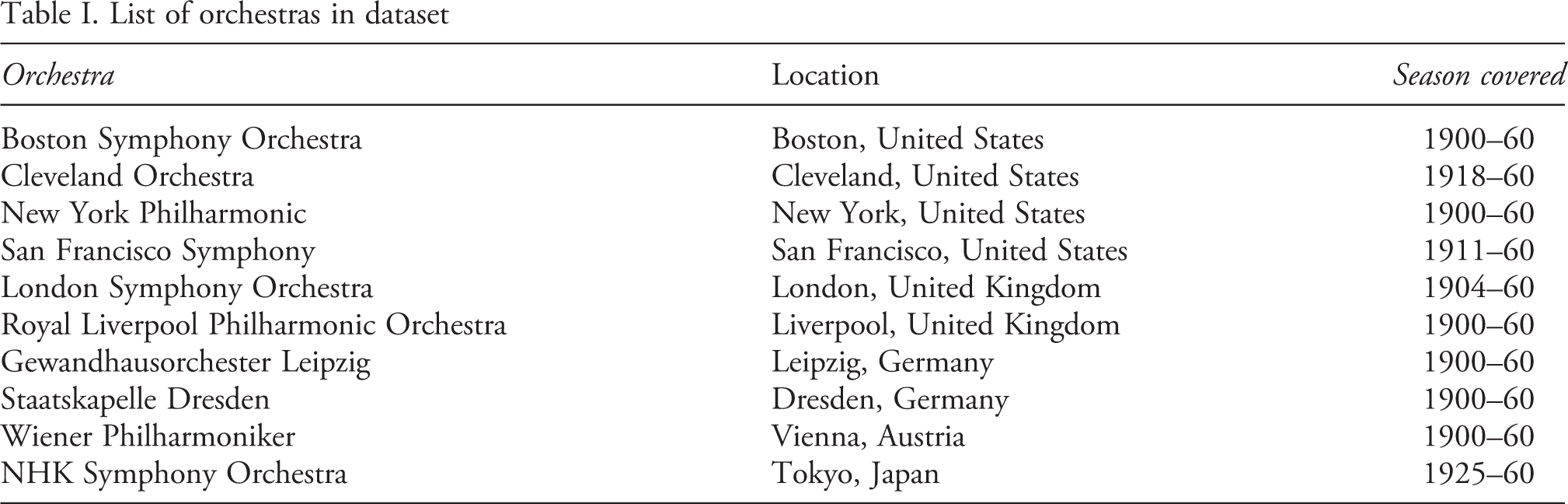
As a target population of this research, I contacted 51 internationally acclaimed orchestras that had been active since periods prior to the breakout of World Wars And inquired whether there exist past concert records and whether I can get hold of them. Of 22 orchestras that responded to my inquiry, six sent back the spreadsheet of performance records with sufficient information, and one responded by sending me all concert programs. Of those that did not provide their records, for three orchestras I was able to collect the records of concerts from publicly available sources. My dataset was thus created for ten symphony orchestras in five countries – Austria, Germany, Japan, the United Kingdom, and the United States – for the period roughly between 1900 and 1960. For full information about this data-gathering procedure, see Online appendix A. Table I displays the list of these orchestras. 3
Unit of analysis
The basic unit in the dataset is, to be precise, orchestra season, which starts in September and ends in August, not the calendar year. This derives from the fact that symphony orchestras typically make contracts by seasons with musical directors (usually leading conductors), while each season often comes with a specific, consistent concept, such as memorial concerts of a renowned composer. Concerts in the dataset are restricted to those regularly held in their home countries. Orchestras, of course, travel abroad, but the data from such concert tours are not included as they tend disproportionately to play music pieces originating from, or in association with, the locations where the concerts are held. As a result of these operationalizations, the dataset covers 29,135 concerts and 125,530 pieces in total, with information about the concerts’ dates and all individual pieces of music played. 4 Given the severity of wartime conditions, one might ask about whether public performances by symphony orchestras continued during wars. Quite amazingly, every orchestra in the dataset continued concerts unless its hometown was directly bombarded and destroyed by the adversaries (see Online appendix B).
Nationality
List of orchestras in dataset
The information on the birthplace of composers who appear in the dataset was obtained from several online sources. 6 Although countries’ frontiers have changed over the years, I used, for the sake of consistency, the post-World War II state borders for this codification. Thus, for example, I treat Austria, which temporarily disappeared from the world map, as having existed continuously so that Mozart’s composition is (properly) identified as Austrian, not German. This procedure resulted in collecting data on Nationality of 2,670 composers.
Figure 1 shows descriptive statistics of the 20 most popular classical music nationalities and the 30 most representative composers in the dataset. In terms of nationality, the most popular music is German, followed by Austrian, Russian (Soviet), and French music. Regarding composers, the top three are all Germans, but pieces of non-Germans were also frequently performed. Figure 1 thus confirms that the nationality of music varies sufficiently for the following statistical investigation to be conducted.
Enemy music
Based on the nationality of classical music thus defined, I proceed to code whether or not a piece performed at a particular concert was Enemy music. Generally, I define enemy music as a piece written by a composer born in enemy countries, that is, countries adversarial to the orchestras’ home countries, during the two World Wars. For much of the period under investigation, the five countries where the orchestras are located can be categorized into either the Allied group or the Axis group, with the exception of Japan, which was part of the winning alliance with the United Kingdom and the United States during World War I but fought against them during World War II. Since the permanent orchestra in Japan was established only after the mid-1920s, I simply categorized Japan as part of the Axis group. In addition to the five countries, other nationalities that appear in the dataset include Hungary, France, and Russia, where popular and respected composers were born. I coded each performance in accordance with the relationship between the orchestra’s home country and the composer’s birth country at the time of concert. 7
Some may object to this codification scheme and claim that the degree of nationalism, and thus the sense of adversary, associated with musical works should vary individually rather than categorically, depending on the particularity of the piece actually played and who composed it. It is possible that some composers were considered highly nationalistic while others were more cosmopolitan; thus, for example, it may not be appropriate to equate the works of Johann Sebastian Bach and Ludwig van Beethoven with those of Richard Wagner and Richard Strauss, even though they all can be categorized as German composers. I recognize, however, the difficulty of identifying, without being arbitrary, which piece/composer (vis-á-vis which country) should be labeled as enemy music on all individual bases. I therefore proceed with the above scheme, though I will address this concern in the later section where I engage in a more elaborate statistical analysis.
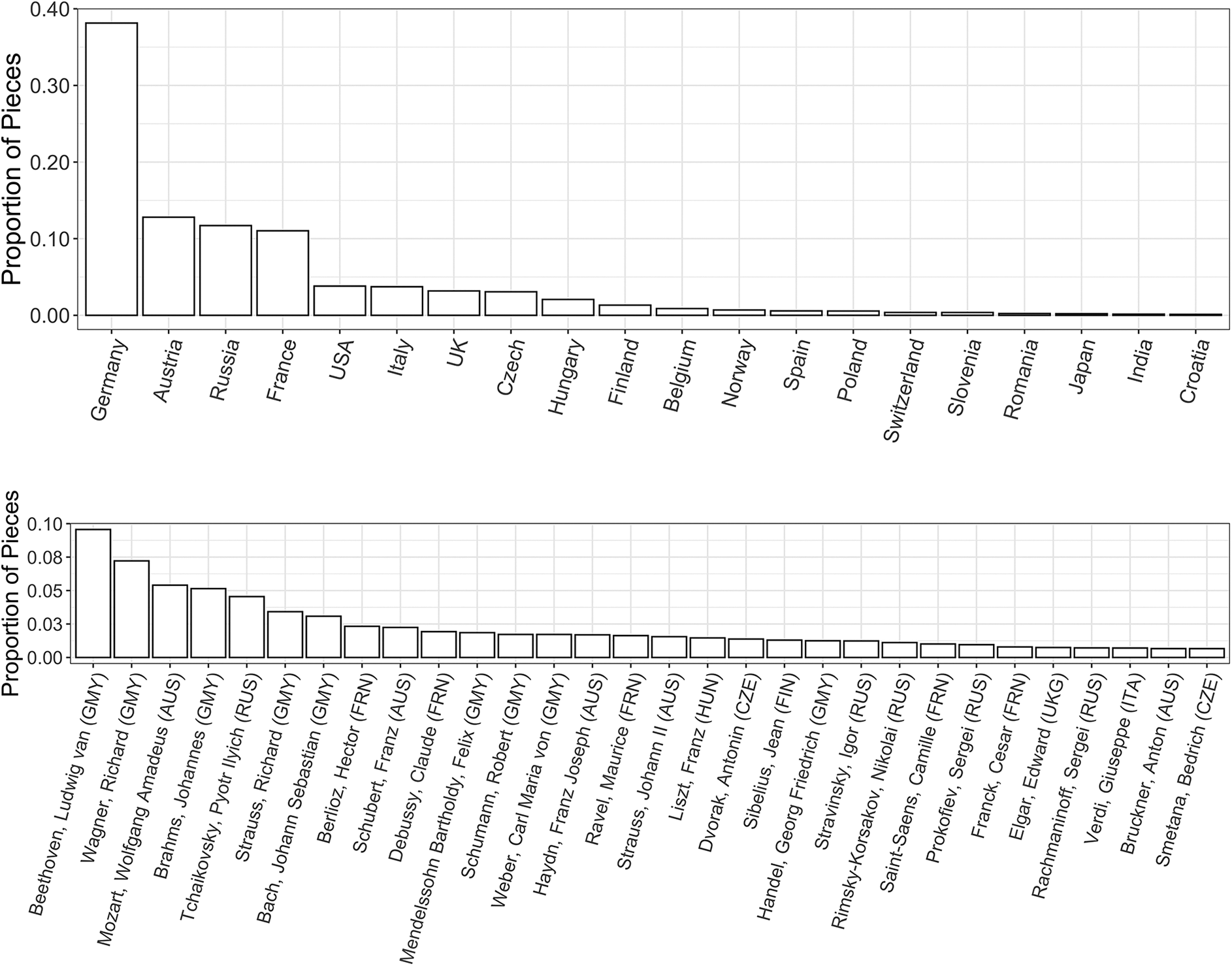
Popular nationalities and composers
Others may also point out that, rather than their birthplace, the location of the composers’ main careers would serve as a better measurement for their nationality. Such an alternative codification scheme, however, cannot be applied operatively. True, for example, George Frideric Handel, a prominent German-born composer from the Baroque period, was well appreciated in the United Kingdom and it could be argued that attributing him to an enemy of the United Kingdom might appear to be inaccurate. But there are also counter-examples, including Frédéric Chopin, the epitome of Polish culture; it would appear flatly wrong to codify him as a French composer even though he spent a long active career in France. The point of this illustration is that it would be extremely difficult to rely on career locations for the identification of composers’ nationality without introducing some sort of subjective and/or arbitrary judgments. In addition, it is extremely difficult to determine what constitutes locations of composers’ main career, that is, to establish, objectively, how many years or days each composer had to spend in a location in order for his/her nationality to become qualifiedly associated with that particular location. 8
Descriptive trends
Figure 2 tracks the frequency with which enemy music was played in concerts for each season by the orchestras in the Allied group and the Axis group. The solid lines
Performance of enemy music, 1900–60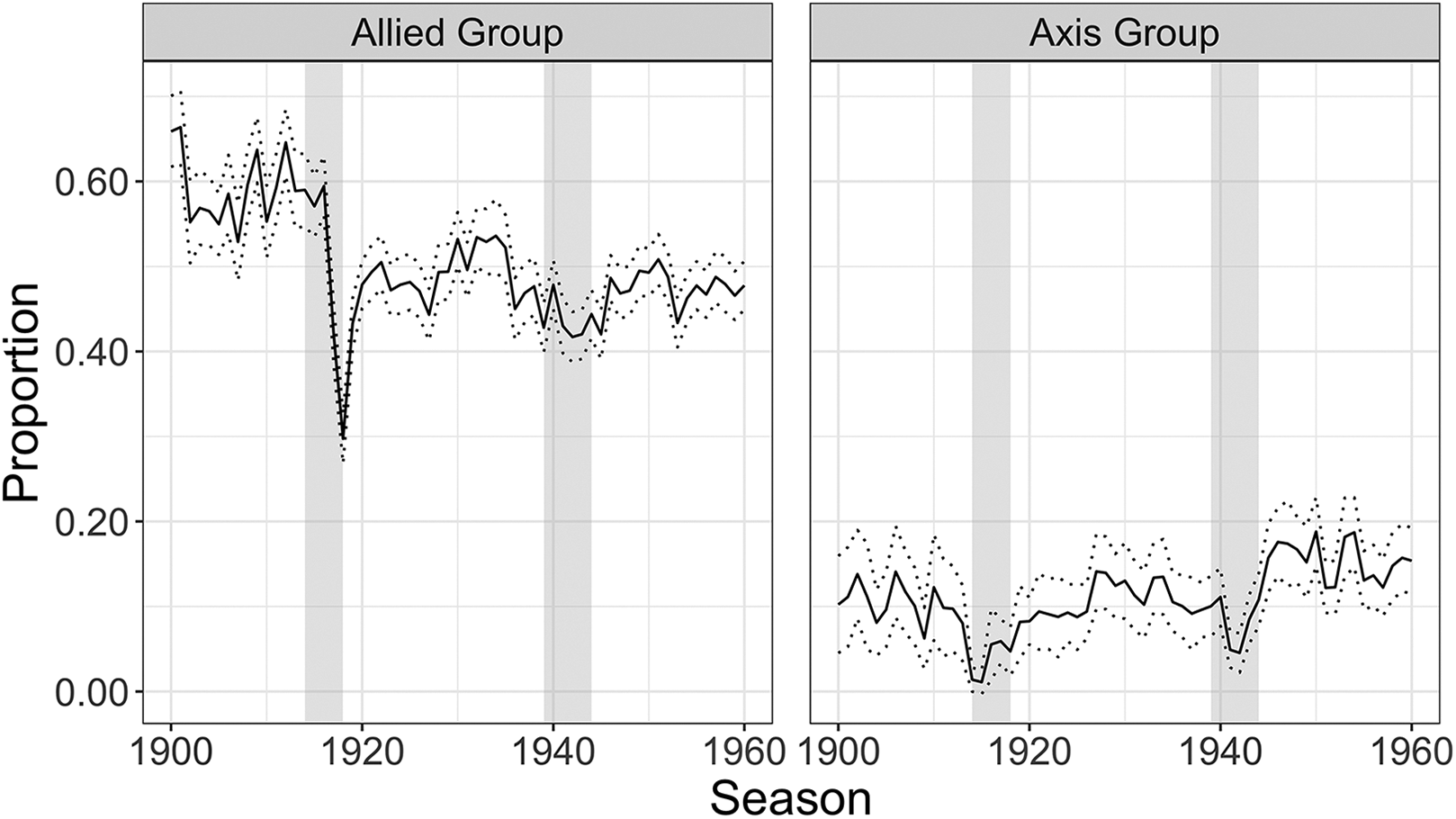
An overall comparison between the left and right panels reveals a substantial difference in the performance pattern between the two groups. The orchestras in the United Kingdom and the United States played music from the countries in the Axis group far more frequently than vice versa during the period from 1900 to 1960. This notable difference, however, might reflect a simple fact that classical music initially flourished most in Austria and Germany, as confirmed earlier in Figure 1. Thus, from this observation alone, one cannot draw an inference about the relevance of regime types in determining cultural tolerance.
What does seem indisputable from the pattern shown in this figure is that, regardless of regime types, the incidents of two World Wars had non-negligible effects of reducing the frequency of enemy music performed in concerts. The left panel shows that American and British orchestras changed the performance pattern drastically in the 1917 season immediately after the United States entered the war. During the interwar period, the frequency of enemy music recovered somewhat, peaking around the 1930 season, but it started to decline again with the rise of the Nazi party in Germany, and the downward trend lasted until the end of World War II. The right panel also points to the wartime drops in the frequency of enemy music performed in the Axis countries, though the mean and variance of the depicted trend appear smaller than those of the American and British orchestras.
Perhaps the most novel finding apparent in this figure is the performance patterns of the postwar eras. In the defeated countries, the frequency with which the orchestras played music of (former) enemies seems to have returned to the prewar level swiftly after the wars were over. Indeed, in the 1946 season, immediately after World War II, the orchestras in the defeated countries performed music from the previous enemies more frequently than any other season in the past.
This reversal is unlikely to be a reflection of the norms of liberal democracies, although it is true that many countries defeated in World War II did experience regime transitions. Note, indeed, two of the four Axis orchestras included in the dataset, namely one in Leipzig and the other in Dresden, happened to be located in East Germany, which fell under the control of the Soviet
Performance of enemy music for each country (three-year moving average)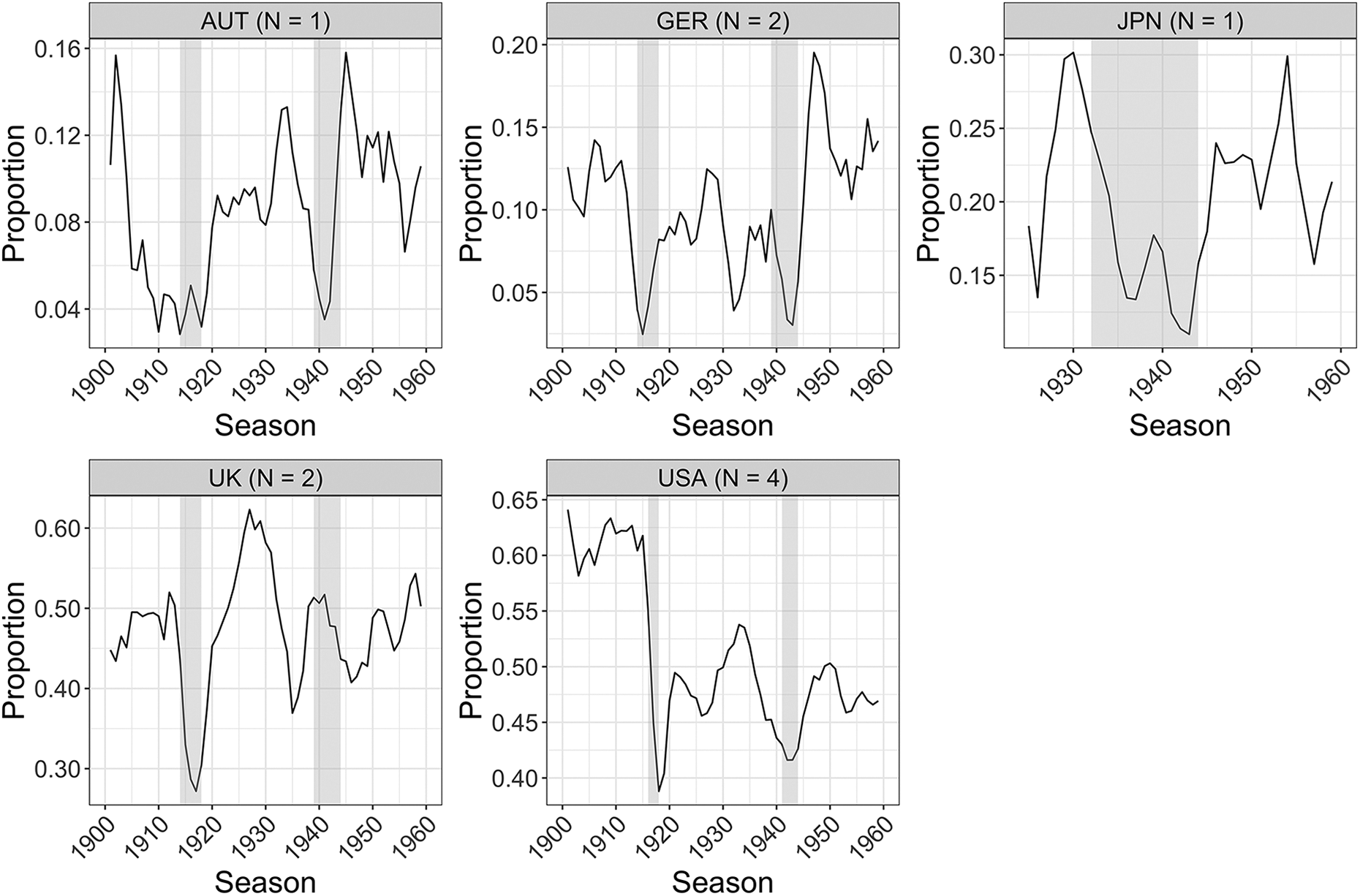
Rather than the effect of regime change, it is likely that this postwar surge of former enemy music performance had more to do with the outcome of the war itself, which determined the new power balance among the formerly rival states. The emerged situation allowed the victorious Allied countries to impose their own cultural contents and messages through their occupation and the war-settlement negotiations, including an explicit demand of ‘de-Nazification’ (e.g. Naimark, 1995; Goldstein, 2008; Anderton, 2019). The irrelevance of regime types can further be corroborated by the observed postwar pattern for the countries that had won the wars. If the regime-based norms of cultural tolerance matter, one would expect that the postwar recovery of enemy music performance would be faster and more significant in the Allied group than in the Axis group, but this is not detected in Figure 2. In the United Kingdom and the United States, enemy music performances never returned to the high level of the pre-World War I period.
To further consolidate the above findings, I have disaggregated the data and investigated the performance pattern separately for the five countries. Instead of actual numbers of frequency for each season, the lines in Figure 3 indicate the three-season moving average so as to smooth out short-term fluctuations associated with the reduced number of observations. Note also that, instead of the identical specification of war periods used earlier, each shaded rectangle now indicates the two war periods appropriately adjusted for each country. 10 According to this figure, wartime backlash against enemy music can be confirmed universally across countries for both World War I and World War II.
Besides, the figure illustrates that the speed of tolerance recovery in the postwar periods varied across the defeated and victorious countries. For the defeated nations, namely, Austria, Germany, and Japan, enemy music tended to be played less frequently in wartime but, soon after the wars, the frequency returned or even surpassed the prewar level. 11 The trends observed for the two victorious countries are somewhat inconsistent. American orchestras gradually increased former enemy music performances after World War I up to the early 1930s, but the frequency never returned to the high level of the prewar period. In the United Kingdom, former enemy music was played frequently in the interwar period, but in the 1930s, performances of Austrian and German music declined in correspondence with the apparent failure of appeasement, after which the frequency never returned to that peak during or after World War II.
Overall, the descriptive statistics presented above confirm the irrelevance of political regimes in determining the patterns of classical music performances during and after the major wars: enemy music was performed less frequently in wartime than in the prewar period across liberal democracies and non-liberal democracies. Further, the types of political regimes were certainly not a critical factor in determining the recovery speed of cultural tolerance after the wars.
Statistical analysis: Bayesian hierarchical model
In order to elaborate on the findings above and to draw even more nuanced inferences, I have performed a Bayesian hierarchical Poisson linear regression analysis. 12 I adopt this model to investigate more rigorously how, after controlling for potential confounders, performances of enemy music had changed over time for each alliance group. The dependent variable is the number of pieces of enemy music played in a concert, a count variable. If the same trends discovered in the descriptive statistics are found even after controlling for the confounders, such findings confirm that the impact of major wars trumps the regime difference effect and that the outcome of war determines the recovery of cultural intolerance generated by war.
The most important explanatory variable is a variable that distinguishes whether the concert was held during the two World Wars or peacetime. I label this dichotomous variable as Wartime. In addition, I include the total number of pieces performed in concerts (Total pieces), taking into account the time duration of each piece. Ideally, many other covariates can and should also be controlled, given both demand- and supply-side factors related to the concerts, which might have affected how their programs were determined. They include, for example, the number of people in a concert audience, their nationality distribution, ethnic attributes of performers, orchestras’ financial status, and particularly their reliance on state subsidies. Unfortunately, none of the information related to these factors can be obtained. To alleviate at least part of the problem of these omitted variables, a set of fixed effects for each orchestra is included in the model. The covariates for which I could obtain reliable data and actually incorporate into the model are two dummy variables: (1) Native conductor, a variable that indicates whether or not the conductor was born in the country where the orchestra was located, with which to control for the chance that he/she particularly prefers a piece written by a composer from the same country; and (2) Jewish conductor, a variable indicating whether or not the conductor is Jewish, with which to control for any special preference he/she might have, especially toward music originating from Germany. 13
Formally, the model to be estimated can be expressed as





The impact of war on enemy music performances
where each hierarchy t, indicating Season (the 1900 Season, ..., the 1960 Season), has k t observations. The dependent variable y t , the number of pieces of Enemy music in Season t, is generated from the Poisson distribution and ϕ is the log link function. W t denotes random effects, season-specific intercepts for this model, X t represents a set of covariates, and ε t indicates the homoscedastic, individual errors for Season. The model assumes standard, conjugate priors: random effects (b t ) are distributed along V b , denoting the inverse-Wishart prior with the shape parameter r of 1 and the scale matrix R of 0.2, and uninformative priors are used for obtaining β, the posterior distribution of the variables mentioned above.
Results
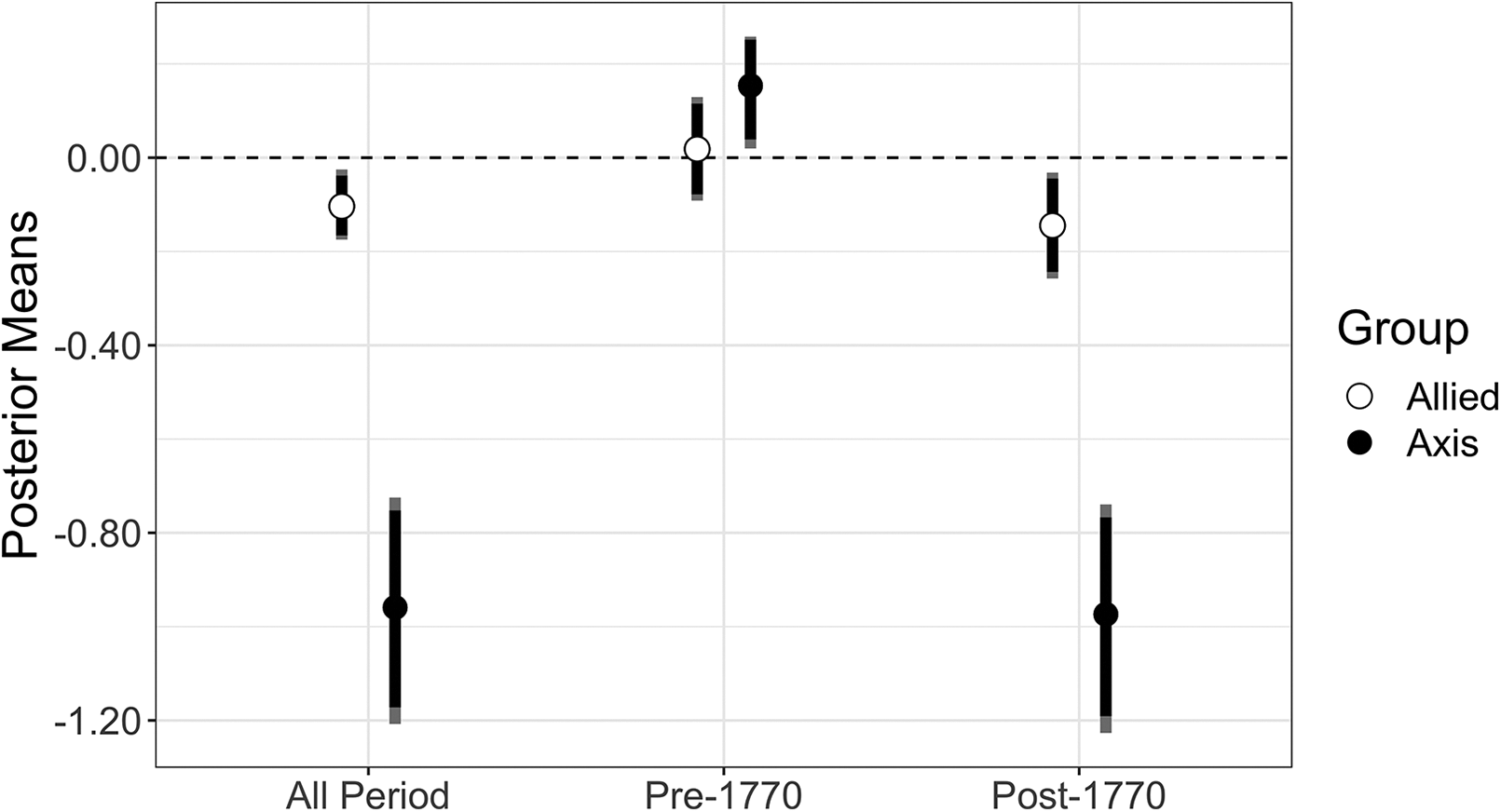
Figure 4 shows the posterior distribution of Wartime, the key binary variable that distinguishes whether concerts were held during either of the two wars or otherwise. The white and black points represent the mean of the posterior distribution for the Allied group (victorious countries) and for the Axis group (defeated countries); the black and gray areas represent the 90% and 95% credible intervals.
I first estimate the model, following the simple codification of enemy music introduced earlier. Recognizing the possible objection that the degree of nationalism associated with individual musical works might differ, I also analyze the data by recoding enemy music by distinguishing two historical periods, before and after 1770, marked by the year of birth of Beethoven, the most prominent figure in the classical era of Western classical music. For this purpose, I recreate two additional variables such that, if a music piece was composed by a composer born before (after) 1770, the piece is identified as Pre-1770 (Post-1770). This historical periodization is captured in Figure 4 by the labels on the horizontal axis.
The estimation results summarized in this figure are both clear and intriguing. First, according to the two left-hand side distributions, enemy music for All period is played less often in wartime than in peacetime for both the Allied and Axis groups. This result verifies the overall surge of wartime intolerance toward culture originating from enemy countries across countries, reinforcing the earlier finding that political regime types are irrelevant to such exclusionary tendencies. Second, Figure 4 reveals a noticeable discrepancy between the two sets of estimation results which took into account the historical backgrounds of individual pieces identified as enemy music. The central two distributions in the figure show that, in the cases of the Pre-1770 pieces, written by composers born in 1770 or earlier, the performance patterns of the Allied group were unaffected by the outbreak of the two World Wars, while those of the Axis group increased.
14
On the other hand, with regard to the Post-1770 pieces identified as enemy music, written by composers born after 1770, the rate of performances shows a significant
Cultural tolerance over time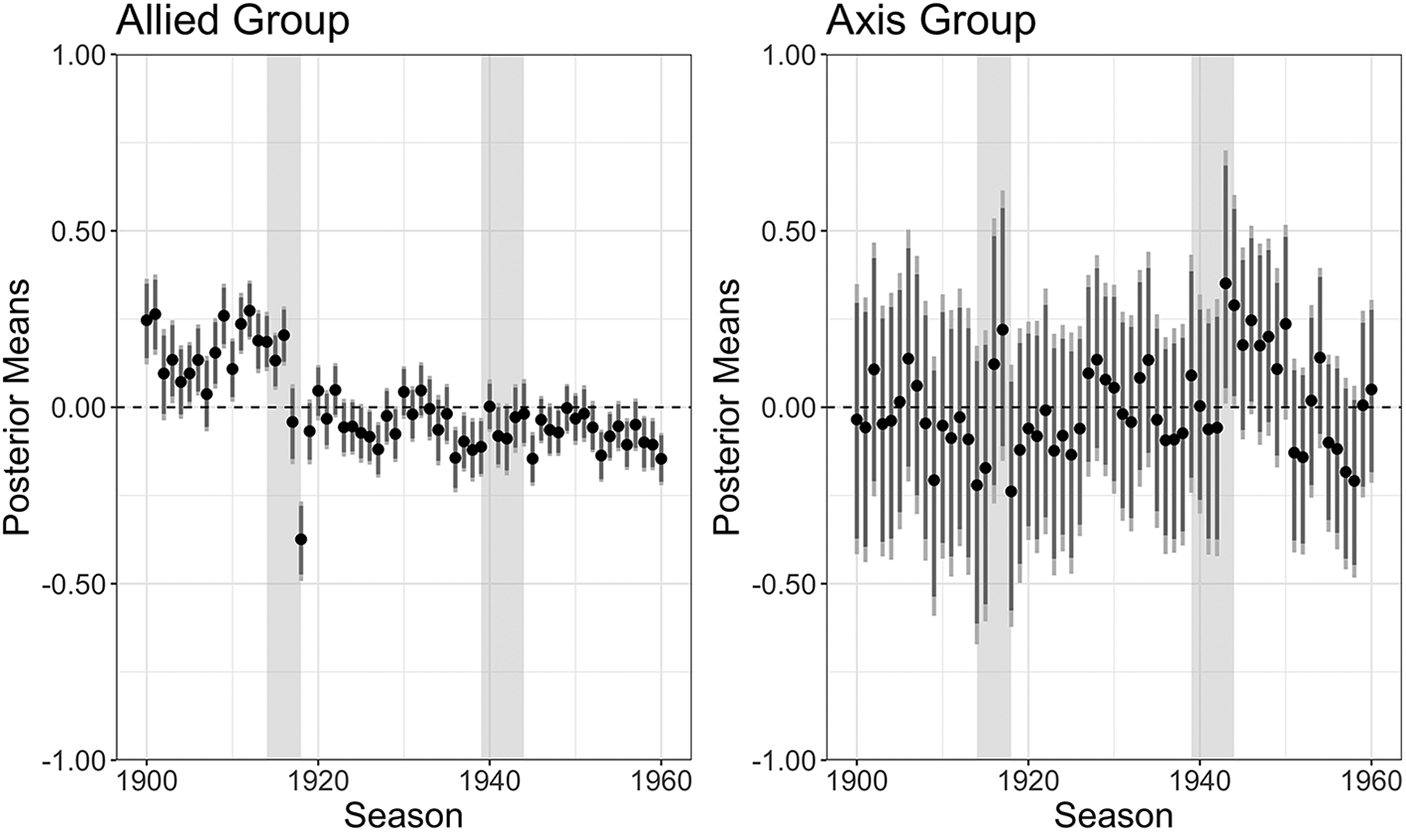
Figure 5 shows the extent to which the cultural intolerance endured after the wars were over, by plotting the series of season-specific random effects on enemy music (All period) for the Allied and Axis groups. The horizontal axis represents Season, the vertical axis shows the posterior distribution of varying intercepts, and the shaded area refers to the two World Wars. Even after controlling for Wartime and attributes of conductors and orchestras, the patterns identified earlier in the descriptive trend figures are generally confirmed. 15 The trend in the victorious Allied countries on the left shows that after World War I, the estimated intercepts of (former) enemy music performances remained low and never returned to the level of the early 20th century for the rest of the observation period. In contrast, for the defeated Axis countries on the right, the estimates of (former) enemy music performance returned to the original level, after experiencing some ups and downs around World War I; the trend after World War II shows even an increased rate of performance to a level higher than in the past. Hence, Figure 5 supports the theoretical expectation that the outcome of war, especially losing a war, has a significant impact on the postwar re-acceptance of previous enemy culture.
For further confirmation, I have replicated the analysis of season-specific random effects with periodization in Figure 6. As for the Pre-1770 music, the wars relatively had no effect for the Axis group; for the Allied countries, as well, the impact of wars seems rather marginal. However, for Post-1770 pieces, or music associated with stronger nationalism of enemy countries, the pattern reveals a marked difference between the Allied and Axis countries. This again reinforces the argument and earlier findings that the outcome of war leaves a long-term impact on the postwar re-acceptance of previous enemy culture.
Discussion
The statistical analysis confirms the inferences drawn from the descriptive trends in the previous section, supporting the view, now with greater confidence, that cultural exclusion during the war was a universally observed phenomenon. This was especially true for cultural products that are highly associated with nationalism. The analysis also reaffirms the importance of war outcomes, in that the defeated countries did swiftly restore the cultural tolerance toward former enemies after the two World Wars. In the victor nations, in contrast, cultural intolerance due to wartime mobilization seems to have persisted long after war. It is difficult to claim, given the
Cultural tolerance over time (Pre-1770 and Post-1770)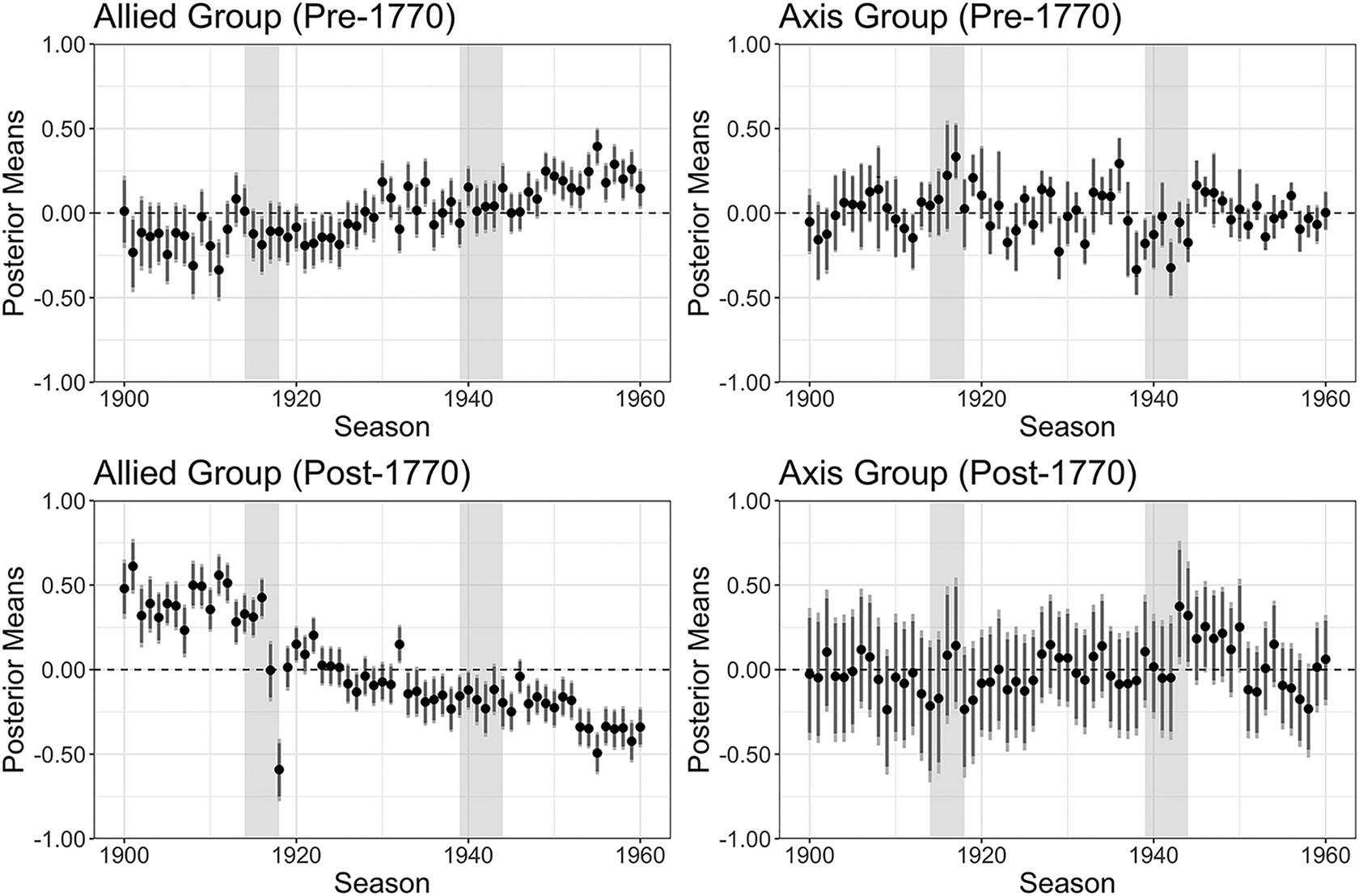
The analysis presented above also yields some nuanced interpretations regarding the impact of wars on classical music, and on culture more generally. First, the evidence indicating that the tendencies to exclude enemy music hinged on their historical backgrounds, and seem illustrative of the predicament in which bearers of cultural activities, such as orchestras, were situated during wartime. There is no question, on the one hand, that the orchestras were vulnerable to pressures from the state and public discourse not to play enemy music. To that extent, their institutional independence was compromised, and politics certainly permeated into the domain of cultural activities. On the other hand, orchestras continued to perform at least a subset of those pieces, even though they were composed by composers born in countries at war, perhaps because their works were regarded as genuinely valuable and transcending national boundaries. To the extent that they were able to make such a selective choice, orchestras did seem to retain some autonomy over their cultural activities. For sure, it is difficult to generalize how orchestras actually determined the content of concert programs, given the diversity in the size of concerts, ethnic distribution of both performers and audience, and particularly orchestras’ financial reliance on state subsidies. Nevertheless, the findings from this study seem to point to the fundamental tension that they commonly faced between the political wants of the exigent circumstances and their mandated purposes as cultural organizations. 16
Second, in relevance to the long-term effect of wars, the trends revealed in this study can be interpreted as the decline of influence and/or popularity of German content in the overall classical music collections. It would be interesting to speculate whether this decline would have happened anyway, even if there had not been the two wars that Germany lost. It is true that, due to the maturity of classical music throughout the world, numerous influential and popular composers had emerged from non-German countries by the 20th century. If non-German composers had not become influential/popular, it is possible that the frequency with which orchestras performed German music would have recovered eventually in the United Kingdom and the United States as well. 17
Conclusion
A major international war causes a transformative impact on states and societies. Aside from the physical and psychological hardship, such a war often brings about significant behavioral changes, even disrupting the principles and standards to which both the government and citizens normally adhere as their core national values. An important and illustrative example of these changes is the growth of pervasive intolerance toward, or even outright ban of, foreign cultures during the two World Wars and at the time of the September 11 terrorist attack. Indeed, considerable efforts have been made, by historians and political scientists, to document incidents of cultural intolerance under these cases of extreme security crises. To the best of my knowledge, however, the patterns of intolerance toward foreign cultures across different countries over time have never before been identified or systematically investigated with empirical data.
This article has sought to provide such evidence, relying on the dataset created from program notes of ten globally renowned symphony orchestras across five countries. Statistical analysis, like the one presented in this article, might miss subtlety and nuances of the works of historians who have previously engaged in the research on culture and politics. Nevertheless, this article does complement and augment the finding that the two World Wars significantly diminished the performances of pieces originating from enemy countries in wartime and that the war outcomes affected the degree and speed with which cultural tolerance was restored following the wars. Another notable finding here is that music written in relatively modern times was the main target of cultural elimination and was highly susceptible to the short-term and long-term war influence. Throughout this study, I have shown that the types of political regimes had less to do with the level of cultural intolerance toward foreign culture. The findings rather indicate that the states’ relative power dictates international transaction patterns, including cultural flows across borders.
How informative is the case of music performances for the international flow of culture more generally? For those skeptical of cultural influence, it might be difficult to grasp why any content of foreign culture would constitute a serious national security threat, as citizens play and listen to music or as they read novels or anime. In the field of Cultural Studies, some scholars advance a view that trivializes the political significance of culture and claims that consumers regard culture abroad as banality (Clarke, 2016; Morris, 1988). Empirical findings presented in this study constitute solid testimonies that speak to the contrary. Cultural intolerance, measured as a decreased frequency of enemy music performances in concerts, grew significantly across both Allied and Axis countries during the two World Wars. Consistent with recent debate on the relevance of culture on the image of International Relations (e.g. Daniel & Musgrave, 2017), researchers should not underestimate the political salience of cultural products.
Before concluding, let me address some important limitations and suggestions for future research. First, the ten orchestras included in the dataset are in no way representative of orchestras around the world. Given, as detailed in Online appendix A, that an ideal random sampling is impossible, however, I do believe that this study sought to assemble the best possible dataset based on currently available sources.
Second, this study has focused solely on the case of Western classical music performances. Classical music tends to be favored among the educated and those with higher social status. For this reason, future research should expand the empirical perimeters and explore how the relative power among nations shapes the global consumption of such cultural products as cinema, novels, and popular music.
Finally, this study has investigated the varying conditions of cultural tolerance/intolerance in general, not on concrete policies or intentions of the governing elites to regulate cultural flows. Obviously, the level of cultural intolerance can be affected by outright regulations taken by the government. While wartime cultural intolerance was prevalent regardless of regime types, as revealed in this study, it is possible that liberal democratic governments may engage far less formal control of inbound cultures, even of the enemy nations. Identifying the significance of such policy-level differences is an important next step.
Footnotes
Replication data

Acknowledgements
Earlier versions of this article were presented in the Asian Politics Online Seminar Series on 28 July 2021, a poster session at the American Political Science Association on 2 October 2021, the NCCU-Waseda Graduate Conference on 19 November 2021, and Waseda-Essex Scientific PoliSci/IR Collaboration and Exchange 2021 on 11 January 2022. I am deeply grateful to archivists of Boston Symphony Orchestra, Cleveland Orchestra, Gewandhausorchester Leipzig, Liverpool Record Office of the City of Liverpool, London Symphony Orchestra, NHK Symphony Orchestra, San Francisco Orchestra, and Staatskapelle Dresden for kindly sharing the program notes, and to Chihana Kanao, Sora Kato, and Sumika Yoneto for assistance with compiling the dataset. I owe a big debt of gratitude to Kentaro Hirose, Masaru Kohno, and Atsushi Tago for their support in completing the manuscript. I appreciate Susumu Annaka, Daina Chiba, Charles Crabtree, Kentraro Fukumoto, Kristian Skrede Gleditsch, Yusaku Horiuchi, Prabin Khadka, Ikuo Kume, Marisa Kellam, John Mueller, Megumi Naoi, Rupal Mehta, Yunkyu Sohn, Yen-Pin Su, the editor of JPR, and two anonymous reviewers for helpful comments and suggestions.
Funding
This work was supported by JSPS KAKENHI Grant-in-Aid 21J22960.