



Abstract
How do natural disasters affect the treatment of civilians by non-state actors? On the one hand, conflict literature argues that adverse shocks influence the strategic interplay between rebel groups and the government, potentially increasing the level of violence against civilians. On the other hand, sociological research on natural disasters argues that they increase social integration and cooperation and are thus expected to reduce the risk of violent behaviour. In this study, we contend that the dynamics of violence against civilians are different in the short term and long term after a disaster strikes. We argue that natural disasters lead to a decrease in violence against civilians perpetrated by rebel groups in the short run. However, over time this temporary improvement in social integration starts to decline, increasing the level of civilian victimization. To examine this potential temporal dynamic, we combine georeferenced information on one-sided violence (Armed Conflict Location & Event Data; ACLED) and data on disasters (Emergency Event Database; EM-DAT). Our results confirm the expected dynamic effects. This research has important implications for our understanding of how disasters can influence the relationship between civilians, rebel groups, and governments.
Introduction
An abhorrent characteristic of many armed conflicts around the world is the intentional and direct killing of unarmed civilians – termed one-sided violence – by armed groups (Eck & Hultman, 2007). 2 In the last 30 years of internal armed conflict, nearly one million innocent civilians were killed in these deliberate attacks (Pettersson & Öberg, 2020). Indeed, civilian casualties occur in all intrastate armed conflicts. However, patterns of violence against civilians vary across time and location within a single conflict (Balcells & Stanton, 2021).
The question of why armed groups intentionally harm and kill unarmed civilians during armed conflict has received vast scholarly attention over the past decades (see Balcells & Stanton, 2021 for a recent overview). Most studies argue that this type of violence is driven by a strategic interplay between rebel groups and the government, which is largely dependent upon the rebel group’s capabilities (Wood, 2010). For instance, armed groups employ violence against civilians to weaken the opponent’s civilian support base, when they lose territory or experience food insecurity (e.g. Raleigh & Choi, 2017; RezaeeDaryakenari, Landis & Thies, 2020).
Within the literature examining the determinants of one-sided violence, little attention has been given to the role of disasters – a disruption (climate, biological, or technological related) to society caused by critical events (Quarantelli, Lagadec & Boin, 2006; Reinhardt, 2015). At the same time, the scholarship on the disaster–conflict nexus has largely neglected one-sided violence by armed groups as a potential outcome. Instead, this literature is divided over the risks that disasters, such as the COVID-19 pandemic, pose for the onset of armed conflict (Mehrl & Thurner, 2021; Ide, 2021). Some studies have argued that they exacerbate existing conditions conducive to conflict, while others treat disasters as a potentially positive force, at least in the short run (e.g. Dynes & Quarantelli, 1971; Kelman & Koukis, 2000; Kreutz, 2012; Salehyan & Hendrix, 2014; Eastin, 2016).
In this study, we attempt to bridge these scholarships by examining the relationship between disasters and one-sided violence perpetrated by rebel groups. 3 In line with those arguing that disasters can catalyze a ‘critical juncture’ for peace (Pelling & Dill, 2010), we argue that they can lead to a more peaceful environment. However, we expect that one-sided violence perpetrated by rebel groups increases over time as post-disaster improvements in social integration start to decline. Specifically, we argue that resource scarcity and the influx of humanitarian aid can reverse the potentially pacifying effect and fuel civilian targeting by rebel groups in the long run.
The added value of this study is threefold. First, the vast majority of research on the disaster–conflict nexus examines the effect of disasters on the onset of conflict (De Juan, Pierskala & Schwarz, 2020). Little is known, however, about how disasters influence the strategies and tactics of actors involved in a conflict (Walch, 2018). Mechanisms linking natural disasters to civilian killing by rebel groups are likely to differ from conflict onset (Kalyvas, 2006; Weintraub, 2016). For instance, resource scarcity due to natural disasters is likely to decrease battles between rebel groups and the government (Walch, 2018) but is likely to increase one-sided violence. Second, we attempt to bridge these strands by looking at changes over time. More precisely, we argue that resource scarcity and the influx of aid can dampen the pacifying effects of disasters and even foster more violence in the long term. Lastly, examining the relationship between natural disasters and one-sided violence carries important policy implications, especially as global climatic trends coupled with population growth and developments in environmentally unsustainable habitats are likely to increase the severity, scope, and impact of disasters (Intergovernmental Panel on Climate Change, 2014). Gaining insights into the relationship between the two phenomena will also help in the design of better contingency and assistance programs.
To this end, we first provide a brief overview of the existing literature on one-sided violence and the disaster–conflict nexus. We then develop our theoretical argument. Thereafter, we describe our research design. We combine georeferenced information on one-sided violence perpetrated by rebel groups (Raleigh et al., 2010) with data on disasters to examine our theoretical expectations at national and subnational levels. We finish this study with a discussion of our work and its implications, including some suggestions for further research.
Determinants of one-sided violence
Violence against civilians is widely considered to be one of the most pernicious attributes of modern warfare. It is, therefore, not surprising that many researchers have extensively analyzed the potential determinants of this kind of violence within the context of armed conflict (Balcells & Stanton, 2021). Most of these studies emphasize that patterns of violence against civilians are contingent on the strategic interaction between the rebel group and the government.
This interaction is largely determined by the actor’s military capacity (the culmination of factors like leadership quality, organizational capacity, and resources) (Wood, 2010). In the literature on one-sided violence, it is argued that when a rebel group’s military capacity declines or when it is substantially weaker than that of the government, the likelihood that civilians are targeted is increasing. 4 Scholars posit that militarily weak rebel groups lack the capacity to engage in direct military confrontations with the government and thus turn to attacks on civilians, forcing government concessions (e.g. Arreguín-Toft, 2005; Wood, 2010). Some scholars find, for example, evidence that rebel groups target civilians in the wake of territorial loss (Kalyvas, 2006; Raleigh & Choi, 2017). Other scholars show that when rebels perform poorly on the battlefield, by losing fighters and failing to defeat government troops, they are more likely to attack civilians (Hultman, 2007). Targeting civilians not only signals the incapability of the government to protect its people, but it can also help to deter civilians from upholding their support.
One important factor influencing the military capacity of rebel groups flows from the success of mobilizing civilian support. When they enjoy support from the civilian population, they are expected to engage in fewer acts of one-sided violence (e.g. Weinstein, 2007; Wood, 2010). In contrast, groups that are less dependent on civilians for resources tend to be less accountable and suffer fewer costs for abusing them (e.g. Weinstein, 2007; Wood, 2014). Weinstein (2007), for instance, argues that access to extractable resources reduces reliance on the civilian population, which in turn increases the likelihood of violence against civilians by affecting the recruitment process and the group’s internal organization.
Important to note is that the level of civilian support is often closely tied to the group’s military capacity (e.g. Mason, 1996; Wood, 2003). For instance, militarily weak rebel groups generally receive less civilian support, which might partly explain the group’s reliance on alternative resource flows. At the same time, military capabilities serve as a precursor for public and private benefits that civilians might receive in exchange for their support. Consequently, some scholars have argued that civilian support mitigates the influence of greater military capabilities on civilian targeting such that more militarily powerful rebel groups that enjoy civilian support should kill relatively fewer civilians than powerful groups that lack such support (Branch, 2005; Wood, 2014). Conversely, Wood’s (2014) argument suggests that rebel groups with limited civilian support should become increasingly lethal as their capabilities increase.
While a rebel group’s military capabilities, including civilian support, are largely endogenous to the conflict, exogenous factors might also influence a group’s capacity. Wood, Kathman & Gent (2012) have, for example, looked at the influence of military interventions. They conclude that interventions reduce violence against civilians perpetrated by the supported faction and increase the level of one-sided violence perpetrated by the opposing faction. Salehyan, Siroky & Wood (2014) also have looked at the influence of external state sponsorship, that is, the provision of funds, arms, and external sanctuaries. These forms of foreign support reduce the reliance of rebel groups on civilian support, increasing the likelihood of one-sided violence.
Besides the focus on military intervention, few studies have examined the influence of other exogenous factors. One prominent factor that is neglected is the role of natural disasters. This is surprising because the number of natural disasters is rising, mainly due to climate change (Intergovernmental Panel on Climate Change, 2014). Examining how natural disasters influence conflict dynamics, such as one-sided violence, is then of crucial importance.
Disasters and conflict
When examining the literature on disasters and how they might affect a rebel group’s behavior towards civilians, the scholarship on the disaster–conflict nexus is of importance. For several decades, scholars and policymakers have been divided over the nature of this relationship. Two largely opposing strands can be identified.
The (environmental) security literature suggests that disasters increase a country’s conflict vulnerability. It is argued that disasters generate or amplify scarcities in basic resources and weaken state capability to prevent violent opposition, increasing the risk of conflict. For instance, Bergholt & Lujala (2012) argue that climate-related disasters not only negatively impact an individual’s economic activities but also indirectly impact a country’s economic growth, trade level, and inflation rates. Also, Homer-Dixon (1999) shows that disasters trigger group grievances, which he ultimately links to an increase in the probability of civil conflict. Brancati’s (2007) study identifies a similar pattern. She finds that earthquakes are significantly related to an increased risk of low-level intrastate conflict. This is also confirmed by Nel & Righarts (2008), showing that disasters significantly increase the risk of violent civil conflict. The study also finds that low- and middle-income countries are more prone to this risk as they have intermediate to high levels of inequality, mixed political regimes, and sluggish economic growth.
Other studies have argued that disasters can catalyze a ‘critical juncture’ in which significant changes occur in the community, and through which they can have a conflict mediating effect (e.g. Pelling & Dill, 2010; Kelman & Koukis, 2000). Dynes & Quarantelli (1971) argue in their ground-breaking study that in the wake of natural disasters, the community places a high priority on activities that benefit the entire community and low priority on selfish interest. Consequently, natural disasters strengthen community identification and cooperation, allowing for vast opportunities for participation in community-relevant activities. Moreover, natural disasters democratize social life: existing social distinctions are minimized because all people within the community are likely to be indiscriminately affected, and there is no clear blame attribution. As a result, natural disasters reduce the importance of divides that otherwise may be conducive to conflict, thereby creating opportunities for reconciliation and peace (Kelman, 2003).
Kreutz (2012), for instance, analyzed the prevalence of negotiations, ceasefires, and peace agreements in the aftermath of disasters. His study shows that disasters increase the likelihood that parties will initiate talks or agree to ceasefires. The potential positive effect of disasters is also confirmed by Nemeth & Lai (2022), showing that when disasters occur in a government’s stronghold, civil wars are more likely to experience negotiations. Ide (2021) has also noted that several ceasefires took place after the COVID-19 pandemic struck. For instance, the Ejército de Liberación Nacional in Colombia declared a temporary ceasefire to ease coping with the pandemic (Ide, 2021). Also, other conflict actors, such as the Barisan Revolusi Nasional in Thailand and the coalition supporting the internationally recognized Yemenite government led by Saudi Arabia, declared a unilateral ceasefire to support the pandemic response (Ide, 2021).
The potential pacifying effect of natural disasters is also shown in other studies. Based on data from extensive fieldwork, Walch (2018) shows that the New People’s Army in the Philippines was temporarily weakened following two tropical storms. These storms caused problems with recruiting new members in their fight against the government due to increased scarcity, weakened organization, and intensified presence of national and international actors in the rebel group’s territory. Consequently, in the three years following these disasters, the conflict was dampened. Walch’s (2018) study also provides additional support for Slettebak’s (2012) hypothesis that natural disasters limit rather than expand the window of opportunity for insurgents. His study shows that climate-related disasters reduce the risk of civil war.
Other empirical studies have emphasized that disasters can only provide opportunities to resolve conflict if the foundations for peace are already present (Peters & Kelman, 2020). For instance, Ker-Lindsay (2000) shows that the earthquake of 1999 facilitated cooperation and positive dialogue between the Greek and Turkish governments, generating popular support for an official process that had already been put in place several months earlier. Comparable conclusions were reached by Rajagopalan (2006) after analyzing the divergent impacts of disasters in Sri Lanka, the Maldives, and Kashmir.
Altogether, studies on the effect of natural disasters have primarily been focused on examining how they affect the onset, intensity, and duration of various forms of civil conflict. While these studies have contributed to our understanding, they do not fully tell us how they may impact changes in the tactics used by actors involved in a conflict. More precisely, they have largely ignored its effect on one-sided violence. This is surprising since studies have shown that the underlying mechanism informing regular battles is fundamentally different from those invoking one-sided violence (e.g. Kalyvas, 2006; Weintraub, 2016). Furthermore, although timing seems to play an important role in the effect of natural disasters on peace, this critical factor has been largely neglected in the literature. To address this, we develop our theoretical framework in the following section, explaining how natural disasters affect the dynamics of violence against civilians by a rebel group over time.
Violence against civilians in the wake of disasters
We argue that the effect of disasters on rebel–civilian relations follows a similar pattern that is identified by Dynes & Quarantelli (1971): natural disasters tend to increase cooperation, cohesion, and solidarity, as common threats and challenges supersede existing cleavages. However, over time, these pacifying effects are likely dampened, ultimately leading to an increase in conflict. More specifically, we argue that resource scarcity and the influx of humanitarian and reconstruction aid following a disaster are likely to incentivize rebel groups to target civilians in the long run.
The occurrence of natural disasters significantly changes the relationship between civilians, rebels, and the government. In the wake of the disaster, civilians are struggling to survive. They often experience acute food insecurity and need to rescue household members or rebuild their houses, which all leave little time, energy, and resources for the pursuit of higher-order needs like political goals and ideological expressions (e.g. Dynes & Quarantelli, 1971; Inglehart, 1981; Salehyan & Hendrix, 2014). Rebel groups face similar challenges in the face of natural disasters: loss of resources, damaged group infrastructure, and the need to re-establish the group’s capabilities may necessitate a period of reorganization and recovery (e.g. Walch, 2018; Nemeth & Lai, 2022). Even if a rebel group’s military capacity is not significantly affected, time is needed to gather strategic intelligence on one’s own and the adversary’s resources, and recalculations must be made about future moves (Egorova & Hendrix, 2016). For instance, Koehnlein & Koren (2022) show that rebel groups are likely to use nonviolent means or avoid fighting altogether in light of a disaster, such as COVID-19. This not only increases their international and domestic standing but also preserves their limited resources. Given these reasons, we believe that civilian victimization by rebel groups is less likely to take place in the aftermath of disasters. 5 Note that we do not mean to argue that one-sided violence will not occur at all, only that its frequency will be lower compared to pre-disaster periods. This pacifying effect, however, will slowly but steadily be overtaken by conditions and strategies that are inducive to violence (Egorova & Hendrix, 2016). More specifically, disasters often result in resource scarcity and the influx of humanitarian aid, which impacts the relationship between the civilian population and the rebel groups, thereby influencing the occurrence of one-sided violence in the long run.
Resource scarcity
Most civil conflicts are characterized by an asymmetry between the government and a rebel group. Even weak governments are usually better armed and organized than rebel groups (e.g. Saleyan & Hendrix, 2014). Consequently, natural disasters, such as floods or tropical cyclones, disproportionally affect rebel groups (Walch, 2018). Their infrastructure is less robust than that of the government, and natural disasters often destroy the natural environment where rebel groups are hiding. They often built their headquarters and camps in remote areas, making them more exposed to extreme weather events. Furthermore, natural disasters affect the civilian population. They destroy crops, kill farm animals, damage houses and farm buildings, and temporarily force people to leave their homes and land, thus severely affecting people’s resources (Bergholt & Lujala, 2012). This can alter civilian–rebel relations as rebel groups often rely on the civilian population for these resources.
Resource scarcity due to natural disasters is likely to cause competition over increasingly scarce resources (e.g. Homer-Dixon, 1999; Brancati, 2007; Nel & Righarts, 2008). More precisely, it will not only increase the incentives of civilians to defend their dwindling supplies, but it might also heighten the antipathy against members of so-called out-groups (Chung & Ree, 2022). Simultaneously, resource scarcity might also lead rebel groups to discount the benefits of future interactions with civilians in favor of obtaining the resources immediately, using violence against civilians if necessary. The relationship between resource scarcity and violence is, however, likely to increase over time. Temporary and acute scarcity might not always automatically lead to violence (e.g. Salehyan & Hendrix, 2014), simply because there are hardly any resources to fight over or to loot. However, when time passes, civilians might find ways to solve this acute scarcity, incentivizing rebel groups to target them more frequently. At the same time, experimental research has shown that grievances over scarcity are increasing over time, which can negatively affect people’s disposition towards others and reduce the inhibition threshold to engage in antisocial acts (Prediger, Vollan & Herrmann, 2014).
The important influence of resource competition for the occurrence of one-sided violence, in the long run, is also confirmed by empirical studies, especially those that focus on food insecurity. For instance, Bagozzie, Koren & Mukherjee (2017) show that rebel groups in Thailand often engage in violence against civilians to acquire necessary cropland and curtail the number of individuals who could consume the limited amount of available rice. Also, Naxalite rebels in India used violence to expropriate food supplies from the local population during 2004, a year with exceptionally low food production, but did not do so in years with abundant food production (Bagozzi, Koren & Mukherjee, 2017). Lastly, RezaeeDaryakenari, Landis & Thies (2020) find that increases in food prices induce rebel groups’ attacks on civilians due to the competition over high-demand resources.
Humanitarian aid
Another factor that is likely to counter the pacifying effect of natural disasters is the influx of humanitarian relief and recovery aid. As Dynes & Quarantelli (1971: 12) famously argued, conflict over the allocation of these resources is almost a certainty in the long-run aftermath of disasters. The idea that aid can have some important negative externalities is shown in several studies. For example, Kikuta (2019) has convincingly demonstrated in the case of Sri Lanka that post-disaster reconstruction aid contributed to the escalation of ongoing violent intrastate conflict. Also, De Juan, Pierskala & Schwarz (2020) have shown that earthquake-affected Nepali villages that received aid experience more social conflict than villages with little or no government aid.
An often-mentioned mechanism explaining this effect is that the influx of aid can cause a strategic predicament between the rebel group and the government (Kikuta, 2019). This is largely due to the fact that aid is most often allocated through governmental channels, whereas rebel groups are usually not recognized as legitimate actors or seen as counterparts for disaster relief (Cohen & Werker, 2008; Walch, 2018). Therefore, the influx of aid is likely to negatively influence the relative military capacity of the rebel group in several interrelated ways, incentivizing them to target the civilian population. 6
First, while the distribution of aid should be primarily needs-based, it is often highly contingent on the decisions of policymakers, making it endogenous to socio-economic and political conditions (Wood & Sullivan, 2015; Kikuta, 2019; De Juan, Pierskalla & Schwartz, 2020). Governments can strategically distribute the received aid to bolster their legitimacy by buying ‘the hearts and minds’ of the civilian population during times of conflict (e.g. Cohen & Werker, 2008; Wood & Sullivan, 2015). For instance, the ruling party in Angola repeatedly used humanitarian assistance to bolster its political standing among the civilian population during the country’s civil war in the 1990s (Lischer, 2003). Government can also use this aid to buy counterintelligence about the rebel groups, thereby increasing their relative military strength (Berman et al., 2011; Weintraub, 2016). Rebel groups strategically respond to this change in the government’s capacity by increasing their attacks on civilians. By doing so, they not only give a strong warning signal for potential collaborators but also show that governments have problems with protecting their own citizens.
Second, governments in conflict-ridden states might use these disaster relief resources to strengthen their military apparatus (Eastin, 2016). For instance, evidence suggests that the government of North Korea used food aid to fund its military and buy military equipment (Aaltola, 1999). This buildup in the government’s military capacity might motivate rebel groups to target potential civilian supporters to impose a significant cost on the government without getting involved in direct battles.
Third, in some cases, rebel groups obtain humanitarian aid. For instance, they attack distribution vehicles or force humanitarian agencies to exchange aid for protection or territorial access (Young & Maxwell, 2013). For instance, in the wake of COVID-19, the New People’s Army launched several raids on food supplies in the Philippines (Ide, 2021). A rebel group’s access to humanitarian aid can significantly alter the relationship between the civilian population and the rebel group. Not only does access to aid makes rebel groups less dependent on the civilian population but it also attracts recruits motivated by immediate material gains. As Weinstein (2007) points out, these so-called ‘opportunist’ recruits tend to require monitoring and access to continuous revenue streams to maintain participation. More importantly, these recruits generally show a disinterest in the well-being of the local population (Weinstein, 2007). For instance, the relief aid after the 2004 tsunami made the Liberation Tigers of Tamil Eelam less reliant on the local population, leading to an increase in civilian deaths (Beardsley & McQuinn, 2009).
These interrelated mechanisms are present as soon as aid is allocated. In the wake of the natural disaster, they are, however, countered by feelings of solidarity and cohesion. As aid is increasing and is distributed over a longer period of time, the more likely aid will dampen this potential conflict-mediating effect (Clemens et al., 2012; Crost, Felter & Johnston, 2016). For instance, Minamoto (2010) documents an increase in community-level cooperation and trust right after the tsunami in Sri Lanka, followed by a destruction of this trust a couple of years later when increasingly reports were published about the unfair distribution of aid. This dynamic is also found in the study of Crost, Felter & Johnston (2016), who have examined the temporal effects of aid in more detail. They show that aid substantially decreases conflict incidents in the Philippines in the first two years but gradually increases after this period.
To summarize, we developed several different but interrelated arguments suggesting that natural disasters are associated with one-sided violence perpetrated by rebel groups. More importantly, we argue that this association varies over time. Although the lack of disaggregated data prevents us testing each of these arguments directly, we will investigate the following net effect:
Hypothesis: There is a non-linear relationship between post-disaster periods and violence against civilians by rebel groups. In the immediate wake of the natural disaster, we expect to see a decrease in the number of violent events against civilians. However, in the long run, we expect to see an increase in the number of one-sided violence events perpetrated by rebel groups.
Research design
We test our hypothesis across different models at national and subnational levels using monthly data on civilian victimization and disaster in 49 African countries from 1997 to 2017. 7 All these countries have experienced political violence by rebel groups during the period of study. We focus on Africa for two reasons. First, in the last few years, this continent has seen a steady increase in the number of violent events against civilians perpetrated by rebel groups (Bakken & Rustad, 2018). Second, the number of natural disasters reported in African states has also steadily increased over the last few decades (GFDRR, 2010). This is partly because Africa’s disaster profile is linked to the vulnerability of its population and economy and their often-low capacities to cope with these events.
Operationalization
The data on one-sided violence against civilians perpetrated by rebel groups come from the Armed Conflict Location & Event Data (ACLED) project (Raleigh et al., 2010). ACLED (2019) defines violence against civilians ‘as violent events where an organised armed group deliberately inflicts violence upon unarmed non-combatants’. Of the more than 51,000 recorded incidents of civilian victimization in Africa, around 40,000 (80%) are perpetrated by rebel groups. Our main dependent variable, Civilian victimization, counts the relative number of violent events against civilians by rebel groups per month. 8 These events are spatially aggregated to the national (i.e. country) and the subnational (i.e. the first administrative unit) level. Consequently, the unit of analysis for our national analysis is the country-month and the first administration-month for our subnational analysis.
To study how disasters affect civilian victimizations by rebel groups over time, we use data from the Emergency Event Database (EM-DAT), developed by the Centre for Research on the Epidemiology of Disasters (CRED). 9 EM-DAT is a global dataset that records different types of disasters since 1900, such as geophysical, meteorological, hydrological, climatological, biological, extra-terrestrial, industrial, transport, and miscellaneous disasters. To qualify as a disaster and to be included in the EM-DAT, an event must meet at least one of the following criteria: ten or more casualties, 100 or more people affected, declaration of a state of emergency, or call for international assistance. 10 Since the literature on the nexus of conflict–disaster majorly concentrates on natural disasters, and we built our theoretical arguments based on their findings, our analysis in this study focuses on natural disasters in the EM-DAT dataset. 11 For the African continent, EM-DAT reports 2,421 natural disasters with at least one death and 329 incidents with at least 100 deaths in the period under study.
Since not all disasters necessarily have a country-wide effect on the relation between rebels and civilians, we believe that an additional subnational analysis can provide an extra opportunity to evaluate our hypothesis. However, EM-DAT reports the georeferenced information of only five types of disasters: earthquakes, floods, landslides, storms, and volcanic activities. Therefore, only these five types of georeferenced disasters are used in our subnational analysis, while we include all 11 natural disasters in our national analysis.
Consistent with our theoretical framework, a disaster should be sufficiently severe to trigger the mechanisms that we discussed. We define a natural disaster as severe if they result in 100 (for our national analysis) and 500 (for our subnational analysis) deaths in one month. We have conducted additional analyses to examine whether changes in these thresholds affect our results (Figures A2 and A3 in the Online appendix). These robustness checks, discussed thoroughly in the results section, show that our empirical findings remain robust. 12
We capture the dynamics of post-disaster violent events against civilians by counting the number of months since the occurrence of a disaster. To facilitate the interpretation of the results, we convert and report this period in years (Years since disaster). 13 In addition, to examine our hypothesized non-linear relationship between disasters and violence against civilians, we include its square term: Years since disaster 2 .
To decrease the risk of confounding bias, we include a set of control variables. First, we add a measure of the size of the Population, as it is a robust predictor of conflict (Hegre & Sambanis, 2006). The population size for country-level analysis comes from the Penn World Table (Feenstra, Inklaar & Timmer, 2015). We also control for the size of the population at the first administrative level by aggregating the data from the Gridded Population of the World Count Grid (1990, 1995, 2000) and Future Estimates (2005, 2010, 2015) (CIESIN, 2005). The missing years are interpolated. Second, we include the logarithm of GDP per capita as a measure of economic development to control for the role of state capacity, which can significantly influence conflict processes (Fearon & Laitin, 2003). We use the Penn World Table 9.1 for this measure (Feenstra, Inklaar & Timmer, 2015). Third, we include a measure of Regime type. Higher levels of democracy can mitigate grievances, thereby influencing conflict processes (e.g. Vreeland, 2008). For our measure of regime type, we use the polity2 scores of the Polity 5 dataset (Marshall & Gurr, 2020). Fourth, to control for unobserved spatial and temporal factors, we also include the location (country or first administrative level) and month fixed-effects. Including these effects can help to control for pre-disaster conditions, recurring disasters, and the potential dynamic relationship between rebel groups and the government. For instance, if there are temporal changes in the strategies and capacities of the government or rebel group due to other factors than the disaster, combining month and location fixed-effects allows us to control for them. 14 In addition, we address the possibility of conflict spillover (and spatial serial correlation) by including a spatially weighted lag of the dependent variable in our subnational analysis. Finally, all the explanatory variables are lagged to decrease the problems caused by a potential reciprocal association between our variables.
The Online appendix shows the descriptive statistics of all used variables (Tables A1 and A2). The mean number of years since disaster in the subnational analysis is 10.9 and its standard deviation is 4.6, while the mean and standard deviation for the national analysis are 8.6 and 6.0, respectively. This indicates that it takes longer for a first administration unit, such as a province, to experience a recurrence of a natural disaster. This also demonstrates the need for our subnational analysis. Because our independent variable set the Years since disaster to zero once a new disaster occurs, it can raise the concern that there is not enough time to observe the long-term effects of a natural disaster on violence against civilians. However, 10.9 years since the disaster in subnational data shows that there is sufficient time to observe the decline and rise in violence against civilians by rebel groups in response to a natural disaster.
Results
The estimated effect of disasters on violence against civilians by rebel groups at the country level
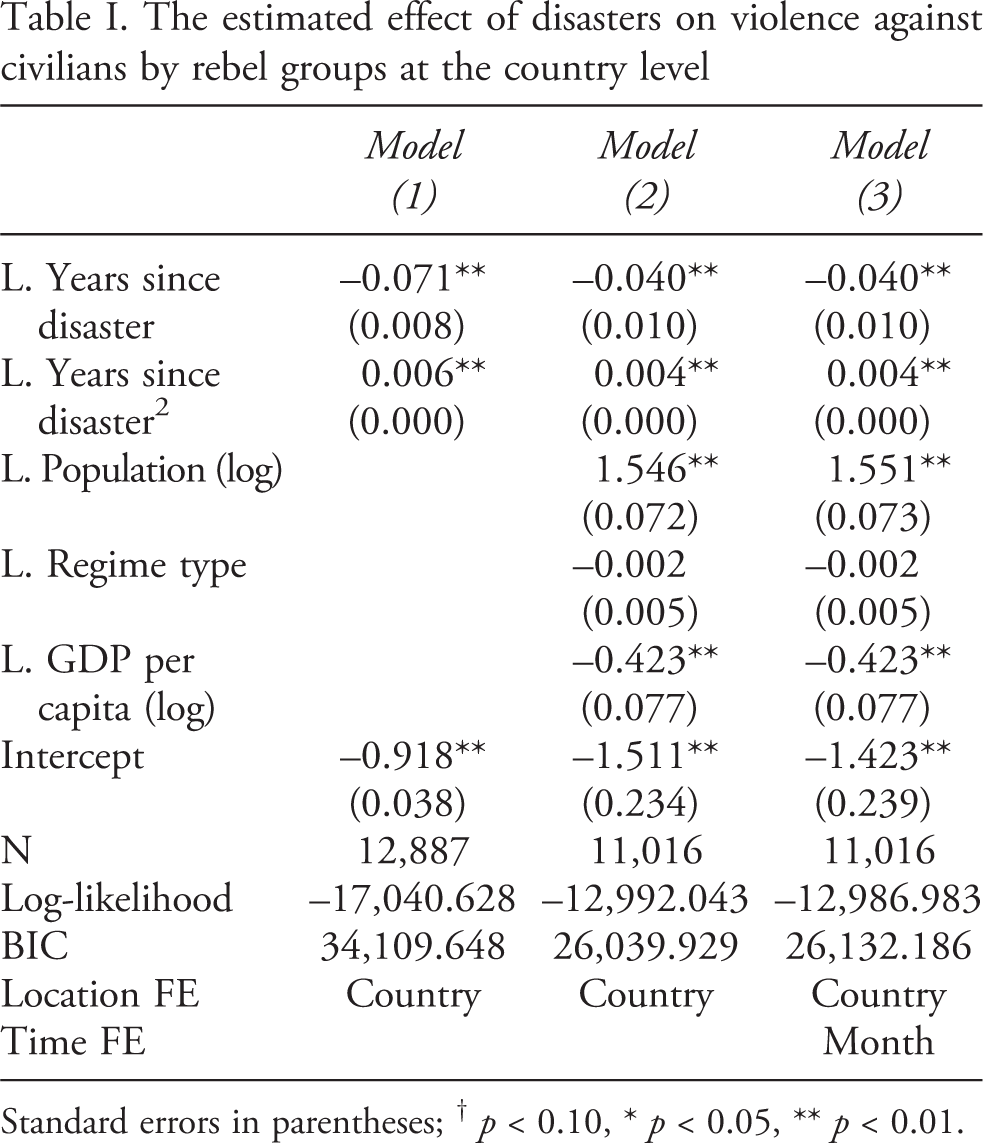
Standard errors in parentheses; † p < 0.10, * p < 0.05, ** p < 0.01.
The estimated effect of disasters on violence against civilians by rebel groups at the subnational level
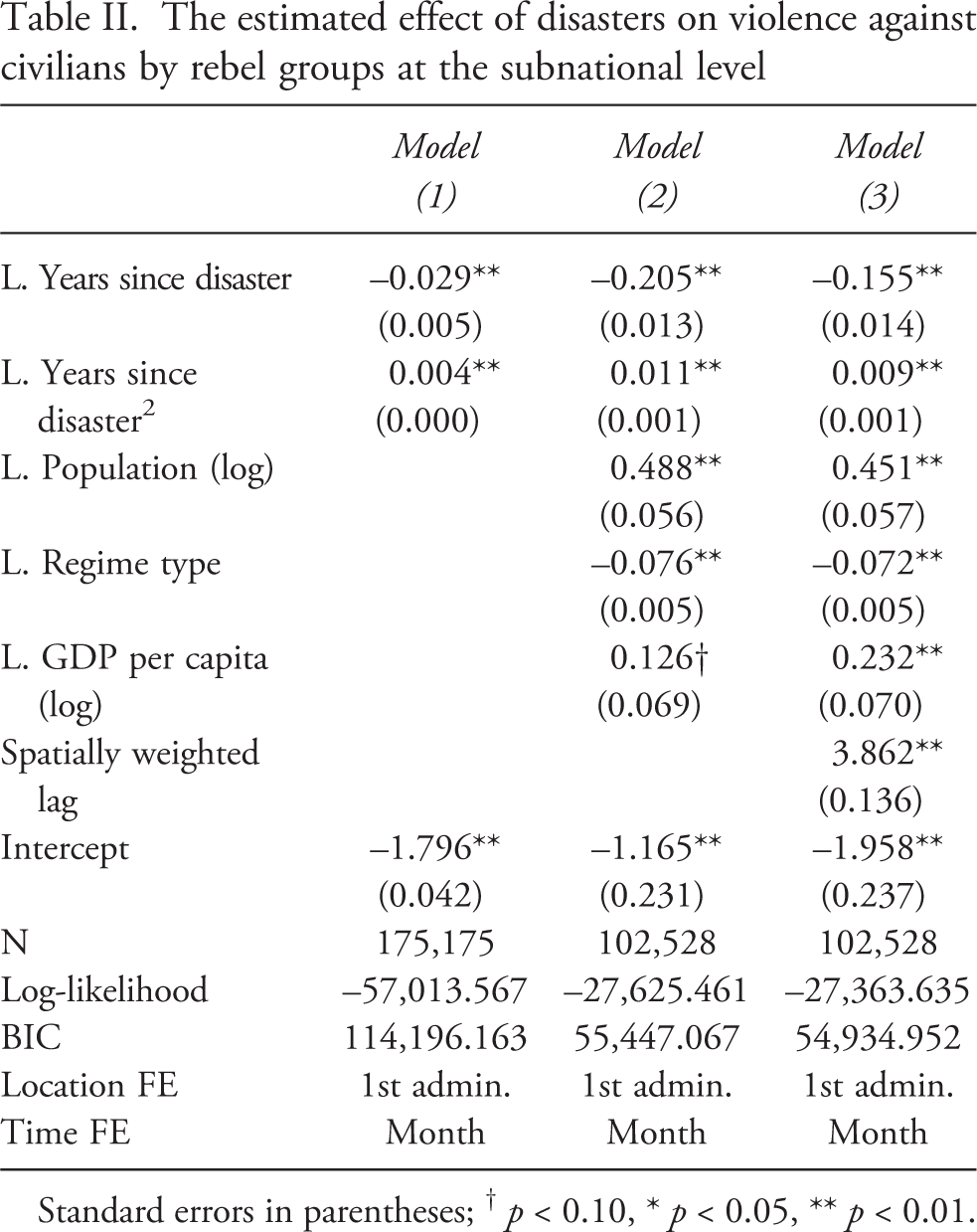
Standard errors in parentheses; † p < 0.10, * p < 0.05, ** p < 0.01.
These results suggest that natural disasters influence the occurrence of civilian victimization by rebel groups over time. To explore this result more intuitively, we use Somalia as an illustrative case. Somalia faced a large cholera outbreak in mid-2007. During this epidemic, more than 1,000 people died and more than 35,000 were affected (OCHA, 2007). Figure 2 shows the relationship between the number of one-sided violent events perpetrated by Somali rebel groups over time. The red vertical Predicted effect of years since disasters on the number of civilian victimization events at the national (left) and subnational (right) level Number of one-sided violence events in Somalia before and after the 2007 cholera outbreak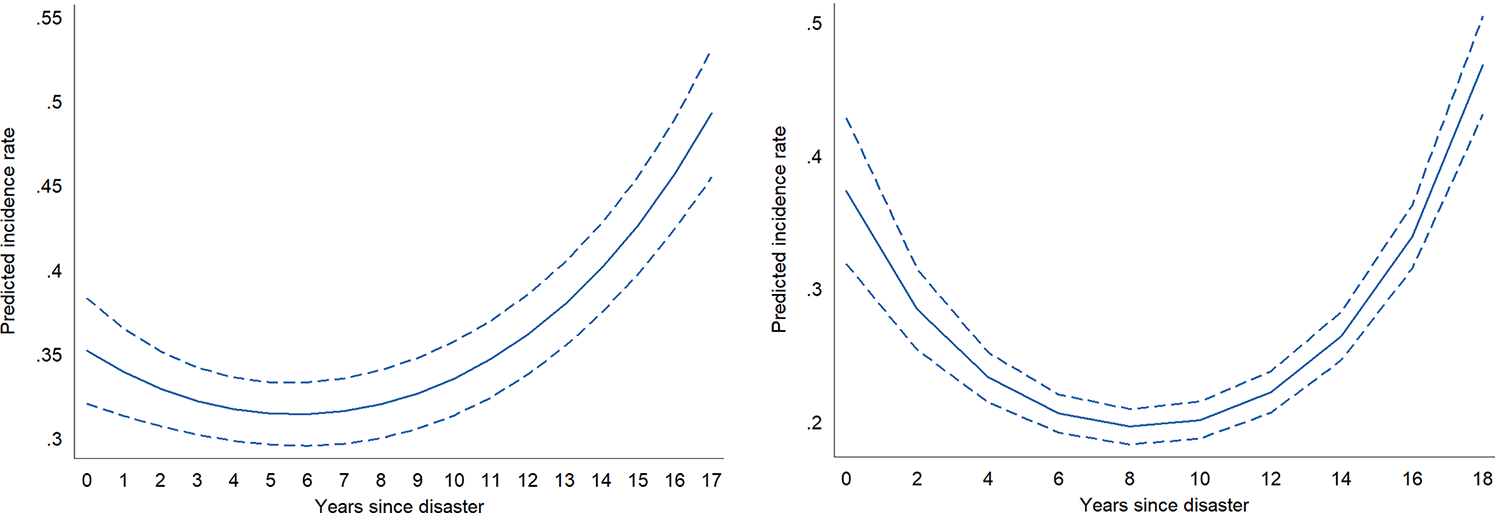
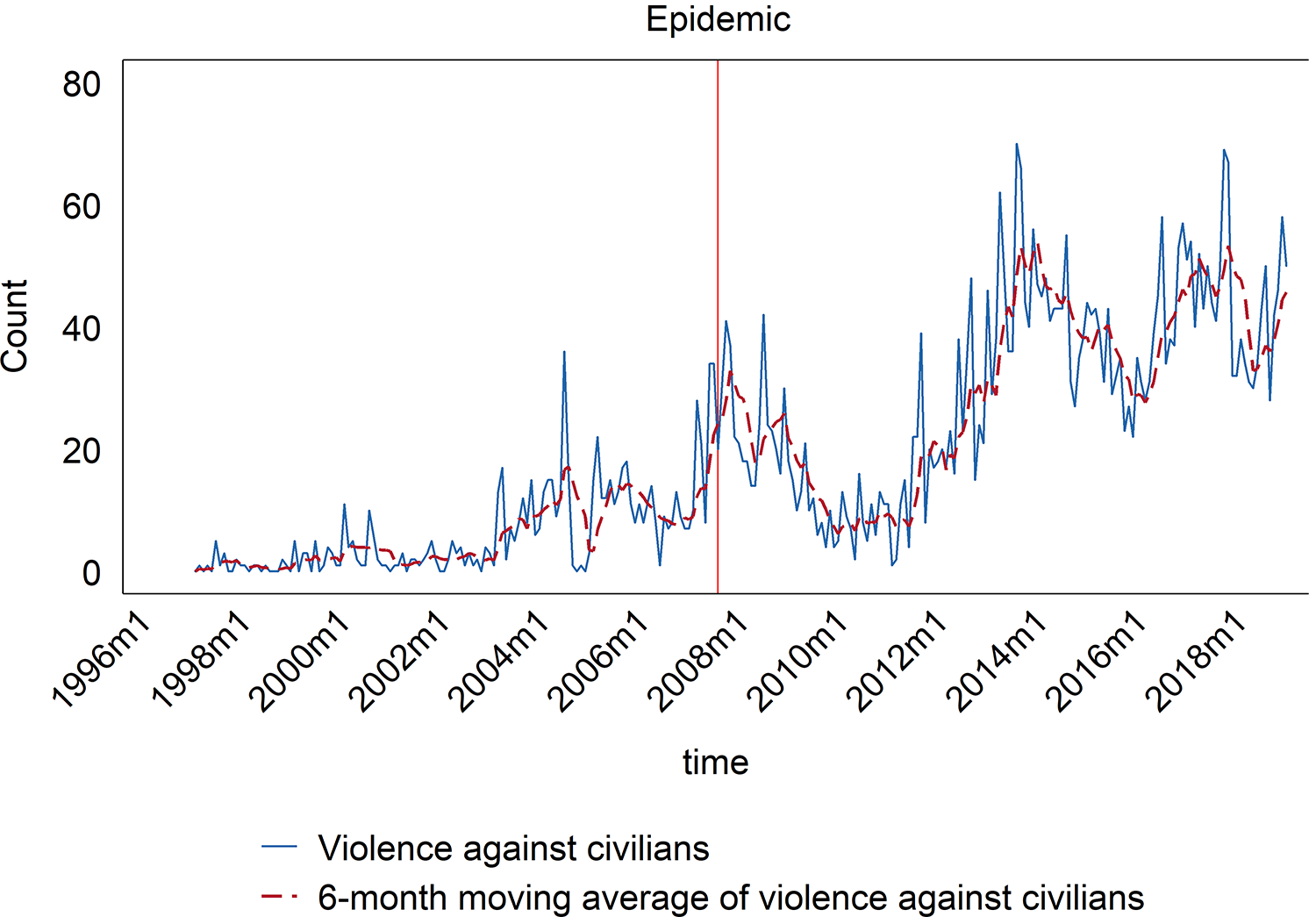
Robustness checks
We check the robustness of our findings via alternative models, which can be found in the Online appendix. First, we examine the theorized non-linear relationship between civilian victimization and disasters across different types of disasters (Table A3 in the Online appendix). It might be the case that the type of disaster determines the U-shape form of the relationship between the years since the disaster and violent events against civilians. We examined this relationship at the national level by looking at the effect of the most frequently occurring disasters: earthquakes, epidemics, and floods.
17
The coefficients are reported in the Online appendix (Table A3). Figure 3 illustrates the predicted effect of these three types of disasters. Across these three types of Predicted effect of Years since disaster on the number of civilian victimization events across different types of disasters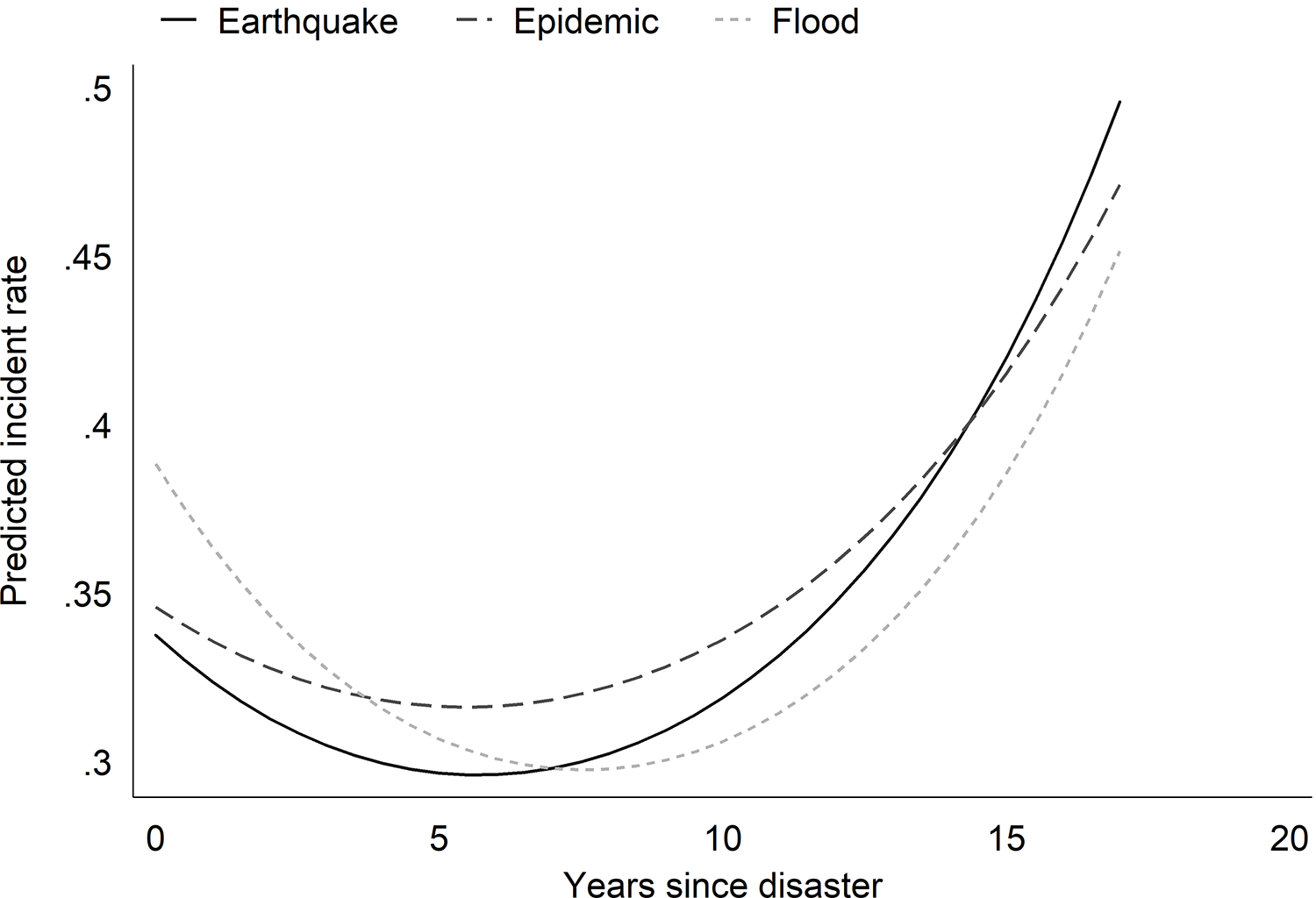
Second, in our main analysis, we define a major natural disaster as one that causes at least 100 (for our national analysis) and 500 (for our subnational analysis) deaths in one month. To ensure that our main results hold to changes in these thresholds, we conducted a sensitivity analysis in which we changed these thresholds stepwise from ten to 1,000 deaths for the national analysis and ten to 200 deaths for the subnational analysis. Consistent with our theoretical arguments, the analyses (Figures A2 and A3 in the Online appendix) show that our theorized mechanisms are triggered when the disasters are sufficiently severe. While the findings from the subnational analysis appear not to be sensitive to changes in the threshold, our findings at the national level support our hypothesized temporal dynamic once the number of reported deaths reaches 320 per month. After passing this threshold, our empirical results are not sensitive to changes in the threshold. This confirms our idea that especially severe disasters cause these temporal dynamics.
Third, in line with other scholars (e.g. Kalyvas, 2006; Weintraub, 2016), we have argued that the dynamics causing one-sided violence might be very different from those causing other types of conflict-related outcomes. For instance, the relationship between natural disasters and battles between the government and rebel groups might follow a very different pattern. To empirically examine this, we conducted several placebo tests. Our analysis in the Online appendix (Tables A10 and A11) shows that our hypothesized temporal dynamic cannot be found when examining battles or one-sided violence perpetrated by governments. In addition, some might argue that our independent variable, Years since disaster, captures a non-linear association due to the way that we operationalized this variable. However, our analysis (Figures A4 and A5 in the Online appendix) shows that the non-linear post-disaster dynamic is not generated by a random temporal process, and we can find empirical support for it when we use natural disaster events for operationalizing Years since disaster.
Fourth, some of the theoretical mechanisms that we have discussed, such as humanitarian aid, might not only have national implications but can also affect local conflict processes. To examine whether major disasters at the national level affect the rebel–civilian relations at the local level, we combine the models and examine the theorized association using the number of years since the disaster at the national level and the monthly number of civilian victimizations at the first administration level. Table A9 in the Online appendix shows the results. They indicate that sufficiently severe national disasters can indeed affect the relation between rebel groups and civilians in the short and long terms at the local level.
Fifth, to address some of the concerns related to the use and interpretation of non-linear models (e.g. Angrist & Pischke, 2009), we also estimated the effects of disasters on civilian victimization using the ordinary least square (OLS) method with location and time fixed-effects at different aggregation levels (see Tables A4 to A6 in the Online appendix). The estimated OLS coefficients mostly show a similar pattern to that presented in the main study: a decrease in the number of violent events against civilians in the short run and a sharp increase in the number of events in the long run.
Lastly, one-sided violence events perpetrated by rebel groups can be a rare event in some locations in particular months. The rarity of such an event can lead to estimation problems and errors (Bagozzi et al., 2015). To address these concerns, we estimated our models using zero-inflated negative binomial (ZINB) estimation methods with robust standard errors. At the first stage, we model the likelihood of the occurrence of one-sided violence. At the second stage, we estimate the effects of disasters on our outcome (the number of one-sided violence events). The results are reported in the Online appendix (Tables A7 and A8). The results of the ZINB models mirror those that we have presented in the main study, supporting our hypothesis about the non-linear association between disasters and the number of one-sided violent events.
Conclusion
In this study, we examine the relationship between natural disasters and one-sided violence perpetrated by rebel groups, that is, the deliberate killing of the civilian population. In doing so, we have tried to overcome several identified gaps in current scholarship. First, the literature on the determinants of one-sided violence has identified several important factors influencing the relationship between rebel groups and the civilian population. However, the effect of natural disasters has been largely neglected. At the same time, the literature on the disaster–conflict nexus is divided regarding the risk these disasters pose for conflict. Some scholars have argued that they induce conflict, while others argue that they can give rise to more peace (e.g. Dynes & Quarantelli, 1971; Kelman & Koukis, 2000; Kreutz, 2012; Salehyan & Hendrix, 2014; Eastin, 2016). In this study, we attempt to bridge these scholarships by exploring the temporal link between natural disasters and one-sided violence.
Theoretically, we argue that in the immediate wake of the disasters, armed groups and civilians are struggling to survive. However, this feeling of cooperation and solidarity is likely to dampen in the long run, due to resource scarcity and the influx of humanitarian and disaster aid. These factors significantly change the relationship between governments and rebel groups, leading the latter to increase their attacks on the civilian population. Empirically, we combine geographical information on one-sided violence (ACLED; Raleigh et al., 2010) with information on the occurrence of natural disasters (EM-DAT; CRED). Our analysis supports our main ideas. In the immediate wake of the natural disaster, we see a decline in civilian victimization, which in turn increases in the long run. This finding is robust not only at the national and subnational levels but also across types of disasters.
Since this study is the first to examine this temporal dynamic, many avenues exist for future research. First, in this study, we have tested the overall net effect of the disaster on rebel violence against civilians. Due to a lack of more disaggregated data, we were not able to examine the impact of each causal mechanism in more depth (i.e. the effect of humanitarian aid and resource scarcity). Second and related, we have not examined the influence of several potential cofounders. For instance, it might be likely that the kind of humanitarian aid has a significant influence. Moreover, the amount of media attention might also influence not only the amount of aid but also perhaps the likelihood that rebel groups resort to one-sided violence. Third, we focus our analysis on Africa. It might be worth broadening the scope of research and examine these relationships on other continents. Also, investigating the spillover effects of natural disasters might be worth examining. Lastly, we currently lack subnational information on many types of disasters in many countries. We found, however, some preliminary evidence that the temporal dynamics differ per disaster type. Future research might explore these differences in more depth.
Concerning policy implications, our work highlights the importance of incorporating a human rights perspective into natural disaster response not only because it affirms the rights and dignity of vulnerable people, but also because it can prevent the killing of innocent civilians in the aftermath of disasters. At the same time, our study shows the importance of considering the long-term effect of natural disasters. The international community should not only focus on providing aid in the immediate aftermath of these disasters but might also need to consider a more long-term perspective in which a peacebuilding approach is integrated. For instance, it is not only important to help African states in their fight against the COVID-19 pandemic by providing short-term aid, but it is also important to promote long-term coordination among donor states, aid agencies, and international and regional peacekeeping organizations. In the long run, this long-term coordination integrated with peacebuilding elements is likely to lead to fewer negative externalities such as one-sided violence.
Footnotes
Replication data

Acknowledgments
We are especially grateful to Gina Yannitell Reinhardt, Carmela Lutmar, and Elisabeth Lio Rosvold, as well as the other participants of the online workshop on Disaster Diplomacy (12 October 2020) for their insightful comments and suggestions.