




Abstract
To reach a more diverse consumer base, companies have begun to offer products symbolically linked to stigmatized identities, and these products are often promoted by price discounts. Despite past work finding that linking consumer identities to products is generally appealing and that price promotions benefit consumers, the current research finds that offering discounts on products symbolically linked to stigmatized identities may backfire. Across eight studies, which include a variety of stigmatized groups in U.S. society, we find that when a company offers a discount on a product symbolically linked to a stigmatized identity, members of the stigmatized group react negatively toward the company (i.e., they hold less favorable attitudes, have lower purchase intentions, and choose the company's competitor). These negative reactions, which do not arise for nonstigmatized consumers, occur because stigmatized consumers perceive the company's action of offering a discount as disrespectful toward their social group. The effect is contingent on whether the company is an ingroup or outgroup member, the selection of other discounted products, and the type of sales promotions employed. This research enriches our understanding of stigmatized consumers and offers insights into the nature of disrespectful cues in the marketplace and the social cost of price promotions.
Lol the black barbie dolls are on sale at the wal mart in herk smh-- Disrespectful. Lml
—Retweeted by @_carceeexoxo, a Black American, September 13, 2010
Recent years have witnessed several companies offering products symbolically linked to stigmatized identities (e.g., Black Lives Matter water bottle, LGBTQ Barbie doll). These products carry social and cultural meanings associated with stigmatized groups—that is, individuals who are often devalued in society due to their membership in a social group (Crocker, Major, and Steele 1998)—and are designed to represent or evoke the identity of these social groups (Belk 1988). Further, companies often use price discounts to promote them. For example, movie app Google Play compiled a selection of movies featuring the stories of Black Americans and offered discounts of up to 60% off on films in this collection; clothing company Forever 21 introduced face masks with a rainbow-colored “Love is Love” and sold them at a 50% discount; and online store LookHuman offered coffee mugs depicting the expression “Asian is Beautiful” at 35% off.
Despite these efforts, Twitter data suggest that discounting products that are symbolically linked to stigmatized consumer groups may have a downside. In 2010, a shopper at Walmart discovered that a Black Barbie doll was being sold at a discounted price of $3.00 (originally priced at $5.93), while a White Barbie doll next to it remained at its original price. The shopper posted a photo of the two Barbie dolls online, sparking a backlash against Walmart. While Walmart defended the promotion as “inventory management,” critics argued that such a discount was “devaluing the black doll” (ABC News [Gomstyn 2010]). Over the years, other stores that have similarly discounted Black dolls while keeping their White counterparts at their original prices include Target ($10 off) and Ross Dress for Less (30% off). In web-scraping real tweets that arose in response to these incidents, we found that consumers, and in particular Black users, perceived those promotions as a negative action and expressed their outrage and felt disrespect on social media, as evidenced by the significant occurrence of the term “racism”/“racist” in the tweets (see Web Appendix A for detailed methodology and results). Such a reaction is noteworthy given that consumers rarely, if ever, post sales promotion content on social media unless incentivized (Liadeli, Sotgiu, and Verlegh 2023). This naturally begs the question as to whether this is an isolated incident or whether, more generally, members of stigmatized consumer groups react negatively upon discovering that a company is selling at a discount a product that is symbolically linked to their stigmatized identity.
Across eight studies that explore a variety of stigmatized groups in the context of contemporary U.S. society (i.e., U.S. residents of Asian descent, LGBT Americans, Latino Americans, and Black Americans) and product categories (i.e., water bottles, mugs, face masks, and Barbie dolls), we seek to answer this question. We propose and find that when a company offers a price discount on a product symbolically linked to a stigmatized identity (e.g., a Black Lives Matter water bottle), these consumers (e.g., Black consumers) perceive that the company disrespects their social group, and thus they will react negatively toward the company. We also identify theoretically and managerially relevant moderators: The effect dissipates when stigmatized consumers perceive the company as an ingroup member, when a nonstigmatized-identity-linked product is simultaneously discounted, and when nonmonetary promotions such as buy one, get one free offers and free shipping are offered.
The current research makes several important contributions. Foremost, we are the first, to the best of our knowledge, to empirically demonstrate that a company's action of offering price discounts can create a social identity threat cue for consumers who identify with the focal identity. Specifically, we demonstrate that when a company discounts a product linked to a stigmatized group, members of the stigmatized group will infer that the company offers the discount because it devalues the stigmatized identity, and this will create perceptions that the company disrespects the group. In turn, these perceptions of disrespect lead to negative consumer reactions including less favorable attitudes, lower purchase intentions, and increased choice of the company's competitor. Such a demonstration departs from the limited research on the social cost of price promotions, including work on coupon redemption and targeted discounts, in several ways. First, previous research finds that some consumers refrain from using coupons because others may infer that they are cheap and stingy (i.e., impression management concerns; Ashworth, Darke, and Schaller 2005; Brumbaugh and Rosa 2009). While our research also focuses on negative inferences arising in the context of price promotions, it differs from coupon redemption, whereby a consumer's own actions communicate information about the self to others (i.e., the consumer decides whether or not to use the coupon, and their action is thus the source of the inference). In our research, the negative inferences that arise originate from a company's decision to offer a discount in the first place (i.e., the source of the inference is tied to why the company is offering the price promotion). Second, previous research on targeted discounts that explores elderly consumers’ attitudes toward price promotions finds that some senior citizens (i.e., “young old”) reject these discounts because using them signals an “elderly” identity that they do not wish to take on (Moschis and Mathur 2006; Tepper 1994). In contrast, in the current research, the negative reaction that we document does not stem from consumers’ resistance to belonging to a group but rather from the perception that a discount implies a devaluation of a social identity with which they strongly identify. Moreover, the discount is not exclusively targeted to the stigmatized group; rather, anyone can benefit from the price promotion. Finally, in both of these previous streams of research, the focus is on the consumer opting to use or benefit from the price promotion. However, in the current research, we explore how consumers react not when they are actively seeking out the discounted product but rather when the price discount is encountered while they are browsing.
Second, we extend the body of work on how consumers infer respect, and a lack thereof, in the marketplace. Although some research has attempted to understand when consumers might perceive disrespect toward them as individuals (e.g., consumers feel disrespected when they are charged a higher price than others; Ashworth and McShane 2012), an understanding of what might cause consumers to infer that their social group as a whole is being disrespected is less explored. Such a focus is especially relevant in studying stigmatized consumer groups as they, unlike their nonstigmatized counterparts, often face discrimination by virtue of their group membership and therefore may be attentive to cues that signal to them whether or not they are welcomed and valued consumers (Chaney, Sanchez, and Maimon 2019; Harmeling et al. 2021). We demonstrate how seemingly inconsequential cues in the environment (i.e., a price discount offered by a company, typically viewed positively) can create perceptions of disrespect toward a social group. This finding expands the scope of research on cues of disrespect for stigmatized consumers within the marketplace, which has primarily focused on stigmatized groups’ interactions with others in an intergroup setting (e.g., low-income consumers interacting with staff and high-status consumers in a high-end shopping mall; Jacob et al. 2022) and whether marketing communications reinforce stereotype threats (e.g., posters in a computer science classroom that suggest to female students that computer science is a male subject; Cheryan et al. 2009; Cheryan, Meltzoff, and Kim 2011). By documenting a novel source of disrespect, we respond to recent calls for investigations into the manner in which stigmatized consumers navigate, interpret, and engage with the marketplace (Arsel, Crockett, and Scott 2022; Lamberton 2019; Wooten and Rank-Christman 2019).
From a managerial perspective, our research underscores the fact that marketing actions for stigmatized consumer groups may have unintended consequences. In particular, our finding that nonstigmatized individuals do not perceive as disrespectful a price discount on a product linked to a stigmatized identity suggests that business practitioners who are not members of the stigmatized group need to be particularly thoughtful when implementing marketing actions involving stigmatized consumers. This advice aims to ensure a thorough understanding of the potential ramifications. Furthermore, this finding underscores the pressing need for further research in this area, as our current knowledge primarily reflects the perspectives of the nonstigmatized. Against this backdrop, we offer practical insights to marketers on effectively implementing price promotions for products linked to stigmatized identities, while minimizing perceptions of disrespect toward the stigmatized group. Our findings suggest that marketers can mitigate the negative impact by opting for nonmonetary promotions instead of price discounts or by simultaneously including at least one product linked to a nonstigmatized identity in the discounted offerings. In the next section, we discuss research on price promotions, stigmatized consumers, and disrespect, to formulate hypotheses that will be subsequently tested in eight studies.
Conceptual Background
The Downside of Price Promotions
Price promotions come with both benefits and costs. In terms of benefits, price promotions provide economic savings (Blattberg and Neslin 1990), elevate consumers’ mood (Heilman, Nakamoto, and Rao 2002), make shoppers feel “smart” (Schindler 1998), and prompt positive product evaluations due to enhanced transaction utility (Naylor, Raghunathan, and Ramanathan 2006). However, prior research finds that price promotions can also lead to negative inferences such as inferior product quality (Darke and Chung 2005; Raghubir and Corfman 1999; Scott and Yalch 1980) and lower efficacy (Shiv, Carmon, and Ariely 2005). Importantly, price promotions can also create a social cost, resulting in negative implications that extend beyond the product itself (see Table 1 for a summary).
Summary: The Social Cost of Price Promotions.
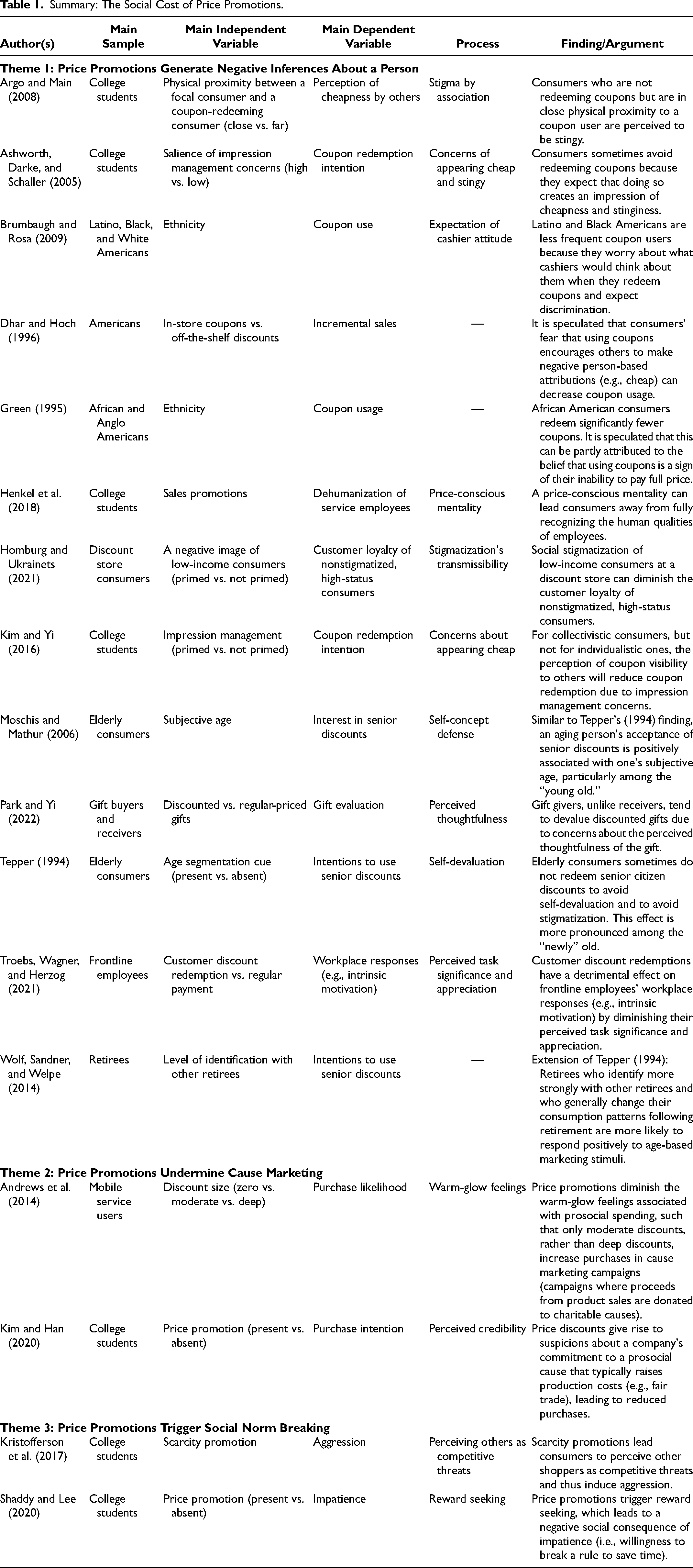
Most relevant to the current research, two types of price promotions (i.e., coupons and targeted discounts) have been shown to produce actual and anticipated negative person-based inferences. For instance, when consumers redeem coupons, they are perceived by others as being stingy (Ashworth, Darke, and Schaller 2005) and cheap (Dhar and Hoch 1996), and this results in impression management concerns and coupon avoidance. Similarly, African American and Hispanic American consumers worry that others will infer that they are lower-class or unable to afford full price if they redeem a coupon (Green 1995), leading them to expect discrimination from cashiers (Brumbaugh and Rosa 2009). Finally, in the domain of targeted discounts, some elderly consumers, especially the “young old,” refrain from using targeted senior citizen discounts because they do not want to accept an elderly status, which they believe will lead to negative inferences from others (Moschis and Mathur 2006; Tepper 1994). In sum, prior research on the social costs of price promotions has predominantly explored negative inferences that arise due to the consumer's own use of promotions such as coupons and targeted discounts.
The current research extends previous research by focusing on the social inferences consumers make based on a company's intentional act of offering a price discount. Prior research indicates that consumers often consider the intentions behind a company's act of offering price promotions and make inferences about the company's underlying motives (Raghubir, Inman, and Grande 2004; Xia, Kukar-Kinney, and Monroe 2010). For instance, when a fair-trade company promotes its products through discounts, consumers may infer that the company is primarily focused on boosting sales, leading to suspicions regarding its compliance with fair-trade practices (Kim and Han 2020). In the context of targeted promotions, not being selected for a promotion leads consumers to infer that the company does not value them (Xia and Monroe 2017). In the current work, as we discuss subsequently, we propose that when a company offers a price discount on a product that is linked to a stigmatized group, members of this stigmatized group will form negative inferences about the company's actions.
Stigmatized Social Groups
Stigmatized individuals are those who, due to their membership in a particular social category, are often devalued, spoiled, or flawed in the eyes of others (Crocker, Major, and Steele 1998; Jones et al. 1984), and their social identity reduces them in the minds of others “from a whole and usual person to a tainted, discounted one” (Goffman 1963, p. 3). Although the terms “stigmatized,” “marginalized,” and “minority” are highly related and often used interchangeably, strictly speaking, marginalized individuals “barely register in the dominant group's consciousness” and are often deemed irrelevant (Livingston and Rosette 2021, p. 45), and minority status only concerns the relative size of a population subgroup (American Psychological Association 2023). In contrast, stigmatized individuals are those who face pervasive negative evaluations and are often targets of prejudice and discrimination because of their membership in a particular social group (Crocker and Major 1989).
Stigmatization is contextual, as it does not reside in a specific attribute or in the person who possesses that attribute but rather in the circumstances of possessing an attribute that, in a given social context, leads to devaluation (Crocker, Major, and Steele 1998; Sandikci and Ger 2010). In other words, stigmas are contextually determined and dynamic in nature (Mirabito et al. 2016). As a result, they can be influenced by timing (e.g., smokers in the United States were once socially accepted, but have become a stigmatized group following antismoking campaigns in the 1990s; Kim and Shanahan 2003), social currents (e.g., while police officers may not be stigmatized in American society overall, they may face stigma in certain contexts such as immediately after George Floyd's death and in certain areas such as inner cities; Reny and Newman 2021), and cultural values (e.g., overweight individuals are stigmatized in Western cultures, whereas obesity is perceived as a symbol of social status in North African culture; Mokhtar et al. 2001). Regardless of the source of the stigma, members of such groups are receptive to aspects of the environment or social setting that communicate to them the value of their stigmatized identities (i.e., stigmatized identity cues; Chaney, Sanchez, and Maimon 2019). Such cues can either signal to members of the stigmatized group that their identity is valued (i.e., safety cue) or devalued (i.e., threat cue; Wooten and Rank-Christman 2019).
In the marketplace, stigmatized consumers can use stigmatized identity cues to infer a company's attitude toward them (Chaney, Sanchez, and Maimon 2019; Wooten and Rank-Christman 2019). For instance, upon discovering that a company has implemented a diversity training program, consumers from stigmatized racial groups infer that their identities are valued by the company and believe that the company fosters an environment free from discrimination (Chaney, Sanchez, and Remedios 2018). In the context of our study, we argue that when a company offers a price discount on a product that is linked to a stigmatized group, members of the group will use it as an identity cue to make inferences about the company's intentions. While it is possible that a price discount might serve as a safety cue making an identity-linked product more affordable, we argue that this expectation is inadequate because it overlooks the lived experiences of stigmatized social groups. In particular, stigmatized groups are often subject to devaluation (Crocker, Major, and Steele 1998) and reduced to “discounted” individuals in the eyes of mainstream society (Goffman 1963, p. 3), and as a result, they are attentive to cues that may signal whether or not they are welcomed and valued (Harmeling et al. 2021). Given this, when a company decides to discount the price of a product that is linked to a stigmatized identity, members of the stigmatized group will perceive the marked-down price as an identity threat cue, as it will imply that the company believes the stigmatized identity is worth less. Since social devaluation commonly leads to perceptions of a lack of respect (Honneth 1992), we further posit that the discount will influence stigmatized consumers’ perceptions of how much—or how little—the company respects their social group.
(Dis)Respect Toward Stigmatized Consumers
Respect, and the lack thereof, has been of interest to academics for centuries (Kant [1785] 1964). Although respect has been defined from different viewpoints across various disciplines (Atwell 1982), researchers agree that it involves being accepted, included, and treated fairly without bias (Boeckmann and Tyler 2002; De Cremer 2002; Simon and Stürmer 2005) by one or more others (Spears et al. 2006). In contrast, experiencing a lack of acceptance and being inappropriately judged by others often lead to perceptions of being disrespected (De Cremer and Tyler 2005; Egge 1999).
Prior research has identified several circumstances under which consumers might perceive disrespect toward themselves, as well as the downstream consequences of such a perception. More specifically, consumers feel disrespected when a seller misspells their name (Rank-Christman, Morrin, and Ringler 2017) or when a company charges a select group of consumers a higher price (Ashworth and McShane 2012). Most relevant to the current work, disrespected consumers tend to have negative reactions to the disrespectful company, such as an increase in dissatisfaction with a company (Ashworth and Bourassa 2020; Winsted 2000) and negative word of mouth (Blodgett, Wakefield, and Barnes 1995).
Less explored is what might cause consumers to perceive that their social group as a whole is being disrespected. This is perhaps unsurprising, given that most consumer research focuses on nonstigmatized populations, whose value and worth are already validated by default environments that cater to their needs and who are, therefore, unconcerned with the prospect of disrespect toward their social group (Chaney, Sanchez, and Maimon 2019). To illustrate, in the United States, a White, heterosexual consumer is unlikely to be concerned with whether a company would disrespect the White or the heterosexual social group. Members of stigmatized social groups, however, have different lived experiences as they have experienced patterns of social inequality due to their association with a social group to which mainstream society has assigned negative characteristics (Goffman 1963). For example, prior research has shown that White people and individuals from racial minority groups tend to have divergent goals in social interactions as the former often want to be liked, whereas the latter seek respect (Bergsieker, Shelton, and Richeson 2010). In the marketplace, consumers with stigmatized identities infer whether a company values their social group by a number of cues, such as the manner in which their social group is represented in an advertisement (Chaney, Sanchez, and Maimon 2019) or the way a company treats its minority employees (Chaney, Sanchez, and Remedios 2018). Our research investigates a novel cue that influences stigmatized consumers’ perceptions of whether a company respects them, namely a company's decision to offer a price discount on a product linked to their identity.
In summary, we posit that when a company promotes a product that is linked to a stigmatized identity with a price discount, members of the stigmatized social group will perceive the company as disrespectful toward their group. Given that people often respond to disrespectful treatment by denigrating the perpetrator (Miller 2001), when stigmatized consumers encounter a price promotion on a product linked to their identity, they will react negatively toward the company (e.g., less favorable attitudes, lower purchase intentions, and increased choice of the company's competitor). Formally, we hypothesize:
Overview of Studies
Eight studies test our hypotheses (see Figure 1 for an organizing framework). Study 1 tests the basic phenomenon (H1). Studies 2–4 provide measurement-of-process evidence substantiating that the effect is driven by a heightened sense that the company disrespects the stigmatized social group (H2). Studies 3–5 provide insights into the scope of the phenomenon (i.e., the effect is not a general negative reaction to discounts but specific to identity-linked products, is specific to stigmatized consumers, and is specific to stigmatized identities and not any identity). Studies 6–8 test managerially relevant moderators of the effect (i.e., company identity as an ingroup or outgroup member, composition of the discounted product offering, and type of sales promotion) to provide actionable insights for marketers on how to offer price promotions for stigmatized-identity-linked products without incurring a backfiring effect.
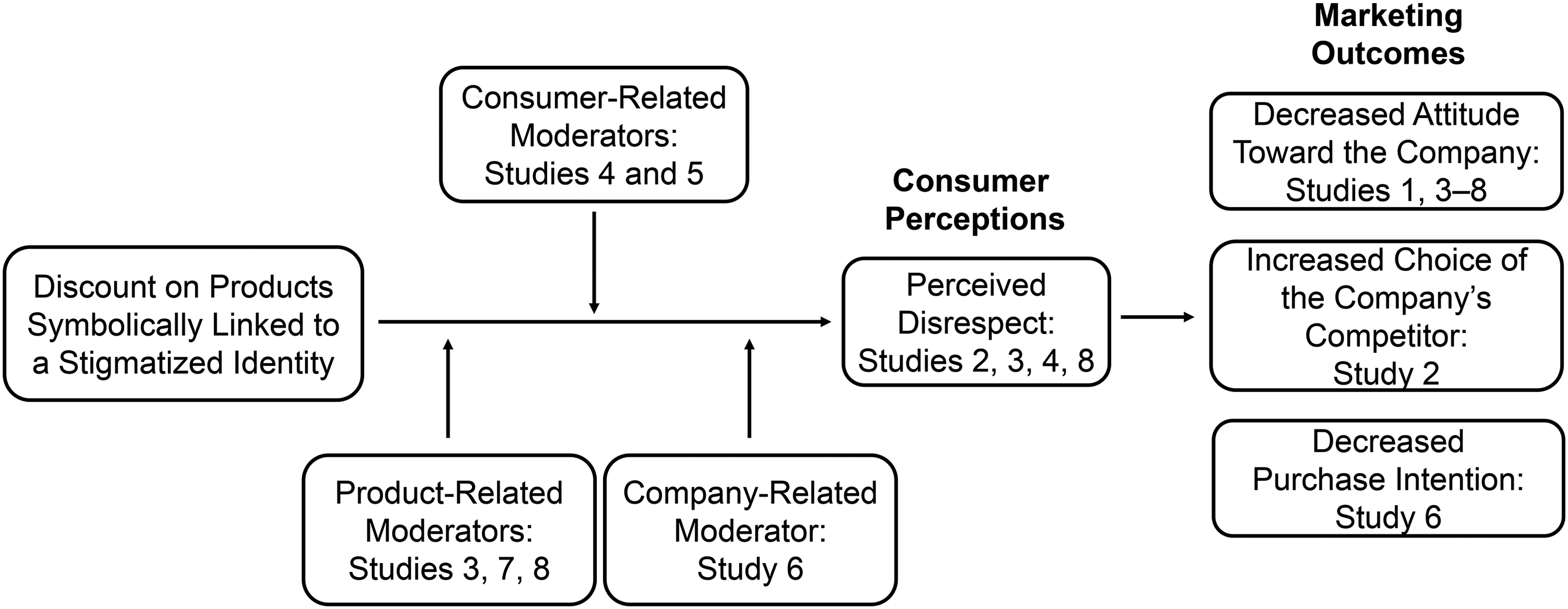
Consumer Reactions to a Price Discount on a Product Linked to a Stigmatized Identity.
In all of the experiments, we prescreened participants based on their Prolific profile and included a screening demographic question in the survey to ensure they matched the targeted stigmatized group. The question was measured at the end of the study in Studies 5 and 7, and at the beginning in the other studies. The stigmatized groups were selected based on previous research and included Asian (Hwang 2021), LGBT (Meyer 2003), Latino (Misra et al. 2021), and Black (Crockett 2017) people in the United States. A posttest confirmed that the identities of the relevant social groups were perceived as stigmatized in contemporary U.S. society (Web Appendix B). Sample sizes were determined by power analyses using effect sizes obtained in exploratory studies as estimates with two-tailed error probability α = .05 and statistical power 1 − β = .95. All stimuli can be found in Web Appendix C. We preregistered four experiments on AsPredicted. Data, preregistrations, and study materials are available at OSF (https://osf.io/wndcj/).
Study 1: Offering a Discount on a Product Linked to a Stigmatized Identity Backfires
This study was conducted against the backdrop of the 2021 “Asian Lives Matter” movement, which erupted in multiple U.S. cities in response to the increased stigmatization against the Asian population in the United States during the COVID-19 pandemic. We invited U.S. residents of Asian descent to participate in this study, where we tested the basic phenomenon that offering a price discount (vs. no discount) on a product linked to a stigmatized identity would lead to a less favorable attitude toward the company. This study was preregistered (https://aspredicted.org/w62zy.pdf).
Method
Participants and design
Two hundred seventy-six U.S. residents of Asian descent participated in the study. We removed one participant who failed the attention check, leaving a sample of 275 (Mage = 27.16 years; 44.7% female, 53.8% male, 1.1% other, .4% prefer not to answer). Participants were randomly assigned to one of two conditions in a between-subjects design (identity-linked product: on discount vs. not on discount).
Procedure
Participants were introduced to NIVO, a company specializing in outdoor gear and clothing, and imagined shopping in a NIVO flagship store where they came across a display containing water bottles. Participants were shown a picture of the assortment, which included five identity-neutral water bottles and one “Asian Lives Matter” water bottle. In the identity-linked product on discount condition, NIVO sold the Asian-identity-linked water bottle at 40% off. In the identity-linked product not on discount condition, NIVO did not offer a discount on any of the products. Participants rated their attitude toward the company on three seven-point items (1 = “very negative,” and 7 = “very positive”; 1 = “very bad,” and 7 = “very good”; 1 = “very unfavorable,” and 7 = “very favorable”), and these scores were averaged to form an attitude index (α = .98).
Results and Discussion
Asian participants evaluated the company less favorably in the identity-linked product on discount condition (Mdiscount = 4.37, SD = 1.48) than in the identity-linked product not on discount condition (Mno discount = 4.92, SD = 1.48; t = 3.07, p = .002, Cohen's d = .37). This study supports H1, that stigmatized consumers would evaluate a company less favorably when it offers a discount on a product linked to their social group.
Study 2: Perceived Disrespect Mediates the Effect
Using an incentive-compatible design, Study 2 tests the mediating role of perceived disrespect toward one's social group. This study also aims to generalize the effect to another stigmatized social group in contemporary U.S. society: LGBT people (Meyer 2003).
Method
Participants and design
One hundred ninety-nine LGBT respondents participated in the study. We removed 11 participants who failed the attention-check question, leaving a sample of 188 (Mage = 32.77 years; 43.6% female, 47.3% male, 8.5% other, .5% prefer not to answer). We employed a between-subjects design and randomly assigned participants to either the identity-linked product on discount condition or the identity-linked product not on discount condition.
Procedure
Participants read the same shopping scenario about NIVO's flagship store as described in Study 1, except that the focal identity-linked product in this study was an LGBT rainbow water bottle. In the identity-linked product on discount condition, NIVO offered a discount of 40% on the LGBT rainbow water bottle. In the identity-linked product not on discount condition, a discount was not offered on any product. Participants then completed a five-item, seven-point perceived disrespect scale adapted from Rank-Christman, Morrin, and Ringler (2017) that assessed the extent to which they believed that NIVO is disrespectful toward the LGBT community (1 = “strongly disagree,” and 7 = “strongly agree”): “To what extent do you think NIVO would make LGBT consumers ...” (1) “feel inferior to others,” (2) “feel disrespected,” (3) “feel not valued,” (4) “feel appreciated” (reverse-coded), and (5) “feel unimportant.” These items were presented in random order and averaged to form a composite measure of perceived disrespect (α = .90).
Participants were then thanked for their participation in the study and were told that as a token of appreciation, they could enter a raffle to win a gift card. They were able to choose between gift cards from two companies, redeemable at their respective web stores: (1) a $55 USD gift card from “NIVO, the brand you just read about,” or (2) a $50 USD gift card from “RINAI, a company that sells the same type of merchandise as NIVO and is thus one of NIVO's direct competitors.” The two companies were introduced in randomized order. Participants were told that if they entered the raffle, they would be contacted via a Prolific message if they won. Participants were also able to opt out by selecting a third option: “I prefer not to participate in the raffle.” Participation rates did not differ between conditions (Mdiscount = 88.89%, Mno discount = 89.80%; χ2(1) = .04, p = .84). Finally, as a proxy for involvement, we tracked the time participants spent on the raffle decision. No differences arose between conditions (Mdiscount = 21.74 seconds, SD = 10.42, Mno discount = 23.45 seconds, SD = 20.30; t = .71, p = .48).
Results and Discussion
Choosing the company's competitor
The dependent variable is the proportion of raffle participants who chose NIVO's direct competitor. It is worth noting that the $5 difference in gift card value makes this measure a conservative one. A chi-square test revealed that discounting an identity-linked product significantly increased participants’ choice of the lower-valued gift card of NIVO's direct competitor RINAI (χ2(1) = 7.73, p < .01, Cramer's V = .22). The choice share of the competitor company RINAI rose from 2.27% when the identity-linked product was not discounted to 13.75% when it was discounted.
Mediation
We predicted that perceived disrespect would mediate the relationship between the price discount and choice of the company's competitor. To test this hypothesis, we used PROCESS macro Model 4 with 5,000 bootstrap samples (Hayes 2018). As predicted, when the identity-linked product was on discount, participants perceived more disrespect by the company toward the LGBT community (a path, β = 1.13, SE = .17, t = 6.54, p < .0001; Mdiscount = 3.00, SD = 1.33, Mno discount = 1.87, SD = .88; Cohen's d = 1.01). Further, a logistic regression showed that the greater the perceived disrespect, the more likely consumers were to forgo the $5 and choose NIVO's competitor (b path, β = .99, SE = .28, z = 3.48, p < .001). The direct effect of the price discount on participants’ choice of gift card after controlling for the mediating influence of perceived disrespect was not significant (c′ path, β = .71, SE = .88, p = .42). The indirect effect of price discount on participants’ choice of gift card via perceived disrespect was significant (β = 1.12, SE = 1.66, 95% CI = [.39, 2.87]). Taken together, these findings indicate that perceived disrespect toward the LGBT community fully mediated the effect of discounted pricing on consumers’ choice of the company's competitor.
Despite the financial benefit offered by the discount, consumers perceived the company as disrespectful toward their social group, leading them to choose the company's competitor even if it meant incurring a financial cost. Using an incentive-compatible design in which participants made consequential choices, this study conceptually replicates the previous findings and provides initial evidence for the underlying role of perceived disrespect. Next, in Studies 3, 4, and 5, we provide insights into the scope of the phenomenon.
Study 3: The Effect Is Specific to an Identity-Linked Product
This study has two objectives. First, we seek to demonstrate that the effect documented so far is not a general negative consequence of a price discount but rather specific to a discount on a product that is linked to a stigmatized identity. To achieve this, we manipulate the type of product (identity-linked vs. identity-neutral) and examine how stigmatized consumers respond to a price discount on an identity-neutral product as well. Second, we focus on a different stigmatized group in contemporary U.S. society: Latino Americans (Misra et al. 2021).
Method
Participants and design
Four hundred Latino American respondents participated in the study. All participants passed the attention-check question and were included in the analysis (Mage = 28.50 years; 58.8% female, 39.8% male, 1.3% other). Participants were randomly assigned to one of four conditions of a 2 (product type: identity-linked vs. identity-neutral) × 2 (focal product: on discount vs. not on discount) between-subjects design.
Procedure
Participants imagined shopping in the flagship store of NIVO, a company that sells a variety of household products. In both the identity-linked and identity-neutral conditions, they read a scenario in which they came across a product display that consisted of six mugs, five of which were identity-neutral mugs (an image was again provided). The sixth mug, the focal product, differed by condition. In the identity-linked condition, participants were presented with a “Proud to be Latino” mug, whereas in the identity-neutral condition, the sixth mug had an image of a palm tree. In the discount condition, NIVO offered a discount of 40% on the focal product, while in the not on discount condition, a discount was not offered on any product.
After reading this scenario, participants first completed the same scale measuring their attitude toward the company as in Study 1 (α = .95), and then indicated the extent to which they believed NIVO was disrespectful toward the Latino community, using the same items described in Study 2 (α = .85), modified to reflect the different social group.
Results and Discussion
Attitude toward the company
A 2 × 2 ANOVA with price discount and product type as the independent variables and attitude as the dependent variable revealed significant main effects of price discount (Mdiscount = 4.62, SE = .09, Mno discount = 4.92, SE = .09; F(1, 396) = 6.02, p = .02,
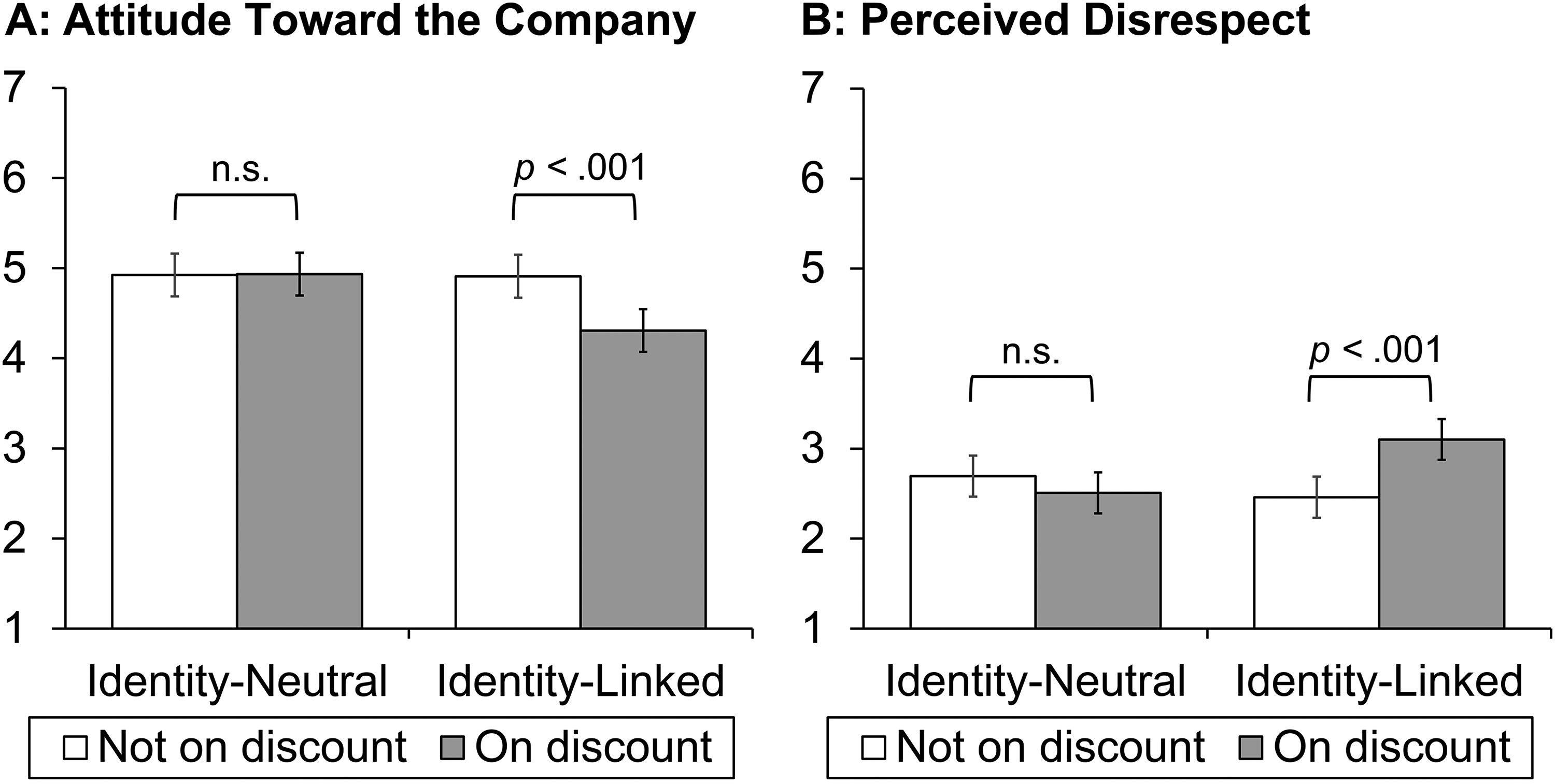
Study 3: Attitude and Perceived Disrespect as a Function of Discount and Product Type.
Perceived disrespect
A similar 2 × 2 ANOVA of perceived disrespect revealed a marginally significant main effect of price discount (Mdiscount = 2.81, SE = .08, Mno discount = 2.58, SE = .08; F(1, 396) = 3.83, p = .05,
Mediation
A moderated mediation analysis using PROCESS Model 7 (Hayes 2018; 5,000 bootstrapped samples) revealed that product type moderated the mediation by perceived disrespect (index of moderated mediation = −.49, 95% CI = [−.79, −.21]). Only in the identity-linked condition did perceived disrespect mediate the effect of the price discount on attitude toward the company (indirect effect = −.38, SE = .12, 95% CI = [−.63, −.16]). There was no mediation in the identity-neutral condition (indirect effect = .11, SE = .08, 95% CI = [−.06, .28]). Path coefficients are reported in Web Appendix D.
This study demonstrates that the detrimental effect of a price discount on a stigmatized-identity-linked product is not merely a general negative effect of a price discount on consumer attitude but rather is specific to identity-linked products. The study also generalizes the effect observed in previous studies to a different stigmatized group and product category.
Study 4: The Effect Is Specific to Consumers with the Stigmatized Identity
This study investigated whether the observed effect of a price discount on a stigmatized-identity-linked product is confined to members of the focal stigmatized group (i.e., Latino Americans) or whether individuals from a (nonstigmatized) majority group (i.e., White Americans) would also perceive the discount as disrespectful toward the stigmatized social group.
Method
Participants and design
We recruited 200 Latino Americans and 200 White Americans. All participants passed the attention check and were included in the analysis (Mage = 32.78 years; 56.8% female, 41.3% male, 1.5% other, .5% prefer not to answer). The study employed a 2 (social group type: stigmatized vs. nonstigmatized) × 2 (stigmatized-identity-linked product: on discount vs. not on discount) between-subjects design. The stigmatized group consisted of Latino Americans, and the nonstigmatized group consisted of White Americans. We randomly assigned participants to either the stigmatized-identity-linked product on discount condition or not on discount condition.
Procedure
Similar to previous studies, participants imagined shopping at NIVO, during which time they encountered a product display. In this study, the display consisted of mugs and always included five identity-neutral mugs and one Latino-identity-linked mug (i.e., a “Proud to be Latino” mug). In the discount condition, NIVO sold the Latino-identity-linked mug at 40% off. In the not on discount condition, NIVO did not offer discounts on any of the products. We first measured attitude toward the company (α = .98) using the same scale described in Study 1, and then measured perceived disrespect toward the Latino community using the same scale described in Study 2 (α = .88).
Results and Discussion
Attitude toward the company
A 2 × 2 ANOVA with price discount and group type as the independent variables and attitude as the dependent variable revealed significant main effects of price discount (Mdiscount = 4.56, SE = .09, Mno discount = 4.98, SE = .09; F(1, 396) = 10.74, p < .01,
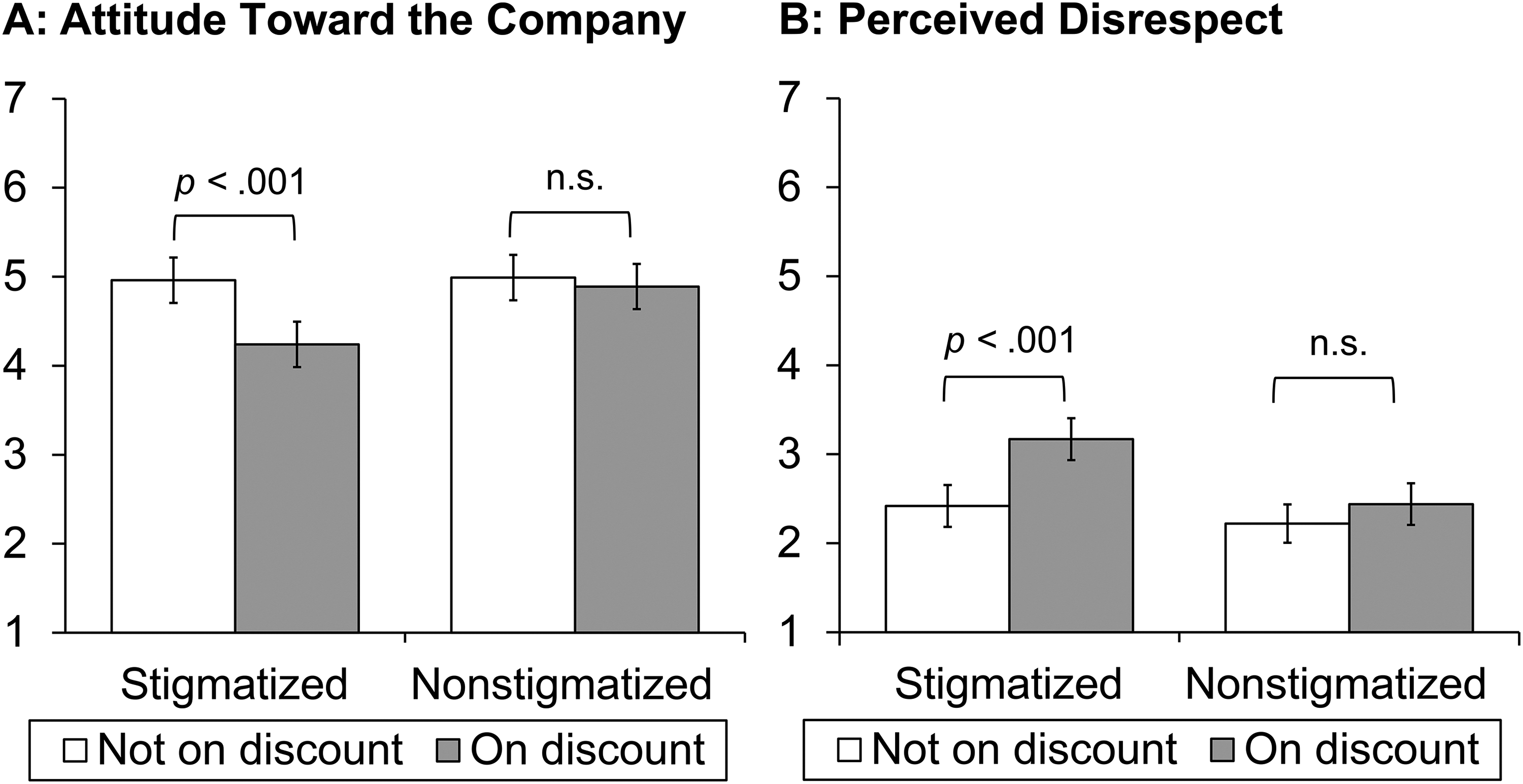
Study 4: Attitude and Perceived Disrespect as a Function of Discount and Group Type.
Perceived disrespect
A similar 2 × 2 ANOVA with perceived disrespect as the dependent variable revealed significant main effects of price discount (Mdiscount = 2.80, SE = .08, Mno discount = 2.32, SE = .08; F(1, 396) = 17.80, p < .001,
Mediation
A moderated mediation analysis using PROCESS Model 7 (Hayes 2018; 5,000 bootstrapped samples) revealed that group type moderated the mediation by perceived disrespect (index of moderated mediation = −.29, 95% CI = [−.57, −.05]). Perceived disrespect mediated the effect of the price discount on attitude toward the company only for Latino Americans (indirect effect = −.41, SE = .11, 95% CI = [−.64, −.21]) but not for White Americans (indirect effect = −.12, SE = .08, 95% CI = [−.29, .04]). Path coefficients are reported in Web Appendix D.
The results shed light on the subtle nature of the phenomenon we study. Nonstigmatized consumers do not perceive a price discount on a stigmatized-identity-linked product to be disrespectful toward the relevant stigmatized group.
Study 5: The Effect Is Specific to Stigmatized Identities
Thus far, we have demonstrated that offering a discount on a stigmatized-identity-linked product generates negative reactions from the stigmatized group. However, this raises the question as to whether stigmatized consumers respond negatively to discounts on all identity-linked products, or if the focal identity must be stigmatized. In other words, would, for example, a Black American respond negatively to a company that discounts an American-identity-linked product as compared with a Black-identity-linked product? To answer this question, it is important to recall that stigmatized consumer groups, unlike their nonstigmatized counterparts, often face discrimination and disrespect. They are attentive to cues that signal to them whether their stigmatized group is valued or not (Chaney, Sanchez, and Maimon 2019; Harmeling et al. 2021). Consequently, actions by companies specifically targeting their stigmatized identity, compared with actions targeting their nonstigmatized identity, should be more likely to be interpreted as signals of the company's stance on the value of that identity. Thus, we expect the negative effect of a discount on a stigmatized-identity-linked product to be more pronounced than a discount on a nonstigmatized-identity-linked product. In this study, we also focus on another stigmatized group in U.S. society: Black Americans (Crockett 2017). This study was preregistered (https://aspredicted.org/jv2tn.pdf).
Method
Participants and design
Four hundred thirty-one Black Americans participated in the study. We removed 13 participants who indicated they were not Black or American, leaving a sample of 418 (Mage = 38.25 years; 45.5% female, 53.3% male, 1.0% other). All participants had both a stigmatized identity (i.e., Black) and a nonstigmatized identity (i.e., American). Participants were randomly assigned to one condition in a between-subjects design (no product on discount vs. a stigmatized-identity-linked product on discount vs. a nonstigmatized-identity-linked product on discount vs. an identity-neutral product on discount [baseline control]).
Procedure
Participants read the following scenario: “Please imagine that you are in a shopping mall. As you walk by a household appliance store called Luxe, you notice that it offers three mugs. You stop to take a closer look, and this is what you see.” All participants then saw an image containing three mugs: a stigmatized-identity-linked mug (i.e., Black Lives Matter mug), a nonstigmatized-identity-linked mug (i.e., U.S. flag mug), and an identity-neutral mug (i.e., palm tree mug). We manipulated which mug was on discount. In the no product on discount condition, no discount was offered on any product. In the other three conditions with a discount, the corresponding product was sold at 40% off. After viewing the assortment, participants indicated their attitude toward Luxe using the same scale described in Study 1 (α = .97).
Results and Discussion
As preregistered, we compared the stigmatized-identity-linked product on discount condition with the other three conditions. The discount on the stigmatized-identity-linked product led to a significant decline in attitude toward the company (M = 4.81, SD = 1.62) compared with when no product was discounted (M = 5.34, SD = 1.24; p = .004, Cohen's d = .37), when the identity-neutral product was discounted (M = 5.37, SD = 1.14; p = .003, Cohen's d = .40), and when the nonstigmatized-identity-linked product was discounted (M = 5.28, SD = 1.34; p = .01, Cohen's d = .32). We also examined all other pairwise comparisons among the four conditions, and none were significant (p > .63).
This study reveals that stigmatized consumers’ negative reactions to companies that discount identity-linked products are specific to products that are linked to stigmatized identities. Stated differently, stigmatized consumers do not evaluate a company negatively when products linked to their nonstigmatized identities are discounted. In the remaining studies, we investigate managerially relevant moderators to provide actionable insights for marketers.
Study 6: The Effect Dissipates When the Company Is an Ingroup Member
Given our finding that perceptions of disrespect underlie our effects, and Branscombe et al.'s (1999) observation that people believe that while outgroup members may sometimes devalue their social group, ingroup members are less likely to devalue their shared social group, we expect that not all companies will be equally impacted through their use of price discounts. In particular, companies that are ingroup members (e.g., Black-owned companies) are unlikely to be perceived as disrespecting their social group if they offer a product linked to their own (e.g., Black) identity on discount. In contrast, companies that are outgroup members (e.g., White-owned companies) are likely to be perceived as disrespectful for choosing to offer a stigmatized-identity-linked product on discount. We test this in a preregistered study (https://aspredicted.org/fz6ui.pdf).
Method
Participants and design
We recruited 280 Black American participants. We removed three participants who failed the attention check question, leaving a sample of 277 (Mage = 31.05 years; 54.9% female, 43.3% male, 1.8% other). We randomly assigned participants to one of four conditions in a 2 (identity-linked product: on discount vs. not on discount) × 2 (company identity: ingroup member vs. outgroup member) between-subjects design.
Procedure
In the study's introduction, participants were informed that they were invited to the survey because they identified as Black in their Prolific profile. They were also shown a logo of Black Lives Matter, a prominent movement at the time the study was conducted. Participants then read a scenario in which they were first introduced to NIVO, a company specializing in products with a creative flair. In the ingroup condition, participants were then told that NIVO is a Black-owned company founded by a group of Black designers and artists. They were shown a group picture of the NIVO team in which all team members were Black. In the outgroup condition, participants were told that NIVO was founded by a group of designers and artists and were shown a group picture of the NIVO team in which all team members were White. In both scenarios, NIVO was described as selling a variety of everyday products, including face masks. Participants were presented with an image of six face masks: The focal face mask was a “Black Lives Matter” mask, and the other five were identity-neutral. In the identity-linked product on discount condition, the focal face mask was sold at 50% off. In the identity-linked product not on discount condition, no price discount was offered. After reading the scenario, participants indicated their attitude toward NIVO (1 = “very negative,” and 7 = “very positive”) and their willingness to purchase a product from NIVO (1 = “not at all,” and 7 = “very much”). To assess the effectiveness of the company identity manipulation, we also asked participants to rate the extent to which they thought NIVO represents a Black identity (1 = “not at all,” and 7 = “very much”). Finally, as wearing face masks was a controversial issue in the United States when we conducted the study, we asked participants whether they believed people should wear face masks in public places to stop the spread of COVID-19 (1 = “not at all,” and 7 = “very much”). Including this variable in the analysis did not change the results.
Results and Discussion
Manipulation check
The ingroup (vs. outgroup) manipulation generated stronger perceptions of NIVO as representing a Black identity (Mingroup = 5.64, SE = .13, Moutgroup = 2.56, SE = .16; t = 14.90, p < .001, Cohen's d = 1.80).
Attitude toward the company and purchase intention
A 2 × 2 ANOVA with price discount and company identity as the independent variables and attitude toward the company as the dependent variable revealed significant main effects of price promotion (Mdiscount = 4.73, SE = .14, Mno discount = 5.20, SE = .14; F(1, 273) = 5.75, p = .02,
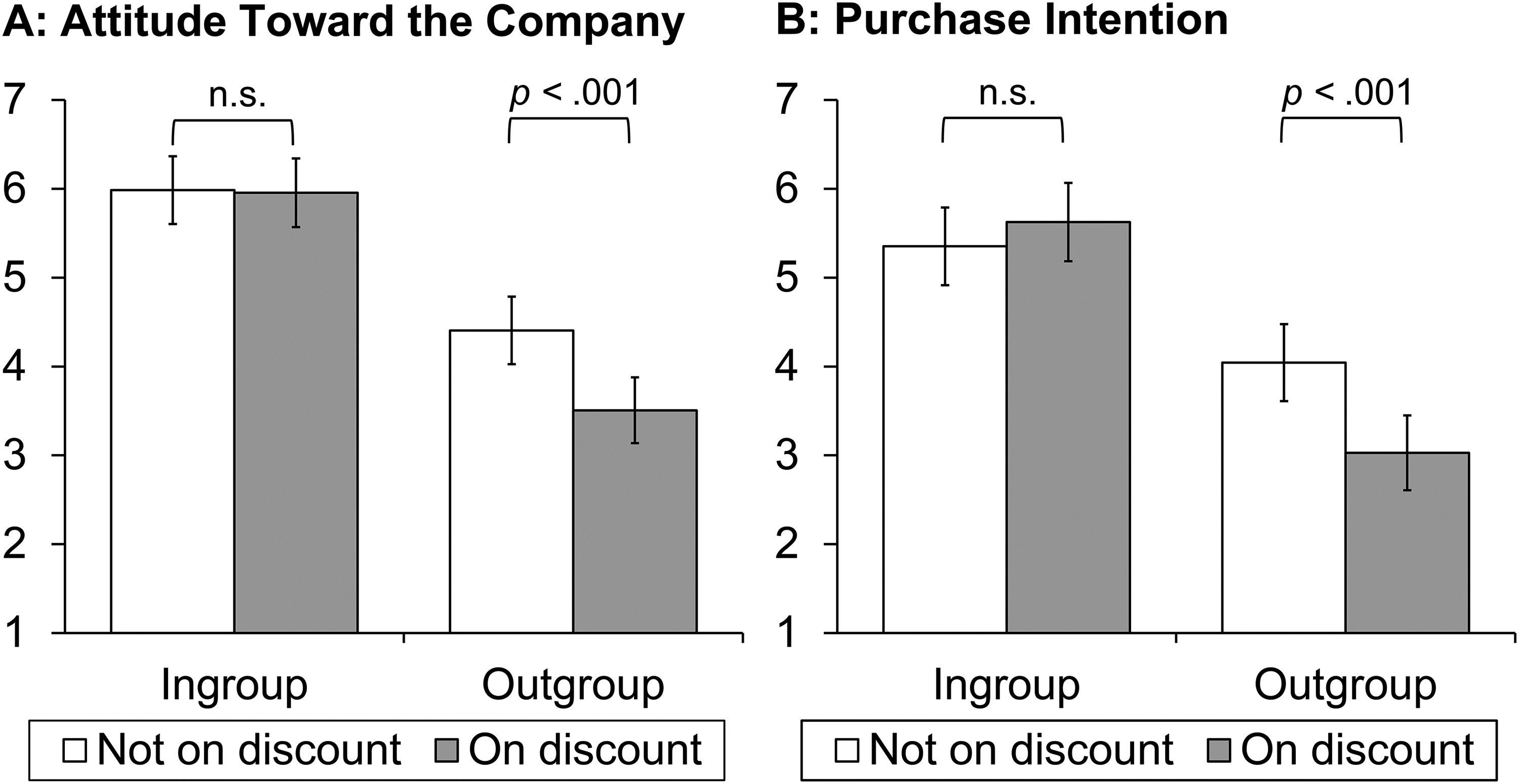
Study 6: Attitude and Purchase Intention as a Function of Discount and Company Identity.
ANOVA simple-effect tests revealed that only in the outgroup condition did we observe a significant decline in attitude toward the company (Mdiscount = 3.51, SE = .19, Mno discount = 4.41, SE = .19; F = 11.04, p = .001,
The findings of this study offer managerial insights by highlighting that the perceptions of the company matter (ingroup or outgroup). If the company is not perceived to be an ingroup member by a stigmatized consumer group (e.g., Black consumers perceiving a company as a White-owned business), it should take care when deciding to offer discounts on a product linked to the stigmatized identity. This study also provides additional evidence for the underlying role of perceived disrespect toward one's social group. When the company offering the discount represents the stigmatized consumer group (e.g., it is a Black-owned company), and thus arguably disrespect concerns should be less pronounced, we find that the negative impact of offering a price promotion on a stigmatized-identity-linked product is attenuated.
Study 7: The Effect Depends on What Other Products Are Also Discounted
This study extends our previous findings in three ways. First, we explore the implications of offering discounts not only on the focal stigmatized-identity-linked product but also on other products in the assortment. This investigation is crucial because in real retail settings, often multiple products are simultaneously on sale. We examine how stigmatized consumers react when additional products linked to different stigmatized identities or nonstigmatized identities are also on discount. Second, some products in our previous studies are linked to the identity through a cause-like message. This raises the question as to whether our findings merely replicate past observations that price promotions undermine cause-related marketing by diminishing shoppers’ warm-glow feelings (Andrews et al. 2014). To demonstrate that this is not the case, we include products that are inherently linked to stigmatized identities without cause-related messages. Finally, this study features real identity-linked products that are currently available in the marketplace, Barbie dolls. This study was preregistered (https://aspredicted.org/q3ce2.pdf).
Method
Participants and design
Five hundred seventy-two Black Americans participated in the study. We removed 18 participants whose self-reported ethnicity in the study was not Black, leaving a sample of 554 (Mage = 35.84 years; 51.3% female, 47.5% male, 1.1% other). We randomly assigned participants to one of six between-subjects conditions: (1) no product on discount, (2) the focal stigmatized-identity-linked product on discount, (3) the focal stigmatized-identity-linked product and another (different) stigmatized-identity-linked product on discount, (4) all stigmatized-identity-linked products on discount, (5) the focal stigmatized-identity-linked product and a nonstigmatized-identity-linked product on discount, and (6) all products on discount.
Procedure
Participants imagined that they were browsing social media, and they came across an advertisement from Playhouse Toys. Participants were shown a picture of the ad that included eight Barbie dolls. Across all conditions, the assortment remained the same: one product linked to the focal stigmatized group (Barbie Black Beauty Doll), three products linked to other stigmatized identities (Barbie LGBT Doll, Barbie Plus Sized Doll, Barbie Doll with Wheelchair), and four products linked to nonstigmatized identities (Barbie Doll with Magic Wand, Barbie Waltz Doll, Barbie Yoga Doll, Barbie Ballet Doll). The product images were taken directly from the Barbie website in creating the stimuli.
We manipulated the product(s) on discount. Specifically, a 50% discount was offered on none of the products (Condition 1), only the Barbie Black Beauty Doll (Condition 2), the Barbie Black Beauty Doll and another randomly chosen stigmatized-identity-linked doll (Condition 3), all of the stigmatized-identity-linked dolls (Condition 4), the Barbie Black Beauty Doll and another randomly chosen nonstigmatized-identity-linked doll (Condition 5), or all of the dolls (Condition 6). After viewing the ad, participants indicated their attitude toward the retailer Playhouse Toys (α = .98) and the product brand Barbie (α = .98), using the same scale described in Study 1.
Results and Discussion
A one-way ANOVA with attitudes toward the retailer as the dependent variable revealed a significant difference across conditions (F(5, 548) = 13.86, p < .001; see Figure 5). Post hoc test results 1 replicate previous findings that attitudes were lower when the focal Black doll was discounted (M = 3.76, SD = 1.62), compared with the no-discount condition (M = 5.19, SD = 1.68; p < .001, Cohen's d = .86). Interestingly, compared with when only the focal (i.e., Black) stigmatized-identity-linked product was discounted, attitudes increased significantly when an additional stigmatized-identity-linked product was also discounted (M = 4.25, SD = 1.76; p = .04, Cohen's d = .29), but remained significantly lower than in the no-discount condition (p < .001, Cohen's d = .54). Additionally, compared with the no-discount condition, the negative effect of a discount on the stigmatized-identity-linked product on attitudes was attenuated when a nonstigmatized-identity-linked product was simultaneously discounted (M = 4.89, SD = 1.60; p = .24) and when all of the products in the assortment were discounted (M = 5.48, SD = 1.29; p = .23). A similar pattern of effects was revealed for attitudes toward the product brand Barbie (see Web Appendix E).
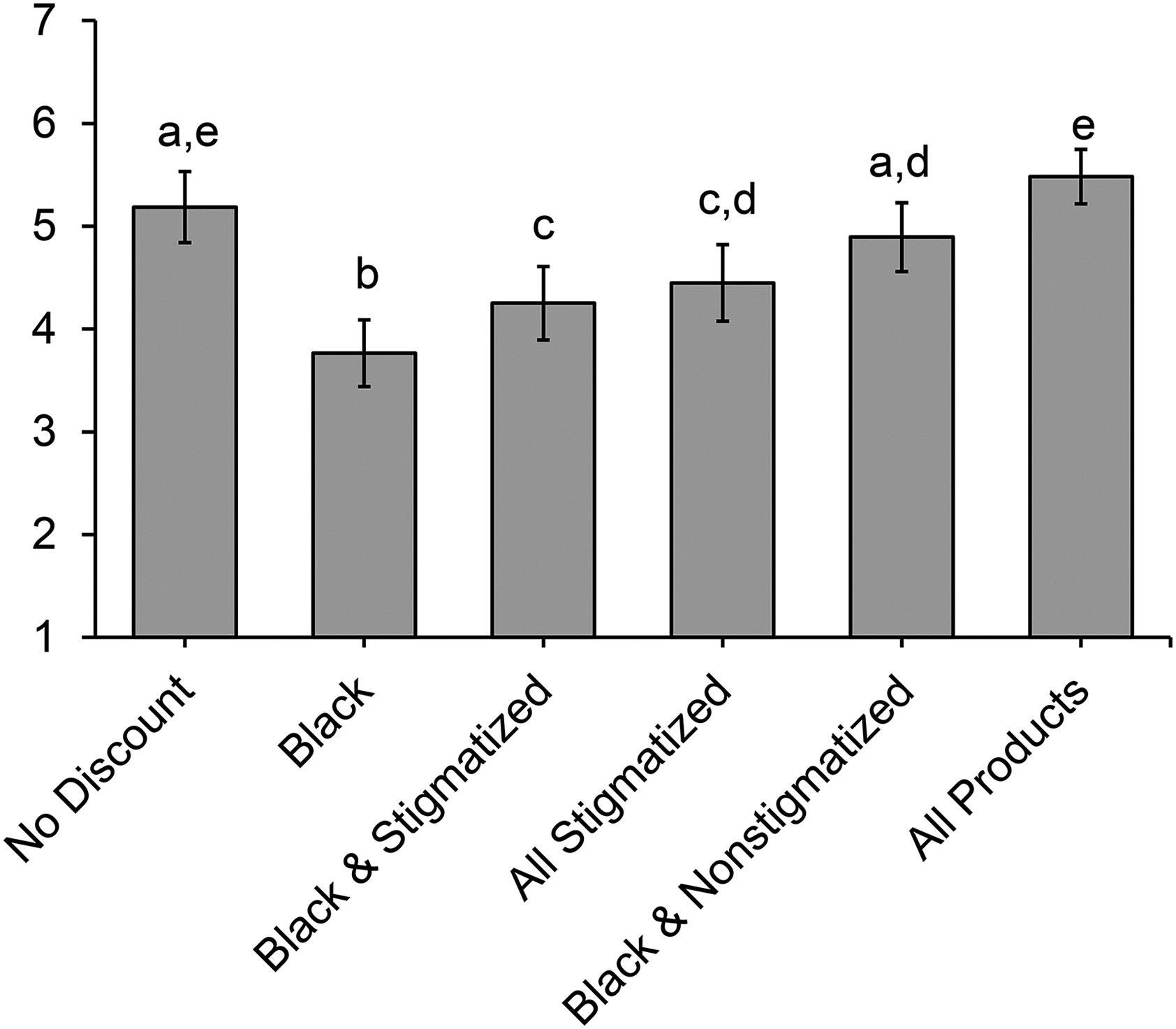
Study 7: Attitude Toward the Retailer as a Function of Discounted Products.
This study provides marketers with practical insights on how to prevent a price discount on a stigmatized-identity-linked product from backfiring. Specifically, the negative effect of a price discount does not arise when at least one nonstigmatized-identity-linked product in the assortment is simultaneously discounted. This finding demonstrates the sensitivity of stigmatized consumers to threat cues in the marketplace. It underscores the importance for marketers to exercise thoughtfulness when implementing marketing strategies involving stigmatized groups, as individuals from nonstigmatized groups may underestimate how meaningful these inferences are to stigmatized individuals. Additionally, the finding that the basic effect persisted when a product linked to another stigmatized identity was also discounted suggests that the effect may not be purely driven by the stigmatized-identity-linked product being singled out.
Study 8: Not All Sales Promotions Are Equal
In all of our preceding studies, we focused on one type of sales promotion, namely a price discount. In our final study, we test three different types of sales promotions: 50% off; buy one, get one free (BOGO); and free shipping. Comparing across different types of sales promotions is important for several reasons. First, it will provide important insights for managers. Second, it will provide additional support for our theorizing. It is worth noting that a 50% discount and a BOGO discount are of equal relative value, and a comparison between them is often used in price promotion research to demonstrate the unique features of a price discount (Gordon-Hecker et al. 2020). Prior research has found that BOGO and a 50% discount can lead to distinct consumer inferences. For example, consumers perceive BOGO promotions, but not a 50% off promotion, as additional gains (Diamond and Sanyal 1990). In our study's context, we expect the effect to be tied specifically to price discounts and not apply to other sales promotions such as BOGO or free shipping, because only a discount highlights a reduction in value. When a company chooses to apply a discount to a product linked to a stigmatized identity, stigmatized consumers could potentially infer that the company does so because it devalues the stigmatized group.
Finally, comparing across promotions enables us to rule out the alternative explanation that the effect is merely the result of differential treatment of the focal product (singling out) and several other alternative explanations related to other inferences that sales promotions, in general, may engender, such as the inference that most people are not buying their identity-linked product, which potentially has a negative social connotation, or stigmatized consumers’ aversion to overaccommodation (e.g., Ryan, Bourhis, and Knops 1991) and paternalist communication (e.g., Glick and Fiske 2001). If the observed effect is driven by any of these mechanisms, then it should not be unique to price discounts, as other promotions also single out the focal product and can also signal low demand or overaccommodation and paternalistic communication toward the stigmatized group. On the contrary, if the effect does not occur with other forms of promotions, it will provide evidence in support of our proposed mechanism.
Method
Participants and design
Four hundred one Black American respondents participated in the study. Two participants failed the attention check, leaving a final sample of 399 (Mage = 34.21 years; 69.2% female, 30.3% male, .5% other). We randomly assigned participants to one of four conditions in a between-subjects design (identity-linked product: no promotion vs. 50% off vs. BOGO vs. free shipping).
Procedure
Participants read the same shopping scenario about NIVO's flagship store as described in Study 1, except that the focal identity-linked product in this study was a Black Lives Matter water bottle. In the no-promotion condition, NIVO did not offer promotions on any of the products. In the three promotion conditions, NIVO offered one of the following sales promotions on the identity-linked product: 50% off, BOGO, and free shipping. After reading the scenario, participants first completed the same scale measuring attitude toward the company (α = .98) as in Study 1. Further, because perceived disrespect underlies the negative impact of price discounts on attitude toward the company, we included the perceived disrespect scale (α = .88) as described in Study 2 in order to determine whether it drives the potential impact of other promotions. After participants responded to the dependent and mediator measures, we asked participants additional questions for exploratory purposes, which are omitted from the subsequent analysis.
Results and Discussion
Attitude toward the company
One-way ANOVA suggested a statistically significant difference in attitude between conditions (F(3, 395) = 3.74, p = .01; see Figure 6). Compared with the no promotion condition, 50% off resulted in a significant decline in attitude toward the company (M50% off = 4.83, SD = 1.60, Mno promotion = 5.37, SD = 1.37; p < .01, Cohen's d = .37). Neither BOGO nor free shipping resulted in a significant change in attitude compared with the no promotion condition (MBOGO = 5.25, SD = 1.34, Mfree shipping = 5.45, SD = 1.37; p > .53). Moreover, attitude in the 50% off condition was significantly lower than that in the BOGO condition (p = .04, Cohen's d = .28) and free shipping condition (p < .01, Cohen's d = .42). All other pairwise comparisons were not significant.
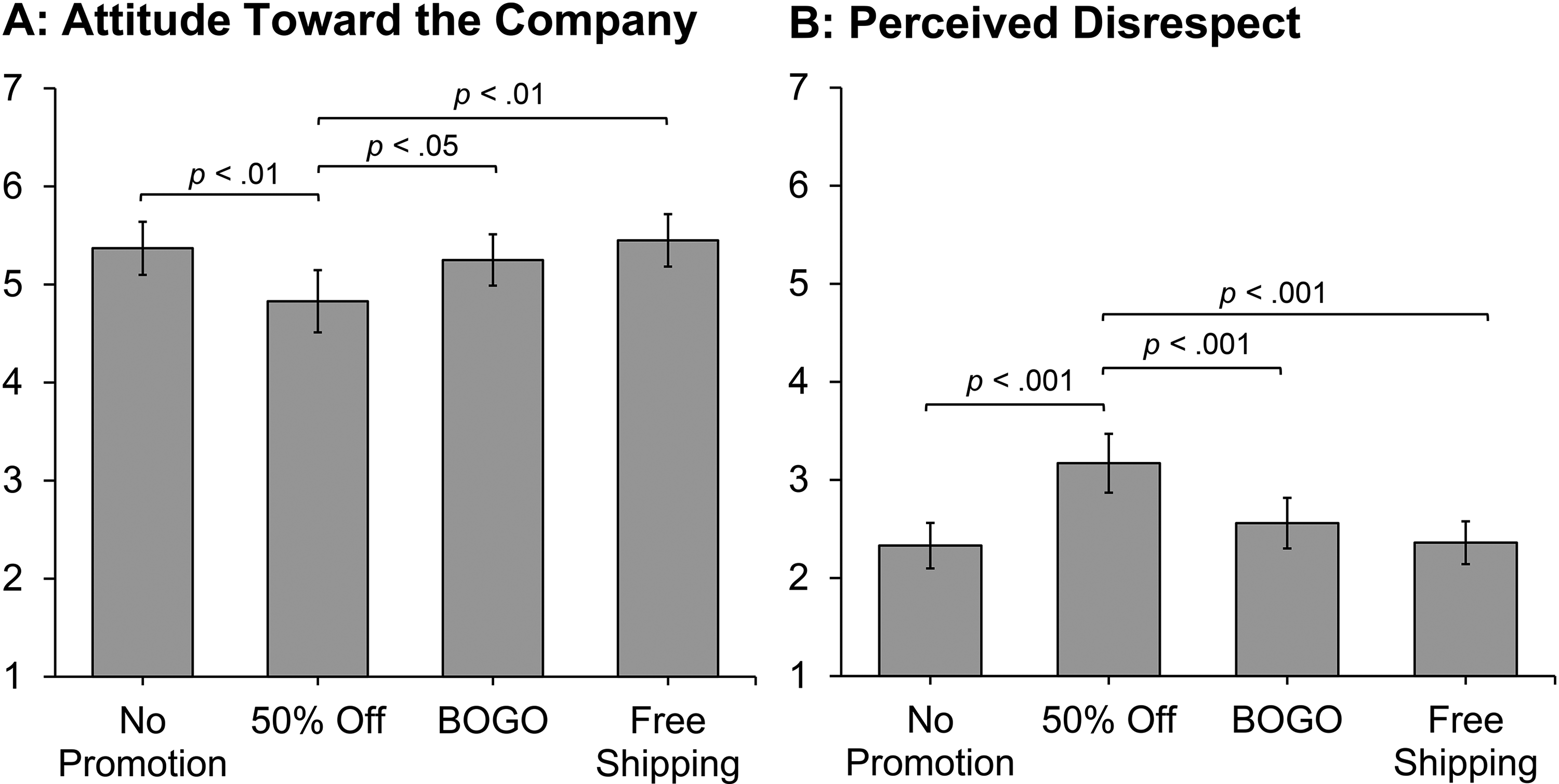
Study 8: Attitude and Perceived Disrespect as a Function of Sales Promotions.
Perceived disrespect
A one-way ANOVA revealed there was a statistically significant difference in perceived disrespect between conditions (F(3, 395) = 9.17, p < .001; see Figure 6). Pairwise comparisons showed that compared with the no promotion condition, 50% off resulted in a significant increase in perceived disrespect (M50% off = 3.17, SD = 1.51, Mno promotion = 2.33, SD = 1.18; p < .001, Cohen's d = .63). Neither BOGO nor free shipping resulted in a significant change in perceived disrespect compared with the no promotion condition (MBOGO = 2.56, SD = 1.32, Mfree shipping = 2.36, SD = 1.12; p > .21). Moreover, participants in the 50% off condition perceived significantly more disrespect than those in the BOGO condition (p < .001, Cohen's d = .43) and free shipping condition (p < .001, Cohen's d = .62). All other pairwise comparisons were not significant.
Mediation
A mediation analysis using PROCESS Model 4 (Hayes 2018; 5,000 bootstrapped samples) revealed that perceived disrespect fully mediated any difference in consumer attitude between (1) the no-discount and 50% off conditions (95% CI = [−.86, −.32]), (2) the 50% off and BOGO conditions (95% CI = [.12, .60]), and (3) the 50% off and free shipping conditions (95% CI = [.16, .43]). All other pairwise indirect effects were not significant (see Web Appendix F).
This study reveals that the negative reactions arising from a price discount on a stigmatized-identity-linked product are not merely the result of any differential treatment (e.g., singling out a specific group) or sales promotions on the product. The findings also rule out several alternative explanations mentioned in the introduction to this study, because those accounts are inadequate in explaining the distinct effect observed in the 50% off condition. Moreover, the null effect in the BOGO condition suggests that the focal effect in the 50% off condition is not simply driven by the discount magnitude, because BOGO is the same in relative magnitude, and even larger in absolute magnitude. This study provides a more nuanced understanding of the focal phenomenon: A price discount on a stigmatized-identity-linked product is unique in that it creates disrespectful social connotations regarding the relevant social group. The findings also hold important managerial implications: If a company aims to promote stigmatized-identity-linked products, it is advisable to refrain from employing price discounts and instead consider nonmonetary promotions, such as quantity offers or free shipping.
General Discussion
The present research investigates how stigmatized consumer groups respond to price discounts on products that are symbolically linked to their stigmatized identity. We found that when a company offers a discount on a product symbolically linked to a stigmatized group, members of this group will perceive that the company disrespects them and in turn react negatively toward the company. Eight studies provide evidence for this phenomenon across a variety of stigmatized consumer groups (U.S. residents of Asian descent, LGBT Americans, Latino Americans, and Black Americans) and different products (water bottles, mugs, face masks, and Barbie dolls). In addition to finding support for the predicted negative effect of price discounts on stigmatized-identity-linked products, we provide evidence for the underlying role of disrespect and managerial insights into the scope of the effect.
Contributions and Practical Implications
From a theoretical perspective, we make several contributions. Foremost, we contribute to the literature on the social cost of price promotions. Our focus on the social implications of a company offering a price discount departs from past research that has focused on how consumers’ usage of coupons or targeted discounts may create impression management concerns (e.g., “I appear stingy for redeeming a coupon”; Ashworth, Darke, and Schaller 2005) and undesired group identification (e.g., “Redeeming a senior citizen targeted discount signals my senior status, which I do not want to take on”; Tepper 1994). However, the negative inferences in the current research do not originate from a consumer's own usage of price discounts but rather stem from a company's action of offering a discount itself (i.e., “The company is devaluing my social group's identity”).
Second, we examine how a seemingly inconsequential cue—a price discount, which is generally perceived positively (Chandon, Wansink, and Laurent 2000)—can be construed as disrespectful toward a social group. This focus broadens the research perspective on sources of disrespect for stigmatized social groups in the marketplace, which has predominantly centered on aspects related to social interactions with other consumers or staff (e.g., low-income consumers’ interactions with staff and high-status consumers in a high-end shopping mall; Jacob et al. 2022) or the presence of stereotype threats in marketing communications (e.g., posters in a computer science classroom suggesting to female students that computer science is a male subject; Cheryan et al. 2009; Cheryan, Meltzoff, and Kim 2011).
Our research also provides important practical implications. In recent years, several companies have offered products linked to stigmatized social groups to reach a more diverse consumer base, and they sometimes promote these products with price discounts. The current research draws attention to the detrimental consequences of such a marketing strategy. Importantly, the work also provides insights into how marketers can prevent such consequences, as we demonstrate that the negative effect of a price discount is attenuated when (1) the company offering the discount represents the ingroup (Study 6), (2) a nonstigmatized-identity-linked product is also on discount (Study 7), and (3) sales promotions other than price discounts (i.e., BOGO or free shipping promotions) are offered (Study 8). Therefore, when a company that is not an ingroup company wants to promote a stigmatized-identity-linked product, it is advisable to opt for nonmonetary promotions such as quantity promotions or free shipping instead of price discounts, or to ensure that a price discount also applies to a nonstigmatized-identity-linked product in the assortment. On a broader note, we also make a methodological contribution for marketers and academics by illustrating how to execute empirical work studying underrepresented populations in consumer research by making use of existing participant platforms (in this case, Prolific).
The Underlying Mechanism and Alternative Explanations
Despite the evidence supporting the underlying role of perceived disrespect, it is possible that other processes may also operate in this complex context. First, in our studies, similar to how companies often offer an assortment of the same type of product in the marketplace, we presented the identity-linked product as part of a product set. However, one might wonder if the effect we observed arose because stigmatized consumers felt singled out. Although we did not directly test this possibility, results from both Studies 7 and 8 as well as a supplementary study suggest it was not the case in the current research. Specifically, the effect persists when another stigmatized-identity-linked product is also discounted (Study 7), does not arise for other forms of promotions (Study 8), and persists when the assortment consists solely of the stigmatized-identity-linked product (Supplementary Study 1; Web Appendix G).
Another question that may arise about perceived disrespect as the mechanism is how it is distinguishable from the related but distinct construct of perceived stigmatization, and whether perceived stigmatization also plays a role. From a conceptual standpoint, although both constructs involve the subjective feeling of devaluation, they differ in the source from which such perceptions arise. People may perceive disrespect from various sources, such as how they are treated by an individual (e.g., a coffee barista; Rank-Christman, Morrin, and Ringler 2017), an organization (e.g., a company; Ashworth and McShane 2012), or society (e.g., Simon and Grabow 2014). However, stigmatization refers to social disapproval by society at large (Böhm et al. 2013). Thus, it is not a company's actions that cause a social group to be stigmatized but the broader negative opinions society holds about that group. To empirically demonstrate the discriminant validity of these two constructs, we conducted Supplementary Study 2 (Web Appendix H), in which we measured both perceived disrespect and perceived stigmatization as potential mediators and found that only perceived disrespect mediated the effect.
Concerns about consumer exploitation or the firm's profit-driven motive is another alternative psychological mechanism that might operate in this context. If stigmatized consumers believe that a company is taking undue advantage of their identity and profiting from promoting identity-linked products, they may evaluate the company less favorably. However, Supplementary Study 3 (Web Appendix I) suggests that such concerns about exploitation do not appear to apply in this case. Specifically, negative reactions toward the company remained even when Black American participants were informed that all proceeds from a discounted Black Lives Matter water bottle would be donated to charity.
Beyond those alternative explanations, questions may arise regarding the attribution of perceived disrespect. The present study examines the impact of price discounts resulting in a reduced price. It prompts the question of whether merely setting a low regular price for products linked to stigmatized identities would yield effects similar to those of offering a price discount. To disentangle the role of a price discount from that of (absolute) low prices, we conducted a supplementary study (see Supplementary Study 1; Web Appendix G) following the paradigm used by Lee and Tsai (2014) for a similar purpose. The study displayed a stigmatized-identity-linked product on its own, without an assortment of other products. We found that, compared with the no-discount condition, a no-discount lower regular price for the stigmatized-identity-linked product did not significantly alter attitude toward the company or perceived disrespect. In contrast, an equivalent price discount significantly lowered attitude toward the company and increased perceived disrespect compared with either the no-discount or no-discount lower regular price condition. This finding casts doubt on the alternative interpretation that perceived disrespect merely results from a low price. However, this study did not include reference prices from other products, so this finding should not be interpreted to mean that offering a lower price compared with other products (instead of a discount) attenuates the effect.
Related to this question about price level, one may ask whether our mechanism implies that a premium price would lead stigmatized consumers to perceive a company more positively (i.e., make them feel valued). We argue that such an extrapolation cannot be made because a lower discounted price and a higher price are qualitatively different and are thus not directly comparable. Past research has shown that charging consumers unjustified higher prices can trigger fairness concerns (Bolton, Warlop, and Alba 2003). We believe that if the focal product is sold at a higher price, stigmatized consumers will also evaluate the company negatively but through a distinct mechanism, such as perceived unfairness.
Avenues for Future Research
We have explored a variety of stigmatized identities in contemporary U.S. society. One avenue for future research is to extend the current research to other types of stigmatized identities. First, all stigmatized groups in the current research constitute a minority of the population. However, there are exceptions, and future research could investigate stigmatized groups that are not in the minority. For example, women represent a majority of the population in the United States. Nevertheless, our posttest (Web Appendix B) found that Americans perceive women as a stigmatized group. We believe that the backfire effect should arise for all social groups that are stigmatized in a given context. Indeed, in a supplementary study (see Supplementary Study 4; Web Appendix J), we replicated the effect with the female identity: Female participants in the United States reacted negatively to a price discount on a “Proud to Be a Woman” water bottle. Second, the stigmatized identities examined in the current research are typically innate or uncontrollable due to special circumstances. However, not all stigmatized identities fall into this category. For example, cigarette smokers in the United States face stigmatization (Kim and Shanahan 2003), yet this identity is not inherently innate or uncontrollable. Future research could also investigate those stigmatized identities.
Additionally, the present research focused on how stigmatized consumers would react to a discount on their own identity-linked product. It would be interesting to explore how they would respond to a discount on a product linked to another stigmatized group. Previous research suggests that a stigmatized identity threat cue can transfer to other stigmatized social groups (e.g., Sanchez et al. 2018). This transfer occurs due to stigma solidarity, whereby stigmatized consumers perceive themselves as part of a larger disadvantaged group and hold the belief that individuals from different stigmatized groups are similar and should support each other (Chaney, Sanchez, and Remedios 2018). Consequently, a discount on a stigmatized-identity-linked product may have broader negative implications extending beyond the focal stigmatized group, and the effect may be moderated by the subjective feeling of stigma solidarity.
It would also be interesting to investigate the impact of product type. The current research centers on products symbolically linked to a stigmatized group (e.g., a “Proud to Be a Woman” water bottle) rather than those designed primarily for their functional needs, such as shampoo formulated for women's hair or dark-shade foundation designed for people with a dark skin tone. Future research could investigate whether the observed effect would extend to the latter category. We believe this might not be the case. As discussed by Belk (1988), symbolically identity-linked products are designed to represent or evoke an identity. Given this characterization, we believe consumers are less likely to perceive those functional products as representative of their social group's identity, and thus would not interpret a company's action of offering price discounts on these products as devaluing their social group. Further research could investigate this hypothesis.
Beyond extending the current effect, future research could also explore other marketing actions toward stigmatized consumers that are actually microaggressions (i.e., subtle, brief, and commonplace daily verbal, behavioral, or environmental exchanges, whether intentional or unintentional, that are put-downs of people from minority and stigmatized statuses; Lui and Quezada 2019). Our finding that nonstigmatized consumers do not perceive a price discount on a stigmatized-identity-linked product as disrespectful (Study 4) suggests that this marketing action is a form of microaggression. Future research could explore other forms of company actions in the marketplace that function as microaggressions and identify strategies marketers can use to counter them.
The current research is a first step toward understanding perceptions of disrespect among stigmatized consumer groups. Clearly there are many more questions that remain. We hope our work stimulates further investigation into this vital yet largely overlooked area of study and helps inspire a more welcoming, inclusive, and respectful marketplace.
Supplemental Material
sj-pdf-1-mrj-10.1177_00222437241293065 - Supplemental material for Disrespectful Promotions: The Negative Impact of Price Promotions on Products Symbolically Linked to Stigmatized Identities
Supplemental material, sj-pdf-1-mrj-10.1177_00222437241293065 for Disrespectful Promotions: The Negative Impact of Price Promotions on Products Symbolically Linked to Stigmatized Identities by Guanzhong Du, Kobe Millet, Aylin Aydinli and Jennifer J. Argo in Journal of Marketing Research
Footnotes
Acknowledgments
The authors thank David Wooten for valuable comments.
Coeditor
Rebecca Hamilton
Associate Editor
Kaitlin Woolley
Declaration of Conflicting Interests
The author(s) declared no potential conflicts of interest with respect to the research, authorship, and/or publication of this article.
Funding
The author(s) disclosed receipt of the following financial support for the research, authorship, and/or publication of this article: The financial support from the Social Sciences and Humanities Research Council of Canada and the Carthy Chair Professorship is gratefully acknowledged.

Notes
References
Supplementary Material
Please find the following supplemental material available below.
For Open Access articles published under a Creative Commons License, all supplemental material carries the same license as the article it is associated with.
For non-Open Access articles published, all supplemental material carries a non-exclusive license, and permission requests for re-use of supplemental material or any part of supplemental material shall be sent directly to the copyright owner as specified in the copyright notice associated with the article.
