




Abstract
Many mobile app providers offer their apps for free and base their business models on user engagement. However, declining usage over time threatens apps’ ability to add business value. To keep users engaged, app providers use gamification—that is, they use game elements (e.g., levels, points)—in their nongame apps. Complementing traditional loyalty strategies that reward value-added activities (e.g., purchases) through value rewards, gamification rewards ongoing engagement through game elements. Thus, reward architectures of many apps have become hybrid, with value- and game-reward pursuit simultaneously driving engagement. However, it is unclear to what extent gamification helps drive user engagement and add business value. To address this question, the authors study unique data from a gamified market research app comprising daily individual-level app usage observations of 18,952 users. The findings show that game rewards increase engagement significantly over and above value rewards, leading to a lift in business value, especially when users are in closer proximity to both types of rewards. However, the analysis also shows a dark side of gamification: When users enter a state of flow in the game, game engagement has a weaker effect on value-added engagement. The authors discuss implications for gamified reward architectures.
Keywords
The mobile app market has seen an eightfold increase in the number of apps in ten years (PocketGamer 2023), with revenues almost doubling from 2019 to 2022 (to $474.8 billion; Statista 2023). Firms profit from apps if they increase sales (e.g., Gill, Sridhar, and Grewal 2017) and firm value (e.g., Boyd, Kannan, and Slotegraaf 2019). However, given the rise in the number of apps, app providers face strong competition to attract and retain users. In 2023, Apple users could choose from more than 5 million apps (PocketGamer 2023). To facilitate app adoption, 95% of apps are free (42matters 2021). Rather than generating up-front revenue (at the moment of download), providers use engagement-based business models, leading to business value through in-app purchases, in-app advertising, or data collection (Appel et al. 2019).
With this development, ongoing user engagement—that is, repeated and continued usage of an app—is key to sustaining engagement-based mobile app business models (Rutz, Aravindakshan, and Rubel 2019). However, retaining app users is a key challenge for any business (Ascarza, Iyengar, and Schleicher 2016). Especially for mobile apps, wear-out in user engagement over time poses a major threat to business models (Van Heerde, Dinner, and Neslin 2019). Localytics (2018) reports that just 27.6% of users use an app again one day after download, dropping to 11.4% two weeks later.
To stimulate user engagement inside their apps, providers have begun to gamify their apps by adding game elements (e.g., levels, rankings, badges; Eisingerich et al. 2019). As shown in Table 1, among the top 15 mobile apps in the U.S. market (see Web Appendix W1 for the top 50), nearly one-half (7 out of 15) use gamification, underscoring the prevalence and relevance of gamification in business practice. Global market spending on gamification reached $9.1 billion in 2020 and is predicted to reach $30.7 billion by 2025 (MarketsAndMarkets 2020). Gamification is used across industries, with the strongest prevalence in retail, banking, health care, and education and research (Fortune Business Insights 2020). The goal of this research is to understand how a gamified app drives user engagement and adds downstream value for the firm.
Use of Game Elements in the Top 15 Mobile Apps in the U.S. Market.
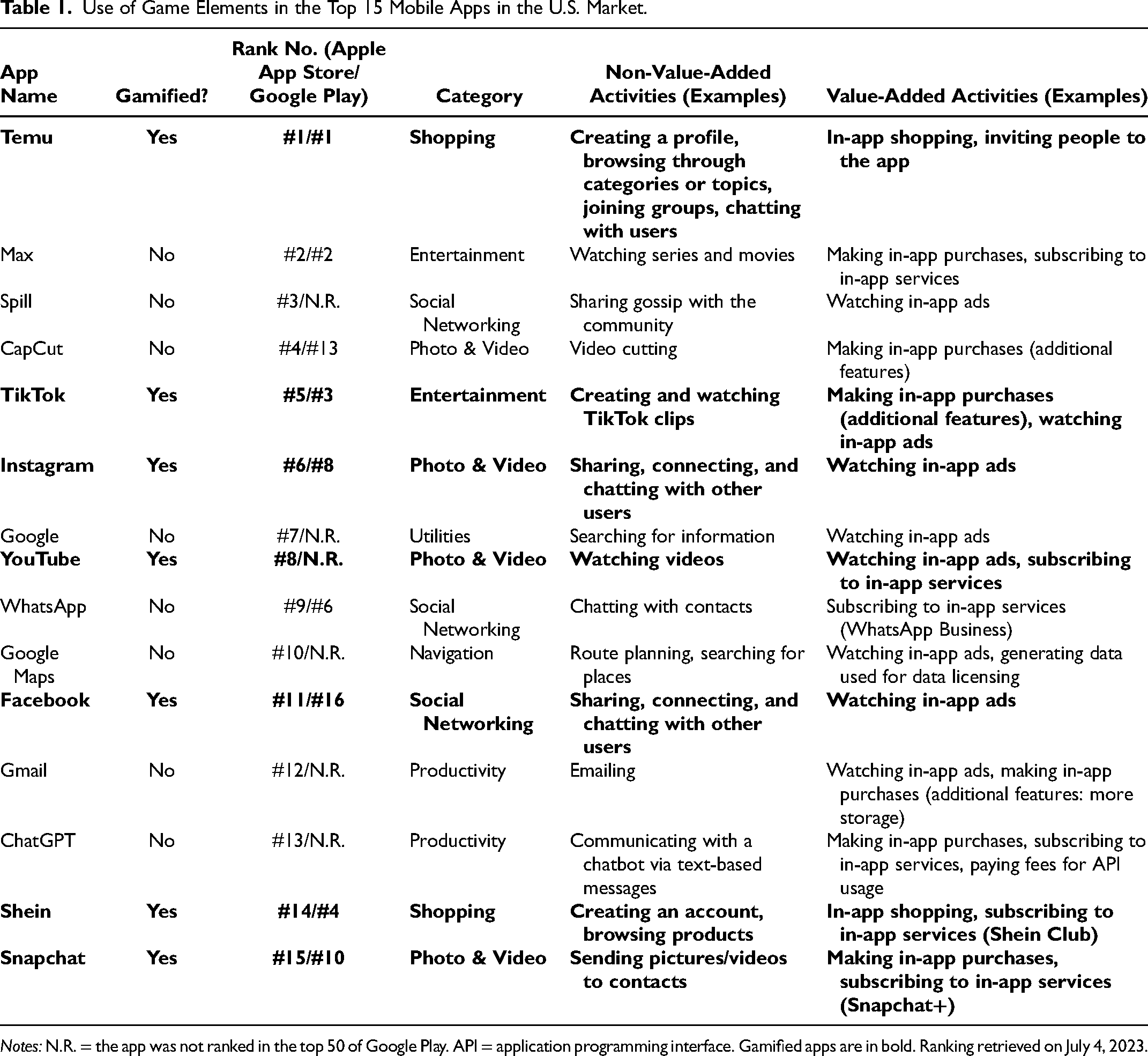
Notes: N.R. = the app was not ranked in the top 50 of Google Play. API = application programming interface. Gamified apps are in bold. Ranking retrieved on July 4, 2023.
Gamification refers to integrating game elements such as levels and points (hereinafter, “game rewards”) to reward engagement through game-like activities within the app (hereinafter, “game engagement”). For example, unlocking a new game level provides users with a sense of competence and mastery—central tenets of intrinsic motivation, as outlined by Ryan and Deci (2000)—and thereby stimulates intrinsic motivation, fostering a more enjoyable app experience.
Market research apps are one example of gamification and constitute the research setting of this article. A market research app serves survey questions (from clients) to collect consumer opinions. In our research application, the app provider added gamification through fun questions that users had to answer to gain game rewards. This game-like approach is designed to keep users engaged, make them return to the app often, and then have them answer regular survey questions, which is the value-added activity for the firm.
More engagement with game-playing activities does not automatically generate more value (Kumar and Pansari 2016). Only when users engage in a value-added activity that contributes to the business model (hereinafter, “value-added engagement”)—such as answering survey questions in the market research app example—does the provider generate the intended value. Likewise, apps monetized through in-app advertising or purchases require engagement with value-added activities (e.g., watching ads, buying additional app features) to create value for the app provider. To reinforce value-added engagement, many app providers reward those value-added activities with discounts or coupons (hereinafter, “value rewards”), well-known from traditional loyalty programs (e.g., Kivetz, Urminsky, and Zheng 2006). By rewarding value-added engagement through traditional rewards and rewarding game engagement through game rewards, an app's reward architecture becomes hybrid. However, a potential risk of gamification is that users become so immersed in game-playing that they neglect value-added engagement, reducing the benefits of gamification for the app provider.
Despite the proliferation of engagement-based business models in digital services (e.g., Rutz, Aravindakshan, and Rubel 2019) and the related challenge to keep users engaged (e.g., Van Heerde, Dinner, and Neslin 2019), the literature on how rewards can engage mobile app users is surprisingly scarce. A literature review by Stocchi et al. (2021) points to significant research gaps regarding customer rewards that may help providers stimulate customer engagement in their mobile apps. In particular, no study has investigated how hybrid reward architectures with game rewards and value rewards drive user engagement and business value. This article aims to fill this gap in the literature.
Prior research has focused on the consequences of rewarding value-added engagement (e.g., Kivetz, Urminsky, and Zheng 2006; Leenheer et al. 2007). We are aware of only one study investigating the consequences of rewarding game engagement. Eisingerich et al. (2019) compare the effects of several gamification principles (i.e., social interaction, sense of control, goals, progress tracking, rewards, and prompts) on customer engagement. Using survey data, the authors show that rewards are perceived as the most effective gamification principle in stimulating customer engagement. Our work differs from Eisingerich et al. in that we (1) use individual-level field data (rather than survey data) to (2) study a hybrid reward architecture with both value and game rewards (rather than just game rewards) and (3) examine the potentially value-detracting consequences of mobile app gamification when users become too immersed in the game.
Eisingerich et al. (2019) have examined the consequences of gamification for app revenue as a quantitative indicator of value-added engagement. However, in the case of a market research app, the provider is interested in obtaining not only many survey responses but also responses of high quality. Likewise, for in-app advertising, an app provider (and the company that pays the app provider to play ads) wants users not only to see many ads (i.e., value-added engagement quantity) but also to conscientiously engage with the ads (i.e., value-added engagement quality) rather than directly clicking away. Therefore, we investigate whether game engagement increases or detracts from the quantity and quality of value-added engagement. In summary, this article addresses the following research questions:
How does the combination of game-reward pursuit and value-reward pursuit influence individual-level game engagement and value-added engagement? Does game engagement have positive effects on value-added engagement quantity and quality? Do these effects become weaker as a user becomes more immersed?
This work is the first to link an individual model of actual user engagement to an app's reward architecture. Unlike prior research focusing almost exclusively on the role of value rewards (e.g., Kivetz, Urminsky, and Zheng 2006; Leenheer et al. 2007), our model captures the simultaneous effects of game and value rewards on individual-level game and value-added engagement. We use a unique dataset from a gamified market research app. The dataset contains daily app-usage observations at the user level for 18,952 users over a period of one year. The observations include every single activity each user carried out in the app during this period with a milliseconds-based timestamp and the status of their reward pursuit (i.e., proximity to rewards and attainment of rewards).
The key insight of our analysis is that a combination of game and value rewards can help counteract the wear-out effect in mobile apps, as the pursuit of these rewards has positive effects on user engagement. However, we also find that success in game-reward attainment makes users less inclined to engage in value-added activities. As for the interplay between game-reward and value-reward pursuit, we find that proximity to both types of rewards works in a synergetic fashion. However, the results also show that the effect of attaining one type of reward is less positive when users also attain the other type of reward, a potential downside of a hybrid reward structure. Finally, we find that when users are in a flow state, higher game engagement has a less positive effect on the quantity and quality of value-added engagement. We discuss the theoretical and managerial implications of these nuanced findings in the “Discussion” section.
Rewarding User Engagement in Mobile Apps
Little empirical evidence exists on how to stimulate user engagement and thereby add business value to mobile apps. One exception is Zhang et al. (2019), who show that alerting app users to price promotions based on their level of engagement increases app revenue. While sending notifications can make app users come back to an app, it cannot ensure ongoing user engagement within an app. Thus, we suggest that mobile app providers should also consider reward strategies to stimulate engagement inside an app by using gamified reward architectures.
Gamified Reward Architectures
Value-added activities include activities that generate revenue, such as answering survey questions in a market research app or viewing ads in an app that earns ad revenue. Traditional loyalty strategies reward value-added engagement (e.g., purchasing goods) with monetary incentives (e.g., vouchers; Kopalle et al. 2012), and many mobile app providers follow this practice (Hofacker et al. 2016). Value rewards reinforce users’ value-added engagement (Rutz, Aravindakshan, and Rubel 2019). For example, the Audible app provides users discounts or free credits when they renew their subscriptions. Value rewards drive users’ extrinsic motivation to use the app (i.e., the accumulation of economic value; Hofacker et al. 2016).
However, value-added activities in common app business models (e.g., watching ads, making in-app purchases) are not necessarily the primary focus of app users (Rutz, Aravindakshan, and Rubel 2019). Instead, users mainly engage in non-value-added activities (e.g., listening to audiobooks, running) that do not directly contribute to the app's primary revenue stream. Even though they have no direct monetary value, non-value-added activities can increase engagement with value-added activities. For example, in market research apps, non-value-added activities (e.g., answering fun questions) aim to keep users engaged so that they are more inclined to engage in value-added activities (e.g., answering client survey questions). 1 Considering the importance of non-value-added activities in apps, rewarding only value-added activities may not be enough to maintain user interest (Nevskaya and Albuquerque 2019). Instead, rewarding non-value-added activities ensures that the app provides a steady stream of motivating incentives for users, preferably (for the firm) without reward costs.
Against this background, app providers have started to gamify their apps by adding game elements (e.g., levels, badges) to a non-value-added activity of a nongame app. For example, Audible rewards “night owl” listeners who engage at late hours with a badge. These game rewards fulfill users’ core intrinsic psychological needs identified by self-determination theory—autonomy, competence, and relatedness (Bitrián, Buil, and Catalán 2021; Ryan and Deci 2000). For example, progressing through game levels activates users’ need to feel competent and increases their self-efficacy by reinforcing their belief in their ability to overcome challenges. 2 Game rewards provide users with an escalating series of experiences (e.g., surprising events associated with unlocking game levels, such as activating new app features), referred to as involvement spirals (Siebert et al. 2020). Importantly, game rewards come at zero marginal costs for app providers, unlike value rewards.
Figure 1 shows how game rewards complement classical value rewards. The firm's objective is to lift value-added engagement (box in dark gray), which is traditionally done by rewarding customers through value rewards (top half of Figure 1). An example of such a “classical value-reward engine” are loyalty programs that reward customer purchases through coupons. Gamification induces a “game-reward engine” (bottom half of Figure 1). This engine triggers game engagement, which in turn drives value-added engagement. Every user activity triggers one or both engines, thereby “locking” users into the ongoing pursuit of new rewards, referred to as “ludic loops” (Busby 2018). However, little is known about the effectiveness of such hybrid reward architectures, which is what this article studies.
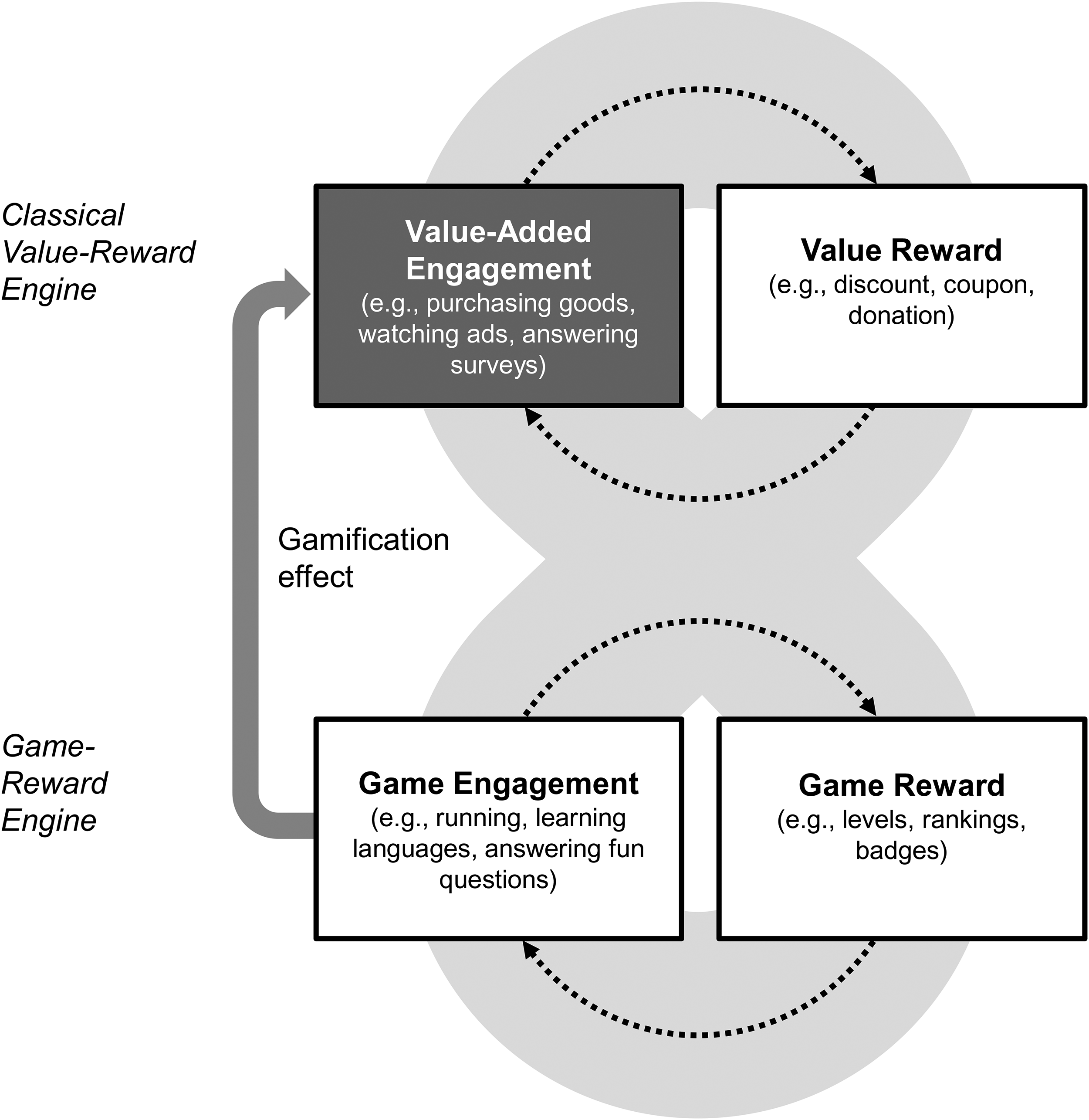
How Gamified Reward Engines Drive User Engagement and Mobile App Value.
Table 2 shows prior research on value rewards and game rewards. Our research differs from these studies in two important ways. First, all previous studies have examined either value rewards or game rewards; none have examined hybrid reward architectures. We study how game- and value-reward pursuit and their interplay drive user engagement. Second, prior research has not explored whether game engagement affects value-added engagement and whether this effect is moderated by a state of flow (i.e., when the user is immersed in the game). Thus, this research is the first to analyze—using individual-level field data—hybrid reward pursuit in a gamified mobile app and its payoff in terms of value-added engagement.
Effects of Value and Game Rewards: Selected Studies’ Findings and Positioning.
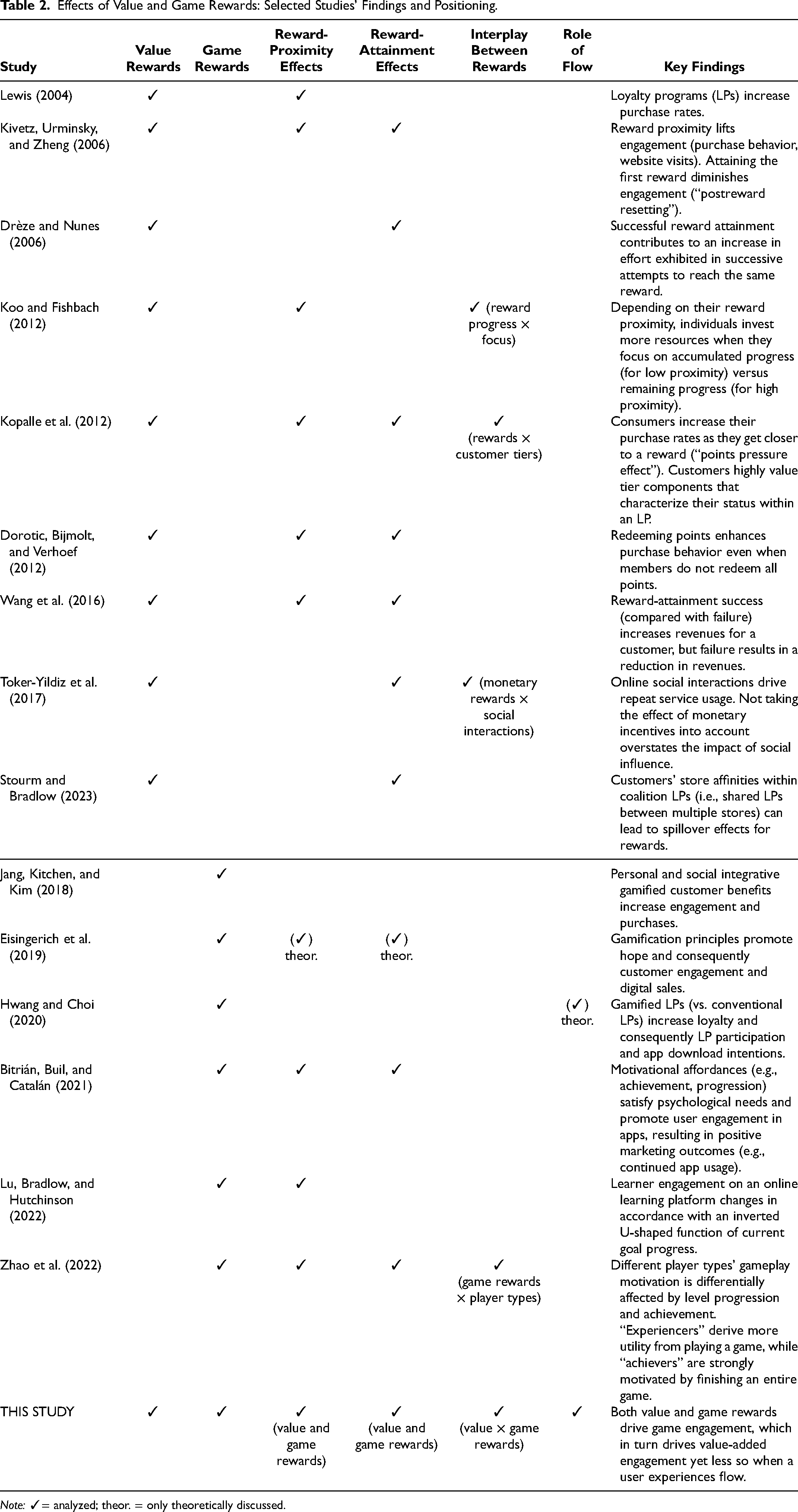
Note: ✓= analyzed; theor. = only theoretically discussed.
Effects of Hybrid Reward Pursuit on User Engagement
The hybrid reward architecture raises the question of whether the combination of game rewards and value rewards leads to cross-engine complementarity or substitutability. We next discuss the main effects of value- and game-reward pursuit on user engagement and then focus on the interaction effects between the two. Figure 2 overviews our study framework.
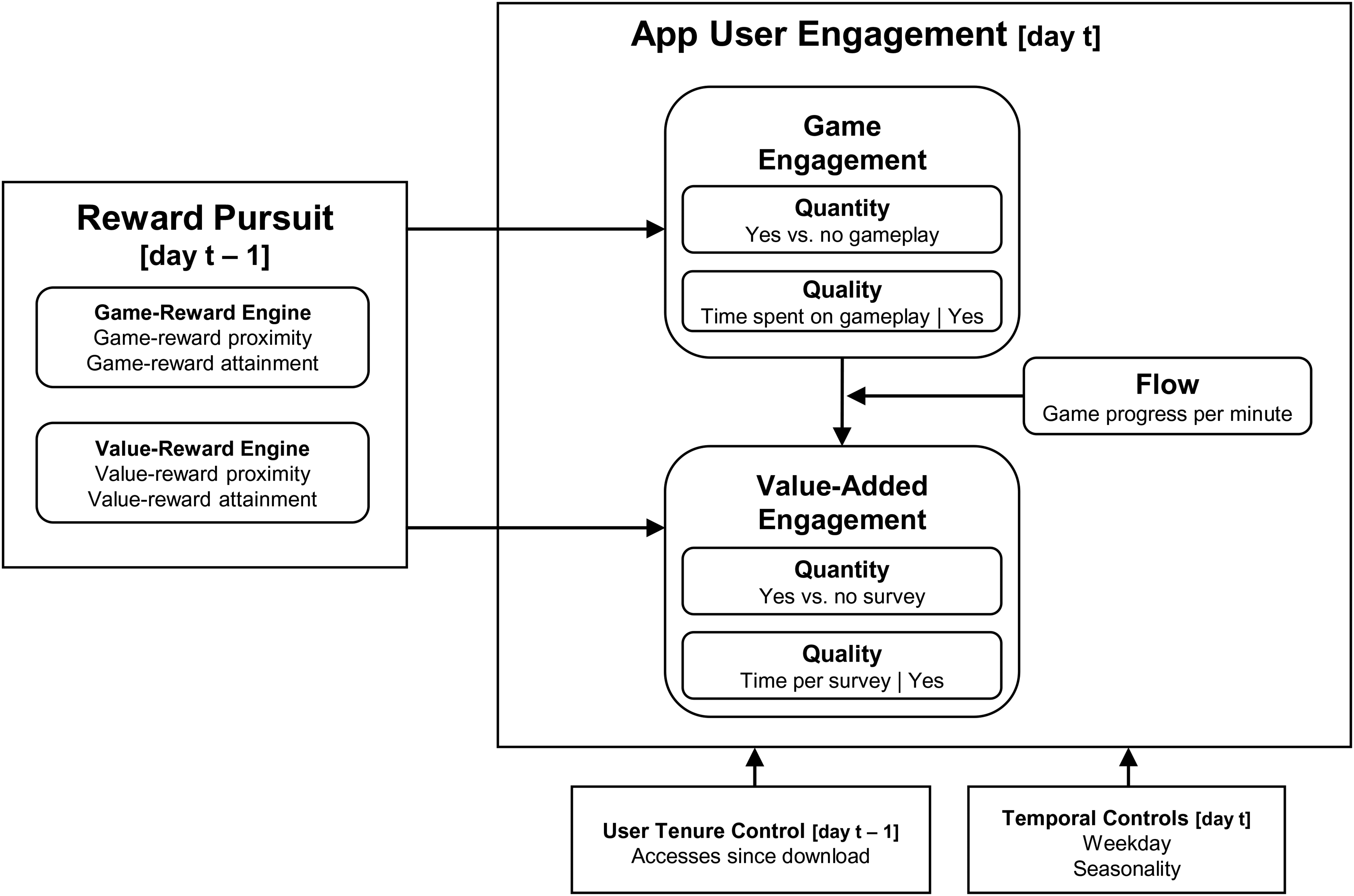
Study Framework.
Main effects of value- and game-reward pursuit
To capture a user's reward pursuit, we distinguish between reward proximity and reward attainment. Reward proximity captures the idea that users show more engagement as they approach a reward. According to the goal-gradient hypothesis, people become more motivated to achieve a goal as they reduce the distance toward the goal (e.g., Hull 1932). This effect also holds for consumers’ efforts to receive rewards in loyalty programs (Kivetz, Urminsky, and Zheng 2006; Kopalle et al. 2012). For gamified apps, the goal-gradient hypothesis implies that users increase their engagement the closer they are to the next game reward (e.g., unlocking the next game level) or value reward (e.g., receiving the next coupon).
Reward attainment refers to a user achieving either a game or value reward. Traditionally, researchers have posited that motivation decreases once the reward has been attained. For example, Kivetz, Urminsky, and Zheng (2006) show that customers reduce their efforts to attain the next reward after receiving the first reward (“postreward resetting”). However, achieving a reward may also lead to positive affect (e.g., Gershon, Cryder, and John 2020) and enhance engagement. Thus, the direction of the effect of reward attainment on user engagement is an empirical question.
Interaction between game- and value-reward proximity
If a user becomes extra motivated to attain one type of reward (e.g., game reward) when getting close to the other type of reward (e.g., value reward), we may see complementarity, or a positive interaction effect, of reward proximity. Nevertheless, if reward proximity is high for one type of reward, increasing reward proximity in the other type of reward might also induce “reward conflicts.” Imagine a user who is very close to a game reward. Reward conflicts might occur when this user is asked to perform app activities that progress them toward the next value reward, while this user is more motivated to attain the game reward. This scenario echoes the decrease in interruption tolerance observed by Jhang and Lynch (2015) as participants approached task completion. Transferred to our context: users who are close to achieving a game reward in a gamified app may show a similar resistance to engage in other activities. In addition, the availability of two reward engines might reduce users’ perceived velocity in progressing toward a certain reward, which can harm user engagement (Huang and Zhang 2011). In the described cases, a positive effect of reward proximity in one engine might decrease with reward proximity in the other engine—that is, create a substitution effect, or a negative interaction effect.
Interaction between game- and value-reward attainment
A hybrid reward structure may induce “double postreward resetting.” When users attain rewards in both engines, value and game rewards reset simultaneously, which can reduce user engagement. Conversely, attaining both rewards simultaneously may also synergistically enhance user affect and therefore boost user engagement. Taken together, whether game- and value-reward engines are complementary or substitutable remains an open empirical question that this research aims to answer.
Value Consequences of Mobile App Gamification
Research into the antecedents of mobile app value has documented the influence of mobile app launches (Lee and Raghu 2014), app business models (Ghose and Han 2014), app versioning decisions (Lee, Zhang, and Wedel 2021), app engagement (Van Heerde, Dinner, and Neslin 2019), and app design (Boyd, Kannan, and Slotegraaf 2019) on app value, including revenue and firm value. Despite these findings, there is little empirical evidence on the value consequences of rewards. Eisingerich et al. (2019) explicitly call for research into the potential value-detracting effects of mobile app gamification. To answer this call, we investigate the value consequences of mobile app gamification along the dimensions of value-added engagement quantity and quality.
Translation of game engagement into value-added engagement
We conceptualize value-added engagement in terms of two characteristics, namely quantity and quality. Value-added engagement quantity accounts for the quantity of an app user's value contributions. For example, because app users with high game engagement spend more time in an app, the app provider can send out more paid ads or surveys to them. Consequently, high game engagement should increase a user's value-added engagement quantity. Value-added engagement quality refers to the extent to which users engage conscientiously with an app's value-added activity. The more users engage with the game, the more focused they are likely to be when using the app, leading to higher value-added engagement quality. However, in a market research app, there is the risk that users answer questions just to receive the associated rewards and may thus spend very little time on the questions (so-called “speeders”). Likewise, users may directly (or more quickly) click away from ads because ads interrupt the game-playing experience, suggesting that high game engagement could decrease a user's value-added engagement quantity (or quality). This may be especially true when users enter a state of flow, as we discuss next.
The moderating impact of flow
According to Hoffman and Novak (1996), flow experiences occur when consumers (1) focus their attention on interacting with a medium and (2) perceive a balance between their skills and the challenge provided. Gamified mobile apps can evoke such experiences because the game-like structure (1) puts users in a state of concentration and enjoyment and (2) involves a gradual increase in challenge to achieve rewards in accordance with user progress (Przybylski, Rigby, and Ryan 2010). In a state of flow, users are so immersed in playing a game that “nothing else seems to matter” (Csikszentmihalyi 1990, p. 4). While users may initially contribute more value-added engagement quantity and quality as they become more engaged with game-playing activities, entering a state of flow in a game may result in users becoming less responsive to value-added activities that prevent them from progressing in the game. This intense focus due to flow is conceptually similar to Woolley and Sharif's (2022) findings that users who engage deeply with a media category show an increased preference and anticipated enjoyment for similar media. In a similar vein, Schweidel and Moe (2016) show that users who enter a state of flow when bingeing video content are less responsive to advertising. As value-added engagement is expected to interrupt users’ flow experience in a game, flow should mitigate the expected positive effect of game engagement on value-added engagement.
Data and Measures
App Description
The dataset stems from an app developer and provider operating primarily in Europe that released a market research app in 2015. The app has more than 1 million downloads in the Google Play Store and an average rating of 4.3 out of 5 stars based on more than 54,900 user ratings (retrieved March 15, 2024). Clients of the app provider can send out survey questions to users via the app (hereinafter, “client survey questions”). Because the app's key selling point is that survey results are promptly available, the app provider depends on a highly engaged user base. To engage users, the provider implemented gamified reward engines by linking activities within the app to cycles of game- and value-reward pursuit. To provide a better understanding of how the app works, we describe the typical user journey next.
After registration, users can start to answer questions, which come in two types: (1) fun (or game) questions to engage users and (2) client survey questions (Web Appendix W2, Figure W2.1). An example of a fun question is “Did you watch the Netflix series Squid Game?” Fun questions are typically multiple choice, and after answering, users can observe the answer frequencies from all users who answered that question. Answering fun questions counts toward a point system—that is, users earn “experience points” or XP. By collecting XP, users can climb up to 26 levels (hereinafter, “game levels”). Progressing to the next game level is associated with game rewards. Not only do users obtain a sense of accomplishment when they reach the next game level, they also unlock new app features (e.g., an XP-based ranking of users at Game Level 6, an avatar designer for a user's personal profile at Game Level 12).
The client survey questions stem from actual client surveys. Answering client survey questions awards users so-called “coins,” an in-app currency that can be redeemed for shop vouchers (e.g., for online marketplaces) or for donations to charities. Users can achieve these value rewards by answering client surveys. By explicitly labeling questions sourced from external companies as such and by showing a disclaimer at the beginning of a client survey, users can clearly distinguish between client service questions and fun questions. For more details, see Figure W2.1 in Web Appendix W2.
Fun questions are available at any time, whereas client survey questions are sent to users in designated target groups when requested by clients. If a user is part of a target group, they receive a notification in the app during an active usage session that a client survey is available and can then decide whether to answer this client survey. 3 That is, the app displays available client surveys only during active sessions or upon a user's next app access. In virtually all cases in which a user is selected to answer a client survey while in the app, the user answers the client survey questions, motivated by the associated value reward. Importantly, the data provider explained that whether a user receives a survey is exogenously determined by the needs of clients. Hence, the key determinant of whether a user answers a survey is whether they open and spend time in the app.
Data Structure
The initial data for each user consists of a milliseconds-based event log that indicates every single activity a user carries out in the app. Moreover, each event log includes the number of experience points, the number of coins, and the current game level of the corresponding user. We analyze the data at the user-day level so that each observation represents usage on one day for a given user. The dataset includes all days after a user downloaded the app until the day of their last activity recorded during the observation period, which is up to a year.
Sample Selection and Description
As we aim to understand users’ entire usage history since they downloaded the app, we only include users who downloaded the app during the observation period. 4 The observation period started shortly after the launch of the app in April 2015, and we followed users for up to 365 days. A large proportion of users used the app only a few times, a pattern that has been reported in previous research on mobile apps (e.g., Rutz, Aravindakshan, and Rubel 2019). As users with only one day of app usage showed little activity such that we cannot observe lagged variables from the day before, we require users in our sample to have at least two days of app access. In our dataset, 18,952 users meet this condition, representing 58.62% of all app users in our data. 5
In total, this dataset contains 702,329 user-day observations. These users performed a total of 8,762,304 activities in the app, including answering fun questions and client survey questions and checking their experience points and coin balances. On a day with app access, on average, users accessed the app 3.6 times and used it for 349 seconds. Figure 3 illustrates how users used the app. In total, 86% of users accessed the app between 2 and 20 days during the observation period, 8.6% accessed it between 20 and 40 days, and a little more than 5% of users accessed the app more than 40 days. Close to 87% of users answered at least one client survey question, which means that a large proportion of users in our sample contributed market research data through their app usage. During their app lifetime, 99.7% of users triggered the game-reward engine (i.e., they accumulated experience points), and 86.7% triggered the value-reward engine (i.e., they accumulated coins), highlighting the importance of both engines in the app.
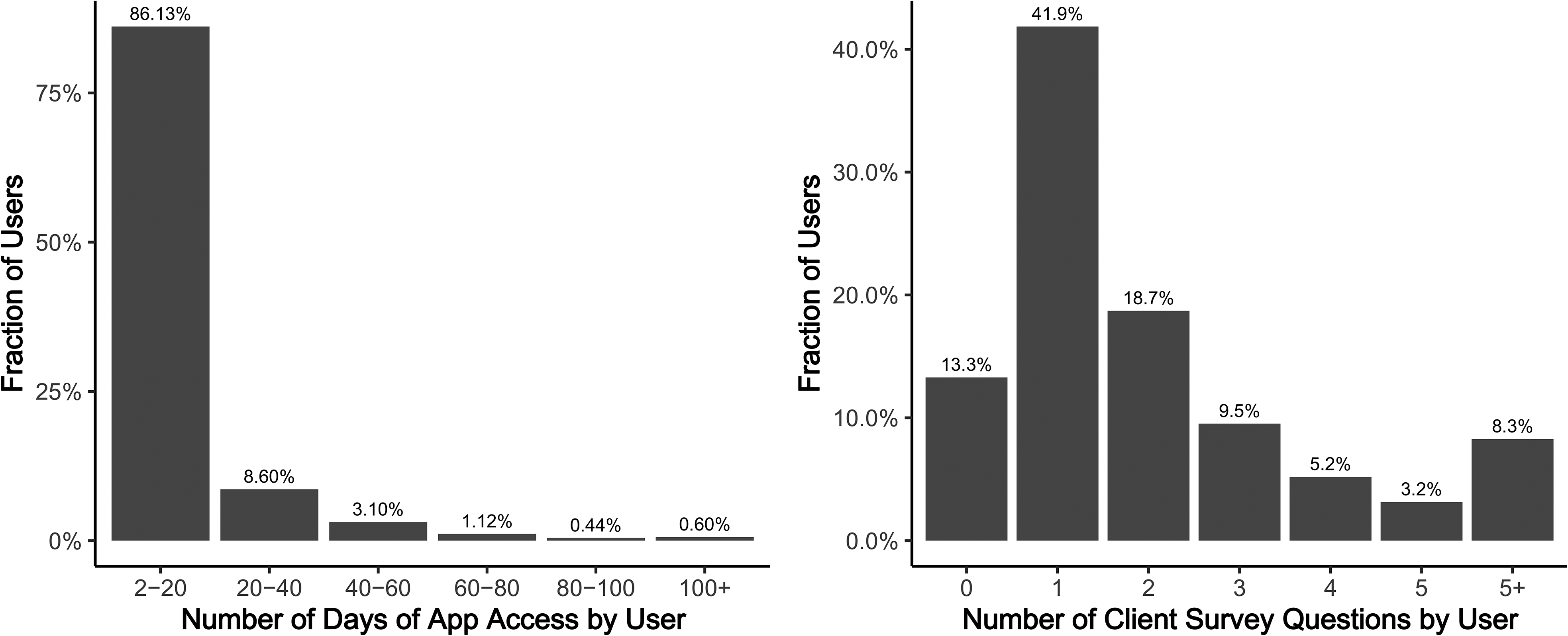
Distribution of Number of Days of App Access and Number Client Survey Questions Across Users.
Wear-Out in User Engagement
Figure 4 shows that, on average, users start with high app-access probability, suggesting that app users exhibit an initial interest in using the app. Over time, however, this initial interest wears off as app-access probability and the number of active users decreases. Thus, even in the presence of gamified reward engines, wear-out represents a threat to mobile apps with engagement-based business models. At the same time, it highlights the importance of our research question—namely, whether gamified reward engines can delay wear-out by stimulating user engagement.
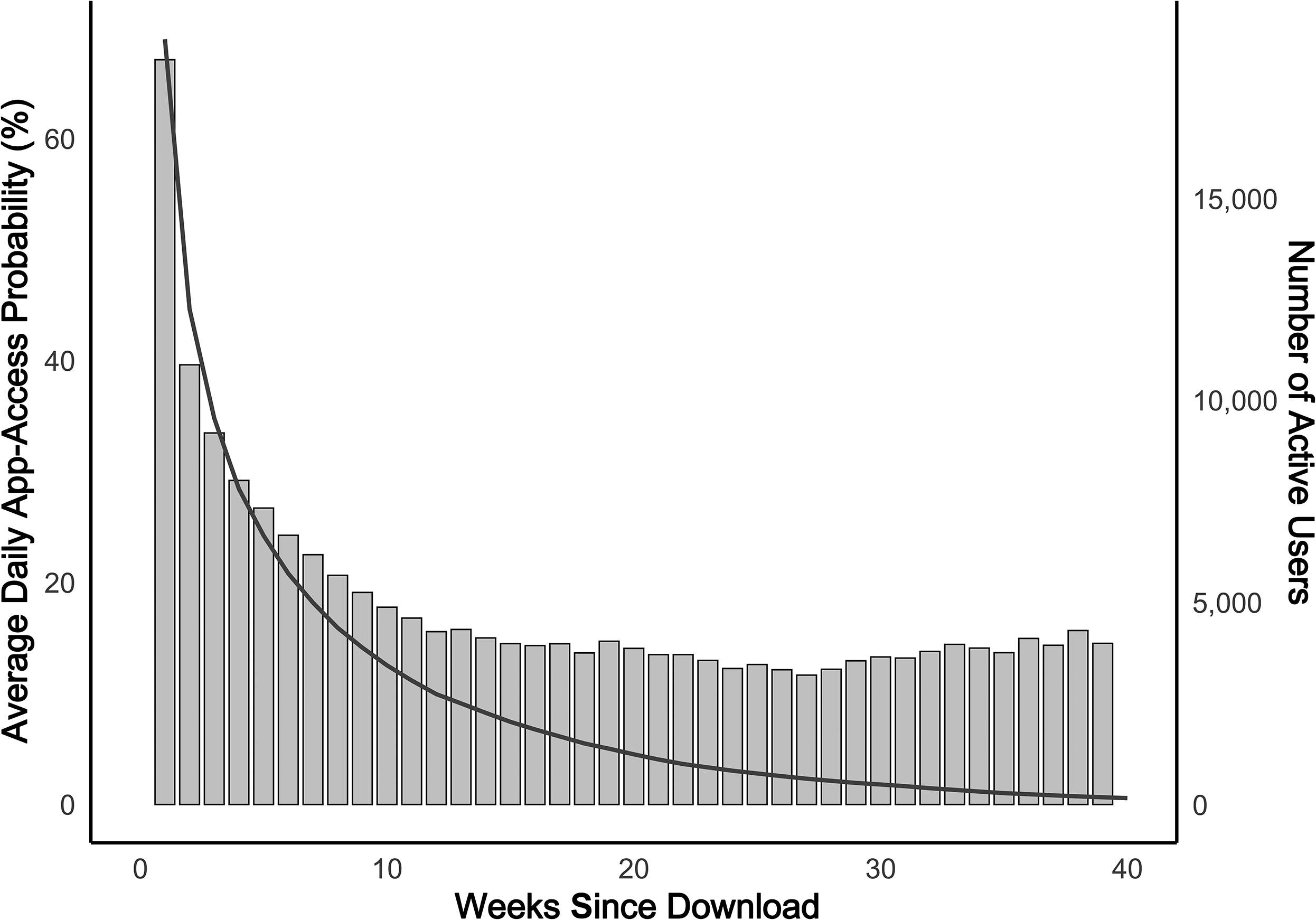
Evolution of App Users’ App-Access Probability and Number of Active Users as a Function of Time Since Download.
Variable Specification
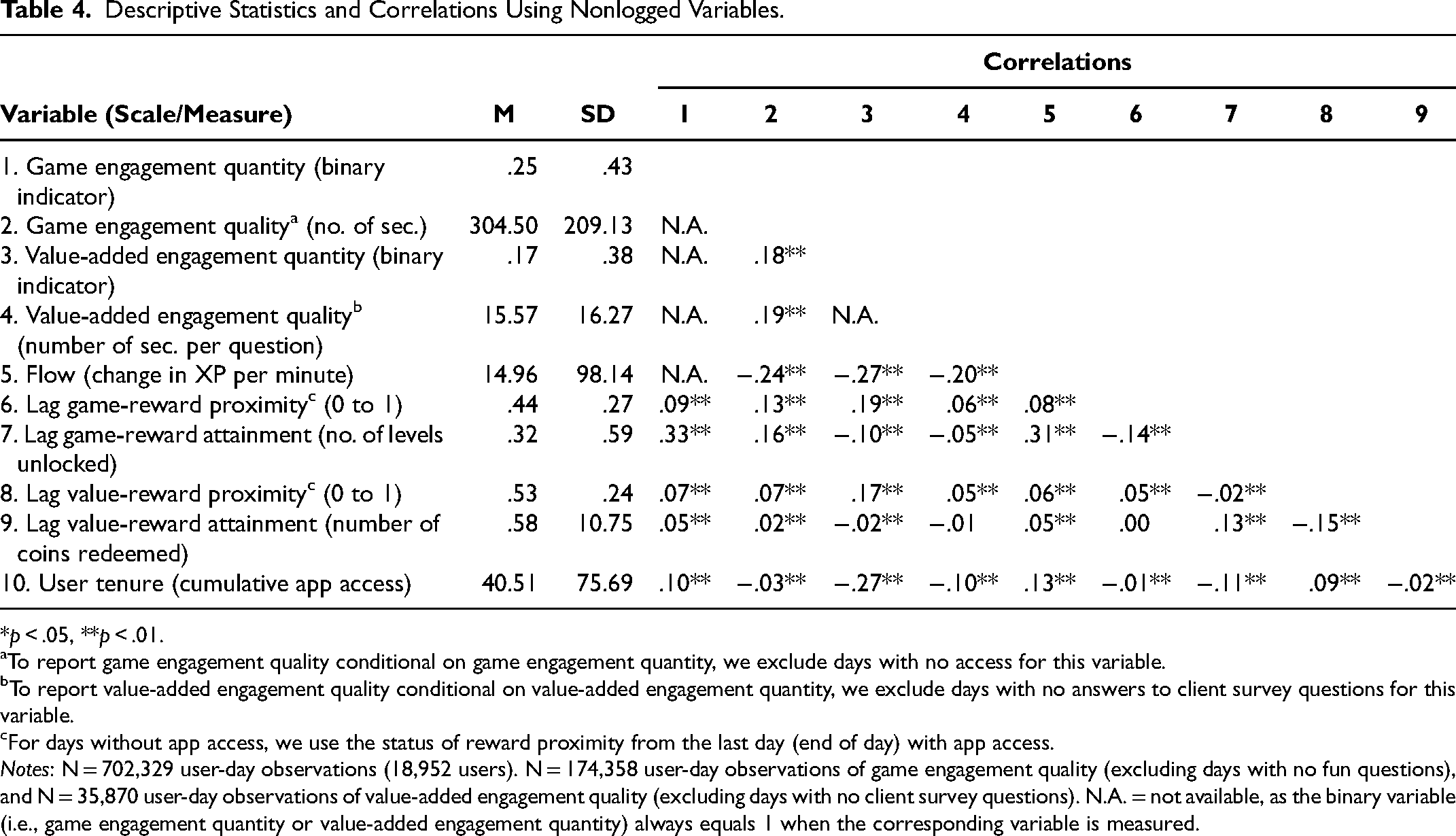
Table 3 describes all the variables included in our model and their conceptualizations, while Table 4 provides descriptive statistics.
Variable Operationalizations.
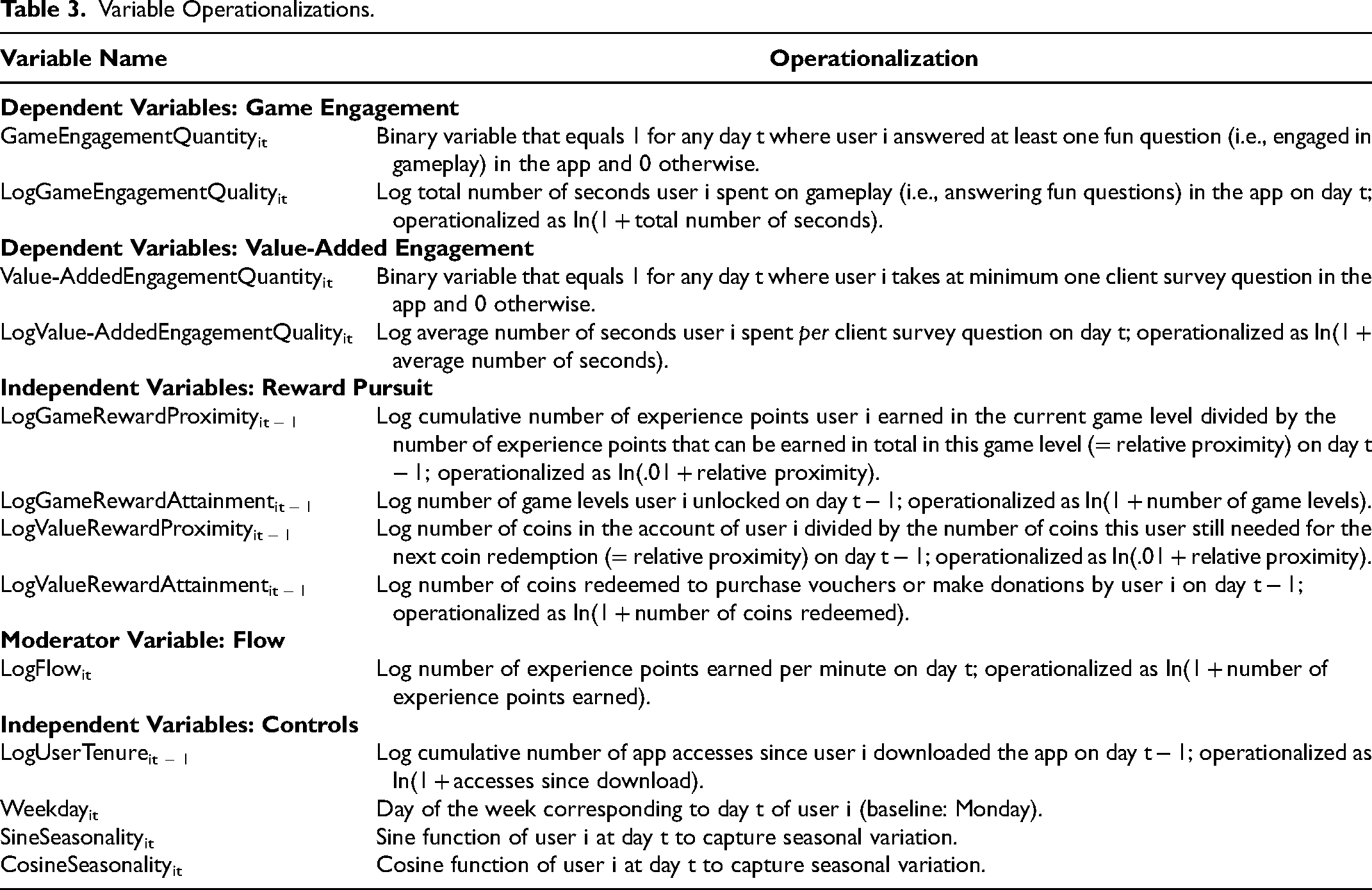
Descriptive Statistics and Correlations Using Nonlogged Variables.
*p < .05, **p < .01.
To report game engagement quality conditional on game engagement quantity, we exclude days with no access for this variable.
To report value-added engagement quality conditional on value-added engagement quantity, we exclude days with no answers to client survey questions for this variable.
For days without app access, we use the status of reward proximity from the last day (end of day) with app access.
Notes: N = 702,329 user-day observations (18,952 users). N = 174,358 user-day observations of game engagement quality (excluding days with no fun questions), and N = 35,870 user-day observations of value-added engagement quality (excluding days with no client survey questions). N.A. = not available, as the binary variable (i.e., game engagement quantity or value-added engagement quantity) always equals 1 when the corresponding variable is measured.
Dependent variables (game engagement and value-added engagement)
We measure game engagement quantity with a binary variable indicating whether a user engaged in gameplay on a given day (GameEngagementQuantityit = 1) or not (GameEngagementQuantityit = 0). We measure game engagement quality as the natural logarithm of the number of seconds a user spent on gameplay in the app on a given day plus 1 (LogGameEngagementQualityit).
For value-added engagement quantity, we use a binary variable for whether a user answered a client survey question on a given day (Value-AddedEngagementQuantityit = 1) or not (Value-AddedEngagementQuantityit = 0). 6 To measure value-added engagement quality, we use the average response time to answer a client survey question, an established quality indicator in market research (e.g., Goetz, Tyler, and Cook 1984). From the perspective of the app provider and its clients, quick response times for client survey questions indicate that respondents do not take sufficient time to answer the questions thoroughly and may prioritize speed over the quality of their responses. As client surveys consist of a varying number of questions, we measure value-added engagement quality as the (log of) the average time in seconds a user took to answer per client survey question on a given day. The mean time users spent answering one client survey question is 15.6 seconds, but the variability is large (SD = 16.3 seconds).
Independent variables (game-reward engine)
Customers assess their reward proximity by considering the total distance to the focal reward as a reference point (Kivetz, Urminsky, and Zheng 2006). The app allows users to keep track of their proximity to the next game level through a progress bar running from 0%–100% (see Web Appendix W2, Figure W2.1). To mirror how game-reward proximity is displayed in the app, we use the fraction of the current game level completed at a given point in time. Specifically, we define GameRewardProximityit − 1 as the number of experience points gained in the current level divided by the total number of experience points needed to complete the entire level (note that every level requires a different number of experience points; see Web Appendix W3, Table W3.1). The variable GameRewardProximityit − 1 ranges from 0 to 1, with 0 indicating the start of a new game level (0% reward proximity) and 1 indicating the completion of the current game level (100% reward proximity). We calculate the log of this variable at the daily level for each user, and we use a lag (day t − 1) to avoid simultaneity with the dependent variable (user engagement on day t).
Completing the required experience points for a level unlocks a new game level, leading to game-reward attainment (see Web Appendix 3, Table W3.1). Users can unlock several game levels on the same day. GameRewardAttainmentit − 1 measures the number of game levels user i unlocked on day t − 1. For instance, a user could start at Game Level 1 and reach Game Level 3 on the same day. In this case, GameRewardAttainmentit − 1 takes the value 2 (= 3 − 1). As with game-reward proximity, we take the lag and log.
Independent variables (value-reward engine)
With each completed client survey question, users earn coins in the app. ValueRewardProximityit − 1 indicates the proximity to the next value reward. We divide the number of coins in a user's coin account at the end of day t − 1 by the number of coins a user needs to attain their next value reward. Thus, a value-reward proximity of 0 means that a user does not have any coins in their coin account (0% proximity), and a value-reward proximity of 1 indicates that the user has as many coins in the account as needed for the next coin redemption (100% proximity). We again take the lag and log.
Value-reward attainment comprises coin redemptions for online shop vouchers and donations to charitable projects. Accordingly, ValueRewardAttainmentit − 1 indicates the total number of coins spent by user i for coin redemptions on day t − 1. We again take the lag and log. Web Appendix W3 illustrates the calculation for the different reward variables.
Moderator variable: flow
Prior literature documents that flow experiences in online contexts are characterized by focused concentration on a task, a loss of self-consciousness (Hoffman and Novak 1996), and even addictive behaviors (e.g., binge-watching; Schweidel and Moe 2016). Extrapolating these characteristics to potential behavioral consequences within our focal app, app users who experience flow are expected to be highly focused on answering fun questions to receive the associated rewards (e.g., unlocking a new game level). This strong focus likely makes users process information more fluently and, thus, answer the fun questions more quickly. Therefore, we construct a continuous measure that captures LogFlowit as the log of the number of experience points earned per minute for a user on a given day. This operationalization is in line with the interactivity speed 7 dimension of flow (Novak, Hoffman, and Yung 2000).
Importantly, from the app provider's perspective, flow during game engagement (i.e., when answering fun questions) is not necessarily a problem, as it indicates user engagement. Since the app provider does not use these data (the answers to the fun questions) for the market research commissioned by clients, the speed of answering fun questions is not relevant for the provider. However, flow during value-added engagement (answering client survey questions) can be a symptom of users prioritizing speed over quality, which can lead to data quality issues (lower value-added engagement quality).
Independent variables (controls)
We capture wear-out in user engagement over time by incorporating the number of app accesses since download (UserTenureit − 1) as a control variable. Because app usage may change over the course of a week, we include dummies for days of the week as control variables (Weekdayt). Moreover, user engagement in mobile apps can depend on seasonal influences (e.g., users might use an app less in the summer when they spend more time outside). Instead of estimating 11 monthly parameters, we use sine and cosine functions that robustly and parsimoniously capture seasonal variations in customer behavior (Mukherjee and Kadiyali 2018): SineSeasonalityit = sin
Model Development
We model the effects of game- and value-reward proximity and attainment (up to day t − 1) on both forms of app user engagement on day t, using four dependent variables: game engagement quantity (gameplay incidence), game engagement quality (log time spent on gameplay), value-added engagement quantity (binary decision to respond to a client survey question), and value-added engagement quality (log time spent per client survey question). Two data characteristics guide our model choice. First, as users did not access the app every day, we observe many zero-usage days, as illustrated for four selected users in Figure 5. Second, users do not necessarily engage in a value-added activity (i.e., respond to a client survey question) when they use the app, creating zeros in the client survey responses.
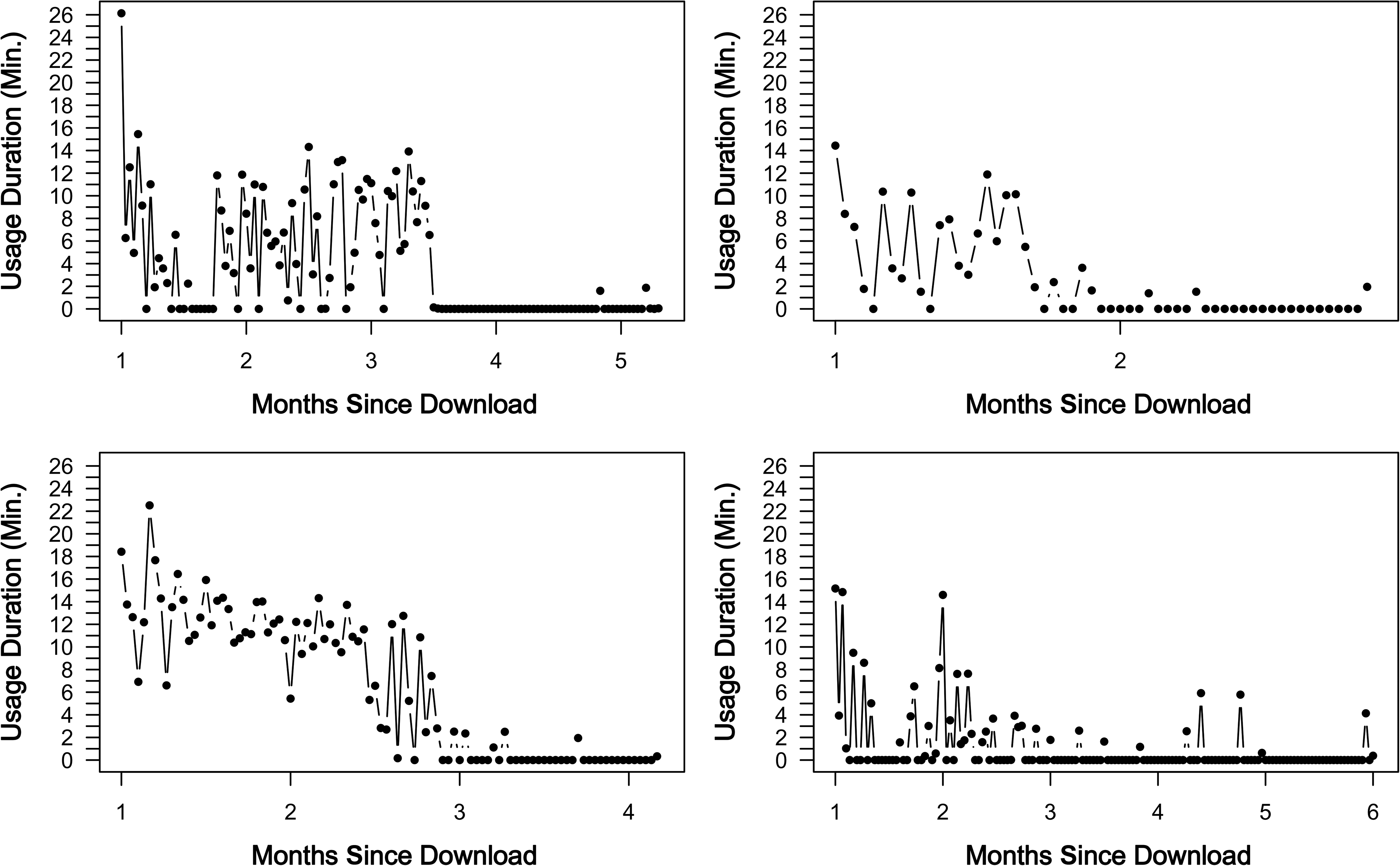
Model-Free Evidence: Heterogeneity in User Engagement.
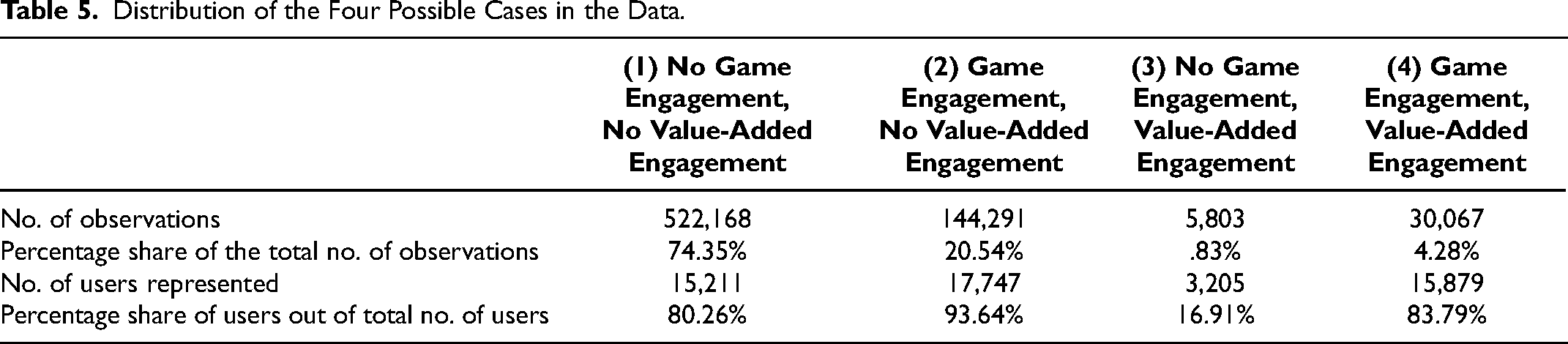
We parsimoniously account for the zeros in both dependent variables (game engagement and value-added engagement) with two Type II Tobit models (e.g., Danaher and Dagger 2013; Van Heerde, Gijbrechts, and Pauwels 2008). These models capture all possible cases: (1) neither game nor value-added engagement, (2) game engagement only, (3) value-added engagement only, or (4) both types of engagement. Table 5 shows the distribution of these cases in our data.
Distribution of the Four Possible Cases in the Data.
Game Engagement
We operationalize game engagement (yit) as the log number of seconds user i spent on gameplay in the app on day t. The index t is not calendar time but refers to the user-specific sequence of days user i used the app starting with the first day of app access (t = 1) and ending with the last day of app access (t = Ti). We address the zeros in game engagement by modeling gameplay incidence and time spent on gameplay (i.e., game engagement) as two interrelated equations. Game engagement quantity follows a probit equation, and game engagement quality follows a censored regression equivalent to a Type II Tobit model (Wooldridge 2010, p. 690).
A user engages in gameplay if 
Conditional on gameplay incidence (i.e., 

Value-Added Engagement
Users can answer client survey questions, creating value for the firm (i.e., value-added engagement quantity). When a user answers at least one client survey question, qit is the log average time in seconds user i spends on answering a survey question on day t (i.e., value-added engagement quality). We use a probit model to capture whether or not a user responds to any client survey question, which happens if 
Conditional on a survey incidence (i.e., 
Model identification
The system of four Equations 1–4 is recursive because the dependent variable of Equation 2, log time spent on gameplay, appears as an independent variable in Equations 3 and 4. This recursive four-equation system is identified, as we do not allow correlations in the off-diagonal elements of the 4 × 4 error term correlation matrix (Wooldridge 2010, p. 258). We provide an overview of model identification rules for recursive (triangular) systems and the Type II Tobit model in Web Appendix W5.
Even though they are not needed for a recursive system from an identification viewpoint, adding instrumental variables (IVs) meeting the exclusion restriction may help the identification (Ailawadi, Pauwels, and Steenkamp 2008; Leeflang et al. 2000, p. 381). Thus, as a robustness check, we run our focal model with additional IVs that add extra exogenous variation in the selection Equations 1 and 3. We reestimate the model and show that the findings are robust (see Web Appendix W5, Table W5.1). Because IVs produce less efficient estimates, our focal model reported in the manuscript does not include IVs.
We use the lag of the reward-pursuit covariates before a given day (wi,t − 1) to avoid simultaneity with user engagement on a given day (
Model estimation
We use a Bayesian approach to estimate the model, which we implement in Stan. To facilitate the Hamiltonian Monte Carlo estimation algorithm, we use weakly informative priors centered at 0 (e.g., β ∼ N(0, 1)). Robustness checks with less informative priors produced practically identical results (Web Appendix W7, Section W7.7) but take significantly more estimation time. Moreover, we use LKJ correlation priors for the correlation matrix decomposition of Σ (Lewandowski, Kurowicka, and Joe 2009).
We achieve convergence, as measured by the
Results
We first report the effects of reward pursuit on game- and value-added engagement. Next, we discuss the translation of game engagement into value-added engagement. Finally, we use a simulation to understand the economic impact of the game- and value-reward engines. For all reported effects the 95% posterior density intervals of the parameter estimates exclude zero (unless stated otherwise), indicating significance of the parameter estimates at the 5% level.
Effects of Reward Pursuit on Game Engagement and Value-Added Engagement
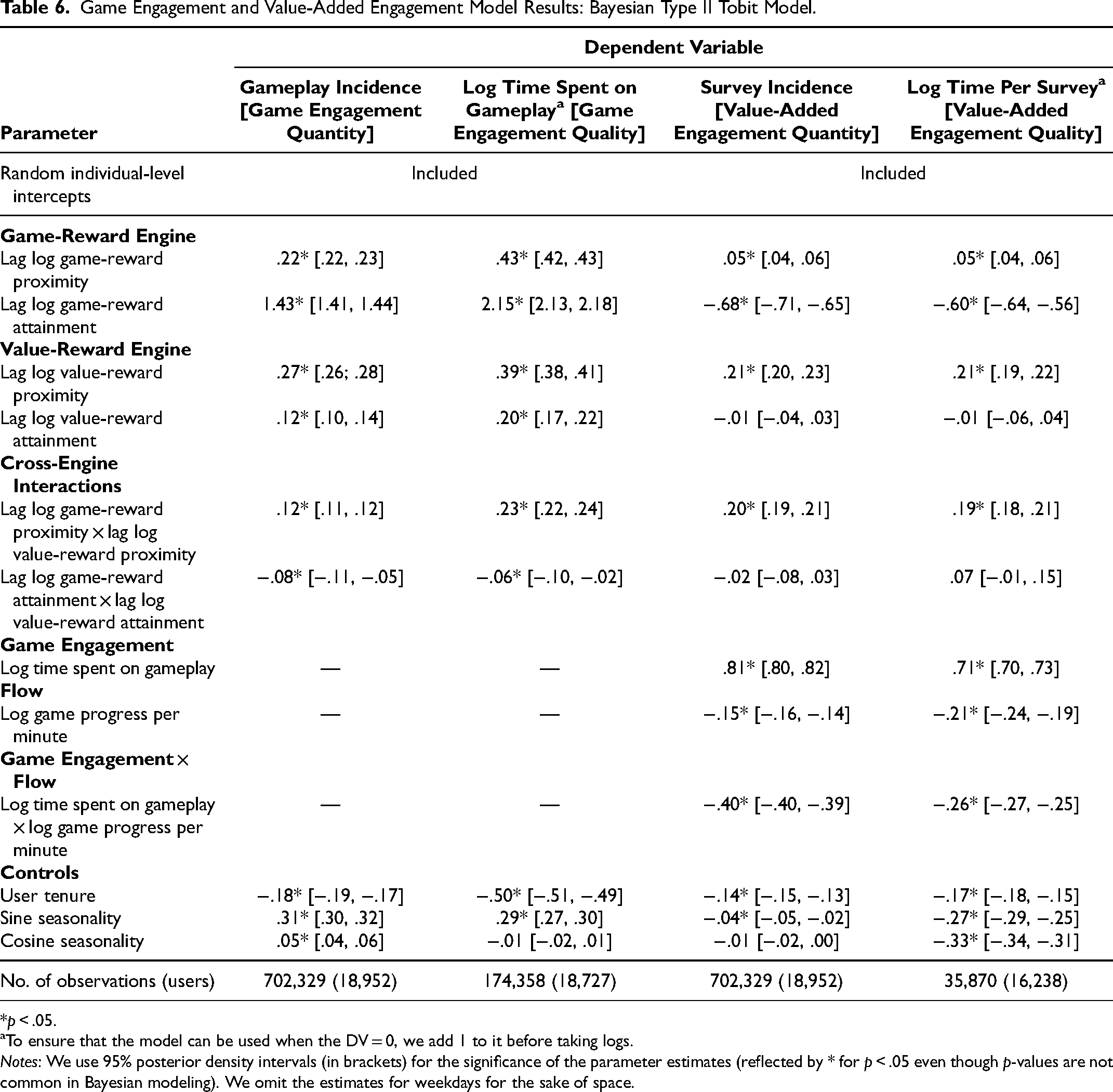
Table 6 reports the posterior means and the 95% posterior density intervals (in brackets) for the effects of the covariates on user engagement using the full model. Web Appendix W7.1 includes a base model without interactions to show the robustness of the main effects.
Game Engagement and Value-Added Engagement Model Results: Bayesian Type II Tobit Model.
*p < .05.
To ensure that the model can be used when the DV = 0, we add 1 to it before taking logs.
Notes: We use 95% posterior density intervals (in brackets) for the significance of the parameter estimates (reflected by * for p < .05 even though p-values are not common in Bayesian modeling). We omit the estimates for weekdays for the sake of space.
Direct effect estimates
User tenure (cumulative app access over time) that accounts for wear-out in user engagement decreases gameplay incidence (−.18), log time spent on gameplay (−.50), survey incidence (−.14), and log time per survey (−.17), providing evidence that wear-out represents a major threat to engagement-based business models. We discuss the effects of day of the week and seasonality on user engagement in Web Appendix W9.
We now discuss the effects of the game-reward engine on engagement. As app users get closer to the next level and unlock new levels, gameplay incidence increases (game-reward proximity: .22; game-reward attainment: 1.43) as does log time spent on gameplay (game-reward proximity: .43; game-reward attainment: 2.15). Thus, both game-reward proximity and game-reward attainment lift game engagement. However, while game-reward proximity increases survey incidence (.05) and log time per survey (.05), game-reward attainment decreases survey incidence (−.68) and log time per survey (−.60). Thus, game-reward attainment (on the previous day) has negative effects on value-added engagement (on the current day).
The value-reward engine lifts gameplay incidence and log time spent on gameplay. As app users come closer to the next coin redemption (value-reward proximity), gameplay incidence (.27) and log time spent on gameplay (.39) increase. Redeeming coins (value-reward attainment) also significantly increases gameplay incidence (.12) and log time spent on gameplay (.20). Thus, both value-reward proximity and value-reward attainment lift game engagement.
Regarding the direct effects on value-added engagement, value-reward proximity lifts survey incidence (.21) and log time per survey (.21). Value-reward attainment has no significant effect on value-added engagement (−.01; for both survey incidence and log time per survey).
Discussion of direct effects
Consistent with research suggesting that goal proximity increases perseverance (e.g., Hull 1932; Kivetz, Urminsky, and Zheng 2006), game-reward and value-reward proximity increase game and value-added engagement. The observation that proximity to one type of reward leads to more engagement with activities that entail a different type of reward is a novel finding, suggesting that the anticipation of a nearby reward can create a motivational context that enhances engagement more broadly within the app. We propose that feeling that a reward is nearby primes users cognitively and emotionally (Ásgeirsson and Kristjánsson 2014), making them more receptive to other behaviors that lead to rewards.
Consistent with research showing that reward attainment can be motivating (e.g., Gershon, Cryder, and John 2020; Nunes and Drèze 2006), we observe that users increase their game engagement not only when they attain a game reward but also when they attain a value reward, suggesting that the positive feelings and reinforcement from a value reward (Gershon, Cryder, and John 2020) can generalize across other activities within the app, in line with theories of generalized reinforcement (Hull 1943). Game-reward attainment, in contrast, has a negative effect on value-added engagement quantity and quality. Extrapolating the reduced interruption tolerance in goal pursuit documented by Jhang and Lynch (2015) to the context of mobile app gamification, attaining game rewards may be so engaging that users show resistance to other (i.e., value-added) activities, highlighting a novel downside of reward attainment in the context of gamified mobile apps. Finally, the insignificant effect of value-reward attainment on value-added engagement suggests satiation in value-added engagement, in line with postreward resetting (Kivetz, Urminsky, and Zheng 2006). Together with the finding that value-reward attainment increases game engagement, we propose that value-reward attainment leads to goal substitution, such that once the goal of value-reward attainment is achieved, users shift their focus to game engagement, especially because game rewards appear more accessible (Fishbach, Dhar, and Zhang 2006) after users reset their value-reward proximity through value-reward attainment.
Interaction effects
Since our study is the first to examine hybrid reward architectures, the observed cross-engine interaction effects provide novel insights into the interplay of rewards. Specifically, we find positive interaction effects between game-reward proximity and value-reward proximity on gameplay incidence (.12), log time spent on gameplay (.23), survey incidence (.20), and log time per survey (.19). Thus, high reward proximity in one engine lifts the positive effect of reward proximity on engagement in the other engine. This result shows that the motivational appeal of reward proximity can be enhanced by serving both intrinsic and extrinsic motivation through two reward engines (Ryan and Deci 2000), contrary to Wrzesniewski et al.’s (2014) observation that combining intrinsic and extrinsic motives can lead to negative outcomes. Conversely, there are negative interaction effects between game-reward attainment and value-reward attainment on gameplay incidence (−.08) and log time spent on gameplay (−.06). This result means that when both types of rewards are achieved simultaneously, users are more likely to become temporarily less engaged with the game. Consequently, the documented negative effect of postreward resetting (Kivetz, Urminsky, and Zheng 2006) is amplified by hybrid reward architectures—that is, users of gamified mobile apps experience double postreward resetting.
Effect sizes
To assess effect sizes, we report the marginal effects on gameplay probability and time spent on gameplay (i.e., game engagement) as well as survey probability and time spent per survey (i.e., value-added engagement) for different levels of the independent variables. For a low level of reward proximity, we use a 20% completion, while 80% completion represents a high level. We also compare low reward attainment (= 0) with high (= average) reward attainment, which is 1.16 levels for game-reward attainment and 57.72 coins for value-reward attainment. All other variables are set to their means. Web Appendix W4.3 documents calculation details.
As Figure 6 shows, going from low to high game-reward proximity lifts gameplay probability by 40% (from 25% to 35%), time spent on gameplay by 124% (from 34 to 76 seconds), survey probability by 12% (from 17% to 19%), and time per survey by 21% (from 14 to 17 seconds). Going from low to high game-reward attainment lifts users’ gameplay probability from 25% to 70% (+180%) and time spent on gameplay from 30 to 578 seconds (+1,827%). These effect sizes are substantial, highlighting the engaging powers of game-reward attainment. However, game-reward attainment also has a dark side, as it decreases survey probability (i.e., value-added engagement quantity) from 19% to 7% (−63%) and time per survey (i.e., value-added engagement quality) by 67% (from 18 to 6 seconds).
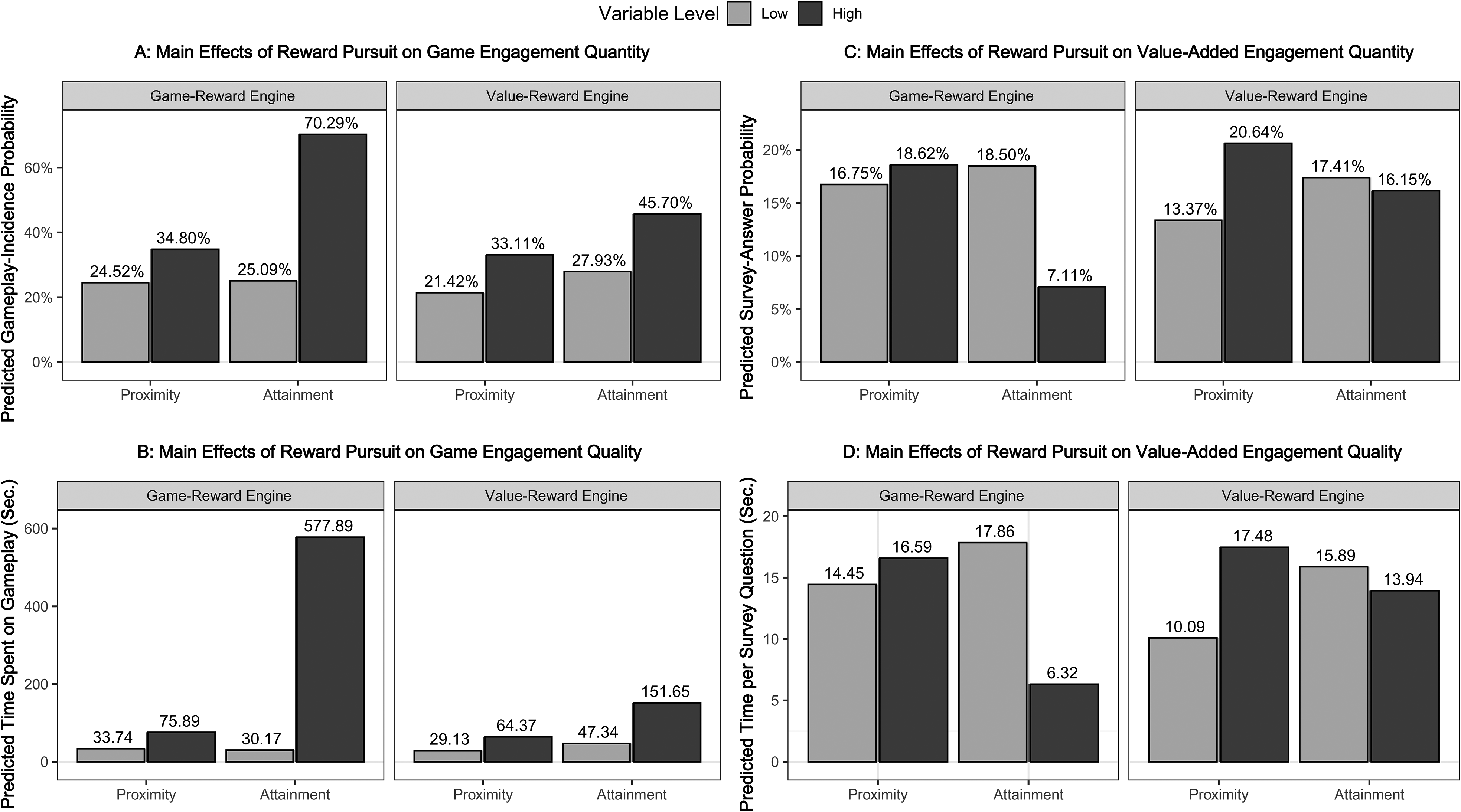
Changes in Game and Value-Added Engagement Conditional on Reward Engines.
In the value-reward engine, going from low to high reward proximity increases gameplay probability from 21% to 33% (+54%), time spent on gameplay by 120% (from 29 to 64 seconds), survey probability by 62% (from 13% to 21%), and time per survey by 73% (from 10 to 17 seconds). Value-reward attainment increases gameplay probability from 28% to 46% (+64%), and it increases time spent on gameplay from 47 to 152 seconds (+223%). The effects of value-reward attainment on value-added engagement (quantity and quality) are nonsignificant.
Interaction effects for reward proximity
Figure 7 illustrates the positive and significant cross-engine interaction effects of reward proximity on both game engagement (quantity: .12; quality: .23; see Table 6) and value-added engagement (quantity: .20; quality: .19; see Table 6). Specifically, the increase in gameplay probability (Panel A), time spent on gameplay (Panel B), survey probability (Panel C), and time per survey (Panel D; each on the left) from low to high reward proximity in one engine is larger when reward proximity is high (vs. low) in the other engine. For example, when reward proximity in the game-reward engine is high, going from low to high reward proximity in the value-reward engine leads to a stronger increase in gameplay probability (from 25% to 43%; +72%) compared with when reward proximity in the game-reward engine is low (from 20% to 28%; +40%). Taken together, high reward proximity in both engines leads to a strong boost in both game engagement and value-added engagement.
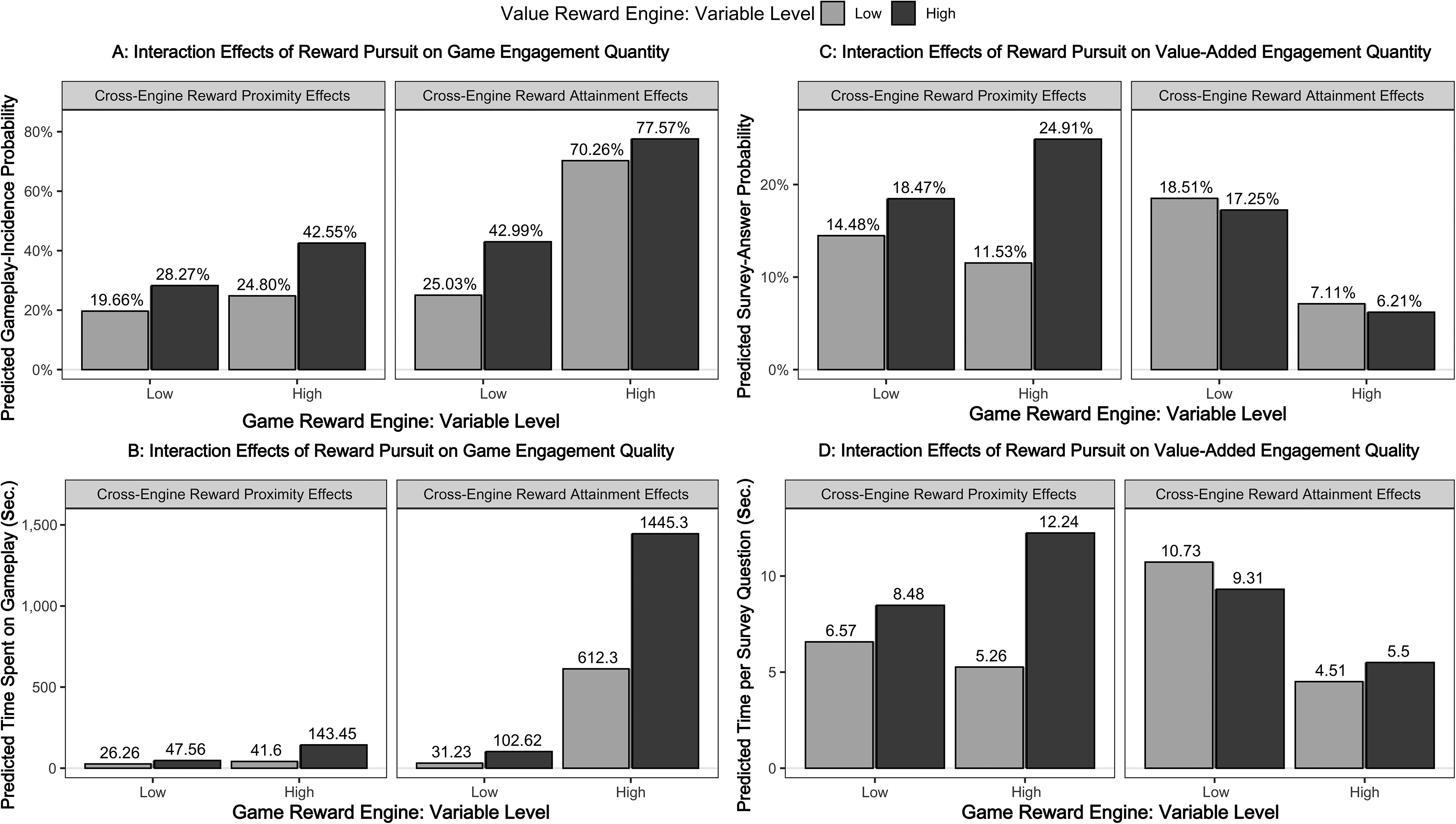
Change in Game and Value-Added Engagement Conditional on Cross-Engine Interaction Effects of Reward Pursuit.
Interaction effects for reward attainment
For reward attainment, Table 6 shows significantly negative cross-engine interactions on gameplay probability (−.08) and time spent on gameplay (−.06). Illustrating the latter, Figure 7 (Panel B, right side) shows that the increase in time spent on gameplay due to a low-to-high lift in value-reward attainment is stronger for no game-reward attainment (from 31 to 103 seconds, +232%) than for average game-reward attainment (from 612 to 1,445 seconds, +136%). Thus, the effect of reward attainment in one engine on game engagement is weakened when users attain a reward in the other engine.
In summary, while for game- and value-added engagement, cross-engine reward proximity shows complementarity, cross-engine reward attainment shows substitutability for game engagement (while we find no cross-engine attainment interactions for value-added engagement).
Translation of Game Engagement into Value-Added Engagement
Table 6 shows that time spent on gameplay (i.e., game engagement quality) has a positive and significant impact on survey incidence (.81) and log time per survey (.71). Thus, higher game engagement lifts value-added engagement quantity and quality generated for the app provider and its clients. However, more flow (log game progress per minute) leads to a significant decrease in both survey incidence (−.15) and log time per survey (−.21), thus decreasing the quantity and quality of the data provided.
As expected, we find a significantly negative interaction effect between log time spent on gameplay (i.e., game engagement quality) and log game progress per minute (i.e., flow) on survey incidence (−.40) and log time per survey (−.26). To show the relevance of the interactions, we calculate the conditional effects for low and high game engagement at two levels of the flow moderator (while all other variables are at their means). Figure 8 visualizes how flow weakens the positive translation of time spent on gameplay (i.e., game engagement) into predicted survey-incidence probability (i.e., value-added engagement quantity; Figure 8, Panel A) and predicted time per survey (i.e., value-added engagement quality; Figure 8, Panel B).
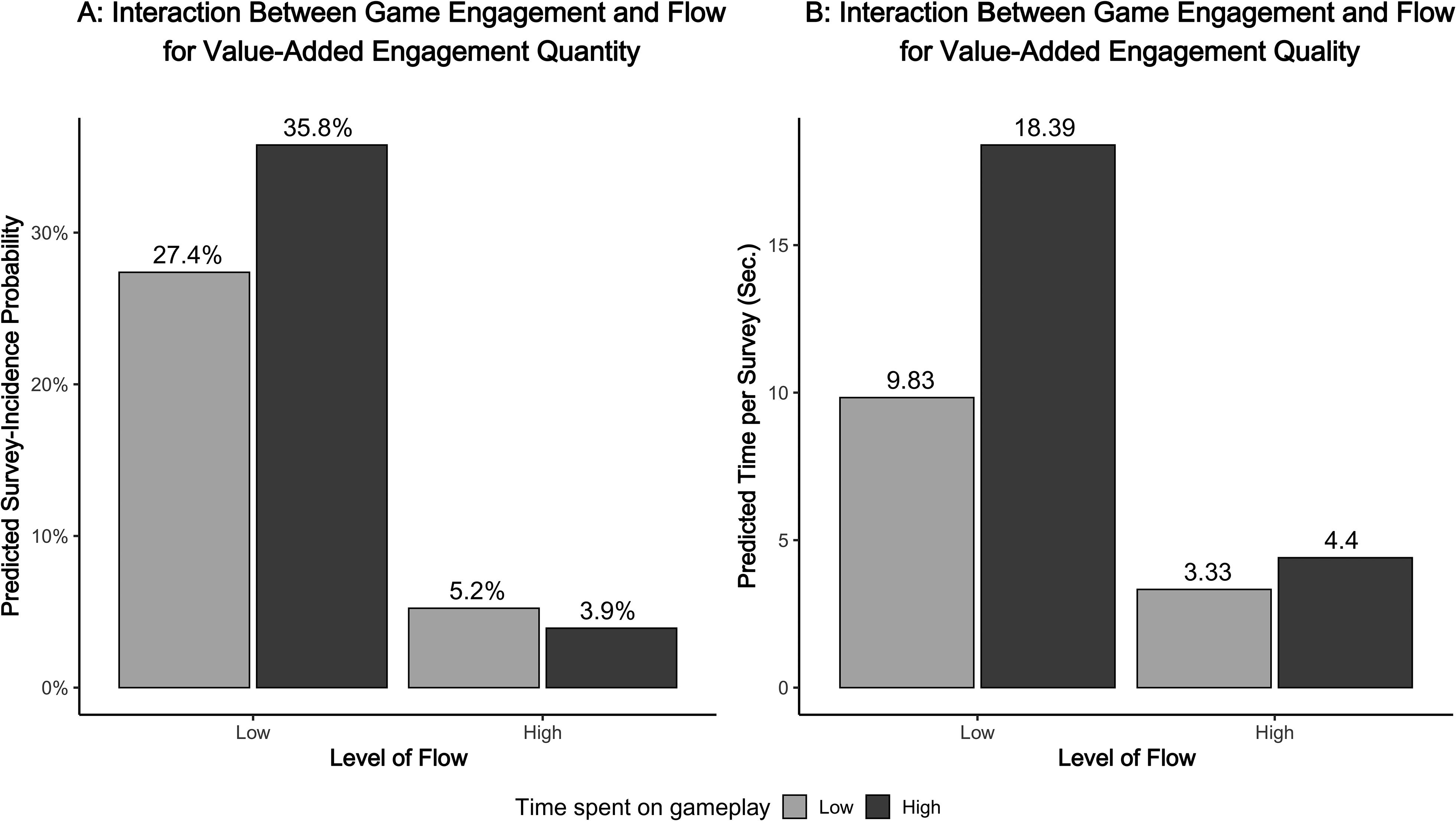
Conditional Effects of Game Engagement (Time Spent on Gameplay) on Value-Added Engagement for Low Versus High Levels of Flow.
Specifically, when flow is low, high (vs. low) time spent on gameplay (i.e., game engagement quality) lifts survey-incidence probability (i.e., value-added engagement quantity) from 27% to 36% (+33%). When flow is high, the effect of time spent on gameplay on survey incidence-probability becomes negative: high (vs. low) time spent on gameplay drops survey-incidence probability from 5% to 4% (−20%). These findings illustrate the strength of the negative interaction effect between flow and time spent on gameplay on survey-incidence probability (β = −.40, see Table 6).
Likewise, flow weakens the translation of time spent on gameplay (i.e., game engagement quality) into time per survey (i.e., value-added engagement quality). When flow is low, high (vs. low) time spent on gameplay lifts time per survey from 9.83 seconds to 18.39 seconds (+87%). When flow is high, high (vs. low) time spent on gameplay lifts time per survey less strongly (from 3.3 seconds to 4.4 seconds; +32%), illustrating the negative interaction between flow and time spent on gameplay on time per survey (β = −.26, see Table 6). These findings suggest that users with high levels of flow spend very little time on survey questions (so-called “speeders”), illustrating the potential value-detracting consequences of flow in gamified mobile apps.
Heterogeneity of the Effects of Reward Pursuit on User Engagement
While Models 1–4 account for heterogeneous intercepts, they can—in theory—be extended by heterogenous slope parameters. We tried estimating such a model, but the data do not allow identifying heterogeneous slope parameters, especially for users with very short usage histories (e.g., two days of app access during the observation period).
To explore whether the effects of reward pursuit on user engagement vary for different user groups, we conduct a median split on game engagement to build segments of “heavy” and “light” users. As reported in more detail in Web Appendix W10, we find that heavy users are very sensitive to reward attainment and strongly influenced by flow, such that they stick more to gameplay and pay less attention to value-added engagement. Compared with heavy users, light users are more sensitive to the value reward engine and to reward proximity.
Economic Relevance of the Reward Engines
To demonstrate the economic relevance of the reward engines, we simulate the effect of exogenous reward-pursuit shocks––that is, changes in reward proximity and/or reward attainment resulting from an app provider's intervention––on game engagement and value-added engagement. It is common practice for app providers to offer users free virtual in-app currency (e.g., points or virtual money; “sudden rewards,” Friedrich et al. 2020). Such shocks affect users’ reward pursuit, which in turn drives their game engagement and value-added engagement.
To compare the effects of reward-pursuit shocks between the two reward engines, we simulate two scenarios in which users receive free in-app experience points (XP) in the game-reward engine (Scenario 1: free XP) or free currency in the value-reward engine (Scenario 2: free coins). To use realistic values, we note that users earn, on average, 90 XP and 30 coins (worth €.30) a day when they progress in the corresponding engine. 8 Correspondingly, in Scenario 1, all users are gifted 90 XP (to simulate a game-reward engine shock), and in Scenario 2, they are gifted 30 coins (to simulate a value-reward engine shock).
We use a baseline scenario that approximates the real data observations as a starting point (more details below). After simulating the effect of an exogenous reward-pursuit shock, we update game-reward proximity and attainment (Scenario 1) or value-reward proximity and attainment (Scenario 2) for each user. To control for the potential influence of the chosen day of the reward-pursuit shock, we impute the shock on each separate day during the observation period (one shock at a time) and report the average impact on the dependent variables. For each observation and each of the two scenarios, we subtract the predicted outcome after the free gift from the predicted outcome without the free gift, yielding the change in the outcome caused by the shock. We use the median of this change across days. For details see Web Appendix W4.4.
We scale the effects during the one-year period for an estimated overall number of app users. The market research app studied in this article has more than 500,000 downloads in the Google Play Store. Based on our discussion with the company, approximately 100,000 people use the app. Therefore, we multiply the changes in (1) average gameplay probability, (2) seconds of game-usage duration (i.e., game engagement), and (3) survey-incidence probability (i.e., value-added engagement quantity) by 100,000. Consequently, the effects shown in Table 7 are based on each of the 100,000 users receiving a gift (XP or coins) once in their app lifetime. For time spent per survey (i.e., value-added engagement quality), we report the change in the number of seconds spent per survey caused by the reward-pursuit shock because a cumulative number is not meaningful for the app provider.
Effects of Simulated Shocks in Reward Engines on Economic Mobile App Value.
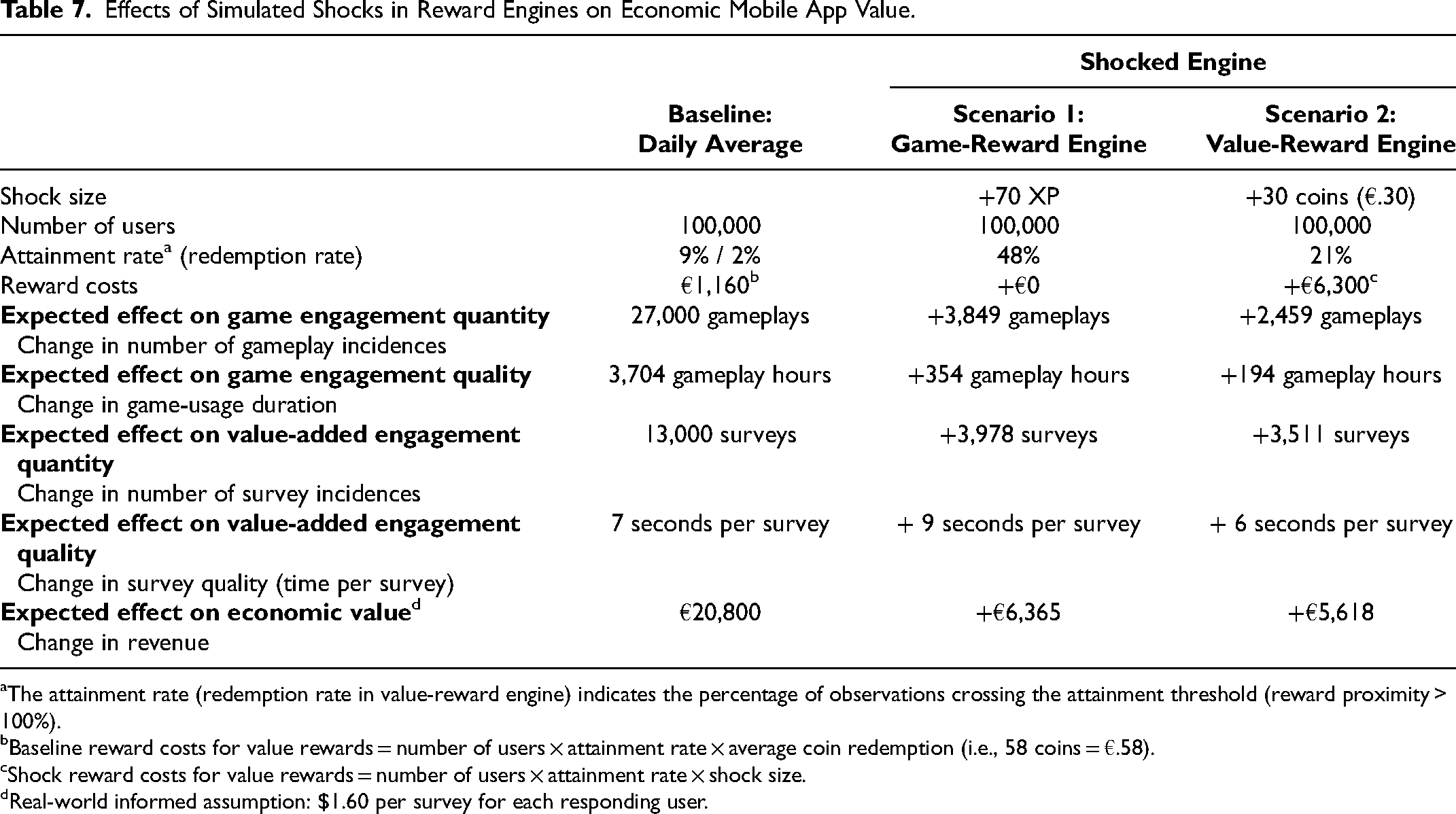
The attainment rate (redemption rate in value-reward engine) indicates the percentage of observations crossing the attainment threshold (reward proximity > 100%).
Baseline reward costs for value rewards = number of users × attainment rate × average coin redemption (i.e., 58 coins = €.58).
Shock reward costs for value rewards = number of users × attainment rate × shock size.
Real-world informed assumption: $1.60 per survey for each responding user.
The baseline scenario (see the “Baseline” column in Table 7) approximates how the app usage behavior of 100,000 users translates into user engagement and economic value on an average day. Specifically, we use our real data observations (before the shocks) to predict average daily user engagement and scale it by the number of users. For instance, multiplying the average predicted gameplay probability of 27% by the number of users yields 27,000 gameplays on an average day.
The reward-pursuit shock in the value-reward engine costs the app provider €6,300 (i.e., €.30 per user with a redemption rate of 21%) because the app provider needs to buy vouchers from online shop owners that users can redeem with their coins (one coin equals €.01). In contrast, the reward-pursuit shock in the game-reward engine is free. Due to the size of the reward-pursuit shock, users attain game reward-attainment (48% of the observations; Scenario 1) or value-reward attainment (21% of observations; Scenario 2). We find that gifted XP (Scenario 1) lead to more positive downstream consequences than gifted coins (Scenario 2). Gifted XP lead to not only more additional gameplays than gifted coins (+3.8k vs. +2.5k) but also more time spent on gameplay (+354 hours vs. +194 hours), more value-added engagement quantity (+4,000 surveys vs. +3,500 surveys), and more value-added engagement quality (+9 additional seconds vs. +6 additional seconds per survey).
To convert these findings into monetary figures, we note that market research clients of the app provider buy credits on the provider's website. This enables us to calculate a realistic revenue estimate per client survey answered (€1.60), which we multiply by the additional number of surveys answered. Taken together, we find that an app provider who implements a game-reward engine shock earns €6,400 additional revenue versus €5,600 due to a value-reward engine shock. Importantly, gifted XP are free of cost for the app provider, while gifted coins cost €6,300. In our simulation, the value-reward engine shock does not fully cover the costs of the additional rewards provided. While these calculations depend on the assumptions made, they show that both reward engines can substantially increase the value of mobile apps, while the game reward engine has the benefit of zero marginal cost.
Discussion
Theoretical Implications
Although scholars and mobile app providers recognize the importance of approaches to counteract wear-out in app user engagement over time (e.g., Localytics 2018; Van Heerde, Dinner, and Neslin 2019), to the best of our knowledge, our research is the first to study how gamification and a hybrid reward structure involving game and value rewards can help engage users, and how this engagement translates into mobile app value.
This research contributes to the literature on reward architectures by analyzing the impact of game- and value-reward engines and their interplay in the mobile app engagement value chain. While reward pursuit has been studied in nondigital contexts (e.g., cafe reward programs; Kivetz, Urminsky, and Zheng 2006), we extend prior research by investigating the effects of reward pursuit in gamified mobile apps. We find that reward pursuit through both engines—conceptualized by reward proximity and reward attainment—increases user engagement. Our results complement Wrzesniewski et al.’s (2014) work on mixed motives. While these authors pointed to potential negative consequences of combining intrinsic and extrinsic motives, our study reveals a more nuanced interaction in gamified apps. The integration of game and value rewards in apps might blur the lines between intrinsic and extrinsic motivations, fostering a holistic engagement where these motivations complement rather than conflict with each other.
Our study is the first to examine hybrid reward architectures and the first to investigate the effectiveness of value rewards in the context of mobile apps. We find positive effects of reward proximity on game engagement and value-added engagement in both reward engines, suggesting that the goal-gradient hypothesis also holds for gamified mobile apps. In line with prior research that documented a negative effect of reward attainment on customers’ efforts in reward programs (postreward resetting; Kivetz, Urminsky, and Zheng 2006), we observe negative direct effects of game-reward attainment on value-added engagement. This finding suggests that attaining game rewards may make users enter a (psychological) reward rush (e.g., striving for repeated positive feelings of competence), detracting users from value-added engagement.
However, we observe positive direct effects of game- and value-reward attainment on game engagement. Thus, unlike the postreward resetting that we find for value-added engagement and that Kivetz, Urminsky, and Zheng (2006) report for reward programs, achieving game or value rewards enhances gameplay incidence and gameplay time. This finding suggests that the positive affect that users feel about receiving rewards (Gershon, Cryder, and John 2020) encourages them to engage even more with the game.
There is a caveat, though. As users trigger two reward engines during their app usage, the hybrid setup of reward engines requires an analysis of cross-engine interactions. We find that a hybrid reward architecture may backfire when users attain rewards in both engines concurrently.
Furthermore, while there is initial evidence of positive effects of gamification on user engagement in contexts such as learning (e.g., Da Rocha Seixas, Gomes, and De Melo Filho 2016) and branding (e.g., Yang, Asaad, and Dwivedi 2017), potential negative consequences have not yet been explored. Accordingly, Eisingerich et al. (2019, p. 14) call for research that “examines the potential negative effects of gamification on engagement.” We answer this call by introducing the concept of flow to show the value-detracting effects of mobile app gamification. In particular, we explore the consequences of users entering a state of flow for business models wherein both the quantity and quality of user engagement count toward an app's value. Our findings suggest that when users enter a state of flow, the positive effect of users’ game engagement on value-added engagement decreases. This observation aligns with the findings of Woolley and Sharif (2022), who demonstrated that increased immersion in a category, akin to a flow state, increases the likelihood that users select similar (from that category) over dissimilar media. This alignment suggests that the flow state not only detracts from value-added activities but may also foster a preference for similar types of engagement that created flow.
Managerial Implications
Our research offers several important managerial implications for mobile app providers. First, gamification offers the option of deploying a hybrid reward architecture comprising a value-reward engine and a game-reward engine. This reward setup might be novel for managers who only consider value rewards that incur costs for their firms (Toker-Yildiz et al. 2017). We propose that managers should leverage the power of psychological motivation inherent in humans by providing game rewards, utilizing the motivational appeal of game-like structures (Przybylski, Rigby, and Ryan 2010). In our study, we find that game rewards (which are free) increase user engagement significantly over and above value rewards (which are not free), leading to a lift in business value. Thus, gamification represents a cost-effective way to enhance user engagement.
Second, while managers have been struggling with the negative effects of postreward resetting in their reward strategies—that is, when users reduce their effort after attaining a reward (Kivetz, Urminsky, and Zheng 2006)—our results suggest that the hybrid use of two reward engines can reduce this phenomenon. Thus, mobile apps should enable the continuous pursuit of both value and game rewards. This insight from our study of gamification of nongame apps extends to apps where gameplay is the central feature (e.g., video game apps) and where ad viewing is often an essential part of the business model. Building on our findings on the synergistic effects of hybrid reward architectures, incorporating value rewards (e.g., in-app currency, exclusive game content) in video game apps for value-added activities such as viewing ads can increase the perceived value of engaging with these activities. In addition, in this setup, ads are less likely to interrupt gameplay flow but rather complement it.
However, incorporating value rewards makes the reward architecture hybrid. Our findings show that the pursuit of both value and game rewards might backfire when reward attainment coincides in both reward engines. Accordingly, managers should avoid simultaneous reward attainment in both engines. We propose a temporal decoupling of reward attainment in the engines, for example, by providing game rewards at a higher frequency than value rewards.
Third, despite its positive effects on user engagement, gamification can facilitate app-usage patterns that can detract users’ attention from value-added engagement. One potential issue for app providers is that success in game-reward attainment makes users less inclined to engage in value-added activities. To prevent this effect, app providers can restrict access to certain game rewards until users have engaged with a certain number of value-added activities. For the time of the restriction, value-added activities could be integrated into the gamification process, such that users earn game rewards through value-added activities such as watching ads.
Another issue that we uncover is that entering a psychological state of flow inhibits the translation of game engagement into value-added engagement. We expect that this finding extends to one of most relevant business models for mobile apps and other digital services (Appel et al. 2019; Rutz, Aravindakshan, and Rubel 2019), which is in-app advertising that monetizes engagement with an app by displaying ads. While app providers earn more revenue by exposing users to many ads, advertisers that pay providers to place ads in an app rely on the quality of users’ responses to these ads (Schweidel and Moe 2016). Therefore, as our results indicate, the value-detracting effects of users entering a state of flow can harm the value creation of both app providers and advertisers. Against this background, it is important to counteract the value-detracting effects of gamification that result from users entering a state of flow. Our results suggest that app providers may benefit from ensuring that value-added activities do not interrupt users’ flow in game-playing activities. Specifically, app providers could consider exposing users to ads early in their usage sessions, which decreases the probability that users have already entered a state of flow. In line with this notion, advertisers could offer to pay app providers a premium to advertise in the early stages of usage sessions. Ideally, app providers could employ algorithms to detect each user's current engagement state (Zhang et al. 2019). Thus, app providers could expose users to ads at points when these algorithms detect users not being in a state of flow. Combining our results with Shin and Grant's (2019) theory of the curvilinear relationship between intrinsic motivation and task performance, high engagement in gamified activities appears to create a psychological contrast effect, reducing engagement in less intrinsically motivating value-added app activities. This finding shows the need for a balanced reward strategy in app design, to steer engagement harmoniously across all app activities.
Our empirical investigations show that combining value rewards and game rewards increases user engagement and its subsequent translation into value-added engagement. This translation works even for the market research app under study, in which answering market research questions is a utilitarian activity that is not considered engaging per se (Goetz, Tyler, and Cook 1984). We believe that gamification is a promising approach to entice users to conduct utilitarian tasks that require ongoing user engagement to create value for individuals or society. For example, an education app can provide game rewards for learning (e.g., vocabulary tests) and value rewards for purchasing learning materials (e.g., unlocking paid learning chapters).
Limitations and Future Research
This research has limitations that offer avenues for future research. Our sample consists of users who accessed the app on at least two different days. Thus, we excluded users from our analysis who stopped using the app on the first day of usage and therefore did not meet our sample-selection criteria. Managers need to understand how to engage such users before they leave an app at a very early stage, and future research should aim to provide such insights.
Further, we study gamified reward engines in only one specific app. Some business models may benefit more from game-reward engines, while others may benefit more from value-reward engines. In particular, business models that incorporate social features—that is, features that involve social interactions between users (Boyd, Kannan, and Slotegraaf 2019)—could benefit more from game rewards than business models that do not. For instance, striving for achievements likely has a stronger impact on user engagement when a user is competing with other app users through rankings or leaderboards (Kunkel, Lock, and Doyle 2021).
Finally, we focus on a reward strategy that rewards all app users equally. However, there is evidence that customers’ individual reward preferences affect the effectiveness of reward strategies (Kivetz and Simonson 2002). App providers can implement personalized reward strategies by customizing rewards to individual users. For example, app providers could define user segments based on users’ shared response patterns to different types of rewards and reward each user segment differently. Future research could explore what kind of benefits personalized reward strategies offer for user engagement and value creation in mobile apps.
Despite these limitations, this research offers several new insights into how gamified reward engines drive the mobile app engagement value chain and helps app providers counteract wear-out in user engagement over time.
Supplemental Material
sj-pdf-1-mrj-10.1177_00222437241275927 - Supplemental material for Driving Mobile App User Engagement Through Gamification
Supplemental material, sj-pdf-1-mrj-10.1177_00222437241275927 for Driving Mobile App User Engagement Through Gamification by Jens W. Paschmann, Hernán A. Bruno, Harald J. van Heerde, Franziska Völckner and Kristina Klein in Journal of Marketing Research
Footnotes
Acknowledgments
The authors thank their data provider, who wishes to remain anonymous. The authors furthermore thank the Regional Computing Center of the University of Cologne (RRZK) for providing computing time on the DFG-funded (funding number: INST 216/512/1FUGG) high-performance computing system CHEOPS as well as support.
Coeditor
Raghuram Iyengar
Associate Editor
P.K. Kannan
Author Contributions
The second, third, and fourth authors contributed equally to the paper and are listed alphabetically.
Declaration of Conflicting Interests
The authors declared no potential conflicts of interest with respect to the research, authorship, and/or publication of this article.
Funding
The authors disclosed receipt of the following financial support for the research, authorship, and/or publication of this article: This work was supported by the Deutsche Forschungsgemeinschaft (grant number 258669002).

Notes
References
Supplementary Material
Please find the following supplemental material available below.
For Open Access articles published under a Creative Commons License, all supplemental material carries the same license as the article it is associated with.
For non-Open Access articles published, all supplemental material carries a non-exclusive license, and permission requests for re-use of supplemental material or any part of supplemental material shall be sent directly to the copyright owner as specified in the copyright notice associated with the article.
