



Abstract
Services marketing originated as a discipline to guide managers in marketing intangible products; in today's world, it must also guide managers in serving society. This research develops the concept of a social profit orientation, whereby organizations invest resources for the express purpose of enhancing the common good, especially the well-being of people and the health of the planet. Implementing social initiatives that serve this broader mission is no small challenge, but exemplary organizations are nevertheless charting a practical course. The authors conducted 62 in-depth executive interviews across 21 organizations in multiple countries, spanning both for-profit and nonprofit sectors, yielding valuable insights into how they create social profit for individuals, communities, and society at large through their initiatives. This research, grounded in published theory and directed toward practical implementation, defines the parameters of a social profit orientation and introduces an innovative framework that distills its antecedents, moderators, and outcomes. The experiences shared by the sample of forward-looking, future-oriented organizations can inform and inspire other companies, organizations, and institutions as they operate in environments where far more is expected of them than ever before.
Keywords
Services marketing emerged as an academic field more than 40 years ago with a clear mandate: guide managers in improving the marketing of intangible products (Berry 1980; Shostack 1977). As services marketing has progressed in meeting this mandate (Furrer et al. 2020), another imperative has emerged: guide managers in serving society (Anderson et al. 2013; Chandy et al. 2021; Ostrom et al. 2010). It has become clear that addressing the dire, complex problems of the world—climate change, poverty, hunger, human rights, pandemics, wars, education, and more—requires business involvement. The field of services marketing, guided by the transformative service research (TSR) agenda, can and should play a meaningful role in helping executives develop service-specific solutions to complex societal problems (Anderson and Ostrom 2015; Anderson et al. 2013; Ostrom et al. 2015).
As companies generate financial profits by marketing goods and services, society at large benefits from those offerings and from related employment opportunities for workers. Organizations that also embrace a social profit orientation go further—they proactively invest resources such as knowledge, infrastructure, labor, reputation, money, and time with the explicit goal of enhancing the common good, especially improving the well-being of people and/or safeguarding the health of the planet. A social profit orientation reflects a deliberate, conscious organizational effort to address systemic social or environmental challenges, while generating the financial resources needed to operate successfully.
Social and financial profit, though distinct, are nevertheless related and often complementary, each of them necessary and noble business components. Organizations that integrate social profit into the very fabric of their enterprise are squarely mission-driven. Their social profit orientation embraces enhancement of the common good as a “reason for being,” a core value that is central, not peripheral, to their work and their fiscal health (Berry 1999). While some nonprofit organizations have social profit as their singular mission, a social profit orientation is just as relevant to for-profit enterprises. Indeed, pursuing social profit can bolster financial profit through brand differentiation and enhanced customer loyalty, as well as employee attraction, engagement, and retention (Reitz and Higgins 2022; Whelan et al. 2021).
Societal expectations about the greater purpose of business are now inextricably tied to public awareness of the high-stakes problems of the world (George et al. 2016). Multiparty activism has converged and intensified to transform the conception of value creation in capitalism from a focus on shareholders to one that includes other stakeholders. This sentiment is espoused by consumers who want to use more sustainable goods and services (Simon-Kucher & Partners 2021) and employees who are leveraging their collective power to influence how companies act on societal issues (Reitz and Higgins 2022).
We focus on services marketing's opportunity to encourage and guide organizations in embracing social profit, an endeavor that requires a synthesis of expertise in marketing, operations, management, and human resources—all pertinent to addressing complex societal problems. Services marketing is arguably the most “boundaryless” marketing subdiscipline, given the labor and skill intensity embedded in numerous services. Further, many vexing societal problems, such as unavailable or substandard education or health care, primarily require service-oriented interventions. Moreover, a social profit orientation aligns with the most authentic meaning of service, which is to enhance the well-being of others, as the TSR agenda highlights (Anderson et al. 2013; Ostrom et al. 2010). Finally, all organizations—professional services, retailers, manufacturers, and others—are service organizations to some degree: They offer services exclusively or offer both goods and services (e.g., manufacturers can sell goods and services or offer services to facilitate the sale of goods).
Growing societal perils necessitate that leaders, managers, and academics embrace a broader view of society as a prime stakeholder and prioritize a social profit orientation. We contribute to this aim by synthesizing extant knowledge and sharing findings from a diverse, global sample of for-profit and nonprofit service organizations. To orient the reader, we begin by presenting the methodology guiding our study. Next, we develop the concept of a social profit orientation—an organization's commitment to enhance the common good through social initiatives—by situating it within the TSR agenda and differentiating it from shareholder, stakeholder, and institutional theory, as well as from corporate social responsibility (CSR). We then explore the key drivers of a social profit orientation within the categories of organizational goals, resources, and relationships, and examine moderators and outcomes, as encapsulated in our conceptual framework shown in Figure 1. Theoretical and managerial implications and directions for future research follow.
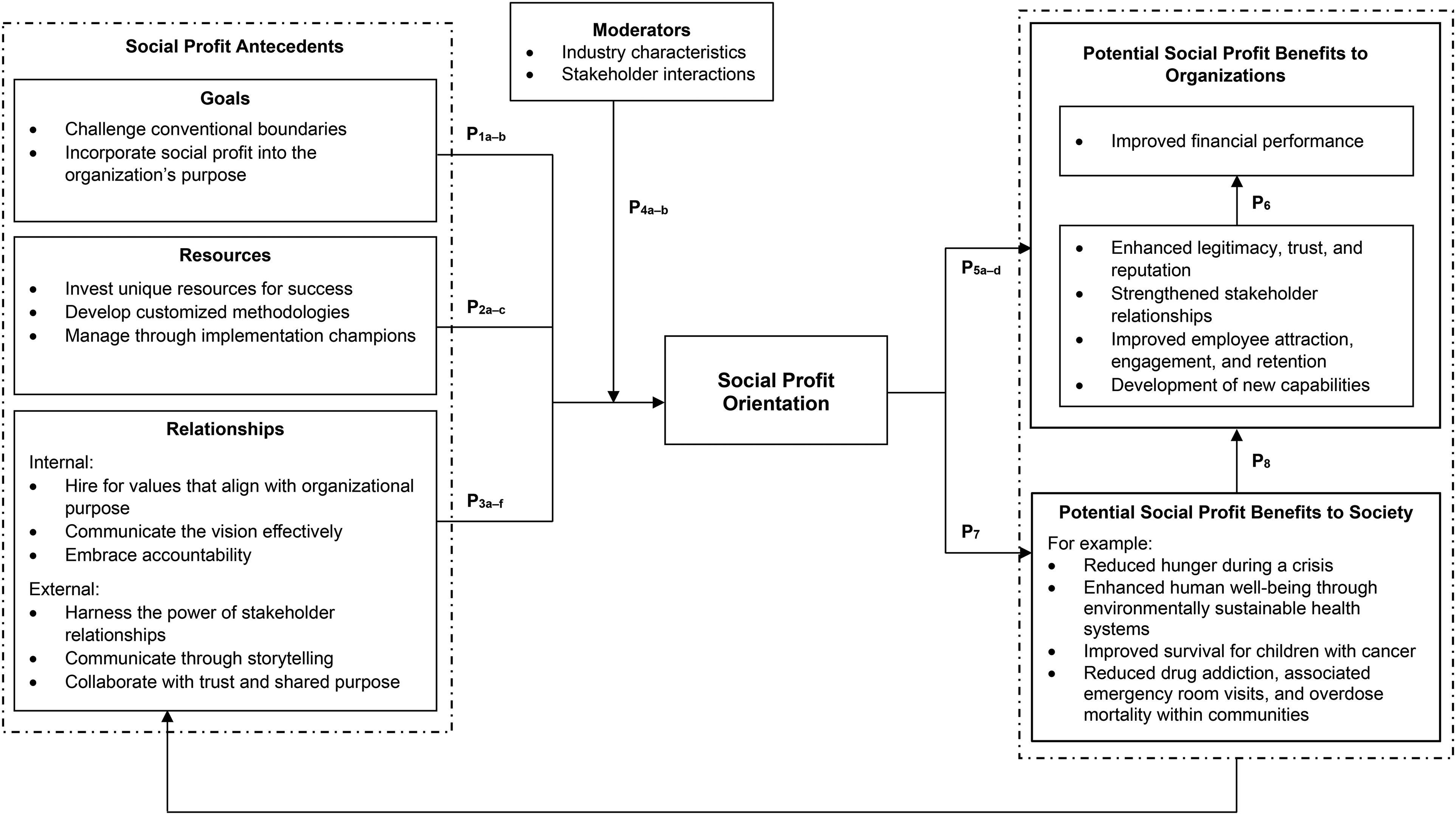
Social Profit Orientation Framework.
Methodology
We use a grounded theory approach (Glaser and Strauss 1967) to study service organizations that embrace a social profit orientation. Specifically, we explore the social initiatives and the associated practices that help generate social profit in ways that other organizations could emulate. Toward that end, we use a theories-in-use (TIU) approach to building grounded theory (Zeithaml et al. 2020). TIU relies on individuals’ mental models of how things work in a specific context to reveal novel theories and concepts (Zeithaml et al. 2020).
To select organizations for this study, we used theoretical sampling (Corbin and Strauss 1998) as per the TIU approach (Zeithaml et al. 2020). We sampled organizations from an array of industries and countries of origin, varying in size and ownership—each with track records of successful social profit initiatives and practices. We included both for-profit and nonprofit organizations, as nonprofit status does not automatically translate into a social profit orientation. In one seminal study, for example, for-profit hospitals in the United States provided more charity care as a share of total expenses than did nonprofit hospitals (Bai et al. 2021). We wanted to learn from both types of organizations. We provide an overview of our sample organizations in Web Appendix A.
Data Collection: Organizations with a Social Profit Orientation
An organization's social initiatives had to meet five selection criteria for inclusion in our study: (1) truly transformational, producing a substantive societal improvement; (2) aligned with the United Nations’ Sustainable Development Goals (SDGs); (3) strengthening the organization's core business; (4) scalable to other organizations; and (5) having a measurable impact on societal well-being. We selected informants with direct involvement in the planning, design, and execution of their organizations’ social initiatives, as recommended by the TIU approach. Those individuals tended to be CEOs, directors, senior vice presidents, vice presidents, and managers.
We conducted 62 in-depth interviews with informants from 21 organizations, a sample size appropriate for exploratory research (McCracken 1988) and consistent with other grounded theory studies in marketing (e.g., Flint, Woodruff, and Gardial 2002; Johnson and Sohi 2017). Each organization yielded one to eight interviews (M = 3). Table 1 provides more detail.
Sample Organizations.
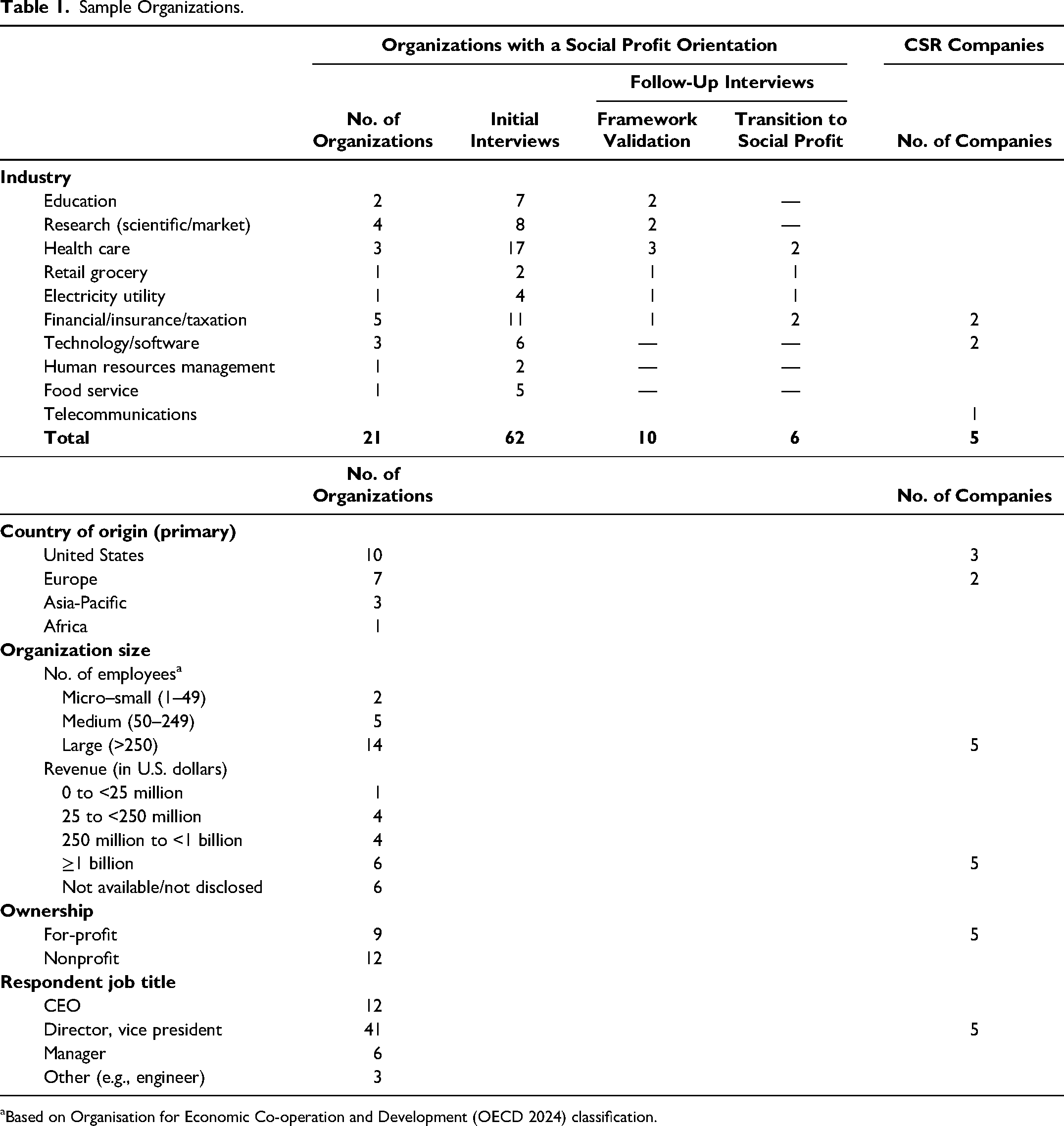
Based on Organisation for Economic Co-operation and Development (OECD 2024) classification.
Data were collected either via Zoom or, when possible, in person. In the interviews, we asked respondents to describe their organization's social initiative(s); the key success factors, including how success was defined and measured; barriers, mistakes, and failures; and organizational benefits. We used probing questions to prompt informants to offer examples, anecdotes, and clarifications and to add relevant information they considered to be important. The interviews lasted from 30 minutes to one hour (M = 40 minutes). The majority were audio-recorded and transcribed using Zoom's audio caption/transcribe function. If an interview was not audio-recorded, we took detailed notes and prepared a transcription upon its conclusion. This process generated a dataset of more than 430 single-spaced transcript pages.
We also reviewed more than 700 pages of archival data, provided by key informants or sourced independently through organizations’ websites or publicly available reports. Informants’ material consisted of internal and external company reports, brochures, presentations, and other depictions of their organizations’ social profit initiatives and practices. Archival data supplied historical context and documentary evidence that supplemented our interviews. This multimethod approach enhanced credibility and validity (Patton 1999).
We went back to our sample to conduct follow-up interviews twice. First, we recontacted participants from ten of our sample organizations (for-profit, nonprofit; small, large) to confirm the themes emerging from our analysis. When necessary, we integrated additional insights into our findings. Second, we recontacted participants from six of our sample organizations who had transitioned from conventional practices, often centered around CSR activities, to a social profit orientation. We took this step to ensure that emergent themes were relevant both to organizations that had adopted a social profit orientation from the start and to those that had made this shift later in their organizational life cycle.
Data Collection: Organizations with a CSR Focus
To better understand the differences between CSR and a social profit orientation, we also interviewed managers from five companies engaged in traditional CSR activities (see Table 1 and Web Appendix A). These companies were selected because they were known to operate successful CSR programs in their sector. Data were collected via Zoom and audio-recorded, with interviews lasting approximately 30 to 45 minutes. We asked respondents to describe the company's CSR activities and how they were chosen, developed, and executed. We asked about CSR's fit with the company's mission, key stakeholders’ KPIs (key performance indicators), and CSR-related benefits. We compared our findings with those described in the extensive CSR literature and found strong alignment.
Data Analysis
Data were coded according to grounded theory (i.e., open and axial coding; Corbin and Strauss 1998) and TIU (Zeithaml et al. 2020) approaches, using the qualitative data analysis software QSR NVivo. Initially, three researchers on the study team independently open coded the data. Open coding identifies concepts, specifies their properties and dimensions, and classifies and organizes quotations into first-order categories (Corbin and Strauss 1998). The researchers conducted line-by-line transcript analyses and created tentative labels to categorize “chunks” of data.
The researchers then moved to axial coding, whereby first-order categories were related to second-order themes, by reassembling the fragmented data from the open coding to contextualize the focal phenomenon and derive relational statements at a conceptual—rather than a descriptive—level (Corbin and Strauss 1998). Axial coding aims to identify convergent and divergent themes that require elucidation. Throughout the coding process, the constant-comparison method was used until no new categories emerged (Kolb 2012).
After completing their independent coding, the three researchers compared the results and discussed differences in coding outcomes (e.g., in wording and in any varying interpretations of the same fragments). They then developed a final coding plan that displayed all relevant codes with definitions and illustrative quotes (Ulaga and Reinartz 2011). To test the plan's robustness, the other two researchers on the team (i.e., who were not involved in the initial open and axial coding processes) each coded two transcripts using the final coding plan. The entire team then discussed issues that arose during this process, and several titles for the first- and second-order categories were refined. The refined coding plan was used to recode all interviews.
Social Profit Orientation
Guiding Theories and Business Practices
As an emerging movement, TSR recognizes the role of services in creating uplifting changes and improvements to the lives of individuals, families, communities, society, and the ecosystem more broadly (Anderson and Ostrom 2015; Anderson et al. 2013; Ostrom et al. 2010). Our study is aligned with the TSR agenda and contributes to it by providing a novel framework that defines a social profit orientation and distills its antecedents and outcomes.
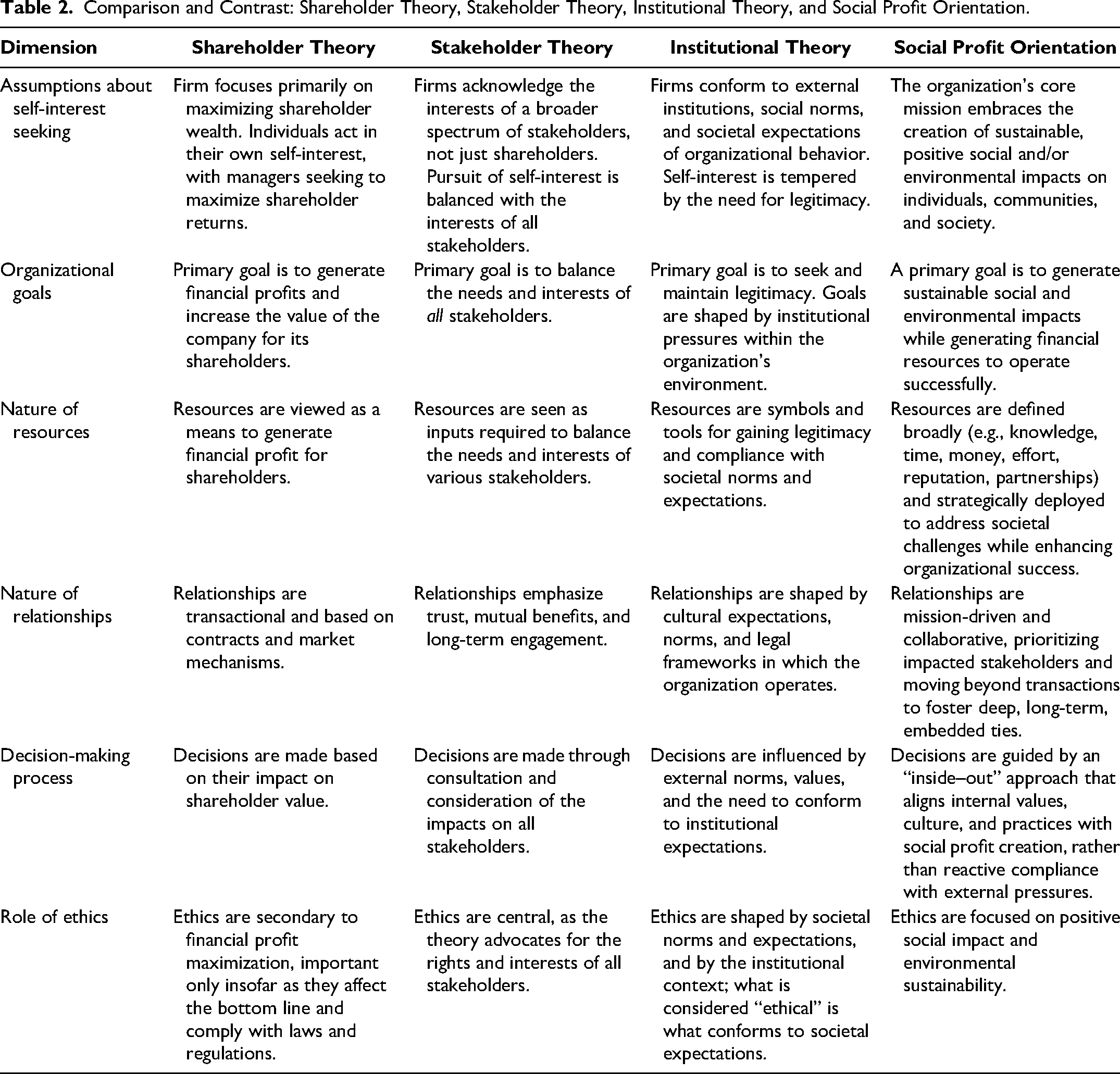
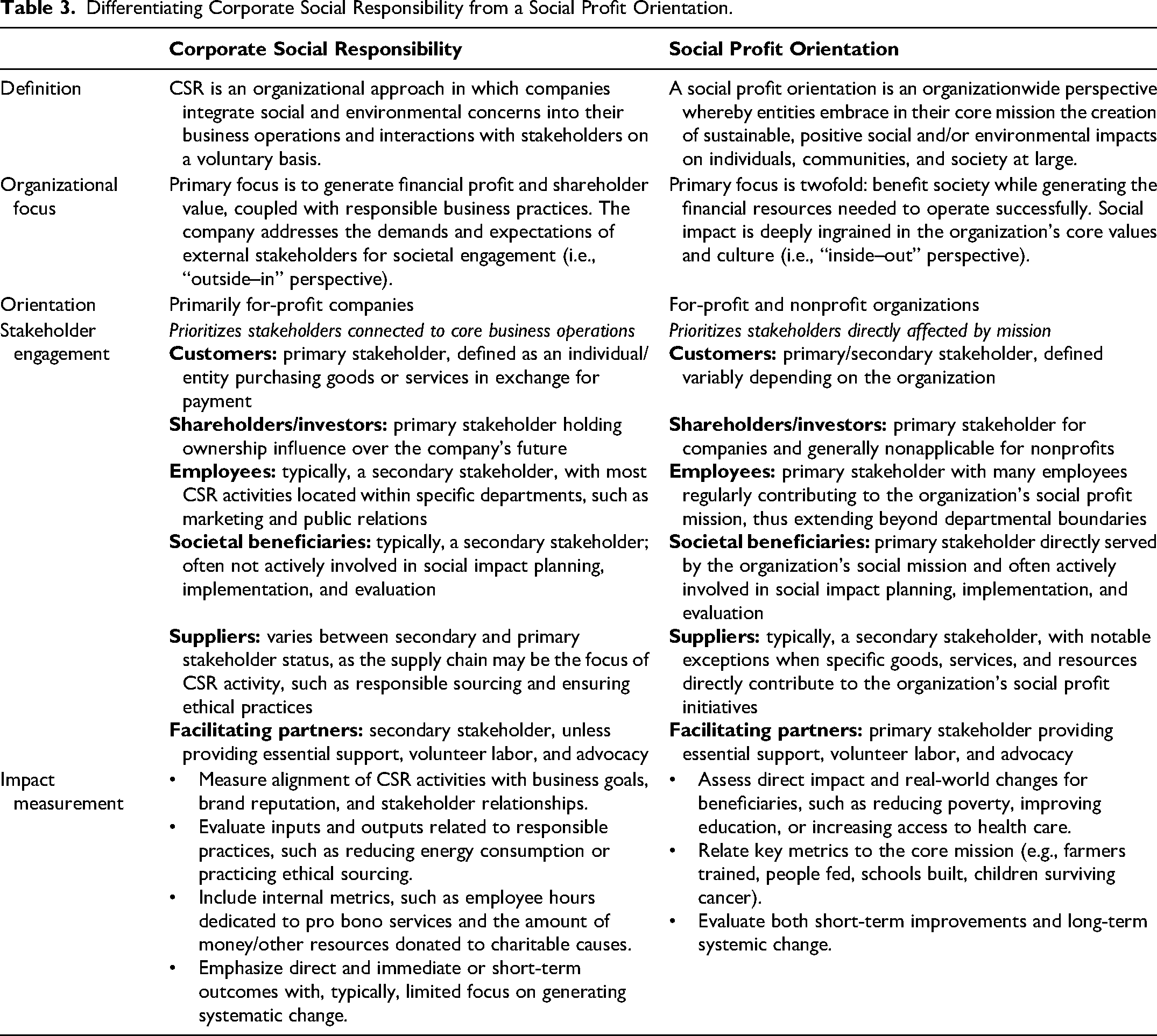
Beyond its contribution to the TSR agenda, a social profit orientation serves as a counterpoint to the shareholder perspective, and it extends and builds on stakeholder and institutional theory (as discussed subsequently, in Table 2, and in Web Appendix B). Social profit orientation builds on but also differs meaningfully from CSR, as shown in Table 3 and Web Appendix B, challenging organizations to do more for societal well-being.
Comparison and Contrast: Shareholder Theory, Stakeholder Theory, Institutional Theory, and Social Profit Orientation.
Differentiating Corporate Social Responsibility from a Social Profit Orientation.
Shareholder theory, articulated by Friedman ([1962] 2002), prioritizes maximizing shareholder returns as an organization's primary objective. According to this perspective, a business's sole social responsibility is to maximize profits within legal boundaries (Friedman [1962] 2002). In contrast, a social profit orientation, like stakeholder and institutional theory, diverges from the shareholder perspective by broadening the responsibilities of organizations. This shift acknowledges that businesses are accountable to diverse stakeholders, not solely shareholders, emphasizing their role in positively contributing to society through a broader social and environmental mission.
Stakeholder theory, which asserts that organizations should create value for all stakeholders (Dmytriyev, Freeman, and Hörisch 2021), emerged as a counterpoint to the traditional shareholder model of business (Shin, Lee, and Bansal 2022). Freeman (1984, p. 46) defined stakeholders as “any group or individual who can affect, or is affected by, the achievement of the firm's objectives.” Stakeholder theory is not a moral theory (Phillips 2003); rather, it frames how to evaluate and understand a firm's relationship with other actors in its ecosystem (Aksoy and Woodall 2022). While stakeholder theory suggests that organizations should balance the interests and concerns of all stakeholders, a social profit orientation recognizes that not all stakeholders will benefit from an organization's social profit initiatives. For instance, increasing the use of renewable energy benefits the environment by reducing greenhouse gas, but does not benefit the producers of fossil fuels or their shareholders. Organizations with a social profit orientation are resolute in their mission, unconstrained by the goal of balancing benefits for every stakeholder.
Institutional theory maintains that an institution's culture (norms, rules, and routines), rather than market pressure (Powell and DiMaggio 1991; Purtik and Arenas 2019), defines proper social conduct for organizations (Handelman and Arnold 1999), which is largely driven by the desire for legitimacy (Pfeffer 1982; Wilmshurst and Frost 2000). Legitimacy motivates organizations to conform to societal norms and expectations (Deegan 2002), reflecting a “social contract” between corporations and society (Handelman and Arnold 1999). Legitimacy has two primary components: pragmatic and social/moral (Handelman and Arnold 1999). Pragmatic legitimacy is self-serving, aiming to benefit the organization; social legitimacy is altruistic, focusing on the welfare of others (Bendapudi, Singh, and Bendapudi 1996). Pragmatic legitimacy is a stronger influence than social legitimacy in many organizations.
Our interviews underscore that organizations with a social profit orientation seek social legitimacy through their initiatives, which are assessed according to whether an organization's actions (its “social contract”) improve or harm the community and society it serves (Handelman and Arnold 1999). Social legitimacy is embedded in the culture of organizations with a social profit orientation. It motivates actors to challenge the status quo, helps them gain market and social acceptance, and can guide their environmental and social disclosure practices. A social profit orientation extends the tenets of institutional theory by acknowledging that organizations have the capacity and responsibility to shape their institutional environment, primarily through the social contract they establish with society.
Corporate social responsibility is primarily embraced by for-profit companies, emphasizing their role as a corporate citizen, whereby they voluntarily engage in activities that have social and environmental benefits (e.g., Bowen 1953; Homburg, Stierl, and Bornemann 2013; Kang, Germann, and Grewall 2016). Our interviews with CSR-oriented companies highlight their focus on pragmatic legitimacy, prioritizing financial profit and shareholder value. These companies recognize the value of doing good, yet such endeavors are more akin to strategic philanthropy rather than being a core mission guiding the decisions of leaders. Conversely, in organizations with a social profit orientation, creating social and environmental impact is a core mission, more aligned with earning social legitimacy. These organizations care deeply about generating social profit, integrate this aim into their entire business model, and value financial success in a manner that complements their commitment to serving society.
Our finding that CSR activities are largely driven by pragmatic legitimacy reflects an “outside–in” perspective, whereby external stakeholder demands shape these activities. In contrast, organizations with a social profit orientation achieve social legitimacy by embedding social impact in their mission, making it part of their DNA. This “inside–out” perspective reflects a focus on meeting the needs of societal stakeholders directly affected by its mission. Our findings align with Sinha and Chaudhari's (2018) observations that CSR efforts are often departmentalized, directly involving only a limited number of employees. In contrast, a social profit orientation is woven into the fabric of the entire organization, requiring a collective effort from many employees and demonstrating greater agility in pursuing ambitious initiatives.
Finally, our interviews reveal differences in how organizations assess program effectiveness. CSR activities are primarily assessed based on inputs such as money, time, equipment, and effort (Sinha and Chaudhari 2018). Examples of these inputs may include the number of staff hours devoted to pro bono legal services or total charitable donations. CSR activities may also be assessed on outputs reflecting direct, shorter-term results, such as the number of projects implemented or the volume of goods and services donated. Conversely, organizations driven by a social profit orientation prioritize evaluating the impacts of their initiatives on individuals, communities, and society, emphasizing systemic change. These impacts are broad and deep. They are often transformative, requiring complex and long-term evaluation. For example, an organization that aims to reduce substance abuse might measure community impact using metrics such as drug-related overdose incidents (including mortality), access to safe injection sites, frequency and patterns of drug use (including incidence of new drug users), drug-related arrest rates, and emergency room and hospital admissions.
While efforts to be socially responsible through CSR activities are commendable and have laid a strong foundation for corporate contributions to society, escalating global challenges necessitate a more integrated approach. We view a social profit orientation as the next phase in the evolution of CSR, whereby organizations are empowered to drive positive systemic change and create a lasting impact on the world. Table 3 highlights these and other differences between CSR and a social profit orientation.
Synthesis and Commentary
From the preceding discussion, we offer the following formal definition of social profit orientation: an organization-wide perspective whereby entities embrace in their core mission the creation of sustainable, positive social and/or environmental impacts on individuals, communities, and society at large. This orientation reflects a fundamental shift in perspective, such that organizations recognize their core mission as more than financial gain. Organizations commit to fostering lasting social well-being or environmental improvements and place those objectives at the heart of their decision-making processes, interactions with stakeholders, and evaluations of success.
Social profit orientation is distinct from the broader concept of corporate purpose, which Henderson and Van den Steen (2015, p. 327) define as “a concrete goal or objective for the firm that reaches beyond profit maximization.” Purpose, however, “need not be explicitly prosocial” (Gartenberg, Prat, and Serafeim 2019, p. 1). In essence, while corporate purpose broadly guides the organization's identity and activities, social profit orientation narrows that focus in the manner defined previously.
Social profit–oriented organizations are complementary to, but distinct from, B Corporations (B Corps). B Corps are for-profit companies certified for meeting “high standards of social and environmental performance, public transparency, and corporate responsibility to balance profit and purpose” (Diez-Busto, Sanchez-Ruiz, and Fernandez-Lavadia 2021, p. 3). Social profit–oriented organizations need not be corporations, and B Corps may well meet certification standards at a CSR level of social commitment but lack the mission-central commitment that characterizes social profit orientation. Although some B Corps likely meet the ethos of social profit orientation, this is not necessarily the case.
Antecedents to Social Profit Orientation
We identified three overarching themes, comprising multiple subthemes, as critical to the success of social initiatives and the generation of social profit: goals, resources, and relationships. These themes serve as cornerstones of what firms do in the organizational theory, strategic management, and interfirm literatures (e.g., Dyer and Singh 1998; Meyer and Scott 1992; Teece, Pisano, and Shuen 1997). They emerged across our interviews, underscoring their significance in shaping the actions and outcomes of organizations with a social profit orientation. While each theme is vital, its relative importance in comparison with the other two may differ depending on the initiatives studied. The themes capture learnings from successful social profit orientation efforts, as well as from barriers and failures that our sample organizations faced, and they point to potential benefits, thereby motivating future investment in social initiatives. Web Appendix C provides additional support for each theme beyond what appears in the following sections.
Goals
A focus on societal impact is deeply ingrained in the organizations we studied, reflecting a commitment that goes beyond the conventional scope of business. This ambition is anchored in goal-setting theory (Locke and Latham 2006), which underscores the power of setting specific, challenging goals that extend organizational efforts toward significant contributions to society. Institutional theory (Handelman and Arnold 1999; Meyer and Scott 1992) sheds additional light on this phenomenon, suggesting that legitimacy and impact increase when societal contributions become central to an organization's mission and social responsibility is integrated into its strategic framework. Moreover, self-determination theory (Ryan and Deci 2000) accentuates the importance of aligning the goals of an organization with the intrinsic values of its members. Such alignment deepens commitment to societal objectives, fostering greater impact. We identified two best practices associated with goals in organizations that have a social profit orientation.
Challenge Conventional Boundaries
Our interviews showed that organizations with a social profit orientation were led by individuals (and teams) undeterred by conventional practices and accepted barriers. The core purpose of World Central Kitchen (WCK), for example, is to feed hungry people during crises such as hurricanes, fires, floods, pandemics, and wars. WCK has fed millions of people throughout the world since its founding in 2011. It provides not only immediate crisis relief, but also sustainable local improvements—such as by teaching food safety, building clean kitchens in public schools, and establishing culinary schools. Putting big ideas into action requires speed, adaptability, and agility—WCK's core competencies. WCK's “Chef Corps”—a network of chefs throughout the world that it can call on during a crisis—speeds up response times, often within hours after something has happened.
Australia's Children's Cancer Institute (CCI) tackles a different basic need—the health and survival of children diagnosed with cancer—with equally bold thinking. CCI's ZERO Childhood Cancer initiative aims to provide the most comprehensive pediatric precision-medicine program in the world by “using all available genomic data from each child's cancer, to identify the optimal treatment” (Michelle Haber, professor and executive director, CCI). ZERO seeks to enroll all Australian children diagnosed with cancer in the program. Program leader Vanessa Tyrrell explains: “We could just create a small research program, or we could do something big, something different. We have one chance to make a real difference, so let's do something nobody else has done.”
Breaking conventional rules and pushing the boundaries of what's possible—while persuading others to join them—characterize the organizations we studied. As Vanessa Tyrrell says, leaders must be willing to “believe in unicorns” to do what “no one else has done before.” Such leaders have a passion for the possible and nurture that mindset in their teams.
Incorporate Social Profit into the Organization's Purpose
Leaders we interviewed see commitment to societal well-being as central to their organization's purpose. For them, “seeking to do good while doing well”—the essence of a social profit orientation—extends beyond specific departments or executives.
Consider Gundersen Health System. Given that hospitals are major polluters, leaders at Gundersen focused on energy conservation, waste management, recycling, and sustainable facility design, making it the first U.S. health system to offset 100% of its fossil-fuel use with self-produced energy. Among other initiatives, Gundersen uses energy from solar and wind farms that it erected and transforms waste biogas from a landfill into electricity and heat. Retired Gundersen CEO Jeff Thompson, MD, whose vision and passion for sustainability was pivotal, explained: “We are not just a ‘fix-it’ shop. Our mindset was: how do we protect the environment, so it is a part of how we work, how we live, and how we work with our communities. To make a big long-term impact, you need to weave your commitment into the fabric of the organization, so it transcends the inspiration of any single executive.” Gundersen first went after the “lowest-hanging fruit”: reducing energy waste by changing lighting, pumps, motors, and ventilation systems. Quick wins in the first few years reduced costs enough to fund expanding the initiative to other forms of waste reduction, including pharmaceuticals, supplies, and food. Those wins also quieted the naysayers and spread belief within the organization.
Resources
Our study of social profit organizations revealed their strategic, adaptive approach to resource management, anchored in the resource-based view (Barney 1991; Wernerfelt 1984) and the dynamic capabilities framework (Teece, Pisano, and Shuen 1997). These approaches emphasize leveraging unique organizational resources—both tangible and intangible—to effectively address societal challenges. In addition, agency theory (Jensen and Meckling 1976) stresses aligning organizational resources with societal benefits through governance structures and incentive systems, ensuring that efforts focus on maximizing social impact. Stakeholder theory (Freeman 1984) extends this idea by prioritizing a collective approach to identifying and meeting diverse stakeholder needs, thereby enhancing social initiatives. By pooling resources with diverse stakeholders to solve complex problems, organizations with a social profit orientation can amplify their societal contributions through collective efforts that achieve more than isolated actions (Kania and Kramer 2011). From our research, three best resource management practices for successfully planning and implementing social initiatives emerged.
Invest Unique Resources for Success
The organizations we investigated judiciously invest their resources—money, labor, and time—in areas often overlooked by enterprises that have a short-term financial focus. First Book's “reason for being” is addressing the scarcity of books in schools that educate children from low-income families. It has distributed more than 225 million books and educational resources since its founding in 1992. First Book seeks to purchase deeply discounted children's books and sell them at affordable prices to schools while remaining solvent itself. As cofounder Kyle Zimmer explained: We told the publishers we will buy from you on a nonreturnable basis. There will be no customer acquisition costs and no marketing costs. … We want you to sell to us at an unprecedented price while still making money. It was really a solid business proposition: new market, new revenue, and almost no risk to the publishers, because we won’t return the inventory.
Oportun is a financial services organization whose leaders believe “everyone deserves affordable credit,” not just people with conventionally acceptable income or credit scores. Oportun offers an alternative to payday lenders that charge exorbitant interest rates, trapping customers in endless debt. By year-end 2023, Oportun had provided more than $18.2 billion in credit, saving its customers $2.4 billion in interest and fees (Oportun 2024). Oportun invested in AI-driven platforms to gauge the creditworthiness of a customer base who frequently lack credit scores, thereby enabling qualified borrowers to get reasonably priced loans and build credit histories. CEO Raul Vazquez explained: We had a thorny problem—50% of customers who come to us have no FICO [credit] score, and other folks we serve may have a score based on limited history. It does not accurately represent their creditworthiness. We had to invest significantly in technology … to figure out how to make loans successfully, with reasonable loss rates to folks other people view as nonscorable.
Both First Book and Oportun made substantial investments in creating robust technical support systems, enabling them to create social profit while earning financial profits.
Develop Customized Methodologies
Social profit organizations and their initiatives are often drivers of innovation, developing new methodologies, technologies, and strategies to address important problems. For instance, Salesforce collaborates closely with nonprofits, educational institutions, and philanthropies to understand their challenges and then modifies or builds Salesforce technology solutions to assist them in improving their operations, optimizing fundraising efforts, and effectively engaging stakeholders. Eric Barela, Salesforce's director of measurement and evaluation, underscores the company's commitment to tracking the impact of these innovations to ensure they deliver value to customers. While at a basic level the social value of Salesforce's giving exceeds $1 billion, Barela emphasizes a nuanced approach to internal impact measurement: “We’ve set up a methodology that helps us standardize how we look at our total giving. … Measuring impact also involves determining whether customers are better at achieving their missions, due in part to what we are contributing.” Salesforce develops applications tailored to each customer's unique mission, goals, and challenges; it then uses its own internal methodologies to track the success and effectiveness of these solutions.
Manage Through Implementation Champions
While “champions” are known to drive organizational change (e.g., Maidique 1980), literature on social innovation champions is lacking (Molloy et al. 2020). Our investigation highlighted the pivotal role of implementation champions who drive the execution of complex programming by strategizing the “how to”: coordinating efforts, allocating resources, and sustaining focus. Implementation champions’ effectiveness depends on their intrinsic commitment to social impact, patience, perseverance, energy, and persuasiveness (Miech et al. 2018). These champions must be committed to the cause, tenacious, and resilient, in order to overcome obstacles and keep moving forward, as illustrated by the electric utility company Empresa de Electricidade da Madeira (EEM).
EEM generates and supplies electrical power in the Madeira and Porto Santo islands of Portugal. One million tourists annually place heavy demands on the islands’ water and electricity needs. Porto Santo is on track to become the world's first “smart,” fossil-fuel-free total energy island, and Madeira aspires to be 50% energy-independent by 2025 to 2030. In this context, “smart” refers to the integration of advanced systems to optimize energy production, distribution, and consumption. At EEM, engineers with visionary leadership and strong communication and problem-solving skills act as implementation champions for the islands’ energy initiatives. Galvanized by climate change, they take a leading role in driving the execution and success of the project. They provide advocacy and push to get support for proof-of-concept programs that advance EEM's sustainability goals.
Relationships
Stakeholder theory highlights the importance of identifying and satisfying the needs and interests of various stakeholders in an organization (Freeman 1984). The relational perspective on organizations complements stakeholder theory by demonstrating how cultivating relationships with stakeholders can create value and contribute to longer-term success (Dyer and Singh 1998). It views organizations as dynamic social entities where interorganizational relationships are not merely transactional, but also are sources of unique capabilities and resources crucial for navigating complexities and uncertainties (Dyer and Singh 1998; Dyer, Singh, and Hesterly 2018). This perspective aligns with principles of relationship marketing, which asserts that stakeholders should jointly leverage resources, exchange knowledge, and synergize efforts toward shared goals (Morgan and Hunt 1994).
The organizations in our sample viewed both internal and external stakeholders as partners in an extended family. This familial mindset highlights the depth of their relational orientation, emphasizing a collective commitment to shared values, goals, and mission.
Internal Relationships
Our research confirms the importance of an organization's internal relationships, particularly those that motivate, engage, and empower employees (Byrne 2022). It also reveals that social profit–oriented organizations go further: They want employees to thrive in their work. Thriving employees experience a sense of vitality, passion, and feeling “alive” at work (Spreitzer et al. 2005). Talented people are drawn to an organization's authenticity of purpose, its mission-driven commitment to “social profit,” and its generosity, even though smaller firms and nonprofits may not pay as much as larger corporations. In essence, alignment of values between employees and the organization is a unifying force, echoing Ouchi's (1980) concept of clan-like, mission-driven organizations where employees are united by a foundation of shared values rather than formal structures. A sense of community in an organization fosters mutual trust, loyalty, commitment to common goals, and a sense of belonging. Our research identifies three best practices for building and maintaining strong internal relationships.
Hire for values that align with organizational purpose
Excellent social profit–oriented organizations emphasize people's values, not just their talent, in hiring—thereby strengthening employees’ work commitment, job satisfaction, and performance (Paarlberg and Perry 2007). Leaders we interviewed weave organizational values into the daily fabric of their relationships with employees. They are also good idea incubators, willing to support employees in “blue-sky thinking” in addressing solutions to complex problems. Employees feel connected to a larger purpose.
CGIAR is a global research partnership dedicated to reducing poverty, enhancing food and nutrition security, and improving natural resources. Its network of 15 research centers employs scientists, researchers, technicians, and general staff who collaborate with more than 3,000 organizations (e.g., research institutes). Sonja Vermeulen, director of programs, stressed that CGIAR attracts employees who are “passionate about what they do” and “want to apply research in meaningful ways.” Employees “live and breathe” their projects, talking and debating with one another about “their research, its applications … and challenges … in solving complex problems in the field.” This type of open-source knowledge sharing attracts people who want to enhance the common good in an organization whose values match their own. Vermeulen noted that CGIAR “puts faith in brilliant people doing original work, making space for creative problem-solving so that they can make a difference.” Values alignment empowers employees to have a sense of control over their contribution to the organization's mission.
Communicate the vision effectively
Clarity of vision is a hallmark of the organizations we studied—they know who they are and what they believe in. They communicate their vision internally with messaging and branding meant to clearly tell the story. This effort builds organizational identity by asking the question: Who are we as an organization? (Albert and Whetten 1985). By using internal communication to help shape their identity, organizations reinforce the legitimacy of their activities. The ZERO brand is “positioned like a movement, not a promise,” conveying “this is our goal, this is where we want to get to—ZERO childhood cancer” (Anne Johnston, CCI chief marketing and fundraising officer). The brand is a rallying cry for the ZERO team. Internal branding facilitates the alignment of organizational processes and culture with the brand strategy, encouraging consistent delivery of the brand promise across all touchpoints (Vallaster and De Chernatony 2005).
Embrace accountability
Measuring the impact of social initiatives—and, in some cases, formally incentivizing it—breeds accountability. Measurement reinforces the values of employees attracted to the organization because of its social profit orientation. Multinational financial services firm Mastercard has multiple social profit initiatives, including Priceless Planet Coalition, which will plant 100 million trees by 2025, and Girls4Tech, which has encouraged 1.5 million girls in 44 countries to cultivate technology skills. To further enhance organizationwide accountability for achieving social profit, Mastercard in 2021 introduced a new compensation model for executive vice presidents that calculates bonuses in part on achievement of carbon neutrality, financial inclusion, and gender pay parity. This model then became part of all employees’ bonus plans in 2022, as CEO Michael Miebach explained in a letter to employees: Every one of us shares the responsibility to uphold our ESG [environmental, social, and governance] commitments. That's why we’re extending [our ESG bonus] model to our annual corporate score and all employees globally, taking our shared accountability and progress to the next level. … Achieving our ESG goals will now factor into bonus calculations for all employees. (Miebach 2022)
The Mastercard example underscores the close association between a social profit orientation and ESG frameworks, which serve as valuable ways to measure and report on how organizations achieve their social profit objectives.
External Relationships
Uzzi (1997) distinguishes between arm's length and embedded relationships with external stakeholders. Arm's length relationships resemble traditional market interactions, characterized by limited reciprocity, often one-time encounters, and a primary focus on economic gains. Embedded relationships (Granovetter 1985), in contrast, involve integrating an organization's identity, culture, and mission with external stakeholders. Embeddedness emphasizes mission and goal alignment, trust and commitment, detailed information exchange, and collaborative ties as mechanisms for effective coordination, adaptation, and responsiveness to market demands. External stakeholders are viewed as part of the organization, consistent with the clan-like organization described by Ouchi (1980).
To effectively serve society, organizations develop strong external relationships with relevant stakeholders—those that need assistance and those that can help provide it. The social profit–oriented organizations in our sample forge embedded relationships, converging interests and efforts, as they recognize that single organizations have neither all of the answers nor the resources to address seemingly intractable societal problems. They reach outside their walls to partner creatively with external stakeholders, assuming roles such as catalysts, conveners, coordinators, listeners, and funders. Best practices emerging from our research highlight the need to develop partnerships for pooling valuable, often limited resources; to communicate through storytelling; and to build trust through purpose-based collaboration.
Harness the power of stakeholder relationships
Organizations do not always have the essential skills, knowledge, experience, and financial capacity to generate social profit. Our sample organizations commonly assessed what they needed and sought to secure it with purpose-driven stakeholder partnerships, as exemplified by EEM, the utility providing electrical power to Portugal's Madeira and Porto Santo islands. EEM worked with automaker Groupe Renault and green-tech company The Mobility House to develop an innovative solution underpinned by electric vehicles. Essentially, when excess solar and wind power are available, they are used to charge battery storage systems and electric vehicles; when that power is not available, the battery storage systems and electric vehicles can supply power back to the electric grid. Groupe Renault provides the mobility side of the solution (i.e., electric vehicles), whereas The Mobility House manages the information necessary to charge or tap the electric vehicles and the battery storage systems to enhance the power grid.
Communicate through storytelling
Our sample organizations often use external marketing to position their social profit orientation and communicate the impact to stakeholders. Many stood out in their use of storytelling to evoke emotion and to help people share, engage, and comprehend deeply (Papadatos 2006). To master storytelling, organizations can leverage statistics, infographics, photos, and emotive narratives that move people to action or inform them of the impact of an organization's social profit initiatives. Managers can use “story marketing” by creating “story banks” sourced from media coverage, customers, partners, and employees. They can train employees in how to identify and curate compelling stories, helping people emotionally understand the importance of social impact. CCI's Anne Johnston explains the value of story banking: Statistics are useful to set the scene, but when you tell the story of one child [or one doctor or researcher]—their life prediagnosis, their personality, their family, moment of diagnosis, treatment journey, and impact on their life and the whole family—this is real. People can relate in a human way—they can imagine being that child or that parent.
Collaborate with trust and shared purpose
A multistakeholder approach benefits from trust-based relationships—with customers, suppliers, communities, governments, financiers, and others—that create value toward a shared purpose (Freeman et al. 2010). Building synergistic relationships means working with conventional partners, such as vendors, and possibly unconventional partners, such as competitors. It may also mean embedding the perspectives or voices of customers or end users in social profit initiatives and identifying grassroots advocates who can act as trusted change agents within communities.
Cincinnati Children's Hospital Medical Center (CCHMC), with its James M. Anderson Center for Health Systems Excellence, is a highly respected pediatric health system that serves patients from more than 50 countries. A pathbreaking initiative at CCHMC involves organizing and coordinating learning health networks (LHNs). More than 700 (mostly North American) clinical sites participate in the LHNs by pooling the knowledge and experiences of cross-disciplinary communities of physicians, nurses, researchers, parents, and patients.
CCHMC focuses the LHNs on issues such as patient safety (a sacred space that transcends competition) and on challenging pediatric diseases, thereby cultivating shared purpose. By insisting on the goal of evidence-based improvement and on inclusionary work, CCHMC fosters trust among otherwise potential competitors. Beth Ullem, the parent representative on the patient-safety LHN, explained: “Working groups come up with proven solutions and then have the responsibility to teach them to people at other pediatric hospitals. It's an ‘all teach, all learn’ model.” The LHNs are co-led by physicians and parents. This shared leadership model captures parents’ valuable perspectives and voices, as CCHMC chief population health officer Jeff Anderson, MD, relates: “In almost everything we do, parents ask a different question or have a different perspective than if we were just by ourselves as researchers or clinicians.”
Rescue Agency, with its focus on health behavior change, exemplifies how listening to and learning from end users builds trust. Its founder and president/executive creative director, Jeffrey Jordan, believes that meaningful change requires learning as much as possible about the focal individual or group (e.g., drug addicts, smokers) and then using their voices to create messages that speak to the intended audience: “You cannot begin to address opioid addiction until you understand what it's like to be addicted, and that means talking to drug addicts, seeing how they live, learning their stories … and figuring out what it would take for them to change, and then how we can make that happen.” Rescue uses a three-pronged approach to instigate behavior change: Its employees spend time in the communities they serve, the agency employs people from within these communities, and it identifies grassroots advocates for its initiatives. For example, Rescue believes employing a recovered drug addict with the right skills can give more meaningful and effective input than employing someone who has never experienced addiction, and partnering with grassroots advocates can foster greater trust and collaboration because these individuals have a shared identity with, and a deeper understanding of, the needs of their communities.
Industry Characteristics and Stakeholder Interactions as Moderators
We posit that industry characteristics may influence how goal, resource, and relationship antecedents affect the development of a social profit orientation. Differences in industries’ inherent social impact potential, regulatory environments, and competitive pressures shape organizations’ strategic priorities and operational capabilities (Porter and Kramer 2011; Servaes and Tamayo 2013). For instance, sectors such as health care or renewable energy, which are directly linked to societal well-being, amplify the importance and effect of social profit–related goals, resources, and relationships. In those industries, the alignment between organizational activities and societal benefits is clearer and often supported by industry norms and consumer expectations. Conversely, in industries with less-direct ties to societal welfare, such as mining or logging, realizing social profit through traditional business operations can be less intuitive, potentially diluting the impact of the antecedents.
Stakeholder interactions may also moderate the impact that goals, resources, and relationships have on social profit orientation, by shaping the strategic focus of organizations and engagement with their social and economic environments (Freeman 1984). Each stakeholder brings unique expectations, pressures, and opportunities to the organizational context. Industries characterized by high stakeholder interaction and visibility are likely to experience a stronger effect of social profit orientation antecedents, benefiting from direct feedback loops and collaborative opportunities. Engagement deepens understanding of societal needs and expectations, guiding organizations to tailor their goals, optimize utilization of resources, and cultivate aligned relationships. In contrast, in industries with less pronounced or adversarial stakeholder interactions, the ability to align and mobilize organizational antecedents for social profit orientation may be weakened (Clarkson 1995).
Potential Organizational and Societal Benefits of Social Profit Orientation
In a review of 4,500 firms over 19 years, Kang, Germann, and Grewall (2016) find that firms engaging in CSR are likely to benefit financially from such investment. Similarly, a recent meta-analysis of over 1,000 studies published from 2015 to 2020 shows a positive relationship between ESG investment and financial performance (Whelan et al. 2021). Our research aligns with these findings, demonstrating that a social profit orientation has the potential to enhance financial performance for both for-profit and nonprofit organizations. This improvement stems from benefits to the organization from its social profit orientation, beyond the resulting social profits that benefit society.
Social Profit Benefits to Organizations
A social profit orientation should enhance an organization's legitimacy and reputation among its stakeholders. Even local or regional initiatives can deliver outsized reputational benefits for organizations. EEM, for instance, became a reference utility company nationally and across Europe, and the ZERO initiative has been hailed as groundbreaking by medical researchers around the world.
A social profit orientation should also strengthen relevant stakeholder relationships, encouraging greater stakeholder investment, cooperation, and involvement in the organization's initiatives. Stronger stakeholder relationships increase participants’ confidence in a social initiative, minimize uncertainty in challenging situations, and accelerate problem-solving and decision-making—all essential to sustainable change. Consider buildOn, which constructs schools in developing countries and runs after-school programs in some of the lowest-performing U.S. urban high schools. The organization learned the hard way to build schools with, not for, the community. Early mistakes and failures led to the creation of a formal “covenant” outlining each party's contribution. Communities provide the land, local material, and less-skilled labor, and buildOn provides engineering, materials, and skilled labor (skills transfer is a key aspect of the mission). This process “allows the community to feel like it's their school and they’re building it,” according to buildOn director Kyla Korvne, thereby enhancing buildOn's social legitimacy.
The potential to help organizations attract, engage, and retain like-minded, talented people is another potential benefit. Working together for the common good engages and motivates employees in their jobs and encourages them to stay with the organization, as Kyla Korvne notes: “Overwhelmingly, the thing keeping people at buildOn and motivating them was knowing the impact of their work and interacting with beneficiaries.”
Social profit initiatives often require substantial innovation, which can lead to the development of novel capabilities. Those capabilities reflect an organization's ability to integrate, build, and reconfigure its competencies to confront evolving situations/environments. CCI's Anne Johnston commented, for instance, that the ZERO initiative was made possible by “developing new capabilities in areas such as computational biology, liquid biopsy, and functional genomics, which had not been done in this way before.” Eradicating childhood cancer necessitates new knowledge and processes as teams from disparate areas (including medicine, biology, genomics, and technology) join forces to create new capabilities.
Furthermore, respondents across our sample indicated that the social profit benefits outlined previously can contribute positively to financial outcomes. Thus:
Social Profit Benefits to Society
Organizations with a social profit orientation commit to proactively investing resources with the clear goal of sustainably improving the well-being of people and/or safeguarding the health of the planet. Social profit initiatives address pressing issues such as poverty, access to health care, inequality, and environmental sustainability, often innovating new approaches, technologies, and strategies. By actively engaging individuals and communities in decision-making, providing resources and skills, and fostering ownership and agency, the initiatives build social capital, strengthen communities from within, and enrich lives. Thus:
Those societal benefits flow back to the organization in the form of the benefits described previously. Hence:
Discussion
The field of marketing, as highlighted by the TSR agenda (Anderson et al. 2013), is well-positioned to improve consumers’ lives (Lee and Sirgy 2004) and societal welfare (Day and Montgomery 1999). Decades ago, Kotler (1972) noted that a strength of the marketing discipline is its willingness to reshape its focus, methods, and goals to preserve and enhance consumers’ and society's well-being. Since then, services marketing in particular has emerged as a social change agent (Anderson et al. 2013). All organizations offer services in one way or another, and services now dominate the output, add value, and contribute to employment in developed and developing economies, making up a growing proportion of world GDP (Buckley and Majumdar 2018). Services marketing can lead the way in guiding leaders and managers in creating the social profit orientation needed in a challenged world.
The service organizations we studied address issues such as climate change, health care clinical quality, financial insecurity, affordable housing, and food scarcity in ways that have a deep social impact. The organizations have accomplished remarkable outcomes by embracing their responsibility to society, bolstered by strong supporting core values, transparency, accountability, and learning informed by complexity. The activities extend beyond corporate philanthropy to include environmental, ethical, social, and economic efforts to “give back” to society and transform lives—offering a rich perspective on attending to relevant stakeholders throughout the process.
Organizations commonly hit crisis points, and social profit orientation is not itself a shield. Oportun had to move on from its founder early in its development. Salesforce misread demand during the pandemic; hired too many salespeople, leading to a severe workforce reduction; and faced activist investors focused on cutting costs. Social profit organizations are also at risk of pursuing social profit so aggressively as to impair their ability to operate smoothly. Consider WCK, which conducted feeding operations in 18 countries and territories in 2023, including Ukraine, Gaza, and Israel (Alexander 2023). WCK's “speed-to-site” operating culture, and its orientation to serve wherever need arises, outstripped its leadership capability and policy guardrails, undermining staff morale, accelerating turnover, allowing misspending, and impeding execution (Alexander 2023).
Social profit orientation positioning also inevitably attracts the attention of political agitators, cynics, and skeptics, as well as other dangers. When negative attention comes or unexpected events occur, they must be handled with practicality and the aforementioned transparency, accountability, learning, and alignment with core values. And regardless of any leadership or operational shortcomings, the very nature of the work an organization such as WCK does can put it and its people in peril. Having helped feed people in Gaza under war conditions for months, WCK temporarily suspended its Gaza operations in April 2024 after seven volunteer staff members were blindsided and killed by a military airstrike.
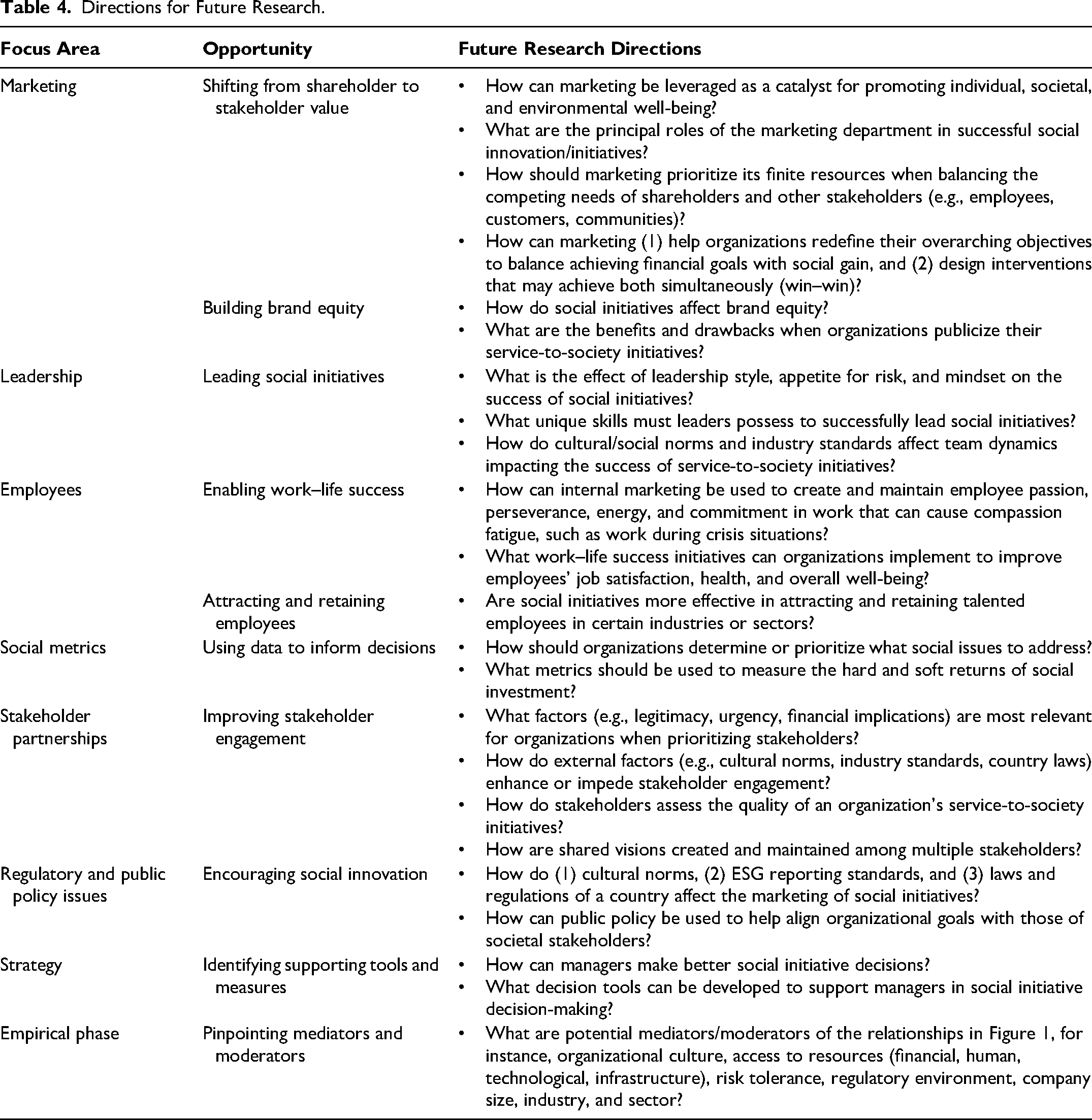
Our research on social profit organizations adds to existing theory and offers researchers fertile ground to extend the work. We outline opportunities for future research in Table 4. Next, we discuss the theoretical and managerial implications of our research.
Directions for Future Research.
Theoretical Implications
A social profit orientation represents a departure from the shareholder model (e.g., Friedman [1962] 2002), which views profit generation for shareholders as the predominant objective of business. While social profit orientation aligns with the stakeholder model (e.g., Freeman 1984), it diverges by prioritizing societal welfare over maximizing stakeholder benefits; that is, enhancing the common good may not necessarily fulfill the interests of all stakeholders. Social profit organizations leverage institutional theory (e.g., Handelman and Arnold 1999) to establish a “social contract.” By fulfilling this contract with society, organizations not only gain legitimacy but also secure stakeholder support, thereby becoming agents of significant collective change (Meyer and Scott 1992). A social profit orientation contributes to institutional theory by elucidating how organizations can attain and maintain social legitimacy.
Our conceptual framework (Figure 1) emphasizes the importance of goals, resources, and relationships to a social profit orientation, thus furthering marketing and organizational theory. Our findings contribute to goal-setting theory (Locke and Latham 2002), highlighting the crucial role of setting specific and ambitious objectives, fostering innovation and a collective drive to address societal challenges. Aligning organizational goals and values with societal expectations is crucial for social profit organizations. Further, by integrating self-determination theory (Ryan and Deci 2000) principles into the goal-setting process, organizations can create an environment that promotes intrinsic motivation, thereby further increasing motivation and goal attainment. When social profit organizations go on to align ambitious goals with societal expectations and successfully attain them, they enhance their social legitimacy, a finding that contributes to our understanding of institutional theory.
Our research aligns with the principles of the resource-based view (Barney 1991; Wernerfelt 1984) and the dynamic capabilities framework (Teece, Pisano, and Shuen 1997), advocating for the strategic utilization of unique organizational assets to effectively address societal challenges. Moreover, our work underscores the importance of aligning organizational resources (such as governance mechanisms and incentive structures) with societal benefits to maximize social impact, supporting the core tenet of agency theory (Jensen and Meckling 1976). Such alignment is crucial for the strategic deployment of resources toward societal welfare.
Our study also highlights the significance of aligning the values of employees and their organizations to create a unifying force, echoing Ouchi's (1980) concept of mission-driven organizations. Furthermore, it sheds light on the relationship perspective (Uzzi 1997), specifically regarding embedded relationships (Granovetter 1985; Uzzi 1997), which intertwine an organization's identity, culture, and mission with those of external stakeholders. Those stakeholders are seen as integral to the organization, consistent with the clan-like organization described by Ouchi (1980). Such alignment of mission deepens commitment and encourages active contributions to shared goals, reinforcing the symbiotic relationship between organizations and their stakeholders.
Finally, our conceptual model recognizes the significance of boundary conditions such as industry characteristics and stakeholder interactions that moderate the impact of goal, resource, and relationship antecedents on the development of a social profit orientation. Matten and Moon (2008) explore how societal, regulatory, and market pressures vary across industries, leading to differences in the manifestation of CSR. These industry-specific dynamics are similarly pertinent to a social profit orientation, shaping strategic priorities and operational capabilities. Moreover, the effectiveness of social profit orientation strategies is contingent on managing stakeholder interactions, which can either support or hinder the execution depending on their integration with existing social practices (Gonzalez-Arcos et al. 2021). Each stakeholder brings a unique set of expectations and opportunities that likely impact an organization's social profit orientation. This dual focus on industry and stakeholder dynamics necessitates a more adaptive, dynamic, context-sensitive approach in both theory and practice.
Managerial Implications
As organizations align their strategies with broader societal goals, understanding how managers can leverage insights from our research to meaningfully change their organizations and communities is essential.
Leverage executive and board leadership
Truly improving societal well-being requires inspired, passionate, deeply committed leadership at the top of an organization. The organization's “reason for being” (why it exists, the value it adds) is shaped, nurtured, and reinforced by senior leaders. The leaders we interviewed push the boundaries of what is possible in serving society and persuade others to join them in this work. Boards of directors play key roles in fostering this kind of leadership, including determining who will be the CEO. Boards control leadership compensation, which in public companies commonly prioritizes short-term financial results and stock-based performance. Performance metrics must balance the financial with the nonfinancial, the short term with the long term. Metrics such as employee satisfaction and turnover, customer experience, product and service quality, vendor relations, carbon footprint, and the impact of social initiatives need to factor into leadership compensation.
Make informed decisions
The process of making investment decisions for social profit is complex. To guide leaders in identifying the initiatives with the greatest potential, we developed a decision tree (Web Appendix D). While customization is necessary, a core set of questions are universally relevant: (1) Is the initiative directed toward an important, underserved social need that the organization has the financial and other resources to address? (2) Does the initiative align with the organization strategically, creating synergy with the organization's broader mission? (3) Will it improve the organization’s core business by bolstering the organization's primary operations and goals? (4) Will it strengthen or create new stakeholder relationships that benefit the organization? (5) Is it scalable to other organizations and locations, amplifying its reach and influence? (6) Finally, is its impact measurable—can data and metrics be used to assess the initiative's effectiveness for beneficiaries and the organization?
Evaluate social impact
Social profit orientation requires rigorous measurement of the hard and soft returns of social investments. Managers can link their initiatives (and investments in them) to a “theory of change,” documenting how an initiative has affected beneficiaries’ lives. Not all aspects of social profit are easily quantifiable: What is the value of curing childhood cancer, or preventing starvation after a disaster? Yet evaluation is still necessary. Frameworks such as ESG and the SDGs can guide managers in evaluating the impact of social initiatives, including assessing their impact on societal welfare and environmental health.
Organizations commonly quantify the economic impact of social initiatives through SROI (social return on investment) analysis (e.g., Banke-Thomas et al. 2015). Numerous resources can help managers select metrics, assess activities, choose financial proxies, and determine economic value (e.g., Nicholls et al. 2012). The Global Impact Investing Network provides IRIS+, an open-source list of approximately 600 social impact metrics linked to the United Nations’ SDGs. The SASB Standards provide industry-specific metrics aligned with financial accounting standards. And GRI (Global Reporting Initiative) provides language and standards for nonfinancial reporting.
While these systems can aid managers in finding meaningful metrics of social profit, organizations may also want to customize initiative-specific metrics of the social profit they create. For example, buildOn tracks the number of schools built, students attending the schools, and volunteer workdays contributed by community members. Oportun tracks how many people without a FICO score have established a credit history, and the money they have saved in interest and fees. Web Appendix E offers a snapshot of the metrics of social profit that organizations may use, including impact measures, keywords useful for text analysis of documents, and exemplar scale items for measuring an organization's overall social profit orientation. It is important to consider organizational size when evaluating social profit, as larger organizations are likely to have a broader societal impact than smaller ones when impact is assessed through metrics such as number of communities or individuals benefiting from social initiatives.
Offer employees “good work”
Organizations are more likely to thrive when their employees thrive—when they feel respected, valued, and “seen.” Hiring employees whose personal values align with the organization's “reason for being” is more apt to result in employees who are deeply engaged, motivated, and passionate in their work. Employees thrive when they have the chance to do what Sennett (2009) calls “good work” that is personally meaningful, developmental, team-based, in service to others, and “good for the soul, not just the checkbook” (Berry, Parish, and Dikeç 2020, p. 3).
To align organizational values with employee values, managers can use psychometric talent assessments, such as work simulations and problem-solving tests, as well as “behavioral interviewing”—open-ended questions designed to reveal a person's true values. Sometimes, good values alignment means hiring people who will challenge and expand the organization's perspective. All HR practices—onboarding, mentoring, all-hands meetings, performance reviews, promotions, training, and termination—should reflect organizational values.
Prize external partnering
While an organization may develop and drive a bold, complex social initiative, success usually depends on external collaborations, including unconventional ones, such as CCHMC working with potential competitors in its LHNs. A multistakeholder approach can create shared value, pool knowledge, enhance decision-making, save time and money, improve accountability and transparency, and foster the credibility and trust that are essential for generating social profit.
CEOs and other senior leaders can strengthen engagement with external stakeholders by articulating a strong, fact-based narrative that conveys the organization's purpose and its commitment to its stakeholders, especially in times of crisis, when stakeholder needs are acute. Leaders can undertake stakeholder analyses to identify key parties, their power and influence, the issues they care about, and how they will be affected. Digital tools such as stakeholder-engagement software, the organization's website, social media, polls, e-newsletters, and blogs can be complemented by advanced tools such as stakeholder-sentiment analysis (via machine learning algorithms) that gather intelligence about who is saying what, where they say it, and to whom. Detecting changing stakeholder sentiment helps managers take corrective action early, if needed.
Conclusion
Services marketing, guided by TSR (e.g., Anderson et al. 2013), has a central role in helping leaders develop a social profit orientation in their organizations. Many dire, complex societal problems, such as improving population health, feeding the hungry, and providing educational opportunities, require service-oriented solutions. The service discipline brings to these complex problems its inherent integration of marketing, operations, and management thinking in theory, practice, and research. Grounded in that tradition, we define the parameters of a social profit orientation and introduce an innovative framework that distills its antecedents, moderators, and outcomes. We contribute to the TSR agenda, which embraces the role of service research in promoting positive societal change, and we view a social profit orientation as the next phase of CSR, empowering organizations to have a positive, lasting societal impact. By offering novel perspectives and actionable insights for researchers, practitioners, and policy makers, we hope to add to the broader understanding that business is no longer an endeavor bounded by the walls of a company, its specific interests, and those of its shareholders. “Stakeholder” capitalism is ascending rapidly, and organizations can seize the opportunity to strengthen their own future by bolstering the communities and the broader world they inhabit.
Supplemental Material
sj-pdf-1-jmx-10.1177_00222429241258495 - Supplemental material for Social Profit Orientation: Lessons from Organizations Committed to Building a Better World
Supplemental material, sj-pdf-1-jmx-10.1177_00222429241258495 for Social Profit Orientation: Lessons from Organizations Committed to Building a Better World by Leonard L. Berry, Tracey S. Danaher, Timothy Keiningham, Lerzan Aksoy and Tor W. Andreassen in Journal of Marketing
Footnotes
Coeditor
Detelina Marinova
Associate Editor
Alok Kumar
Declaration of Conflicting Interests
The authors declared no potential conflicts of interest with respect to the research, authorship, and/or publication of this article.
Funding
The authors received no financial support for the research, authorship, and/or publication of this article.
References
Supplementary Material
Please find the following supplemental material available below.
For Open Access articles published under a Creative Commons License, all supplemental material carries the same license as the article it is associated with.
For non-Open Access articles published, all supplemental material carries a non-exclusive license, and permission requests for re-use of supplemental material or any part of supplemental material shall be sent directly to the copyright owner as specified in the copyright notice associated with the article.
