



Abstract
This article investigates the experience of knowledge workers in New South Wales (NSW), Australia, who worked from home during the COVID-19 pandemic to understand their exposure to psychosocial hazards, specifically: workload and work pace; the work-home interface and social isolation. We explored how the increased autonomy afforded by working from home fitted with workers’ actual experience during the pandemic. Drawing on interviews with 33 NSW remote workers and 19 line-managers conducted in early 2021, this article argues that the increased autonomy afforded to employees by remote work is paradoxical. Many interviewees worked longer hours and experienced work intensification, as well as an unwelcome blurring of the work and home spheres. The phenomenon of greater work output was bound up in the trust between workers and line management. Further, interviewees experienced a sense of social isolation. The potential for work intensification, blurring, and social isolation all featured in the working from home literature before COVID-19. This article provides a novel application of the ‘autonomy paradox’ concept, by integrating it within the framework of psychosocial workplace hazards.
Keywords
Introduction
Globally, from 2020, millions of knowledge workers were confronted with significant changes to their work location and experience of work due to the COVID-19 pandemic. During this period, knowledge workers, those workers whose contribution is knowledge-based and yields intellectual output (Turriago-Hoyos et al., 2016), worked from home to reduce the transmission of COVID-19. These work from home arrangements formed part of Australia's pandemic response alongside border closures, lockdowns, mask mandates, quarantining, isolation, and vaccination.
In 2020, the change was abrupt and significant (O’Donnell et al., 2022) – even being referred to as a ‘requisitioning’ of the home (Jenkins and Smith, 2021: 25) – leading to calls for research into how it affects workers (Malhotra, 2021). The impact was experienced differently depending on a range of factors including where you lived, where you worked and the type of work that you did. For some knowledge workers, the option to work from home shifted from being a flexible Human Resources work policy to a mandatory work arrangement during lockdown periods (Franken et al., 2021). The rapid shift left many workers and managers navigating work systems not suited to the context of working from home during a pandemic (Bentley et al., 2023; Franken et al., 2023). It also required adjusting management control systems, which refers to ‘the process by which managers assure that resources are obtained and used effectively and efficiently in the accomplishment of the organisation's objectives’ (Anthony, 1965: 17). The pandemic potentially caused additional vulnerability and stressors, including anxiety about catching the virus and economic uncertainty. Management's control mechanisms varied, while workers experienced work differently (Malhotra, 2021; Rudrum et al., 2022). For many, this new context changed the nature and the extent to which workers were exposed to psychosocial hazards, some of which were new to them, such as the blurring of work-home boundaries, and social isolation (e.g. Bentley et al., 2016), which was exacerbated by the pandemic (Franken et al., 2021).
The aim of this research was to understand the exposure to psychosocial hazards of knowledge workers working from home, specifically: workload and workpace; the work-home interface and social isolation. We explored how the increased autonomy afforded by working from home fitted with workers’ actual experience during the pandemic. To do this, we drew on interviews from the qualitative phase of our study ‘Flexible work and psychological safety: best practice to advance psychologically safe work from alternate locations’ which sought to develop new knowledge about how organisations may manage flexible workers more effectively within a psychologically safe work environment.
Psychosocial hazards are anything in the design or management of work that cause stress, which in turn can negatively impact both physical and mental health (Safe Work Australia, 2022). Psychosocial factors that impact on work and employees include job design and the social, organisational, and management contexts of work that have the potential to impact worker health and wellbeing (Cox and Griffiths, 2005). A wide range of psychological and social hazards are included in most contemporary conceptualisations of psychosocial risk, including hazards related to the work context (job content), workload and workpace, scheduling of work, work environment and equipment, job control, organisational culture, interpersonal relationships (including bullying and other forms of ill-treatment), work role, career development and work-life balance (Leka et al., 2010) (see Table 1).
Psychosocial hazards.
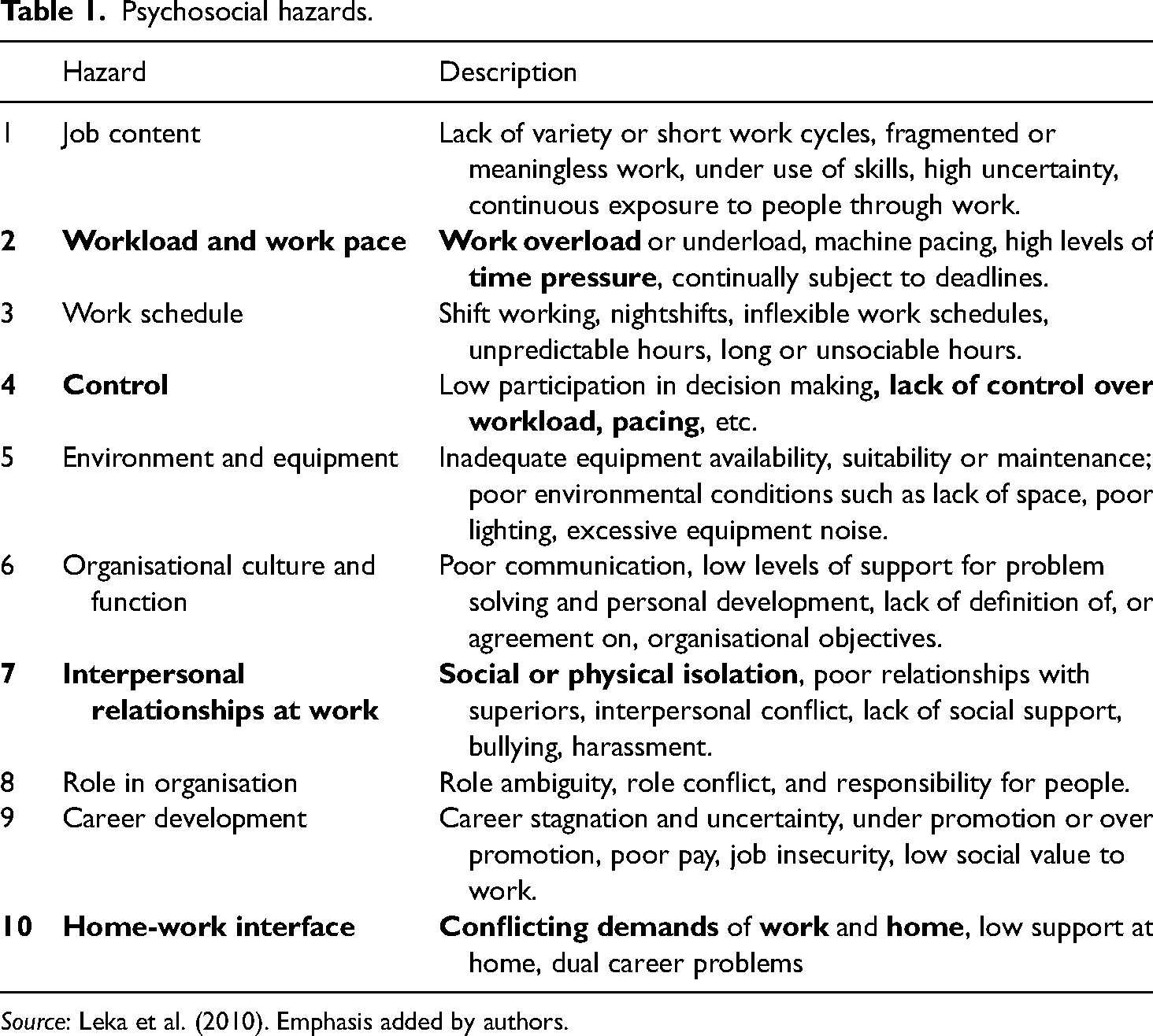
Source: Leka et al. (2010). Emphasis added by authors.
Psychological safety at work has been an emerging issue in recent years. The focus on psychological safety at work has intensified since 2020 mainly due to the impacts of safety hazards associated with working from home on the mental health of workers because of COVID-19 lockdowns (Bentley et al., 2023). This new context in which many knowledge workers are working from home has highlighted a need to redesign work and work systems to provide psychologically safe workplaces (Bentley et al., 2021, 2023) which have been shown to foster organisational learning and create meaningful work (Shafaei and Nejati, 2023). In this context, it stands to reason that industrial relations systems must also rise to the challenge of providing work environments conducive to safety as well as productivity. Safework Australia (2022) states that psychosocial risks include anything that can cause psychological harm, that is, harm to a worker's mental health. In this study, we subscribe to Bentley et al.'s (2023: 1) description of psychological safety at work being a ‘state whereby employees psychological health is considered within a broader framework of occupational health and safety’.
Several research studies reported that working from home increases the likelihood of social isolation, work-family conflict, and stress caused from increased workload, amongst other risks, which increase a worker's risk of psychological injury (Bentley et al., 2016; Donnelly and Johns, 2020; Green et al., 2020). These risks, as well as concepts such as ‘forced flexibility’ in the working from home context (Franken et al., 2021) have been identified during the COVID-19 pandemic (McAllister et al., 2022).
The ‘autonomy paradox’ (Eurofound, 2020a: 1; Huws et al., 1996: 84) can be conceived as being central to understanding these hazards for knowledge workers during the pandemic. The autonomy paradox is a concept whereby ‘…employees who experience a high degree of autonomy often intensify their work practices and find it difficult to disconnect from work’ (Metselaar et al., 2022: 16). Having a high level of control over how you do your work – that is, a degree of autonomy – is a psychosocial factor conducive to wellbeing. By contrast, a lack of control at work is a psychosocial hazard (see Hazard 4 in Table 1). Part of knowledge workers’ autonomy is a degree of discretion around when and where they conduct their work. The paradox is that this very autonomy, which should aid wellbeing, in some cases led to work overload and work-life conflict (Hazards 2 and 10 in Table 1). We explore this paradox in the Findings section. Finally, the nature of working from home, especially during the COVID-19 period, could lead to social isolation (Hazard 10 in Table 1).
Several studies found that when working from home during COVID-19, many knowledge workers reported working longer hours, and work encroaching on family time (Bentley et al., 2023; Franken et al., 2021; Kokshagina and Schneider, 2023). While technology supported the rapid transition to working from home during the pandemic, it also supported work practices detrimental to worker wellbeing (e.g. zoom fatigue, burnout) (Franken et al., 2021; Kokshagina and Schneider, 2023) making the role of technology paradoxical in the working from home debate. According to Kokshagina and Schneider (2023: 134), knowledge workers experience the autonomy paradox where ‘digital technologies provide us with the flexibility to work from anywhere while limiting our independence through expectations of constant availability’. Autonomy has positive connotations and is an important facet of meaningful work (Martela et al., 2021). However, it could also have negative impacts. For example, the same digital technologies that made remote work possible, are associated with reports of knowledge workers experiencing psychosocial hazards such as high workload, fast work pace and work-home conflict (Franken et al., 2021; Kokshagina and Schneider, 2023).
This article provides a novel application of the ‘autonomy paradox’ concept, by integrating it within the framework of psychosocial workplace hazards. We draw on the industrial relations discipline's sensitivity to power relations in the workplace and broader society, and management strategy for securing workers’ output (Hyman 1975: 12, 18), to investigate a number of well-recognised psychosocial hazards applicable to knowledge workers working from home around workload and work pace, the home-work interface, and interpersonal relationships (specifically social isolation).
Literature analysis of the ‘autonomy paradox’ of working from home and its consequences
The literature on working from home, also referred to as remote work or telework, is vast and rapidly expanding, in line with the prevalence of the practice itself for knowledge workers. Research on remote working conducted prior to the pandemic (e.g. Kelliher and Anderson, 2010; Ross et al., 2017; Vicente-Herrero et al., 2018) offers valuable insights and contains many similar themes. However, research contextualised to remote working since the COVID-19 pandemic is needed. Relevant literature exists across numerous disciplines including human resource management (e.g. Carnevale and Hatak, 2020; Johnson et al., 2020), industrial relations (e.g. Behrens et al., 2022; Sarkar, 2022; Williamson and Pearce, 2022), ergonomics and human factors (Bentley et al., 2016; Nielsen et al., 2019), sociology (Reissner et al., 2021) and other disciplines. Outside the industrial relations discipline, the literature is largely silent on how industrial relations shape remote work. An exception is the field of sociology, where labour process theory approaches (e.g. Cook et al., 2022) situate remote work in a broader societal context.
Industrial relations as a discipline examines institutions regulating work and the rules governing work, managerial control at a workplace level, and how the broader social context impacts workers. Research in this discipline on the effect of COVID-19 on workers’ rights has highlighted the role of industrial relations institutions. Behrens and Pekarek (2022) found that German workers covered by union-negotiated collective agreements felt less worried about losing their jobs, and that the ability to work remotely was more likely where workers are represented by a works council (shop-floor bodies elected by workers which consult with management). Dayaram and Burgess (2021) underlined the issues of work intensification and ‘work signalling’ (doing extra work due to a perceived need to be more visible), calling for the amendment of regulatory frameworks and for ‘right to disconnect’ legislation, as well as the application of penalty rates for excessive hours as appropriate. Williamson and Pearce (2022) examine changes to Australia's industrial award system with respect to flexible hours while working from home. Sarkar (2022) draws attention to how working from home can negatively affect trade unionism, because a shared physical workspace aids union organising by facilitating communication and interpersonal connection. Williamson et al. (2022, 38) found that more managers allowed workers to work from home in mid-2020, when ‘Australia transitioned out of the initial pandemic lockdown’, than in 2018. The authors draw attention to contexts broader than the individual workplace.
Trust and the ‘autonomy paradox’
The term autonomy refers to employees’ control over work times, work location, work tasks and scheduling (e.g. Leonardi et al., 2010; Mazmanian, 2013). Autonomy is an important element of working from home because it provides employees with the opportunity to make decisions about different work tasks. The higher autonomy that allows employees to work from anywhere at any time can lead to dynamic working, but it can also result in prolonged working hours (Sandmeier et al., 2022).
The research suggests that remote workers increase effort in exchange for the ability to work from home (Kelliher and Anderson, 2010; Palumbo, 2020); referred to as the ‘autonomy paradox’ of remote work (Eurofound, 2020a: 1). The first known use of the term occurred in 1996, when Huws and colleagues (1996: 84) studied freelance translators working from home. Similarly, remote work during the pandemic came with expectations of a continued income, protection from the virus and more control over time (de Klerk et al., 2021), yet for some workers also brought about increased hours, and work-life conflict, and anxieties around job loss or reduced hours (Eddleston and Mulki, 2017).
Some managers utilise invasive surveillance technology to measure keystrokes and take screenshots of employees’ computers (Hern, 2020) with sales increasing during the pandemic (Dayaram and Burgess, 2021). Such intrusive surveillance brings risks to workers’ health and safety (Scherer, 2021). These practices also led to resistance and subversion from workers; witness, for example, the phenomenon of ‘mouse jigglers’, which make it appear as if your mouse is moving when you are actually away from the computer (Ogden, 2024: 8). This renders management's attempt to measure productivity futile. Rather than employing such potentially counterproductive methods (Smith, 2015: 4), management can instead allow relative autonomy (Friedman, 1977) of their employees, appealing to ‘professional values, creativity, career, goodwill or trust’ (Smith, 2015: 4) to elicit labour effort. Indeed, the autonomy paradox concept has also been applied to knowledge workers in general, and professionals using their mobile phones for work emails (see Table 2).
Different uses of the ‘autonomy paradox’ concept.
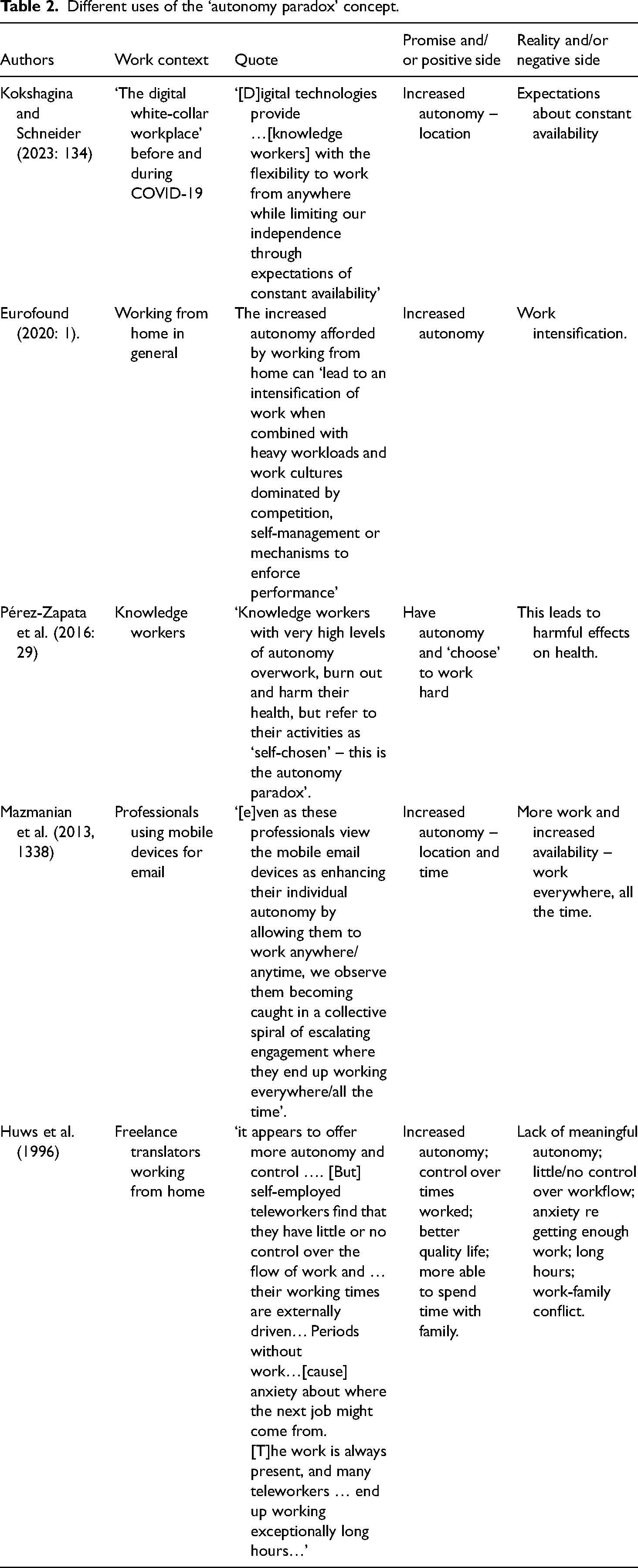
Working from home potentially further increases the level of autonomy experienced by knowledge workers, validating, and extending Smith's (2015) analysis.
Workers’ experience of working from home is informed by pre-existing work cultures (Fana et al., 2022) including, for many, high workloads. Work intensification can occur for knowledge workers working from home where workload is high and the work culture is competitive (Eurofound, 2020:1) and was observed during the pandemic (Adisa et al., 2022; Watermeyer et al., 2021). Working from home depends heavily on a trusting relationship between a worker and their supervisor. In an office environment, trust is often built on ‘visibility and presence’. Therefore, in a working from home environment, a worker will feel under significant pressure to visibly ‘demonstrate their heightened commitment’ to the work team, if they feel this trust is threatened (Sewell and Taskin, 2015: 1521). However, if several trust-related factors of quality management and support systems, training, and formal and informal communication channels are implemented appropriately, they can increase trusting relationship between employees and managers (Kähkönen, 2023).
Productivity
Onuoha et al. (2014) defined employee productivity as the effective use of people and material resources to achieve organisational goals. According to Ma and Ye (2019), employee productivity is regarded as the degree to which an employee is efficient. From this lens, productivity can be conceptualised as a continuous reduction of inputs to maximise gain and enhance efficiency (Kordowicz, 2021).
The disciplining of the self may explain the high degree of productivity found in studies of remote work supported by evidence in the literature of greater productivity, or at least the maintenance of productivity, while working from home. Patanjali and Bhatta's (2022) study of IT workers suggested that productivity increased overall while working from home during the pandemic. The authors found positive relationships between shared values and pride in the organisation and increased productivity. Similarly, feeling that they had an opportunity to develop professionally, and being well-equipped (e.g. access to technology) helped employees’ productivity. Finally, and perhaps most interestingly, perceived ‘autonomy and empowerment’ were correlated with productivity (Patanjali and Bhatta, 2022).
Bloom et al.'s study (2015) remains the only study of which we are aware, either before or during the pandemic, which measures productivity using a control group. The authors found that those working from home for a travel agency worked more minutes each shift and made more calls per minute compared to those who worked from the office over a one-year time-period (Bloom et al., 2015). A quantitative study by Liu and colleagues (2021) during COVID-19, also on workers in China, found that work from home improved ‘job performance through job crafting…’ Participants worked from home for an average of 3.36 days per week.
The grey literature such as government and union reports examining the experience of Australian workers during the pandemic align with this. Thirty per cent of the 6000 Australian public servants surveyed (roughly one-quarter of whom were managers) reported working longer hours (Colley and Williamson, 2020: 12), as did 40 per cent of those responding to the Australian peak union body's survey of working from home across multiple industries (ACTU, 2022). Some 90 per cent of the managers surveyed by Colley and Williamson felt that productivity was the same or higher than before the pandemic (Colley and Williamson, 2020: 1). The NSW Innovation and Productivity Council's (2020: 1, 16) more granular data demonstrates how the working from home phenomenon can play out. The 1500 remote workers surveyed in 2020 save, on average, 77 min a day on their commute. Of this, 49 min was spent on ‘personal and family needs’, 19 min on ‘caring and domestic tasks’, and 13 min on work activity (NSW Innovation and Productivity Council, 2020: 16). The Council estimates this results in a 13 per cent increase in productivity (ibid: 1, 16).
However, a significant study of over 10,000 workers at an information technology company in India (Gibbs et al., 2023) during the pandemic problematises these findings. The study is based on recorded start and finish times, and times spent working with various pieces of software, as well as outputs based on the employer's performance metrics. That is, it is not self-reported. Unlike Bloom's study, it is based on workers in complex jobs (similar to the workers in our study), rather than call centre workers carrying out more mundane tasks. Gibbs and colleagues find that while average working hours increased, output slightly declined. There was a significant decrease in output per hour (the usual measure of productivity), estimated by the authors at between 8% and 19%. Based on their results, this was attributable to working from home, and not the pandemic more generally. A large-scale quantitative study of nine 259 establishments, 869 teams and 11,011 employees across 9 countries in Europe (van der Lippe and Lippényi, 2020) also found decreased performance. This study, conducted before the pandemic, found that both individual performance and team performance was worse when working from home.
Overall, both before and during the pandemic, the literature on productivity while working from home has mixed findings. We would suggest that context (country, industry and context, how output is measured, and who is reporting productivity) is highly significant here. The literature shows the possibility of both work extensification (working longer hours) and work intensification (working harder during working hours) associated with working from home.
Increased productivity can also be linked to burnout, defined as a condition involving emotional exhaustion, depersonalisation, and declining workplace accomplishment from prolonged exposure to demanding work situations (Shanafelt et al., 2003). Chong et al. (2020), for instance, show that the resource loss caused by a shock to the telework employees’ cognitive processing due to the COVID-19 crisis resulted in end-of-day emotional exhaustion which subsequently led to their next-day work withdrawal behaviours. A growing body of research suggests the presence of increased burnout during the pandemic resulting from increased work demands (Taylor and Frechette, 2022) or home related matters (Hayes et al., 2021). Women may be experiencing burnout at multiple levels, and often had increased responsibilities at work and home during the pandemic (Aldossari and Chaudhry, 2021).
The home-work interface and social isolation
Workers who work from home risk ‘blurring’ personal and professional lives (Vicente-Herrero et al., 2018), known as work-life conflict. The literature here has mixed findings. Several studies find that increased conflict between roles at work and home and that ‘[w]orking from home can reduce the typical cognitive, emotional and physical restorative effects of being at home’ (Johnson et al., 2020: 410). Some studies demonstrate that flexible work arrangements are worse for work-life balance than traditional modes of working (Bjärntoft et al., 2020; Higgins et al., 2014). Others, however, find that flexible work helps family members with care responsibilities, or associates flexibility with positive mental health outcomes (Johnson et al., 2020: 410). Research undertaken regarding working from home during lockdowns, when workers were working from home all week (and often looking after children) suggests a blurring of work and home boundaries (Adisa et al., 2022; Keightley et al., 2023). The work-life boundaries were even more blurred for parents and carers because they had to balance their work and life commitments including home schooling and managing partners’ working schedules (Graham et al., 2021). A survey of the advantages and disadvantages of COVID-19 lockdowns revealed that for workers with children under the age of 12, increased domestic and caring responsibilities were the biggest disadvantage, while for workers without children under the age of 12 lack of social contact was the main disadvantage. Moreover, for workers without children, average levels of work-life conflict decreased, while workers with young children did not experience the same decrease in work-life conflict (Schieman et al., 2021).
Social isolation can be defined as ‘the inadequate quality and quantity of social relations with other people at the different levels where human interaction takes place (individual, group, community and the larger social environment)’ (Zavaleta et al., 2014: 5). This was associated with working from home before the pandemic (Belanger et al., 2013; Bolisani et al., 2020; Williamson et al., 2020). A 2016 quantitative New Zealand study found significant levels of social isolation for ‘teleworkers’ (ie. those working from home), but that this isolation could be reduced by organisational support (Bentley et al., 2016: 213). Social isolation was also cited as a negative aspect of working from home in studies on the experience of workers during the pandemic (Franken et al., 2021; Jogulu et al., 2023), suggesting a level of continuity in issues associated with remote work. Watermeyer et al. (2021) found that many of the UK academics working from home during lockdowns reported social isolation and loneliness. Spilker and Breaugh (2021) found that having a choice whether to work remotely and the length of the supervisor-telecommuter relationship were negatively associated with feelings of isolation. Workers can also experience professional isolation which is associated with employees’ work exhaustion and general affective well-being (Hu and Subramony, 2022). Feelings of social isolation potentially impact stress, mental health, and sleep (Johnson et al., 2020). While there is evidence of an increase in domestic violence during COVID, a large quantitative Canadian study suggested that working from home was not ‘related to Canadians’ concerns regarding the impact of COVID-19 on family stress and domestic violence’ (Beland et al., 2021) . Rather, it was an the inability to meet financial obligations due to COVID-19 significantly (positively) related to (societal and individual) concerns regarding COVID-19's impacts on family stress and domestic violence (Beland et al., 2021).
Method
This qualitative study was conducted in the context of the COVID-19 pandemic restrictions where person-to-person interactions were limited, including in work-related scenarios. This context made flexible and remote working arrangements more widespread than ever before in the study location of New South Wales (NSW), Australia and necessitated that the interviews were conducted online. When the interviews commenced many knowledge workers had several months experience of remote working during the COVID-19 pandemic.
Sample recruitment
Ethics permission for the study was granted by the Edith Cowan University Human Research Ethics Committee. Participants were recruited using two complementary methods. The first method recruited participants by seeking expressions of interest, through a partner organisation that provides Health and Social Care services across the entire Australian state of NSW. Secondly, the research team supplemented this method through snowball sampling by inviting potential participants from other industries who were among the extended professional network of the researchers who in turn suggested other possible participants.
Interview questions
Prior to conducting the interview sessions, the research team developed interview questions to meet the aim and objectives of the study. The interview questions aimed to gather information regarding individual's flexible and remote working experience. Specifically, participants were asked about the following key points:
defining flexible and remote working arrangement, diversity and flexible and remote working arrangement, the things that worked well with flexible and remote working arrangement, the risks, hazards and safety issues involved with flexible and remote working arrangement, engaging with work health and safety processes while working remotely, enablers of successful flexible and remote working arrangements at individual, work-related and organisational level, and key barriers to flexible and remote working arrangement at individual, work-related and organisational level.
The interview questions were reviewed by other researchers who were not involved in the process of developing the questions to provide feedback on the readability, clarity, and feasibility of the questions. Some minor amendments were made to the questions based on the feedback received. The interview questions were then piloted. According to van Teijlingen and Hundley (2001), it is highly recommended to try out interview questions prior to the main study to ensure the practicalities of the main study with regards to implementation and utility that include estimation of resources and time for the main study.
As Kim (2010) highlights pilot testing the research instrument should be conducted in an environment as close as, and follow the same procedure, as the actual interview process. Therefore, the pilot testing of interview questions and process was conducted with two knowledge workers who had remote working arrangements. Pilot testing was beneficial in helping to further refine the questions for clarity, timing, and smoother flow of conversation.
Interview process
Informal, semi-structured interviews using a question guide (i.e. preamble) were conducted by members of the research team via Microsoft Teams between January and March 2021. Interviewees for this project had experienced recent lockdowns due to COVID-19, but were not in mandatory lockdown during the period in which the interviews were conducted.
Interviews lasted between 30 and 60 minutes, were audio recorded and transcribed by an Australian third-party audio transcription specialist. The transcripts were de-identified by allocating each interviewee a code: W1, W2… for workers, and M1, M2… for managers.
Participants
A total of 52 interviews were conducted: 33 NSW-based remote knowledge workers and 19 line-managers who managed remote knowledge workers, from both the public and private sectors. The sample is aligned with recommendations regarding the required sample size, with Charmaz (2006) suggesting that 25 respondents provides satisfactory information for small projects. In the same vein, Marshall et al. (2013) proposed a range of 15 to 30 respondents would be sufficient to be involved in case studies, and Ritchie et al. (2003) state that sample size for qualitative studies is often around 50. In line with the recommendations from the literature, 52 interviews are sufficient for the current study. Further, as is usual for qualitative studies data should be collected until reaching the saturation point (Alam, 2021; Merriam, 2009). Analysis of the data collected from 52 respondents in the study revealed a saturation point for emergent themes.
Participants worked in multiple organisations in both the public and private sectors across numerous industries (see Tables 2 and 3). The sample comprised approximately equal numbers of men and women from across the age spectrum. However, we did not collect detailed demographic information from participants on gender, age or other demographic variables. As this article is concerned with the experience of remote knowledge workers, and the impact of remote work on these workers, interviews with the knowledge workers themselves were drawn on most heavily (Table 4).
Remote knowledge workers interviewed including industry.
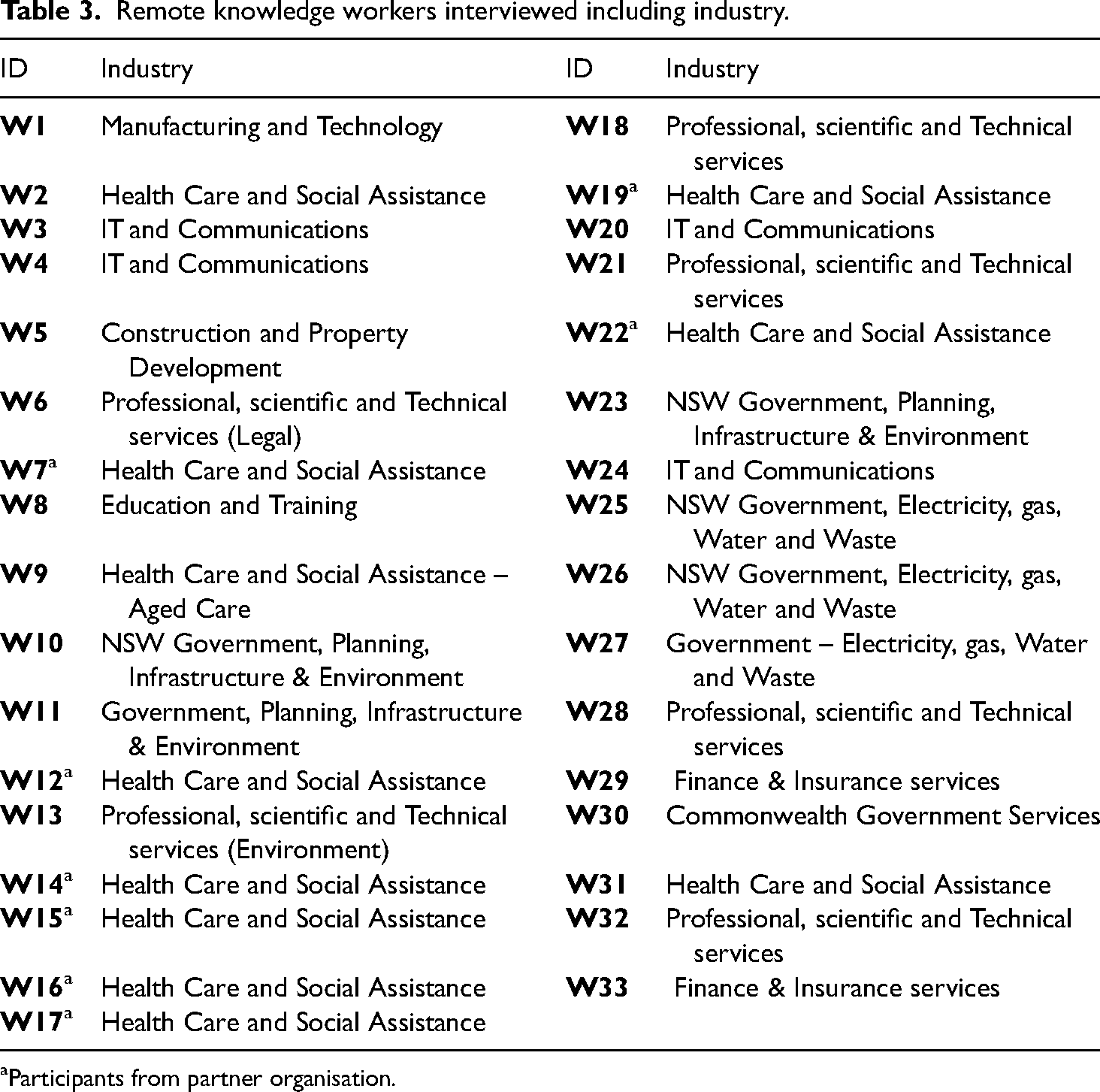
Participants from partner organisation.
Managers of remote knowledge workers interviewed including industry.
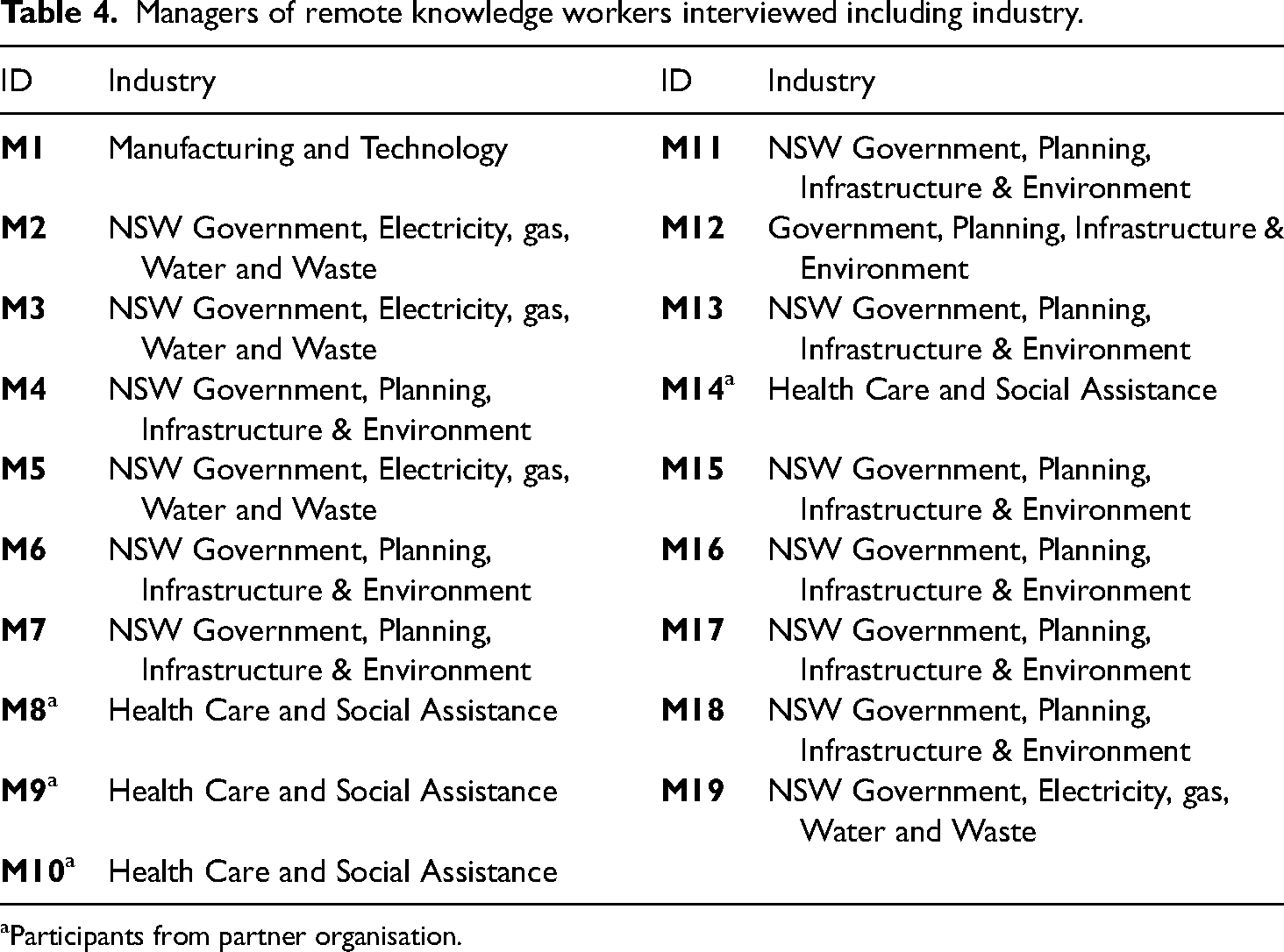
Participants from partner organisation.
Data analysis
A qualitative thematic analysis (Quinlan et al., 2019: 340–1) was conducted manually in two parts. First, a coding frame was created based on the dominant themes emerging in the interviews, and a subsequent reading of a sample of transcripts to confirm the emerging themes, together with key themes contained in the contemporary literature about remote working, and the findings from a previous phase of the research project (Teo et al., 2020). For the first level of coding, one researcher reviewed the transcripts and extracted data for analysis using the coding frame headings: ‘Perceptions,’ ‘Outcomes’, ‘Facilitators’ (of remote work), ‘Barriers’, ‘What's working well’, ‘What's Not Working Well’, ‘Engagement with Work Health and Safety’ and ‘Suggestions and ideas for improvements’. These were further divided into four levels: the individual level, the work/job/task level, the team level and the organisational level to create the Analysis Framework to guide data analysis (Figure 1). Next, a different researcher conducted a thematic analysis to identify key themes for each of the headings. The research team agreed on the final themes reported in this article.
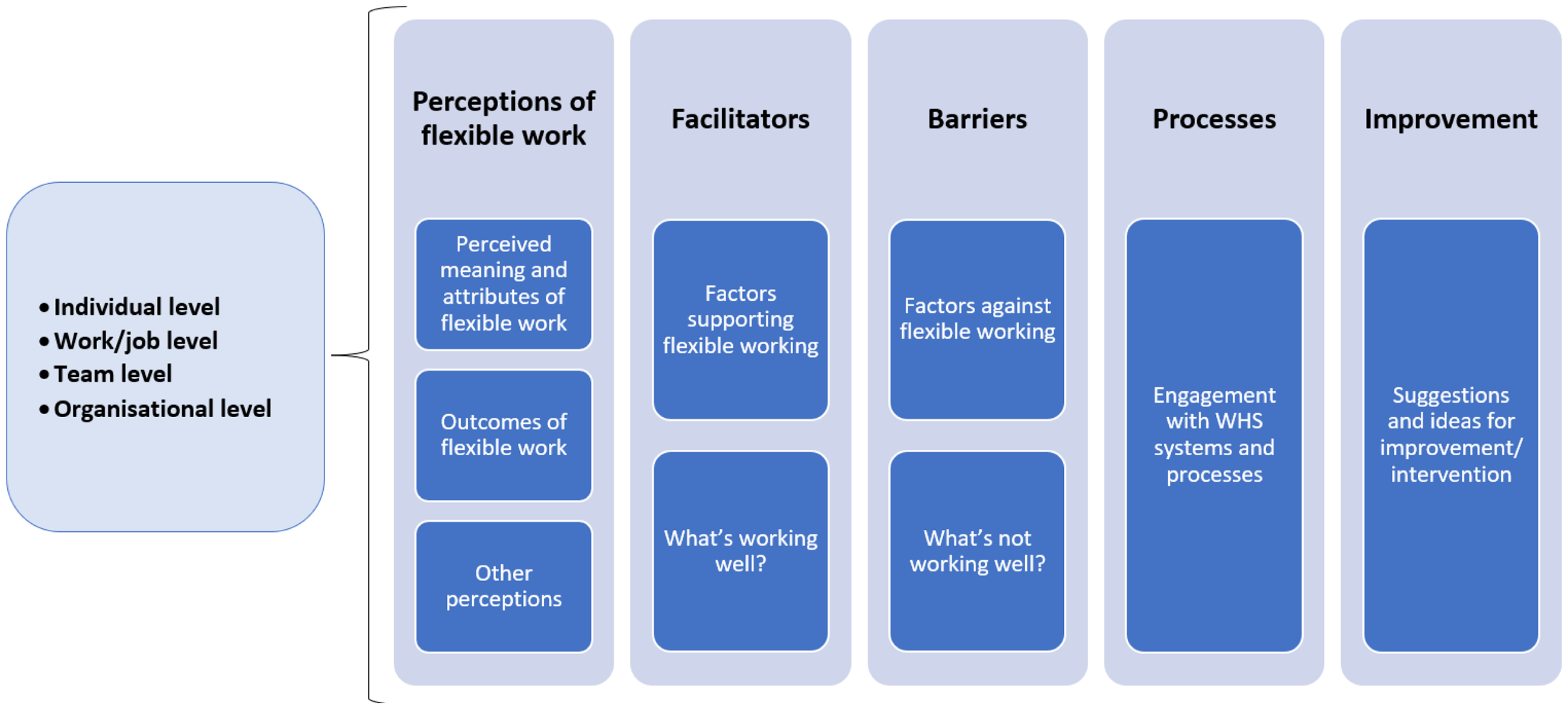
Analysis framework.
Findings
Working from home, like all work, brings with it exposure to psychosocial hazards. This research draws on the experience of 33 knowledge workers and 19 managers in different industries to understand the exposure of remote workers to psychosocial hazards during COVID-19. Particularly, this study used the autonomy paradox framework to explore workload and workpace, the home-work interface, and interpersonal relationships, in particular social isolation.
Workload and workpace
The subthemes associated with workload and workpace were: trust and work demands. Many interviewees experienced an increase in workload. This came about largely through employees ‘choosing’ to work longer hours when given the flexibility surrounding their hours of work. Managers adopted a trusting approach to their line reports, who repaid this trust by ensuring a high degree of output, even though they couldn’t be physically seen by management. When trust was discussed, around 85 per cent (11 out of 13) of workers interviewed felt trusted by their managers. This trust was linked to intense work: My [line manager] seems to trust me implicitly. He knows I’m working my butt off from home. I work more than my required hours. I’ve got a lot of trust from my manager and the amount of work I’m getting through elicits that trust. [Interviewee W14]
Though less common, some interviewees located the cause of increased workload in managers’ decisions. Interviewee W21 perceived that management were deliberately increasing workload. Initially, they said, management had a perspective of ‘you’re working from home you have all this time, I’m going to make sure you work, so I’m just going to load all this work on top of you’.
Broader societal and labour market factors could elicite ‘signalling’ behaviour, and combine with management pressure to increase work. Interviewee W5 recounted that everyone at his organisation started working from home during the pandemic, and for the first six months there was a lot of pressure on the whole team to be highly productive: ‘we were all working really, really late hours …[and] took up a lot of new projects… to show that we were busy’.
In addition to demands from their manager, the team put pressure on themselves. As contractors worried about losing their jobs, they were trying to prove that they were working.
Another reason given for an increased workload related not so much to the autonomy paradox but rather the nature of remote work requiring workers to contact colleagues electronically. Workload was impacted by a lack of social support and connectivity with team members. For example, not being able to have quick conversations with people can increase the amount of work needing doing, while the amount of emailing has increased while working in this mode.
Many participants perceived that productivity was higher working from home, mainly due to a lack of interruptions and noise in an office. Approximately 94 per cent (15 out of the 16) of workers who mentioned productivity in the interviews referred to an increase in productivity. While this is positive for organisations, if this increased productivity comes as a result of work intensification and/or increased hours, this can negatively impact workers’ mental health and wellbeing. Measuring productivity poses challenges, with knowledge workers ‘…it's a bit hard to track productivity … it's more like a gut feel[ing]’, [Interviewee W23] and productivity can vary from individual to individual. It should also be noted that producing more output through working longer hours is not the same as an increase in productivity, which is output per hour. It may be that in many cases, while the employer is enjoying greater output, this is not in fact due to the work becoming more productive.
Overall, employees appear grateful for the more hands-off management approach, and repay this with hard work. A manager of remote workers recounts: If it's really hot in the afternoon and I know that [the worker had] worked reasonably early, [I would say] “Go and have a swim, go and feel good.” “Oh, [manager's name], can we do that?” I said, “Yes, I’m giving you the permission to do that.” The next day, they’re up an hour earlier because in their mind, they really, really appreciate that opportunity. [Interviewee W18] in an office, you have that panopticon approach where anyone can be looking over your shoulder…[At home] you can be doing whatever you want, looking at whatever content you have, and apart from some really hard-core organisations with logging on and logging off and maybe screen monitoring…The easy way to go about that is having that trust…I am going to be doing that work and I am going to be doing it because it is meaningful to me. Not because someone is watching me and making me do that [Interviewee W9].
The employer still gains the required output, but does so through ‘consent’, rather than more coercive approaches. By way of contrast, interviewee W5 describes the micromanaging experienced, saying ‘That was a horrible period in our organisation and everyone speaks about it now, ‘How do we do that, it was horrible’. It was so demotivating and actually horrific.’ Such an approach can therefore be counterproductive from the viewpoint of management strategy.
The autonomy afforded to employees led to longer working hours for some (Sandmeier et al., 2022). Interviewees overworked, but articulated that they had chosen to do so, echoing the finding of Perez-Zapata and colleagues (2016: 29) before the pandemic. Feeling that managers trusted them was central here, with workers increasing discretionary effort to repay that trust, or even perhaps to ensure a continued ability to work from home (Palumbo, 2020). Some did more work to ensure that their work was visible (Sewell and Taskin, 2015). The association between remote working during the pandemic and longer working hours (Colley and Williamson, 2020; Dayaram and Burgess, 2021) was borne out by a number of interviewees’ comments. COVID-19 added an extra layer of context, reflected here, for example, in the economic downturn driving an extra workload for some. Working from home's ‘autonomy paradox’ was identified before the pandemic and continued in this changed environment, albeit with its own specificities.
The home-work interface – a ‘double-edged sword’
The subthemes associated with the home-work interface were: boundary management and family responsibilities. The inherent nature of working from home blurs the boundaries between work and personal life, making it difficult for some employees to disengage from work. However, this arrangement also offers the potential to better balance work and life responsibilities, something appreciated by some interviewees. These responsibilities, such as caring for children, were significantly influenced by the context of the pandemic.
With no barrier between the location of work and home, workers can have difficulty unwinding. ‘… I find it very hard to switch on and off when I work from home. And I start work earlier and I finish work later,’ Interviewee W17 disclosed. Some workers (Interviewee W5; W7) felt that they did not have a ‘right to disconnect’ from work, citing pressure to work ‘after hours’, including weekends, unpaid. Another interviewee (M13) was ‘getting calls at seven o'clock in the morning to eight o'clock at night. You'd be checking in just before you went to bed, checking in, so that there was that sense that you were never not at work.’ This suggests the work culture combined with the work location to produce a sense of being ‘always on’. As Interviewee M2 suggests, ‘while people don't like commuting … it really places a barrier between work and home. You actually get to change mental gear but, when you're working from home, you don't have that switch from work to home.’ Without such a barrier, the restorative nature of the home environment can be eroded (Johnson et al., 2020).
Despite long work hours and blurring, for some interviewees working from home helped create a better work-life balance. Seven out of eight workers (88%) interviewed who discussed work-life balance spoke positively about flexible work arrangements in this regard. For them, work did not significantly impact family life in a negative way. Workers reported that they enjoyed being able to do non-work activities – such as housework, running errands, and spending time with children – in times they were not previously able to. Interviewee W16 stated that ‘People have lives…I can chuck a load of washing on, I can drag the bin out at lunchtime instead of waiting until it's nighttime, and just little things that you can do while you're at home.’ Interviewee W4 was happy to avoid a two-hour round-trip commute, explaining that ‘the time that I'm normally using to commute is that time that I can do what I say is my life admin.’ Another worker said ‘it works very well for me to be able to sit down and do an hour's work and then go for a little walk, or hang the washing out or something like that and come back and then do another hour, or I don't do anything and then I do five hours on a Saturday’ [Interviewee W19].
Parental responsibilities could be a barrier to flexible work when children were at home during the COVID-19 lockdown but a positive of flexible work under ‘normal’ circumstances. As one manager outlined …a lot of people…in my team that did have to look after kids when they hadn't previously … found that really hard. So it's not so much the working from home that was the challenge. It was the kids being there and having to do childcare and home school as well. So when a lot of those kids then went back to school, those people that are really enjoying the work from home because it means it's much easier for them to do drop-offs and pickups … [Interviewee M1] I was saying to people, “What's one of the best things and worst things about 2020?”. And they said, “Best thing was being able to spend more time with my children. The worst thing was spending more time with my children.” [Interviewee M13]
Hence, the experience of working from home varies due to individual circumstances.
Exploring the home-work interface is important in understanding the working from home experience. Issues surrounding this psychosocial factor were encapsulated by Interviewee W24, who referred to remote working as a ‘double-edged sword’. While the time saved by the lack of commute could help people focus on their work and their own wellbeing, ‘there are times where the workload can be quite intense and so the scale of balance tips’. Work-life conflict also featured in the working from home literature prior to the pandemic (e.g. Higgins et al., 2014; Vicente-Herrero et al., 2018). Therefore, these issues, including the potential for positive outcomes from workers’ flexibility, are not new. Yet here too the significance of the pandemic context is highlighted, in particular by the differences parents experienced when they looked after children during the workday, as during lockdowns.
Interpersonal relationships at work – social isolation
The subthemes associated with social isolation were: inclusion, social connections and hybrid working. Workers felt isolation during the period they were working exclusively from home. Interviewee W8 described feeling like their ‘four walls are kind of closing in’, while Interviewee W20 commented that ‘It almost feels a bit like a jail… same table, same computer, same walls’. Remote workers miss the social side of working from the office. One described wanting ‘to come back to work a couple of days a week, for the social interaction and the human connection not through a screen’. Another managed feelings of isolation through talking to friends online but was worried that too much screen time impacted them adversely psychologically.
A feeling of social isolation was not universal, however. One worker for whom English is a second language [Interviewee W10] felt less isolated working from home. In an office environment, they didn’t feel confident to ask colleagues to slow down when speaking, whereas in the online world, discussion about being able to hear or understand others was normalised. This highlights the varied nature of responses to working from home, which can be related not only to personal preferences but also a worker's linguistic background, something to which researchers, organisations, policy makers and unions should be attuned.
Social support received from both supervisors and co-workers can be used to counter some of the isolation that occurs while working remotely. Organisations, managers and employees tried to put in place measures to support each other socially, and collaborate professionally, outside the office environment. To reduce the isolation experienced when working from home, social support measures (ad hoc and experimental) were implemented. Interviewee W4's organisation's pre-existing ‘buddy programme’, where employees can be paired up with co-workers living close by to meet up with, increased in popularity since the onset of COVID-19. Another worker spoke positively of games nights and trivia nights: ‘…there’d always be something funny that happens … it doesn’t need to be all work, work, work’ [Interviewee W5]. This interviewee indicated that this social support could have been improved, while acknowledging the limitations of the situation.
Collaboration between employees is a form of social support; professional collaboration, and consequently professional isolation, cannot be separated entirely from social interaction more generally. Many interviewees raised either incidental contact (bumping into someone) or deliberate short encounters (asking a nearby colleague for help, bouncing an idea off them) as important features of work. Organisations have tried to replicate this support through software such as Microsoft Teams. However, as Interviewee W14 told us, ‘it's not quite the same as being in the room with them’ and ‘sometimes it's nice to have that one-on-one physical interaction’. A worker who performs a lot of ‘admin and repetitive tasks’ reflected that the experience of talking to colleagues in the office to some degree offset the boredom of monotonous task ‘because you're speaking to everyone around you. You might not feel it as much, you’re all socialising, so it's not so much of a problem’ whereas at home ‘you really notice what's something that you enjoy doing and what's something that you don’t enjoy doing’ [Interviewee W11].
To a large extent social isolation was an unavoidable product of the lockdowns, and to a lesser extent may be experienced when working from home generally. Hybrid working arrangements, where work is done away from the office for part of the week, potentially remove or reduce the risk of social isolation. As one worker stated: I don’t think five days a week working from home is a particularly good idea long-term … we need to look at trying to at least have two days a week minimum back in an office to really keep that collegiality alive. [Interviewee W6]
Interviewees reports of missing social and professional interactions and an increased sense of monotony were difficult to address during lockdowns. However, when working from home is optional, feelings of isolation can decrease (Spilker and Breaugh, 2021). Both social (Johnson et al., 2020) and professional (Hu and Subramony, 2022) isolation can negatively affect wellbeing. Recognising the dangers of social isolation and understanding individual differences support the idea of giving employees a choice regarding the frequency of their remote work.
Discussion
The autonomy paradox is central to the nature of remote work in the current industrial relations climate, demonstrating the continued validity and usefulness of the concept. Workers’ increased autonomy shapes not only their own experience of work, but also management's strategy for gaining output. The odious nature of obtrusive surveillance – likely used more on workers such as those in call centres, or administrative workers – should not be cause to dismiss the hazard of work intensification caused by the autonomy paradox. Measuring performance by outputs from labour undertaken away from the office rather than time spent at a desk (inputs) is a replacement form of control. In an era of low worker voice, and given the individual nature of much knowledge work, psychosocial hazards related to workload, work-life conflict and social isolation are likely to remain significant.
This study sought to examine the experience of knowledge workers when working from home to understand more about how they experienced autonomy, and the exposure to psychosocial hazards under work-from-home working arrangements. Psychosocial hazards such as workload and workpace, the home-work interface and interpersonal relationships featured heavily in the pre-COVID-19 literature on working from home. This research with workers across many and varied industries shows that while the pandemic adds an extra contextual layer, these continued to be issues for knowledge workers working from home.
In Leka et al.'s (2010) typology of psychosocial hazards, control is elaborated as ‘Low participation in decision making
The vast majority of interviewees offering reflections on productivity perceived that their productivity had increased compared to before COVID-19. Yet as Qu and Yan (2023: 202), write: The boundary between working and leisure times becomes ambiguous when employees are WFH [working from home]. Employees are usually pushed to work for longer hours and face high job demand, which is harmful to work productivity and quality. Therefore, assessing the influence of WFH on employees’ feeling of their work completion is vaguer and more complicated compared with WFO [working from the office]…
There was a mixed picture with respect to work-life conflict and ‘blurring’. Numerous interviewees enjoyed the increased flexibility of their working hours. Yet the risk of ‘blurring’ the line between work and home makes it difficult for employees to switch off from work. Workers experienced remote work differently according to their individual preferences, and well as by demographic. While this was not the main feature of the research, some responses indicated this would be a useful area for future research.
Finally, we found evidence of social isolation, a facet of ‘interpersonal relationships at work’. Again, this matches the literature where there was continuity pre and during COVID. Unsurprisingly, interviewees found such isolation to be more pronounced when working from home five days per week, with a number expressing support for hybrid work arrangements. Work teams found ways to mitigate against isolation through informal catch ups and buddy systems.
Psychosocial workplace hazards are intimately connected to power dynamics at work, and the broader industrial relations context. Where workers have a greater voice, they can better mitigate psychosocial hazards. Yet working from home for these NSW-based knowledge workers took place very much on management's terms. Interviewees seldom discussed collectively taking up work-from-home-related grievances or mentioned their union's positions. Given Australia's low levels of union density and worker voice (Bray et al., 2021), this should not be surprising. Only 14 per cent of Australian workers were union members at the time of the research (Australian Bureau of Statistics, 2022). This density is not uniform, with pockets of very high density such as among nurses and firefighters. Worker voice is further impacted by the numbers of workplace union delegates, which has declined since the 1980s (Bramble, 2008: 242–3, 248). The unintended consequences of remote work needs to be considered by unions, who have been campaigning for the right to work from home (Tham, 2022). Further research could usefully focus on the impact of increasing rates of remote work on trade union power (Sarkar, 2022).
Limitations
While the sample is small, and is not representative, saturation was achieved with the last few transcripts being consistent with the others but not generating new ideas to the study (Saunders et al., 2019). Also, we acknowledge the potential bias in interview-based studies, where workers interested in the subject are more likely to volunteer to participate.
Future research
Our research identified and explored issues across a range of industries; however, it limited the ability to deep dive into the specifics of working from home in particular industries. Future research conducting comparisons of two or three sectors may contribute to a deeper understanding of issues in particular industries, especially those with larger proportions of remote workers. Building on the findings from this study, future research could examine measures of autonomy in traditional office and work-from-home environments, to elicit information about whether autonomy should be measured differently during disruptive events such as the COVID-19 pandemic. There is also fruitful potential for industrial relations research on return to office mandates, including resistance to those mandates, and the positioning of trade unions.
Conclusion
This research contributes both to the industrial relations literature on working from home, as well as conceptually the literature on the psychosocial work environment. We have focussed here on exploring workers’ experience of work, and management control, rather than regulations, institutions and organisational policy (Behrens and Pekarek, 2022; Dayaram and Burgess, 2021; Williamson and Pearce, 2022; Williamson et al., 2022) as has other industrial relations research. We have problematised the categorisation of an employee's autonomy as positive in psychosocial work environment research. Rather, it needs to be considered in relation to management strategy, the broader industrial relations context, and other psychosocial hazards.
Issues related to working from home will not remain static. Working from home has emerged as a continuing feature of much knowledge work. The numbers of people working from home have expanded dramatically and are highly unlikely to return to pre-pandemic levels, despite persistent return-to-office mandates. Many have now adopted hybrid work – some days in the office, some at home – which may potentially reduce the severity of these hazards. New workplace tensions are emerging across both public and private sectors. In August 2024, NSW government agencies introduced formal approval requirements for regular work-from-home arrangements, explicitly citing the need to optimise office space utilisation (Skatsoon, 2024). Similarly, in September 2024, Tabcorp took a more stringent approach, directing 1500 workers across Australia's east coast to return to the office full-time (Glover, 2024). As these developments show, the industrial relations of working from home are certainly not going away in the ‘post-COVID’ era.
Footnotes
Acknowledgements
The authors would like to acknowledge the broader research team who worked on this project but did not co-author the present article: Julie Ann Pooley, Ben Farr-Wharton, Maryam Omari, Amanda Divine and Abilio de Almeida Neto. They also thank John Burgess and Tom Barratt for very useful comments on this article in draft and an earlier version.
Declaration of conflicting interests
The authors declared no potential conflicts of interest with respect to the research, authorship and/or publication of this article.
Funding
The authors disclosed receipt of the following financial support for the research, authorship and/or publication of this article: This work was supported by a grant from the Centre for Work, Health and Safety, a government agency in New South Wales, Australia. This research was conducted as part of Phase two of Bentley et al.'s study ‘Flexible work and psychological safety – Best practice to advance psychologically safe solutions from alternate locations’ of this grant.
