



Abstract
The recent COVID-19 pandemic had an impact on the labour force activity of many, but the effect of the crisis on the labour market outcomes of Indigenous peoples in Canada is relatively understudied. Using data from the master files of the Canadian Labour Force Survey (LFS), this analysis first considers the relative probability of four mutually exclusive labour force states: employed; unemployed; not in the labour force, but not discouraged; and not in the labour force due to being a discouraged worker. Differences in hours worked as well as earnings comparing Indigenous and non-Indigenous workers are then examined. The findings reveal that, regardless of the COVID-19 pandemic, Indigenous Canadians were relatively more likely to be either unemployed or not in the labour force (including being a discouraged worker) than to be employed as compared to their non-Indigenous counterparts. Indigenous workers earned roughly 3 percent less than their non-Indigenous counterparts. The earnings penalty experienced by Indigenous workers, was slightly smaller at the bottom of the wage distribution at 2 percent, increasing to roughly 3.3 percent at the top 90th percentile of the earnings function. During the COVID-19 period, while the risk of unemployment was lower for Indigenous persons, the risk of being a discouraged worker was even higher for Indigenous Canadians during the pandemic. Using an ad-hoc supplement to the LFS conducted by Statistics Canada in response to the pandemic, this study finds that Indigenous respondents were less likely than non-Indigenous respondents to either work from home or receive any form of Canada relief benefit from April 2020 to October 2021. The implications of these findings suggest a role for policy makers to improve access to funding supports for Indigenous workers and students seeking to pursue higher education to improve labour market outcomes. Additionally, employers play an important role in ensuring that Indigenous workers have fair access to job opportunities.
The recent COVID-19 pandemic created unprecedented disruption in multiple aspects everyday life for persons around the globe. What's more the duration of the pandemic, with several waves where infection rates peaked only to fall and rise again, lasted roughly two years. While it is safe to say that all were affected by the pandemic in some way, the impact of the COVID-19 crisis has been disproportionately born by some groups more than others. For example, research has examined the impact of the pandemic on recent immigrants (Lamb et al., 2022) with one study finding that immigrant women were particularly disadvantaged by COVID-19 (Statistics Canada, 2022b). Other studies have explicitly focused on the experiences of racialized minorities in the US (Milovanska-Farrington, 2021), persons with lower levels of education and/or socioeconomic status (Soares and Berg, 2022) and Canadian youth (Mahboubi and Higazy, 2022). The labour market outcomes of Indigenous Canadians prior to, during and after the COVID-19 crisis have received relatively less empirical attention. Therefore, the objective of the present analysis is to examine if and how the labour market outcomes of Indigenous persons living off-reserves in Canada changed during the recent COVID-19 pandemic. In so doing, the study aims to contribute to the extant literature not only an empirical overview of how Indigenous persons in faired in the Canada labour market during the pandemic, but also to draw attention to important public policy and practice initiatives that may be directed at continually improving Indigenous labour market outcomes going forward.
Using data from the master files of the Canadian Labour Force Survey (LFS) for the years 2018–2023 inclusive, the study estimates the following key labour market indicators comparing Indigenous and non-Indigenous Canadians: the probability of unemployment and being out of the labour force, including the likelihood of being a discouraged worker; as well as actual hours worked and hourly earnings. Additionally, using a special supplementary data file produced specifically to gain additional insights into Canadians’ experience of the COVID-19 crisis, the analysis examines whether or not Indigenous Canadians were i) more (less) likely to work from home and/or ii) more (less) likely to have received some form of Canada relief benefit during the period from April 2020 through to and including October 2021. While there are a number of ways of defining Indigenous peoples, the conceptualization used in this study is informed by information contained in the LFS and refers to any respondent who identifies themselves as an Indigenous person.
The results indicate that while, in general, the COVID-19 period adversely affected the labour market outcomes of many Canadians, Indigenous peoples in this sample did not experience the pandemic in dramatically different ways as compated to their non-Indigenous counterparts; and this is in spite of the fact that Indigenous respondents were less likely than non-Indigenous respondents to both work-from-home and receive any form of Canada relief benefit. The COVID-19 pandemic notwithstanding, Indigenous Canadians were still relatively more likely to be unemployed, out of the labour force or a discouraged worker than to be employed as compared to their non-Indigenous counterparts. Indigenous workers earned roughly 3 percent less than their non-Indigenous counterparts, a wage penalty that remained across the earnings distribution.
Moving forward beyond the pandemic, the persistent disparities in the labour market outcomes of Indigenous Canadians relative to their non-Indigenous counterparts calls for further research as well as various initiatives at the level of both public policy and employer practice. As elaborated upon in the discussion, the empirical realities documented in this study support improvements in education and training among employers to raise awareness of the history of colonialism that has contributed to Indigenous labour market outcomes, including awareness of negative stereotypes and biases toward Indigenous peoples. For employers, this knowledge will ideally translate into improved hiring, training, retention and promotion practices to ensure that Indigenous workers have fair access to career opportunities. Governments and public institutions may play an important role in improving Indigenous students’ access to education through addressing financial barriers as well as creating culturally appropriate learning environments.
The remainder of the analysis is organized as follows, section one provides some brief background and an overview of the literature related to Indigenous labour market outcomes in Canada, with particular emphasis on the factors that may make Indigenous peoples especially vulnerable to economic shocks. Section two outlines the estimation strategy and details the data and variables used in the analysis. Section three presents the results of the study and sections 4 through 6 conclude providing some general discussion, implications of the findings and recommendations for future directions of research as well as policy and practice development.
Background and literature review
Indigenous-Non-Indigenous disparities in earnings, employment and labour force participation
The fact that Indigenous Canadians have faced significant challenges in the Canadian labour market is well documented (i.e., Moyser, 2017). Extant quantitative literature has typically focused on estimating wage differentials between Indigenous and non-Indigenous Canadians, finding persistent and large disparities in earnings between the two groups (e.g., Feir, 2013; George and Kuhn, 1994; Hum and Simpson, 1999; Lamb, 2013; Lamb et al., 2018; Mueller, 2004; Pendakur and Pendakur, 1998, 2002, 2011a, 2011b). As summarized in Lamb and Verma (2021), the most commonly cited observable factors driving this disadvantage are differences in human capital (i.e., education, age and occupation), while authors have also underlined the important, yet less easily observable role of discrimination in labour markets. More recent studies have also pointed to work-related features that contribute to ongoing disadvantages within the labour market experienced by some Indigenous Canadians; specifically, working fewer weeks per year than non-Indigenous Canadians (Feir, 2013), an overrepresentation in part-time and temporary jobs (Moyser, 2017) and, relatedly, an increased likelihood of having nonstandard employment (Lamb and Verma, 2021).
In terms of employment, Indigenous Canadians experience, on average, markedly lower rates of employment and labour force participation as well as higher rates of unemployment as compared to non-Indigenous Canadians (Moyser, 2017). Despite these realities, a recent OECD (2018: 26) report notes a slight improvement in the employment and unemployment rates of Indigenous women, while at the same time, a very modest worsening of the labour market outcomes of Indigenous men. In 2016, for example, the overall employment rate difference between Indigenous and non-Indigenous Canadians was roughly 8.4 percentage points. However, this gap was negligible when comparing those with a high school diploma and relatively small at about 2.1 percentage points among those with a postsecondary credential (OECD, 2018: 31). Skudra et al. (2020: viii) note that “Indigenous peoples cite a lack of jobs, education, training and prior work experience as reasons for unemployment.”
Discouraged workers are a relatively understudied phenomenon. A discouraged worker is someone who is unemployed, and not in the labour force. Such persons are otherwise able to work, however, they cease to seek employment because they are discouraged by prevailing economic conditions (e.g., Tansel and Ozdemir, 2018). The discouraged worker effect is often observed during “periods of high unemployment [whereby] people may become discouraged from looking for work and drop out of the labour force” (Benjamin et al., 2002: 56). As applied to the case of Canadian immigrants by Banerjee et al. (2023); Heslin et al. (2012) developed a conceptual model whereby workers who have faced discrimination in labour markets are at higher risk of becoming discouraged workers resulting from their relative difficulty in accessing various employment opportunities. This framework is particularly germane to the present analysis as the report cited above also notes that “workplace bullying and discrimination cause some Indigenous peoples to leave employment” (Skudra et al., 2020: viii). In a study of attitudes towards Indigenous workers in Australia, Sammartino et al. (2003) found that CEOs tended to perceive Indigenous workers as having lower levels of human capital and commitment as well as being more likely to be absent or leave the organization. Adding to the problem of discrimination, Indigenous workers are overrepresented in industries (i.e., primary sector, construction, manufacturing and transportation) that are at high risk of structural unemployment due to technological change (Skudra et al., 2020: 17).
The impact of COVID-19 on Indigenous labour market outcomes
Although it is widely noted that recessions and other economic shocks have a disproportionate impact on already vulnerable workers (e.g., Hoynes et al., 2012), relatively few studies have examined the specific case of Indigenous Canadians. Lamb (2015) considered whether Indigenous Canadians were more (less) disadvantaged by the Great Recession and found that Indigenous Canadians were more likely than their non-Indigenous counterparts to be unemployed or leave the labour force as discouraged workers. Similar findings have also been noted with respect to the impact of the Great Recession on Indigenous peoples in the United States (Burnette, 2017; Feir and Gillezeau, 2018).
Emerging research has already noted the disproportionate impact of the pandemic on the labour market outcomes of certain groups of workers. Soares and Berg (2022) list a number of factors that serve to economically protect workers from job loss during the COVID-19 crisis, these include being male, older, having higher levels of education, a full-time job, working on a permanent (or open-ended) contract as well as working in a technical or professional occupation. The implication, then, is that those workers who do not belong to any of the aforementioned categories were at greater risk of job loss as a result of the pandemic. Although Soares and Berg (2022) considered multiple countries in their analysis and did not address race or ethnicity explicitly, Milovanska-Farrington (2021: 229) notes that the recent COVID-19 pandemic served to widen ethnic disparities in labour market outcomes in the US.
Pickering et al. (2023) find that in general, Indigenous peoples are more likely to be disproportionately burdened by pandemics. Referring more specifically to First Nations peoples during the 2009 H1N1 outbreak, Spence and White (2010) enumerate a number of reasons why this is so, including higher average rates of malnutrition, smoking and other chronic conditions; over-crowded housing and lower average levels of socioeconomic status, living in isolation and difficulty accessing health care (Spence and White, 2010). If one is more likely to become sick as a result of a viral outbreak, one's employment will also be adversely affected. More directly related to the labour market, however, is the fact that Indigenous workers tend to be younger, and/or overrepresented in low-skill occupations, in addition to experiences of discrimination in labour markets (Dinku et al., 2020), factors that made Indigenous employment particular vulnerable during the crisis.
Early reports underscore that Indigenous people in Canada were more vulnerable to the effects of the COVID-19 pandemic due to pre-existing higher rates of poverty and food insecurity (Arriagada et al., 2020). Bleakney et al. (2020) note that from March to August of 2020, Indigenous and non-Indigenous peoples experienced similar decreases in employment and increases in unemployment. In an updated report by the same authors, some more encouraging trends emerged with respect to employment and labour force participation rates among Indigenous Canadians, which have returned to and even surpassed pre-pandemic levels. In August 2021, unemployment rates for both Indigenous and non-Indigenous Canadians remained higher than pre-pandemic levels (Bleakney et al. (2021). Additionally, the occupational distribution of Indigenous persons may have exposed a greater share of Indigenous workers to the impact of the pandemic, while at the same time provided protection for others. Mahboubi and Higazy (2022), for example, note that accommodations and food services as well as wholesale and retail trade were among the industries in Canada hardest hit by COVID-19, while industries such as agriculture and other goods producing sectors were relatively more immune. Prior to the pandemic in 2019, Indigenous workers were relatively over-represented in accommodation and food services as compared to non-Indigenous workers, however, greater proportions of Indigenous Canadians were also employed in agriculture and goods producing industries (Statistics Canada, 2024c).
Data and methods
This analysis used data from the Master Files of the Canadian Labour Force Survey (LFS). The LFS is a monthly, cross-sectional survey of individuals living in private dwellings across Canada's ten provinces (Statistics Canada, 2020). 1 The LFS samples roughly 50,000 to 60,000 households per month (Statistics Canada, 2024b). Information on all household members over the age of 15 is collected by proxy. Response to LFS is mandatory and as such non-response rates are relatively low at about 10 percent. Unfortunately, the main files of the LFS do not include respondents living in Canada's three Territories, nor does the Labour Force Survey sample persons living on Indigenous reserves and/or some remote communities. These limitations notwithstanding, the LFS is one of two primary data sources for information related to Indigenous persons in Canada. The other common source of data on Indigenous labour market outcomes is the Canadian Census of Population, which has the advantage of sampling from across the country, including the Territories and respondents living on-reserve. However, the primary disadvantage of the Canadian Census, and the reason it is not an appropriate choice for analysing the impact of the COVID-19 crisis, is that the Census is conducted only once every 5 years, therefore, the acute labour market changes surrounding the onset and subsequent recovery from the pandemic would be largely unobservable in Census data.
The present analysis will largely follow the approach taken by Lamb (2015) in her examination of the impact of the Great Recession on Indigenous labour market outcomes in Canada. Specifically, the present analysis uses data from January 2018- February 2020 to capture the pre-COVID period, March 2020 to March 2022 to capture the COVID period and April 2022 to September 2023 as the post-COVID period. Using data from each month consecutively has two primary advantages: it captures the entirety of the COVID pandemic, the severity and effect of which was experienced differently across the country at different times. Stacking months of LFS data also increases the sample size, thereby improving statistical power, which is important especially when considering the case of discouraged workers, who make up a very small proportion of the population. This approach does, however, come with a notable disadvantage owing to the 6-month rotating panel sampling design used by the LFS. Namely, the same respondents could be included in consecutive monthly data up to six times, thereby, biasing the sample with repeated measures of the same persons. To address this concern, as a robustness check, the study uses data from the same years noted above but includes only March and September and then June and December as each of these month pairings are six months apart, therefore, ensuring a unique sample. Repeating the analysis with two sets of two-month pairings (i.e., as opposed to just one) will help to address concerns over the effect of seasonality in both employment and variations in the severity of the COVID pandemic.
The methodology will involve a series of regressions estimating various labour market states and/or outcomes. To begin, a multinomial logistic regression is employed to estimate the relative probability that an individual is in one of four mutually exclusive labour market states: employed; unemployed; not in the labour force, but not discouraged; and not in the labour force due to being a discouraged worker. A respondent who is working either part-time or full-time at the time of the survey is denoted as employed, the base category. A respondent who is not working, but actively seeking employment is categorized as unemployed. Those not in the labour force are separated into two categories: not discouraged workers (i.e., someone who voluntarily does not participate in the labour force, for example, due to retirement) and discouraged workers, those who are not in the labour force but otherwise wanted work regardless of whether the respondent was available for work. Secondly, OLS regressions are used to estimate i) hourly earnings and ii) actual hours worked, among those who were employed. Hourly earnings are derived by the LFS using the combination of weekly hourly wages or salary and usual hours worked (Statistics Canada, 2020: 17). Hourly earnings are deflated using the Canadian Consumer Price Index and expressed in constant 2023 dollars. Hourly earnings regressions will first be estimated at the mean and then again across the earnings distribution using unconditional quantile regressions as developed by Firpo et al. (2009).
The focal independent variable will be whether a respondent identifies as an Indigenous person. While the LFS does contain a detailed indicator of specific Indigenous identities (First Nations, Metis or Inuit), however, the LFS main file does not include persons from Canada's northern territories, nor does it include persons living on Indigenous reserves; thereby, limiting the representativeness of Inuit and First Nations persons in particular. To preserve sample size, the three Indigenous identities are combined into one variable (Indigenous).
In order to address the primary research question posed by this analysis, that is whether the labour market outcomes of Indigenous Canadians were differentially affected by the COVID-19 pandemic, time-period dummy variables (i.e., COVID-period and post-COVID period, where the pre-COVID period is the omitted reference) are interacted with the indicator of Indigenous identity.
Following convention, a set of relevant human capital and sociodemographic control variables are added to all models; these include sex, age, presence of children under 14 years old in the home, marital status and highest level of education as well as an indicator of immigrant status. To capture geographic variation in regional labour markets as well as the impact of the pandemic across the country, variables are added to control for province of residence as well as residing in a more populated region (i.e., a Census Metroplolitan Area (CMA)). For models estimating hourly earnings as well as actual hours worked, additional variables are added denoting collective agreement coverage, employment in the public sector, job-tenure, industry of employment and firm-size.
The sample is restricted to include all respondents between the ages of 15–65 years old, who are not self-employed, not currently in school, who had non-missing values on the variables described above. Models estimating hours of work and hourly earnings are further restricted to employees who were employed during the time of data collection with positive, non-missing hours or earnings. This leaves a sample of over 3 million respondents, roughly 150,000 of whom identify as Indigenous persons. 2
To examine whether or not Indigenous Canadians were more (less) likely to work from home and/or access Canada Relief Benefits (CRBs) during the pandemic, the analysis makes use of a supplement to the LFS that was given to a subsample of persons aged 15 to 70 years old of the regular LFS to address specific COVID-19 related themes (Statistics Canada, 2022a). For this component of the analysis, data from the LFS supplement for the months of April 2020 through to and including October 2021 are stacked together. The LFS supplement is analysed independently and therefore not linked to the primary LFS files used in the main portion of this analysis. A person is coded as working from home if they usually work outside of the home but worked from home in the reference week of data collection. Note that persons who always worked from home and continued to do so were not coded as ‘1’ for this purpose since the intention of this analysis was to capture remote work opportunities as a response to the pandemic and not telework in general. The variable Canada Recovery Benefit (CRB) is assigned a value of ‘1’ if the respondent received any one or more of the following benefits: Canada Recovery Benefit, Canada Recovery Sickness Benefit, and/or Canada Recovery Caregiving Benefit. The Canada Recovery Benefits were intended to provide modest financial relief for persons who lost income due to COVID-19 who were ineligible for employment insurance benefits (Government of Canada, 2022a). The Canada Recovery Sickness Benefits were specifically designed as a form of income support for those who were unable to work due to illness from the virus or the requirement to self-isolate (Statistics Canada, 2021), while the Canada Recovery Caregiving Benefit was intended to provide income to those caring for someone with COVID-19 (Government of Canada, 2022b). In this portion of the analysis only, the one independent variable is whether or not the respondent is an Indigenous person (i.e., a simple linear regression). Estimates using the LFS supplement also employ the appropriate sampling weights accompanying the supplementary data.
Results
Before turning to the primary results of the models considered in the analysis, a few notes from the summary statistics presented in Table 1 bear mention. Indigenous respondents make up roughly 4 percent of the entire sample, with Canadian-born non-Indigenous people and immigrants making up the remaining 71 percent and 25 percent of the sample respectively. The proportion of Indigenous respondents in the LFS sample used in this study is consistent with the most recent estimates from the 2021 Canadian Census, which notes that Indigenous peoples comprise roughly 5 percent of the population in Canada (Statistics Canada, 2024a). Among Indigenous respondents, however, mean earnings are roughly $3.45 per hour lower than their non-Indigenous counterparts (a reference group, which includes immigrants). Indigenous respondents also have lower employment rates and higher rates of unemployment as well as Indigenous persons are less likely to be a part of the labour force. The Indigenous persons in this sample are younger, have lower rates of university education and are slightly overrepresented in part-time and temporary work. Indigenous respondents in this sample have average usual hours of work per week slightly higher than non-Indigenous respondents but worked slightly fewer actual hours per week in the reference weeks of data collection. The rates of multiple job holding are identical between Indigenous and non-Indigenous respondents while Indigenous respondents were 3 percentage points more likely to be covered by a collective agreement than their non-Indigenous counterparts in this sample.
Select summary statistics.
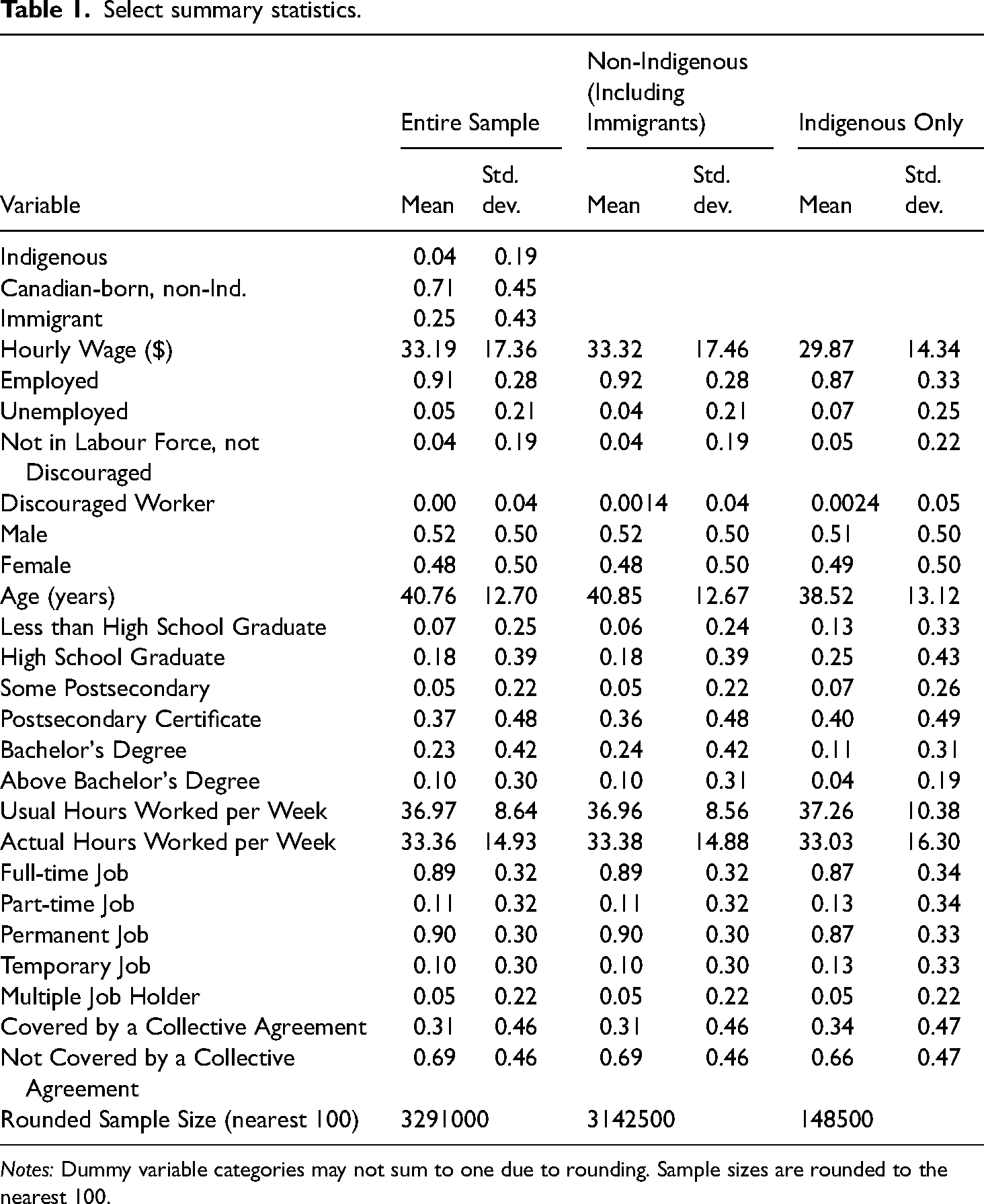
Notes: Dummy variable categories may not sum to one due to rounding. Sample sizes are rounded to the nearest 100.
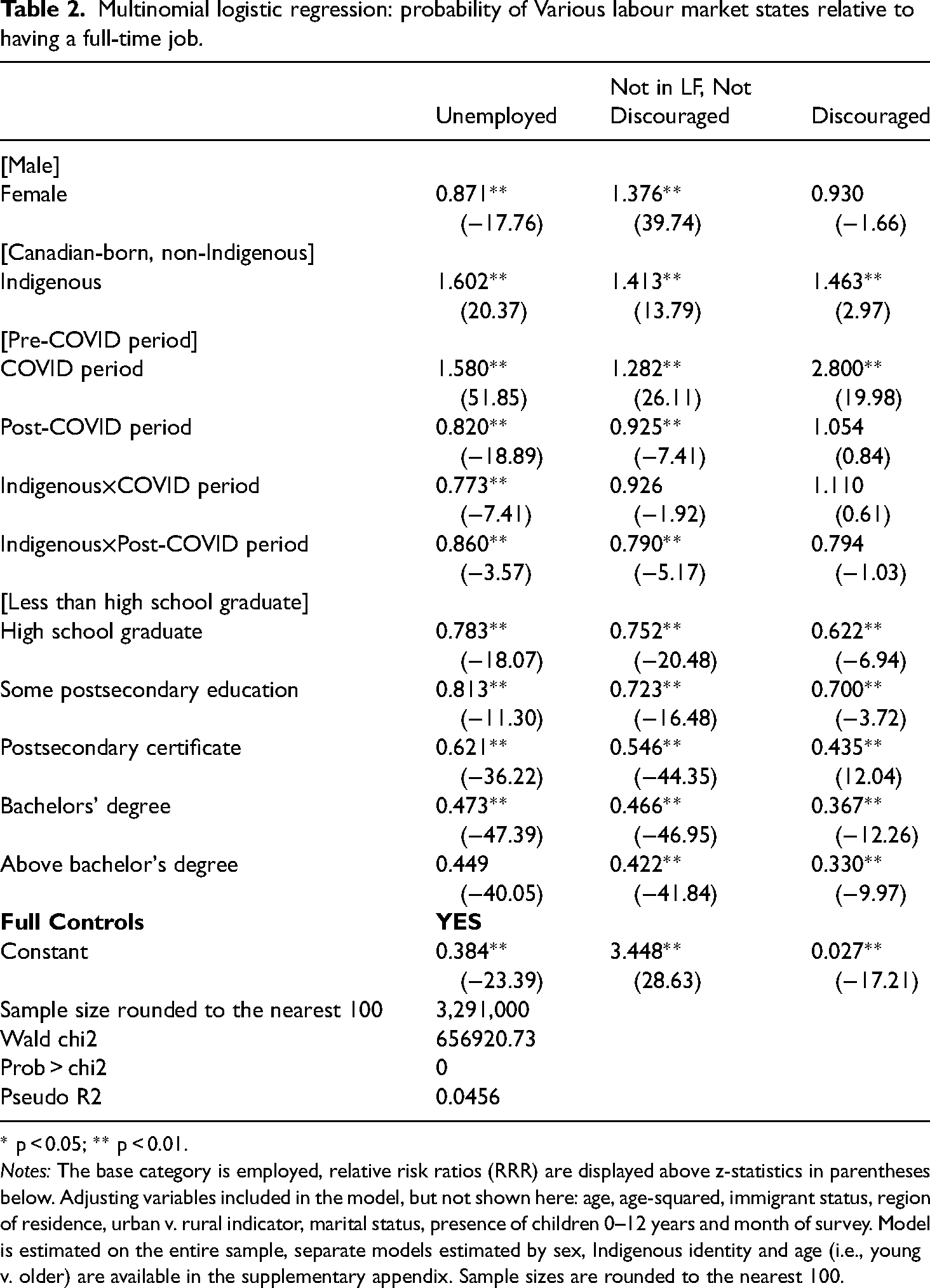
Turning to the results of the multinomial logistic regression displayed in Table 2, which estimates the relative probability that a respondent is in one of four mutually exclusive labour force states: i) employed (i.e., either full-time or part-time), which is the reference category; ii) unemployed; iii) not in the labour force, but not a discouraged worker; and iv) a discouraged worker. For easier interpretation, the table shows the relative risk ratios (RRR) of being in one of the aforenoted categories as compared to the reference category of employed. A RRR value greater than 1 means that there is a higher risk in being in a labour force state other than employed, whereas a RRR value less than 1 means that the base category is the more likely outcome (see, for example, UCLA, 2021). The results show that, regardless of COVID-19, Indigenous persons are relatively more likely than non-Indigenous persons to be in any of the other labour force states (i.e., unemployed, not in the labour force or a discouraged worker) than they are to be employed. The magnitudes of the coefficient sizes are large and are all highly statistically significant.
Multinomial logistic regression: probability of Various labour market states relative to having a full-time job.
* p < 0.05; ** p < 0.01.
Notes: The base category is employed, relative risk ratios (RRR) are displayed above z-statistics in parentheses below. Adjusting variables included in the model, but not shown here: age, age-squared, immigrant status, region of residence, urban v. rural indicator, marital status, presence of children 0–12 years and month of survey. Model is estimated on the entire sample, separate models estimated by sex, Indigenous identity and age (i.e., young v. older) are available in the supplementary appendix. Sample sizes are rounded to the nearest 100.
Considering the sample in general, the results of the multinomial logistic regression also reveal that women are relatively more likely than men to be out of the labour force, but relatively less likely than males to be unemployed. Both age and higher levels of education provide a protective effect against unemployment and labour force exit.
Looking first to the relationship between COVID-19 and labour force status for all respondents, compared to the pre-COVID period, the pandemic increased the relative likelihood of unemployment, exiting the labour force and being a discouraged worker across the board. This is observed by the positive, statistically significant coefficients on the COVID- period variable. In the post-COVID period, respondents were relatively less likely to be unemployed or to have exited the labour force as compared to the pre-COVID period, suggesting a recovery in employment levels following the pandemic.
Central to the present analysis is the question of whether the COVID-19 pandemic affected the labour market status of Indigenous persons differently than non-Indigenous, Canadian-born respondents. To explore this question, two terms interacting with Indigenous identity first with the COVID period and second, with the post-COVID period are included in the analysis. With respect to the relative probability of unemployment (Table 2 column 2), these interaction terms are both less than one and statistically significant. While the interaction terms indicate how the COVID-19 pandemic impacted Indigenous and non-Indigenous Canadians differently; given the large magnitudes of the RRRs in Table 2 column 2 for Indigenous identity and the COVID period, the interaction between Indigenous identity and the COVID-period is not sufficiently large to mitigate the former aforenoted effects. In other words, while the pandemic had less of an impact on the unemployment rates of Indigenous respondents relative to non-Indigenous respondents, overall regardless of COVID-19, Indigenous Canadians still are relatively more likely to be unemployed as compared to their non-Indigenous counterparts. A similar, significant interaction between Indigenous status and the post-COVID period on the relative probability of being out of the labour force is noted in Table 2 column 2. Again, this effect is not large enough to compensate for the effect of Indigenous identity. In sum, despite the lessening effects of the interaction terms, it can still be concluded that Indigenous respondents were relatively more likely to be unemployed, not in the labour force or discouraged than they were to have employment as compared to their non-Indigenous counterparts, a finding that holds regardless of the COVID-19 pandemic. Similar patterns are observed when the analysis is estimated separately for Indigenous respondents; males; females and young persons aged 15–30 years. These results can be found in the Supplementary Appendix Tables A1.1 through A3.1.
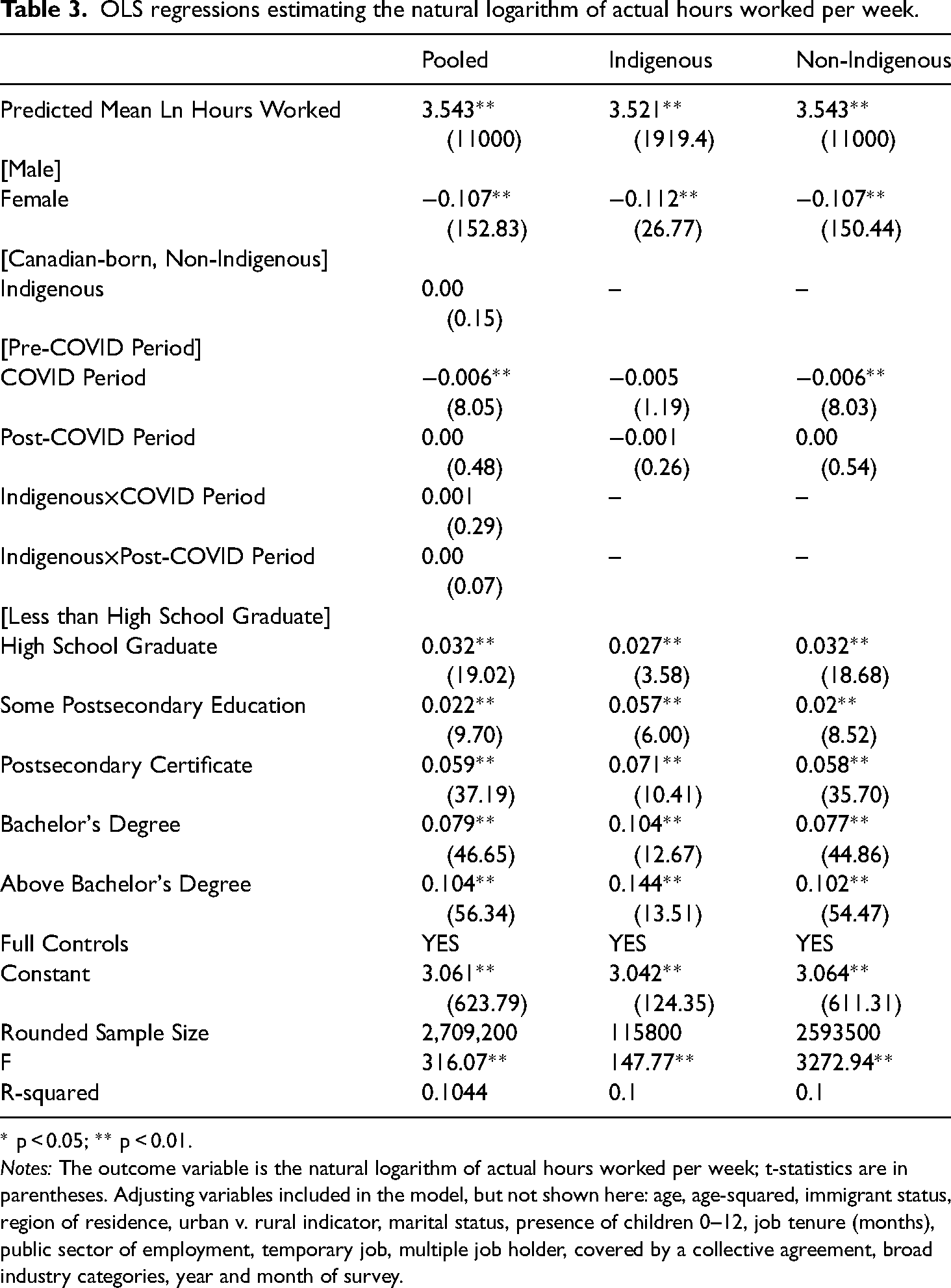
Table 3 presents the results estimating the natural logarithm of actual hours worked per week. There is no statistically significant difference in actual weekly hours worked between Indigenous and non-Indigenous workers. For the entire sample, the COVID pandemic was negatively related to actual hours worked, bearing in mind that, participants with actual hours worked equal to zero in the reference week of data collection are excluded from the model. The COVID pandemic did not affect the hours worked among Indigenous respondents differently than those worked by non-Indigenous respondents as evidenced by the statistically insignificant interactions on the terms Indigenous × COVID period and Indigenous×post-COVID period. In general, unsurprisingly, females work fewer hours than males and high levels of education are positively associated with increased hours worked. When considering actual hours worked for Indigenous and non-Indigenous workers separately (Table 3 columns 3 and 4), the results show that the pandemic did not have a significant effect among Indigenous persons.
OLS regressions estimating the natural logarithm of actual hours worked per week.
* p < 0.05; ** p < 0.01.
Notes: The outcome variable is the natural logarithm of actual hours worked per week; t-statistics are in parentheses. Adjusting variables included in the model, but not shown here: age, age-squared, immigrant status, region of residence, urban v. rural indicator, marital status, presence of children 0–12, job tenure (months), public sector of employment, temporary job, multiple job holder, covered by a collective agreement, broad industry categories, year and month of survey.
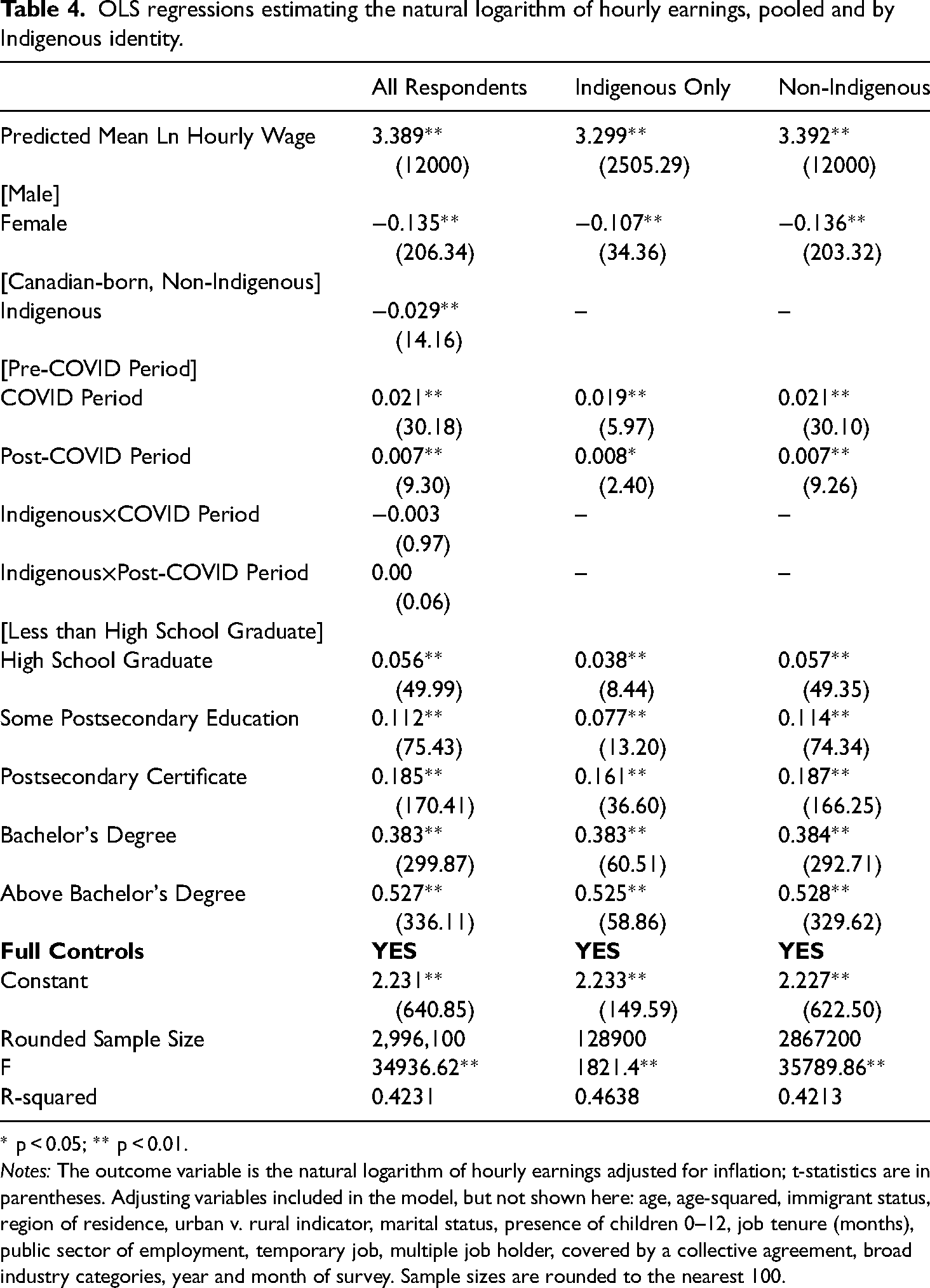
Finally, considering the relationship between Indigenous identity and earnings, Table 4 shows that Indigenous workers earn roughly 3 percent less than their non-Indigenous, Canadian-born counterparts. The size of the earnings disadvantage found here is smaller than what is often reported in other studies of Indigenous-non-Indigenous earnings differentials (e.g., Lamb et al., 2018) and this could be for two reasons: Firstly, many of the previous studies examining Indigenous earnings disparities in Canada use data from the Canadian Census, which contains a larger sample of Indigenous respondents including those living on-reserves and in Northern communities where Indigenous earnings are particularly low (e.g., Feir, 2013). Secondly, previous studies of Indigenous earnings disparities often cite unadjusted mean earnings gaps between Indigenous and non-Indigenous workers before decomposing said gaps using the common Blinder (1973) – Oaxaca (1973) approach. The hourly earnings penalty found here is estimated from the coefficient on the Indigenous status variable in a multiple regression model meaning that the Indigenous earnings discount is adjusted in light of the other variables included in the analysis.
OLS regressions estimating the natural logarithm of hourly earnings, pooled and by Indigenous identity.
* p < 0.05; ** p < 0.01.
Notes: The outcome variable is the natural logarithm of hourly earnings adjusted for inflation; t-statistics are in parentheses. Adjusting variables included in the model, but not shown here: age, age-squared, immigrant status, region of residence, urban v. rural indicator, marital status, presence of children 0–12, job tenure (months), public sector of employment, temporary job, multiple job holder, covered by a collective agreement, broad industry categories, year and month of survey. Sample sizes are rounded to the nearest 100.
For the sample as a whole, the COVID and post-COVID periods are both correlated with higher earnings relative to the pre-COVID period. This could reflect certain pandemic-related pay increases experienced by some workers; however, it is more likely driven by the fact that particularly low-wage workers were more likely to either lose their job or voluntarily leave the labour force during the crisis (e.g., Crust et al., 2020; Lamb et al., 2021).
The impact of COVID-19 on earnings was not different for Indigenous versus non-Indigenous workers as both interaction terms are statistically insignificant. This is also seen in the similar effect sizes on the COVID and Post-COVID period variables when models are estimated separately for Indigenous and non-Indigenous workers. As expected, for the sample as a whole, females experienced a 13.5 percent earnings penalty relative to males and higher levels of education are all associated with increased hourly earnings.
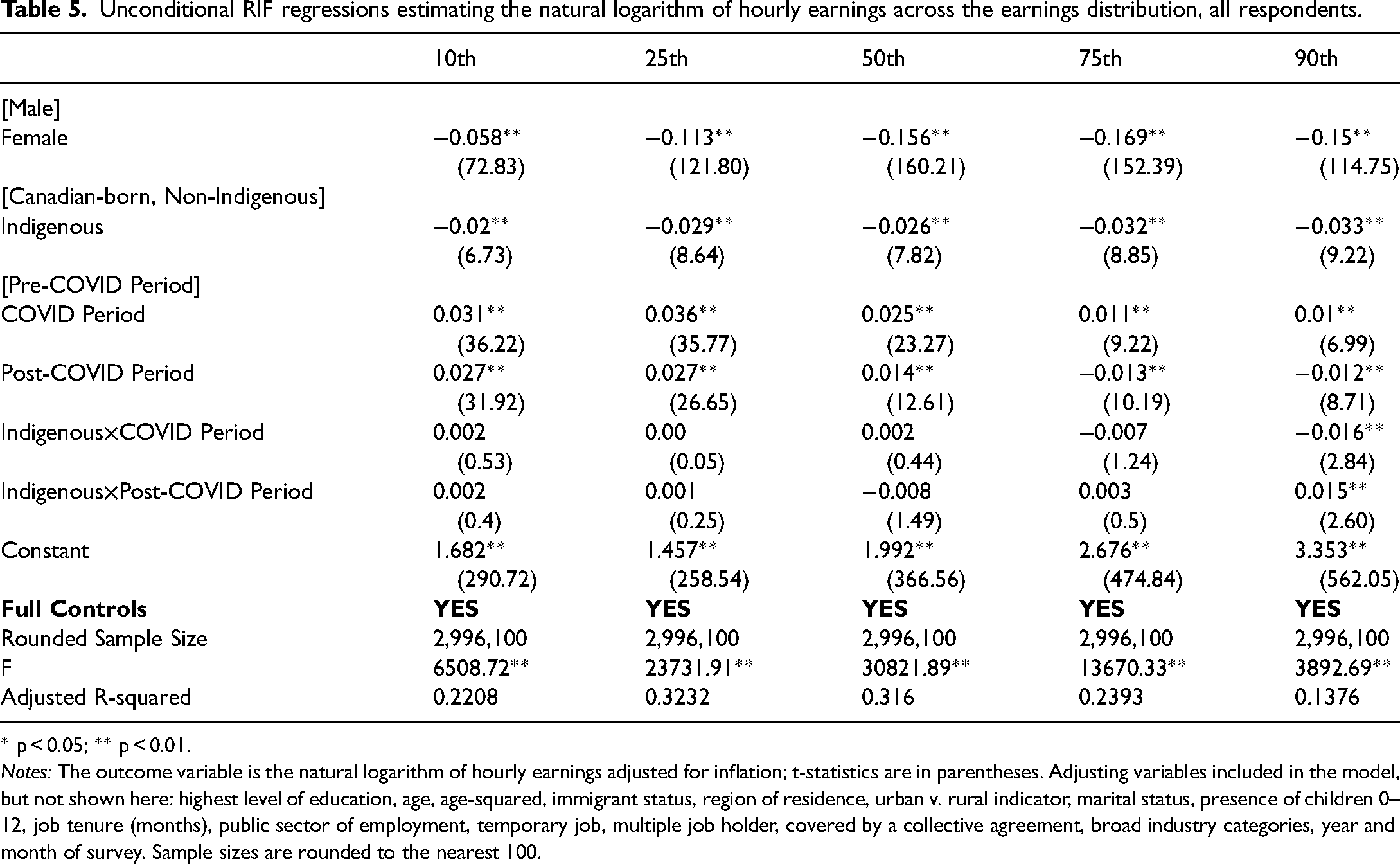
Table 5 also considers hourly earnings, however, looks across the earnings distribution. Regardless of the pandemic, Indigenous workers experience small, but increasing earnings penalties moving from the 10th to the 90th percentile of the wage distribution. The COVID pandemic did not have a different effect on the earnings of most Indigenous workers, with the exception of those at the 90th percentile who, during the pandemic earned an additional 1.6 percent less than non-Indigenous workers at the same point on the earnings distribution, a finding which was nearly reversed by the post-COVID period. For all workers, the COVID period is associated with increased earnings; premiums which diminish moving up the earnings distribution. This result should, however, be interpreted with some caution given the changes to the labour supply during the pandemic.
Unconditional RIF regressions estimating the natural logarithm of hourly earnings across the earnings distribution, all respondents.
* p < 0.05; ** p < 0.01.
Notes: The outcome variable is the natural logarithm of hourly earnings adjusted for inflation; t-statistics are in parentheses. Adjusting variables included in the model, but not shown here: highest level of education, age, age-squared, immigrant status, region of residence, urban v. rural indicator, marital status, presence of children 0–12, job tenure (months), public sector of employment, temporary job, multiple job holder, covered by a collective agreement, broad industry categories, year and month of survey. Sample sizes are rounded to the nearest 100.
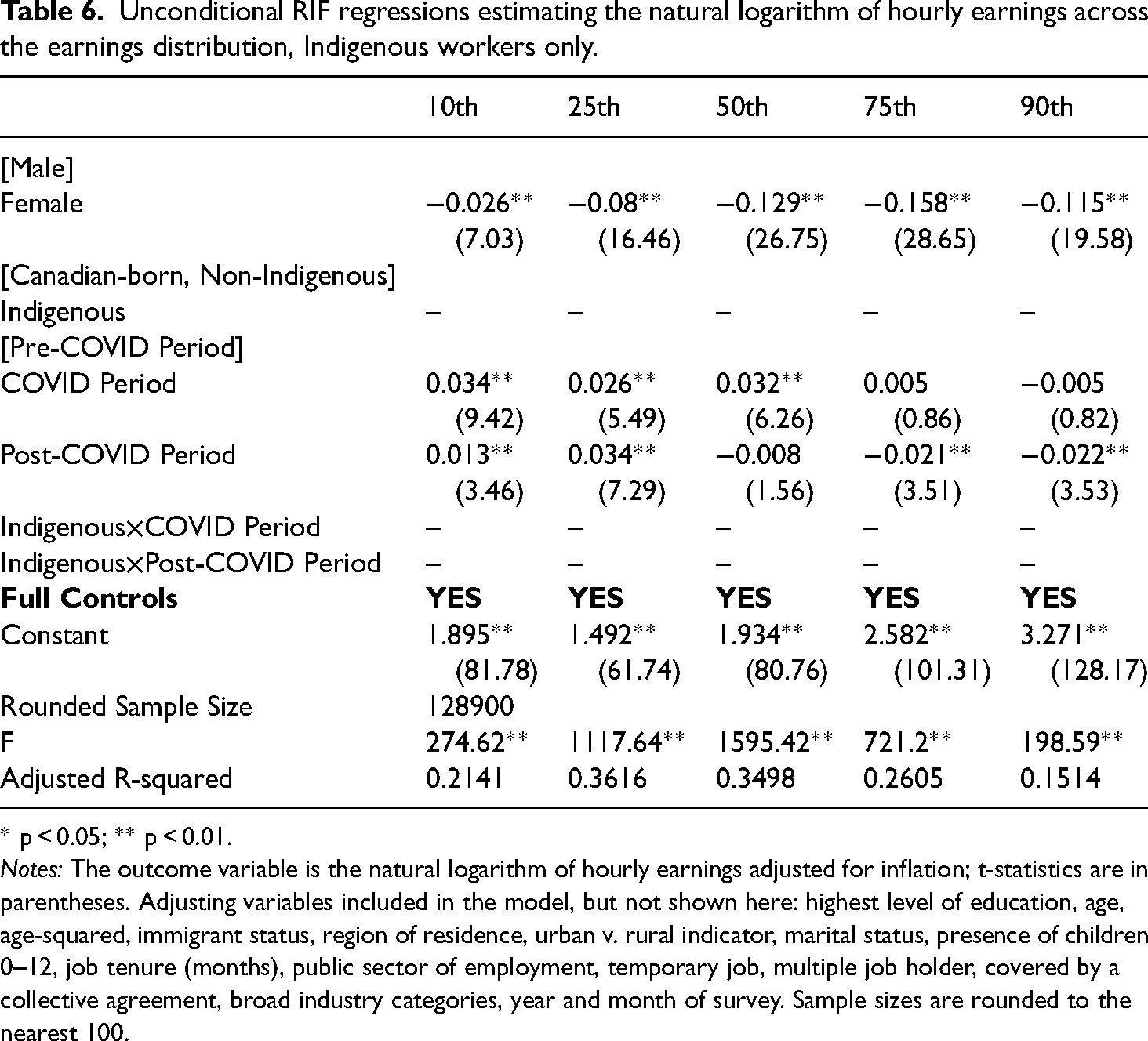
Table 6 repeats the analysis of hourly earnings across the distribution but considers Indigenous workers only (results for non-Indigenous workers can be found in the Supplementary Appendix Table A6.1). Among Indigenous persons, a significant earnings premium associated with the COVID pandemic is only observed at and below the median. COVID-19 is not significantly associated with the earnings of higher income Indigenous workers. In the post-COVID period, higher earning Indigenous workers experienced a wage penalty relative to their earnings poistion prior to the pandemic.
Unconditional RIF regressions estimating the natural logarithm of hourly earnings across the earnings distribution, Indigenous workers only.
* p < 0.05; ** p < 0.01.
Notes: The outcome variable is the natural logarithm of hourly earnings adjusted for inflation; t-statistics are in parentheses. Adjusting variables included in the model, but not shown here: highest level of education, age, age-squared, immigrant status, region of residence, urban v. rural indicator, marital status, presence of children 0–12, job tenure (months), public sector of employment, temporary job, multiple job holder, covered by a collective agreement, broad industry categories, year and month of survey. Sample sizes are rounded to the nearest 100.
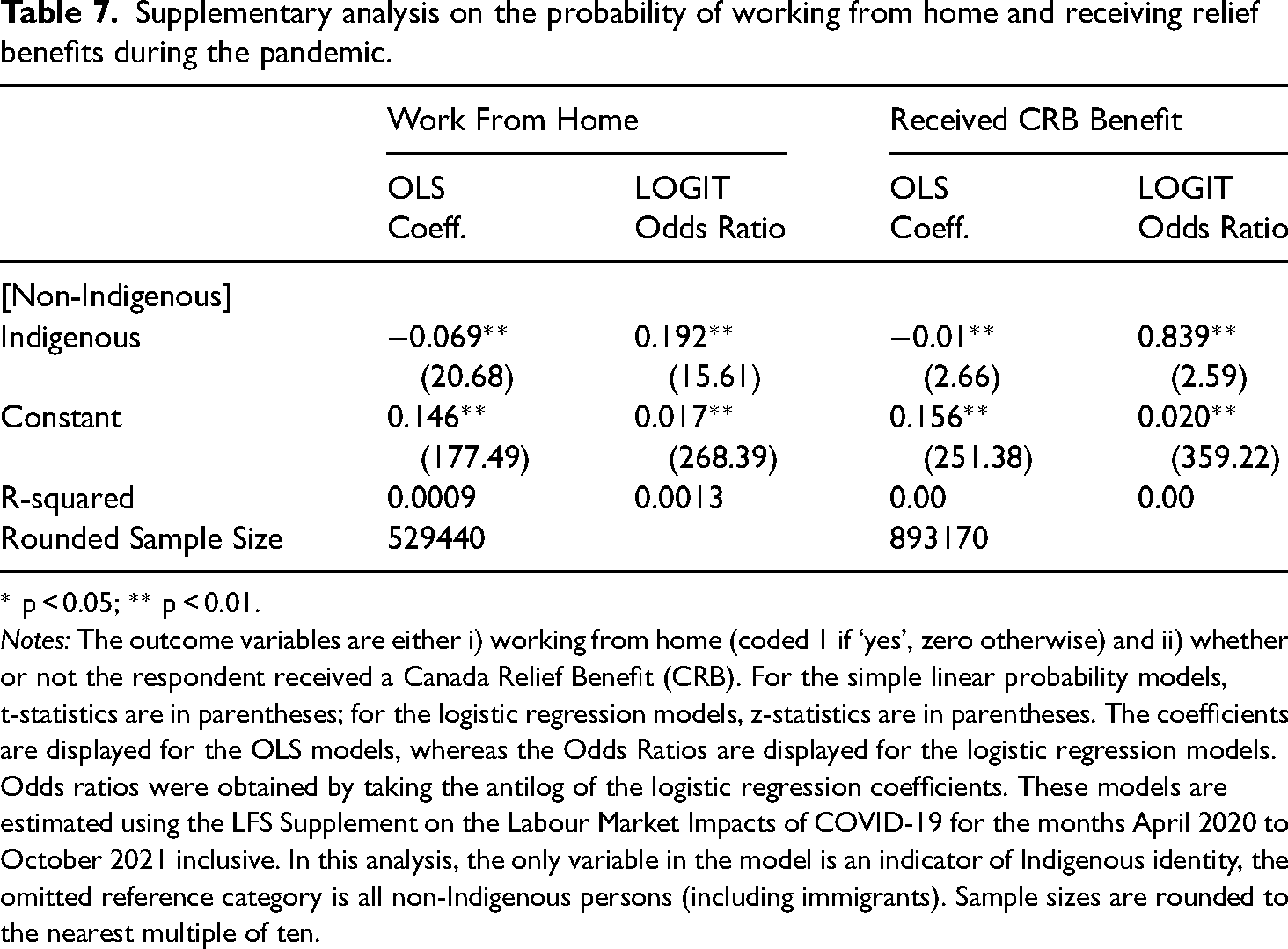
Finally, Table 7 presents the relationships between Indigenous identity and i) working from home during the COVID pandemic and ii) receiving some form of government relief benefit. These estimates are based on the LFS COVID supplementary data and cover the period of April 2020 to October 2021. In these models, Indigenous identity is the only right-hand side variable and as such they represent simple descriptive statistics. The results suggest that Indigenous workers were less likely than their non-Indigenous counterparts to work from home during the pandemic. Columns 3 and 4 of Table 7 show that Indigenous respondents were also less likely to have received any form of government relief benefit between April 2020 and October 2021 3 .
Supplementary analysis on the probability of working from home and receiving relief benefits during the pandemic.
* p < 0.05; ** p < 0.01.
Notes: The outcome variables are either i) working from home (coded 1 if ‘yes’, zero otherwise) and ii) whether or not the respondent received a Canada Relief Benefit (CRB). For the simple linear probability models, t-statistics are in parentheses; for the logistic regression models, z-statistics are in parentheses. The coefficients are displayed for the OLS models, whereas the Odds Ratios are displayed for the logistic regression models. Odds ratios were obtained by taking the antilog of the logistic regression coefficients. These models are estimated using the LFS Supplement on the Labour Market Impacts of COVID-19 for the months April 2020 to October 2021 inclusive. In this analysis, the only variable in the model is an indicator of Indigenous identity, the omitted reference category is all non-Indigenous persons (including immigrants). Sample sizes are rounded to the nearest multiple of ten.
Limitations of the present analysis
This analysis has examined whether or not the COVID-19 pandemic had affected the labour market outcomes of Indigenous Canadians differently than their non-Indigenous counterparts. By in large, the findings reveal that the effect of the COVID-19 crisis on the labour market outcomes measured herein was similar for Indigenous and non-Indigenous Canadians; and this is in spite of the fact that Indigenous respondents were less likely to work from home and/or receive a form of Canada Recovery Benefit. Regardless of the pandemic, Indigenous respondents faired relatively worse on all labour market outcomes than non-Indigenous persons; however, the wage disparities estimated here are smaller than those found in previous studies on Indigenous earnings.
Before proceeding to discuss the implications of the findings of the present analysis, a few important limitations of the study should be noted. Firstly, the data used in this study is cross-sectional, therefore, causal relationships cannot be established. Although this analysis makes use of the phrase the ‘impact and/or effect of the COVID-19 pandemic’ throughout the discussion, strictly speaking causality cannot be inferred in the relationships under investigation. Indeed, there exists a dearth of high quality, nationally representative longitudinal labour market data in Canada and even more so, data that is suited to studying the labour market transitions of specific groups such as Indigenous persons (Steffler, 2016). Addressing this gap in information would go a long way in allowing researchers to conduct more rigorous causal analyses.
Secondly, as noted earlier in the Data and Methods section, the LFS employs a six-month rotating panel sampling design. This means that, using consecutive months of data, it is possible for the same individuals to be sampled up to six times. Concerns over a bias sample resulting from repeated measures notwithstanding, this analysis employs consecutive months for two reasons: to improve sample sizes and to capture the entirety of the COVID-19 pandemic, the effects of which were experienced intermittently and inconsistently across the country. Nevertheless, to explore whether and to what extent my results may be biased by repeated measures, the main models were re-estimated using two different two-months pairings with months that are each six months apart (i.e., June and December; and again, using March and September). Noting that this approach introduces seasonality, especially problematic given the differential effect of the pandemic across time, the results using the two-month pairings are quite similar to those obtained using consecutive months with minor exceptions: in the analysis using March and September, there was no statistically significant difference in hours worked between Indigenous and non-Indigenous Canadians, and in both two-month pairings, the relationship between Indigenous identity and the relative probability of being a discouraged worker was not statistically significant. 4
Finally, and most substantively, the LFS excludes persons living in Canada's Northern Territories, as well as those on-reserves and in some remote communities. This limitation in the data dramatically reduces the representation of Inuit and First Nations respondents in particular. The key variable of interest in the study is whether or not a respondent identifies as an Indigenous person. However, it is important to bear in mind the heterogeneity in Indigenous identity. In Canada, for example, Indigenous persons may identify as Inuit, First Nations, Metis or some combination of the three identities. However, the relatively limited sample if more detailed Indigenous identity available in the LFS data mean that the present analysis does not capture the nuances between Indigenous identities, nor the potentially important geographic differences in labour market experience between those living in Northern Territories and/or on Indigenous reserves.
Discussion
The results of this analysis are, on the one hand hopeful, yet, on the other hand, underscore that disparities in Indigenous labour market outcomes still exist, which calls for further research and policy initiatives. What is hopeful about the findings of the present study is that, by in large, the labour market outcomes of Indigenous persons were not disproportionately worsened by the COVID-19 pandemic. Furthermore, this is the case despite the fact that Indigenous peoples were less likely than their non-Indigenous counterparts to either work from home or access some form of Canada Relief Benefit. Given limitations in the LFS supplementary data, the present analysis is unable to examine the reasons why Indigenous respondents were less likely to work from home or access relief funding. In response to differences in the ability to work from home, one can conjecture that this is a result of the occupational distribution of Indigenous workers whereby they are more likely to be in jobs that cannot be performed remotely. Indeed, there is evidence that Indigenous people are overrepresented in trades, transport and natural resource occupations (e.g., Statistics Canada, 2023). The fact that Indigenous peoples were less likely to receive any form of Canada Relief Benefit from April 2020 to October 2021 is of greater concern and warrants further investigation.
The optimism gleaned from the fact that the labour market position of Indigenous peoples was not worsened by the pandemic, however, needs to be tempered by the fact that the most economically vulnerable Indigenous persons, those who live on Indigenous reserves and in Northern communities, are not captured in the LFS data.
The findings of the persistent disparities in employment rates, labour force participation and earnings experienced by Indigenous persons in Canada are cause for concern. From a labour market policy perspective, the fact that regardless of the COVID-19 pandemic, Indigenous persons were relatively more likely to be discouraged workers than to be employed as compared to their non-Indigenous counterparts is in an important finding. Discouraged worker status is a relatively less studied labour market outcome as such individuals represent a very small proportion of the population. Nonetheless, individuals who are otherwise able to work, but who fail seek employment because they are discouraged by the prevailing labour market conditions are economically inefficient for society and potentially harmful to the health and well-being of the individual. A recent study in the US, for example, found that from January 2000 to June 2005 “the index of female discouraged workers helps to predict female suicide movements” and among males ages 45–54, the study makes the link between unemployment and deaths from alcohol (Liu, 2017: 785). However, further research into why workers are discouraged and policy responses to address this form of labour force non-participation are complex. Particularly with respect to Indigenous peoples in Canada who continue to experience the consequences of institutionalized racism, colonialism and trauma (e.g., Matheson et al., 2022).
The results of the present analysis also underscore the protective role that education plays in mitigating labour market disadvantage in terms of the negative relationships between higher levels of education and the relative probability of being unemployed or a discouraged worker; and the positive association between education and earnings. The educational attainment gaps between Indigenous and non-Indigenous Canadians have been well-documented (e.g., Bekooy, 2021). Indeed, based on the findings from the 2017 Aboriginal Peoples Survey, Indigenous respondents themselves cited a lack of sufficient education and training as a key barrier to employment (Bekooy, 2021). Although research has found that Indigenous persons in Canada receive similar returns to education as compared to their non-Indigenous counterparts (Hu et al., 2019), the simple prescription to improve educational outcomes among Indigenous Canadians is limited if it fails to consider the barriers to education as well as cultural context in which formal schooling is offered (e.g., Shankar et al., 2020; Walton et al., 2020). A recent discussion paper by the Bank of Canada summarizes the situation succinctly, citing that “The economic disparities faced by many Indigenous communities are rooted in the history of colonization, dispossession of their traditional lands, and systemic barriers to economic participation and development” (Chernoff and Cheung, 2023). Among the barriers that Indigenous students note in accessing and/or continuing their postsecondary education are social and cultural isolation (Shankar et al., 2020: 399), financial concerns, a lack of childcare and racism (Walton et al., 2020). A recent report examining supports for Indigenous postsecondary students, notes that “Many studies have shown that Indigenous students have specific needs related to mental health, connection to community and culture, and finances which may negatively impact their success in PSE” (St. Germaine, 2023: 5). Discouragingly, Walton et al. (2020: 450) note that “53% of Indigenous students reported experiencing racism at the university.” Therefore, solutions aimed at addressing educational attainment among Indigenous persons must not only be collaborative, but more so, be led by and informed by Indigenous communities themselves so as to avoid perpetuating the paternalism that has characterized much of Canada's treatment of Indigenous persons.
With respect to wage disparities, the relatively small roughly 3 percent earnings penalty experienced by Indigenous workers may be evidence of improvements in the labour market position of Indigenous persons in Canada as this gap is markedly smaller than what has been estimated in previous studies examining Indigenous-non-Indigenous wage differentials (e.g., Lamb et al., 2018). As noted, however, differences in data sets and samples make it difficult to compare the current findings to previous estimates. Nonetheless, the fact that a statistically significant wage gap between Indigenous and non-Indigenous workers still exists, and in such a richly specified model, means that further work must be done to ameliorate Indigenous earnings. Once again, educational attainment is frequently offered as a remedy. While the positive relationship between education and earnings is clear, other factors must also be considered. In particular, on the demand side, the extent to which employers are willing to be educated about Indigenous history and culture and further to translate that knowledge into more inclusive hiring, training and promotion practices, may help to ensure that Indigenous workers have equitable access to better quality jobs and advancement opportunities. While the research on job quality among Indigenous persons is limited, one recent study found that, compared to non-Indigenous workers, Indigenous employees were: less likely to hold a managerial position; more likely to be in involuntary part-time work; less likely to have a flexible work schedule; and more likely to report discrimination, sexual harassment and/or unfair treatment in the workplace (Bleakney et al., 2024). The higher rates of workplace discrimination were also underscored by Nangia and Arora (2021: 160) who found Indigenous females and Indigenous workers from low-middle class backgrounds were more likely to report having encountered discrimination in the workplace. A lack of cultural sensitivity in workplace polices as highlighted, for example in the very limited way in which Western organizations define family for the purposes of bereavement leave, harms Indigenous employees who not only have specific cultural and religious obligations related to the loss of a loved one, but who also tend to have close ties to extended family and community (Julien et al., 2017).
While the expressed objective of the present analysis was to examine the impact of the pandemic on the labour market outcomes of Indigenous persons in Canada, the persistent economic disparities found herein highlight the need for continued research as well as public policy and employer responses. The points made above with respect to education and workplace practices are meant to give but a few examples of possible areas of further development.
Conclusion
In sum, the present analysis sought to explore whether the COVID-19 pandemic affected the labour market outcomes of Indigenous persons living off-reserve differently from non-Indigenous persons in Canada. The finding that, by in large, the relative labour market position of Indigenous persons in Canada was not worsened by the COVID-19 crisis is a sign of resilience and hope. The pandemic had a markedly negative impact of the labour market outcomes of many Canadians and Indigenous persons were not spared from this. However, in the period following the pandemic, Indigenous Canadians, like their non-Indigenous counterparts, appeared to have recovered the status quo. The fact that for Indigenous persons the status quo still means lagging behind their non-Indigenous counterparts in terms of employment, labour force participation and earnings means that further work must be done to bring about improved labour market outcomes for Indigenous Canadians. To this end there is a great need for labour market data (e.g., Steffler, 2016) that is representative of the diversity and entirety of the Indigenous population in Canada. Any optimism derived from the present findings is tempered by the fact that the most vulnerable Indigenous persons, those who live on reserves, in Northern regions (Yukon, Nunavut and the Northwest Territories) and in remote communities, are not included in the Labour Force Survey sample used in this study. If there is any truth to the idiom ‘what gets measured gets addressed,’ then the need for greater efforts to document the labour market realities of more Indigenous persons is clear.
In addition to more comprehensive data, policy initiatives aimed at improving the labour market outcomes of Indigenous persons in Canada should first and foremost be informed and led by Indigenous communities and organizations. Endeavours already underway aimed at Indigenizing academic curricula could be further extended to educate and inform employers (which is undoubtedly being done in some organizations) in an effort to address bias and other institutional barriers in hiring, training, promotion and compensation practices that may hinder Indigenous workers from equitable access to employment-related opportunities.
Supplemental Material
sj-docx-1-jir-10.1177_00221856241294108 - Supplemental material for The impact of the COVID-19 pandemic on the labour market outcomes of Indigenous persons living off-reserve in Canada
Supplemental material, sj-docx-1-jir-10.1177_00221856241294108 for The impact of the COVID-19 pandemic on the labour market outcomes of Indigenous persons living off-reserve in Canada by Danielle Lamb in Journal of Industrial Relations
Footnotes
Acknowledgements
Access to the data for this research was made possible through the Canadian Research Data Centre Network (CRDCN), which is supported by funds from the Social Science and Humanities Research Council (SSHRC), the Canadian Institute for Health Research (CIHR), and the Canadian Foundation for Innovation (CFI) and Statistics Canada. Although the research and analysis are based on data from Statistics Canada, the opinions expressed do not represent the views of Statistics Canada or the Canadian Research Data Centre Network (CRDCN) and any errors contained herein are solely those of the authors. Data is owned by statistics Canada; the author would be glad to make any tables or coding available upon request. Information on how to obtain access to Statistics Canada data can be found at  .
.
Declaration of conflicting interests
The author declared no potential conflicts of interest with respect to the research, authorship, and/or publication of this article.
Funding
The author received no financial support for the research, authorship, and/or publication of this article.
Supplemental material
Supplemental material for this article is available online.
Notes
Biographical note
References
Supplementary Material
Please find the following supplemental material available below.
For Open Access articles published under a Creative Commons License, all supplemental material carries the same license as the article it is associated with.
For non-Open Access articles published, all supplemental material carries a non-exclusive license, and permission requests for re-use of supplemental material or any part of supplemental material shall be sent directly to the copyright owner as specified in the copyright notice associated with the article.
