



Abstract
As in many nations, New Zealand's (NZ) government has sought to implement workplace policies in public service agencies, including equity initiatives to accelerate diversity and inclusion. However, these processes have been disrupted by the labour market and wider effects of Covid-19 and austerity policies. This is significant for NZ-based Pacific women workers, who often face pronounced workplace inequities though scant knowledge exists about the role of Pacific employee networks in progressing equity. This study examined such networks in three NZ public service agencies, focussing on the ‘ambition’ of, and influences on progress with, their equity pursuits. Seventy-two semi-structured interviews with sector experts, agency managers and staff, including Pacific women and men whose voices are often muted in the formulation of workplace responses ( Maiava-Zajkowski, 2021) were conducted throughout 2020 and early 2021. Thematic content analysis revealed that agency networks vary in size, whom they support, their activities, and environmental dynamics. Using an equity approach typology, less ambitious equity goals were found to prevail, reflecting the networks’ fledgling status. Yet, despite facing austerity policies and pandemic challenges, the networks mitigated curbs on workplace equity activity by harnessing the agency of members, with the potential to push for intersectional and culturally informed equity initiatives.
Keywords
Introduction
Diversity, inclusion and equity issues have recently received increased scholarly attention (e.g. Bernstein et al., 2020), often due to ‘fundamental economic, socio-demographic and legislative changes taking place globally’ (Theodorakopoulos and Budhwar, 2015: 177). Historically, diversity studies in the workplace have examined individuals in terms of a single identity category such as gender, age, ethnicity, race, pay, religion, and class (Tatli and Ӧzbligin, 2012). Yet, despite their efforts to embrace and manage increasing workforce diversity, many organisations have realised little progress due to outdated practices and failure to ‘theorize the heterogeneity within identity categories’ (Dennissen et al., 2020: 221).
In Aotearoa New Zealand (NZ), population and labour force demographics continue to diversify. StatsNZ (2018) reports that women form 51.4% of the population and 48% of the national paid workforce while Māori 1 and Pacific peoples constitute 16.5% and 8.1% respectively of the population, and 11.2% and 5.8% of NZ's paid workforce. In 2022, the national gender pay gap (GPG) stood at 9.2%, while the public service GPG was 8.5% (Ministry for Women (MfW), 2023a; Public Service Commission (PSC), 2021a) – low by international standards. At the end of 2021, the Māori to non-Māori pay gap decreased from 9.3% to 8.3% while the Pacific pay gap decreased but from a higher level of 19.5% to 17.9% (Ministry for Women (MfW), 2023a; Public Service Commission (PSC), 2021a), remaining high alongside the pay gaps for other ethnic groups in NZ. And while Pacific Peoples’ representation in skilled occupations improved to 37.3% in 2019, they continue to be over-represented among the low-skilled (18.1%) (NZ Ministry for Business, Innovation and Employment (MBIE), 2019). Their over-representation in lower-paid jobs also largely explains Māori and Pacific workers’ generally lower pay levels. And while the pay gaps for Pacific and Māori women in the public service are decreasing, the former still have the lowest average salaries in the service while European men have the highest (PSC, 2021a), emphasising the need to address such quantifiable – and start examining qualitative – intersectional 2 issues in NZ's workplaces.
This study thus explored the nature of inequalities in NZ's public service as conveyed in semi-structured interviews with 72 sector experts, and workers and managers in three agencies. Given a dearth of research insights on such, it responded in part to the question of how and to what extent Pacific staff networks are concerned with workplace intersectional equity issues, particularly for Pacific women workers whose views and perceptions, linked to their lower-status work roles and cultural mores, have typically gone unheard (Maiava-Zajkowski, 2021). Specifically, it provided an inaugural assessment of the relative ‘ambition’ of the networks’ equity-related approaches and pursuits, given perceived challenges and opportunities to their operation. The study was also timely due to the priority commitments of NZ's PSC to progress staff networks, including via the development of staff-led networks in the public service, in an effort to improve the engagement and equity of all public servants at work and the public whom they serve (PSC, 2021b). The following section overviews the history of Pacific labour in NZ before we turn to workplace equity indices in gender and intersectional terms.
Literature review
Pacific labour in NZ
The arrival of Pacific workers in NZ can be traced back to the 1870s. Post-WWII, the influx of Pacific migrants to NZ was related to the close relationships and political ties between the country's government and those of the surrounding Pacific Islands, job opportunities, and population pressures in the islands (Fraenkel, 2011). Indeed, during times of labour shortages, NZ often looked to the Pacific islands (Beaglehole, 2015), with Pacific Peoples who relocated to NZ in the early 1960s viewed as cheap labour in a context of economic prosperity. However, post-1967, NZ's wool exports dropped by 30%, leading to inflation and high unemployment that particularly impacted on Pacific Peoples. Economic downturn coincided with the country's infamous ‘Dawn Raids’ in the 1970s when the Government scoured Pacific households for overstayers, despite most illegal workers originating from Europe and North America. This marked a low point in relations between the NZ government and Pacific communities (Prebble, 2021). The situation shifted again from the 1980s when changes to immigration policy allowed Pacific Peoples to enter NZ in greater numbers, as evidenced by an annual influx of Pacific seasonal workers over the past decade. Pasifika, mainly residing in Auckland (NZ's most populated city), increased from 65,700 in 1974 to 381,642 by 2018 (Auckland Council, undated) and are projected to reach between 530,000–650,000 by 2038 (StatsNZ, 2021). Indeed, Pacific population growth rate in NZ has been high (growing 29% between the 2013–18 censuses, compared to 10% for the overall population), with the 2018 census showing that 46% of Pasifika were born overseas and had lived in NZ for 20 years or more (MPP, 2020). Furthermore, most NZ-born Pasifika are under 15 years, with the continuing growth of this cohort presenting new policy challenges.
Pacific people in NZ are mostly employed in manufacturing, wholesale and retail, healthcare and social assistance services, and other business services (Ministry for Pacific Peoples (MPP), 2020). While a strong increase in employment demand from the utilities and construction industry in 2016 led to a significant increase in their employment (Pasefika Proud, 2016), and the number of Pasifika in skilled work roles recently increased, they remain over-represented in low-income, lower-level employment. Indeed, the high pay gap between Pacific workers and their European counterparts in NZ altered little over the decade to 2018 (NZ Treasury, 2018). Furthermore, in NZ's public service, Pacific people remain significantly under-represented in the top three management tiers (State Services Commission, 2017).
Intersectionality and inequity
Workplace (in)equities are often conceived in terms of pay and leadership gaps (Parker et al., 2021). As well as ethnicity-based differences in the position, pay and experiences in NZ workplaces noted above, workplace inequities can also be discerned in relation to gender (e.g. in terms of pay gaps, a ‘glass ceiling’, and occupational segregation). Indeed, gender equity initiatives have developed in recent decades to help resolve pay gaps, occupational segregation and leadership gaps in this country (PSC, 2020). There has also been limited recognition of the need to go beyond numerical or representative parity in organisation to challenge gender-based empowerment and development differentials (Parker and Donnelly, 2020). Equity initiatives have thus emphasised gender ‘sameness’ and ‘difference’ (liberal and radical) approaches in processual and outcome terms (Jewson and Mason, 1986a and 1986b) – ‘shorter’ equity aims and impacts insofar as they emphasise equal access to or equal outcomes within existing institutional arrangements. ‘Long’ ambition equity measures that seek, for instance, an overhaul of organisational structures, culture, ideologies and practices (Cockburn, 1989) have seldom been evidenced, partly due to the political and practical challenges for organisations to make fundamental changes to progress gender or ethnic equity while continuing to function.
While equity approaches and associated measures have stressed the (comparative) status of women in the workplace and to a lesser extent beyond, intersectional inequities raise questions about the applicability of gender-based initiatives for various ethnic and other groups of women. Intersectionality, a term coined by Crenshaw (1989), emphasises the multi-dimensionality of marginalised people's lived experiences. Long focused on the intersection of race and gender, it examines how such ‘categories’ interact to shape the multiple dimensions of women's various experiences. In ‘theorizing identity in a more complex fashion’ (Nash, 2008: 2), it contests binary categorisations and highlights the experiences of those whose voices have been ignored or under-recognised, and has become ‘a leading feminist paradigm with expansive interdisciplinary reach’ (Nash, 2008: 3). Less clear is whether intersectionality generally theorises identity with all women as intersectional subjects or offers a theory of marginalised subjectivity, but a nuanced conception(s) of identity is needed to recognise how positions of dominance and subordination work to constitute people's varying experiences (Nash, 2008).
Indeed, strategies that may seek to address one inequality may not apply to address others (Crenshaw, 1989; Dennissen et al., 2020). This is a significant challenge in NZ and wherever there is a diverse migrant population and internal population. Empirical evidence highlights intersectional inequities that concern Pacific and other employee groups in NZ workplaces. Minority ethnic women can be the most vulnerable group among females and thus face quantitatively and qualitatively greater workplace challenges in NZ and beyond. Table 1 illustrates this point in part by delineating between measures of quantifiable inequities for women in NZ's workforce.
Key gender and intersectional inequities in the NZ labour market.
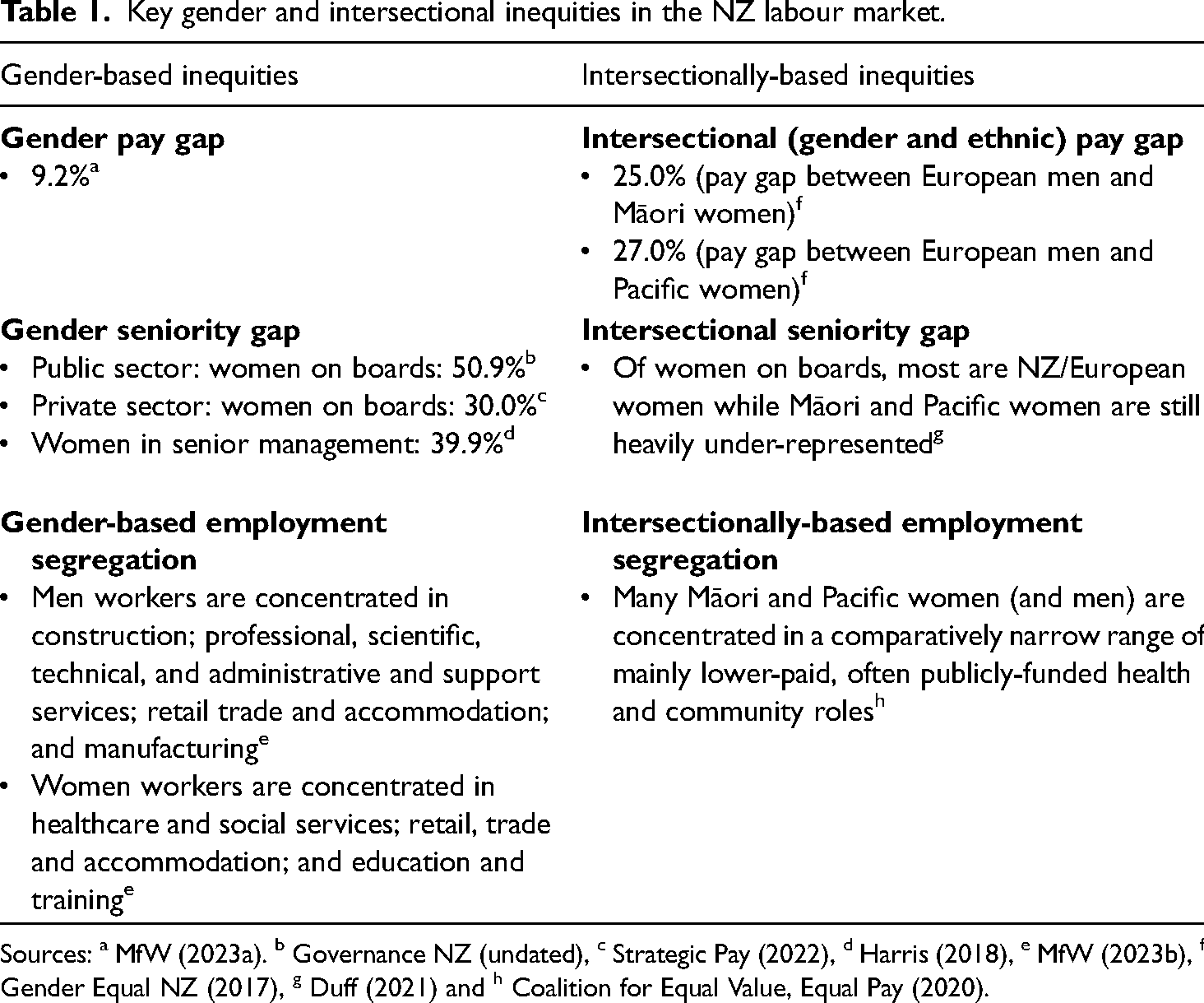
Sources: a MfW (2023a). b Governance NZ (undated), c Strategic Pay (2022), d Harris (2018), e MfW (2023b), f Gender Equal NZ (2017), g Duff (2021) and h Coalition for Equal Value, Equal Pay (2020).
Māori-Pākehā 3 and Pacific-Pākehā wage disparities (for women and men) can be attributed to influences such as bias and discrimination, the valuation of jobs identified as ‘women's work,’ work arrangements and caring responsibilities, leadership and representation, and occupational segregation (PSC, 2023).
This emphasises the intertwining of dynamic gender- and ethnicity-based factors, and inequities within the NZ labour market that impact differentially on gender- and intersectionally-based groups. Māori and Pacific women continue to lag in terms of pay gaps, representation in leadership positions and employment segregation. Furthermore, in 2020, the Pacific pay gap as compared to NZ European men was 25% for Pacific men and 27% for Pacific women (NZ Human Rights Commission (HRC), 2021), suggesting a need to consider intersectionality more than is currently the case when evaluating the effects of inequities and developing equity initiatives. Focussing on the public service, the Government has implemented policy measures and legislative changes since 2018 (Parker and Donnelly, 2020), and the rate of women taking up senior positions in the service has improved. However, this has not been the case for Pacific women (Gender Equal NZ, 2017; PSC, 2020), impacting on Pacific communities and families (e.g. in terms of housing affordability, access to quality health care and personal career development). As Acker (2006) notes, the intersectionality of race and gender inequalities has a multiplicative rather than additive effect; Pacific women's struggles may thus be greater than current gauges indicate.
Intersectionality and ways of working
As indicated, NZ's increasingly diverse population is reflected in its workforce make-up. Pacific People's broad approach to work often reflects values that include a keen sense of familial duty; a communal orientation; and collaborating closely with their communities to pursue common agendas (Welfare Expert Advisory Group (WEAG), 2019). Their family orientation may be supported in NZ workplaces; a survey by Houkamau and Boxall (2011) showed that a family-friendly workplace is valued by many employers in their implementation of equal employment opportunity (EEO) and formal diversity policies. Furthermore, in both organisational and community contexts, Pacific peoples often prefer to work in teams, consulting and collaborating with all members, and to consensually formulate and achieve their desired goals (WEAG, 2019). This modus operandi fosters relationships, helps people to feel supported, and encourages a sharing of similar values with others in their communities. Community engagement, an inclination for collectivism, and face-to-face workplace interactions emphasised by Pacific workers are thus pivotal considerations in the development of workplace practices to increase engagement and address issues such as gender and intersectional equity.
Pacific women, like many minority groups in NZ, are employed mainly in the service sectors such as healthcare, tourism and hospitality. The latter were hit hard by Covid-19 lockdowns, which put many Pacific women at risk of job loss and taking on extra unpaid work. Masselot and Hayes (2020) report that during the lockdowns, in addition to their paid work (at the workplace or home), women took on further unpaid work at home, homeschooling of children, and caring for the elders (also Lewsey (2020) on the US and UK). Su'a-Tavila et al. (2020) state that the pandemic had affected Pacific women in Auckland differently, depending on factors such as their age, essential versus non-essential work, and roles as working or stay-at-home mothers. Working mothers, for example, needed to be more cautious than single women with safety measures to protect their household. As with the GFC of 2008, there is some concern that Māori and Pacific women may take longer to recover from the pandemic conditions than Pākehā women (Masselot and Hayes, 2020). However, a recent ‘Pacific Talanoa Fono’ 4 in 2019 indicated that more needs to be done in this regard. The Fono voiced Pacific people's ‘lack of trust of service providers to treat people without discrimination’ (HRC, 2020: 14). Moreover, Pasifika were reported to often lack the confidence to challenge the status quo and not possess the information needed to voice their concerns through the correct channels. It also revealed that ‘in addition to low wages, Pacific workers … are often overlooked for upskilling opportunities and promotions. These workers also fear retaliation in raising concerns with their employers’ (HRC, 2020: para. 4). Thus, while equity initiatives exist in many organisations, their effects are yet to be proportionately experienced by Pacific workers.
Moreover, while Pasifika are often regarded as ‘an’ ethnic group, they are heterogeneous, including with respect to ‘subnational cultural affiliation, whether NZ born or overseas born, age as well as traditional and contemporary cultural norms’ (Ryan et al., 2017: 14). They also identify with other categories including LBGT+, age, non-binary gender and disability, with individuals’ multiple identities increasingly intersecting (Dennissen et al., 2020), influencing their values, worldviews, and ways of working. Pacific Peoples’ diverse work approaches in turn require informed leadership and management, suggesting that NZ organisations develop more nuanced diversity approaches to better include and learn from Pacific workers, and to avoid workplace misunderstandings and the subversion of effective teamwork (Parker et al., 2017). With this in mind, we turn to an under-researched initiative for promoting gender, ethnic and intersectional equity: Pacific staff networks.
Role of staff networks in achieving equality
Staff networks in workplaces and trade unions provide their members with support and safe zones; help them to communicate shared interests and align their agendas and values; and build alliances within the organisation that can further equity pursuits (Parker, 2000). In UK companies, Colgan and McKearney (2012) found that LGBT union groups and company employee network groups provide important, complementary mechanisms that create visibility, community and voice for LGBT employees. However, in universities, Wolbring and Lillywhite (2021) observe a need for improved equality, diversity and inclusion initiatives, including networks, to engage disabled students, academic and non-academic staff, and to reflect intersectionality within these groups. In the same sector, others have found that certain networks (e.g. for LGBT) receive better resourcing than others (e.g. those for race) in the UK (Bhopal, 2022), and that some ethnic groups are rarely included in scholarly networks (e.g. Kidman and Chu (2019) on Pasifika in NZ universities). This suggests different levels of equity progress for certain marginalised groups and identities. Yet, for women and others, building networks has been identified as key for their career progression, providing an avenue for members to build their social capital (Doherty and Manfredi, 2010). Indeed, the potential power of staff networks has been compared to that of ‘old boy networks’ that have helped to further men's careers (Ferrario, 1994).
Organisations have commonly adopted a ‘one-size-fits-all’ approach to addressing multiple discriminatory aspects based on ‘sameness’ or similar social categories (Verloo, 2006). However, as Christoffersen (2021) observes, the use of a single issue or siloed approach to address inequalities marginalises social groups’ heterogeneity. By contrast, a focus on intersectionality by staff networks can assist members to better acknowledge their differences and sub-group similarities and to negotiate how these features can help build network politics (Crenshaw, 2006) and (equity) impact. They thus have the potential to encourage staff ‘buy-in’ to and/or shape the equity, diversity, and inclusion approaches of their wider organisation – particularly useful when employees are unaware of their organisation's formal policies and management activities around EEO and diversity (Parker et al., 2017).
Pacific staff networks in NZ workplaces
The above work and wider challenges for Pasifika emphasise various rationales for Pacific staff to self-organise in work-based networks. Indeed, staff networks are relatively common in NZ organisations, involving groups or individuals with common interests in both formal and informal arrangements. Government agency employee-led networks often reflect the diversity of their workforce in gender, ethnicity, age, working culture, life stage and other terms (PSC, 2021a).
While workplace networks for women and Māori have some longevity, those for Pasifika are comparatively few (e.g. in NZ, see Fagaloa (2022) public sector ministries; and Monolagi (2021) more generally) and are comparatively recent (Employee-Led Networks, undated). However, various NZ unions have formalised Pacific networks to provide support specifically for Pacific members. The Pasefika Network within the Public Service Association (PSA), NZ's largest public sector union, was established to encourage the involvement of Pacific people in union activities and decision-making (PSA, 2021). NZ's peak union body, the Council of Trade Unions (CTU), has a Komiti Pasifika while the Tertiary Education Union (TEU) hosts a Pacific Network. Pacific networks have successfully lobbied for gains for their members, and supported other non-Pacific members in campaigns for the reduction of pay gaps and gender equality (CTU, 2021). Many Pacific women workers are concentrated in health care and social assistance, and in education and training, strongholds for union membership, with the potential for union networks to provide an avenue for Pacific women's voices. Moreover, a NZ EEO Trust (2011) study found that organisations can draw on Pacific values by engaging them in decision-making processes and resolving work-related issues. It also identified that formal Pacific networks provide a platform for mentoring young Pacific employees. And Pacific workers’ preference for meeting face-to-face engenders a community atmosphere among members (Auckland Council, 2017), creating a safe space within workplaces where they can develop a sense of belonging and relationships (EEO Trust, 2011).
As this limited body of work indicates, Pacific staff networks may constitute a mechanism that mitigates workplaces inequities faced by Pacific peoples, particularly women. In NZ's public sector, there are currently six recognised sector-level Pacific employee networks: Pacific Public Servants Network (PSC); Taha Moana (NZ Department of Internal Affairs); Primary Pasifika (Ministry for Primary Industries); Northern Region Pasifika Network – Community Corrections (Department of Corrections); Tagata Pasifika Network (Inland Revenue); and Pasifika Heleva Collective (Ministry of Social Development). Most office-holders are women, and each has broad aims around bringing Pacific staff together to support one another, talanoa (converse), and pursue important issues, aligning with broad Pacific values of community engagement and meaningful workplace interaction.
However, while information about these networks is scant, even less is known about networks at the meso- or public service agency level, re-emphasising the need to examine their roles and meaning for equity progress in their organisations.
Methodology
A major qualitative study started in early 2020 to examine gender and intersectional equity in NZ public service agencies. An organisation case-based approach was adopted to gather detailed material on the extent to which equity was perceived to have progressed over time, and how various stakeholders (including managers and leaders) influenced this progress. Three public service agencies were selected for having Pacific and Māori women staff; equity measures including employee networks; adequate resources to enable staff and managers to engage in the project despite the busyness of their schedules (which escalated with the advent of Covid-19); and aggregate provision of various public services (meaning that each employed at least several thousand people).
Seventy-two participants from these agencies included 20 sector experts, and 52 managers and staff. These 60 women and 12 men included Pasifika and Māori. Sector experts were senior representatives from the NZ HRC, PSA, MBIE, MPP, MfW, CTU and PSC. The researchers first broached contacts in these bodies who suggested other potential participants and forwarded study information to them. A ‘snowball’ sampling technique (Morse, 2007) was used to recruit more informants from throughout NZ. Semi-structured interviews with participants were conducted between February 2020 and May 2021. Only three interviews took place face-to-face because Covid-instigated lockdowns and social distancing in NZ from March 2020 necessitated online engagement. Interviews lasted 45–90 minutes, depending on the depth of information that interviewees wanted to convey. All participants permitted recording and subsequent transcription of their interview, with assurance from the researchers that their individual and agency identities would remain anonymous (subsequently, agencies are delineated as A1, A2 and A3). To ensure participants’ comfort with taking part in the study, prior to their interview, each received a project information sheet and consent form, advising that they could withdraw from the study or retract comments at any time. Furthermore, the study was successfully subjected to the researchers’ university human ethics committee notification process (reference number 4000022154) and, for one case agency, gained full ethics approval from its ethics body.
Emphasising the study's focus on workplace equity, interview schedules included open-ended questions such as ‘What inequities do you perceive exist for women in the public service [or: your public service agency]?;’ ‘In your experience, what factors contribute to gender inequities in the public service [or: your public service agency]?;’ ‘How are [Pacific and Māori] women affected by these perceived inequities?; ‘To what extent and how do managers facilitate gender [or intersectional] equity in the sector [or: your public service agency]?;’ ‘What impediments and levers do they encounter in these processes?;’ and ‘What strategies could help to address gender and intersectional inequities in NZ's public service, with particular regard for Pacific and Māori women workers?’ Informants could also highlight any issues about workplace (gender) (in)equity, including about the role of Pacific/other employee networks, and the perceived impacts of the pandemic and other influences on their equity progress.
From the interviews, it emerged that each agency comprised employee networks that pursued equity interests to varying extents. Women's networks were frequently denoted as the longest-running, followed by those involving Māori and LBGTQIA employees. However, many participants alerted the researchers to the existence of recently-established and less formal Pasifika employee networks, about which comparatively little was noted in scholarship at the time. Given this, Pasifika women's significance as a public service staff cohort, and the unique opportunity to hear informed perspectives about their role, aims and impacts, the researchers focused part of their analysis on emergent Pasifika networks regarding Pasifika cultures, beliefs, modus operandi, values and understandings of equity.
Analysing interview material about Pasifika staff networks, the researchers assumed epistemic relativism wherein knowledge was developed as part of the social interactions between the researchers and informants (Avenier and Thomas, 2015), weaving together disciplinary and experiential standpoints on and interpretations of the subject in sectoral context. The team drew on Pacific ‘ways of knowing’ and feminist reflexivity to clarify their equity foci as their knowledge context evolved. Interview transcripts were uploaded to Nvivo to organise the material. Researchers coded interviews according to themes and sub-themes highlighted in extant scholarship, and unique discoveries identified in the material. Using a jointly-developed coding schema, they checked their interpretations of the material with one another.
Much interview analysis was framed by an equity approach typology whose dimensions were ‘short(er)’ ambitions around liberal and radical equity goals and the ‘long’ approach of transformational equity. The liberal approach promotes equality of opportunity through a ‘sameness for all’ principle, frequently concerning processual equity and the development of a ‘level playing field’ such that everyone can access and progress in workplaces. A ‘radical’/outcome approach emphasises the need for direct intervention to achieve equality of opportunity and equality of outcome (Jewson and Mason 1986a, 1986b), focussing on groups rather than individuals. From this perspective, an ‘ideal’ workplace comprises workers, who represent all social groups available to it though radical approaches tend to underestimate organisational complexity.
However, in response to the ‘straightjacketing’ dichotomy of these two approaches, and disillusionment among many concerned with ‘equal opportunities’ policies, Cockburn (1989) drew on empirical evidence to develop the concepts of short and long-term equality agenda in reviewing the potential for an equal opportunity orientation for progressive change within organisations. Liberal and radical equality approaches are categorised as ‘short’ equality ambitions as they do not result in organisational transformation but rather have a ‘band-aid’ effect on inequality by treating only the symptoms of discrimination and disadvantage. By contrast, a long-term agenda is more transformative, occurring when systems, structures, and the distribution of power within an organisation are altered. In practice, this longer ambition is seldom realised, with little scholarly treatment of what it means for attaining intersectional equality aims.
Interviewees provided feedback on report drafts for each case agency, ensuring rigorous development of, and confidence in, the themes emphasised in these and subsequent academic outputs. In the following section, direct quotes are combined with interpretive narrative to enable participants’ voices to be heard and evaluated.
Findings
Overview
Most agency interviewees and sector experts commented on staff networks within the three agencies under examination. Pasifika networks were identified in two agencies (A2 and A3). An active Pasifika network was not found in A1, possibly reflecting its comparatively small proportion of Pacific staff and managers, though many engaged in sector networks and gravitated to other longer-established and newer networks (e.g. women's and LGBT/rainbow networks) in their agency (Table 2).
Pasifika networks in three NZ public service agencies.
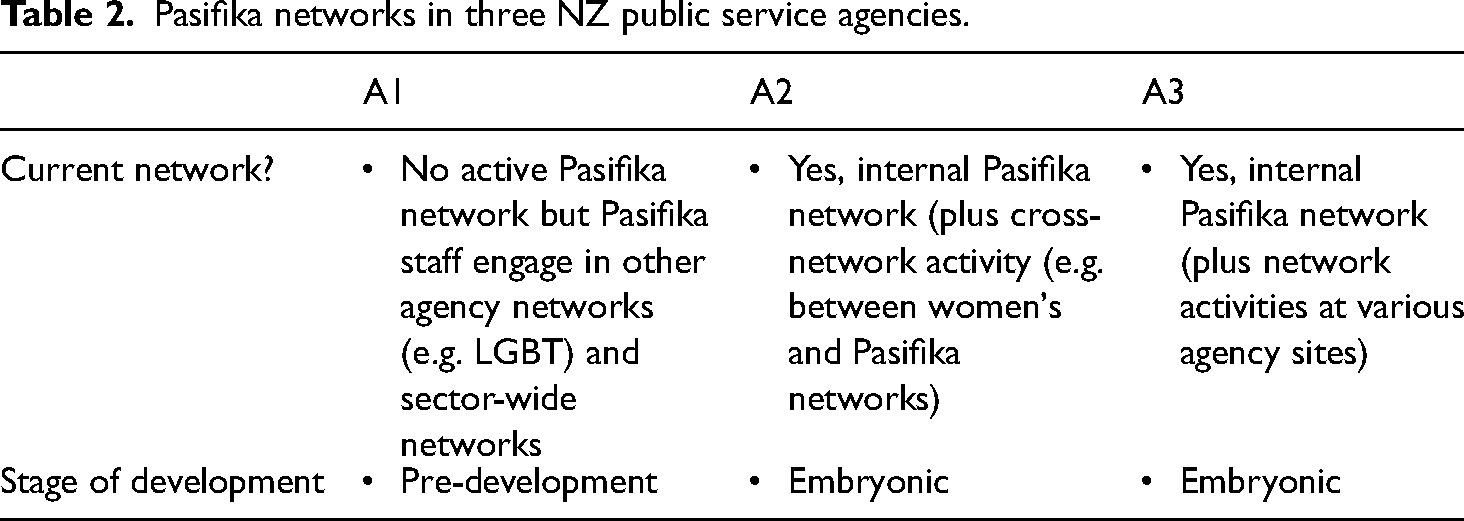
As indicated, Pasifika networks and collectivism were often described as the most recent, smaller, less structured, and least ‘developed’ of agency staff networks though A2's informants spoke most about their agency's Pasifika network, reflecting its relatively high number of Pasifika staff and activity. The emergence of Pasifika and other networks in the agencies was reported to reflect staff agency and organisational (e.g. HR) pursuit of diversity and inclusion (D&I) strategy (e.g. ‘to support our employee networks and raise the voices of our people’ –Pākehā woman senior HR advisor, A2), responding to the PSC's prioritisation of establishing of employee-led networks in departments (PSC, 2021b).
Network roles
Formally, Pasifika and other networks in the three public service agencies were seen to help support and action PSC priorities though the Pasifika networks were widely described as having a comparatively fledgling status, and to thus still be evolving their role(s): Our women's network … know what they’re doing. They’ve implemented a structure and how they operate … Their focus is about running events for women and connecting in women. The Pasifika group … – very much led by the group themselves and they’ll come up with who they are. (Pākehā woman senior HR advisor, A2)
Informants’ perceptions and knowledge also varied about the Pasifika networks’ roles and level of role formality. Many saw their function as a ‘social hub’ for Pasifika but others stressed their provision of a safe place in which staff can voice their concerns: [In the Pasifika network], I feel comfortable and can take constructive criticism from within my safe zone. I think that's one thing that gives you that ability to be okay to have concerns and raise those questions … if it's not just you, then it solidifies that maybe we’ve got a bit of a bigger problem … You might have a better chance of getting it across the line. (Pākehā woman support officer, A2)
Another perceived network role was to communicate Pasifika voices and interests to agency management. This was emphasised as key given Pacific cultures’ encouragement of humility, deference and not drawing attention to oneself through the expression of individual interests. Given these tendencies, the networks were seen as a collective mechanism through which to progress equity for Pasifika. Although they were generally recognised as being in the initial stages of doing this, their agency, energy, creativity and capacity – and perceived potential – to stimulate changes around equity were stressed by many as especially important during the challenging conditions of Covid-19 and austerity measures in the sector, with organisational equity resources often curbed or reallocated to ‘front-facing’ activity: [Senior leaders] can listen, and understand that, from a Pasifika perspective, they feel it's disrespectful to voice their unhappiness or their dissatisfaction. There has to be some medium where we can open those gates for them to have a free-flowing conversation. (Pacific woman senior manager, A3)
Moreover, several highlighted specific ethnicity-based inequities, which often also reflected gender-based inequities that have been pursued: One area that we have been raising is the ethnic pay gap for Pasifika people, but also looking at the actual roles that we’re holding within the organisation … One thing we’re trying to work on is when we have performance agreements or professional development discussions, like how do we position ourselves … So, prepping us, … how we support each other in those ways? (Pacific women support officer, A2)
Indeed, the collectivist basis of the networks was seen to carve out a space within the agencies where Pasifika input, ideas and activity can be shared and potentially inform wider organisational discussions. Some commented that this fostered Pacific People's greater inclination to take part and speak up in group settings involving their peers. For example, one network member commented: We’re also looking at doing some workshops … because, again, we see a lot of the people in our network have so much potential to add value to their teams but perhaps, to others, not having the skills or just a little bit of information about how best they could be using not only their experience but their own natural skillset. That's where we see our value as well is creating opportunities for people to build themselves. (Pacific woman policy advisor, A2)
Pasifika networks were also perceived, particularly by managers, to be an organisational repository for advice and information about Pasifika views and concerns, helping them to inform workplace initiatives and engage with these staff: We can probably get a lot more out of working more closely with [the Pasifika] network … They’ve done the hard yards and pulling their people together, and giving them an identity and voice in the organisation. It gives us a great platform. … We’ve got a D&I Committee, where we pull together the heads of all those networks. (Pākehā woman principal advisor,
5
A2) With our [newer] employee network groups, … we can find out what's going on. I’d say that we’re very early in that journey … They want to share the culture and educate other people, and really have a voice in the organisation. The other role is that the organisation pulls on that resource. (Pākehā woman principal advisor, A2)
Sometimes, organisational initiatives concerned with equity progress involved Pasifika and other networks enabling the development of useful and more culturally-sensitive metrics, D&I mapping exercises, action plans and tasks. A Pasifika woman policy advisor in A2 and Pasifika network member said: We can offer advice to senior management or to other teams who are perhaps engaging with Pasifika communities … It is to advocate for Pasifika people and culture within our working environment so that it becomes part of the norm.
The networks were also described as ‘adding value’ to managers’ facilitation of equity by enhancing a sense of belonging within the agency: There's the work you turn up to do every day but then there's also a community [in the networks] which adds a richness to your life … creating a sense of belonging. (Pacific woman policy advisor, A2)
On gender and intersectional equity, networks were also reported to provide opportunities for empowering individual Pasifika in the mainstream. One network member commented: Through the Pasifika network, I’ve had an opportunity to shadow one of the Deputy Director Generals who's a woman … That was an empowering experience to be able to see a woman in a very senior position … If she did it and has a family, she's balanced her work life and stuff, you start to say “Okay”. (Pacific woman policy advisor, A2)
However, their recency was widely interpreted as meaning that their equity roles are nascent, not yet particularly ambitious, and not their strongest defining feature to date. Another network member observed It's not a perfect model and we’re still finding our way through it. (Pacific woman senior manager, A3) They are finding their place, working out where they’re going, particularly the Pasifika network [seeking information about the ethnic pay gap] … A year ago, they were like, ‘Are we just going to be a social group?’ It takes time. (Pākehā woman senior advisor, Corporate Services, A1)
However, some perceived that Pasifika networks are looking to encourage greater organisational engagement with Pasifika and their intersectional (including gender) equity interests and specificities, particularly by providing more information with which to inform and louden Pasifika voice(s) on agency matters. For instance, network members commented: The next thing that they’re looking to do is … address diversity issues, and [the Pasifika network] wants to be in that conversation because we think we’ve value to add. We’re hesitant until … we’re informed enough. (Pacific woman policy advisor, A2) We have Pasifika networks … but I don’t know that voice of Pasifika is looked to as a default position. We have [organisational] Pasifika strategies or pieces of work. Again, they are quite discreet. They’re not valued as being part of the central focus. I think to do that it's difficult because Pasifika gets grouped alongside a lot of our more specific cohorts. (Pacific man senior advisor, A3)
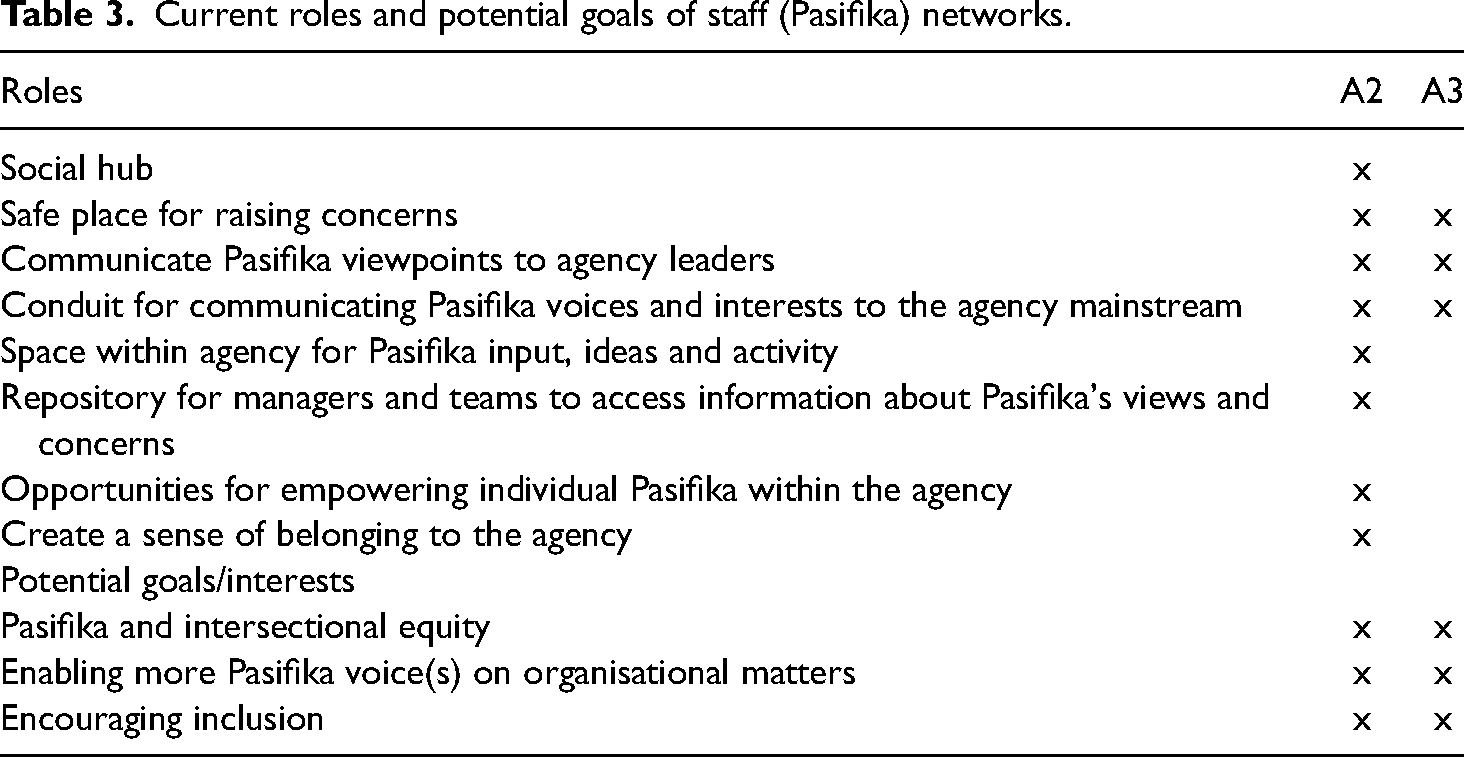
Table 3 summarises existing and potential network roles, equity or otherwise, as emphasised by participants. They clearly confirm those highlighted for staff networks generally in scholarship (e.g. Colgan and McKearney, 2012; Doherty and Manfredi, 2010; Ferrario, 1994; Crenshaw, 2006) and a limited, often union-sourced, literature of Pasifika staff networks in NZ (CTU, 2021; PSA, 2021; cf. Fagaloa, 2022; Monolagi, 2021).
Current roles and potential goals of staff (Pasifika) networks.
Challenges
The above network roles suggest areas of workplace and wider progress for Pasifika in gender and intersectional equity and other terms. Participants evidenced existing, and (more often) aspirational, network roles and effects, re-emphasising the youthfulness of these initiatives.
However, other factors pertaining to internal network features and environmental dynamics were seen to impede Pasifika network progress. Many felt that they could be better organised, reflecting their need for greater resourcing, support and time to ‘bed in’. One network member observed: They need backing of senior leaders, but also … someone from within the group to really lead … and have some hard conversations. They would have a serious amount of support. You’d also need time unfortunately to be able to do that, and confidence, and finding the right person for that isn’t easy. (Pākehā woman support officer, A2)
Networks’ capacity to be inclusive was also said to be constrained by employees’ widespread geographical locations (with implications for their representativeness and the comprehensiveness of information they provide to managers) though initiatives, such as meeting online and establishing a regional liaison person for bigger networks, have helped circumvent this challenge.
Significantly, some stressed networks’ need to be consistently mindful of how equitably they operate to facilitate wider D&I in their agency. Within the Pasifika (and Māori) networks in A2 and A3, their continuation of traditional gendered roles in society was noted: To a certain extent, the Māori and Pasifika network retain that traditional male, hierarchical system that you see in Pacific and Māori communities. Within that, women are quite active which is also what you see socially in Māori and Pacific communities. We do have two co-presidents of the Pasifika network who are both women. (Pākehā woman principal advisor, A2) The Pasifika networks are often led by Pasifika men … There's only one female who is the Pasifika chairperson in [major agency site]. (Pacific woman senior manager, A3)
Another constraint concerned staff members’ limited availability to engage in network activity due to their own or organisational exigences. Although unfunded, employees’ voluntary involvement in these networks usually follows discussion with their manager to generate support for them to participate and to encourage their ‘buy-in’: There are no employee-led networks that do that grassroots work to try and educate people … There’re people who are certainly interested in it but a lot of it in [A1] particularly comes down to we have a lot of work but we don’t have enough staff to do it. It's seen as an extra thing, extra time … Certain managers are a bit more forgiving on that, who will give you x number of hours a month to do this … but not everywhere because there isn’t that capacity given to work on those or create those other employee-led networks. (Pākehā man PA, A1) Our … Pasifika network say tokenism is still felt … We had a network meeting … where we had all the leads of the employee network groups, and [anonymised source] said, “We’re hearing reports from managers that just don’t want to release their people to do anything”. (Pākehā woman manager, A2)
Another internal constraint concerned differing understandings of the scope and knowledge of the Pasifika network in each agency, encouraging varying assessments of their effectiveness in equity and other terms. Some acknowledged that this stressed a need for greater network profiling.
External (meso-level) constraints included varying levels of senior leadership commitment to the networks and their equity progress. A network member commented: Our … sponsor does a really good job in championing the work network, but for us, we’re still trying to get the CE to at least do a language week, have an email that uses a bit of the language … In some areas, they might be quite tokenistic. (Pacific woman support officer, A2)
Several participants from A1, which has no Pasifika networks, also felt that such networks’ limited development to date, including with equity progress, links to their perceived encouragement of cliques or in- and out-groups when people cannot access information unless they are a network member – Unless you are in those groupings, you don’t really know how people are feeling. (Pākehā woman ER manager, A1)
Agencies’ Covid-19 responses and austerity measures were also seen to have diverted some resources away from equity efforts, including those of Pasifika networks: There is a Pasifika network and we do have a Pasifika Advisor … We used to have bi-monthly meetings with the PI network that would draw people in from the whole region … [and] our PI advisor would come and talk to us about specific pieces of work that they’re doing … at those higher levels to try and engage and get more support. (Pacific woman service manager, A3)
Revitalisation and protection of existing identity-based networks to support staff was thus advocated. Nonetheless, some maintained that the pandemic encouraged the relatively independent networks to recognise their own agency and capacity for innovative thinking and change leadership: Covid has certainly taught us … how we can branch out a bit more … and it is something that our networks are continuously thinking about. (Pacific man policy advisor, A2)
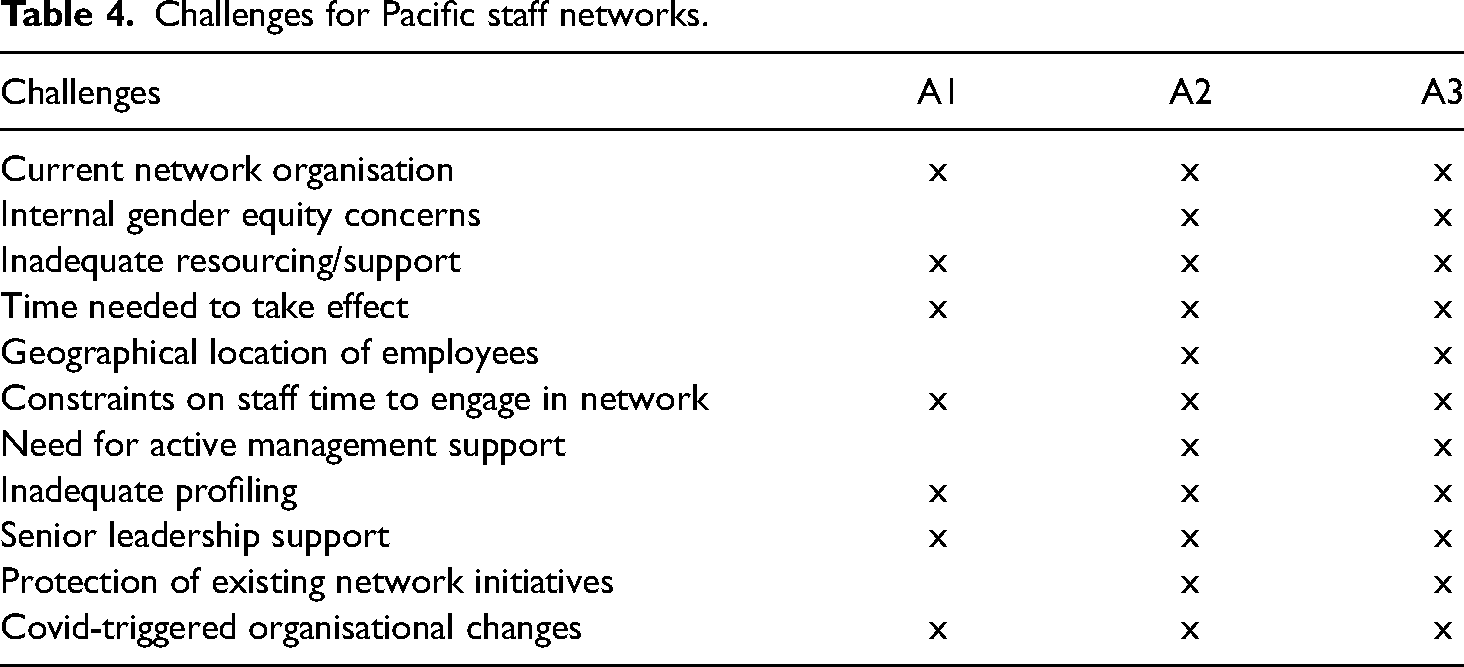
Table 4 overviews the perceived challenges for network development, including their role and work around gender and intersectional equity progress, in their internal operation, agencies and environment.
Challenges for Pacific staff networks.
Organisational opportunities
As well as the double-edged meaning of Covid-19 for the development of Pasifika networks and equity progress, informants discerned other features that strengthen their presence and impact. While the networks under examination vary in their composition, activities and roles, reflecting in part specificities of Pasifika employees, their roles and agency, many observed that they gain traction when they achieve some structural integration within, and alignment with, the agency mainstream. In A3, a network member commented: We now have a regional chairperson network … and those that represent the community groups and we meet quarterly … We start to see a lot more integration of us as a Pasifika network when we’re able to meet together and share what's happening at each site and share resources … Particularly with Covid, we saw the benefits of that as being able to get messages out consistently to all of those chairpersons to share information … or, if they wanted to get a message to Pasifika staff, they go through their chairpersons. (Pacific woman senior manager, A3)
Instances where the networks have helped develop individual identity-based positions in their agency were also noted, augmenting networks’ resources and ‘reach’: There’ve been opportunities that have come through … networks that have created new roles. Last year, there were two secondments to the PI advisory team … The Māori network have managed to get another advisor … as well. (Pacific woman service manager, A3)
Many informants also pointed to emergent ways in which the networks are addressing intersectionality, particularly around Pasifika and gender, by engaging with other networks in their agency, sector or beyond. Network members said: Our women's network … set up a session with Le Va
6
… during Covid … We asked them to come talk to us about how we look after our mental health … That was the most members we’ve had in an event from all over the country. (Pacific woman support officer, A2) The [ex] co-chair of the Pasifika Network [was] invited to be part of our [women's] committee to not only provide us with that channel directly into her network and the thoughts of their committee but also vice-versa … There's the potential for a person to be across four different networks … and we shouldn’t just be thinking just about women … It's one of the things that we have as part of our strategy … We try to foster an environment where it's safe to talk about things together … We also invite men to be part of our network because they work alongside us and they have ideas. (Pākehā woman manager, A2) The Women's Network [in the agency] … have reached out to other, perhaps newer, network groups to try and help mature them or coordinate on the same topic … We see [our women's mentoring programme] as really important for women to engage with … but also the Pacific Islanders and Māori network … So, we’ve banded together because it's much easier to do it together. (Pākehā woman manager, A2)
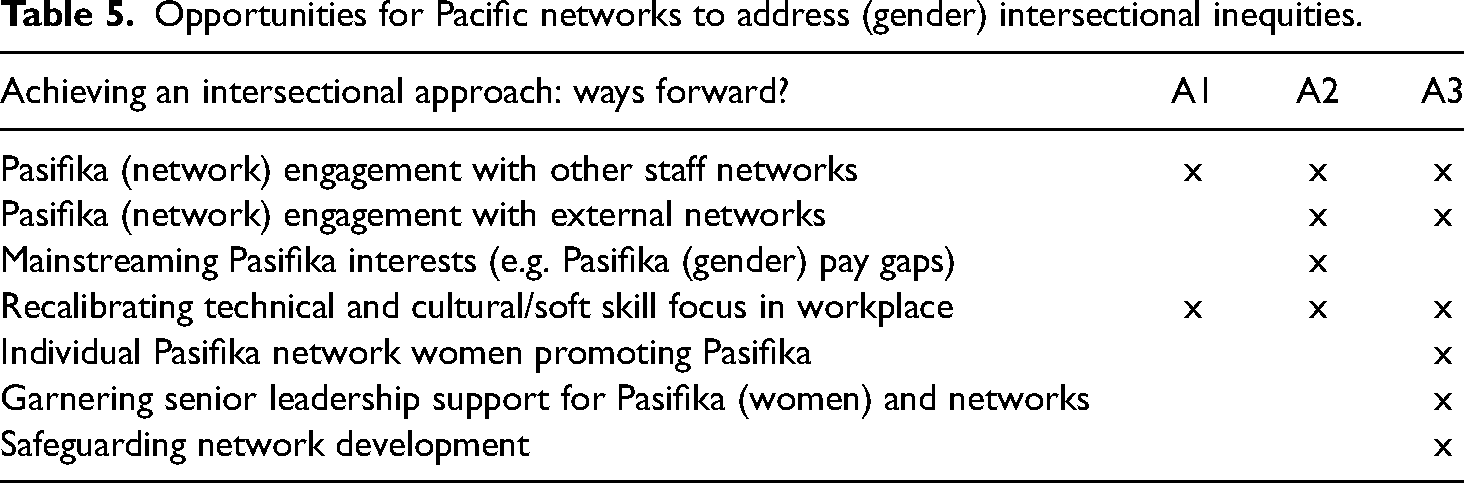
In A3, examples were given of individual Pasifika network women members promoting Pasifika through other networks: I’ve got a few in mind that I know could do an excellent job and have got the leadership skills, but on paper and in person they struggle to articulate that. So, I’m often promoting them through my own networks and my senior leadership teams where I can help influence some of that career progression. (Pacific woman senior manager, A3)
‘Mainstreaming’ of Pasifika interests was also recognised as a means to progress equity for Pasifika (women): One thing I really do want to push is that discussion on the Pasifika pay gap for women particularly because our numbers, Pasifika male and Pasifika female are right at the bottom. (Pacific woman support officer, A2)
Another approach was less direct, involving garnering senior leadership support for Pasifika (women) and networks through Pasifika initiatives in an agency. A network member reported: That's been a real win for us in terms of getting our senior leaders to walk through this programme, they’ve done the six-hour tool. Gives them a much bigger insight to how Pasifika live and work and breathe … We have shared that across the justice sector . .. we’ve had staff … join in with [A3] when we’ve run those programmes. It gives them exposure to our tools but it also promotes the “We’re all in this together”, we could all share what we have … save us having to waste efforts in duplicating another resource. (Pacific woman senior manager, A3)
Most suggestions for developing a more intersectional approach emanated from A2 whose Pasifika network exhibits the strongest activity of those examined. Across the agencies, however, there was general recognition of the need to safeguard and build on Pasifika and other network achievements. As one member commented, It's more about keeping those networks together and looking after each other within your own peers, or own cultures. (Woman systems manager, A3)
Many were also clear that the pursuit of intersectional and other interests by Pasifika networks needs more depth in, and to go beyond, their agency. Wider collaboration was highlighted, for instance, with other collective initiatives including Le Va and the PSA's Pasifika and women's groups and initiatives to encourage intersectional and inclusive approaches and resource capacity. Within agencies, many informants emphasised a need to ‘recalibrate’ an emphasis on technical, outcome-related skills with those concerned with cultural values and ‘soft’ skills to facilitate Pasifika's fuller engagement at work and beyond. Greater levels of unbiased consciousness training and more targeted promotion of under-represented groups including Pasifika by their agency were advocated. Some also supported wider changes, including supportive, culturally-aware, sector-level regulation and policies, though informants differed over the extent to which regulatory aspects might curb network and other change efforts.
Table 5 summarises informants’ suggestions on how Pasifika networks might harness opportunities to advance gender and intersectional progress for Pasifika. Collectively, the measures encompass the usual, quantifiable sources of inequity (i.e. pay and leadership gaps, segregation) and some more ‘ambitious’ forms of equity including culturally- and processually-informed notions of such.
Opportunities for Pacific networks to address (gender) intersectional inequities.
Concluding discussion
Little is known about Pasifika networks for employees in NZ and beyond, including in comparison to networks for other employee groups (e.g. women). Even less knowledge exists on their roles and functions concerning Pasifika workers’ equity interests in gender or intersectional terms. This exploratory study thus focused on Pasifika network cases in several NZ public service agencies, drawing on the voices of sector experts, managers and staff with direct experience and/or sectoral knowledge of such. In addition to the ongoing growth in Pacific migrants, employee numbers and wider workforce diversification in NZ, the timeliness of the inquiry was emphasised by the PSC's formulation of five priority commitments, including the development of employee-led networks in NZ's public service, aligning with a sector-wide endeavour to progress the engagement and equity of all public servants at work and the public whom they serve (PSC, 2021b).
Our findings revealed that Pacific networks in these agencies are comparatively youthful but have already embraced multiple roles and functions, providing Pasifika with a social forum; a sense of belonging in the agency; a collective, safe place for airing concerns and ideas; a conduit for communicating their voices and interests to the agency ‘mainstream’; an organisational change agent; an information repository about Pasifika for managers, HR and teams; and the embodiment of Pasifika cultural values and modus operandi.
Nonetheless, these nascent networks are still developing their role, functions and sense of self. While challenges from within, their organisation and environment (including organisational responses to the pandemic and austerity policies) have constrained their evolution, these relatively independent and unfunded networks are inspirational in their resilience and capacity to keep functioning and start to engage with gender and intersectional (perceived as both women as intersectional subjects and quantitatively and subjectively marginalised people) equity approaches at work and beyond. To date, these have reflected ‘short’ ambitions in Cockburn's (1989) terms, pertaining to equal access issues within existing institutional arrangements (e.g. around Pasifika in leadership roles) rather than a focus on structurally- and culturally-related change in their agencies. Little attention has been given so far to the specific equity interests of Pacific women (an intersectional ‘category’) though there are signs that gender equity is increasingly of concern in terms of how the networks function.
Potentially, however, informants emphasised that the networks may extend their concern with Pasifika's equity progress in the organisational mainstream. They also pointed to broad areas that could inform future Pasifika network roles, including greater engagement with ‘longer’ equity ambitions by emphasising cultural specificities and related ways of working for Pacific women and men workers. Availing of perceived opportunities, strategies and initiatives to enable this progress and greater network resource capacity were also suggested, including gathering more information with which to inform Pasifika perspectives on organisational matters; ensuring greater equity and inclusion for Pasifika within networks and their agency; collaborating with other identity-based (women's) networks and individual position-holders in their agency and externally; seeking more strategic engagement with their agency mainstream; encouraging greater active support from leaders; seeking greater leadership diversity; and developing their own constitution, structure and aims. These future aims were signalled, moreover, amid, on the one hand, pandemic-driven and austerity measures that severely stretched public service staff capacity and contributed to the decline of some other identity- and equity-based initiatives in the public service (Parker et al., 2021), and on the other, NZ public service regulation (e.g. the Public Service Act 2020) 7 and policy focused on under-represented employee groups that provide a more supportive context for Pasifika and others’ progress. This environmental dynamics-policy tension is not new but stresses the need for policy (implementation) that has the teeth to address and safeguard against the equity-regressive impacts of socio-economic and political challenges (also Conley and Page, 2017).
Our study also revealed that, despite their comparative youth, the scope and emphasis of role and functions of the Pasifika network cases vary, reflecting the differing number and nature of staff that they support, organisational specificities, and wider dynamics. Relevant to other national contexts with increasing population and labour force diversification, their contingent experiences emphasise the need for tailored, context-sensitive initiatives within and across organisations rather than a wholesale transfer of ‘best practice’ from one agency network to another. Thus, while A2 emerged here as having the greatest level of Pasifika network activity and development, its replication could obfuscate the nuanced equity ‘starting points’ and specificities of Pasifika employees elsewhere. An alternative approach might involve networks’ sharing ‘best principles’, sometimes referenced in mainstream HRM scholarship (e.g. Boxall and Purcell, 2022), in their roles and practice (e.g. emphasising multilateral efforts) which can be customised to Pasifika employees and their context-sensitive organisational needs. Nonetheless, this focus is still organisation-centric and does not emphasise the nexus between gender and intersectional inequities in the workplace and those in other ‘gender regimes’ (e.g. domestic and public spheres – Walby, 2020) and thus pathways to critiqued, effective and equitable modes of workplace functioning.
As one of the few studies of Pacific employee networks in NZ's public service, much scope exists for future scholarship. In NZ, the findings highlight the need to monitor network progress and their internal, organisational and environmental dynamics. Pasifika's ongoing over-representation in lower-paid and -skilled jobs in NZ's public and private sectors stresses their comparative vulnerability, perpetuated by ongoing organisational policies and practices and a historical legacy, including incidents like the Dawn Raids. Research might establish how perceived challenges for networks relate to their specific roles, with the latter becoming clearer as members gain and share greater network experience. It could also include more cases in a longitudinal study to assess their representativeness. Cross-national inquiries might fruitfully compare gender and intersectional equity progress for Pacific and/or ethnic minority women workers in public services where workforce diversification is ongoing (e.g. Norway, Iceland, Australia, Switzerland, the Netherlands and Canada – Oxford Economics, 2021).
Footnotes
Acknowledgements
The authors would like to acknowledge the staff, managers and sector experts in the Aotearoa New Zealand public service who took part in this study. Without their involvement, this project would not have been possible.
Declaration of conflicting interests
The author(s) declared no potential conflicts of interest with respect to the research, authorship, and/or publication of this article.
Funding
The author(s) disclosed receipt of the following financial support for the research, authorship, and/or publication of this article: This work was supported by the Massey University Strategic Innovation Research Fund (grant number RM22440).
