




Abstract
This article explores employee voice within organizations, in the context of the often-complex inclusion of sexual and gender minority (lesbian, gay, bisexual, trans and intersex (LGBTI)) employees. This study utilized a qualitative case study approach to gather insights from diversity experts and organizational documents of three large Australian organizations representing private, not-for-profit and public sectors. This research focused on organizational interventions that capture the voices of LGBTI employees, because their voice remains a challenge. While extant literature has largely focused on employee networks as a primary voice for this group, this study identifies several other integral and novel mechanisms. This study contributes to existing knowledge by developing an empirically based theory on voice mechanisms to overcome the spirals of silence. The findings of this study offer practical value to organizations seeking to promote LGBTI voice and inclusion in the workplace.
1. Introduction
The liberalization of societal attitudes towards sexual and gender minorities also referred to as lesbian, gay, bisexual, trans and intersex (LGBTI) 1 groups, particularly in developed countries, means that many organizations now consider sexual and gender diversity as part of employee diversity (Buchter, 2021; Smith and McCarthy, 2017). Despite such progression, many sexual and gender minority employees remain vulnerable to workplace hostility (Ortiz and Mandala, 2021; Smith and McCarthy, 2017), leading to lower levels of job satisfaction (Conti et al., 2022; Drydakis, 2014) and underrepresentation in leadership (Syed, 2014). Considering this situation, concerns have been raised that many organizations lack proper mechanisms to foster inclusion (Mara et al., 2021; Smith and McCarthy, 2017).
Many LGBTI employees are silent about their sexual and gender identity out of fear that it may hinder career progression (Colgan et al., 2007; Reneau and Love, 2021) and to avoid potential experiences of discrimination and harassment by ‘macho’ or religious co-workers, notably in masculine industries (i.e. construction) or religiously affiliated workplaces (Ezzy et al., 2022; Galea and Jardine, 2021). LGBTI employees are often an invisible, voiceless and stigmatized group due to their sexual and gender minority status (Johnson et al., 2021; Sabharwal et al., 2019). Many choose to stay closeted for fear of stigmatization and negative stereotyping, due to undesired or devalued attributes associated with their social identity, which has been morally contested, regarded as shameful, not normal and less able (Matsumunyane and Hlalele, 2022; McNulty et al., 2018; Rengers et al., 2019). Even where recourse is available for such workplace victimization, many victims are reluctant to speak up and seek support due to perceived threats to career prospects and well-being (Drydakis, 2014; Liyanage and Adikaram, 2019). This ‘defensive silence’ causes ‘both performance and employee morale to suffer’ (Wynen et al., 2020:498).
Voluntary organizational interventions play a pivotal role, perhaps even ahead of legislative changes, in upholding LGBTI rights (Buchter, 2021; Colgan, 2011). Mara et al. (2021) stress the importance of the employer’s role in creating a workplace environment where LGBTI employees can freely express themselves. This is imperative, since for many LGBTI employees disclosing their identity is an endeavour throughout their employment due to recurring encounters of harassment, discrimination and heterogeneous assumptions in conversations with new colleagues who are unaware of the employees’ sexual or gender identity (Guittar and Rayburn, 2016).
This study focuses on voice mechanisms that foster LGBTI inclusion within the context of Australian workplaces. The Australian Bureau of Statistics (ABS) (2020a) reported that 4% of the Australian adult population (773,000) described themselves as being gay, lesbian, bisexual or other in 2020. Previously, the Australian Human Rights Commission (AHRC) (2014) estimated the LGBTI cohort to be around 11% of the population. Such conflicting results further highlight the likelihood of some LGBTI individuals choosing to be closeted (Smith and McCarthy, 2017). The Australian Sex Discrimination Act 1984 (Cth) prohibits employment discrimination based on sexual identity. The legalization of marriage equality in December 2017 was a milestone in LGBTI inclusion (Attorney-General’s Department, 2017). The plebiscite that influenced this legislative reform reflected a change in societal attitudes towards LGBTI inclusion, with 61.6% voting ‘yes’ to marriage equality (ABS, 2017).
However, a significant amount of abuse of the LGBTI community was reported during the period leading up to the legislation (Abbas, 2017; Brender, 2017; Waling et al., 2022) along with a significant non-supportive minority in the plebiscite, indicating that LGBTI inclusion still has far to go. The Australian Workplace Equality Index (AWEI) (2018) survey conducted shortly after legalizing same-sex marriage reaffirms this view. According to the survey, only 73% of non-LGBTI employees believed that more needed to be done to achieve inclusion, while 91% of LGBTI employees believed so. This study also reported 26% of non-LGBTI employees as unwilling to be allies of LGBTI employees, with 11% openly expressing their unwillingness to listen to LGBTI colleagues talking about their personal lives and their discomfort with seeing photos of or participating in workplace events with their family members. Such revelations confirm that the negative social attitudes towards the LGBTI population are reflected in workplaces (Ozeren, 2014) and barriers affecting the voice of LGBTI employees exist in Australian workplaces.
The AHRC (2014) reported that many LGBTI employees are subject to harassment, bullying and discrimination, as targets of homophobic and transphobic behaviours. Furthermore, it is reported that more than half of LGBTI employees have experienced verbal abuse and 20% have been subject to physical violence in the workplace (ABC News, 2016). ‘Homophobia’ is conceptualized as institutional, social and individual actions and attitudes that convey fear, hostility and intolerance towards homosexual practices, identities and relationships while transphobia refers to such attitudes towards transgender individuals (Fraïssé and Barrientos, 2016; Thepsourinthone et al., 2020; Warriner et al., 2013). Willis (2012: 1594) argues that ‘the informal social ordering of individuals in organizations gives heterosexuality a naturalized and normalized status’. Homophobic expressions, such as via informal staffroom jokes, can position non-heterosexual identities as inferior and morally degraded while reinforcing heterosexuality as the norm. This concept of societal ordering of gender and sexuality that privileges heterosexuality as natural and normal is conceptualized as heteronormativity and stems from the binary conception of sexual and gender identities (Corlett et al., 2022; Warner, 1991).
Often, lesbian, gay, bisexual and transgender (LGBT) employees must adapt to unexpected situations to ‘navigate a heteronormative world for success’, even in workplaces regarded as inclusive (Cox, 2019:20). Eagan (2018) found that despite organizational efforts by major accounting firms in Australia, heteronormativity seemed prevalent in these organizations. In addition, the AWEI (2018) Survey revealed gaps in LGBTI inclusiveness and the continued suppression of the LGBTI voice: one-quarter of LGBTI respondents confirmed that their sexual identity was completely hidden in the workplace despite their employers claiming to be LGBTI-inclusive. In another study, 74% of LGBTI survey respondents thought that it was important to reveal their identity at work; however, only 32% were completely open about their sexual and gender orientation in the workplace (Diversity Council of Australia, 2018). Therefore, LGBTI inclusiveness is yet to be fully achieved within Australian organizations, despite evidence of positive shifts.
Although extant literature emphasizes the heteronormative hegemony and suppression of voice and the criticality of organizational interventions in capturing LGBTI voice in creating LGBTI-inclusive workplaces, this is an underexplored area, and a theoretical framework of such interventions is lacking. Our research seeks to fill this void. We investigated voluntary interventions of three large well-established Australian organizations to understand how workplaces can foster inclusion and a ‘fair go’ for sexual and gender minorities by embodying voice mechanisms. The term ‘sexual and gender minorities’ and the acronym LGBTI are used in this article interchangeably. This is consistent with the terminology of the AHRC, acknowledging that LGBTI people form a diverse group and that sexuality, gender identity, gender expression and intersex variation may be one or multiple aspects of each person’s identity, regardless of whether they identify within or outside of the binary gender (see Note 1).
This study is underpinned by voice literature, particularly the spiral of silence theory pioneered by Noelle-Neumann (1974, 1991). We begin reviewing extant literature and then present the conceptual framework (Figure 1) that guided the study. Next, we present the methodology followed by the analysis and findings based on three case studies. This is followed by the discussion. We conclude with the implications for practice and future research.
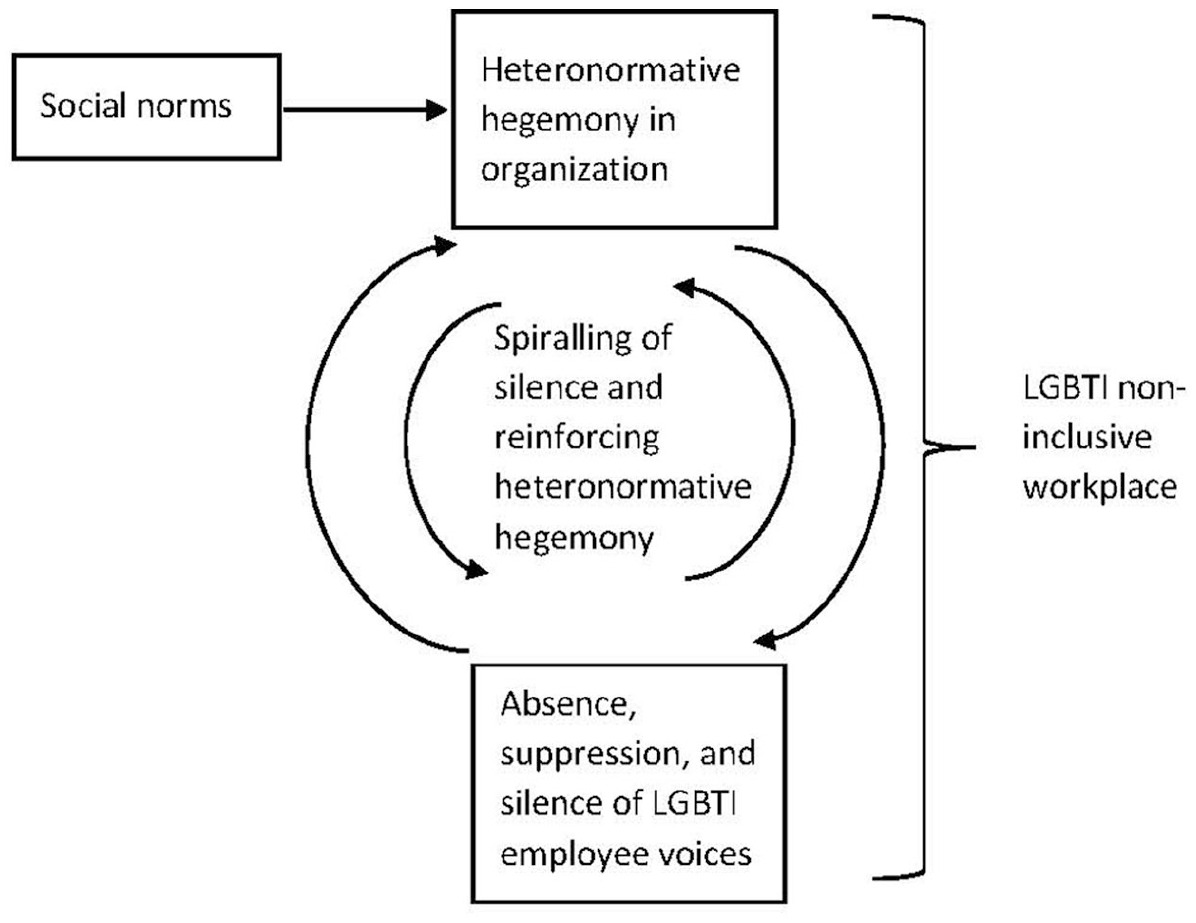
Conceptual framework of the study.
2. The concept of employee voice
The term ‘voice’ was first conceptualized by Hirschman (1970) as complaints to a higher authority to improve the status quo (Barry and Wilkinson, 2022; Bashshur and Burak, 2015). The subsequent ‘employee voice’ was primarily linked to the role of trade unions in expressing employees’ collective voice via industrial relations (Budd, 2014). Later, with the diminishing role of unions and the rising demand for employee voice as a corporate initiative, human resource (HR) management influenced a variety of voice mechanism (Casey and Delaney, 2022; Kaufman, 2015). Morrison (2014: 174) subsequently defined employee voice as ‘informal and discretionary communication by an employee of ideas, suggestions, concerns, information about problems, or opinions about work-related issues to persons who might be able to take appropriate action, with the intent to bring about improvement or change’; targeted recipients can include organizational hierarchy, supervisors, teammates or external parties.
There are several voice mechanisms within the workplace: grievance processes, whistle-blowing, informal complaints, suggestion systems, attitude surveys, trade unions and so on (Klaas et al., 2012; Morrison, 2014; Wilkinson et al., 2018). Voice can be either informal where ideas or concerns are casually expressed (chat, casual meetings, handwritten notes, etc.) or formal where a structured approach is followed (Klaas et al., 2012; Wilkinson et al., 2018). Voice mechanisms give employees the opportunity to express opinions and concerns and to influence managerial decisions (Bryson et al., 2006; Dundon et al., 2004) leading to positive workplace outcomes, such as greater employee commitment, employee–employer relations and enhanced organizational performance (Bai et al., 2019; Rees et al., 2013).
While most research has categorized employee voice as a behaviour by which employees reciprocate treatment they receive from the workplace, it is also an effective way for employees to deal with workplace-related stress. Thus, Bashshur and Burak (2015) argued that the employee voice can influence positive outcomes to individual employees through the opportunity to discuss areas such as organizational justice, citizenship behaviour and job attitudes. Furthermore, employee voice promotes better decision-making, greater innovation and enhanced group performance, whereas organizations benefit through reduced staff turnover and decreased counter-productive behaviours (Bashshur and Burak, 2015; Boxall et al., 2019). Pyman et al. (2006) identified managerial responsiveness as the desired outcome of employee voice, with Bashshur and Burak (2015) cautioning there can be negative consequences from ignoring or discouraging it, such as high turnover and absenteeism.
‘Silence’ occurs when employees fail to speak up, choosing not to share their concerns with the organization (Hassan et al., 2019; Morrison, 2014). According to Van Dyne et al. (2003), there are three main contexts of silence: (1) acquiescent voice (choosing to agree or withholding opinion due to perceived inability to make a difference), (2) defensive or self-protective voice (choosing to focus on other matters rather than self, including for self-protection) and (3) prosocial voice (providing change solutions or withholding certain information for the benefit of others). Bizjak (2019) argues that both acquiescent voice (voluntary withdrawal of voice) and quiescent voice (involuntary withdrawal of voice) are relevant to LGBTI employees when they feel the need to hide their sexual orientation, gender identity or sex variation, particularly when heteronormativity is assumed and when there is lack of acknowledgement by colleagues.
Morrison (2014: 174) argued that ‘silence’ ‘is not merely a lack of speech’, but rather ‘not speaking up when one has a suggestion, concern, information about a problem or a divergent point of view’ highlighting that organizational factors influence such behaviour. Professional and social factors, including the organizational environment where safety is not guaranteed and the power-centred role of hierarchical organizations, may inhibit employees from using their voice and perpetuate a climate of silence (Kwon and Farndale, 2020; Wynen et al., 2020). Furthermore, Detert and Edmondson (2011) identified the prevalence of the self-protective implicit voice theory, where potential riskiness of voice in hierarchical workplaces influences individuals to refrain from speaking up. Jeung and Yoon (2018) have highlighted the importance of humble and empowering leader behaviours on the improved prosocial voice of employees.
3. Spiral of silence theory
German political scientist Elisabeth Noelle-Neumann introduced the ‘spiral of silence’ theory, which establishes how individuals perceive their social environment and when in the minority become increasingly fearful of dissent, leading them to withdraw expressing their voice (Noelle-Neumann, 1974, 1977, 1993). In consequence, minority opinions are silenced, while the majority opinion becomes dominant (Noelle-Neumann, 1974; Scheufele, 2008), further discouraging the minority from speaking up, perpetuating a self-reinforcing cycle of silence that suppresses the minority voice, while intensifying the majority voice (see Clemente and Roulet, 2015). Scheufele (2008) described this theory as: (1) individuals gauge the opinion of others and adjust their behaviours to align with the majority and (2) individuals hesitate to deviate from the social norm through fear of isolation or ostracism. Those perceiving themselves as the minority are often reluctant to express themselves, reinforcing the dominance and social norming of the majority view, leading to further suppression and silencing (Scheufele, 2008).
Research shows that disclosure or ‘coming out’ is a dilemma for many LGBTI individuals; many stay closeted to avoid negative consequences such as threat and fear of rejection although disclosure could bring about positive outcomes (Di Marco et al., 2021; Drydakis, 2014; Ozeren, 2014; Salter and Sasso, 2022). Such concealing of one’s identity aligns with the spiral of silence theory (Bowen and Blackmon, 2003) which posits that as social beings, most individuals are subject to social conformity and are silenced by the threat of isolation due to unpopular opinions and behaviours. Such individuals act against their own personal conviction due to social demands to conform (Noelle-Neumann, 1991). Thus, Bowen and Blackmon (2003) found that employees refrain from using voice when it deviates from most of their co-workers or from public opinion. Fear of isolation is a powerful force that drives silence (Fox and Holt, 2018), which is particularly relevant to LGBTI employees because the threat of isolation in the workplace is highly relevant to them. Expanding on Foucault’s (1976) work on sexuality and institutional control, where it was argued that sexuality is socially produced as a result of discursive contexts that exists in institutions, Reingardė (2010) highlighted that power and silencing of sexual minorities are closely linked. Reingardė argued that the dominant normalized heterosexual discourse creates a power asymmetry, silencing the non-heterosexual minority. In a workplace, heteronormative hegemony means that most non-heterosexual employees are inhibited from divulging their sexual or gender identity and their needs and concerns, as they fear the repercussions of speaking up against the dominant discourse (Worst and O’Shea, 2020).
4. LGBTI employee voice and inclusion
Voice outcomes have different effects depending on diversity and group membership of employees, as some categories of employees face more challenges than others (Timming et al., 2021; Timming and Johnstone, 2015). For example, Trau and Härtel (2007: 215) surmised that the decision to reveal or conceal sexual identity is often a difficult one for LGBTI employees and that a non-supportive workplace imposes ‘tremendous pressure’. Priola et al. (2014) argued that the absence of robust LGBTI-inclusive policies can exacerbate their silence. The pretence of heterosexuality is often an emotional burden for LGBTI employees, negatively impacting their self-worth and self-esteem (Reingardė, 2010; Worst and O’Shea, 2020). While those that are more open about their identity are known to experience greater job satisfaction and well-being (Drydakis, 2014; Wang et al., 2022).
Scholars have emphasized the value of organization-sponsored voice mechanisms, such as employee affinity groups that enable networking opportunities, collegial support and a platform to create awareness of LGBTI employee needs and issues and to help drive inclusivity (Bell et al., 2011; Colgan and McKearney, 2012; Garg, 2020; Githens and Aragon, 2009). In striving for inclusion, LGBTI employees may use identity management and discrimination management as coping strategies (Chung, 2001). For example, they may mask their true identity and present themselves in legitimized gender ways (Marques, 2019). When subject to discrimination, they may opt to quit or tolerate discrimination and stay closeted (Chung, 2001; Marques, 2019). Hence as recommended by Syed (2014), employers must create an ambience of trust and inclusiveness so that LGBTI employees feel safe to express themselves in the workplace. Felix et al. (2018) emphasized that organizations should not just provide voice mechanisms but ensure these are perceived as effective and trustworthy by LGBTI employees, so that they feel confident to raise issues such as discrimination without inhibitions.
Therefore, organizations need to ensure LGBTI employees have a voice and are not silenced. To this end, it is necessary to create brave and safe spaces to enable voice which is a determinant of LGBTI-inclusive workplaces (Ladwig, 2022). However, organizations often fail to capture LGBTI employee voice resulting in continued oppression of this cohort because they remain unheard, silenced by systemic barriers stemming from heteronormativity (Smith and McCarthy, 2017) which is not just passively mirrored in organizations, but manifested in spaces, policies and norms (Corlett et al., 2022).
Conceptualizing of the literature on LGBTI employee voice presented in Figure 1 guided the study.
As depicted in Figure 1, societal norms that position heterosexuality as normal and natural situates those who deviate as others. This norm is manifested in workplaces, creating a heteronormative hegemony that dominates, suppresses and silences LGBTI employees. As a result, they are under pressure to conform with the majority and remain silent (Reingardė, 2010; Worst and O’Shea, 2020). This phenomenon has a spiral effect, and further reinforcing the hegemony in the workplace, rendering LGBTI employees as voiceless (Bowen and Blackmon, 2003; Noelle-Neumann, 1991; Scheufele, 2008). The augmentation of the spiralling effect leads to further absence, suppression and silencing of LGBTI voice, their disadvantaged status and creates a workplace culture of exclusion and disadvantage. Thus, a mechanism is necessary to address the absence, suppression and silence of LGBTI employee voice, and it is crucial to weaken the spiralling of silence effect to create LGBTI-inclusive workplaces.
Despite the apparent significance of voice mechanisms in overcoming the marginalized status of LGBTI employees, this area of research has largely been overlooked in academia. Except for a few studies, employee voice literature itself largely disregard how social identity impacts employee voice (Timming et al., 2021). Among the limited studies on voice mechanisms relevant to LGBTI employees, some emphasize that organizations need to create a safe climate (Bell et al., 2011; Bowen and Blackmon, 2003; Colgan, 2011; Felix et al., 2018; Gates et al., 2019; Ladwig, 2022; Mara et al., 2021), while others (Colgan and McKearney, 2012; McFadden and Crowley-Henry, 2018; McNulty et al., 2018) have focused on LGBTI network groups as a collective voice for sexual and gender minorities. This study aims to address these gaps and contribute to employee voice literature and practice by exploring organizational interventions that help uncover the voices of LGBTI employees in large Australian organizations.
5. Methodology
A qualitative case study was applied to explore LGBTI-inclusive practices across three large Australian organizations and to understand how they encourage the LGBTI employee voice. Case studies are deemed suitable to explore contemporary phenomena within an organizational context, through examining the impact of processes including real-life experiences, interventions and outcomes (Yin, 2014). Multiple case studies are recognized as more robust than single ones, enabling a deeper understanding of phenomena via intra- and cross-case analysis (Yin, 2014). Hence, three case studies were applied in this study. Thematic analysis (Braun and Clarke, 2006) was used to enable coherent and compelling interpretation of the data to gain an in-depth understanding of the phenomenon of LGBTI voice-enabling mechanisms in workplaces. A salient feature in understanding phenomena in case study research is examining a small amount of carefully selected cases (Ishak and Bakar, 2014) to empirically illuminate relevant theoretical perspectives (Yin, 2014). Buchanan (2012: 361) argued that it is important to select cases where the phenomenon under investigation is ‘intense and visible’. This study therefore selected three Australian organizations that are committed to LGBTI employee inclusion (confirmed via their websites and initial consultations with management), further validated by data evidence including relevant policies, interventions and diversity awards and accreditations. These were large-scale organizations with diverse employees, well established and had diversity experts. Below is an overview of the case study organizations (pseudonyms used for anonymity).
5.1. Asclepius Community Health Services
Asclepius Community Health Services (ACHS) is a private, not-for-profit organization that provides community health services to a diverse population. Established around 40 years ago, ACHS has approximately 350 employees and 80 volunteers. Its main objective is to provide services to those at risk of poor health and well-being, to reduce health inequities. ACHS recognizes the LGBTI community as a vulnerable group subject to social exclusion and risk of poor health.
5.2. Alpha communication
Alpha communication (Alpha) is a large private company in the technology sector with an international presence. Established around 25 years ago, Alpha has over 25,000 employees locally. As an underrepresented, marginalized group, LGBTI is one of six groups where retention and engagement levels have been recognized as of strategic importance.
5.3. National Service Organization
A 150+-year-old organization within the public sector, National Service Organization (NSO) is striving to overcome its former Anglo-Australian masculine image, to better reflect the diversity of the Australian population via inclusion and heterogeneity. NSO previously had policies that prohibited LGBTI employees within some areas of the business and was striving to remove the consequent institutionalized elements and become an employer of choice within this space.
Yin (2014) recommended using multiple sources to enable triangulation and maximizing data validity, particularly where researcher bias may be a factor. This study therefore collected data using in-depth expert interviews with each organization’s executive/s responsible for diversity management and by also examining authentic official organizational documentation (policies, websites, internal and external reports, media releases, surveys, corporate sponsored videos). Both data sources were analysed and coded into dominant themes using thematic analysis technique (Braun and Clarke, 2006), and a combination of a literature-driven deductive approach and a data-driven inductive approach was used.
Yin (2014) emphasizes that in-depth interviews are one of the most significant sources of evidence in case studies when a free flow of information is encouraged, as opposed to a rigid structured line of inquiry. As such, the interviews were conversational in nature, with open-ended questions used to guide the conversations, but not prescriptively. The questions included ‘How would you describe LGBTI inclusion in the organization?’, ‘What are the major challenges faced by LGBTI employees in your organization?’, ‘How does your organization ensure that LGBTI employees are heard/have a voice?’ and ‘What are the barriers/enablers that discourage/encourage LGBTI employees to express themselves?’. All the interviews were conducted by the first author and prior to commencing the interviews; a practice interview was conducted with the third author to ensure effectiveness of the interview process. During the interviews, the first author followed the best practices of conducting qualitative research interviews, such as listening more than talking, asking probing questions, seeking clarification and encouraging the interviewee to tell a story (Barbour, 2008; Patton, 2002). These practices enabled the collection of rich and detailed data on the experiences and perceptions of diversity management experts in the participant organizations.
Fitzgerald and Dopson (2009) emphasized that research participants should be thoughtfully selected. In this study, expert interviews were used. Thus, the following participants were carefully selected, based on their position and level of diversity management expertise including sponsoring and championing diversity and inclusion initiatives, to ensure they could provide rich and authentic data: (1) the HR manager at ACHS, (2) the head of diversity and inclusion at Alpha and (3) three diversity managers from the NSO. At ACHS, the HR manager was the key official responsible for diversity and inclusion in addition to generalist HR tasks. Alpha, a larger organization, had a designated head of diversity and inclusion at senior management level leading the diversity and inclusion agenda. In the case of NSO, being a very large-scale employer (approximate 100,000 employees), a dedicated diversity department with subject matter experts existed; hence, three experts were interviewed. The size and structure of each organization, expertise and accountability of the officers and availability of policy documents were key factors in determining the choice of participants.
6. Analysis and findings
The analysis revealed several contextual factors at macro environmental (elements outside of the organization, such as societal norms, ideologies and legislation), organizational (internal characteristics such as organizational culture) and individual (such as leadership and employee characteristics) levels that provide context for the development of organizational voice interventions (see Figure 2).
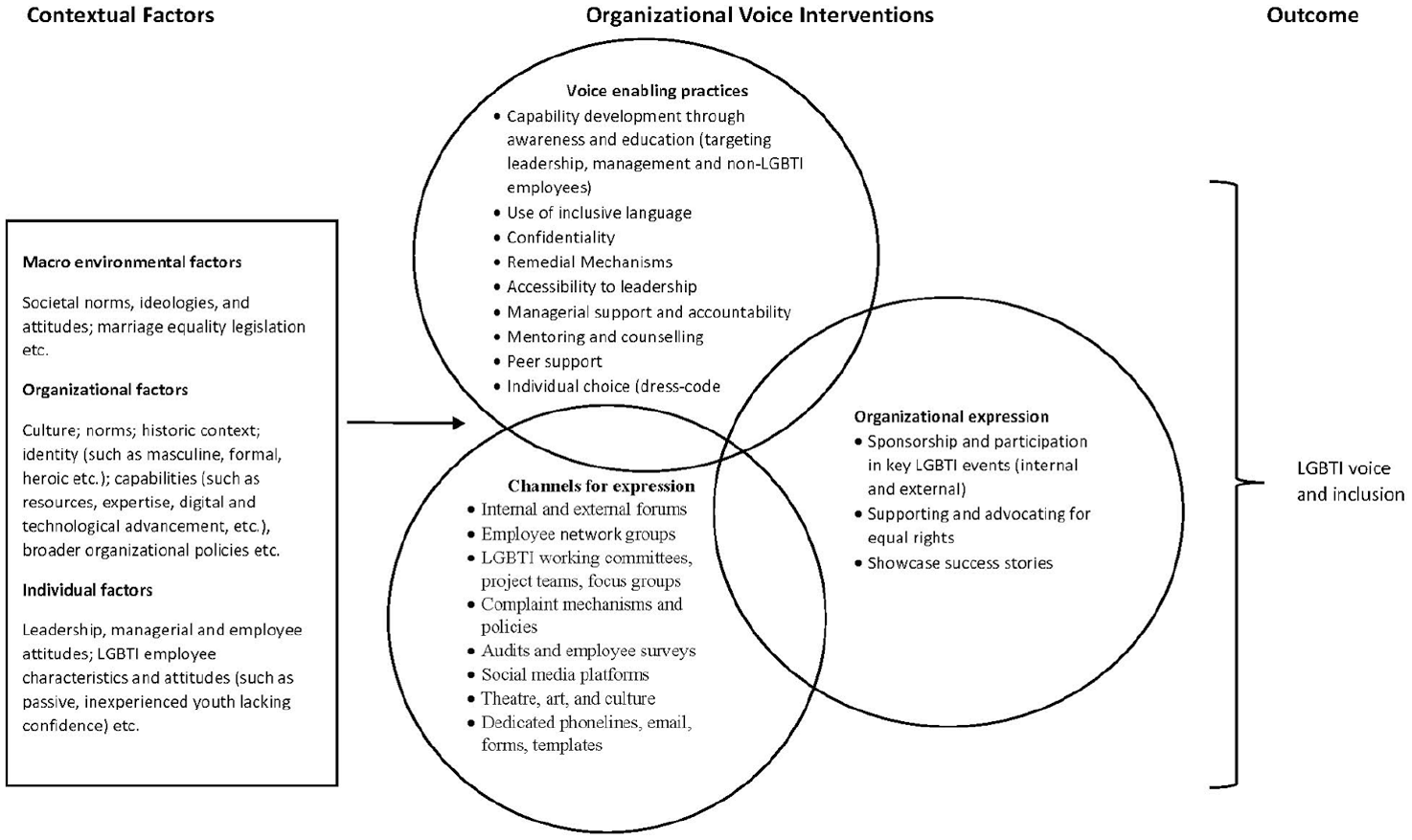
Proposed framework of organizational managed voice interventions.
6.1. Contextual factors: macro environmental, organizational and individual
The participants recognized that the LGBTI community continues to face barriers in society and the workplace. They acknowledged that the suppression of voice due to societal and organizational barriers compromised the well-being and inclusion of LGBTI employees, hence the need to intervene.
Recognizing that suppression of the LGBTI community took place both within and outside of the workplace, ACHS’s HR manager noted that their organization’s service philosophy to ‘listen, hear and respect’ LGBTI individuals was applicable to staff members as well as the community it serves. The participant highlighted that transphobic and homophobic issues still exist in broader society and emphasized their organization’s commitment to provide a safe inclusive environment for LGBTI clients and employees, as embedded within their LGBTI policy. Furthermore, Alpha highlighted the pressure their organization was under during the debate on legalizing same-sex marriage in Australia in 2017, with some clients asking them to withdraw support for marriage equality. Yet Alpha continued to support and advocate for this progressive legislative change.
LGBTI employee safety was a critical prerequisite for improving their voice and inclusion in the workplace. An NSO participant mentioned that individuals should feel safe and comfortable disclosing their sexual orientation, gender identity and family status without fear of threats or exclusion: It is the end of the story unless you sell the message and people know how it [disclosure] adds value to them, and they feel safe and comfortable, and that it will not hinder their employment. That’s what we are focusing on.
As explained by another NSO participant: Although I do not know the exact extent of comfortableness felt by LGBTI employees . . . disclosing in the organization is challenging . . . I know that our organization does need to do some work, in promoting why, what value it is to them, to disclose their diverse characteristics.
The ACHS participant also emphasized organizational commitment to providing a safe and respectful environment. Its LGBTI policy refers to ‘cultural safety’, implying respect for an individual’s culture, identity and beliefs including sexual and gender. ACHS identified several causes of lack of ‘cultural safety’ for LGBTI employees: homophobic or transphobic remarks, breaches of confidentiality (where sexual orientation is revealed in confidence), assumptions regarding sexual orientation and gender identity and stereotyping of sexual minorities. At Alpha, LGBTI inclusion similarly meant that all employees should feel safe to ‘bring their whole selves to work’. Applying its technical specializations, Alpha prioritized the digital inclusion of ‘everyone’, underpinned by the organization’s mission, which is linked to its LGBTI policy. To ensure safety, NSO stressed on its zero-tolerance policy of unacceptable behaviour against LGBTI employees and culture that is just and inclusive.
While all three organizations emphasized the importance of a ‘safe workplace’ that encouraged the LGBTI voice, this study found the need for a culture shift at NSO based on its history. Systemic hangovers from the past, where sexual and gender minorities were openly stigmatized and excluded, and the masculine heroic image of the organization appear to have imposed additional challenges for NSO to hear the LGBTI employee voice compared with the other two organizations. In fact, among several success stories NSO showcased on LGBTI employee experience, being afraid to disclose one’s true self and eventually realizing that such fear and silence was unnecessary was often revealed. The findings showed that individual characteristics of LGBTI employees, those that are younger and less confident, were particularly vulnerable in the workplace. Many struggled to find a voice at the same time as they recognize their sexual orientation. Hence, the organizations felt the need to provide safer spaces for coming out of the closet. In response, the organizations have implemented specific practices and channels to enable LGBTI youth to express themselves.
6.2. Organizational voice interventions
We categorized organizational voice interventions into three complimentary segments: (1) voice-enabling practices: organizational activities geared at enabling LGBTI voice, (2) channels for expression: lines of communication availed to LGBTI employees and (3) organizational expression: how the organization expressed internally and externally its commitment to LGBTI inclusion. We described each in detail below. In Figure 2, we present the different interventions within each of the three areas in order, from organization-wide interventions towards the top to individual approaches at the bottom of each list.
6.2.1. Voice-enabling practices
Capability development across the organization, and leadership involvement and capabilities, were found to be important determinants enabling LGBTI voice. Alpha’s LGBTI affinity group was led by senior executives and consisting of 2000 plus LGBTI employees and their allies. This group had direct access to the organizational hierarchy, facilitating higher-level networking and communicating opportunities. The group played a key role in channelling complaints, including to the chief executive officer (CEO) and other members of the executive LGBTI champion group. Highlighting the accountability of leadership, NSO provided specific training to managers acknowledging their integral role in creating an inclusive culture within their department.
The sensitive nature of discussions on gender and sexual identity had led each organization to ensure that inclusive language was used when communicating with LGBTI employees. All ACHS staff undergo training to increase their awareness of such sensitivities and to guide them in the use of inclusive language when communicating with LGBTI individuals: Now we do not refer to paternity leave, maternity leave, or adoption leave. We try to use more inclusive words. So, we call it parental leave and primary and non-primary caregiver [without indicating gender], so we try to move away from that labelling situation.
At Alpha, all employees are encouraged to stand up against exclusionary language. Its diversity policy emphasizes the need to be mindful that some comments and jokes may be hurtful and disrespectful to LGBTI employees. Similarly, NSO specifies that staff must use inclusive language such as proper pronouns, preferred name of sex or gender and gender-neutral language when referring to family relationships, as well as the status and gender identities of individuals. Furthermore, NSO being a formal and hierarchical organization, pronouns and salutations were used based on individual preferences and a gender-neutral dress code was also available. Guidelines were provided to NSO managers on how to support LGBTI employees within their teams, while the broader staff were encouraged to respectfully seek clarification and apologize if they were concerned their behaviour or language may have been offensive. They were also required to provide peer support to any victims of discrimination.
The importance of the confidentiality of information regarding employee sexual orientation thus avoiding the suppression or silencing of voice was reiterated by the organizations. The ACHS participant believed that such breaches of confidentiality could jeopardize cultural safety within the workplace. One NSO participant reiterated the organization’s guidelines on listening respectfully and attentively, and maintaining confidentiality, if an employee chooses to divulge their sexual identity; while also respecting those who choose not to ‘come out’. The fact that some are hesitant to ‘tick the box’ indicates that safety is yet an issue. Alpha head of diversity and inclusion, acknowledging the importance of respect and confidentiality, commented that the organization’s LGBTI employee numbers were purely based on self-identification and may not be accurate: Those numbers [of LGBTI employees] are only minimal . . . there are probably more people here who have not ticked the box . . .
Recognizing that younger LGBTI employees are vulnerable, Alpha makes a point of supporting its younger employees who identify as LGBTI, particularly when they are first coming out, through mentoring, counselling and peer support.
6.2.2. Organizational expression
The three case study organizations participated in and supported LGBTI public events as well as internal events, both to enable their LGBTI employees to express themselves and for the organization to demonstrate and express commitment to LGBTI inclusion. The ACHS participant noted the importance of involving both LGBTI staff and non-LGBTI staff in such events; it not only encourages LGBTI employees to celebrate their identity but also inculcates the virtues of respect and inclusivity in the workplace to others.
ACHS also partnered with the local council to support relevant community events, such as the International Day against Homophobia, Transphobia and Biphobia (IDAHOT), and participated in key public events such as the Midsumma Festival 2 and the pride march 3 . Using their technical capabilities and prioritizing their policy on digital inclusion, Alpha offered technical support for two major community events for the LGBTI community to express themselves. Alpha is also a sponsor of a global sport event that challenges stereotypes of the LGBTI community and promotes non-discrimination in sport. Alpha ensures that ‘Wear it purple day’ is celebrated across all its stores and offices to raise awareness of LGBTI inclusion in the community. At NSO, perception of the organization’s commitment to LGBTI inclusion is now prioritized, including shifting negative perceptions based on its earlier employment policies. NSO showcased its participation in large community events for the LGBTI community and has issued public statements and employee testimonials on LGBTI inclusion to encourage greater recruitment of LGBTI employees. NSO was particularly keen on showcasing several success stories of transgender employees, as this cohort could not reveal their true self in the organization in the not-so-distant past.
6.2.3. Channels for expression
All participating organizations acknowledged the challenges that LGBTI employees often face when disclosing their sexual identity, speaking up, advocating for change based on lived experiences and creating a sense of community. Thus, these organizations have implemented channels outside of standard grievance and employee assistance programmes to strengthen the voice of their LGBTI employees.
An important channel used by these organizations to encourage the LGBTI employee voice was employee affinity groups. Apart from networking and socializing, and being a safe space, these groups actively got involved at operational and strategic levels to promote inclusion. For example, an employee led LGBTI working committee at ACHS assisted the quality manager in auditing workplace-inclusiveness practices, including making recommendations on how to improve both within the workplace and in providing community services. ACHS’s HR manager explained how this committee influenced LGBTI policies and practices and contributed towards the Rainbow Tick accreditation
4
: . . . [it] was responsible for ensuring that we were on track to undergo the recent accreditation . . . to receive our Rainbow Tick. So, they did a lot of work around policy and procedures and in terms of putting together internal training and sourcing external training in terms of more intensive workshops . . . and looking at all the intake forms, as well as how we record information, to ensure that these were inclusive [in language].
At NSO, a pride network was established, an internal forum used to provide support to LGBTI employees. The organization also partnered with a community association to provide networking and education and support opportunities to LGBTI individuals, including current and former staff members. Both these groups have played a critical role in LGBTI employee advocacy at NSO, including influencing improvements to relevant policy and strategy. At Alpha, there was an employee affinity group that was determined as the main vehicle for providing a voice to LGBTI employees. One of the main priorities of this group was to report on issues impacting LGBTI employee inclusion.
Complaint mechanisms were also used across the participant organizations to facilitate the LGBTI voice, including formal bodies that undertook corresponding investigations. There was a stringent complaint process at NSO, linked to its zero-tolerance policy of unacceptable behaviour against LGBTI employees. Any victims of bullying, harassment or discrimination based on their sexual identity were able to lodge a complaint with an NSO equity adviser and/or the Diversity Directorate, while a toll-free telephone number and an email address were available to obtain relevant advice and assistance. At ACHS, a special committee was used to address any incidents that breached the cultural safety of LGBTI employees, providing such individuals with a safe forum to voice issues and concerns.
ACHS conducted annual workplace-inclusiveness audits, where LGBTI and other employees were given an opportunity to air their views and concerns. This included an employee survey with several questions relating to ‘people’s safety and perception of inclusiveness and respect’. NSO also used such surveys to gauge LGBTI employee inclusiveness, although one NSO participant highlighted the need for a more robust, broader approach, in addition to the surveys, to more accurately and comprehensively understand LGBTI employee concerns: We have begun some sexual orientation surveying in our annual employee attitude survey . . . but further research is needed to fully be able to understand what challenges our LGBTI employees face . . .
Alpha also used an annual employee survey to ascertain how LGBTI employees are faring. This included a specific metric target that compares the engagement level of LGBTI employees against the whole-company engagement score. Its head of diversity noted that the internal LGBTI community had been identified as one of the most highly engaged groups in the organization.
Specific channels were established for youth. A relevant support at Alpha was its sponsorship of a worldwide movement helping LGBTI youth to identify and own their sexuality. Under this initiative, Alpha’s LGBTI employees produced videos to share their coming-out experiences, including senior employees who reflected on what they endured in their youth. Similarly, ACHS focused on LGBTI youth through performing arts, where the organization contributes to local schools’ theatre productions, helping to ensure that LGBTI youth are provided with a safe space to express themselves. ACHS’s HR manager highlighted the organization’s desire to participate in more of such community initiatives to both address societal LGBTI acceptance issues and the welfare of its own LGBTI employees.
The NSO participants highlighted the challenges transgender employees may face when dealing with gender dysphoria and communicating their sexual orientation during gender affirmation. The organization thus provided customized forms and templates to ease this process. To promote peer support for trans, and gender minority employees a private social networking group and online meetups were instituted by the organization.
7. Discussion, implications and future research directions
This study contributes to the field of employee voice literature specifically relevant to the marginalized LGBTI community. As does previous research (e.g. Colgan et al., 2007; Galea and Jardine, 2021; Guittar and Rayburn, 2016; Liyanage and Adikaram, 2019; Reneau and Love, 2021; Timming et al., 2021; Timming and Johnstone, 2015; Trau et al., 2013), this study confirms voluntary disclosure and speaking up as a major challenge for LGBTI employees due to workplace attitudinal, systemic and language barriers, which often give rise to stigma, fear of discrimination and a lack of safety. Thus, they are often compelled to manage their identity and remain an outsider group (e.g. Chung, 2001; Marques, 2019; Ortiz and Mandala, 2021; Smith and McCarthy, 2017). The findings show that heteronormative ideologies deeply rooted in society are reinforced in the workplace (Corlett et al., 2022; Cox, 2019; Eagan, 2018) and continue to silence LGBTI employees epitomizing the spiral of silence theory (Bowen and Blackmon, 2003). The approaches of organizations in not merely listening but also actively involving LGBTI employees in formulating and implementing inclusive practices help to positively address power disparities evolving from gender binarism and heteronormativity (Ladwig, 2022), often faced by LGBTI employees (Reingardė, 2010). Some of the voice strategies used were geared to discourage the acquiescent voice or silence (Bizjak, 2019; Van Dyne et al., 2003). For example, the LGBTI employee–led working committees at ACHS were used to identify and raise relevant issues to influence the implementation of LGBTI-inclusive policies and practices.
Consistent with past research (e.g. Bell et al., 2011; Bowen and Blackmon, 2003; Colgan, 2011; Felix et al., 2018; Gates et al., 2019; Mara et al., 2021), the findings confirm the crucial role of organizations in creating a climate that encourages the voice and visibility of sexual and gender minorities in pursuance of fair and equitable workplaces. For example, having a process or channels for expression alone was ineffective, as a climate of safety characterizing trust and confidentiality was essential for disclosing one’s true self. This study further extends such research by providing empirical evidence of specific organizational interventions for a safe climate that encourages LGBTI employee voice.
The findings extend the applicability of the self-protective implicit voice theory (Detert and Edmondson, 2011), demonstrating that many LGBTI employees remain silent due to anticipated risks. However, in the case of LGBTI employees, the fear factor does not emanate due to organizational hierarchy, and silencing is not limited to upwards communication as in implicit voice theory. The power asymmetry is based on one’s social identity (Reingardė, 2010; Worst and O’Shea, 2020). Indeed, the findings showed the importance of interventions such as peer support, employee awareness, respectful behaviours and inclusive language at all levels to enable voice.
While the literature has largely focused on employee networks as a primary voice mechanism for LGBTI employees (Colgan and McKearney, 2012; McFadden and Crowley-Henry, 2018; McNulty et al., 2018), this study ascertains several other innovative channels of expression (see Figure 2). Thus, theatre, art and culture and digital technology including social media platforms are some progressive steps enabling LGBTI voice. The findings also highlight that employee networks used to improve the LGBTI employee voice involved diverse stakeholders, including organizational hierarchy, allies and community members and enabled both formal communication such as input to organizational decision-making, as well as informal communication which facilitated social dialogue. Therefore, it is evident that both informal and corresponding formal networking took place due to the way the LGBTI employee networks operated in the case study organization, as determined necessary by McNulty et al. (2018) for sustained LGBTI voice.
Across this study’s participant organizations, the defensive and self-protective voice (Van Dyne et al., 2003) was evident. For example, all of them acknowledged that LGBTI employees may have inhibitions about disclosing their identity. Thereby, organizations provided support at the coming out stage. The prosocial voice (Barry and Wilkinson, 2016; Van Dyne et al., 2003) was also evident within these organizations, such as advocating for marriage equality and activism for LGBTI rights, within the organization and in the public sphere.
This study has also found a range of contextual factors at macro, organizational and individual levels such as legislation, workplace culture and reputation including gendered identity (e.g. ‘masculine heroic’ such as at NSO), unique historic factors and deeply entrenched prejudices and attitudes towards sexual minorities in society, within the organization and in employees that are relevant when framing LGBTI voice strategies. This suggests that social, organizational and individual realities are integral and may even situate each organization in a unique position regarding LGBTI voice and inclusion.
The relevance of individual realities affecting voice underscores the significance of focusing on intersectional identities (see Crenshaw, 1991), such as LGBTI youth and other intersecting dimensions (e.g. race, religion, refugee status, disability). Therefore, intersectionality within the workplace should not be limited to traditional intersectional identities (e.g. racial minority women) but should encompass more contemporary, less visible and emerging categories.
Importantly, the framework developed in this study (see Figure 2) depicts organizational managed voice interventions to enable the LGBTI voice extending Ladwig’s (2022) research by uncovering how to create brave and safe spaces to facilitate LGBTI voice. The framework emphasizes the importance of identifying relevant contextual factors at macro, organizational and individual levels when developing strategies to break the spiral of silence and enable LGBTI voice. These contextual factors guide organizational voice interventions, through a three-prong approach (see Figure 2). The augmented approach of voice interventions at external, organizational wide and employee-specific levels as shown in this study’s framework offers a useful theoretical perspective for studying voice mechanism and their effectiveness in breaking the spirals of silence to achieve LGBTI employee inclusion. The framework illustrates how embedding organization-sponsored voice mechanisms is crucial for removing institutionalized systemic barriers imposed by heteronormative hegemony.
7.1. Practical implications
Our findings have significant practical implications in how to integrate voice interventions relevant to LGBTI employees within the organizational diversity and inclusion space. This study suggests an augmented approach, where organizations should focus on three multiplex categories of interventions: (1) voice-enabling practices, (2) channels for expression and (3) organizational expression (see Figure 2 and above for specific interventions). It is important that these interventions are complimentary and actively involve a multitude of stakeholders, both external and internal. For example, practices such as training and awareness and channels such as employee network groups should include leaders, managers, peers and community. When crafting such voice interventions and when selecting stakeholders, it is important to consider the unique context of the organization, bearing in mind that a one-size-fits-all approach may not work. Organizations must also focus on inclusion within the workplace and externally and contribute towards more inclusive societies, for example, by showcasing best practices, involving in activism and publicly advocating for justice and equality for sexual and gender minorities. Organizations should pay attention to both formal and informal voice mechanism and communication. For example, informal staff gathering such as staff room conversations as well as formal organizational meetings led by leadership must equally take note of using inclusive language. In addition, organizations must encourage voices of LGBTI employees to have an impactful influence on organizational plans and decisions that affect them. This would include LGBTI-inclusiveness policies and practices, where their input is sought, for example, by involving them in working committees and providing direct access to decision-makers.
Importantly, organizations could use innovative voice mechanisms identified in this study, such as social media and the digital space, community activities, art, culture and theatre, in addition to the more traditional voice mechanisms. Organizations must note and leverage on channels like social media to enable the LGBTI voice in line with the digital revolution that has changed the way employees connect and communicate. In countries like Australia, where less than 15% of the workforce is unionized (ABS, 2020b), as well as the ineffectiveness of traditional voice mechanisms (Wilkinson et al., 2018) to capture LGBTI issues, innovative voice mechanism along the three-prong approach we propose are integral.
8. Limitations, future research and conclusion
This research was based on three organizations in Australia, with data collected from diversity management experts and organizational documentation. Therefore, it would be useful if more organizations and industries could be examined, with data also collected from a broader range of stakeholders, including LGBTI employees. It will be useful to investigate through LGBTI employee perspectives the effectiveness of voice mechanisms in creating inclusive organizations. Given that this study focused on three Australian organizations, it would be beneficial to investigate organizations in other geographic locations and national cultures. Importantly, we invite future research to critique and further develop the framework presented here and examine the effectiveness of interventions in enabling LGBTI voice and its impact on inclusion from the point of view of LGBTI workers. We hope that there will be more studies on LGBTI voice and silence focusing on digital technologies and other non-traditional voice mechanisms.
Footnotes
Acknowledgements
We thank Dr. Victor Sojo Monzon (Guest Editor-in-Chief ) for the guidance and the anonymous reviewers for comments that greatly improved the manuscript.
Final transcript accepted 1 May 2023 by Victor Sojo Monzon (Guest Editor-in-Chief Special Issue).
Funding
The author(s) received no financial support for the research, authorship and/or publication of this article.
