




Abstract
As recreational psychedelics increase, it is important to understand possible consequences, like identity disturbance, and how they may be mitigated with harm-reduction techniques. For example, people may spend time in nature or engage in journaling after recreational use to “self-integrate.” The present study aimed to investigate differences in measures of well-being and identity disturbance between recreational psychedelic users and nonusers and explore the role of self-integration to promote positive identity. An online survey was answered by 63 people who had taken a psychedelic drug in the last year and 218 who had not. The psychedelic user group was significantly higher in well-being (t(279) = 2.21, p = .028) and lower in identity loss (t(279) = −2.13, p = .034). Within the psychedelic user group, correlations revealed positive relationships between well-being and consolidated identity (r = .70), and integration behaviors with both (r = .37; r = .26, respectively). Surprisingly, integration behaviors had no significant relationship with a lack of identity. These findings indicate that while self-integration may help consolidate psychological growth for people who have had positive psychedelic experiences, it is not protective against severe identity disturbance. Accordingly, recreational psychedelic use is considered risky and is cautioned against, especially for those facing mental health issues.
Introduction
Classical psychedelics such as lysergic acid diethylamide (LSD), psilocybin, mescaline, and N, N-dimethyltryptamine (DMT) are partial serotonergic agonists (Johnson et al., 2019) that elicit a wide array of perceptual, affective, and cognitive effects. For example, Breeksema et al. (2020) highlighted the changes in self-perception, heightened insight, increased feelings of connectedness, perception of complex and abstract visual scenes, and distorted perception of time as common subjective effects of psychedelics. While the effects of psychedelics can be euphoric, they can also be distressing. Challenging experiences often include fear, grief, feelings of insanity or isolation, racing thoughts and feelings, and thoughts of death (Bienemann et al., 2020; Dworatzyk et al., 2022). Nevertheless, seeking emergency assistance is rare in recreational use (Kopra et al., 2022). In recent years, there has been a resurgence in psychiatric research with psychedelics, exploring their application in treating major depressive disorder (Ko et al., 2023), generalized anxiety disorder (King IV & Hammond, 2021), posttraumatic stress disorder (Elsouri et al., 2022), and addiction (Zafar et al., 2023), among others. Evidence suggests that psychedelic-assisted therapy is safe (Carhart-Harris, Bolstridge, et al., 2018; Rucker et al., 2022) and possibly efficacious for treating various psychiatric disorders (Goodwin et al., 2022; Gukasyan et al., 2022; Raison et al., 2023; Thomas et al., 2017; Yu et al., 2021).
Changes to sense of selfhood and identity have received attention as possible mechanisms of positive change in psychedelic therapy (e.g., Girn & Christoff, 2018; Letheby & Gerrans, 2017; Nour et al., 2016). Indeed, one of the most characteristic aspects of psychedelic phenomenology is alterations to one’s sense of self (Elias et al., 2023; Nour & Carhart-Harris, 2017). The most radical of such changes being the experience of “ego-dissolution,” in which people feel “. . . their sense of being a self, or ‘I’, distinct from the rest of the world ‘out there’, is weakened, altered, or abolished during the intoxication” (Girn & Christoff, 2018; Letheby & Gerrans, 2017, p. 6). Accompanying the inability to distinguish between oneself and the broader environment, there is a greater subjective sense of connection to, or even unity with, it (Carhart-Harris, Erritzoe, et al., 2018). Theorists have taken various approaches to understanding changes to the self caused by psychedelics. The dominant strain has focused on the higher-level reflexive layer of the self, identity (e.g., Amada & Shane, 2022; Amada et al., 2020; Carhart-Harris et al., 2014; Devenot et al., 2022). Others focused on pre-reflective lower levels, such as minimal phenomenal self-consciousness (Letheby & Gerrans, 2017; Nour & Carhart-Harris, 2017), or object relations and ego formation (Maggio et al., 2023; Modlin et al., 2023). Those who focus on identity emphasize how negative self-rumination and negative self-bias are characteristics of psychopathology (Amada et al., 2020; Carhart-Harris et al., 2023; Fauvel et al., 2023; Clark, 2004). From this view, psychedelics create a “decentred” perspective on the self (Amada et al., 2020), and reduce the influence of top-down prior beliefs (Carhart-Harris & Friston, 2019). In theory, this helps people form new, healthier beliefs and identities and adopt healthier habits and behaviors.
Where someone with a consolidated identity has “the healthy experience of being whole, connected to the past, and certain about oneself” (Kaufman et al., 2015, p. 123), a person with a disturbed identity has a discontinuous, fragmentary, and even contradictory understanding and experience of themselves. The latter group may feel inauthentic or divided (Donahue et al., 1993; Kaufman et al., 2015). Finally, people with the most extreme form of identity disturbance, lack of identity, have “a sense of being empty, broken, or without a soul” (ibid., p. 123). If psychedelics are therapeutic because they introduce entropy to an overly rigid self, making new perspectives and identity possible (Amada et al., 2020; Carhart-Harris & Friston, 2019), they may also push someone with a loosely organized, disturbed self toward a lack of identity or psychotic self-disintegration (Nour & Carhart-Harris, 2017). For this reason, modern clinical trials with psychedelics have focused on neurotic disorders characterized by rigidity (such as obsessive compulsion disorder, depression, anxiety, and addiction; Amada & Shane, 2022; Rucker et al., 2018), not psychotic ones. In principle, then, psychedelics may have therapeutic effects on some forms of identity disturbance but accentuate others.
A related and important component of psychedelic-assisted therapy is the post-dosing integration session(s) with a therapist. Here, the participant has an opportunity to discuss their experiences and try to make sense of and consolidate them into their sense of self, values, identity, general worldview, behavior, and lifestyle (Bathje et al., 2022; Grof, 2008, pp. 147–149). In the absence of structured integration with a therapist (such as in recreational psychedelic use), intense emotional experiences may hypothetically risk fragmentation, dissociation, and the undermining of current identities and values without properly replacing them (Canby et al., 2024). Therefore, this absence of structured support constitutes a genuine challenge for harm reduction efforts. However, as Amada and Shane (2022) highlight, people may engage in different behaviors such as reading philosophy or spiritual texts, spending time in nature, or contemplation to try and “self-integrate” without professional help. They found that self-integration behaviors had positive direct and indirect effects on self-actualization, mediated by perceived benefits to narrative identity functioning. This is noteworthy, but Amada and Shane (2022) did not include a control group, so it was not possible to assess differences in identity between recreational psychedelic users and nonusers. They also only measured positive identity, so they were unable to probe possible risks like fragmentation or loss of identity.
Alongside scientific research, there has been a resurgence in recreational psychedelic use throughout many countries (Chan et al., 2022; Kopra et al., 2023; Monte et al., 2024). It is generally thought that recreational psychedelic use does not substantially risk acute psychological distress (Kopra et al., 2022; Nichols, 2016) or the onset of mental illness (Johansen & Krebs, 2015; Schlag et al., 2022), though use is still cautioned against. There is some evidence to suggest that recreational use is associated with higher well-being (Lawn et al., 2017; Orlowski et al., 2022) and reduced suicidality (Hendricks et al., 2015; Johansen & Krebs, 2015), though the authors pointed out the possibility of reverse causation. That is, it is possible that the personality factors of people more likely to use psychedelics may predispose them to higher well-being. There are also potential problems of self-selection: People who have negative or traumatic experiences on psychedelics are hypothetically less likely to wish to participate in such studies or join community groups where they are advertised (Amada et al., 2020). This continues to be a structural barrier in understanding the risks of psychedelic use.
Indeed, recreational use of psychedelics may also lead to the emergence of traumatic material (Greń et al., 2024; Kopra et al., 2023; Watts et al., 2017), which, if left unresolved, could persist into lasting distress. Bremler et al. (2023) reported cases in which people’s psychiatric symptoms worsened after recreational psychedelic use. In one naturalistic study, 16% of recreational psychedelic users experienced psychological distress (Marrocu et al., 2024)—disproportionately comprised of participants who had prior diagnoses of personality disorders. In a sample of N = 750, between 4.44% and 5.06% of respondents sought emergency medical assistance during a challenging psychedelic experience (Goldy et al., 2024). Furthermore, some epidemiological evidence links the recreational use of psychedelics to an increased likelihood of depressive episodes and suicidal ideation (Yang et al., 2022). In participants with a family history of psychotic disorders, recreational psychedelic use was associated with increased levels of psychotic symptoms (Simonsson et al., 2023). In the same sample, there was no significant difference between recreational psychedelic users and nonusers in psychotic symptomology—though the users were more likely to be diagnosed with hallucinogen persisting perception disorder. Finally, we can point to rare cases of acute schizophrenic onset after disturbing psychedelic experiences (Yildirim et al., 2024), or people experiencing persisting existential anxiety, depersonalization, and social alienation for up to 3 years (Evans et al., 2023). In summary, for a minority of people, especially those with personal or familial histories of psychiatric disorders, recreational psychedelic use may occasion significant psychological distress.
Given that recreational use of psychedelics will continue despite the warnings of psychiatrists, it is critical to investigate their risks and potential benefits with more specificity. Doing so may help inform evidence-based guidance and best practices for harm reduction among people who choose to use psychedelics without medical supervision (see Mian et al., 2023; Palmer & Maynard, 2022). Identity and selfhood are particularly important to study for harm reduction purposes, as identity disturbance and altered experiences of self occur frequently in severe psychopathology (Basten & Touyz, 2020; Jensen et al., 2020; Kaufman et al., 2015), such as psychotic and personality disorders (Bois et al., 2022; Conneely et al., 2021; Feyaerts and Sass, 2024; Peters et al., 2023). Accordingly, this study aimed to further explore the relationships between psychedelic use, self-integration, identity, and well-being by expanding on the work of Amada and Shane (2022) to use broader measures of identity that are not restricted to positive aspects or identity as narrative. In doing so, the goal was to probe both possible differences between recreational psychedelic users with nonusers and to see what, within the group of users, was associated with positive mental health outcomes. The author hypothesized that:
Recreational psychedelic users will have significantly higher scores for well-being and positive identity than nonusers, and lower scores on lack of identity. They will not differ on demographic measures.
Within the psychedelic users’ group, well-being will be associated positively with positive identity, “self-integration” behaviors, intensity of experience, and duration since use. Lack of identity will be negatively related to well-being and positive identity.
Methods
Design
The study employed a between-subjects online survey, hosted using Qualtrics and designed to take approximately 15 to 20 min to complete. It consisted of seven elements outlined below, including measures of demographics, the use of psychedelic drugs, well-being, self-concept, narrative identity, self-awareness, and self-integration behaviors. Within each block, the question order was randomized, but the sequence of the scales presented below matches the order the participants saw. The between-subjects design was used to assess differences in the measures of identity and well-being between recreational users and nonusers of psychedelic drugs. Furthermore, a within-subjects analysis of the recreational psychedelics users was used to probe which variables were associated with positive psychological outcomes for that group. Data were collected from November 17, 2023 to March 4, 2024.
Participants
Participants were recruited through Twitter/X, the UK Psychedelic Society mailing list, university recruitment emails at King’s College London (KCL), the SONA research participation system that is used to recruit psychology students at KCL for course credits, and the survey hosting platform Prolific. Those interested were directed to the Qualtrics site. The recreational user group included people who indicated they had taken a psychedelic drug in the last year in a recreational context. The control group included people who had not. These criteria were made clear to potential participants, who were asked to self-screen during the survey. Furthermore, participants were asked to self-exclude if they were under 18 years old or had taken psychedelics in a clinical or research context.
Measures
Demographics
The survey prompted people to input basic demographic information such as age, gender identity, and highest level of educational attainment.
Psychedelic Use
Next, the survey asked the participants whether they had taken a psychedelic drug in a recreational context in the past year. Those who answered “no” were allocated to the nonuser group and redirected to the next block of questions. Those who answered “yes (at least once)” comprised the recreational user group and were asked to indicate which psychedelic(s) they took, how long ago the most recent use was, and on a five-point Likert-type scale how intense the experience was (ranging from “barely different from ordinary mental state” to “indescribable, the most powerful experience I’ve ever had”). The subjective intensity of the experience was recorded rather than specific dose information as such details are not reliable for illicit substances (Bremler et al., 2023; Kopra et al., 2023). Data were only considered for people who reported taking classical psychedelics. While other drugs like MDMA or ketamine, which are sometimes considered atypical psychedelics, may be interesting to study in their own right, they are different in chemical structure, phenomenology, cognitive-emotional effects, and theoretical therapeutic mechanisms (Basedow et al., 2024; Johnson et al., 2019; Schmid et al., 2020). Therefore, the classical psychedelics were focused on exclusively because they do largely share phenomenology and have similar chemical structures (Johnson et al., 2019).
The BBC Well-being Scale (BBC-WBS; Kinderman et al. 2011)
The 12-item psychological well-being subscale of the BBC well-being scale presents participants with a series of questions and asks them to respond with how well they describe their experience, on a five-point Likert-type scale (“not at all” to “extremely”). Example questions include “Do you feel depressed or anxious?” and “Do you feel able to grow and develop as a person?” This measure was validated as a measure of subjective well-being for undergraduate students (Priesack & Alcock, 2015) and the general adult public (Pontin et al., 2013). The scale was found to have high internal consistency (Cronbach’s α = .934) and had moderately sized negative relationships with measures of depression and anxiety (ibid.)
The Self-Concept and Identity Measure (Kaufman et al., 2015)
Two subscales of the self-concept and identity measure (SCIM) were incorporated, the “consolidated identity items” (SCIM-C; N = 8) and the “lack of identity items” (SCIM-L; N = 6). The consolidated subscale represents self-consistency over time, a sense of being good, and an accurate understanding of who one is and what one values. Conversely, the lack of identity subscale reflects a fragmented and incomplete sense of self, resulting in emotional distress and confusion. The participants were asked to indicate the extent to which they agree that the 14 scale items were representative of themselves, on a seven-point Likert-type scale (“completely disagree” to “strongly agree”). Example items include “I feel lost when I think about who I am,” and “when someone describes me, I know if they are right or wrong.” This scale has been validated in clinical and nonclinical adult populations (Kaufman et al., 2019). For example, scores indicating negative identity were associated with emotional dysregulation and depression. The SCIM-L has very good internal consistency (Cronbach’s α = .86), slightly better than the SCIM-C (Cronbach’s α = .73; ibid.).
Awareness of Narrative Identity Questionnaire (Hallford and Mellor, 2017)
The awareness subscale Awareness of Narrative Identity Questionnaire (ANIQ-AW; N = 5), the causal coherence subscale (ANIQ-CC; N = 5), and the thematic coherence subscale (ANIQ-TC; N = 5) were included in the next block of questions. These subscales, respectively, highlight awareness of one’s identity as a personal life story, the ability to perceive causal connections between past and present, and recognition of recurring themes or meanings in one’s life. Participants were presented with these 15 statements and asked to rate their agreement on a 7-point Likert-type scale (“strongly disagree” to “strongly agree”). Example items include “My memories are like stories that help me understand my identity,” “I understand how the story of my life has unfolded,” and “I am aware of how events in my life are interrelated.” The ANIQ was found to be reliable and have construct validity across various adult samples, good test–retest reliability, and good internal consistency (Cronbach’s α scores were .88, .91, and .93 for ANIQ-AW, ANIQ-TC, and ANIQ-CC, respectively; Hallford & Mellor, 2017). A more recent study (Balzen et al., 2023) also found very high internal consistency scores (McDonald’s omega > .90) for all scales in a sample of high school students, with scores being negatively associated with personality disorders and a measure of adolescent identity disturbance. The inclusion of two identity scales (i.e., the SCIM and ANIQ) was intended to capture and explore a broader range of identity phenomena than a single measure could provide. Specifically, identity as both narrative and non-narrative, spanning states from consolidated to disorganized/incoherent identity, and extending to a more radical lack of identity.
Integration scale (Amada and Shane, 2022)
Finally, the Integration scale (IS; N = 14), lists a series of integration activities and asks the participants with what frequency they engaged in each (“not at all” to “to a great extent”). These behaviors are integrative in that they encourage reflection and meaning making, leading to changes in how individuals perceive the world, themselves, and others. Example items include “spending time in contemplation” and “journaling and/or engaging in other forms or writing.” The IS had good reliability (α = .84) and was related to self-actualization and positive narrative identity, indicating construct validity (Amada and Shane, 2022).
Data Handling
A necessary element of the present study was the disclosure of illegal drug use. Accordingly, a high-risk ethical approval was obtained by the Health Faculties Research Ethics Committee at KCL. To ensure the safety and anonymity of the participants, no identifiable information was collected, including IP addresses. A simplified anonymous procedure was used to collect informed consent, and participants could indicate at the end if they did not wish their responses to be included in the analysis. Data were also excluded for participants who did not complete all the scale measures or who completed the survey implausibly quickly (<180 s) or slowly (>7200 s). Univariate outliers greater than three standard deviations were Winsorized (Kyu Kwak & Hae Kim, 2017), and multivariate outliers were removed where the p-value of the chi-square of Mahalanobis distance was p < .001 (El-Masri et al., 2020).
Analyses
Between-Groups Comparisons
The first analysis was concerned with potential differences between the recreational user group and the nonuser group. Accordingly, independent samples t-tests were conducted between the two groups for all scale variables, and chi-square tests were tested to assess differences in demographic variables. If the author’s first hypothesis was correct, we would expect no differences in demographic variables on the chi-square tests, and significantly higher scores on the BBC-WBS, all ANIQ subscales, and the SCIM-C for the psychedelic users group in the independent samples t-test. Finally, the nonuser group was expected to score significantly higher on the SCIM-L.
Within-Group Analysis
The next set of analyses explored relationships within solely the psychedelics user group. To begin, the Pearson correlation analysis was run using all scale variables, the intensity of experience, and duration since last use. Next, a multiple regression was conducted to assess which variables predicted well-being. The dependent variable was the BBC-WBS, and the predictors were the other four scale measures (ANIQ, SCIM, and IS), the intensity of the experience, and the time elapsed since last use. If the author’s second hypothesis was correct, we would expect strong positive correlations among the BBC-WBS, IS, all ANIQ subscales, SCIM-C, intensity of experience, and time since last use. Conversely, SCIM-L is expected to show negative relationships with the BBC-WBS, ANIQ subscales, and the SCIM-C. In the multiple regression, one would expect the SCIM-L to be a significant negative predictor and all others to be significant positive predictors. Finally, an exploratory mediation analysis was conducted, using the procedure of Hayes and Preacher (2014), to see if the relationship between integrative behaviors (IS) and well-being (BBC-WBS) was mediated by consolidated identity (SCIM-C). That is, whether integration behaviors increase well-being indirectly by promoting positive identity.
Results
Out of the original N = 335 survey responses, data were excluded for 17 participants who completed the survey implausibly quickly (<180 s), and for 13 participants who took implausibly long (>7,200 s). Furthermore, data were excluded for 6 participants with multivariate outliers and 19 participants who only consumed nonclassical psychedelics. This left a final sample size of N = 281 (218 nonusers, 63 users). The average (SD) time to complete the survey was 673.37 (634.79) s, with a median of 481 s and a range of [200, 4765] seconds. Some participants provided incomplete demographic data despite fully completing the psychometric scales in the survey. The sample was predominantly highly educated, female, liberal, and of mixed spiritual beliefs or identities (see Table 1).
Frequency Tables and Descriptive Statistics for Demographic Data.
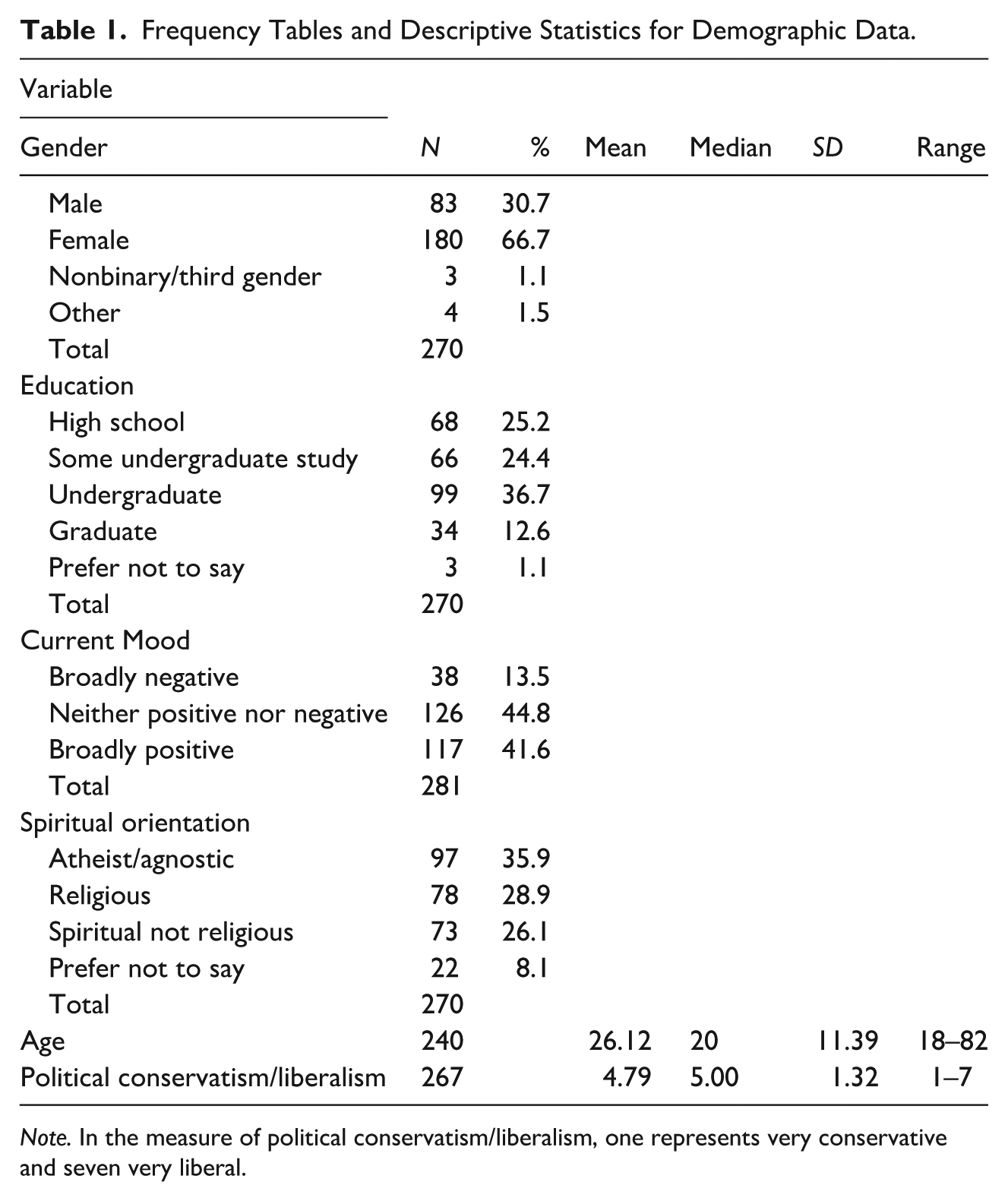
Note. In the measure of political conservatism/liberalism, one represents very conservative and seven very liberal.
As shown in Table 2, a large majority of respondents (77.58%) had not used a psychedelic drug in the past year. Among those who had, the most commonly used were LSD and psilocybin. On average, the experiences they had were between “mildly intense” and “intense.”
Frequency Tables and Descriptive Statistics for Psychedelic Use.
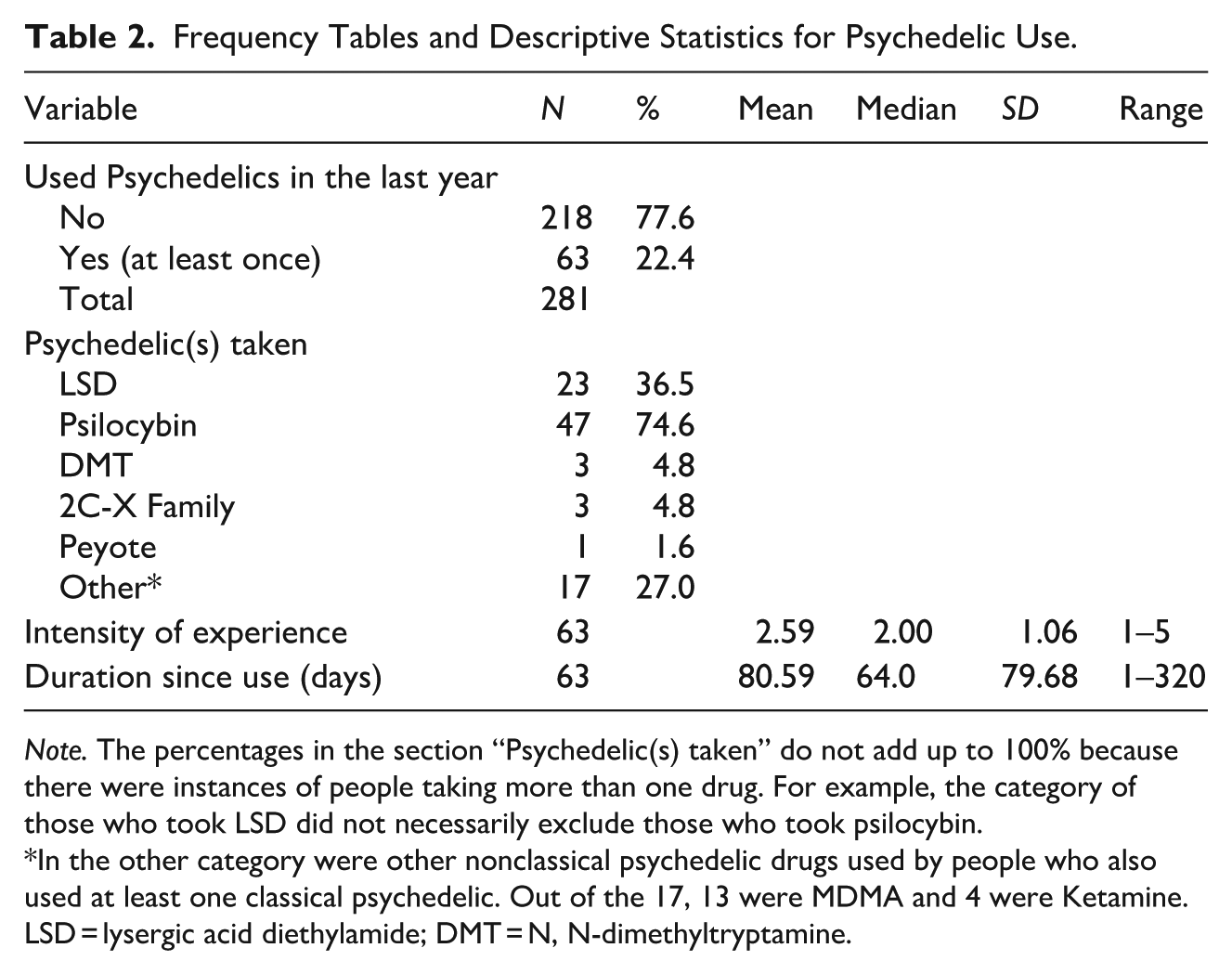
Note. The percentages in the section “Psychedelic(s) taken” do not add up to 100% because there were instances of people taking more than one drug. For example, the category of those who took LSD did not necessarily exclude those who took psilocybin.
In the other category were other nonclassical psychedelic drugs used by people who also used at least one classical psychedelic. Out of the 17, 13 were MDMA and 4 were Ketamine.
LSD = lysergic acid diethylamide; DMT = N, N-dimethyltryptamine.
All scales demonstrated acceptable (α >= .70) or better internal consistency (see Table 3), except for the SCIM consolidated identity, which had a poor α = .65. For this reason, the “scale if item removed” function in SPSS was to determine whether removing any items would improve consistency. Removing item 8 (“I am basically the same person that I’ve always been”) increasedthe consistency to an acceptable α = .72. The remaining analyses used this 7-item version. This deletion is justified conceptually, as having changed does not preclude one from having a consolidated identity at a later point (Amada et al., 2020).
Descriptive Statistics and Reliability for Scale Variables.
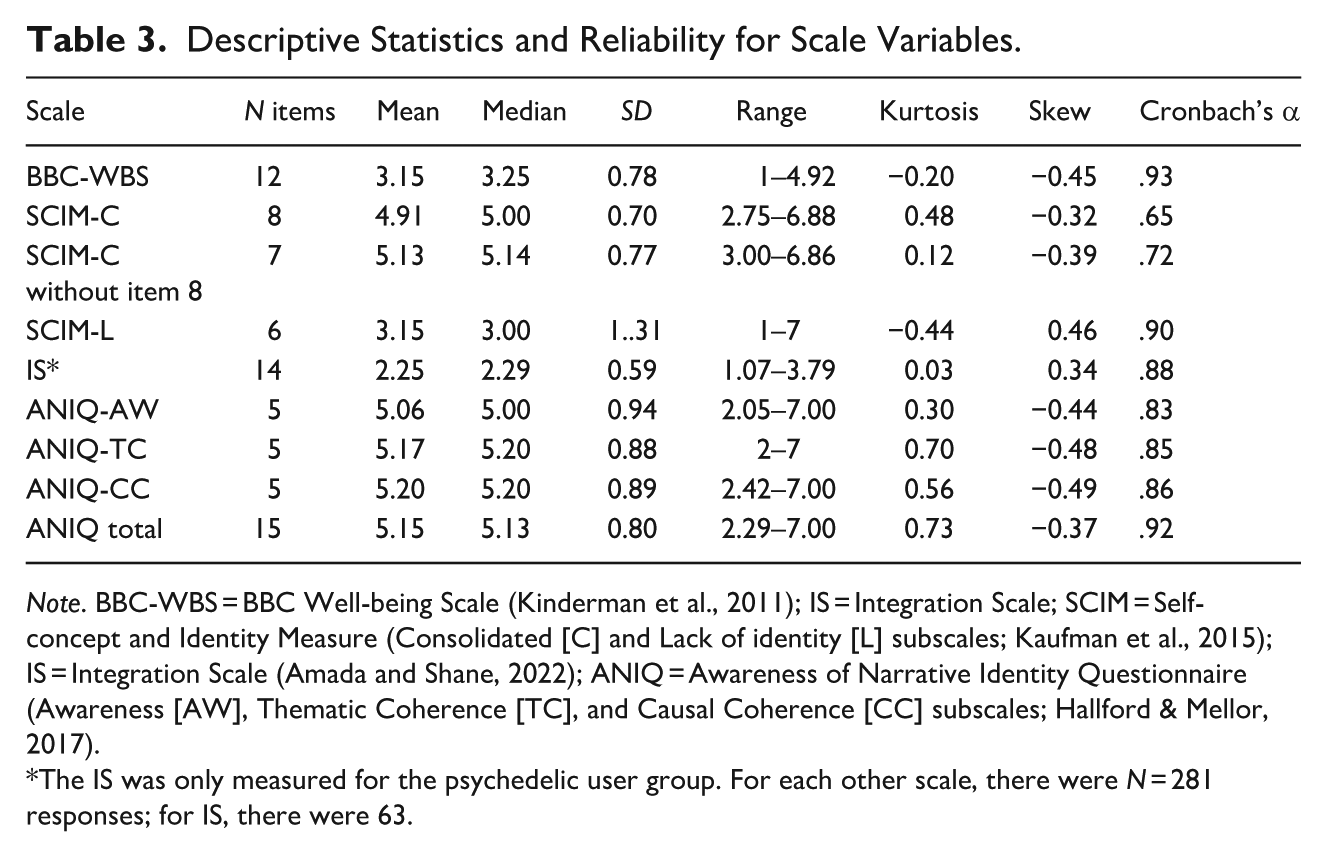
Note. BBC-WBS = BBC Well-being Scale (Kinderman et al., 2011); IS = Integration Scale; SCIM = Self-concept and Identity Measure (Consolidated [C] and Lack of identity [L] subscales; Kaufman et al., 2015); IS = Integration Scale (Amada and Shane, 2022); ANIQ = Awareness of Narrative Identity Questionnaire (Awareness [AW], Thematic Coherence [TC], and Causal Coherence [CC] subscales; Hallford & Mellor, 2017).
The IS was only measured for the psychedelic user group. For each other scale, there were N = 281 responses; for IS, there were 63.
Group Comparisons
Contrary to the hypothesis, the chi-square comparisons (Table 4) revealed significant demographic differences between the groups. The psychedelic user group skewed more male and educated, consistent with prior literature showing that psychedelic users tend to be male and educated (Sexton et al., 2019). The psychedelic user group had a relatively higher distribution of positive current mood. It is also plausible that these group differences are an artefact of the way that participants were recruited. For example, it is possible that these findings exaggerate the gender gap in psychedelic use. Due to legal and methodological barriers, it is difficult to ensure a representative sample of recreational psychedelic users. Accordingly, caution should be exercised when interpreting group differences.
Chi-Square Comparisons on Demographic Responses.
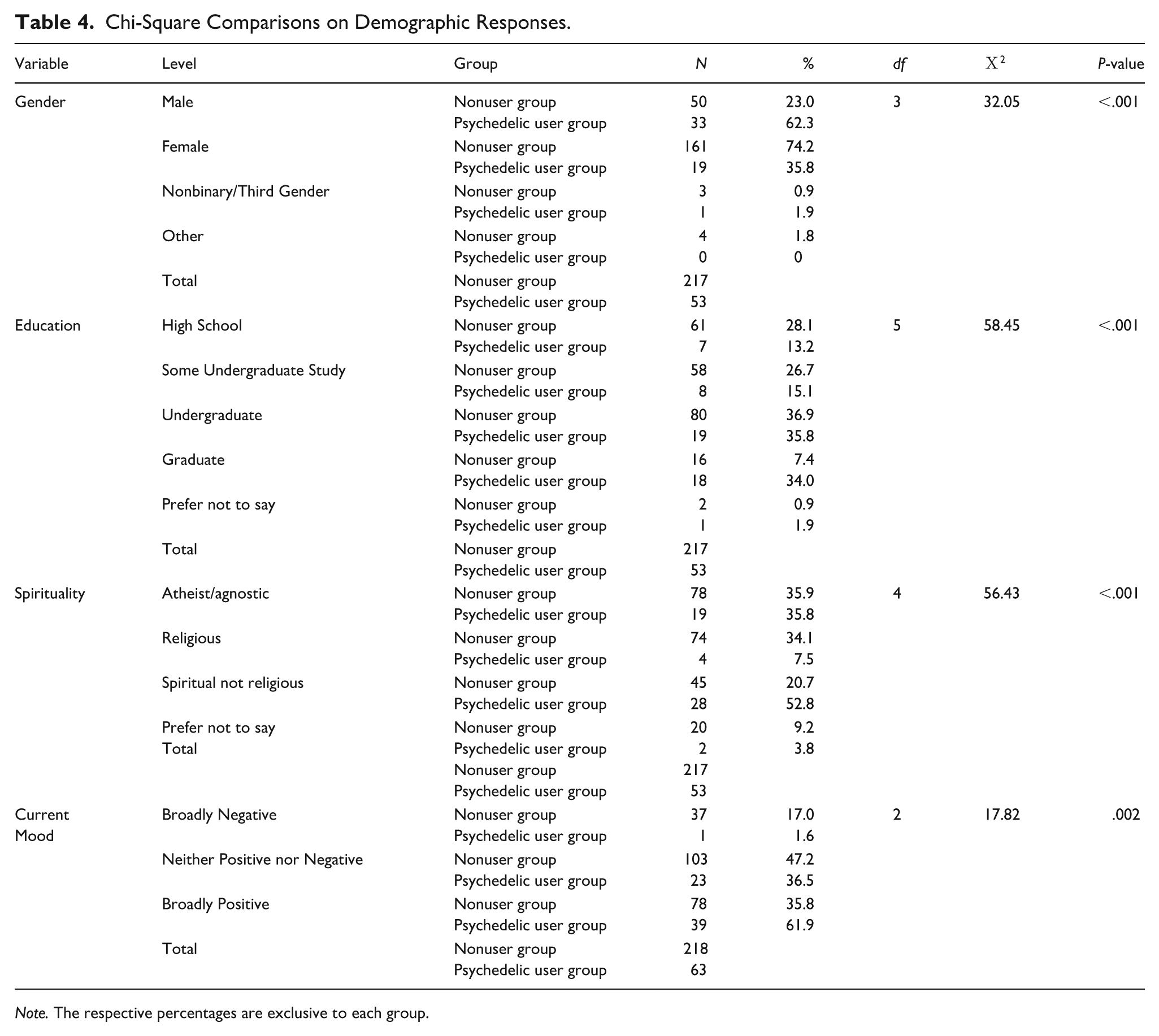
Note. The respective percentages are exclusive to each group.
Table 5 displays the results from the independent samples T-tests. As hypothesized, the psychedelic user group had significantly higher scores for psychological well-being (BBC-WBS), narrative identity thematic coherence (ANIQ-TC), narrative identity causal coherence (ANIQ-CC), and significantly lower scores for lack of identity (SCIM-L). However, no such differences were observed for SCIM-C, or the ANIQ awareness of narrative identity subscale. Finally, the psychedelic user group was significantly older, with a large effect size (d = 0.87).
Independent Samples T-tests.
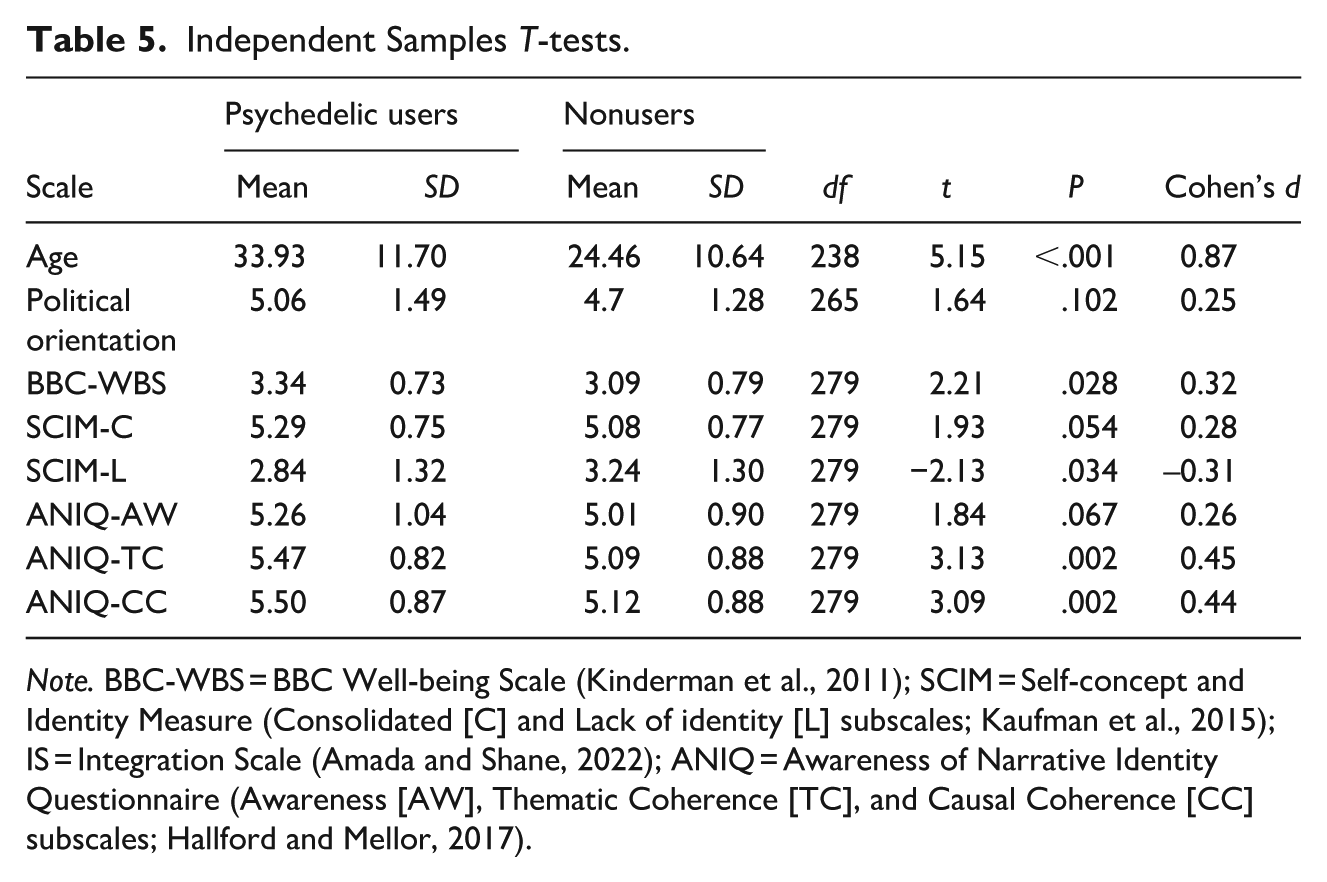
Note. BBC-WBS = BBC Well-being Scale (Kinderman et al., 2011); SCIM = Self-concept and Identity Measure (Consolidated [C] and Lack of identity [L] subscales; Kaufman et al., 2015); IS = Integration Scale (Amada and Shane, 2022); ANIQ = Awareness of Narrative Identity Questionnaire (Awareness [AW], Thematic Coherence [TC], and Causal Coherence [CC] subscales; Hallford and Mellor, 2017).
Within-Group Analyses
Table 6 displays the Pearson correlation analysis of responses from the psychedelic user group. Notably, well-being (BBC-WBS) had strong positive relationships with identity consolidation (SCIM-C; r = .70) and strong negative direction with loss of identity (SCIM-L; r = −.71). As expected, the SCIM-C and SCIM-L had a strong negative relationship (r = −.60). High scores on “self-integration” behaviors (IS) were also associated with high scores on the BBC-WBS (r = .37). The only ANIQ subscale consistently related to other measures of interest was causal coherence subscale. It showed moderately positive relationships with the BBC-WBS, SCIM-C, and IS, and a similarly sized negative relationship with SCIM-L. These findings were consistent with hypothesis two, but several results were contrary to it. For example, neither intensity of experience nor duration since use were significantly related to any other variable. Finally, it is worth noting that “self-integration” behaviors did not, as hypothesized, show a significant negative relationship with loss of identity (SCIM-L).
Correlation Table for Psychedelic User Group.
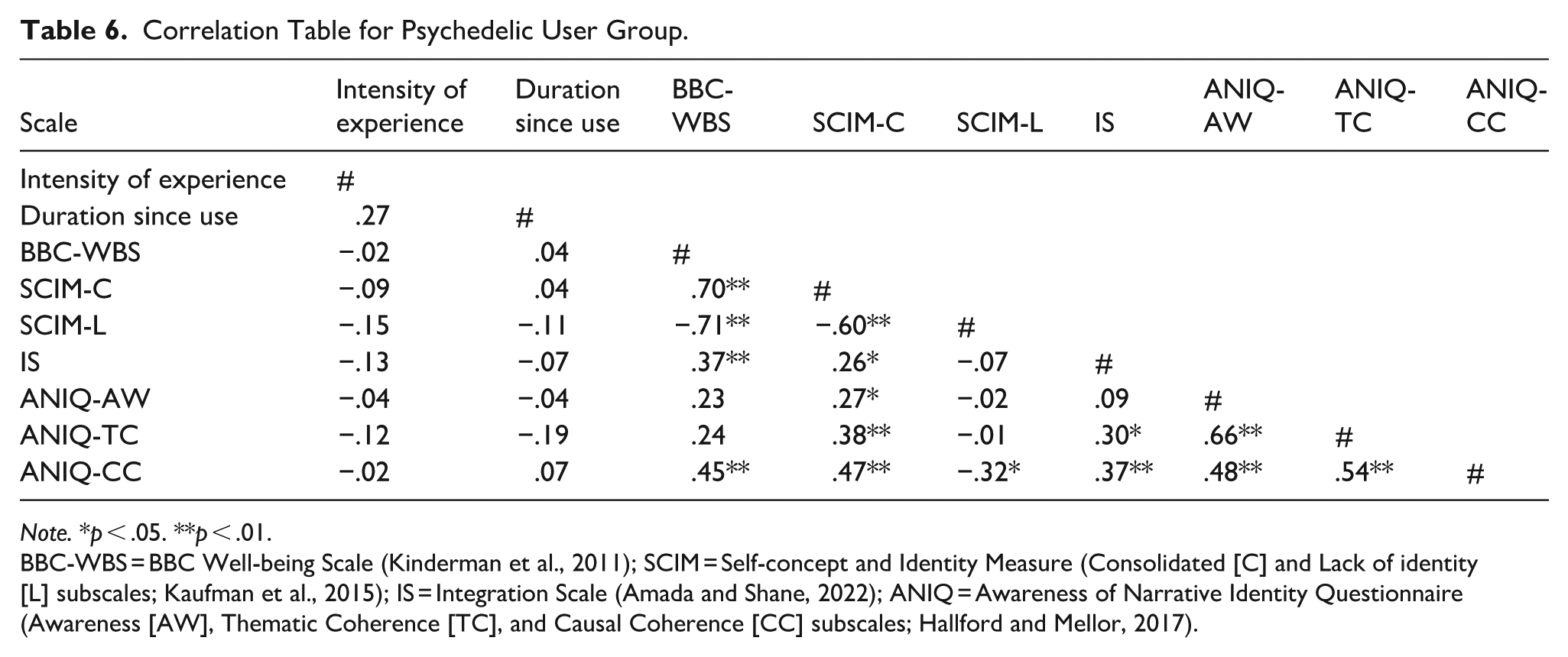
Note. *p < .05. **p < .01.
BBC-WBS = BBC Well-being Scale (Kinderman et al., 2011); SCIM = Self-concept and Identity Measure (Consolidated [C] and Lack of identity [L] subscales; Kaufman et al., 2015); IS = Integration Scale (Amada and Shane, 2022); ANIQ = Awareness of Narrative Identity Questionnaire (Awareness [AW], Thematic Coherence [TC], and Causal Coherence [CC] subscales; Hallford and Mellor, 2017).
Next, a multiple regression was conducted (see Table 7), to investigate which variables predicted responses on the BBC-WBS. The overall model fit was significant (F(9, 32) = 14.89; p < .001) and explained a high degree of variance (R2 = .76). The only significant predictors were the two SCIM subscales and the IS. The SCIM-C consolidated subscale had a positive medium-to-large effect on well-being, whereas the SCIM-L lack of identity subscale had a large negative effect. In turn, the IS had a positive small-to-medium effect on well-being. Therefore, the hypothesis was partially correct. It correctly predicted the relationships noted above but incorrectly predicted that intensity of experience and duration since use would be related to positive identity and well-being.
Multiple Regression for Predictors of the BBC Well-being Scale within the Psychedelic User Group.
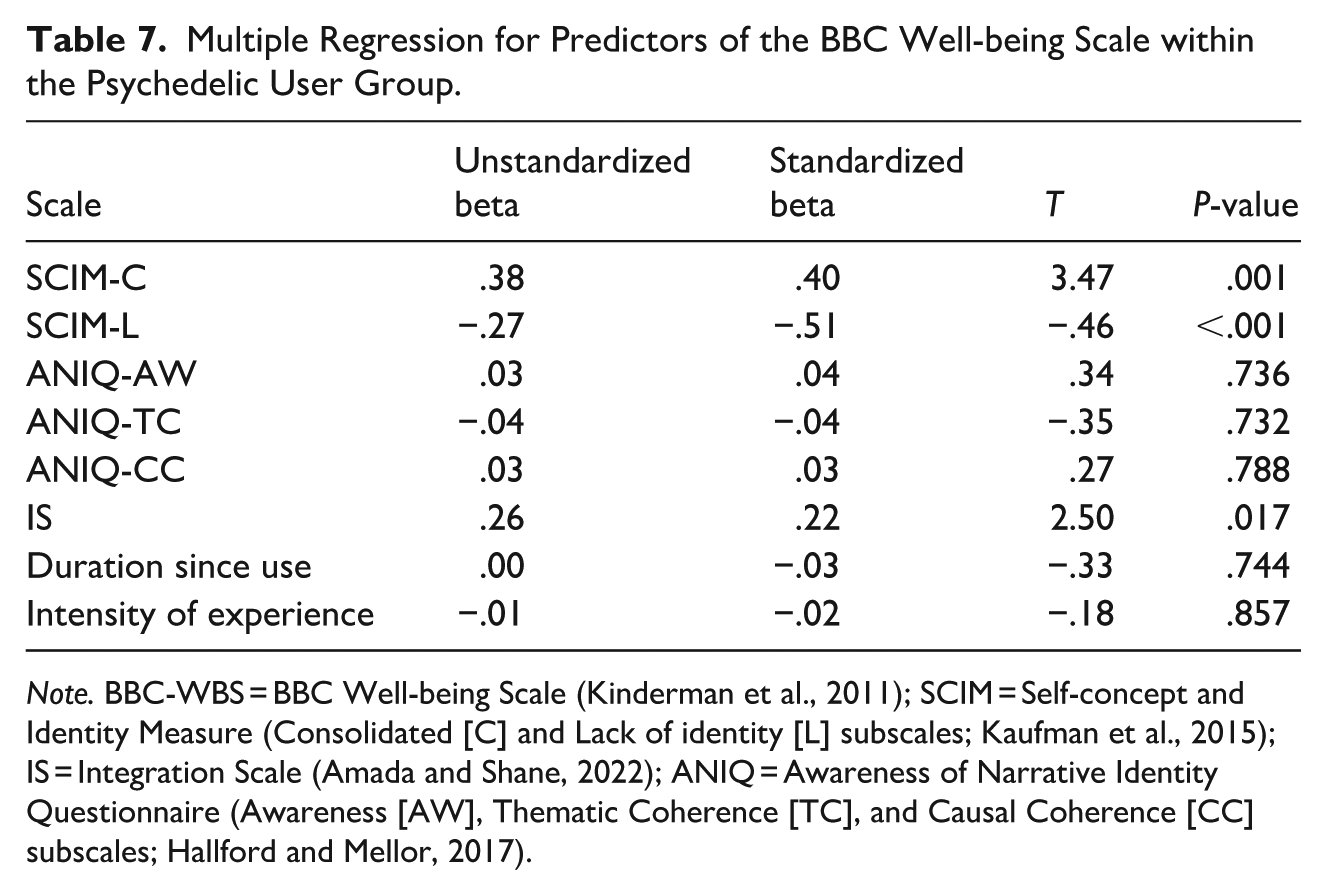
Note. BBC-WBS = BBC Well-being Scale (Kinderman et al., 2011); SCIM = Self-concept and Identity Measure (Consolidated [C] and Lack of identity [L] subscales; Kaufman et al., 2015); IS = Integration Scale (Amada and Shane, 2022); ANIQ = Awareness of Narrative Identity Questionnaire (Awareness [AW], Thematic Coherence [TC], and Causal Coherence [CC] subscales; Hallford and Mellor, 2017).
Finally, noticing the cluster of positive relationships between the BBC-WBS, IS, and SCIM-C in the correlation and regression analyses, the author sought to further explore their direction. The exploratory mediation tested whether the relationship between the IS and BBC-WBS was mediated by the SCIM-C. Following Hayes and Preacher (2014), the total effect was calculated by running a simple regression with BBC-WBS as DV and IS as the sole predictor. The relationship was moderately sized, positive, and significant (F(1, 61) = 9.38, p = .003; B = 0.45, SE = 0.15; r2 = .13), indicating that the extent to which participants engaged in self-integration behaviors after using psychedelics led to a significant increase in psychological well-being. Next, SCIM-C was tested as a mediator in this relationship (Figure 1). Self-integration behaviors (IS) had a moderately sized positive effect on identity consolidation (SCIM-C; B = 0.33, p = .0041). In turn, identity consolidation (SCIM-C) had a strong, positive effect on well-being (BBC-WBS; B = 0.63, p < .001). The direct effect on “self-integration” (IS) on well-being (BBC-WBS) was also significant (p = .036), with a small-to-medium effect size of B = .24 in the positive direction. Finally, 5,000 accelerated and bias-corrected bootstraps (ibid) revealed that the indirect effect of IS on BBC-WBS mediated by SCIM-C was statistically significant (as the 95% CI [0.02, 0.39] did not include zero). The indirect effect was comparable in size and direction to the direct effect at B = 0.21. This suggests that roughly half of the increase in well-being from engaging in self-integration behaviors after psychedelic use was through increases to positive identity.
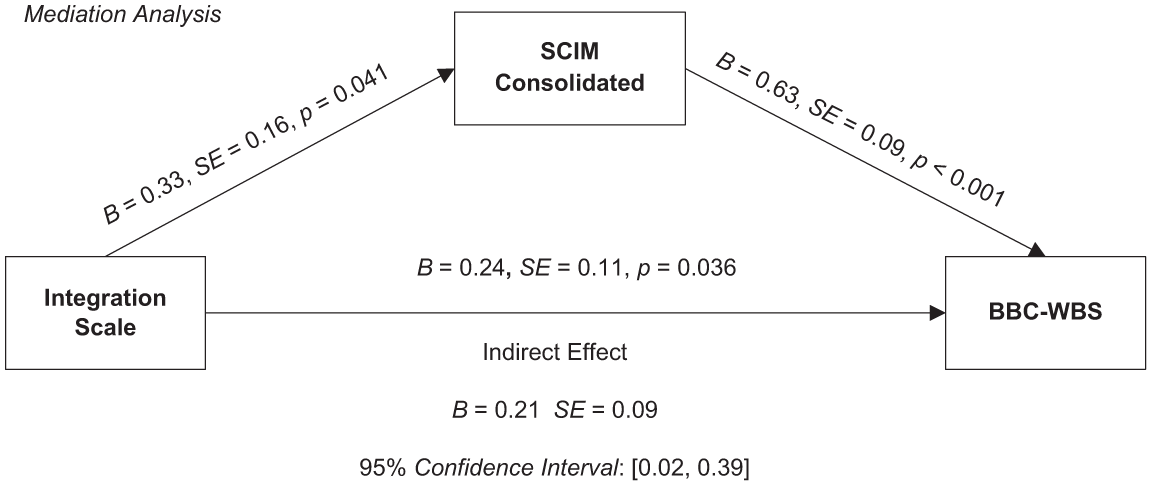
Mediation Analysis.
Discussion
The present findings were consistent with prior research into the risks of recreational psychedelic use. Kopra et al. (2022) reviewed results from the Global Drug Survey and concluded that psilocybin mushroom use was relatively safe. Johansen & Krebs (2015) in a large American sample (nearly 20,000) found no significant relationship between psychedelic use and serious mental distress or mental health treatment. Some studies even suggest that lifetime recreational psychedelic use is associated with higher well-being and life satisfaction (Hendricks et al., 2015; Lawn et al., 2017; Orlowski et al., 2022; Qiu & Minda, 2022). Finally, we may point to a review article by Schlag et al. (2022), which concluded that psychedelic use was not associated with substantial risk of abuse or psychological harm. Likewise, in the present study, the recreational psychedelic users were found to have higher scores for psychological well-being, lower loss of identity, and more meaningful and temporally coherent narrative identities, compared to nonusers. Amada et al. (2020) and Amada and Shane (2022) found qualitative and quantitative evidence that recreational psychedelic use was associated with high well-being and positive narrative identity functioning. What is novel in the present study, however, is the direct comparison between users and nonusers, with results suggesting that, on average, recreational psychedelic users are not at higher risk for identity disturbance.
A small minority of people have traumatic experiences (Goldy et al., 2024; Watts et al., 2017) with psychedelics and even lasting psychological distress, although this population is understudied due to practical and legal hurdles (Bremler et al., 2023; Raison et al., 2022). Kopra et al. (2023) investigated the impacts of self-medicating with psychedelics to treat psychiatric disorders. Nearly a quarter of respondents experienced negative symptoms lasting longer than 3 weeks, though they were “rarely severe or long lasting” (ibid, p. 739). Additionally, Carbonaro et al. (2016) found that, of a sample of 1,339 respondents who reported having challenging experiences, 10% had psychological symptoms lasting at least one year. Psychological distress after recreational use, in turn, was associated with frequent use and self-medication (St. Arnaud & Sharpe, 2022). In two studies, Goldy et al. (2024) report that between 6.23% and 9.21% of participants sought psychiatric or psychological support for lasting distress after challenging recreational psychedelic experiences. Finally, we may point to conflicting findings about the impact of recreational psychedelic use on suicidality. Lifetime psychedelic use has been linked to reduced suicidality and higher life satisfaction (Hendricks et al., 2015; Johansen & Krebs, 2015), while use in the last year of LSD was associated with a slight increase in suicidal ideation (Yang et al., 2022). Minimizing psychological harm to this small but significant minority is crucial (Kopra et al., 2023). So while it may generally be the case that recreational psychedelic use is well tolerated, higher caution is advisable for people with psychiatric conditions (who are disproportionately likely to have negative experiences; Marrocu et al., 2024), especially those characterized by identity disturbance, such as personality disorders.
In the correlation analysis, multiple regression, and mediation, integration emerged as a reliably important factor, positively related to both positive identity and well-being, consistent with Amada and Shane (2022). Specifically, in the correlation, both narrative and broader self-concept measures of identity were linked to integration and well-being, but in the multiple regression, it appears that self-concept accounted for the majority of the unique variance related to identity, as the narrative measures were not significant. Accordingly, this suggests that narrative identity may be too narrow a construct to understand relevant changes to identity in this context.
Some theories about the clinical applications of psychedelics have emphasized positive identity as a driver in psychedelic therapy (Amada et al., 2020; Carhart-Harris et al., 2014; Girn & Christoff, 2018; Letheby & Gerrans, 2017; Nour et al., 2016), with integration as an important process in making changes persist (Bathje et al., 2022; Greń et al. 2023, 2024). In this view, one’s identity is the conceptual frame through which one interprets all experience (Amada and Shane, 2022; Letheby & Gerrans, 2017). Perception is biased and limited by what is consistent with one’s self-image. Therefore, if the self-image is pathologically rigid or narrow (Carhart-Harris & Friston, 2019), a negative feedback loop forms that reaffirm an unhealthy view of self and the world. Psychedelics are potentially therapeutic insofar as they induce acute altered states of consciousness where self-processing changes, reducing the salience of egocentric perspectives (Kähönen, 2023) and ordinary self-biased perception (Amada et al., 2020; Carhart-Harris & Friston, 2019; Carhart-Harris et al., 2014; Letheby & Gerrans, 2017). New theories of self not limited by a “trauma defined reality” and the “false self” become possible (Maggio et al., 2023, p. 9). In turn, integration helps to solidify this change (Bathje et al., 2022; Greń et al., 2023; Griffiths et al., 2018; St. Arnaud & Sharpe, 2022), “anchoring” (Hermans, 1999) these new values into a changed identity (Amada & Shane, 2022) and concrete existence.
The self is theoretically central because transformation involves the whole person, beyond isolated symptoms (Modlin et al., 2023). Notably, the exploratory mediation showed that half of the positive effects of self-integration on well-being were driven through indirect gains to consolidated identity. Likewise, Amada and Shane (2022) found that perceived benefits to narrative functioning mediated the relationship between self-integration and well-being. In general, then, these findings support the argument that integration and selfhood are central drivers of positive psychological change with psychedelics. Some maintain that the positive effects of psychedelics are merely the effect of the drugs themselves, regardless of psychological support (Goodwin et al., 2024). The author agrees that this view is reductive (Gründer et al., 2023). Some have argued that these theories of identity transformation as a driver of psychological change can be extended to the recreational use of psychedelics (Amada & Shane, 2022; Amada et al., 2020). The findings in this study support that view. Even if people do not have mental disorders or suffer from a rigid self-concept, they may benefit from greater self-knowledge, self-acceptance, and reduced egocentric bias (ibid). Notably, however, self-integration did not have a significant negative relationship to loss of identity. Therefore, self-integration is likely not sufficiently protective against the most extreme forms of identity disturbance. In short, self-integration after recreational psychedelic use may help consolidate psychological gains from positive experiences, but is not a bulwark against severe identity disturbance after negative or traumatic experiences. It has been argued that apparent disturbances at the level of identity may reflect deeper disturbance or fragmentation at lower level nonreflective layers of the self (Bois et al., 2022). In this sense, the potentially therapeutic effect of integrative identity work assumes a basic level of self-consistency and self-relatedness. People with more disorganized or borderline personality structures who use psychedelics recreationally and experience identity disturbance are unlikely to benefit significantly from self-integration behaviors due to the more basic instability in their personality. Implications for harm reduction are discussed below.
Contrary to what was hypothesized, intensity of experience and duration since use were not significantly related to either well-being or identity. Given the inherent unreliability of obtaining accurate dosing information, the subjective intensity of experience was measured instead. This approach was consistent with previous findings that the quality (Roseman et al., 2018) and intensity (Ko et al., 2022; Kopra et al., 2023; Romeo et al., 2021) of the subjective psychedelic experience predict well-being. In the present study, however, intensity of experience was not significantly related to any of the other variables. The lack of a significant dose effect (and to a lesser extent duration effect) is surprising and may reflect the confounding influence of participant characteristics on some of the other effects discussed above. On the other hand, it may indicate that important qualitative elements of the psychedelic experience, beyond mere intensity, are therapeutic, or that more subtle interactions between preparation, dosing, and integration are what truly drive gains in mental well-being.
Harm Reduction
Recreational use of psychedelics has increased in many countries in recent years (Chan et al., 2022; Kopra et al., 2023; Monte et al., 2024). It is positive that evidence from the present study suggests that recreational psychedelic use is not associated with higher risk to identity disturbance. Nevertheless, it is important to consider what steps can be taken to support the minority of people who may experience it (Marrocu et al., 2024). Self-integration behaviors are one such possible harm reduction technique. Findings in the present study and by Amada and Shane (2022) suggest that self-integration after recreational use has a positive effect on well-being, partially through indirect gains to positive identity. However, the lack of a negative relationship between self-integration and loss of identity suggests that self-integration is not likely to be an effective bulwark against the most extreme forms of identity disturbance. In such cases, people should seek professional psychological treatment. It is a less clear, however, whether self-integration can help prevent milder forms of identity disturbance, such as discontinuity, meaninglessness, or fragmentation (Kaufman et al., 2015). Arguably, however, the recreational user group’s higher scores on thematic coherence and temporal coherence for narrative identity (Hallford & Mellor, 2017) are positive signs. Future studies should investigate the efficacy of harm reduction techniques in addressing both mild and severe forms of identity disturbance.
Ultimately, harm reduction approaches should seek to be more comprehensive than just integration. In the first place, self-screening tools could be developed to identify people with a disorganized identity or significant psychological trauma, who may be at higher risk of identity disturbance. Secondly, it is important to further explore the evidence for specific preparatory behaviors (Mian et al., 2023), such as setting intentions, having an accompanying “sitter” to help in case of distress, testing for harmful contaminants, or having an appropriate “set and setting” (Borkel et al., 2024; Hartogsohn, 2016). In conjunction with these measures, self-integration may help consolidate long-term gains from positive experiences and mitigate potential risks, with respect to identity and self-functioning, after recreational psychedelic use.
Limitations and Future Directions
Although these findings have important implications, several limitations of the study design should be noted. For example, because the data were not collected longitudinally, no claims can be made about directionality and causality. It is likely that tracking changes in identity and well-being over time, rather than relying on a single cross-sectional, correlational measure of them, would provide more informative answers to the questions at hand. The alternative explanation that, instead of differences in well-being and identity being due to recreational psychedelic use, there were preexistent differences in the personalities of the people who are liable to take psychedelics recreationally, cannot be precluded (see Weiss et al., 2023). It is hypothetically possible that people who are more likely to use psychedelics are already higher in well-being and identity coherence, or more likely to report having high well-being in surveys. However, the not uncommon phenomenon of recreational “self-medication” (Kopra et al., 2023; Rougemont-Bücking et al., 2019) casts doubt on the assumption that those interested in using psychedelics necessarily already possess positive mental health. In the future, longitudinal measures of identity should be used in clinical psychedelic trials. Doing so would help establish directionality and causality, and ameliorate other flaws related to the present study’s design.
Another limitation was the reliance on self-reported information regarding drug use. It When purchasing substances for recreational purposes on the illicit market, they are not really consuming the intended drug or dose (Bremler et al., 2023, p. 18; Kopra et al., 2023, p. 745). More detailed measures about the subjective quality of the experience, beyond the simple measure of intensity, may have helped compensate for this difficulty (see Schmidt & Berkemeyer, 2018). There are additional nuances in recreational psychedelic use that are not well captured in the present study design. Following the example of prior researchers that treated classical psychedelics as a relatively homogenous class (Basedow et al., 2024; Johnson et al., 2019; Schmid et al., 2020), this study focused on them at the expense of nonclassical psychedelics like MDMA or ketamine. However, despite chemical similarities between classical psychedelics like LSD, psilocybin, and DMT, the reportedly highly unique phenomenology of the DMT experience (Dourron et al., 2023; Michael et al., 2023) and phenomenological overlaps between ketamine, LSD, and psilocybin (Schartner et al., 2017) render this clustering problematic and perhaps arbitrary. In that sense, the present study’s exclusive focus on classical psychedelics is a noteworthy limitation that future studies should rectify.
Furthermore, we did not collect information about lifetime historical use, so it is possible that the group of people who had not used psychedelics in the last year included both experienced users and those who had never taken them. In turn, this makes it difficult to disambiguate the differences between those who have used psychedelics recently, in the more distant past, or never at all. Future studies should employ more thorough forms of history-taking that capture general lifetime experience, multiple instances of use within the past year, and the common practice of polysubstance use (Bălăeț et al., 2023; Lake & Lucas, 2025). This would enable more nuanced analyses than the simple categorical differences (i.e., between those who had used psychedelics in the last years and those who had not) examined in the present study. For example, we might expect a greater risk of identity disturbance in cases of repeated high-dose use within a short period of time, due to a lack of sufficient time to integrate these experiences. Understanding this possibility and other complex interactions related to polysubstance use and lifetime experience would help clarify further the dynamics of identity disturbance in the context of recreational psychedelic use.
The sample of recreational psychedelic users was also possibly not representative. People who had positive experiences are more likely to be engaged in community spaces on social media related to psychedelics and to participate in studies (Amada et al., 2020). Furthermore, the overall age of the sample was skewed toward younger participants, reflecting the reliance on university student recruitment. It is possible that the significant difference between the ages of the psychedelic user and nonuser groups—the latter being on average roughly 8 years younger—confounded the effect of psychedelic use on identity disturbance. That is, the group differences may, to some extent, reflect the unique developmental challenges of emerging adulthood (Sica et al., 2014), rather than simple differences in psychedelic use. More comprehensive recruiting methods with larger, more representative samples should be used to further explore the experience of identity distress after recreational psychedelic use and disambiguate the moderating effects of demographic variables. Indeed, despite the collection of some demographic data, such as age, gender identity, educational attainment, and political preference, other information, such as socioeconomic status and ethnicity, was notably omitted. Future research should collect such information to understand more accurately the demographic profile of people who use psychedelics recreationally and to control for such factors in regression analyses. Demographic factors like household size, income, and ethnicity have been previously identified as complex modifiers of psychedelic use and subsequent psychological distress (Jones and Nock, 2022; Viña, 2024a, 2024b).
As mentioned previously, changes to selfhood caused by psychedelics have received attention from scholars who focus on phenomenological (e.g., Letheby & Gerrans, 2017) and psychodynamic perspectives (Maggio et al., 2023; Modlin et al., 2023). Although it is widely recognized that during the acute psychedelic experience, people can have radically altered experiences of self, such as ego-dissolution (Letheby & Gerrans, 2017; Lynn et al., 2023; Nour & Carhart-Harris, 2016), it is less clear how this translates to long-term changes in pre-reflective layers of selfhood. Psychodynamic case studies of clinical psychedelics trial patients may be informative in this regard. Finally, in the interests of harm reduction efforts, future research should try to develop and evaluate an evidence-based protocol to mitigate identity disturbance caused by recreational psychedelic use. The type of self-integration reported in the present study was retrospectively reported and not necessarily consistent, systematic, or of high quality. In principle, assessing the efficacy of a more regimented self-integration procedure could be useful. In practice, however, the feasibility of such research in the face of methodological and legal hurdles is questionable (Bremler et al., 2023). Nevertheless, harm reduction resources could be designed based on simplified versions of clinical protocols, and widely distributed for free to help mitigate the risks of recreational use, should a growing body of research suggest their potential efficacy.
Conclusion
Growing evidence suggests that a minority of recreational psychedelic users may face significant and lasting psychological distress after use. Despite growing psychedelic research and increasing concern over risks and harm reduction, the potential of recreational use to cause identity disturbance has been underexplored. This study sought to address this by investigating differences between recreational psychedelics users and nonusers on measures of both positive and negative identity. The results suggest that recreational use is generally not associated with identity disturbance, and may even have positive effects, when consolidated by self-integration behaviors. Self-integration, however, was not negatively related to the most severe form of identity disturbance, identity loss, so it is likely that more comprehensive harm-reduction techniques are required, including screening for identity disorganization and psychotic-related mental disorders. Methodological weaknesses like the study being correlational, cross-sectional, and facing issues of potential sample bias, mean that more research using more rigorous measures and analyses of demographic information and drug use history is required to draw definitive conclusions. Longitudinal studies of changes to selfhood, both in terms of identity and pre-reflective levels, and in clinical and recreational contexts, would serve this end. Nevertheless, it is worth reiterating that recreational psychedelic use presents considerable psychological risks and is strongly cautioned against—especially for those facing mental health issues.
Footnotes

Funding
The authors disclosed receipt of the following financial support for the research, authorship, and/or publication of this article: The authors received £300 from King’s College London as part of an undergraduate research project grant to support this work.
Declaration of Conflicting Interests
The author(s) declared no potential conflicts of interest with respect to the research, authorship, and/or publication of this article.