



Abstract
The Consciousness, Relaxation, Attention, Fulfillment, and Transcendence (CRAFT) program, based on yoga, mindfulness, positive psychology, and emotional intelligence, was conceived as a neuroeducational method for self-actualization, happiness, and well-being. Previous quantitative research suggests the CRAFT program is a feasible intervention to improve student musicians’ health and well-being. The current study was devised to capture a wider understanding of student musicians’ experiences and perceived benefits from following the CRAFT program and how this exposure may affect their well-being and academic life. Participants were higher education student musicians (n = 37) who had received CRAFT instruction at a conservatory of music as part of their curriculum, once a week for 1 hr, during the academic years 2017 to 2019. They completed an evaluation survey, comprising 36 5-point Likert-type items and one open-ended question. Descriptive statistics from participants’ Likert-type item evaluations supported the potential of the program to bestow numerous hypothesized benefits related to its five elements and viability. A content analysis conducted on participants’ responses to the open-ended question confirmed, clarified, and expanded these findings revealing additional benefits and insights across humanistic, educational, well-being, and music dimensions. This study rendered further supporting evidence for the CRAFT program as a viable intervention for promoting student musicians’ well-being and academic careers with relevant implications to other educational contexts, settings, and populations. Large mixed-methods investigations are needed to comprehensively understand and ascertain the efficacy and effectiveness of the CRAFT program to enhance the well-being and academic experience of student musicians.
Higher education students experience numerous health and well-being concerns such as musculoskeletal problems (Can & Karaca, 2019; Rodríguez-Romero et al., 2016), involvement in unhealthy habits (Jao et al., 2019; Molina et al., 2012), high academic workload (Jääskeläinen et al., 2023), and emotional and mental disturbances (Henning et al., 2018). Among tertiary students, psychological distress has been documented as highly prevalent (Auerbach et al., 2016; Hunt & Eisenberg, 2010), even more than in the general population (Ibrahim et al., 2013; Stallman, 2010), negatively affecting their lives and academic performance (Bruffaerts et al., 2018). A large survey completed by 64,519 higher education students at multiple higher education providers revealed that undergraduate and graduate students involved in art and design studies reported the highest probability (44%) of presenting mental health problems (Lipson et al., 2016).
Tertiary-level student musicians face highly demanding challenges that may place their academic and professional careers in jeopardy (Antonini Philippe et al., 2019; Osborne et al., 2014). Due to risk factors such as excessive practice, instrument-related postural deficiencies, lack of adequate physical condition, muscular tiredness, and competitiveness, higher education student musicians are prone to develop performance-related musculoskeletal disorders (PRMD, Cruder et al., 2020; Rodríguez-Romero et al., 2016). Among these students, prevalence rates of PRMD have been documented ranging between 48% (Cruder et al., 2020) up to 80% (Steinmetz et al., 2012), with reportedly higher musculoskeletal complaints than in other types of tertiary-level students (e.g., medical students, Kok et al., 2013). Similarly, in the mental health domain, there have been reported rates of up to 80% of professional and higher education student musicians afflicted by music performance anxiety (MPA, Fernholz et al., 2019; Kokotsaki & Davidson, 2003; Lupiáñez et al., 2022), which has also been linked with the high frequency of PRMD (Steinmetz et al., 2014).
For the purposes of enhancing the well-being and academic experience of higher education students, and specifically student musicians, the Consciousness, Relaxation, Attention, Fulfillment, and Transcendence (CRAFT) program, a holistic neuroeducational method for self-actualization and happiness, was created (Posadas, 2019). Although it was initially developed to attend to the highly demanding challenges affecting Spanish tertiary students involved in specialized educational fields such as sports, arts, languages, and particularly music, the program was also conceived to be implemented across multiple cross-cultural educational contexts. The acronym CRAFT stands for the following Spanish terms encompassing its five elements: Consciencia (Consciousness); Regulación, Relajación (Regulation, Relaxation); Atención (Attention); Felicidad (Happiness or Fulfillment 1 ); and Transcendencia (Transcendence). Grounded in yoga, mindfulness, positive psychology, and emotional intelligence, which represent the four theoretical and practical CRAFT foundations, CRAFT is a holistic program synergistically encompassing physical, psychological, cognitive, emotional, and spiritual dimensions of well-being (Posadas, 2019).
Interventions based on alternative and complementary therapies such as yoga and mindfulness seem to be effective among higher education students in improving psychological distress (Breedvelt et al., 2019; Halladay et al., 2019; McConville et al., 2017); well-being (De Vibe et al., 2013; Jarry et al., 2017; R. Tang et al., 2020); awareness, attention, memory, executive function, neuroplasticity, cognitive and emotional functioning, and self-regulation (Brunner et al., 2017; Gothe & McAuley, 2015; Y. Tang et al., 2015); and higher education student musicians’ specific concerns such as MPA (Chang et al., 2003; Stern et al., 2012). Furthermore, researchers of hatha yoga-based interventions conducted with higher education students have reported a series of physical benefits including increased flexibility, strength, balance, as well as cardiovascular and pulmonary function (Birkel & Edgren, 2000; Park et al., 2017; Smith et al., 2011; Tran et al., 2001). Moreover, research literature within the fields of positive psychology and emotional intelligence has identified several benefits for addressing students’ emotional needs, happiness, health, and well-being. For example, positive psychology-based interventions have improved happiness, depressive symptoms (Bolier et al., 2013; Seligman et al., 2005) and subjective and psychological well-being (Gander et al., 2013), whereas evidence from correlational (Mayer et al., 2008; Ruiz-Aranda et al., 2014) and longitudinal (Schoeps et al., 2020) investigations appears to underpin the efficacy of emotional intelligence for boosting positive emotions, life satisfaction, happiness, subjective well-being, and stress reduction.
The abovementioned studies support the positive role that each of these four disciplines and/or fields of knowledge (i.e., yoga, mindfulness, positive psychology, and emotional intelligence) alone may play in enhancing the well-being and academic experience of higher education students. However, along with their unique strengths, they also present limitations. Nonetheless, the limitations of one or more disciplines could be compensated by the strengths of others. For example, positive psychology and emotional intelligence interventions, which are devoid of physical and breathing practices, may be enhanced if respiratory and postural techniques from hatha yoga were added to their curriculums. Therefore, an integrated program based on a careful selection of the theories and practices from these four disciplines together could offset the limitations of a program based on one of these disciplines alone, while better satisfying higher education students’ multidimensional needs (Bartos et al., 2021, 2022). The CRAFT program was conceived under this original premise resulting in the conscious assemblance of components from these four disciplines, its so-called CRAFT foundations.
The CRAFT program was first applied in its reduced version called the CRAFT’s 7 mindful minutes, at the Royal Conservatory of Music of Granada Victoria Eugenia, Spain, in the subjects English for Musicians and Chamber Music during the academic year 2016/2017 (Posadas & Bartos, 2022; Rull et al., 2019). The positive impact of the CRAFT’s 7 mindful minutes led to subsequent applications of the program but with higher priority as part of the educational curriculum of the music conservatory. In 2017/2018, the program was implemented as a CRAFT-based elective subject of Mindfulness, and, since 2018/2019, as both CRAFT-based elective subjects of Mindfulness and Emotional Intelligence, each subject imparted once a week for 1 hr (Bartos et al., 2022).
In the context of this new application of the CRAFT program, a recent feasibility study conducted by Bartos et al. (2022) supports the preliminary effectiveness of the CRAFT-based elective subjects to improve higher education student musicians’ mindfulness skills, cognitive reappraisal, psychological well-being, and physical flexibility. The examination of a series of feasibility domains (Bowen et al., 2009) by Bartos et al. (2022) also appears to suggest a satisfactory implementation and integration of the program within the conservatory’s curriculum and students’ daily lives. However, such an examination was exclusively based on the quantitative analyses of various demographic variables such as home-based practice, attendance rate, and frequency of daily life application. In addition, a thorough exploration of any other potential benefits other than those measured quantitatively to determine the preliminary effectiveness of the CRAFT program was beyond the scope of the study by Bartos et al. (2022) study. In this vein, the adoption of qualitative research methods has been particularly encouraged and increasingly become more widespread to inform future large-scale trials (Ee et al., 2022; Hiles et al., 2021; O’Cathain et al., 2015; Wrapson et al., 2021).
Current Study Purpose
The aim of the current study was to examine in greater depth the potentiality of the CRAFT program to enhance the academic and well-being experience of higher education student musicians. To that end, first, student musicians’ level of agreement with a series of hypothesized benefits related to the five elements of the CRAFT program and its viability was examined. Subsequently, qualitative analyses were used with the purpose of gaining a wider understanding of CRAFT participants’ overall experience and perceived benefits from following the program as well as how they implemented the techniques learned to enhance their well-being, daily life, and academic experience.
Method
Participants
Participants were higher education student musicians of the Royal Conservatory of Music of Victoria Eugenia, Spain, a state music institution providing a 4-year higher academic degree equivalent to a 4-year bachelor’s degree. The inclusion criteria were being a full-time student musician, aged 18 years or older, enrolled at this conservatory, and having completed curricular instruction in CRAFT-based elective subjects (e.g., either Mindfulness or Emotional Intelligence, or both) during the academic years 2017/2018. A convenience sample of 37 student musicians, age range 20 to 29 years, of whom the majority were females and fourth-year students, was recruited. All participants had accomplished high school education and received instruction in the CRAFT-based elective subject of Mindfulness. Participants’ demographic characteristics are displayed in Table 1.
Participants’ Demographic Characteristics.
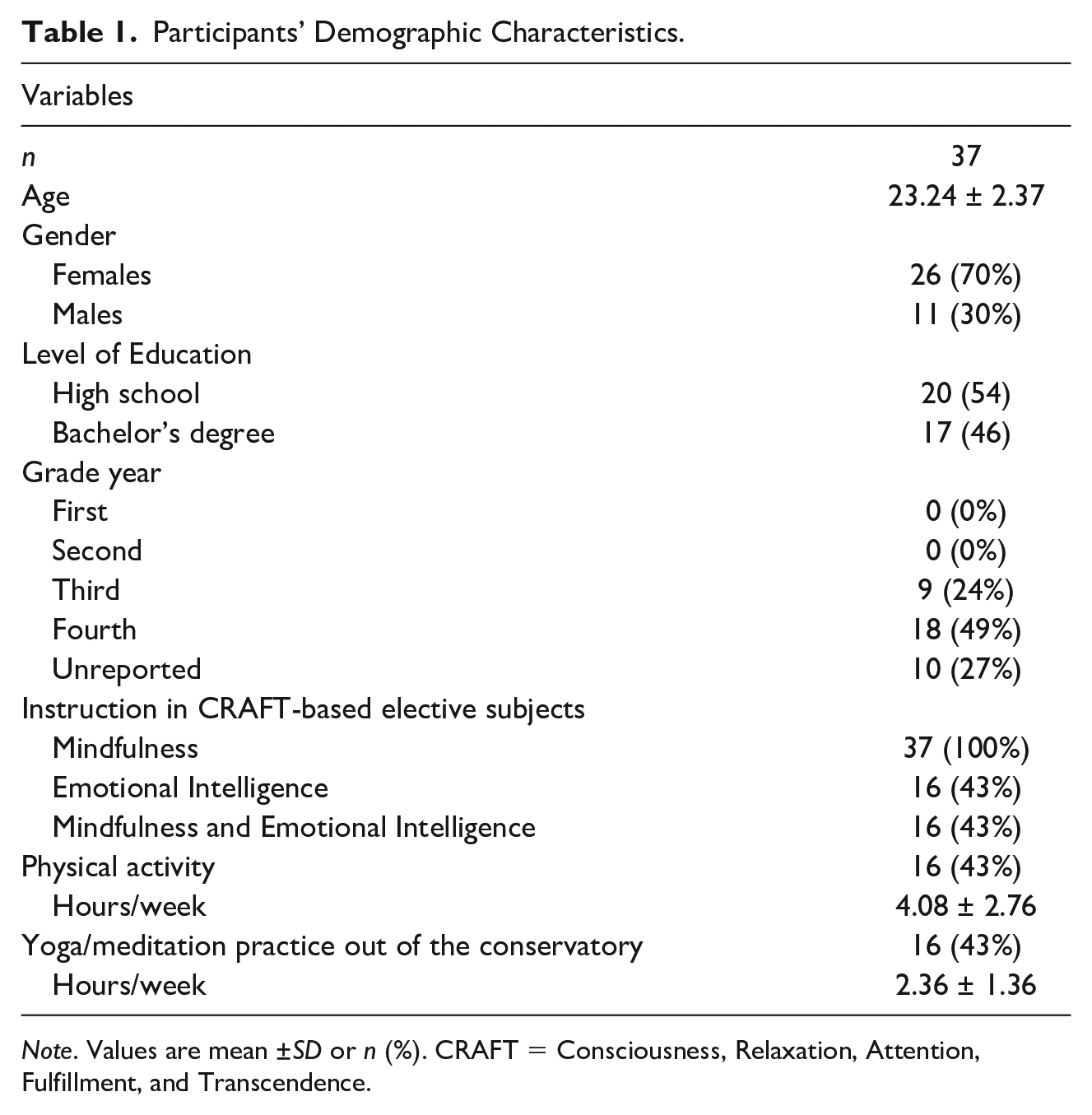
Note. Values are mean ±SD or n (%). CRAFT = Consciousness, Relaxation, Attention, Fulfillment, and Transcendence.
Procedure
The CRAFT-based elective subject of Mindfulness was implemented during the academic years 2017/2019, and the CRAFT-based elective subject of Emotional Intelligence during the academic year 2018/2019. Instruction occurred, as per the other elective subjects, once a week for 1 hr during the entire academic year, running from the beginning of October until the end of the teaching phase occurring in the middle of May. From March 15 to April 15, 2019, a research assistant blind to the study hypotheses approached students during the last 10 min of their CRAFT-based classes inviting them to fill in an online CRAFT evaluation survey through the platform Google Docs. All approached students agreed to participate (n = 37) and completed the survey at least 2 weeks prior to their academic examinations. Because all students who had been approached agreed to participate, the diversity of students in the CRAFT-based elective subjects was mirrored in the sample for the present study ensuring therefore that nobody was excluded. Ethical approval was obtained from the University of Granada Institutional Review Board (nº 1009/CEIH/2019). All participants were informed about the procedures of the study and provided their consent to participate before completing the survey.
In the academic year 2017/2018, instruction in the CRAFT-based elective subject of Mindfulness totaled 25 hr, whereas the following academic year, 2018/2019, it was 24 hr of instruction for this subject, with the same number of hours for the CRAFT-based elective subject of Emotional Intelligence. All classes were delivered in a well-equipped and multipurpose spacious classroom. The program developer, a certified yoga and mindfulness teacher, and a singing and pedagogy professor at the same educational provider taught all the classes.
The four CRAFT foundations and five CRAFT elements guided the practical and theoretical instruction delivered in both subjects. However, there was a predominance of yoga and mindfulness components included in Mindfulness, whereas higher prevalence was given to empathy, compassion, positive psychology, and emotional intelligence theory and practice in Emotional Intelligence. To fulfill the curricular content of these subjects, the program creator used a series of practices and theories selected from, adapted from, and/or inspired by the four CRAFT foundations, with some of the practices being developed by herself. The program developer encouraged reflective problem-solving debates and role-playing activities to meaningfully and creatively apply the program content to personal, academic, and professional real-life situations. Participants were encouraged to complete at least 2 hr of weekly home-based practice to train themselves in the abilities and techniques learned during their CRAFT-based instruction.
Issues related to diversity, equity, and inclusion were addressed by adapting the program, when applicable, to meet the collective and individual well-being and academic needs of participants. Examples of such adaptations made by the program deliverer include the use of various physical practice alternatives and props to assist the specific postural and/or musculoskeletal demands of participants. In addition, the various reflective debates and role-playing activities were tailored to specifically address the cognitive, emotional, psychological, and physical concerns experienced by the students with guidance on how to implement what they learned in the program to better cope with their problems in real-life situations. Finally, one-to-one discussions between the program instructor and participants were arranged if specific needs were required to be privately attended to.
A detailed explanation of the five CRAFT elements and four CRAFT foundations can be found elsewhere (Bartos et al., 2021, 2022; Posadas & Bartos, 2022). An extensive portrayal of the objectives, content, and practices planned and delivered by the creator of the program for both CRAFT-based elective subjects can be freely accessed in the supplementary material of a previous study (Bartos et al., 2022).
Measures
A CRAFT evaluation survey (CES) developed by Posadas and Bartos (2022) was used to examine the hypothesized benefits of the program, evaluate its viability, and explore CRAFT participants’ experiences and perceived benefits associated with it. The first section comprised a 36-item Likert-type scale survey subdivided into six subscales of six items each (one subscale for each of the five elements of the program and one subscale for its viability). Items within each subscale represented a series of hypothesized benefits comprising skills, abilities, and states associated with that specific CRAFT element. Participants rated their level of agreement with each item using a 5-point Likert-type scale ranging from 1= Strongly disagree to 5 = Strongly agree. Results were reported for each subscale and the total scale. The second section of the CES consisted of a concluding open-ended question asking participants to summarize their experience with the program and report any additional benefits derived from it related to their daily life and professional artistic experience. Along with the CES, participants filled in a brief demographic questionnaire that included items relating to age, gender, level of education, grade year, specialty, hours of physical activity, and hours of yoga and/or mindfulness practice outside of the conservatory which was additional to their CRAFT-based instruction. Because of the limited sample size and the need to maintain anonymity, this questionnaire did not include additional questions such as ethnicity, sexual orientation, disability status, socioeconomic status, and mental health service user status.
Data Analysis
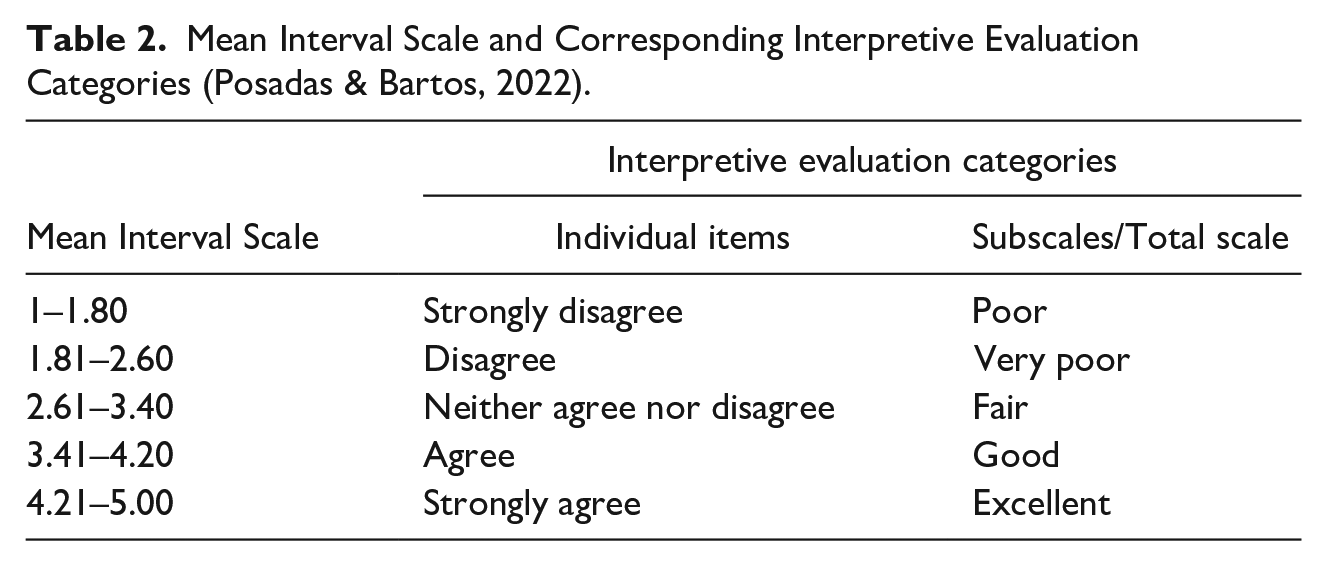
Participants’ responses to the CES Likert-type items and the demographic questionnaire were analyzed with IBM SPSS v. 29.0.1.0 using basic descriptive statistics. For the demographic questionnaire, means and standard deviations were computed for all continuous variables, while the categorical variables were analyzed through frequencies and percentages. Regarding the CES Likert-type questions, we calculated first the mean scores of each single item, and second, for each subscale and the total scale we computed the grand means from their respective single item mean scores. Results were interpreted following a proportional mean interval scale range with corresponding interpretive categories for both the single-item mean scores and the total scale/subscale grand mean scores (Table 2). A similar approach for interpreting Likert-type scale scores has been adopted elsewhere (Narli, 2010; Posadas & Bartos, 2022). Scores higher than 3.40 were considered positive, between 2.61 and 3.40 neutral, and lower than 2.61 negative.
Mean Interval Scale and Corresponding Interpretive Evaluation Categories (Posadas & Bartos, 2022).
A deductive content analysis (Elo & Kyngäs, 2008; Kleinheksel et al., 2020) was used to analyze participants’ responses to the open-ended question following the pre-existing theoretical framework of the five CRAFT elements (Bartos et al., 2021, 2022; Posadas & Bartos, 2022) and its emerging CES of six subscales and respective hypothesized benefits (Table 3). For the preparatory phase, it was determined that either a word, a portion of a sentence, a sentence, or a conjunction of sentences from participants’ responses to the open-ended question could be a meaning unit or unit of analysis with meaningful content (Elo & Kyngäs, 2008; Weber, 1990). Furthermore, although meaning units were mainly analyzed following a manifest approach, a latent approach implying a certain degree of interpretation and contextualization was also used to unveil relevant hidden meanings from participants’ experiences (Kleinheksel et al., 2020). To ensure credibility and validity, it was a priori decided that coding decisions would be directed by the conceptual framework of the five CRAFT elements (Bartos et al., 2021, 2022; Posadas & Bartos, 2022) with previous dialogue and consensus between co-researchers (Graneheim & Lundman, 2004). Following these prerequisites, coding of meaning units into the different potential categories, a procedure that is explained below as part of the next phase, was based on content equivalency. The final step of this phase involved reading the data multiple times to become familiar with and make sense of participants’ responses to the open-ended questions (Elo & Kyngäs, 2008), thereafter, being side-by-side translated from Spanish into English.
CRAFT Evaluation Survey Likert-Type Item Results (n=37).
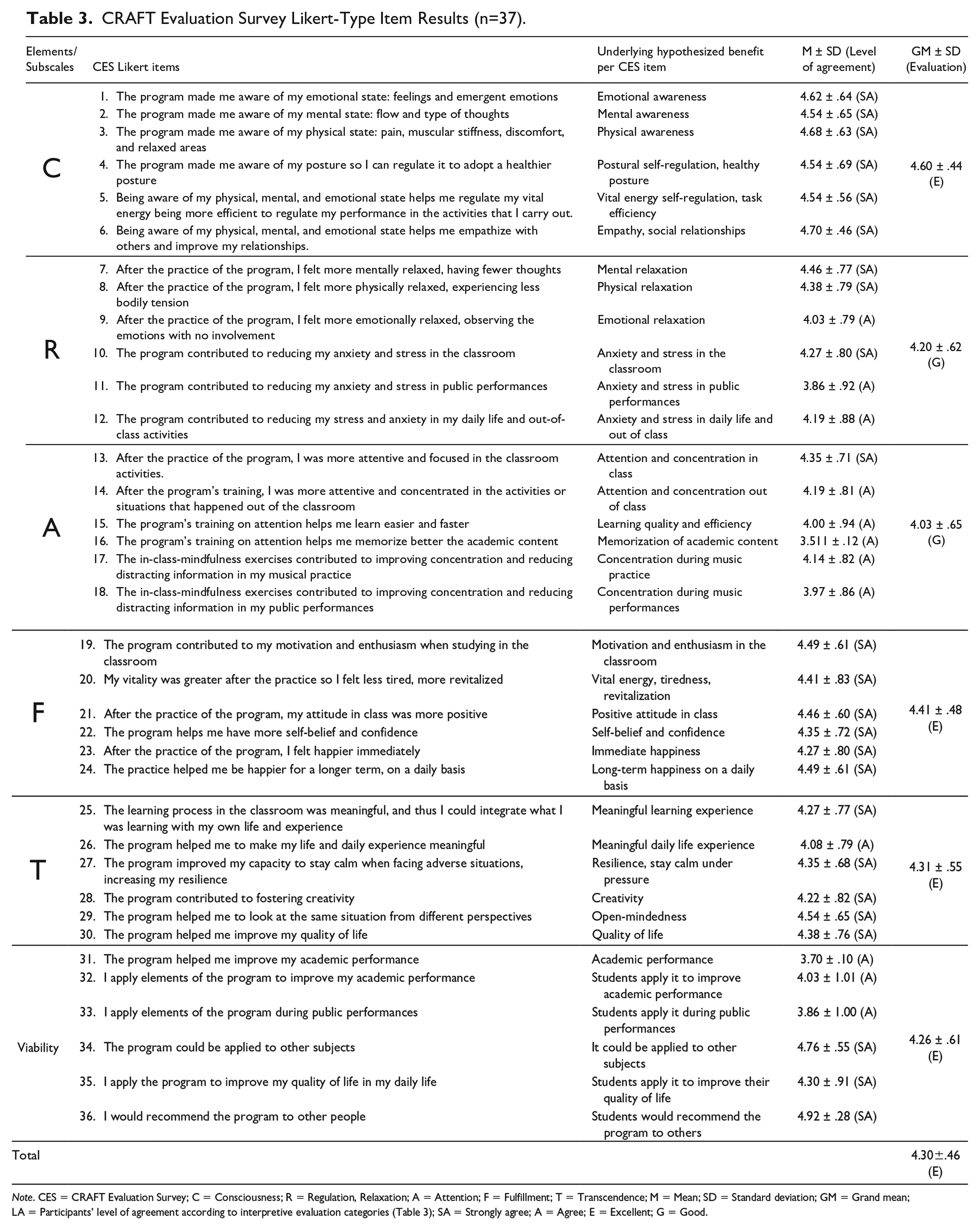
Note. CES = CRAFT Evaluation Survey; C = Consciousness; R = Regulation, Relaxation; A = Attention; F = Fulfillment; T = Transcendence; M = Mean; SD = Standard deviation; GM = Grand mean; LA = Participants’ level of agreement according to interpretive evaluation categories (Table 3); SA = Strongly agree; A = Agree; E = Excellent; G = Good.
In the organization phase, the names of the six subscales of the CES and their respective hypothesized benefits represented the overarching categories of an initial categorization matrix (Elo & Kyngäs, 2008). The hypothesized benefits—listed in the third column of Table 3—within each overarching category served as a deductive coding list of potential pre-determined codes to be paired with meaning units within the data. This structured categorization matrix of overarching categories (i.e., Consciousness; Regulation, Relaxation; Attention; Fulfillment; Transcendence; and viability) and pre-determined codes (i.e., hypothesized benefits) was developed as a table whereby the recommended four steps of content analysis comprising decontextualization (i.e., identification and coding of meaning units), recontextualization (i.e., revision of coding), categorization (i.e., creation of categories), and compilation (i.e., researchers’ consensus, final conclusions, quantifying, and reporting) were conducted (Bengtsson, 2016). The first three steps of this phase were executed and reviewed by the first author, being further revised in the compilation step by the other authors.
For the decontextualization step, first, a search for and an identification of meaning units related or not to the hypothesized benefits was carried out. Subsequently, meaning units and hypothesized benefits with equal or similar content were paired, whereas those meaning units unrelated to the hypothesized benefits were inductively coded and allocated to a suitable overarching category. At this stage, these decontextualization procedures were deemed as highly relevant for they could enable, in the categorization step, the abstraction of categories and/or subcategories that could inform of both new benefits not contemplated in the CES and the confirmation and/or clarification of those benefits already hypothesized. In the recontextualization step, the aforementioned decontextualization procedures were reviewed various times, leading to a re-organization of the categorization matrix from modifications in the original coding and assignment of meaning units across the different overarching categories and hypothesized benefits. In the categorization step, the process of abstraction from all coded meaning units yielded a series of categories and subcategories out of which those containing benefits not contemplated in the survey were highlighted. Finally, in the compilation step, co-researchers blindly reviewed the analysis conducted after completion of the categorization step, indicating their agreement or disagreement with each coded meaning unit as well as each category and subcategory abstracted by the first author. Thereafter, coding and categorization procedures marked with disagreement were discussed until mutual consensus was reached. Completion of the compilation step involved reporting exemplar responses and the total number of participants and meaning units that contributed to each of the categories of this content analysis.
Results
Results for the CES Likert-type items are displayed in Table 3. Participants reported a high level of agreement with the hypothesized benefits of the program and its viability with most items, 24, 66%, being rated as strongly agree and some of them, 12, 33%, as agree. Such positive scores across all individual items were also manifested among the different subscales and total scale which achieved the highest possible evaluation labeled as excellent, except for Attention and Relaxation which fell within the evaluative category of good.
A similar pattern of results was observed in Figure 1 which shows the frequency of participants across the different evaluative categories for each subscale and total scale. On average, most participants provided an evaluation that was interpreted as excellent, some of them as good, while just a few of them, only for the elements of Attention and Fulfillment, as fair.
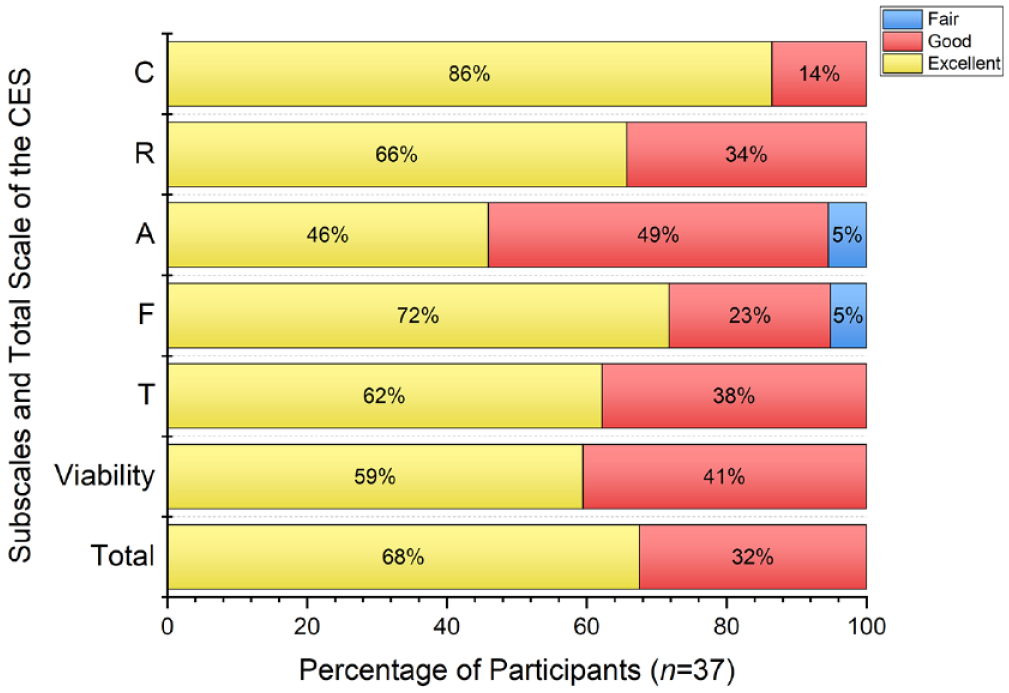
Percentage of Participants by Interpretive Evaluation Categories for each Subscale and Total Scale of the CRAFT Evaluation Survey (CES).
Overall, these results provide a strong indication for the potential of the CRAFT-based elective subjects of Mindfulness and Emotional intelligence to promote a variety of benefits related to the five CRAFT elements and their applicability. Examples of these potential benefits include enhanced self-awareness, empathy, and social relationships (Consciousness); relaxation, stress, anxiety, and MPA (Regulation, Relaxation); attention, concentration, and memory (Attention); motivation, long- and short-term happiness, positive attitude, and vitality (Fulfillment); resilience, creativity, open-mindedness, and meaningful learning experiences (Transcendence); and student musicians’ agency to independently use CRAFT techniques to optimize their wellness and academic music performance (Viability).
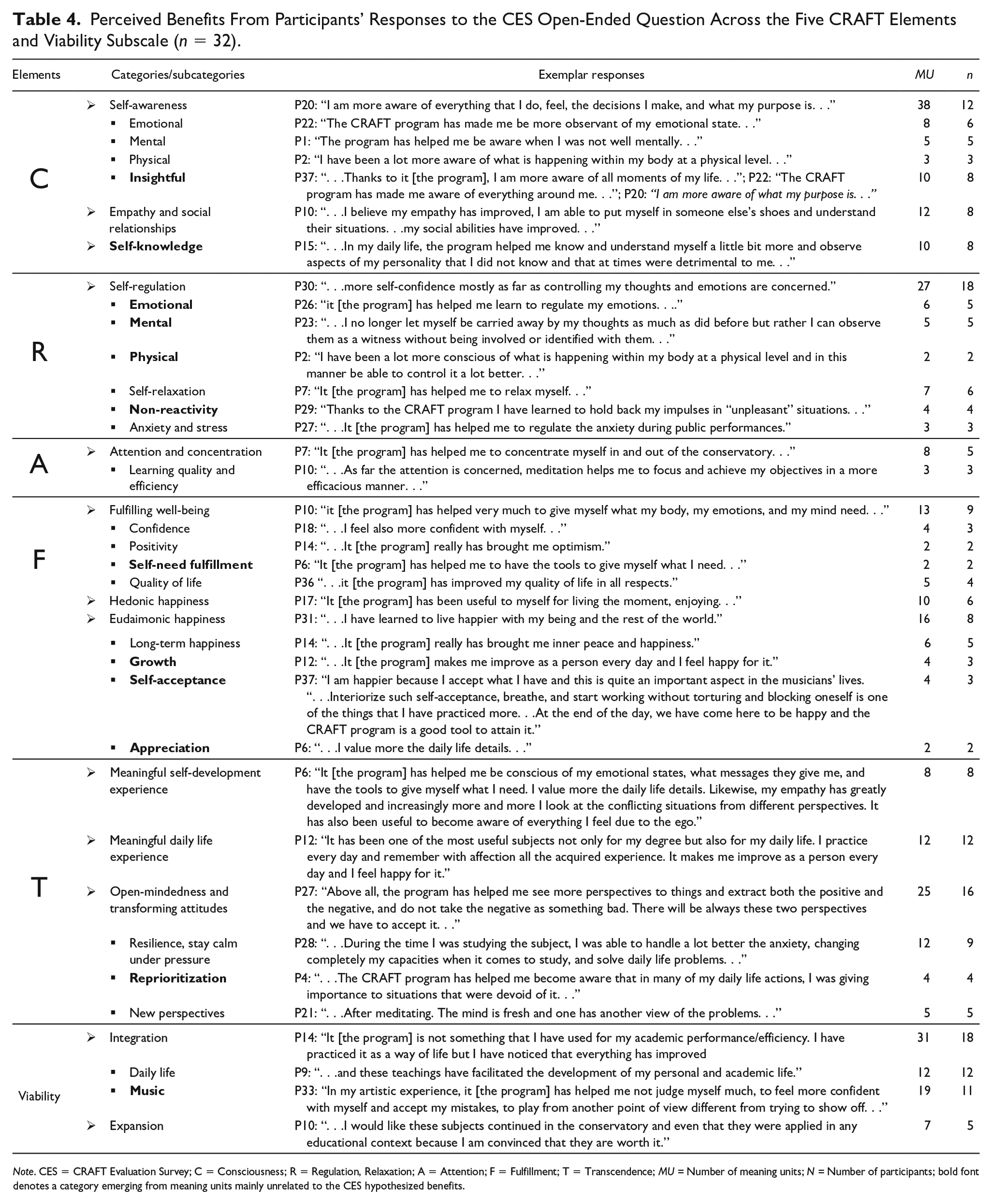
The deductive content analysis conducted on participants’ responses to the open-ended question yielded 11 categories across the five CRAFT overarching categories. As can be seen in Table 4, the categories and/or subcategories abstracted from meaning units not related to the hypothesized benefits were boldfaced to be distinguished from those including meaning units paired with related hypothesized benefits.
Perceived Benefits From Participants’ Responses to the CES Open-Ended Question Across the Five CRAFT Elements and Viability Subscale (n = 32).
Note. CES = CRAFT Evaluation Survey; C = Consciousness; R = Regulation, Relaxation; A = Attention; F = Fulfillment; T = Transcendence; MU = Number of meaning units; N = Number of participants; bold font denotes a category emerging from meaning units mainly unrelated to the CES hypothesized benefits.
Consciousness
From the overarching category of Consciousness, comprised of 60 meaning units from 21 participants, emerged the following three categories: Self-Awareness; Empathy and Social Relationships; and Self-Knowledge. Self-Awareness included four subcategories, out of which the first three (i.e., emotional, mental, and physical self-awareness) were abstracted from meaning units related to the first three CES hypothesized benefits. Across these three subcategories, participants mentioned that the program helped them be more aware of various aspects regarding their physical, mental, and emotional states. In addition, the last subcategory, yielded from meaning units unmatched to the CES hypothesized benefits, alluded to an enhanced insightful awareness relative to humanistic aspects of their lived experience. In this subcategory, participants’ comments suggested that the program contributed to increasing awareness of themselves and everything around them, including their life purpose, ego, actions, surroundings, personality, life moments, priorities, and playing style. In the category Empathy and Social Relationships, named as the sixth hypothesized benefit, eight participants provided meaning units related to empathy and social skills such as a greater ability to listen actively and attentively, be in someone else’s shoes, understand other people’s situations and emotions, including, for instance, the actual composers’ emotions to be able to express their feelings when interpreting their pieces. For the category Self-Knowledge, eight participants disclosed evidence of an enhanced comprehension regarding general, agential, and trait self-knowledge (e.g., increased knowledge about themselves, the reasons for their actions, and unknowing aspects of their personality).
Regulation, Relaxation
In the overarching category of Regulation, Relaxation, with a total count of 18 participants and 27 meaning units, Self-Regulation was the only category abstracted. This category encapsulated Self-Relaxation as a subcategory, for self-relaxation can be conceived as a type of self-regulation process. The voices of six participants suggested self-relaxation benefits such as higher tranquility, calmness, and relaxation within one’s music experience. In addition, Self-Regulation included six subcategories, out of which the first three (Emotional, Mental, and Physical) and the fifth (Non-Reactivity) were composed of meaning units reflecting benefits not contemplated in the CES. For the first three subcategories, participants revealed that their CRAFT program experience was helpful in fostering an enhanced self-regulation of their physical, mental, and emotional processes. This also entailed developments in their capacity to effectively apply a mindful decentering-based self-regulatory mechanism and quell negative thoughts and ruminations. In the fifth subcategory, four participants mentioned that the program contributed to increasing their non-reactivity and impulse self-regulation skills. In the last subcategory, three participants indicated benefits relative to greater self-regulation of general anxiety and MPA.
Attention
For the overarching category of Attention, a single category named Attention and Concentration generated eight meaning units from five different participants. Overall, as evidenced by the subcategory named Learning Quality and Efficiency, participants suggested having achieved greater concentration and attention to maximize skills and learning outcomes of their academic and daily life experience.
Fulfillment
For the overarching category of Fulfillment, comprised of 38 meaning units from 15 participants, there were three emerging categories mainly abstracted from meaning units matched with pre-determined CES hypothesized benefits. In the first category entitled Fulfilling Well-Being, nine participants disclosed that the program helped them promote a variety of well-being aspects including their self-confidence, positivity, quality of life, and capacity to fulfill their own needs. In the second category of Hedonic Happiness, mostly derived from meaning units paired with the 23rd CES hypothesized benefit immediate happiness, six participants mentioned a series of benefits relative to an increased enjoyment, music flow experience, and capacity to savor and enjoy from the present moment and the small aspects in life. For the category of Eudaimonic Happiness, eight participants conveyed an array of perceived benefits related to eudaimonic components of happiness, as reflected by the subcategories Long-Term Happiness, Growth, Self-Acceptance, and Appreciation. Among these subcategories, Long-term Happiness received the name of the 24th CES hypothesized benefit, whereas the other three were derived from meaning units unrelated to the CES hypothesized benefits. Some of the benefits voiced by participants included higher inner peace, happiness in every aspect of their life, happiness from increased acceptance, daily life happiness, capacity to live life to the fullest, appreciation, and humanistic self-improvement.
Transcendence
Within the category Transcendence, representing 45 meaning units from 22 participants, two categories arose from meaning units connected with the CES hypothesized benefits. In the first category entitled Holistic Meaningful Experience, 16 participants narrated relevant lived experiences learned through the program regarding multiple aspects of their daily life, academic music career, and well-being. The 25th and 26th CES hypothesized benefits synthesized as meaningful learning experience and meaningful daily-life experience, serve to conceptually illustrate the essence of this category and explain its underlying subcategories (Table 4). In the second category, named Developing Resilience, Open-mindedness, and Transforming Attitudes, the responses of 16 participants appear to show that instruction in the CRAFT program may have bestowed upon them an increased open-mindedness, ability to reframe from new perspectives for conflict resolution, resilience, and an equanimous- and acceptance-based attitude. The 27th and 29th CES hypothesized benefits of resilience, stay calm under pressure and open-mindedness majorly explain this category and its first two subcategories. In addition, for the subcategory Reprioritization, which sprang from meaning units unrelated to the CES hypothesized benefits, four participants commented on changes in their priorities and the relative importance given to particular aspects of their lives.
Viability
From the overarching category Viability, composed of 38 meaning units from 18 participants, two categories named Integration and Expansion arose. Within Integration, as stressed by the subcategories Application to Daily Life and Application to Music, the responses showed evidence of having integrated and employed what they had learned in the program within their daily lives and music studies. Notably, the subcategory Application to Music was mainly derived from meaning units that could not be linked to the hypothesized benefits included in the CES Viability subscale. Some of the music-related benefits uncovered by participants from their CRAFT-based practice application referred to the promotion of confidence in music performance, on-stage attitude, regulation of MPA, a conscious and relaxed playing style, non-judgmental- and acceptance-based attitude, a less-egoistic playing perspective, emotional interpretation, flow states, and enjoyment. For the category Expansion, five participants commented on the potentiality of the program to be applied to other fields, educational contexts, life situations, classes, and among faculty members and students of any discipline.
Discussion
The purpose of the current study was to provide further evidence to investigate the potential of the CRAFT program to enhance the well-being and academic experience of higher education student musicians. Following up on a previous quantitative feasibility study (Bartos et al., 2022), we conducted a detailed examination of the possible benefits and viability of the CRAFT program, to gain a wider understanding of how exposure to CRAFT training may affect student musicians’ well-being and academic life.
The high level of agreement of the CES Likert-type item results with the hypothesized benefits of the program and its viability suggest that the CRAFT program may be a beneficial intervention to enhance student musicians’ wellness and academic music performance. These results can be aligned with those reported in previous longitudinal studies implementing either yoga, mindfulness, emotional intelligence, or positive psychology-based interventions with higher education students. Researchers examining the effect of yoga- and mindfulness-based interventions through outcome measures related to the CES hypothesized benefits have found students’ improvements in psychological distress (Breedvelt et al., 2019; Halladay et al., 2019; McConville et al., 2017); awareness, attention, memory, and executive function (Brunner et al., 2017; Gothe & McAuley, 2015; Y. Tang et al., 2015); and MPA (Chang et al., 2003; Stern et al., 2012). Similarly, the current study results supporting the potentiality of the CRAFT program to increase happiness and quality of life concur with those found by other researchers suggesting enhanced happiness and well-being among participants following interventions based on positive psychology (Bolier et al., 2013; Gander et al., 2013; Seligman et al., 2005) and emotional intelligence (Mayer et al., 2008; Ruiz-Aranda et al., 2014; Schoeps et al., 2020).
Regarding the CES open-ended question, results from the content analysis indicated that participants’ CRAFT-based experiences and perceived benefits aligned with the five CRAFT elements, and to a large degree with the program’s hypothesized benefits and viability. However, participants also documented other benefits not assessed in the CES. For example, for Consciousness, participants’ voices suggested that instruction in the CRAFT program may have helped them to enhance their self-knowledge, not only in its broadest sense but also regarding particular aspects of their personality and behavior. These enhancements could have been the result of an increased self-awareness insofar as having an accurate ability to perceive one’s experiences, processes, and states may be the actual reflection and pathway of acquiring self-knowledge (Vazire & Carlson, 2010). In effect, self-awareness has been conceived as both awareness and knowledge of one’s thinking, emotional, and behavioral processes (Richards et al., 2010), being in turn metacognitively influenced by self-reflection (i.e., inspection) and insight (i.e., clarity of understanding) to catalyze meaningful intrapersonal change (Grant et al., 2002). With reference to the CRAFT foundations, particularly self-awareness represents a key component worked through yoga, mindfulness, and emotional intelligence theory and practice (Chiesa et al., 2013; Gard et al., 2014; Goleman, 1998), whereas self-knowledge and insight stand as fundamental constituents of both yoga and mindfulness philosophy along the pathway of Self-realization (Dahl & Davidson, 2019; Tolbaños-Roche & Menon, 2021). As reported in the first category of Consciousness, participants’ potential improvements in self-awareness seem to have surfaced not only at the CES hypothesized levels (i.e., physical, mental, and emotional) but also in relation to humanistic aspects of their lived experience (e.g., temporal, agentic, life purpose, relativistic, academic, ego, and an all-inclusive self-awareness). Drawing from the foregoing evidence, it could be surmised that an increased mental, emotional, and physical self-awareness through CRAFT-based mindful practices may have concomitantly triggered both a higher insightful conscious awareness of such humanistic aspects and an enhanced self-knowledge. In the CRAFT program, self-awareness is worked through practices such as the body scan and open-monitoring, focused, and loving-kindness meditations. Evidence from neuroimaging investigations has shown that these practices stimulate the insula, a brain region that plays a major role in the modulation of interoceptive awareness and metacognition (Fox et al., 2016). In addition, other practices devised by the CRAFT program developer (e.g., experiential self-introduction and the impartial observation of the physical, emotional, and mental states) may have been influential in fostering both self-awareness and self-knowledge.
In the milieu that connects self-awareness, insight, and self-knowledge, Carlson (2013) contended that both the attentional and non-judgmental components operationalizing mindfulness as a non-judgmental sustained awareness of one’s experiences may explain to a great extent why mindfulness practice promotes self-knowledge. As discussed by the author, increased attention to one’s inner experiences through mindfulness training may allow practitioners to perceive and retrieve further information about their tendencies, thoughts, conduct, and emotions. Furthermore, as Carlson (2023) posited, the cultivation of the non-judgmental- and acceptance-based attitude with which mindfulness attentional component is performed may promote non-reactivity skills, and consequently, processing information about one’s personality with a lesser degree of influence from ego-related bias (e.g., self-enhancing and self-threatening). In the current study, in addition to the category Self-Awareness, the subcategories Non-Reactivity and Self-Acceptance featured within the second and fourth CRAFT elements respectively, lend support to Carlson’s (2013) contention as a plausible mechanism explaining participants’ potential improvements in self-knowledge. Likewise, previous studies support the efficacy of mindfulness-based interventions for enhancing self-knowledge (Abbasi et al., 2021; Aránega et al., 2019; Crescentini & Capurso, 2015; Rodríguez-Jiménez et al., 2022), albeit, as a field in its early infancy, contemplative scholars have yet to thoroughly examine and elucidate the impact of mind-body practices on personality traits and self-concepts.
Finally for the element of Consciousness, participants’ perceived enhancements in their empathy and social skills appeared to be congruent with their exposure to the emotional intelligence curriculum imparted through the CRAFT program. Particularly, participants’ critical reflection on Goleman’s (1998) five components of emotional intelligence through practical role-play cases of guided discovery specifically developed to stimulate conscious communication and empathy-related abilities might shed light on the emergence of these benefits. Similar types of hands-on strategies (e.g., role play, group discussion) have been employed in previous emotional intelligence-based interventions that effectively improved emotional intelligence (Mattingly & Kraiger, 2019), and specifically empathy (Schoeps et al., 2020) and interpersonal emotional regulation abilities (Nelis et al., 2009). However, in addition to the explicit work on empathy encouraged through the CRAFT foundation of emotional intelligence, the mindfulness-based loving-kindness meditations and class reflections on compassion-related concepts undertaken in the program may have also indirectly contributed to participants’ potential improvements in empathy. Both empathy and compassion involve a certain level of awareness of other people’s emotional concerns with compassion additionally encompassing the wish to mollify pain and suffering (Bibeau et al., 2016). In support of this relationship, evidence from neuroscientific studies indicates that compassion and loving-kindness meditations may instigate relevant brain regions linked to empathy (e.g., somatosensory cortices, insula, Fox et al., 2016). In addition, significant effects in self-reported measures of empathy have been reported in various mindfulness-based interventions involving a variety of populations (Cheang et al., 2019; Garrote-Caparrós et al., 2023; Luberto et al., 2018), including university students (Centeno & Fernandez, 2020; Shapiro et al., 1998).
In the element of Regulation, Relaxation, participants’ comments were supportive of an increased relaxation and a reduction in their stress and anxiety levels as a result of their CRAFT training. These benefits could be majorly explained by the potential self-regulatory effects driven by the different yoga- and mindfulness-based postural, breathing, relaxation, and meditative techniques implemented through the program. Such techniques encourage an interoceptive, proprioceptive, embodied, non-judgmental, and acceptance-based experience that may eventuate in a general relaxation response of vagal nerve and parasympathetic nervous system activation through bottom-up processes engaging lower-level brain networks (Gard et al., 2014). In turn, these processes would also manifest in a counteraction of the stress response by reduction of sympathetic tone and subsequent downregulation of the hypothalamic-pituitary-adrenal axis, catecholamines, and proinflammatory cytokines (McCall, 2013; Sullivan, Erb, et al., 2018). Moreover, the open-monitoring meditative practice of observing the content of one’s mental and emotional processes with a non-judgmental and acceptance-based stance has been arguably described as a combined top-down and bottom-up mechanism stimulating high and low brain networks (Guendelman et al., 2017). Through such an integrative and diverse neural pathway instigation, open-monitoring meditation has been linked to promoting adaptive strategies of emotional regulation such as meta-awareness and cognitive reappraisal, while reducing maladaptive cognitions such as rumination, reactivity, and expressive suppression (Chiesa et al., 2013; Gard et al., 2014). Considering the fact that open-monitoring meditations are highly encouraged through the CRAFT program, it appears not surprising that these benefits parallel those portrayed in the current study content analysis for this element.
In addition, other types of mindfulness- and yoga-based meditation techniques involving direct attention to a specific target (e.g., breath awareness and mantra meditations) implemented in the program may have played a relevant role in accounting for participants’ perceived benefits of attention in the third element. The constant practice of maintaining and redirecting upon distraction one’s focus of attention to the target (e.g., breath, mantra) through focused-attention meditations has been associated with the stimulation of top-down processes and brain regions responsible for executive and cognitive monitoring (e.g., anterior cingulate cortex, premotor cortex, dorsolateral prefrontal cortex, Fox et al., 2016; Gard et al., 2014).
The non-evaluative and acceptance-based observation of one’s inner experiences that is engrained in both yoga and mindfulness practices could also be put forward as a pivotal mindful mechanism to account for other relevant benefits voiced by CRAFT participants. As theorized by Shapiro et al. (2006), such a non-evaluative observation constitutes a metacognitive process that enables practitioners to disidentify with the content of their consciousness and reperceive themselves as different from it, a change in perspective the authors named reperceiving. Based on Shapiro et al.’s (2006) theorization, Garland et al. (2009) proposed a mindful coping model suggesting reperceiving as the naturally occurring process, prior to positively reappraising any given negative appraisal, through which a state of expanded awareness and cognitive flexibility could arise. According to Garland et al. (2009, 2015), from this heightened state of consciousness, new valuable perspectives and insights might emerge and be leveraged to meaningfully re-construe stressful primary appraisals as beneficial for intrapersonal development and eudaimonia. Drawing from Shapiro et al. (2006) and Garland et al. (2009, 2015), it could be argued that through the practice of open-monitoring meditations, CRAFT participants may not only have potentiated their reframing and cognitive reappraisal skills but also eudaimonic qualities and resilience. In accordance with such supposition and derivative benefits, our content analysis results suggest that CRAFT participants may have experienced greater happiness mainly through changes in eudaimonic components of well-being such as increased self-acceptance, appreciation, and personal growth in the fourth element (Fulfillment), as well as a higher resilience and ability to reframe and reprioritize in the fifth element (Transcendence).
For Fulfillment and Transcendence, participants’ responses aligned also with the major emphasis that instruction in the CRAFT program places on developing eudaimonic well-being, resilience, and transforming attitudes through critical reflection and group discussions on both yoga and mindfulness philosophy and practice. For instance, critical inquiry into yoga core values, principles, and moral precepts (Sullivan, Moonaz, et al., 2018) may have nudged CRAFT participants to realize the importance of nurturing an ever-lasting happiness and purposeful life unattached to the impermanence of their hedonic pleasures and unpleasant sensations. In addition, class debates and reflections on their metacognitive experiences of reperceiving through the lenses of mindfulness and yoga philosophy (Goenka, 2000; Satyananda, 2013; Sullivan, Moonaz, et al., 2018) may have assisted CRAFT participants to further comprehend reperceiving and meaningfully apply it into their daily lives. In this regard, CRAFT instruction encourages practitioners to delve into the existential notion that any of their worldly sensed phenomena (pleasant and unpleasant) they may identify with—including their own physical and personality traits—are part of an ever-changing reality they can accept, neither clinging to nor repel, disidentify with, and reframe by deploying an acceptance- and equanimous-based witness stance, the perfection of which clears the path toward realizing the everlasting reality of the transcendental Self (Goenka, 2000; Satyananda, 2013; Sullivan, Moonaz, et al., 2018).
Furthermore, participants’ potential changes in their perspectives, perceptions, frame of reference, and appraisals (i.e., reperceiving, reframing); meanings and conceptions, (i.e., reconceptualization); and values and priorities (i.e., reprioritization) appear to largely overlap with what previous scholars have referred to as a response shift phenomenon in the context of self-reported measurement error and bias (Rapkin & Schwartz, 2019; Sprangers & Schwartz, 1999). These researchers explained response shift in terms of variations in self-reported evaluations at different times from catalyst-induced changes in intrapersonal cognition and appraisal abilities, internal standards, conceptualizations, and priorities. In finding evidence of a potential mindfulness-based response shift occurrence that may have masked participants’ actual improvement in mindfulness levels, Bartos, Posadas, Wrapson, and Krägeloh (2023) equated the transformative lived experiences that might occur from yoga- and mindfulness-based practices with a response shift phenomenon. Finally, the practical and theoretical instruction of positive psychology-based components (e.g., attending to the positive aspects of one’s life, optimism, appreciation of beauty and excellence, savoring of one’s experiences, gratitude, hope, humor, and flow states, Peterson, 2006; Peterson & Seligman, 2004) implemented through the CRAFT-based elective subjects of Mindfulness and Emotional Intelligence may also explain some of the participants’ benefits portrayed through the content analysis within these two elements.
In the final main category of the content analysis, participants voiced support for the benefits of the program to optimize students’ well-being, daily lives, and music academic experience. One of the main objectives of the CRAFT program is to nurture within practitioners a sense of agency and inner responsibility to independently transfer and leverage what they learned through the training to real-life contexts. This sense of agency and empowerment blends with the self-grounded paradigm that is central to the program through the four CRAFT foundations, mainly yoga and mindfulness, whereby the Self stands as the primarily responsible entity for observing, realizing, accepting regulating, caring, knowing, engaging, implementing, and transcending (Bartos et al., 2021). The encouragement of these series of self-rooted behaviors, attitudes, and experiences— promoted for the benefit of transcending selfishness and raising consciousness among individuals and communities—may have also contributed to other benefits echoed by participants across the previously discussed five categories of the content analysis. In accordance with this paradigm and participants’ testimonies reflected in the category Viability, significantly higher proactivity and perceived benefits among CRAFT participants than controls in terms of applying strategies to improve their health and well-being during the COVID-19 lockdown have been previously reported (Bartos et al., 2021; Bartos, Posadas, & Krägeloh, 2023).
Particularly with regard to evidence of CRAFT-based practice deployment in academic music contexts, participants divulged benefits supportive of an enhanced music practice and performance. Some of these benefits indicated that participants lived their artistic experience with an improved self-confidence, non-judgmental- and acceptance-based attitude, attention, MPA, tolerance for accepting their mistakes, enjoyment, capacity to attain flow states, and ability to play more consciously and relaxed. These results were consistent with those reported in a previous mixed methods study implementing an 8-week hybrid program based on the Mindfulness-Based Stress Reduction (Kabat-Zinn, 1990) program and Mindfulness-Based Cognitive Therapy (Segal et al., 2002) followed by 25 conservatory students (Czajkowski et al., 2022). In addition, in alignment with Czajkowski et al. (2022) and the current study results, the findings by Steyn et al. (2016) suggested improved self-confidence, concentration, anxiety, worry, and mindfulness skills (e.g., non-judging) in a sample of 36 undergraduate music students following a 7-week mixed program combining mindfulness and sport-related psychological skills. Although taken together these results are promising, further research is required to determine the impact of mindfulness-based interventions on student musicians’ well-being and academic performance.
Limitations and Further Research
Various limitations exist in the current study. First, due to its cross-sectional and non-controlled design, no actual causation can be inferred or attributed to the different evaluations (CES Likert-type items) and perceived benefits (CES open-ended question) reported. In addition, as a single-arm study with a qualitative focus, blindness of intervention in terms of concealment of group allocation was not possible. However, data were collected by a research assistant blind to the study hypotheses, and this procedure served as a further layer to reduce bias. Second, although the present study results provide further breadth and insight into the understating of participants’ experiences and perceived benefits from following the CRAFT program, neither objective nor psychometric measures were employed to substantiate any of the reported findings. Therefore, considering the neuroscientific and multifaceted nature of the CRAFT program, future longitudinal investigations including modern functional magnetic resonance imaging techniques (Fox et al., 2016); functional tests of cognition (e.g., Attentional Network Test, Y. Tang et al., 2015) and physical fitness (e.g., range of motion, lung function, Araújo et al., 2020); physiological assessment (e.g., salivary cortisol, Inder et al., 2012); and self-reported inventories measuring, for example, mindfulness, psychological distress, MPA, empathy, self-knowledge, and eudaimonic well-being are needed to estimate the effectiveness of the CRAFT program to potentially induce the benefits reported here. Third, participants’ involvement in reading and evaluating the CES Likert-type items may have evoked among participants extensive information they could have drawn from to answer the open-ended question. However, the provision of a variety of options to choose from, as typically occurs in self-reported questionnaires, should not preclude participants from procuring genuine responses. As reported in the current study content analysis results, participants’ comments to the open-ended question also uncovered relevant benefits not contemplated in the CES Likert-type items. Fourth, despite some comprehensive responses to the CES open-ended questions, others were only brief comments lending scant content and context that limited to some extent our ability to draw consistent generalizations for adequately targeting our research questions. Notwithstanding this, even small textual fragments can afford a meaningful account that may reflect the essence or highlights of participants’ experience, and therefore offer a valuable contribution to the research process. Yet, further research incorporating semi-structured interviews and/or practice logs is highly encouraged to expand, clarify, and further inquire into the understanding of higher education student musicians’ experiences and perceived benefits from following the CRAFT program. Moreover, to further delve into the understanding and social validation of the CRAFT program and its impact on the lived experience of CRAFT participants, these qualitative methods should also include specific open-ended questions in relation to the program’s goals, procedures, and outcomes. Finally, because of the limited sample size and the need to maintain anonymity, the current study did not furnish full demographic information of participants. Future specific work including data collection on a wider scope of demographics is required to explore to what extent the CRAFT program suits the needs of various marginalized and diverse populations.
Despite its limitations, the results of the current study through both the CES Likert-type items and open-ended questions were supportive of an overall beneficial impact of the CRAFT program to enhance the music and well-being experience of higher education student musicians. Participants’ positive evaluations of the CES Likert-type items indicated that they perceived the program as a viable tool to be integrated into their daily lives to maximize their wellness and academic careers while developing a series of hypothesized benefits across the five CRAFT elements. Furthermore, the CES open-ended question confirmed, clarified, and expanded these results uncovering relevant additional benefits, insights, and implications across humanistic, educational, well-being, and music-related domains. Overall, these responses endorsed the continued application of the CRAFT program in higher music education and its expansion to other settings, educational fields, and populations. Hence, albeit remaining at an evaluative, descriptive, and perceptual level, due to the cross-sectional, non-controlled, and qualitative design implemented, these findings provide further evidence for including the CRAFT program in the curriculum of higher education student musicians. Future longitudinal investigations with a mixed-methods design are encouraged to comprehensively examine the efficacy and effectiveness of the CRAFT program to enhance well-being outcomes and further understand its impact on the lived experiences of its practitioners.
Footnotes
Acknowledgements
We would like to thank the Royal Conservatory of Music Victoria Eugenia, Granada (Spain) and especially the board of directors, faculty, and students for supporting this investigation.
Author Contributions
L.J.B.: conceptualization, data curation, formal analysis, funding acquisition, investigation, methodology, software, visualization, writing—original draft, writing—review and editing. M.P.P.: project administration, resources, writing—review and editing. W.W.: investigation, methodology, resources, supervision, writing—review and editing. C.K.: conceptualization, formal analysis, investigation, methodology, supervision, visualization, writing—review and editing.
Declaration of Conflicting Interests
The author(s) declared the following potential conflicts of interest with respect to the research, authorship, and/or publication of this article: We acknowledge that one of the authors (MPP) developed the CRAFT program. However, as stated in the authors’ contributions statement, MPP did not conceive this particular study and also was not responsible for the data collection nor the data analysis stages of this study, which was also a way to manage this particular potential conflict of interest.
Funding
The author(s) disclosed receipt of the following financial support for the research, authorship, and/or publication of this article: This study was funded as part of a larger research project funded by the Regional Government of Andalusia, Spain (PIV-033/19). The first author was supported by an Auckland University of Technology Vice Chancellor’s Doctoral Scholarship.
Ethics Approval
Ethical approval to conduct this study was granted by the University of Granada Institutional Review Board (nº 1009/CEIH/2019) and according to the ethical standards established in the 1964 Declaration of Helsinki and subsequent amendments.
Informed Consent
All recruited participants provided informed consent before embarking upon this study.

Data Availability Statement
The data sets presented in this article are not readily available because: It was informed in the participants’ consent form that all data collected for this study would be used anonymously for their analysis and further publication as an aggregate data, but never individually. The participants recruited in this study constitute a small sample from just one institution (Royal Conservatory of Music Victoria Eugenia, Granada, Spain) and from specific low class size courses, and therefore potentially identifiable. Nevertheless, any queries about the availability of the data sets to be used for research purposes can be directed to LJB,