



Abstract
Research has consistently linked discrimination and poorer health; however, fewer studies have focused on immigration-related discrimination and mental health outcomes. Drawing on quantitative surveys (N = 1,131) and qualitative interviews (N = 63) with Latino undergraduate students who are undocumented or U.S. citizens with undocumented parents, we examine the association between perceived immigration-related discrimination and mental health outcomes and the process through which they are linked. Regression analyses identify an association between immigration-related discrimination and increased levels of depression and anxiety; this relationship did not vary by self and parental immigration status. Interview data shed light on this result as immigration-related discrimination manifested as individual discrimination as well as vicarious discrimination through family and community members. We contend that immigration-related discrimination is not limited to individual experiences but rather is shared within the family and community, with negative implications for the mental health of undocumented immigrants and mixed-status family members.
Mental health is a major public health issue among young adults. National data show that 30.6% of young adults ages 18 to 25 have experienced a mental, behavioral, or emotional disorder in the past year and 17% have had a major depressive episode (Substance Abuse and Mental Health Services Administration 2020). Major risk factors for depression and anxiety among young adults, including college students, include psychological (i.e., self-esteem and loneliness), biological (i.e., age and sex), academic (i.e., workload, expectations, year of study), lifestyle (i.e., substance use, physical activity, sleep), financial (i.e., lack of adequate financial support, low family income, childhood poverty), and social (i.e., social network and support, involvement in social activities, belonging to a racial minority group) factors (Mofatteh 2021).
One important social risk factor is discrimination, which has consistently been associated with poorer mental health outcomes such as depression and anxiety (Lewis, Cogburn, and Williams 2015; Paradies 2006; Paradies et al. 2015; Williams, Lawrence, and Davis 2019). Although discrimination can occur as a result of any social location, we focus on immigration-related discrimination, which we define as an individual’s perception of unfair treatment attributable to actual or assumed immigration status and unequal access to or exclusion from social institutions or resources. This definition recognizes that discrimination is both interpersonal and structural in nature (Bailey et al. 2017; Gee et al. 2009; Williams and Mohammed 2013). At the structural level, restrictive immigration policies constrain immigrants’ material resources and restrict their access to safety net programs and health promoting resources (Philbin et al. 2018). These policies can reinforce interpersonal discrimination fueled by an anti-immigrant social climate that primarily targets and equates Latino populations with undocumented immigration (Morey 2018; Viruell-Fuentes, Miranda, and Abdulrahim 2012).
Immigration-related discrimination is a common experience for Latinos, regardless of their actual immigration status, because individuals are often targeted based on their race-ethnicity, physical features (i.e., skin tone), and language abilities (i.e., use of Spanish or limited English proficiency; Findling et al. 2019; Menéndez Alarcón and Novak 2010; Nier et al. 2012). Immigration-related discrimination can also manifest as microaggressions, which are “brief and commonplace daily verbal, behavioral, and environmental indignities, whether intentional or unintentional, that communicate hostile, derogatory, or negative racial slights and insults to the target person or group” (Sue et al. 2007:273). Common microaggressions experienced by Latinos that conflate race-based and immigration-related discrimination include being criticized for speaking Spanish in public and being told to go back to their home country (Ayón and Philbin 2017; Lopez, Gonzalez-Barrera, and Krogstad 2018).
This study examines the experience of immigration-related discrimination among adult children of immigrants and its link to mental health outcomes. We draw on quantitative survey and qualitative interview data from Latino University of California (UC) undergraduate students. We first quantitatively evaluate two research questions:
Research Question 1: Is there an association between perceived immigration-related discrimination and mental health outcomes?
Research Question 2: Does the relationship between perceived immigration-related discrimination and mental health outcomes differ by self or parental immigration status?
We then qualitatively explore a third research question:
Research Question 3: How do students who are undocumented or have undocumented parents experience immigration-related discrimination?
Findings indicate that immigration-related discrimination is not limited to individual experiences but, rather, is shared within the family and community, with negative implications for the mental health of undocumented immigrants and mixed-status family members.
Background
Long-standing theoretical models link interpersonal discrimination and mental health through material or psychosocial pathways. For instance, discrimination can create inequitable access and barriers to health promoting resources, which can adversely impact health and mental health (Williams et al. 2019; Williams and Mohammed 2013). Furthermore, interpersonal discriminatory experiences are stressors that negatively affect mental health and activate physiological responses that create “wear and tear” on the body (Williams et al. 2019; Williams and Mohammed 2013). There have been several studies establishing the link between immigration-related interpersonal discrimination and mental health (Pachter and Coll 2009; Ríos-Salas and Larson 2015). For instance, one study among Latina immigrant mothers found that immigration-related discrimination was significantly associated with depressive symptoms and psychological distress (Barajas-Gonzalez et al. 2022). Another study among first-generation Latino immigrant youth found that risk for depression was associated with having experienced discrimination in the United States (Potochnick and Perreira 2010).
Theoretical perspectives on interpersonal discrimination and health have assumed that the experience is most harmful to the person receiving unfair or unequal treatment (Holloway and Varner 2021). A traditional perspective would therefore expect the relationship between immigration-related discrimination and mental health outcomes to be stronger among undocumented students because their precarious immigration status makes immigration-related discrimination more pertinent to their mental health. This hypothesis is informed by Thoits’s (1991) theory of identity-relevant stressors, which argues that the psychological impact of stressors varies based on how salient the stressor is to one’s sense of self. For example, work on racial discrimination has found that discrimination is more harmful to the mental health among Latinos who have higher attachment to their racial-ethnic identity (Woo et al. 2019).
This stands in contrast to immigration literature in the social sciences, which characterizes immigration-related threats as being shared within families and communities. This alternative perspective suggests that even those who are not directly at risk for experiencing immigration-related discrimination because of their immigration status can still suffer negative mental health consequences. The present study focuses on potential differences between undocumented students and U.S. citizen students with undocumented parents and examines whether these two groups of students display a similar relationship between immigration-related discrimination and mental health outcomes.
There are a number of reasons why we may expect these two groups to share in the consequences of immigration-related discrimination. First, immigration-related discrimination is racialized; even though U.S.-born children have the protection of citizenship, they report experiences of discrimination in their schools and neighborhood (Ayón and Philbin 2017). One study found U.S.-born Latinos report more discrimination than foreign-born Latinos in a nationally representative sample (Arellano-Morales et al. 2015). A national study found that Latinos who resided in states with more anti-immigrant policies reported higher levels of discrimination; notably, their national sample was almost all lawful permanent residents or U.S. citizens, illustrating how immigration policy effects are racialized as they impact Latinos regardless of their immigration status (Almeida et al. 2016).
Although immigration laws are designed to target undocumented immigrants, their U.S. citizen family members can also experience multigenerational punishment, “wherein the sanctions intended for a specific population spill over to harm individuals who are not targeted by immigration policies” (Enriquez 2020:136). For example, U.S. citizen children of undocumented immigrant parents develop their own fears of deportation and family separation and grow up in economically precarious households. They also develop strategies to minimize the risks illegality poses to their family’s stability, including avoiding police, hiding their immigrant identity, and contributing to the household income (Dreby 2015; Enriquez 2020; Rodriguez 2019). The shared effects of immigration policies emerge strongly within families because of the “linked lives” of family members who are embedded in the same family context (Bengtson, Elder, and Putney 2005). These interdependent family relationships can prompt one family members’ experiences to reverberate into the lives of the other family members. In the case of young U.S. citizen children with undocumented parents, strong social ties, sustained day-to-day interactions, and children’s dependence on parents prompt U.S. citizens to experience a de facto undocumented status (Enriquez 2015). The interdependence of adult members of mixed-status families similarly produces shared effects (Enriquez 2020; Rodriguez 2019). As family members spend time together, they witness and coexperience the punitive and discriminatory effects of immigration policies on their undocumented family members.
Prior research on undocumented students and young adults suggests that undocumented young adults internalize and adopt parental risks as their own. A study of Californian undocumented young adults found that they were more preoccupied with concerns about their parents’ potential for deportation than their own. This was because they believed that their parents were less likely to occupy social and spatial locations that would insulate them from deportation threats (Enriquez and Millán 2021). Another study of Californian undocumented college students found that students’ own and their family members’ immigration status both created immigration-related distractions that prompted academic disengagement, such as missing or being distracted in class, losing study hours, and doing poorly on an exam (Chavarria et al. 2021). These studies suggest that immigration status is lived by the family unit, with undocumented parents’ heightened risks sometimes overshadowing the consequences of their children’s undocumented status.
The idea that discrimination can negatively affect individuals even when they have not directly experienced the unfair treatment themselves ties in with growing literature on vicarious, or indirect, experiences of interpersonal discrimination (Harrell 2000; Heard-Garris et al. 2018; Louie and Upenieks 2022). In a longitudinal study of parent–child dyads, Mexican immigrant parents’ experiences with discrimination predicted adolescents’ internalizing problems and lower self-esteem but not externalizing problems or substance use (Espinoza, Gonzales, and Fuligni 2016). Informed by daily diaries, Mexican immigrant parents interacted less warmly and more antagonistically with their young children on days that they experienced workplace discrimination. Concomitantly, parents reported lower emotional well-being for themselves and more internalizing and externalizing behaviors among children on high discrimination days (Gassman-Pines 2015). This literature suggests that immigration-related discrimination may manifest similarly within families by compromising the mental health of both undocumented students and U.S. citizen students with undocumented parents.
Data and Methods
Data
This study drew on original survey and interview data collected by the UC Collaborative to Promote Immigrant and Student Equity (UC PromISE). The original study aimed to examine whether and how immigration-related policies produce inequalities in the educational and well-being outcomes of undocumented students and U.S. citizen students with undocumented parents. All project activities received approval from the Institutional Review Board at University of California, Irvine (HS No. 2015-2463).
Survey Sample
The survey was administered online from March to June 2020 among children of immigrants attending the UC. The UC is composed of nine undergraduate campuses and is charged with educating the top 12.5% of California high school students (UC Office of the President 2007). Survey participants were recruited across all campuses through emails and social media posts from each campus’s undocumented student support services office, faculty teaching large general education and ethnic studies courses, departmental and university office newsletters, and student organizations. Participants received a $10 electronic gift card. Eligibility criteria included being over age 18, having at least one immigrant parent, and current enrollment as a UC undergraduate student. For this study, we restricted the sample to self-identified Latino individuals who were either undocumented or U.S. citizens with at least one undocumented parent. Undocumented students included those with no current legal status (n = 144), Deferred Action for Childhood Arrivals (DACA) recipients (n = 394), temporary protected status (TPS) recipients (n = 1), and those with U-Visas (n = 8). We used listwise deletion to preserve respondents with nonmissing values for all of the variables described in the two multivariate models described in the following (restricted sample = 1,226, analytic sample = 1,131). The levels of missing for each variable were below 3% of our analysis sample; the variable with the most missing data was depression (2.9%).
Interview Sample
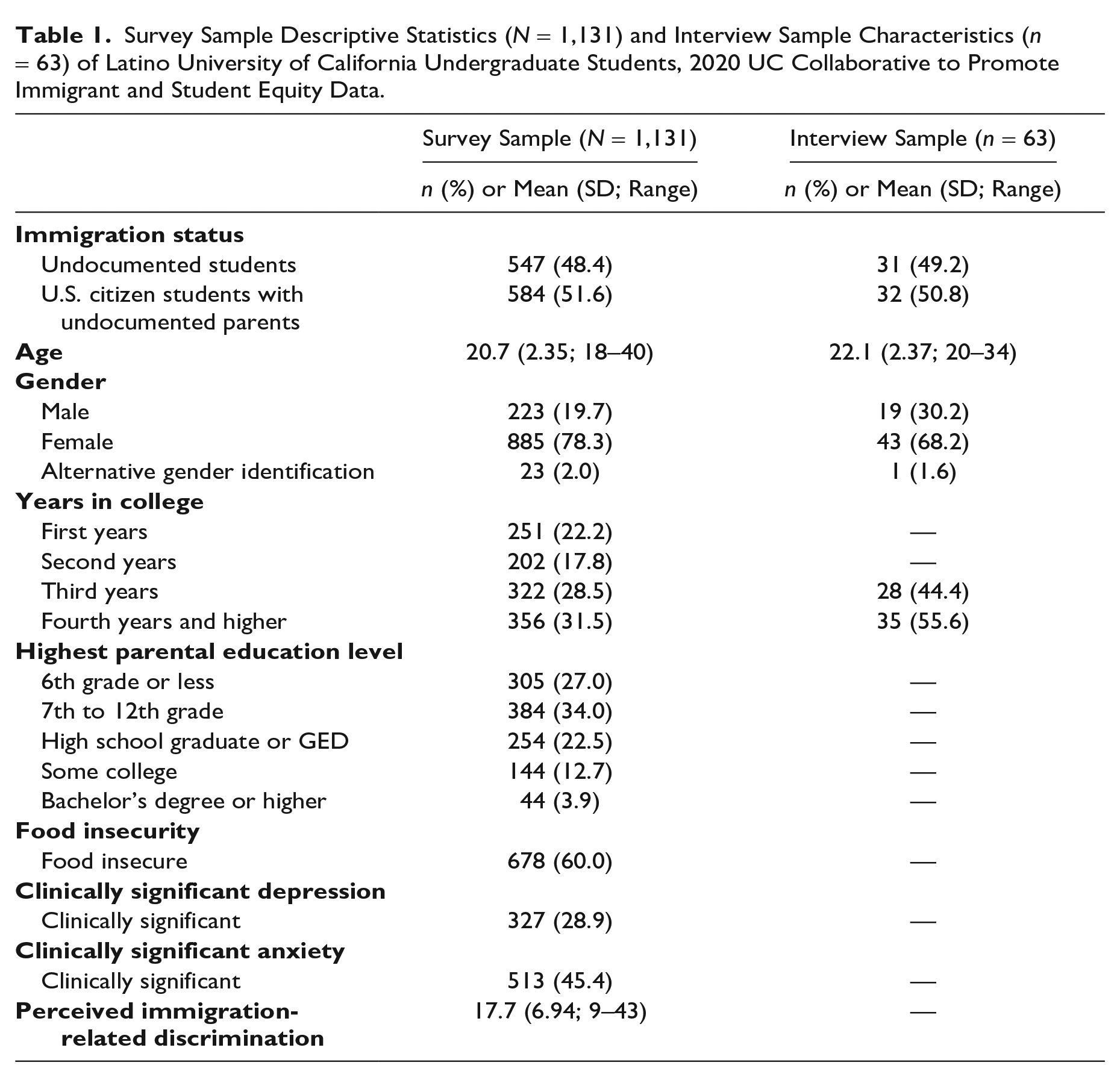
Follow-up interviews were conducted with 63 survey participants from July to September 2021. Participants were recruited from a pool of survey participants who had consented to be contacted about future research opportunities. To be eligible for an interview, participants must have self-identified as Latino, be living in the United States without permanent legal status or be a U.S.-born citizen with at least one undocumented parent, and be enrolled as at least a junior or higher at a UC campus during the 2020–2021 academic year. Participants were split almost evenly between third years and fourth+ years, and 68% self-identified as women (see Table 1). Five trained research assistants and one faculty member completed interviews in English on Zoom. Interviews lasted an average of 1.5 hours. Participants received a $40 electronic gift card.
Survey Sample Descriptive Statistics (N = 1,131) and Interview Sample Characteristics (n = 63) of Latino University of California Undergraduate Students, 2020 UC Collaborative to Promote Immigrant and Student Equity Data.
Analysis
Survey measures
The independent variable was perceived immigration-related discrimination, measured by a modified version of the nine-item discrimination subscale from the Perceived Immigration Policy Effects (PIPES) scale (Ayón 2017). Examples included “Have you ever been treated unfairly at a restaurant or store because of current immigration policy?” and “Do you feel that you have been exploited or taken advantage of at work because of current immigration policy?” See Appendix A in the online version of the article for full measure. Response options included never, rarely, sometimes, often, and always. Higher scores indicated higher levels of immigration-related discrimination (α = .89).
The moderator variable was self and parental immigration status, which was dichotomized into undocumented students and U.S. citizen students with undocumented parents (referent). Undocumented students self-identified as being born outside of the United States and having no permanent legal status (e.g., no legal status, DACA, or another liminal legal status). U.S. citizen students with undocumented parents self-identified as being born in the United States and identified at least one immigrant parent with no permanent legal status.
The dependent variable was measured with two measures of mental health, depression and anxiety, which have been associated with discrimination in previous research (Lewis et al. 2015; Paradies 2006; Williams et al. 2019). Depressive symptoms were assessed by the nine-item Patient Health Questionnaire (PHQ-9; Kroenke, Spitzer, and Williams 2001). Participants were asked how much a symptom of depression has bothered them over the past two weeks, with response options of not at all, several days, more than half the days, and nearly every day. Examples included “feeling down, depressed, or hopeless” and “little interest or pleasure in doing things.” See Appendix B in the online version of the article for full measure. Scores ranged from 0 to 27, with the score of 15 or higher representing depressive symptoms at a level that warranted clinical treatment (α = .89). Anxiety symptoms were assessed by the seven-item Generalized Anxiety Disorder (GAD-7) scale (Spitzer et al. 2006). Each item assessed a symptom of anxiety disorder, such as “feeling nervous, anxious, or on the edge” and “not being able to stop or control worrying.” See Appendix C in the online version of the article for full measure. Response options mirrored the PHQ-9. Scores ranged from 0 to 21, with the score of 10 or higher representing anxiety symptoms at a level that warranted clinical treatment (α = .92). Participants were asked to answer the questions in the PHQ-9 and the GAD-7 with regard to what was typical before the COVID-19 pandemic occurred to not conflate symptoms related to the pandemic. We dichotomized both variables into not clinically significant and clinically significant and considered each outcome separately.
We included covariates to control for other social risk factors that have been correlated with depression and anxiety among young adults and/or college students (Mofatteh 2021). We included controls for age (continuous), gender (men, women, alternative gender identification), highest parental education (6th grade or less, 7th to 12th grade, high school graduate or GED, some college, and bachelor’s degree or higher), food insecurity (food secure and food insecure), and year in college (first years, second years, third years, fourth years and higher).
Statistical Approach
To address our first two research questions, we first conducted univariate descriptive statistics and bivariate tests comparing perceived immigration-related discrimination, depression, and anxiety across the two student groups. We then conducted a series of multivariate logistic regression models. The first model examined the association between perceived immigration-related discrimination and mental health as measured by the PHQ-9 or the GAD-7. The second model included an interaction term between perceived immigration-related discrimination and self/parental immigration status. We calculated average predicted probabilities by determining each observation’s predicted probability of depression and anxiety at the different self and parental immigration categories while using the observation’s own values for the covariates. The predicted probabilities were then averaged by self and parental immigration categories at three levels of discrimination: the minimum, median, and maximum (Williams 2012). All analyses were conducted using Stata 17.
Interview Coding
To address our third research question, interview transcripts were analyzed using flexible coding techniques in HyperRESEARCH (Deterding and Waters 2021). Index codes were developed and applied to the full transcript to facilitate retrieval of relevant content. Index coding was completed in two rounds by four research assistants to confirm all relevant text was captured. The lead author retrieved and reviewed all content that had been coded for “discrimination legal vulnerability” and “mental health.” One interview question was most relevant: “To what extent have you faced discrimination because of current immigration policies?” Interviewers also probed for discussions of discrimination in other sections that examined educational experiences, mental health, and political engagement.
Inductive coding techniques were used to develop analytic codes that emerged from the data and then grouped together to represent general themes. Analytic codes captured the sources and targets of discrimination (e.g., self, parent, community), factors that were perceived to prompt discrimination (e.g., race, immigration status), and impacts on mental health. All analytic codes and themes were applied independently by one coder in discussion and agreement with another member of the research team through an iterative process. Codes and themes were compared across the two student groups. Additional comparisons were conducted to determine if there were differences along demographic lines (e.g., gender, year in college). All participant names presented are pseudonyms.
Results
Survey Results
Descriptive statistics
Table 1 provides the descriptive statistics of our sample (n = 1,131). In our sample, 48.2% were undocumented students, and 51.8% were U.S. citizen students with undocumented parents. The mean age of participants was 20.7 years (SD = 2.35, range = 18–40). The majority of participants self-identified as women (78.1%). The highest proportion of students were fourth years and higher (31.6%), followed by third years (28.4%), first years (22.2%), and second years (17.8%). Over one-quarter (28.9%) of students had depressive symptoms that warranted clinical treatment, and 45.5% of students had anxiety symptoms that warranted clinical treatment. Students reported low/moderate levels of perceived immigration-related discrimination (M = 17.7, SD = 6.89, range = 9–43). Table 2 compares differences by self and parental immigration status. There were significant differences in perceived immigration-related discrimination given that undocumented students reported greater levels of perceived immigration-related discrimination (F = 89.70, df = 1, p < .05). The differences in both depression and anxiety by self and parental immigration status were not significant.
Group Differences of Immigration Status, 2020 UC Collaborative to Promote Immigrant and Student Equity Data (N = 1,131).
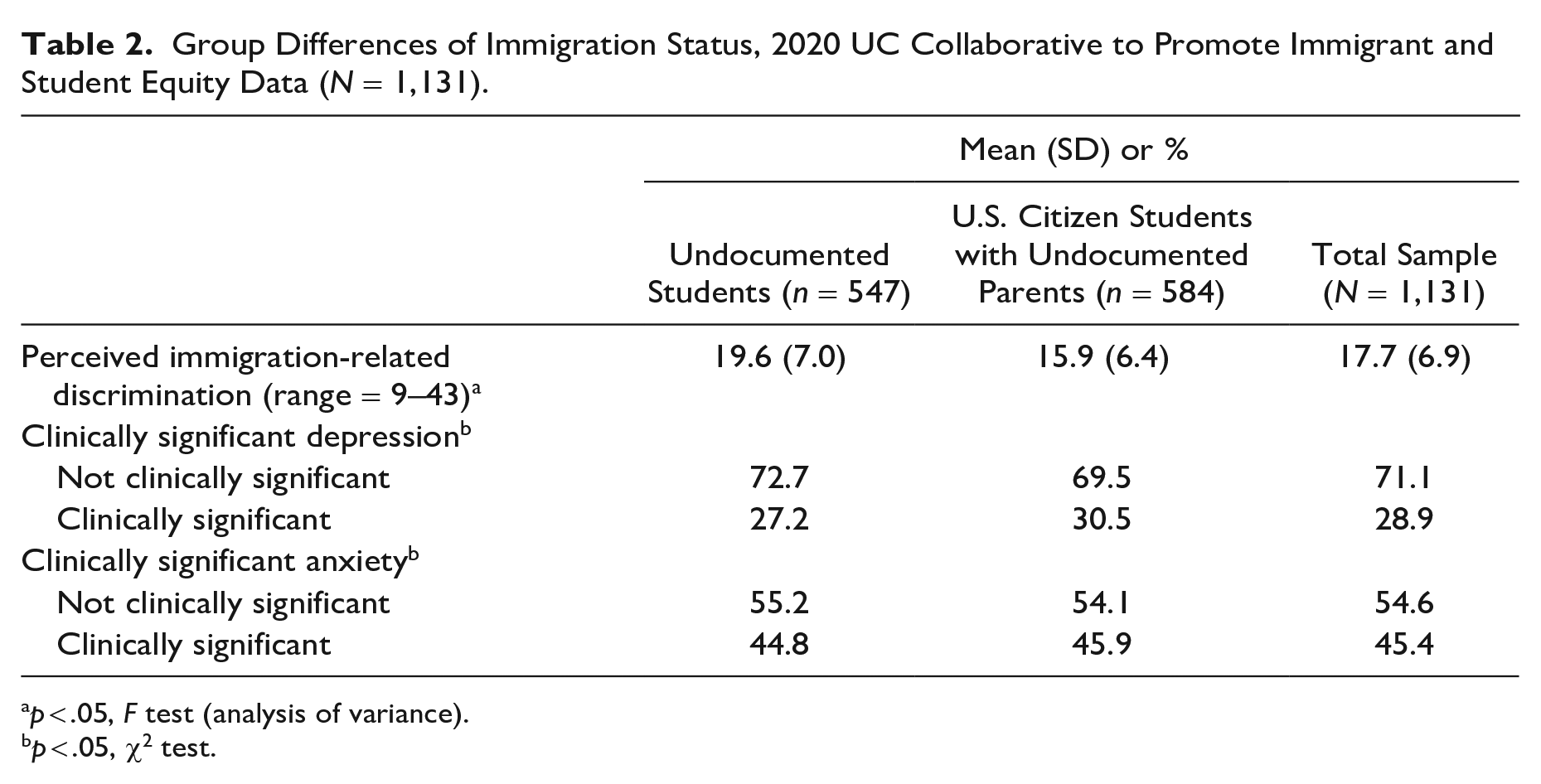
p < .05, F test (analysis of variance).
p < .05, χ2 test.
Regression analyses
Table 3 shows the results of the regressions for mental health outcomes. Perceived immigration-related discrimination was associated with higher odds of both depression and anxiety; for every point increase in the discrimination scale, the odds increased by 10% for depression (Model 1; odds ratio [OR] = 1.10, 95% confidence interval [CI], 1.07–1.12) and 7% for anxiety (Model 1; OR = 1.07, 95% CI, 1.05–1.09). Model 2 considered the interaction between immigration-related discrimination and self and parental immigration status. The interaction term can be interpreted as the differential effect of being an undocumented student on the association between discrimination and mental health compared to a U.S. citizen student with undocumented parents. The interaction term was not significant for either outcome (depression: OR = 1.01, 95% CI, .97–1.05; anxiety: OR = 1.00, 95% CI, .96–1.04), meaning that the relationship between perceived immigration-related discrimination and our mental health outcomes did not differ by self and parental immigration status. Figure 1 graphs the average probability that undocumented students (dotted line) and U.S. citizen students with undocumented parents (solid line) will have a clinically significantly case of depression at three representative values of discrimination. For both groups, the likelihood of having depression increases as discrimination goes up. The nonsignificant interaction term from Model 2 reveals that the relationship between discrimination and depression is not stronger for undocumented students compared to U.S. citizen students with undocumented parents. Figure 2 graphs the predicted probabilities of anxiety from Model 2. We see the same pattern for anxiety as we did for depression: As discrimination goes up, the probability for anxiety increases; there is no difference between the undocumented students and U.S. citizen students with undocumented parents in this association.
Logistic Regression Results: Perceived Immigration-Related Discrimination × Immigration Status on Mental Health Outcomes, 2020 UC Collaborative to Promote Immigrant and Student Equity Data (N = 1,131).
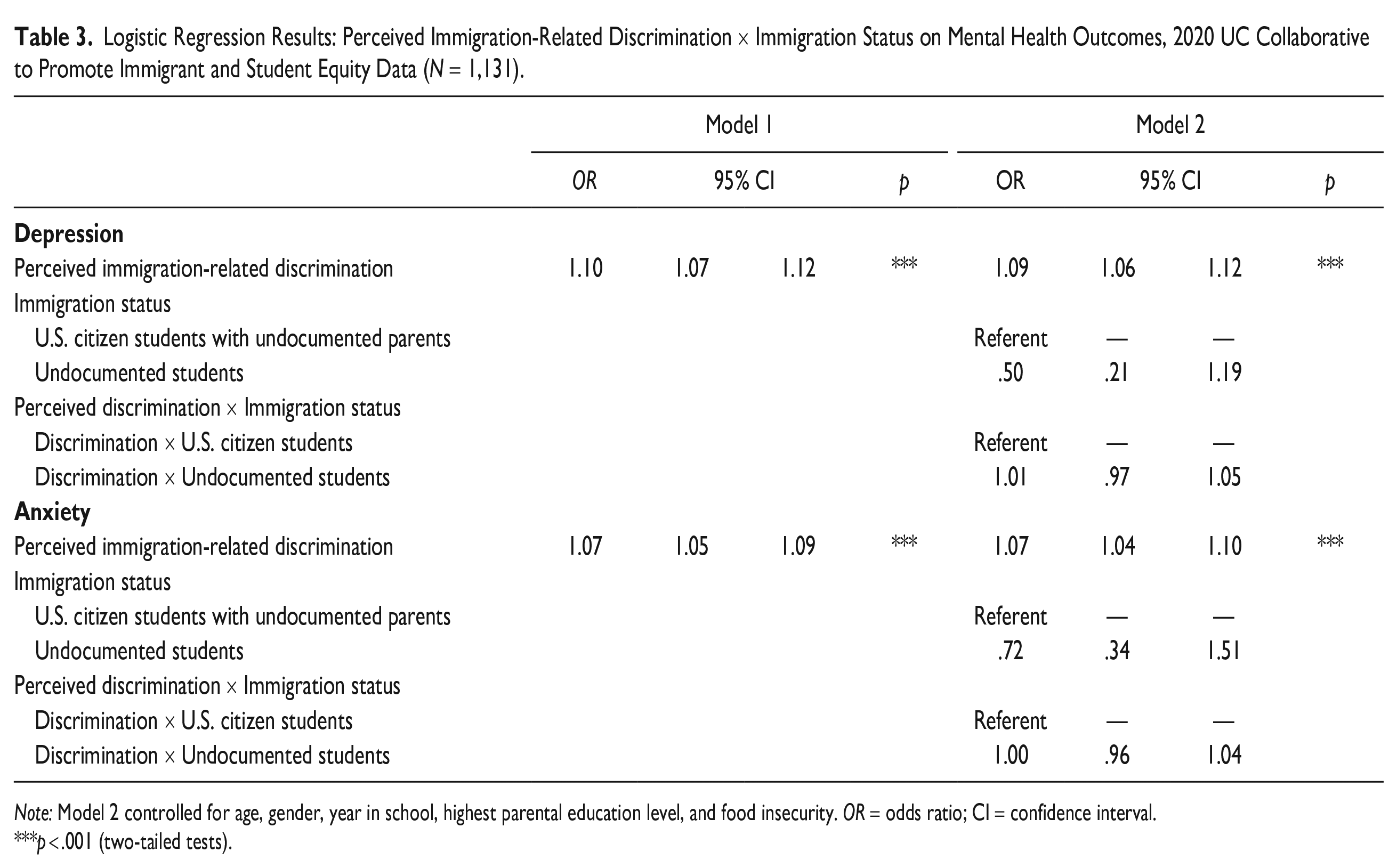
Note: Model 2 controlled for age, gender, year in school, highest parental education level, and food insecurity. OR = odds ratio; CI = confidence interval.
p < .001 (two-tailed tests).
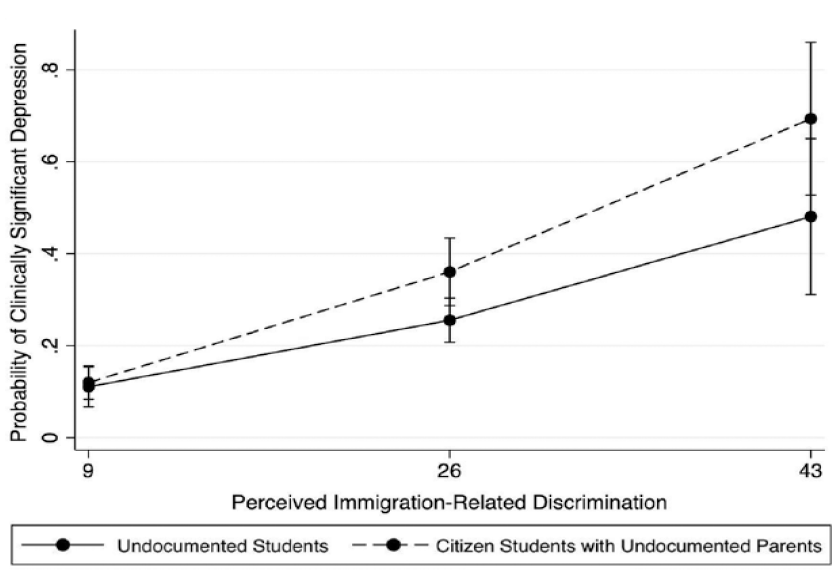
Predicted Probability of Clinically Significant Depression by Immigration Status and Perceived Discrimination, 2020 UC Collaborative to Promote Immigrant and Student Equity Data (N = 1,131).
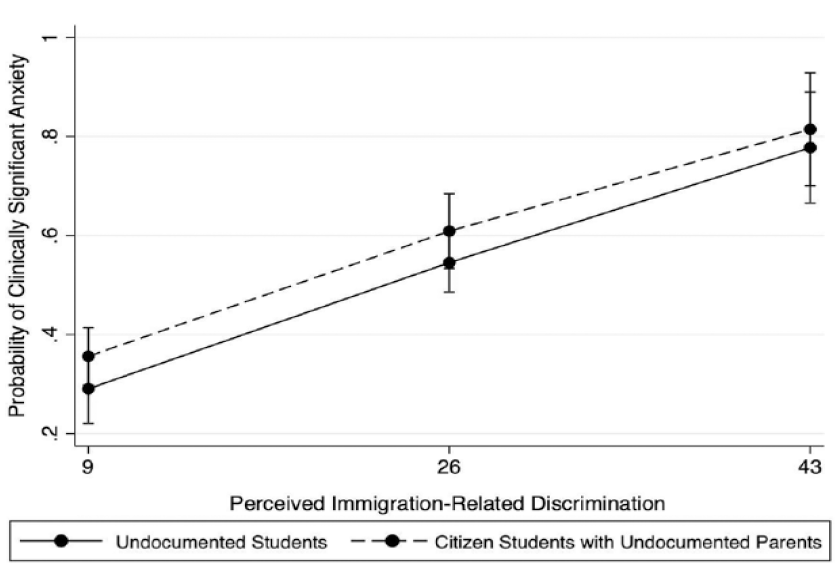
Predicted Probability of Clinically Significant Anxiety by Immigration Status and Perceived Discrimination, 2020 UC Collaborative to Promote Immigrant and Student Equity Data (N = 1,131).
In summary, immigration-related discrimination is a risk factor for poorer mental health for both undocumented students and U.S. citizen students with undocumented parents. Our measure of perceived immigration-related discrimination was at the individual level and ostensibly should have assessed the students’ own experiences of discrimination. Indeed, undocumented students reported higher levels of immigration-related discrimination than U.S. citizen students with undocumented parents; undocumented students may have more exposure to or are more likely to perceive immigration-related discrimination because of their own precarious legal status. A traditional perspective would have expected the relationship between immigration discrimination and our mental health outcomes to be stronger among the undocumented students because their precarious immigration status makes immigration-related discrimination more pertinent to their mental health. That the impact of this discrimination was comparable for both groups raises questions about the nature of immigration-related discrimination among U.S. citizen students and how it translates into poorer mental health. We explore this in our qualitative analysis.
Interview Results
Our qualitative analysis revealed three types of immigration-related discrimination experienced by undocumented students and U.S. citizen students with undocumented parents. Individual discrimination captured how individuals felt targeted based on their Latino race-ethnicity and/or assumptions about their immigration status. Students also identified two forms of vicarious, or indirect, forms of immigration-related discrimination. Vicarious discrimination through parents emerged when students heard about or witnessed parents’ discrimination due to their Latino race-ethnicity, immigration status, and/or immigrant origin. Vicarious discrimination through the community included examples when the students’ community at large was subjected to immigration-related discrimination and highlighted how individuals internalize anti-immigrant and racist-nativist messages. Lastly, our analysis shows the direct and indirect pathways through which these discrimination experiences impact mental health. Here we also identify anticipatory immigration-related discrimination, which is the anticipation of a discrimination experience, either individual or vicarious.
Individual discrimination experiences
The most prominent type of discrimination discussed was participants’ direct experience of interpersonal discrimination. Although participants were specifically asked to speak about discrimination related to current immigration policies, many mentioned experiences of racialized discrimination based on their Latino race-ethnicity. For example, Beatriz, a U.S. citizen student with undocumented parents, recalled microaggressions that she experienced during her work in customer service: There was just little comments from customers that you notice like okay well, they wouldn’t have said those [comments] to my coworker or somebody else, or they wouldn’t have said this to somebody who is White or looks White. So I felt like there was some small experiences that I’ve heard from them, or little comments that they think you didn’t hear but you did.
Elena, an undocumented student with undocumented parents, illustrated the discrimination she experienced through microaggressions related to her Latino race-ethnicity and her use of Spanish language: “When you’re in a White area, people look at you a certain way. And there’s some people that have an issue with you speaking Spanish.” These examples highlight the conflation of race-ethnicity and immigration status because students of different immigration statuses experience the same type of racist-nativist discrimination. These examples bolster the notion that undocumented immigration and immigration policies are racialized for Latinos.
Experiences of interpersonal discrimination due to race-ethnicity and/or immigration status cannot be easily disentangled. Samantha and Gabriel reflected on the conflation of discrimination experiences based on race-ethnicity and immigration status: Samantha (U.S. citizen with undocumented parents): There’s no reason that someone should be targeted if they’re not doing anything wrong, but just by our skin color—because there’s a lot of immigrants that aren’t Mexican, but because they’re White, they’re not targeted as much. They’re not asked if they’re legally here because they have blue eyes or green eyes, but because we’re Mexican, even if we’re legally here, I mean, even if we’re born in the U.S., they still question whether we’re legal or not. Gabriel (undocumented student with undocumented parents): I think I have faced discrimination because I’m Mexican or Latino but not because of my immigration status because it’s like I don’t really tell them. But I think sometimes they assume but it’s mainly from White people to be honest. But White people don’t even know if you have papers or not so they just discriminate based on how you look and because you’re Latino.
Many other participants echoed this sentiment by reporting racist-nativist discrimination in their interpersonal interactions with friends, in school or their workplace, and in public settings.
Some participants did note specific discriminatory experiences based on their own immigration status. For example, Mateo, an undocumented student with undocumented parents, shared an instance where he felt discriminated against by a friend: I remember one time she was telling me that she was trying to steal my ideas and she was telling me like “You know what would be funny? If I steal your idea and I kick your ass in this business.” And that’s cool, fine, like friendly competition, that’s fine. But what really pained me that day was that my friend said, “The reason why you won’t be successful is because I have something that you don’t have.” And I told her, “What’s that?” And she said, “I have papers, you don’t have papers.” And that, I was like, Wow! I got so mad, I don’t talk to her no more.
Mateo highlighted that someone who he considered as a friend doubted and even made fun of his chances for future success because of his immigration status. Similarly, the lawfully present immigration status of U.S. citizens with undocumented parents prompted discrimination aimed toward the children of undocumented immigrants. For example, Camila, a U.S. citizen student with undocumented parents, discussed the microaggressions that she observed in a debate in her first political science college course: We started talking about immigration and then at some point in the conversation or the lecture, he [the professor] said, “Oh, like those anchor babies.” Just very nonchalantly. And obviously that’s a very derogatory term [used to refer to U.S. citizen children of undocumented immigrants]. And I am quote unquote an “anchor baby,” so I felt like, “Oh, did he just say that?” And it was a predominately White class. I don’t think I knew anybody there. So I felt like nobody was going to speak up about it. And I didn’t want to be the only one there and then be gaslighted by my peers who thought I was being extra. So I avoided that professor.
Although the professor’s discriminatory comment was not directed explicitly at Camila in the way Mateo’s friend did, she nonetheless felt directly attacked by the use of discriminatory language in her presence. These examples show how immigration-related discriminatory language, whether directed at a specific person or not, results in feeling of discrimination but also motivates them to limit social interactions with specific individuals.
Vicarious discrimination through parents
Despite being asked to discuss their own discrimination experiences, many participants recounted their undocumented parents’ experiences of immigration-related discrimination, illuminating a second type of discriminatory experience: vicarious discrimination through one’s parents. Participants highlighted how they internalized these experiences as if they were the ones experiencing it themselves, suggesting that immigration-related discrimination is a shared experience in the family unit. Diana, a U.S. citizen student with undocumented parents, described this connection: I mean, if my parents are discriminated, I feel like I’m being discriminated because they’re a direct part of me. So whenever I hear about those reforms or that they’re not being passed or that they’re dehumanizing undocumented people, I feel it too because my parents are undocumented and their issues are also my issues.
Even though Diana is not a direct target of discriminatory messages, she felt a direct hit because of the connection she has to her parents and the family experience of legal vulnerability. The internalization of parents’ immigration-related discrimination ensures that these vicarious experiences compose a significant piece of participants’ overall perceptions of immigration-related discrimination.
As with students’ individual discrimination experiences, parental vicarious discrimination also resulted from racist-nativism. For instance, Leo, a U.S. citizen student with undocumented parents, described witnessing discrimination while shopping with his mother: “My mother went to the 90 cents only store and there was a White woman behind her in line. And she pushed her aside telling her that Hispanics should go to the line at the back of the store, not to the ones in the front of the store.” Arely, an undocumented student with undocumented parents, discussed her father’s workplace discrimination: “He [my dad] works with a lot of White people and they can be pretty racist. My dad has a very heavy accent, he very much looks Mexican and a minority so it can be very stressful.” These examples exhibit the racialized nature of participants’ parents’ immigration-related discrimination as they often feel targeted because of physical characteristics associated with being Latino.
Notably, students perceive their parents’ immigration-related discrimination to be informed by their immigrant origin, including limited English-language proficiency and the use of Spanish language. For instance, Gabriel, an undocumented student with undocumented parents, discussed the microaggressions that his parents faced: “They get microaggressions [at] their jobs because sometimes they don’t know how to speak English perfectly. The people that they work with think that they can’t defend themselves.” Paloma, a U.S. citizen student with undocumented parents, recounted a time when her mother experienced discrimination at a government office: I remember one time she [my mother] accidently spoke Spanish and she was talking to me and then this lady, she got so angry and she started yelling at my mom and telling her, “No, you can’t speak Spanish in here, speak English.” And I just thought it was so insulting for her to respond that way because first of all, my mom wasn’t talking to her, she was talking to me so that I could translate for her and that lady just got angry. But I think it’s just situations like that that make it really difficult to even feel comfortable in spaces like that.
These examples highlight how participants’ parents are subjected to immigration-related discrimination because of racist-nativist attitudes surrounding language.
Vicarious discrimination through community
The third type of immigration-related discrimination we identified was vicarious experiences of discrimination directed toward the Latino and/or undocumented community. Similar to vicarious discrimination through parents, participants acknowledged that they did not experience this discrimination directly but still felt as if they were the ones being discriminated against. For example, Aiden, an undocumented student with undocumented parents, recalled anti-immigrant messages written on a college campus building: I think the one time I felt very uncomfortable on campus was when all the accepted students went to campus and checked the campus out. And [that] morning some students had actually put on our library wall—with chalk they wrote “Go back to your country, build the wall.” That’s the time when I felt very uncomfortable being there [on campus]. But I think it was just a message to everyone, it wasn’t really at me. Though whenever things like that arise, especially during the whole 2020 [presidential] campaign, I still took it very offensively. Whenever things like that were said about immigrants or just the Latino community as a whole.
Aiden felt that these types of anti-immigrant messages were not directly targeting him specifically but still felt personal and compromised his subsequent feelings of comfort and belonging. Isaiah, a U.S. citizen student with undocumented parents, also recalled the anti-immigrant messages and microaggressions prevalent under former President Donald Trump’s administration. Specifically, he described how these messages comprised a discriminatory threat to his family but also his community as a whole: The bond with my family that I have is kind of that type of bond that some people have where it's like a hit on one of us is a hit on all of us. So for example, with the Trump administration speaking terrible things of undocumented people. The very first day of his campaign, [when he said], “They’re bringing drugs, they’re criminals, they’re rapists and some I assume are good people.” That was a direct hit on them. But I took it personally because since they’re my parents, it's like you’re also attacking me. It was a greater commentary on a race, not just a certain status. A lot of commentary that’s targeted or that’s specific for people of a certain legal status in this country. It’s not even of the status, it’s more racial based. When we begin to realize that it’s more racial based, we realize that instead of just targeting one, it’s actually targeting everybody at that particular race.
Isaiah belongs to a community that was being verbally attacked and degraded; although he is a U.S. citizen, he felt the racial and political attacks on his family and community as a personal attack. These examples of vicarious discrimination exhibit that participants are also impacted by microaggressions and discriminatory messages that target the communities to which they are strongly connected.
Pathways affecting mental health
Participants’ discussion of individual and vicarious immigration-related discrimination illuminated potential pathways through which these experiences could compromise mental health. We observed two pathways: direct impacts on mental health and indirect spillover effects that affect mental health.
The first pathway is when immigration-related discrimination directly compromises participants’ mental health. Mateo, an undocumented student with undocumented parents, described how individual immigration-related description in adolescence directly harmed his mental health and feelings of belonging: “The reason why I had suicidal thoughts in middle school was because, for one, my English wasn’t good. But for two, I was constantly getting bullied. I felt like I didn’t belong and stuff.” Madeline, a U.S. citizen student with undocumented parents, also noted negative mental health impacts and her questioning of her own self-worth after experiencing microaggressions from her boyfriends’ parents, who made racist comments toward her Latino background and perceived immigration status: “It just felt like a huge stress, and it also felt like they were calling my worth into question, it felt like I was doing the same thing. Like maybe I don’t deserve this person. Or maybe as a Mexican, I should stay in my own lane.”
In this first pathway, we find that vicarious immigration-related discrimination also directly harmed participants’ mental health. Arely, discussed previously, described her father’s experiences in his workplace. She went on to describe how the discrimination her father experienced in his workplace caused stress for the whole family unit: He [my dad] does get mistreated because his supervisors don’t really like him. He doesn’t even get lunch breaks, which is illegal, you know? But my dad’s scared to say anything for the same reason that he doesn’t, he fears losing the job because like I said, if he was to lose it, it’d be very difficult for him to find another one. And then yeah, he just like, he’ll come home and share that stuff with us. And it’s obviously very stressful for him. It kind of causes stress on the whole family.
Amaya, a U.S. citizen student with undocumented parents, shared how vicarious discrimination at the community level, via anti-immigrant messages on social media, also directly harms her mental health: “politicians—going on Twitter, you just see the trending topics and there’s usually something about that [immigration] here and there. I would say it definitely causes negative impact on my mental health because it just puts me in a bad head space and just definitely makes me sad.” In these cases, vicarious discrimination harms students’ mental health because they feel part of a salient collective that emerges out of their strong ties to threatened family members or communities. These findings exhibit how mental health is compromised by more than just individual experiences of discrimination.
The second pathway is when immigration-related discrimination has indirect spillover effects, or secondary outcomes, that compromise participants’ mental health. That is, participants’ mental health is impacted not because of the feelings that emerge from the discriminatory experience but, rather, because they are concerned about the consequences immigration-related discrimination may have on their lives. For instance, Bianca, an undocumented student with undocumented parents, discussed how racist-nativist discrimination contributes to her concerns that she will not be able to find a job or will be deported: It doesn’t help knowing that the country is racist and has been racist and doesn’t really want to promote opportunities for people of color. And it just really brings me down, mentally. I become mentally unstable because it’s like, okay, well what if I can’t get a job? What if I get deported? All those constant worries. Just bring up a lot of negative emotions.
Bianca’s mental health was harmed indirectly by immigration-related discrimination because she worried about how this might magnify other aspects of her legal vulnerability.
This indirect pathway was often fueled by anticipatory discrimination when they anticipated an immigration-related discrimination experience at either the individual or vicarious level. For instance, Ignacio, a U.S. citizen student with undocumented parents, explained: “I think it affects me by just having this constant worry of, you know, if anything bad happens, like if they [my parents] get pulled over or if they get racially profiled, they might be gone.” When considering the negative mental health implications of their fear of deportation and family separation, participants often invoked anticipated racist-nativist discrimination when encountering law enforcement or immigration officers. This pathway highlights that anticipatory immigration-related discrimination can inform how participants experience other forms of legal vulnerability, harming their overall mental health.
Discussion
This mixed-methods study considered how self and parental immigration status contributes to the relationship between immigration-related discrimination and mental health. Quantitatively, we found that undocumented students reported higher levels of immigration-related discrimination than U.S. citizen students with undocumented parents, but immigration-related discrimination was a comparable risk factor for depression and anxiety across both groups. Even though the quantitative survey questions about immigration-related discrimination were framed at the individual level, our qualitative analysis reveals that students may have invoked family-level experiences when answering them. In interviews, the students were asked about their own experiences of immigration-related discrimination, but they naturally expanded the conversation to discuss familial experiences. We illustrated that immigration-related discrimination manifests similarly for Latino students who are undocumented and U.S. citizens with undocumented parents, including experiences of both individual and vicarious discrimination. Direct and indirect anticipatory pathways link immigration-related discrimination and mental health. While U.S. citizen students may not have experienced as much individual-level immigration-related discrimination, the mental health impact of this discrimination was still harmful because they were thinking of the implications of these experiences on their families. Our mixed-method approach was directly responsible for yielding these deeper insights; future research should continue to utilize qualitative and mixed-methods research to further understand the experiences of immigration-related discrimination and impacts on mental health in Latino communities.
Our findings support prior qualitative research that has found that legal vulnerability is shared among family members. Enriquez (2020:136) establishes that the U.S. children of undocumented parents experience a de facto undocumented status because “multigenerational punishment” ensures that “the sanctions intended for a specific population spill over to harm individuals who are not targeted by immigration policies.” Our findings suggest that multigenerational punishment and other forms of family-level legal violence are not only experienced by U.S. citizens who are not the target of immigration policies but also by undocumented young adults who have undocumented parents. That is, vicarious experiences of discrimination faced by parents and community members are experienced regardless of one’s own immigration status. Additionally, undocumented students and U.S. citizen students with undocumented parents similarly discussed how their mental health was impacted directly by both individual and vicarious experiences of discrimination and indirectly via spillover effects from anticipatory discrimination. Hence it is logical that the relationship between immigration-related discrimination and mental health is consistent because both groups had similar experiences of immigration-related discrimination through their own and/or undocumented family members’ experiences. Future research on interpersonal immigration-related discrimination and health needs to push beyond the individual and account for the reality that immigration-related threats are shared and internalized within families and communities.
Our qualitative findings also demonstrate the racist-nativism that informed participants’ experiences of immigration-related discrimination. Participants experienced race-ethnicity and immigration status as intertwined when reflecting on their discrimination experiences and often spoke about interpersonal racialized discrimination when asked about discrimination due to immigration policies. This reflects prior research that has established the racialization of undocumented migration (Chavez 2008) and traced how anti-immigrant policies negatively affect both immigrants and citizens of the same race-ethnicity because these policies generate a heightened racialization of anyone who is perceived to be an immigrant (Viruell-Fuentes et al. 2012). The conflation of race-ethnicity and immigration status thus creates a shared experience of immigration-related discrimination among Latinos, regardless of one’s own immigration status. Future research could further explore the nuances of immigration-related discrimination among Latinos and determine how it is experienced by other racial-ethnic groups.
Our quantitative results revealed low to moderate levels of perceived immigration-related discrimination among our sample overall; the average score for the entire sample was 17 out of a range of 9 to 43. The PIPES discrimination measure allowed us to focus on immigration-based discrimination, but like most measures of discrimination (Paradies et al. 2015), it is focused on individual-level experiences. While our interviews reveal some nuance in how the participants interpreted this measure, our quantitative results potentially underestimated levels of perceived immigration-related discrimination given the vicarious discrimination captured in our qualitative interviews. Furthermore, the PIPES scale that we used assesses intensity and extent of perceived exposure to immigration-related discrimination but is not able to explicitly capture chronic exposure.
Given the low/moderate levels of perceived immigration-related discrimination, the association between discrimination and mental health outcomes in our quantitative findings may actually be reflecting the chronic exposure to discrimination documented in our qualitative findings. Chronic exposure to immigration-related discrimination can lead to symptoms of anxiety and depression that may become elevated during acute exposure to immigration-related discrimination or other immigration-related threats (e.g., threat of deportation). Latinos and immigrants have a long history of discrimination in the United States (Araújo and Borrell 2006). Although there may be lulls in exposure to discrimination and other immigration-related threats, immigrants report instances of heightened or acute exposure such as the Trump campaign/administration, Bush administration post 9/11, and Obama administration when deportation rates skyrocketed (Ayón and Kiehne 2022). Thus, chronic exposure to immigration-related discrimination informs a cumulative effect on mental health, but there are also instances of acute exposure that place students at greater risk. Studies involving immigration-impacted samples would benefit from including immigration-related discrimination measures that capture vicarious and anticipatory discrimination and also account for acute and chronic exposure.
Our study is limited by the fact that approximately three-quarters of both our quantitative and qualitative study samples identified as women. In part, this is likely due to demographic realities because Latina women enroll, persist, and graduate from college at much higher rates than Latino men (The Campaign for College Opportunity 2021). The raced-gendered enrollment and graduation gap may be exacerbated for Latino men who are undocumented or have undocumented parents because they may face heightened pressure to financially support their families (Enriquez 2017). Prior research on gender suggests that Latina women experience strong family ties and obligations that could make them more likely to experience vicarious discrimination (Valenzuela 1999). However, we had a sufficient number of men who completed interviews (n = 19) to reach data saturation; our analysis did not reveal any gender differences between men and women or gendered discussions of discrimination or mental health impacts. Future studies should examine the impact of gendered processes, which may be supported by recruiting more men and people with alternative gender identifications.
Our study had some data limitations. First, our survey data did not include a measure of structural immigration-related discrimination, so our analyses were limited to interpersonal measures. Future research should include measures on both types to capture multiple domains of discrimination. Second, our qualitative data asked specifically about the extent to which students faced immigration-related discrimination; we did not ask directly about parental discrimination experiences. There is likely additional context and information about these vicarious experiences that did not emerge in our data. Third, students drew connections themselves between their discrimination experiences and mental health impacts, but we did not directly ask about this process. Future qualitative research should delve deeper into vicarious and anticipatory immigration-related discrimination and their impact on mental health. Finally, we acknowledge the timing of our survey coincides with the COVID pandemic, but we do not believe this affected the mental health status of our students groups because other research has found comparable COVID-related mental health patterns among undocumented students, U.S. citizen students with undocumented parents, and U.S. citizen students with lawfully present parents (Ro, Rodriguez, and Enriquez 2021).
Our study had some additional limitations on generalizability, First, our study sample is composed of college-age young adults who have unique experiences that are not representative of those without a college-going trajectory. Future studies should examine young adults not represented in higher education. Second, our interview sample only included undergraduates in their third year or higher, which may have resulted in a positively selected subset of students who are near the completion of their undergraduate degrees. Third, our study took place in California, which has a unique landscape of policy and social contexts for undocumented immigrants; immigration-related discrimination for undocumented students and U.S. citizen students with undocumented parents is likely distinct in other state contexts.
Conclusion
Our study employed a mixed-methods approach to examine immigration-related discrimination and mental health outcomes for Latino undocumented students and U.S. citizen students with undocumented parents in the UC system. We found that immigration-related discrimination is associated with elevated depression and anxiety regardless of one’s own and parental immigration status. Our qualitative findings reveal that immigration-related discrimination and the impact that these experiences have on mental health are not limited to individual experiences. Rather, it operates within the family and even extends to community-level experiences through vicarious discrimination.
Our findings underscore the importance of employing mixed-methods in future research that examines immigration-related discrimination. Future research focused on discrimination among Latinos should improve quantitative measures to assess for the various types and levels of discrimination and utilize qualitative methods to capture the nuances that are not easily collected in quantitative measures. Additionally, future research must acknowledge how race-ethnicity and immigration status are conflated and entangled in the discrimination experiences of Latinos. Lastly, mental health practitioners should account for individual and vicarious experiences of immigration-related discrimination to fully address its direct and indirect influence on mental health.
Supplemental Material
sj-docx-1-hsb-10.1177_00221465231168912 – Supplemental material for Immigration-Related Discrimination and Mental Health among Latino Undocumented Students and U.S. Citizen Students with Undocumented Parents: A Mixed-Methods Investigation
Supplemental material, sj-docx-1-hsb-10.1177_00221465231168912 for Immigration-Related Discrimination and Mental Health among Latino Undocumented Students and U.S. Citizen Students with Undocumented Parents: A Mixed-Methods Investigation by Victoria E. Rodriguez, Laura E. Enriquez, Annie Ro and Cecilia Ayón in Journal of Health and Social Behavior
Footnotes
Acknowledgements
Thank you to our UC Collaborative to Promote Immigrant and Student Equity co-investigators Jennifer Nájera and Zulema Valdez and research assistants Elisabet Barrios Mateo, Martha Morales Hernandez, Jenniffer Perez Lopez, Daisy Vazquez Vera, and Carmen Zambrano Torres.
Funding
The authors disclosed receipt of the following financial support for the research, authorship, and/or publication of this article: This study was conducted with the support of funding from the University of California Multicampus Research Programs and Initiatives (Grant No. MRI-19-601090) and Russell Sage Foundation (Grant No. G-2010-28446).

Supplemental Material
Appendices A through C are available in the online version of the article.
Author Biographies
References
Supplementary Material
Please find the following supplemental material available below.
For Open Access articles published under a Creative Commons License, all supplemental material carries the same license as the article it is associated with.
For non-Open Access articles published, all supplemental material carries a non-exclusive license, and permission requests for re-use of supplemental material or any part of supplemental material shall be sent directly to the copyright owner as specified in the copyright notice associated with the article.
