



Abstract
This study explores the writing practices fostered by digital tools and the characteristics of the resulting narratives. Conducted with 64 students (ages 7-10) from second and fourth grades across public and private schools, the research employed a multisite qualitative methodology, including observations, student writings, and teacher interviews. Results revealed that the tools supported both writing to learn and learning to write practices. Narrative characteristics varied based on teachers’ objectives and tool usage, while between-group analysis showed a link between tool stimuli, narrative structure, and lexical diversity. These findings enhance understanding of integrating digital tools in hybrid writing practices in K-12 education.
Introduction
Writing competences are central to communicating, and indispensable to an active, critical, and democratic participation of individuals in society (Brandt, 2015; New London Group, 1996, 2000; Sturk, 2023). Most children acquire such competences at school; therefore, teaching/learning to write plays a central role in the school curricula (Sturk, 2023). Good writing skills are central for students to express their experiences and knowledge. Moreover, writing enhances students’ reading competences and their understanding of the conveyed knowledge across subjects, facilitating information gathering, retaining, reviewing, and transmitting (Graham & Hebert, 2011). In this sense, both learning to write (i.e., teaching students how to write) and writing to learn (i.e., teaching students how to use writing to learn content) practices are fundamental, especially during the first school years, when children acquire the basis for developing such competences.
Writing is a highly complex activity, which has undergone major changes over time and context. Nowadays, and particularly due to the changes brought up by todays’ digital, multimodal, and diverse society (New London Group, 1996, 2000), there is a need for a shift in the teaching of writing (Pereira, 2019; Sylla et al., 2022; Vice et al., 2024).
Outgoing from the emerging demands posed by such changes, this paper reports findings from a multisite qualitative research intervention that investigated the potential of digital tools to scaffold writing practices in primary school.
Literature Review
Writing Practices at School
Considering the variety of purposes involved in writing, theories of writing to learn and learning to write are valuable in understanding how writing is taught at school. Writing to learn practices assume that writing can be used as an effective approach for content learning. There are two main dimensions of learning to be considered, namely, writing to learn content and writing to learn language (Manchón, 2011). The first is related to all school subjects, while the second includes, for instance, grammar and vocabulary. Learning to write practices focus on teaching students how to produce texts adequate to each school subject and context (i.e., text structure, elements that compose the texts, and linguistic resources to construct time sequence). Regarding learning to write practices, Spinillo and Melo (2018) investigated whether becoming aware of the narrative structure (its organization, structural elements, and linguistic conventions) would improve the writing of narratives by second-grade students in Brazil. Their results indicated a positive relationship between metatextual awareness and the development of textual production, reinforcing the comprehension that explicit learning to write practices are fundamental in primary school.
As for writing to learn language practices, Olinghouse and Leaird (2009) examined the relationship between written vocabulary and the quality of narrative writing in second and fourth-grade students in the United States. The results revealed that vocabulary measures explained unique and shared variance in writing quality, supporting vocabulary knowledge as an essential aspect of narrative writing. Besides being a linguistic feature, vocabulary diversity can also be related to general content learning. In this sense, writing to learn content practices also contribute to lexical diversity in students’ written compositions, improving its quality.
Finally, Sturk (2023) explored disciplinary writing in grades 4-6 and the potential of writing to learn and learning to write across the curriculum in Sweden. In her findings, she identified “a more holistic use of writing and more challenging writing exercises when the teachers had a dual focus on writing, that is, where learning to write was combined with content learning across the curriculum” (Sturk, 2023, p. 919).
Attitudinal aspects towards writing are also relevant. Martin and Bell (2024) examined the relationships between writing self-efficacy and writing achievement in elementary students (aged 9-11). The participants (N = 61) completed assessments of writing motivation and achievement, with results showing a significant positive correlation between both narrative writing self-efficacy and writing achievement and writing skills self-efficacy and writing achievement. Their results emphasize the importance of motivation when students are completing writing activities or assignments. Our study combines these different types and aspects of writing practices scaffolded by the Mobeybou set of digital tools.
Digital Tools and Writing Practices
Within the framework of writing practices at school, digital tools have created new possibilities for learning and teaching. When compared to traditional tools like books or even videos, digital tools offer distinct possibilities (not necessarily better or worse, but indeed different). For instance, digital tools offer interactive and adaptive features that enhance students’ engagement and can provide real-time input and feedback (Sylla & Gil, 2020). By allowing students to actively interact with multimodal stimuli, digital tools also support a dynamic planning and revision processes throughout writing practices (Sylla & Gil, 2020). Williams and Beam (2019) reviewed research studies from 2002 to 2017 that examined the use of computers and ICTs during writing instruction in K-12 education. Their final sample comprised 29 data-driven empirical studies, from which only three studies (Kervin & Mantei, 2016; Mills, 2011; Yamaç & Ulusoy, 2016) investigated primary school level.
Mills (2011) explored how 8-year-old children connected different modes of communication in creating digital texts, finding that technology-mediated writing activities benefited various aspects of their learning. Kervin and Mantei (2016) presented a case study on a third-grade student’s digital writing practices, highlighting how digital tools and a process approach to writing enabled the creation of multimodal texts that demonstrated the student’s understanding of the inquiry topic. Yamaç and Ulusoy (2016) examined the impact of digital storytelling on third-grade students’ writing skills in rural areas, revealing significant improvements in narrative composition, including ideas, organization, word choice, sentence fluency, conventions, and comprehension of story elements.
Williams and Beam (2019) concluded that the use of digital tools supported students’ growth as writers and learners. According to their systematic review, the studies reported improvement in students’ writing across all school levels, that is, from pre- to high school. It is worth noting that the use of technology for writing practices facilitated students’ progress among the recursive phases of the writing process. The authors argued that there is a close alignment of the writing process supported by the digital tools with the Multiliteracies framework, since the latter conceptualizes writing as a recursive process of multimodal design and composition (New London Group, 1996). Gil and Sylla (2022) developed two case studies carried out with six- to seven-year old children aimed at gathering observational data about children’s use of a digital storytelling authoring tool. Their findings highlighted that the storytelling process was more interactive and holistic when supported by the digital authoring tool. A study by Dahlström (2019) extended the research into the impact of the use of technology on writing skills to include the dimension of autonomy. The results of the study with 111 Swedish middle school students (10-12 years of age) revealed an increase of student’s agency when digital access and opportunities for practice were offered.
These studies indicate the potential of digital tools for supporting the development of writing skills in primary school. However, meaningful integration of technology into writing programs still requires further research. Drost and Levine (2025) investigated factors contributing to the lack of learning loss in some U.S. K-12 public school districts during digital learning implemented in the pandemic, challenging the prevailing narrative of educational decline. Among other aspects, data analysis highlighted the importance of prioritizing pedagogy over technology, emphasizing that educators should first identify the pedagogical function and then select technology tools to support it. Also focusing on the teachers’ role when integrating digital tools into classroom, Vice et al. (2024) employed a formative design approach to investigate graduate students’ preparedness and willingness to implement Digital Literacy Storytelling Projects in K-12 settings. They showed that while participants revealed interest in applying similar projects in K-12, they highlighted challenges such as time constraints and anxiety about teaching with technology. These findings underscore the need for studies that include teacher education for the use of digital tools in writing practices. Moreover, Williams and Beam (2019) pointed out two main areas for further investigation, namely, (i) the different strategies teachers can adopt to use multimedia and digital tools to teach writing and meet the objectives of the writing curriculum in each context and (ii) the use of digital tools during writing practices in early childhood programs.
The present study aims to contribute to building understandings related to both dimensions. Furthermore, and given that the analyzed writing practices were supported by digital tools, but the produced narratives were handwritten verbal texts, this study also contributes to a relevant yet poorly addressed dimension, by showing that digital tools can revitalize verbal handwriting practices.
Method
Paving the Way to Integrate Digital Tools in Class
The work presented here started six years ago with the design and development of the digital storytelling tools that aimed at promoting the development of children’s literacy and their intercultural competences. These have been developed following a Design-Based Research methodology and a user-centered approach, involving children and teachers in a cyclic and iterative process of designing, testing, and redesigning, always incorporating the feedback from the children and the teachers in the development of new prototypes, until reaching the final products (Sylla et al., 2019, 2022; Sylla & Gil, 2020).
The set of digital tools comprised the StoryMaker, a storytelling authoring tool, and a set of interactive story apps (Gil et al., 2023; Pereira et al., 2022, 2023). The StoryMaker is a digital authoring tool that offers children a set of story elements for creating their stories (Figure 1). The story elements are organized in cultural sets representing eight world cultures. Each cultural set comprises a landscape, two protagonists, an animal, an antagonist, a musical instrument, and a magical object, which children can freely mix to create their (intercultural) narratives. Except for the landscapes, all the story elements have specific animated actions. There are also ambient, and background sounds, sounds of the characters and of the instruments. As the system provides visual and auditory feedback in the form of sounds from the characters and music from the instruments, children can imagine and create their own narratives. The stories can be oral, recorded on spot and stored on the computer, written in a text editor or on paper. The StoryMaker can be used by children regardless of their language since there is no verbal input on it. There is no predefined structure to the narratives that can be created by the children; however, there is a tendency towards the cause-effect structure, since each narrative element behaves according to pre-programmed models of character behavior. So, each element interacts with the environment according to a set of predefined rules that define its behavior and the relations to the other elements. The main interactions rules are (i) animals and protagonists are friends; (ii) antagonists attack protagonists; (iii) animals defend the protagonists when antagonists attack; (iv) more than two “good characters” scare one antagonist; (vi) the magical objects protect the protagonists; (vi) the musical instruments make everyone dance; (vii) the weather affects the characters’ behavior. As a result of these rules and the character’s behavior model, the narrative process opens up a space for experimentation, agency, and creativity, with a certain degree of unpredictability in the outcome of a given situation. The StoryMaker interface.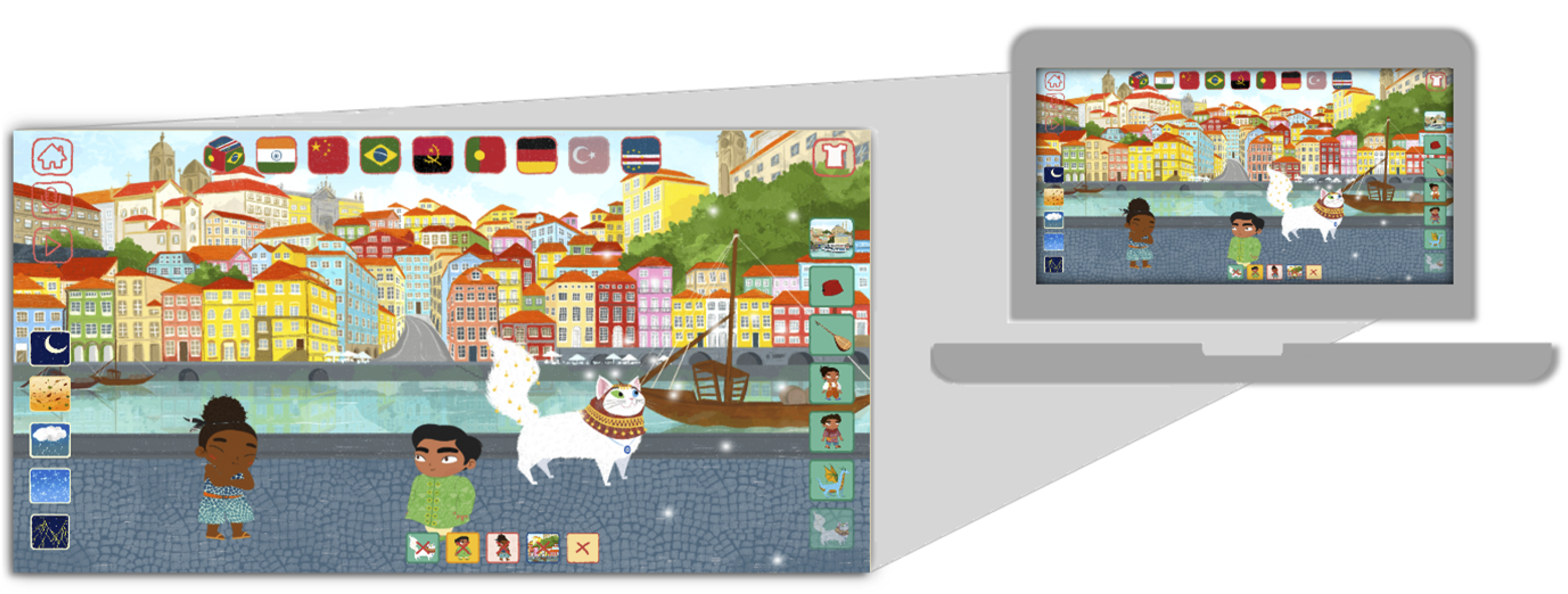
The StoryMaker is complemented by a set of interactive story apps, each dedicated to one of the cultures represented in the StoryMaker. Each app presents a story in written and oral form, a geographical map that locates the culture on the world map, a 360° environment that encourages children to move their device around to explore and visualize the full environment, and a small game involving cultural elements. It also includes an augmented reality page allowing children to print their own AR markers and bring the protagonists to life in their environment, as well as an inbuilt glossary with keywords from the story and detailed information about the culture represented in each story (Figure 2). Interactive features are a common element in every page, that is, the readers must interact with the story elements (by touching, dragging, or connecting) in order to actively compose the meaning-making process of the multimodal reading. The apps were designed to scaffold children’s learning about the cultures, feeding their imagination and supporting their narrative creation when using the authoring tool, that is, the StoryMaker. Different features of the story apps.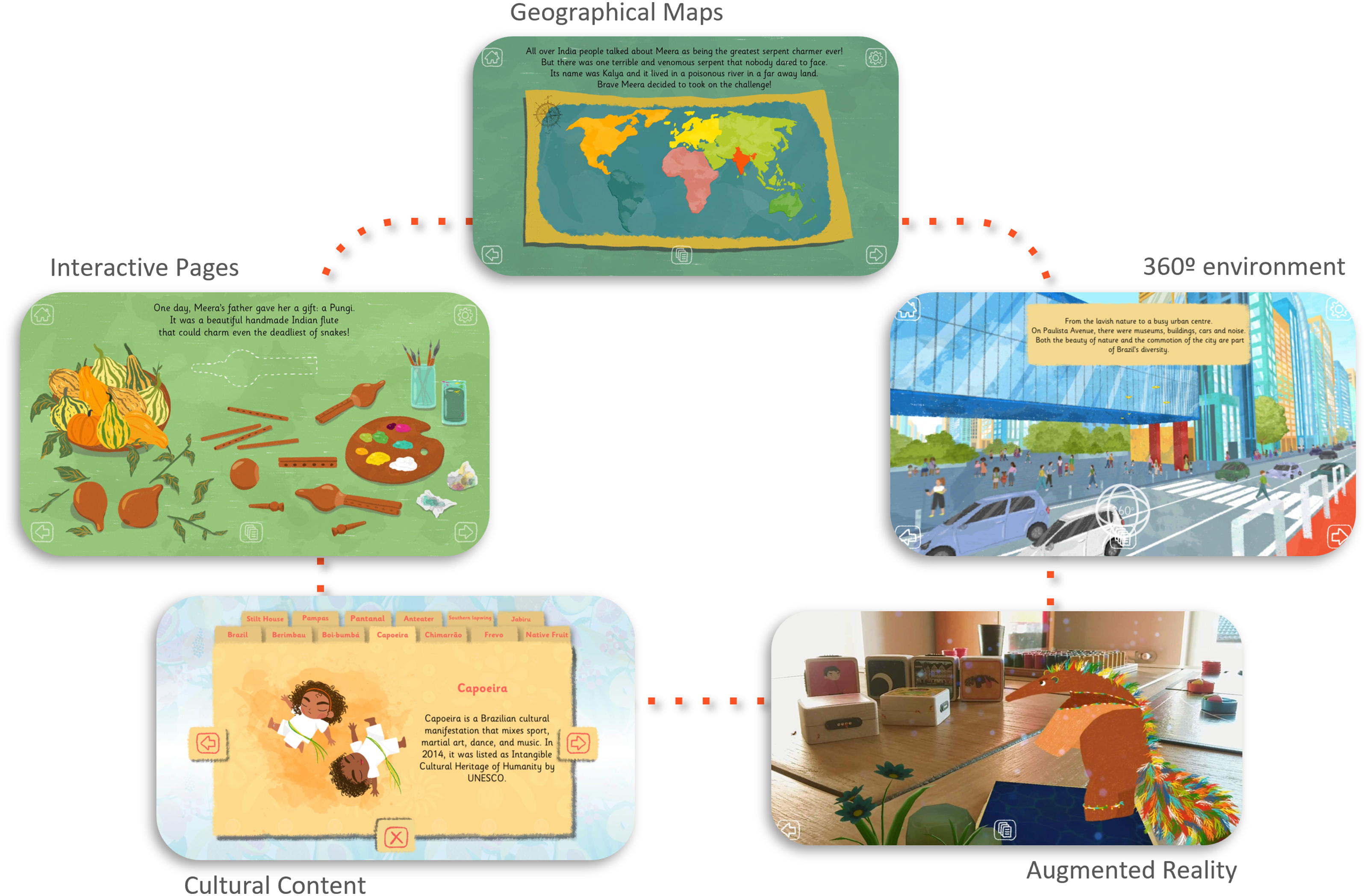
To illustrate the narrative structure of these set of apps, we detail the story presented in the three story apps used by the teachers in this study, namely, Mobeybou in Brazil, Mobeybou in India, and Mobeybou in Cape Verde. The story app Mobeybou in Brazil is structured as an anecdote, that is, a story that presents a sequence of significant events, to which the protagonist reacts (Martin & Rose, 2009). The main plot narrates the experience of a child in an imaginative tour around her country during the reading of a picture book. Thus, the event-reaction structure of the story is developed in a sequence of discoveries and reactions. It is structured in 11 episodes. The first episode sets the tone for the narrative, introducing the triggering event: the character unexpectedly finds an illustrated book about Brazil and immediately imagines the start of an adventure. The next nine episodes are a sequence of events imagined by the protagonist, during which she discovers and experiences Brazil’s culture and its biodiversity. Thus, she gets to know the pampa—episode 2; the Iguaçu Falls—episode 3; São Paulo—episode 4; the Pantanal—episode 5; a beach in the Northeast—episode 7; the Amazon Forest—episode 8; the popular Boi-Bumbá festival—episode 9; and the city of Recife—episode 10. Finally, episode 11 presents the coda of the narrative, which thematizes the character’s future actions after learning more about her country. 1
The story app Mobeybou in India has a traditional cause-effect structure, in which the protagonist, who is from a family of snake charmers, dreams of being the best snake charmer in all India. She receives a pungi (Indian flute) on her birthday and decides to follow her dream. To do so, she learns how to play the pungi and goes on a big adventure to face a terrible snake named Kalya. On her journey, she discovers new places from her own country and representative cultural elements (e.g., the juttis, traditional Indian shoes). Finally, the protagonist succeeds in enticing Kalya.
The story app Mobeybou in Cape Verde follows an event-reaction structure like the app Mobeybou in Brazil. The triggering event is introduced in the first episode. On her birthday, the protagonist receives a map from her grandmother that shows the way to a hidden treasure. The protagonist starts an adventure around Cape Verde in search of the treasure. The following nine episodes are a sequence of events that take place in the different islands of the archipelago. She visits five of them—Fogo, Boa Vista, Sal, São Vicente, and Santiago—and discovers several natural elements, such as the volcano in the Fogo Island, the turtles visiting Cape Verde beaches every year to breed, and the reefs. She also gets to know other cultural manifestations of the country, such as the Tabanka festival and the popular music genre Morna, and Batuque. Besides, the protagonist tastes the Cachupa, a traditional Cape-Verdean food. Finally, episode 11 presents the coda of the narrative, with the protagonist’s future plans.
Following the development of the digital tools, the next step was to assess their potential to promote the development of the envisioned skills and to foster their integration in class. We developed a six-month professional development course directed to in-service educators and teachers to support them in the use of the tools. The course was held in a hybrid format, with half of the sessions taking place face-to-face and the other half online. For the first 8 weeks, the meetings were held weekly, and then fortnightly for the rest of the course. A total of 50 school teachers (21 pre-school educators and 29 primary school teachers) attended and successfully finished the course. This group of teachers voluntarily signed up for the course, which was publicized on the project’s social media and communicated by email to the schools in the municipality. The course comprised a theoretical and a practical part. After introducing the tools, the course led the participants through the theoretical foundations supporting the pedagogical use of the materials. The pedagogy of multiliteracies, multimodality, digital literacy, narrative comprehension, and production and intercultural dialogue were introduced, discussed, and situated in the national official curricular guidelines. In the following practical sessions, the teachers worked collaboratively in small groups to plan an individual intervention in their classes in which they would put the theory into practice. The development and the implementation of a pedagogical project with the digital tools was a prerequisite for completing the course. The inclusion of this stage of teacher education for technology use aligns with recommendations from previous studies, such as Vice et al. (2024).
The three teachers that participated in this study attended the course. As part of the course program, each of them planned and implemented a two-month pedagogical intervention to develop narrative writing skills mediated by the digital tools in their classes. Thus, all three were familiarized with the conceptual basis of the materials and had the same background for using the tools. The teachers were free to choose the tool(s) that seemed more appropriate to their professional contexts. The study occurred simultaneously in the three sites.
We addressed their practices with the following research questions: 1. What kind of writing practices are promoted by the use of the digital tools? 2. What are the characteristics of the written narratives?
Research Design
Given the context in which the study was carried out, we followed a multisite qualitative research design. This method emerged from the case study tradition, which aims at examining phenomena in naturalistic settings (Jenkins et al., 2018; Stake, 2007). While traditional case studies are originally focused on a single setting analysis, multisite qualitative case studies aim at enhancing “transferability and trustworthiness of findings to other contexts” (Jenkins et al., 2018, p. 1969). To do so, this method involves comparison of data across sites, while preserving the site-specific understandings foundational to the case study methodology. In the following, we present an analysis of the sites and a comparison of qualitative data across the multiple sites. Our goals are to (i) present an in-depth description of the writing practices sustained by the use of the digital tools in each site and to (ii) contribute to building more comprehensive understandings about the narratives produced with the support of these tools.
Site Description
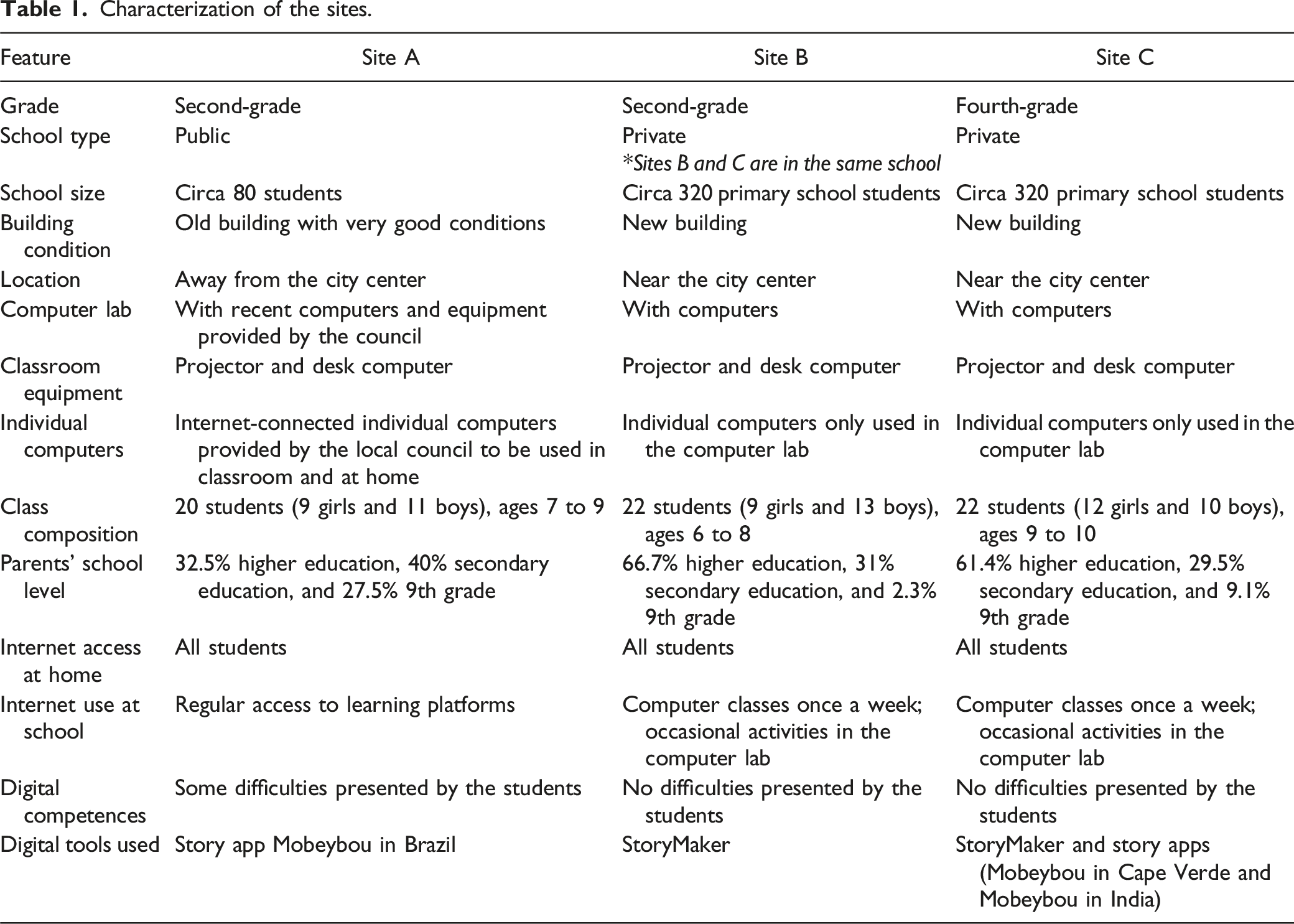
The choice of the teachers was done by applying purposive sampling within the participants of the teacher training course that met the criteria of acting in different contexts (public and private) and grades (2nd and 4th). The three teachers voluntarily agreed to take part in the investigation. The selection of grades was intentional: in the second grade, students are usually already literate and in the process of developing written narrative skills, while in the fourth grade, they already have more consolidated narrative writing skills. It wasn’t possible to include a fourth-grade class from a public-school setting because none of the teachers from the training course were working in this scenario. Prior to the beginning of the study, the students’ parents provided informed consent for their children’s participation and data collection. The children were also informed about the project and agreed to participate in the study.
Characterization of the sites.
Data Collection
Three datasets were collected, namely, field notes, semi-structured interviews with the teachers, and students’ written texts. The field notes were documented to describe the writing practices promoted by the use of the digital tools. They were taken by two researchers following a developed protocol, which was elaborated and discussed within the research team, and consisted of systematized observations of the classroom dynamics, accounts of teachers and students during the sessions. The protocol was structured into four main dimensions and subdimensions designed to capture different aspects of the teaching and learning process. The first dimension, “General Organization of the Lesson,” included three primary topics, focusing on the clarity and achievement of the learning objectives; the curricular domains involved; and the overall organization of the session. The second dimension, “Use of Materials by the Teacher,” consisted of topics about the materials used; any difficulties encountered; the timing and mediation of the material’s use; students’ organization; and innovative practices. The third dimension, “Interaction of Students with the Materials,” contained topics assessing students’ initial reactions; moments of the material’s use; comprehension of tasks; difficulties and resolutions; ease of use; group collaboration; engagement; and learning outcomes. The final dimension, “Other Observations,” was intended to capture any additional relevant information.
The semi-structured interviews were carried out with each teacher individually by two researchers when the intervention came to an end with the aim of understanding how the teachers perceived their students’ writing practices scaffolded by the digital tools. We inquired about three main dimensions: (i) the relevance of the tools for curriculum development; (ii) the use of the digital tools in the implemented projects (benefits, limitations, implementation challenges, and students’ engagement); and (iii) the professional development achieved. The interviews were face-to-face and took around 40 minutes each. They were recorded and then transcribed verbatim by the researchers who acted as interviewers to ensure consistency. Both the field notes and the transcriptions were independently screened by two researchers to restrict the selection to the excerpts directly related to the writing practices. The final set of the field notes consisted of 120 entries, while the excerpts of the interviews transcriptions consisted of 27 entries. The students’ written texts were also collected to address the second research question.
Data Analysis
Due to the contextual diversity of the study sites, we agree with Jenkins et al. (2018) that aggregating data for analysis would result in underdeveloped findings that might not accurately reflect the specific writing practices supported by the use of the digital tools within each site. Thus, to draw meaningful conclusions about overarching or shared writing experiences across sites, we followed an analytical approach that facilitated data analysis within and between sites.
As recommended by Jenkins et al. (2018), the initial step in the analysis of the datasets was an independently conducted line-by-line thematic coding of the selected observation notes and the semi-structured interviews site by site carried out by two researchers. After that, the emergent coding structures, specific to each data subset, were discussed, compared, and refined through whole team meetings, and finalized through an iterative process of returning to the data (Jenkins et al., 2018). Clarity and specificity were considered for each code, to ensure that the minimum number of codes that captured the data were identified. The research team collaboratively generated six broad codes: writing to learn; learning to write; individual work; collaborative work; teacher-centred; learner-centred. Since codes were not mutually exclusive, the sections of the data that were relevant to more than one code contributed to the data analysis by establishing linked themes (Jenkins et al., 2018). Subsequently, a between-site analysis was conducted in which emergent themes were compared to uncover patterns across sites. Through this analysis, the research team identified two broad themes cross-cutting all sites: Type and focus of the writing practices and characterisation of the written narrative. Following the identification of the themes, and to avoid the decontextualization of the research findings, a second within-site analysis was conducted to ensure that the results remained contextually grounded (Jenkins et al., 2018), as represented in Figure 3. Analytical process (adapted from Jenkins et al., 2018).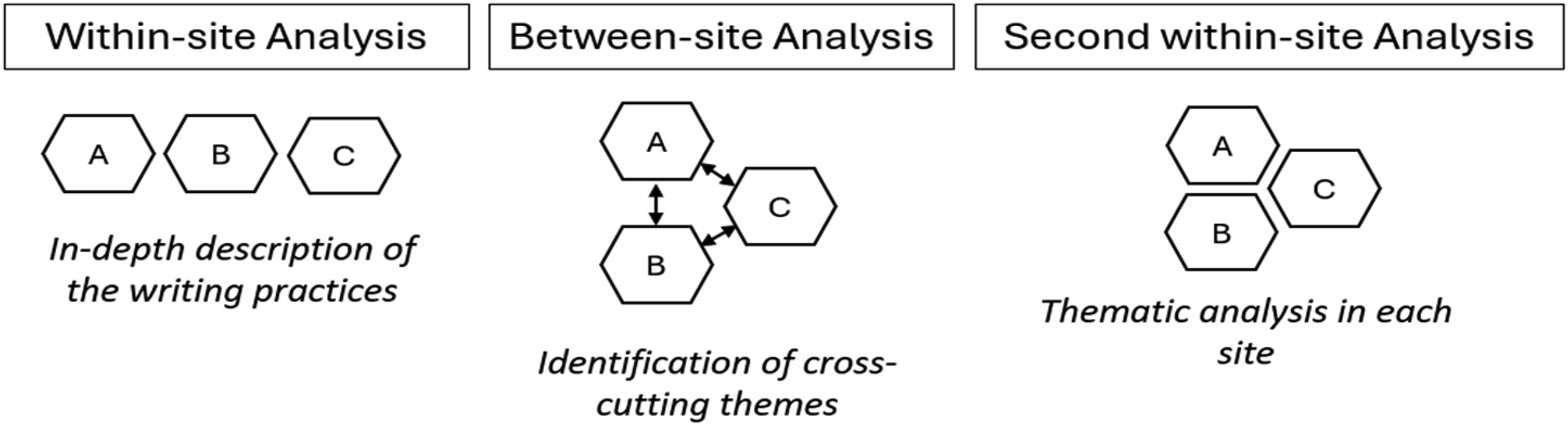
To analyze the texts written by the students, the research team used an analytical grid. To ensure clarity and consistency in its use, two researchers carried out an independent analysis of a sample of texts that were not related to this study, compared their analyses, and systematically refined their understanding of the categories, until they obtained a concordance of over 90%. The same researchers then carried out an independent analysis of the texts that constituted the sample of this study, obtaining an agreement of 95%.
Findings
The analysis revealed the existence of both striking similarities and differences in the writing practices enacted across the three sites. In general, the choice of the (different) digital tools was motivated by (different) educational goals, enabling the construction of different narrative writing practices, enacted according to different pedagogical approaches. However, despite these differences, all the writing practices were hybrid, in that they all actively involved digital and non-digital devices, and all the narratives produced were influenced by the specific tools used.
Site A: 2nd Grade (Story App Mobeybou in Brazil)
Prevalence of Writing to Learn Practices
In site A, the observed writing practices were developed in the context of the teacher’s major concern with enhancing her students’ reading comprehension. The intervention was carried out for a period of two months and consisted of a weekly session dedicated to reading one or two episodes of the app Mobeybou in Brazil. In the interview, the teacher explained that she planned her intervention as a step-by-step reading comprehension of the story app with a special emphasis on raising vocabulary knowledge: Sometimes I ask them: “is there a word you don’t understand?” and they say: “no, teacher, we understand everything,” so I continue to read and ask: “what does this mean?”, and they don’t know... How can they understand a text if they don’t know the words? [...] Thus I work step by step and ask: “Do you know what this is? Do you know what that is?” (teacher Site A).
Each of the sessions was approached in a similar way, being teacher-centered and involving students’ individual work, as illustrated in the following excerpt below from the field notes: The teacher reads the episode aloud and the students follow her reading on their tablets. Then they listen to the episode in the story app. Finally, they read it individually. During the reading, the teacher asks comprehension questions: “what do you see? What do you listen to? What is happening?”. Some students answer the questions orally. Then, the students work individually on the computers doing guided research. The teacher says: “now, go back to your computers and let’s research what the pampa is….”
Reading activities were always supported by writing to learn practices, when students researched about new information/new vocabulary that was found in each episode. The retrieved information was discussed in class, and students individually took notes of it.
When the reading of the whole story came to an end, the teacher guided a brainstorming session, through which the students recalled all that they had learned, which the teacher wrote down on the board. She then handed the students a blank sheet of paper and asked them to write a narrative. In her instruction, she challenged the students to offer details, arguing: I want to feel like I’m there, so I want you to describe the landscape: What did you see? What did you do? Tell me if you liked Iara’s (the protagonist) adventure or not, tell me what you think of this adventure.
As such, the enacted writing clearly instantiated writing to learn practices, aiming to scaffold students’ learning of declarative knowledge about Brazil’s geographical, natural, and cultural diversity constructed through reading.
Written Narratives: Lacking in originality, yet personal, detailed, informative, and lengthy
The produced texts were strongly anchored in the story app, ultimately suggesting the effectiveness of their extensive reading. The following features came up in the analysis: detailed retelling, authorial marks, and informativeness.
In their narratives, children reproduced the app’s structure (an anecdote), with 70% of the texts having the coda with a positive appraisal of the represented culture. Although children did not have to think much about the narrative structure, which they reproduced, the narratives were rich in verbal descriptions, most of which “transducting” (Kress, 2010) into words the visual and aural stimuli of the story app. The following excerpt of a student’s narrative is representative for this: The next destination was incredible, we contemplated the Iguazu Falls, there was a rainbow and I took a photo to remember it, and the sound was relaxing.
The falls, the rainbow, the photo, and the sound of water were visually and aurally presented in episode 3 of the story app. Figure 4 presents a sequence of screenshots of this episode. Episode 3 from app Brazil.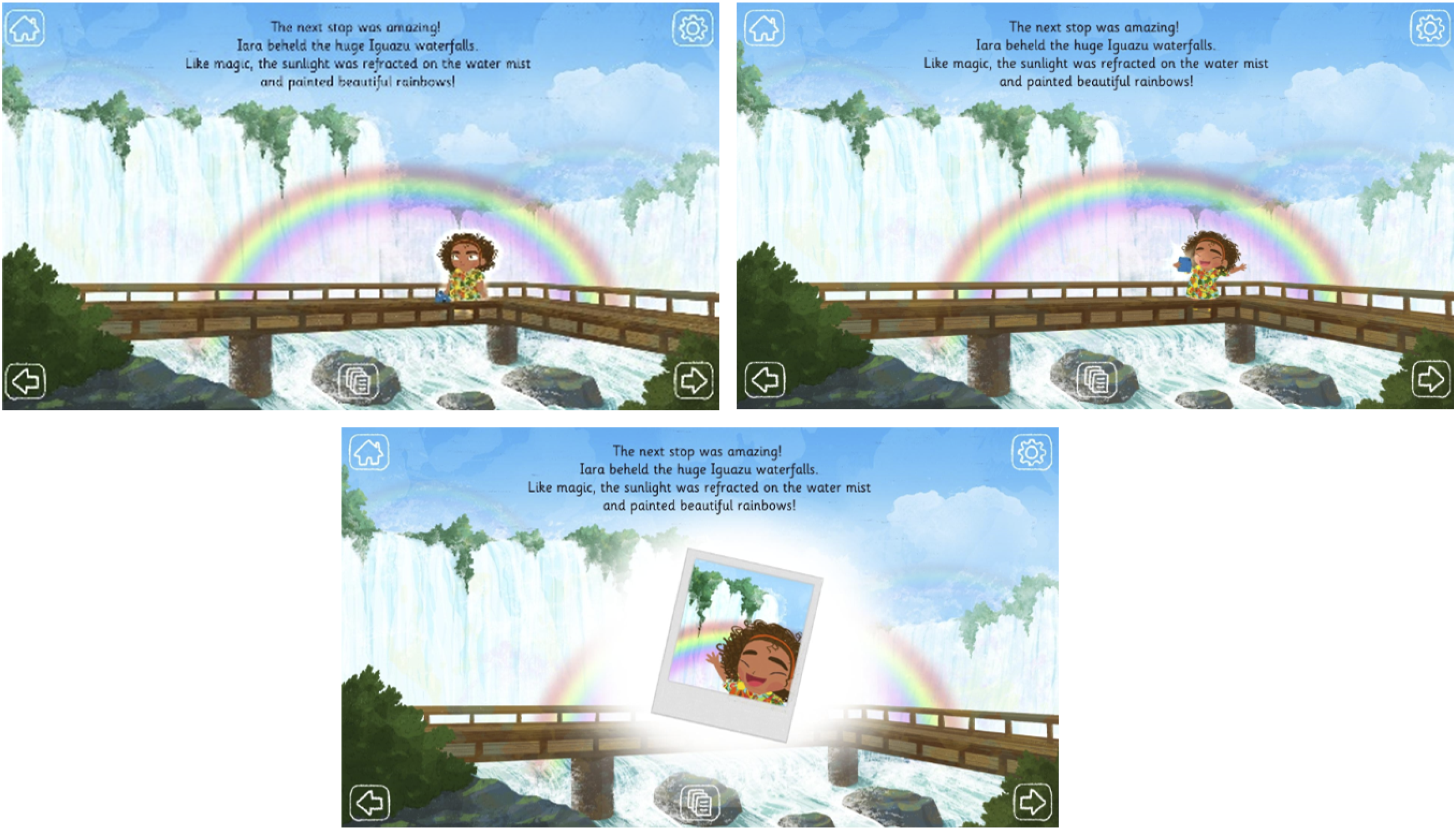
The prior excerpt is also illustrative of another feature in the narratives, as 80% of the texts were written in the first-person singular, suggesting students’ appropriation and personal involvement with the text. Besides, all the narratives included a high number of terms referring to Brazil, showing a very good acquisition of new vocabulary and the learning of new concepts. The following excerpt of a student’s narrative is representative for this: She turned another page and arrived at the Pantanal, where she saw tuiuiús, crocodiles, macaws and a large giant anteater. There, the landscape was beautiful, the flora and fauna were fantastic and Maria decided to take a break to drink a juice made from native fruits: siriguela, cupuaçu, jabuticaba, cashew, araçá, passion fruit, pineapple, guava, pitanga, cambuci, grumixama, guabiroba and many others.
A final detached feature found in the narratives concerned the number of words: considering that this was a second-grade class, the narratives were lengthy (mean: 193.29 words; 64% type-token ratio (TTR)).
Site B: 2nd Grade (StoryMaker)
In site B, the teacher’s major concern was the improvement of students’ narrative competences, focusing on the development of two aspects, namely, (i) consolidating knowledge about how to structure a narrative and (ii) promoting children’s creativity. Besides, during the interview with the teacher, she revealed that group work and the development of student’s autonomy were aspects that she valued in her practice with the students. She also emphasized that students were still developing their autonomy, as well as learning how to work collaboratively, thus these are permanent goals in her practices: [...] group work continues to be a battle, but I think it’s also very important for them to realize that they have to give space to each other to agree on ideas... (teacher Site B).
The teacher chose the StoryMaker as the digital tool to work with the class, since it offers a wide range of elements to be used in the narratives, without presenting a previously fixed narrative structure. She considered that this tool could be useful, since the students lacked inspiration for writing narratives and had some difficulties to organize their ideas in a coherent manner.
The intervention in site B consisted of interactive sessions with the StoryMaker in pairs and small groups every fortnight, for two months. Each of the sessions was approached in a similar way, being student-centered and involving students’ collaborative work. The students had moments of (i) free interaction with the tool; (ii) guided interaction to identify the elements of the narrative (setting, protagonists, antagonists, etc.) and learning new vocabulary; and (iii) usage of the tool to support planning the narrative text. Before starting the activities, the students were divided into groups, with a leader assigned to each group; the teacher explained the tasks orally to the class. Throughout the activities, the groups worked relatively autonomously, while the teacher moved from group to group, reiterating the guidelines and giving specific instructions.
Although both types of writing practices were observed during the intervention, there was a predominance of learning to write practices. The teacher fostered the development of student’s metacognition during the writing process (i) through explicit guidance on the role of the elements that composed the narrative and (ii) by highlighting the visual stimuli presented by the digital tool that could also be incorporated into the narratives—both in terms of actions and in terms of the visual characterization of the story elements that would influence the verbal descriptions. The following extract is representative of the observed learning to write practices. While the students were exploring the StoryMaker, the teacher revisited the narrative elements: Teacher: “We have a landscape and what else?”, Students: “Two protagonists!”. Teacher: “And what are they?” Students: “They’re the main characters in the story!”. Teacher: “What about them?” [pointing to two antagonists] Student A: “They’re the bad guys!”, Teacher: “They’re the opponents!”.
This excerpt also illustrates the hybridity of the activities, as the students were working with the StoryMaker and completing a written exercise. The integration of the digital and the non-digital was a constant issue.
The writing to learn practices were restricted to the tasks of a preliminary and informed selection of the elements that would compose the narratives, in particular, the development of declarative knowledge about the elements presented by the StoryMaker and vocabulary enrichment. In these tasks, the students wrote down curiosities about the story elements, to start planning their narratives.
Written Narratives: Short yet Creative and Rich in Narrative Elements
Students’ narratives were written in groups. Each group chose a leader who wrote the text, while the others contributed orally. The narratives were short, although with a good lexical diversity (mean: 73.33 words; 69.19% TTR).
An important aspect was the originality of the narratives. Each group used a different set of elements from a different culture in the StoryMaker, so each narrative was truly unique. The organization of the produced narratives followed a cause-effect structure, clearly reflecting the stimuli of the interactions presented by the StoryMaker. In the extract below, from one of the narratives, the students narrate a conflict that was displayed by the StoryMaker when the elements from the Angolan set were on scene: Suddenly a sable appeared and they started laughing. They started playing music, the boy playing the drum and the girl playing the pestle. Then a very strange animal called the Black Lupa [appeared] and killed the black sable.
Explicit references to the stimuli provided by the StoryMaker were also visible and frequent (they appeared in all texts) in the verbal description of the elements, as, for example: “He [the protagonist] had brown skin and was wearing a T-shirt featuring vegetables [painted on it], shorts and yellow flip-flops.”
Regarding the organization of the narratives, it is noteworthy the diversified construction of the time sequence, that is, the use of “once upon a time,” “suddenly,” “after,” and “before something happens” in the same text.
Site C: 4th Grade Class (StoryMaker and Story Apps Mobeybou in Cape Verde and Mobeybou in India)
Co-occurrence of Writing to Learn and Learning to Write Practices
Site C was a fourth-grade class, and the teacher aimed at improving students’ narrative competences and their intercultural knowledge, as well as developing declarative knowledge about different cultures, leading the students to appropriate the elements of the apps and to reinforce their knowledge through an informative piece (named Info Kits 2 ). She chose to use two story apps (Mobeybou in Cape Verde and Mobeybou in India) and the StoryMaker during her intervention.
The intervention in site C consisted of weekly sessions of interaction with the digital tools, for two months. The teacher proposed three blocks of activities: 1—reading of the story apps in groups and autonomously; 2—carrying out research activities about the information presented in the story apps, and writing practices to systematize new learning and relate it to other contents that were being studied (i.e., writing to learn); 3—sessions of planning, writing, and sharing the narratives (i.e., learning to write).
All the activities proposed by the teacher were carried out in groups, both in pairs, in small groups, and involving the whole class. The small groups were chosen beforehand, and each group chose a leader, they worked autonomously, with occasional support from the teacher, for example, “You know that it’s normal to have conflicts when working with many people, so the role of the leader today will be to mediate possible conflicts and help the group reach a decision.”
Throughout the process, collaborative dynamics were visible in different interactions, among all members of the group, which contributed to collective writing by (i) distributing tasks; (ii) creating space for individual participation; (iii) negotiating the elements to be mobilized; and (iv) proposing correction. In this sense, it is worth noting that the interactivity provided by the tools enabled the teacher to develop a learner-centered approach, as illustrated in the following excerpt: There was a negotiation between the different members of the group when it came to listing ideas. For instance, one girl asked the classmates: “What landscape do we want, girls?”; in another group, a student wrote down in the planning phase “Idea 1,” “Idea 2,” etc. followed by the name of the group member responsible for formulating each idea.
A dual focus was constantly observed in this site. The excerpt below describes a moment before writing in which the teacher returned to the central elements of the narrative while exploring the Indian set on the StoryMaker: Teacher: “and what is the snake in this kit?”; Some students simultaneously “the antagonist”; Teacher: “why is it the antagonist?”; Student A: “it’s like the second protagonist”; Teacher: “and what does it do?”; Another student: “it attacks!”; Student A: “it’s going to create a problem for the protagonist.”
As this excerpt shows, there was a coexistence of learning to write and writing to learn practices. Concerning learning to write, the students needed to know the narrative elements and their functions to respond to the teacher and for subsequent mobilization in their texts. By knowing which element corresponds to the antagonist and learning cultural information about it, students are writing to learn, with the materials informing their narratives.
The teacher asked the students to write down their ideas beforehand and textualize them later. This focus on the planning phase was highlighted by the teacher in her interview: The students were going to create the story, but at the same time these kids had to take notes of their ideas, didn’t they? (...) First they drew the plan with the ideas, and then, in a separate moment, they wrote the narrative. Because they would have some difficulty in handwriting the story in front of the computer.
The written practices were always hybrid. The students read the story apps and registered their ideas and things of interest on paper; they interacted on the computer with the Story Maker in order to create interactions and structure their ideas to the handwriting texts, and read information about the story elements in a printed document about the cultural sets (the Info Kits). Thus, the enacted writing in this site clearly instantiated hybrid writing practices with a dual focus on writing to learn and learning to write.
Written Narratives: Lengthy, Creative, and Rich in Intercultural Information
In site C, the narratives were written in small groups (pairs or groups of three). They were creative, lengthy, evidencing a high level of intercultural knowledge (mean: 150.57 words; 56.6% TTR).
Relations between inputs and texts.
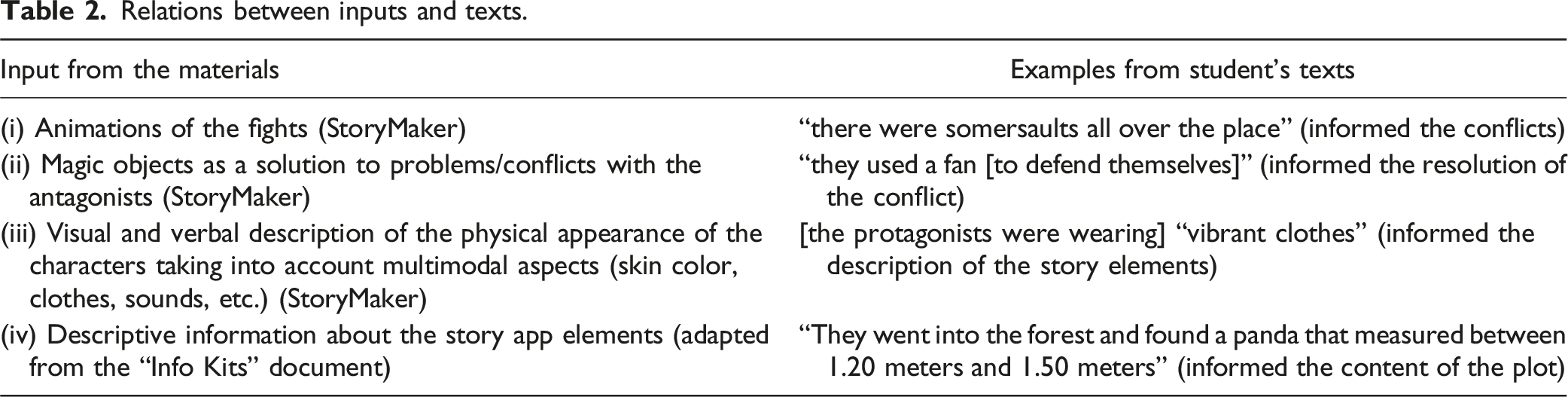
The extract from a narrative created by one of the groups presented below exemplifies how the students integrated interactions provided by the StoryMaker, bringing together elements from different cultures, considering the multimodal stimuli presented by the tools: One day Josefino was playing an instrument for his friend panda. But a tragedy happened: Josephino’s music attracted a fire Lion. The boy became desperate and started screaming. The panda heard Josephino's cries and moved to protect him! Defending his friend, the panda was hit in the stomach by the lion’s nails, but he still managed to resist and defeat the lion by somersaulting all over the place until the lion became dizzy and passed out.
The organization of the narratives followed the cause-effect structure, concretely reflecting the stimuli of the StoryMaker, with one particularity: most of the texts (70%) also included sequences of events/experiences and reactions that were integrated into the cause-effect structure, which may indicate a reflection of the use of the story apps.
Discussion
In this section, we return to the research questions in order to answer them. Regarding research question 1—What kind of writing practices are promoted by the use of the digital tools?—our findings revealed that both writing to learn and learning to write practices were supported and fostered by the digital tools. Indeed, a range of different writing practices with different goals, focus, and dynamics were developed, depending on the site. Two common features were identified in these practices, namely, (i) hybridity and (ii) prominence to multimodal stimuli.
Although there were both kinds of writing practices in all sites, some prevalent behaviors were observed. In short, in site A, there was a prevalence of writing to learn practices, aiming at learning declarative knowledge about Brazil’s diversity. In this regard, the amount of multimodal information presented in the story app played an important role, opening possibilities for new declarative learning (and writing to learn practices). In site B, there was a predominance of learning to write practices, aiming at developing student’s metacognition during the writing process. Again, the features of the digital tool used contributed to this scenario, once the input provided by the StoryMaker helped students to identify the story elements and its roles in the narrative, while giving space for open-ended stories. Finally, in site C, there was a dual focus on learning to write and writing to learn practices, aiming at supporting the stages of the writing process and recognizing the structure of a narrative, as well as developing declarative knowledge about different cultures. This is in line with the use of both tools, that is, story apps and StoryMaker.
Previous studies (Olinghouse & Leaird, 2009; Spinillo & Melo, 2018; among others) have already shown the importance of both kinds of writing practices throughout the schooling years. Particularly, how good these skills are acquired in the first years of school is foundational for academic and later professional success. Sturk (2023) has highlighted the potential of dual focus practices, also identifying a more holistic view of the teaching of writing among generalist teachers. Given that the primary school teachers in Portugal are generalist teachers, the presence of both types of practice in all the sites supports Sturk’s claim. The understanding that these digital tools supported different types of practices, adapting well to different sites, strengthens their beneficial potential to foster hybrid writing practices in primary school contexts. This is also relevant as it highlights the flexibility of the tools in meeting different pedagogical objectives, reinforcing the importance of teachers first identifying the pedagogical function and then selecting technology tools to support it, thereby ensuring effective instructional practices, as emphasized in previous studies (Drost & Levine, 2025).
Furthermore, in sites B and C, a growing students’ agency was observed during the hybrid writing practices. This result reinforces Dahlström’s (2019) comprehension that digital access and opportunity for practice increase students’ autonomy. Lastly, this result may offer some insights into the approaches required to maintain students’ motivation to write, since encouraging self-efficacy has already been pointed out as a strategy for strengthening motivation to write (Martin & Bell, 2024).
The focus on the different stages of the process of writing was another common aspect supported by the digital tools. This is in dialogue with previous studies on the theme (Gil & Sylla, 2022).
Considering the second research question—What are the characteristics of the narratives written with the use of the materials?—the findings indicate that there were learning outcomes in all the three sites. In all sites, although with different intensity, the digital tools enhanced students’ comprehension about (i) the narrative structure, since it was possible to establish concrete connections between the structure of student’s texts and the stimuli of the tools; (ii) the story elements (e.g., setting, protagonists, and antagonists), since several moments were identified in which the role of each element in the text was discussed; and (iii) increased vocabulary diversity; the intercultural vocabulary used in the narratives is an evidence in this regard. This broader result corroborates previous studies that have also presented evidence on the use of digital tools to support students’ growth as writers and learners (Kervin & Mantei, 2016; Mills, 2011; Vice et al., 2024; Williams & Beam, 2019; Yamaç & Ulusoy, 2016).
There were a number of differences regarding the characteristics of students’ narratives supported by the digital tools. In site A, the narratives were lengthy, organized as an anecdote, but lacking originality since most of the texts reproduced the story app’s plot. In site B, the narratives were short, but with good lexical diversity, followed a cause-effect structure, and were creative. In site C, the narratives were creative, had a good length, and use of intercultural knowledge. Common to all narratives in the three sites was that they indicate a strong relationship between the stimuli provided by the digital tools and the structure and the lexical diversity of the texts written by the students. Therefore, the same tools seem to be able to leverage different narrative texts.
Implications for Practice
Our findings revealed that the circumstances (namely, choice of the tools, groups’ characteristics, and teachers’ goals) shaped the classroom dynamics and the developed writing practices. In turn, the kind of developed writing practices and the tools shaped the narratives written by the students. In each case, the tools were adaptable to each specific site and not rigidly imposed on students. The flexibility of this set of digital tools is a fundamental feature to promoting learning practices aligned to teachers’ goals. Therefore, our findings provide concrete evidence of how digital tools can be effectively integrated into writing practices in primary school education, demonstrating that the digital dimension can positively contribute to the construction of rich writing pedagogies. In particular, our findings suggest that the use of digital tools that offer multimodal stimuli (e.g., story apps and StoryMaker) can support diverse writing practices. Multimodal stimuli seem to help students better understand narrative structures and elements, also supporting their creative process. Digital tools in hybrid writing practices can support self-directed learning and decision-making in writing tasks, fostering student agency. Besides, our study reinforces the understanding that teachers can use digital tools to enact both “writing to learn” and “learning to write” practices in the curriculum. This dual focus enhances both students’ declarative knowledge and metacognitive skills, providing a more holistic approach to writing education. Additionally, the tools and the literacy practices can emerge as potentially relevant for diverse educational settings.
These implications entail concrete recommendations for teachers, namely: Teachers should choose digital tools based on clear learning objectives and only when these tools offers meaningful benefits that could not be achieved without technology. This approach supports truly hybrid learning, rather than an artificial use of digital tools. Considering writing tasks, planning should place particular emphasis on the multimodal contributions of digital tools and the support they can provide throughout the interactive writing process.
Limitations and Future Directions for Research
While the study provides insights into the use of digital tools in writing practices, it is important to acknowledge its limitations. This study was conducted across only three sites, which do not fully represent the contexts and practices found in primary school education. Additionally, the number of texts written with the support of these tools was quite small. Also, the study focused on specific grades, limiting the generalizability of the findings. Finally, a key characteristic of this study is that the participating teachers planned and implemented practices using the kit of digital tools within the context of a professional development course. This may have mitigated some of the practical challenges typically associated with integrating such tools into educational settings. By working within a structured and supportive environment, teachers may have experienced fewer obstacles related to usability, time constraints, and other potential barriers to implementation. We acknowledge that these factors remain critical in many classroom contexts, highlighting the need for further research that explores how the investigated set of tools functions under varying conditions and across different teaching scenarios.
Future research should also consider including a broader range of grade levels to explore how these digital tools can support writing practices in primary school education. This would help in identifying grade-specific benefits and challenges, thereby informing more tailored instructional strategies. Besides, further research into the use of this set of digital tools is needed to better understand its potential to foster dimensions related to writing practices that emerged in this study but were not analyzed in depth. The hybrid nature of the practices and the interplay between the digital and the non-digital also require further investigation. Finally, more research is needed into the effects of the multimodal stimuli from digital tools on the development of writing skills.
Conclusion
By exploring the potential of a set of digital tools to scaffold writing practices in primary school, this study reached two main conclusions. First, the digital tools supported different hybrid writing practices—writing to learn and learning to write—being adapted by the teachers according to their pedagogical aims and the context, and not imposing themselves. Second, this set of digital tools can enhance hybrid writing practices within a framework of contextually differentiated situated practices having the potential to develop writing competences in primary school students, especially vocabulary learning.
Footnotes
Acknowledgments
This work has received funding from the Portuguese Foundation for Science and Technology (FCT) reference: PTDC/CED-EDG/0736/2021 and DOI 10.54499/PTDC/CED-EDG/0736/2021. The first author is grateful to the Fundação para a Ciência e Tecnologia (FCT) for the support to CEDH – Research Centre for Human Development (Ref. UID 4872/CEDH). The third author is grateful to the Fundação para a Ciência e Tecnologia (FCT) for the support to CIEd - Research Centre on Education, Institute of Education, University of Minho projects UIDB/01661/2020 and UIDP/01661/2020, through national funds of FCT/MCTES-PT. DOI 10.54499/UIDB/01661/2020; DOI 10.54499/UIDP/01661/2020. The fourth author is grateful to the Fundação para a Ciência e Tecnologia (FCT) for the support of the CEEC IND4ed DOI 10.54499/2021.00227.CEECIND/CP1664/CT0024 and of the Research Centre on Child Studies (Ref. UID/317).
Declaration of Conflicting Interests
The author(s) declared no potential conflicts of interest with respect to the research, authorship, and/or publication of this article.
Funding
The author(s) disclosed receipt of the following financial support for the research, authorship, and/or publication of this article: This work was supported by the Portuguese Foundation for Science and Technology (FCT) (PTDC/CED-EDG/0736/2021), Centro de Investigação em Estudos da Criança (UID/317).
