



Abstract
The purpose of this study was to examine the relations between writing self-efficacy and writing achievement of elementary students (aged 9-11). Participants (N = 61) completed measures of writing motivation and achievement. Results indicate a significant positive correlation between narrative writing self-efficacy and writing achievement (p < .01), as well as a significant positive relation between writing skills self-efficacy and writing achievement (p < .01).
The National Assessment of Educational Progress (NAEP; National Center for Education Statistics) is used to evaluate the performance of students in the United States in a variety of subject areas. Students are scored using achievement levels denoting what experts have determined students should know and be able to do for each grade level. These levels include basic, proficient, and advanced. One of the subject areas assessed by the NAEP is writing.
Per the most recent assessment of fourth graders’ writing achievement (2002), less than 30% of fourth graders nationally achieved a level of proficient or better in writing (U.S. Department of Education, 2003). Additionally, fourth grade students living in large cities (and who achieved an average scale score of 144) scored below the national average (154). This discrepancy was even larger for students who were eligible for the National School Lunch Program (NSLP), an initiative that provides free or reduced school lunches to students from low-income families. Fourth grade students who were not eligible for NSLP averaged a scale score of 163, while students who were eligible had an average score of 141. In large cities, scores were even lower. Students who were ineligible for NSLP scored an average of 157, while eligible students scored 138. Race/ethnicity differences were also examined. White students scored an average of 161, Black students scored an average of 140, and Hispanic students scored an average of 141 on the 2002 NAEP writing assessment (U.S. Department of Education, 2003).
National Center for Education Statistics collected data about writing achievement of U.S. students again in 2011, but did not evaluate fourth graders (National Center for Educational Statistics, 2012). In 2011, 24% of eighth graders were proficient writers, while 54% achieved basic status and 20% scored below basic. Only 3% scored as advanced. Results were similar for 12th graders; almost a quarter (24%) of students scored as proficient and 3% scored as advanced. Over half achieved basic (52%), while 21% scored below basic.
Although the results of the 2017 writing assessment are not yet available, it is clear from nationally reported data that many students struggle in the area of writing. In order to improve student writing achievement, educators must determine and address root causes. One obstacle may be the complex nature of this subject. Writing requires many cognitive processes to function simultaneously (Torrance & Galbraith, 2006). Students must employ a variety of skills including understanding the prompt, activating background knowledge about the topic, and using strategies related to the writing process and transcription skills to complete a writing task (Graham & Harris, 2013; Lienemann, et al., 2006). Unlike reading, writing requires students to produce, instead of consume information (Hidi & Boscolo, 2006).
Another obstacle may be students’ attitudes, or views, about writing. Instead of viewing writing as an important skill that is useful for a plethora of purposes, it is often viewed as an unattractive task. And, it seems students do not understand the importance of and the many uses of writing (e.g., communication, acquiring knowledge) (Boscolo & Gelati, 2013). Because writing is complex and many students do not seem to value it or believe it can aid in learning, motivation is an important factor for students when completing writing tasks or skills (Boscolo & Gelati, 2013; Klassen & Welton, 2009).
The purpose of this study was to examine the relation between writing self-efficacy and writing achievement of elementary-aged students and to examine the power of basic and narrative writing skills self-efficacy, as well as key demographic variables to predict writing achievement. The research questions that guided this study were: (1) Are there significant relations between (basic) writing skills self-efficacy, narrative writing self-efficacy, and writing achievement of elementary-aged students? (2) Do the relations between writing achievement and motivation factors differ as a function of gender and age [as measured by the Narrative Writing Efficacy Scale (NES), Writing Skills Self-Efficacy Scale (SES), and the Test of Written Language-4 (TOWL-4)] for elementary-aged students? (3) To what extent do basic and narrative writing skills self-efficacy, as well as race, grade level, and gender predict elementary-aged students’ writing achievement (as measured by the TOWL-4)?
Literature Review
Conceptually, this research study is related to achievement motivation and student self-efficacy. That is, researchers examined both students’ beliefs related to performance on a writing task and actual performance.
Motivation
Motivation is defined as the “process whereby goal-directed activities are instigated and sustained” (Schunk, et al., 2014; p. 5). Motivation is a drive that influences how we learn (Schunk et al.). Students who believe they can complete a skill or task are often more motivated to see it through. And, vice versa, students who feel they cannot complete a skill or task often lack motivation to persevere. Schunk and colleagues noted motivation may differ across subject areas and tasks. For example, students may be highly motivated to learn new skills related to science, but be unmotivated when learning new writing skills. Motivation, which is domain-specific, also changes as students advance through grade levels (Klassen & Welton, 2009; Troia et al., 2012).
Achievement Motivation
Achievement motivation refers to one’s desire to perform competently in academic settings (Schunk et al., 2014; Wigfield & Eccles, 2001). Researchers assert that motivation and achievement (or competence) are reciprocally related (Wigfield & Eccles, 2001). Self-perceptions of competence, or competency beliefs, change as students age and typically depend on a specific task (Dweck, 2001). Although researchers agree that these changes exist, the age when students begin to differentiate between ability and effort is debatable. This progression may differ for individual students as some learners mature faster than others.
Research indicates students in primary grades often overestimate ability (Nicholls & Miller, 1984; Nicholls, 1978). Students begin to differentiate between performance, effort, and ability around the age of 10 or in the fourth grade (Klassen & Welton, 2009; Stipek, 1981). Nicholls (1978) noted students begin to align their perceptions of their own abilities with how teachers rank them at age 9. Schunk and colleagues (2014) indicated students in upper elementary school and middle school have more agreement between perception and reality than students in lower elementary school. Dweck (2001) noted student perceptions seem to become more accurate at around age 7, when students begin to compare their performances to their peers and begin to believe ability is domain-specific. At this age, students also begin to use feedback from teachers and peers to judge themselves (Dweck, 2001). By age 10 to 12, students begin to believe ability is differentiated from effort and view intelligence as capacity related. Students seem to continue this thinking throughout middle and high school because research indicates students in these grade levels often have lowered ability beliefs and decreased achievement motivation (Wigfield & Eccles, 2001).
Troia et al. (2012) identified four factors, or components, of achievement motivation: interest, goal orientation, outcome attributions, and self-efficacy. These factors influence how students learn and can predict achievement (Pajares, et al., 2007; Schunk, et al., 2014). The purpose of this study was to examine one of these factors, specifically student self-efficacy, in relation to writing achievement.
Self-Efficacy
Self-efficacy is the “… beliefs in one’s capabilities to organize and execute the course of action required to produce given attainment” (Bandura, 1997; p. 3). Self-efficacy is formed by several factors including (1) mastery experiences, (2) vicarious experiences, (3) feedback, and (4) affect (Bandura, 1997; Klassen & Welton, 2009; Schunk et al., 2014). Mastery experiences are past performances that resulted in success or failure on a similar task, and vicarious experiences are observations of the behavior or skills needed to complete the task. Self-efficacy consists of outcome expectations and efficacy expectations. Efficacy expectations refer to the confidence the student has about completing a specific task (Troia, et al., 2012). For example, a student may feel efficacious about writing a short narrative story based on a picture. This student has used various sources of information to create this expectation. Perhaps the student received an “A” grade on a similar assignment in the past. Or, perhaps the student received positive feedback about work related to this task in class. The student may have also observed the teacher complete a similar task and thus believes the task is doable.
Outcome expectations refer to the anticipated consequences (e.g., praise, award, or approval) the student expects to receive after the performance (or outcome) (Schunk & Pajares, 2001; Troia, et al., 2012). In the case about the student who feels efficacious about writing a short narrative story, this student may also have high outcome expectations. Perhaps this student is anticipating the teacher will post the class’s best work on the classroom bulletin board. Thus, the reward would be recognition from the teacher, and possibly peers. Outcome and efficacy expectations are typically related. Students “who knew what behaviors would result in desired outcomes also possessed greater positive efficacy expectations” (Meier et al., 1984, p. 108).
In another example, students may feel highly efficacious about an upcoming test. Perhaps some students have positive self-perceptions about their ability and effort. These students have also evaluated the value and relevancy of the task. But, they have low outcome expectations because they feel the teacher grades unfairly and displays biases toward specific students (Schunk & Pajares, 2001). This may impact students’ effort and perseverance. If students believe it is useless to even try on the exam, they may not expend the needed effort and may try very little or avoid the task all together. Schunk and Pajares noted students who believe the outcomes will be negative typically do not complete the task.
Additionally, the development of self-efficacy becomes more accurate as students age (Troia, et al., 2012). Young students seem to either overestimate their own abilities or underestimate the difficulty of the task. These students seem to believe that all tasks are easy (Schunk & Pajares, 2001). Older students can accurately determine and evaluate task difficulty (Schunk & Pajares, 2001). Perceptions, whether correct or not, influence self-efficacy.
Writing Self-Efficacy
Hidi and Boscolo (2006) and Pajares and colleagues (1999) acknowledged that writing motivation research is sparse. However, most of the research conducted in this area is related to self-efficacy. Early research focused on the self-efficacy of students in college and high school (Pajares et al., 1999). Recently, some researchers have examined students in elementary and middle school. Although self-efficacy has been one of the most researched constructs in the area of writing motivation, there are still many gaps in the literature. Klassen and Welton (2009) noted self-efficacy is one of strongest predictors of writing performance. Writing self-efficacy refers to students’ perceptions about their capability to produce different writing types (e.g., narrative, informational) (Hidi & Boscolo, 2006). Pajares and Valiante (2006) echoed these beliefs and noted “self-efficacy makes an independent contribution to the prediction of writing outcomes” (p. 162).
The self-efficacy of students in the area of writing appears to be largely dependent on specific writing tasks, which aligns with the definition of this construct (self-efficacy is domain-specific). Hidi and colleagues (see Hidi et al., 2002) conducted a study examining sixth graders’ argumentative writing achievement and self-efficacies. These researchers concluded students’ self-efficacies are in fact domain-specific.
Gender differences among students have been examined by many researchers (see Pajares et al., 2007; Pajares & Valiante, 2006; Schunk & Pajares, 2001), yet results have been mixed. Pajares and Valiante (2006) noted girls exhibit stronger confidence in the area of writing throughout elementary and middle school. In high school, however, this reverses and boys seem to have higher confidence levels. Schunk and Pajares (2001) indicated boys and girls have equal self-efficacy; this is interesting because girls in this study were actually higher achievers. Thus, Schunk and Pajares (2001) proposed the gender differences related to self-efficacy might be grade specific. They suggested there are little differences in elementary students, but this changes in late middle and early high school (Schunk & Pajares, 2001), perhaps largely due to natural maturation of students and little to do with writing achievement. Additionally, other researchers believe gender differences are nullified when achievement is controlled (Pajares et al., 2007; Schunk & Pajares, 2001). More research is needed, especially for elementary-aged students.
Method
Setting and Participants
Participants were recruited from a local Boys and Girls Club organization, a part of the Boys and Girls Clubs of America, which strives to provide services and educational and lifestyle opportunities to at-risk students (Boys & Girls Clubs of the CSRA, n.d.). The Boys and Girls Clubs of America “[i]s the only nationwide, facility-based youth agency with a primary mission of service to girls and boys from disadvantaged circumstances” (Boys & Girls Clubs of the CSRA, n.d.). Clubs were selected if they served elementary schools that qualified under Title 1 in a local school district. Nine Clubs met these criteria and directors at six Clubs agreed to participate. Participating Clubs were located in a county in the southeast United States, and served 15 Title 1 schools across the county. The percent of poverty for these schools ranged from 61.41 to 96.38 at the time of this study. The mean percentage of poverty was 83.4 across all participating Clubs. One of the six Clubs was solicited to participate during a pilot phase, while the remaining five Clubs participated in the final data collection.
Sixty-one students, all of whom received parental consent, participated, in this research study. All attended Title 1 elementary schools in a local school district. One of the inclusion criteria for participants was the completion of third (n = 25), fourth (n = 23), or fifth (n = 13) grades. All participants were nine (n = 26), 10 (n = 26), or 11 (n = 9) years old at the time of this study. Thirty-five males (57.4%) and 26 females (42.6%) participated. A little over half of the students were White (52.5%), 34.4% were Black, and 8.2% were Hispanic. Almost three-quarters of the participants (73.8%) received free or reduced lunch. Eight students had diagnosed disabilities, including specific learning disabilities (1.6%), emotional disturbance (4.9%), autism (1.6%), and speech/language impairments (4.9%).
Dependent Measures
Two writing self-efficacy scales utilized in this study included the Writing Skills Self-Efficacy Scale (SES; Pajares, et al., 2001) and Narrative Writing Self-Efficacy Scale (NES), which was developed for this study. Both scales were pilot tested at one of the Clubs with elementary-aged students (n = 40) who attended Title 1 schools. The same inclusion criteria were used for the pilot and final data collection; that is, the pilot participants attended Title 1 schools and were in third through fifth grades.
The SES consists of 10 items and has been used in previous research with students in elementary, middle, and high school. Pajares reported a coefficient alpha of .88 for students in fifth grade, and a coefficient alpha of .85 for students in third, fourth, and fifth grades (2007). The 10 items address basic writing skills (e.g., capitalization, punctuation). Students are asked to determine how certain they are they can complete each skill well using a 0 to 100 scale. Students can write any number between 0 and 100 to represent their confidence for each skill. A score of 0 equals no chance, definitely cannot do it. A score of 20 to 40 indicates that the student probably cannot do it. A score of 50 represents that the student thinks that they may be able to do it, while a score of 60 to 80 indicates that the student probably can do it. A 100 score equals completely certain, definitely can do it. Items are worded positively and two practice items are presented.
The complete 10 item SES was administered in the pilot study, yielding a coefficient alpha of .83. However, one item yielded an item-scale correlation below .30 (r =.282) and thus was deleted (item 8). The other nine items met the minimum item-scale correlation requirement of .30 or higher (Field, 2003). Thus, the final version of the SES administered consisted of nine questions and had an overall coefficient alpha of .84 based on data from the pilot sample (n = 40).
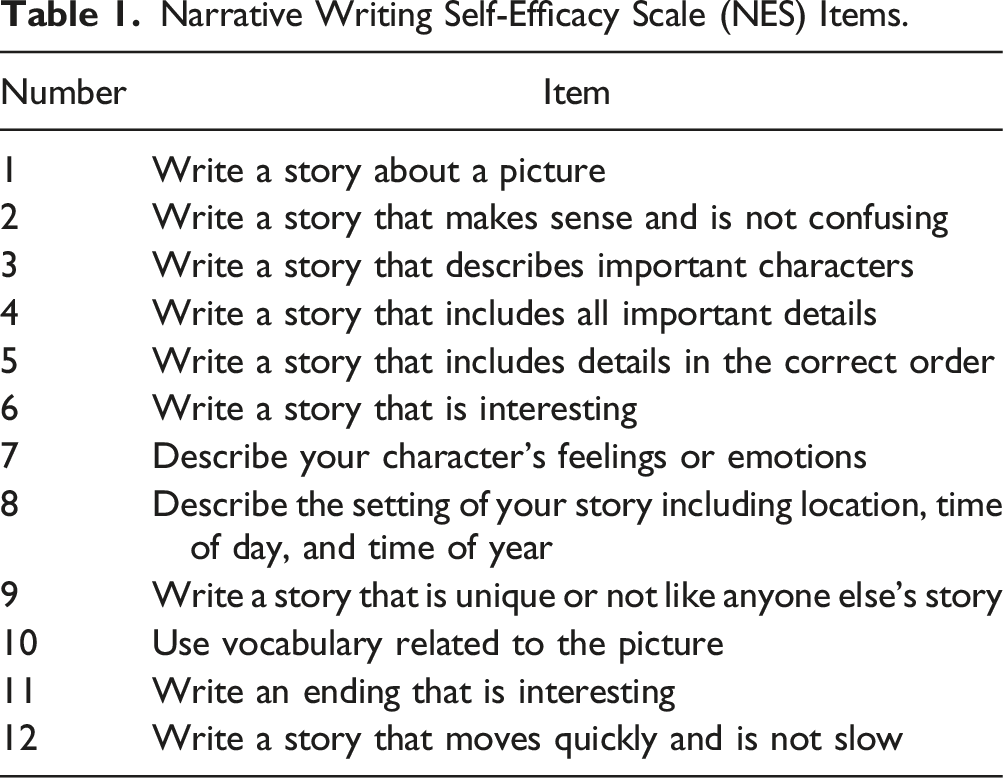
To assess the self-efficacy of writing a narrative (story) using a picture prompt, the first author created the NES. This scale is designed to measure student self-efficacy to write a story after being presented with a picture prompt. Like the SES, all items are presented positively. Item content was determined by reviewing the TOWL-4 scoring criteria for subtest 7 (Story Composition). The scoring form includes 11 items addressing various skills including writing style, use of story vocabulary, and the story beginning and ending. Because Pajares (2003) noted self-efficacy measures should closely correspond to how student performance will be assessed, the same criteria used to assess participants’ narrative writing ability (i.e., content of the TOWL-4) was used as the basis for the NES.
Schunk and colleagues (2014) echoed Pajares and noted students should be provided sample tasks before they rate their confidence levels for completing that specific task. Because of this, an integral component of the NES was to show a sample picture for students to use while they completed the scale. For this study, the sample picture used during the TOWL-4 administration served as the sample picture for the NES, so students could authentically rate their self-efficacy about this specific task. Moreover, it is recommended that instruments measuring self-efficacy should be administered in “as close temporal proximity as possible” (p. 161; Pajares & Valiante, 2006; Pajares, 2003) to the actual task. Therefore, this scale was administered immediately before the TOWL-4 administration.
Narrative Writing Self-Efficacy Scale (NES) Items.
The TOWL-4 is a norm-referenced assessment that measures writing achievement, is appropriate for students aged 9-0 to 17-11, and can be administered individually or in small groups. Average administration time is reported to be 90 minutes. The TOWL-4 is considered generally valid and reliable; internal consistency, a =.71 to .97; alternate form, r = .55 to .96; test–retest, r = .70 to .99, and construct validity, r = .19 to .60 (Hammill & Larsen, 2009). The TOWL-4 estimates a student’s writing ability through the use of contrived and spontaneous formats. Contrived Writing requires students to complete subtests that utilize traditional formats, while spontaneous writing requires students to complete compositions. Contrived Writing focuses on evaluating the smallest units of writing (e.g., spelling, punctuation) and requires students to complete a set of predetermined concrete items. Contrived Writing subtests include Vocabulary, Spelling, Punctuation, Logical Sentences, and Sentence Combining. Spontaneous Writing measures the student’s functional writing ability by evaluating writing samples. Measures of Spontaneous Writing include the Contextual Conventions and Story Composition subtests.
Procedures
Members of a research team (trained professors and doctoral students in education and school psychology) administered the NES, SES, and TOWL-4 Form A to participants using a script that was developed by the researchers to ensure standardized administration. Administration occurred in small groups of students (ranging from 8 to 15). At least one research team member was present at each session, although most sessions included a minimum of two team members. All scales were read aloud to participants. Students were allowed to move ahead of the administrator, but were asked to not move to another scale before hearing the directions. All scales were color-coded to aid in administration.
The order of administration of the scales was consistent across all administration sessions. Because completion of the TOWL-4 could have impacted (either positively or negatively) student self-perceptions on the NES and SES, the TOWL-4 Form A was administered last in order to curb any possible biased perceptions of ability that students may have experienced after completing a writing achievement assessment. Moreover, the directions for the NES included the sample picture used during the TOWL-4 administration (per the TOWL-4 manual); therefore, the NES logically was administered immediately before the TOWL-4. The TOWL-4 was administered according to directions in the manual. Total administration time was about 120 minutes for each session with a short break midway throughout each session.
After administration, assessments were scored. Researchers assessed scoring fidelity for the TOWL-4 Form A. All Form As were scored by two of the team members; thus, all raw, scale, and composite scores were evaluated twice. Each researcher scored half of the assessments. Then, the researchers swapped protocols and scored the remaining half. The researchers reached 100% interrater agreement of scores before entering data into a database. Scores from all dependent variables and demographic information were entered into a database. Data from the motivation scales were entered by two of the team members working together to ensure accuracy. Data from the TOWL-4 were spot checked by a team member to eliminate data entry errors. Participants were assigned a code to protect confidentiality.
Data Analysis Methods
Descriptive (e.g., mean, range, standard deviation) and reliability statistics were calculated to determine the psychometric properties of the two writing self-efficacy measures. A correlational research design was utilized to examine the relations among variables (Gall, et al., 2007; Thompson et al., 2005).
Internal consistency analyses (Cronbach’s alpha and Spearman–Brown’s coefficient, i.e., split half) were conducted for each motivational scale (NES and SES). Even and odd numbered items were utilized for the split half analyses. The overall Cronbach’s alpha for the NES was .92 and the Spearman–Brown coefficient (of equal length) was .97. The overall Cronbach’s alpha for the SES was .88 and the Spearman–Brown coefficient (of unequal length) was .91. All coefficients were greater than .70, which is deemed acceptable for evidence of internal consistency (Morrow & Skolits, 2011).
Correlational analyses (Pearson correlation) were conducted to examine the relation between writing achievement and (1) narrative writing self-efficacy and (2) writing skills self-efficacy. An average score for both the NES and SES was created by adding the numerical response for each item and dividing by the number of items. Thus, scores on the NES and SES could range from 0 to 100.
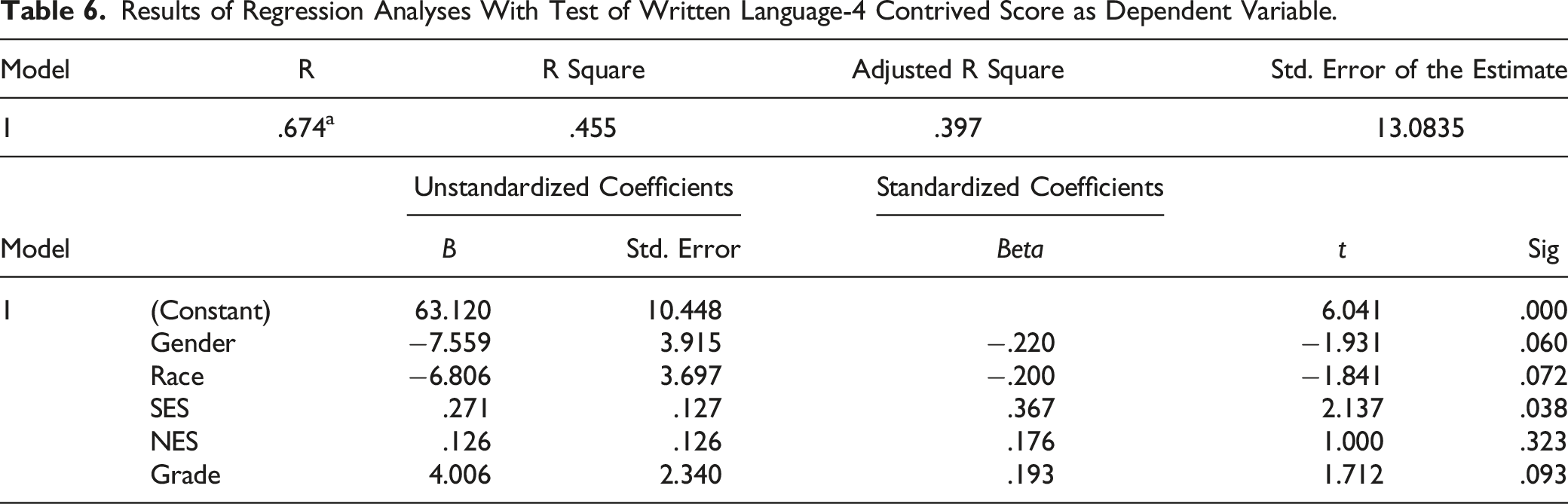
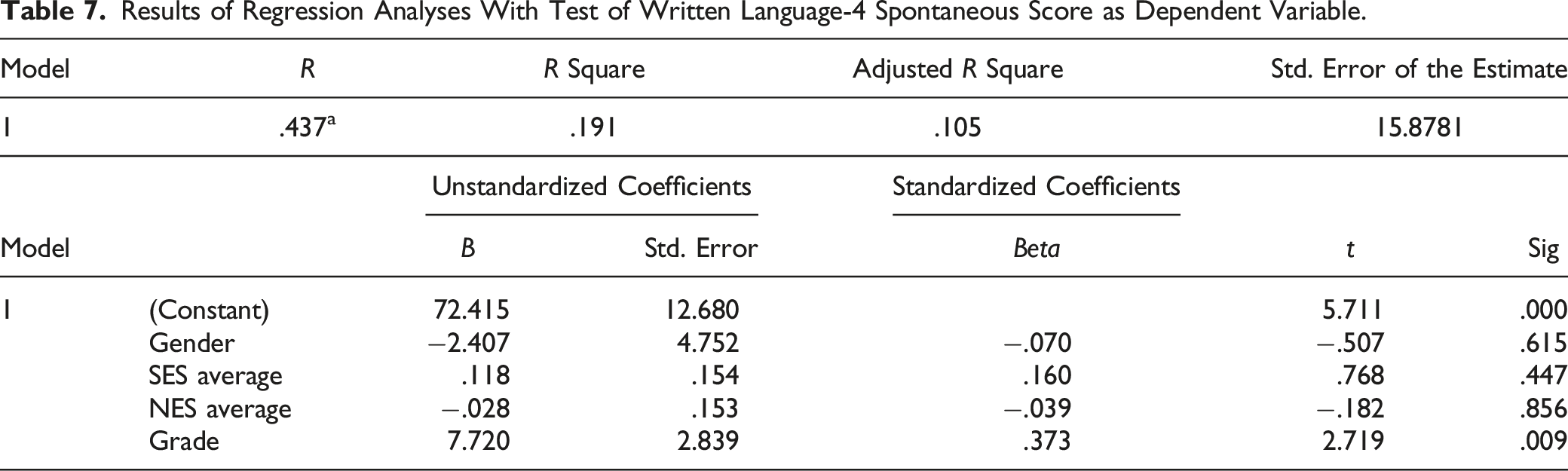
The relations between narrative writing self-efficacy (using the NES) and the Overall and Spontaneous Writing achievement were calculated to determine significance and nature of the relations between these variables. Additionally, the relations between writing skills self-efficacy (using the SES) and Overall and Contrived Writing achievement of the TOWL-4 were examined. To further examine the relation between each motivational scale and the TOWL-4 composites, the researchers analyzed the results by age and gender again via Pearson correlational analyses. Finally, because some researchers have asserted that differences based on demographic variables (e.g., gender) might be mitigated by achievement levels, a series of multiple regression analyses were conducted to predict writing achievement based on gender, grade, race, and writing self-efficacy.
Findings
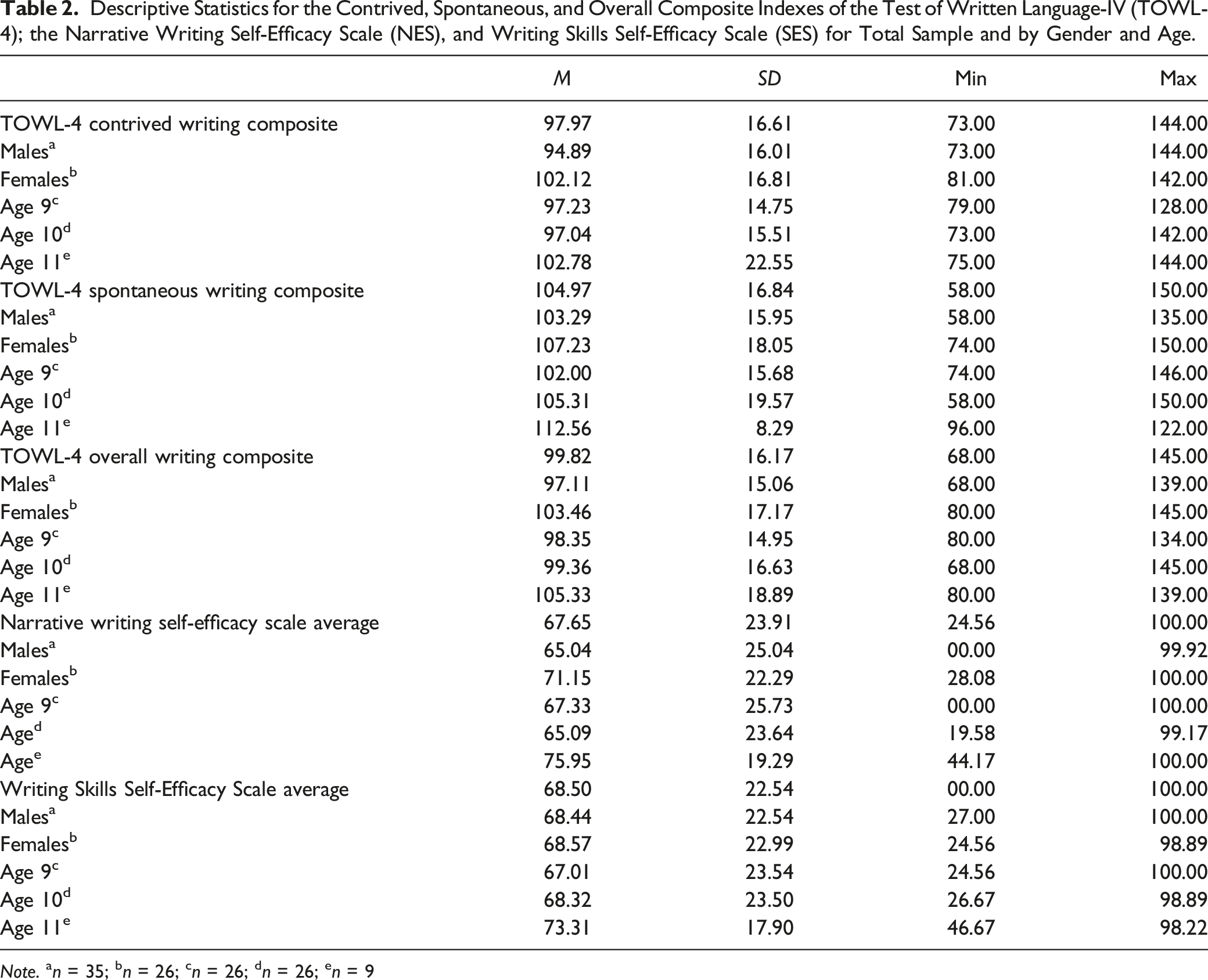
Descriptive Statistics for the Contrived, Spontaneous, and Overall Composite Indexes of the Test of Written Language-IV (TOWL-4); the Narrative Writing Self-Efficacy Scale (NES), and Writing Skills Self-Efficacy Scale (SES) for Total Sample and by Gender and Age.
Note. an = 35; bn = 26; cn = 26; dn = 26; en = 9
The reported p values for all correlational analyses are two-tailed. Interpretation of the magnitude or size of each relation was determined based on Cohen (1992 and 1988) and Hopkins (2002); correlational coefficients of .10 are small, .30 are medium, and .50 and higher are large per Cohen. Hopkins (2002) expanded Cohen’s work, suggesting a correlational coefficient of .10 (small), .30 (moderate), .50 (large), .70 (very large), and .90 (nearly perfect).
Relation between Motivational Scales and Writing Achievement
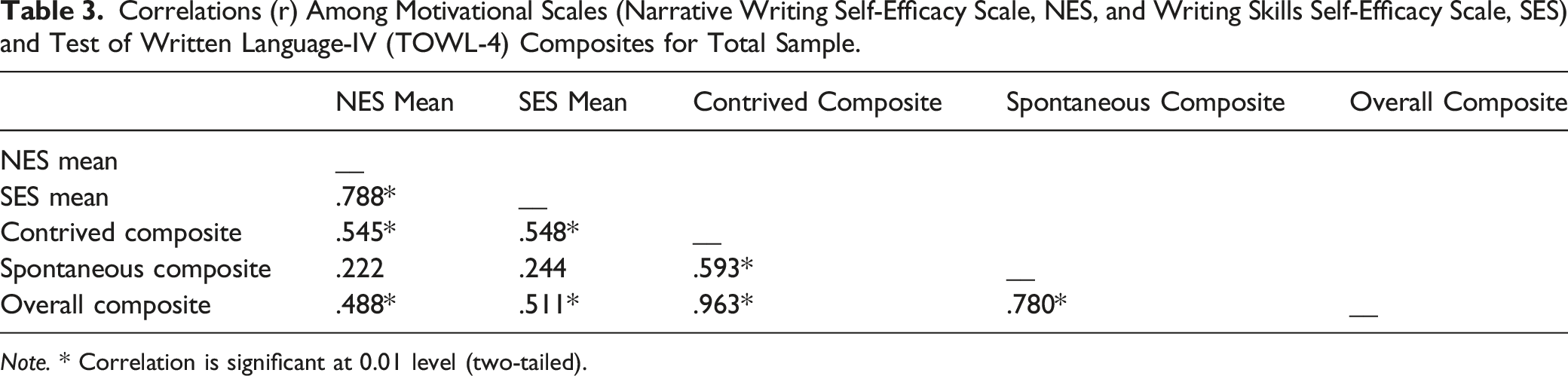
Correlations (r) Among Motivational Scales (Narrative Writing Self-Efficacy Scale, NES, and Writing Skills Self-Efficacy Scale, SES) and Test of Written Language-IV (TOWL-4) Composites for Total Sample.
Note. * Correlation is significant at 0.01 level (two-tailed).
Results indicate a significant large positive correlation, r(59) = .511, p < .000, between the SES and TOWL-4 Overall Writing composite index. Also, results indicate a significant large positive correlation, r(59) = .548, p < .001, between the SES and the TOWL-4 Contrived Writing. Results indicate that as students’ self-efficacy regarding writing skills increases, general writing achievement and writing skills also increase moderately.
Relations of Motivational Scales and Writing Achievement as a Function of Gender and Age
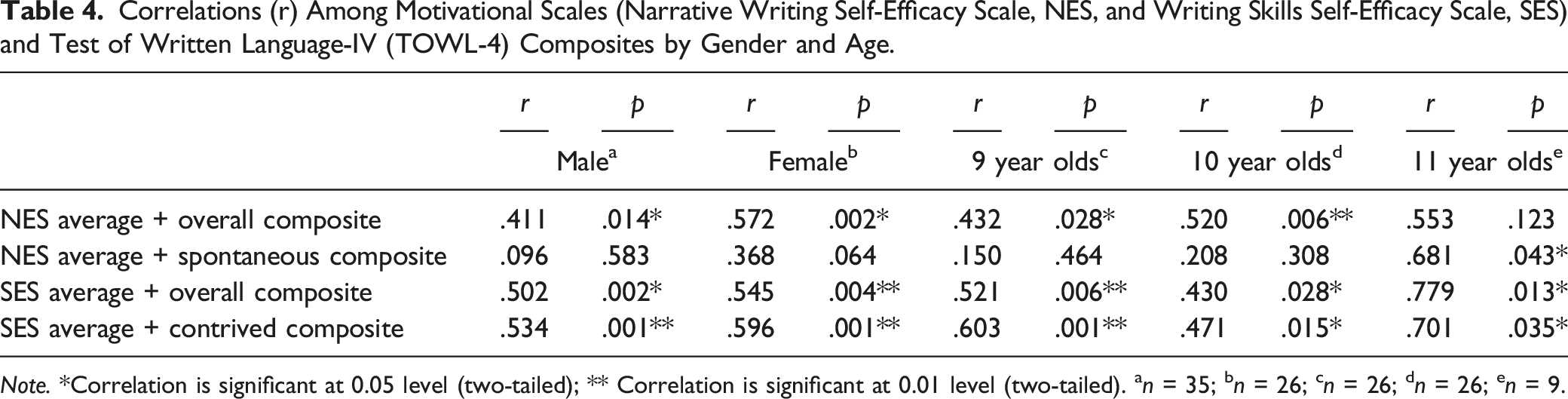
Pearson correlations were calculated to examine relations between the NES and TOWL-4 Overall Writing composite by gender. Results indicate there is a significant large positive correlation between these two variables for females (n = 26), r(24) = .572, p = .002, as well as a significant moderate positive correlation for males (n = 35), r(33) = .411, p = .014. However, results indicate a non-significant moderate positive correlation between the NES and the TOWL-4 Spontaneous composite for females, r(24) = .368, p = .064, as well as a non-significant very small positive correlation for males, r(33) = .096, p = .583.
In contrast, results indicate a significant large positive correlation between the SES and the Overall Composite of the TOWL-4 for females, r(24) = .545, p = .004, as well as a significant large positive correlation for males, r(33) = .502, p = .002. Additionally, results indicate a significant large positive correlation between the SES and the Contrived TOWL-4 Composite for females, r(24) = .596, p = .001, as well as a significant large positive correlation for males, r(33) = .534, p = .001.
Correlations (r) Among Motivational Scales (Narrative Writing Self-Efficacy Scale, NES, and Writing Skills Self-Efficacy Scale, SES) and Test of Written Language-IV (TOWL-4) Composites by Gender and Age.
Note. *Correlation is significant at 0.05 level (two-tailed); ** Correlation is significant at 0.01 level (two-tailed). an = 35; bn = 26; cn = 26; dn = 26; en = 9.
In previous literature, researchers have generally found that elementary students have difficulty accurately predicting their own writing achievement, whereas older students (e.g., middle and high school-aged) seem to be more skilled in judging their own abilities. For this study, the researchers examined the potential relations between self-efficacy scores and age, and achievement scores and age. This was to determine if the participants in this study generally had similar results as previous studies. These results should be viewed with caution, however, because the sample sizes of this study and the different ages (e.g., 9, 10, 11) were small.
A Pearson correlation was conducted to examine the relations between the NES and TOWL-4 Overall composite by age. Results indicate a significant moderate positive correlation between these two variables for 9 year olds (n = 26), r(24) = .432, p = .028, as well as a significant large positive correlation for 10 year olds (n = 26), r(24) = .520, p = .006. However, the relation for 11 year olds is non-significant (n = 9), r(7) = .553, p = .123. Further, results indicate a non-significant small positive correlation between the NES and the TOWL-4 Spontaneous composite for 9 year olds, r(24) = .150, p = .464, as well as a non-significant small positive correlation for 10 year olds, r(24) = .208, p = .308. However, a significant positive large correlation exists for 11 year olds, r(7) = .681, p = .043.
Results indicate a significant large positive correlation between the SES and the Overall Writing composite for 9 year olds, r(24) = .521, p = .006, a significant moderate positive correlation for 10 year olds, r(24) = .430, p = .028, and a significant very large positive correlation exists for 11 year olds, r(7) = .779, p = .013. Additionally, results suggest a significant large positive correlation between the SES and the Contrived Writing composite for 9 year olds, r(24) = .603, p = .001, as well as a significant moderate positive correlation for 10 year olds, r(24) = .473, p = .015. Additionally, a significant very large positive correlation exists for 11 year olds, r(7) = .701, p = .035.
Results of Regression Analyses With Test of Written Language-4 Overall Score as Dependent Variable.
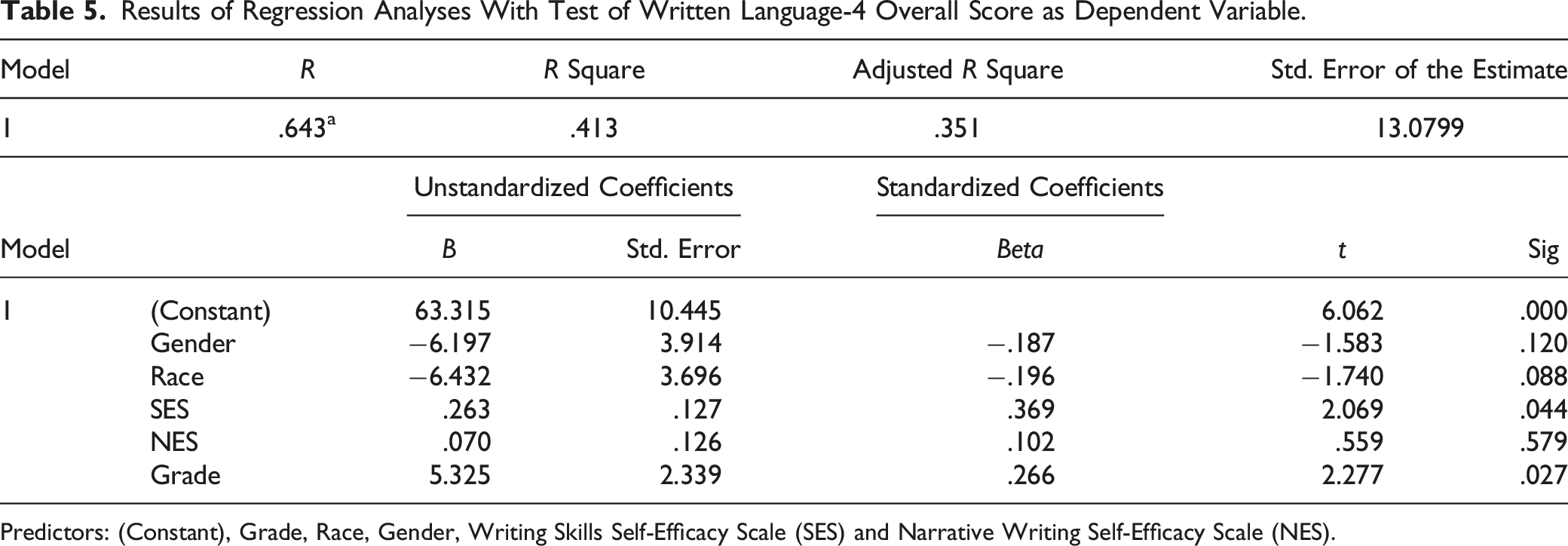
Predictors: (Constant), Grade, Race, Gender, Writing Skills Self-Efficacy Scale (SES) and Narrative Writing Self-Efficacy Scale (NES).
Results of Regression Analyses With Test of Written Language-4 Contrived Score as Dependent Variable.
Results of Regression Analyses With Test of Written Language-4 Spontaneous Score as Dependent Variable.
In summary, the relations among the self-efficacy scales and the composites of the TOWL-4 by age are mixed. The relations between NES average and the Overall Writing composite are significant for 9 and 10 year olds, but not for 11 year olds. The relation between the NES and the Spontaneous Writing composite is significant only for 11 year olds (not for 9 or 10 year olds). Additionally, the relations between the SES and the Overall Writing composite are significant for all ages. And, the relations between the SES and Contrived Writing composite are also significant for all ages.
Discussion
The goal of this study was to examine the writing achievement and two aspects of writing motivation of elementary-aged students. Specifically, the purpose was to examine (1) the relation between narrative writing self-efficacy and achievement, (2) the relation between writing skills self-efficacy and achievement, and (3) the relations among achievement and motivational variables as a function of gender and age. Broadly, a significant correlation exists between narrative writing self-efficacy and global writing achievement, as well as between writing skills self-efficacy and writing achievement (both globally and specifically involving conventions and mechanics). The relations among these variables for males and females are similar but an age difference emerged. For 11 year olds, narrative writing self-efficacy is related to spontaneous (or narrative) writing but not to writing overall; the pattern is reversed for 9 and 10 year olds.
Because the TOWL-4 Spontaneous Writing composite mean for this sample is seven points higher (about half a standard deviation) than the Contrived Writing composite mean for this sample, two independent samples t-tests were conducted to examine possible differences between scores from this sample and scores from the norm sample. Significant differences were not found for the Contrived Writing composite (M = 97.97, SD = 16.61), t(60) = −.956, p = .343. However, significant differences were found for the Spontaneous Writing composite (M = 104.97, SD = 16.84), t(60) = 2.303, p = .025. Further, a paired samples t-test was conducted to determine differences between these two composites for study participants. Results indicate a significant difference, t(60) = −3.620, p = .001. Interestingly, the means of both self-efficacy scales were similar (NES = 67.65; SES = 68.50) suggesting that nine- and 10-year-old students view their capabilities related to story writing and writing skills similarly though the means of the corresponding TOWL-4 composite indexes were not similar.
It is somewhat surprising the Spontaneous Writing composite [consisting of two subtests (Contextual Conventions and Story Composition)] and narrative self-efficacy are not significantly related for this sample as a whole as the NES was developed based on the story writing rubric used to score part of the TOWL-4. Narrative writing self-efficacy and overall writing achievement are significantly positively related, suggesting as students’ writing achievement increases, so does their self-efficacy about story writing. Perhaps, this finding indicates students are more aware of their global writing capabilities and do not differentiate narrative writing versus mechanics. Overall Writing includes both conventional and story writing skills. So, broadly, it seems, students’ writing self-efficacy aligns with their writing performance. Yet, the 9 and 10 year olds’ self-efficacy for narrative writing (i.e., including story elements) does not align highly with their narrative writing performance.
Results indicate writing skill self-efficacy and overall writing achievement are significantly positively related, as are (basic) writing skills self-efficacy and basic writing skills (TOWL-4 Contrived Writing composite). This suggests as students’ self-efficacy related to writing skills (e.g., punctuation, capitalization) increases, so do their writing achievement scores. Moreover, results indicate that self-efficacy for writing skills aligns with students’ basic writing skills.
Neither the NES nor the SES address how students formed efficacy beliefs; that is, these scales do not address if students formed these beliefs based on outcome or efficacy expectations (or a combination of both). Troia et al. (2012) indicated oftentimes a student may use former performances to create self-efficacy judgments (efficacy expectations). Perhaps, participants used factors such as vicarious experiences, feedback (from students or teacher), or affect to make these judgments (Bandura, 1997; Klassen & Welton, 2009; Schunk et al., 2014). The two self-efficacy scales used in this study do not address why or how students made self-efficacy judgments, as they only required students to write a number between 0 and 100 for each item. Students may have, also, used outcome expectations to form efficacy beliefs. These are the anticipated consequences (e.g., reward, approval) for success or failure (Troia et al., 2012; Schunk & Pajares, 2001).
Researchers do not know how students judge good writing. Both of the self-efficacy scales asked students to indicate how sure they could perform each task well. But each student may have a different understanding of what doing well means. Perhaps students have experienced an emphasis on writing mechanics in school, so they value those skills more than the ability to write a story based on a picture prompt. Also, previous research has not indicated the optimal age to begin assessing efficacy beliefs of students. Troia et al., (2012) suggested students’ beliefs become increasingly more accurate with age but a specific age or age range has not been identified.
One of the purposes of this study was to measure writing self-efficacy for a specific task, i.e., narrative writing, which has not been explored in prior studies. Troia et al. (2012) noted self-efficacy is task specific and Hidi and colleagues (2002) indicated self-efficacy is domain specific for sixth graders. Further research is needed for self-efficacy related to each specific type of writing (e.g., narrative, informational, argumentative). These results very preliminarily support the observation that self-efficacy gets more domain specific as children mature, given the significance of the 11 year old’s relation between narrative writing self-efficacy and narrative writing.
Limitations and Delimitations
As with most educational research, several limitations apply, including the research design. Correlational research is not experimental and can only provide inferences about the relations among variables. Results are less robust than findings from a cause and effect study yet can provide a platform for future research. Because the TOWL-4 was administered last to curb any possible biases influencing the motivational scales, a counter-balanced administration was not possible, though generally counter-balancing is preferred to negate order effects. Though the TOWL-4 is considered reliable and valid, it should be noted that this test is just a snapshot of a student’s writing ability. Requiring only one writing sample may be considered a limitation. The sample size (though minimally adequate, Gall et al., 2007) may also be another limitation, particularly when considering relations by age and gender. More research is needed with additional participants to gain a clearer understanding of the writing self-efficacy of elementary students who attend Title 1 schools.
Furthermore, researchers only examined one type of achievement motivation. The other three factors identified by Troia et al. (2012) (interest, goal orientation, and outcome attributions) were not examined. Future research is needed to examine achievement motivation more holistically.
Additionally, participants were from selected Boys and Girls Clubs and may not represent all students. The location and setting of the administration of these scales may have also impacted results. Participants were enrolled in a summer program and not in a traditional school setting.
Finally, although self-reporting is often used in motivational research (Pajares & Valiante, 2006; Pajares, et al., 1999), it poses some limitations. Students must understand several ideas: (1) the scale for which they rank their performances (e.g., 0 to 100), (2) the meaning of items on the scale, and (3) how to determine good writing. Students, perhaps, may have differing views of good writing.
Furthermore, the NES was developed for the purpose of this study and has not been validated. The researchers conducted a pilot study to inform the development of this scale, but it was not distributed and used widely before the implementation of this study. However, the results of the relations between the SES and NES are important to note. The SES has high coefficient alphas for students in elementary school (e.g., 0.85 for students third -fifth graders; Pajares, 2007). The mean SES and mean NES scores had a moderate positive relation (r = .788) in this study, suggesting the NES scores are related. Although further research is needed, it is a positive contribution to the field as little domain-specific measures exist in the area of writing self-efficacy.
Implications for Practice
Because writing is a complex task (Torrance & Galbraith, 2006), it is often viewed as not appealing (Boscolo & Gelati, 2013). Students must be motivated in various ways when completing writing activities or assignments. For example, during the revising stage, a student must check spelling, grammar, flow, organization, focus, and other major components of their drafts. If students do not feel efficacious about their spelling ability, the student may not even attempt revisions in this area. They may give up all together or skip this important revision and focus on other revisions they feel confident in completing. Students who do feel efficaciously about spelling, on the other hand, may revise spelling without hesitation and understand its importance in their writing. Because writing often contains so many steps and components (and students are producing instead of consuming), it may be difficult to maintain motivation throughout the entire process.
Bruning and Horn (2000) outlined several factors for teachers to consider in order to develop writing motivation. These factors seem similar to the recommendations for effective writing instruction in classrooms. According to these researchers, teachers should create an inviting writing environment where everyone is considered a writer and the relevancy of writing tasks are discussed with students. Many different genres should be included throughout the school year. Because self-efficacy tends to be domain-specific, a student may feel efficaciously about writing a personal narrative but not feel efficaciously about writing argumentative papers. Bruning and Horn (2000) encourage teachers to give students some tasks that will result in student success. Because writing performance and self-efficacy are related, it is important for teachers to consider the genre or type of writing that students feel the most confident completing when selecting writing assignments.
In addition to exposure to different genres, teachers should provide feedback to students. This is important for many reasons, but, regarding motivation, it may help students develop adaptive attributions for success and failure. Perhaps a student did not score as high as expected on a piece of writing and the feedback provided by the teacher (or peer) indicated the student made careless mistakes but can improve by using specific proofing strategies. Feedback may impact a student’s self-efficacy toward the specific writing tasks.
Self-regulation is often an integral component of motivation. Writing is often laborious and full of complicated steps. Because of this, teachers should chunk information into manageable parts (Bruning & Horn, 2000). This will help students be motivated to achieve short-term goals instead of becoming overwhelmed with the entire writing task. It can also help students who may be good at some steps but not so good at others. For example, a student may excel at brainstorming and have little difficulty maintaining motivation to complete that small chunk. However, the student finds the revision step difficult. Chunking each step will help ameliorate (or reduce) potential loss of motivation at the onset of the assignment. At the elementary level, perhaps teachers could ask students to only brainstorm for the first class period introducing a writing task. The next day, teachers can ask students to write a draft of their work using the brainstorming activity. The third day, teachers could ask students to revise their work, and the fourth day students could publish their work. This could potentially help students not become overwhelmed by the entire writing process in one class period or one day.
Because writing is often viewed as unappealing to students, it is imperative teachers provide high quality instruction like designing a positive writing environment, using explicit instruction to teach strategies for the different genres, providing feedback, and chunking the content. These strategies will elicit motivation and engage students as the writing task will seem more manageable and less daunting. Additionally, providing feedback immediately will help students regulate as they will not have to wait until the end of the writing task to receive a grade and corresponding feedback.
Moreover, writing self-efficacy can help predict strategy use (Hidi & Boscolo, 2006). Students who feel highly efficacious use strategies and can adapt these strategies to fit the specific criteria of a task. Students who do not feel as efficacious do not do either. It seems students who feel highly efficacious also automatically self-regulate and self-monitor while completing tasks (Hidi & Boscolo, 2006). Thus, instruction related to self-regulated strategy development (Harris et al., 2008) or other self-regulation strategies may be needed for students with low self-efficacy. These strategies can help students scaffold the writing tasks into manageable chunks and require students to monitor their progress throughout the writing process.
Conclusion
The purpose of this study was to analyze the relations and group differences (based on gender and age) among writing motivation variables and writing achievement. Results indicate a significant relation between narrative writing self-efficacy and writing achievement (p < .01), as well as a significant relation between writing skills self-efficacy and writing achievement (p < .01). Age and gender differences are mixed. Specifically, results establish links between writing self-efficacy and writing achievement, though not specifically for narrative writing self-efficacy and narrative writing, except for the older participants (age 11). Results yield preliminary support for the reliability of the NES, but less so for its validity. Thus, it needs to be validated in future studies and the relations between various types of writing self-efficacy and writing achievement should be further explored across age/grade levels and by gender.
Results from this study add to current literature, expanding the work related to writing self-efficacy, by creating a specific measure for this type or genre of writing. This scale needs further validation in future studies, but it provides researchers with a basis for further developing this line of inquiry.
Writing motivation is an important consideration for teachers. Four factors influence this type of motivation including interest, goal orientations, outcome attributions, and self-efficacy. Because all four factors are intertwined and somewhat related, the nuances of these constructs are often difficult to measure discretely. Given the reciprocal relation between motivation and achievement and the growing body of work establishing the importance of self-efficacy, furthering our understanding of writing motivation has potential for improving overall writing achievement in the United State and addressing the writing achievement gap denoted in the NAEP.
Footnotes
Declaration of Conflicting Interests
The author(s) declared no potential conflicts of interest with respect to the research, authorship, and/or publication of this article.
Funding
The author(s) received no financial support for the research, authorship, and/or publication of this article.
