




Abstract
This study examined how veteran social engagement predicted post-secondary school attainment. Nearly 10,000 post-9/11 veterans, who separated from military service in 2016, were surveyed on the programs/services they used over 4 years following separation. More than half of veterans had obtained a degree within 4 years of separation. A higher proportion of veterans of color and female veterans reported attending only some higher education than White non-Hispanic male veterans. Positive predictors of educational attainment included participating in veterans’ centers and veteran-student organizations, while negative predictors included financial and mental health problems. Implications for veteran-serving programs of post-secondary institutions are discussed.
Introduction
Approximately 200,000 veterans transition out of the military each year, and the number of post-9/11 veterans is projected to grow to more than four million by the end of 2024 (National Center for Veterans Analysis and Statistics, 2016). Post-9/11 veterans are those who were on active duty since September 11, 2001, and served the Global War on Terror (GWOT). Post-9/11 veterans are notable for several reasons. The GWOT was the first war to extensively use National Guard and Reserves in combat operations, and veterans from this group report high rates of traumatic exposure and other mental health problems. Post-9/11 veterans were exposed to a high pace of military operations with repeated and long combat deployments. They also have the highest rate of disability in military history. In addition, post-9/11 veterans are more diverse than any previous veteran groups. Veterans of color comprised 25.2% of the veterans in 2020, and this proportion is projected to increase to 35.3% by 2040. The total percent of women veterans was 9% in 2018 and will likely increase to 17% of veterans by 2040 (National Center for Veterans Analysis and Statistics, 2019). As a result of these various factors, post-9/11 veterans are thought to be at risk for difficult military-to-civilian transitions (Castro et al., 2014; Elnitsky et al., 2017; Institute of Medicine, 2010).
While most post-9/11 veterans do not experience ongoing reintegration problems and successfully transition into civilian communities (Tsai et al., 2015; Vogt et al., 2018), a significant minority report difficulty coping with various chronic stressors (Mobbs & Bonanno, 2018). A commonly reported reintegration stressor described by post-9/11 veterans is obtaining further education (Castro et al., 2014; Sayer et al., 2010).
The importance of educational attainment for post-9/11 veterans cannot be understated given the associated benefits. More highly educated people obtain better jobs and have higher incomes than those with less education (Mirowsky & Ross, 2003). The importance of obtaining more education is intensifying due to the “new global economy” (Manyika et al., 2017) given the advances in information technologies, e-commerce, start-up companies, and transformations in the production and transportation of goods. Education is also positively associated with more efficient personal habits, better residential choices, and broader occupational opportunities (Vila, 2000). Moreover, highly educated individuals tend to make better health choices and use medical information and resources more than those with less education (Cutler & Lleras-Muney, 2006).
There are several reasons why pursuing further education can be challenging for veterans. Compared to those who enter college from high school, those who enter the military after high school are more likely to come from disadvantaged backgrounds where educational attainment is not as highly understood or valued (Bozick & DeLuca, 2011). Veterans from the enlisted ranks, the vast majority of the Armed Forces, are more likely to have demonstrated lower academic performance in high school and are more likely to have parents who did not attend college (Bozick & DeLuca, 2011). Thus, like other first-generation college students, these veterans are more likely to be academically unprepared for college (Terenzini et al., 1996), complete fewer classes, obtain lower grades (Pascarella et al., 2004), and are less likely to graduate (Ishitani, 2003).
From a psychological perspective, veterans can struggle with mental health problems, such as post-traumatic stress disorder (PTSD), depression, and anxiety (Rudd et al., 2011). Students with mental health problems are at an increased risk for poorer academic performance (DiRamio et al., 2008; Megivern et al., 2003) and academic non-completion (DeBerard et al., 2004). In addition, 43% of post-9/11 veterans have a service-connected disability, and 39% have a disability rating of 70% or more (Vespa, 2020). Compared to their civilian peers, veterans are more likely to have family responsibilities and are more likely to work and attend school concurrently (Osam et al., 2016). Veterans often report difficulties trying to balance academic requirements with other responsibilities and manage their service-connected health challenges, such as chronic pain and traumatic brain injuries (Klocek, 2008; Steele et al., 2010).
Given the challenges and equity issues that some post-9/11 veterans face in pursuing further education, there is a substantial need to provide educational supports to these individuals (Farmer et al., 2011; Institute of Medicine, 2010; Perkins et al., 2020; Sayer et al., 2010; Spelman et al., 2012). Equity in education refers to factors that relate to retention and completion at the university level (Wanti et al., 2022). Equity factors include student diversity; inclusion and fairness; and the support systems and resources available to strengthen the capacity of the university to support all students succeed (Ainscow, 2016). Post-9/11 veterans consistently report that educational assistance is important. A large representative sample of post-9/11 veterans ranked the need for educational assistance as one of their top priorities, and 25% reported using at least one program to assist them with their educational attainment within the first 90 days of military separation (Perkins et al., 2020). Of those using educational benefits, slightly more than one-third were using the Post-9/11 GI Bill. Approximately 16% were using other educational benefits (e.g., Montgomery GI Bill, Yellow Ribbon Reintegration Program, and Veterans’ Educational Assistance Program). Clearly, post-9/11 veterans are concerned about their education, and many attempt further schooling.
Theoretical Model
There are barriers and inducements to pursuing post-secondary education. Sociological theories of school completion (Spady, 1970; 1971; Tinto, 1975; 1987; 1993) posit that the pursuit and completion of post-secondary education are largely determined by the extent to which students believe they are connected to others at the institution. These theories, known as the student integration model (Cabrera et al., 1993), propose that leaving school prematurely is related to a series of events over time. Pre-college factors, such as family background, individual attributes, and prior educational experience, influence the initial commitment of students to the institution in which they enroll and to the overall goal of education completion. This initial commitment to schooling is influenced by the extent to which the student feels integrated into the institution academically and socially.
The theory predicts that students who do not persist through school, no longer value their original goal of continuing their education and their initial commitment, and both factors are influenced by social connection. Social integration occurs when a student believes that he or she is part of the school and connects with other students (Rubin et al., 2019). Connections are typically built by socializing with other students; participating in university life (e.g., joining clubs, intramural activities); and connecting with academic mentors (e.g., professors, advisors) (Jorgenson et al., 2018). Social integration is associated with numerous benefits, including greater college life satisfaction, stronger connections to the school, and better academic integration and performance (Billups, 2008). However, questions have been raised about the extent to which those in the military become socially integrated into civilian communities, including higher education institutions.
Applying Sociological Theory to Student Veterans
From a sociological perspective, there is a wide and growing divide between the civilian and military population (Carter et al., 2017) characterized by a lack of familiarity with each other. Only 7% of the U.S. population are veterans, and this proportion continues to decline (U.S. Census Bureau, 2021). This lack of familiarity causes some civilians to rely on attributional errors and inaccurate, stigmatized, and unflattering media portrayals of veterans. Many media depictions present veterans as having problems with mental health (e.g., crazy, broken), substance abuse, and family life and often suggest that veterans are essentially “damaged goods” (Carter et al., 2017). Moreover, many veterans live in rural areas, are more diverse than the general population, and have been exposed to a military culture where self-sacrifice and the success of the group are paramount. Military culture is often at odds with the prevailing civilian culture where self-aggrandizement and individuality are highly valued. Thus, veterans can hold negative and distrusting views of civilians. Veterans sometimes prefer not to be identified and attempt to “blend in” with the other students (DiRamio et al., 2008). Veteran students, compared to their civilian peers, are older, more likely to be married, less dependent on parents for financial help, and more likely to have dependent children (Choy, 2002). As a result, veterans often report feelings of isolation and disconnection at educational institutions (DiRamio et al., 2008).
As stated previously, student attrition models suggest that other environmental, psychological, behavioral, experiential, and attitudinal factors are important drivers of educational completion (Bean, 1983; Cabrera et al., 1993; Eaton & Bean, 1995). Disparity factors, such as financial and mental health problems, may play a role in determining student attrition among veterans and other non-traditional students.
Based on sociological theories of educational completion, veterans connecting with others is essential to successfully obtain their post-secondary degree. Increasingly, educational institutions offer veteran-focused social supports, such as veterans’ centers, designed to cultivate robust connections with other student veterans and the institution itself. Post-secondary institutions have long realized that veteran students are different from civilian students and have developed programs, services, and specialized offices designed to support veteran students and to aid them in reaching their academic goals (Summerlot et al., 2009). Colleges and universities have made proactive attempts to create veteran-friendly campuses with integrated efforts to support veterans (Summerlot et al., 2009).
The Department of Veterans Affairs (VA), for example, developed the VetSuccess on Campus (VSOC) program to help veterans, service members, and their qualified dependents complete their education and prepare to enter the labor market. In the VSOC program, a VA Vet Center outreach coordinator is also available to provide peer-to-peer counseling and referral services through coordinated delivery of on-campus benefits assistance and counseling. This support intends to help veterans complete their education, prepare to competitively enter the labor market, obtain employment, and pursue meaningful careers. Currently, the VSOC program is available at more than 100 colleges and universities in the United States.
On many campuses, student veterans have created organizations that intend to address local issues such as housing shortages, offer opportunities for veterans to discuss military experiences, and help veterans adjust to college life (Summerlot et al., 2009). Typically, veteran-friendly campuses have a veterans affairs office and an active student veterans organization. These veteran-focused organizations have been associated with student success (Summerlot et al., 2009).
The Current Study
This study was undertaken because there are both important theoretical and empirical reasons to better understand factors that are associated with the educational success of veterans. From a theoretical standpoint, there are personal, familial, and contextual factors that determine educational success. Veterans are at risk for poorer educational outcomes; however, the mechanisms that predict post-9/11 veteran academic functioning are not well known. Knowing more about these mechanisms are critical for university, state, and federal policy makers who must make important and impactful decisions about how best to bolster educational supports for veterans. Having good data to use to make these decisions is particularly important given budgetary constraints and competing needs across universities and colleges. The current study is particularly unique because it includes a large sample of post-9/11 veterans who were followed for several years as they transitioned to civilian life.
Using a cohort repeated measures design, this study examined the following: (a) characteristics of veterans who pursued higher education; (b) characteristics of those who did complete and those who did not complete their education; and (c) the degree to which exposure to two veteran-focused educational programs was associated with educational success among post-9/11 veterans over time. The data examined in this study were from seven waves of data collection that covered approximately the first 4 years of the military-to-civilian transitions of a large sample of post-9/11 veterans. The first six waves were collected as part of The Veterans Metrics Initiative (TVMI) (Vogt et al., 2018). A sub-sample of veterans was invited to participate in the Wave 7 survey with the resulting data collected when participants had been discharged for approximately 4 years.
Based on sociological theory of educational attainment, the authors predicted that post-9/11 veterans who participated in on-campus veteran or other student groups would be more likely to complete their education compared to post-9/11 veterans who did not participate in on-campus groups. Veteran students who reported financial problems or mental health problems would be significantly less likely to complete their education compared to post-9/11 veterans who do not report these challenges.
Methods
Participants
Wave 7 Demographics.
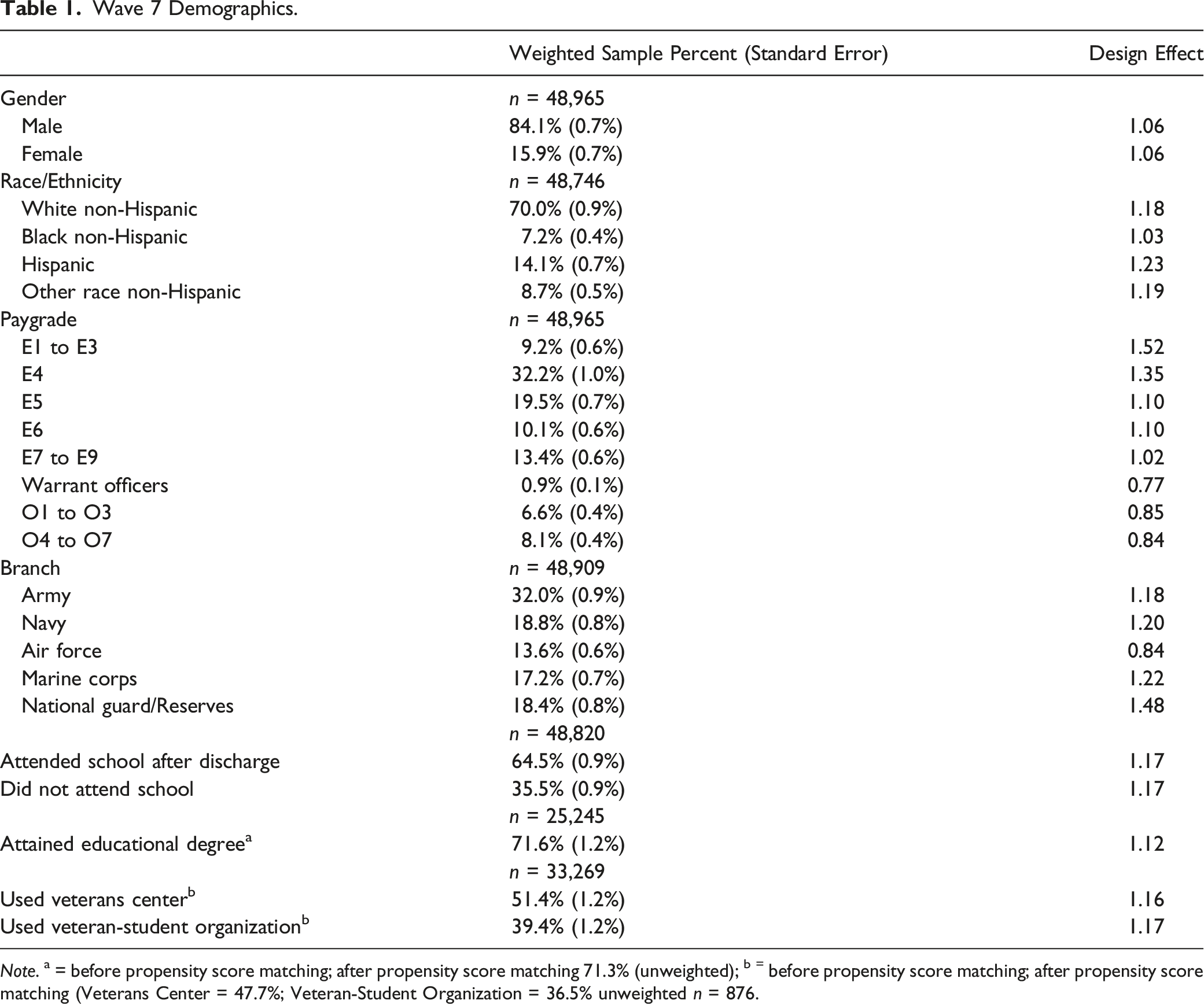
Note. a = before propensity score matching; after propensity score matching 71.3% (unweighted); b = before propensity score matching; after propensity score matching (Veterans Center = 47.7%; Veteran-Student Organization = 36.5% unweighted n = 876.
Procedures
A data-collection methodology was used to separate veterans’ personal identifying information from their survey data. Human Subjects Protections approval for the study was granted through ICF International, Inc. All study participants gave informed consent prior to starting the survey. Participants completed the survey via a web-based platform. Five additional assessments were administered in the TVMI study at approximately 6-month intervals between November 2016 and May 2019.
After TVMI data collection concluded, ICF International, Inc., asked 7404 TVMI participants for their permission to be contacted to participate in future studies. A sample of 3516 veterans volunteered to participate in additional studies. The Wave 7 survey was launched November 14, 2020, and closed January 5, 2021. A sample of 3180 veterans completed the survey (i.e., 90% participation rate).
Measures
Demographic Information
Respondents reported a variety of demographic factors such as their age, gender, race/ethnicity, paygrade (E1–E4 – junior enlisted, E5–E6 – middle enlisted, E7–E9 – senior enlisted, W1–W5 – warrant officer, O1-03 – junior officer, 04–07+ – senior officer), and military occupation (e.g., combat arms, combat support, service support).
Identification of Full- vs. Part-Time Student Status
At each wave of data collection, respondents were asked if they were a “full-time student taking 12 or more credits of coursework, including a trade or technical/vocational school” or “part-time student taking less than 12 credits of coursework (including a trade or technical/vocational school).”
Type of Degree Pursued
Respondents were asked what type of education they were pursuing: technical or vocational training, undergraduate course but not enrolled in an undergraduate program, associate’s degree, bachelor’s degree, graduate courses but not enrolled in a graduate program, master’s degree, doctorate degree, or professional degree.
Exposure to Veteran-Focused Educational Program and Services
At each wave, respondents were asked, “Over the last 3 months, how often have you participated in the following organizations at your school?” Responses were veterans’ centers and veteran-student organizations. Participation frequency was assessed using the following scale: “0 = Never,” “1 = Less than once a month,” “2 = Once or twice a month,” “3 = 3 or 4 times a month,” “4 = 2 or 3 times a week, and “5 = 4 or more times a week.” Veterans could also select, “We don’t have that.” Responses of “We don’t have that” were recoded to 0, which means “never” used. Any veteran-focused use was compared to no veteran-focused educational programs.
Outcome Measures
At each wave of data collection, respondents were asked to indicate their highest level of education attained. Specifically, in Wave 1 and Wave 7, veterans were asked, “What is the highest degree or level of education you have completed?” Responses included high school diploma/GED, post-high school vocational or technical training (excluding military training), some college credit/no degree, associate’s degree, bachelor’s degree, master’s degree, doctorate degree, or professional degree beyond a bachelor’s degree. A crosstabulation between Wave 1 and Wave 7 was coded to create a dichotomous variable for “degree attained” or “no degree attained.”
Reasons for Leaving Higher Education
For each school attended, veterans were asked, “Have you experienced any of the following changes related to your work or education/training activities?” with response options of “left school/training to pursue other activities” or “left school or training because of difficulties with grades/performance/fitting in.”
Covariates
Due to their association with educational success, respondents were asked about several covariates.
Problematic Financial Status
Household financial status was assessed using a six-item scale that assessed immediate financial needs (e.g., ability to pay for all necessary expenses each month, being contacted by a credit card company for failure to pay, concerns about losing current housing, being unable to find stable housing). The assessment of future financial needs included saving money for retirement, having at least 3 months of income set aside in case of an unexpected financial event, and having insurance coverage. In prior research, this measure of problematic financial status was found to be reliable (α = .73) (Vogt et al., 2019). Problematic financial status coding included no immediate financial needs being met and no future financial needs being met.
Mental health
Because educational success is inversely related to mental health concerns, respondents completed several mental health-screening instruments. Probable PTSD was assessed (Prins et al., 2004). The five-item version of the Primary Care PTSD Screener included a cutoff score of three or more, which indicates probable PTSD. In this study, the screener demonstrated strong internal consistency reliability (α = .88).
To assess probable depression or anxiety, veterans were asked to complete the Patient Health Questionnaire–4 (PHQ-4), and this had a cutoff score of three or more, which indicates probable depression and anxiety (Kroenke et al., 2009). In this study, the PHQ-4 demonstrated high internal consistency reliability for anxiety (a = .91) and depression (a = .89).
Data Analytic Approach
Sample Weighting for Representativeness
In survey studies, one must always consider the degree to which respondents are representative of the population of interest. A commonly used correction technique to help ensure that a sample is representative of the population is a weighting adjustment. The TVMI study was unique because demographic data (i.e., gender, paygrade, and military branch) was available for the entire population of post-9/11 veterans who left military service between July and September of 2016. Therefore, we could compare the sample demographics to the population demographics. While the Wave 1 sample was largely representative of the population, there were some discrepancies. For example, respondents who served in the Army were slightly overrepresented in the sample. Therefore, we weighted the sample data so that it matched the proportion of Army veterans from the population that transition out during that same time period.
Propensity Score Matching
In Waves 2–7, a slightly different weighting approach was used, propensity weights (Chen et al., 2015), which similarly allowed the sample to be closely matched to the population through all waves. Weighted and unweighted proportion estimates were computed using STATA svy: proportion (StataCorp, 2021). When there were differences between the unweighted and weighted estimates, these differences were analyzed for design effects (Johnson & Elliott, 1998). A design effect allows one to estimate how different the sample is from the population. A design effect of 1 indicates that there were few differences between the sample and the population on at least the observable variables. Design effects for Waves 1–7 were close to 1, meaning the sample was largely representative of the veterans who separated in 2016.
Background characteristics of those who responded to Wave 7, who pursued higher education, and who attained a degree were analyzed using weighted proportion estimates, STATA svy: proportion (StataCorp, 2021).
As noted earlier, this study employed a cohort repeated measures design. The longitudinal nature of this design and subsequent analysis involved collecting demographics, covariates, and program use data at Wave 1 to predict educational attainment and attrition at each subsequent wave of data collection. This design allowed for the identification of factors possessed by veterans who pursued higher education and completed their education and factors absent from those who did not complete a degree within 4 years of leaving the military or being deactivated. This analysis required two steps. The first step was to use propensity score matching to help control for selection bias by matching as many demographic characteristics and other covariates related to educational completion as possible. This analysis identified the sample that had the equivalent probability of participating in programs among enlisted veterans who pursued higher education (those who completed school and those who did not complete school). The second step involved using the identified sample in the outcome analyses.
As noted above, the first step involved conducting a matched propensity score analysis using the Greedy Nearest Neighbor Matching technique with a 0.1 caliper one-to-one matching (Rosenbaum & Rubin, 1985). This approach identified participants whose probability of utilizing veterans’ centers and/or veteran-student organizations was matched on the covariates, outlined above, to an individual who did not use veterans’ centers and/or veteran-student organizations. Any individuals without a match were excluded from the analysis.
Propensity scores were evaluated for their quality before and after matching by examining the overlap of box plots and the mean difference of the predicted probability estimates between the two groups. Before matching, the initial difference of the probability estimates was .05, which was close to a half a standard deviation (SD = .11). After matching, the difference between the mean propensity scores dropped to .002 (SD = .10). Moreover, the balance of each predictor was assessed by replicating the logistic regression model that predicted veterans’ center and/or veteran-student organization program utilization. There were no significant relationships on any covariates and veterans’ center and/or veteran-student organization use.
Logistic Regression
For the second step, a weighted logistic regression (Stata/SE 17.0) was used to examine the degree to which exposure to educational program components was associated with educational outcomes (i.e., school completers vs. non-completers). Including the probability estimates in the model after matching helped the researchers ensure any selection bias related to veterans’ center and/or veteran-student organization participation between groups (non-users and users) was minimized. The final matched sample consisted of 890 U.S. veterans (50% users and 50% non-users) from the overall sample of 1249 participants.
Results
Educational Attainment Reported at Wave 1
At Wave 1, 12% of senior officers (04 and higher) reported having attained a bachelor’s degree, 62% had a master’s degree, and 26% had a doctorate or a professional degree. Nearly 60% of junior officers (O1–O3) had a bachelor’s degree, 29% had a master’s degree, and 14% had a professional or doctorate degree. Clearly, veterans from the officer ranks are highly educated.
Educational Attainment Among Veterans From the Enlisted Ranks at Wave 1 (3-Months Post-Separation from the Military).
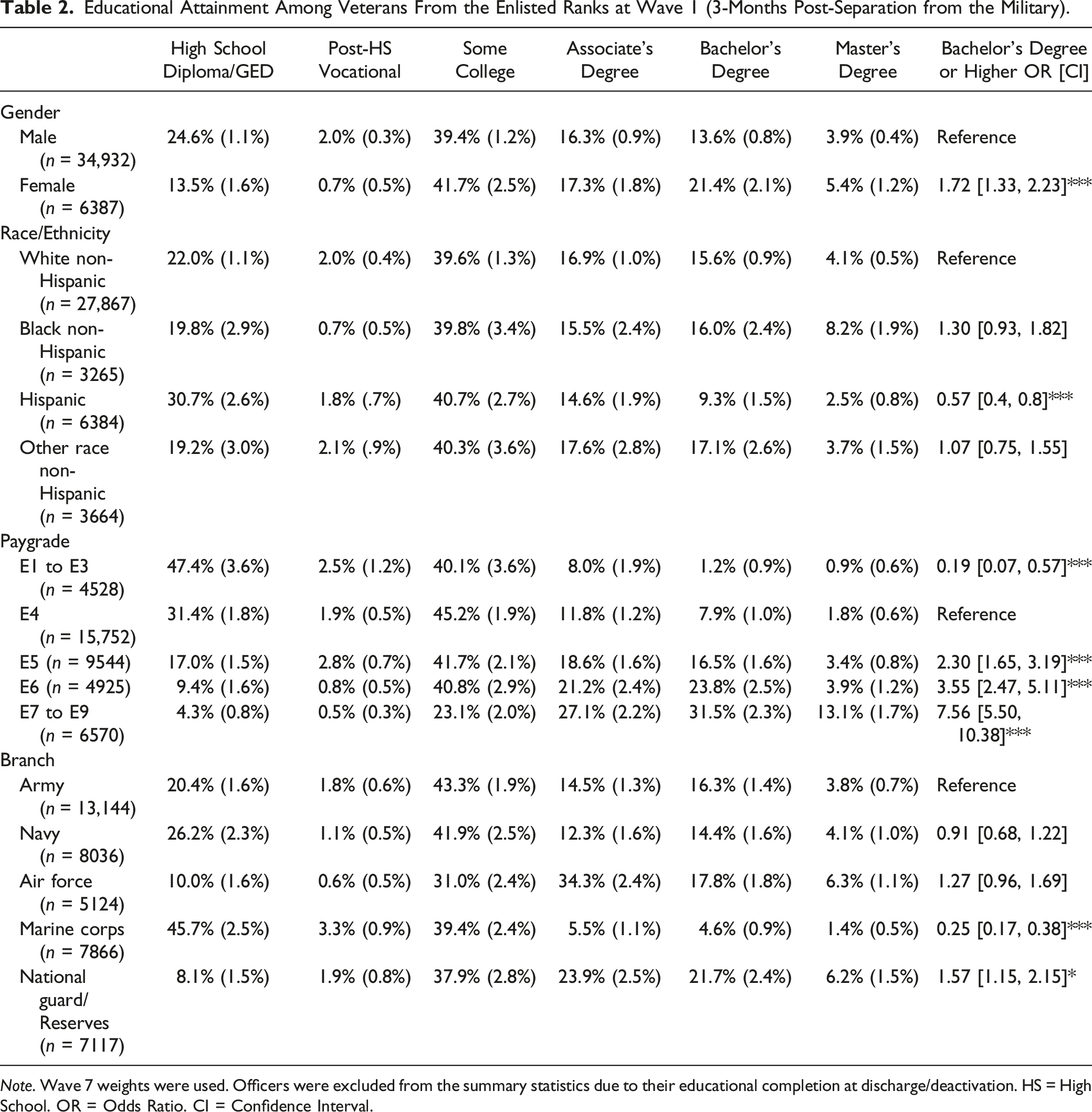
Note. Wave 7 weights were used. Officers were excluded from the summary statistics due to their educational completion at discharge/deactivation. HS = High School. OR = Odds Ratio. CI = Confidence Interval.
Only 2% of post-9/11 veterans from the most junior enlisted ranks (E1 to E3 paygrades) had a bachelor’s degree or higher. Veterans from the most junior enlisted ranks were 81% less likely to leave the military with a bachelor’s degree or higher compared to veterans from the next highest paygrade (E4). Veterans who left the military at the E5 paygrade were 2.3 times more likely to possess a bachelor’s degree or higher compared to their E4 peers. Those with an E6 paygrade and those with E7–E9 paygrades were 3.55 times and 7.56 times, respectively, more likely to possess a bachelor’s degree compared to their E4 peers.
The Pursuit of Higher Education Among Post-9/11 Veterans from the Enlisted Ranks
Because officers often have college degrees before entering the military, the authors examined the academic pursuits of veterans from the enlisted ranks more closely. Nearly 70% of enlisted veterans pursued a higher education within the 4 years of leaving the military. About half of these enlisted veterans began pursuing further education within the first 3 months of separation. Approximately 16% of post-9/11 enlisted veterans began school within the first year of separation, and 12% started after the first year but within 2 years of separation. Among enlisted veterans who pursued higher education after separating, 56% pursued their bachelor’s degree, 37% pursued an associate’s degree, 18% pursued a technical or vocational degree, and 16% pursued a master’s degree.
Characteristics of Veterans Who Completed and Did Not Complete Higher Education
Characteristics of Veterans who Attended Higher Education and Attained a Degree Post-Discharge.
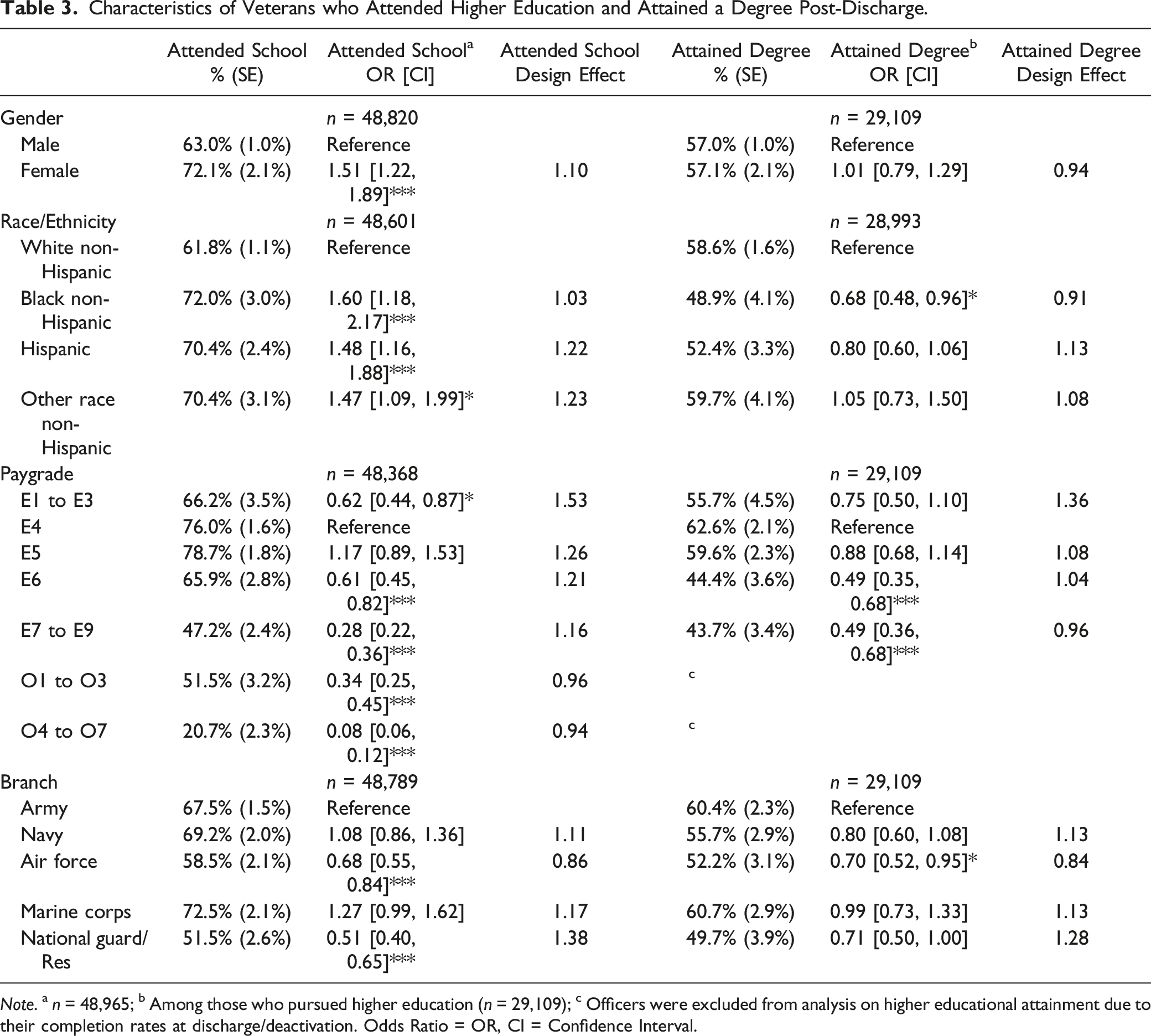
Note. a n = 48,965; b Among those who pursued higher education (n = 29,109); c Officers were excluded from analysis on higher educational attainment due to their completion rates at discharge/deactivation. Odds Ratio = OR, CI = Confidence Interval.
Two-thirds (66%) of veterans from the most junior enlisted paygrades (E1 to E3) and E6 paygrade pursued higher education. Three-quarters of post-9/11 veterans from the E4 paygrade and 79% from the E5 paygrade pursued higher education. E4 paygrade veterans were 2 times more likely to attend higher education compared to other paygrades (OR = 2.20 [1.81, 2.68]) except for E5 veterans. Approximately 60% of veterans from the senior enlisted ranks (E7–E9) pursued higher education. Half of the junior officer paygrades (O1 to O3) veterans and 21% from the senior officer paygrades (O4 to O7) veterans attended at least some higher education.
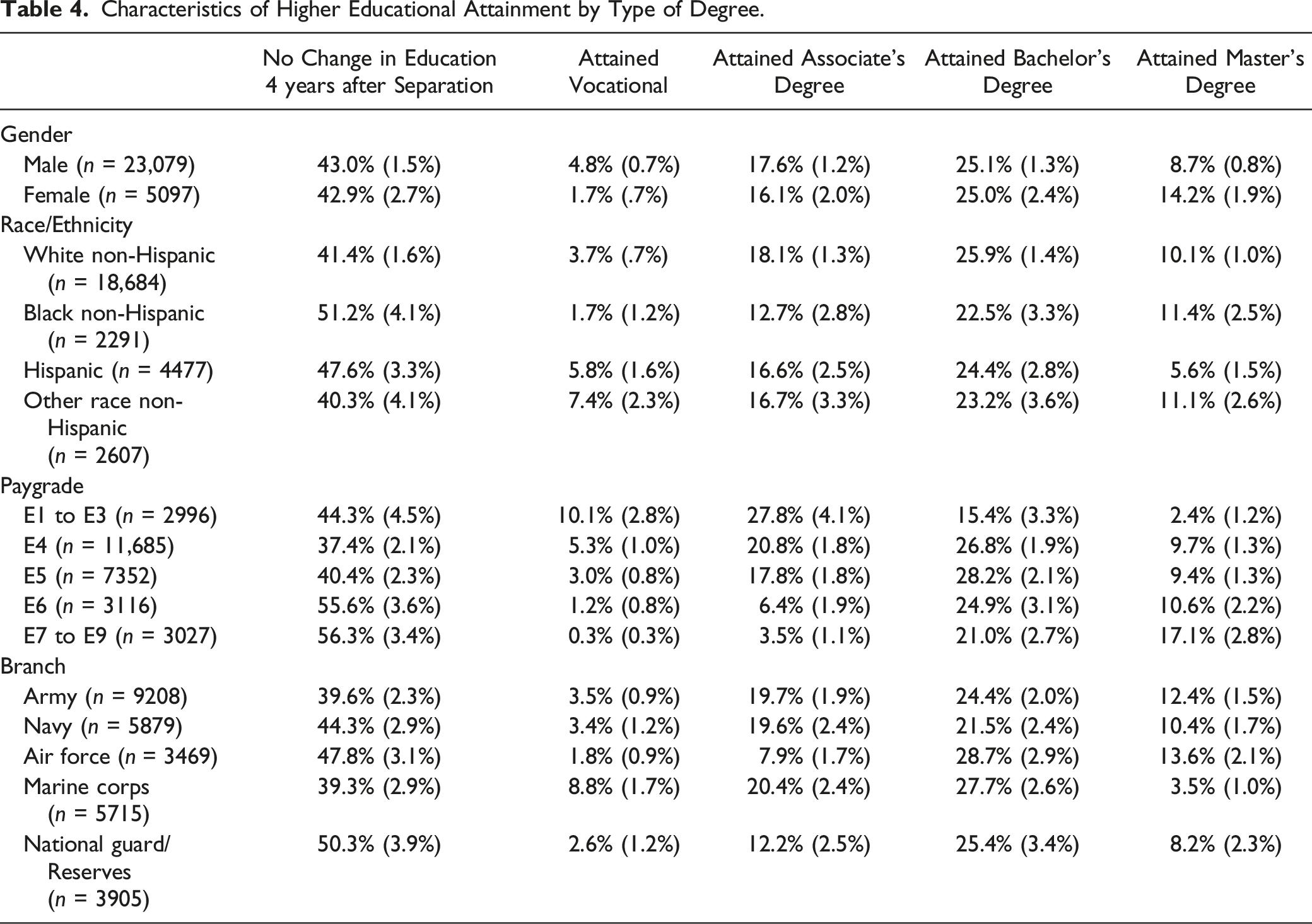
Among enlisted veterans who pursued higher education after separation, 58% went on to attain at least one degree or professional training by Wave 7 (see the right-hand columns in Table 3). Approximately 8% of enlisted veterans obtained a vocational or technical training degree, 18% attained an associate’s degree, 25% received a bachelor’s degree, 10% obtained a master’s degree, and 1% received a professional or doctorate degree. There were no significant differences between male and female veterans in their attainment of a degree. Veterans who were Black were 32% less likely to attain a degree within 4 years compared to White veterans. There were no other race/ethnicity differences in attainment of a degree.
Characteristics of Higher Educational Attainment by Type of Degree.
Reasons for Leaving Higher Education
Characteristics of Those Leaving Higher Education.
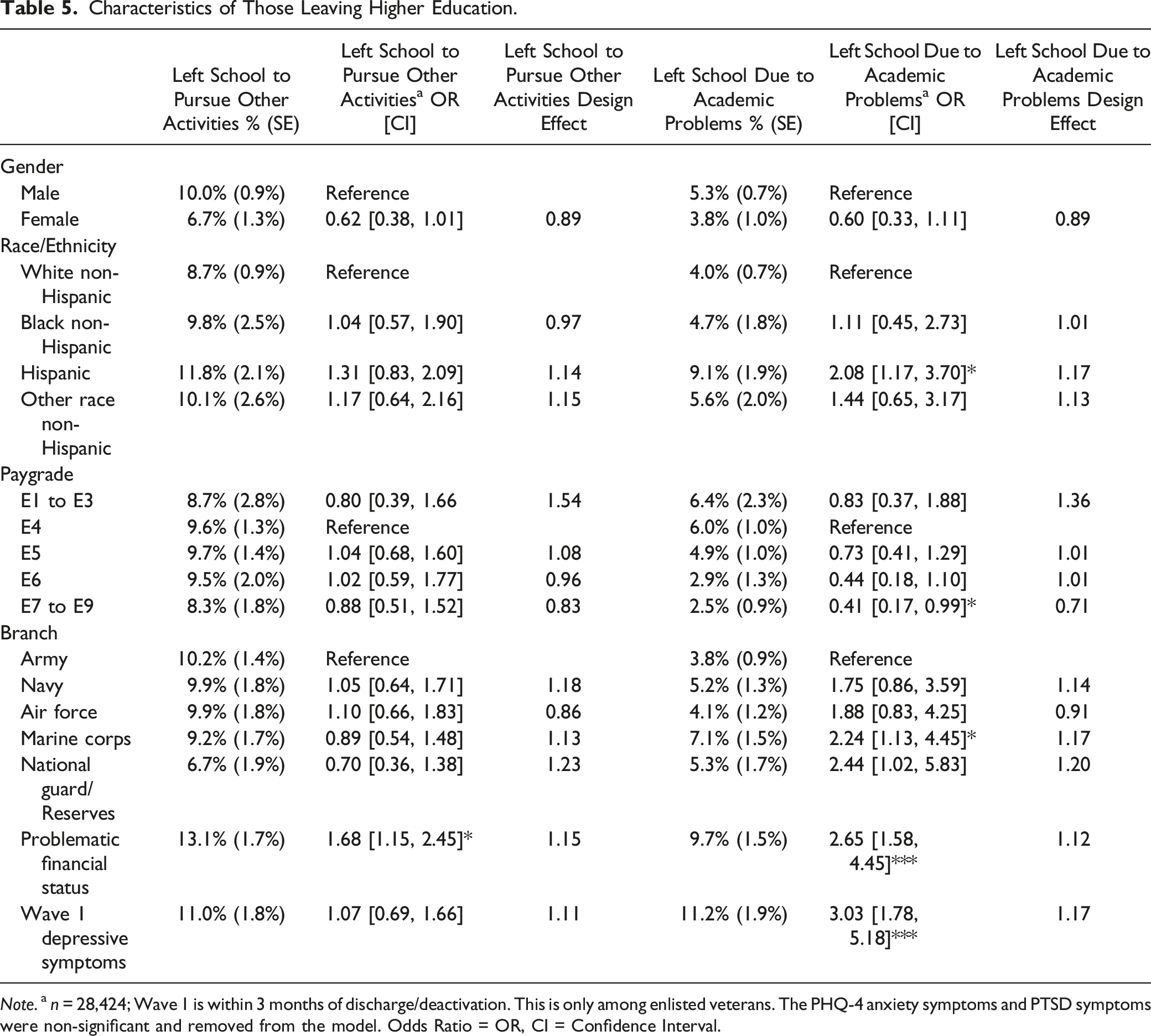
Note. a n = 28,424; Wave 1 is within 3 months of discharge/deactivation. This is only among enlisted veterans. The PHQ-4 anxiety symptoms and PTSD symptoms were non-significant and removed from the model. Odds Ratio = OR, CI = Confidence Interval.
There were no significant differences between paygrades for those veterans who left school to pursue other activities. However, veterans in the paygrades of E7 to E9 were 59% less likely to leave school due to academic problems compared to veterans in the paygrade of E4.
Veterans with problematic financial status at Wave one were 68% more likely to leave school to pursue other activities and were 2.65 times more likely to leave school due to academic challenges compared to veterans who did not report any financial problems.
There were no significant differences between veterans who met criteria for probable depressive symptoms and those who did not meet these criteria regarding leaving school to pursue other activities. However, veterans who met criteria for probable depressive symptoms at Wave 1 were 3.03 times more likely to leave school due to academic concerns compared to veterans who did not meet those criteria.
Among those veterans who pursued technical degrees, Hispanic veterans were 7.3 times more likely than White veterans to leave school due to academic challenges. Those with depressive symptoms were 9.54 times more likely to leave than those veterans who did not report depressive symptoms. Of those veterans who pursued associate’s degrees, veterans who reported depressive symptoms were 3.2 times more likely to leave school compared to those who did not leave school due to academic problems.
Compared to veterans who did not report financial problems at Wave 1, those who reported financial problems at Wave 1 were 2.5 times more likely to leave school due to academic concerns. Of those veterans who pursued a bachelor’s degree, female veterans were less likely to leave school due to academic challenges compared to male veterans. Hispanic veterans were 2.8 times more likely to leave school due to academic problems. Veterans who reported depressive symptoms were 4 times more likely to leave school compared to those who did not leave school.
Exposure to Educational Program Components and Educational Outcomes
Veterans were asked at each wave to indicate if they had used a veterans’ center or had participated in a veteran-student organization. Approximately 55% had used a veterans’ center and/or a veteran-student group at least once across all waves. Approximately 40% of respondents participated in a veteran-student organization. Post-9/11 veterans who utilized a veterans’ center were 94% more likely to attain a degree, and those who used a veteran-student organization were 97% more likely to attain a degree.
Participation in veterans’ centers and veteran-student groups varied considerably as a function of the type of education veterans pursued (see Figure 1). A higher proportion of those who pursued either an associate’s degree (64%) or bachelor’s degree (59%) used a veterans’ center, while nearly half (47%) of the veterans pursuing a technical degree (47%) and slightly more than half (54%) of veterans pursuing a master’s degree used a veterans’ center. Veterans who pursued an associate’s degree and who used a veterans’ center or a veteran-student organization between Wave 1 and Wave 7 were 2.2 times and 2.3 times, respectively, more likely to obtain their degree within 4 years of separation compared to those who did not use a veterans’ center or veteran-student organization. Veterans who pursued a bachelor’s degree and who used a veterans’ center between Wave 1 to Wave 7 were 2.9 times more likely to attain their degree by 4 years after military disconnection than those who did not use a veterans’ center. There was a positive association between frequency of engaging with a veterans’ center and academic attainment. These analyses are based on correlations and do not address causality. Veterans’ Exposure to Veterans Centers and Veteran Student Organizations by Degree Type. Note. Unweighted enlisted veterans’ utilization of veterans’ center or veteran-student organization.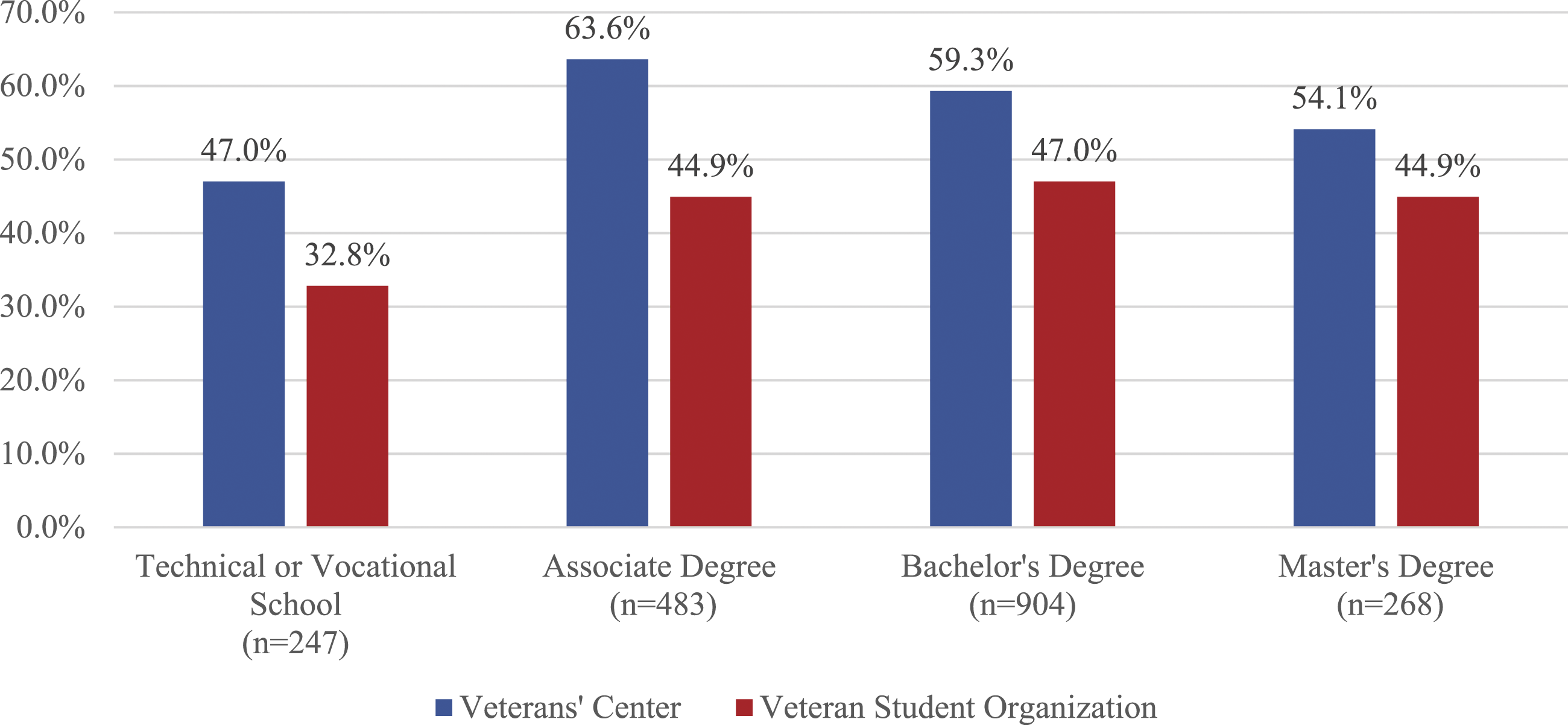
Discussion
The findings of this study indicate that some post-9/11 veterans are pursuing further education at high rates. However, the highlighted demographic differences demonstrate that some veteran populations (i.e., females, veterans of color, and enlisted ranks) encounter risks and barriers in their educational pursuit. In this study, a significantly higher proportion of female veterans pursued higher education than their male counterparts. This is in line with findings from civilian studies that show females comprise nearly 60% of the students in higher education (National Center for Education Statistics, 2019). Female veterans, however, may be at risk for post-service education challenges. For example, female post-9/11 veterans underutilize VA and non-governmental support programs (Hawkins & Crowe, 2018; Perkins et al., 2020) and have greater exposure to lifetime trauma and higher levels of mental health problems than male veterans (Steele et al., 2010). Thus, while a higher percentage of female veterans pursued higher education, there were no significant differences between male and female veterans in completing a bachelor’s degree.
Approximately 70% of the veterans of color pursued further education after separation. However, veterans of color face several unique equity challenges related to healthcare access, discrimination, and employment that interfere with their pursuit of higher education (Couch & Fairlie, 2010; Institute of Medicine, 2003). Indeed, Black post-9/11 veterans from the enlisted ranks were less likely than their White peers to obtain a degree in the 4 years after separation. Hispanic veterans were significantly more likely than their White peers to leave school due to academic challenges. Finally, a higher proportion of veterans from the junior and middle enlisted ranks pursued post-secondary education than all other paygrades. This is a positive and important finding because veterans from these enlisted ranks often enter service with significantly less education than those in other paygrades, are less likely to use VA and non-VA services (Buckles et al., 2016; Castro et al., 2014), and have the highest rates of veteran unemployment (Bureau of Labor Statistics, 2022). Therefore, in order to help post-9/11 veterans in their pursuit of a successful education experience, post-secondary education institutions could provide specialized outreach and clinical services to female veterans, veterans of color, and veterans from the enlisted ranks (Jenner, 2017).
In terms of educational attainment, nearly half of the veterans obtained at least some additional education within their first 3 years of separation. Most veterans started their education within 3 months of military separation. However, after 15 months, significantly fewer veterans started school; this finding indicates that there appears to be a short window for outreach opportunities, as some post-9/11 veterans may not pursue additional educational opportunities after the initial 3 months after separation. Approximately 25% of the veterans completed their education within 9 months of separation, and an additional 40% completed their education within the next 15–27 months.
The timing of matriculation for post-9/11 veterans has been unexplored in prior research. Given that post-9/11 veterans face many reintegration challenges (Elnitsky et al., 2017), the timing of schooling may be an important consideration for them. For some veterans, delaying enrollment in school may be beneficial, as it may allow them to adjust to civilian life before taking on the responsibilities and challenges of school. There may be a “sweet spot” for timing the beginning of school for veterans after military separation. Further research should examine this situation.
Over the course of the study, 11% of the veterans who went on to pursue any additional education left school due to academic problems, while 16% left to pursue other opportunities. The overall school dropout rate, in this study, was 27%, which is significantly below that of all undergraduate students whose dropout rate is approximately 40% (Hanson, 2021). Veterans report several reasons for leaving post-secondary education including difficulty in meeting academic requirements; balancing life and academic responsibilities; fitting in; and managing mental and physical health concerns (Steele et al., 2010).
Sociological theories of educational attainment have been central in research on why people complete, or do not complete, post-secondary education. In addition, due to demographic shifts in the United States and the increasing diversity of those seeking post-secondary education, scholars in the field have argued that educational institutions need to pay more attention to the specific needs of non-majority students. Empirical support for sociological theories of educational attainment has not been consistent (Melguizo, 2011). One explanation is that student integration and connection vary quite widely as a function of student diversity (Xu & Webber, 2018). Veterans in post-secondary education are a unique population that has been understudied in educational attainment research.
This study hypothesized that, because veteran students are demographically, culturally, and experientially different than other students, their need for integration into institutions of higher education is critical. The current study found support for sociological theory of educational attainment. Positive predictors of educational attainment in this sample of post-9/11 veterans included the use of veterans’ centers and participation in veteran-focused groups. Centers and veteran groups provide a place where individuals can affiliate with others who share the positive and negative experiences of being in the military (Osam et al., 2016). Prior research has also shown that peer and social support have been found to assist veterans as they transition from being in active-duty service to becoming a post-secondary student (Osam et al., 2016; Vacchi, 2012). Veterans who access social supports have lower rates of depression, suicidal ideation, and rates of lifetime mental health service use. Given the connections between mental health and academic completion, promoting veteran involvement with peer groups and other social supports could aid veterans in reaching their educational goals (Adams et al., 2017).
Students with mental illness are at risk of academic non-completion. Approximately 5% of college students in the United States drop out due to mental health challenges each year (Stevenson, 2010). The results from the current study found that veterans who reported symptoms of PTSD or depression were much more likely to leave school than those who did not report mental health symptoms. Thus, post-secondary institutions should focus on early identification of mental health challenges among post-9/11 veterans and encourage help-seeking behavior and offer help-seeking opportunities (Lange et al., 2016). Post-secondary institutions should also consider training their mental health staff to implement evidence-based PTSD interventions, such as prolonged exposure therapy and cognitive processing therapy (Resick & Schnicke, 1992), both of which have demonstrated effectiveness with veterans.
Financial problems, reported by veterans at Wave 1, were negatively associated with educational attainment. Veterans often face several financial challenges, including predatory lending practices; mismanagement or lack of experience handling finances; and lack of emergency savings plans. These problems are particularly common among young veterans (Institute of Medicine, 2010), who also have the highest unemployment rates (Bureau of Labor Statistics, 2020). The cost of higher education continues to increase, which makes it difficult for many veterans to pursue an education (Abel & Deitz, 2019). While the benefits associated with the Post-9/11 GI Bill are more generous than those from the Montgomery GI Bill, some veterans report that they do not understand the benefit, and there can be delays in receiving the funds (Cate et al., 2017). In addition, Post-9/11 GI Bill benefits can be transferred to family members, so some veterans may choose not to use them for their own education but pass them on to children and/or partners.
There are widely available resources that veterans can access to enhance their understanding of their education benefits. For example, the TodaysGIBill.org website provides information and details about specific colleges and their programs for students/veterans. However, veterans are not always aware of available resources, or they may not understand how to navigate program eligibility. Marketing financial supports and academic financial aid programs could help veterans realize and understand these assistance mechanisms, so they can choose education over low-paying jobs after military separation.
Beyond the problem of social disconnection and the financial and mental health concerns veterans report facing (Carter et al., 2017; DiRamio et al., 2008), another challenge is the degree to which the higher-education system is prepared to deal with the current and expected influx of veteran students and this population’s considerable diversity and specialized needs (Vacchi, 2012). As a result, veterans who are struggling in school may not receive the programmatic support they may need. Student affairs and other offices, such as student health, are often ill equipped to address the unique needs of veterans, and staff from other offices should, but often do not have specialized training to better work with student veterans (Elliott et al., 2011). Unfortunately, a number of higher educational institutions do not have organized groups or programs for veterans (Jenner, 2017; Osam et al., 2016). Higher education institutions without campus-affiliated veteran programs should partner with veteran-serving organizations in their community to promote access to these important support programs, such as the American Legion and Disabled American Veterans (Lange et al., 2016).
Limitations and Future Directions
As with all research, there are limitations with the current study. First, while the sample is large and generally matches the recent population of transitioning post-9/11 veterans, the sample was not designed to represent the overall veteran population, which includes veterans from earlier cohorts with different conflict exposure. However, although not a perfect solution, the use of weighting increases the likelihood that the sample is representative of the population. The sample consisted of 20% of the Wave 1 respondents which also likely limits representativeness. Second, the data were collected prior to the COVID-19 pandemic. There is evidence that veterans, like civilians, have been negatively impacted by the COVID-19 pandemic (Perkins et al., in review). Veterans, particularly those of color, report high levels of COVID-19-related stress. In addition, the COVID-19 pandemic has been associated with higher unemployment and financial strain among post-9/11 veterans (Perkins et al., in review). Third, all of the analyses conducted are correlational in nature; therefore, causality cannot be determined.
Future studies should explore which programs veterans use and do not use in their pursuit of post-service education and should examine how and which programs impact educational outcomes. While there are thousands of organizations purporting to support veterans in various ways (e.g., social support, financial assistance, legal services), very little is known about their effectiveness. Finally, future studies should examine how higher education-based veteran-support programs are working across numerous outcomes, including mental health, educational attainment, social functioning, and future employability.
Footnotes
Declaration of Conflicting Interests
The author(s) declared no potential conflicts of interest with respect to the research, authorship, and/or publication of this article.
Funding
The author(s) disclosed receipt of the following financial support for the research, authorship, and/or publication of this article: The Veterans Metrics Initiative (TVMI) research was managed by the Henry M. Jackson Foundation (101983) for the Advancement of Military Medicine, Inc. (HJF), and it was collaboratively sponsored by the Bob Woodruff Foundation, Health Net Federal Services, HJF, Lockheed Martin Corporation, Marge and Phillip Odeen, May and Stanley Smith Charitable Trust, National Endowment for the Humanities, Northrop Grumman, Prudential, Robert R. McCormick Foundation, Rumsfeld Foundation, Schultz Family Foundation, The Heinz Endowments, U.S. Department of Veterans Affairs Health Services Research and Development Service, Walmart Foundation, and Wounded Warrior Project, Inc. Support for the Veterans Engaging in Transition Studies (VETS) survey, a continuation of TVMI, was provided by The Pew Charitable Trusts. The views expressed are those of the author(s) and do not necessarily reflect the views of The Pew Charitable Trusts. The Clearinghouse for Military Family Readiness at Penn State is the result of a partnership funded by the Department of Defense between the Office of the Deputy Assistant Secretary of Defense for Military Community and Family Policy and the USDA’s National Institute of Food and Agriculture through a cooperative agreement with the Pennsylvania State University. This work leverages funds by the USDA’s National Institute of Food and Agriculture and Hatch Appropriations.
Disclosure
The opinions and assertions contained herein are the private views of the authors. No endorsement by any sponsor listed above is intended nor should any such endorsement be inferred.
