




Abstract
The internationalization of higher education institutions (HEIs) often focuses almost exclusively on the number of students and staff involved in mobility programs. In contrast, internationalization at home (IaH) is a holistic and inclusive approach that focuses on change in different areas and levels of university structure and life. It considers the entire university community as a system and includes those students who never study abroad. This article analyses the elements of IaH programs described in the literature, identifying seven main areas common to them all and proposing a general IaH framework that may be used when implementing an IaH process.
Introduction
Internationalization Rationales
The internationalization of higher education institutions (HEIs) is seen as a means to educate global graduates and to promote global citizenry (Ellingboe, 1998). The context in which graduates will live and work has changed tremendously. Our current globalized society has new economic, technological, and intercultural challenges. Internationalization is not only a question of geographic mobility, but also includes the exploration and introduction of international narratives and the sharing of scholarly spaces (Johnson-Mardones, 2018). Internationalization in this context is mostly defined by different authors as a process in which intercultural, international, and global dimensions are introduced and incorporated into the objectives, functions, and final purposes of higher education institutions (Grasset, 2013; Knight, 2003). However, most universities focus their internationalization efforts almost exclusively on mobility programs. To survive, 21st century universities need to be part of the global economy and of international alliances. It is indeed a Western model that has implications in HEIs worldwide, even though not all compete at the same level. However, the context of each HEI is key in order to develop its own internationalization strategy and Internationalization at home (IaH) takes into account the context and the culture in which each HEI is located. The leaders of supra-national alliances promote and encourage the internationalization of HEIs to promote educational returns, as has happened in Europe with the development and creation of the European Higher Education Area (EHEA) (Grasset, 2013). Thus, HEIs at an institutional level focus on preparing their students to live and work in the current globalized context, and to make them competitive in the global setting. A global setting in which, as Stewart (2007) affirms, we find the globalizers and the globalized, the result of pre-globalization world structures and divisions. It is key that 21st higher education brings this knowledge to all students, since without exception they must all face great global challenges.
However, educating competitive global citizens is not the only reason why universities have embarked on their internationalization processes. For Stewart (2007), five trends have brought us to the present internationalization scenario: (1) The globalization of economies and the rise of Asian markets. (2) Advances in science and technology that are creating a substantial shift in work practices. (3) Climate change, environmental problems as well as terrorism that engender international security and health issues. (4) Increasing interdependence and competitiveness between nations that have modified the traditional paradigm of interstate relations, posing new challenges for nations and their peoples which require international cooperation among countries, corporations, and civic organizations. (5) Demographics and migration have created cultural diversity in local communities as never before. This has created tension and continues to create fear of the “foreign.”
According to authors such as Beelen and Jones (2015b), Guimarães et al. (2019), Kim (2020), Mestenhauser (2011), Muñiz and Borg (2021), and Paige (2005) a limited percentage of students and faculty, only 10%, will ever study or participate in a mobility program. Thus, taking into account that universities are national institutional systems and their expected goal is to educate graduate students who are global citizens, interculturally competent, and capable of living and working in a peaceful and diverse society, then these HEIs need to educate and train the 90% of students who cannot afford to participate in mobility programs (De Wit, 2020; De Wit & Deca, 2020; Universities UK, 2021).
This article is an analysis of current internationalization rationales and focuses on the process of internationalization at home (IaH). It compares and ranks the principal elements described in the literature that are, in some way, common to 12 cases, in four continents, over the past 20 years. The methodology used consisted of a bibliographic search for cases of comprehensive internationalization in international data bases, Scopus, and publications by relevant international education organizations such as the European Association of International Education (EAIE), The Forum on Education Abroad, as well as relevant authors. Cases which only focused on mobility or only one element of internationalization were excluded from the study. Our objective was to provide a general framework for IaH that may facilitate the implementation and the assessment of IaH in different contexts. The main elements of IaH described are placed in the order of importance they were given in the implementation process.
The literature concurs that IaH should include the entire university community and focus more on the quality than on the quantity of the internationalization process in terms of changing attitudes and learning outcomes rather than just the number of outgoing and incoming international students and staff at each university. IaH differs from any other internationalization process in its focus on promoting access to an internationalized education to ALL students, even those who cannot afford to study abroad. Although according to Mestenhauser (2011) the majority of internationalization processes “live” in the office of international relations, focusing mainly on study abroad programs. Of the IaH elements analyzed in this study, the most important is an internationalized curriculum, which places students at the heart of the IaH process and reflects the importance that should be accorded to educating all students as global citizens. Today, more than ever, HEIs need to educate global citizens who can understand the complexity of local problems with global dimensions. Making global and local connections is indeed a key competence for 21st century university graduates, to promote this competence, it is important to focus on an internationalized curriculum. Teaching all students to live and work with people who are very different from them and to develop empathy toward the multicultural other.
Current Context of Internationalization at Home
Delors, one of the founding fathers of the current European Union, already in 1997 recognized the need to educate global citizens and recommended that universities should: (a) prepare students for future research and teaching, (b) provide specialized training courses adapted to the needs of economic and social life, (c) assure access and equity, (d) promote and encourage international cooperation, and (e) act as independent and responsible institutions exercising the intellectual authority that society requires. The 21st century universities that the UNESCO and Delors envisioned are key to social cohesion and peaceful relations between peoples in a culturally diverse society.
In 2013, IaH was included in the European Commission’s educational policy, denominated European higher education in the world and is on its way to becoming part of the educational policies of the EU member states. Currently, with the COVID-19 situation and international exchange programs being postponed, European universities have begun to include IaH in their policies. According to the European Association of International Education (EAIE) Barometer, 76% of Dutch universities have included IaH curricula in their policies, in addition to 56% of other European HEIS. Moreover, according to Trends (2015), 64% of European universities declared that they were already implementing IaH activities (Beelen & Jones, 2015b).
The first definition of IaH, in the 1990s, referred to any activity, program, and or research at a university campus related to internationalization, excluding study abroad programs. Today, IaH represents a challenge to the international education field mainly because it includes all aspects of a HEI (Teekens, 2007). For the purpose of this study, we understand IaH to be “the purposeful integration of international and intercultural dimensions into the formal and informal curriculum for all students, within domestic learning environments” (Beelen & Jones, 2015a, p. 12).
The new definition emphasizes the inclusion of internationalized and intercultural activities and/or aspects of the curricula that propose to educate global citizens who are interculturally competent, given that one cannot become interculturally competent without specific training and experience with cultural differences (Beelen & Jones, 2015a).
Literature Review of Internationalization at Home and the Cultural Variable
Internationalization at home places internationalization at the core of universities emphasizing the importance of teaching and learning about intercultural issues, cooperation and diversity on campus, and embracing the whole university community and the society within which the university is located (Bergknut, 2007; De Wit & Deca, 2020; Teekens, 2007; Mestenhauser, 2003, 2007).
We have reviewed 12 case studies of IaH and identified factors that are common to them all with the aim of providing a model for IaH at present lacking. “To be successful, IaH has to be owned by each and every one of the departments of an institution and every member has to be an active part of it” (Teissier, 2007, p. 23). Mestenhausser (2011) called this systems’ perspective, since IaH involves different elements, of which some may fit one institution while others may not (Figure 1 shows the systems’ perspective for IaH). System’s perspective for IaH. Sierra-Huedo (2013) based on Mestenhauser, 2011.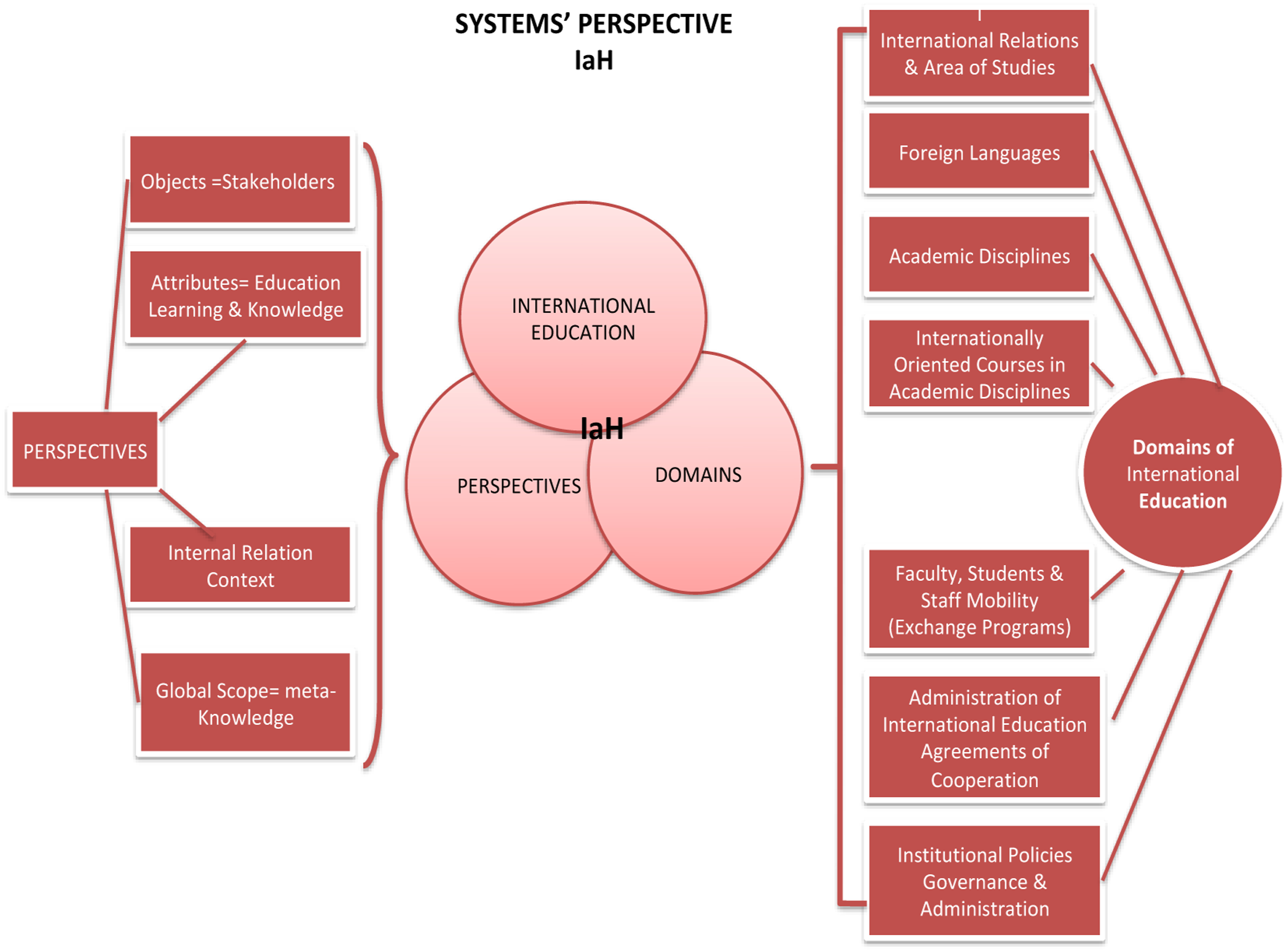
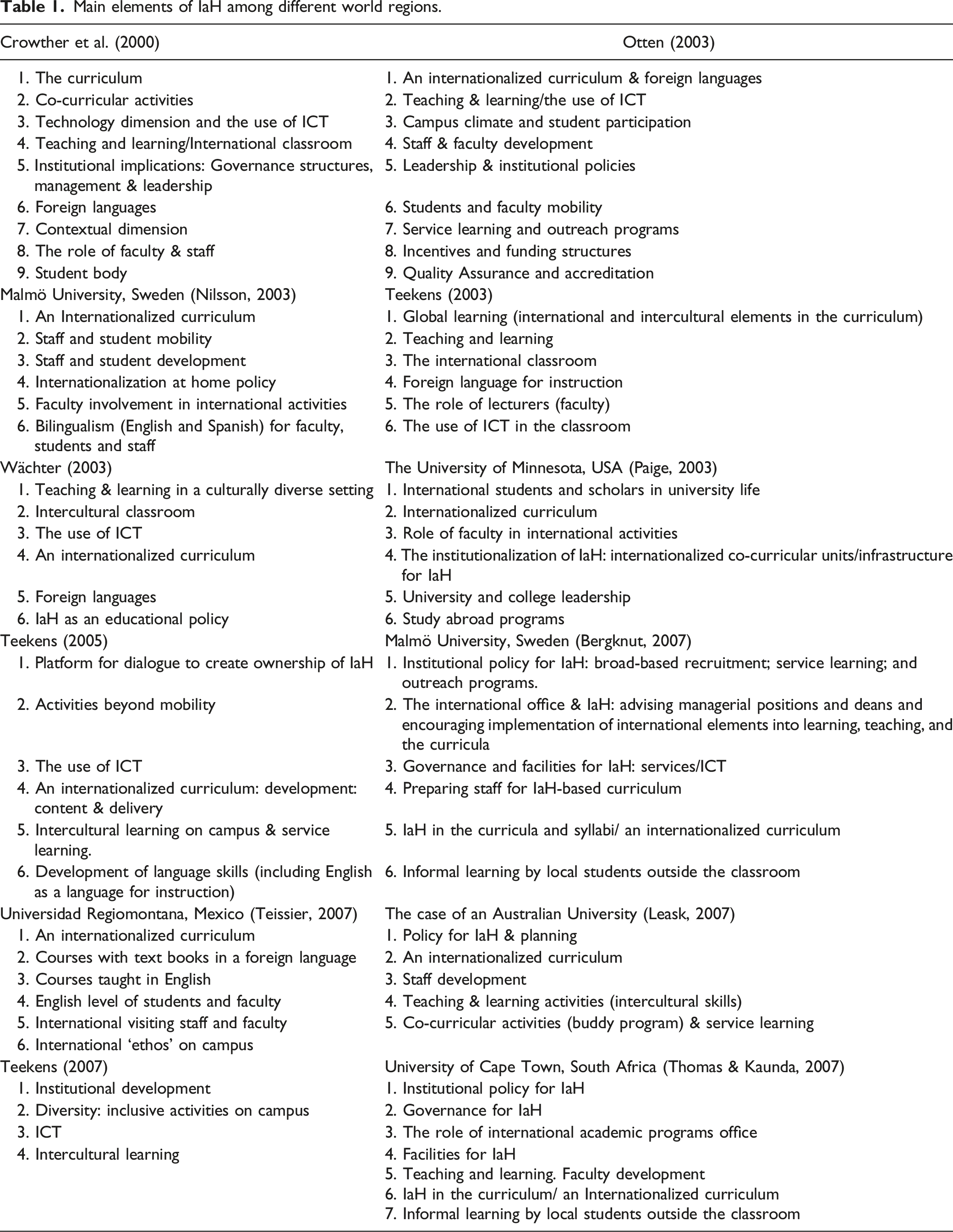
Main elements of IaH among different world regions.
Proposed Model for Internationalization at Home
The main elements of IaH published in case studies from different regions over the past 20 years can be seen in Table 1. Although nomenclature may differ from case to case, definitions reveal many components to be the same. We found seven recurrent elements ordered depending on their relevance: an internationalized curriculum; the role of other languages for formal instruction; the institutionalization of IaH; teaching and learning: intercultural learning and intercultural activities; co-curricular activities on campus and in the community; the use of ICT; governance and facilities. These elements will be discussed in greater detail in the following sections.
An internationalized curriculum
Citizens who cultivate their humanity need moreover, an ability to see themselves not simply as citizens of some local region or group but also and above all, as human beings bound to all other human beings by ties of recognition and concern. Here, the discourse on IaH appeared to return a more human touch to internationalization processes (Beelen, 2012; Teekens, 2007).
There are areas and situations in which both teachers and students are learners and where students’ experiences come into play (Nilsson, 2007). Knowledge is not universal, its perspective and its transfer are a community process. The classroom is a place where knowledge is shared, and all members of the classroom construct new knowledge.
The main focus of IaH is on curriculum development, in terms of both content and delivery (teaching methodologies) (Otten, 2003; Teekens, 2007). We disagree with some researchers who affirm that the curriculum should be treated separately from an IaH implementation strategy. The curriculum is at the center of the students’ learning experience and through it universities may develop international and intercultural knowledge and skills (Paige, 2005). Nilsson (2000) defines an internationalized curriculum as “A curriculum which gives international and intercultural knowledge and abilities, aimed at preparing students for performing (professionally, socially, emotionally) in an international and multicultural context” (p. 22). Leask (2009) defines it as “the incorporation of an international and intercultural dimension into the preparation, delivery and outcomes of a program of study” (p. 209). There is the obligation of future graduates to acquire global competences, which include the ability to work and live effectively in an international setting, being able to adapt to different cultures and approaches (Brustein, 2007; Otten, 2003; Svensson & Whilborg, 2010). An internationalized curriculum is the only way to ensure that global competences can be acquired by all students and not only by a few. However, global learning has drawn attention to the need to include international and intercultural aspects in the curriculum. If this becomes a priority then internationalization is truly at the core of a HEI (Brustein, 2007; Harari, 1992; Tekeens, 2003), with the intercultural dimension forming part of both the content and the delivery of the curriculum to all students. Green and Whitsed (2015) summarized the main learning outcomes of an internationalized curriculum: students should acquire knowledge of other cultures and languages; intercultural competence; and ethical global citizenship (which underpins the first two).
An internationalized curriculum also requires interaction with the local community in order to create truly intercultural encounters. Intercultural learning does not occur automatically and it is influenced by cultural diversity, with the classroom being arguably the best context for promoting it. The main objectives for an IaH curriculum may be divided into cognitive and attitudinal objectives (Nilsson, 2003; Teekens, 2003). This can only be accomplished through specific topics and methodologies in the classroom, pushing students to leave their comfort zones and having them working with other students who are very different from them. For this to happen, specific content courses or topics within courses must occur (Paige, 1993). Harari (1992) and Brunstein (2007) agree on seeing an internationalized curriculum not as fragmented with certain courses here and there or a certain number of credits, but a curriculum with internationalized content skills, awareness, and attitudes. Harari (1992) proposes a list of 12 possible options for the internationalization of the curriculum: (1) The infusion of courses with international content. (2) Comparative approaches in research projects and teaching. (3) Interdisciplinary studies. (4) Studies focused on civilizational approaches. (5) International and intercultural studies. (6) International development studies. (7) Other languages being given an important role as an integral part of undergraduate education. (8) The internationalization of professional schools, pre-professional ones, and K12. (9) Faculty and staff development in the international area. (10) International institutional linkages and international networking of scholars. (11) Involvement of students.
(12) Involvement of students and faculty in internships with an international perspective either abroad or locally (Brustein, 2007; Carter, 1992; Childress, 2010; Knight, 2008; Paige, 2003; Teekens, 2003)
Each institution should decide which of the above-mentioned options are aligned with its mission and how they wish to integrate them into the curriculum as a whole, encouraging and promoting change within the institution.
Setting an interdisciplinary curriculum in motion is a very complicated process of change that may cause tension among faculty, but it is important to start a conversation in which all voices are heard across vertical and horizontal dimensions and, moving through different scholarly spaces (Brustein, 2007; Childress, 2010; De Wit & Leask, 2015; Harari, 1992) (Figure 2 shows how change might be promoted in a higher education institution). How to promote change in higher education institutions. (Sierra-Huedo, 2013, based on Kotter, 2008; Fullan, 2008).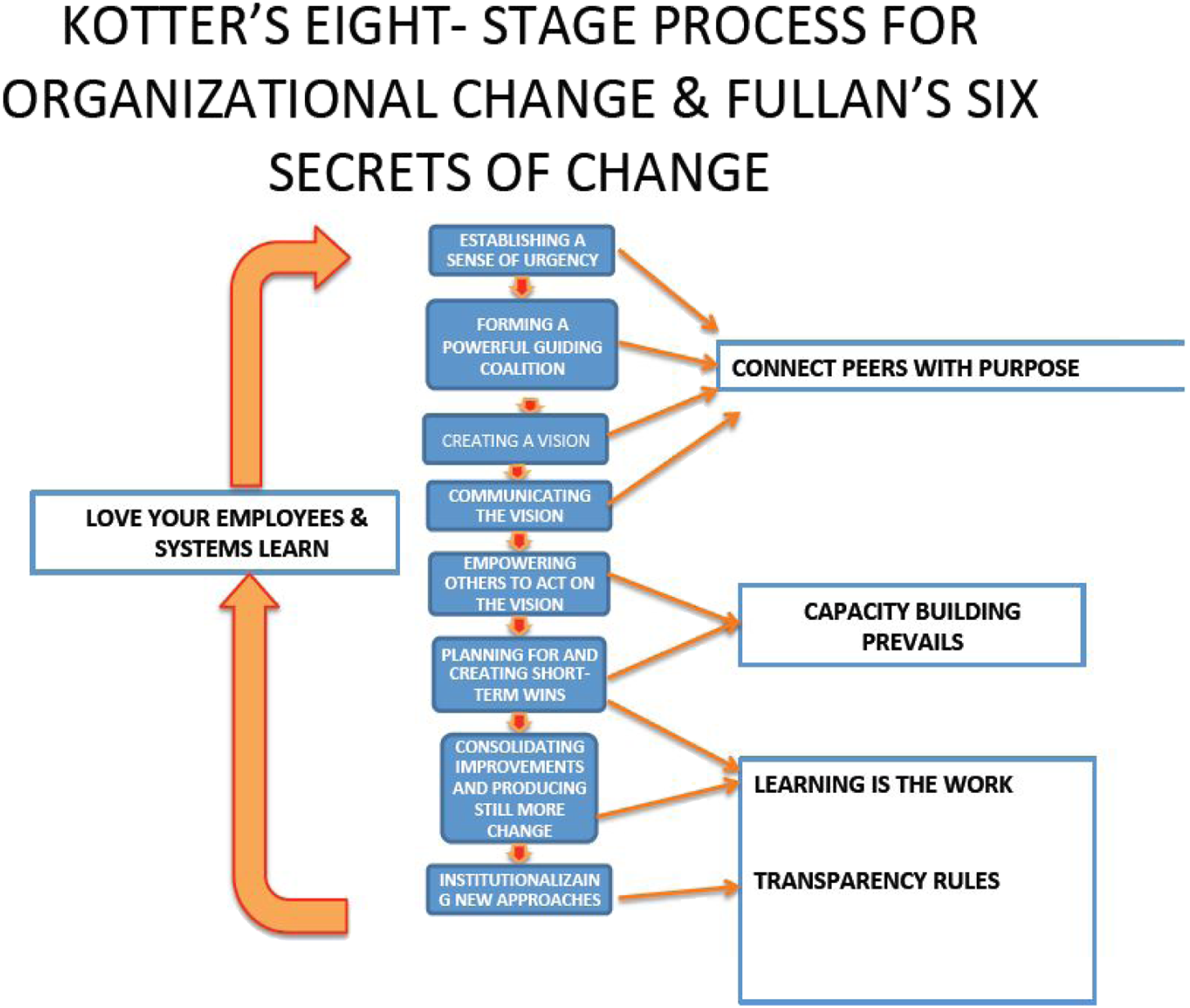
Any internationalization process is indeed a process of change. Being able to promote change and maintain it over time is key. As can be inferred from Figure 2, any faculty member can be, what Mestenhauser calls, “a champion of internationalization”. These champions need to work on a vision, to communicate it, establishing attainable goals. Once those goals are achieved, it is key to evaluate what worked and what did not, in a constantly evolving learning environment, where changes are institutionalized and more change is promoted. Introducing learning communities, based on trust, in educational institutions is fundamental for promoting any kind of durable development. Important changes should be not a personal quest but an institutionalized plan.
The curriculum and approaches to instruction are essential factors in any integral internationalization process and more so for IaH since they provide an opportunity for students to access and work on global issues and start developing intercultural competence.
The Role of Foreign Languages
The acquisition of competences in other languages is an integral part of an internationalized HEI and much of what we consider to be Internationalization would not be possible without a Lingua Franca, currently English, to enable communication between cultures. It will not only be present in compulsory language courses or a requirement for graduation but will also be used as a mode of instruction for certain courses. English has been a great facilitator in terms of, for example, student mobility and the implementation of Content and Language Integrated Learning (CLIL) methodology and English as a medium of instruction (EMI) programs in addition to staff and faculty training, testing and teaching as part of professional development projects (Bergknut, 2007; Crowther et al., 2000; Nilsson, 2003; Teekens, 2003; 2005; Teissier, 2007; Wächter, 2003). However, little attention has been given to other complex issues arising from the exclusive use of English as a Lingua Franca (Jones, 2020) such as the importance of language and identity, as well as ideologies or even the concept of colonization, “the influence of language attitudes, as well as English-specific phenomena such as the gatekeeping function that English performs and the entire question of whether it is reasonable for an ‘international’ university to teach only in the medium of English, rather than in multiple languages.” (Jenkins, 2019, p. 15). Therefore, a multilingual perspective will be recommended for an IaH process, in order to avoid what is called the Englishization of HEIs. Currently, most European universities do not see extensive use of English as a threat to their cultural identity, except for a current discussion in the Netherlands and Italy (Altbach & de Wit, 2020). However, this is not the case for some African, Latin American, and Asian (mostly Chinese) HEIs (Guo et al., 2021; Gyamera, 2018; Murphy & Zuaro, 2021).
There has been great growth in EMI programs at universities recently. Some see this in itself as internationalization of the curriculum. However, translating a curriculum from one language to another is not enough to internationalize it (Leask, 2015).
Although English is undoubtedly useful for international travel and the mediation of interpersonal communication between persons who do not share a common language, there are other consequences of being able to use another language with a degree of fluency that are an integral part of becoming a global citizen and changing mindsets.
“Language study encourages us to deconstruct the linguistic world as we know it, to tolerate ambiguity, and to embrace cultural ‘otherness’. ...Linguists understand that apparently direct translations are fraught with potential misunderstanding, and we learn that cultural ‘others’ may not see the world in the same way... Fluency in another language takes us beyond mere tolerance of ‘otherness’ and requires us to engage with alternative world views as a matter of course.” (Jones, 2012:n.p.)
In a word, the role and benefits of foreign languages in IaH is substantially more complex than simply improving student and staff levels of general English and translating subject contents. The role and function of English in our globalized world is ever changing with more second than first language users and needs to be explored in more depth.
Institutionalization of Internationalization at Home
If we view IaH under the conceptual framework of a systems approach (Figure 1) “that looks at all the various actions in international education. They explain the problems and complexity when dealing with IaH as an integrated process of institutional change and reform” (Figure 2) (Teekens, 2007, p. 7). Looking at what is happening in a classroom is the micro-level or just one part of many other parts that constitute the whole. The HEI should attempt to plan accordingly and analyze its current situation to establish objectives and a strategic plan for internationalization as well as the vision and mission of the institution, in order to involve all university members in the process (Figure 2). Mestenhauser (2007) explains, “if IaH is designed to effect large-scale changes, only a systems approach will enable small and partial changes of individual parts to be integrated, coordinated and balanced” (p. 15). Managerial support is needed for this comprehensive reform, helping with the implementation of policies, such as language policies, as well as the creation of transversal institutes or schools that work towards an intercultural environment on campus (Bergnut, 2007; Crowther et al., 2000; 2003; Leask, 2007; Mestenhauser, 2003; 2007; Paige, 2005; Teekens, 2007; Wächter, 2003). The institutionalization of IaH will focus on promoting an intercultural campus. An intercultural campus is one “where people from diverse backgrounds are encouraged to learn, to teach, and serve so as to create an environment in which all can live, work, and grow to their highest potential” (Taylor Cartwright, 2015, p. 381). This idea that appears to be obvious and simple is in fact a complex construct in which many different elements play a key role in reaching a common objective. These elements include the mission and vision of the university being translated into a strategic plan that should include teaching and learning as well as access for diverse students to all the activities offered on campus. An intercultural campus includes not only curriculum and class activities but also policies and the promotion of diversity among faculty as well as among administrative staff.
Teaching and Learning: Intercultural Learning and Intercultural Activities
All social behavior is different in different cultures and the same is true of teaching and learning, which is shaped through acculturation and different cultural backgrounds (Otten, 2003). The main focus of IaH is curriculum development not only in terms of content but also in terms of delivery; the teaching and learning process may occur in the classroom or outside through service-learning activities. Teaching should be more student-centered and the national context of the classroom should give way to a global one where communication is more virtual and where students are seen as sources of knowledge rather than mere receptors (Teekens, 2007). The use of international materials in role-plays, case studies and reference materials is also recommended (Knight, 2008).
The role of faculty is very important as they must encourage more learner-centered environments as well as being inclusive with students from other countries and selecting relevant materials for their courses (Childress, 2010; Leask, 2007; Wächter, 2003). Faculty should promote contact and work among local students and international students.
Despite the ideals and efforts of international exchange programs and even after some time abroad, many students “group in their national communities (…) where European exchange students usually meet other European students but rarely those of the host country” (Otten, 2003, p. 14). Cultural diversity in the classroom and internationalization do not necessarily or automatically lead to intercultural contacts and intercultural learning experiences (Allport, 1954; De Wit, 2012).
A difficult challenge in internationalization is creating opportunities for social interaction and communication among the students themselves and with the local community with different backgrounds. This is why a set of activities must be planned on campus in order to promote this kind of interaction (Teekens, 2007), and why the integration of an intercultural dimension in the curriculum is important in addition to the educational and organizational activities of a university.
Allport (1954) in his inter-group contact theory affirmed that contact with people from different backgrounds and ethnicities will help to reduce and to eliminate stereotypes and prejudices. The main assumption is that contact creates knowledge and understanding among different people. This will happen through people’s interactions and it will help to change their beliefs and feelings towards each other. The situational conditions and/or the context in which people from different groups interact are key in order to reduce prejudices and hostility (Tropp, 2015). As Figure 3 shows, four conditions must be present in order for this to happen: equal status, common objectives, intergroup cooperation, and external support (Nesdale & Todd, 2000). Further research has proved that these intercultural encounters should, but do not automatically decrease the formation of stereotypes. They can in fact reinforce them as well as produce prejudices. These contacts require reflection and a cognitive, affective and behavioral level approach (Allport, 1954; Amir, 1969; Nardon, 2017; Pettigrew, 1998; Pettigrew & Tropp, 2011). Intercultural contact seems not to be enough if the experience of otherness is not personally transformed into a learning experience (Paige, 2003). For this reason, it is important to promote such learning in the curriculum and in a classroom setting, as well as through on-campus activities. Social contact between groups valuing diversity. Based on Allport (1954) & Nesdale and Todd (2000).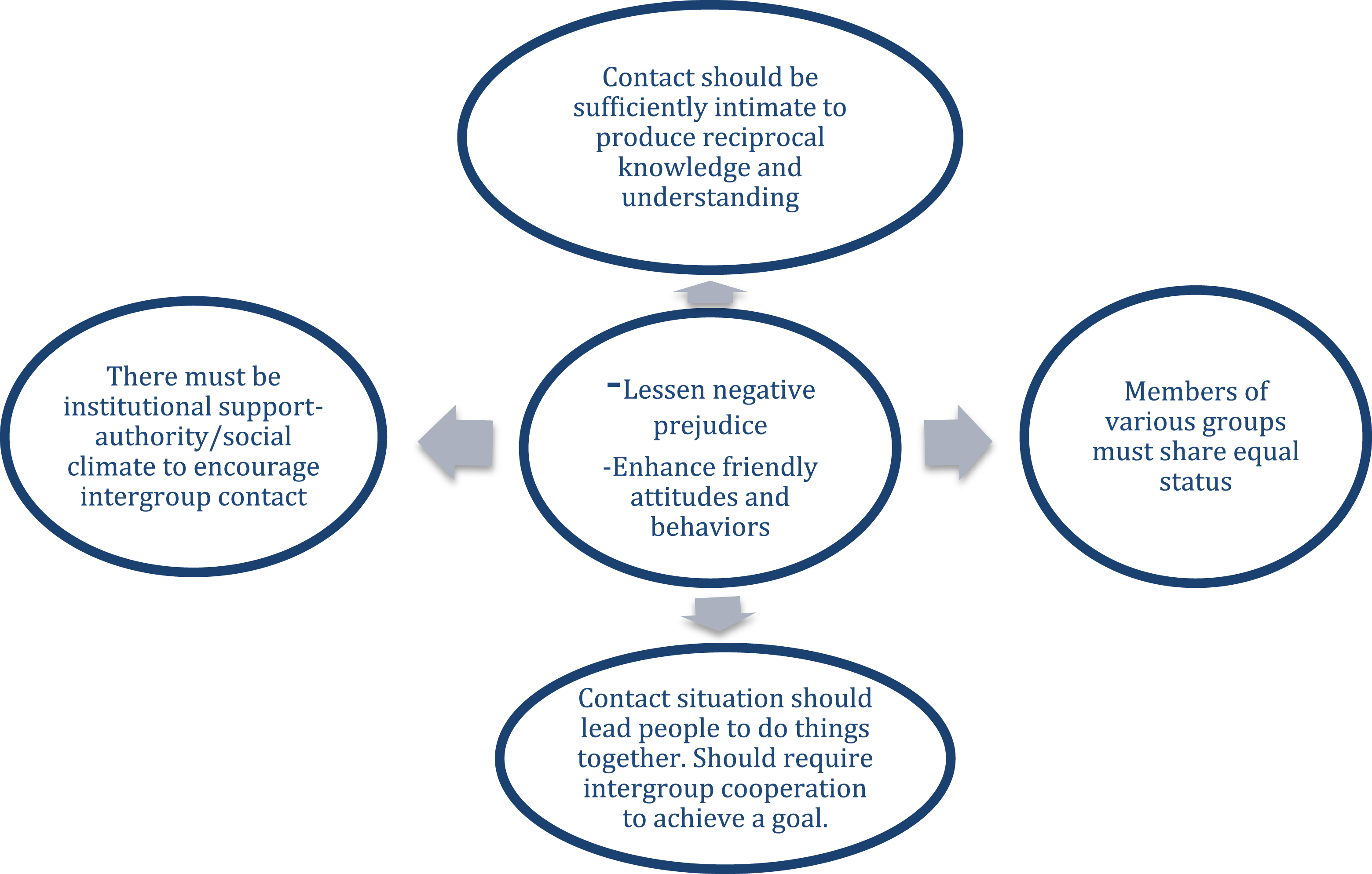
Co-Curricular Activities on Campus and in the Community
Another way to foster and promote intercultural competence is through community involvement (Otten, 2003). One of the main objectives of IaH is to have students involved with the local community. Interactions with the local community create opportunities for more interdisciplinary approaches to intercultural learning (Teekens, 2005). There is a trend of IaH co-curricular activities and programs on campuses that focus on sustainability, and how HEIs can be more sustainable organizations. HEIs have started to engage more with the local community and collaborate with others globally. HEIs from the UK, the US, and Australia identified different types of programs and best practices from 15 universities in total. The main objective of all these activities developed on campus is to create a global campus, providing global skills, and developing intercultural competence connecting with the local community and of course, internationalizing the curriculum. These best practices focus on celebrating and giving voice to the diversity of the whole university community, so they feel welcomed, and included. Collaboration with the local community, local organizations, and internationally based alumni are just some examples. It is key that these activities and programs have adequate institutional support and are evaluated (Universities UK, 2021).
The rapidly increasing diversity of the population through immigration has pushed many non-profit organizations to work in certain areas focusing on immigrants. Refugee education and inclusion in HEIs programs should be part of an IaH strategy (Ergin et al., 2019; De Wit & Deca, 2020). Nilsson (2003) explains in detail the success of the implementation of the Nightingale Program in Malmö University, as well as the Buddy program established in many universities, and intercultural service-learning projects developed with different local organizations. Other activities such as Support programs on campus for international and local students for employability and in transitioning to a new educational culture or organizing international campaigns on campus, about Human Rights, Fair Trade, the SDGs, and Online International Weeks celebrations (Universities UK, 2021). This educational pedagogy connects experiential learning and civic service and takes place in an intercultural context (García Romero & Lalueza, 2019). This interaction is important for the development of intercultural competence and training and is related to the social responsibility of HEIs (Knight, 2006; 2008; Otten, 2003). Nowadays, “The reduction to parochialism and asymmetries on the institutional level is another major challenge for the European institutions in higher education. Implementation of IaH and cultural diversity have intercultural implications far beyond a nice-to-have attitude” (Otten, 2003, p. 22). The four main components of any intercultural service-learning program are academic learning; community service; intercultural context; and facilitated and planned reflection. This pedagogy potentially engages diverse student learning styles involving a variety of different educational methods promoting learning inside and outside the classroom, and facilitating a cultural immersion that sometimes a classroom setting lacks (García Romero & Lalueza, 2019; Ruben-Oliveira & de Godoy Wielewicki, 2019).
The Use of ICT
The reduction or elimination of distances in communication has changed everything everywhere, including higher education. The use of ICT has eliminated barriers and unified the concepts of time and place. The new communication works thanks to this interconnectedness and the use of Internet worldwide. Distance does not determine the cost of communicating any more (Cairncross, 1997). This rapid connection of ideas and ideals will help to increase understanding of what is happening and why in other parts of the world.
Having access to Internet and ICT in general opens the door to many different possibilities in the classroom and using innovative methodologies as well as learning platforms such as Moodle and social media applications prepare students for an interconnected world. Within the current situation, many teaching activities have been able to continue and to internationalize thanks to access to ICT. The influence of ICT has changed university study, from a process focusing on the teacher–student relationship “to a learning pathway determined along systemic lines” (De Jong & Teekens, 2003, p. 47). The use of ICT has created and increased opportunities for intercultural online interactions. During Covid-19, the use of Collaborative Online International Learning (COIL) has created a third space in which local, national, and international contexts have had the opportunity to cross, and even create certain tensions, which has proved to work very well. The teaching and learning of digital literacy are key in order to promote global citizenship education, and it is at the core of a quality IaH process (Guimarães & Finardi, 2021).
On one hand, these factors will increase the complexity of teaching but on the other hand ICT has a great potential to enrich teaching and learning, facilitating the addition of an international perspective with fast and simple access in the classroom, for example, teaching students to work in virtual teams, in order to overcome future work cooperation-related problems (Rauer et al. (2021). Nowadays, instruction is communication with a global orientation rather than a national one as before. Using ICT correctly can enhance and promote intercultural communication, enabling intercultural encounters without worrying about distance or access to information (Crowther et al., 2000; Teekens, 2000; 2003; 2005; Wächter, 2003). As Cairncross (1997) states “The communications revolution speeds up the diffusion of innovation” (p. 24). Internet access to knowledge and ideas has dramatically changed the current university classroom and its potential. You can be in one place but travel, talk, see, and have access to anybody, anything, anywhere. ICT-based measures for resilient and inclusive IaH, include virtual exchanges: virtual internships, virtual expert mobility: open content, MOOCs/open courses, gamified elements and games, social media and online media among other possibilities (Bruhn-Zass, 2020).
The students’ role in their own learning has changed, in terms of the methodology “it is making them more than simple consumers of information, but above all, producers of knowledge. Learning objectives will still be formulated in terms of academic content, but output will be measured mainly in terms of competencies” (De Jong & Teekens, 2003, pp. 47–48).
However, “intelligent use of ICT can and will support and boost ‘internationalization at home’ (…) ICT will greatly enhance the quality of higher education, through an import of international (foreign) elements” (Wächter, 2000, p. 11). Through the implementation of digital literacy and online intercultural interactions, an advocacy for more “multilingual, ecological, equitable and meaningful interactions across HE institutions, in order to overcome colonial views of internationalisation and Global Citizenship Education” are required (Guimarães & Finardi, 2021).
Governance and Facilities
According to Bergnut (2007) “it is up to each level in the hierarchy to make sure that internationalization is implemented and monitored according to the University’s mission statement” (p. 83). All the previous IaH elements cannot be implemented unless there are HEI strategies between universities that support their implementation since IaH activities are by nature a team effort that include the administration, staff, professors, and students, all of them working together (Universities UK, 2021). The role of the international office is an important one, providing several services for the integration of international students and faculty. Services such as the web page, library, and student services should be offered in English. The role of the student union is also an important one. There are action plans in colleges and schools with international committees and coordinators of international activities (Crowther et al., 2000). It is important that any internationalization strategy is developed through an institutional strategic plan. Any action should not be personal but institutionalized, in order to live on within the university. To promote change in any HEI, in order to build an inclusive intercultural campus, it needs a great effort from the university leadership through policies and strategic planning. No change is a sustainable change if it is not institutionalized. Governance needs to have clear objectives in planning HEI strategic plans as well as in allocating funding for all IaH activities and programs. The facilities should be adapted to welcome the different environments needed for the development of IaH activities as well as more institutional autonomy and public responsibility of HEIs (De Wit & Deca, 2020; Universities UK, 2021). This way the HEI will be a more inclusive university, since all the students will be taken into account for participating in intercultural activities and acquiring global skills and knowledge. Governance should be in charge of the implementation of IaH programs at the micro-level, meso-level, and macro-level. The meso-level are activities that change the institutional setting and strategies affecting the institution and that have to be organized by it. This meso-level will obviously affect the macro-level: several institutions in the regional and national context and programs that have to be organized by an inter-institutional level (Otten, 2003). Governance should help their institution to promote change and to transform the institution into a more inclusive, global and ethical HEI (postcolonial focusing on new approaches to sharing knowledge as well as sustainable and equitable) (Ruben-Oliveira & de Godoy Wielewicki, 2019). Governance of a HEI should ensure the creation of both physical and online spaces, as well as strategies to implement IaH programs and activities. This can be achieved bycreating IaH strategies, engaging stakeholder groups, maintaining focus on the agreed outcomes of IaH, defining and refining strategic partnerships and finally establishing a professional international team well-supported by the university (Educate, Empower, Elevate, 2019).
Discussion
Promoting change is always difficult within an organization and even more within HEIs. The main challenge of IaH is its implementation “all of us will have to cross borders to be ‘at home’ in the global village. Sometimes these borders are only in our heads, but they may well present the most difficult journey we have to make” (Teekens, 2000, p. 34). One of the greatest challenges of IaH is how to use the intercultural resources on campus and in nearby communities and transform perceptions at all levels of the institution: governance to promote policies and approve budgets; faculty to internationalize the curricula; staff to promote co-curricular activities; and students to become agents of change (Figure 2) in their classrooms and in their communities (Otten, 2000). Implementing IaH involves attitudinal and perceptual changes, “A bad student or lecturer never becomes a good one by involvement in international education. It is the other way around. It is necessary to feel secure in your discipline to be able to deviate from a well-trodden path and to look at things in a different way” (Teekens, 2000, p. 31). This is why a focused and organized plan is needed to help and train faculty members to implement IaH activities in their subject matters (Beelen & Jones, 2015). This means that IaH is a challenge for HEIs since the concept is fragmented and not conceptualized by all the stakeholders involved. Thus, it is easier to follow the inertia of traditional internationalization strategies of concentrating on quantity and mobility rather than on quality and deeper changes. It is indeed easier to focus on international students and faculty than to enter into the main element of any university, its curriculum, an area dominated by faculty members, while international programs is an area dominated by administrative staff.
The discourse of IaH has attempted to bring back the human touch into higher education, in an attempt perhaps to return to the origins of internationalization (Brandenburg & de Wit, 2010). The whole institution has to lose its micro, fragmented vision and look at the university as a whole in a systems approach (Figure 1). But at the same time a thorough analysis should look to the leaders (micro-level) to promote change in a university (Figure 2). This way there will be “space” for all kinds of knowledge and this will be learned not only in the classroom but also outside of it (Beelen, 2007; Leask, 2007; Mestenhauser, 2003; 2007; 2011; Nilsson, 2000; Teekens, 2007).
In the 21st century with its increasing inequality between nations and marginalization, its ethnic conflicts, terrorism, and racism rooted in intolerance, in addition to rising unemployment and the constant degradation of the environment and natural resources, as well as pandemics, we still find the globalizers and the globalized. Education should be at the heart of all social change and should facilitate the development of a more equitable, tolerant, and just society (Gacel-Avila, 2005). It is with science, technology, humanism, and innovation that Higher Education can and will promote sustainable development and new methods of international cooperation among nations. This will inevitably have significant implications in terms of cultural adaptation, change, and the modernization of mindsets. There are great challenges for policy makers, nations and educational institutions. The challenges that must be faced are both global and local: the challenge of maintaining both the universal and the individual as culture is constantly being globalized; the challenge of keeping in mind the unique character of each individual; and the importance of keeping this individuality in cultural diversity (van der Wende, 2007).
Globalization affects universities worldwide (Altbach & Knight, 2007). Although universities have always been considered international organizations per se, universities are in fact national institutions (Mestenhauser, 2002), since they are created in a certain nation/state and regulated by those laws. Therefore, considering higher education institutions as internationalized systems or organizations is a mistake (De Wit, 2012). Internationalization of HEIs has always been a challenge for both universities and states.
Conclusions
The main challenges that HEIs face in the 21st century: more ethnic conflicts; terrorism and racism rooted in intolerance; an increasing unemployment rate and a constant degradation of the environment and of natural resources as well as pandemics are producing important changes in our current context. They provide ample reason to educate future generations to face these great challenges. We should focus all of our students on acquiring knowledge of different cultures that will help them to understand and respect cultural diversity. This can only be done by combining our efforts and introducing the development of intercultural competence among future university graduates, as one of the key competences that they need to acquire and develop during their experience at university.
Internationalization at home challenges the uniqueness of each university when an internationalization process is implemented. It also moves the internationalization process from quantity towards quality, focusing on the whole educational community and on its social impact and connection with society. The creation of an IaH model and the identification of these seven elements common to the IaH process will, we believe facilitate the strategic planning, implementation, and evaluation of the process in any university, anywhere, with an internationalized curriculum being the most important element. A system-orientated perspective is also key to implementing a successful IaH strategy, where “all voices” are heard and taken into account, promoting and encouraging diversity of perspectives and knowledge among different cultures and among different scholarly spaces.
If we want to educate global citizens, then a major curriculum reform is needed, as only through an intercultural campus will intercultural learning be accessible to all. Diversity is here to stay and affects all educational institutions, making it central to institutional success and requiring a change of direction. This change in orientation concerning diversity and its inclusion should be aligned with key elements that can promote change (policies; institutional strategies; promoting diversity recruitment and retention; an internationalized curriculum and intercultural activities on campus) within the complexity of HEIs, creating an inclusive intercultural campus where everybody feels part of it. There is an increasing consensus that the inclusion of diversity in HEIs will indeed take a systems approach, focusing on constructing the capacity to encourage the difficult dialog that is required in order to understand and promote diversity (learning, teaching, and cohabitating). It seems simple but it is indeed very complex task that deserves a focused holistic approach to promote change. Our future depends on this, as well as peaceful cohabitation.
Footnotes
Declaration of Conflicting Interests
The author(s) declared no potential conflicts of interest with respect to the research, authorship, and/or publication of this article.
Funding
The author(s) received no financial support for the research, authorship, and/or publication of this article.
